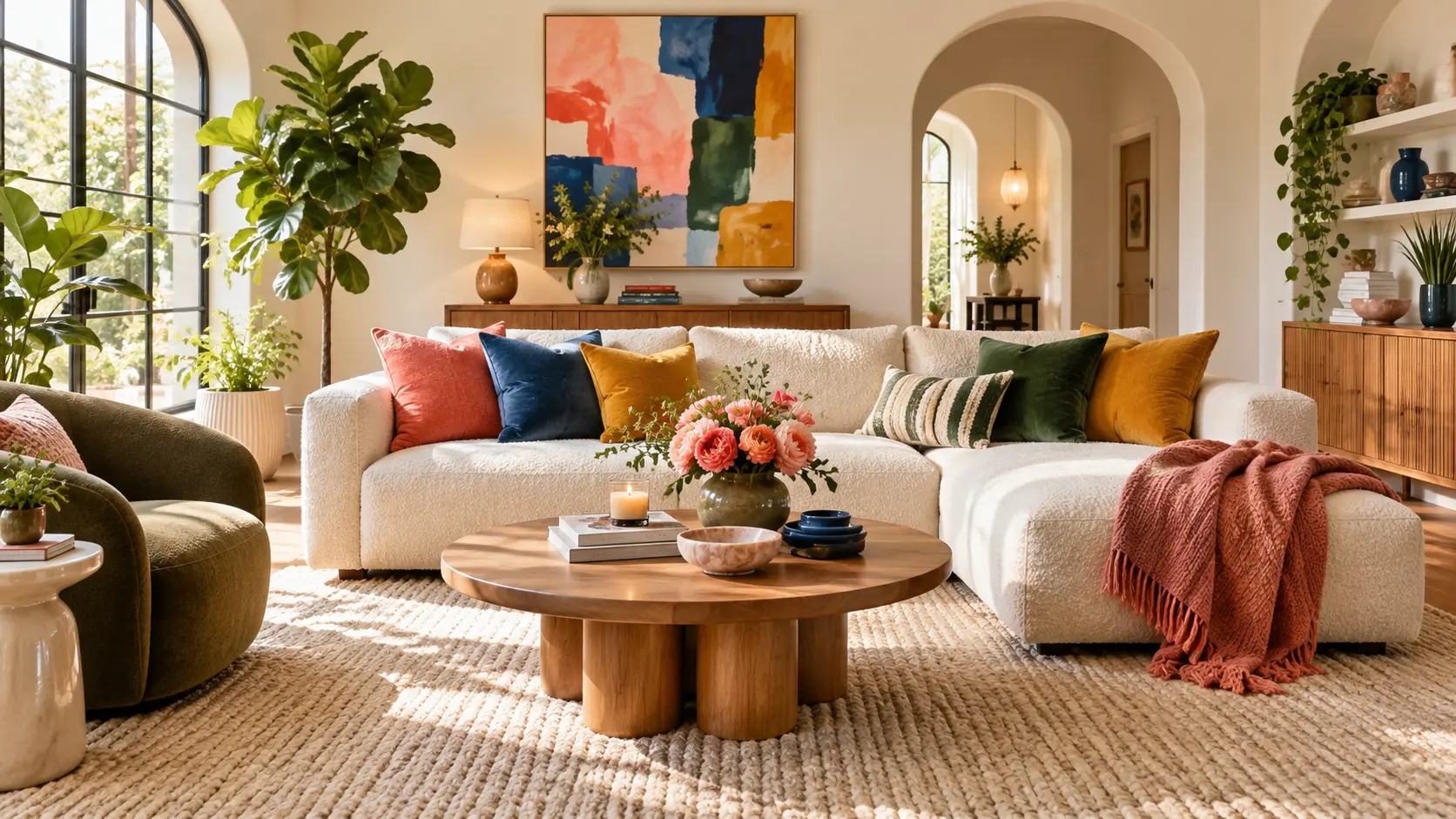
A cozy room shouldn’t feel beige, predictable, or packed with farmhouse signs. The best Cozy Home Decor Ideas combine comfort with color, texture, flattering light, and furniture that supports everyday life.
These 20 ideas bring a modern Pinterest-inspired look to living rooms, bedrooms, kitchens, bathrooms, and overlooked corners. Each one uses practical styling choices, from layered rugs to colorful ceramics, so you can create a home that feels warm, lively, and personal without overwhelming the room.
1. Style a Warm Neutral Living Room
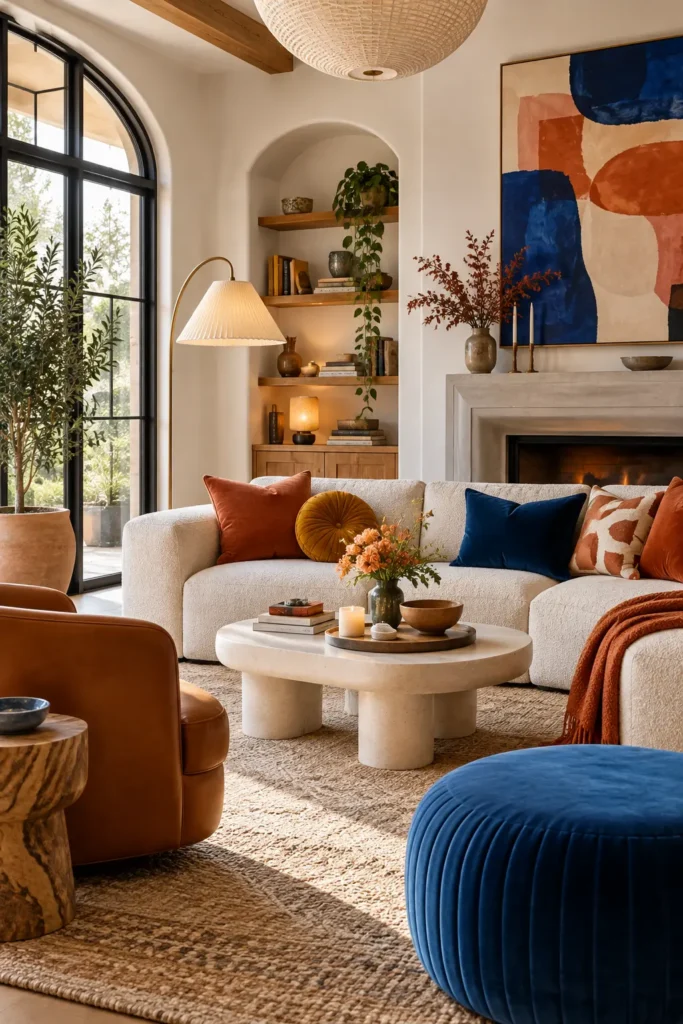
Use cream upholstery and warm white walls as a flexible base, then introduce rust, cobalt blue, mustard, and forest green through cushions, artwork, and one accent chair. A curved coffee table will soften the straight lines created by walls and windows.
Keep the coffee table about 16–18 inches from the sofa so the seating area remains comfortable to use. Choose textured upholstery rather than smooth pale fabric, which tends to show stains more quickly. The colorful accents give the neutral room energy without making expensive furniture harder to coordinate.
2. Build a Window Reading Nook
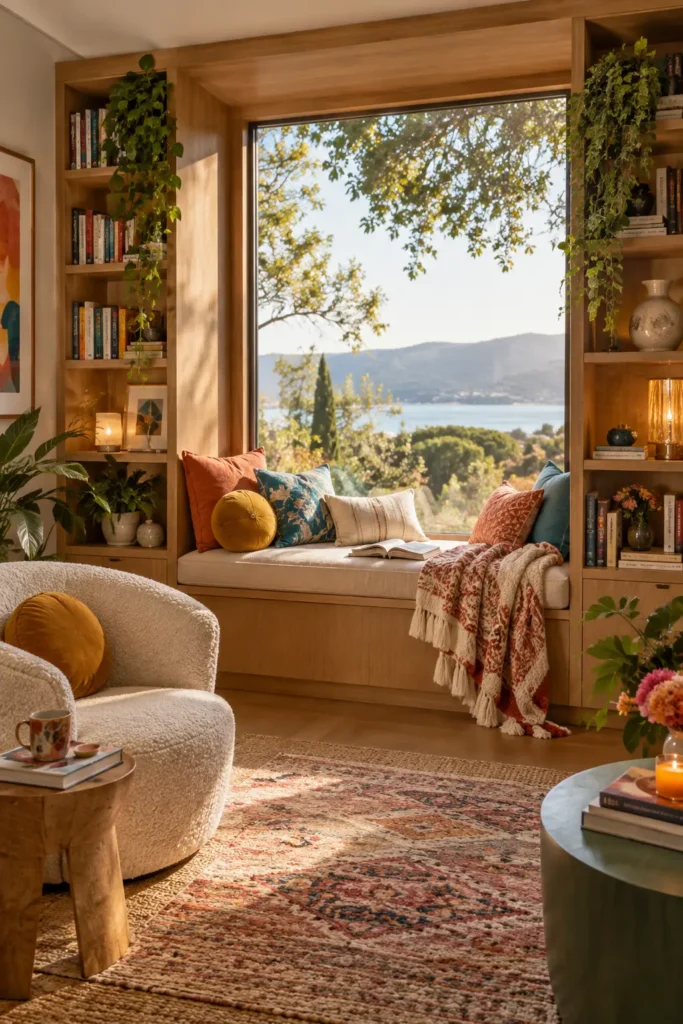
Turn a wide window into a reading spot with a built-in bench or a freestanding storage bench that fits beneath the sill. Add a seat cushion at least 3 inches thick, then layer two or three patterned pillows rather than filling the entire bench.
Surround the nook with warm wood shelves, books, a small lamp, and one trailing plant. Coral, teal, and ochre fabrics stand out beautifully against natural wood. If direct sunlight reaches the window, select fade-resistant upholstery or removable pillow covers that you can replace without rebuilding the whole nook.
3. Add Soft Bedroom Fairy Lights
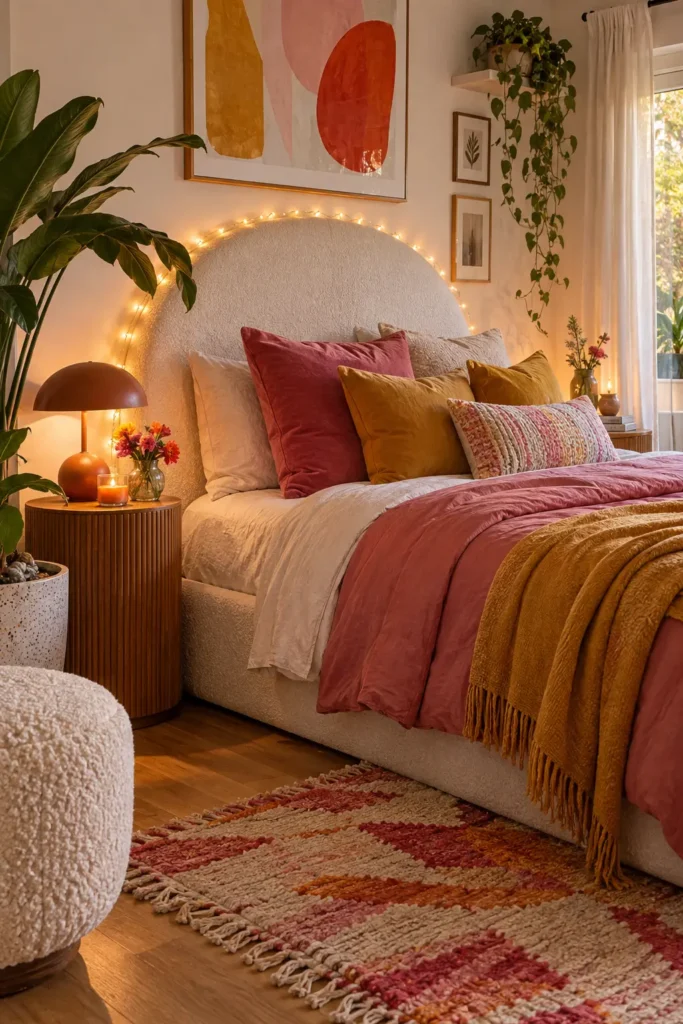
Fairy lights can look grown-up when they follow the architecture instead of hanging randomly. Run a warm white strand around a curved headboard, canopy frame, or recessed wall panel. Hide the cord behind furniture and avoid mixing several different light temperatures.
Pair the lights with rose, terracotta, or mustard bedding and one large abstract print. Warm white bulbs flatter these colors, while cool blue LEDs can make the room feel sharp. Use plug-in lights with a dimmer or timer so you don’t need to reach behind the bed every night.
4. Layer Rugs and Soft Textures
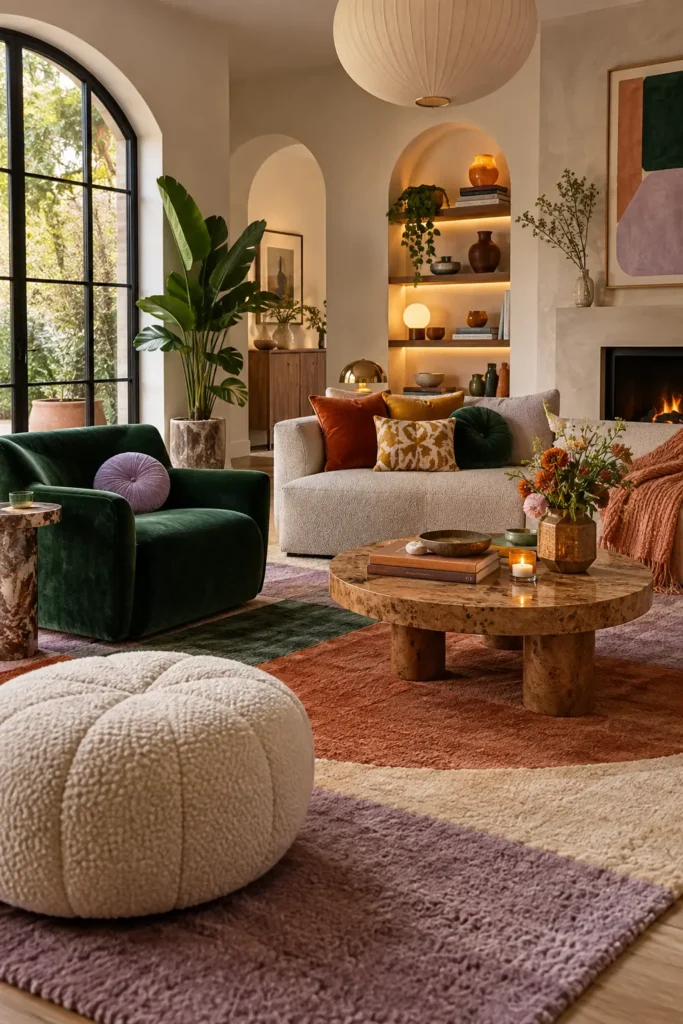
Layering rugs gives a living room more depth, especially when the floor feels empty or the main rug is slightly undersized. Begin with a flat-woven natural-fiber rug, then place a smaller patterned or plush rug over it at an angle or within the seating zone.
At least the front legs of the main sofa and chairs should rest on the larger rug. Continue the texture through velvet cushions, a bouclé ottoman, and a woven throw. Use rug pads beneath both layers to prevent shifting, particularly in homes with children or pets.
5. Create an Earthy Gallery Wall
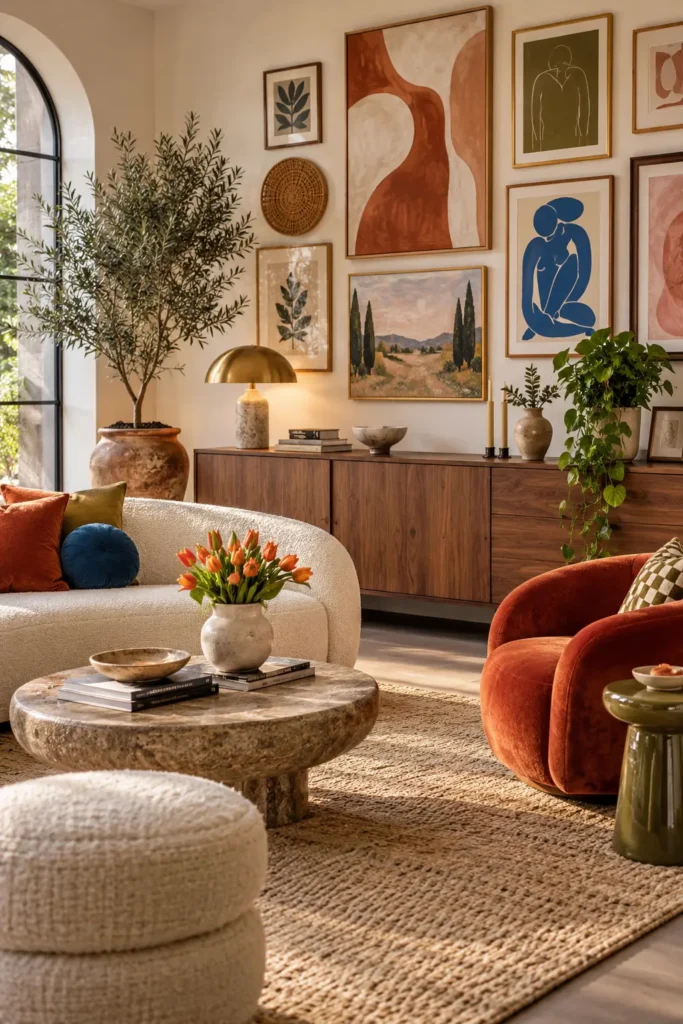
Build a gallery wall around clay, olive, blush, ochre, and deep blue artwork. Mix abstract prints, botanical images, and one or two textured pieces, but repeat the frame finish to keep the arrangement connected.
Lay the composition on the floor before making holes. When the wall isn’t positioned above furniture, center the overall grouping roughly 57–60 inches from the floor. Matte prints reduce glare in bright rooms, while inexpensive shiny frames often reveal their price quickly. Secondhand wood frames can look more convincing after light sanding or a consistent coat of paint.
6. Style a Candlelit Coffee Table
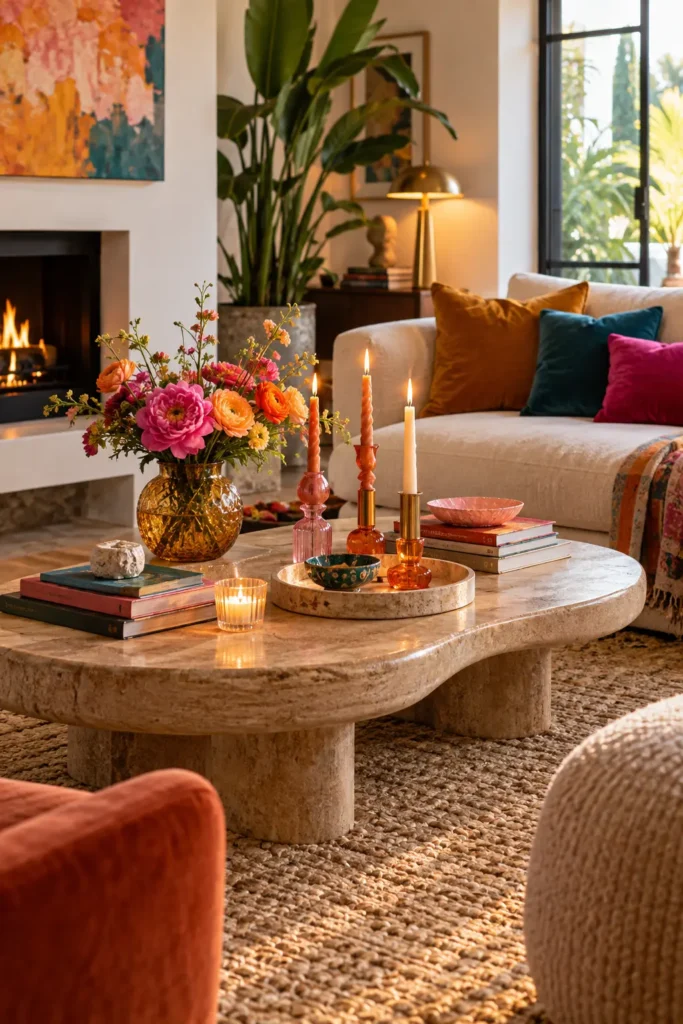
Treat your coffee table as a working surface, not a permanent display shelf. Start with a tray containing two or three candles of different heights, then add a low flower arrangement, a small bowl, and no more than two books.
Colorful glass candleholders in amber, pink, or teal catch daylight even when the candles aren’t lit. Keep tall objects away from the center so people can see across the room. Flameless wax candles are a practical choice for homes with pets or children, but choose styles with recessed, warm-toned flames rather than bright plastic bulbs.
7. Refresh the Fireplace Mantel
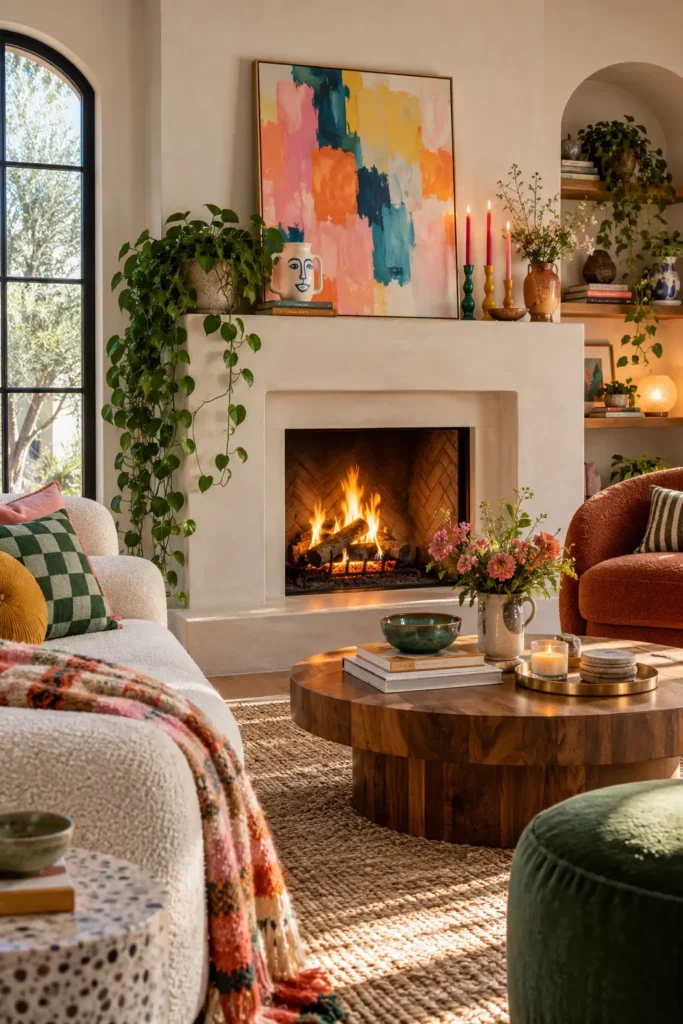
Use the fireplace as the room’s visual anchor with one large artwork placed slightly off-center. Balance it with colorful taper candles, a sculptural vase, and trailing greenery instead of lining up several small accessories.
Leave some open space across the mantel so each object remains visible. If the fireplace operates, confirm the required clearance for art, greenery, and candles before decorating. Real wax can soften near high heat, so battery-operated tapers may be safer. A plaster or limewash-style surround provides a quiet background for bolder colors and unusual shapes.
8. Design a Modern Cottagecore Corner
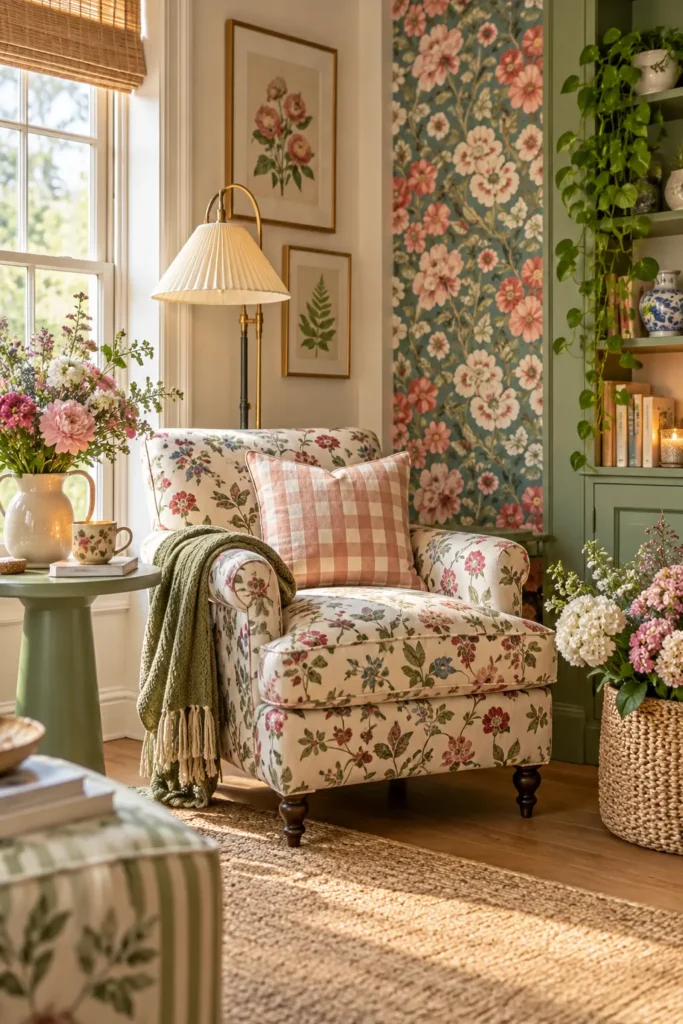
Give cottagecore a cleaner direction with one floral upholstered chair, a narrow wallpaper panel, and a painted side table. Sage green, dusty blue, and warm pink feel garden-inspired without turning the entire room into a floral theme.
Use the pattern on a single focal surface, then surround it with plain walls and streamlined lighting. Peel-and-stick wallpaper may suit renters, but test a sample because some products can damage weak paint. A removable chair cover offers a lower-commitment way to introduce florals and can be washed more easily than fixed upholstery.
9. Brighten a Beige Bedroom
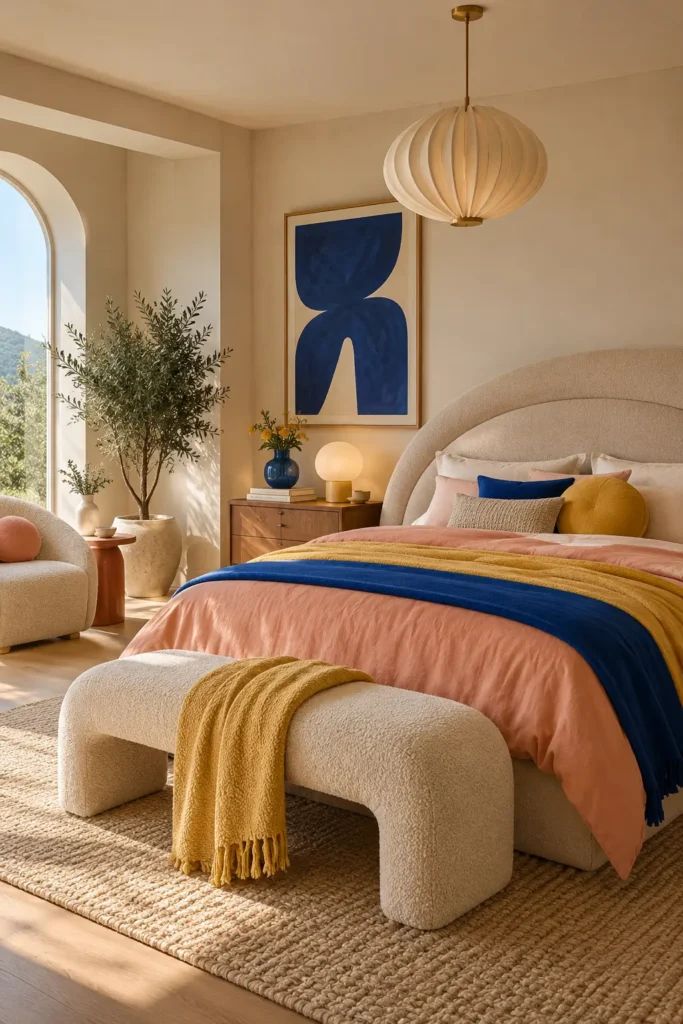
A beige bedroom feels more intentional when it contains strong shapes and controlled color. Choose a curved upholstered headboard and repeat its rounded form through a globe lamp or soft-edged bench. Add cobalt blue, peach, and butter yellow through bedding and art.
Keep approximately 60–70% of the room neutral so the brighter shades remain restful. Instead of buying several decorative pillows, invest in one washable coverlet with a clear color block. Beige can turn muddy under weak lighting, so use warm bulbs with enough brightness for dressing, cleaning, and reading.
10. Curate Wooden Floating Shelves
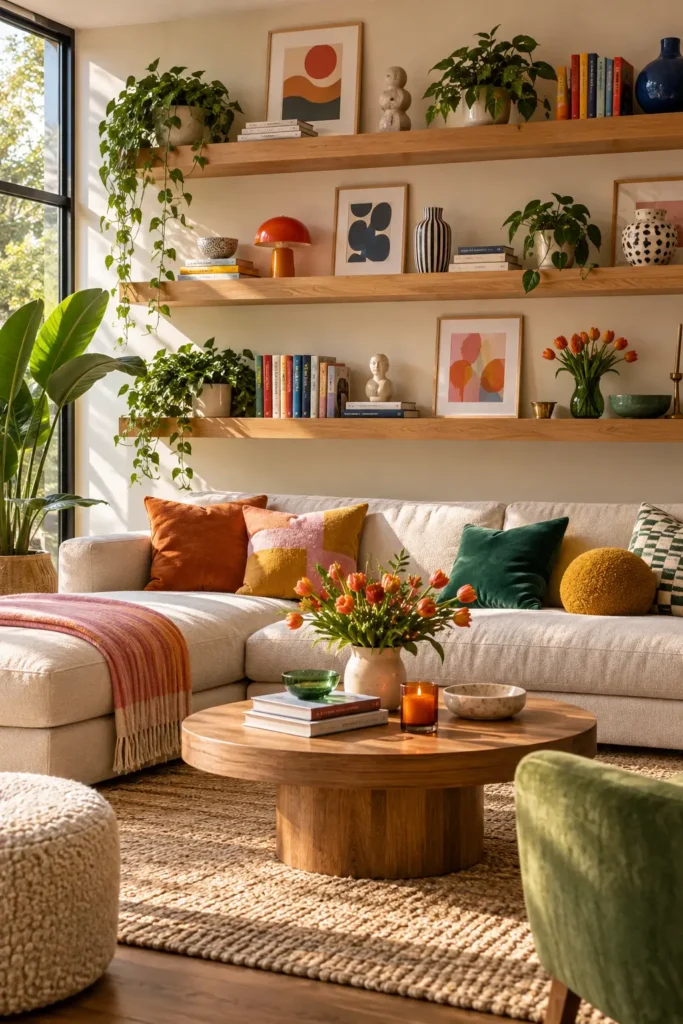
Install floating shelves where their depth won’t interfere with seating or walking routes. Shelves measuring around 8–10 inches deep generally hold books, framed prints, and ceramics without projecting too far into the room.
Create small groups rather than spreading accessories evenly from edge to edge. Combine one tall object, one low item, and a plant, then leave visible gaps between arrangements. Warm oak looks especially lively beside orange, blue, and green ceramics. Use wall anchors suitable for the wall material; decorative shelves become unsafe when heavy books exceed their supported weight.
11. Add a Chunky Knit Blanket
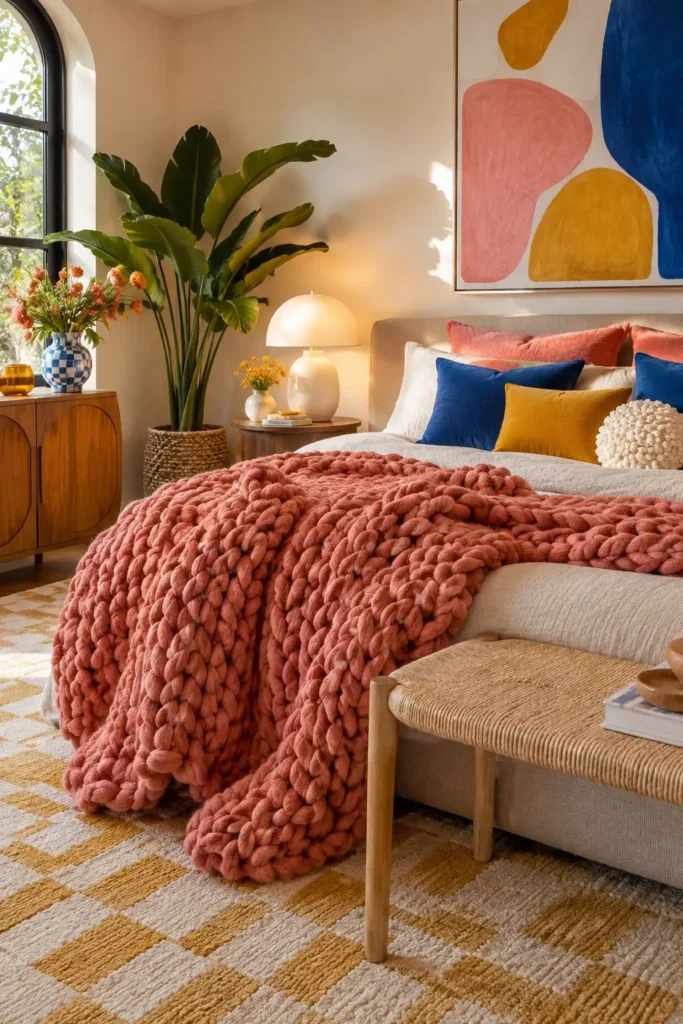
An oversized knit blanket introduces softness and strong visual texture, especially on a simple sofa or upholstered bed. Choose coral, moss green, or ochre instead of defaulting to cream, then repeat that color once in a cushion or artwork.
Drape the blanket loosely across one-third of the furniture rather than covering the entire surface. Extremely loose knits can snag on jewelry, claws, and zippers, so homes with pets may benefit from a tighter woven alternative. Washable cotton blends are usually easier to maintain than heavy wool and remain useful beyond winter.
12. Make the Entryway Welcoming
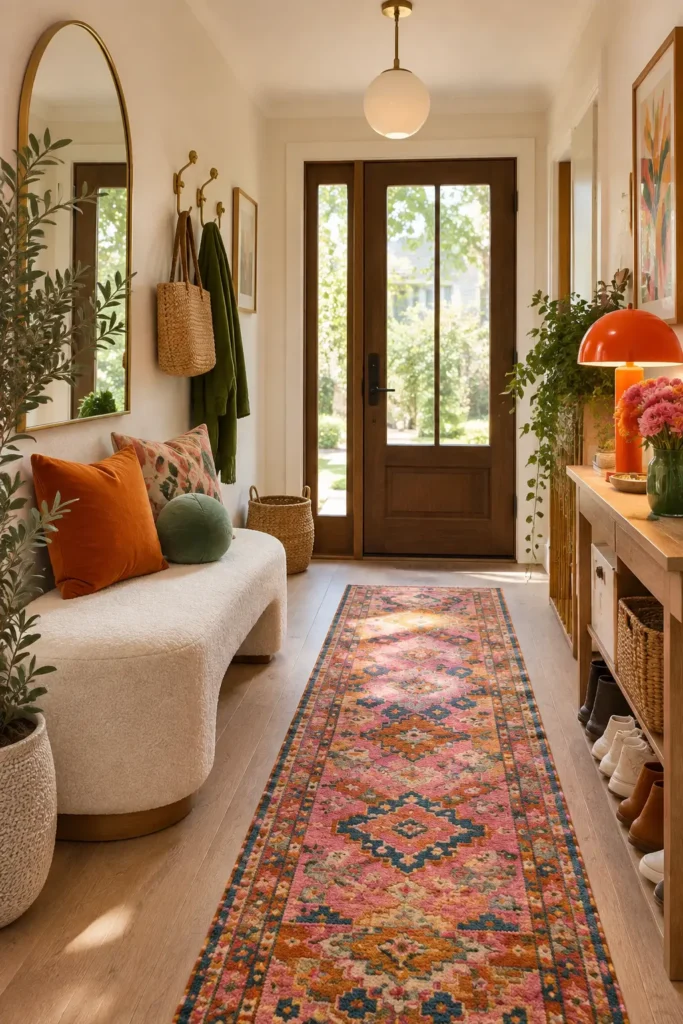
Place a slim bench along one wall and leave at least 36 inches of clear walking space where possible. Add an arched mirror, a patterned runner, wall hooks, and a narrow console so the entry feels decorated without blocking traffic.
A closed basket beneath the bench can hold shoes, dog supplies, or reusable bags. Choose a runner with a low pile because thick rugs may catch beneath the door. One orange lamp or colorful cushion supplies a cheerful focal point, while durable performance fabric handles damp coats and everyday contact better than delicate velvet.
For more ways to style this hardworking area, explore these foyer entryway decor ideas for practical furniture, lighting, and storage inspiration.
13. Grow an Indoor Plant Sanctuary
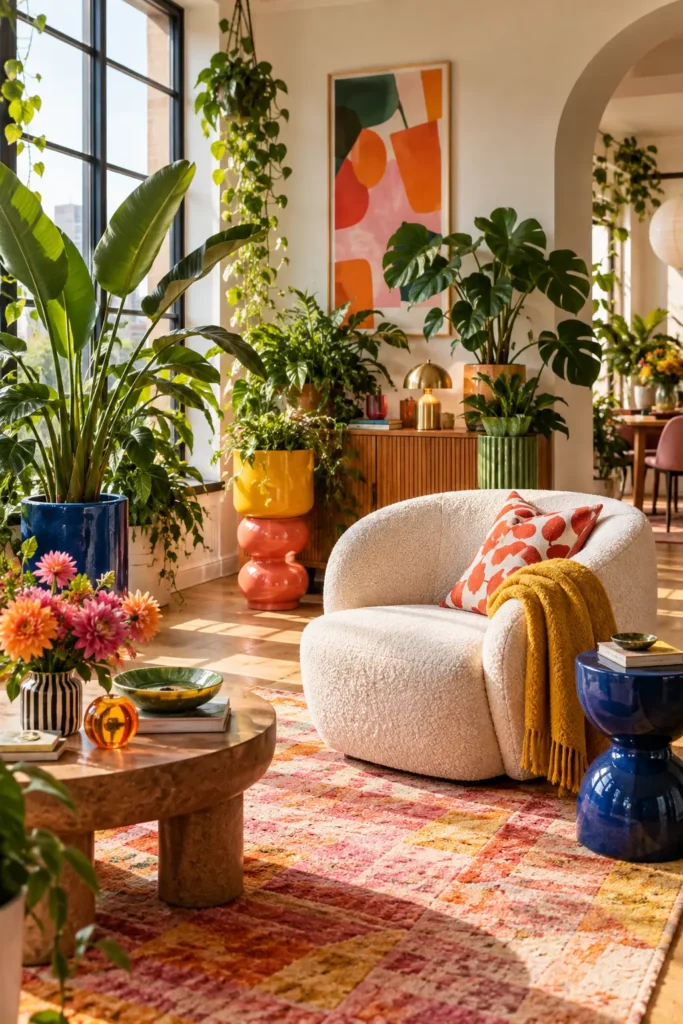
Arrange plants at several heights instead of lining identical pots along the window. Use one tall floor plant, a medium plant on a stand, and trailing varieties on shelves. Colorful planters in blue, yellow, coral, and green create rhythm across the room.
Before purchasing plants, observe where direct sunlight falls throughout the day. A lush arrangement won’t last if every variety receives the wrong light. Place saucers inside decorative pots to protect wood floors and furniture. Grouping plants can also simplify watering, but leave enough space around the leaves for airflow and cleaning.
14. Pair a Vintage Mirror With a Console
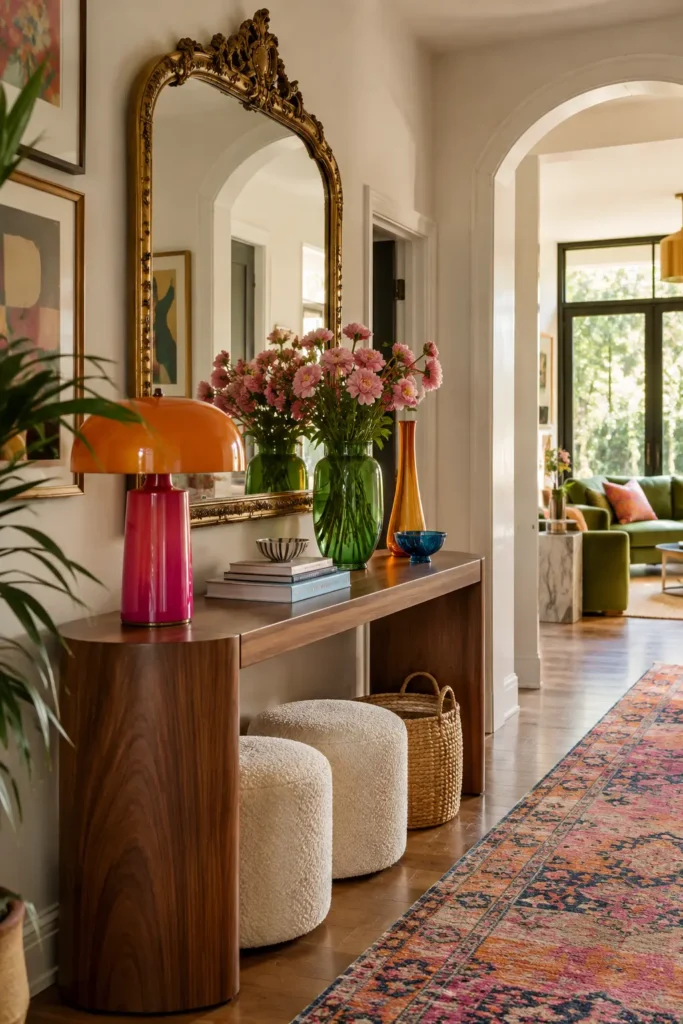
Combine an ornate brass or carved mirror with a simple walnut console to create contrast between old and new. The mirror should measure about two-thirds to three-quarters of the console’s width so it looks connected without overpowering the furniture.
Style the surface with a colorful lamp, two glass vases, flowers, and a short stack of books. Avoid a heavily distressed reproduction with obviously printed “aging”; a genuine secondhand frame usually has more believable variation. Secure a large mirror to wall studs or suitable anchors rather than resting it loosely behind accessories.
15. Turn a Balcony Into a Retreat
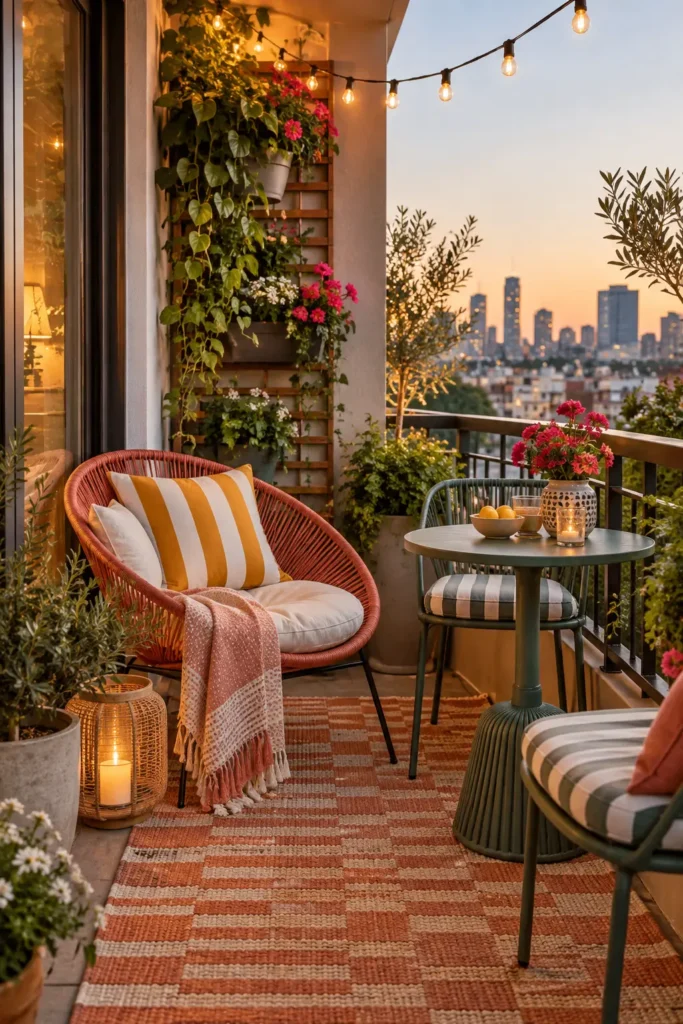
Start with one comfortable outdoor chair rather than squeezing a full furniture set onto a narrow balcony. Add a small pedestal table, striped cushion, washable outdoor rug, and vertical planter to preserve the limited floor area.
Measure the door swing and maintain a direct walking path before buying furniture. Outdoor fabrics resist fading and moisture better than indoor cushions, although they still need time to dry after rain. Solar or weather-rated string lights supply evening glow without running an extension cord through the doorway. Keep heavy planters close to the wall and away from rail edges.
16. Create Boho Floor Seating
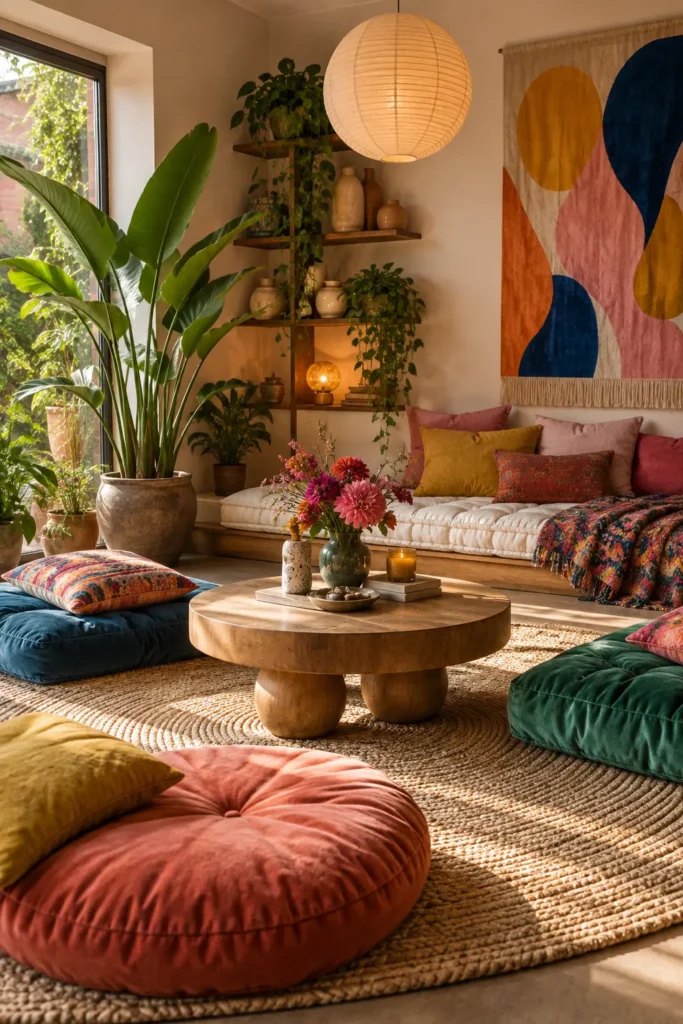
Use oversized floor cushions around a low round table to build an informal conversation area. Jewel-toned velvet or durable woven covers in emerald, navy, coral, and mustard prevent the setup from looking washed out.
Choose cushions with dense filling and removable covers because thin inserts quickly flatten and become uncomfortable. A large round jute rug helps define the zone, while a fabric wall hanging absorbs some echo. This arrangement works well in a relaxed den, but it shouldn’t replace all standard-height seating if older relatives or guests with mobility limitations regularly use the room.
17. Set Up a Kitchen Coffee Station
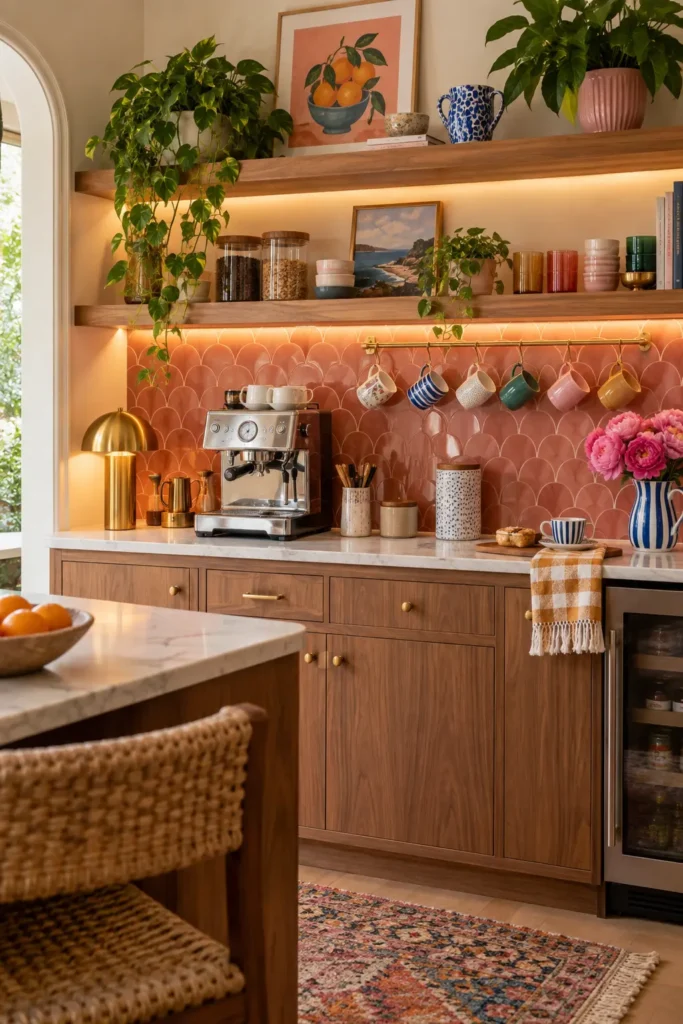
Dedicate one section of counter to the coffee machine, grinder, mugs, and daily supplies. Store beans and sugar in sealed containers, then use a brass rail or open shelf for your most attractive cups.
A scalloped backsplash in coral, green, or blue gives the station a distinct identity without requiring color across the whole kitchen. Under-shelf lighting makes early mornings easier and highlights the tile texture. Leave clear space around appliances for ventilation and cleaning. Too many jars may photograph well, but they often collect grease and dust beside active cooking areas.
18. Dress a Rustic Dining Table
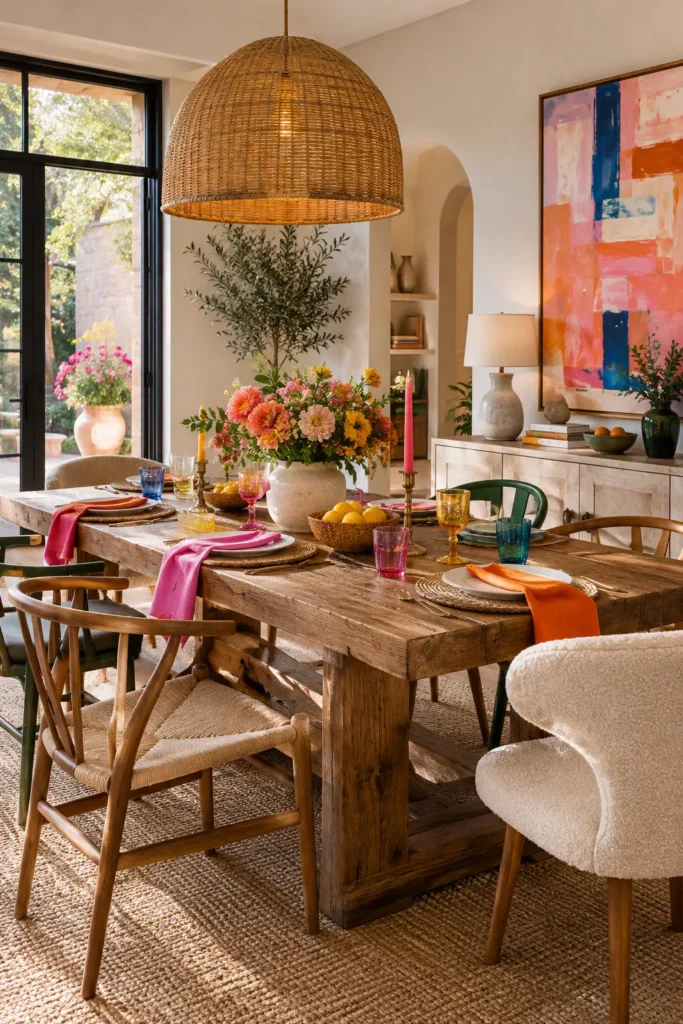
Pair a solid wood table with mixed chairs that share one feature, such as similar seat height, wood tone, or curved backs. Colorful linen napkins, tinted glassware, and fresh flowers add energy without hiding the grain of the table.
Allow about 24 inches of table width per person and roughly 36 inches behind chairs where regular traffic passes. Use a low centerpiece so guests can see one another. Natural linen becomes softer with washing, but it wrinkles easily; cotton-linen blends provide a relaxed finish with less ironing for everyday meals.
19. Soften a Modern Canopy Bed
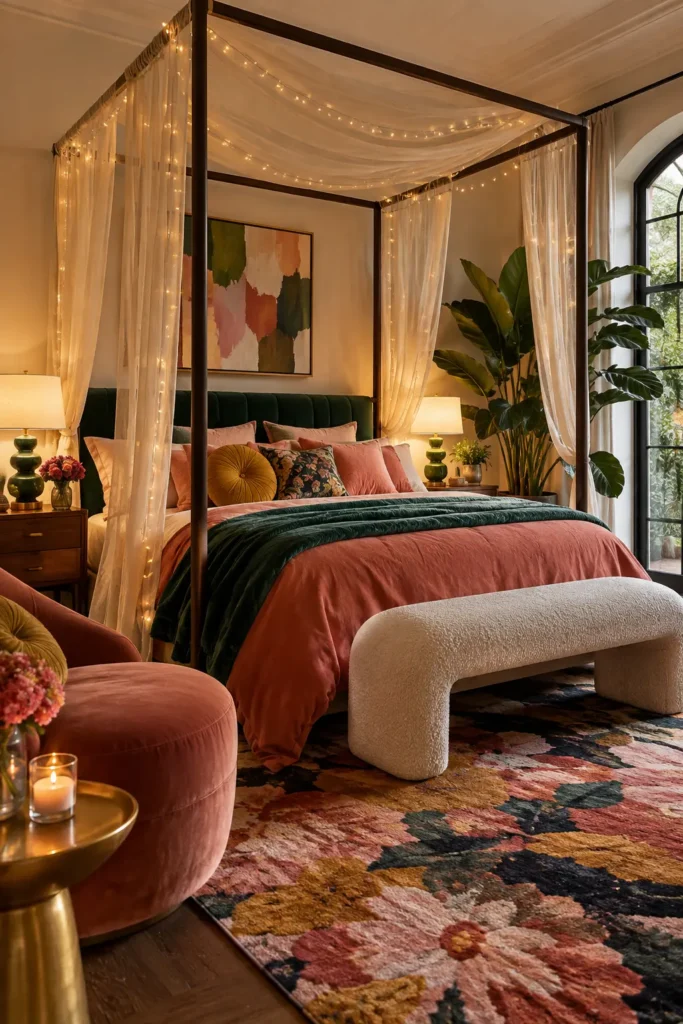
Choose a slim canopy frame so the bed doesn’t appear too heavy, especially beneath an 8-foot ceiling. Drape lightweight sheer fabric across the top or behind the headboard rather than wrapping every post with thick material.
Thread warm micro-lights along the upper frame and secure loose cords carefully. Coral bedding, emerald velvet, and a patterned rug make the dark structure feel inviting rather than severe. Keep fabric away from hot bulbs, ceiling fans, and heating vents. In compact rooms, limit draping to the headboard wall to preserve visual space and simplify cleaning.
20. Create a Colorful Bathroom Spa
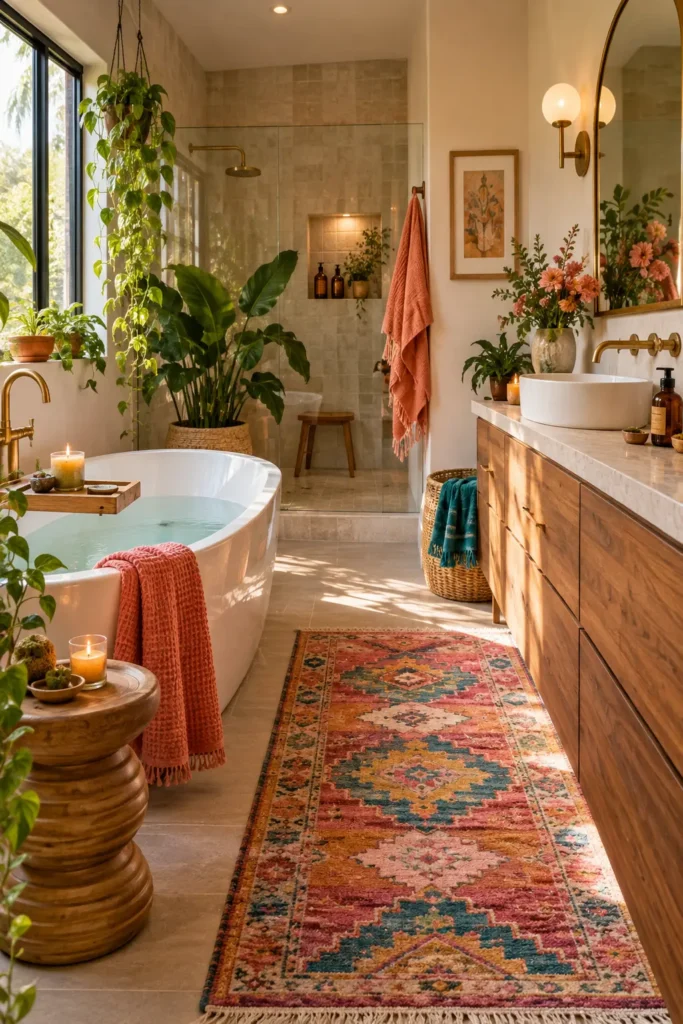
Give a neutral bathroom more character with a patterned runner, coral towels, teal textiles, amber bottles, and a moisture-tolerant plant. Warm wood and brushed brass offset cool tile, while an arched mirror breaks up a room filled with straight edges.
Select a washable, low-pile rug with a nonslip pad instead of using an indoor vintage rug beside the tub. Store frequently used products on a tray, but keep most packaging inside drawers to reduce visual noise. Bathroom candles should stay away from towels, curtains, and open shelving, particularly in narrow layouts.
How to Combine Cozy Decor Without Clutter
Choose one warm neutral and two main accent colors before shopping. Let the neutral cover large surfaces, use the first accent on textiles, and reserve the second for smaller objects such as lamps, vases, and frames. This creates repetition without making every room identical.
Texture should also serve a purpose. Rugs soften hard floors, curtains control glare, baskets hide supplies, and lamps improve evening light. When an object contributes neither function nor a clear visual role, removing it often makes the remaining colors and materials look stronger.