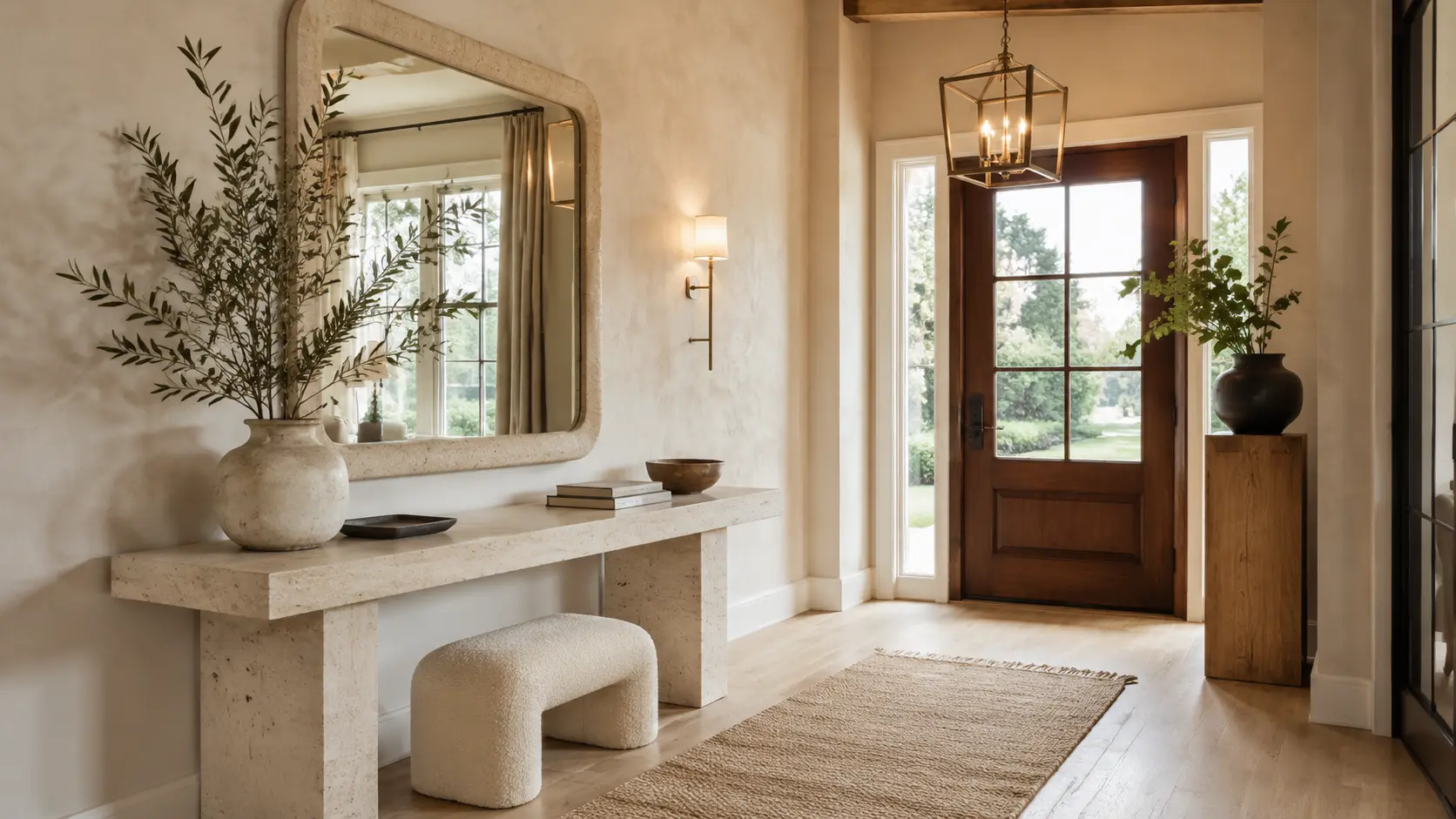
The foyer sets the tone for the rest of your home, but it can be difficult to make this high-traffic area look polished without blocking the walkway. These 13 foyer entryway decor ideas focus on modern furniture, useful storage, natural materials, practical layouts, and strong focal points that work in real houses, apartments, and smaller spaces.
You’ll find options ranging from a sculptural stone console and an olive tree to hidden family storage and renter-friendly textile art. Each idea is designed to look attractive in photographs while still supporting everyday routines such as storing keys, shoes, bags, and outerwear.
1. Organic Mirror and Stone Console
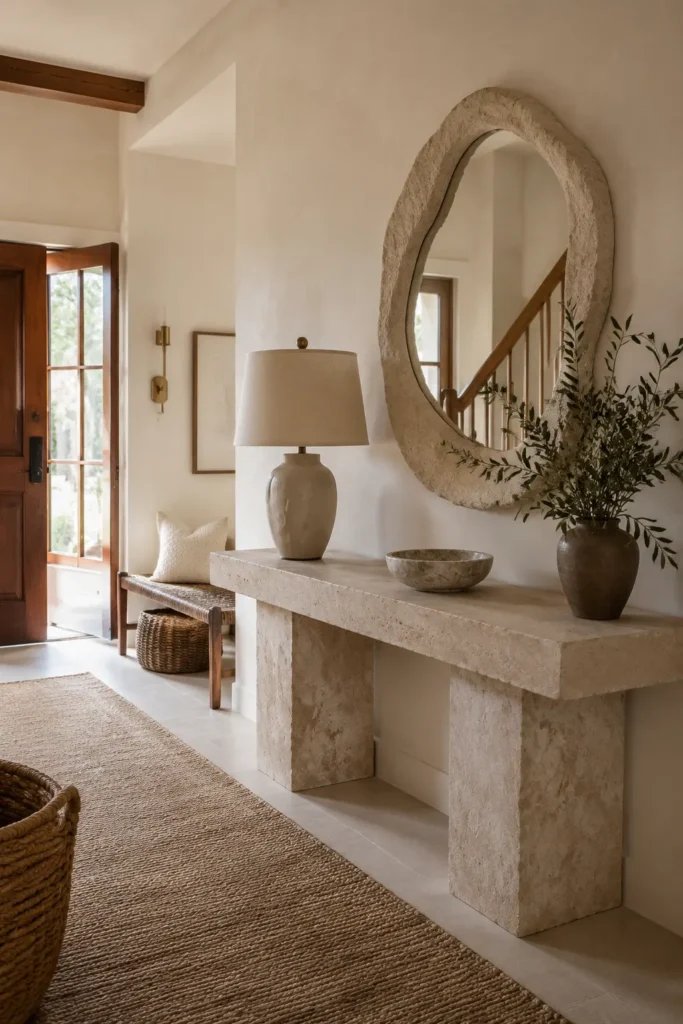
A slim limestone or travertine console creates a solid foundation for a modern foyer. Hang an oversized organic-shaped mirror above it, keeping the mirror’s center close to eye level or slightly higher when the console is tall. A walnut bench, woven basket, and aged-brass lamp soften the stone’s weight.
Choose a console no deeper than 12 to 16 inches if the entry is narrow. Leave at least 36 inches of clear walking space in front so the furniture doesn’t interfere with the door or staircase. Matte stone hides small marks better than polished surfaces, while a sealed finish makes cleaning easier.
2. Olive Built-In Entryway Library
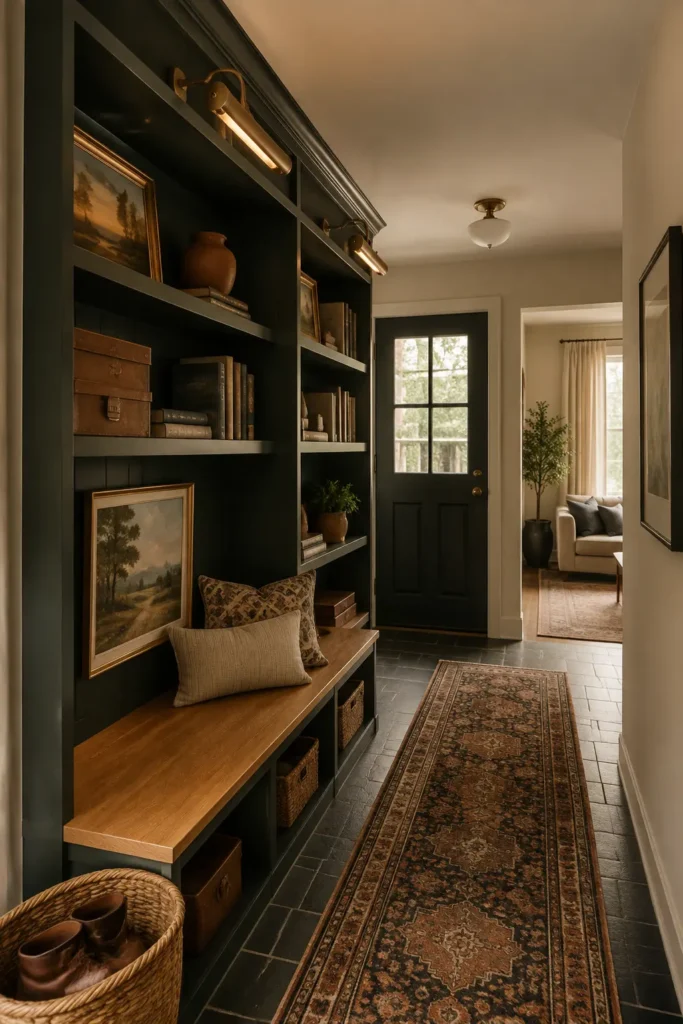
Use one wall for a shallow built-in bookcase painted olive charcoal. Add a honey-oak bench in the lower section, then use leather boxes and woven baskets to hide shoes, gloves, and bags. A few art books, pottery pieces, and framed landscapes keep the shelving from looking like a storage closet.
This arrangement works especially well in a townhouse foyer or a narrow hallway because it uses vertical space. Keep shelves 10 to 12 inches deep so they don’t reduce the passageway. Picture lights add warmth, but use dimmable LEDs so the dark paint doesn’t look flat at night.
3. Terracotta and Cobalt Tile Niche
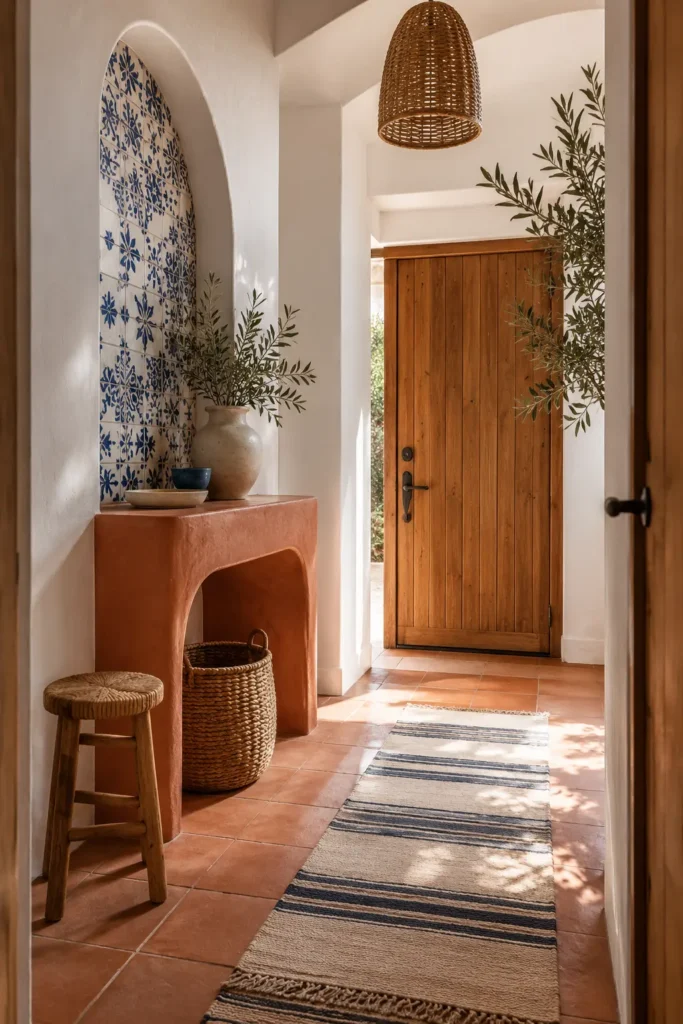
For a foyer with a warm, collected feeling, paint a curved console wall terracotta and add a small recessed niche lined with cobalt-and-white handmade tile. A cane stool, travertine tray, and olive branches add texture without filling every surface.
Keep the tile confined to one niche rather than covering the entire entry wall. This gives the color a clear boundary and makes the design easier to recreate. Handmade tile varies slightly in tone, which is part of its charm, but order samples first to check how the blue looks under your home’s lighting.
4. Japandi Peg Rail and Floating Cabinet
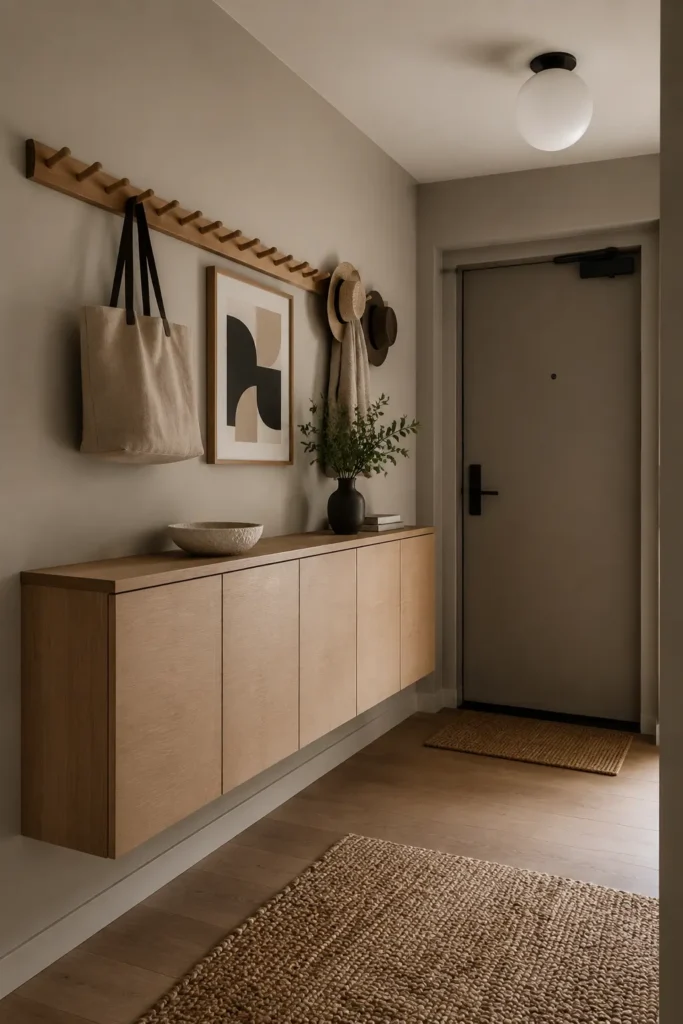
A floating pale-oak shoe cabinet paired with a long sculptural peg rail is an efficient choice for a small entryway. Mount the cabinet about 6 to 8 inches above the floor, then install the rail 60 to 66 inches from the floor depending on household height. Leave hooks spaced about 8 inches apart.
Use only a few visible items, such as a linen tote or neutral hat, and store the rest behind closed doors. The open floor beneath the cabinet makes a compact apartment entry feel wider. White oak, greige paint, woven mats, and matte black details create a calm Japandi-inspired balance.
5. Curved Staircase and Vintage Art
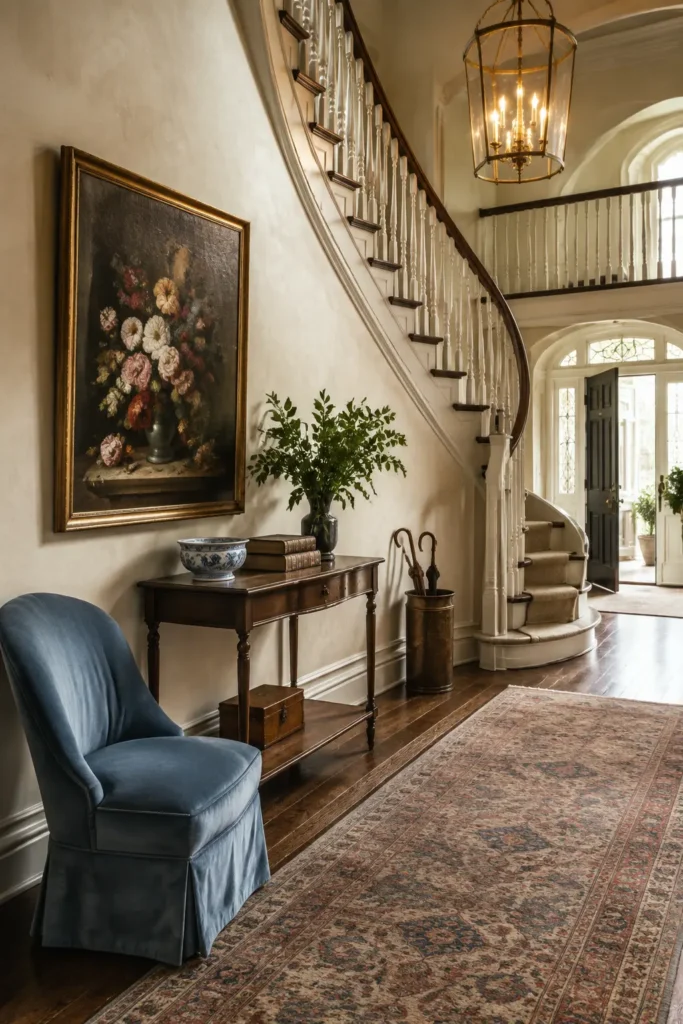
If your foyer includes a curved staircase, let the architecture lead the design. Place a narrow walnut console beneath the stair curve and hang one large vintage landscape or floral painting above it. A dusty-blue velvet slipper chair can sit nearby, angled slightly toward the entrance rather than blocking the stairs.
Avoid using several small frames around a strong architectural feature. One substantial painting creates better visual weight and is easier to read from the front door. Velvet looks rich but can show pressure marks, so choose a durable performance blend if the chair will be used daily.
6. Oxblood Door and Black Console
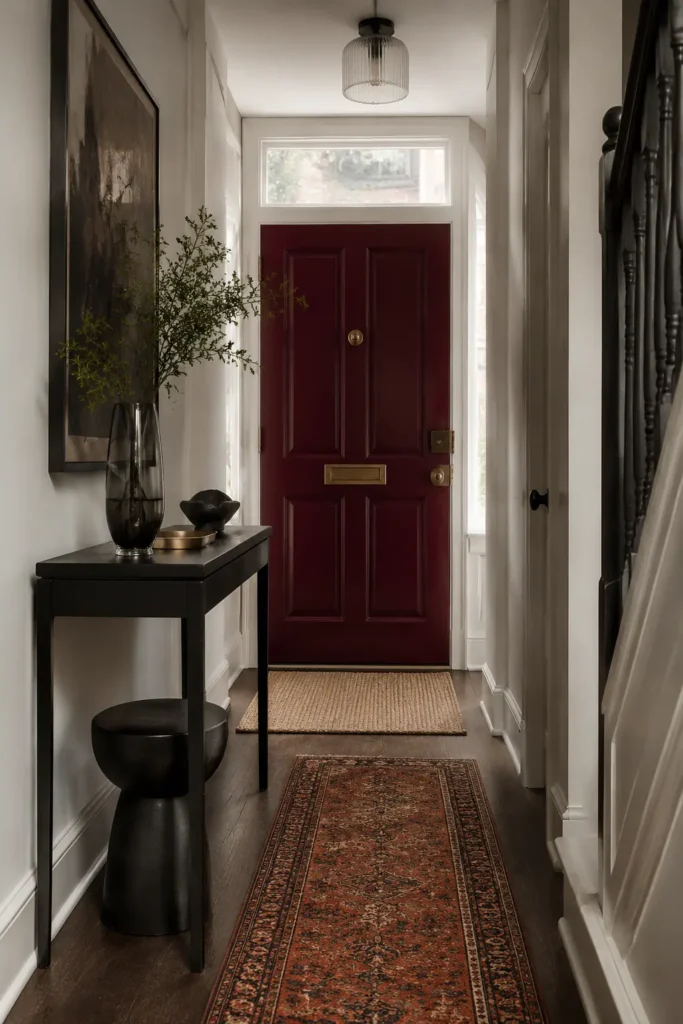
A deep oxblood front door creates a dramatic focal point in an otherwise restrained foyer. Keep the surrounding walls warm white and place a narrow matte-black console along the side wall. Add a smoked-glass vase, brass tray, sculptural bowl, and sisal runner for contrast.
This idea works best when the red door remains mostly clear. Avoid placing a large wreath or crowded accessories over it, especially in a narrow entry. Oxblood can appear brown in dim light, so use warm but bright bulbs around 2700–3000K to preserve its depth.
7. Foyer with a Tall Olive Tree
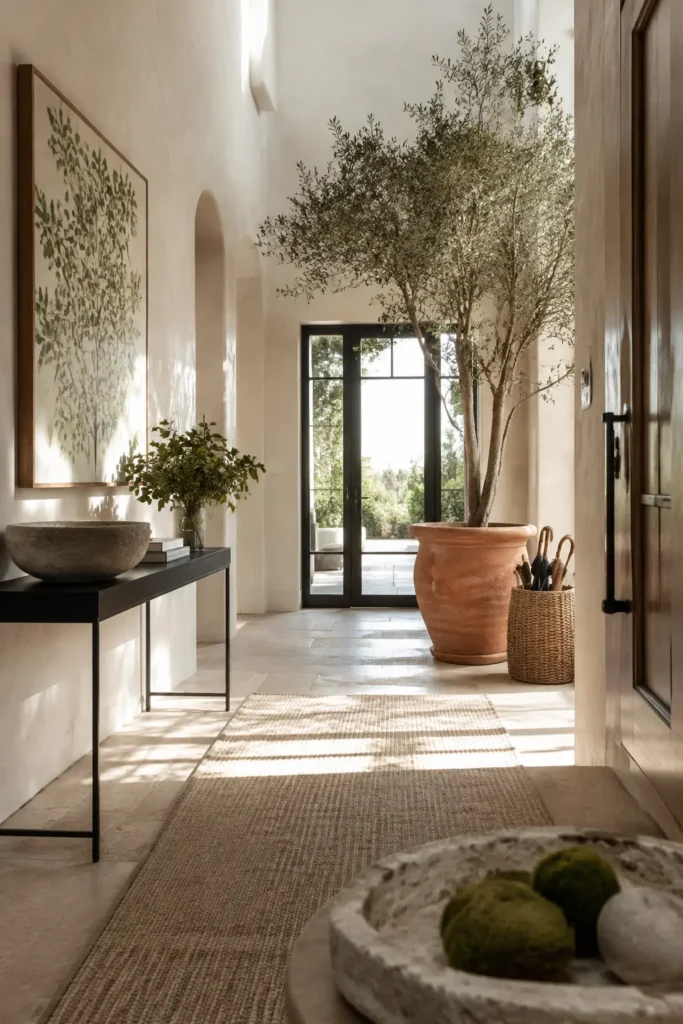
A tall olive tree gives a bright foyer height and movement without requiring a large furniture collection. Place it near a glass-paneled door or tall window where it can receive strong indirect light. A handmade terracotta planter beside a slim black console adds earthy contrast.
Choose a realistic tree size for the room; the canopy should not press against the ceiling or obstruct the door swing. Use a waterproof saucer under the planter and keep the leaves away from high-traffic corners. If natural light is limited, select a quality faux tree with varied leaf color rather than a glossy plastic-looking option.
8. Checkerboard Floor and Fluted Console
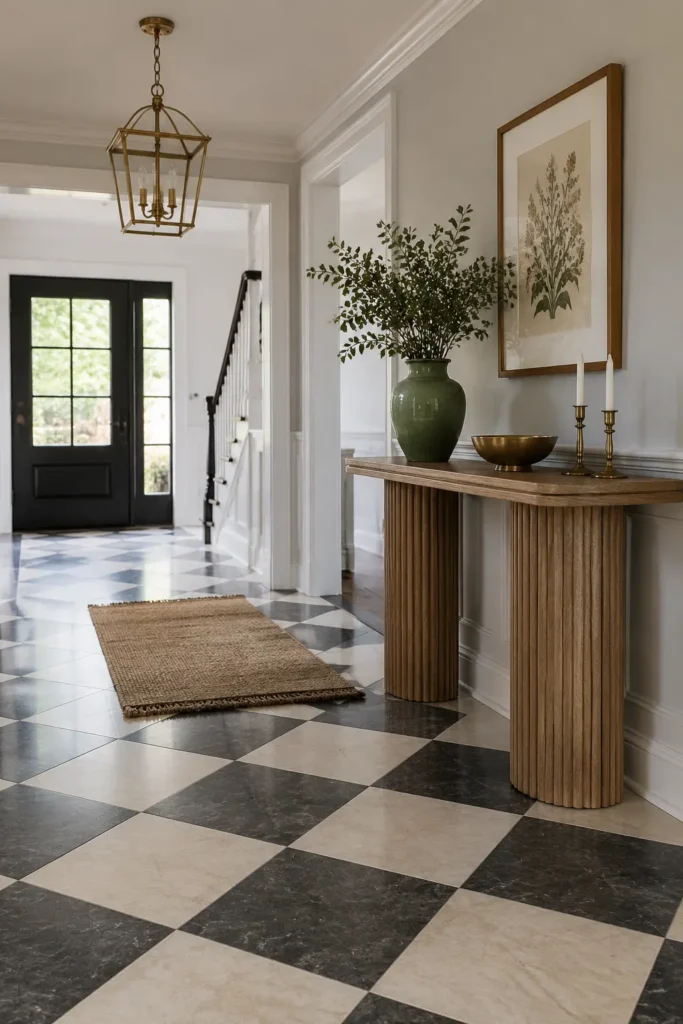
Cream-and-charcoal checkerboard flooring can carry the visual interest in a modern foyer, allowing the walls and furniture to stay simple. Pair it with a pale-gray wall, fluted-oak console, brass lantern, and one green ceramic vase.
Large-format porcelain tile is often easier to maintain than marble in a busy entrance. Use a low-pile runner only where it won’t hide too much of the pattern, and choose a slip-resistant finish for safety. Keep the console about 12 to 16 inches deep so the floor remains visible from the front door.
9. Illuminated Plaster Arch Nook
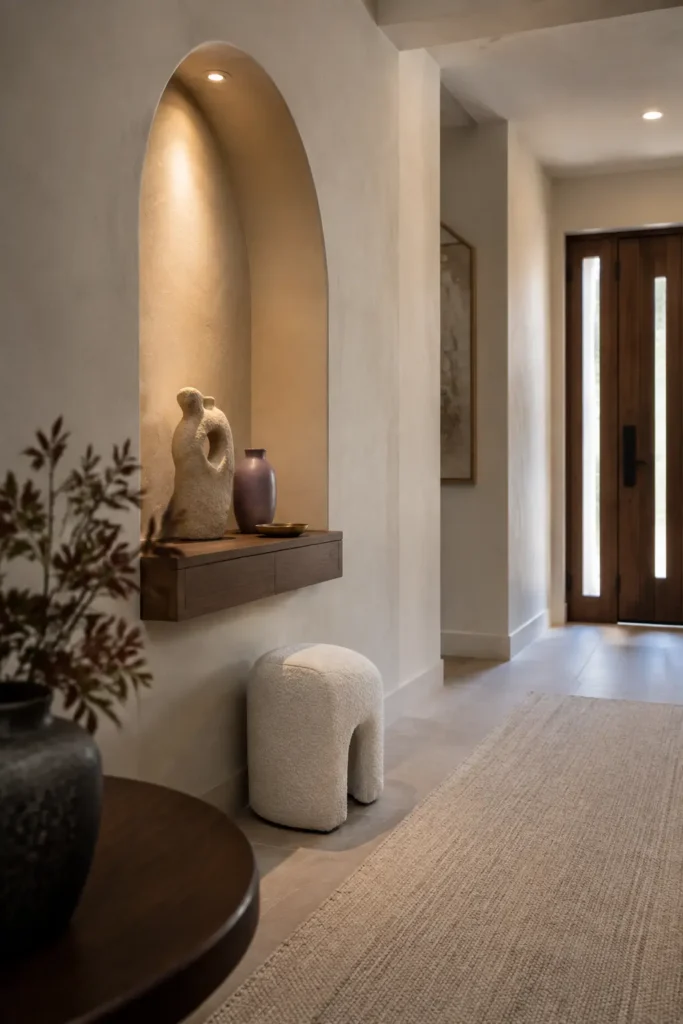
Create a recessed arch in a blank foyer wall with a floating teak shelf and concealed drawer below. A warm LED strip inside the arch highlights a handmade ceramic sculpture, while a small boucle stool adds a comfortable place to sit.
The arch should be wide enough to look intentional but not so large that it competes with the door. A niche about 30 to 40 inches wide can hold a few useful objects without becoming cluttered. Venetian plaster hides minor wall irregularities, although it requires more skilled installation than standard paint.
10. Dusty Pink and Walnut Entry
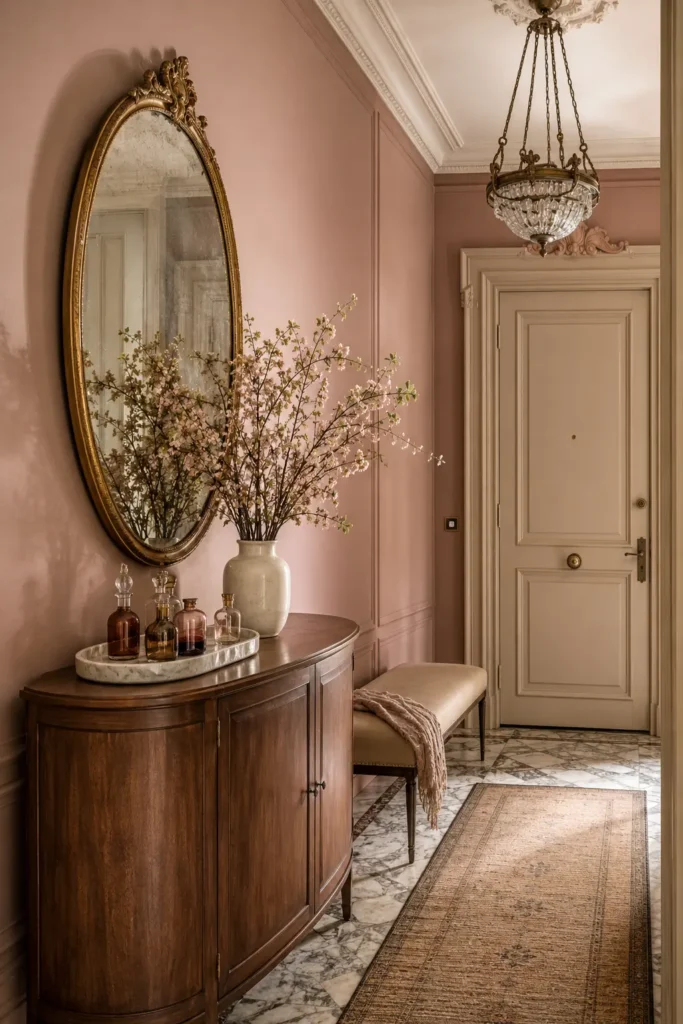
Dusty-rose walls give a modern foyer softness without making it look childish. Place a curved walnut console beneath a large oval mirror with an aged-gold frame. A narrow upholstered bench, marble tray, and small floral arrangement complete the composition.
Use warm ivory trim to keep the pink from feeling too saturated. Walnut’s darker grain grounds the lighter wall color and adds contrast. An oval mirror is especially useful in a tight entry because its rounded shape breaks up hard corners while reflecting light into the hallway.
11. Fluted Family Storage Wall
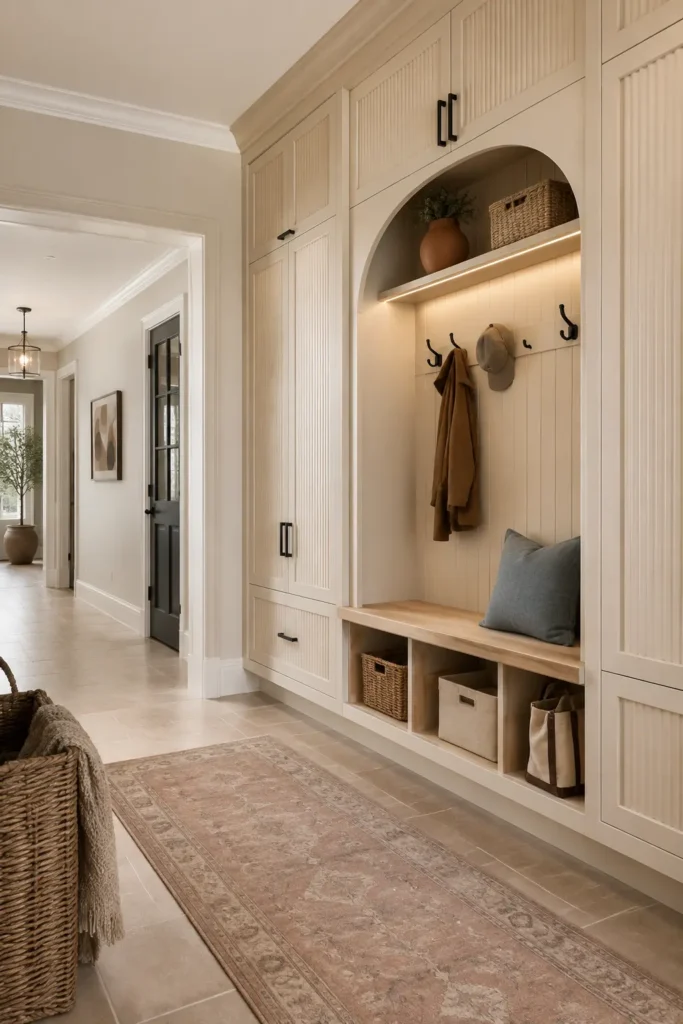
For a busy household, install full-height cream cabinetry with fluted fronts, open cubbies, and a central arched bench. Use the bench for shoes, baskets for smaller accessories, and concealed doors for coats, backpacks, and pet supplies. A dusty-blue cushion adds a controlled accent color.
Make sure the cabinet doors don’t interfere with the front door or nearby hallway. Durable laminate or painted MDF can be more practical than delicate natural wood in a family entry. Add integrated lighting inside the cubbies so dark storage areas remain easy to use after sunset.
12. Teal Botanical Wallpaper Wall
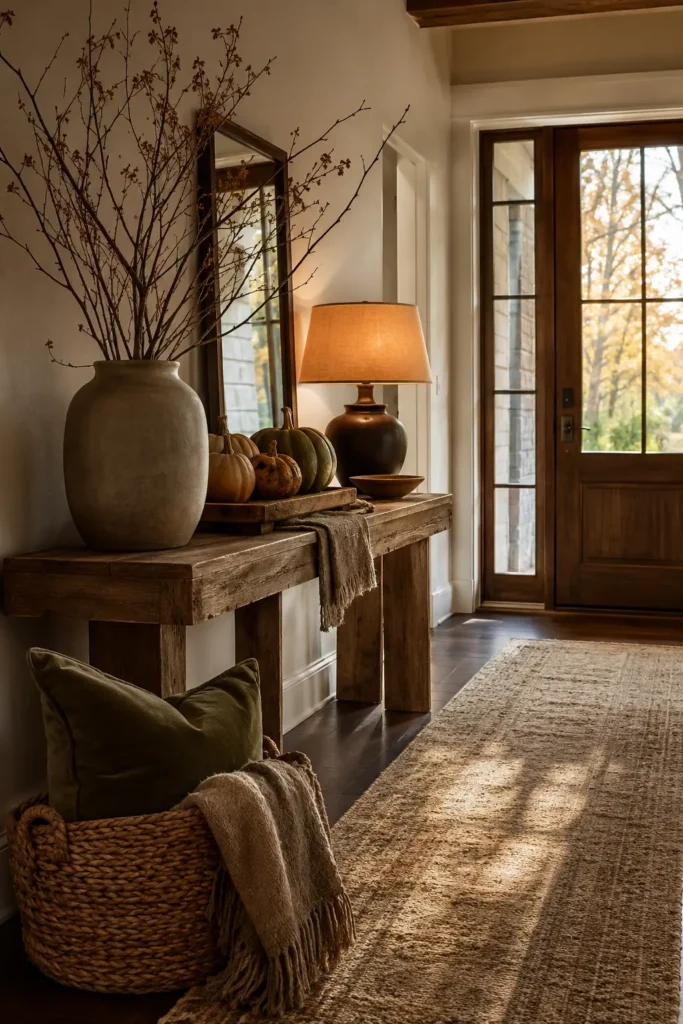
A deep teal botanical wallpaper creates a strong focal wall behind a slim lacquered console. Add a brass picture light, cream ceramic lamp, copper tray, and one velvet stool. The remaining walls can stay quiet so the pattern feels intentional rather than overwhelming.
Before installing wallpaper, test a large sample in both daylight and evening light. Glossy finishes reflect more light but can reveal uneven walls, so matte or low-sheen wallpaper is usually more forgiving. In a rental, use a removable mural or framed textile panel instead of permanent paste.
13. Natural Autumn Branch Display
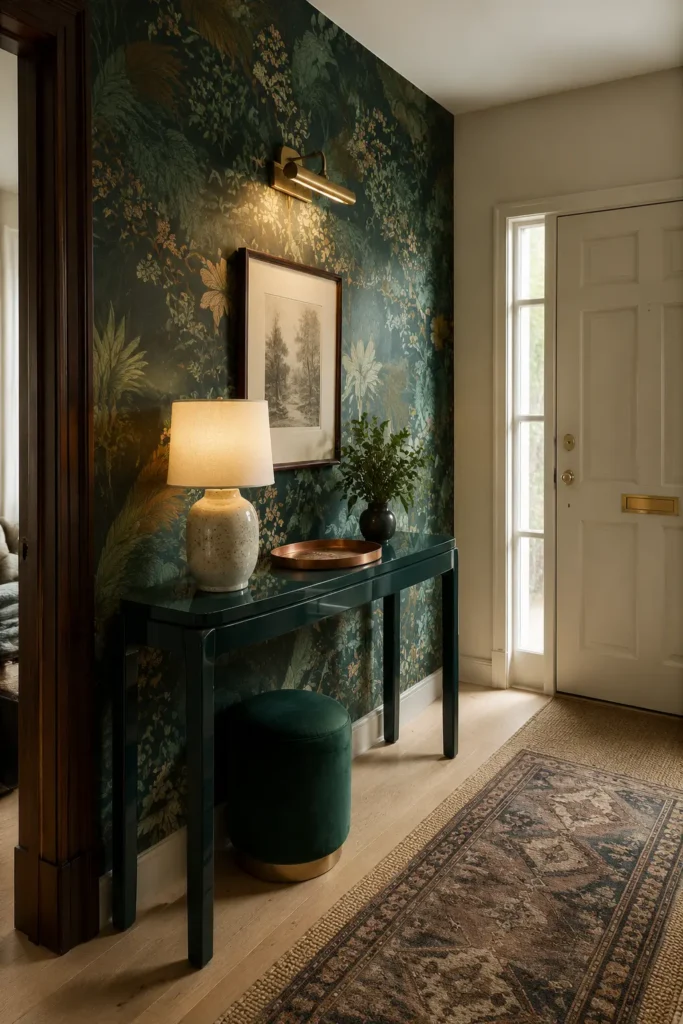
For a seasonal foyer, place tall dried branches in a large matte ceramic vessel on a weathered-oak console. Add muted gourds, an olive cushion, a wool runner, and a woven basket. The arrangement feels autumnal through texture and earthy color rather than novelty decorations.
Keep the branches tall enough to create height but away from the door swing and walking path. Dried foliage collects dust, so use a soft brush or cool hair dryer occasionally. Store the vessel and reusable textiles after the season, then replace the branches with fresh greenery for a year-round version.
What to Consider Before Decorating a Foyer
Measure the entry before buying furniture, including the door swing, stair clearance, and the space needed to carry large items through the doorway. A console that looks slim online can feel bulky when it is 18 inches deep in a narrow hall. For most foyers, 12 to 16 inches is a safer range.
Think about what the space must hold every day. If shoes, keys, coats, and bags have no designated place, decorative surfaces will quickly become cluttered. Combine one visible landing area with concealed storage, and choose washable runners, sealed stone, and durable upholstery where the entry receives heavy use.
How to Choose the Right Foyer Style
Start with the fixed features you already have, such as flooring, stair rails, door color, and trim. Then choose one focal point—an oversized mirror, patterned floor, built-in wall, arched niche, or tall plant—and keep the supporting pieces quieter.
Modern foyers look more finished when materials repeat in small ways. For example, walnut can appear in a console and picture frame, while brass can be repeated in a lamp and door hardware. This creates a visual connection without requiring a matching furniture set.