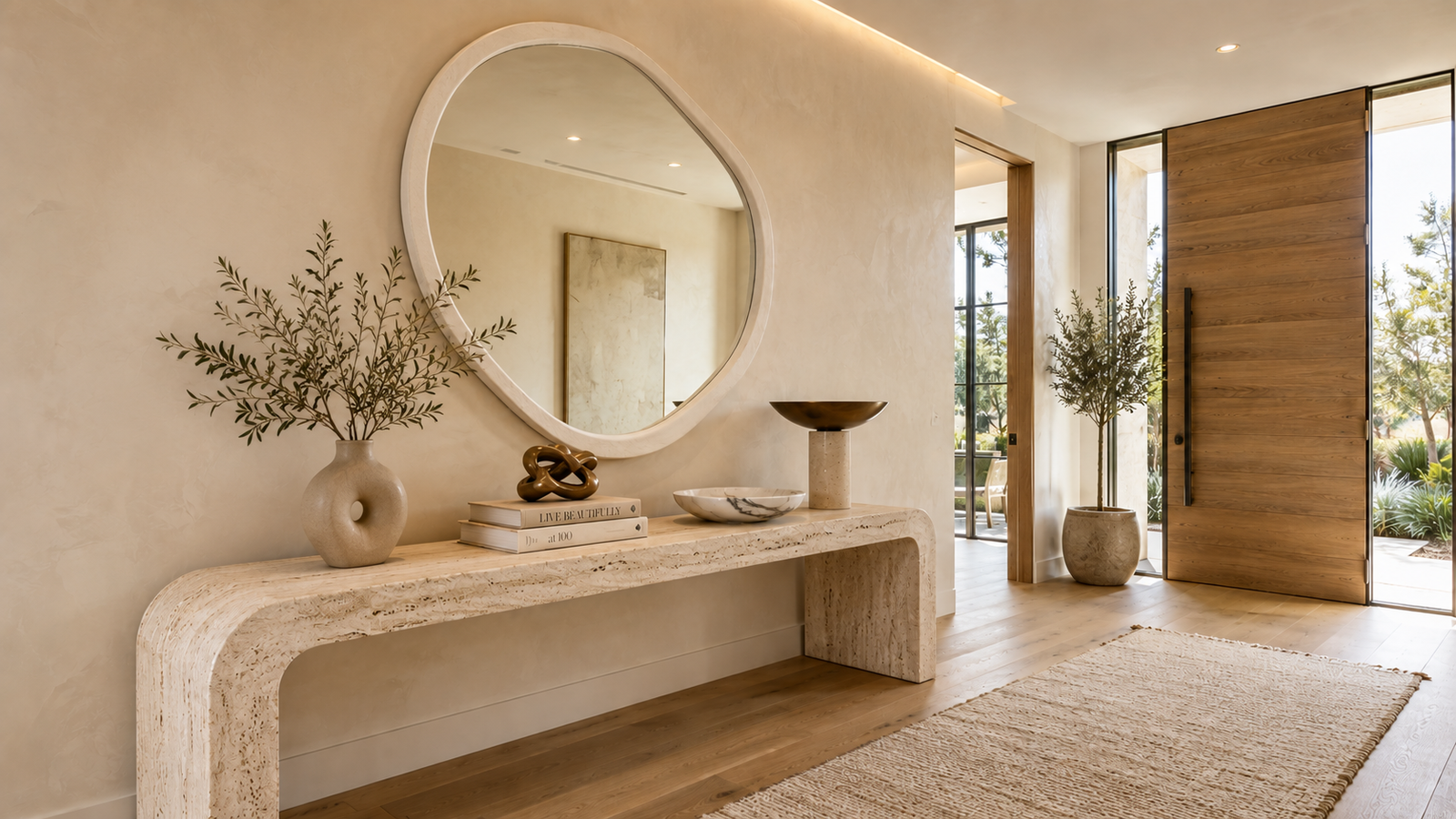
A beautiful console table can still leave an entryway feeling unfinished. Usually, the problem isn’t the furniture—it’s that everything sitting on it has the same height, the same visual weight, or no relationship to the wall behind it. The result feels flat, even when every accessory is expensive.
The best console table styling ideas for entryways create layers, guide your eye naturally through the space, and make arriving home feel intentional. Instead of relying on predictable décor formulas, these ideas use proportion, materials, architecture, and lighting to build entryways that look professionally styled while remaining practical enough for everyday living.
1. Let a Monumental Branch Become the Sculpture
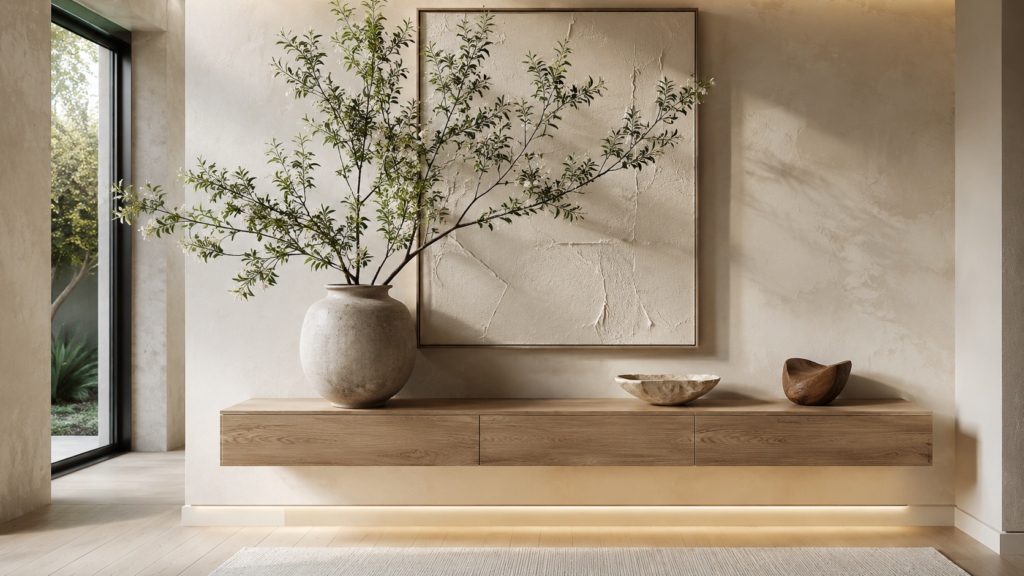
Skip the usual collection of small accessories and let one dramatic sculptural branch become the entire composition. Place it inside a tall hand-thrown ceramic vessel positioned about one-third of the way across a floating white oak console. Behind it, hang a softly textured plaster artwork rather than colorful prints so the organic silhouette becomes the focal point. The oversized scale creates instant visual confidence, while the empty tabletop around it acts as intentional negative space instead of wasted space. Keep the arrangement under 32 inches tall so it feels substantial without interfering with sightlines or nearby lighting.
2. Treat the Console Like a Boutique Hotel Reception
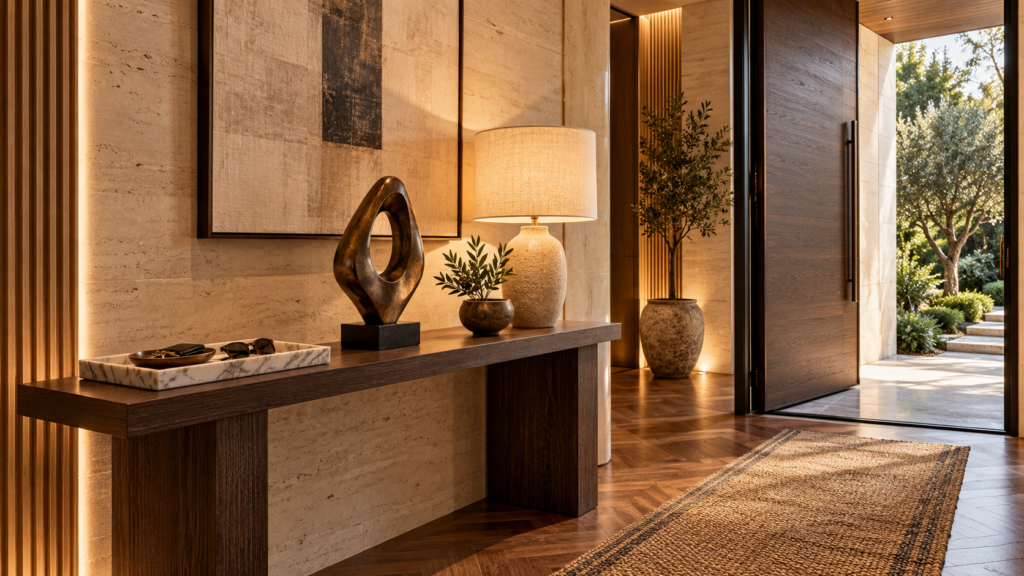
Instead of decorating from the center outward, divide the tabletop into functional zones. Dedicate one end to a marble catchall tray for keys, sunglasses, and mail, reserve the middle for one sculptural object, and finish with a warm linen-shaded lamp that welcomes guests after sunset. This layered composition mirrors the calm, curated feel of luxury boutique hotels, where every object has breathing room. Leave at least 8 inches between each grouping so the eye naturally pauses instead of reading the entire surface as clutter.
3. Build the Styling Around Vertical Oak Slats
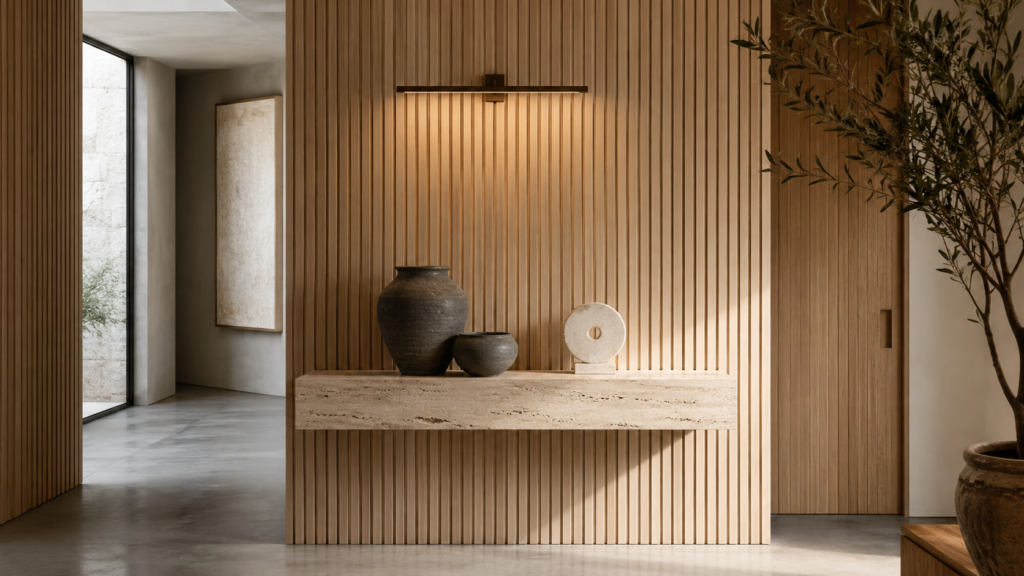
Transform the wall behind your console with slim white oak slats extending from the baseboard almost to the ceiling. Instead of adding large artwork, mount a single bronze picture light that washes gentle shadows across the wood grain throughout the day. A simple travertine console and two sculptural vessels are all you need because the architectural texture already carries visual weight. The repeated vertical lines also make standard 8-foot ceilings appear noticeably taller without changing the room’s footprint.
4. Contrast Curves Against Clean Architecture
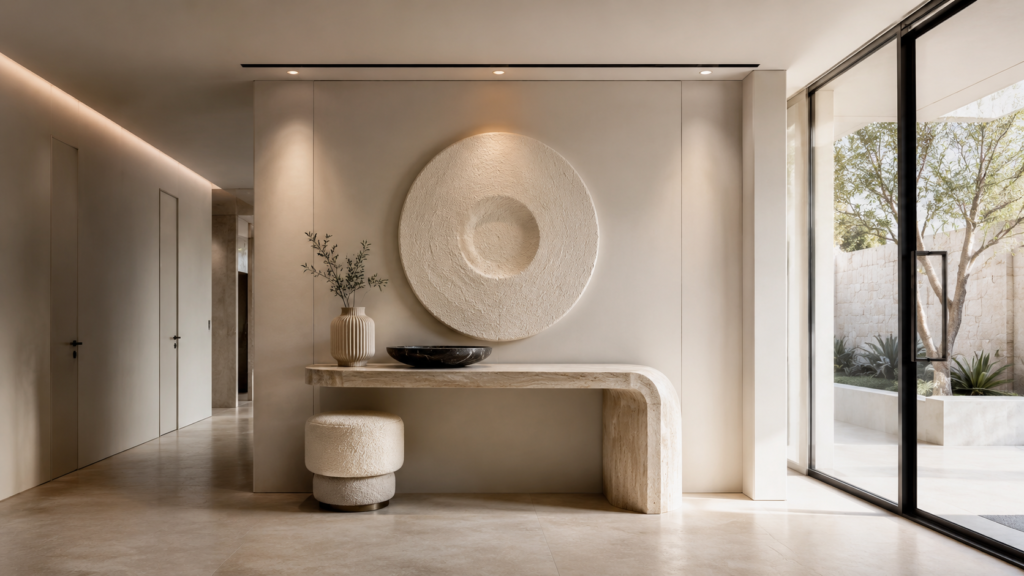
If your entryway has crisp square walls and modern trim, soften the geometry with rounded forms instead of introducing more straight lines. Pair a waterfall stone console with a large circular plaster sculpture leaning casually against the wall and finish with a rounded upholstered stool tucked beneath one side. The contrast between sharp architecture and gentle curves creates balance while preventing the space from feeling overly rigid. Keep at least half of the tabletop exposed so every curved piece has room to stand out.
5. Style an Entry Wrapped in Limewash
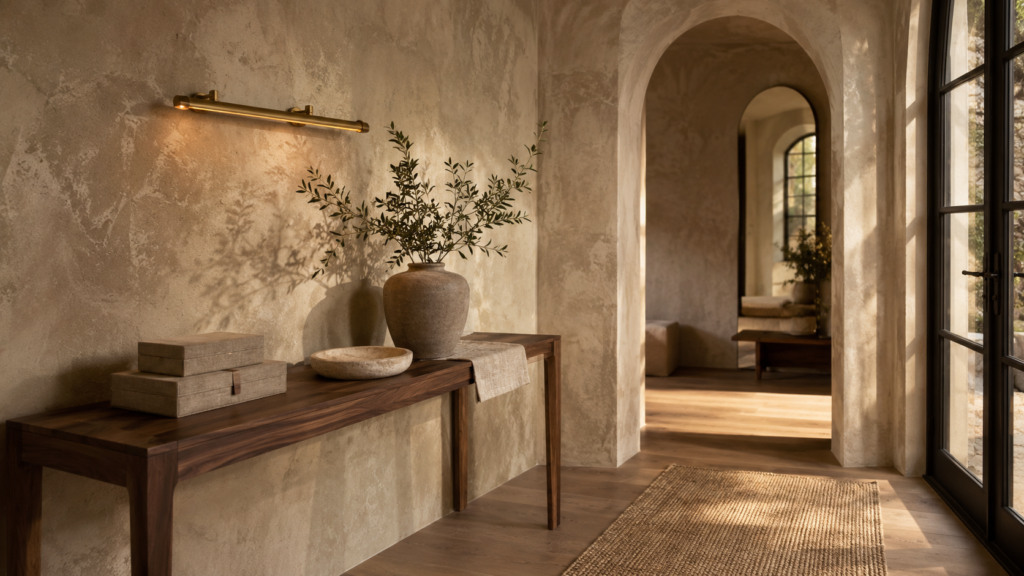
A textured limewash wall changes constantly as daylight moves across it, so your styling should stay intentionally restrained. Choose a slim walnut console with a low-profile silhouette, then layer matte ceramics, folded linen boxes, and one softly aged brass object rather than glossy accessories. The muted finishes allow the wall to become part of the design instead of just a background. Because limewash already introduces movement, limiting the tabletop to five carefully chosen pieces keeps the composition calm and sophisticated.
6. Create Two Levels Instead of One
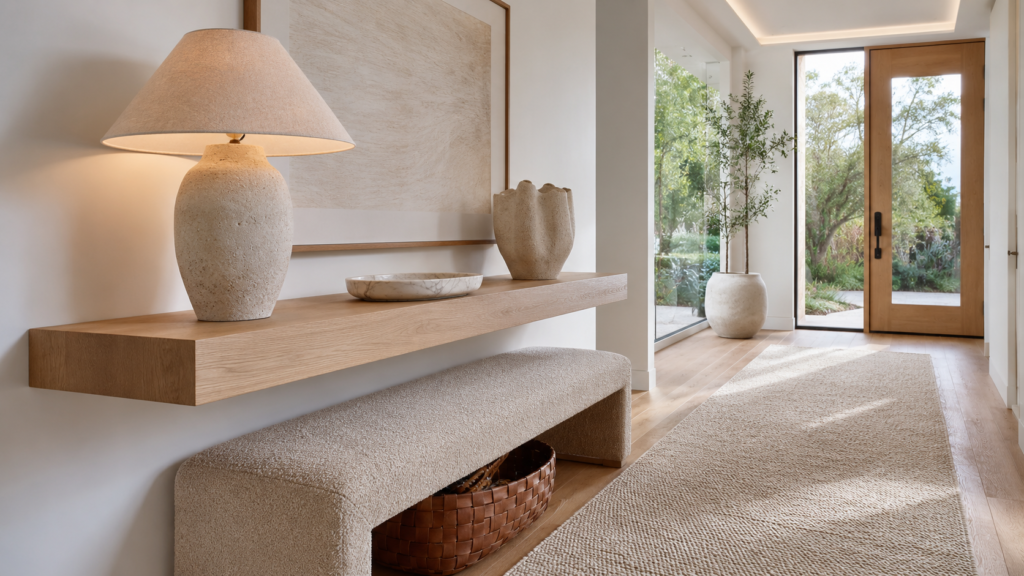
Most console tables feel flat because every object sits on the same horizontal surface. Introduce a second visual level by sliding a narrow upholstered bench neatly beneath the console, allowing about 3–4 inches of clearance above the seat. Store a woven leather basket underneath while keeping the tabletop light and sculptural. This layered arrangement gives the eye somewhere to travel vertically, making even compact entryways feel thoughtfully designed. It’s especially effective in narrow hallways where every piece needs to earn its place without adding bulk.
7. Frame the Console Between Steel-Framed Glass Panels
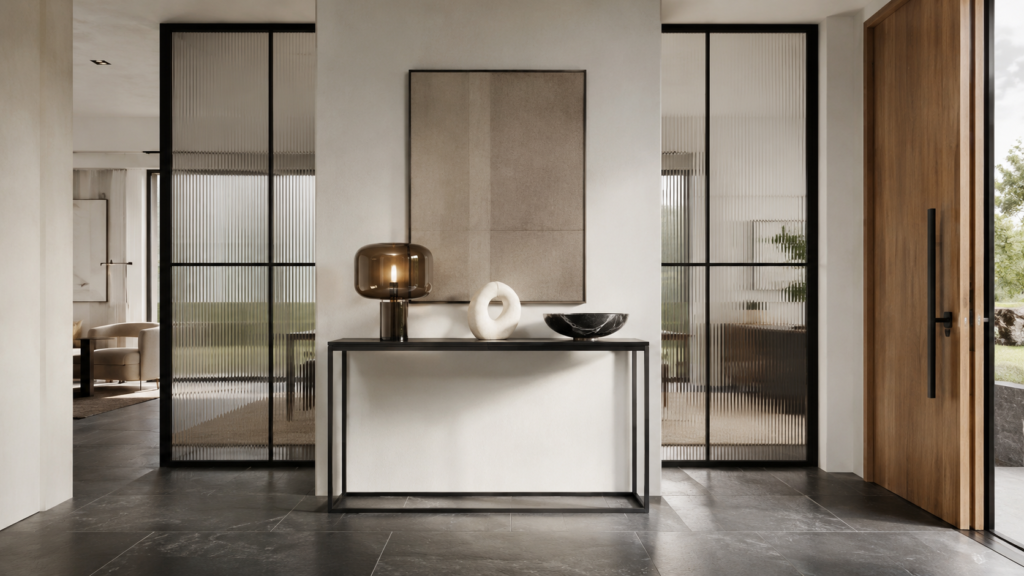
Instead of treating the console as a piece of furniture against a blank wall, make it part of the architecture. Install slim steel-framed glass partitions on either side of the entry, allowing the console to sit perfectly centered between them. The transparent framing creates definition without blocking natural light, making even modest foyers feel open. Style the tabletop with a smoked glass lamp, a black marble bowl, and one sculptural alabaster object. The dark steel introduces crisp contrast while the glass keeps the entire composition feeling light and airy.
8. Turn a Burl Wood Console Into the Star
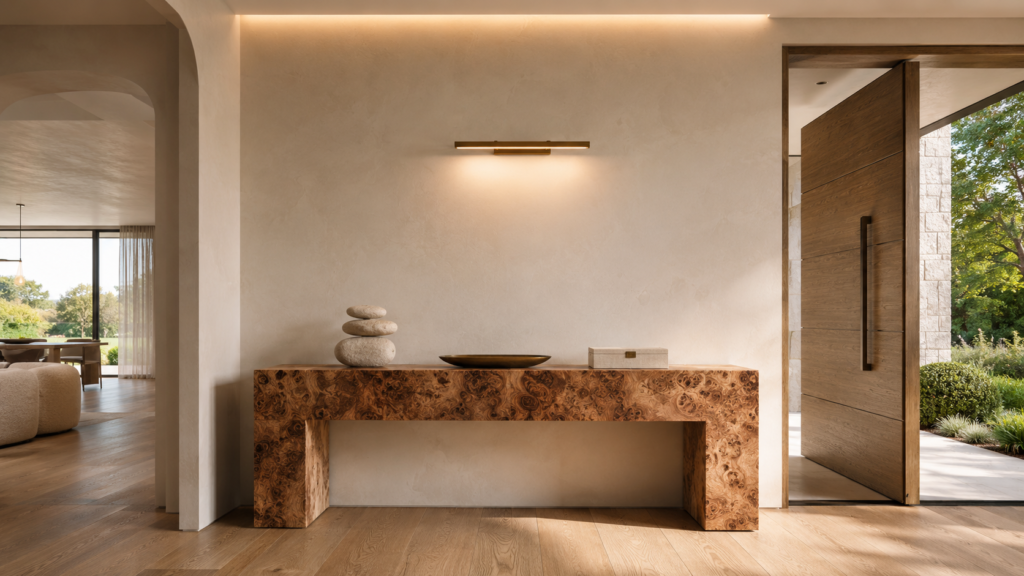
Some furniture deserves to be the artwork. A richly figured burl wood console has enough movement and character that piling on accessories only hides its beauty. Keep the styling intentionally minimal with one stacked stone sculpture, a shallow bronze dish, and a linen-covered storage box. Mount a slim picture light 12–16 inches above the table to highlight the wood’s natural grain after sunset. The restraint makes the console feel like a collectible piece rather than just another storage surface.
9. Build Around a Dramatic Oversized Pendant
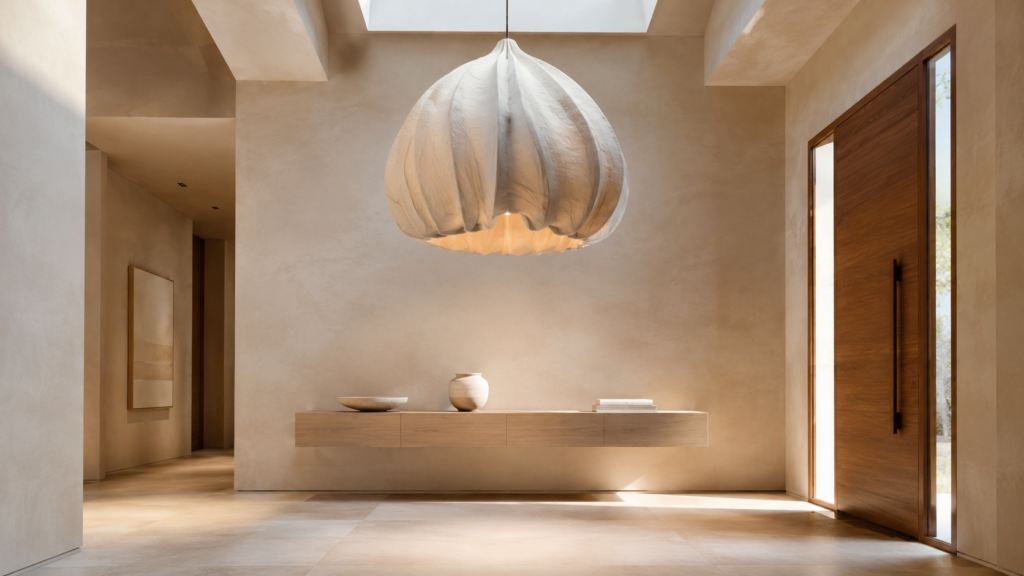
Draw attention upward by centering an oversized woven, plaster, or hand-blown glass pendant directly above the console. Instead of filling the tabletop, allow the lighting fixture to become the room’s visual anchor. Below it, use only a low travertine bowl, one sculptural vessel, and a folded stack of design magazines. The generous vertical spacing creates a gallery-like composition where the ceiling, lighting, and furniture work together. This approach works especially well in entryways with ceilings higher than 9 feet.
10. Let an Antique Cabinet Replace the Console
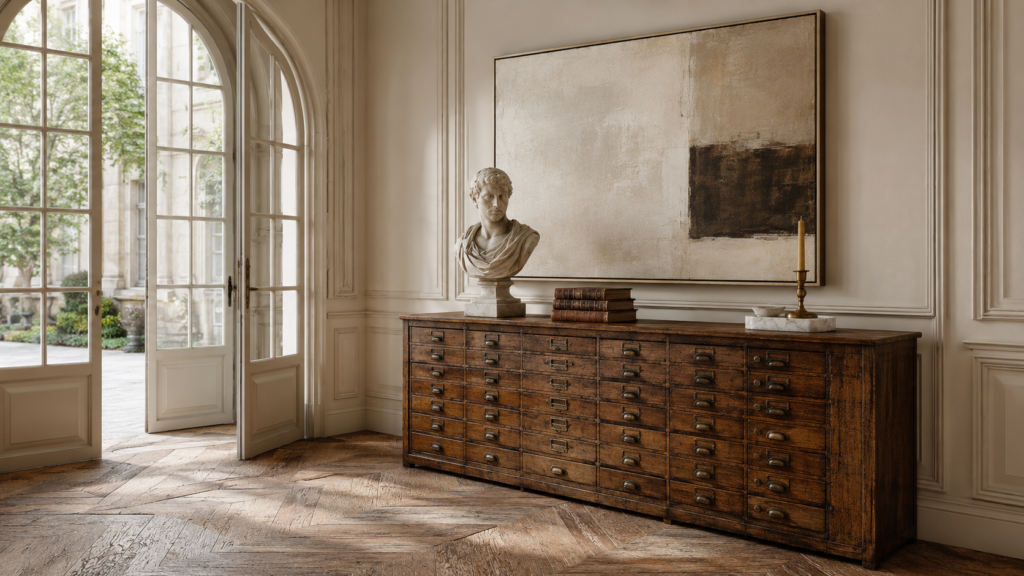
Not every entryway needs a traditional console table. A narrow 19th-century apothecary cabinet, vintage French chest, or antique pharmacy drawer unit offers the same proportions while introducing warmth and history. Pair it with contemporary abstract art and a modern ceramic lamp to keep the room from feeling overly traditional. The contrast between aged wood and clean-lined accessories creates the collected look designers often achieve over many years rather than through one shopping trip.
11. Use a Backlit Stone Wall as the Feature
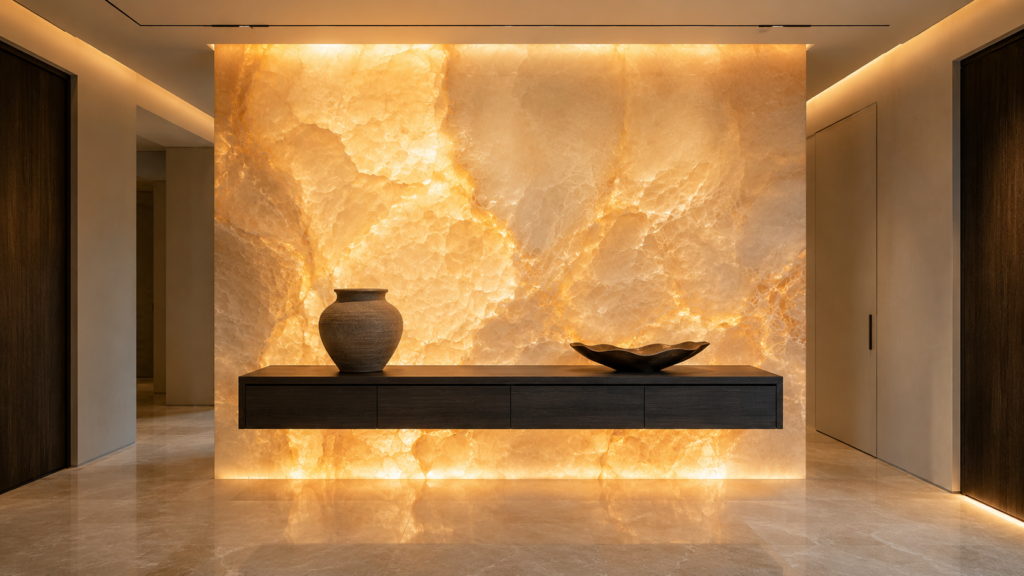
Instead of hanging artwork, clad the wall behind the console in softly backlit translucent stone such as alabaster or onyx. During the day, the natural veining adds quiet texture, while evening illumination transforms the wall into glowing architectural art. Because the backdrop already commands attention, limit the tabletop to one handcrafted clay vessel and a sculptural bronze bowl. The gentle glow also eliminates harsh shadows, making the entryway feel warm and welcoming from the moment the front door opens.
12. Create a Gallery With Suspended Shelves
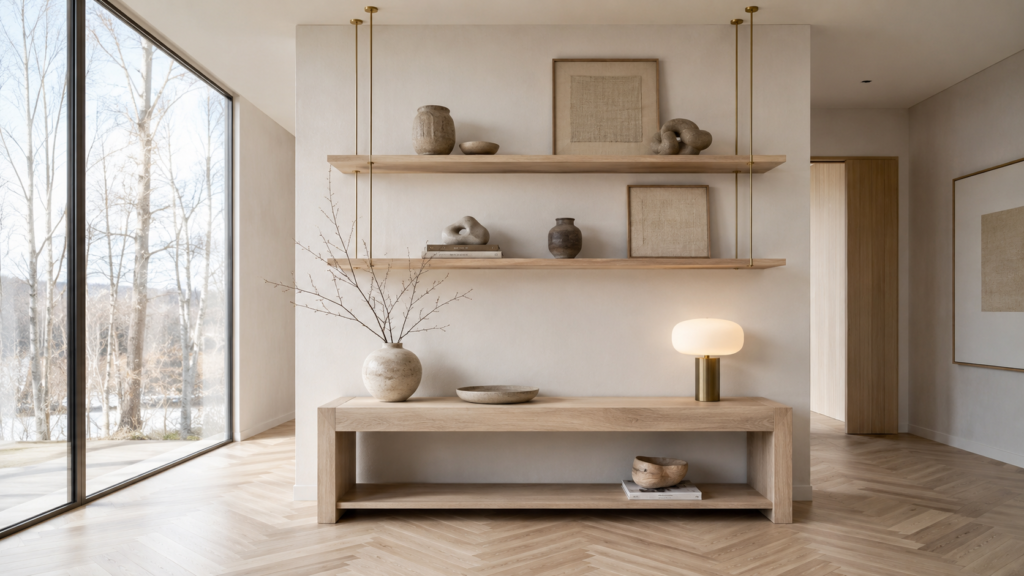
Replace traditional wall décor with two slim suspended wood shelves hanging from leather straps or brushed brass rods. Rather than filling them edge to edge, display only a few carefully edited objects—perhaps a handmade ceramic vessel, a carved stone piece, and a framed textile sample. Below, keep the console nearly empty except for a low table lamp and a catchall tray. The layered vertical arrangement creates rhythm without relying on oversized artwork, giving the entryway a relaxed, collected aesthetic that feels both modern and personal.
13. Carve Out a Gallery Alcove
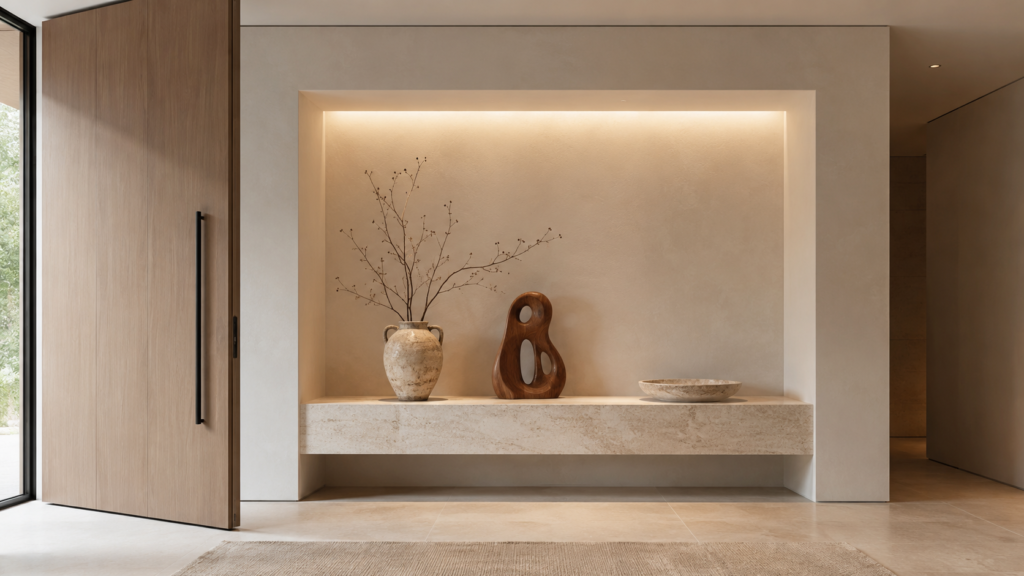
If your entry includes a recessed niche or an unused bump-out, treat it like a built-in gallery rather than trying to hide it. Fit a slim limestone console wall to wall, then install a recessed picture light that washes the back wall instead of the tabletop. Display only three pieces—a sculptural vessel, a carved wood object, and a shallow stone tray—to let the architecture remain the hero. Limiting the palette to warm ivory, sand, and natural oak keeps the alcove feeling calm instead of crowded, even in a compact foyer.
14. Make the Wall the Storage
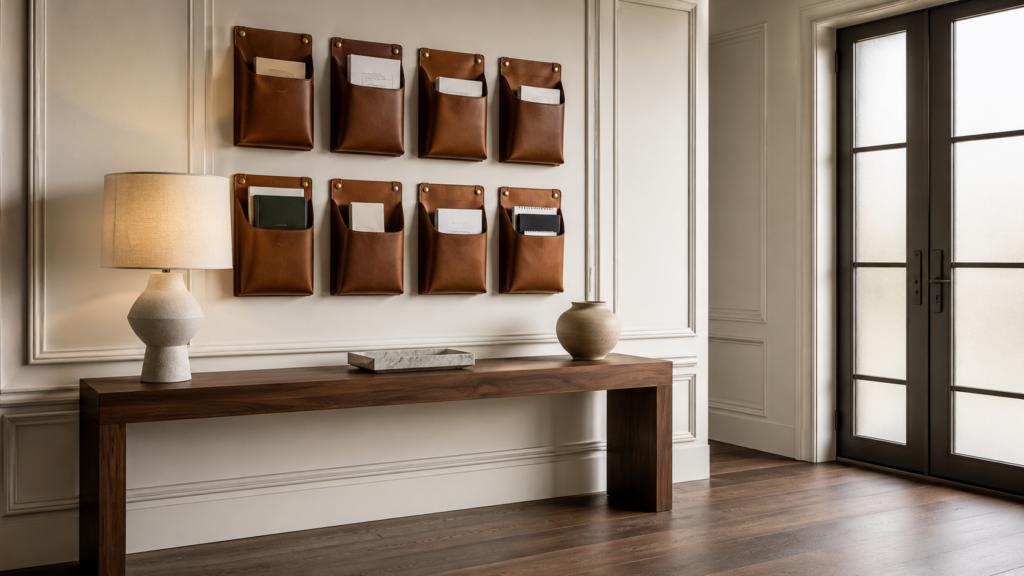
Choose a console with an open base, then install a series of shallow leather wall pockets or handcrafted oak mail slots 12–16 inches above the tabletop. Everyday necessities stay organized vertically instead of piling up on the surface. Finish the styling with one sculptural lamp and a handmade bowl for keys. Separating functional storage from decorative styling reduces visual clutter while maintaining an elegant composition, making this approach especially useful for busy family entryways.
15. Balance a Living Tree With Stone
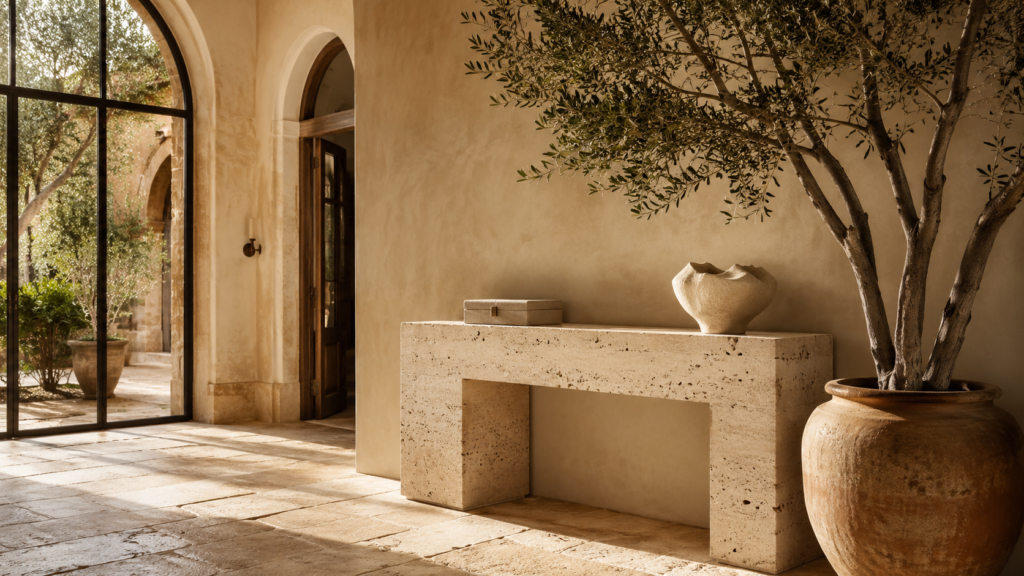
Instead of filling the console with several decorative objects, let one indoor olive tree or dwarf ficus become the tallest element beside the furniture. Balance its organic height with a low travertine console topped by only a textured linen box and a sculptural stone vessel. The contrast between soft foliage and solid mineral textures creates natural visual tension without overwhelming the room. Leave at least 18 inches between the tree and the console so both elements can breathe independently.
16. Float the Console Beneath a Clerestory Window
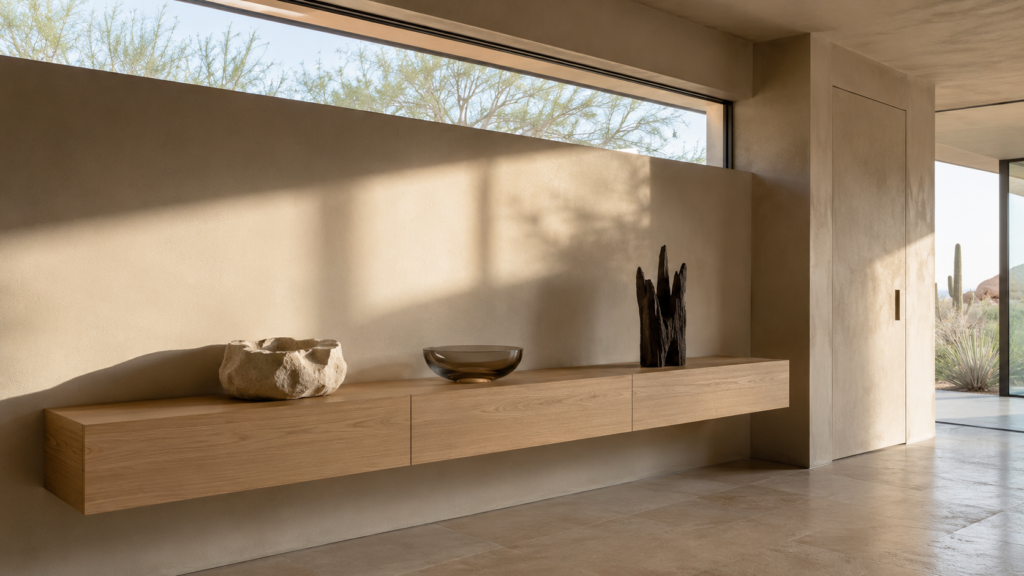
If your entryway has a high clerestory window, let it become the backdrop instead of covering the wall with artwork. Position a slim floating oak console directly below the glass so daylight washes over the tabletop throughout the day. Style it with a carved limestone vessel, a smoked glass bowl, and one sculptural wood object that catches changing light. The uninterrupted wall below the window creates generous negative space, while the shifting daylight adds movement that no decorative accessory can replicate. Leave at least 10 inches between the window trim and the console to maintain clean architectural proportions.
17. Turn the Console Into a Curated Collector’s Display
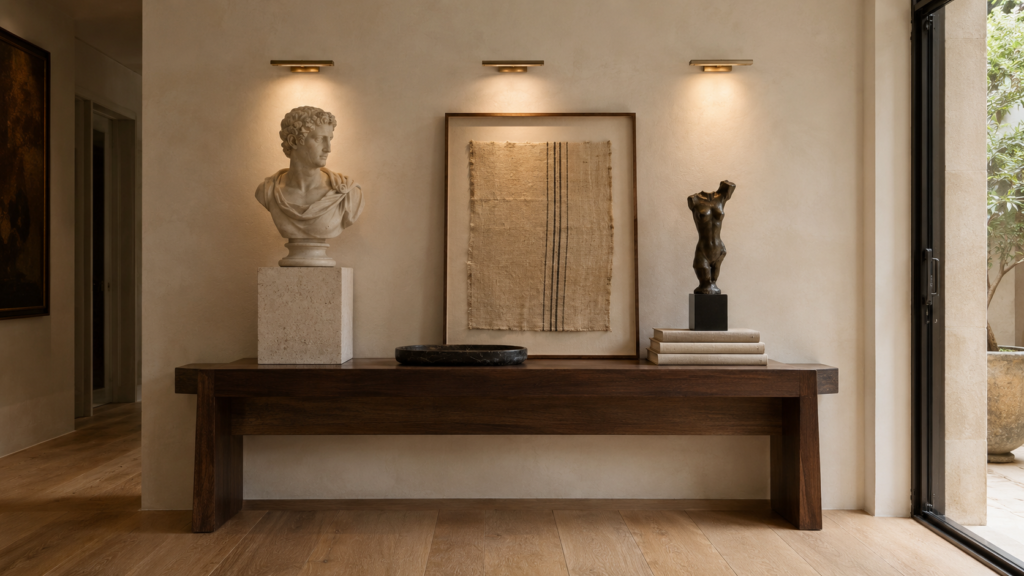
Instead of decorating with everyday accessories, style the console as though it belongs in a private design gallery. Display three carefully chosen collectible pieces—a small marble bust on a pedestal, a framed antique textile mounted in a shadow box leaning against the wall, and a handcrafted bronze sculpture elevated on stacked linen-bound books. Vary the heights by at least 6 inches between each object so every piece has its own presence. The restrained museum-like arrangement feels timeless, creates an unmistakably high-end focal point, and gives guests something unexpected to discover the moment they step inside.
18. Design a Console That Glows After Sunset
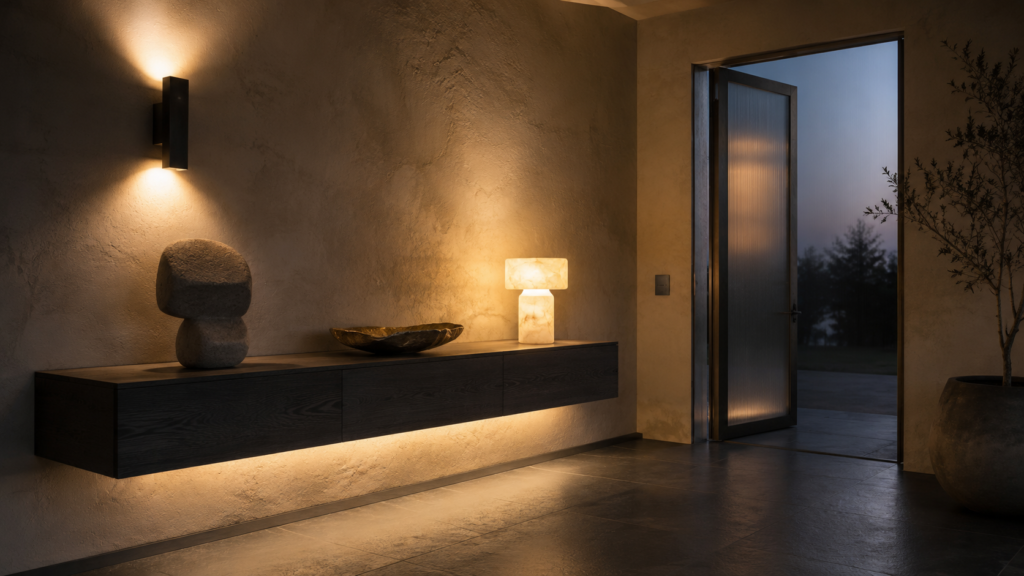
The most memorable entryways often look even better at night than they do during the day. Instead of relying on a single table lamp, layer concealed LED lighting beneath a floating console, a dimmable wall sconce above, and a soft accent light directed toward one sculptural object. The combination creates depth through light rather than additional accessories. Aim for warm bulbs between 2700K and 3000K to flatter natural materials like oak, plaster, limestone, and linen while giving guests a welcoming first impression.