An entryway bench has to do more than look attractive in a photo. It needs to handle shoes, bags, pets, wet coats, and the daily rush through the front door without making the space feel crowded.
These Entryway Bench Decor Ideas range from simple wood seating to built-in storage, sculptural mirrors, textured walls, and compact arrangements for narrow halls. Each one offers a clear visual direction while keeping comfort, traffic flow, cleaning, and realistic installation in mind.
1. Add a Textured Wall
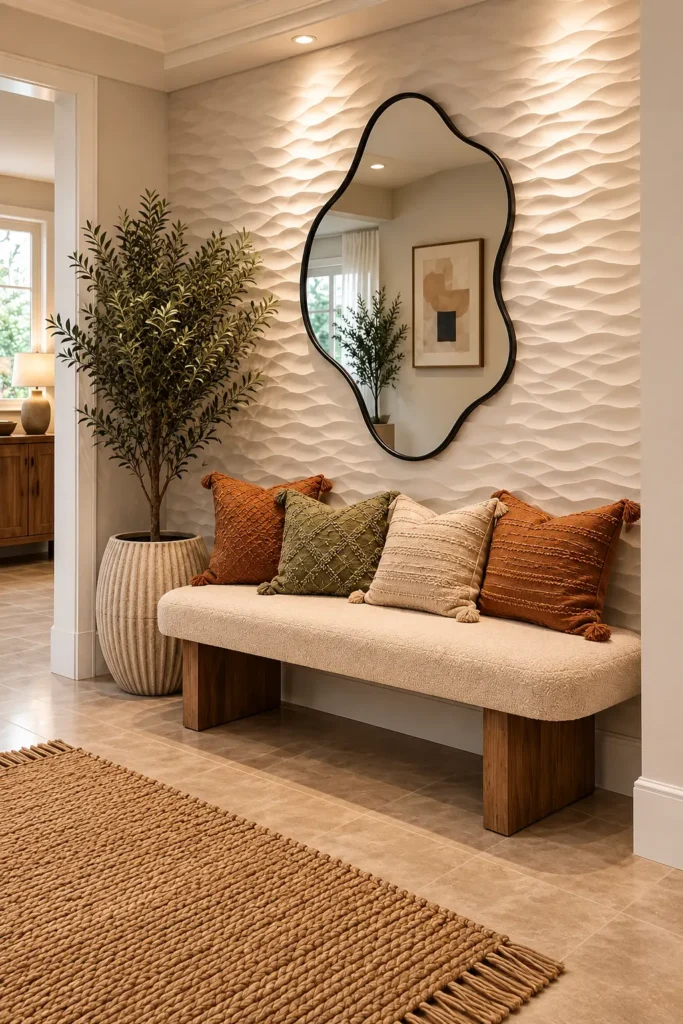
A cream bouclé bench creates a soft contrast against a dimensional plaster or wave-pattern wall. Place an irregular black-framed mirror above it and balance the arrangement with a tall indoor tree on one side. Rust, olive, and oatmeal pillows prevent the neutral upholstery from looking flat.
Because textured walls catch light and create shadows, they work best with warm recessed lighting. Keep the bench about 18 inches high for comfortable seating. Bouclé looks rich but traps dust, so choose a performance version or vacuum it regularly with an upholstery attachment.
2. Style a Narrow Entryway
A long, shallow bench can make a tight hallway useful without blocking the route to the door. Choose a design approximately 15–17 inches deep and leave at least 36 inches of clear walking space where possible. One lumbar pillow provides comfort without consuming the entire seat.
Hang one large abstract artwork above the bench to give the narrow wall visual weight. A tall planter at the far end draws the eye through the hallway, while a runner reinforces its length. Low-pile rugs are easier to clean and less likely to catch the front door.
3. Frame a Lighted Bench Nook
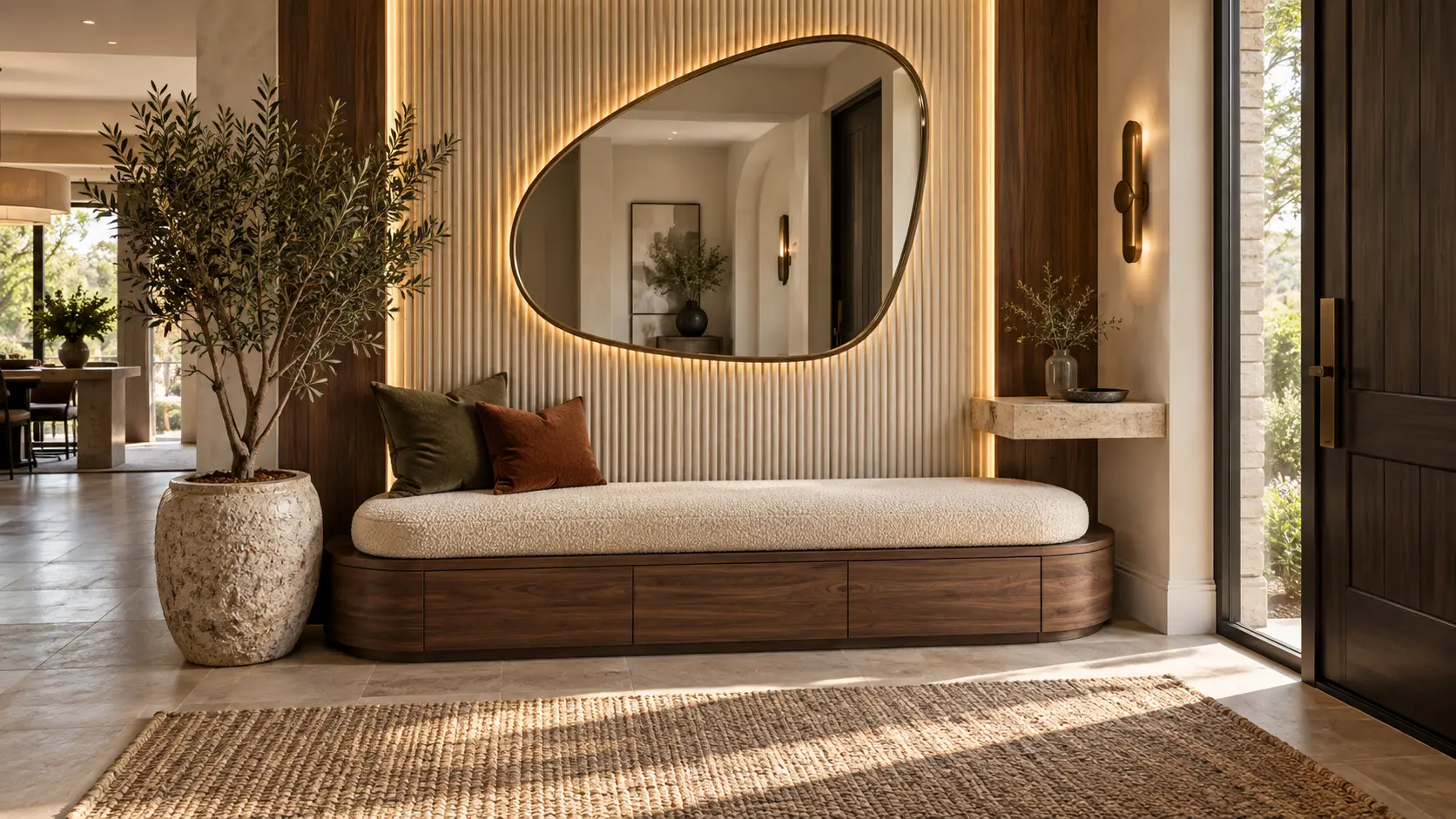
For a polished custom look, place an upholstered storage bench inside a shallow arched wall niche. An oval mirror centered within the arch repeats its curved shape, while concealed LED lighting defines the outline after dark. A slim wood ledge provides room for keys, a lamp, or a ceramic vase.
Use warm white lighting around 2700K rather than a cool bulb that can make beige upholstery appear gray. The bench seat should be firm enough for putting on shoes. Include hinged or drawer storage below, but check that the front door can open fully before finalizing its depth.
4. Style a Cozy Entry Corner
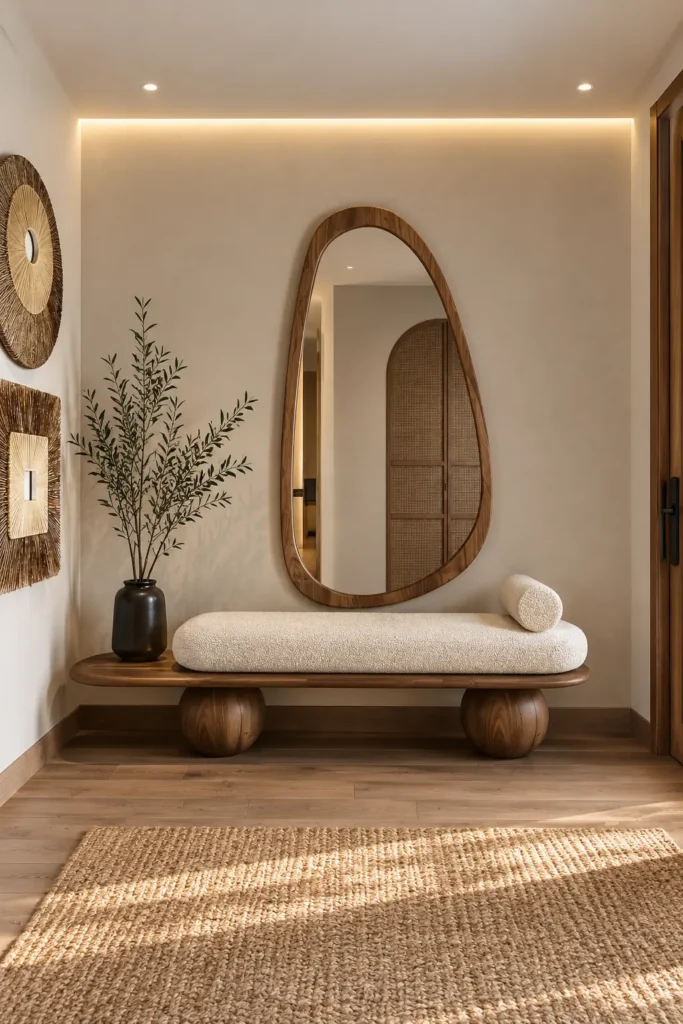
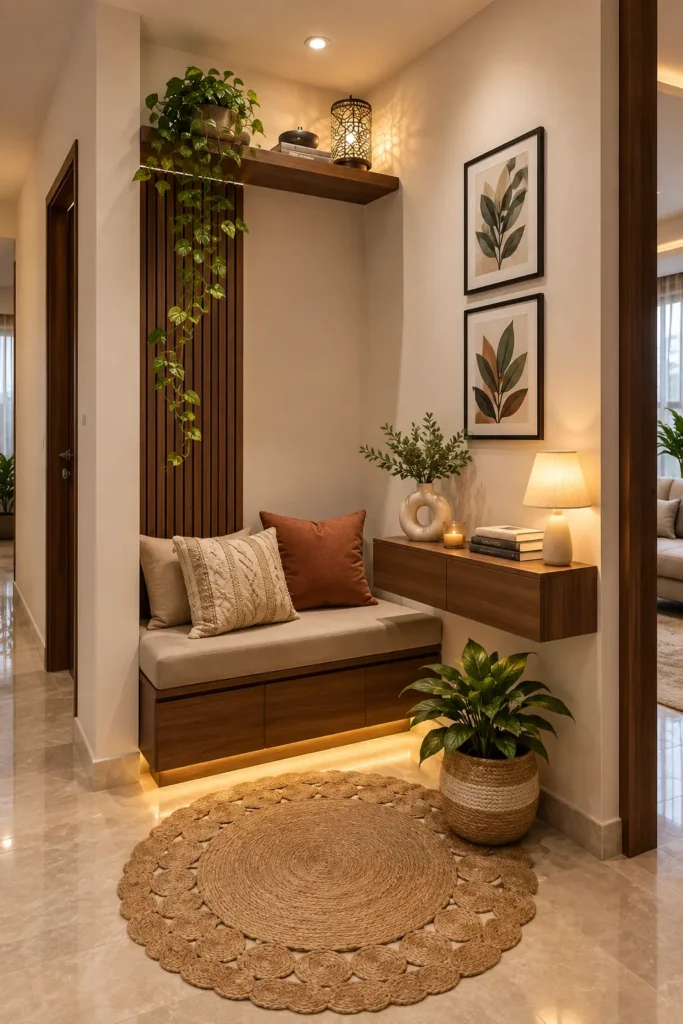
A recessed corner can hold more than a basic bench. Combine a cushioned storage seat with a floating cabinet, vertical wood slats, a display shelf, and two pieces of botanical art. A trailing plant softens the upper edge, while a table lamp adds light at seated height.
Keep the palette limited to walnut, warm white, tan, and muted rust so the small area doesn’t become visually busy. A floating cabinet makes the floor easier to clean, though it requires secure wall blocking. If you rent, replace it with a narrow freestanding drawer unit of similar proportions.
5. Try Green Velvet and Brass
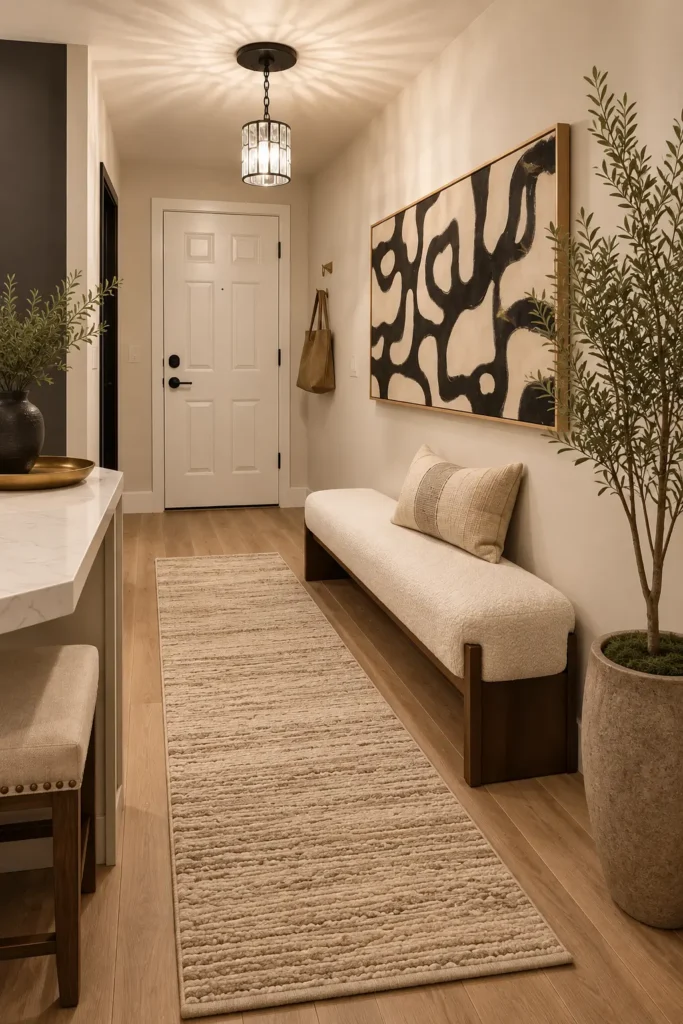
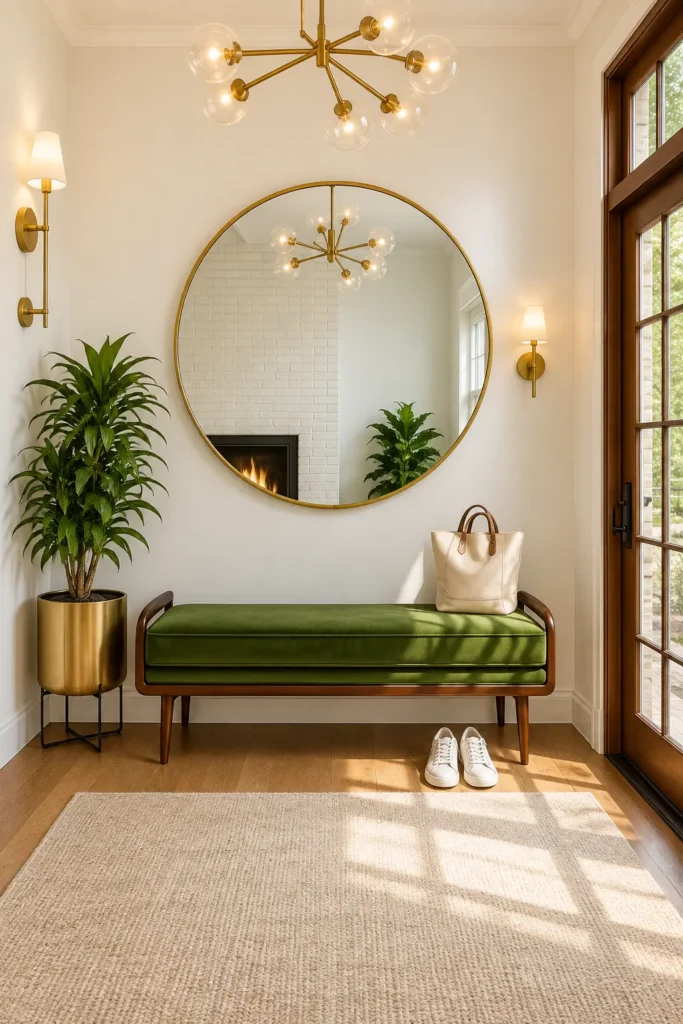
An olive-green upholstered bench gives a pale entryway a strong color anchor. Pair it with a large round brass mirror, a brass planter, and simple wall sconces. The green feels especially rich in daylight, while the metallic finishes reflect warm light in the evening.
Velvet shows pressure marks and fingerprints more readily than textured upholstery, so a durable performance velvet is the practical choice for a busy household. Center the mirror approximately 6–10 inches above the bench rather than floating it too high. Leave enough open seat space for two people instead of covering it with multiple pillows.
6. Add an Olive Slat Wall
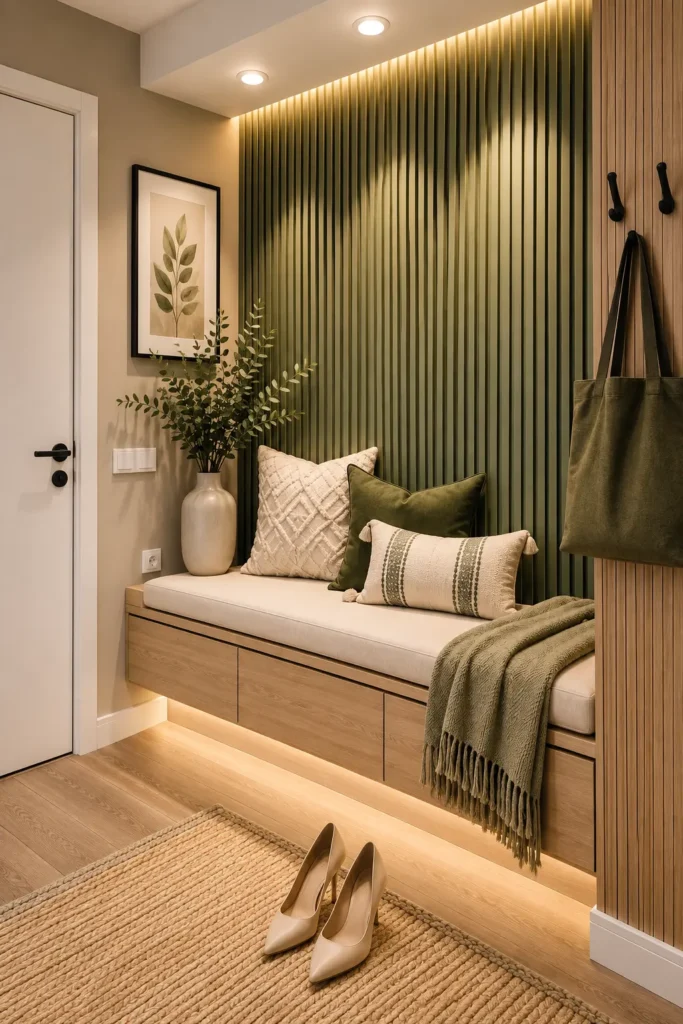
Vertical slats make a low or compact entry appear taller. Paint them deep olive and install a pale oak storage bench in front for a clean contrast. Cream and green cushions tie the two surfaces together, while soft lighting above and below the bench outlines the furniture.
Narrow grooves collect dust, so use wider battens or wipeable fluted panels in high-traffic homes. Under-bench lighting should be recessed or diffused so individual LED dots aren’t visible. Wall hooks placed beside the seat are useful, but keep them away from the sitting area so hanging bags don’t brush against people.
7. Build In Shoe Storage
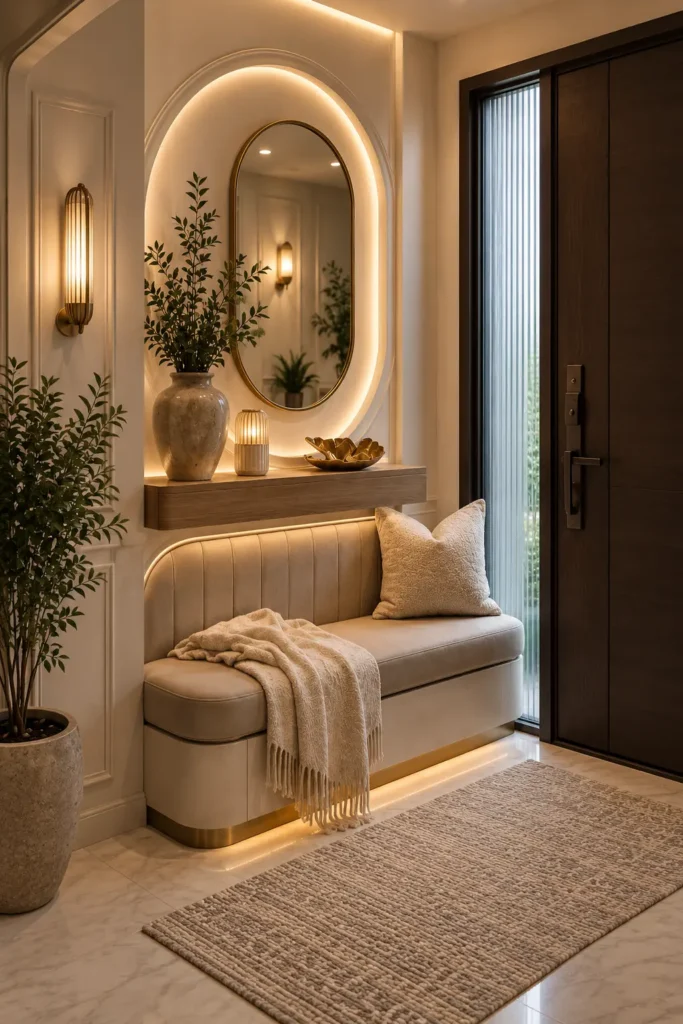
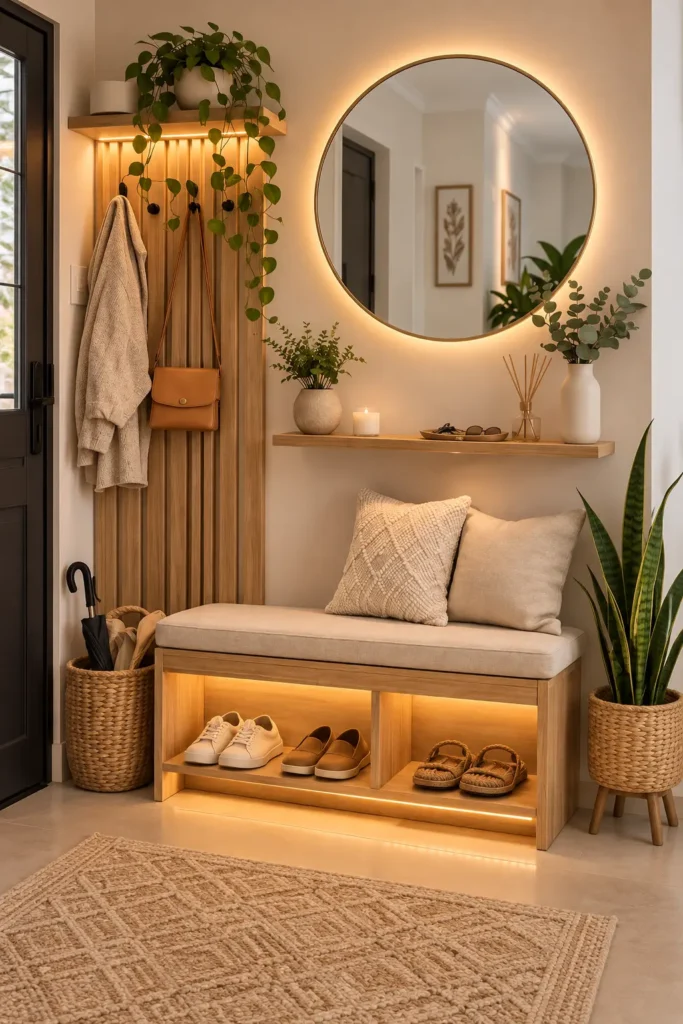
An open-cubby bench keeps daily shoes accessible while preventing them from spreading across the floor. Add a thick neutral cushion, two textured pillows, and a backlit round mirror above. A narrow ledge under the mirror can hold keys, sunglasses, and a reed diffuser without crowding the seat.
Allow roughly 8–10 inches of height inside each shoe cubby for everyday footwear, with a taller section for boots if space permits. Warm integrated lighting improves visibility, but install it toward the front edge so shoes don’t block the glow. Removable shelf liners will make muddy-season cleanup much easier.
8. Use Wood and Baskets
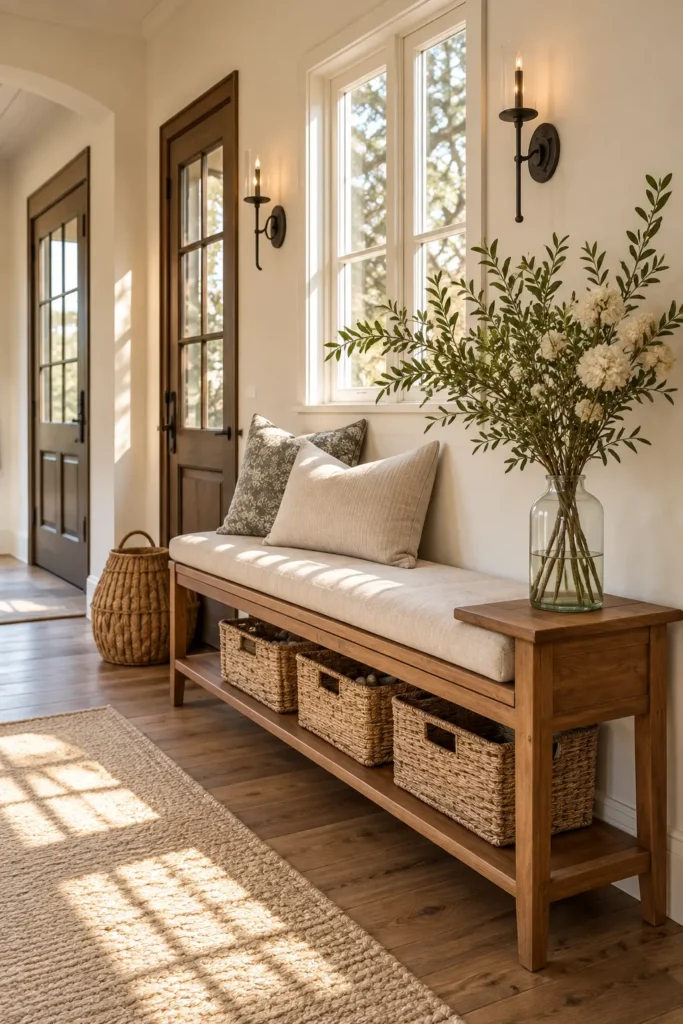
A solid wood bench with a lower shelf suits relaxed, farmhouse-inspired, and transitional homes. Slide matching woven baskets underneath for gloves, dog leads, scarves, or children’s outdoor accessories. A clear glass vase filled with leafy branches keeps the surface visually light.
Natural wicker introduces useful texture but can shed and snag delicate fabric. Seagrass or tightly woven synthetic baskets tend to hold their shape better under daily use. Measure the shelf opening before buying storage, leaving about an inch around each basket so it can slide out without scraping the bench legs.
9. Maximize a Small Entryway
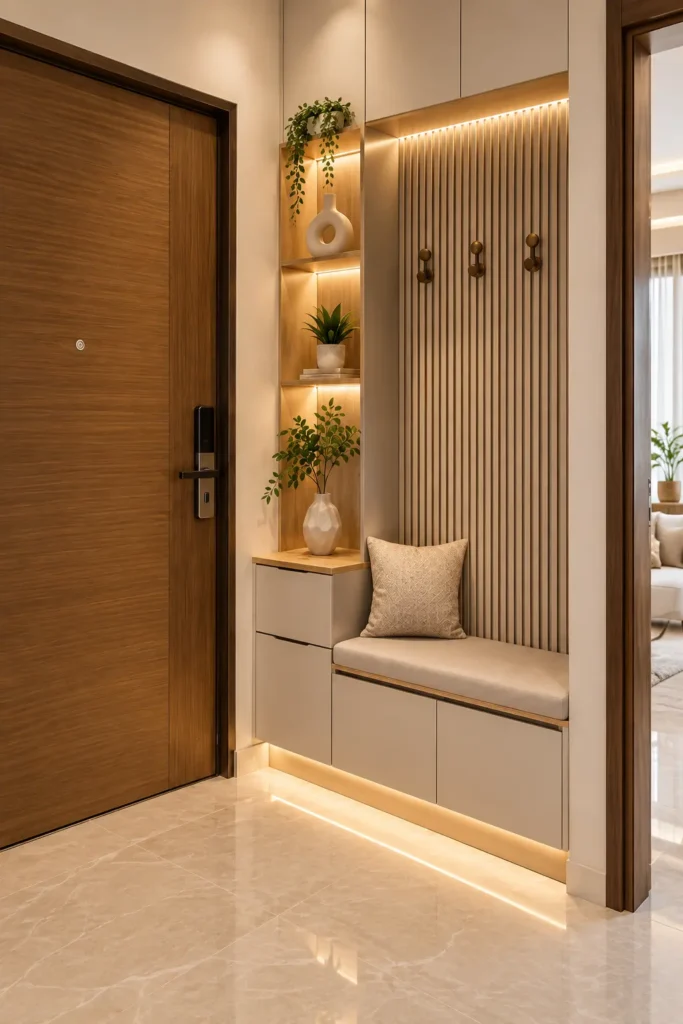
When the front door opens into a small apartment, a built-in unit can combine seating, cabinets, hooks, display shelves, and overhead storage in one narrow footprint. Use warm oak accents with soft beige cabinet fronts to keep the installation from feeling heavy.
Limit the bench depth to around 16 inches if the entry is tight, and use push-latch cabinet doors for a cleaner face. A single cushion is enough in this small setting. Integrated lighting under the seat makes the floor feel more open, but the installation requires electrical planning and accurate cabinetry rather than a simple weekend update.
10. Keep It Clean and Minimal
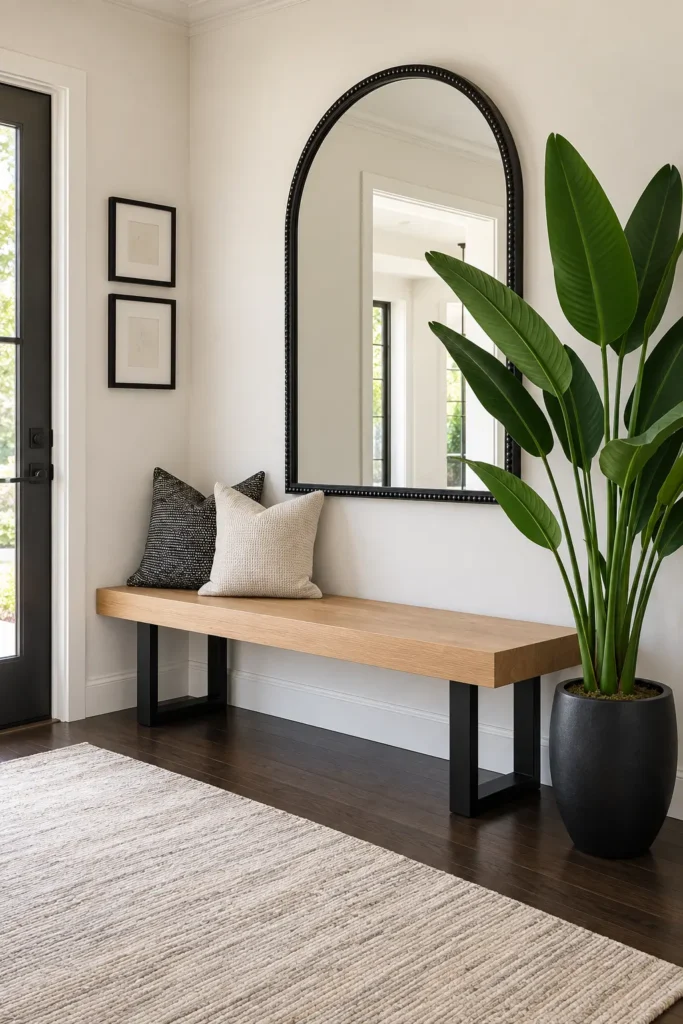
A pale wood bench with black metal legs creates a quiet base for a large black-framed arched mirror. Add two contrasting pillows and one broad-leaf plant in a matte black pot. The mix of pale wood, black details, and deep green leaves gives the entry definition without relying on many accessories.
Choose a mirror that’s about two-thirds to three-quarters the width of the bench. Oversized leaves can extend into the mirror’s edge, making the arrangement feel layered, but they shouldn’t obstruct the walking path. This setup works especially well for renters because every major element can remain freestanding.
11. Style a Long Hallway Bench
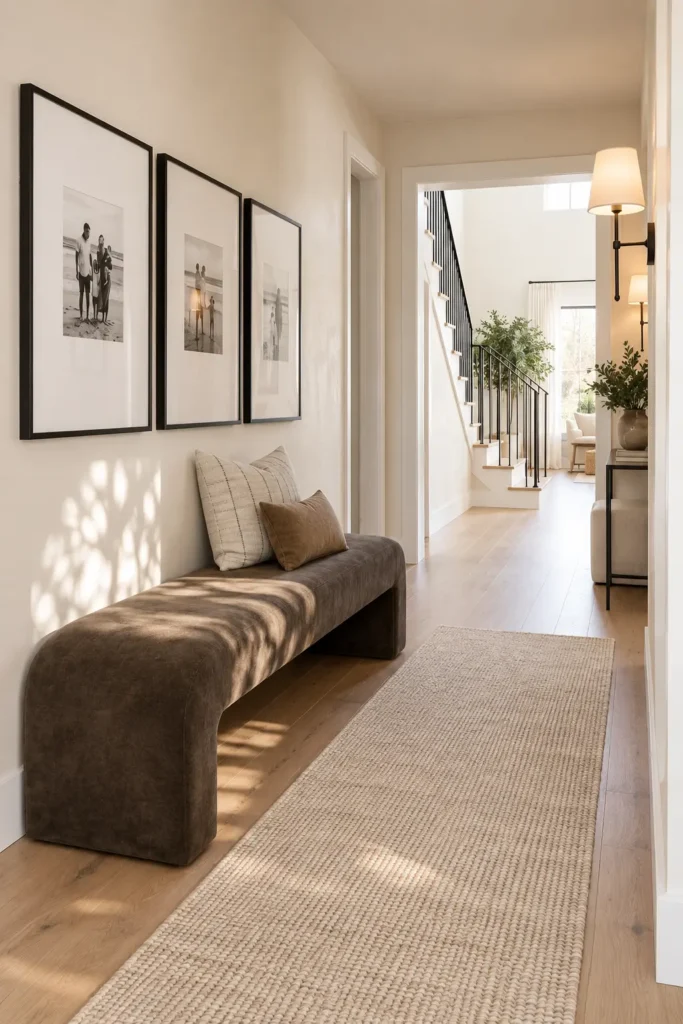
A fully upholstered waterfall bench softens a hallway filled with hard surfaces and straight architectural lines. Place it beneath a row of three black-framed photographs, then repeat black through the stair railing and wall sconces. A textured runner adds another soft layer without competing with the artwork.
Center the frames as one group, with approximately 2–3 inches between them. In homes with children or pets, select tightly woven performance fabric rather than delicate velvet. Avoid an oversized bench in a narrow corridor; you still need enough clearance to pass comfortably while someone is seated.
12. Pair Organic Shapes
A low walnut bench with rounded feet and a thick cylindrical cushion creates a furniture-focused entry. Hang an asymmetrical wood-framed mirror above it to repeat the bench’s curves. A single black vase with tall branches provides height without interrupting the restrained composition.
This arrangement depends on negative space, so resist filling the bench with pillows and baskets. Use a cushion cover with a zipper because light upholstery near a front door will show marks quickly. Since the bench sits lower than standard seating, it’s better for decorative use or occasional seating than for anyone with limited mobility.
13. Add Hidden Bench Storage
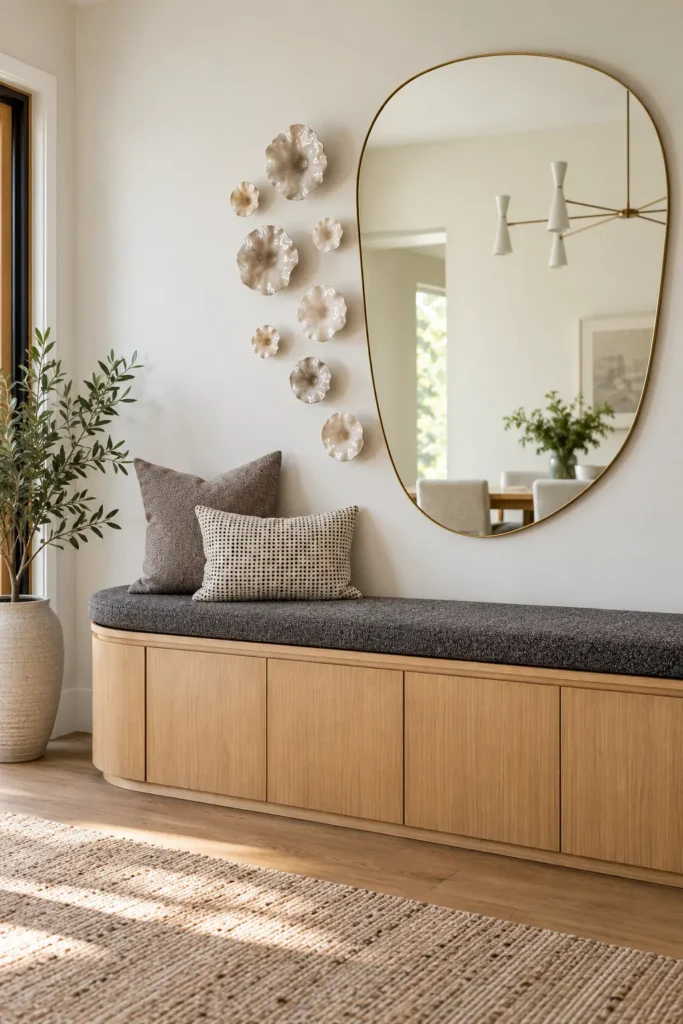
A curved-front cabinet bench offers generous hidden storage while maintaining a smooth, furniture-like appearance. Top it with a charcoal cushion and two pillows, then add a large softly shaped mirror and a cluster of small ceramic wall pieces. The wall objects fill the empty side of the composition without requiring another large frame.
Keep the decorative pieces at least a few inches away from the mirror so the arrangement doesn’t feel cramped. Matte or satin cabinet finishes disguise fingerprints better than high gloss. Install soft-close hinges inside the bench, particularly if children will use the storage compartments.
14. Create a Slatted Room Divider
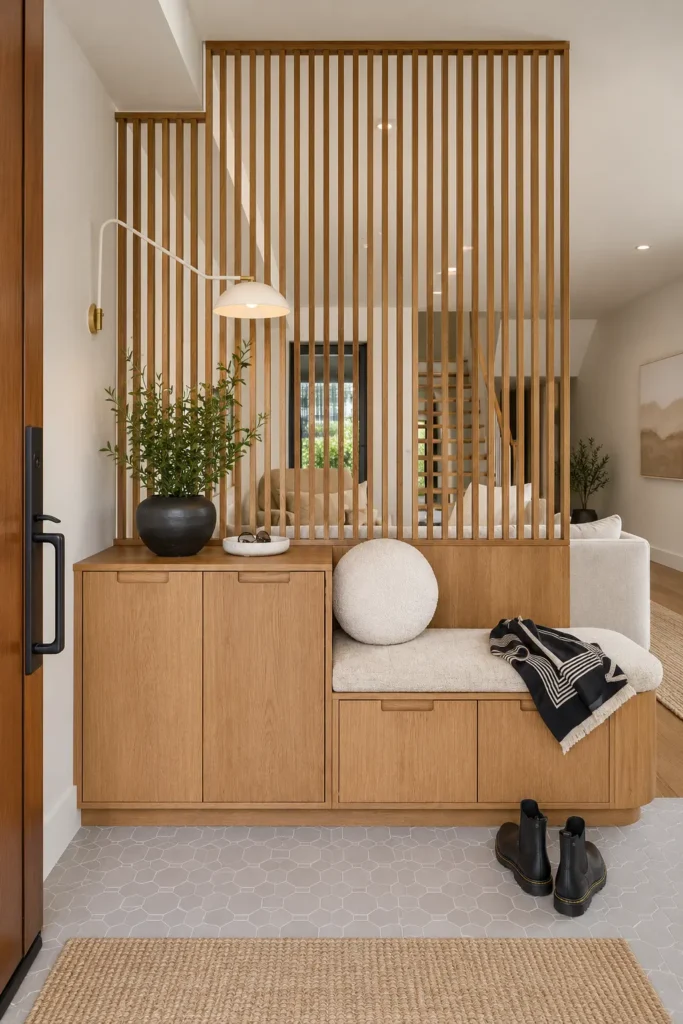
In an open-plan home, a storage bench can help define the entry without closing it off. Combine low cabinets and a cushioned seat with vertical oak slats extending toward the ceiling. Light can pass through the divider, but the front door no longer opens directly onto the living room.
Spacing the slats evenly creates rhythm and makes the structure feel intentional. Because this unit affects circulation and may require floor or ceiling anchoring, it usually needs professional installation. Store heavier items in the lower cabinets, and keep the seating side clear enough for shoes and bags during busy mornings.
15. Display a Family Photo Grid
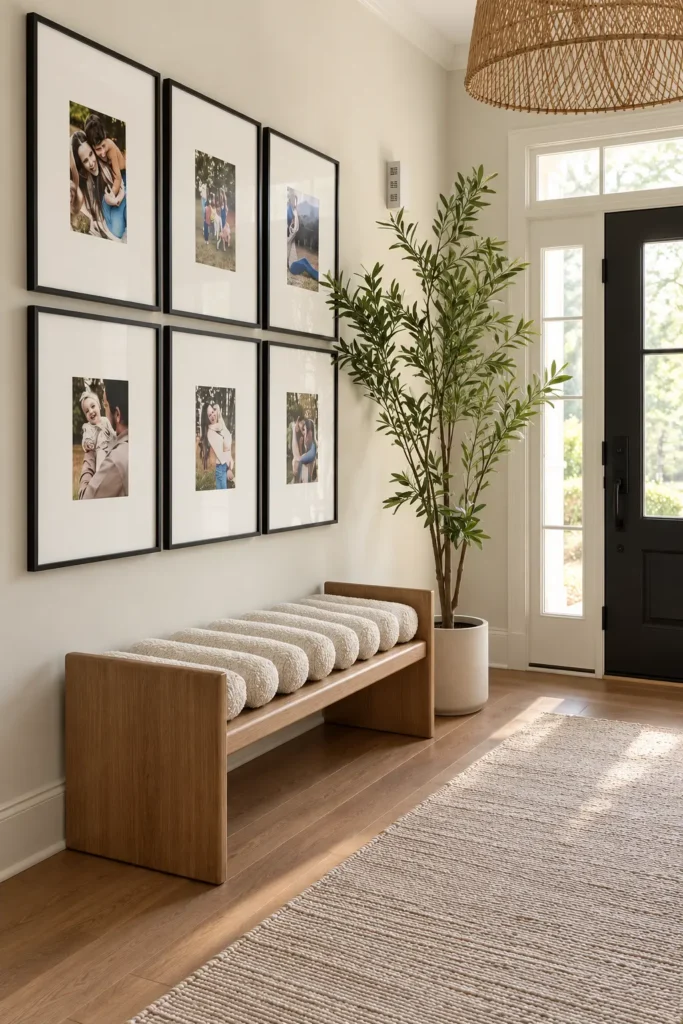
A grid of six matching photo frames makes an entry personal while maintaining order. Place it above a streamlined wood bench with channel-style cream cushions, then add a tall tree to soften the rigid geometry. Matching frames and generous white mats prevent the photographs from creating visual clutter.
Leave approximately 2–3 inches between frames and treat the complete grid as one artwork. Its visual center should generally sit near 57–60 inches from the floor, adjusted slightly to relate to the bench. Use acrylic glazing instead of glass in active family entries because it’s lighter and less likely to break.
16. Group Sculptural Mirrors
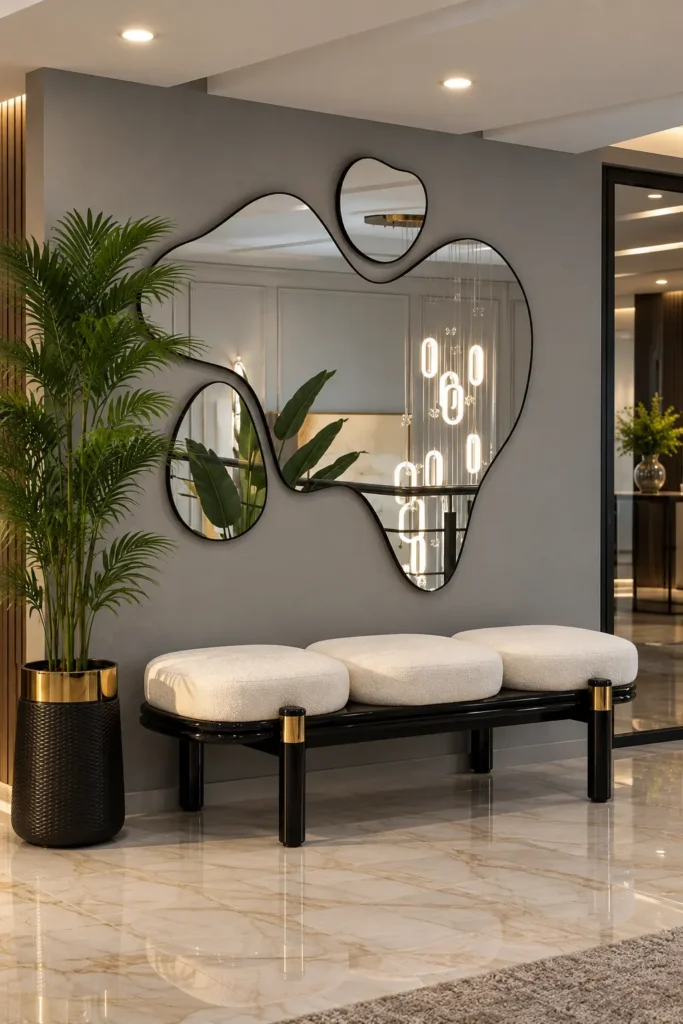
For a more contemporary entry, group several irregular mirrors above a black bench with three cream seat pads. The different shapes create movement across a plain gray wall, while a tall palm balances the composition and adds natural color.
Lay the mirror arrangement out on the floor before making holes in the wall. Maintain consistent gaps so the pieces read as one connected installation rather than scattered mirrors. Reflections can quickly multiply ceiling fixtures and clutter, so check every angle first. A matte wall finish will also reduce unwanted glare around the polished surfaces.
What to Consider Before Styling an Entryway Bench
Begin with the entry’s daily traffic rather than its decorative potential. Measure the bench depth, door swing, walking clearance, outlets, baseboards, and nearby vents. A beautiful setup becomes frustrating when a cabinet blocks the door or pillows must be moved every time someone sits down.
Think about what enters the home with you. Open cubbies suit frequently worn shoes, closed cabinets hide visual clutter, and baskets organize smaller items. In wet climates, washable cushions, sealed wood, durable floor mats, and easy-to-clean storage will age better than delicate fabrics and unfinished natural fibers.
Common Entryway Bench Mistakes to Avoid
The most common mistake is hanging a mirror or artwork too high, leaving it visually disconnected from the furniture. Treat the wall decor and bench as one composition, usually with a gap of about 6–10 inches between them.
Too many small accessories can also interfere with seating. Keep at least half the bench available for actual use. If the entry lacks daylight, don’t rely on one ceiling fixture; add a wall sconce, table lamp, or concealed LED source to remove harsh shadows and make the space usable at night.