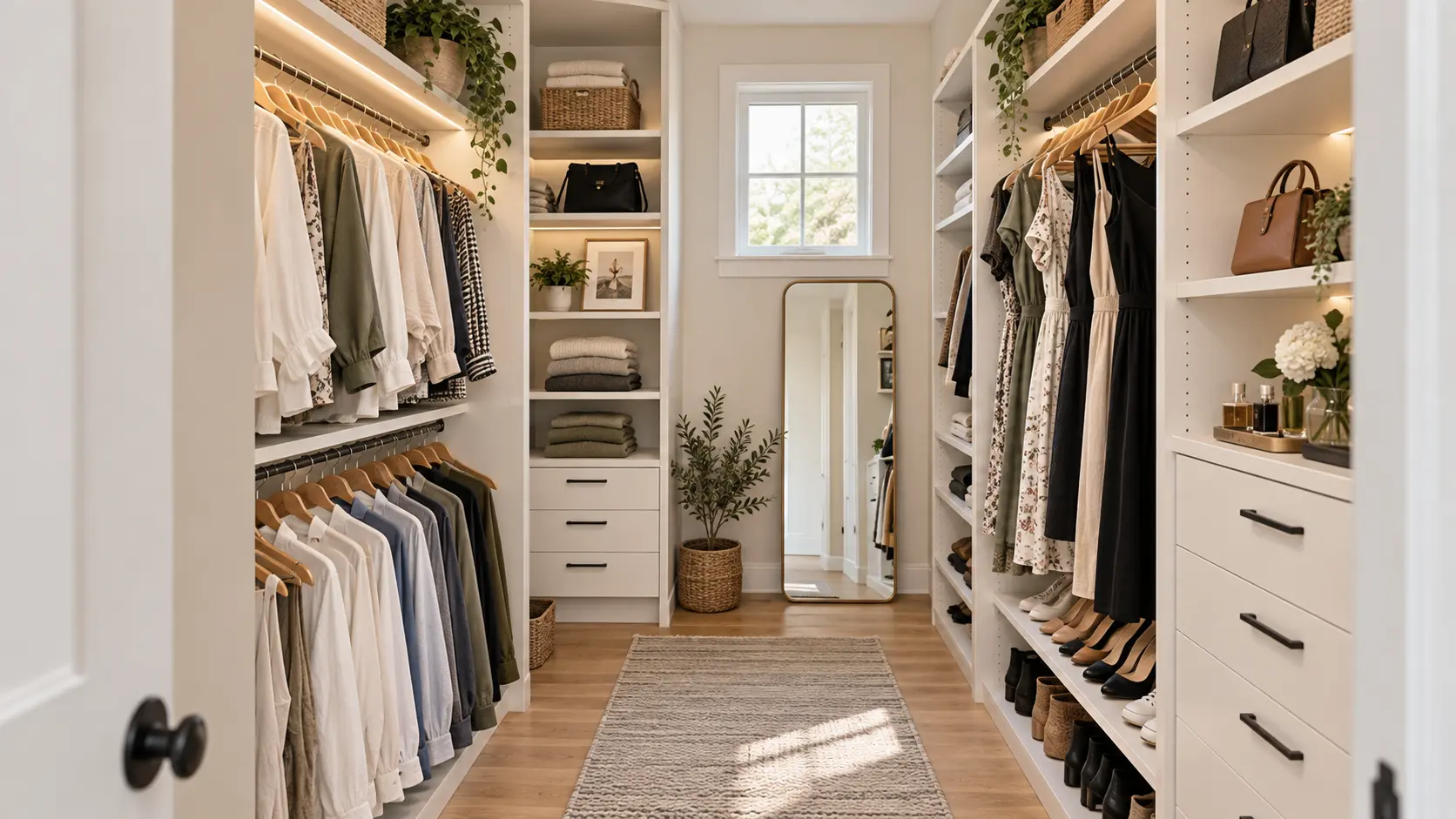
A small walk-in closet can hold a surprising amount when each rail, shelf, and drawer has a clear job. The challenge is adding useful storage without narrowing the walkway or making the room feel crowded.
These small walk-in closet organization ideas are based on realistic layouts for compact homes. Each one combines practical storage with balanced styling, helping you arrange clothes, shoes, bags, and accessories in a way that stays manageable after laundry day.
1. Divide Clothes by Type
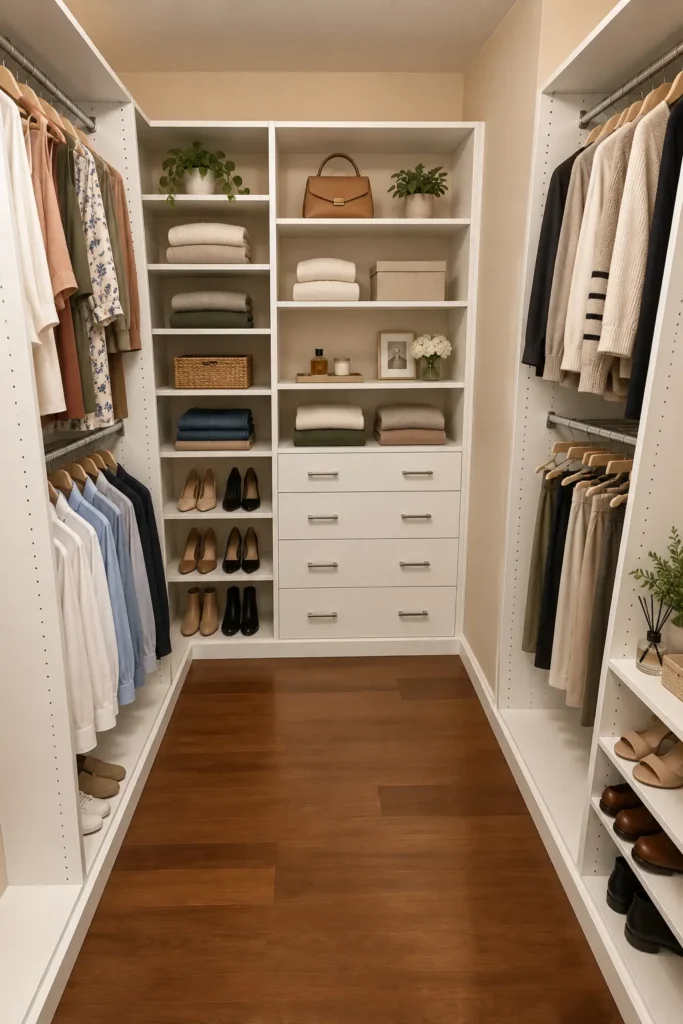
Use both side walls for hanging storage and divide clothing by category. Keep dresses and jackets together, then place shirts and pants on double rails to use the available height.
A central shelf tower can hold folded sweaters, handbags, and everyday shoes. Keep the first 24 inches near the entrance open so the closet feels easier to enter and navigate.
White cabinetry reflects light, while wood flooring adds enough contrast to prevent the room from looking cold.
2. Add Black Trim
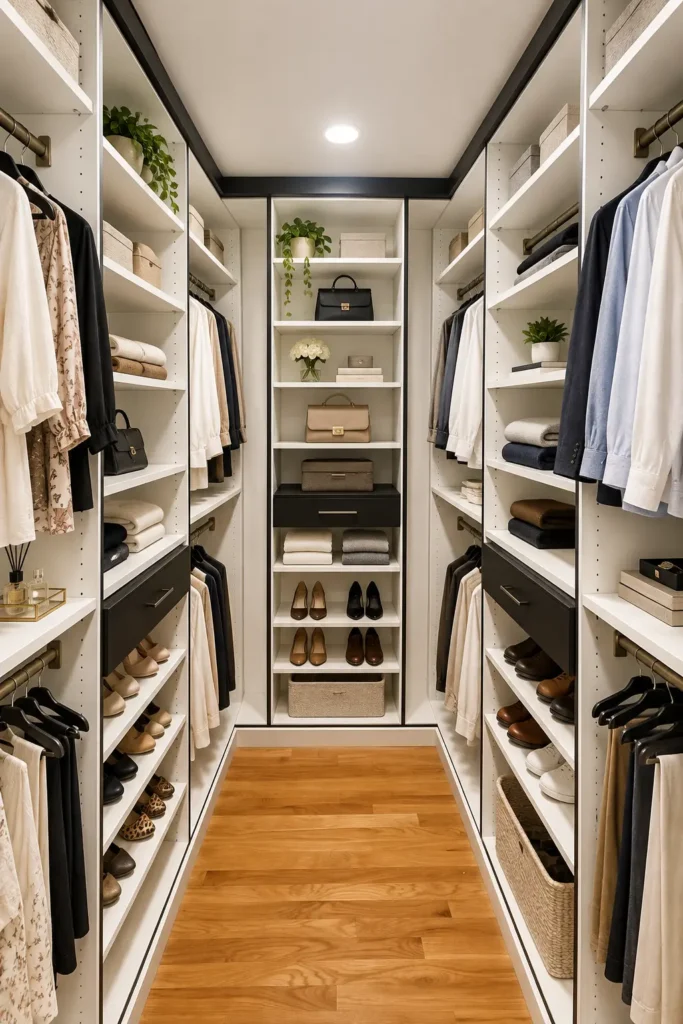
Thin black trim gives a basic white closet more definition. Use it on shelf edges, drawer fronts, or ceiling molding rather than covering large surfaces.
Continue the contrast with black hardware or matching hangers. Place storage boxes above eye level, clothes in the middle, and shoes near the floor.
Aim for an aisle about 36 inches wide. If that isn’t possible, choose 12-inch shelves rather than deep cabinets that restrict movement.
3. Install a Full-Length Mirror
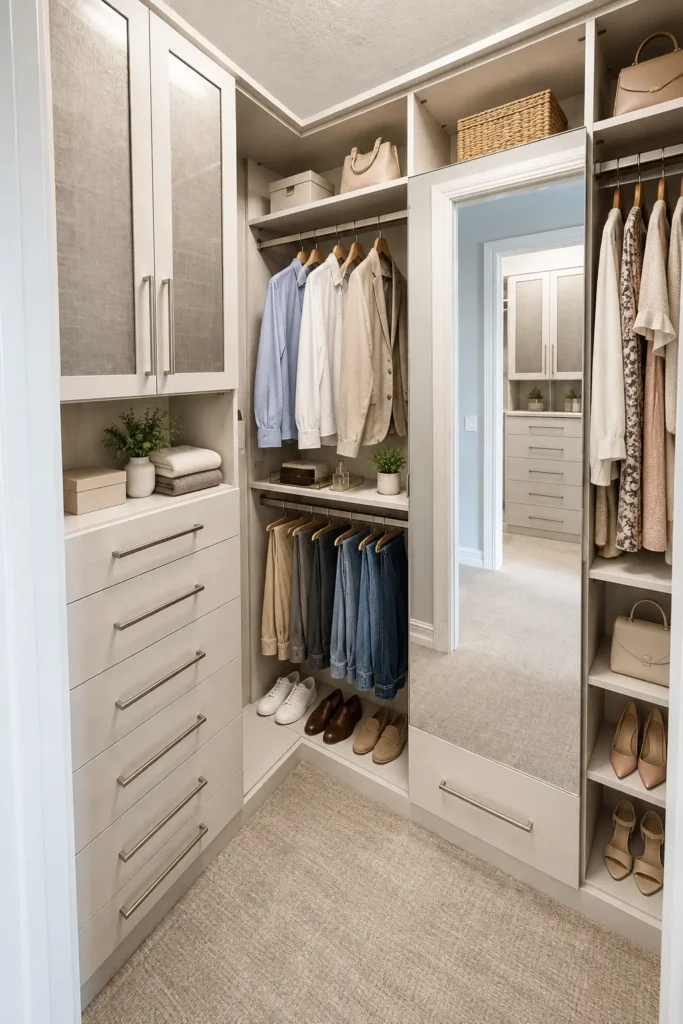
Fit a full-length mirror into a cabinet door or central wall panel. You’ll gain a dressing mirror without sacrificing floor space.
Place double hanging rails beside it and drawers underneath nearby cabinets. This creates separate zones for shirts, pants, folded clothing, and accessories.
Mirrors reflect both light and clutter, so avoid overfilling the visible rails. Textured cabinet doors can conceal less attractive items and soften the room’s reflective surfaces.
4. Light Wood Shelves
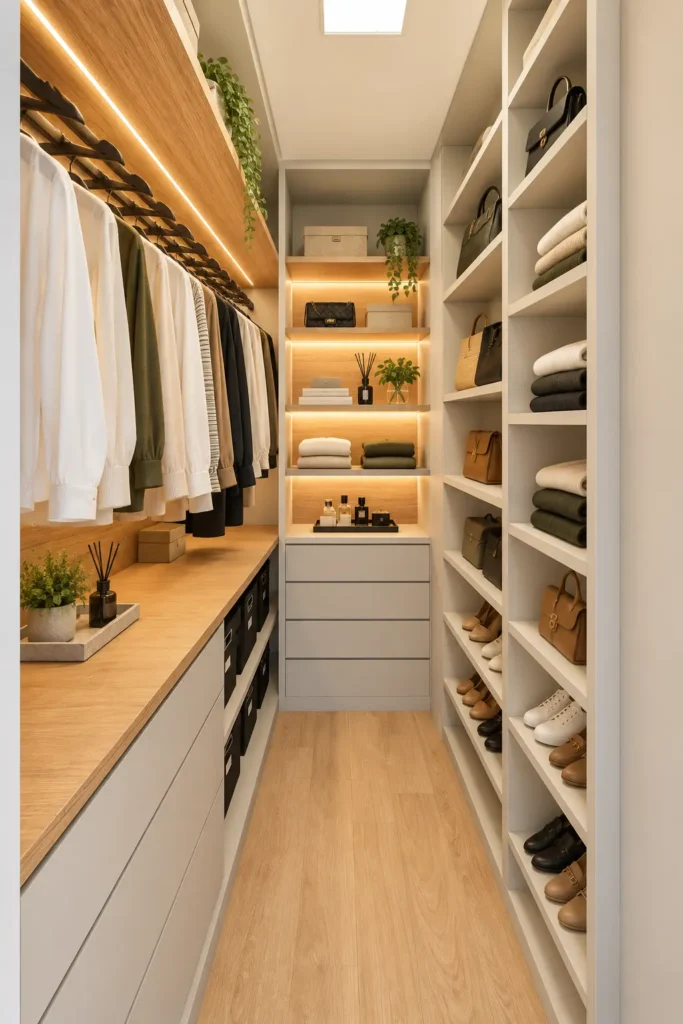
Warm wood shelves create a more relaxed look than an all-white closet. Install concealed LED strips beneath the front edge of each shelf to illuminate the contents without showing the bulbs.
Use one wall for hanging clothes and the other for shoes, bags, and folded garments. Keep daily items between waist and eye level.
Choose LEDs between 2700K and 3000K. Cool bulbs can make warm wood appear dull, while warmer light brings out its natural grain.
5. Add a Small Vanity
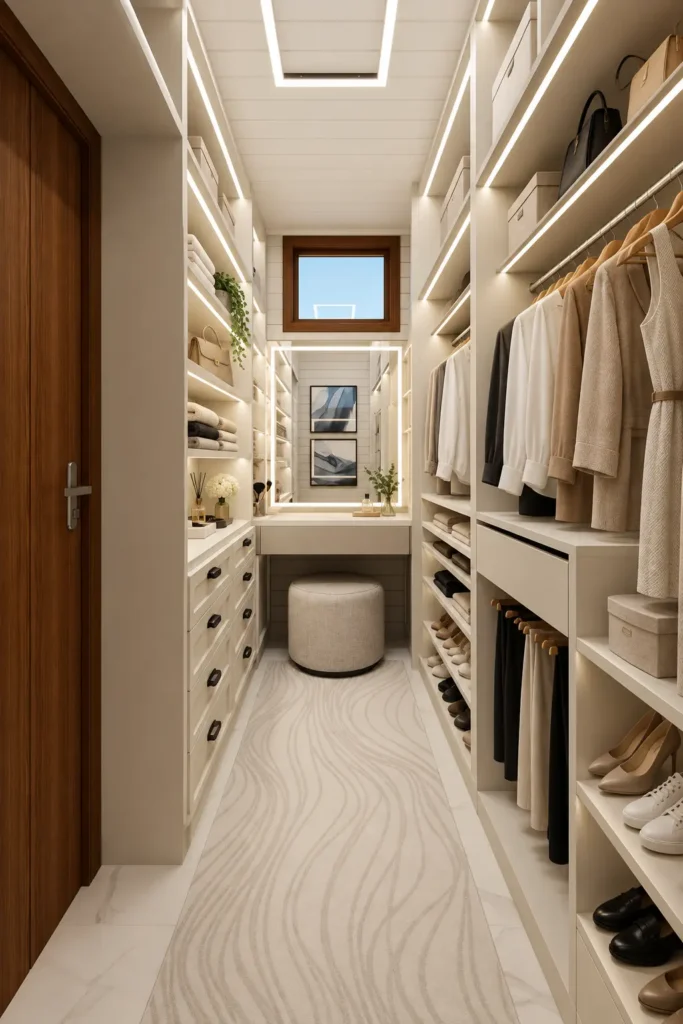
Turn the end wall into a compact dressing station with a floating counter, illuminated mirror, and round stool. The vanity creates a useful destination at the end of a narrow closet.
Choose a stool that slides completely beneath the counter. Leave at least 30 inches of clear space behind it for comfortable movement.
Store cosmetics and jewelry in shallow drawers rather than leaving them on display. A clear counter makes the entire closet look calmer and easier to maintain.
6. Organize Modular Storage
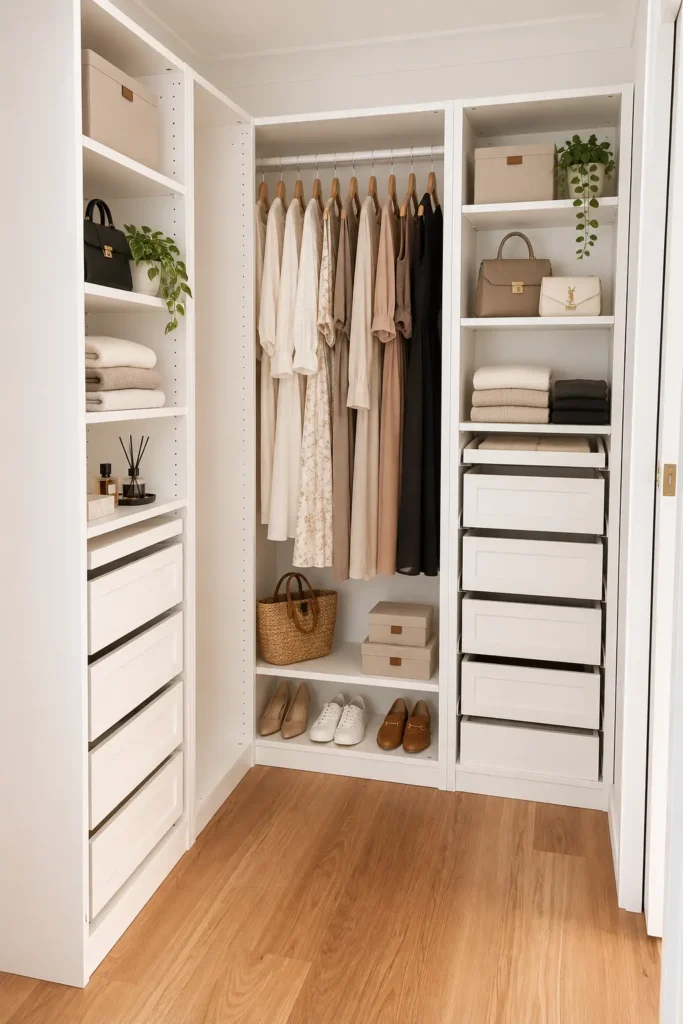
Modular closet systems work well in rentals and homes where storage needs may change. Combine one tall hanging section with drawers and adjustable shelves.
Hang dresses in the tallest opening. Use short stacks for folded clothing, and give handbags enough room to stand without losing their shape.
Don’t fill every open shelf. A few inches of negative space keeps the closet readable and gives you room for future purchases.
7. Use Double Hanging Rails
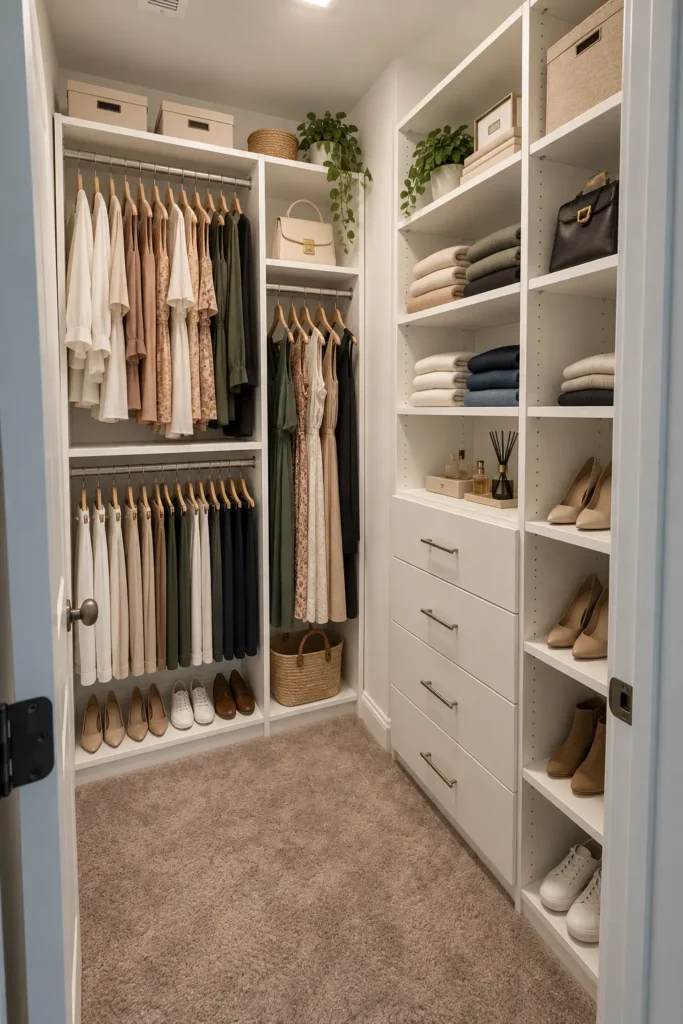
Double rails can almost double the usable hanging space in a small closet. Install the upper rail roughly 78 to 82 inches from the floor and the lower rail around 38 to 42 inches.
Use these sections for shirts, skirts, folded pants, and short jackets. Reserve one full-height bay for dresses and long coats.
Slim hangers save space, but don’t press garments tightly together. Clothes need enough room to slide along the rail without wrinkling.
8. Add a Corner Rack
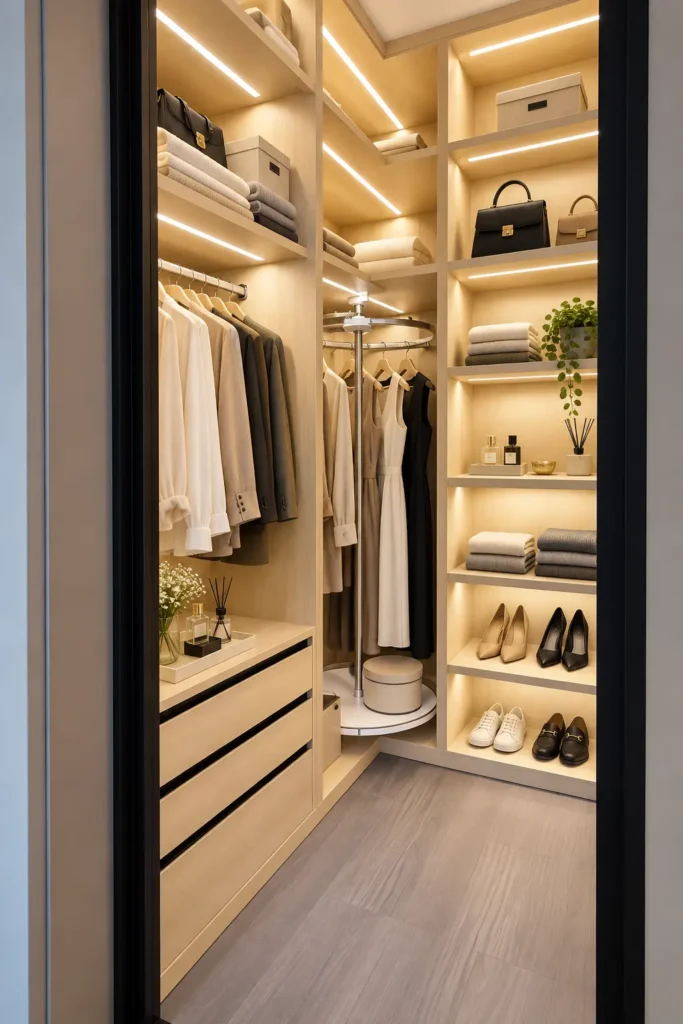
A rotating corner rack makes deep, awkward storage easier to reach. Instead of reaching behind a cabinet, you can bring the clothing forward.
Surround the rack with shallow shelves for shoes, bags, and folded items. Keep the turning area clear so nothing catches on the mechanism.
Measure the full rotation before installation. These systems are heavier and more complex than standard rails, so they need strong cabinet framing and reliable hardware.
9. Balance Storage With a Mirror
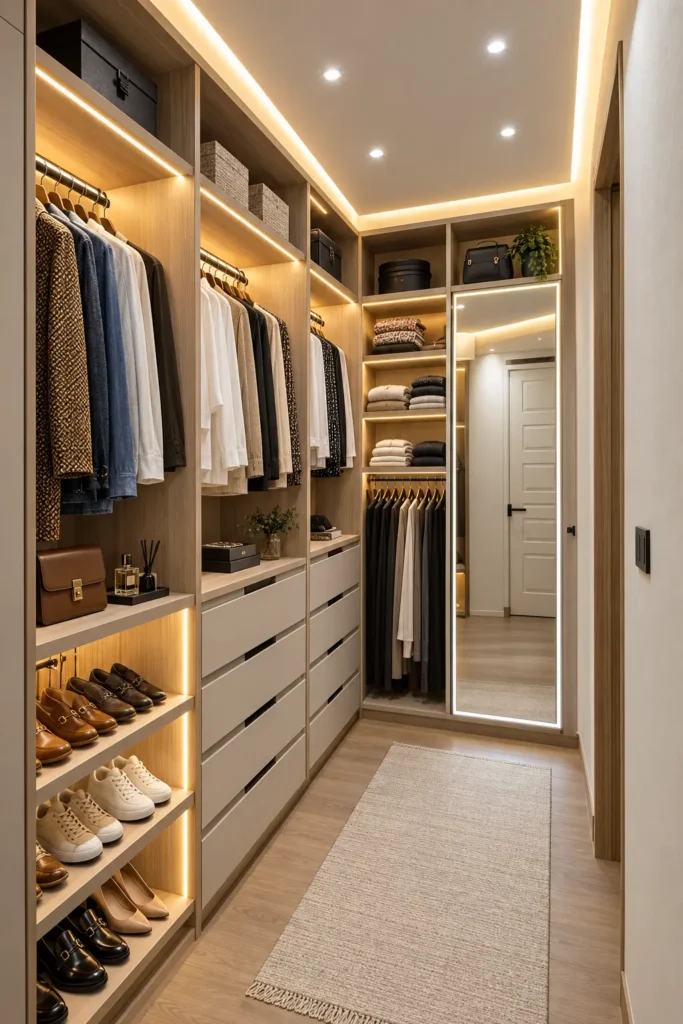
A mirror at the end of a long closet balances the visual weight of clothing stored along one side. It also reflects the doorway and makes the room appear less enclosed.
Install drawers below hanging garments to hide underwear, sleepwear, and accessories. Place everyday shoes near the entrance so they’re easy to reach.
A slim runner can soften sound and protect the floor. Make sure it doesn’t interfere with low drawers or cabinet doors.
10. Choose Glass Cabinets
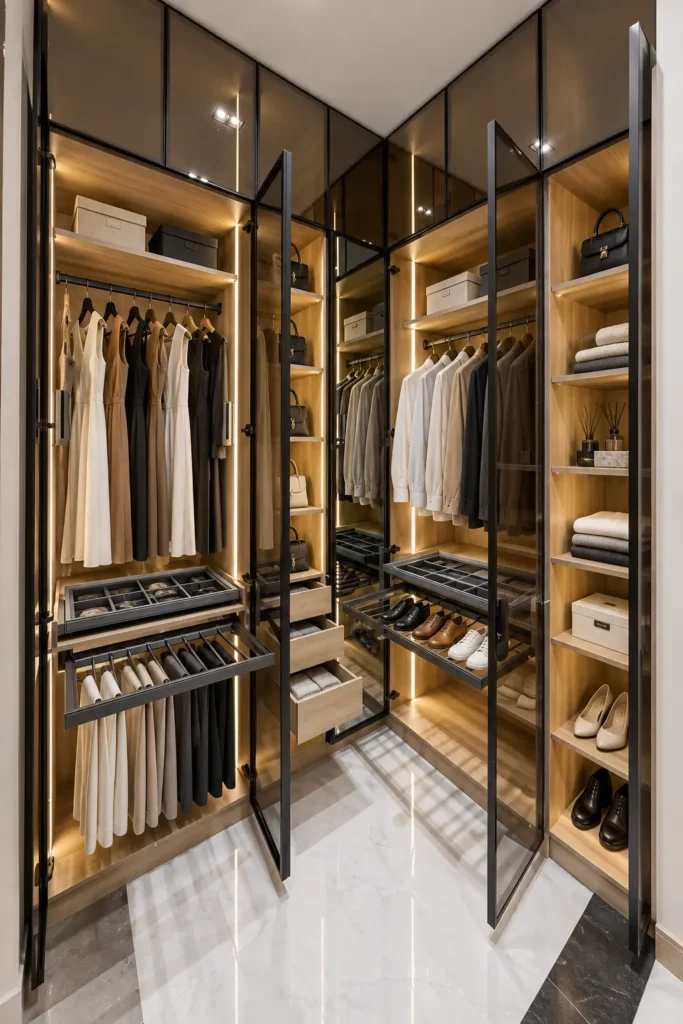
Glass-front cabinets give a compact closet a polished, boutique-style appearance. Black metal frames strengthen the vertical lines, while interior lighting keeps the cabinetry from looking heavy.
Store dresses and shirts in the largest sections. Use shallow trays for jewelry and pull-out shelves for shoes.
Clear glass makes everything easier to find but also exposes clutter. Smoked glass provides more concealment, although it requires stronger interior lighting.
11. Display Shoes and Bags
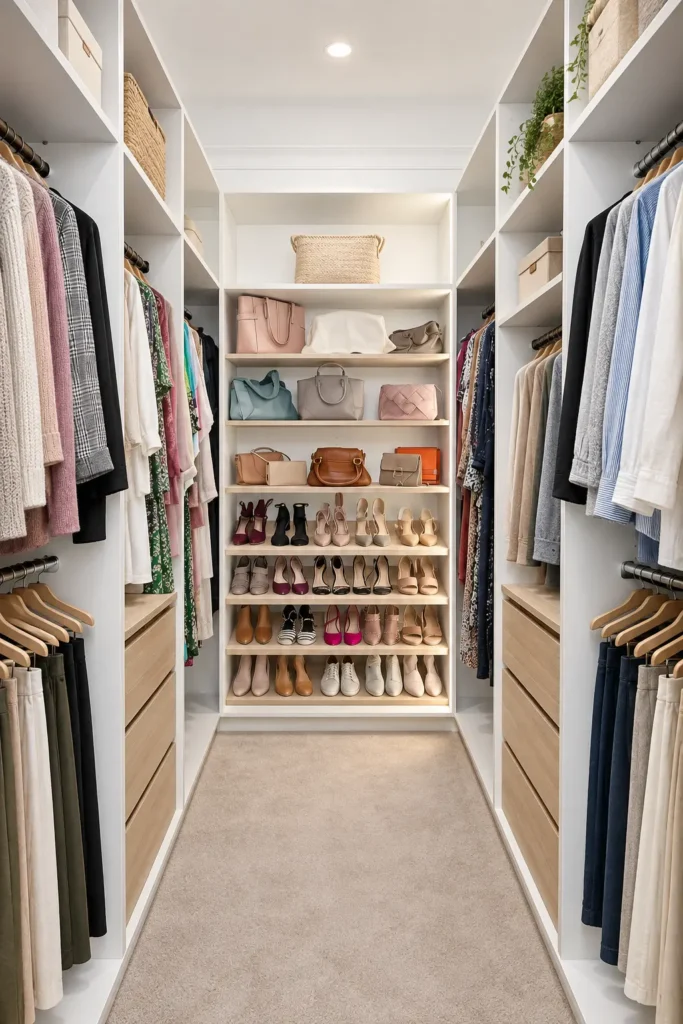
Use the back wall as an organized display for shoes and handbags. Place bags on the upper shelves and arrange footwear below by type or color.
Allow about 8 to 10 inches of height for flats and low heels. Boots and tall shoes need larger openings.
Keeping the main display at the end of the closet creates a clear focal point. It also leaves the side walls available for hanging clothes and drawers.
12. Create a Dressing Zone
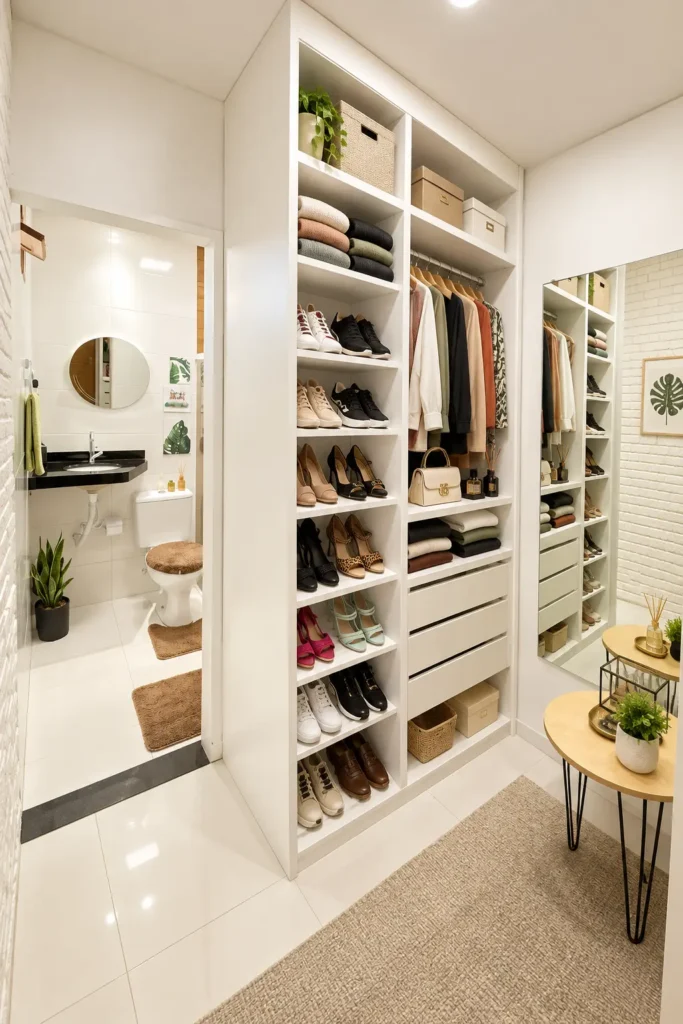
When a closet opens near a bathroom, use a tall storage wall to separate the dressing and bathing areas. Combine shoes, folded clothing, hanging garments, and drawers in one structured unit.
Add a nearby mirror and small table only if the walkway remains clear. Compact nesting tables are easier to move than a heavy dresser.
Humidity can damage closet materials. Run the bathroom exhaust fan regularly and choose sealed laminate or painted cabinetry instead of unfinished particleboard.
13. Try Pull-Out Storage
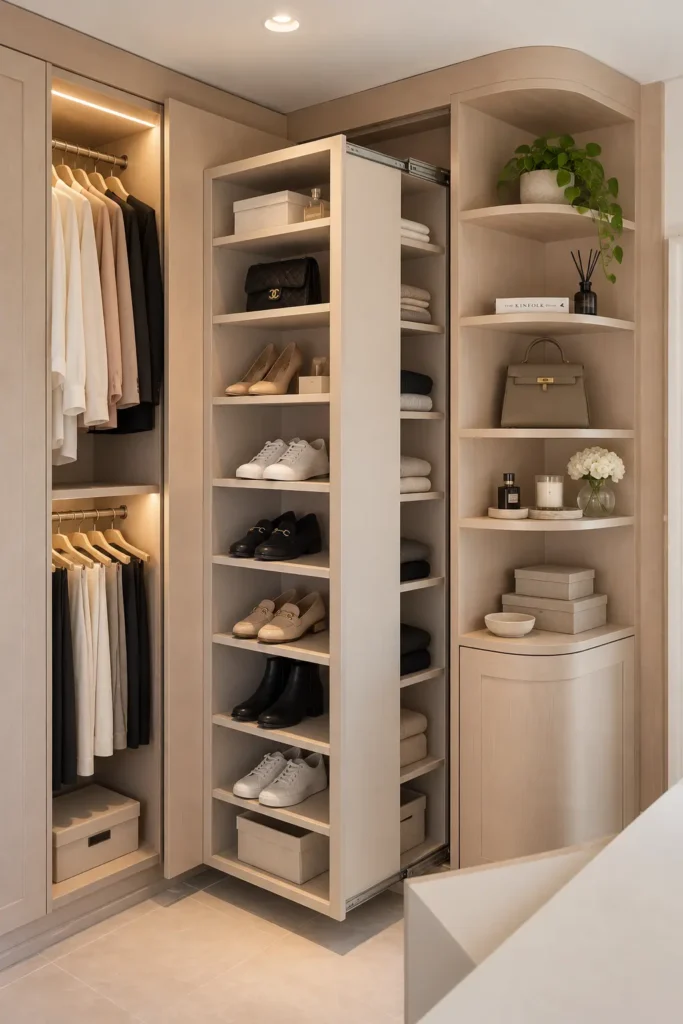
A tall pull-out unit can use the deep corner where two cabinet runs meet. It provides access to several shelves without leaving a large door open in the walkway.
Store shoes in pairs and place heavier styles near the bottom. Folded garments and light boxes can sit higher up.
Check the loaded weight limit before installation. The unit must also clear nearby doors, counters, and curved shelves when fully extended.
14. Build a Dressing Wall
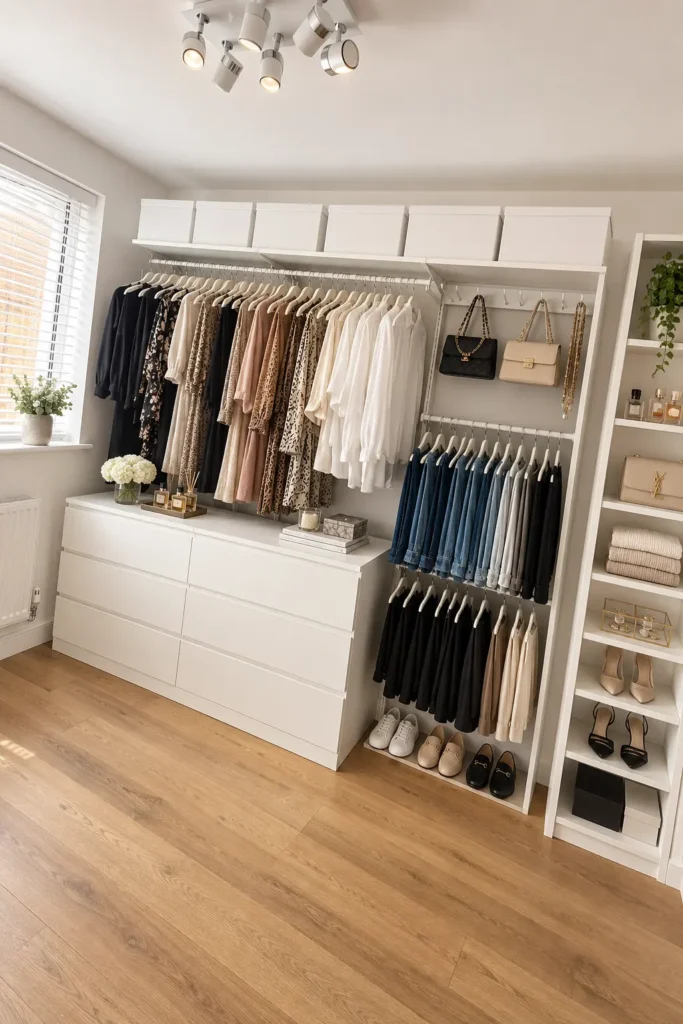
An open dressing wall is useful when the room is too narrow for cabinets on both sides. Position low drawers beneath a long clothing rail and add a smaller rail for jeans or skirts.
Use matching hangers to make exposed clothing look less busy. Store seasonal items in labeled boxes on the upper shelf.
Keep shoes inside a narrow side tower instead of lining them across the floor. Clear flooring makes the room safer and visually wider.
15. Use Symmetrical Storage
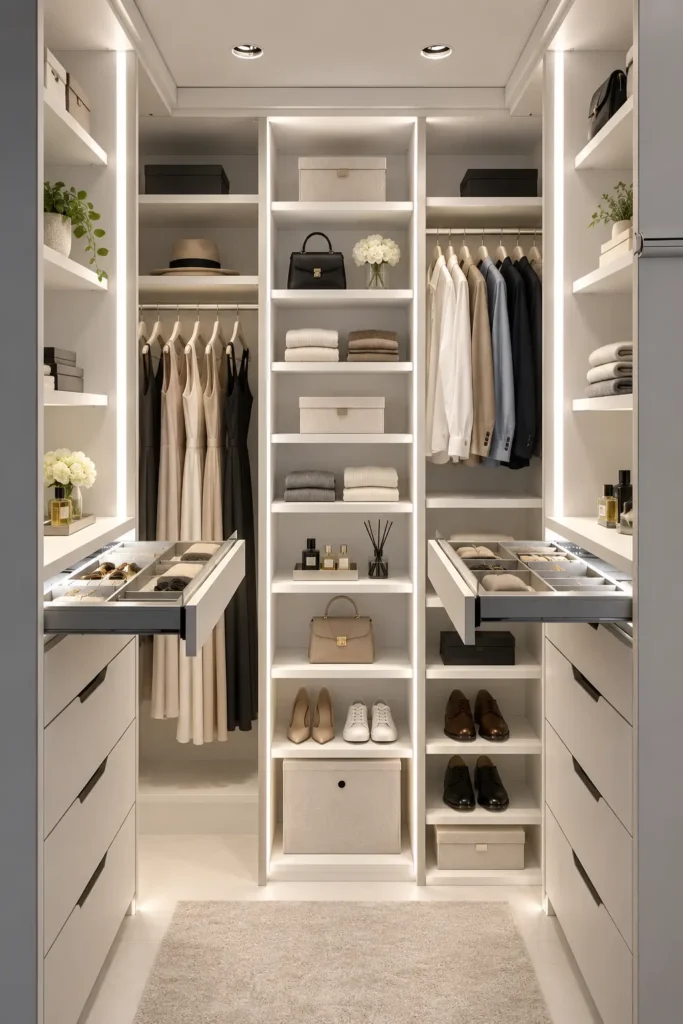
Matching drawer banks on opposite walls create a balanced closet layout. Install shallow accessory trays above them for watches, jewelry, sunglasses, and belts.
Use the center shelving tower for folded clothes, shoes, storage boxes, and handbags. Keep similar items grouped together rather than using each shelf for a different category.
Check that opposite drawers won’t collide. In very narrow closets, open one side at a time or select shorter drawer depths.
16. Pair a Closet With a Vanity
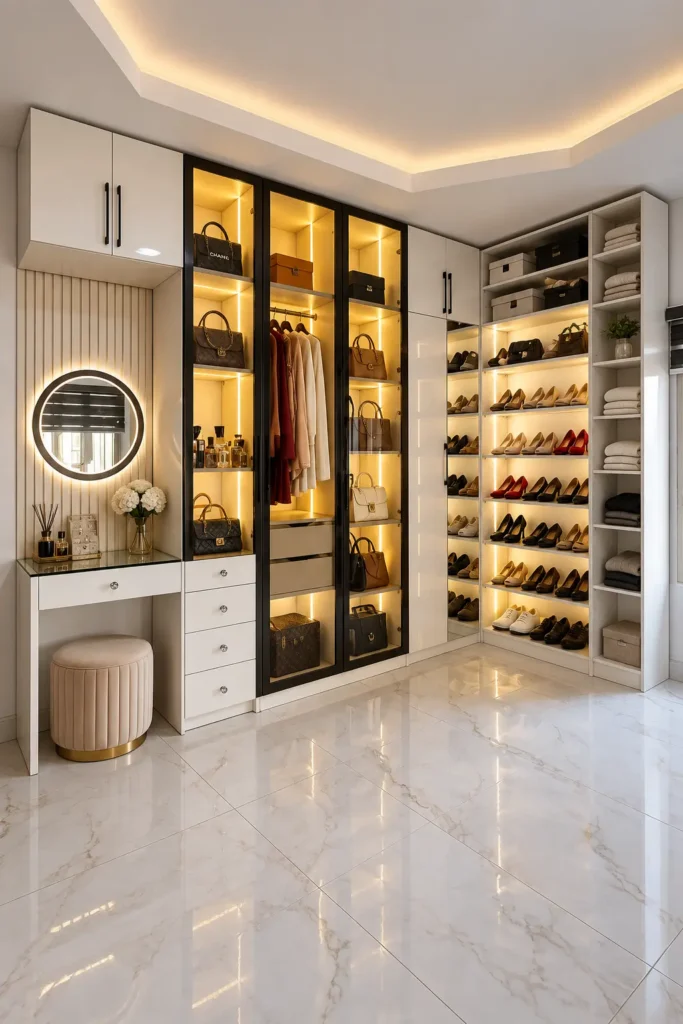
Combine an illuminated wardrobe with a slim vanity to create a complete dressing room. Glass cabinets can display handbags and occasionwear, while open shelves keep shoes easy to compare.
Choose a backless stool that tucks beneath the vanity. Leave approximately 30 to 36 inches in front of it for comfortable seating and movement.
Warm cabinet lighting highlights wood finishes. Add a neutral task light near the mirror so makeup and clothing colors remain accurate.
Plan Before You Organize
Measure the closet before buying shelves or cabinets. Record the ceiling height, baseboard depth, outlets, door swing, and narrowest aisle measurement.
Hanging clothes generally require 22 to 24 inches of depth. Folded items and shoes can fit on shallower shelves.
Count how many long garments, shirts, pants, shoes, and bags you own. Planning around your actual wardrobe is more useful than copying a display closet designed for different belongings.
Avoid These Closet Mistakes
Deep shelves often waste space because items disappear behind each other. Use pull-out baskets, shelf dividers, or shallow compartments to keep everything visible.
Overhead lighting alone can leave dark shadows beneath shelves. Concealed LED strips improve visibility and help you distinguish similar colors.
Most importantly, leave some open space. A closet packed to its limit becomes difficult to organize as soon as clean laundry needs to be put away.
Good small walk-in closet organization ideas make clothing easier to find while keeping the limited walkway clear. Start with one practical update, such as double rails, shallow shoe shelves, or improved lighting. If you’re organizing the rest of the room too, explore these Small Bedroom Layout Ideas for practical ways to improve furniture placement, storage, and everyday movement. Save this guide for your next closet update.