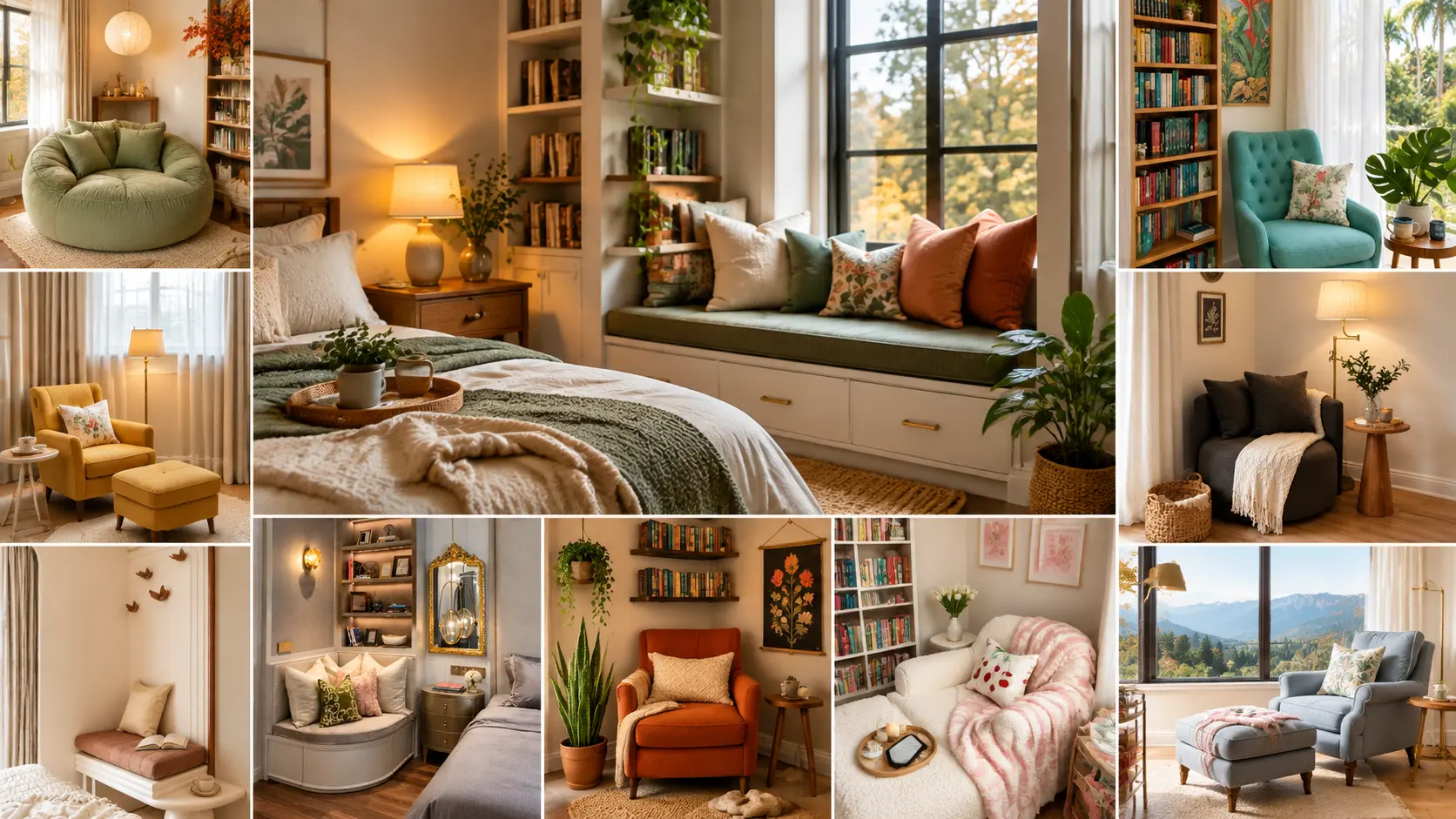
A quiet corner with a comfortable seat, soft lighting, and a few favorite books can completely change how a bedroom feels. These cozy bedroom reading nook ideas focus on creating practical spaces that fit real homes, from small apartments to larger bedrooms where an unused corner needs a purpose.
Instead of adding unnecessary furniture, these designs use smart placement, natural light, built-in storage, warm textures, and carefully chosen colors to create reading areas that feel inviting while still working for everyday life.
1. Window-Side Reading Nook
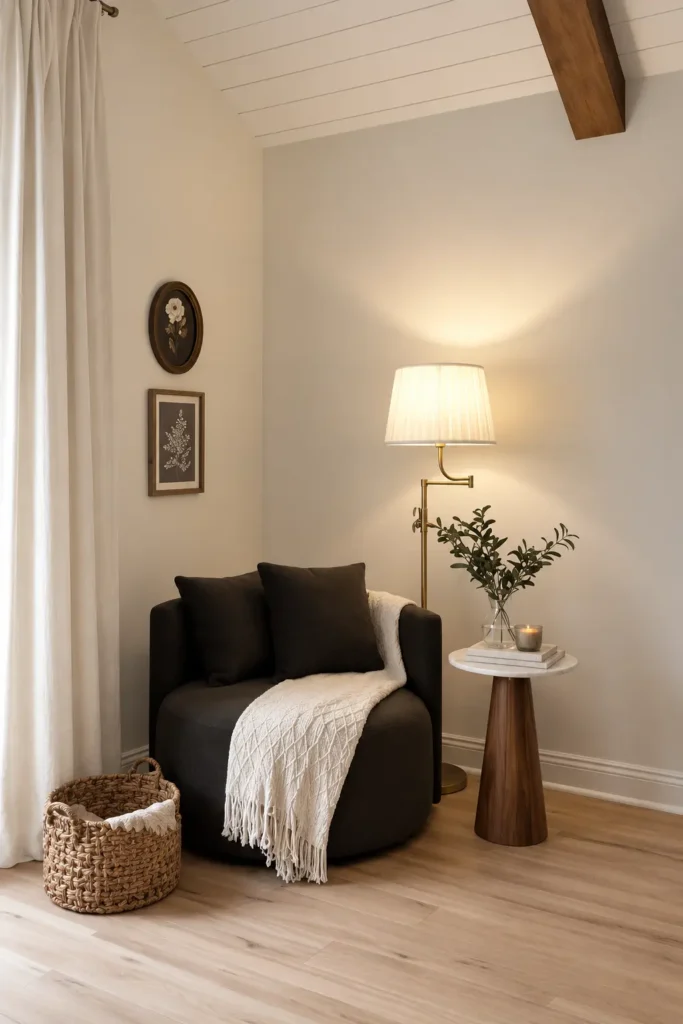
A window-side reading nook makes the most of natural light while creating a peaceful place to read, journal, or enjoy morning coffee. A compact armchair, small side table, and lightweight curtain layers are enough to define the area without making the bedroom feel crowded.
Place the chair slightly away from the glass rather than directly against the window to avoid drafts and allow comfortable movement. A floor lamp with a warm 2700K bulb can support evening reading when daylight disappears. Soft linen curtains help filter sunlight without blocking the outdoor view.
2. Built-In Corner Bench
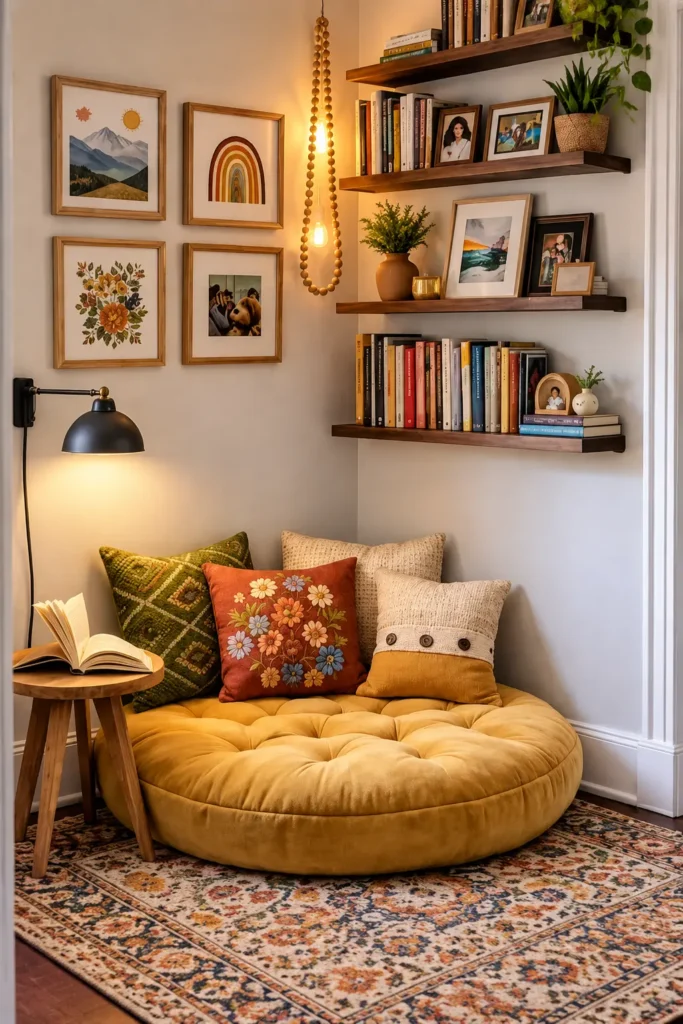
A built-in bench turns an unused bedroom corner into a functional reading zone with extra storage underneath. This approach works especially well in smaller rooms because the seating does not consume the visual space of a traditional chair.
Use a custom cushion around 3–4 inches thick for comfortable sitting and add removable covers for easier cleaning. Pair the bench with wall-mounted shelves or drawers below the seat to store books, blankets, and seasonal items. Neutral upholstery such as beige, oatmeal, or soft gray keeps the structure visually calm.
3. Curved Reading Alcove
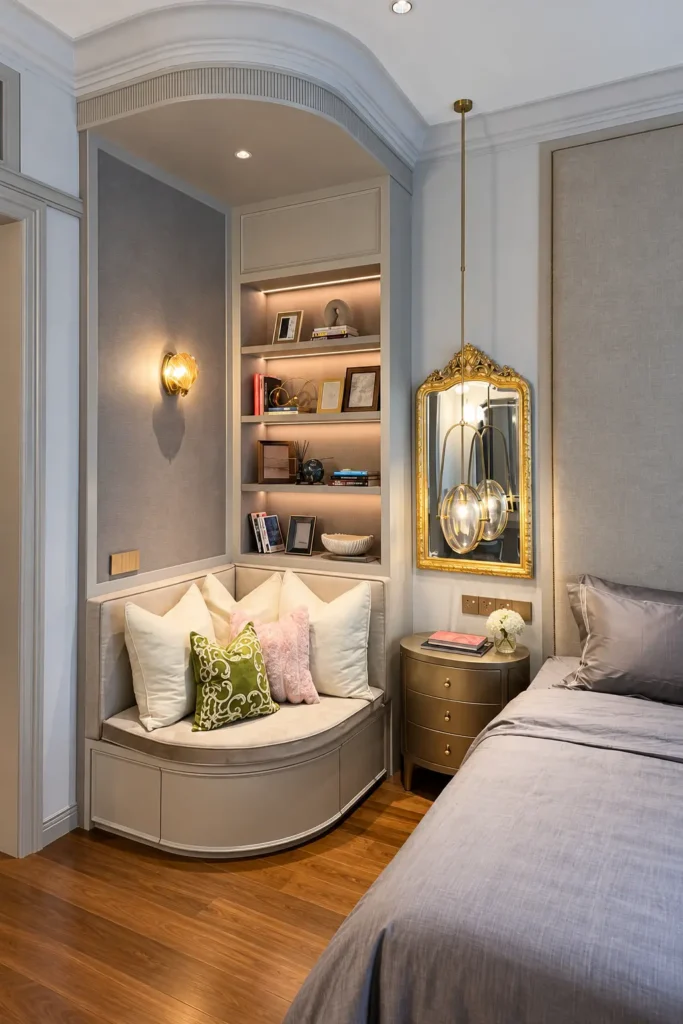
A curved reading alcove creates a softer architectural feel by replacing sharp corners with rounded shapes. A built-in curved seat, upholstered cushion, and layered pillows create a dedicated retreat inside the bedroom.
This style works well when you want the reading area to feel like part of the room rather than an added piece of furniture. Use durable performance fabric if the nook will receive daily use, especially in homes with children or pets. Rounded edges also improve traffic flow in tighter bedrooms.
4. Simple Armchair Corner
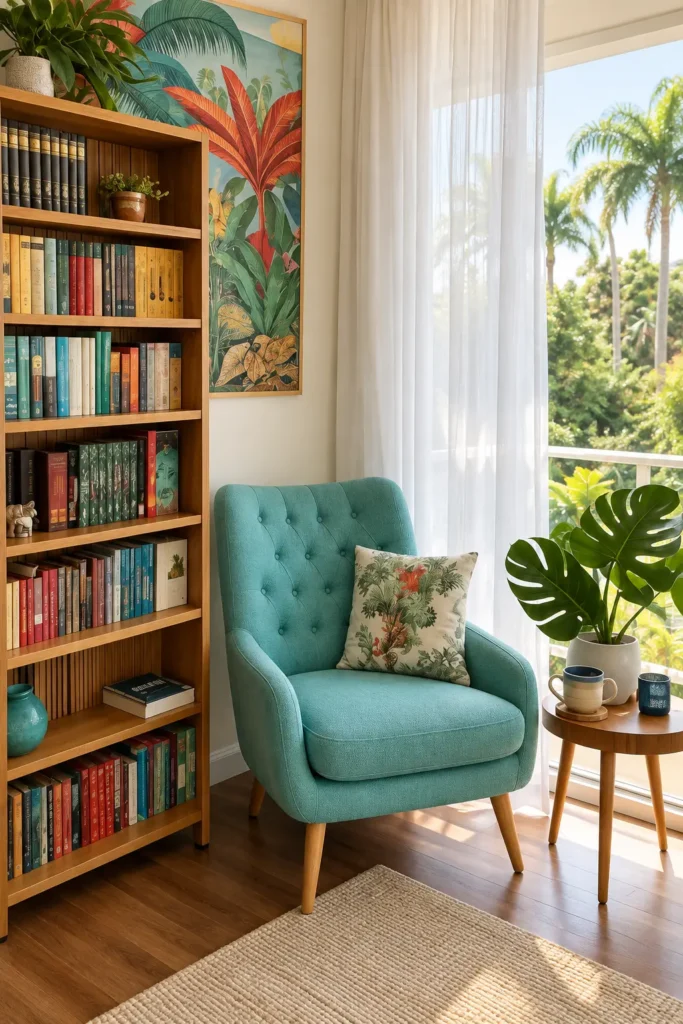
A single comfortable chair can become a stylish reading corner without requiring a major renovation. Choose an armchair with proper back support, enough seat depth for relaxation, and fabric that matches the bedroom palette.
A small side table beside the chair provides space for books, glasses, or a cup of tea. Keep at least 18 inches between the chair and nearby furniture so the area feels open. This setup works well for renters because everything can move with you when you relocate.
5. Bedside Reading Nook
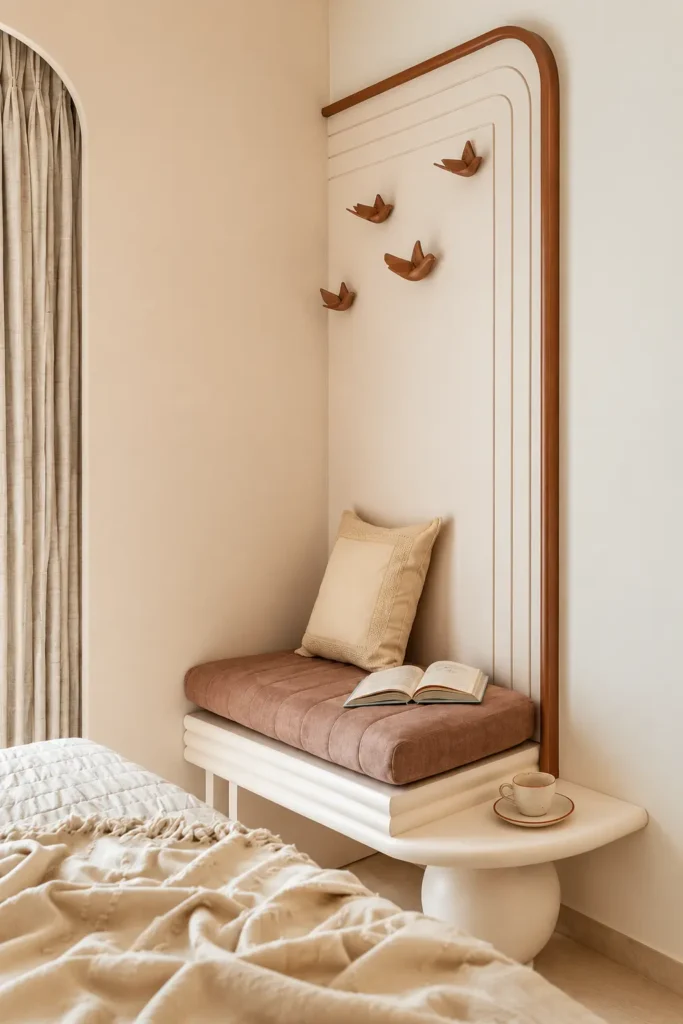
A bedside reading nook combines sleeping and reading functions by using the space beside the bed more intentionally. A narrow built-in seat, wall lighting, and a small shelf can create a practical corner without needing extra floor area.
Wall-mounted reading lights are especially useful because they free up table space and provide focused illumination. Position the light approximately 12–18 inches above shoulder height when seated to reduce glare. This design works beautifully in bedrooms where every square foot matters.
6. Floating Bookshelf Corner
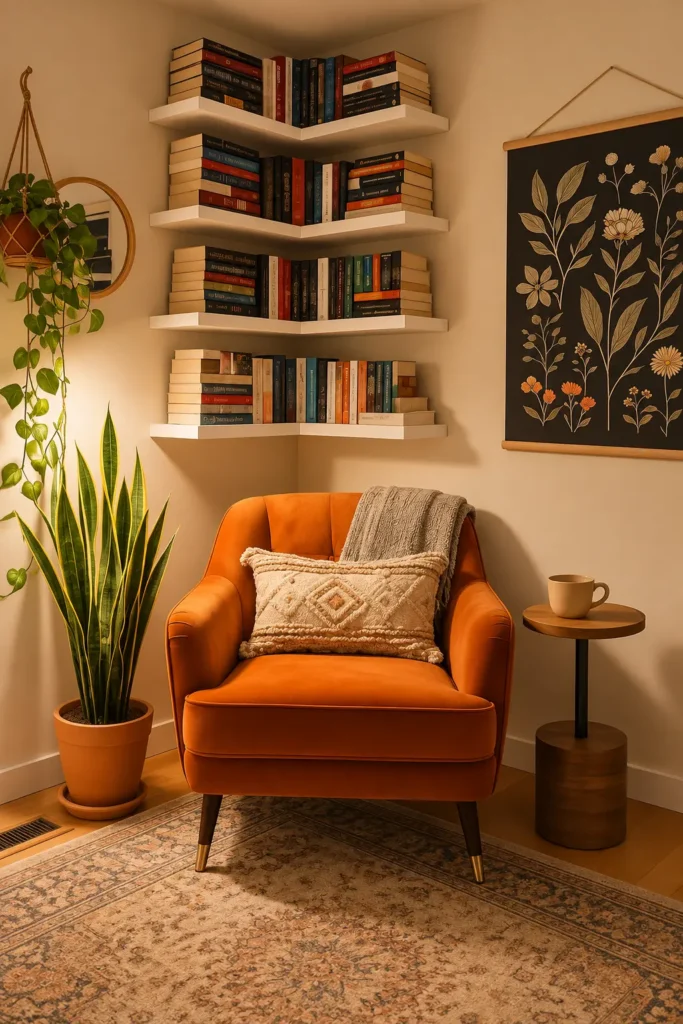
Floating shelves create a book corner without taking valuable floor space. Install shelves vertically to draw the eye upward and make a small reading area feel taller.
Wood shelves add warmth against painted walls, while white shelves create a lighter appearance. Keep heavier books on lower shelves and decorative items higher for visual balance. Leave some empty space between objects because overcrowded shelves can make a corner feel smaller. A comfortable chair below completes the reading zone.
7. Cozy Daybed Retreat
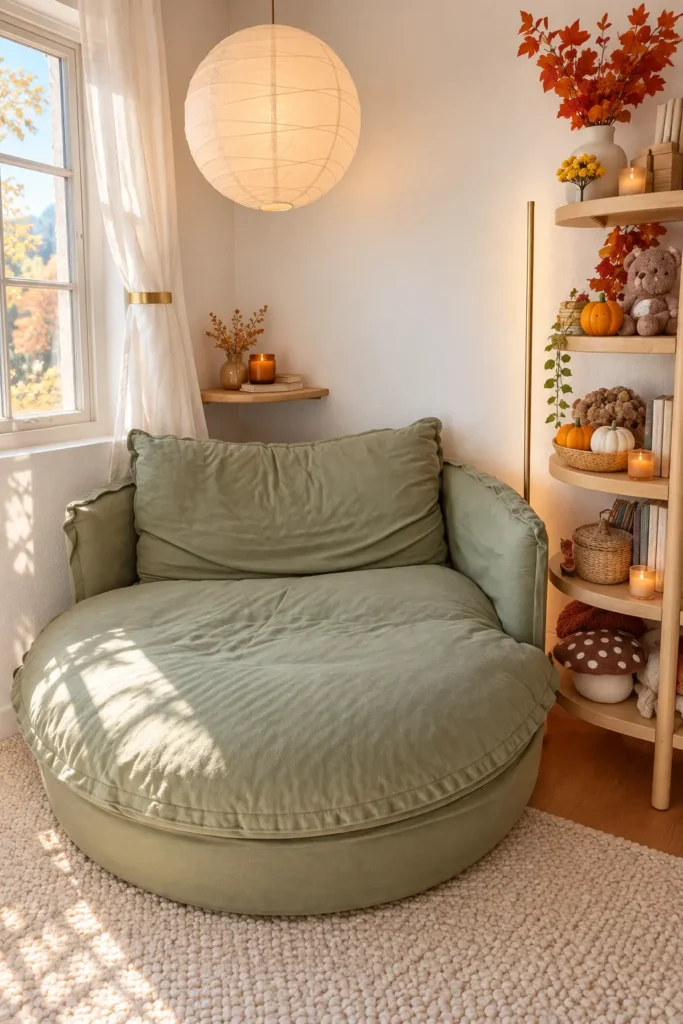
A daybed creates a flexible reading space that can also work as guest seating or a relaxing afternoon lounge. Choose soft upholstery, layered cushions, and a washable throw blanket for comfort.
The ideal daybed placement is near a window or wall with enough open space around it for easy access. Use pillows of different sizes—larger pillows behind for support and smaller cushions in front for decoration. This arrangement gives the room a relaxed, hotel-inspired feeling without sacrificing practicality.
8. Wood-Framed Reading Nook
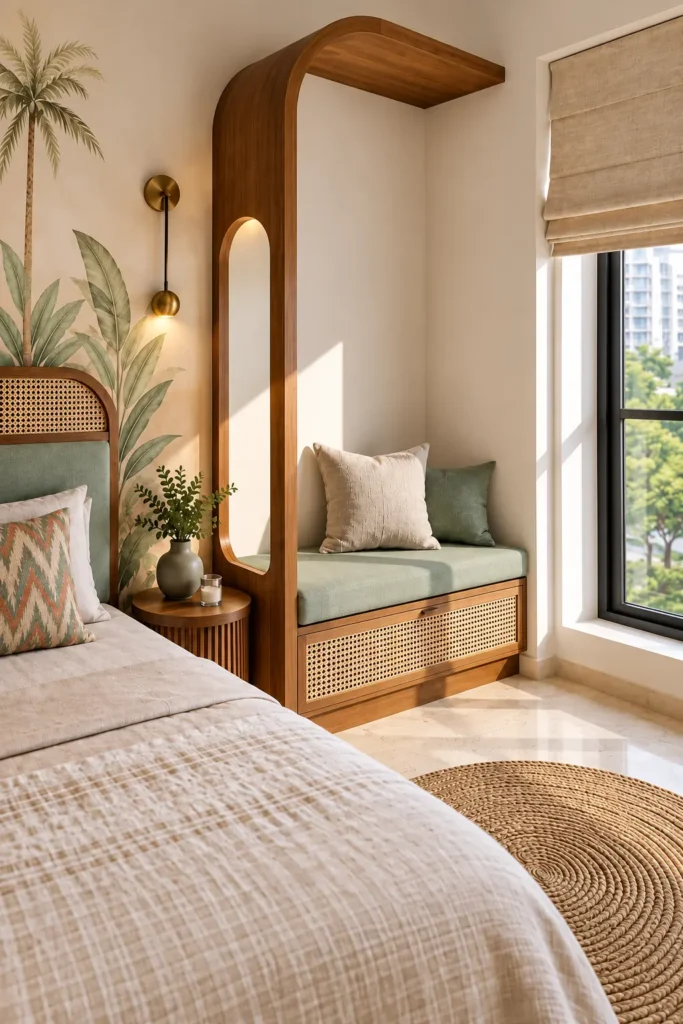
A wood-framed reading nook adds architectural character through warm natural materials. A wooden surround, curved panel detail, or integrated shelving can make a simple corner feel custom-designed.
Natural wood pairs especially well with neutral walls, woven fabrics, and plants. Choose matte finishes instead of highly glossy surfaces because they hide fingerprints and scratches better. If using real wood is expensive, wood veneer panels or quality laminate can achieve a similar appearance at a lower cost.
9. Chair and Ottoman Reading Spot
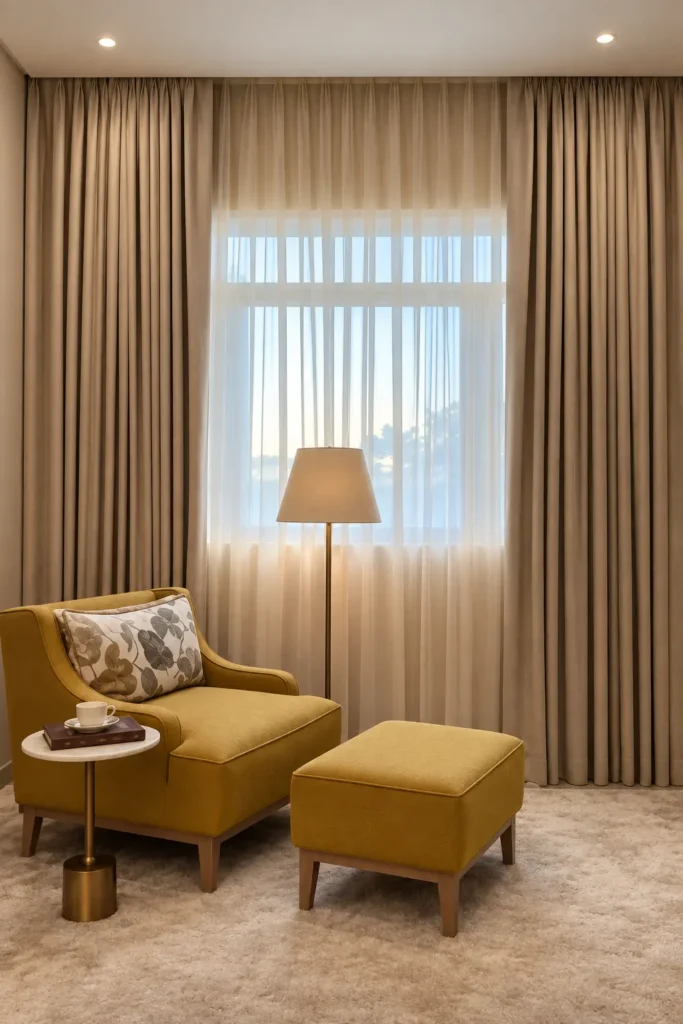
A classic chair-and-ottoman combination provides comfort while maintaining flexibility. The ottoman allows you to stretch your legs while reading and can also serve as additional seating when needed.
Choose an ottoman width that matches the chair scale rather than overpowering it. Place a small rug underneath to visually connect the pieces and reduce noise. A floor lamp positioned behind or beside the chair creates focused light while adding height to the corner.
10. Warm Neutral Book Corner
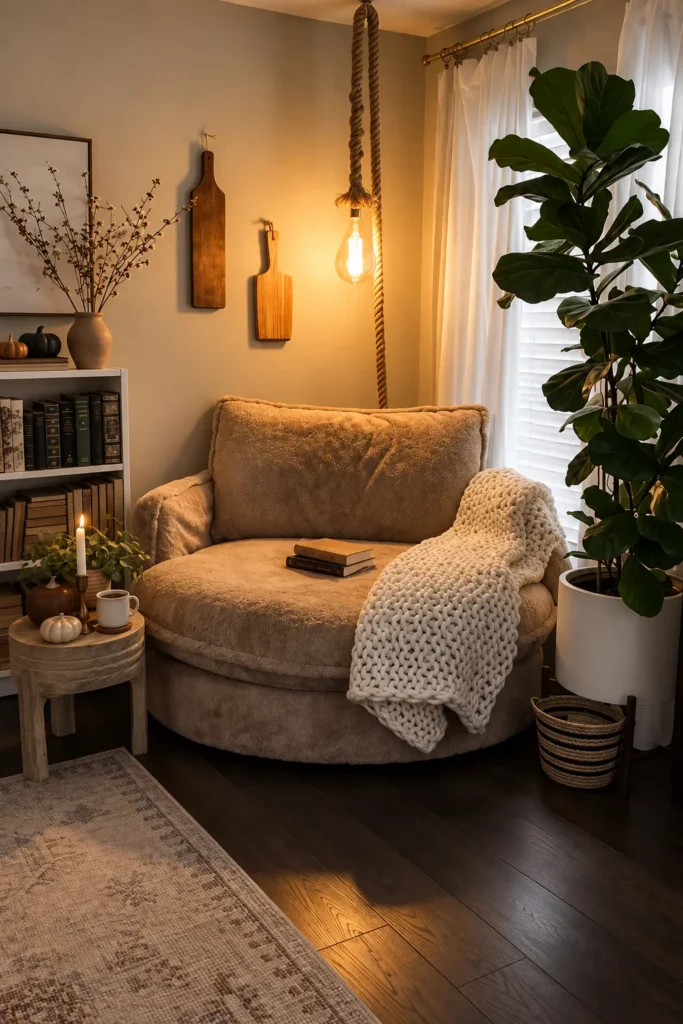
A warm neutral reading corner uses colors like cream, taupe, beige, and soft brown to create a calm bedroom atmosphere. This palette works especially well when combined with textured fabrics such as boucle, wool, cotton, and linen.
The key is layering different textures instead of relying on many colors. A woven basket for blankets, wooden shelving, and a ceramic lamp base can add depth. Matte finishes help maintain a relaxed appearance and prevent the space from feeling overly formal.
11. Bright Minimal Reading Chair
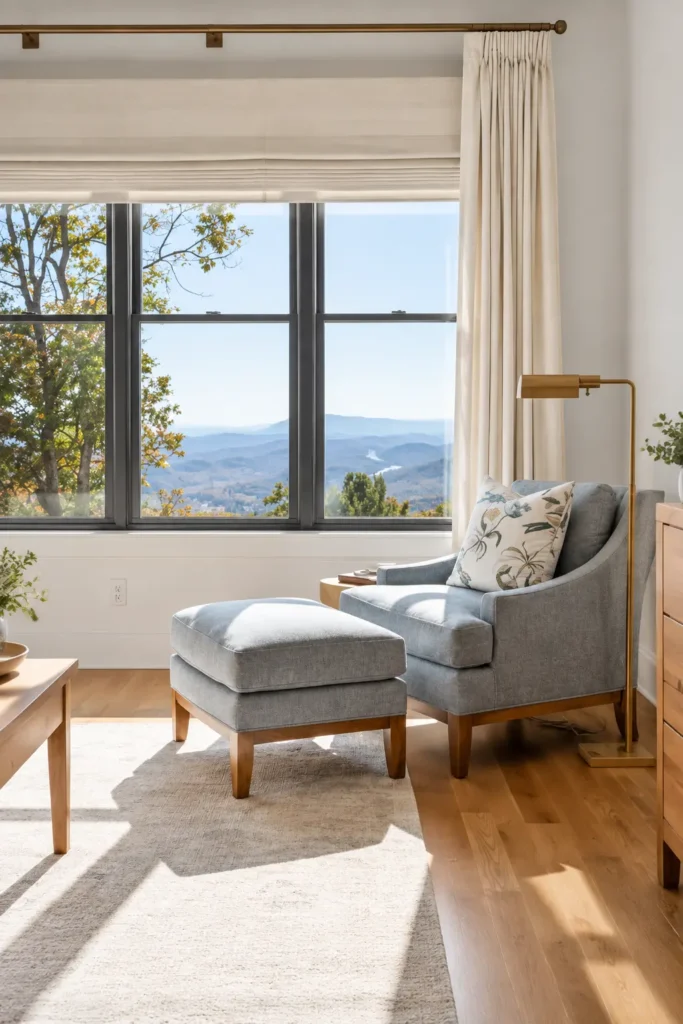
A bright minimalist reading corner focuses on simplicity, clean lines, and natural daylight. A light-colored chair, small wooden table, and one or two carefully chosen accessories keep the area visually quiet.
This approach works well in modern bedrooms where clutter needs to be controlled. Avoid adding too many decorative objects because minimal spaces depend on negative space. A single plant or artwork can provide personality without disturbing the clean design.
12. Soft Feminine Reading Corner
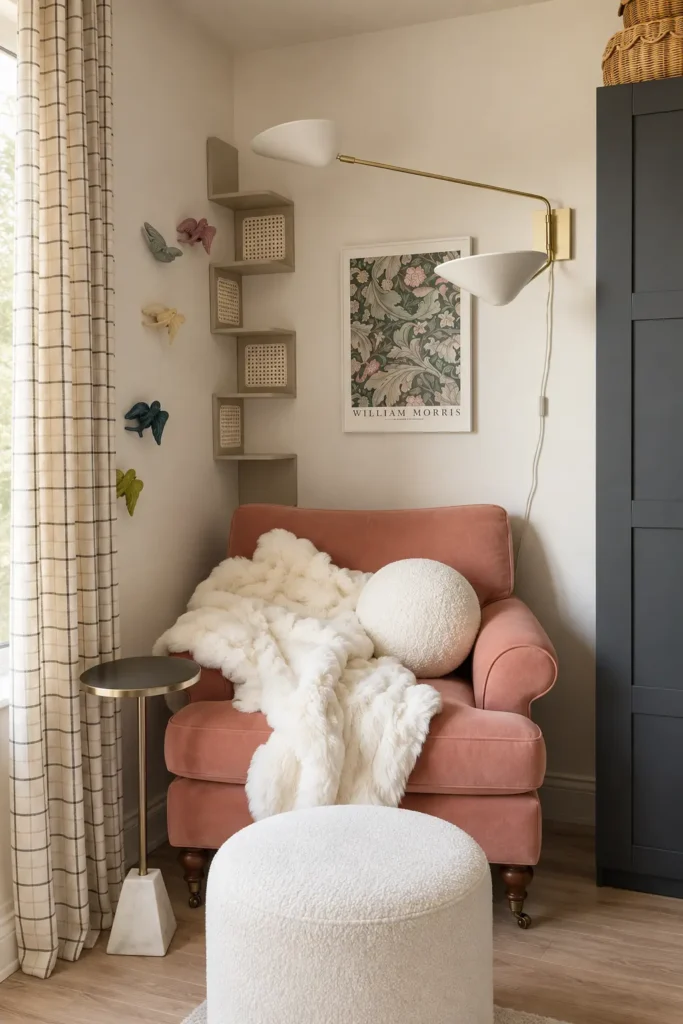
A soft feminine reading nook can combine gentle colors, comfortable textiles, and elegant details without becoming overly decorative. Shades like dusty pink, cream, sage, and warm white create a balanced palette.
Add comfort through textured cushions, a plush throw, and soft lighting rather than excessive accessories. Choose washable fabrics if the chair receives frequent use. Small details such as brass hardware or delicate artwork can add refinement while keeping the corner practical.
13. Compact Lounge Book Nook
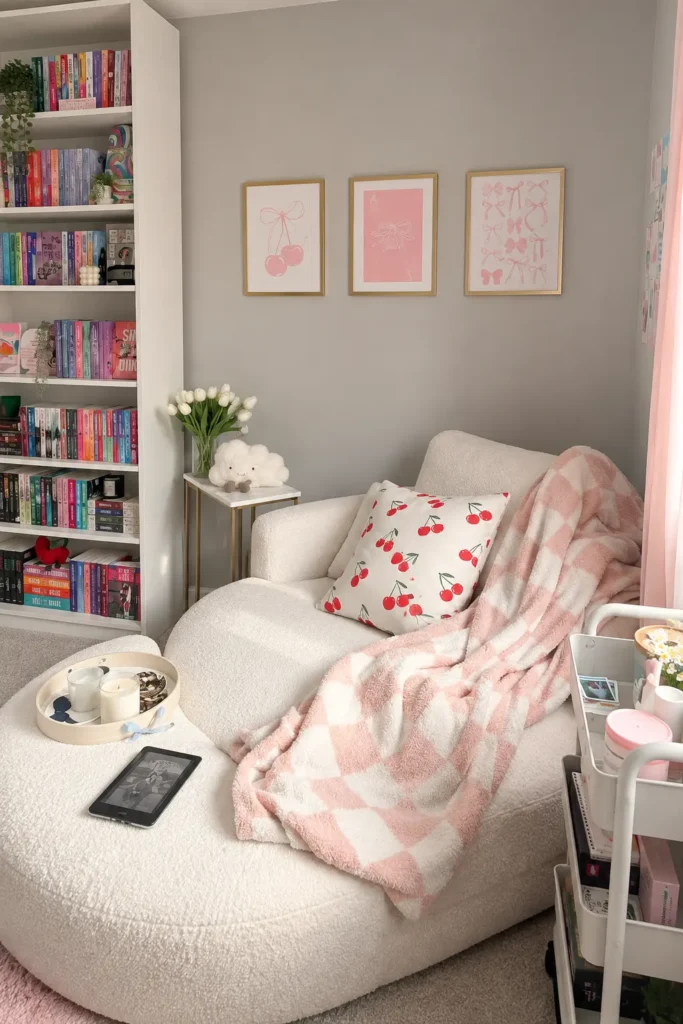
A compact lounge-style book nook creates a relaxed bedroom escape using a small sofa, oversized chair, or cushioned floor seating. This idea works well for people who enjoy longer reading sessions or quiet evening relaxation.
Use furniture with a smaller footprint and avoid oversized pieces that restrict walking paths. A comfortable clearance of around 24–30 inches around main walkways helps maintain easy movement. Add a side table, reading lamp, and a few favorite books to complete the space.
What to Consider Before Creating a Reading Nook
Before buying furniture, measure the available corner carefully. A chair that looks perfect online may overwhelm a small bedroom once placed beside the bed or wardrobe. Consider natural light, electrical outlets, storage needs, and how often the space will actually be used.
Comfort should come before decoration. Test seat height, cushion firmness, and back support before purchasing. A beautiful chair that feels uncomfortable will quickly become unused.
Small-Space Adjustments
For compact bedrooms, choose furniture that serves multiple purposes. Storage benches, wall shelves, narrow side tables, and foldable lamps help maintain function without crowding the room.
Renters can create similar looks with removable shelves, peel-and-stick wallpaper panels, freestanding bookcases, and plug-in wall lights instead of permanent installations.