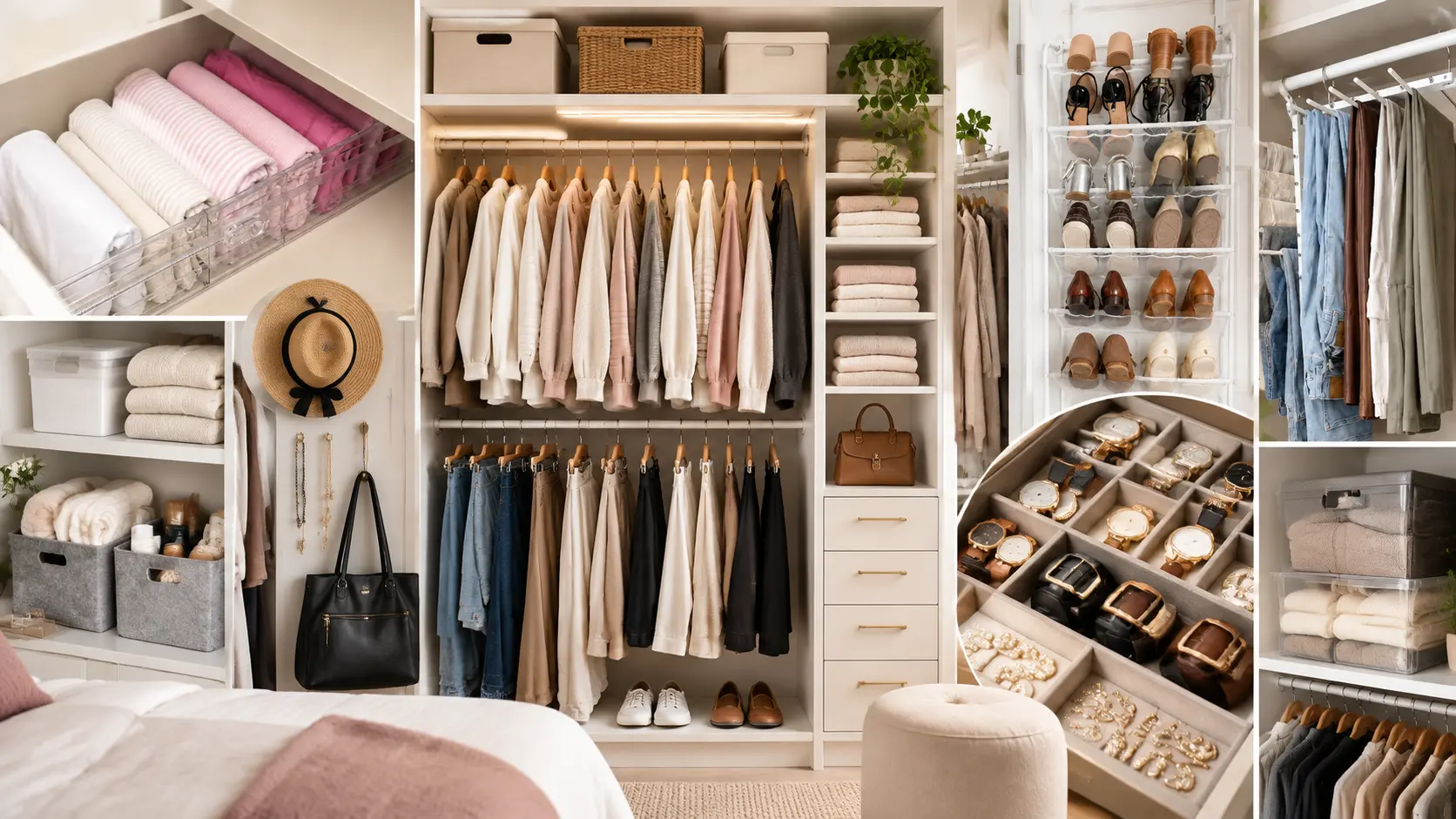
A small closet can quickly become frustrating when folded clothes, shoes, and everyday essentials compete for limited space. The best small closet organization ideas focus on using every inch wisely while keeping the room visually calm and easy to maintain.
From drawer dividers and double hanging rods to smart hooks and labeled storage bins, these solutions help you create a closet that works with your daily routine. Whether you have a tiny bedroom closet, a rental wardrobe, or a compact walk-in space, these practical ideas can help you store more without making the room feel crowded.
1. Add Drawer Dividers for Folded Clothes
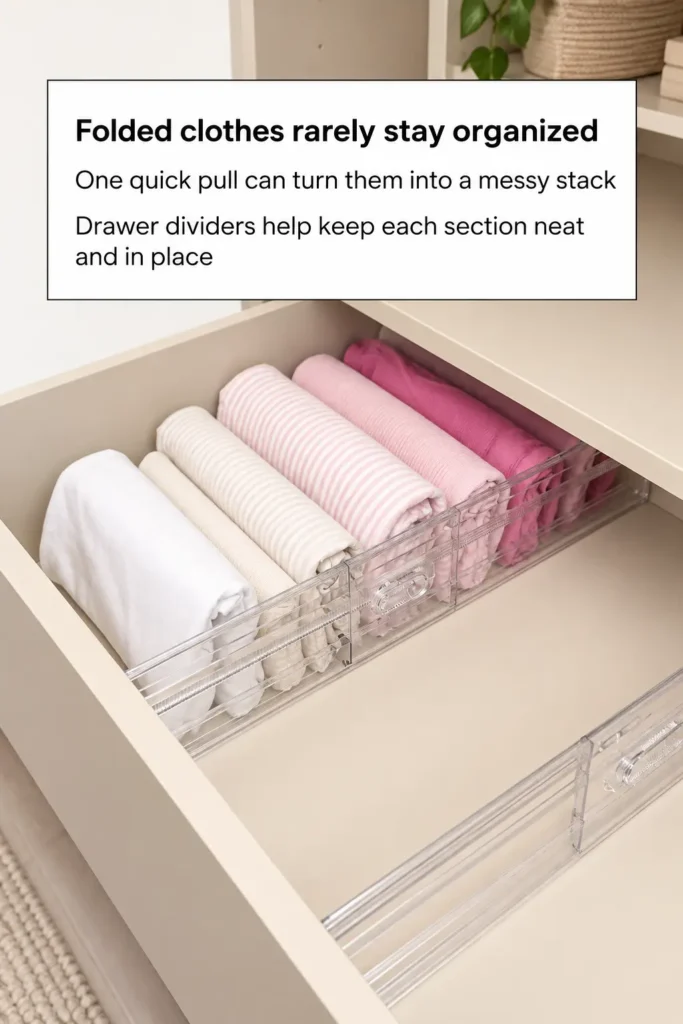
Folded clothes often look neat when you first organize them, but one quick pull from the bottom of a stack can create a messy pile. Drawer dividers create separate sections for shirts, pajamas, workout clothes, and smaller items so everything stays visible.
Choose clear acrylic dividers for a modern look or adjustable bamboo versions for a warmer finish. The goal is to create smaller zones inside a large drawer instead of allowing clothes to shift together. This method works especially well in small bedrooms because it reduces wasted space and makes daily dressing faster.
2. Use Storage Baskets to Create Order
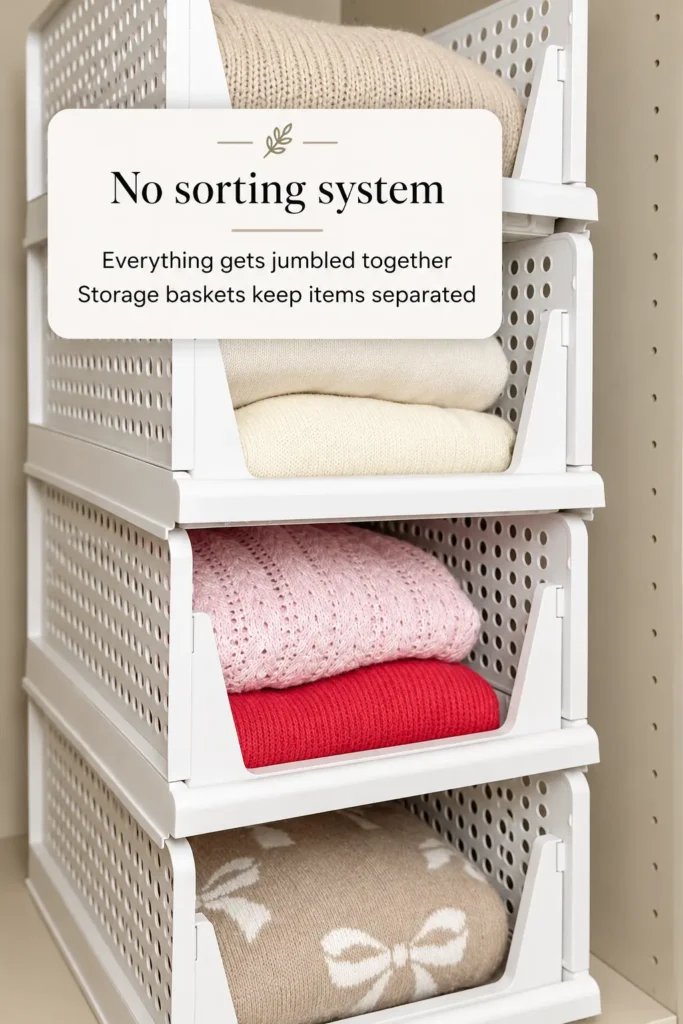
Open shelves can easily become a collection point for random clothing, accessories, and seasonal items. Storage baskets give each category its own place while keeping shelves visually clean.
Fabric baskets work well for sweaters, scarves, and handbags because they soften the look of hard shelving. Woven baskets add texture, while matching neutral containers create a more custom built-in appearance. For practical organization, label baskets by category rather than by individual item so they remain useful as your storage needs change.
3. Install an Over-the-Door Shoe Organizer
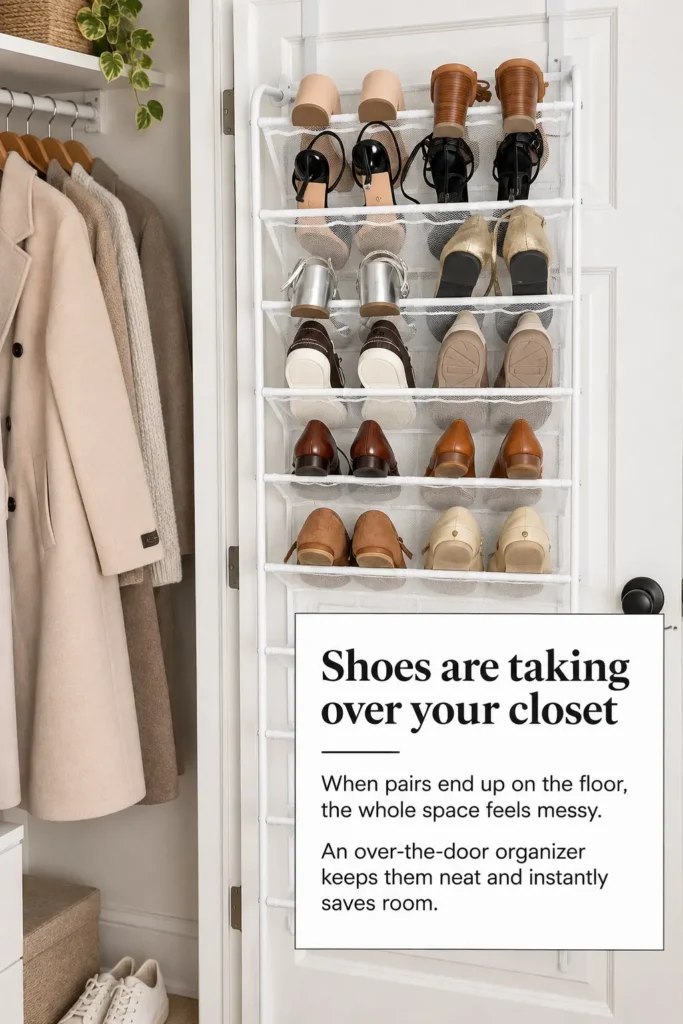
Shoes often take over closet floors because they need a large amount of space but are used every day. An over-the-door organizer uses vertical space that usually goes unused.
Choose a breathable fabric organizer for lightweight shoes or a sturdier pocket design for heavier pairs. Keeping shoes off the floor improves traffic flow and makes cleaning easier. This solution is especially useful in small closets where adding another shelf or cabinet would reduce walking space.
4. Hang Pants on Space-Saving Racks
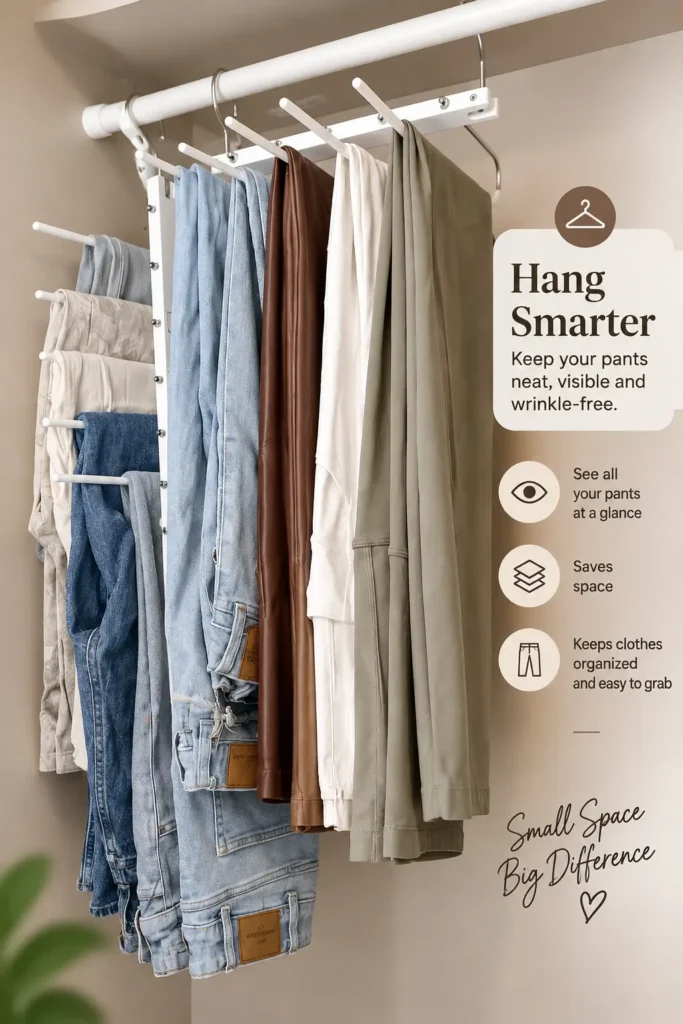
Stacking pants on shelves creates deep piles where the pair you want is usually hidden underneath. A hanging pants rack keeps trousers visible, separated, and easier to grab.
Multi-level hangers or pull-out closet racks work well because they use vertical height instead of expanding outward. Keep heavier denim on stronger metal racks and lighter fabrics on simpler hangers. Leaving enough space between hanging items also prevents wrinkles and allows clothes to dry properly after washing.
5. Double Your Closet Capacity With Hanging Rods
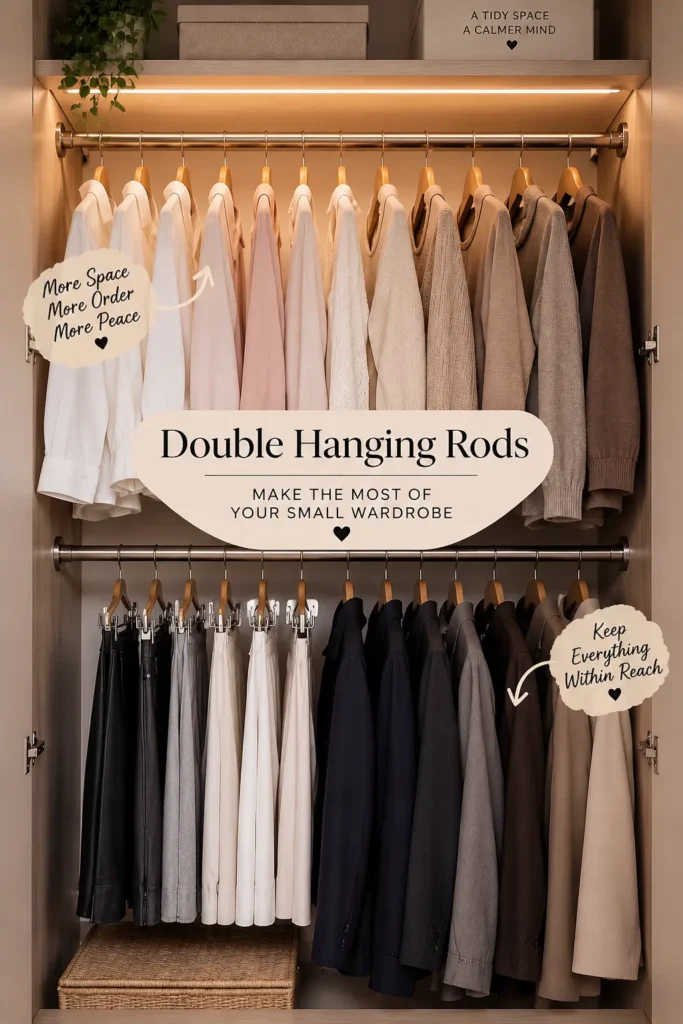
A single closet rod often leaves a large amount of unused space underneath shorter clothing. Adding a second hanging rod allows shirts, jackets, skirts, and folded items to occupy separate levels.
Double hanging works best when your wardrobe contains mostly shorter pieces. Keep the upper rod around shoulder height for frequently used clothing and the lower rod at a comfortable reaching height. Before installing, check that there is enough clearance so clothes do not drag against shelves or the floor.
6. Add Sliding Organizers for Accessories

Small accessories can easily disappear inside deep drawers. Sliding organizers create dedicated sections for watches, belts, jewelry, and other everyday items while keeping them easy to reach.
Look for shallow pull-out trays that fit beneath shelves or inside wardrobe cabinets. Soft-lined compartments help protect delicate pieces, while divided trays prevent smaller items from mixing together. This approach keeps surfaces clear and gives accessories a more intentional place instead of letting them collect on dressers.
7. Design a Closet With Smart Zones
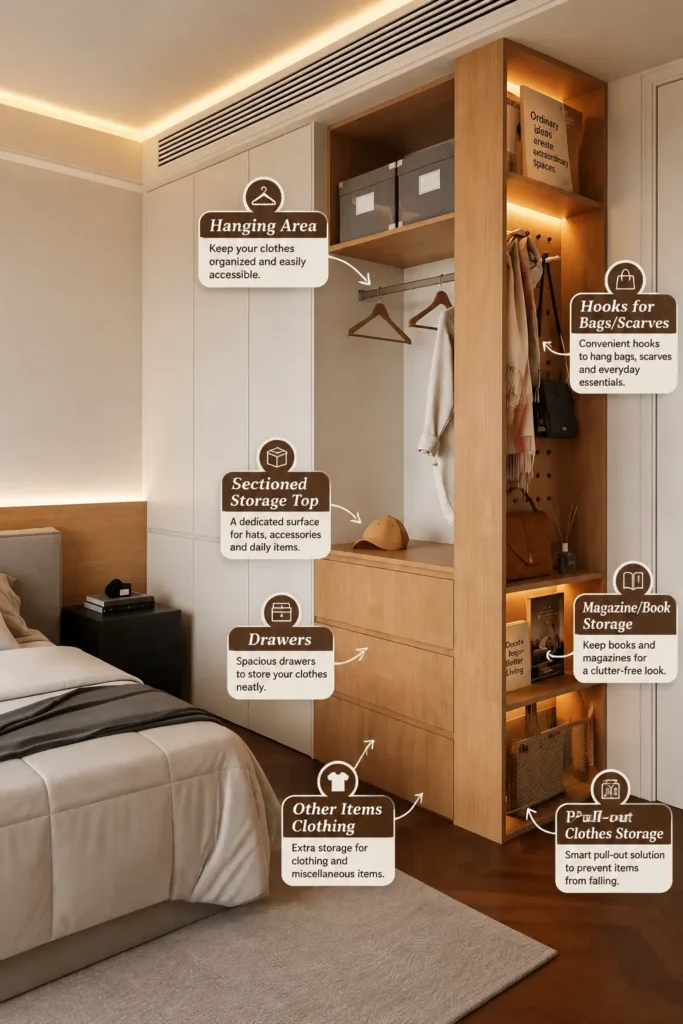
A well-organized closet works better when every section has a clear purpose. Instead of storing items randomly, create zones for hanging clothes, folded pieces, accessories, shoes, and daily essentials.
For example, place frequently worn clothing at eye level and seasonal items higher or farther back. Add hooks near the entrance for bags, scarves, or tomorrow’s outfit. This zoning approach improves the flow of the closet because you spend less time searching and less time creating new piles.
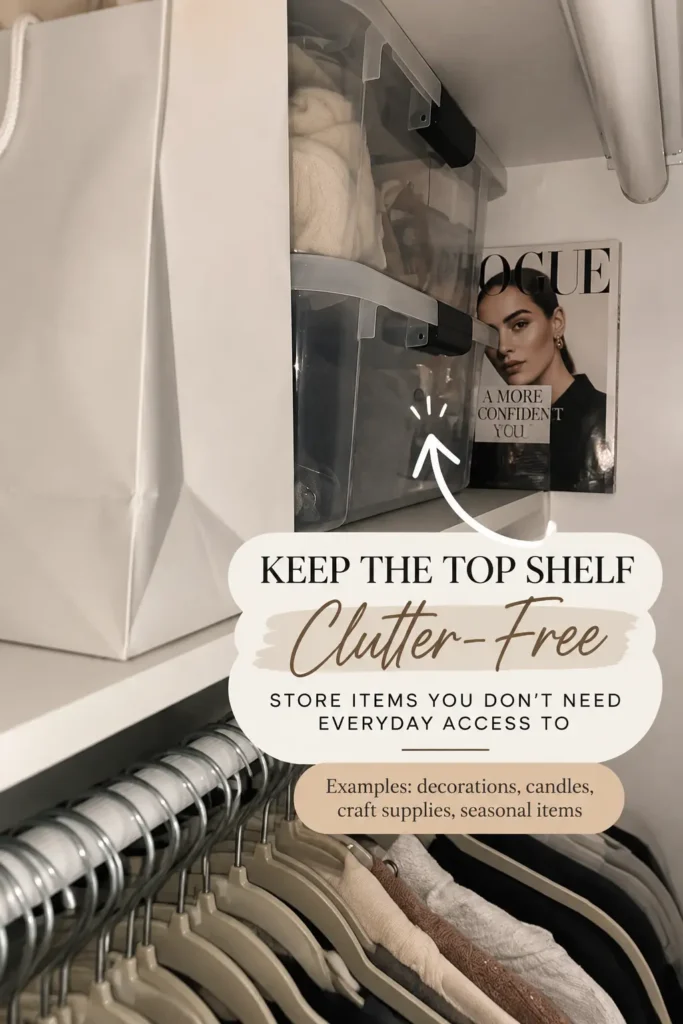
8. Keep High Shelves Clutter-Free With Closed Storage
The top shelf of a closet is valuable, but it often becomes a place where forgotten items collect dust. Closed storage boxes help keep less-used belongings contained while maintaining a cleaner visual appearance.
Use matching bins for seasonal clothing, extra bedding, decorations, or craft supplies. Clear containers make it easier to identify contents, while fabric or woven boxes create a softer bedroom look. Keep everyday items lower and reserve the highest shelves for things you only need occasionally so your closet stays practical.
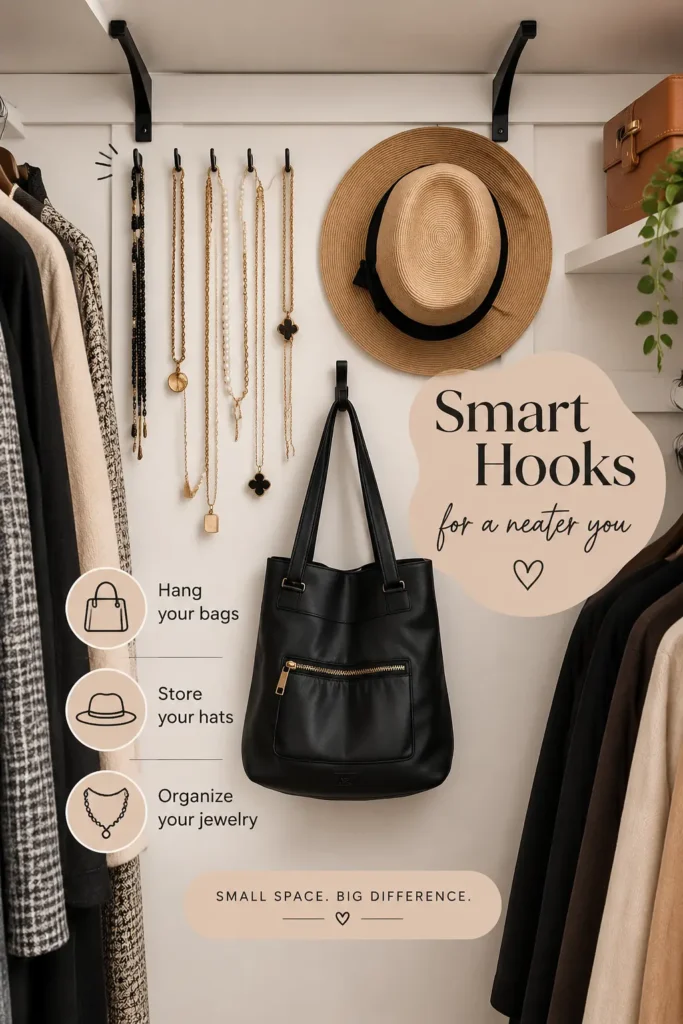
9. Create More Space With Smart Hooks
Hooks are one of the easiest ways to add storage without taking away closet floor space. A few well-placed hooks can hold handbags, hats, scarves, belts, or jewelry while keeping these items easy to reach.
Install hooks on unused side walls, closet doors, or inside cabinet panels. Matte black hooks create a modern contrast, while brass finishes add a warmer decorative detail. Avoid overcrowding hooks because too many hanging items can make a small closet feel visually busy.
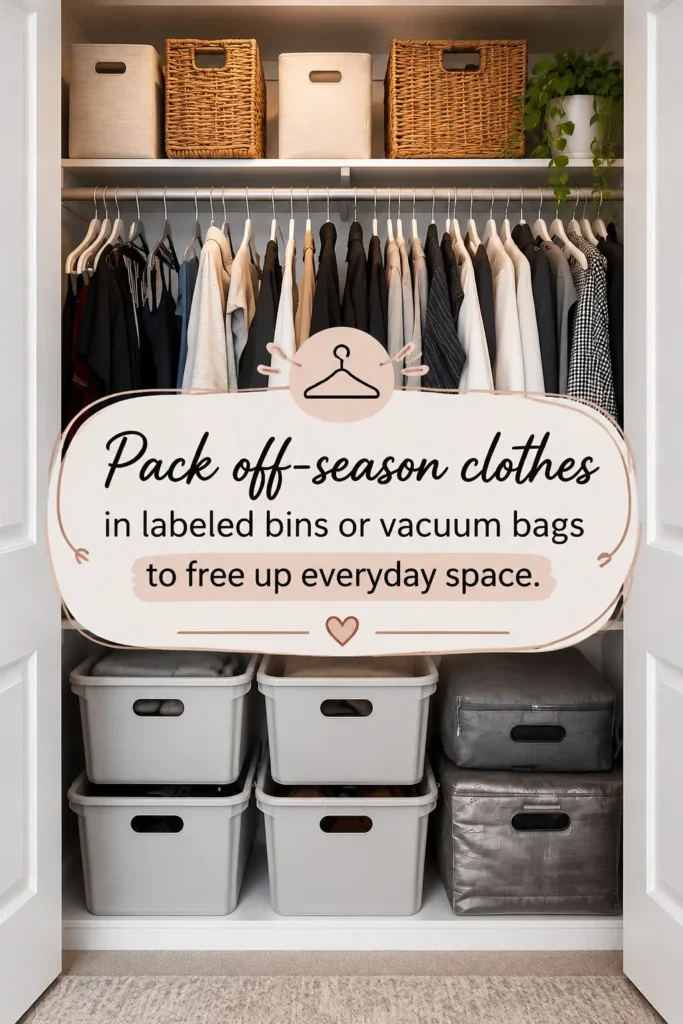
10. Pack Away Off-Season Clothing
Seasonal clothing can take up most of your available closet space even when you are not wearing it. Moving winter coats, heavy sweaters, or summer pieces into labeled bins creates room for your current wardrobe.
Vacuum storage bags work well for bulky fabrics like blankets and jackets because they reduce volume. For delicate materials such as wool or silk, breathable fabric containers are usually a better choice. Store seasonal boxes on upper shelves or under the bed so your everyday closet remains easier to use.
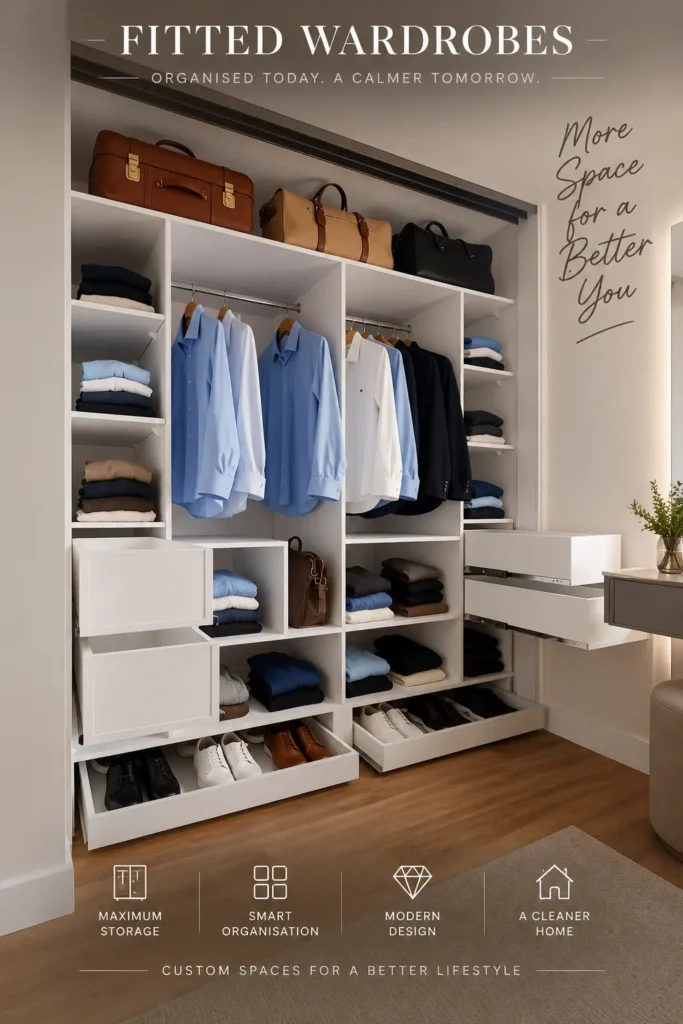
11. Use Custom Fitted Wardrobe Storage
A fitted wardrobe can make a small bedroom closet feel more organized by using the exact dimensions of the room. Instead of leaving awkward gaps, built-in shelving, drawers, hanging areas, and pull-out storage can work together as one system.
Include a mix of open and closed storage for balance. Open shelves make frequently used items accessible, while drawers and cabinets hide visual clutter. For smaller rooms, lighter finishes such as soft white or natural wood can help the wardrobe feel less heavy and keep the space visually open.
12. Combine Open and Closed Storage
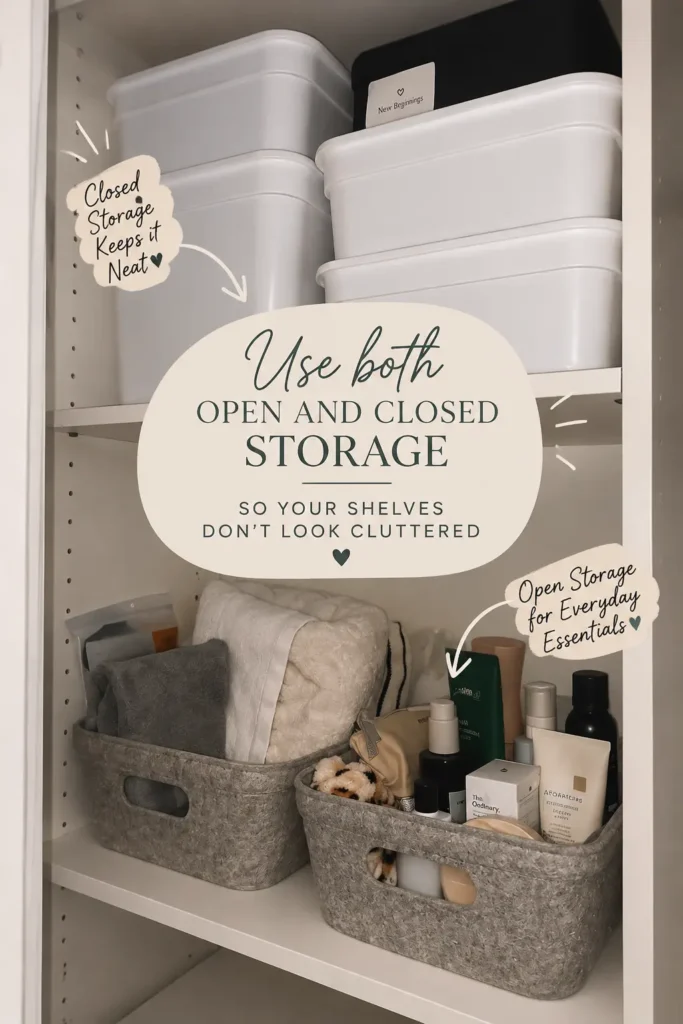
A closet with only open shelves can look crowded, while a fully closed system may make everyday items harder to access. Combining both creates a practical balance.
Use open sections for daily essentials like folded towels, handbags, or frequently worn clothing. Store less attractive or rarely used items inside matching boxes and cabinets. This approach keeps your closet functional while maintaining a cleaner appearance, especially in bedrooms where storage is visible.
13. Use Clear Containers for Hidden Closet Areas
Clear containers are useful for deep shelves, upper cabinets, and difficult-to-reach corners because they allow you to see what you already own. They reduce the need to pull everything out when searching for a specific item.
Choose stackable containers with secure lids for accessories, seasonal pieces, or extra clothing. Transparent storage works particularly well in compact closets because it keeps forgotten spaces usable. Avoid mixing too many container styles, as consistent shapes create a more organized and intentional look.
Small Closet Organization Mistakes to Avoid
One common mistake is filling every available inch without leaving breathing room. A closet still needs space for clothes to hang properly and for you to move items in and out comfortably.
Another issue is organizing only by appearance instead of daily habits. A beautifully arranged closet will not stay functional if frequently used items are stored too high or too far away. Place the things you wear most often between waist and eye level, and use higher areas for occasional items.
How to Make a Small Closet Feel Larger
Light colors, consistent storage containers, and clear walking paths can make a compact closet appear more open. Matching hangers also create a cleaner visual line because different hanger shapes and colors can make clothing sections look crowded.
Good lighting matters too. Warm LED closet lights can make fabrics easier to see without creating harsh shadows. Adding a small motion sensor light is a practical upgrade for dark wardrobes, especially in bedrooms with limited natural light.