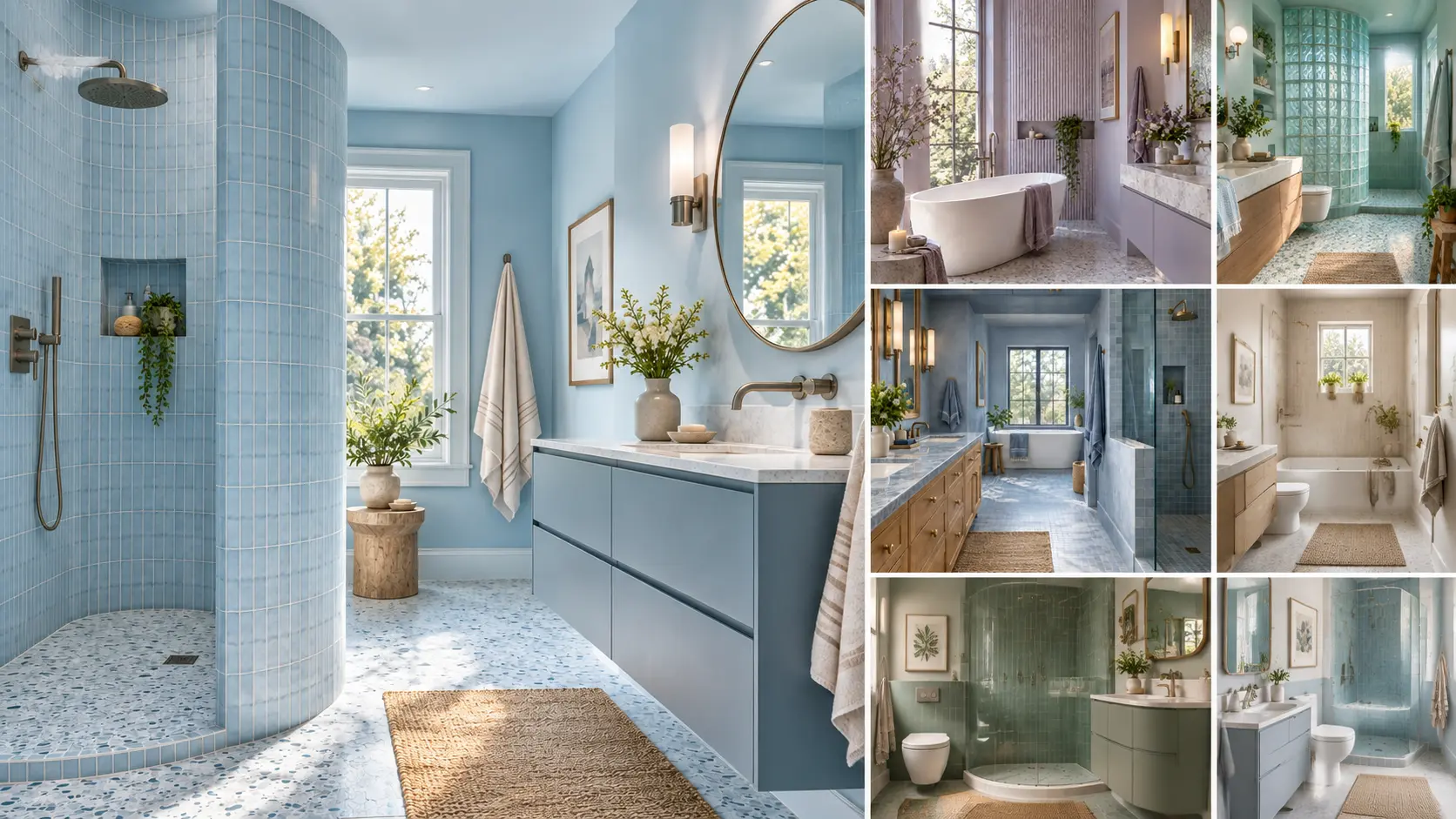
A bathroom can feel disconnected when the walls, vanity, tiles, and accessories compete for attention. Color drenching bathroom ideas solve this problem by using one dominant shade across multiple surfaces, creating a space that feels intentional, calm, and visually connected.
From soft blue spa-like retreats to earthy green and warm neutral bathrooms, color drenching can work in both large and small spaces. These ideas show how paint, tile, cabinetry, lighting, and natural textures can combine to create modern bathrooms that feel balanced and practical.
1. Soft Blue Shower Walls With Matching Vanity
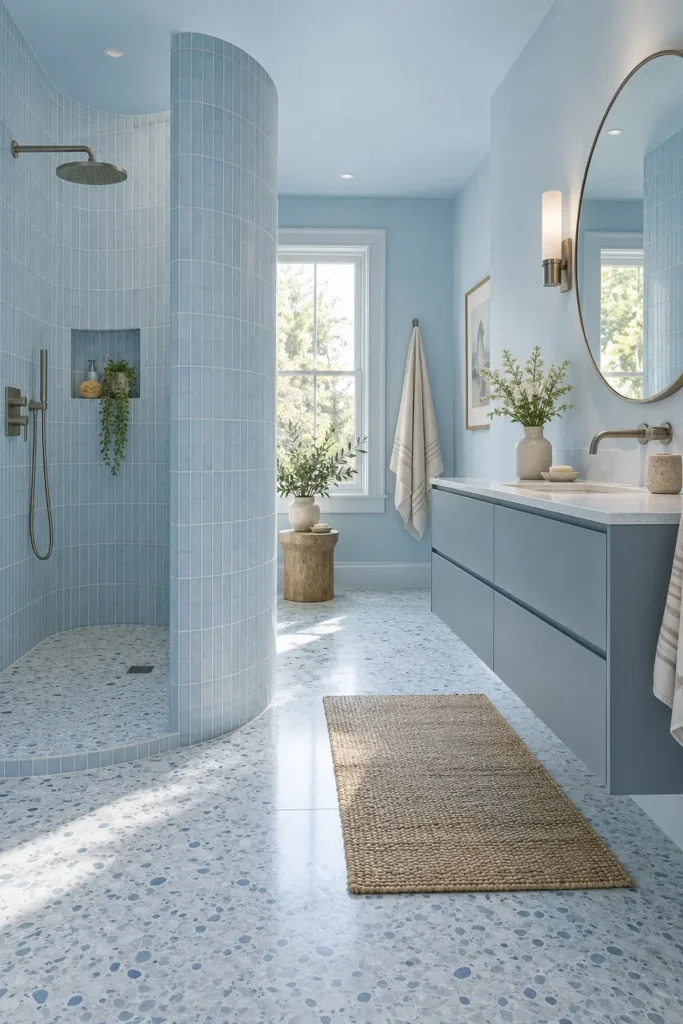
A pale blue color-drenched bathroom creates a peaceful atmosphere by carrying the same shade across the shower tiles, walls, and vanity cabinetry. The curved tiled shower enclosure adds architectural interest without needing bold patterns or extra decoration.
To recreate this look, choose a muted blue with gray undertones rather than a bright aqua. Matte finishes on walls help hide small imperfections, while glossy shower tiles reflect natural light. Pair the color with brushed nickel fixtures, white stone countertops, and simple greenery for a fresh spa-inspired finish.
This approach works especially well in bathrooms with windows because daylight softens cooler shades throughout the day.
2. Lavender Bathroom With Layered Textures
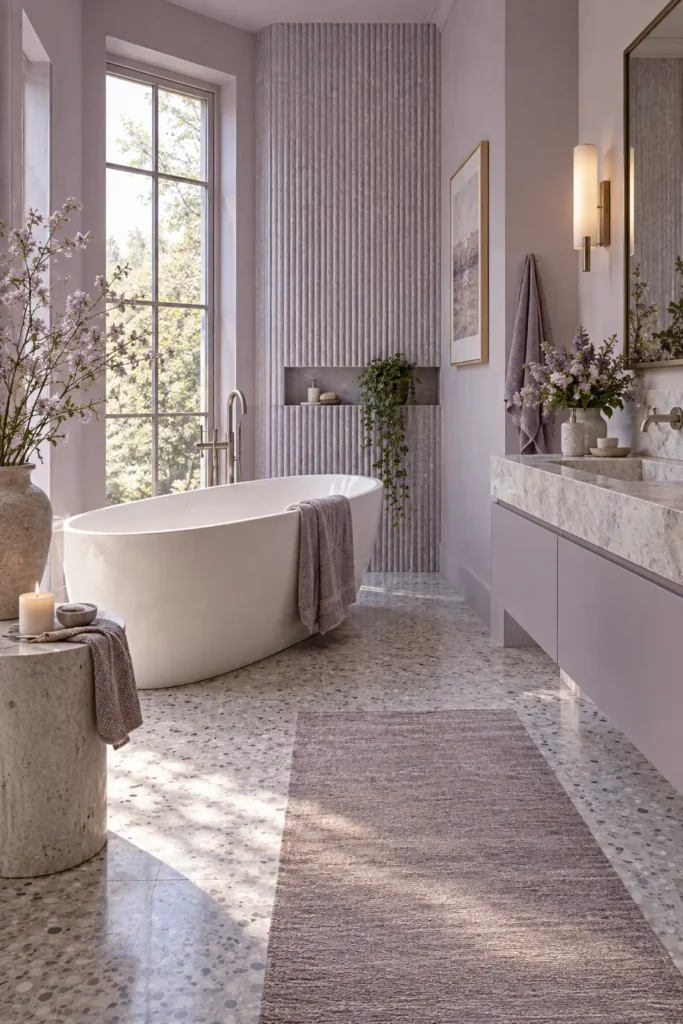
A lavender color drenching approach creates a gentle, relaxing bathroom without feeling overly decorative. The key is using the shade across walls, cabinetry, and architectural details while introducing texture through ribbed wall panels, stone surfaces, and woven rugs.
Choose a dusty lavender rather than a strong purple to keep the room modern. Warm lighting helps prevent cooler purple tones from appearing flat in the evening. Natural materials like limestone, marble, and ceramic accessories add contrast while maintaining the calm color palette.
A freestanding bathtub becomes the focal point because the surrounding color allows the shape to stand out.
3. Mint Green Glass Shower Accent
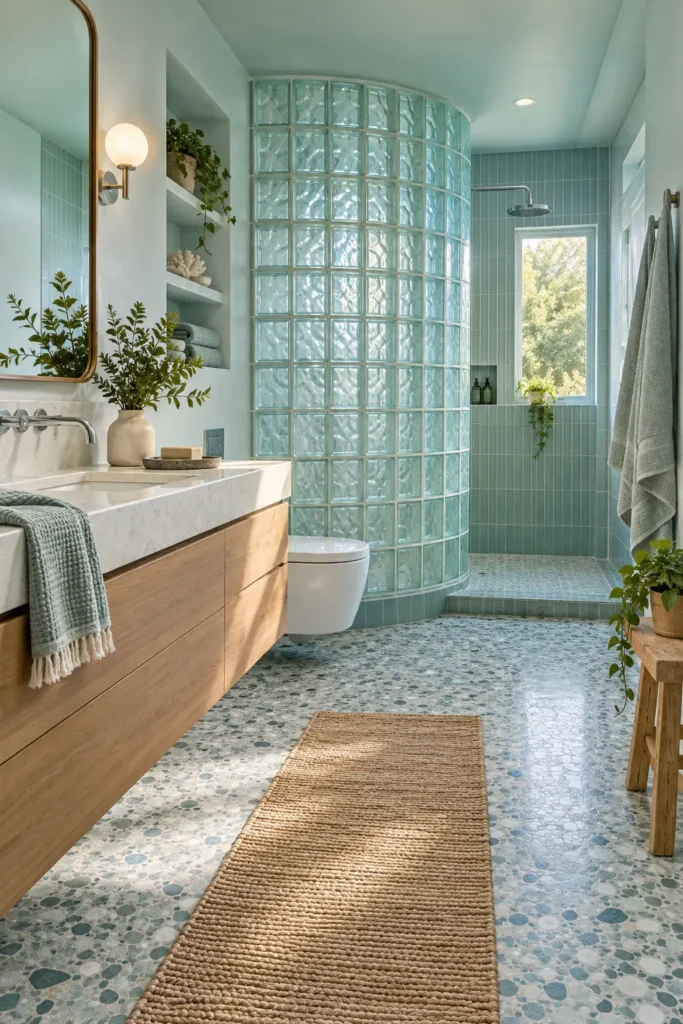
Green is one of the most versatile choices for a color drenched bathroom because it connects naturally with plants and organic materials. This design uses soft mint tones across tiles, walls, and cabinetry while adding curved glass blocks as a unique shower feature.
For a similar effect, keep the green consistent but vary the finishes. A glossy tile reflects water and light, while matte painted surfaces create visual balance. Wooden vanity drawers introduce warmth and stop the room from feeling too cool.
This style works well for homeowners who want a nature-inspired bathroom without using heavy botanical patterns.
4. Minimal Blue Bathroom With Floating Vanity
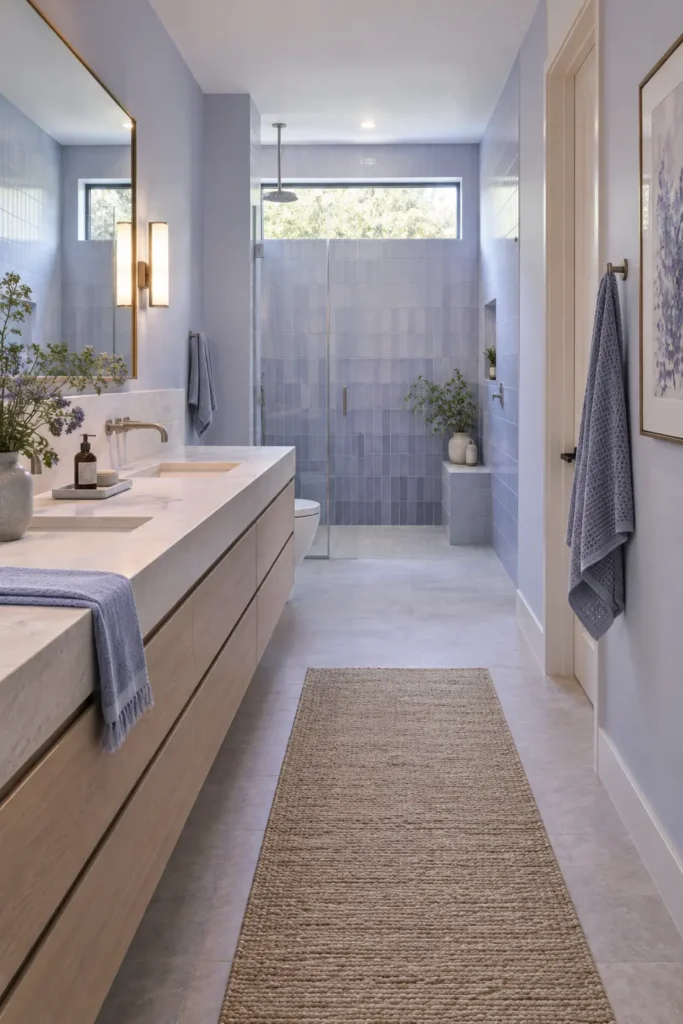
A monochromatic blue bathroom feels modern when the color is allowed to continue across large surfaces instead of being limited to accessories. The floating vanity, shower wall tiles, and surrounding walls create a seamless appearance.
Use a lighter countertop material such as white quartz or marble-look porcelain to break up the color. Floating cabinetry also helps small bathrooms feel larger by keeping the floor visible underneath.
For practicality, choose durable bathroom paint designed for moisture-prone areas and install proper ventilation to protect finishes over time.
5. Moody Blue Bathroom With Wood Details
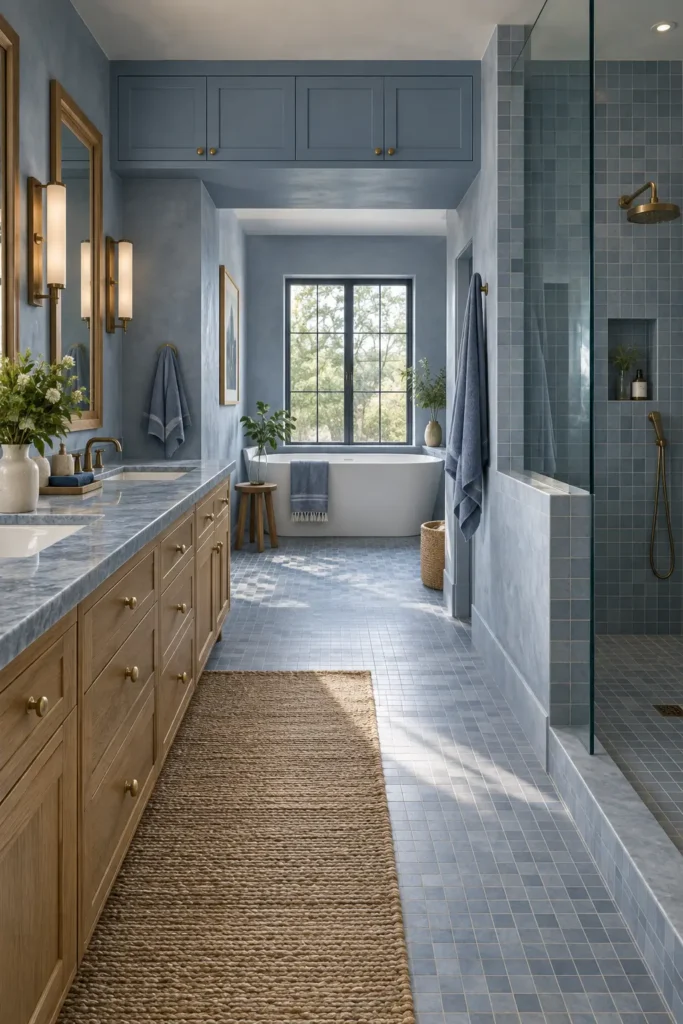
Deep blue creates a more dramatic version of color drenching, especially when paired with natural wood. This bathroom combines blue tiles, painted cabinetry, and warm wooden storage to create contrast without introducing multiple competing colors.
Dark shades work best when the room has enough lighting. Layer recessed ceiling lights with wall sconces around the mirror to prevent shadows. Brass hardware can add warmth, while matte finishes keep the design sophisticated.
In smaller bathrooms, consider using the darker shade mainly on tile walls while keeping reflective surfaces lighter.
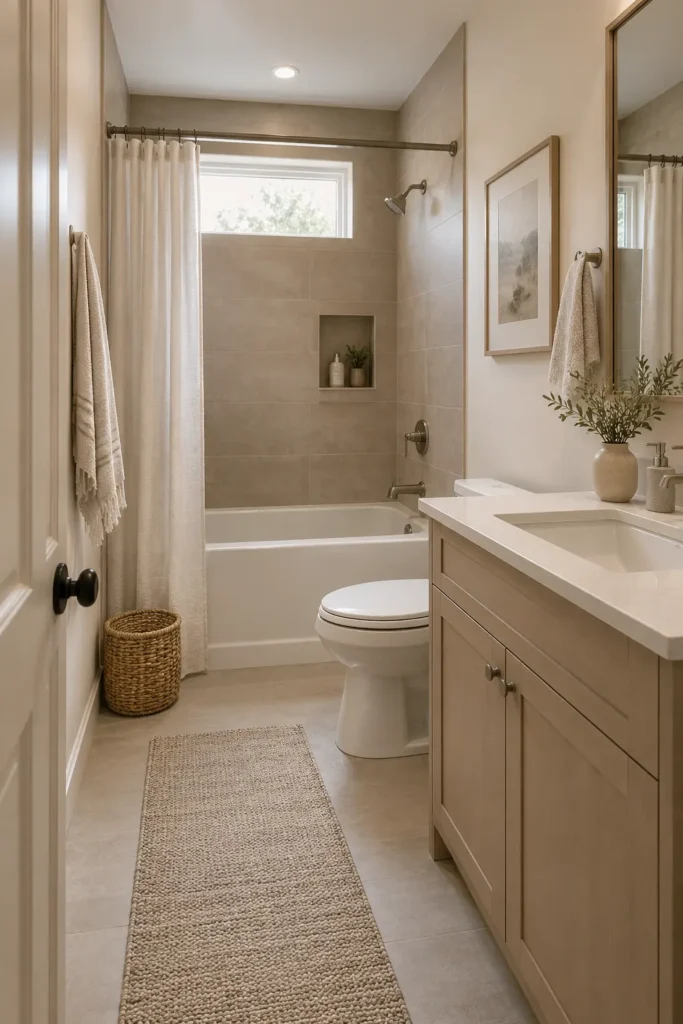
6. Warm Beige Bathroom With Soft Natural Layers
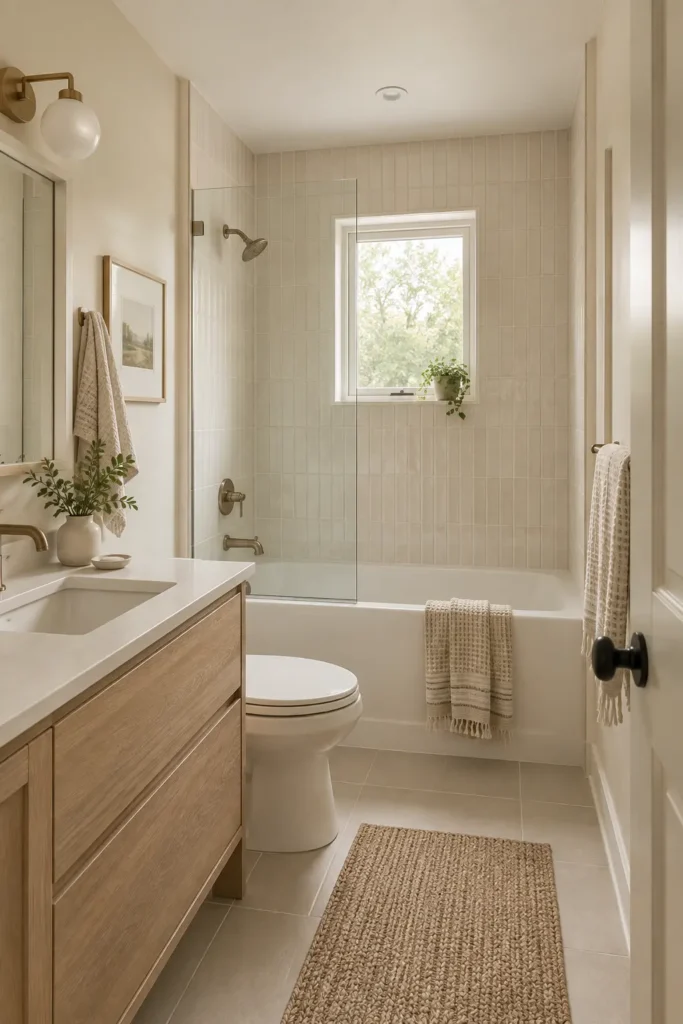
A beige color drenched bathroom proves that neutral palettes can still feel designed and intentional. Using similar beige tones across tiles, walls, cabinetry, and textiles creates a peaceful backdrop.
The success of this look depends on choosing the right undertone. Warm beige works well with natural wood, linen curtains, woven baskets, and stone textures. Avoid mixing too many beige shades with different undertones because the room can appear mismatched.
This style is also practical because natural colors hide everyday dust and wear better than very bright surfaces.
Warm beige tones also pair beautifully with seasonal styling changes. During autumn, you can introduce woven baskets, linen towels, earthy ceramics, and natural textures for a softer seasonal update. For more inspiration, explore our guide on Fall Bathroom Decor Ideas to find simple ways to bring autumn details into your space.
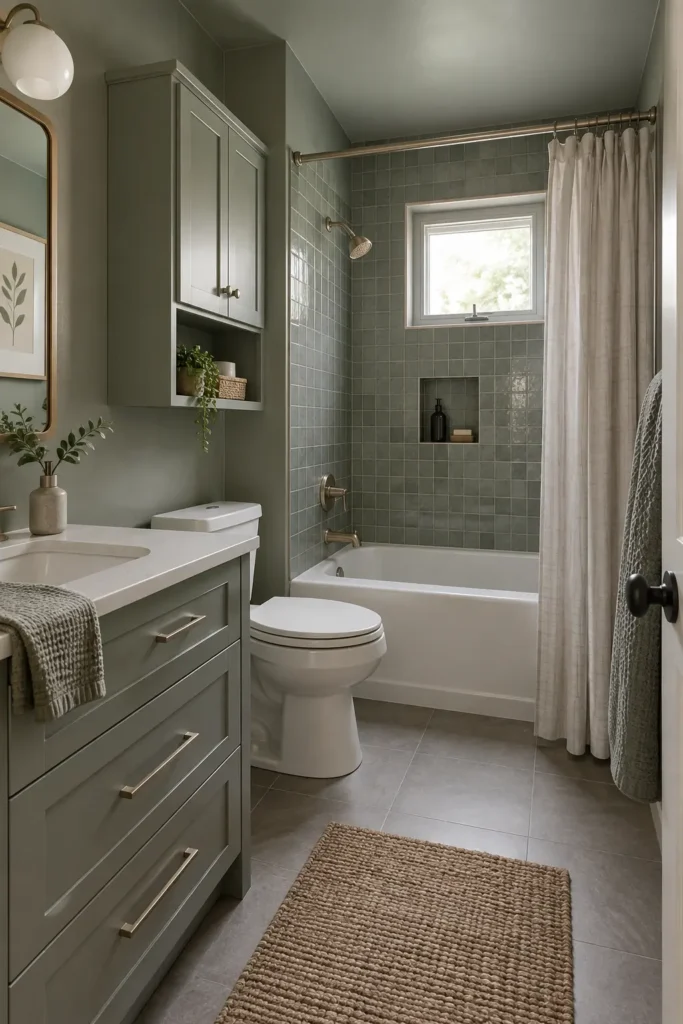
7. Sage Green Bathroom With Classic Cabinetry
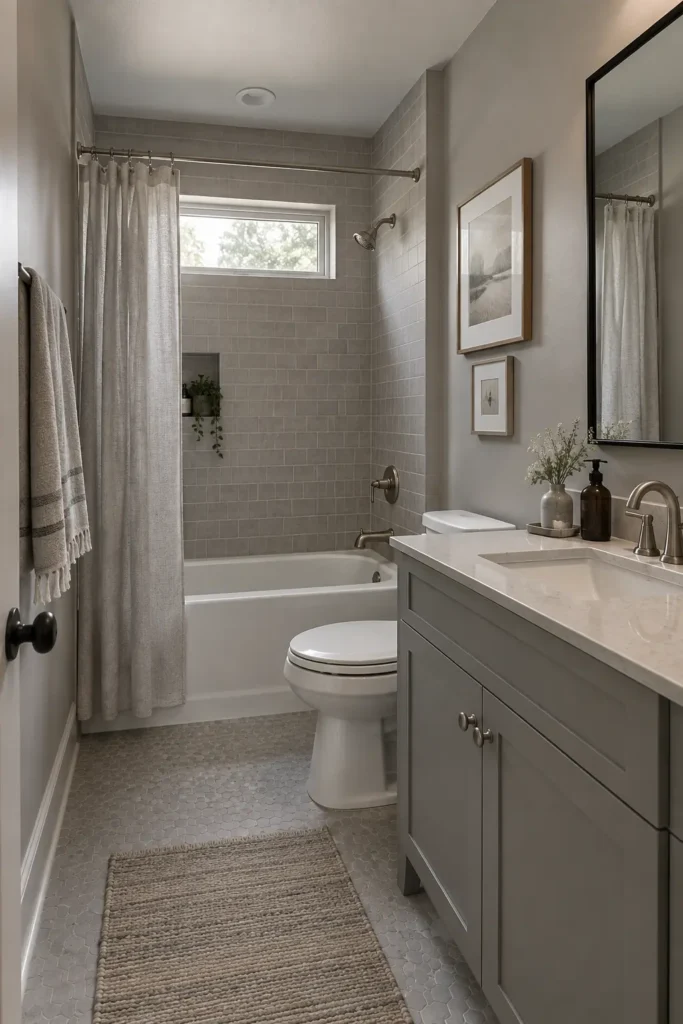
Sage green brings a timeless feeling to bathrooms, especially when paired with traditional cabinet profiles and simple brass hardware. The color creates a connection between painted surfaces and natural elements like plants and wood.
For a balanced design, use the same green on the vanity and upper storage while keeping countertops light. Small botanical artwork and ceramic accessories reinforce the natural theme without making the space feel themed.
Sage is also easier to live with than stronger greens because it remains calming under both daylight and artificial lighting.
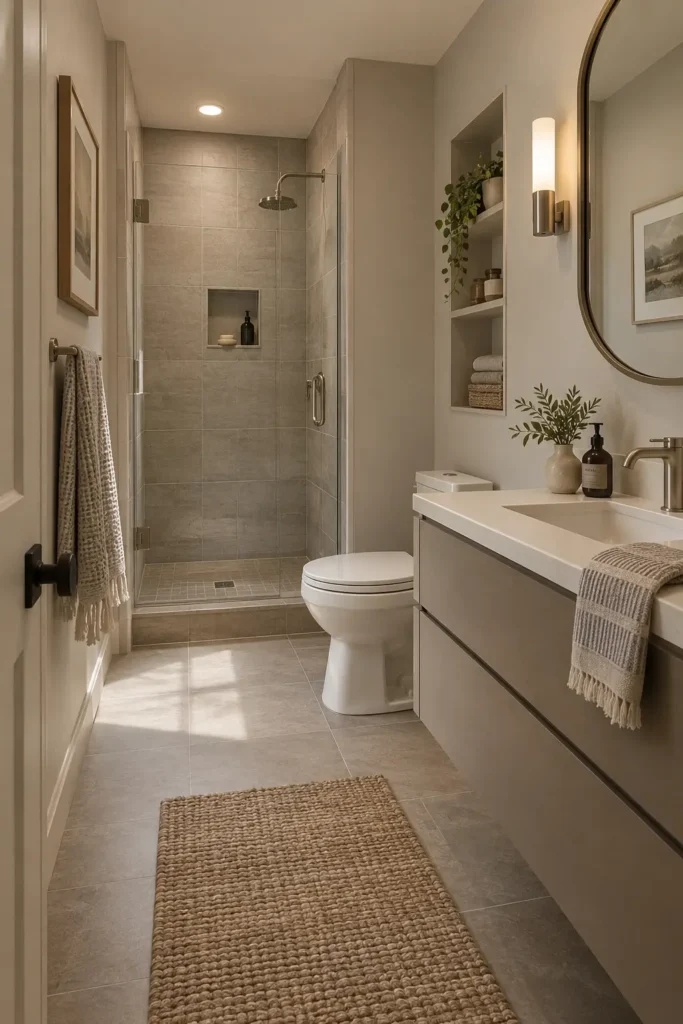
8. Neutral Gray Shower With Built-In Storage
A gray color drenched bathroom creates a clean, modern appearance by allowing walls, tiles, and built-in niches to blend together. This approach works particularly well in walk-in showers where large tile areas can feel visually heavy.
Choose warm gray tiles instead of blue-gray if you want a softer look. A recessed shower niche finished in the same material keeps the design streamlined while providing practical storage.
Large-format tiles can reduce grout lines, making maintenance easier and helping small bathrooms appear more spacious.
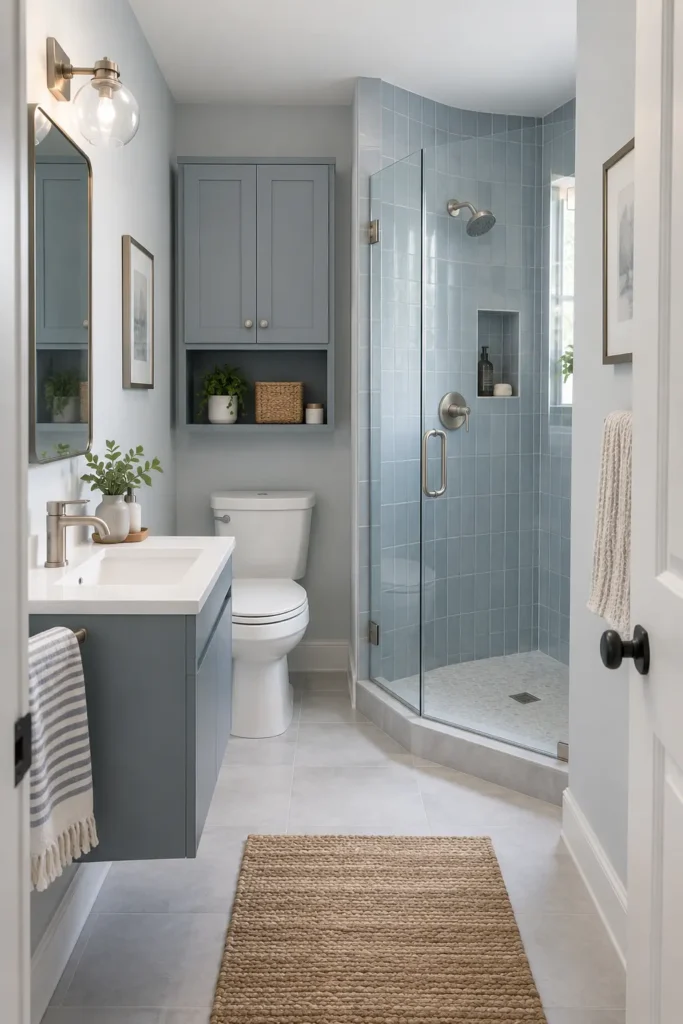
9. Soft Blue Bathroom With Curved Shower Design
Curved architectural features become more noticeable when surrounded by a consistent color palette. This bathroom uses blue tiles across the shower enclosure to highlight the rounded shape.
When using color drenching with unusual layouts, keep accessories simple. Too many decorative items can distract from the architectural details. A neutral rug, minimal artwork, and matching fixtures allow the color and shape to remain the focus.
This idea works beautifully in bathrooms where you want a custom-built appearance without adding complicated patterns.
10. Cream Color Drenching With Natural Wood Vanity
Cream tones create a warm and comfortable bathroom when used across walls, tiles, and cabinetry. The wooden vanity adds subtle contrast while maintaining the natural palette.
To prevent cream bathrooms from looking flat, combine different textures. Pair smooth painted walls with stone countertops, woven storage baskets, and textured towels.
Cream is also a practical choice for family bathrooms because it feels bright without showing every mark like pure white surfaces often do.
11. Small Green Bathroom With Shower Enclosure
Small bathrooms benefit from color drenching because fewer visual breaks can make the room feel more spacious. This green bathroom uses matching shower tiles, walls, and cabinetry to create continuity.
For compact layouts, avoid using too many contrasting finishes. Keep hardware consistent and choose clear glass shower panels to maintain open sight lines.
A small wall-mounted cabinet or recessed shelf can provide storage without interrupting the color flow.
12. Soft White And Blue Transitional Bathroom
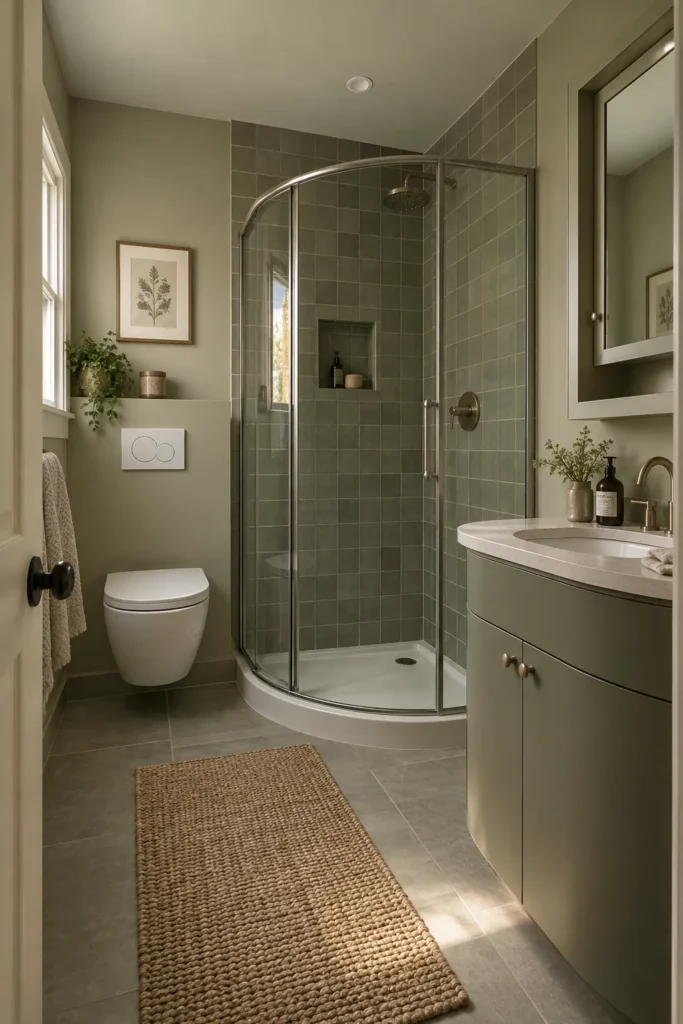
A blue-and-white color drenched bathroom combines traditional details with modern simplicity. The blue vanity, tile accents, and wall tones create harmony while white fixtures maintain brightness.
This approach is useful when you want color without committing to a fully dark or saturated room. White countertops and ceramic fixtures provide visual breathing space.
Choose durable semi-gloss paint for trim areas because it handles moisture and cleaning better than standard wall finishes.
13. Gray Green Bathroom With Glass Shower
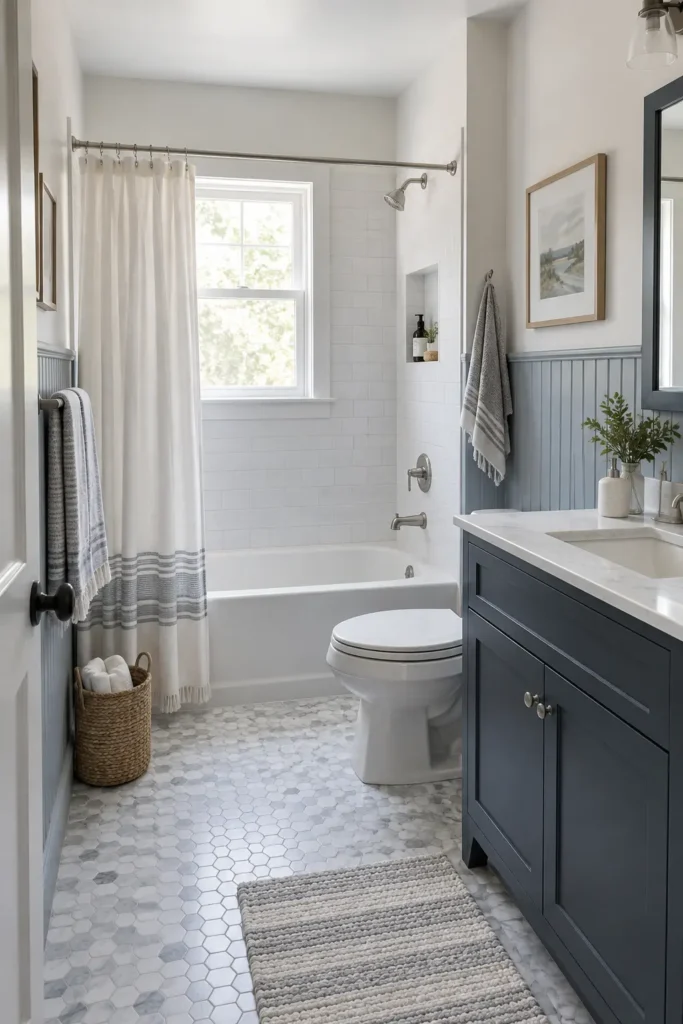
Gray-green shades create a sophisticated middle ground between neutral and colorful design. This bathroom uses the tone across walls, cabinetry, and shower areas while keeping fixtures understated.
The curved glass enclosure adds softness and prevents the room from feeling boxed in. Natural wood accessories and plants complement the muted green without competing with it.
This palette is especially suitable for bathrooms with limited sunlight because it remains comfortable under artificial lighting.
14. Earthy Taupe Bathroom With Warm Lighting
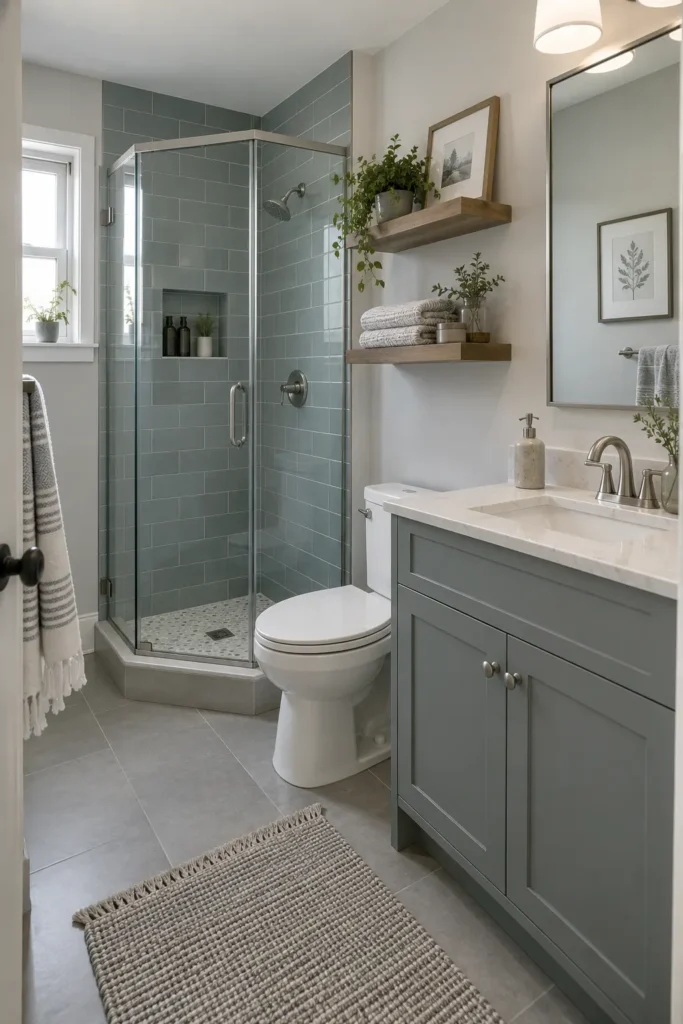
Taupe creates a refined color-drenched bathroom when combined with stone textures and warm lighting. The consistent shade across walls and cabinetry creates a relaxing backdrop for daily routines.
Warm LED bulbs around 2700K–3000K usually complement earthy colors better than cooler bulbs, which can make taupe appear gray. Add woven textiles and simple ceramics to maintain the natural feeling.
This design works well for homeowners who prefer timeless finishes rather than trend-driven colors.
15. Soft Blue Bathroom With Modern Farmhouse Details
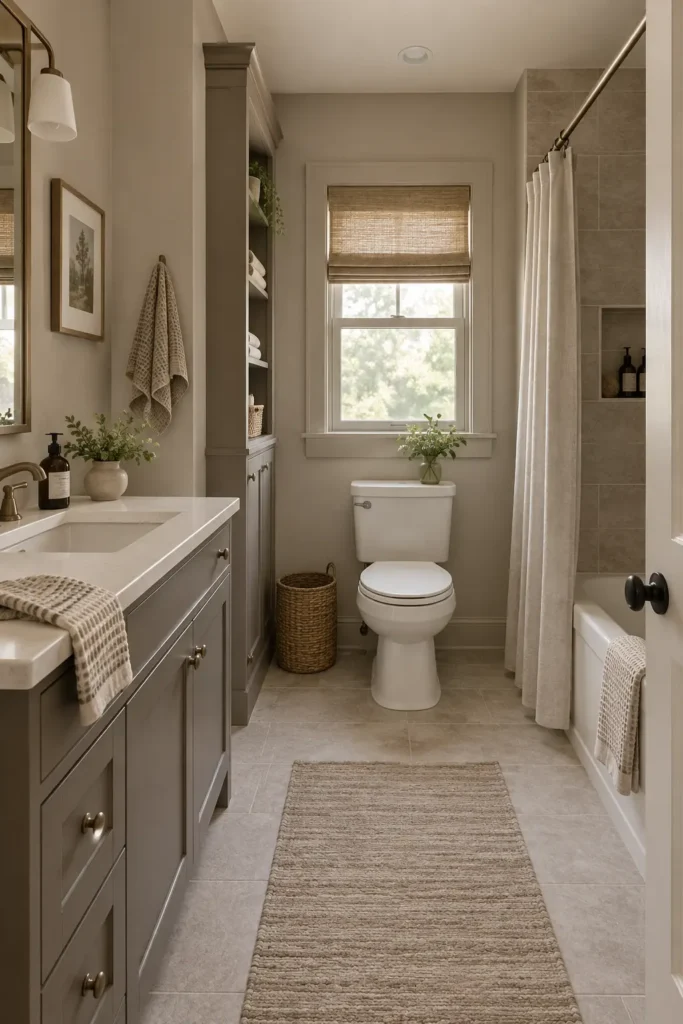
A soft blue palette can also work in farmhouse-inspired bathrooms when paired with paneling, simple cabinetry, and natural textures. The color creates a modern update while keeping the room comfortable and familiar.
Use brushed metal hardware, wood accents, and classic white fixtures to balance the painted surfaces. Avoid adding too many rustic decorations because the color itself already provides visual character.
This approach creates a bathroom that feels fresh, practical, and easy to maintain.
What To Consider Before Starting A Color Drenched Bathroom
Before choosing a color, test large paint samples on different walls because bathroom lighting changes throughout the day. A shade that looks perfect in morning sunlight may appear completely different under evening bulbs.
Consider the finish as carefully as the color. Matte paint gives a softer appearance but requires moisture-resistant formulas in bathrooms. Glossy tiles reflect light and are easier to clean but can show water spots more clearly.
If you are renting, use removable wallpaper, peel-and-stick tiles, and colorful accessories to create a similar effect without permanent changes.
Common Mistakes To Avoid
One common mistake is choosing a color without considering the bathroom’s natural light. Dark colors can look rich in bright spaces but may feel heavy in rooms without windows.
Another mistake is using the same exact finish everywhere. Mixing painted walls, textured tiles, stone surfaces, and wood creates depth while keeping the monochromatic style interesting.