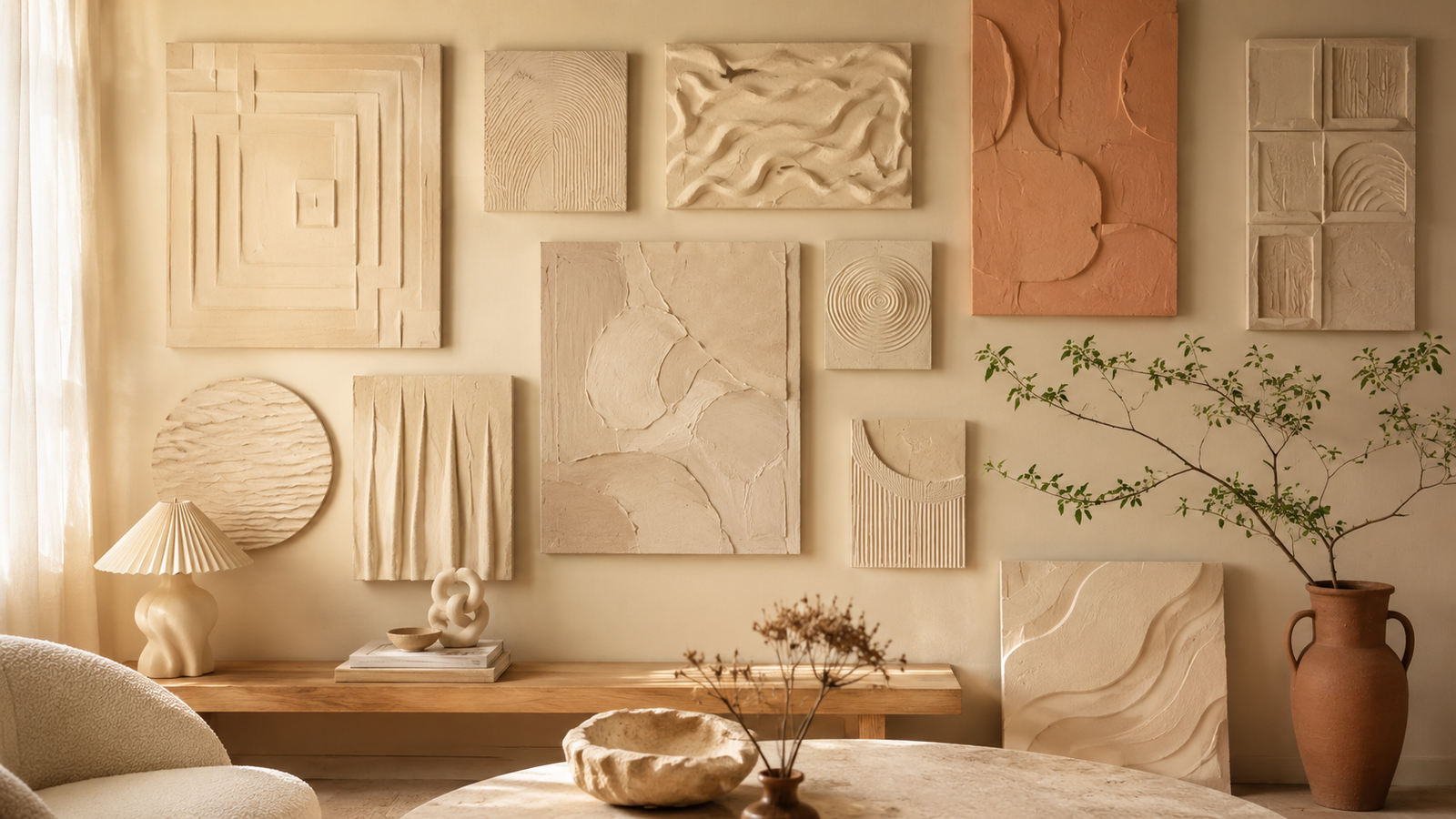
There’s a decorating moment many homeowners know well: the room feels almost complete, but the walls still look flat. The furniture is carefully chosen, the lighting feels warm, and the colors work together, yet something is missing. That final layer of personality often comes from texture.
Textured wall art DIY has become one of the most beautiful ways to bring depth and character into modern homes. Instead of relying on mass-produced artwork, designers are creating sculptural plaster pieces that feel handmade, architectural, and completely unique.
The secret behind successful plaster artwork is not creating the most complicated texture. It is understanding composition, scale, negative space, and how natural light interacts with raised surfaces. A simple plaster canvas placed correctly can become the focal point of an entire room.
Why Plaster Wall Art Feels So Designer
Plaster artwork has a quality that traditional prints cannot replicate. The surface changes throughout the day as sunlight moves across the room, creating soft shadows and subtle variations.
Interior designers often use textured finishes because they add architectural interest without expensive renovations. A carefully placed plaster canvas can bring the same feeling of craftsmanship found in luxury hotels, European apartments, and custom-built homes.
The most successful pieces balance texture with calm. Instead of covering every inch with heavy patterns, designers use smooth areas, gentle movement, and intentional imperfections.
Create an Organic Wave Canvas Above a Curved Sofa
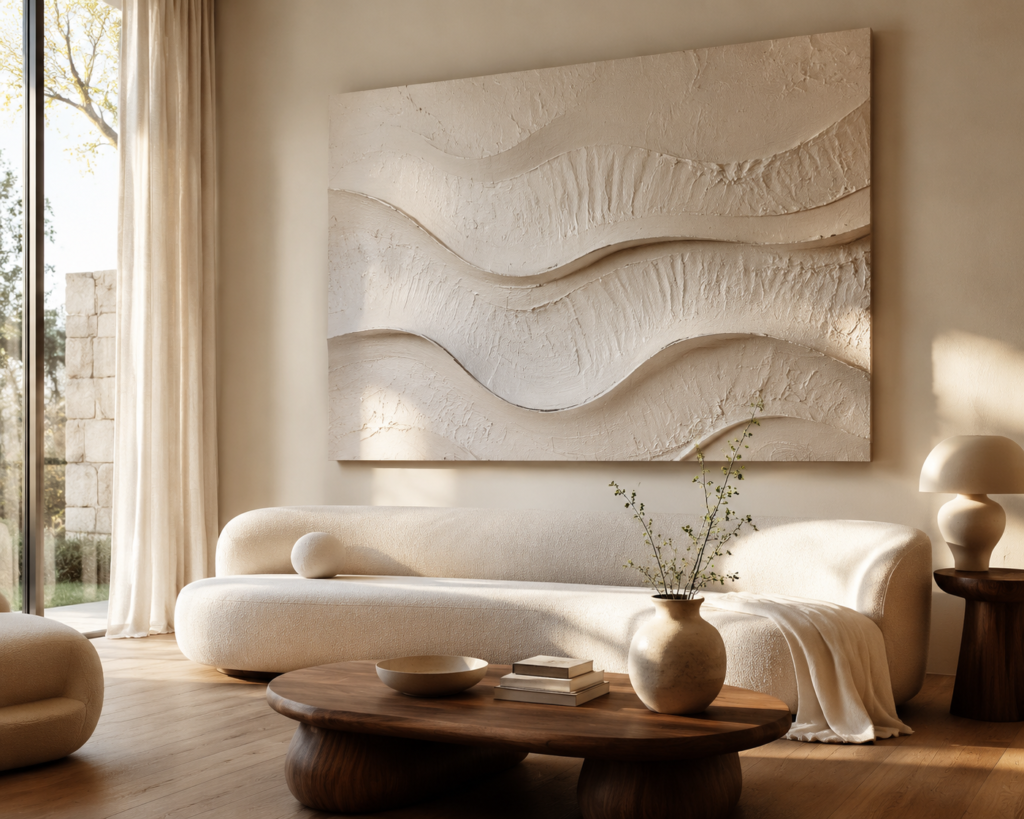
A large organic wave plaster canvas works beautifully in warm contemporary living rooms where furniture already has soft shapes.
Imagine a California-inspired space with curved boucle seating, light oak flooring, linen curtains, and one oversized ivory artwork featuring flowing plaster movements. The artwork feels connected to the room rather than added afterward.
The design principle behind this look is rhythm. Repeated curves create visual movement and make the space feel naturally balanced.
Choose a canvas around 36×48 inches or larger for a sofa wall. The artwork should usually be around two-thirds the width of the sofa to maintain proportion.
Styling tip: Keep surrounding decor minimal so the texture becomes the main feature.
Design a Limestone-Inspired Panel for a Mediterranean Entryway
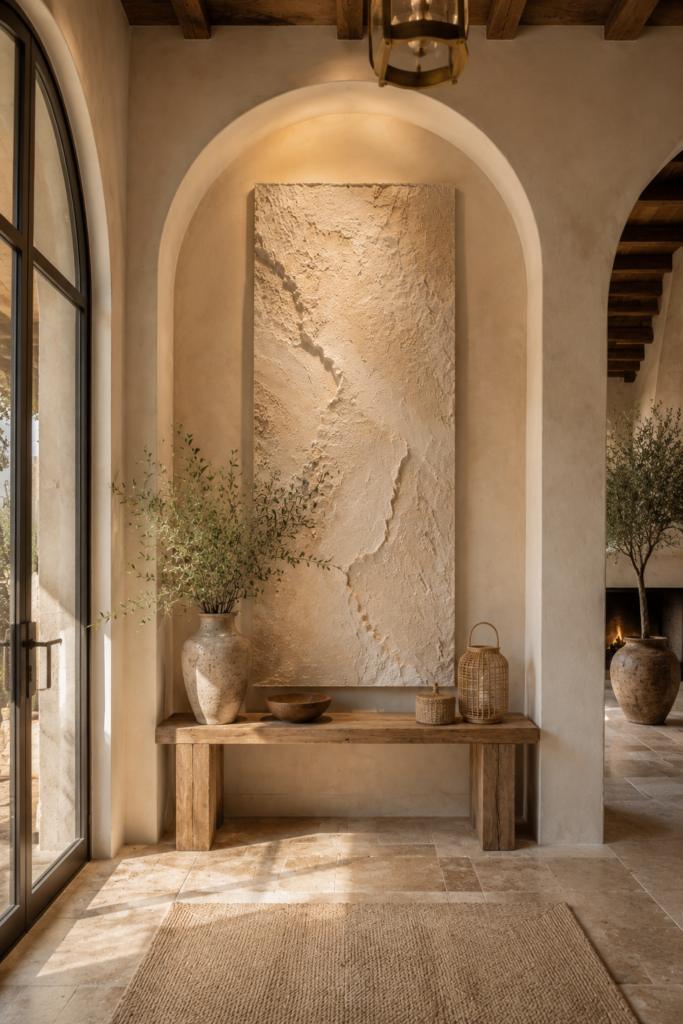
Entryways are often overlooked, but they create the first impression of a home.
A vertical plaster artwork inspired by limestone walls can transform a simple entrance into a boutique hotel-style moment. Picture warm stone flooring, an arched doorway, a handcrafted wooden console, and a textured panel catching afternoon sunlight.
This works because the artwork repeats natural architectural elements. The rough mineral appearance creates connection between surfaces, which makes the space feel professionally designed.
For narrow entryways, choose a vertical canvas around 18×48 inches or 24×60 inches to emphasize height.
Styling tip: Use warm lighting above the artwork to reveal the texture after sunset.
Build a Japandi Bedroom Statement Piece
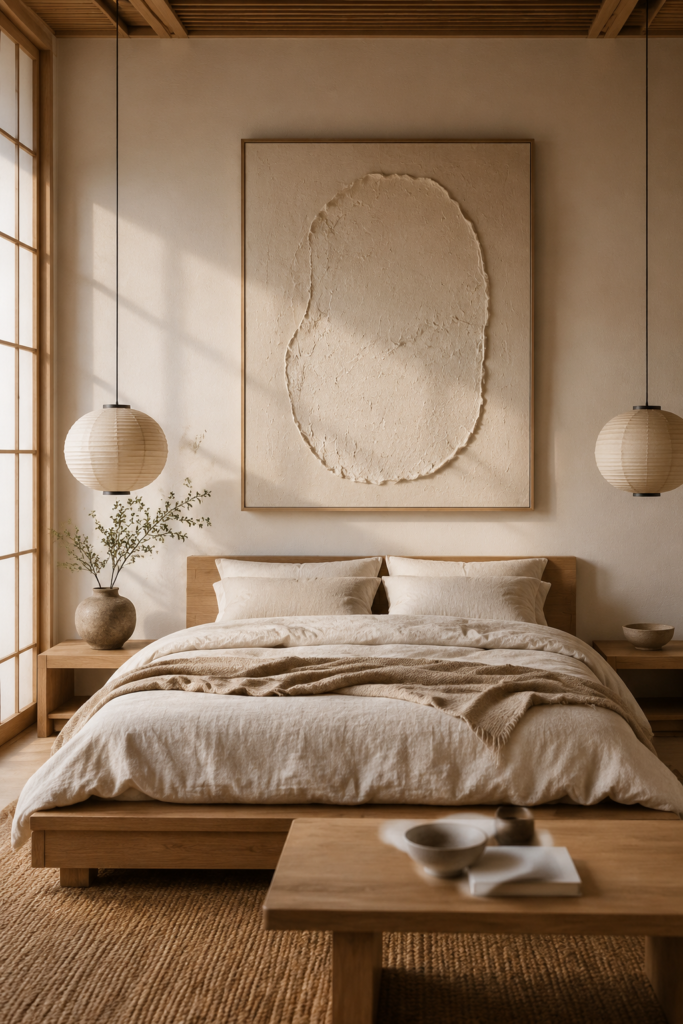
Bedrooms benefit from artwork that feels peaceful rather than dramatic.
A minimalist plaster canvas with one raised organic shape creates a calming focal point above the bed. Imagine a soft beige bedroom with oak furniture, linen bedding, and a handcrafted artwork inspired by Japanese simplicity.
The key design principle here is negative space. Empty areas around the texture create breathing room and make the raised surface feel more intentional.
Hang the artwork approximately 8–10 inches above the headboard. For a queen bed, a piece between 36×48 inches and 40×50 inches usually feels balanced.
Styling tip: Choose matte finishes because they absorb light and create a softer atmosphere.
Create a Sculptural Staircase Wall Installation
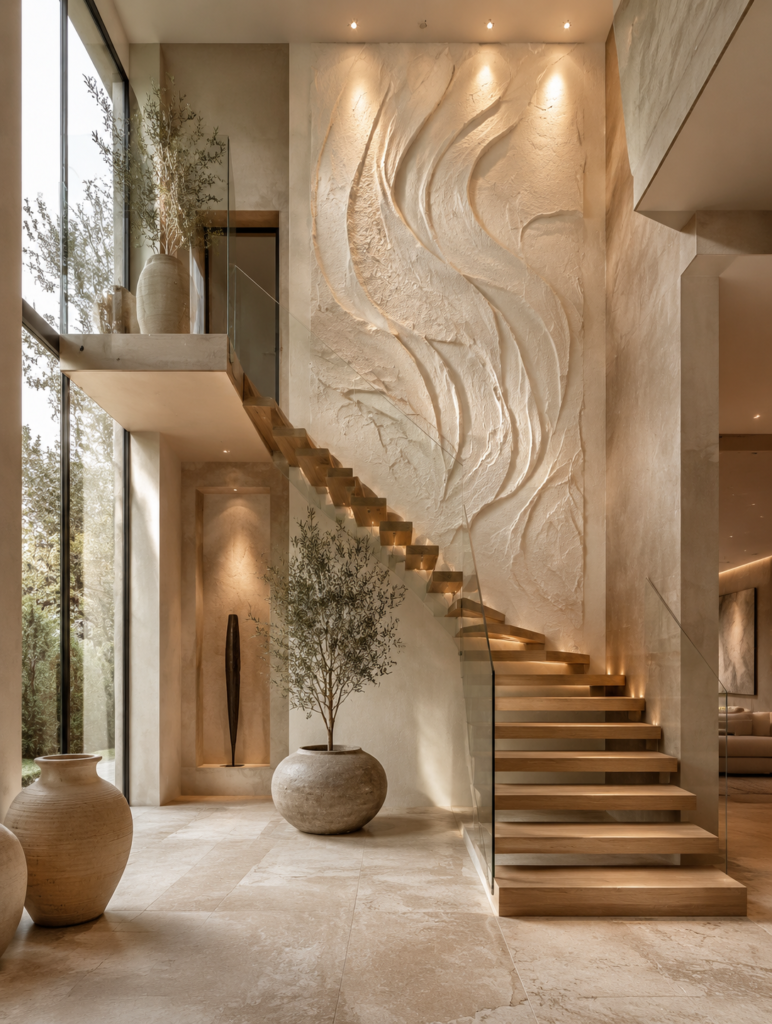
A staircase wall is one of the best places for oversized textured artwork because it naturally provides vertical space.
Instead of decorating every step with small frames, create one dramatic plaster piece that follows the height of the staircase. A double-height wall with warm plaster tones, oak stairs, and directional lighting can create a true architectural moment.
The design principle is visual hierarchy. A large statement piece gives the eye one destination and prevents the staircase from feeling cluttered.
For tall walls, consider artwork at least 48 inches tall to match the scale of the architecture.
Styling tip: Use angled lighting because side shadows make plaster texture appear deeper.
Create a Quiet Luxury Fireplace Artwork
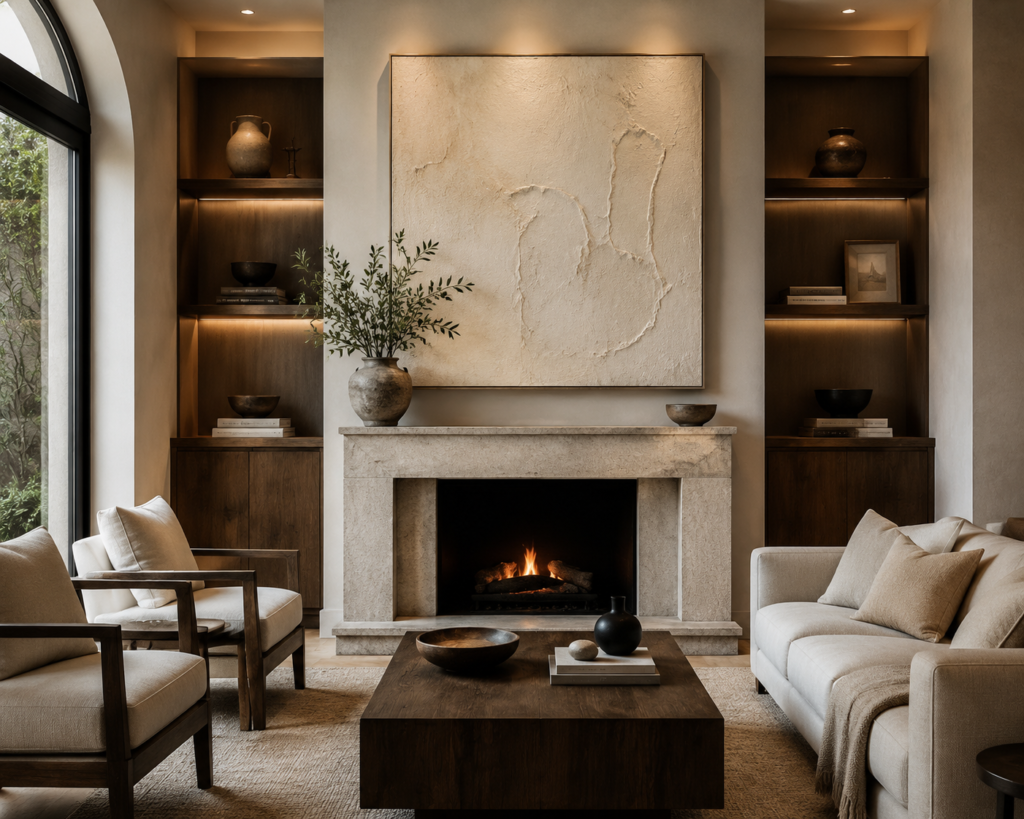
Fireplaces already command attention, so the artwork above them should feel refined.
A soft textured plaster canvas in warm ivory or stone tones can create a quiet luxury look above a limestone or marble fireplace. The combination of smooth stone and handmade texture creates beautiful contrast.
The principle behind this design is balance. The fireplace creates strong horizontal weight, while the artwork adds height and softness above it.
Keep the artwork slightly narrower than the fireplace surround to avoid making the wall feel top-heavy.
Styling tip: Avoid highly raised textures in this location because they can compete with the architectural feature.
Make a Three-Panel Plaster Artwork for a Dining Room
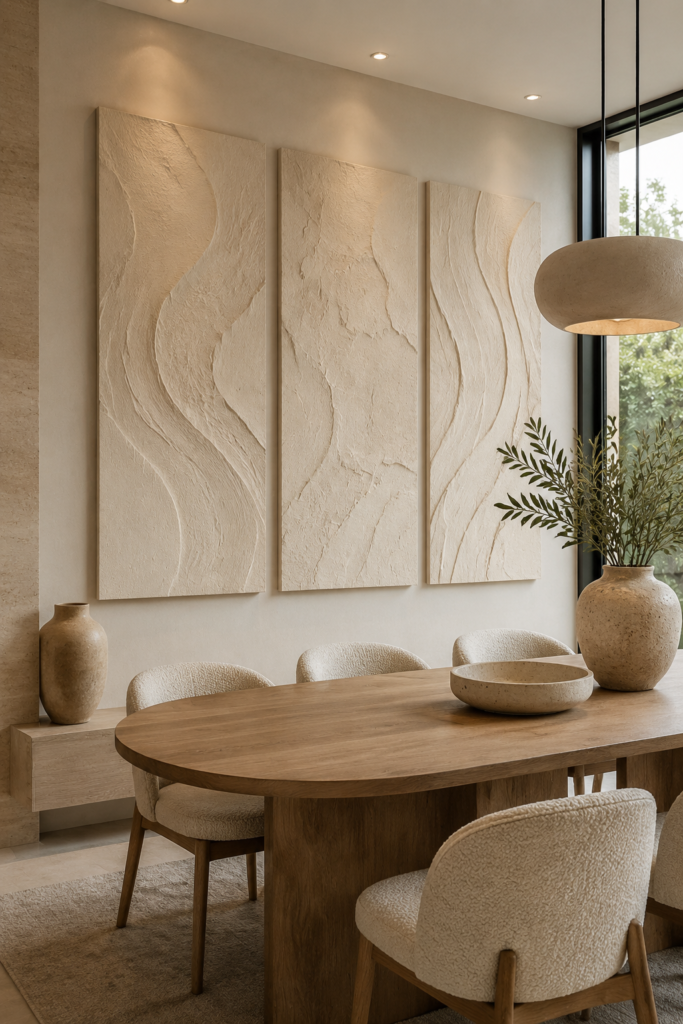
A dining room is the perfect place for a structured plaster collection.
Create three separate canvases with related but different textures. One panel can feature smooth curves, another subtle ridges, and the third a soft abstract form.
This works because repetition creates rhythm while variation keeps the arrangement interesting. It feels collected rather than mass-produced.
For a dining wall, leave 2–3 inches between each panel and keep the overall artwork width approximately 60–75% of the dining table length.
Styling tip: Use a single neutral color across all panels to maintain visual harmony.
Turn a Narrow Hallway Into a Gallery Moment
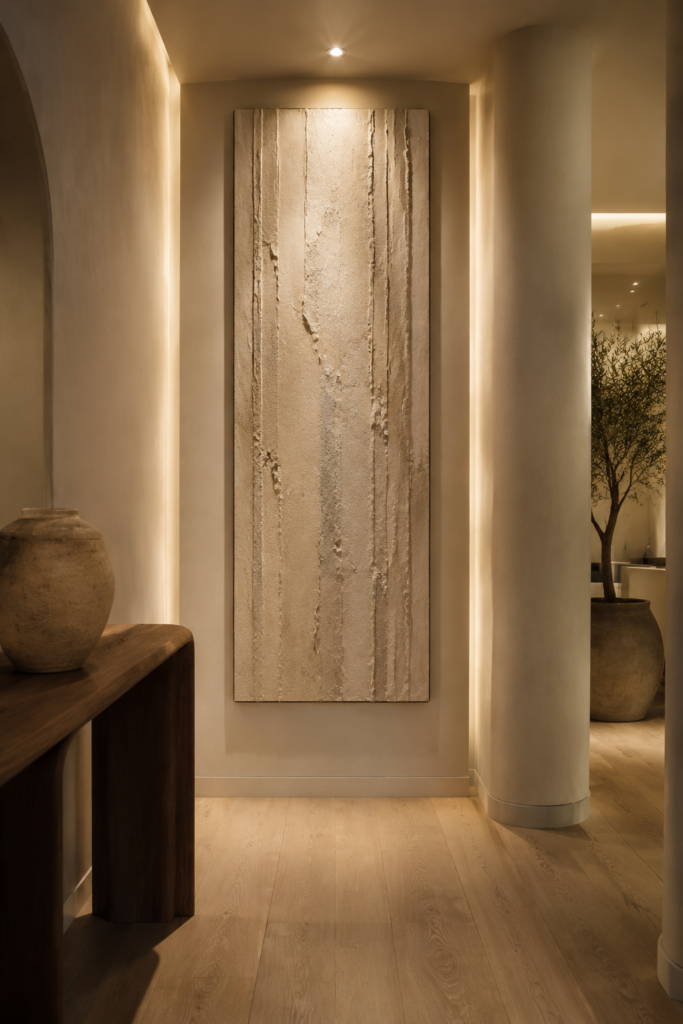
Long hallways often need something that adds personality without reducing walking space.
A slim textured plaster artwork can create a gallery-like atmosphere while keeping the area visually open. Picture a modern European hallway with natural oak flooring, curved walls, and a tall plaster panel highlighted by a small wall light.
The design principle is proportion. Vertical artwork naturally draws the eye upward, making narrow spaces appear taller.
A canvas around 16×48 inches or 20×60 inches works well for compact corridors.
Styling tip: Leave enough empty wall around the artwork so the hallway does not feel crowded.
Create a Contemporary Office Feature Wall
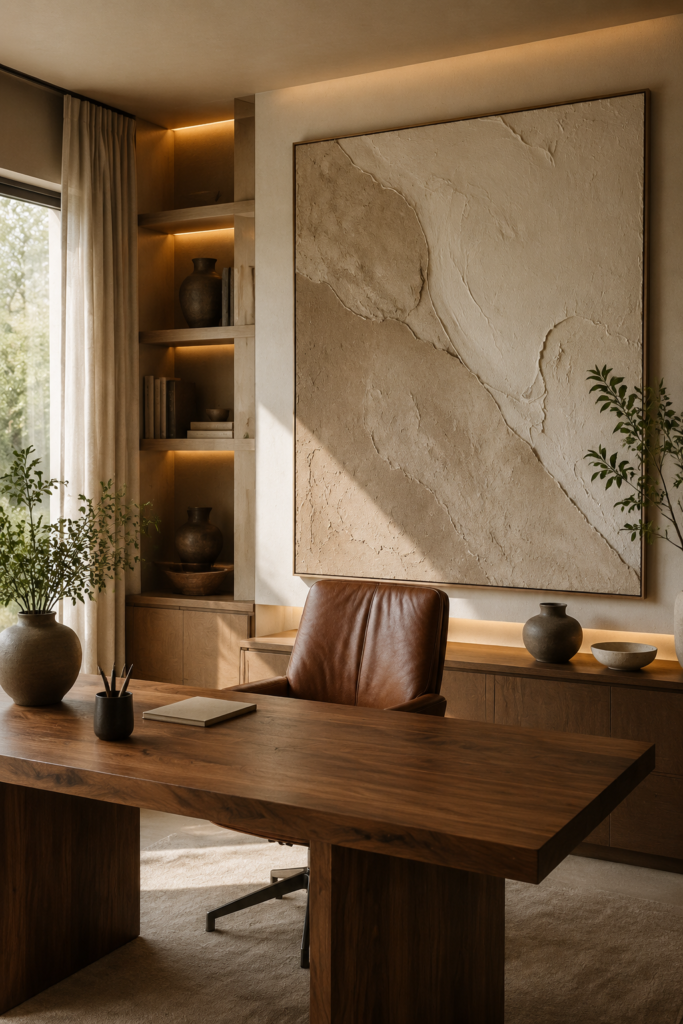
A home office needs inspiration without distraction.
A textured plaster artwork behind a desk can add sophistication while maintaining a calm working environment. Imagine a modern office with walnut cabinetry, leather seating, warm lighting, and a large sand-colored plaster canvas.
The principle here is visual weight. The artwork should support the room rather than dominate it.
Choose a design with gentle movement instead of dramatic peaks or heavy texture.
Styling tip: Position the artwork where natural side light can reveal the texture during daytime work hours.
Design an Arched Plaster Niche Artwork
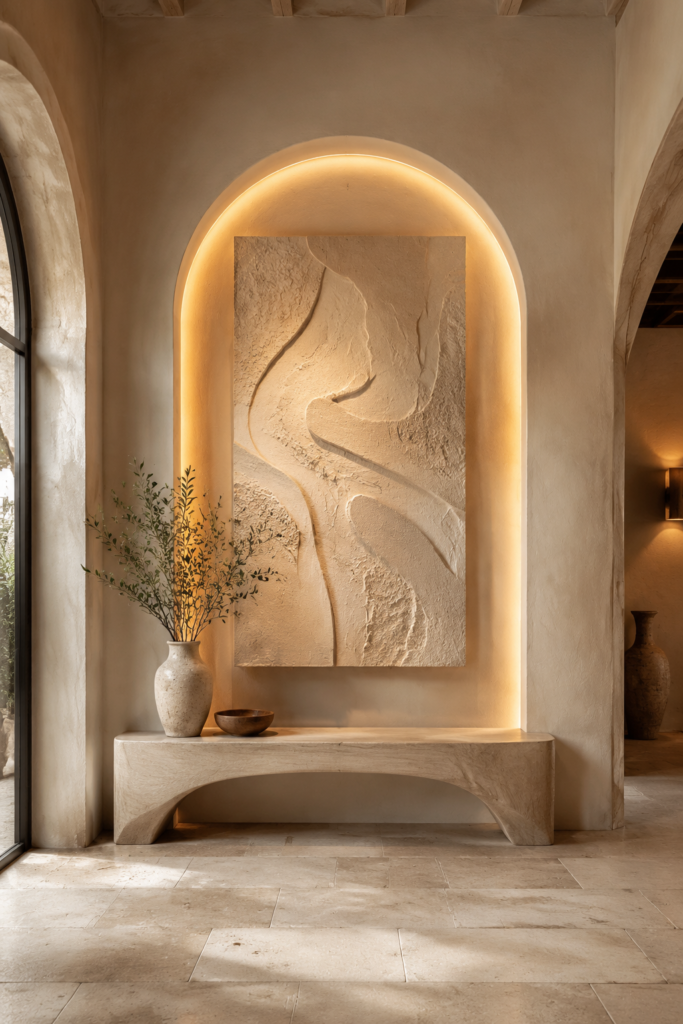
Built-in niches create an opportunity for a more architectural approach.
Instead of filling a niche with decorative objects, place a textured canvas inside and let lighting highlight the surface. The result feels custom and intentional.
This works through layering. The recessed architecture creates depth, while the plaster artwork adds another dimension.
A niche depth of 4–6 inches is usually enough to create noticeable shadow lines.
Styling tip: Use warm LED lighting around 2700K–3000K for a softer gallery effect.
Combine Plaster Texture With Natural Wood
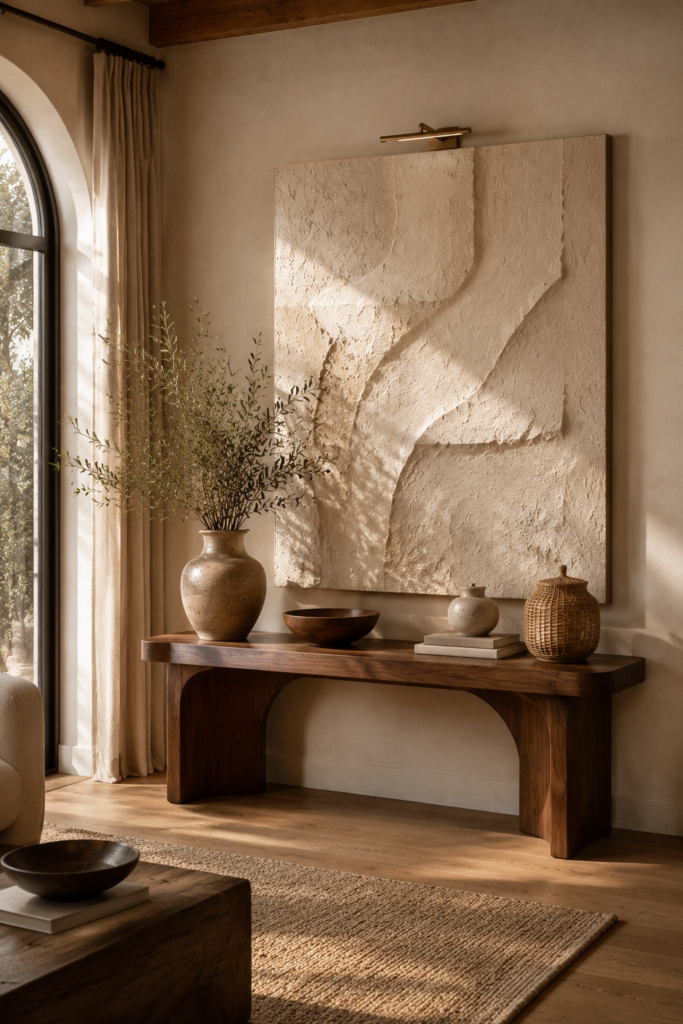
Texture becomes even more beautiful when paired with contrasting materials.
A large plaster artwork above a walnut console or oak cabinet creates a balance between handmade softness and natural structure. This combination works especially well in Organic Modern interiors.
The design principle is contrast. Smooth wood grain against irregular plaster texture creates visual interest without adding extra colors.
Choose artwork that leaves some open canvas space so both materials can breathe.
Styling tip: Natural materials usually make plaster finishes appear more expensive because they share an earthy visual language.
Create a Soft Mediterranean Bedroom Wall
For a warmer interpretation of plaster art, take inspiration from Mediterranean homes.
A textured canvas in clay, sand, or warm cream tones can bring the feeling of sun-washed walls into a bedroom. Pair it with linen fabrics, curved furniture, and natural stone details.
The design principle is color harmony. Similar earthy tones create a relaxed atmosphere while texture provides depth.
Choose matte mineral-inspired finishes because they mimic authentic plaster surfaces.
Styling tip: Avoid cool gray tones with this style because they can make the room feel less inviting.
DIY Materials You Need for Plaster Wall Art
Creating professional-looking plaster artwork starts with choosing the right materials.
You will need:
- Deep gallery-wrapped canvas
- Lightweight joint compound or texture paste
- Flexible palette knives
- Sandpaper
- Primer
- Matte paint or mineral finish
- Protective matte sealer
A canvas with a depth of at least 1.5 inches works better because heavy texture can cause thinner canvases to bend.
How to Create Textured Wall Art DIY Step by Step
Start by preparing your canvas with a clean surface. If the canvas is very smooth, a thin primer layer helps the plaster adhere properly.
Apply your plaster mixture in thin layers instead of one thick coat. Thick applications often crack as they dry.
Create movement using confident strokes. Large gestures usually look more sophisticated than many small marks.
Allow the artwork to dry completely before sanding rough edges or adding color.
Finish with a matte protective coat to preserve the natural plaster appearance.
Expert Tips for Better Plaster Artwork
Work with natural light whenever possible because it reveals texture better than artificial lighting.
Do not try to make every area perfect. Handmade surfaces look more expensive when they contain subtle variations.
Always consider the wall behind the artwork. A textured piece needs enough breathing space to become the focal point.
When choosing placement, think about furniture first. Artwork should connect visually with nearby pieces rather than floating randomly on a wall.