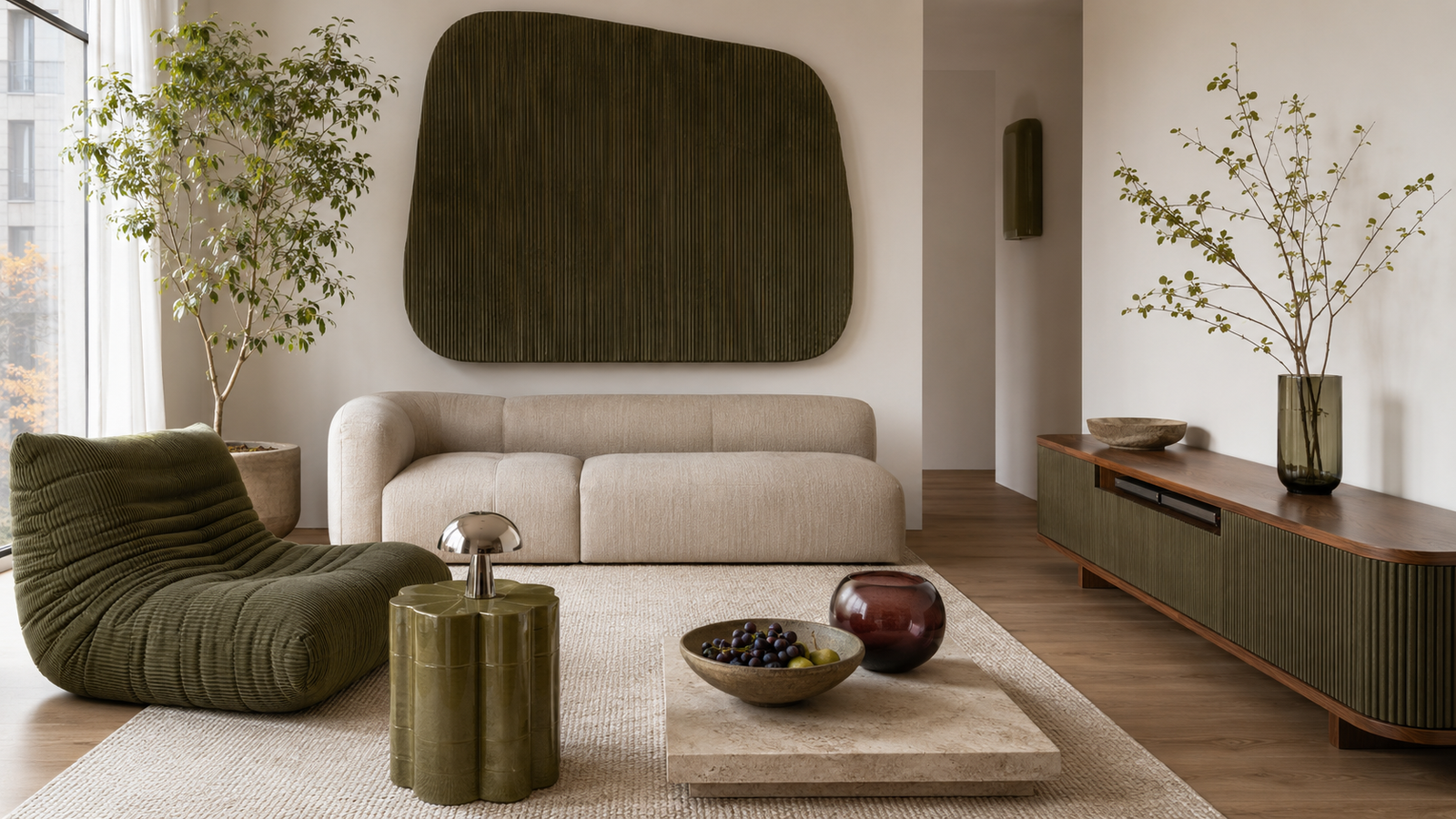
Olive green fall decor offers a refreshing middle ground between bright summer color and the deep browns often used later in the season. Its earthy undertone works especially well with corduroy, cork, linen, clay, dark wood, and other materials that look richer as autumn light becomes softer.
The ideas below give this grounded palette a modern Gen Z point of view. Expect renter-friendly wall treatments, thrifted furniture updates, sculptural lighting, playful color pairings, and seasonal displays that don’t rely on artificial leaf garlands or rows of pumpkins.
1. Shape an Olive Felt Desk Wall
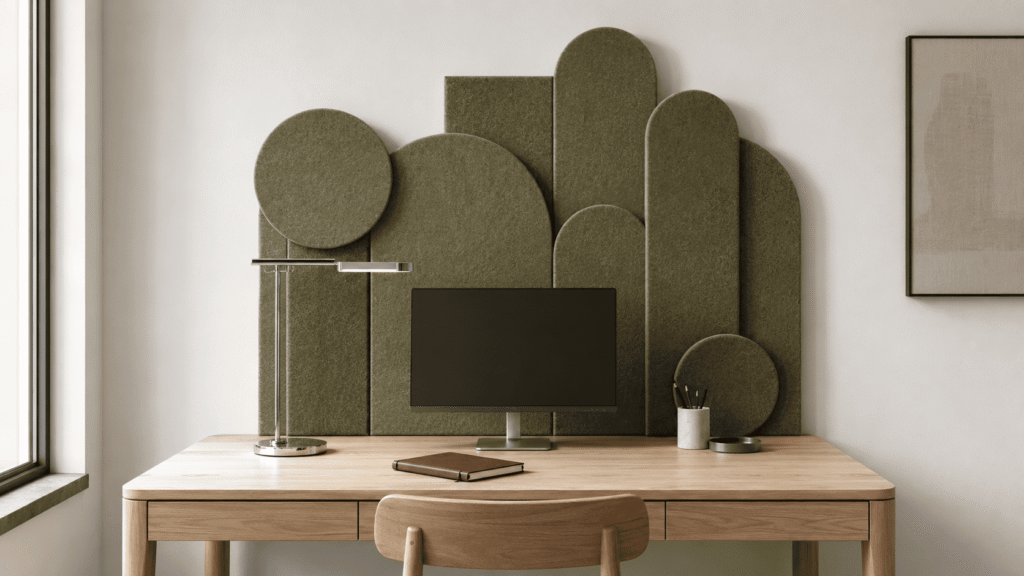
Arrange olive wool-felt acoustic panels behind a desk using a mix of arches, tall rectangles, and circles. Keep the composition within the desk’s width so it reads as a single backdrop rather than scattered wall patches.
The felt softens echo and reduces the hard visual effect of screens, metal lamps, and electronics. Combine it with a pale wood desk, chrome task lighting, and cocoa accessories. Choose dense wool-blend panels with clean-cut edges; thin craft felt can sag, trap lint, and look unfinished at this scale.
2. Style an Olive Ceramic Mantel
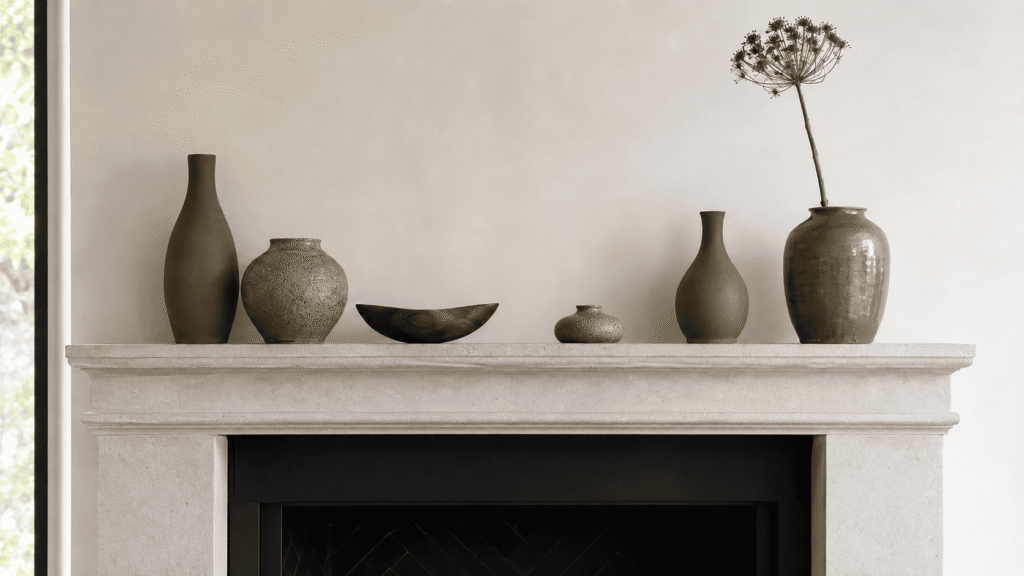
Create a tonal mantel display with three to five olive ceramic vessels in matte, speckled, and lightly glazed finishes. Vary their height but leave visible wall space between the groups, then introduce one low walnut object and a single branch of dried seed heads.
Changing the finish within one color family keeps the arrangement interesting without relying on extra accessories. Place the tallest vessel slightly off-center instead of creating a perfectly mirrored display. If the fireplace is used, keep dry botanicals and other combustible materials well outside the manufacturer’s required clearance area.
3. Hang an Olive Paper Pendant
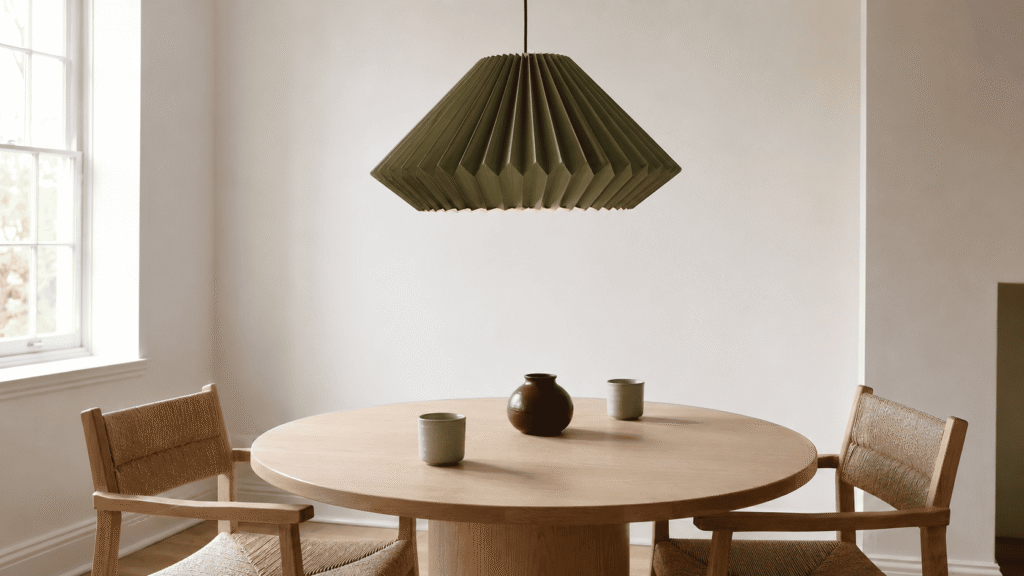
Center an olive pleated-paper pendant over a breakfast nook, reading corner, or small round dining table. Paper folds create soft shadows across the shade, so the green changes subtly instead of reading as one flat block of color.
Keep at least 30–36 inches between the bottom of a dining pendant and the tabletop. Pale birch furniture, rush-cord seating, and one dark-red ceramic object will reinforce the natural fall palette without making the arrangement heavy. Use a neutral-warm LED bulb around 3000K; very yellow bulbs can make muted olive appear muddy.
4. Create an Olive Cork Pinboard
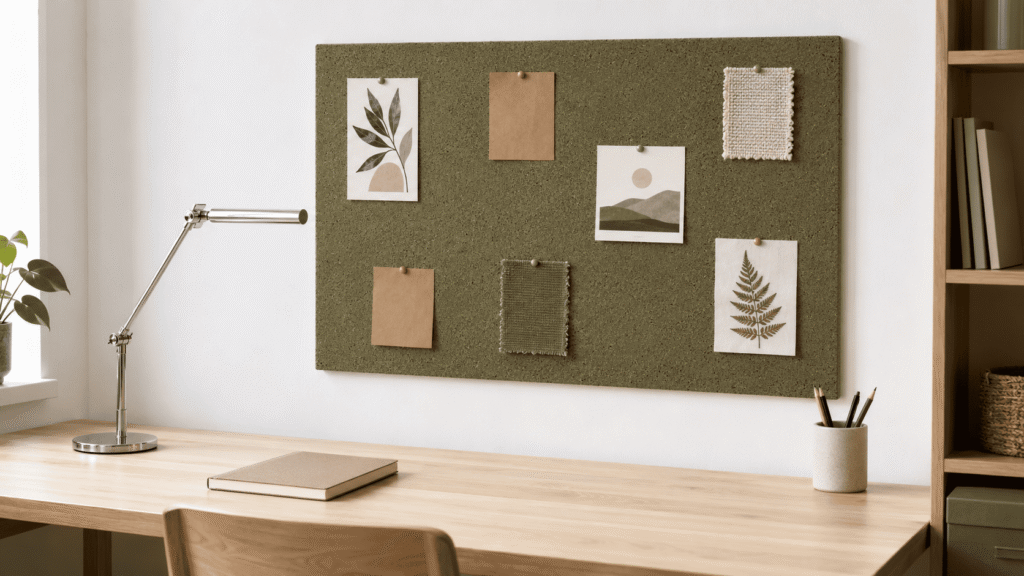
Mount a large olive-tinted cork panel behind a desk and use it as both wall decor and a working inspiration board. A panel measuring roughly two-thirds of the desk’s width feels substantial while leaving enough clear wall around it.
Pin up a restrained collection of art prints, brown paper notes, textile swatches, and one pressed-leaf study. Leave visible cork between the items so its grain remains part of the composition. Thick, self-healing cork wears better than a thin printed cork sheet, which can curl at the corners and reveal its low price quickly.
5. Set an Olive and Burgundy Fall Table
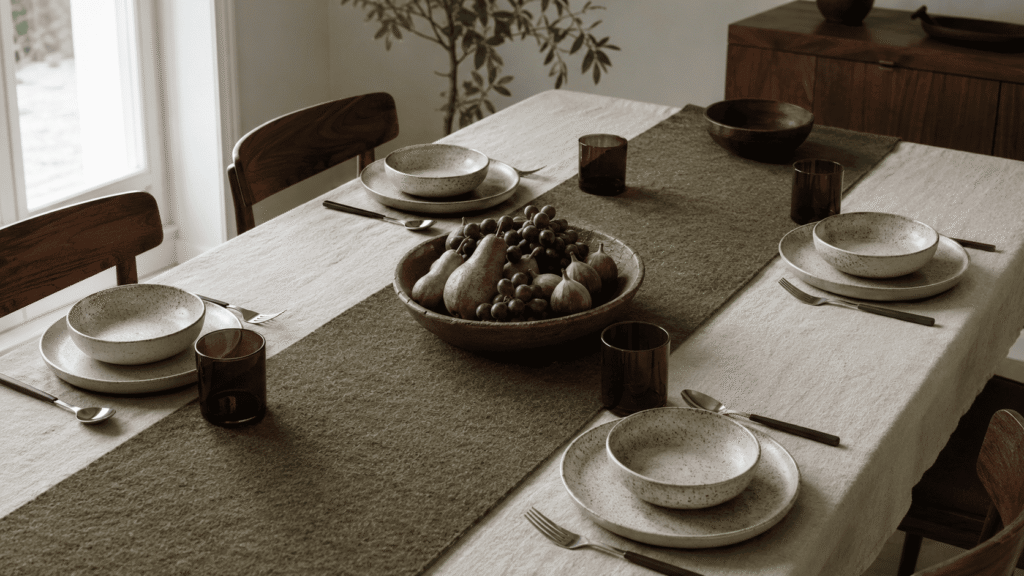
Lay a narrow olive wool-felt runner over a relaxed flax tablecloth, allowing at least 8 inches of the lighter fabric to remain visible on each side. Add burgundy glassware, dark wood serving pieces, speckled stoneware, and a low bowl of figs, pears, or dark grapes.
The colors create a recognizable fall table without defaulting to orange. Dense felt against loose linen also gives the setting clear textural contrast. Keep the centerpiece below approximately 12 inches so guests can see one another, and skip loose dried material that can scatter into food or glasses.
6. Update a Fluted Media Console
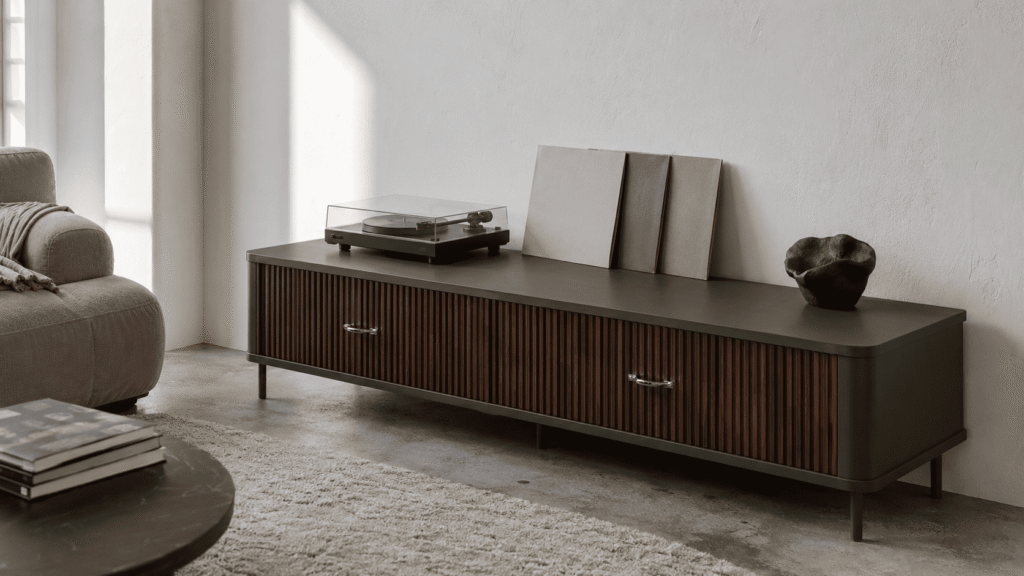
Give a low secondhand media console a smoky olive finish, then apply narrow wood half-rounds to the door fronts for fluted texture. Keep the top quiet with a record player, a small stack of albums, and one sculptural clay object rather than filling every available inch.
Use matte or eggshell paint on the cabinet body; high gloss reflects more light but exposes dents and uneven preparation. Leave the wood fluting natural or stain it a deep walnut. Chrome handles introduce a crisp finish that prevents the olive-and-wood combination from looking too traditional.
7. Divide a Room With Olive Linen
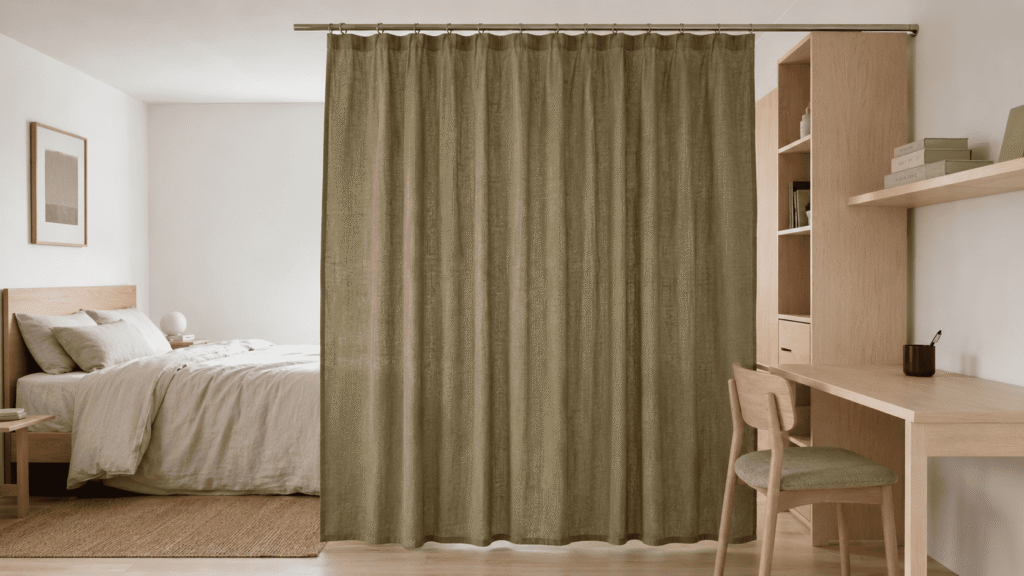
Conceal an open clothing rail, home office, or sleeping zone with a full-length olive washed-linen curtain. An exposed chrome ceiling track adds a clean industrial detail, while the softly uneven fabric keeps the room from feeling cold.
Measure the panel so it clears the floor by about half an inch. Fabric that pools may photograph well, but it collects dust and becomes inconvenient when moved daily. For better opacity, choose a linen-cotton blend with a substantial weight; very loose linen can reveal clutter when light passes through it.
8. Lay an Olive Checkerboard Entry
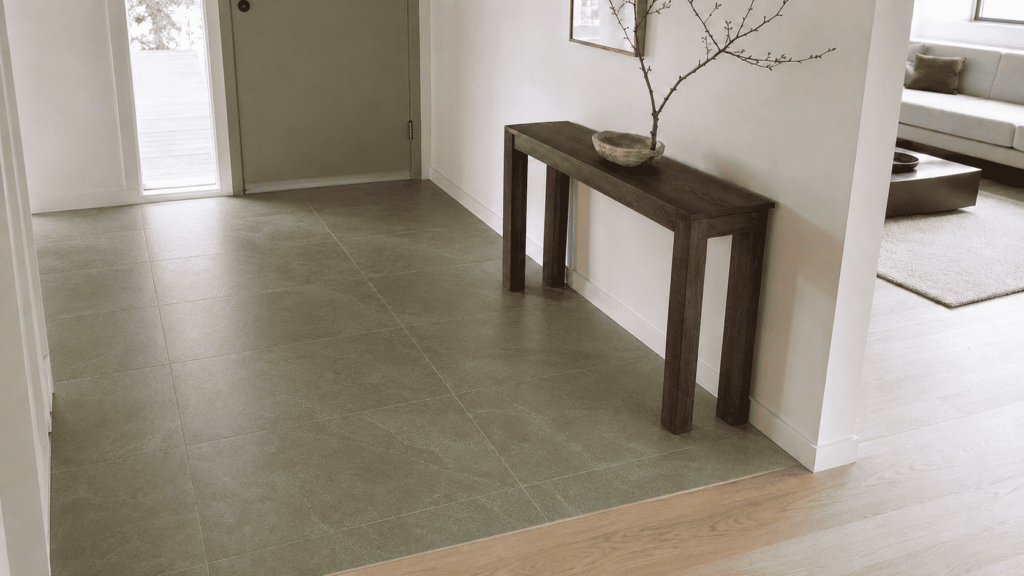
Define a small entry with oversized olive and warm limestone-look removable floor squares. Large 12-inch or 18-inch blocks feel more modern than tiny checks and make the pattern easier to read in a narrow space.
Keep the surrounding furniture simple: a slim walnut console, rough clay catchall, and one burgundy branch are enough. Before installing adhesive tiles, test one in a hidden area because some products can mark delicate floors. A removable vinyl floor cloth offers a safer alternative when the existing surface or lease terms make adhesive risky.
9. Add an Olive Corduroy Floor Lounger
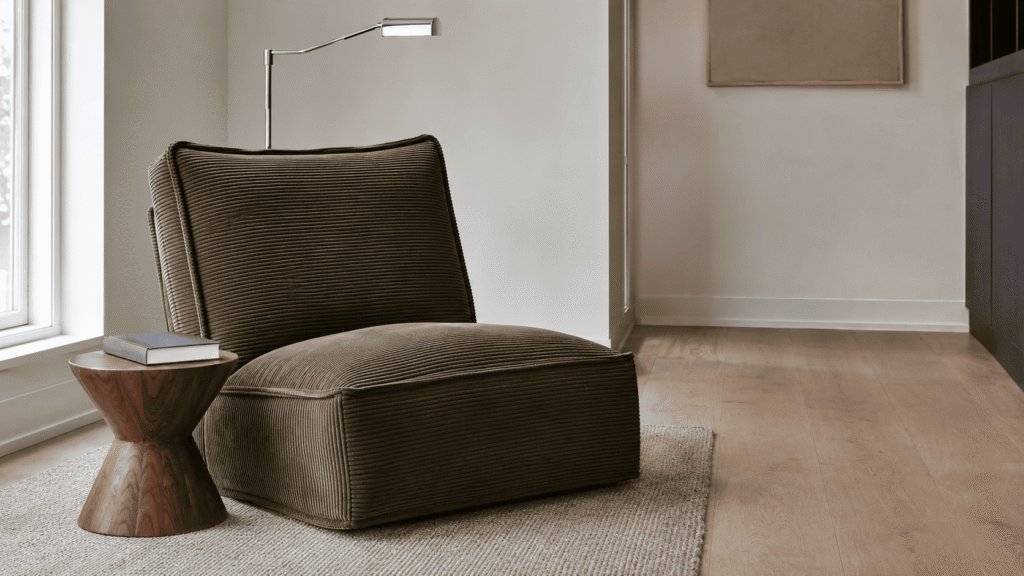
Build a casual reading or music corner around a low olive corduroy floor chair. Give it enough room to function by leaving approximately 30 inches of clear walking space along the main route and placing its side table within easy reach.
A mushroom flatweave, compact walnut pedestal, and narrow chrome reading lamp will balance the soft, low seating. Select a lounger with a supportive internal frame rather than an unstructured floor cushion; shapeless pieces flatten quickly and can be uncomfortable for regular use. Removable upholstery covers also make corduroy much easier to maintain.
10. Cast Texture With an Olive Woven Lamp
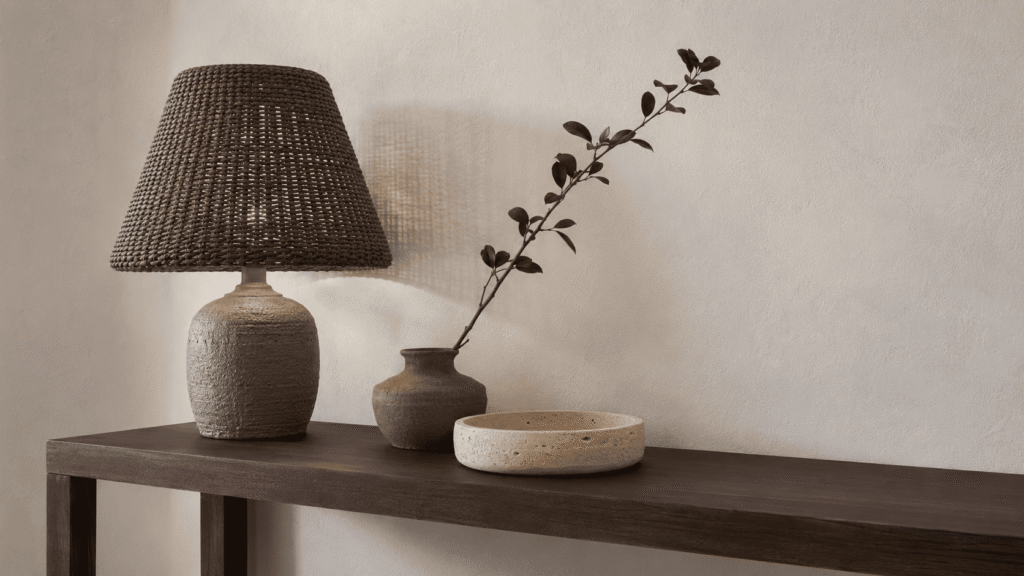
Place a sculptural lamp with an olive-dyed raffia or paper-cord shade on an entry console. When lit, the open weave casts a restrained pattern across the wall, giving the color movement after daylight fades.
Pair the shade with a rough ceramic or carved wood base, then add a travertine dish and one black-cherry branch. Leave at least one-third of the console clear so the mix of grain, stone, and fiber doesn’t become cluttered. Choose an enclosed, cool-running LED bulb because natural woven shades can be sensitive to heat.
11. Frame an Olive Linen Art Panel
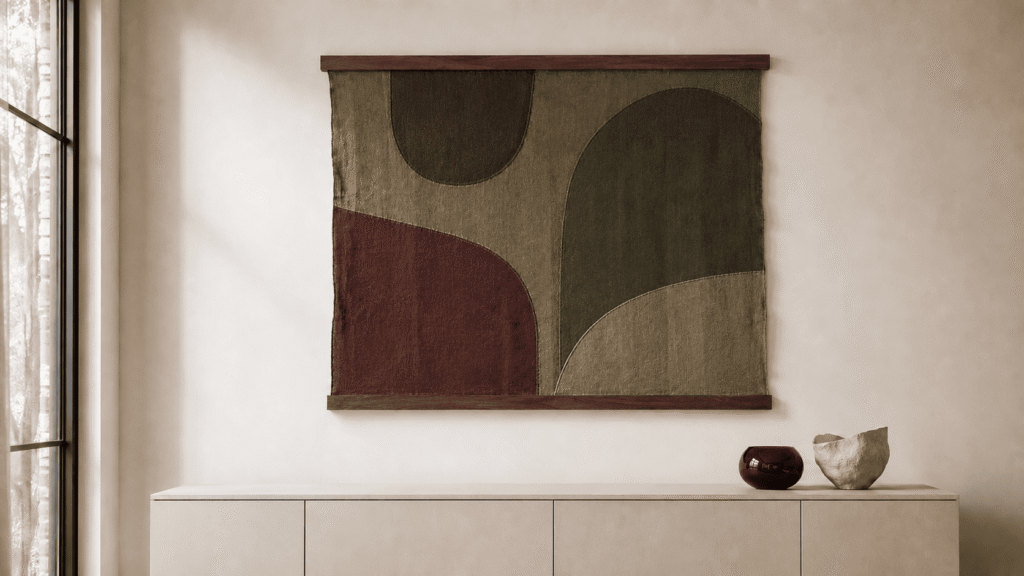
Stretch stonewashed olive linen inside a slim walnut frame, or suspend it between magnetic wood rails for a renter-friendly version. An oversized panel placed above a console or bed creates a stronger result than several small green prints.
Let the weave, softened creases, and slightly irregular edge remain visible. These details stop the textile from resembling a plain painted rectangle. When hanging it over furniture, leave approximately 6–10 inches between the furniture and the panel, adjusting slightly for the room’s ceiling height and the scale of the composition.
12. Design an Olive Café Corner
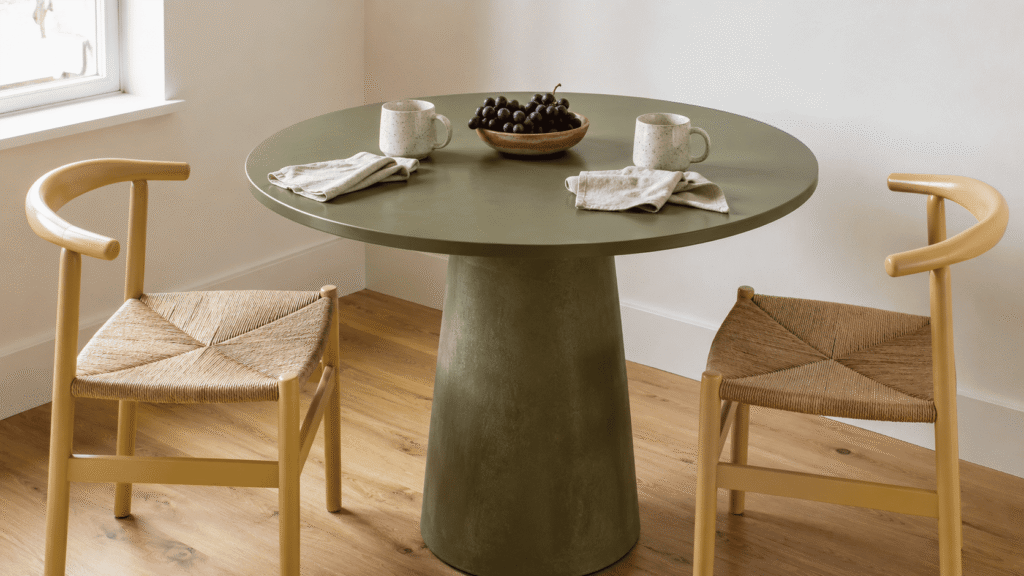
Give a small breakfast area a playful fall palette with a round olive pedestal table and butter-yellow chairs with rush-cord seats. A 36–42-inch table generally serves two people comfortably without consuming the floor space of a rectangular dining set.
Use a chalky limewash-effect finish on the base and a sealed wood or durable painted top that can handle daily wiping. Finish the setting with speckled mugs, flax napkins, and dark grapes in a low clay bowl. The yellow keeps olive lively, while woven seats and late-season fruit maintain the autumn connection.
13. Suspend an Olive Branch Mobile
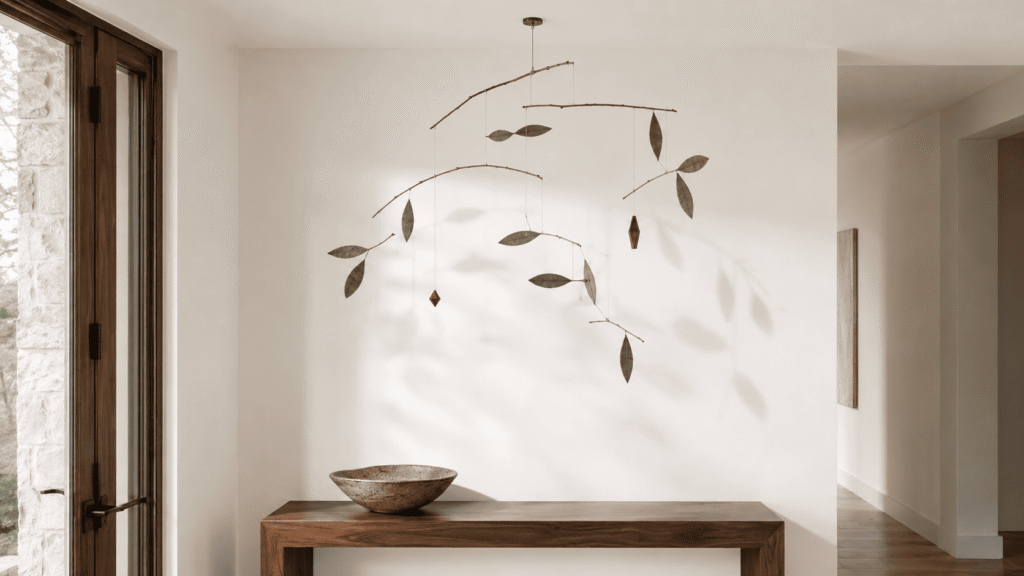
Create an airy ceiling mobile from slender natural twigs, olive wool-felt leaves, and a few small dark-wood shapes. Suspend the pieces at different heights so they move gently, but keep the structure open rather than turning it into a dense imitation garland.
A dining table or entry console provides a defined area beneath the mobile without placing it in a busy walkway. Maintain ample clearance above standing height and keep it away from ceiling fans, heat sources, and exposed bulbs. The result feels artistic and seasonal while remaining lighter than a wreath or foliage-covered installation.
14. Build an Olive Green Corduroy Headboard Grid
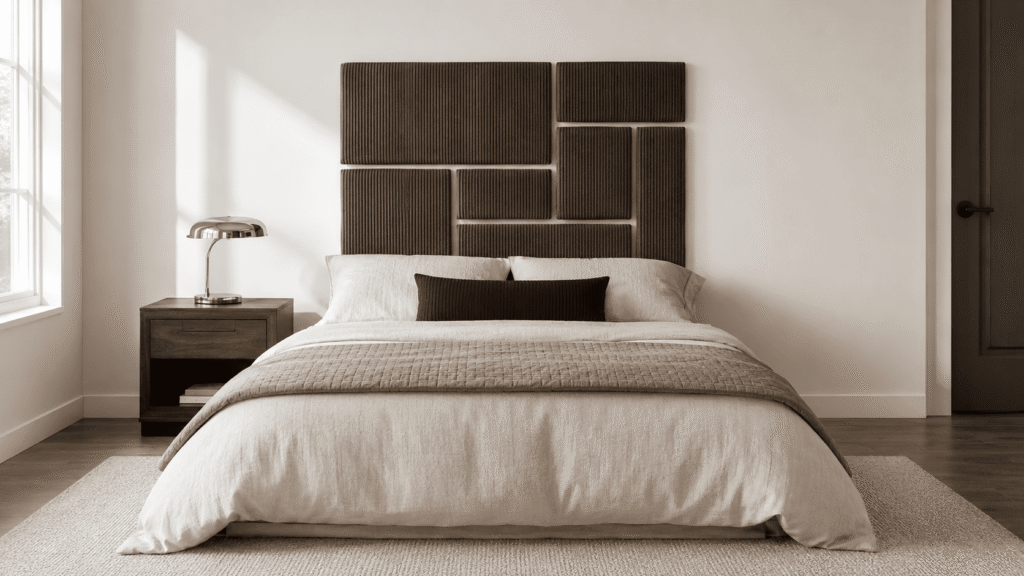
Arrange removable padded panels in an asymmetrical grid behind the bed, covering each one in wide-wale olive corduroy. Make the complete installation 6–12 inches wider than the mattress so it frames the bed instead of looking like several small cushions attached to the wall.
Pair the ribbed fabric with flax bedding, an espresso wood nightstand, and one narrow burgundy lumbar pillow. Corduroy absorbs light between its raised channels, which gives olive more depth during fall. Mount lightweight panels with an appropriate removable system, but check the adhesive rating and wall finish first.
15. Make an Olive Tile Side Table
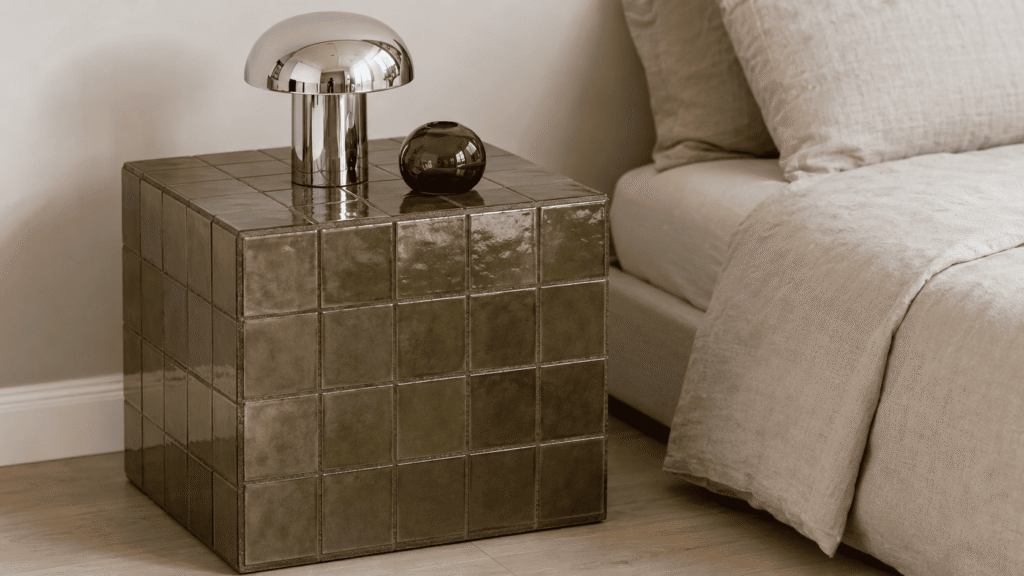
Cover a small cube table with handmade-look olive tiles, using a deep brown grout to define their irregular edges. A 16–20-inch-wide table is large enough for a lamp and book without overwhelming a compact bedroom or apartment living room.
Real ceramic tile provides better color variation than printed adhesive sheets, though it also adds considerable weight. Start with a structurally sound secondhand table, use tile trim along exposed edges, and seal the grout against drink rings. A chrome mushroom lamp and one smoked-burgundy glass object will give the earthy finish a cooler, younger contrast.