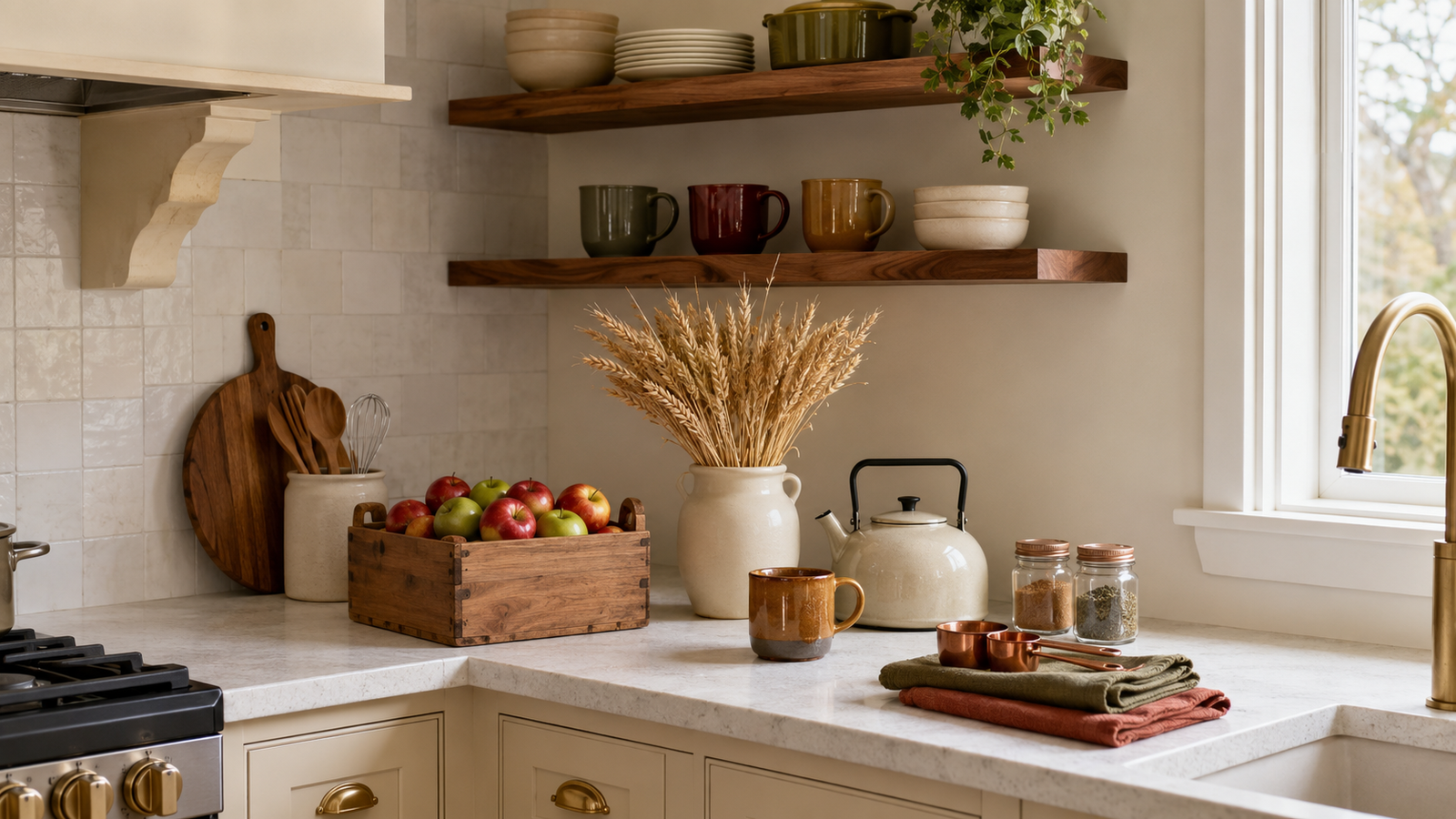
Fall decorating in a kitchen can go wrong quickly. A few bright-orange pumpkins may photograph well, but they often crowd the counter, interrupt food prep, and make the room feel more themed than thoughtfully styled.
These fall kitchen decor ideas take a more useful approach. Each one brings in a recognizable autumn detail—orchard fruit, baking tools, warm metals, dried foliage, or rich seasonal color—while respecting the way a real kitchen works. You can try one small display or combine several throughout the room without losing counter space or creating extra cleaning work.
1. Create an Apple Orchard Kitchen Corner
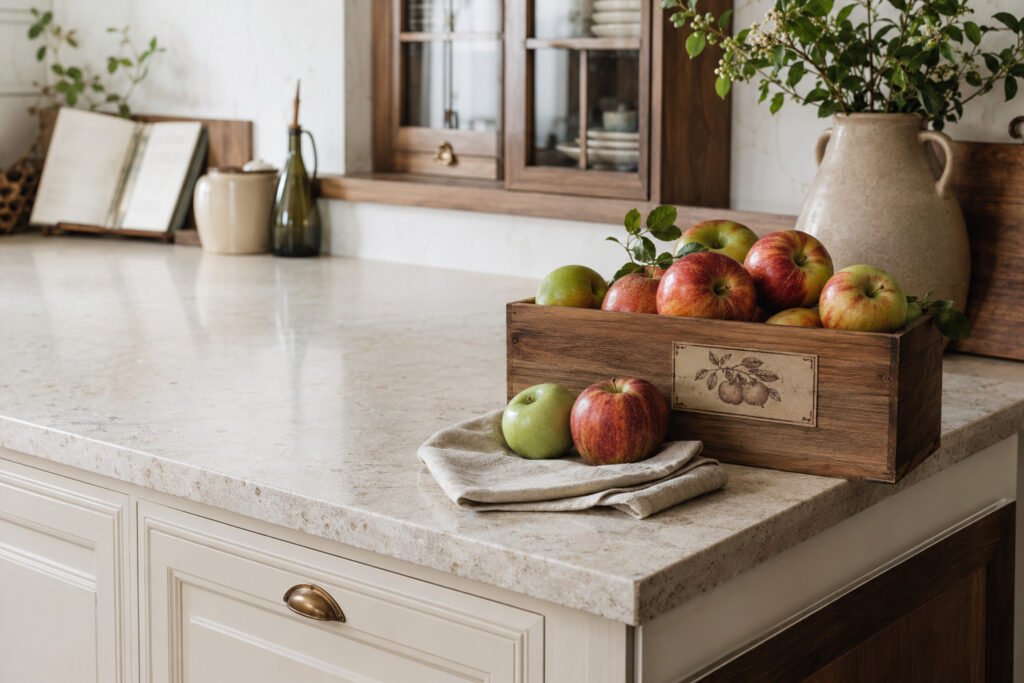
Place a shallow wooden crate near the end of a counter and fill it with red and green apples. Add a folded flax-colored towel and a small orchard-style label, but leave enough open space so the arrangement looks loose rather than packed. Choose a food-safe crate with a smooth interior, since rough reclaimed wood can hold dust and splinters.
The natural variation in the fruit introduces fall color without relying on artificial decorations. Keep the crate away from the cooktop and direct sun, and rotate the apples into lunches, pies, and snacks before they soften.
2. Set Up a Pumpkin Spice Coffee Station
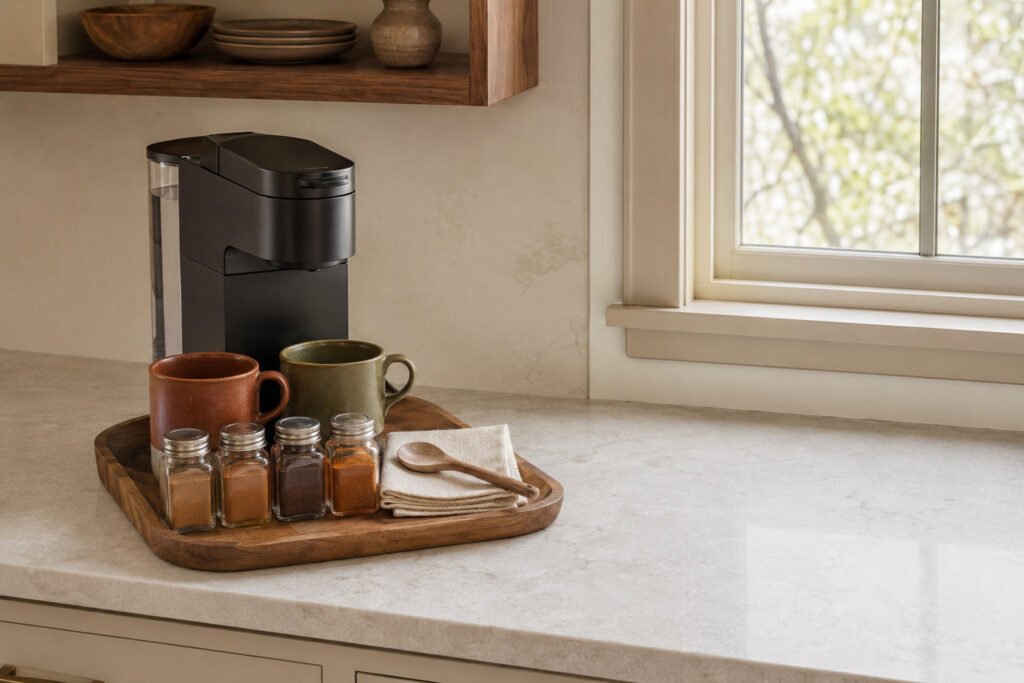
Gather the coffee supplies you already use onto a wood or washable metal tray. Add small sealed jars of cinnamon, nutmeg, cocoa, and pumpkin spice, then finish the station with two rust or olive mugs. A tray around 12 to 16 inches wide usually holds the essentials without taking over a standard counter.
The spices provide scent, color, and a clear fall reference, while the tray keeps loose grounds and powder contained. Skip open bowls of spices; they collect cooking grease and lose their aroma. Labels should be simple and easy to read rather than decorative signs.
3. Hang a Dried Orange Kitchen Garland
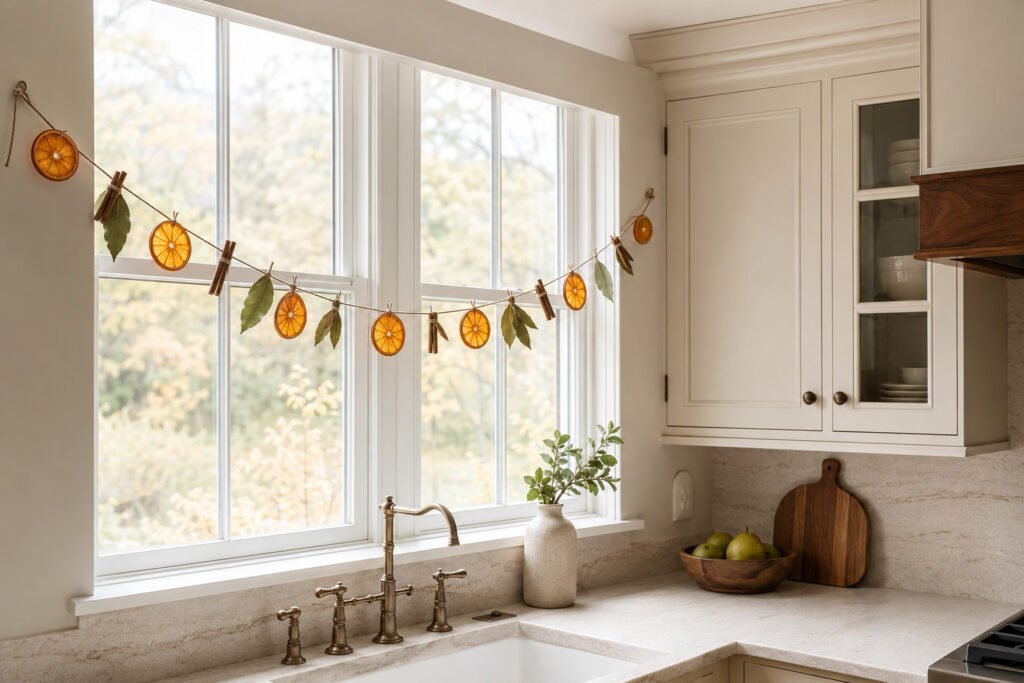
Thread fully dried orange slices with bay leaves and cinnamon sticks to make a slender garland for a window, open shelf, or range-hood surround. Leave 1 to 2 inches between pieces so the garland looks light and the individual shapes remain visible. Use removable clear hooks if you rent.
Orange slices glow like amber when daylight passes through them, creating a seasonal effect that plastic leaves cannot copy. Keep the garland at least several feet from an open flame and away from rising steam. Completely dry every slice before hanging it to prevent mold.
4. Style a Golden Wheat Arrangement
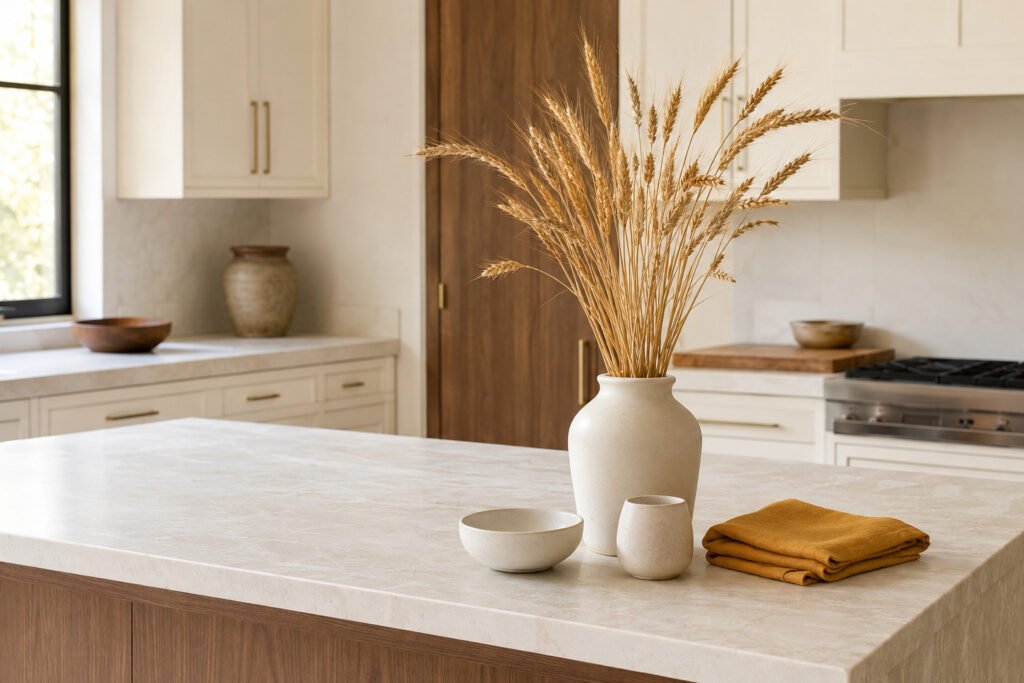
Fill a heavy ceramic vase with a loose bundle of dried wheat and place it on an island, breakfast table, or counter corner. The stems should be roughly one and a half times the height of the vase, which gives the arrangement presence without making it top-heavy. Pair it with cream stoneware and one mustard linen for a restrained harvest palette.
Wheat adds height and texture while using very little surface area. Place felt pads beneath a rough vase to protect stone or wood counters. If shedding becomes an issue, lightly mist the seed heads with unscented floral sealant outdoors.
5. Build an Autumn Pie Shelf
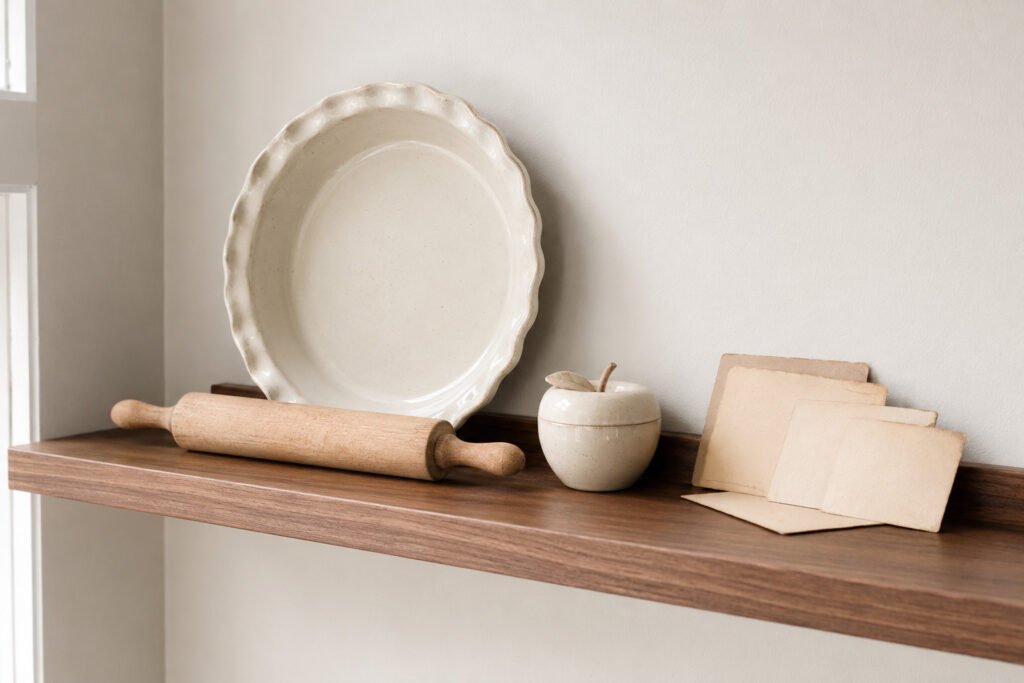
Turn one open shelf into a working baking display with a pie plate, a small rolling pin, an apple-shaped dish, and a few handwritten recipe cards. Lean the largest plate at the back, place the rolling pin horizontally in front, and keep smaller pieces grouped to one side. This layered arrangement creates depth without looking crowded.
Use the shelf for tools you genuinely bake with, not miniatures that only take up room. Items above a cooktop can develop a sticky film, so choose a shelf farther from grease and steam. Washable ceramic and finished wood will wear better than unfinished novelty pieces.
6. Fill a Bowl With Autumn Fruit
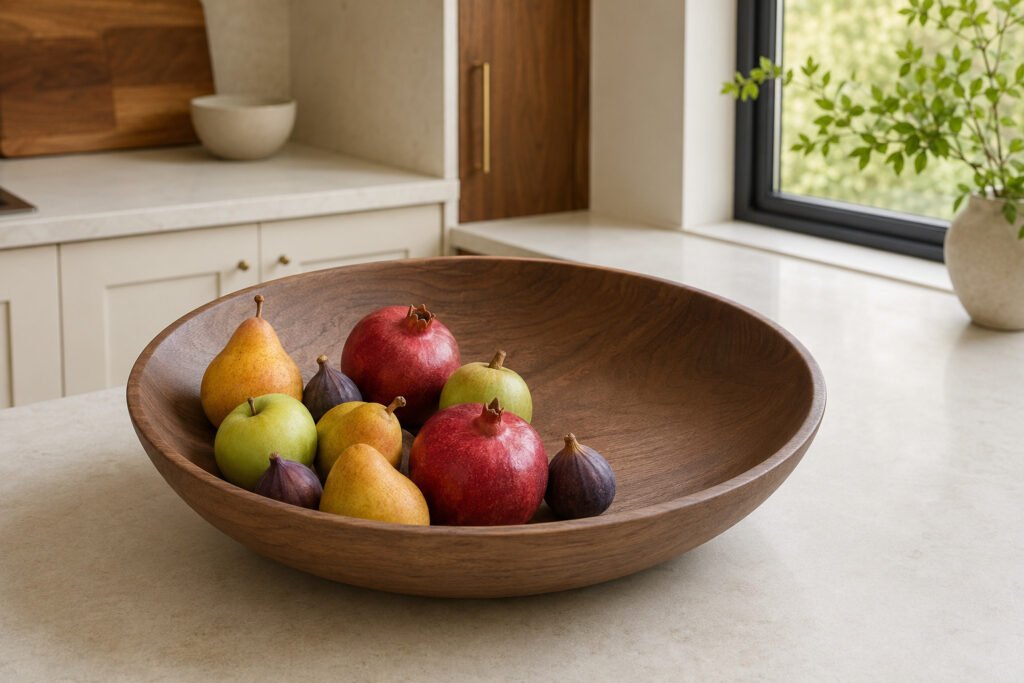
Choose a broad wooden or matte ceramic bowl and fill it with pears, figs, green apples, and one or two pomegranates. Varying the shapes creates a richer composition than a bowl of identical fruit, while burgundy, moss green, and muted gold read clearly as fall colors. Leave about one-third of the bowl visible instead of piling fruit into a tall mound.
This is edible decor, so it earns its counter space. Use a washable liner beneath delicate fruit and check the bottom layer often for bruising. In a small kitchen, a 10-inch bowl is usually large enough.
7. Display Vintage Orchard Artwork
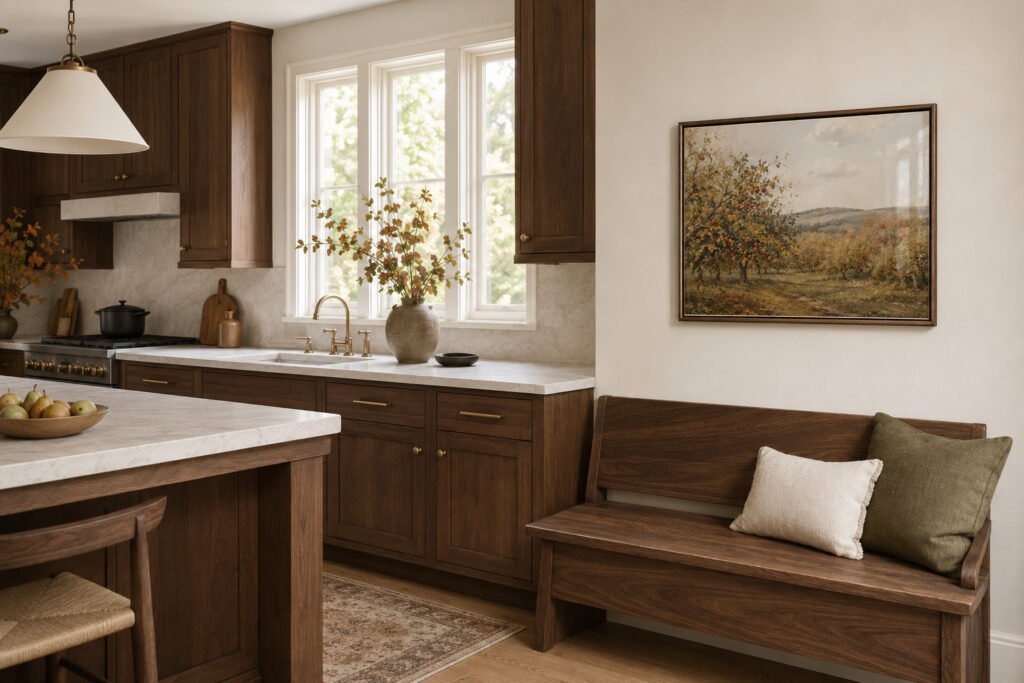
Hang a vintage-style apple orchard, mushroom, or countryside harvest print on an empty kitchen wall. For a single piece, aim to place its visual center about 57 to 60 inches from the floor. If it hangs above a console or breakfast bench, keep the bottom of the frame approximately 6 to 10 inches above the furniture.
A dark wood or aged-brass frame strengthens the autumn palette without adding another object to the counter. Use a glass-fronted frame where splashes are possible. Renters can choose a lightweight frame and picture-hanging strips rated for its exact weight.
8. Make a Sculptural Fall Branch Centerpiece
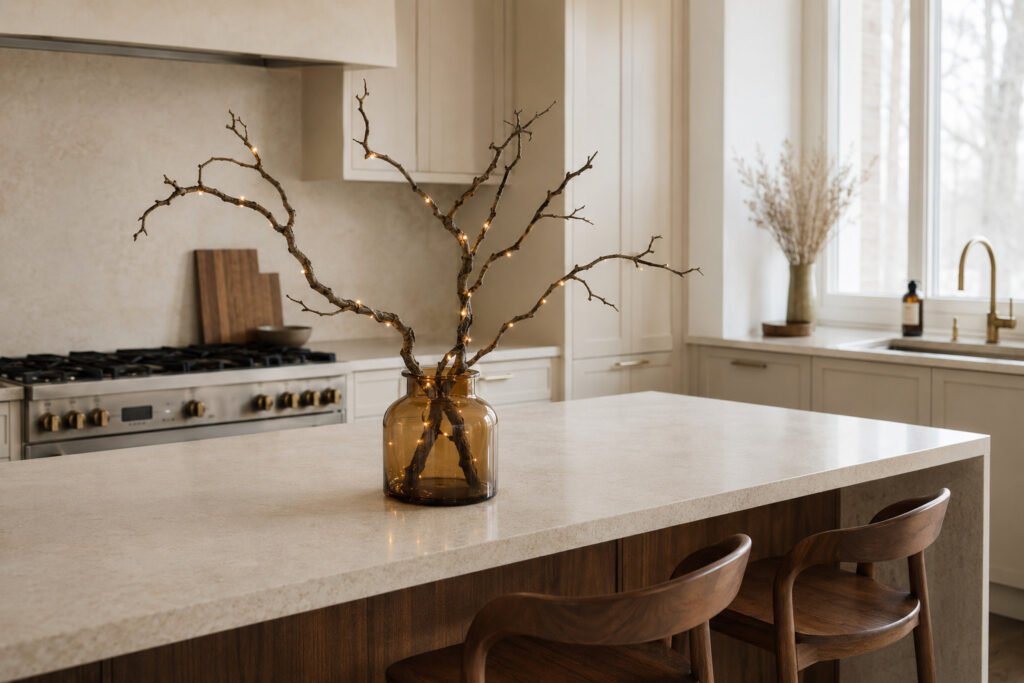
Place two or three twisted bare branches in a weighted amber bottle or matte stoneware vessel. Keep the widest part of the arrangement within the footprint of the island so sleeves and serving dishes do not catch on it. If the island has stools, position the arrangement off-center to preserve clear sight lines between seats.
The strong branch silhouette creates drama through shape rather than clutter. Tiny battery lights can be woven through the branches for evening, but choose warm-white wire lights with a hidden battery box. Avoid freshly cut branches that may leak sap or carry insects indoors.
9. Organize a Fall Spice Drawer
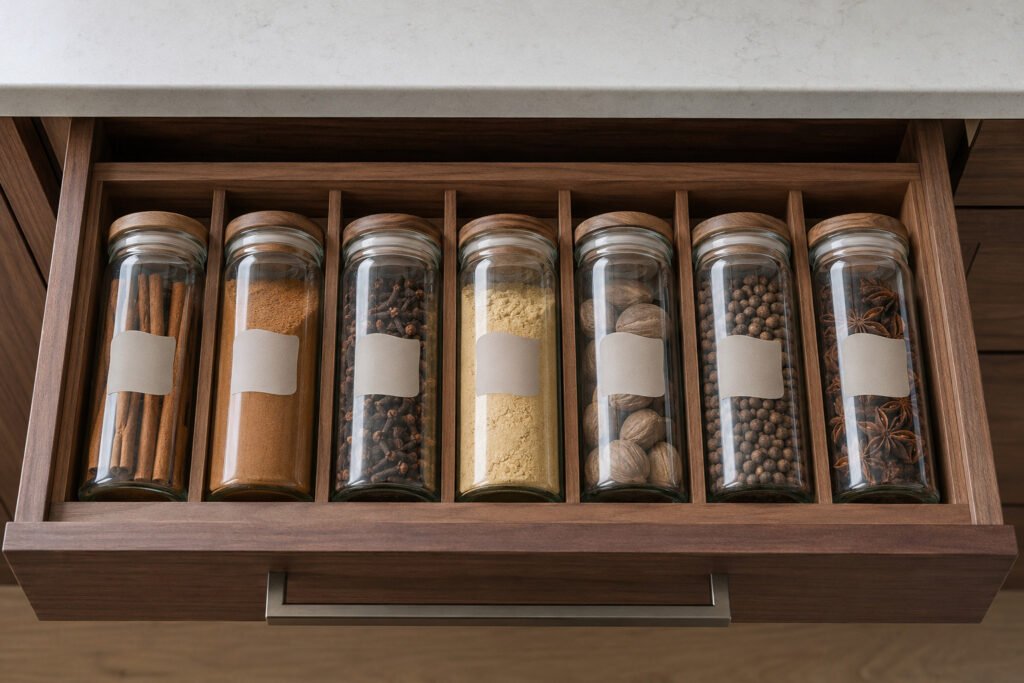
Transfer frequently used fall spices—cinnamon, cloves, ginger, nutmeg, allspice, and star anise—into matching airtight jars. Arrange them in a shallow drawer insert with labels facing upward, or place them on a narrow tiered shelf if drawer space is limited. Matching containers create rhythm, but identical labels matter more than expensive jars.
This hidden fall detail supports seasonal cooking without adding visible counter clutter. Buy only the quantities you can use while fragrant, and write purchase dates on the bottoms. Avoid bargain jars with loose lids; poor seals make spices fade quickly and can invite moisture.
10. Create an Autumn Mug Wall
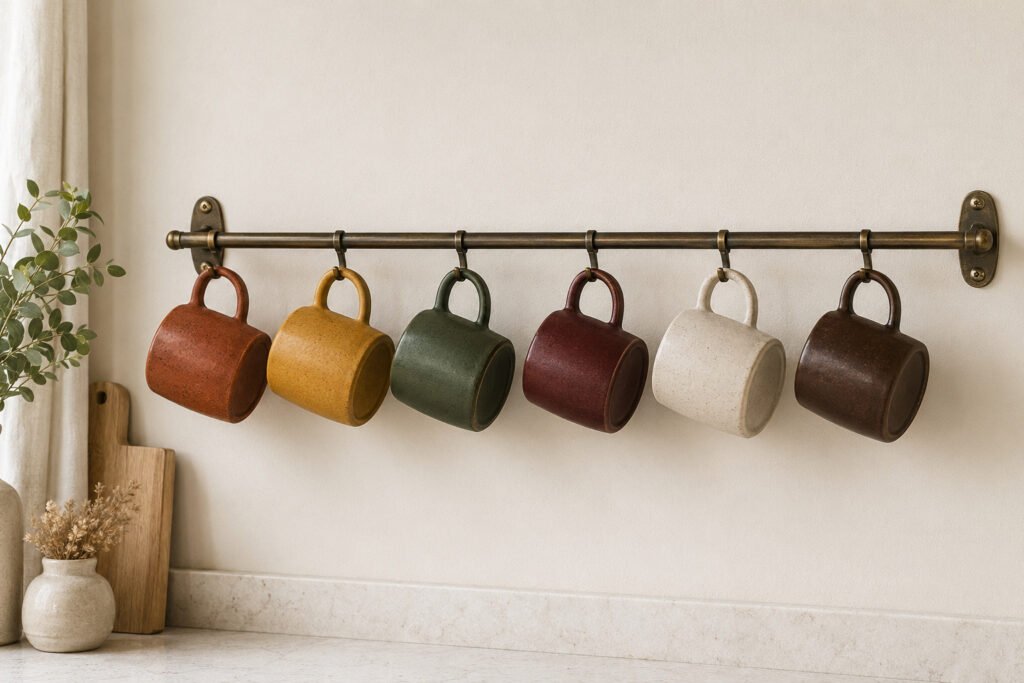
Install a short rail with sturdy hooks and hang mugs in rust, mustard, forest green, burgundy, and brown. Leave roughly 2 inches between mug bodies so handles do not knock together. Mount the rail into studs or use anchors suited to the wall material and the combined weight of filled-size ceramic mugs.
The repeated shapes make the mixed colors feel intentional, while the vertical display frees cabinet space. Keep the lowest mugs above the main splash zone and away from the range. If drilling is not possible, use a freestanding mug tree rather than adhesive hooks that may fail under ceramic weight.
11. Make a Fall Recipe Board
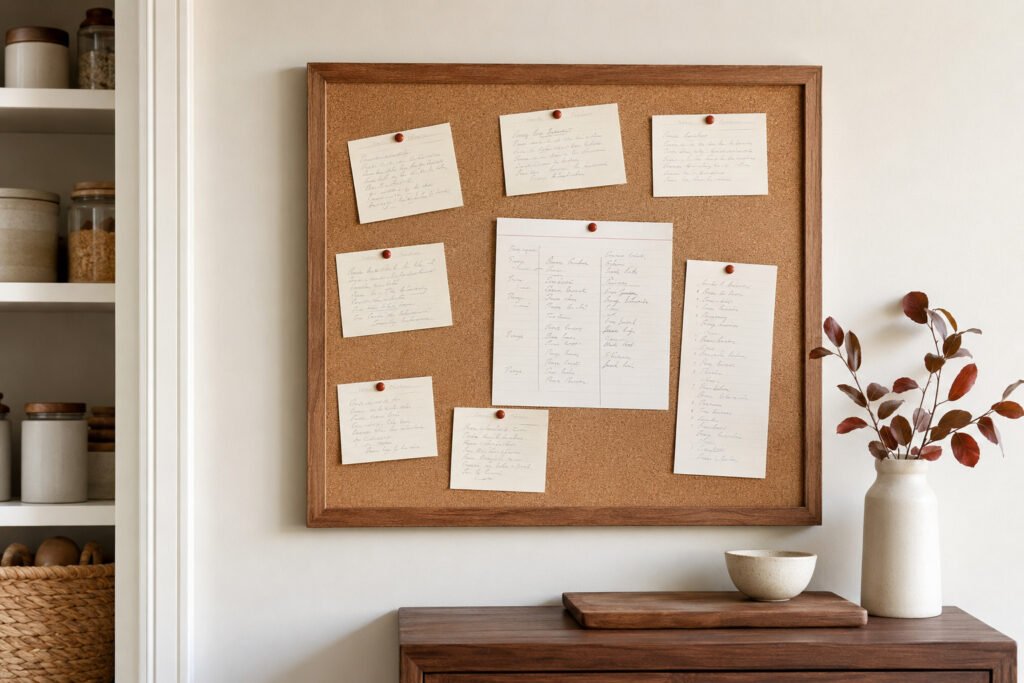
Use a wood-framed corkboard or metal memo board for a weekly menu, grocery list, and two seasonal recipes. Hang it near the pantry or breakfast area rather than beside the sink, where paper edges can curl from moisture. A board about 18 by 24 inches offers useful writing space without dominating a small wall.
Cream paper, black ink, and a few rust-colored pins are enough to make the board feel seasonal. Its changing content keeps the display active and useful. Limit the board to current information; old receipts and crowded notes quickly turn a styled feature into visual noise.
12. Arrange a Fall-Color Cup Shelf Display
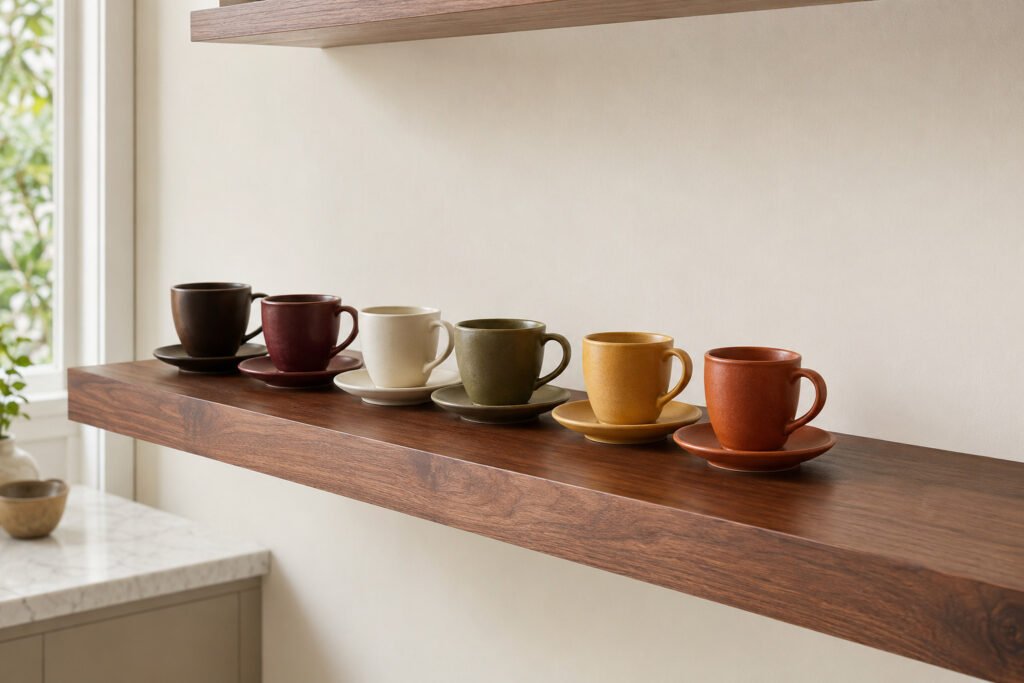
On an open kitchen shelf, arrange cups and saucers in burnt orange, mustard, olive, burgundy, cream, and chocolate brown. Unlike the hanging mug wall, this display should rely on short stacks and tonal groups. Place darker cups at the ends or lower level to visually anchor the shelf, with cream pieces between stronger colors.
Leave 20 to 30 percent of the shelf empty so every group has breathing room. Use cups that can go into your regular rotation, and avoid stacking delicate handmade pottery more than two pieces high. In a dim kitchen, favor cream and ochre over deep brown.
13. Add a Fall Herb-Drying Rack
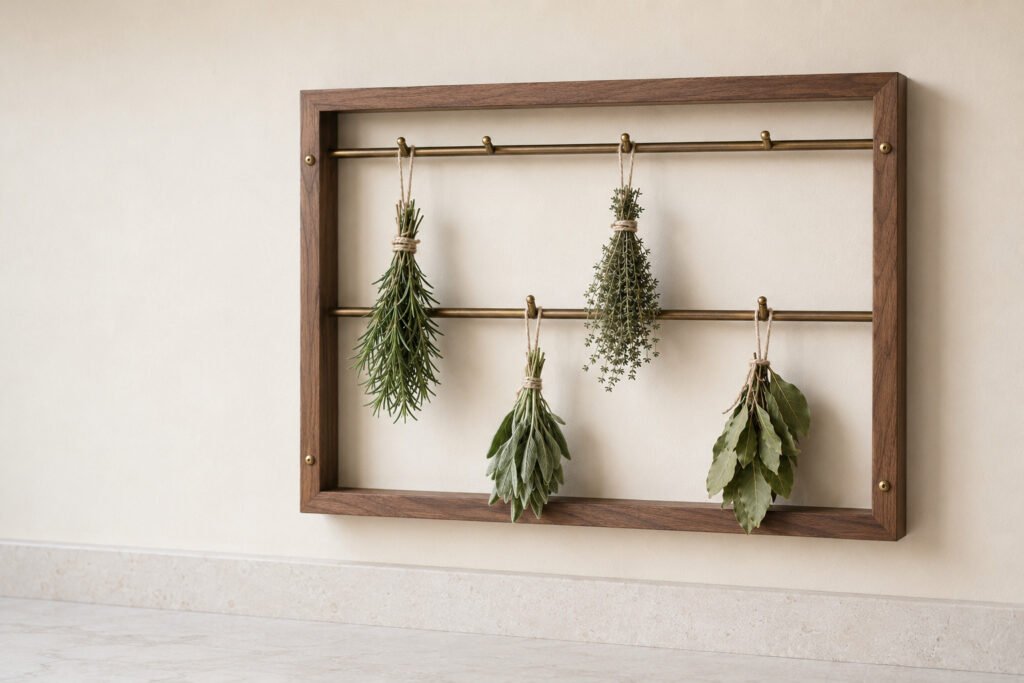
Tie small bundles of rosemary, sage, thyme, and bay leaves with cotton twine and hang them from a simple wood or brass rail. Keep each bundle narrow enough for air to move through it, and space them about 2 inches apart. Install the rack in a dry area away from the sink, range, and dishwasher steam.
The soft gray-green leaves provide a quieter fall palette than bright faux foliage, and the herbs remain useful once dry. Label the bundles if their shapes are similar. Before cooking, inspect and rinse herbs as appropriate, since anything displayed in an open kitchen will collect some dust.
14. Bring In Copper Harvest Details
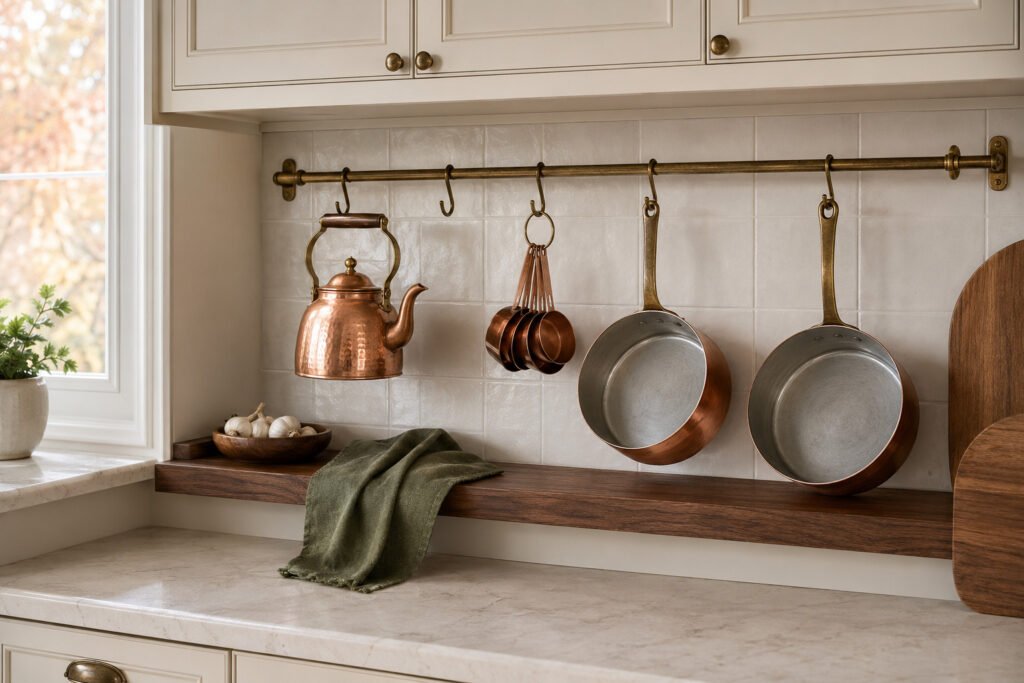
Display a copper kettle, measuring cups, or two well-shaped pans on a rail or open shelf. Copper reflects warm light and works especially well beside walnut, cream tile, and olive accents. Limit the display to a few functional pieces; an entire wall of shiny copper can feel busy in a compact kitchen.
Real copper develops a patina, while plated pieces may wear at the edges. Decide which look you prefer before buying. If you want lasting shine, expect regular polishing. Keep copper cookware used for food lined and maintained according to the manufacturer’s instructions.
15. Set Up an Autumn Tea Bar
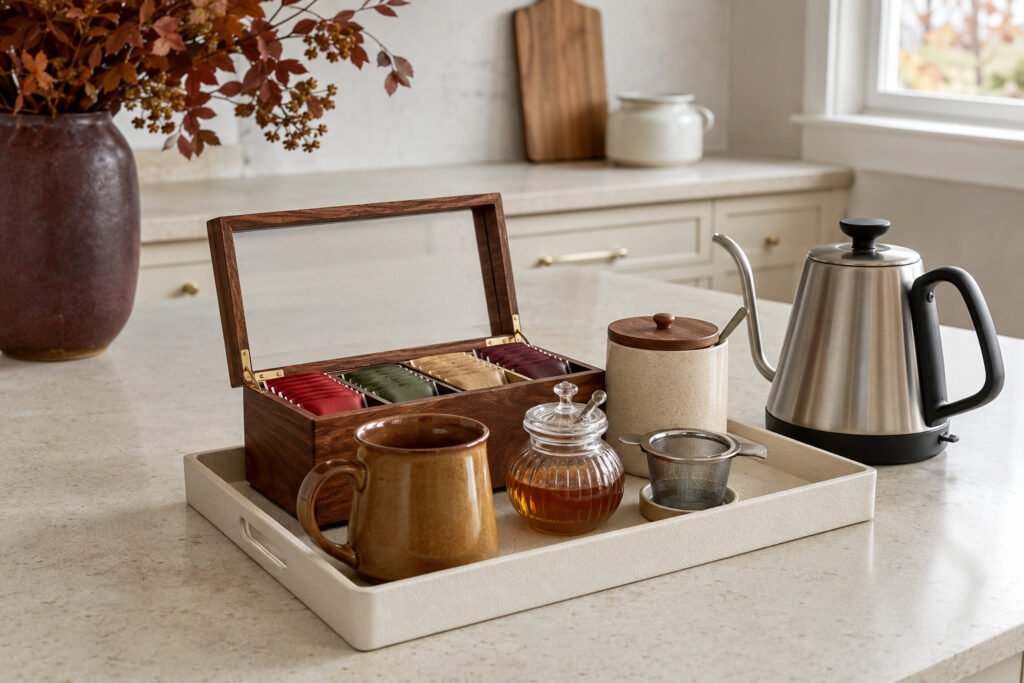
Arrange apple, cinnamon, ginger, and chai teas inside a divided wooden box. Add an amber mug, a small honey jar, a tea strainer, and a lidded container for spoons. Keep the complete setup on a washable tray close to the kettle but outside the steam path.
This station differs from the coffee corner through its softer amber-and-honey palette and slower evening function. Individually wrapped tea bags can remain on display, while loose tea needs airtight storage. If counter space is tight, dedicate one cabinet shelf and pull the tray out only when needed.
16. Style a Rustic Bread Station
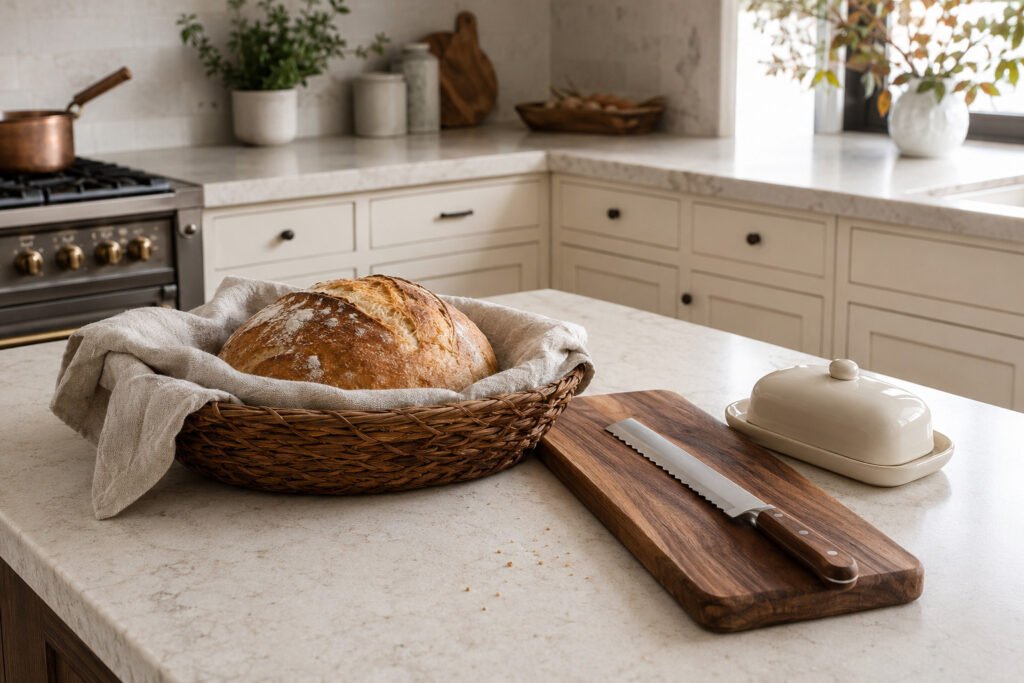
Line a low woven basket with washable linen and place it beside a wood cutting board, bread knife, and ceramic butter dish. Choose a basket only slightly longer than your usual loaf; oversized baskets waste counter space and tend to collect unrelated items. Warm oat, walnut, and cream tones create the look without printed fall motifs.
The mix of linen, wood, and crusty bread adds texture while supporting breakfast and meal prep. Shake crumbs from the liner daily and wash it regularly. Bread keeps better in a proper bread box, so use the basket for serving rather than long-term storage.
17. Create a Harvest Soup Station
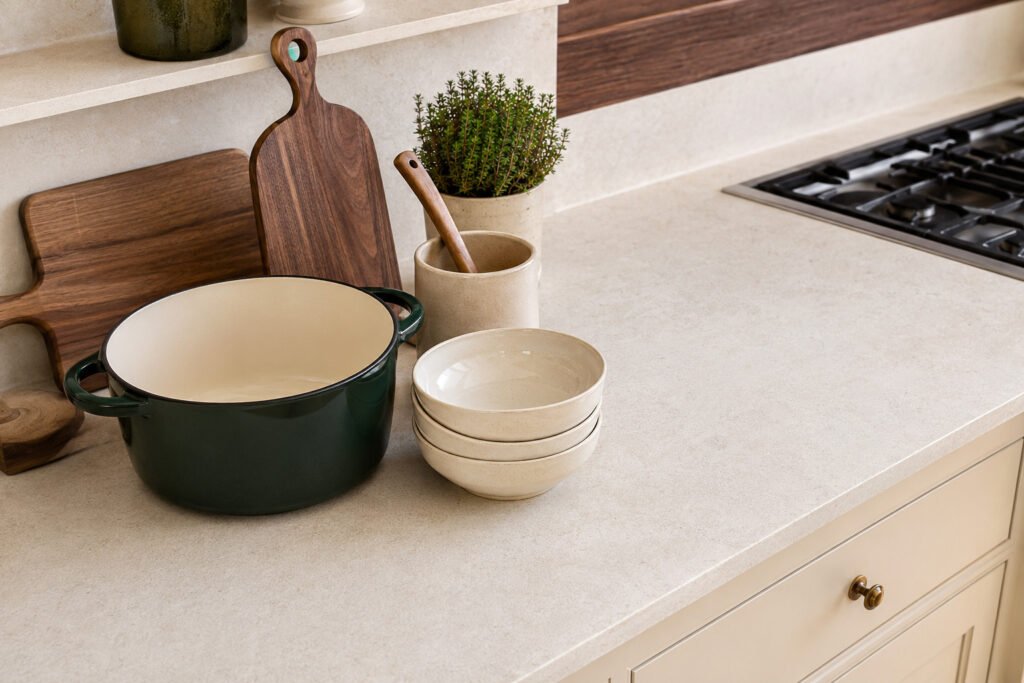
Group a Dutch oven, a stack of deep soup bowls, a wooden ladle, and a small pot of thyme near the cooking area. Choose one dark enamel color—oxblood, forest green, or warm navy—then let neutral bowls keep the arrangement grounded. Store the ladle in a wide ceramic crock so it can be lifted easily.
The substantial pot gives the corner visual weight and signals fall through real seasonal cooking. Maintain at least 12 inches of clear landing space beside the cooktop for hot pans. If the kitchen is small, display the pot on the stove only when it is clean and not in use.
18. Refresh the Fall Breakfast Nook
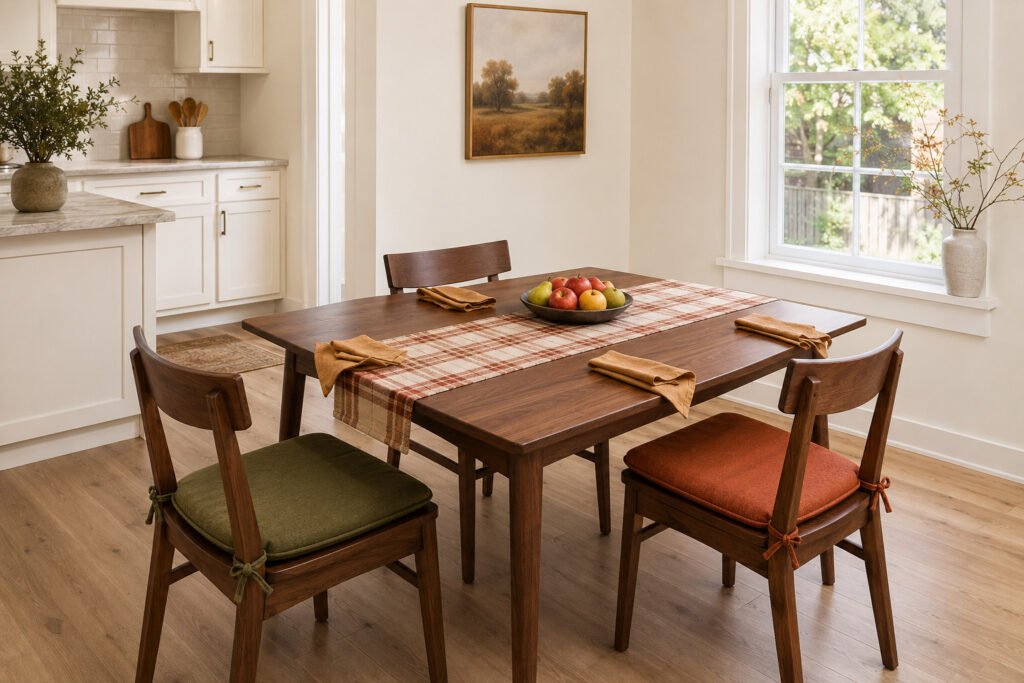
Dress the breakfast table with a rust-and-cream plaid runner, plain maple-toned napkins, and olive or burnt-orange seat cushions. Keep the runner narrow enough to leave room for plates—about one-third of the tabletop width is usually sufficient. A low bowl at the center preserves conversation and views across the table.
Textiles introduce more color than small accessories, so choose washable cotton or a durable performance blend. Ties help chair cushions stay aligned during daily use. Skip long tablecloths in tight nooks, where fabric can catch on knees and make sliding in difficult.
19. Arrange Fall Crockery on Open Shelves
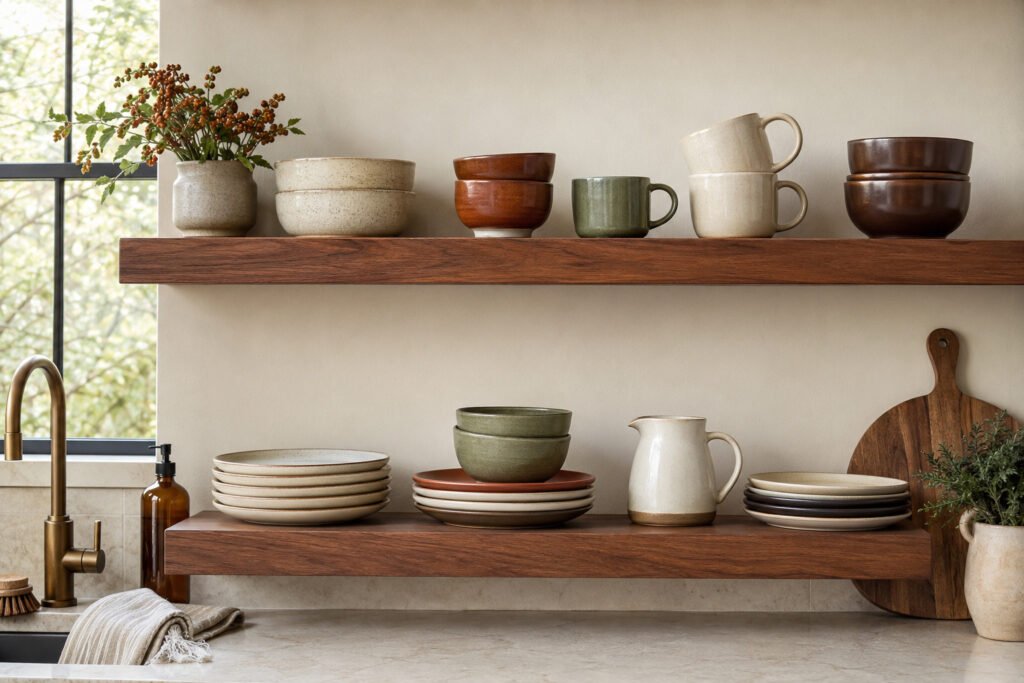
Group everyday plates and bowls by color, using cream as the base and smaller amounts of rust, olive, mustard, and brown. Repeat each accent color at least twice so no single piece looks accidental. Put heavy dinner plates on the lowest shelf and lighter bowls or pitchers above for safer handling.
Matte glazes soften bright daylight, while glossy pottery reflects light and can help a dark kitchen feel less flat. Keep frequently used pieces within comfortable reach. Open shelving looks best when it is edited, so move summer colors into a cabinet rather than stacking fall dishes in front of them.
20. Arrange Dried Hydrangeas and Burgundy Foliage
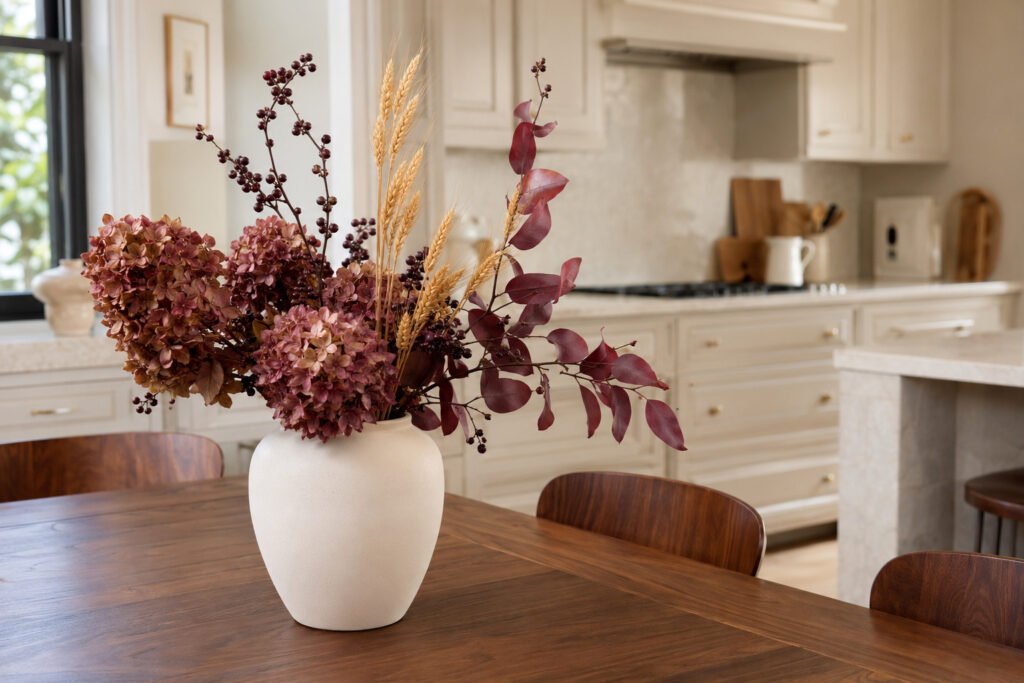
Combine faded hydrangeas, burgundy eucalyptus, a few wheat stems, and dark berry branches in a broad ceramic vase. Trim the arrangement into an asymmetrical shape, with one side slightly higher, and keep it below eye level if it sits on a dining table. Dusty mauve and wine tones offer a more sophisticated fall scheme than bright orange.
Dried flowers last through the season but attract dust and can shed near food. Place them on a side counter or breakfast table instead of a prep surface. A cool hair-dryer setting can remove light dust without crushing the petals.