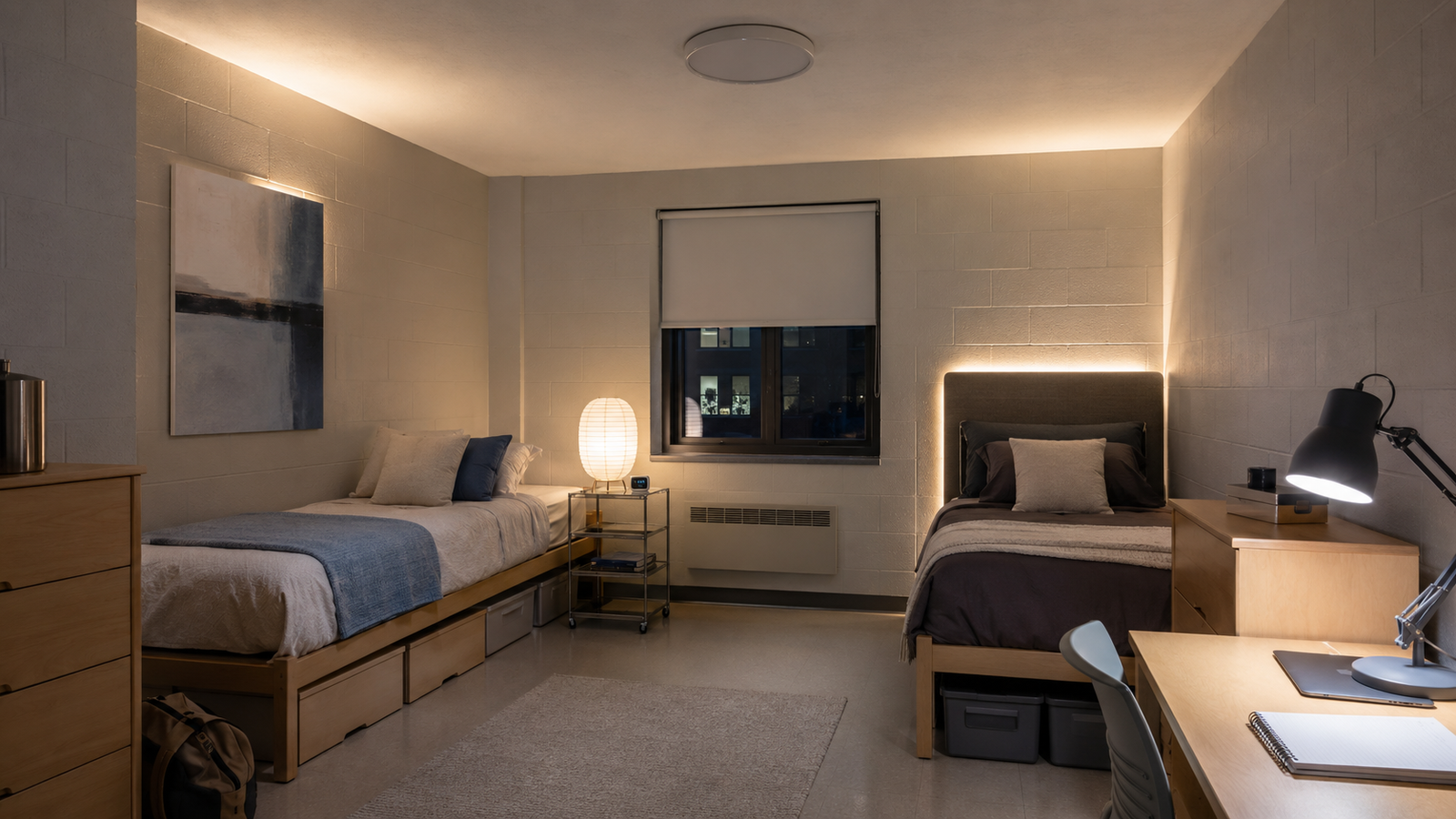
A typical dorm ceiling light does its job, but the flat, cool glare can make even a well-decorated room feel institutional. It’s also rarely flexible enough for studying at your desk, reading in bed, and relaxing while your roommate sleeps.
These dorm room lighting ideas replace that single bright fixture with smaller sources placed at different heights. By combining reflected ambient light, focused task lamps, and low nighttime lighting, you can make a small dorm feel comfortable and functional without losing valuable floor or desk space.
1. Bounce Light Off the Ceiling
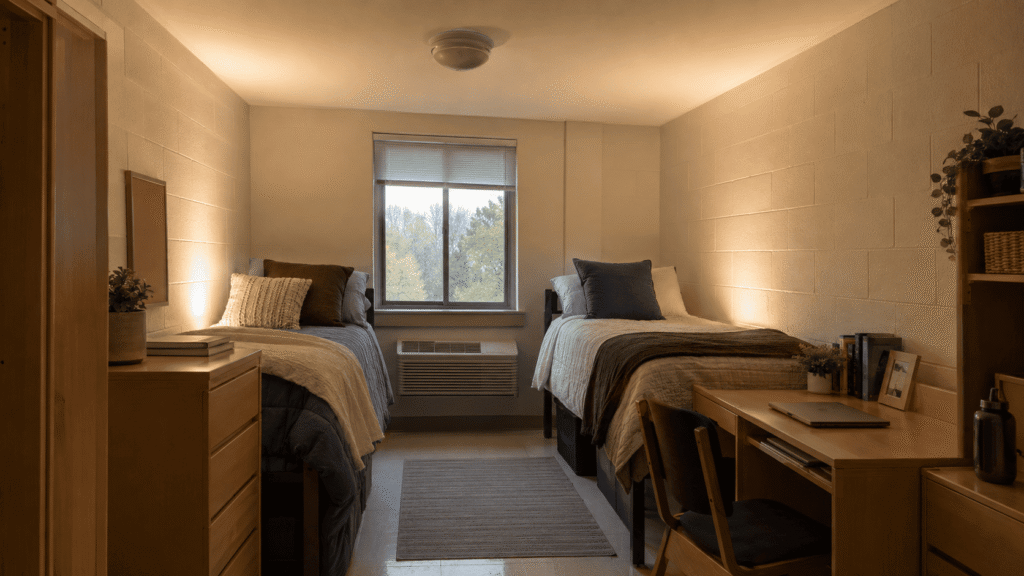
Place two compact LED uplights in opposite parts of the room: one behind a dresser and another behind a desk, mini fridge cabinet, or tall storage unit. Aim both fixtures toward pale walls or the ceiling rather than into the center of the room.
The reflected light spreads more evenly and produces fewer hard shadows than a lamp facing outward. Choose dimmable LEDs around 2700K to 3000K for evenings. Small puck-style or bar-shaped uplights are easier to conceal than traditional floor lamps and won’t take up precious floor space.
2. Add a Soft Paper Lamp
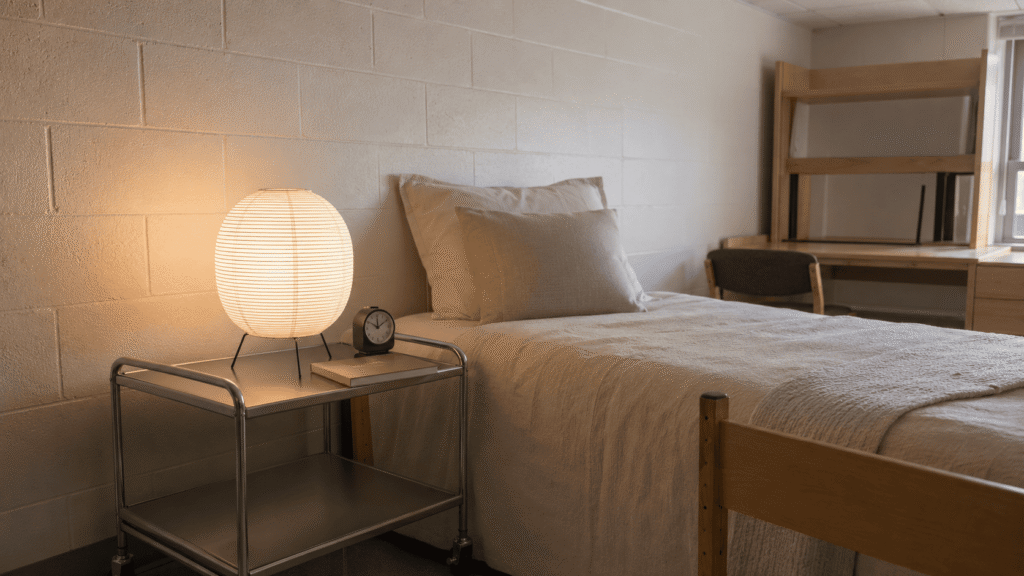
A sculptural paper lamp can provide the soft ambient glow normally missing from a dorm room. Look for an oval, cylindrical, or pleated shade that encloses the bulb, then place it on a narrow bedside cart, storage cube, or dresser.
Paper diffuses light across a wider area, so the lamp feels gentler than a small exposed-bulb fixture. Use only a cool-running LED bulb within the lamp’s listed wattage, and leave space around the shade. A warm-white bulb makes standard cinder-block walls feel less stark without turning the room noticeably yellow.
3. Mount Plug-In Bedside Sconces
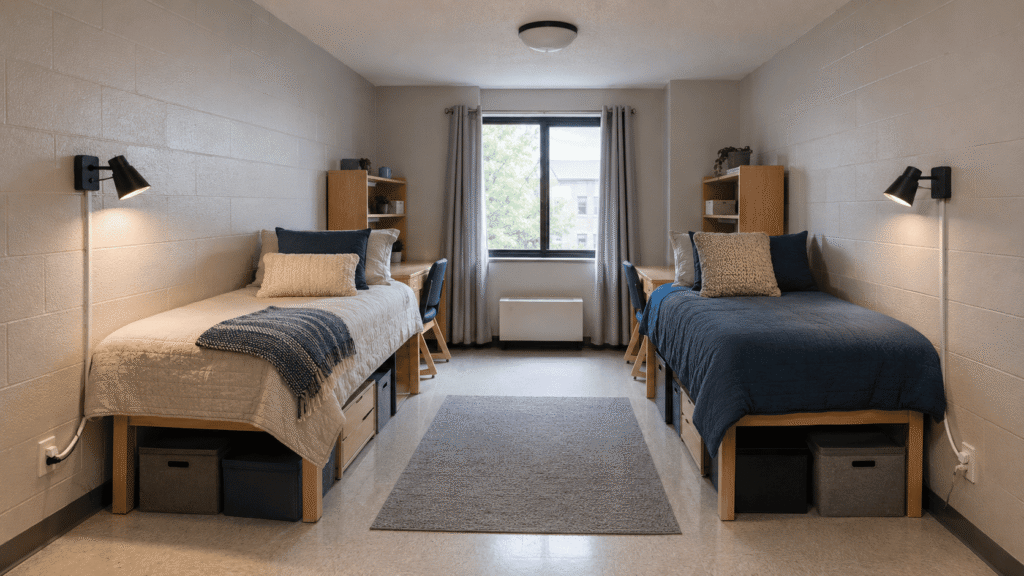
Lightweight plug-in sconces free up limited bedside surfaces and give a shared dorm a more organized appearance. Position one above each bed or slightly outside the headboard area, where the light can be reached without sitting up completely.
Use only mounting hardware approved by both the fixture manufacturer and your residence hall. Adhesive strips aren’t safe for every fixture or wall finish, so don’t improvise with a heavy metal sconce. Run the cords vertically through removable cord covers to prevent loose wires from crossing beds, desks, or walking paths.
4. Clip On a Reading Lamp
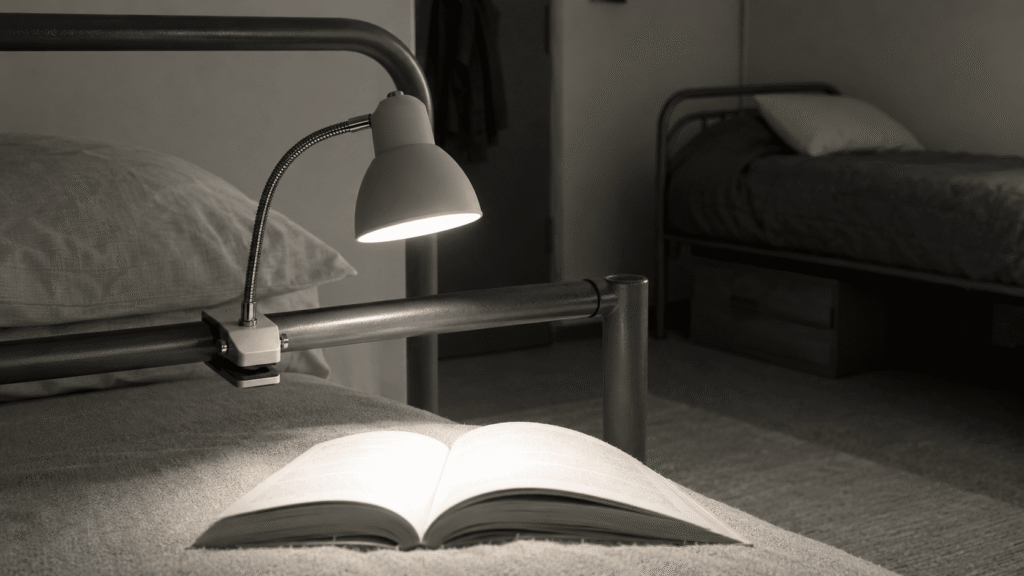
A compact clamp lamp is one of the most useful choices for a dorm because it can move as your layout changes. Attach it securely to a sturdy bed rail, headboard shelf, or desk hutch, making sure the padded clamp can’t slide or damage the finish.
Choose an articulated neck and an opaque shade that directs the beam toward your book. A lower-brightness LED is usually enough for reading at close range. Keeping the light focused helps you see clearly without filling the entire shared room or shining it toward your roommate’s bed.
5. Soften Your Desk Lighting
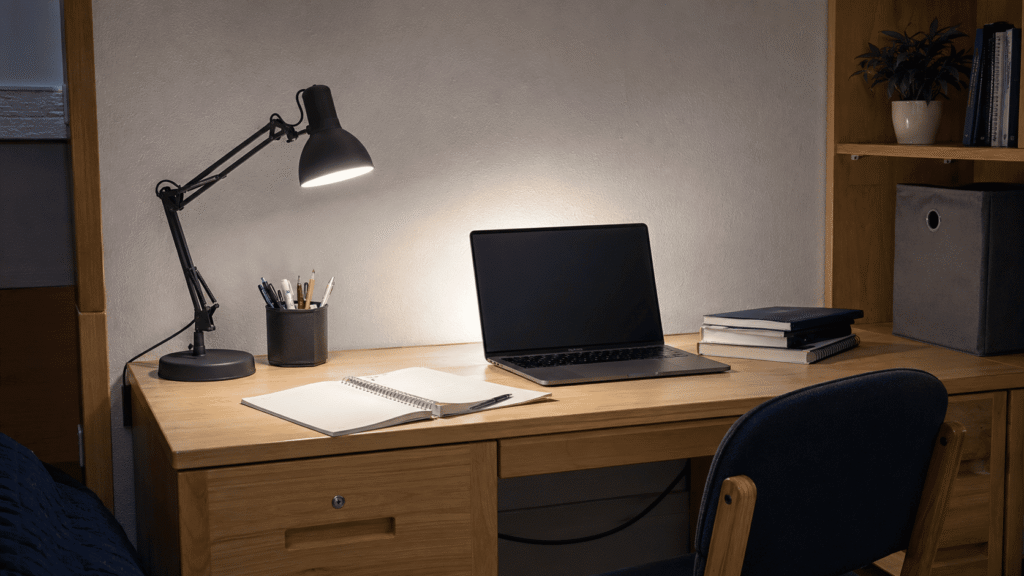
Instead of depending on the ceiling fixture while studying, position an adjustable lamp beside your non-dominant hand. A right-handed student should generally place the lamp on the left side of the desk, and a left-handed student should reverse the arrangement to reduce shadows while writing.
For laptop work, rotate part of the beam toward the wall behind the screen. This adds gentle background light and reduces the uncomfortable contrast between a bright display and a dark wall. A neutral 3500K to 4000K LED keeps notes clear without producing a blue-white institutional cast.
6. Light the Desk From Above
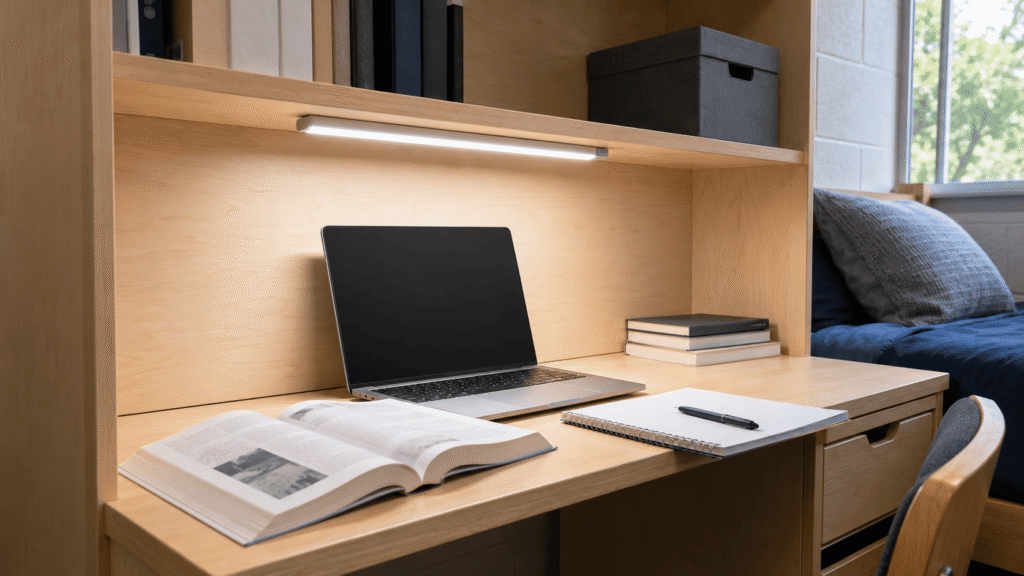
If a freestanding lamp takes up too much room, mount a slim rechargeable LED bar beneath the desk hutch or an existing upper shelf. A magnetic model with a removable mounting plate is easier to charge and reposition than a permanently attached strip.
Install it near the front underside of the shelf so the light reaches your notebook instead of illuminating only the back of the desk. Choose a bar with a frosted diffuser; inexpensive models with visible LED dots can create distracting reflections on laptop screens. Adjustable brightness is more useful than multiple saturated color settings.
7. Add a Wardrobe Sensor Light
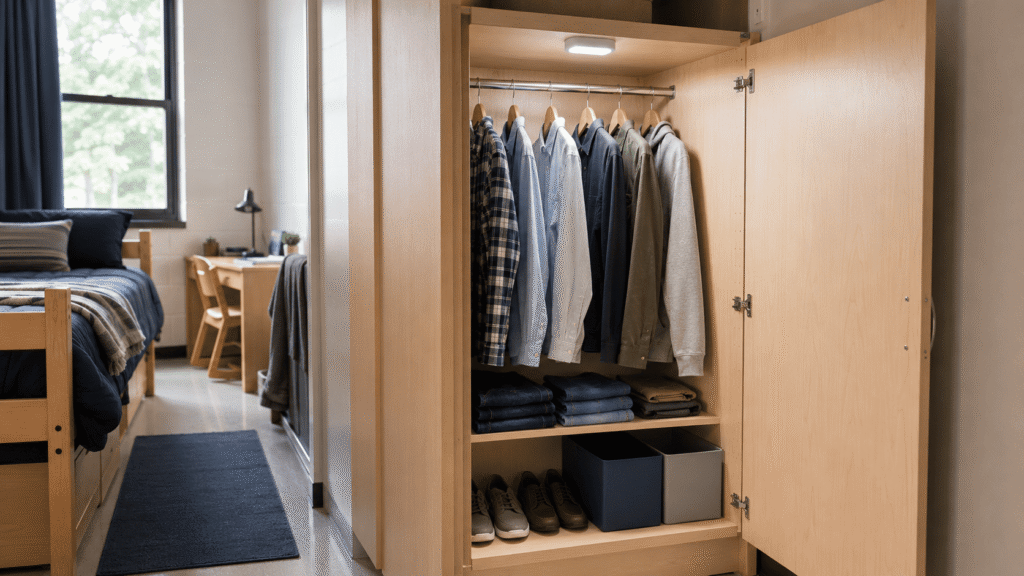
Dorm wardrobes and shallow closets often stay dark even when the ceiling light is on. Attach a battery-powered motion or contact-sensor light inside the top of the wardrobe, with its beam directed down over the hanging rail.
A diffused warm-white or neutral-white fixture will make dark clothes easier to distinguish without waking a roommate during an early class. Place the sensor where an opening door or your hand can activate it reliably. Before using adhesive, test a small hidden area because some dorm paint releases more easily than standard residential wall paint.
8. Highlight One Large Artwork
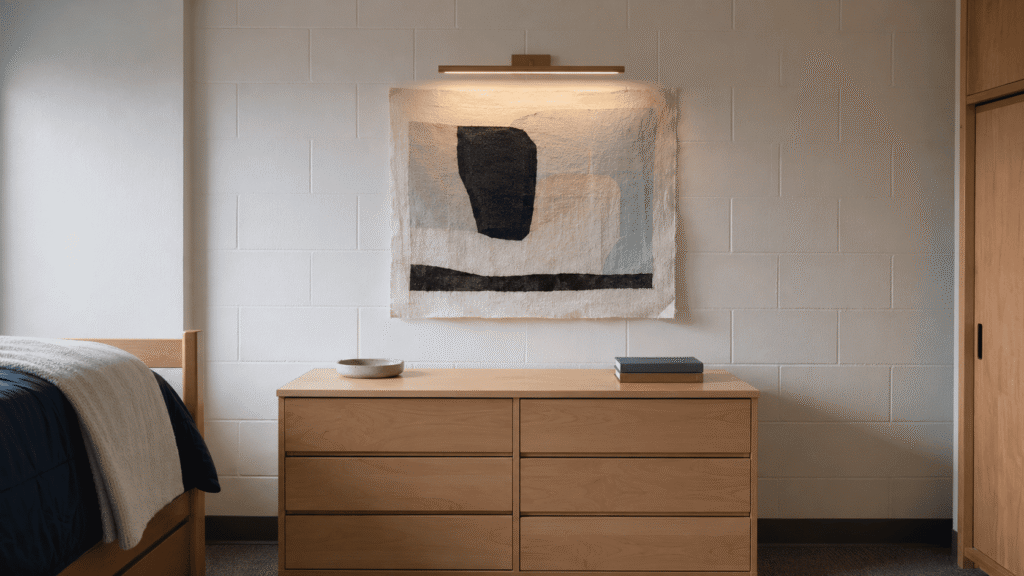
Use one rechargeable picture light to illuminate a large poster, framed textile, or lightweight art panel above the dresser. This creates a deliberate nighttime focal point without covering the walls in exposed wires or decorative light strands.
The fixture should be noticeably narrower than the artwork—roughly one-half to two-thirds of its width usually looks balanced. Aim it close to the surface so the glow stays concentrated instead of shining across the room. Choose removable mounting hardware rated for the fixture’s actual weight, and confirm that wall-mounted lights are permitted in your residence hall.
9. Glow Behind the Headboard
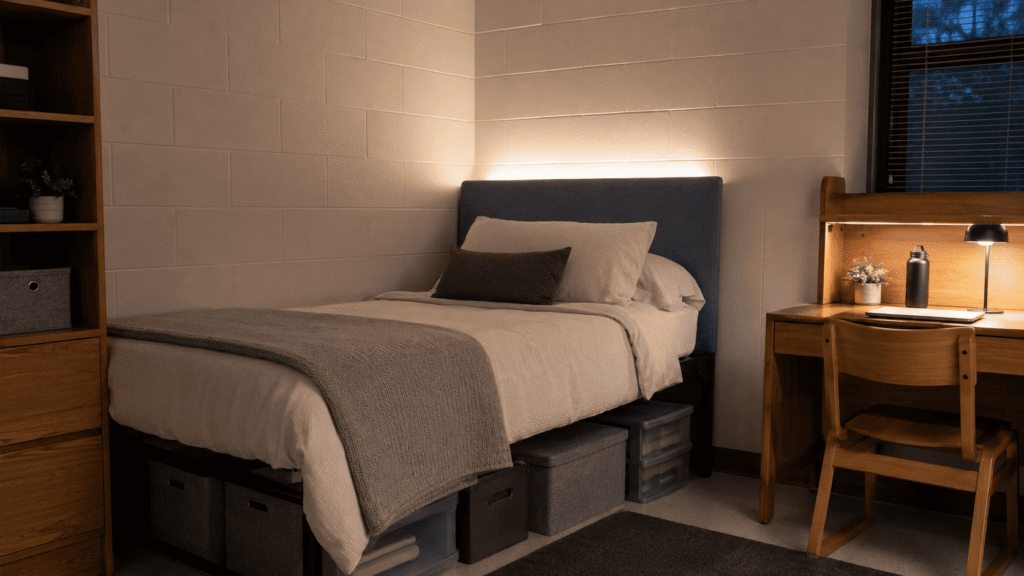
For a cleaner version of the familiar dorm LED look, conceal a dimmable light bar behind a raised headboard, narrow headboard shelf, or freestanding upholstered panel. The bulb or individual LED dots shouldn’t be visible from the doorway; you should see only a continuous wash of light on the wall.
Warm white is easier to live with than constantly changing rainbow colors, especially near the bed. Secure the fixture and cord to the freestanding panel when possible instead of applying long adhesive strips directly to painted cinder block, where removal can be unpredictable.
10. Light the Floor at Night
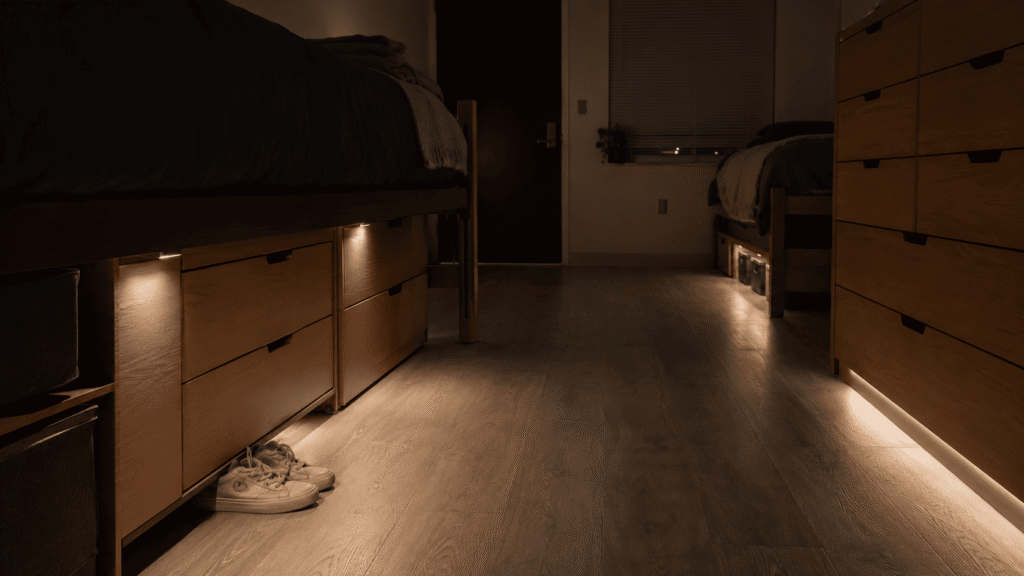
Finish the room with low-level motion lights beneath the bed frame and at the base of a dresser or storage unit. Direct the beams toward the floor so they reveal shoes, bags, and furniture edges without lighting the whole room.
Choose rechargeable fixtures with a dim amber or warm-white mode. Cool, high-output LEDs can feel surprisingly sharp when your eyes have adjusted to darkness. Keep each unit fully beneath the furniture and secure its cord or magnetic mount so nothing extends into the walkway. This creates a practical nighttime path while allowing your roommate to keep sleeping.