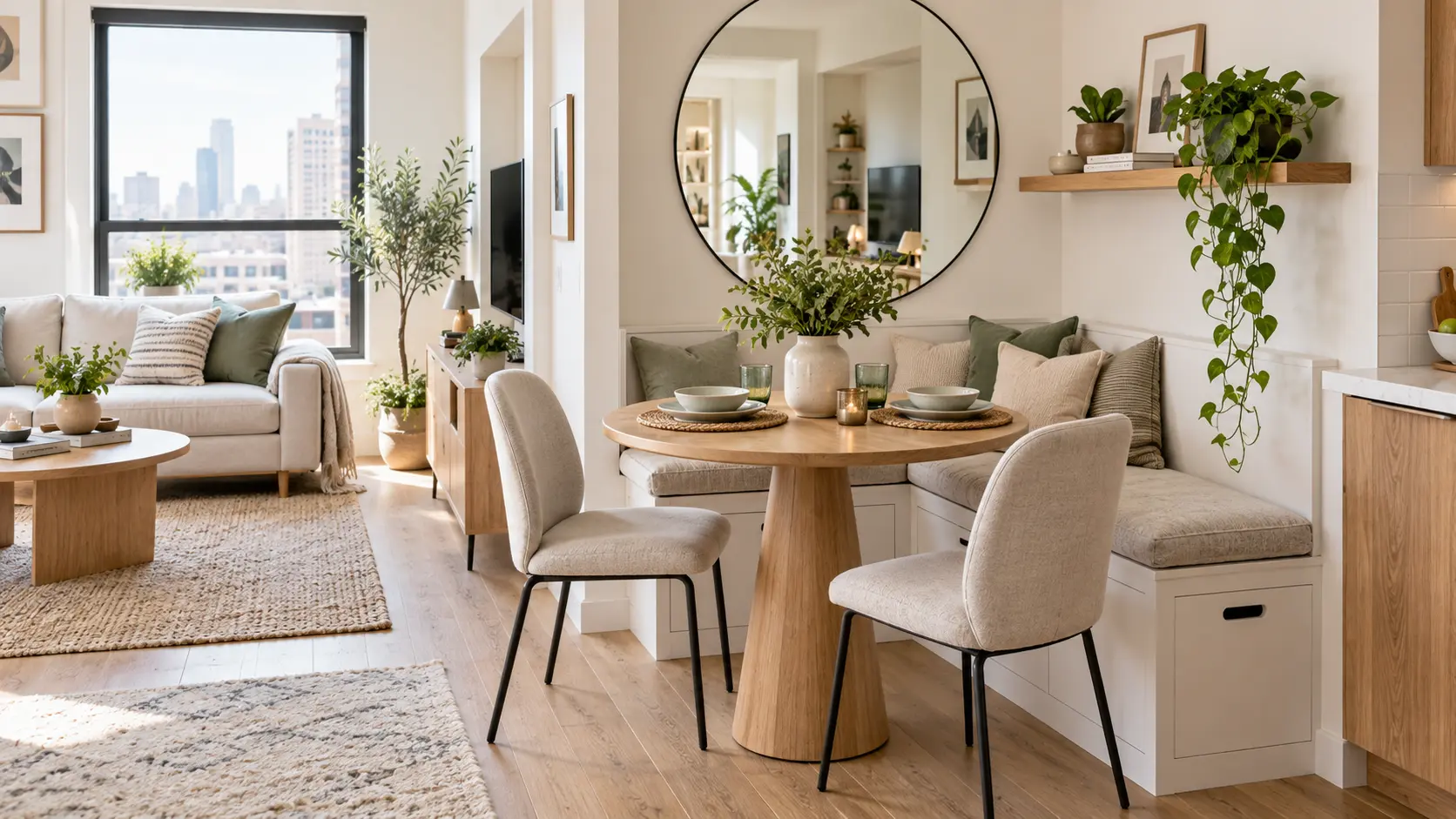
Designing a comfortable dining area in a small apartment can feel challenging, especially when every square foot matters. But limited space doesn’t mean you have to sacrifice style, functionality, or the joy of gathering around a table. With the right layout, space-saving furniture, and a few clever decorating choices, even an unused corner or narrow wall can become a beautiful and practical dining spot.
From foldable tables and built-in banquettes to multifunctional furniture and smart storage solutions, there are many creative ways to make a compact dining area work harder. The key is choosing pieces that fit your apartment’s proportions while keeping the room open, organized, and easy to move through. Whether you live in a studio, a rental, or a small city apartment, these 12 small apartment dining room ideas that save space will help you create an inviting dining area without making your home feel crowded.
1 Ceiling-Integrated Dining Canopy
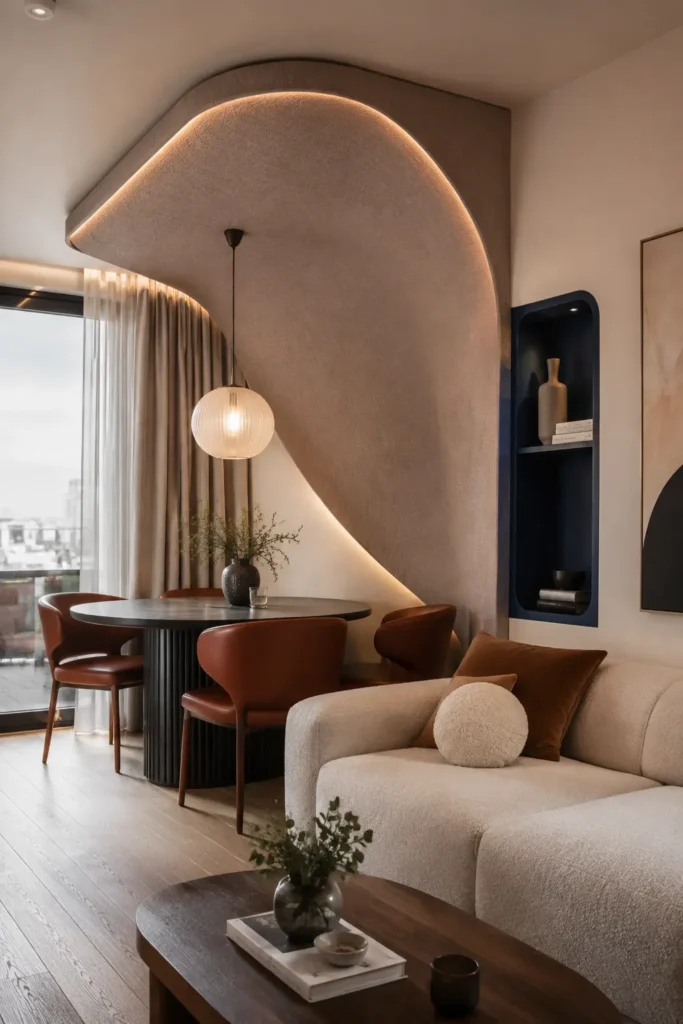
Frame the dining table with a curved canopy that descends from the ceiling like a soft architectural cloud. Cover the canopy in textured acoustic fabric or paint it in a warm neutral, then hide an LED strip around its edge. A compact oval table and rust leather chairs make the area feel intentional.
The canopy establishes a strong ceiling zone without using floor space. Keep the lowest point at least 7 feet above the floor, or higher if people will walk beneath it. In a low-ceiling room, use a painted arch or shallow curved bulkhead instead of a heavy suspended structure.
2 Open-Plan Kitchen Nook

In a small open-plan home, place a compact dining table between the kitchen and living area to create a gentle transition rather than a hard visual boundary. A 36- to 42-inch round table usually seats two to four people while keeping corners out of busy pathways.
Repeat one or two finishes across both rooms, such as pale wood, soft green upholstery, or warm white paint. This creates continuity without making everything match. Leave approximately 36 inches around the busiest side of the table when possible for comfortable movement.
3 Modern Monochrome Dining

A black pedestal table gives a neutral kitchen a strong focal point without adding four visually distracting legs. Its curved base also allows chairs to fit more easily around a small tabletop. Repeat black through lighting, cabinet hardware, or a faucet to make the choice feel connected to the room.
Keep the walls, floor, and larger cabinets light so the table doesn’t dominate the limited space. Matte black looks refined but shows dust, while heavily polished surfaces reveal fingerprints and fine scratches quickly. Textured upholstery offers a more forgiving everyday finish.
4 Soft Sage Breakfast Peninsula

Sage-green lower cabinets introduce color without making a small kitchen feel enclosed. Keep upper cabinets warm white and carry the countertop into a short peninsula with room for two stools. The contrast grounds the lower half of the room while preserving brightness near eye level.
Sage shifts noticeably with light: gray-green feels calm in cool daylight, while yellow-based sage looks warmer under evening bulbs. Test a large sample beside the countertop before committing. Use durable satin cabinet paint because completely matte finishes are harder to clean around handles and drawers.
5 Contemporary Round-Table Layout

A round dining table is useful where the kitchen, living room, and entry share one open area. Without sharp corners, it supports smoother movement and makes it easier to add an occasional extra chair. A 42-inch table generally accommodates four people without overwhelming a compact room.
Choose chairs with narrow backs that can tuck close to the table. Repeating the cabinetry color in the upholstery creates a visual link between the kitchen and dining zone. Avoid an oversized pendant above the table if it competes with nearby kitchen lighting.
6 Black Slat Nook
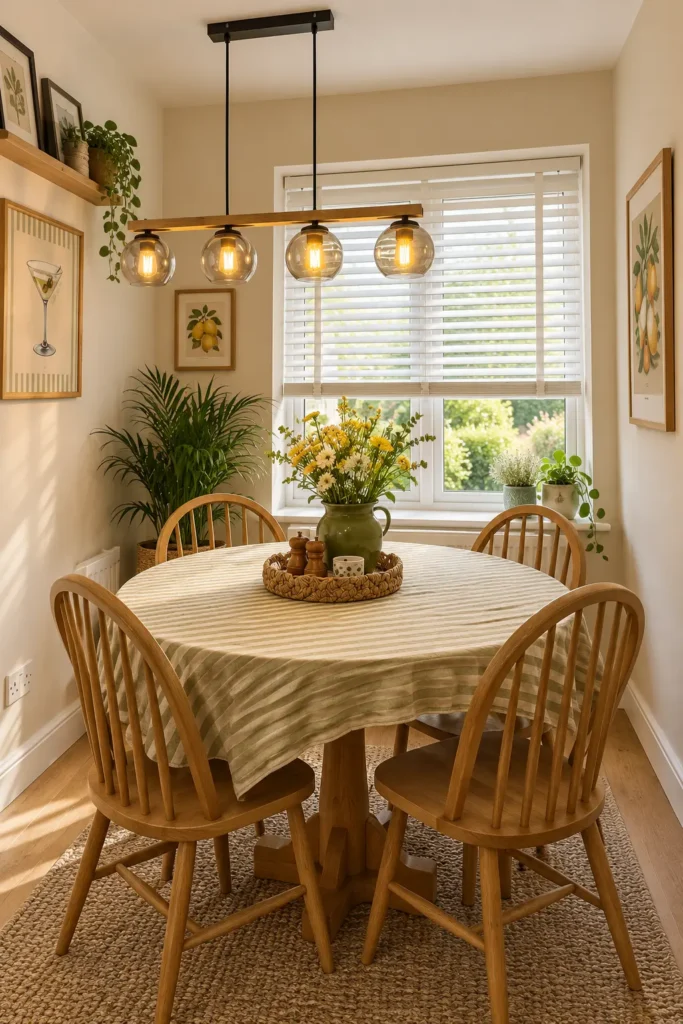
Dark vertical slats give a small dining corner depth and make the ceiling appear taller. Balance their visual weight with a cream upholstered bench, pale chairs, and a natural woven rug. A round black pedestal table connects the dark wall to the furniture without filling the nook with bulky shapes.
Install a shallow picture ledge with integrated warm lighting to break up the black surface. Dark walls can look rich in daylight but dull under a single cool bulb, so use warm LEDs around 2700K–3000K. Slatted panels also collect dust, making regular vacuuming with a brush attachment necessary.
7 Make a Retro Dining Nook
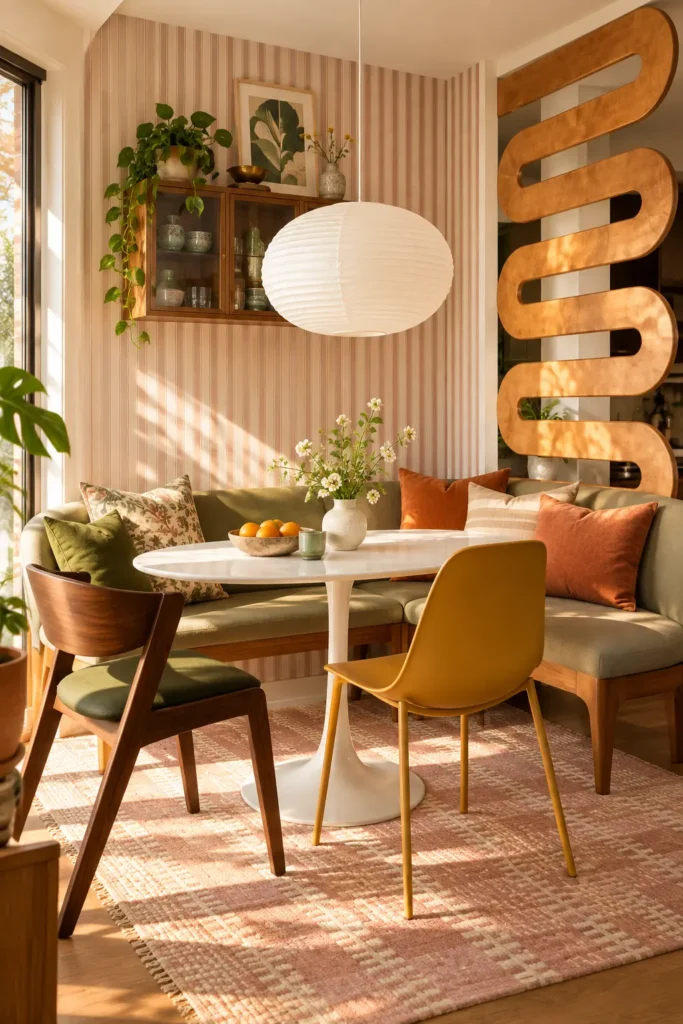
Turn a tight corner into a retro dining nook with an L-shaped bench, an oval pedestal table, and two lightweight chairs. Olive upholstery, mustard seating, rust cushions, striped wallpaper, and a paper pendant create warmth without relying on bulky furniture.
An oval table is easier to walk around than a rectangular one because it has no sharp corners. A comfortable built-in seat is usually about 18 inches high and 18–20 inches deep. If you’re building the bench, add hinged storage beneath it for table linens, seasonal dishes, or small kitchen appliances.
8 Light Scandinavian Dining Kitchen

Pale wood, warm white cabinetry, and simple rounded furniture help a small kitchen feel calm without becoming stark. Choose a light oak or ash dining table with visible grain, then add softly curved chairs in cream or oatmeal upholstery.
Natural-looking wood laminate is often more practical than low-quality veneer, which can chip and expose a noticeably different core. Keep accessories limited to useful objects such as a ceramic bowl, linen napkins, and a small branch arrangement. Black or bronze accents provide enough contrast to prevent the pale palette from appearing washed out.
9 Fluted Wood Dining Peninsula

Cover the dining-facing side of a peninsula with fluted wood panels to give the kitchen depth and rhythm. Vertical lines make the counter appear taller, while concealed LED lighting highlights the texture after dark. Use a matching dining table to carry the wood finish into the adjoining room.
Deep grooves collect dust and crumbs, so choose wider, shallow fluting near eating areas. Prefinished slat panels simplify installation but require accurate cutting around outlets and corners. Keep surrounding cabinetry plain so the textured surface remains controlled instead of competing with other patterns.
10 Window-Side Bistro Kitchen

Place a small round table beside the kitchen window to create a bistro-style breakfast area with natural light. A 30- to 36-inch table works well for two people, while a 42-inch version offers more flexibility for four. Keep the window ledge mostly clear so daylight can reach the room.
White furniture can make the arrangement visually lighter, but select a washable finish rather than chalky paint that stains easily. Hang the pendant approximately 30 to 36 inches above the tabletop, adjusting slightly for ceiling height and sight lines.
11 Sage Velvet Dining
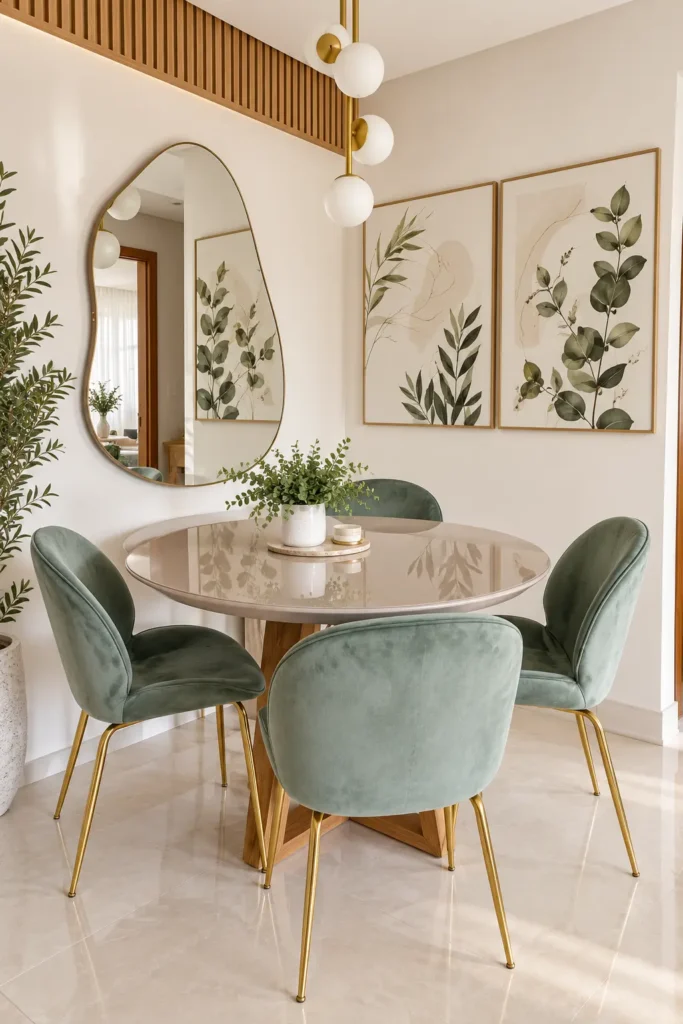
Sage velvet chairs give a compact dining space color while remaining quieter than emerald or navy. Pair them with a glossy warm-gray oval table, brushed-brass legs, and an organically shaped mirror. Two restrained botanical prints reinforce the green palette without making the room feel themed.
Velvet reflects light differently depending on the direction of its pile, so the chairs may look darker from one angle. It also shows pressure marks more readily than textured upholstery. Choose performance velvet if children or pets use the room. A sculptural globe pendant adds light at several heights without needing additional tabletop accessories.
12 Keep the Palette Light
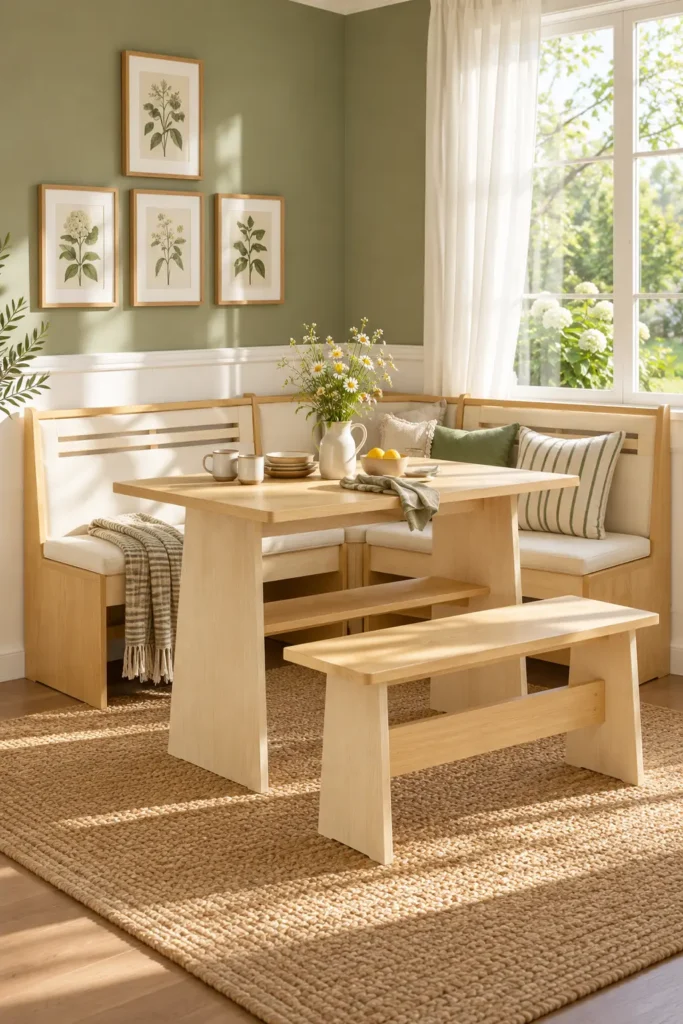
Pale oak, creamy upholstery, and soft olive walls can make a breakfast nook feel open without making it look plain. Place built-in benches against two walls, add a slim rectangular table, and use a backless bench that can tuck underneath when it isn’t needed.
This arrangement keeps the center of the room visually clear and provides more seating than individual chairs. Use removable cushion covers because breakfast areas collect spills and crumbs quickly. Instead of genuine jute, which can be difficult to clean, choose a flat-woven indoor-outdoor rug with a similar natural texture.