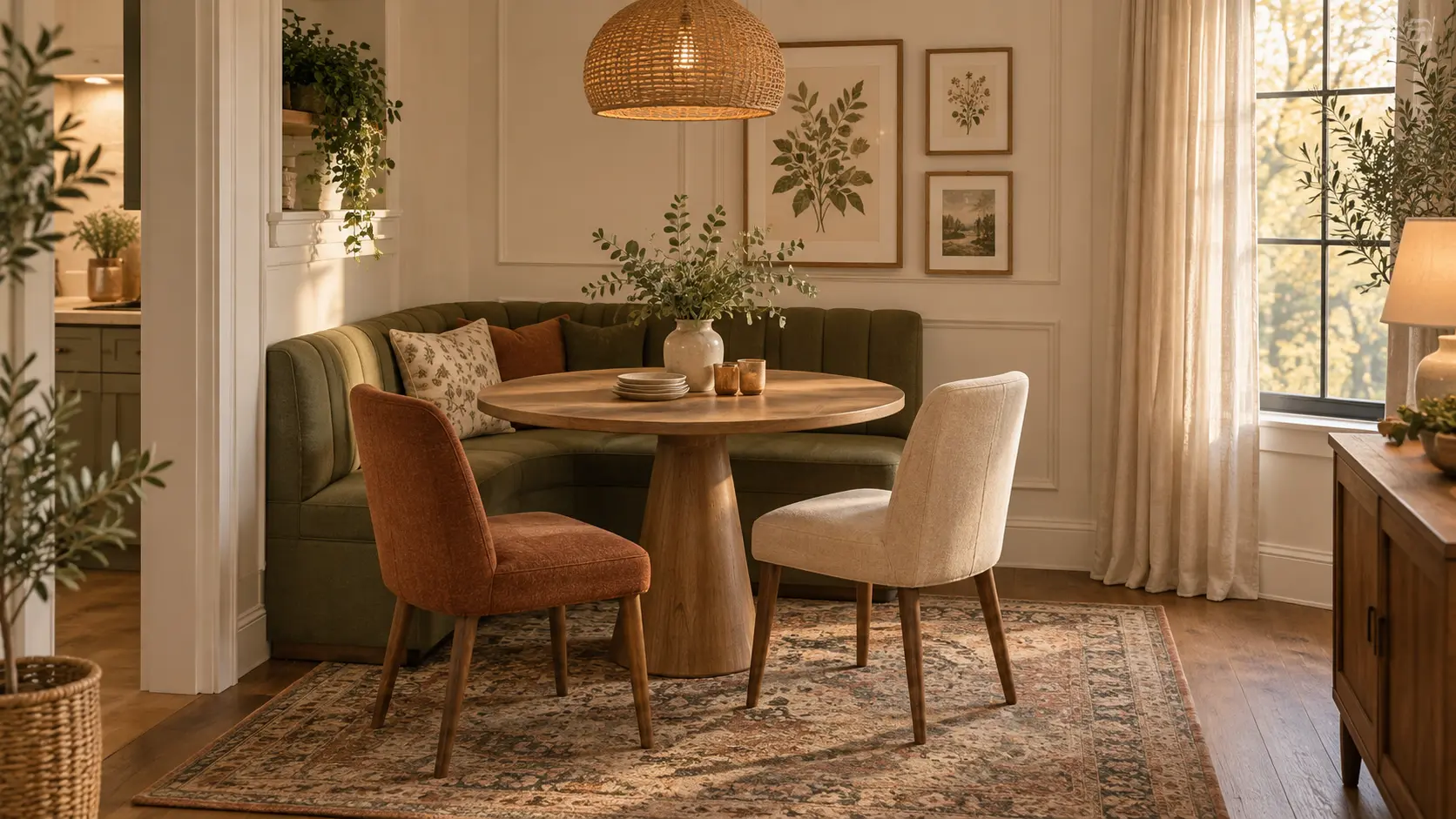
A small dining room can feel cold or crowded when the furniture is too large, the lighting is harsh, or every wall competes for attention. The solution isn’t adding more decor—it’s choosing pieces that improve comfort without blocking movement.
These 12 Cozy Small Dining Room Ideas for a Warm Look combine practical layouts, warm colors, soft materials, and space-saving furniture. From curved banquettes to cottage-style breakfast nooks, each idea is designed for real homes where dining, working, and everyday living often happen in the same compact space.
1. Add a Curved Banquette
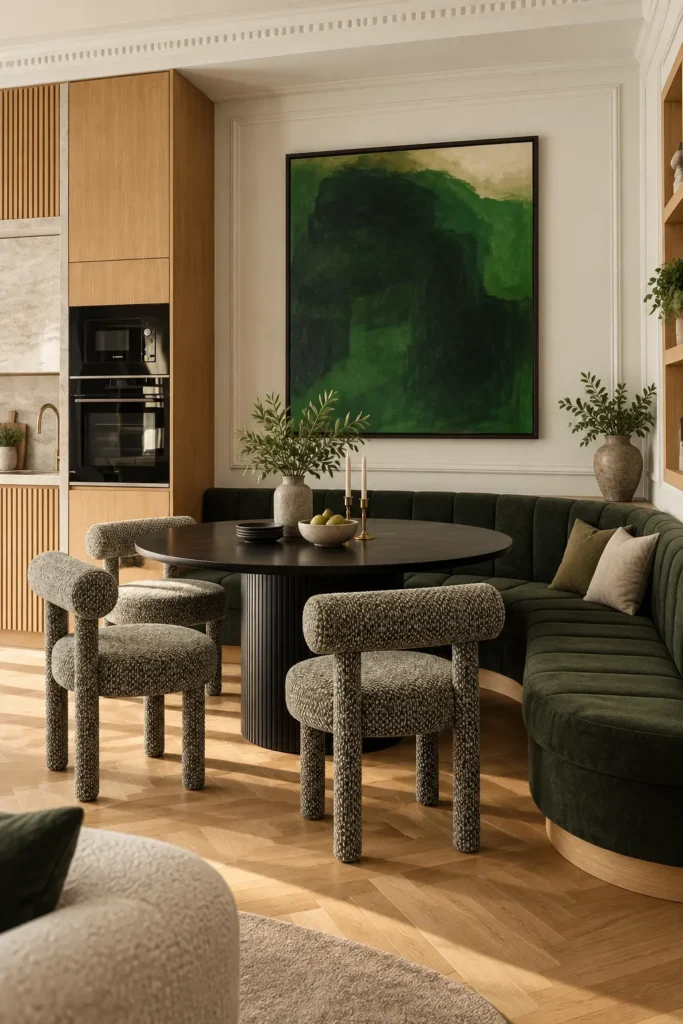
A curved banquette uses an awkward corner more efficiently than several freestanding chairs. Choose deep olive or forest-green upholstery and pair it with a round black pedestal table. The dark colors make the nook feel intimate, while warm oak cabinetry and cream walls keep it from looking heavy.
A pedestal base gives everyone more legroom and makes it easier to slide along the bench. Leave about 30 inches behind any loose chairs where people need to walk. For easier maintenance, choose a textured performance fabric instead of velvet, which often shows fingerprints and pressure marks.
2. Warm Up With Natural Wood
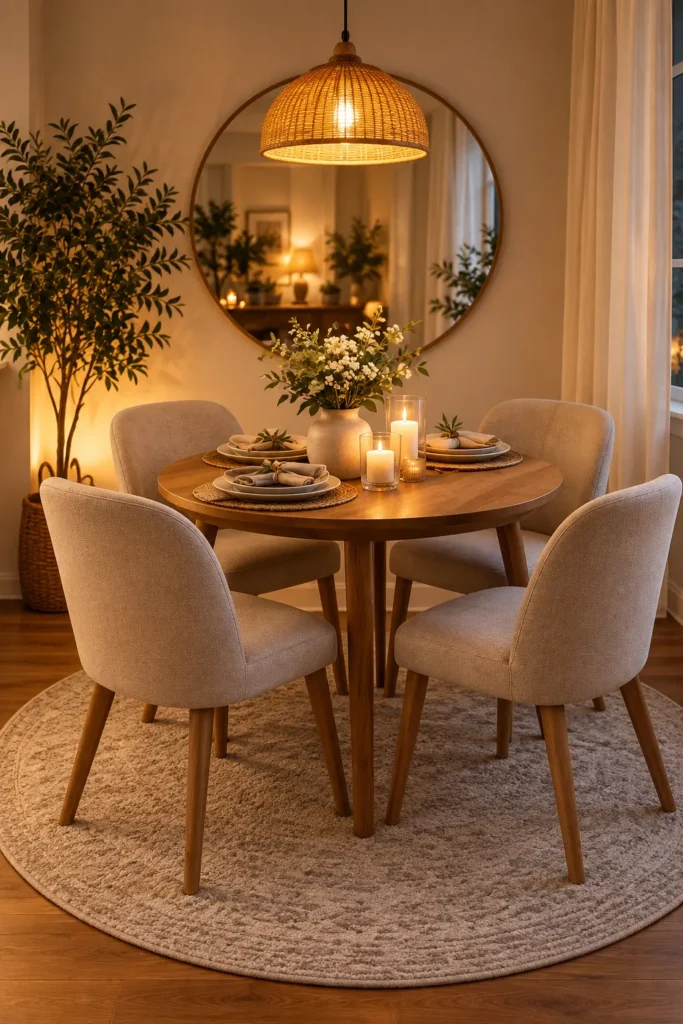
A round oak table instantly softens a small dining room because it introduces warm color without requiring extra decoration. Surround it with four compact beige chairs, then repeat the table’s shape with a round rug and wall mirror.
Curved furniture improves circulation by removing sharp corners from narrow walkways. Make sure the chairs fit beneath the tabletop and don’t have oversized arms. Your rug should extend approximately 24 inches beyond the table so the chairs remain on it when pulled out. A washable wool-look rug provides softness without the maintenance or price of genuine wool.
3. Mix and Match Chairs
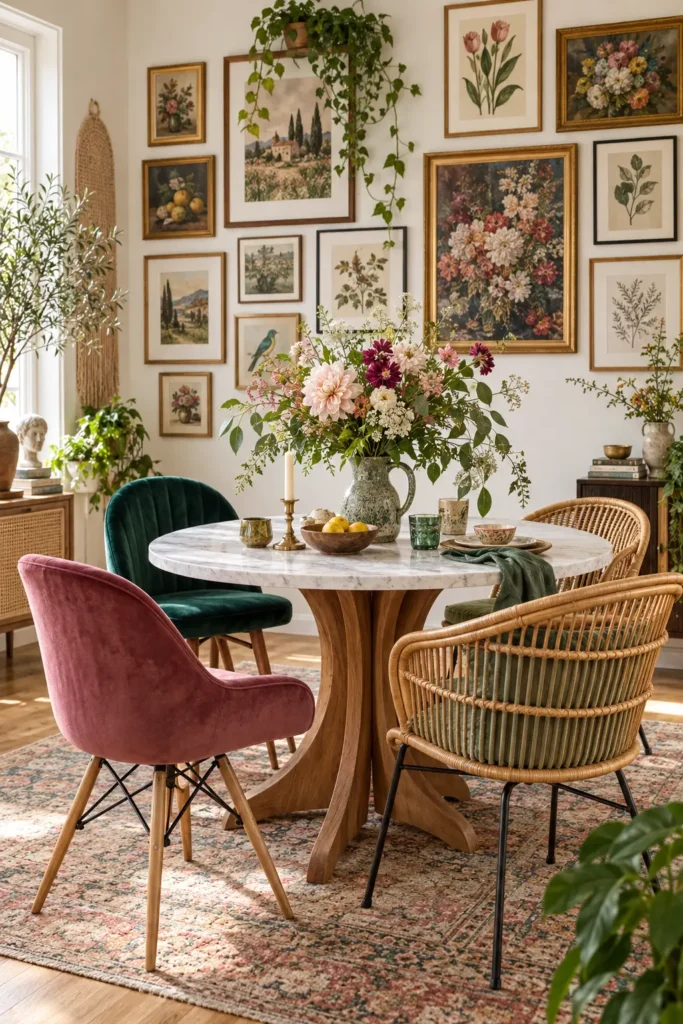
Mismatched dining chairs can make a small room feel collected and personal. Try combining emerald velvet, muted rose upholstery, and natural rattan around a round marble or marble-look table. Keep the chair backs relatively low so the arrangement doesn’t overwhelm the room.
The chairs don’t need to match, but their seat heights should remain within about one inch of each other. Repeating warm wood legs or muted colors will connect the different designs. If real marble is too heavy or expensive, porcelain and quartz can provide a convincing finish with easier care.
4. Anchor the Room With a Bold Rug
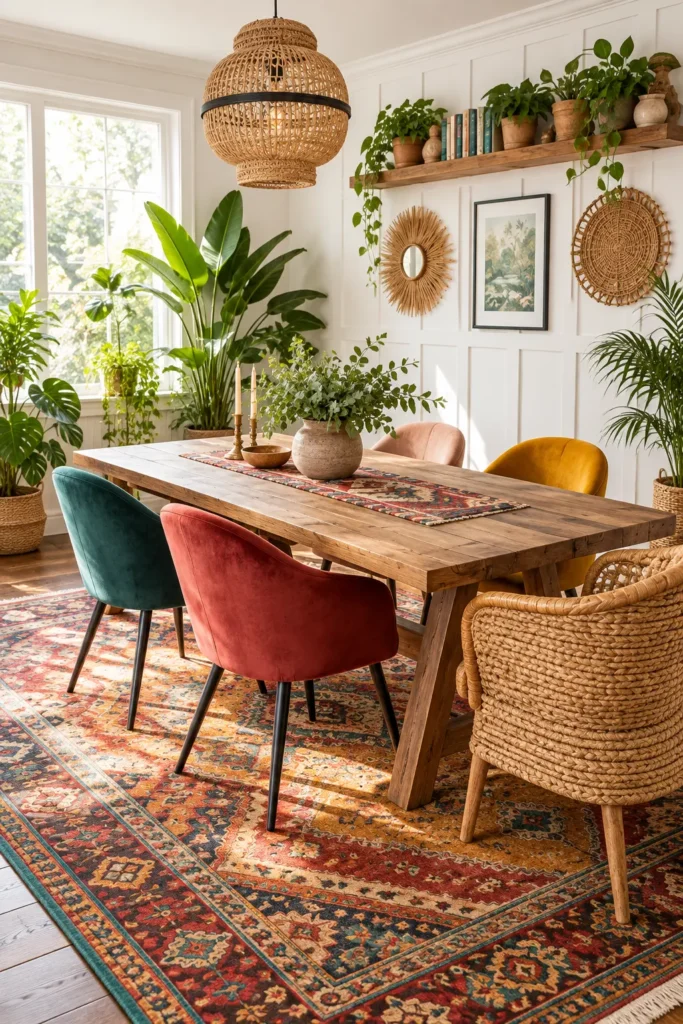
A colorful vintage-style rug gives mismatched seating a shared visual foundation. Pair a rustic wood table with chairs in rust, mustard, teal, and woven natural fibers. The rug connects these colors while clearly defining the dining zone within an open-plan room.
Choose a low-pile design that extends at least 24 inches beyond every table edge. Smaller rugs may look attractive in photographs, but chair legs will catch on them during daily use. Polypropylene is a practical choice for busy homes because it handles spills and frequent vacuuming better than many delicate natural fibers.
5. Try Botanical Wallpaper
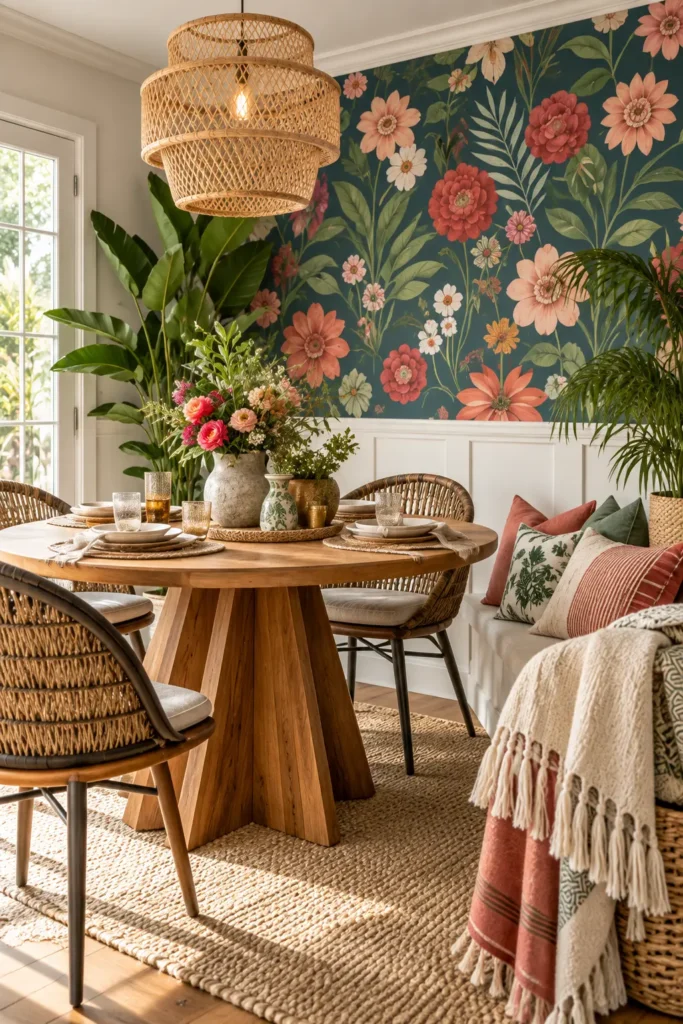
Botanical wallpaper adds depth and color without using valuable floor space. Install a large floral pattern above white or warm-cream wainscoting, then add a round wood table, woven chairs, and a rattan pendant. Deep teal, coral, and leafy green create a warm, layered palette.
Large-scale flowers often look calmer than small, tightly repeated prints. Removable wallpaper can work in a rental, but it needs a clean, smooth wall for reliable adhesion. Test a sample first because dark backgrounds can appear flat in rooms with weak daylight or cool overhead bulbs.
6. Choose Burnt-Orange Seating
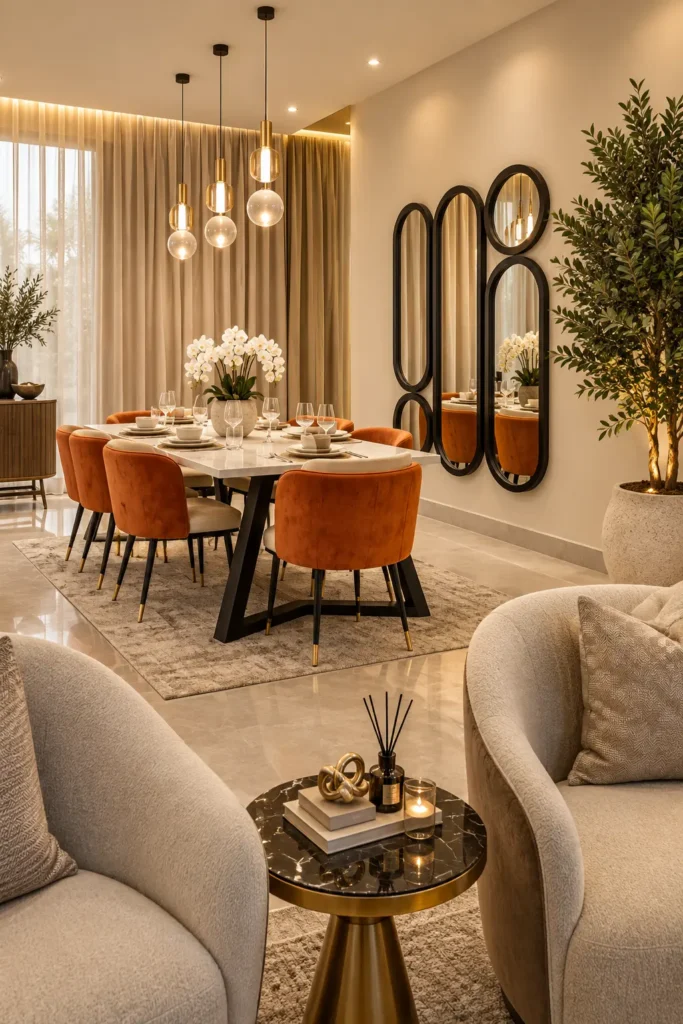
Burnt-orange dining chairs bring warmth to a pale, contemporary room. They work especially well beside a white stone table, beige curtains, black-framed mirrors, and brass or amber-glass lighting. The orange balances the cool appearance of stone, glass, and polished tile.
In an open-plan layout, keep about 36 inches between the dining table and nearby lounge furniture whenever possible. This creates a clear walkway while keeping both zones visually connected. Select stain-resistant woven upholstery for regular family use. Smooth velvet is luxurious, but marks and changes in the pile can become noticeable.
7. Make a Retro Dining Nook
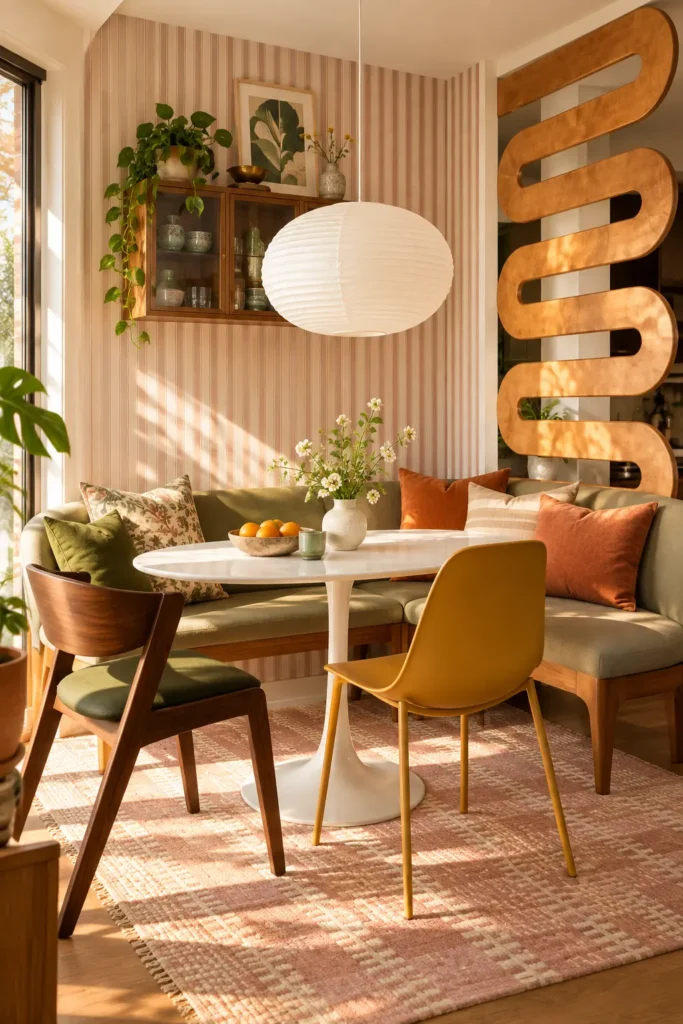
Turn a tight corner into a retro dining nook with an L-shaped bench, an oval pedestal table, and two lightweight chairs. Olive upholstery, mustard seating, rust cushions, striped wallpaper, and a paper pendant create warmth without relying on bulky furniture.
An oval table is easier to walk around than a rectangular one because it has no sharp corners. A comfortable built-in seat is usually about 18 inches high and 18–20 inches deep. If you’re building the bench, add hinged storage beneath it for table linens, seasonal dishes, or small kitchen appliances.
8. Keep the Palette Light
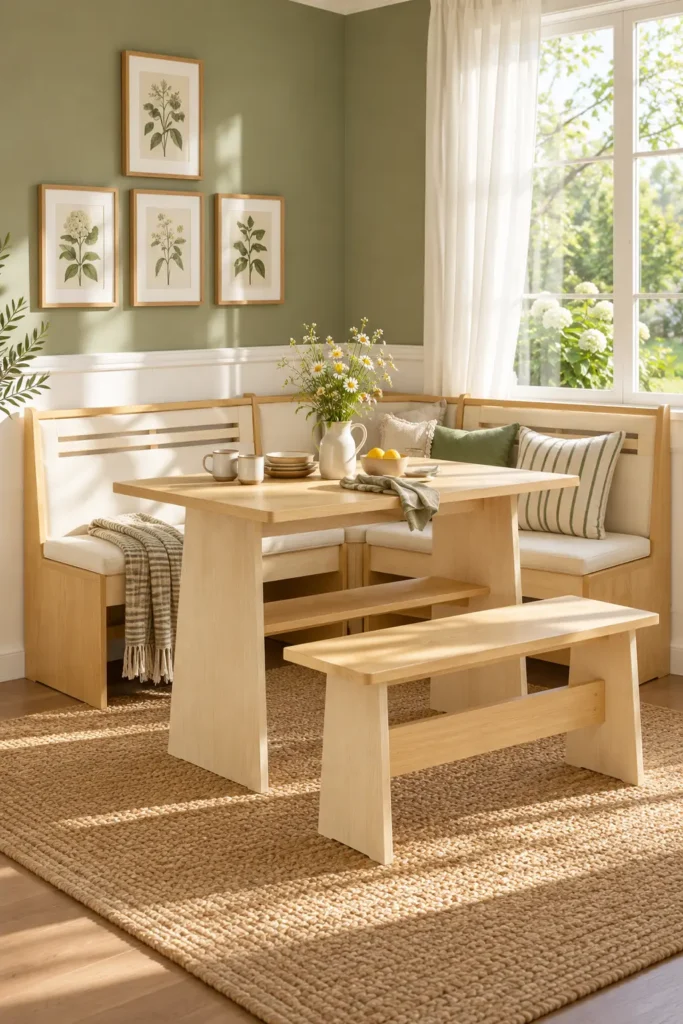
Pale oak, creamy upholstery, and soft olive walls can make a breakfast nook feel open without making it look plain. Place built-in benches against two walls, add a slim rectangular table, and use a backless bench that can tuck underneath when it isn’t needed.
This arrangement keeps the center of the room visually clear and provides more seating than individual chairs. Use removable cushion covers because breakfast areas collect spills and crumbs quickly. Instead of genuine jute, which can be difficult to clean, choose a flat-woven indoor-outdoor rug with a similar natural texture.
9. Frame a Built-In Banquette
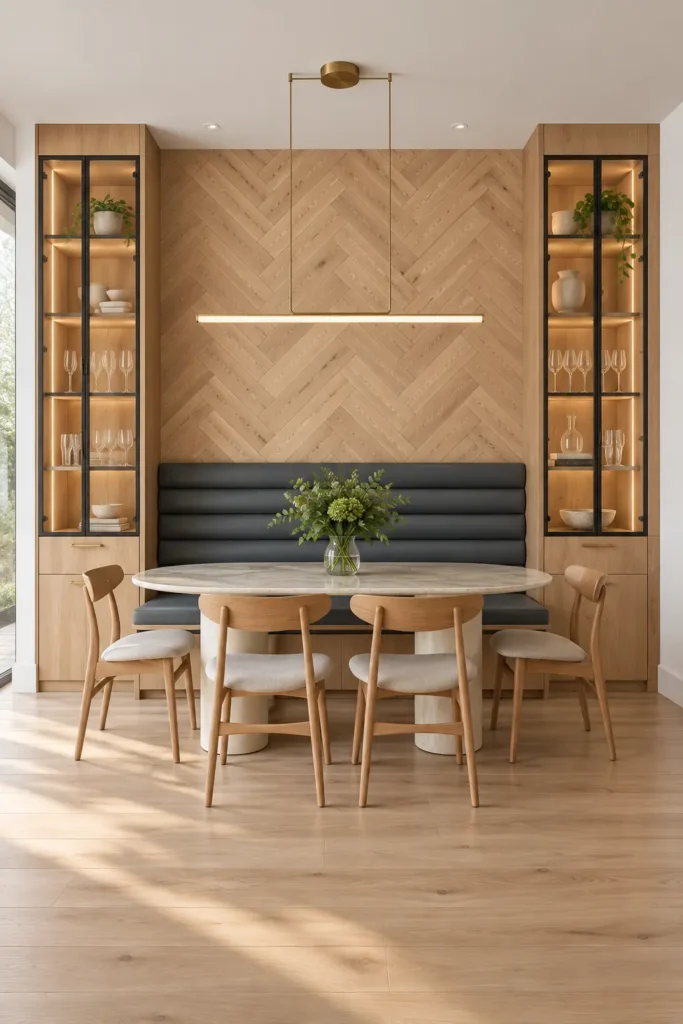
Position a dining banquette between two tall display cabinets to create a polished, symmetrical feature wall. Pale oak cabinetry, black-framed glass doors, warm shelf lighting, and a herringbone wood backdrop give the dining area an architectural finish.
An oval table softens the straight lines and allows easier movement around the chairs. Check that cabinet doors can open without hitting the tabletop. If custom joinery exceeds your budget, use two matching freestanding cabinets with a ready-made bench between them. Wood-look panels or matching paint can visually connect the separate pieces.
10. Paint Onto the Ceiling
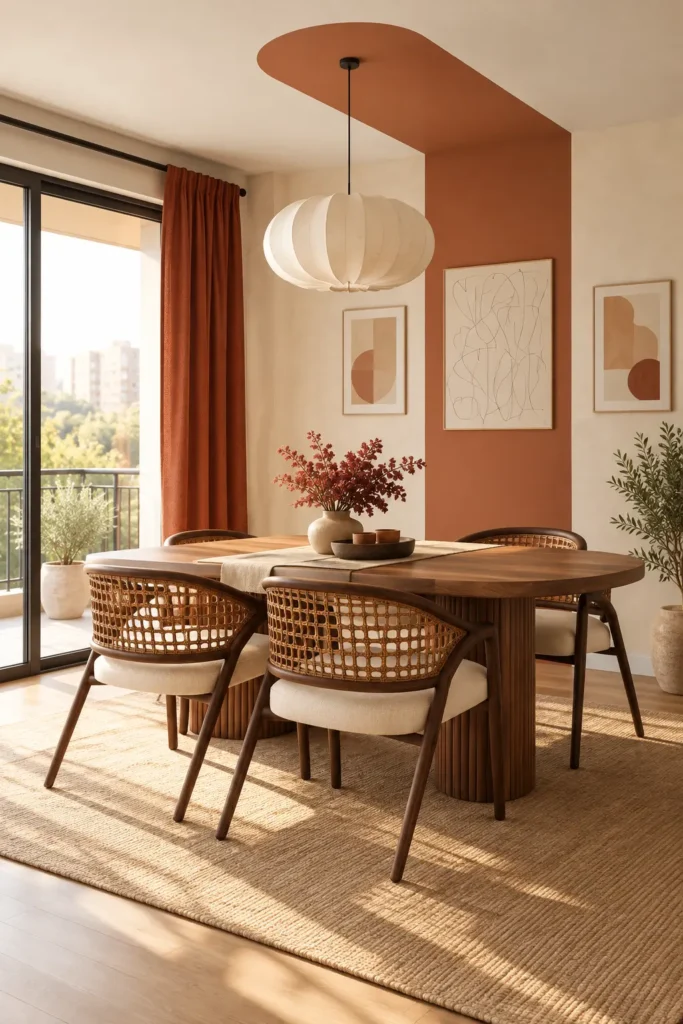
A wide terracotta stripe running from the wall onto the ceiling creates a clear dining zone without adding furniture. Center the stripe above a walnut table and hang a white paper pendant within it. Cane chairs, rust curtains, and neutral artwork will continue the warm, earthy palette.
Matte paint is the best choice because it reflects less light and hides minor ceiling imperfections. Use a laser level and high-quality painter’s tape to create clean edges. The materials are affordable, but ceiling painting requires careful covering, ladder work, and more preparation than a standard feature wall.
11. Hang Full-Length Curtains
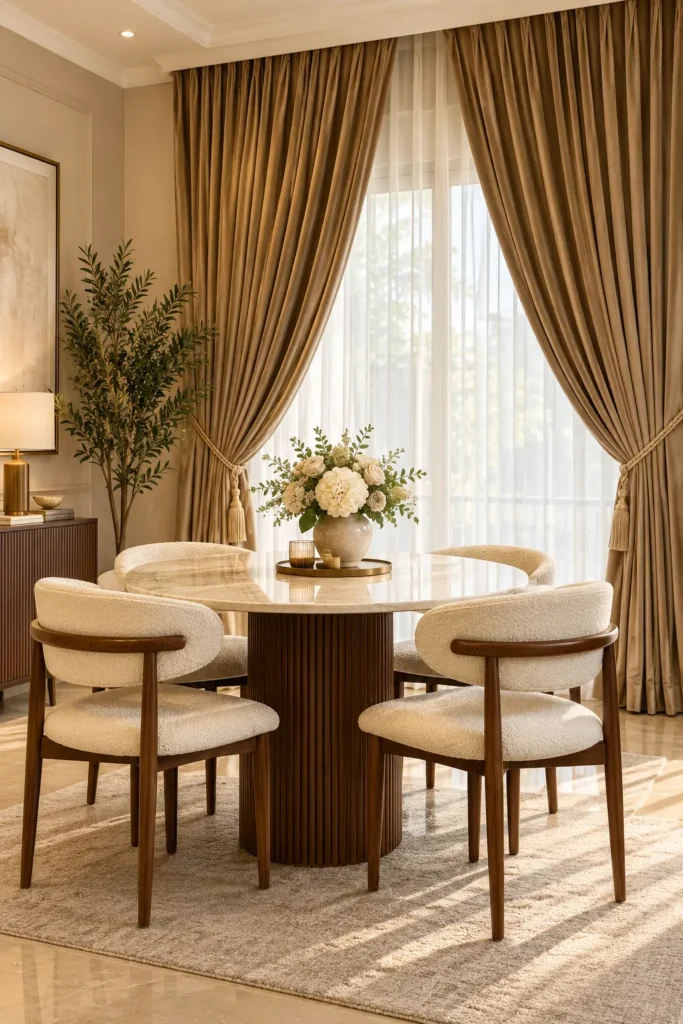
Full-length taupe curtains soften hard walls and help absorb some of the echo common in small dining rooms. Mount the curtain rod close to the ceiling and extend it 8–12 inches past the window on each side when space allows. The panels can then sit away from the glass and preserve natural light.
Complete the room with a round cream table and compact boucle chairs with exposed walnut frames. Low chair backs protect the view through the window. Boucle looks inviting, but its textured surface traps crumbs, so tightly woven performance fabric may be more practical for young families.
12. Add Cottage Charm
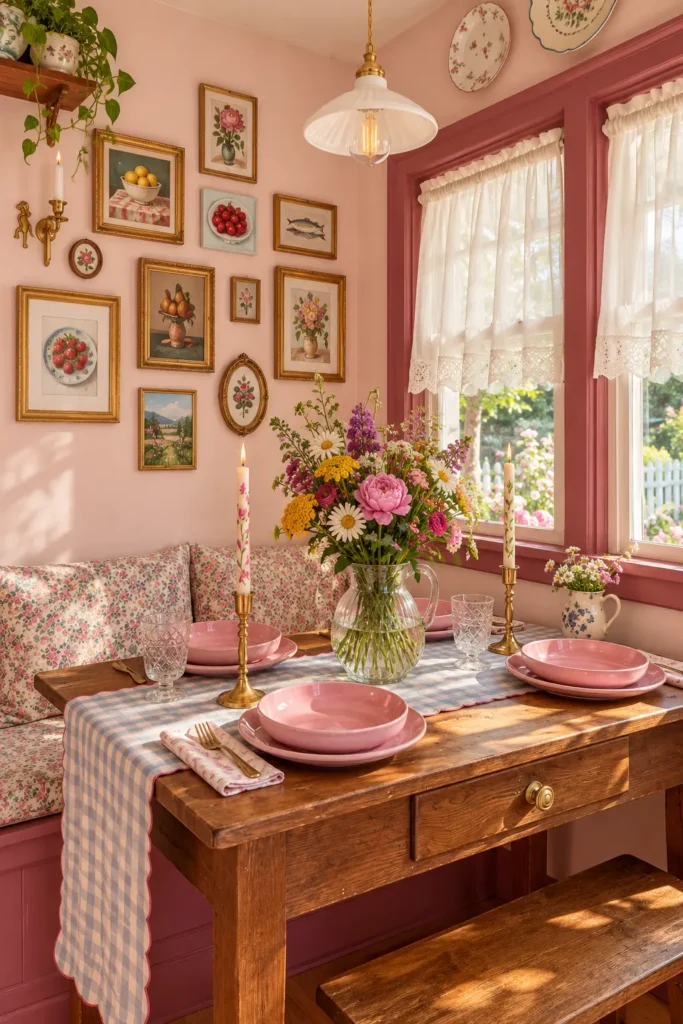
Blush walls, deep rose window trim, floral bench cushions, and a rustic wood table can create a cheerful cottage dining corner. Add pink ceramic dishes, a gingham runner, slim brass candlesticks, and a relaxed garden bouquet for color at table level.
Arrange small vintage-style artwork above the bench, with the center of the overall composition around 57–60 inches from the floor. Secondhand frames and inexpensive botanical prints can make the wall look collected without a large budget. Keep some empty wall and tabletop space so the layered colors and patterns remain comfortable to live with.
Small Dining Room Details That Matter
Measure the room before purchasing furniture. Include baseboards, door swings, radiators, windows, and the space required to pull out each chair. A dining table usually needs about 36 inches of clearance along frequently used sides, although a fixed wall bench can reduce that requirement.
Lighting has just as much influence as furniture. Warm-white bulbs around 2700K make oak, walnut, terracotta, olive, and cream look richer after sunset. Hang a dining pendant approximately 30–36 inches above the tabletop, adjusting slightly for the fixture’s size, your ceiling height, and the sight lines across the room.
Avoid filling every empty corner. One well-scaled pendant, a vase of greenery, or a compact gallery arrangement will usually contribute more than several unrelated accessories.