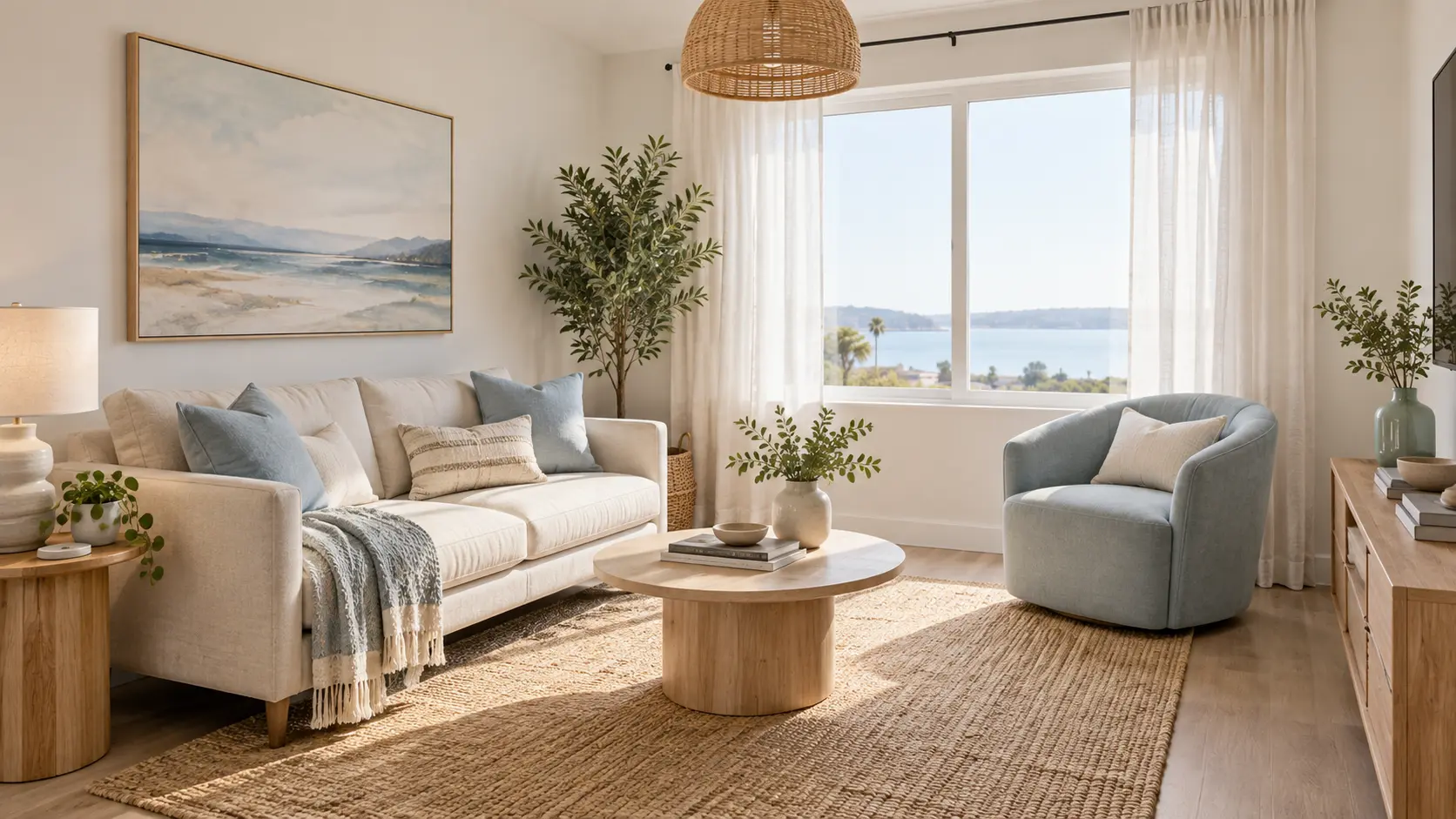
Modern coastal style isn’t about filling a room with anchors, seashell signs, or obvious beach decorations. Its appeal comes from something quieter: soft natural light, weathered wood, breathable fabrics, sandy neutrals, and muted ocean colors arranged in a clean, uncluttered way. The best modern coastal living room ideas capture the relaxed feeling of being near the water while still looking polished enough for an everyday home.
This style also works far beyond beachfront properties. You can create the same fresh mood in a suburban house, city apartment, or compact rental by choosing the right colors, materials, and furniture scale. A warm white sofa, pale wood coffee table, woven rug, and a few misty blue accents can establish the look without requiring a complete renovation.
The 14 rooms below offer practical ways to bring modern coastal character into your living area. You’ll find ideas for highlighting natural light, arranging comfortable seating, using ocean-inspired art, layering durable textures, and adding subtle shoreline references. Each approach keeps comfort and daily function in mind, helping you create a living room that feels bright, balanced, and genuinely relaxing throughout the day.
1. Layer Sandy Neutrals
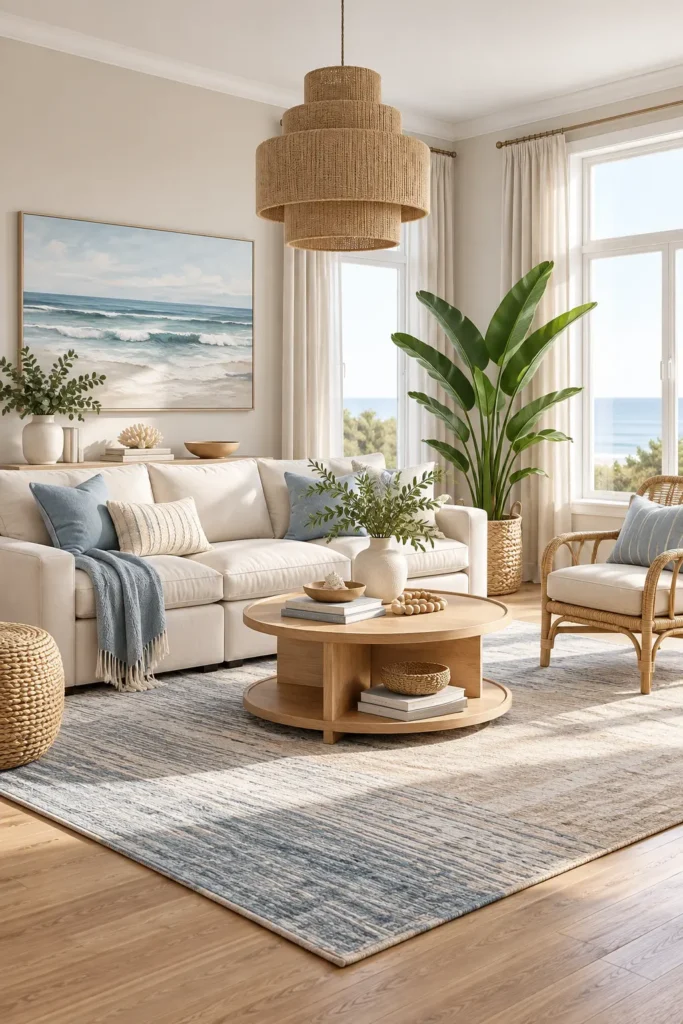
Build your palette around warm white, oatmeal, sand, and soft driftwood tones. Start with an off-white sofa, then add a beige rug, pale wood tables, and small touches of muted blue. A woven pendant and leafy plant provide texture without making the room feel crowded.
Warm whites respond beautifully to late-afternoon sunlight, while stark cool whites can look sharp under blue-toned LED bulbs. Choose washable cushion covers and a tightly woven rug if children or pets use the room regularly.
For more ways to make a light, neutral room feel comfortable rather than bare, explore these cozy living room decor ideas.
2. Add a Soft Blue Accent Wall
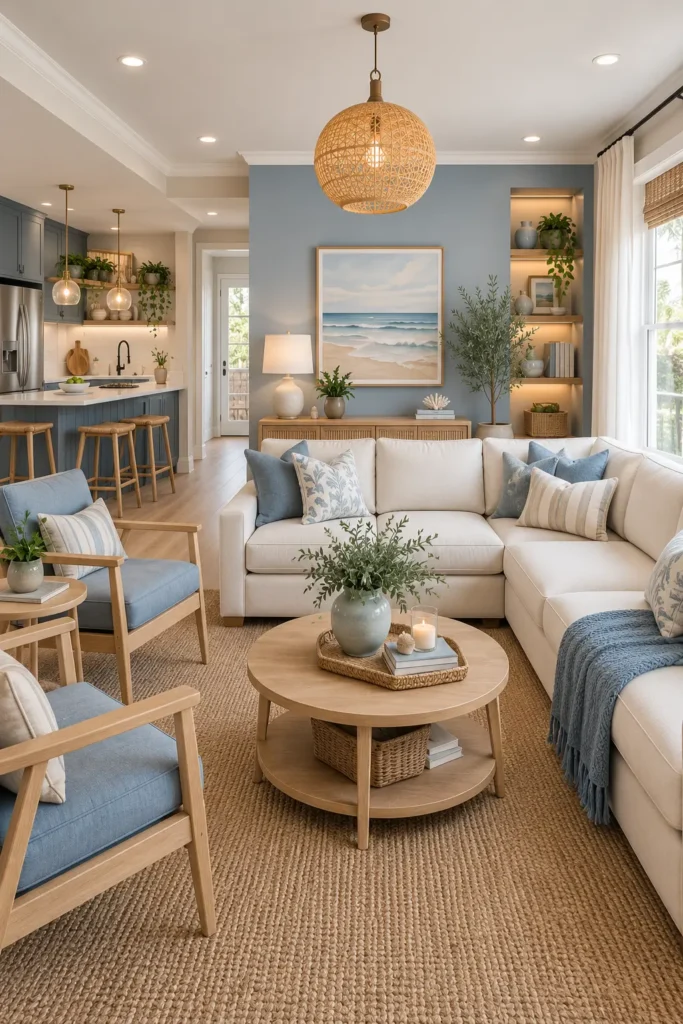
A dusty blue accent wall introduces coastal color without covering the entire room. Use it behind the sofa or built-in shelving so it creates a clear focal point. Pair the blue with creamy upholstery, honey-toned wood, and a few deeper navy textiles.
Test the paint during morning and evening light before committing. Blue-gray shades may appear dull in a north-facing room, so choose a slightly warmer blue if natural light is limited. A matte or eggshell finish also helps conceal minor wall imperfections.
3. Frame the Outdoor View
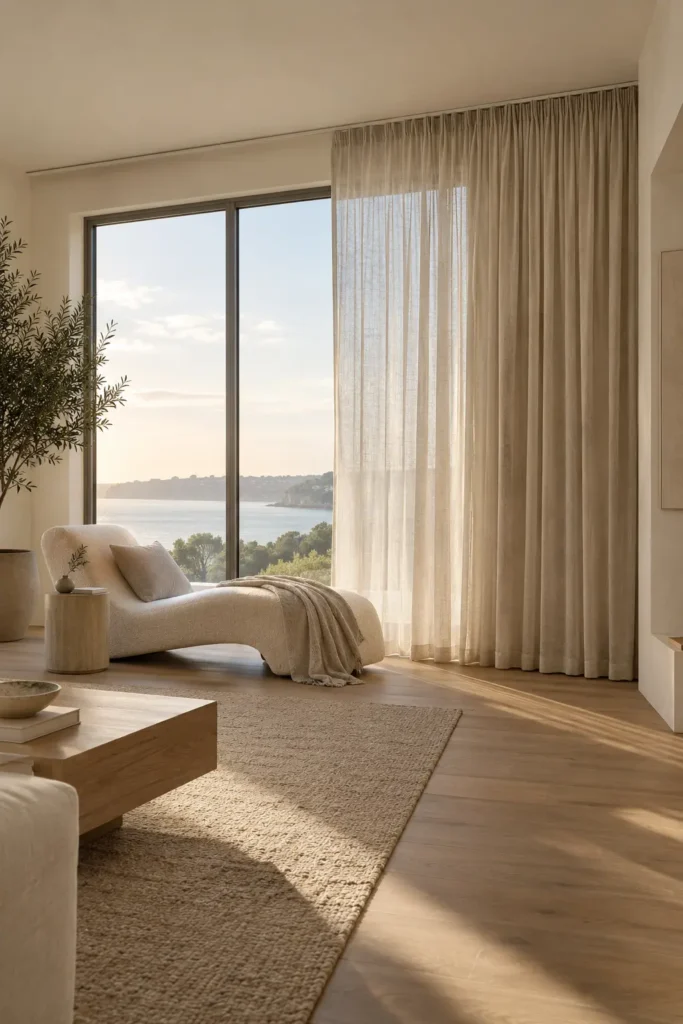
When your living room overlooks water, trees, or an open landscape, treat that view as the main artwork. Keep tall furniture away from the windows and use sheer floor-length curtains that filter glare without blocking the scenery. A low chaise or compact chair can create a peaceful viewing spot.
Hang the curtain rod close to the ceiling and extend it 8–12 inches beyond each side of the window when wall space allows. This exposes more glass and makes the opening appear wider.
4. Mix Blue Seating with White
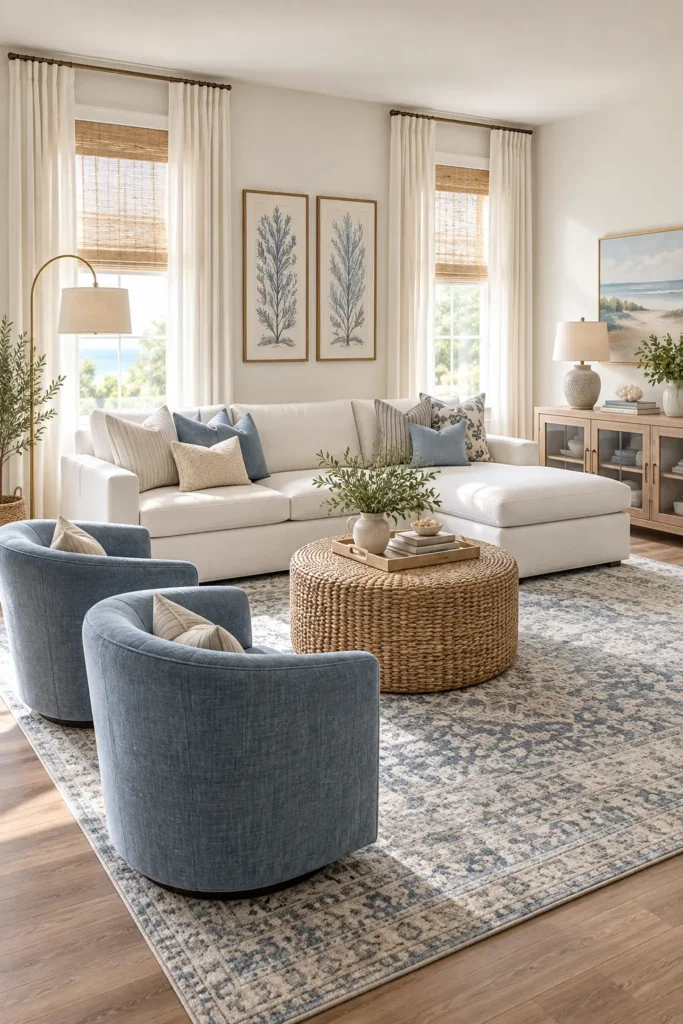
Instead of using blue only on pillows, introduce it through one or two upholstered chairs. Denim, mist, or slate-blue seating gives a mostly white room stronger visual structure while keeping the palette calm. Curved chairs can also soften the straight lines of a sofa and rectangular rug.
Leave about 30–36 inches along the main walkway. Performance fabric is worth considering because pale and medium blue upholstery can reveal spills, body oils, and uneven fading near sunny windows.
5. Style with Sea-Glass Tones
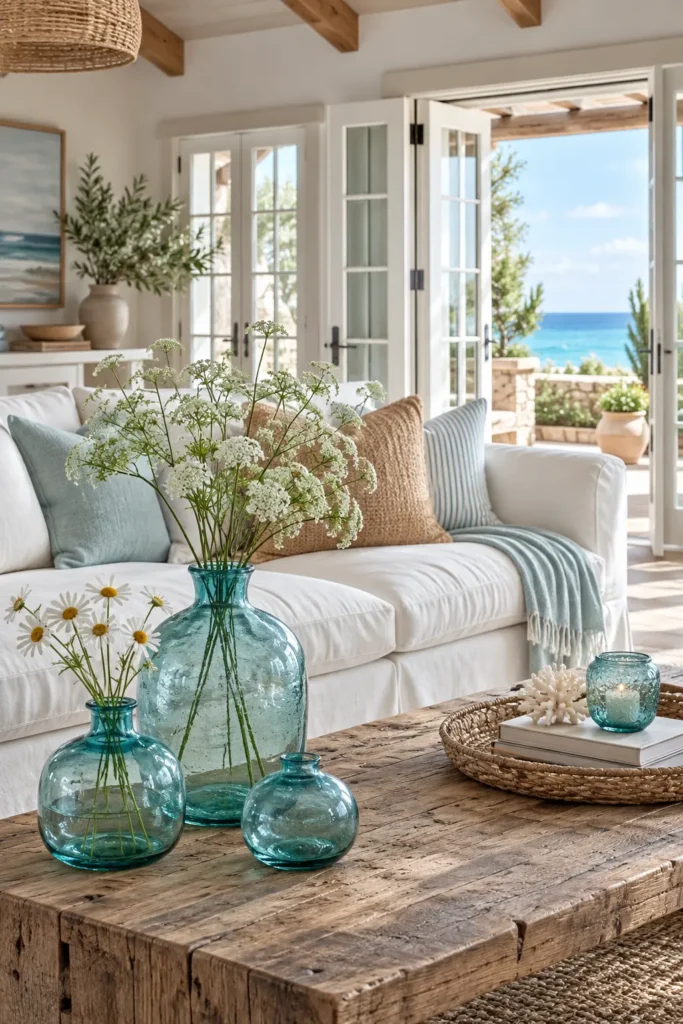
Sea-glass green and translucent blue accessories create a coastal reference without becoming overly literal. Group two or three glass vessels on a rustic wood coffee table, then add loose flowers or leafy stems. The glass catches daylight and adds color without the visual weight of solid pottery.
Keep the display low enough for conversation across the table. Recycled glass offers an affordable handmade appearance, but avoid very thin bargain pieces if the table is used daily—they chip and show scratches quickly.
6. Bring in Weathered Wood
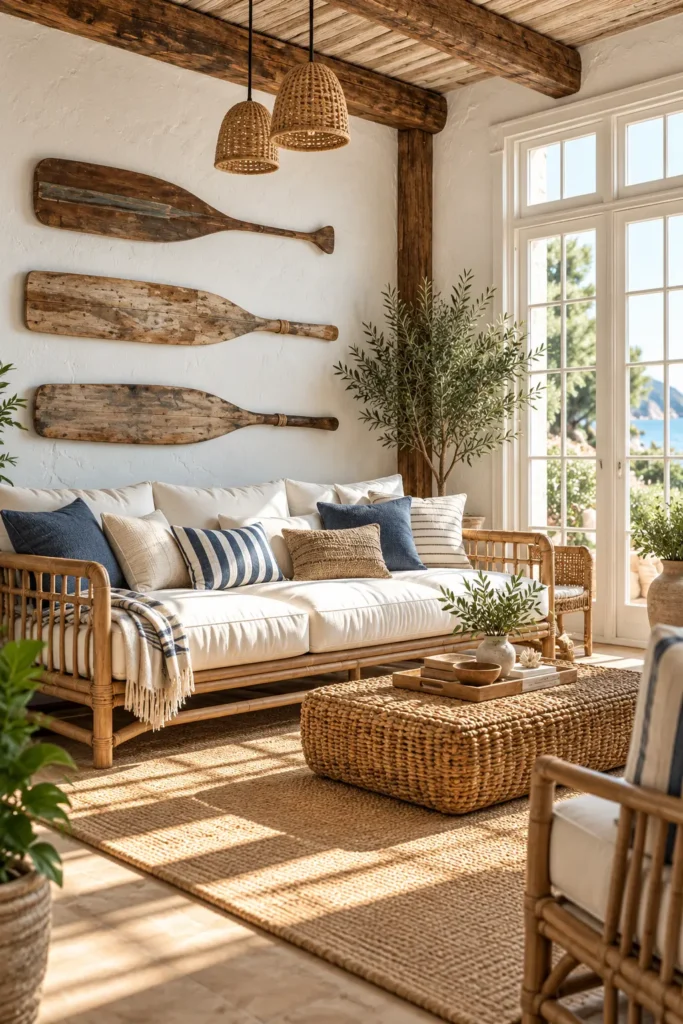
Weathered wood gives a modern coastal living room the relaxed character that smooth, factory-finished furniture sometimes lacks. Consider a reclaimed coffee table, a slatted daybed, or decorative wood pieces with visible grain. Combine them with clean white walls and simple striped textiles to prevent the room from feeling rustic.
Choose sealed wood for frequently used surfaces. Raw reclaimed boards may hold dust, snag cleaning cloths, or stain from drinks. A clear matte finish protects the texture while preserving its sun-faded appearance.
7. Choose Oversized Ocean Art
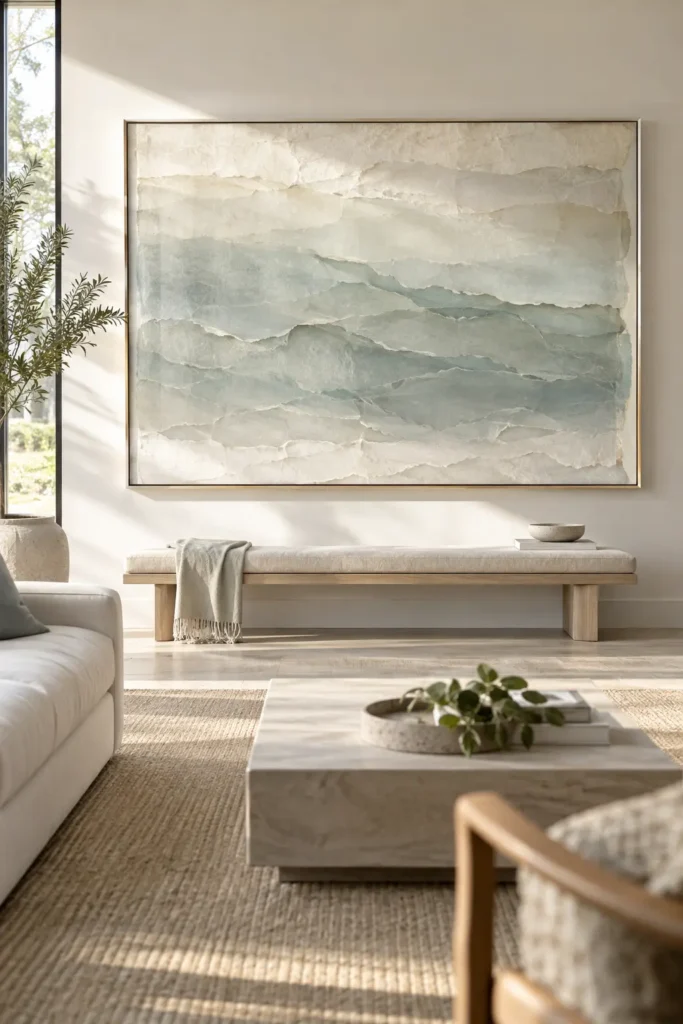
One large abstract seascape can establish the coastal mood more quietly than several small nautical prints. Select artwork with hazy blue, gray, cream, or green tones and give it enough surrounding wall space to remain visually calm.
Above a sofa, the artwork should generally measure about two-thirds of the sofa’s width. Hang it 6–10 inches above the back rather than close to the ceiling. A slim natural-wood frame keeps the composition warm and contemporary.
8. Highlight Coastal Architecture
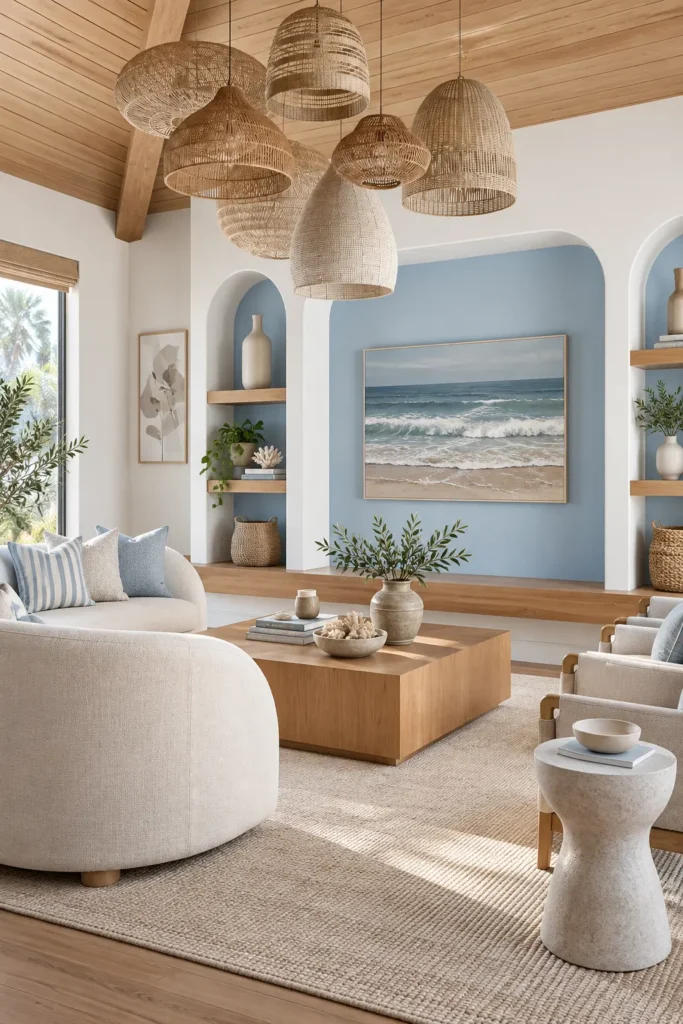
Arched niches, built-in shelving, and a wood-clad ceiling can give the room depth before accessories are added. Paint recessed shelves a muted sky blue, then keep their contents limited to ceramics, books, and a few organic objects. Woven pendants repeat the ceiling’s warm color and create rhythm overhead.
Architectural updates require more planning than they appear to in photographs. Renters can suggest a similar look with removable painted arch decals, freestanding bookcases, and plug-in woven pendants secured with approved ceiling hooks.
9. Create a Relaxed Window Corner
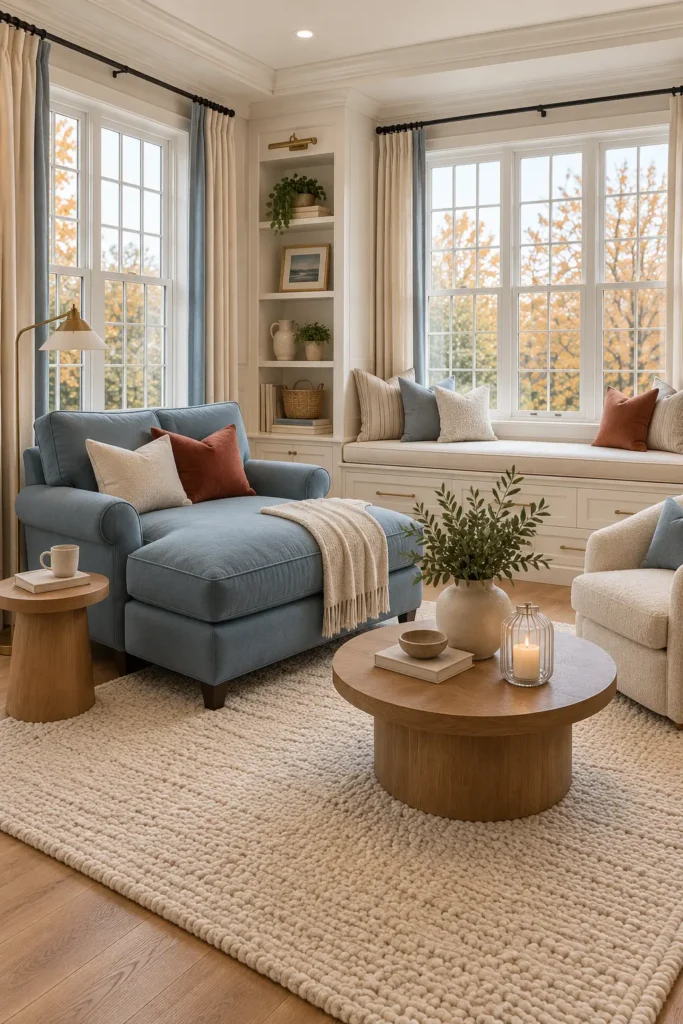
Turn an underused window area into a comfortable reading or conversation corner. A compact blue chaise, cushioned bench, or small sectional can make use of the light while leaving the center of the room open. Add a round wood side table to balance the seating’s heavier shape.
Avoid pushing upholstery directly against sunlit glass. A small gap improves airflow and reduces fading. If custom window seating is too expensive, a storage bench with a tailored cushion provides a convincing and functional alternative.
10. Curate a Coastal Console
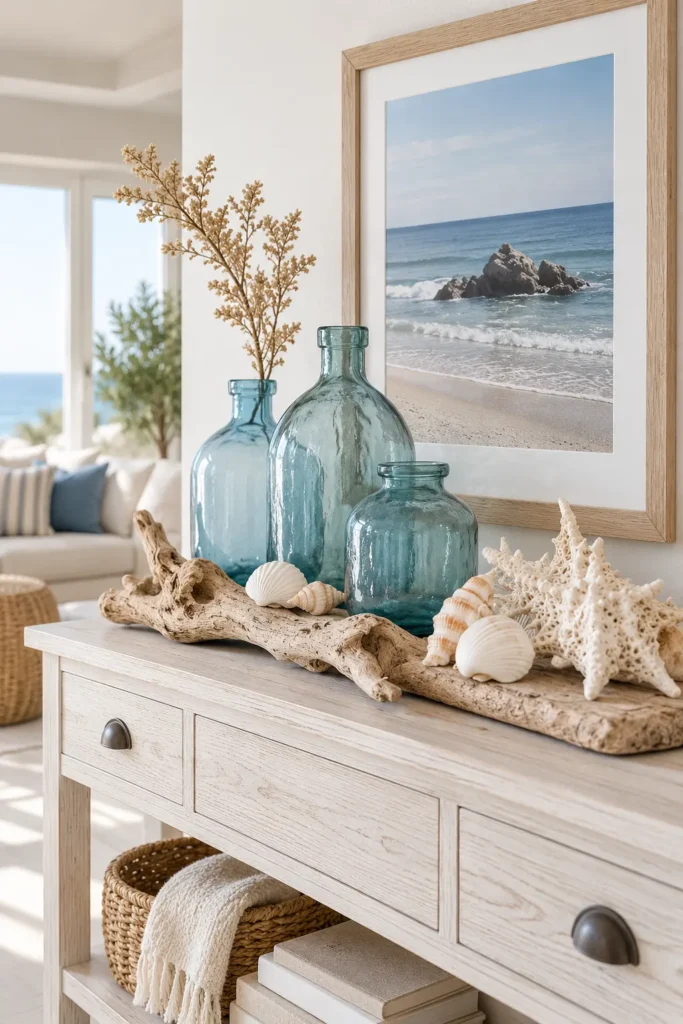
A console table is an ideal place for a restrained coastal arrangement. Combine blue glass bottles, a framed shoreline photograph, and one sculptural natural object. Vary the heights, but leave visible space between pieces so the surface doesn’t resemble a souvenir display.
Use shells or coral alternatives selectively and source them responsibly. A piece of driftwood, handmade ceramic bowl, or stone object often looks more current. Anchor the grouping with a tray if keys and other daily items tend to collect there.
11. Use Pale Blue Textiles
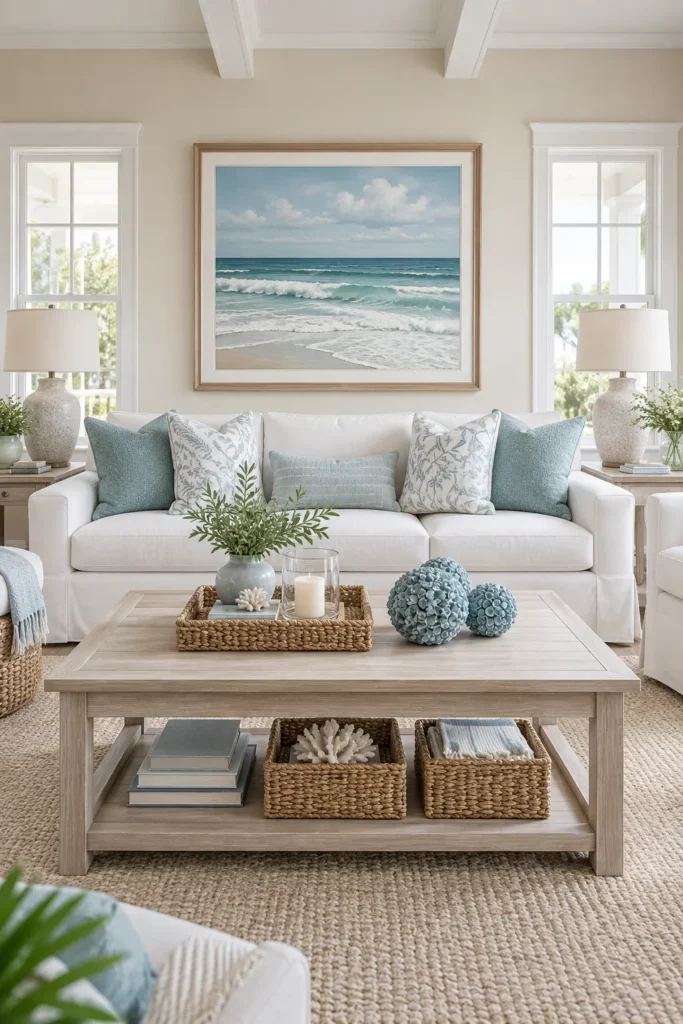
Pillows and throws offer the easiest way to test coastal color without replacing major furniture. Mix pale blue linen-look cushions with white, beige, and one subtle pattern. Repeating the same blue in artwork helps the palette feel intentional rather than scattered.
Limit the sofa to enough pillows for comfort without forcing people to remove a pile before sitting down. Linen blends give you the relaxed texture of pure linen but usually wrinkle less and tolerate regular washing better.
12. Add a Sculptural Glass Table
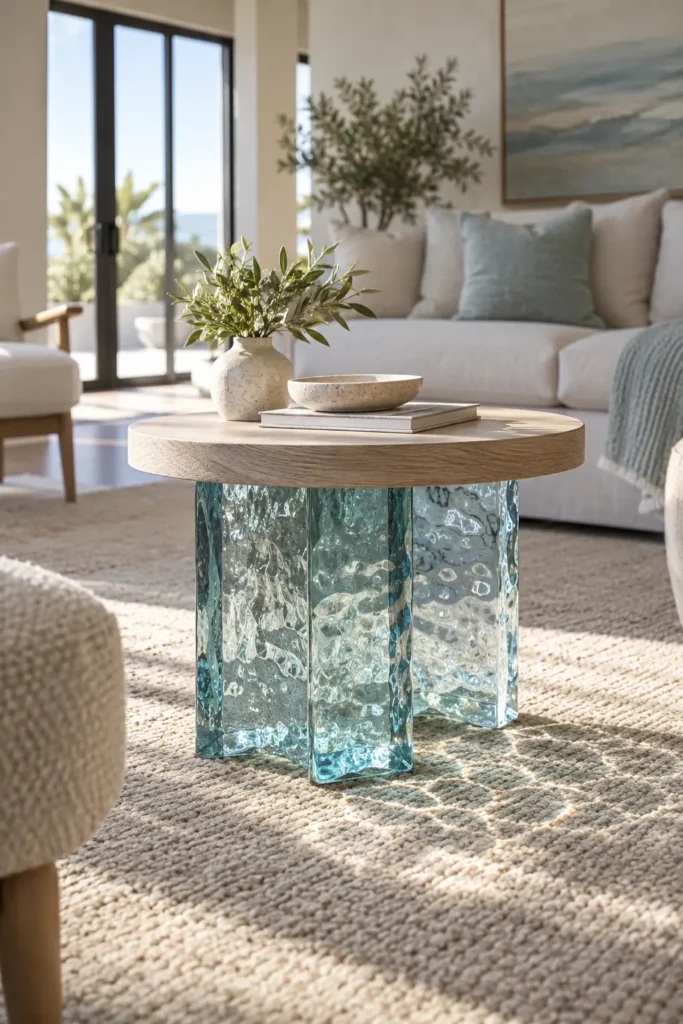
A coffee table with a textured glass base introduces a watery effect while keeping the room visually open. It works especially well with a pale wood top, which connects the transparent base to woven rugs and upholstered furniture. The combination feels artistic but still usable.
Place the table approximately 16–18 inches from the sofa for comfortable reach and circulation. Check the base for sharp edges and stability before buying. Highly textured glass can collect dust in its grooves, so it requires more detailed cleaning than a smooth pedestal.
13. Build a Naturalist Gallery Wall
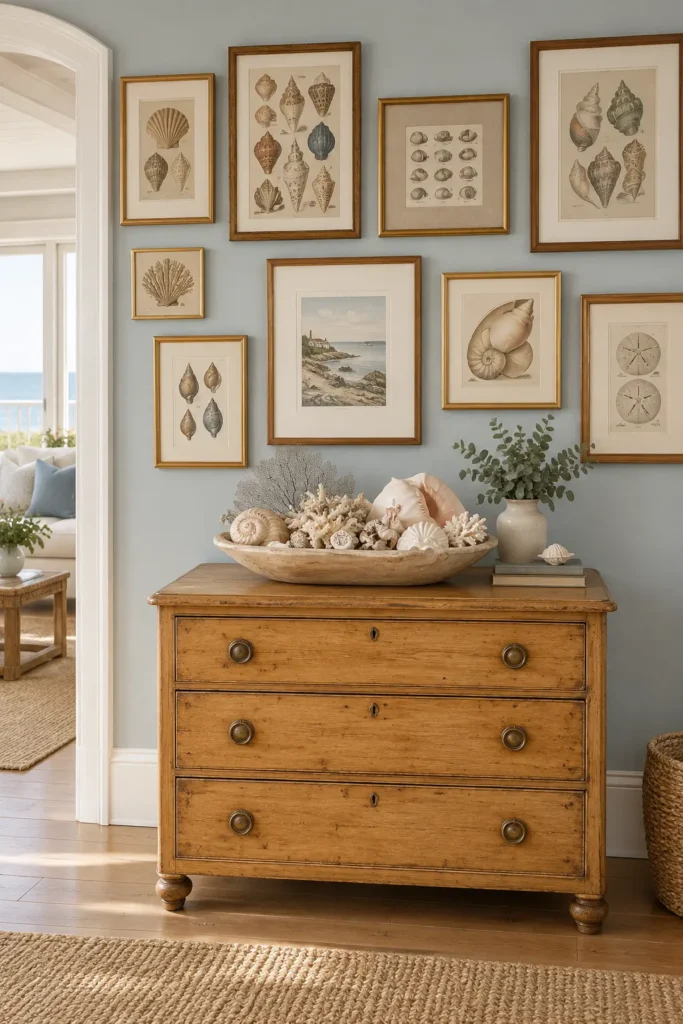
Create a coastal gallery wall using framed shells, botanical studies, seaweed illustrations, and quiet landscape art. Matching warm-wood frames unify the collection, while varied sizes prevent the arrangement from feeling rigid. Lay everything on the floor first and keep roughly 2–3 inches between frames.
Center the overall grouping approximately 57–60 inches from the floor when it isn’t visually tied to tall furniture. For a renter-friendly installation, use lightweight frames and properly rated removable strips on clean, suitable wall surfaces.
14. Warm It with Modern Wood
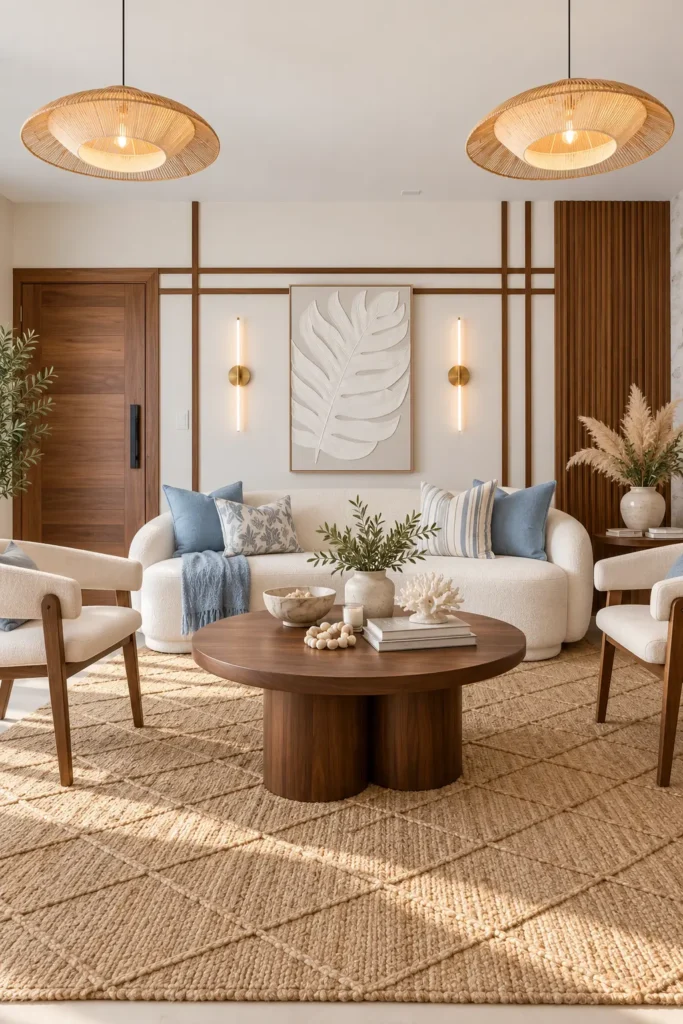
A coastal room doesn’t need to be entirely pale. Medium-toned wood paneling, a substantial round coffee table, and slim timber chairs can add warmth and contrast. Keep the sofa cream and introduce ocean blue through pillows so the darker wood feels grounded rather than heavy.
Balance is especially important in rooms with low ceilings. Use wood on one focal surface instead of every wall, and support it with warm layered lighting. A natural-fiber rug helps connect the deeper finish to the lighter seating.
Common Coastal Decorating Mistakes
Avoid combining too many obvious beach symbols in one room. Rope lamps, anchor prints, shell pillows, and distressed signs compete for attention and can make the space feel staged. Choose one or two subtle shoreline references and let color, texture, and light carry the style.
Furniture scale matters too. Small rugs make seating groups look disconnected, while oversized sectionals can block views and traffic. Select a rug large enough to sit beneath at least the front legs of the main seating pieces, and measure every doorway before ordering bulky furniture.