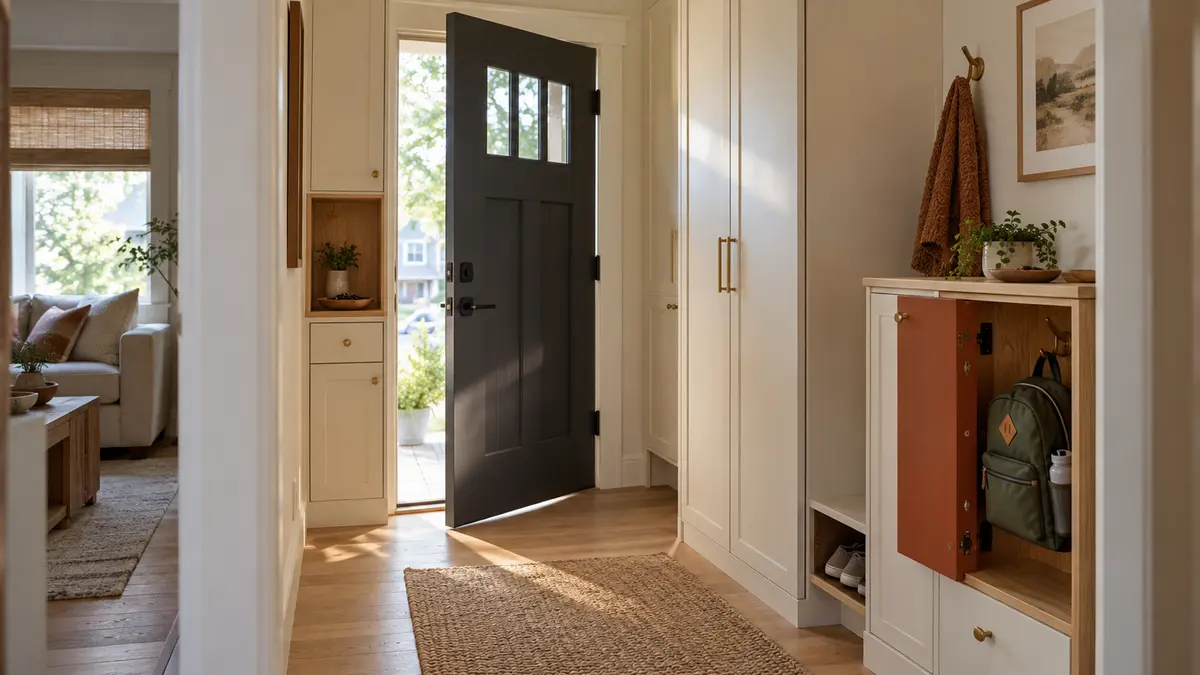
Shoes by the door are only part of the problem. Backpacks, school forms, keys, wet coats, sports gear, and things you meant to return can crowd a small entry before you’ve even taken off your jacket.
The best Small Entryway Storage Ideas give those items specific places without making the entrance feel like a supply closet. These 15 setups use shallow cabinets, overlooked wall space, and storage built around daily routines. Some call for carpentry; others can be adapted with ready-made pieces. In every case, the goal is the same: a clear path through the door and a place you can actually keep orderly.
1. Frame the Door With Pocket Storage
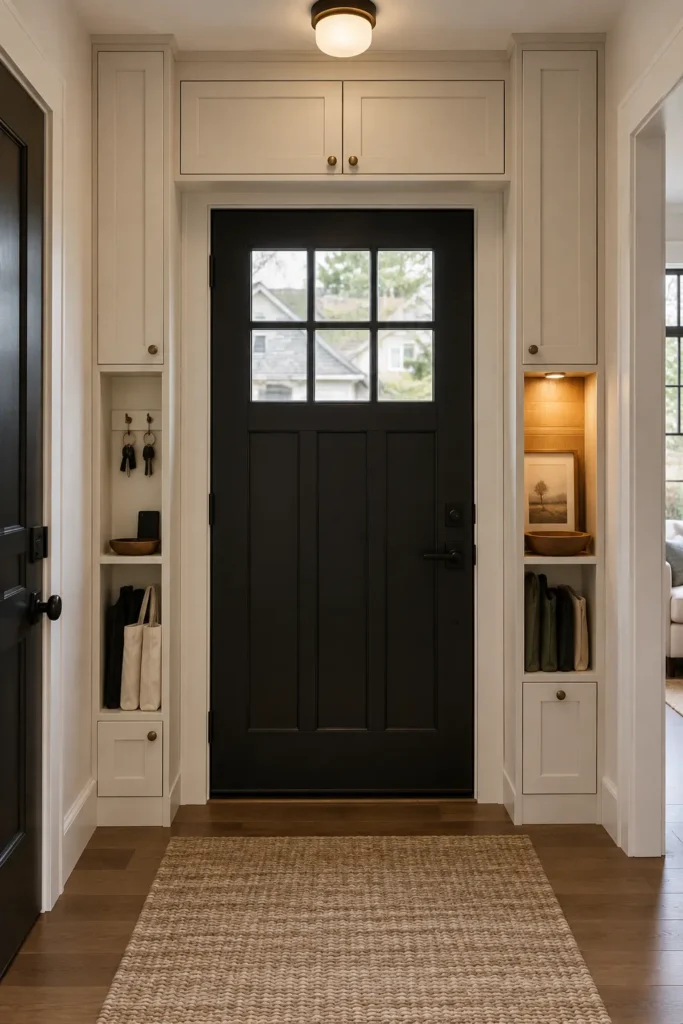
If you have narrow wall strips beside your front door, turn them into 6-inch-deep cabinets rather than adding a console to the hallway. Run matching storage above the door for seasonal items, and leave one small oak-lined niche at hand height for keys. Cream paint that matches the wall makes the cabinets read as part of the door surround.
Check the full door swing before planning either side. This layout is best for keys, folded totes, gloves, and other small items—not bulky coats. Ready-made shallow wall cabinets can give you a similar look, but they still need secure mounting.
2. Make a Slim Shoe Cabinet Look Built In
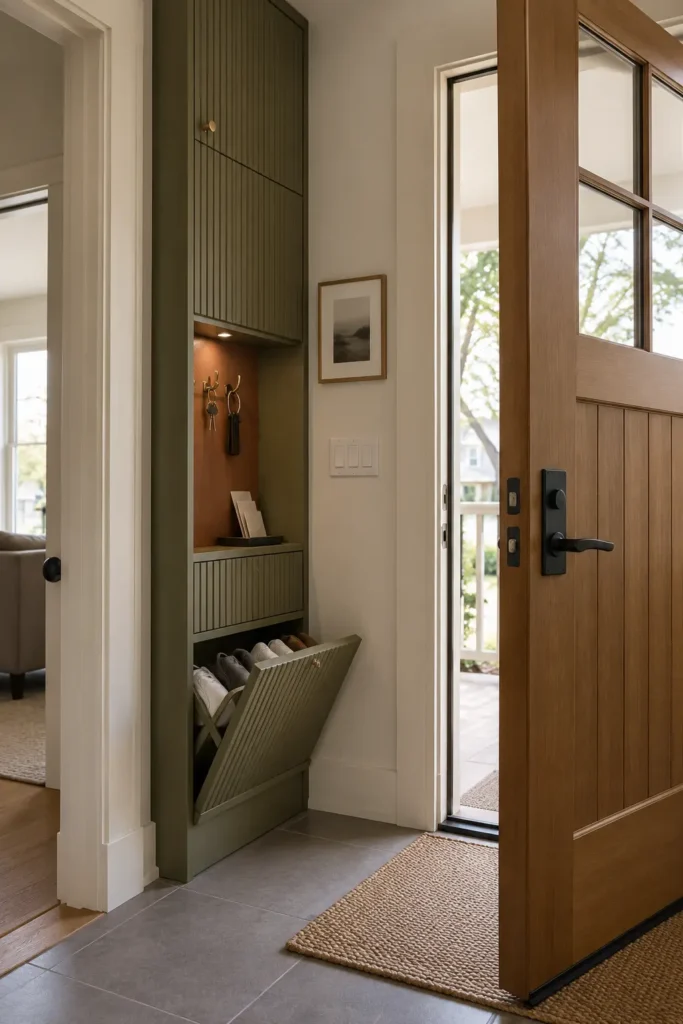
A short tilt-out shoe cabinet often looks stranded against a tall entry wall. Give it a stronger presence by adding a matching upper cabinet and narrow fluted side panels, creating one floor-to-ceiling storage pier. Olive paint keeps the outline clear, while a rust-colored recessed niche between the sections holds mail and keys.
Keep the lower cabinet around 7–10 inches deep where clearance is tight. Before buying, check the tilt-out compartment against your actual footwear; tall boots and larger shoes may need another home. Paint and lightweight fluted panels can make a basic cabinet look convincing without custom millwork.
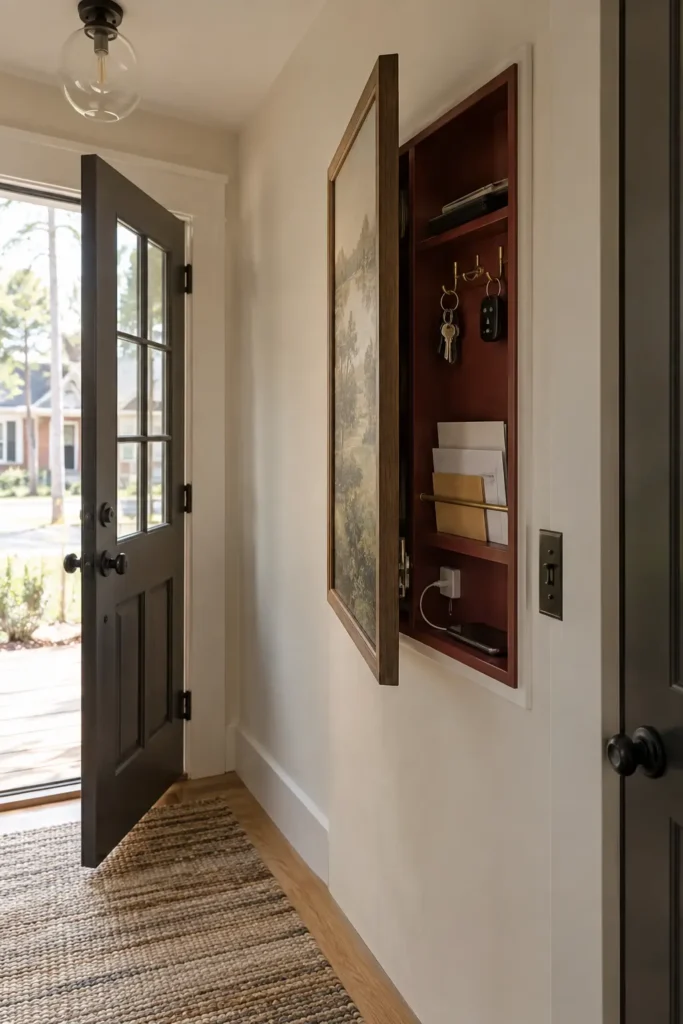
3. Hide a Landing Strip Behind Art
A recessed organizer can hold the things you reach for every day without occupying hallway space. Where the wall allows it, fit a narrow cabinet between studs and cover it with a hinged framed print. Inside, use an oxblood finish, two mail slots, key hooks, and a small ledge.
The artwork stays visually quiet when the cabinet is closed; opening it reveals a useful drop zone. Check for wiring, plumbing, and structural limits before cutting into a wall. In a rental, a shallow surface-mounted cabinet with a framed front is the more realistic route.
4. Put Shoe Drawers Beneath the Stairs
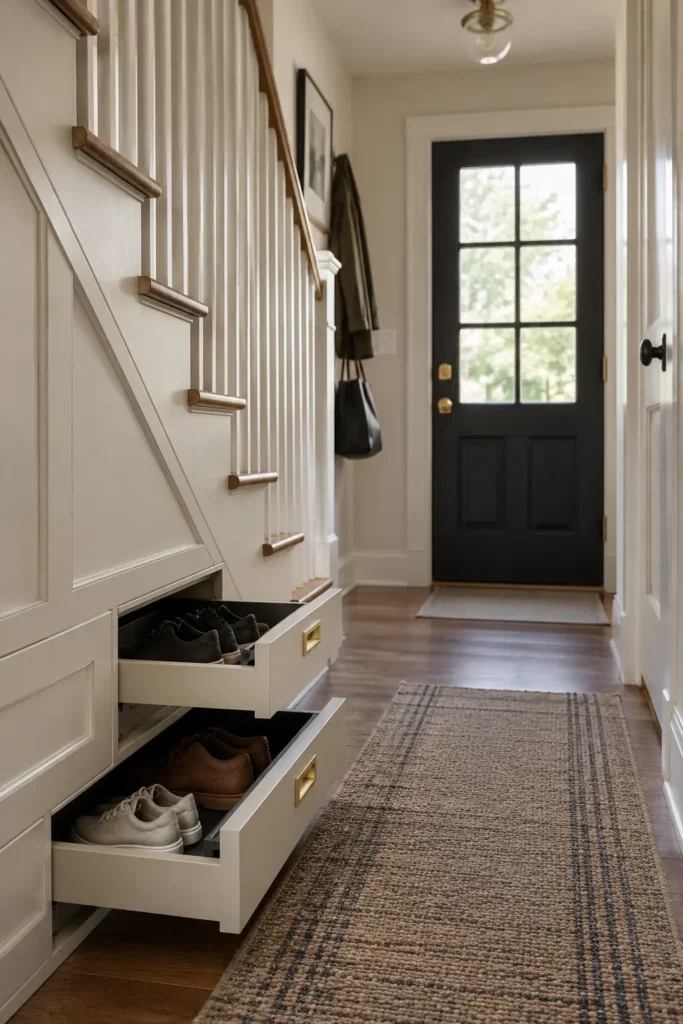
The lower side of a staircase can hold wide pull-out drawers without adding furniture beside the front door. Match the drawer faces to existing paneling, then add vent openings, flush brass pulls, and removable rubber liners. Shoes disappear when the drawers close, while the liners catch grit and make cleaning easier.
This is a carpentry project, not a quick cabinet hack. Have a qualified professional assess the stair structure before altering it. If the space beneath your stairs is already open, low rolling trays behind a removable canvas panel offer a less involved version.
5. Pivot Storage Behind the Front Door
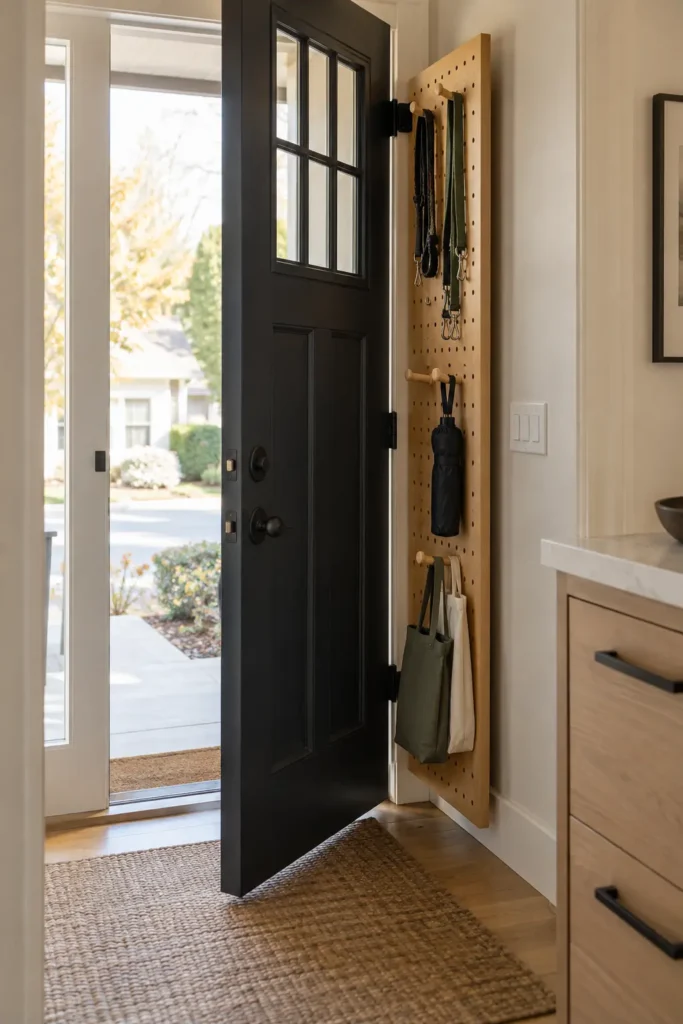
The wall behind an open front door may be too shallow for shelves but useful for a slim pivoting panel. Fit an oak or powder-coated steel pegboard on appropriate hinges so it can swing out when needed. Keep the visible face simple; organize leashes, umbrellas, reusable bags, and bike lights on the reverse.
The panel needs enough room to move without catching the door handle or narrowing your path. Measure both movements before installation. A wall-mounted version must be fixed securely, especially if bags will hang from it; adhesive mounting isn’t suited to that load.
6. Use a Perch Drawer, Not a Bulky Bench
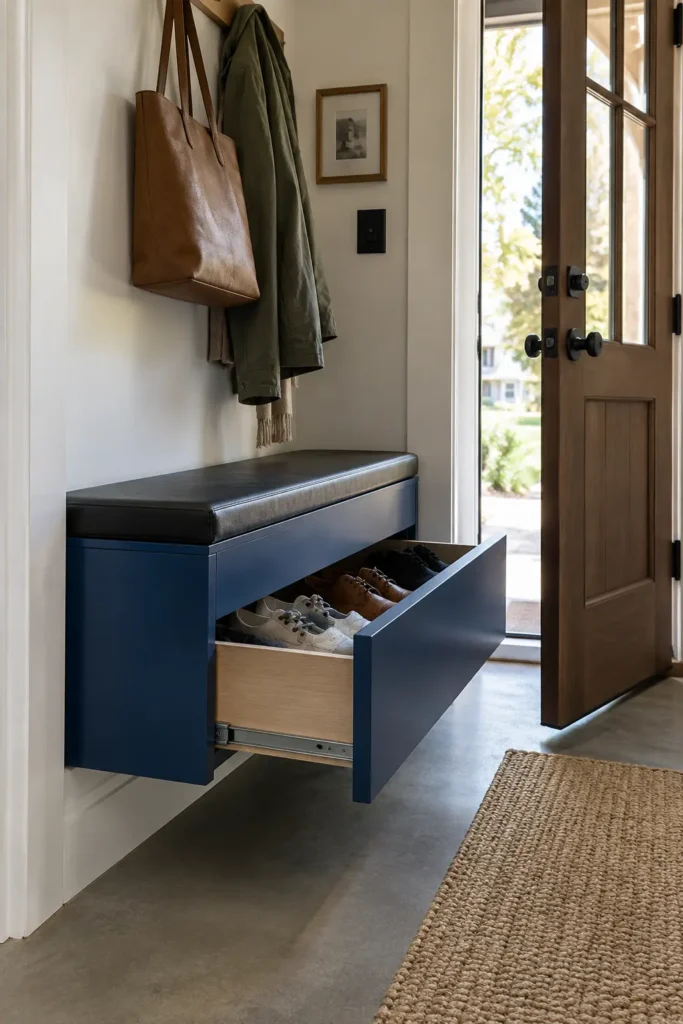
You may need a place to sit while putting on shoes, but a full bench can take over a small entrance. A reinforced wall-hung cabinet about 14 inches deep gives you a brief perch, a full-width shoe drawer, and open floor beneath for easy cleaning. Cobalt paint and a durable linoleum top create a crisp contrast without extra accessories.
Treat the seat as load-bearing furniture. Its fixings, wall construction, and drawer design must support the people who will use it. If a wall-hung perch isn’t right for your home, choose a slim floor-standing bench with a properly rated seat. For ways to make that bench look intentional without crowding the entry, see our 16 Entryway Bench Decor Ideas.
7. Organize the Inside of the Coat Closet Door
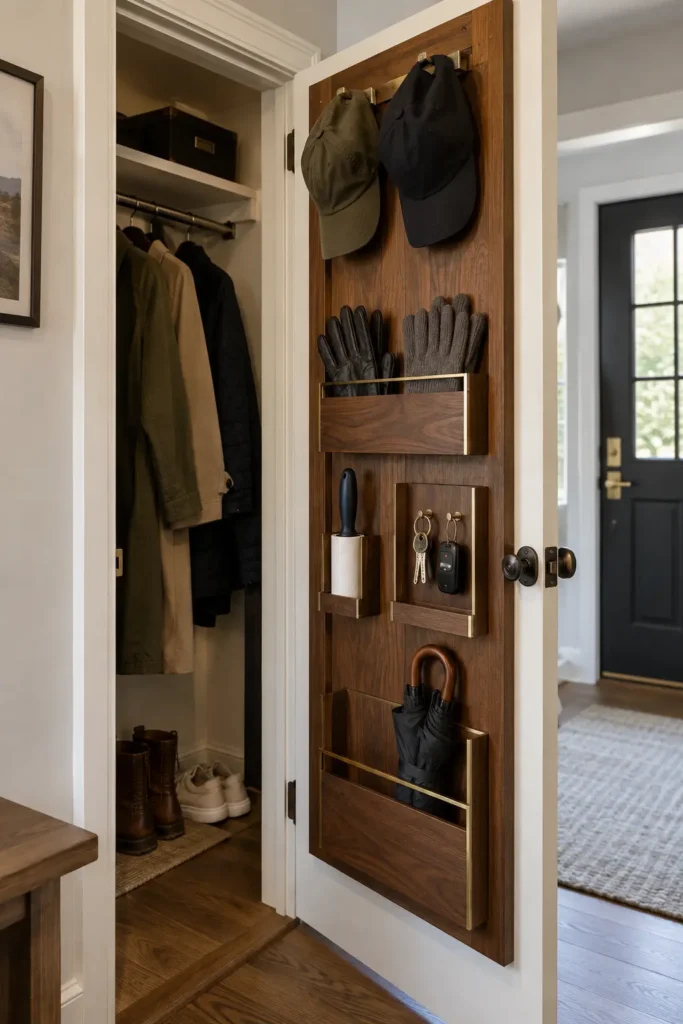
Coat closets often have hanging space but nowhere sensible for gloves, caps, keys, or a lint roller. Fit the inside face of the door with a shallow walnut panel, narrow brass rails, and pockets sized for those small items. Coats remain on the closet rail, while accessories stay visible the moment you open the door.
Leave room for the door to close against anything stored inside. Deep boxes and heavy bags can strain hinges or hit the coats. Narrow rails and low-profile pockets are an affordable adaptation if replacing the door isn’t in your budget.
8. Soften Coat Clutter With Ribbed Glass
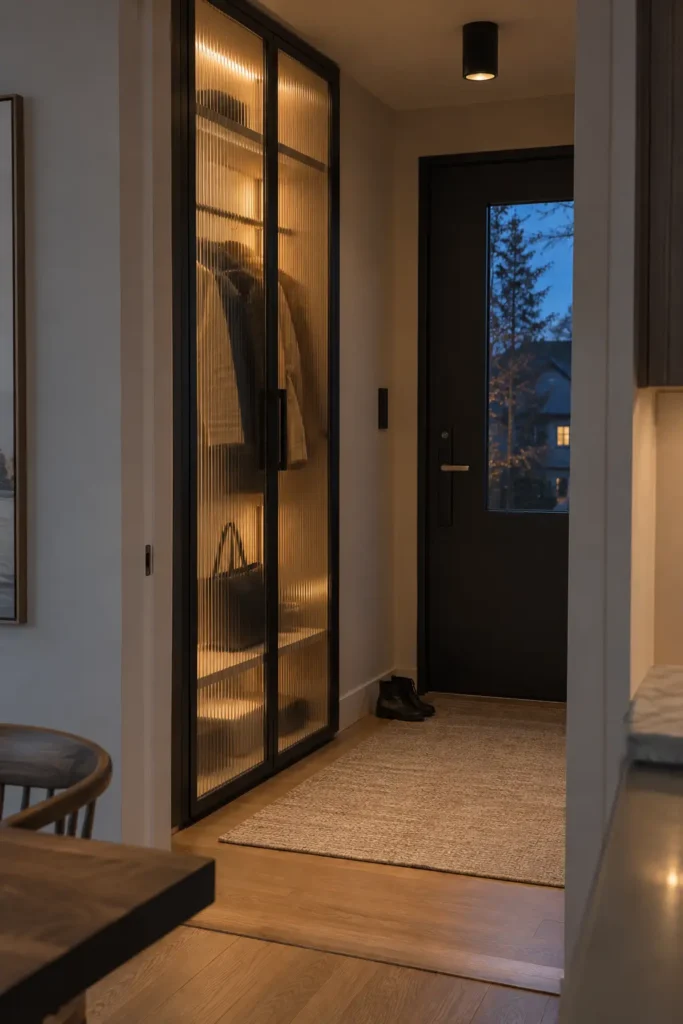
A full-height coat cabinet can look heavy at the end of a small hall. Ribbed-glass doors let light through while blurring the uneven outlines of jackets and bags. Pair dark metal framing with a warm painted interior and gentle cabinet lighting; at dusk, the storage reads as a soft glow rather than a solid block.
The glass hides shapes, not everything. Bright clothing can still show through, so keep the interior arranged and choose lighting that doesn’t produce much heat. Removable ribbed privacy film offers a lower-cost way to adapt an existing glass-front cabinet.
9. Store Seasonal Gear Above Head Height
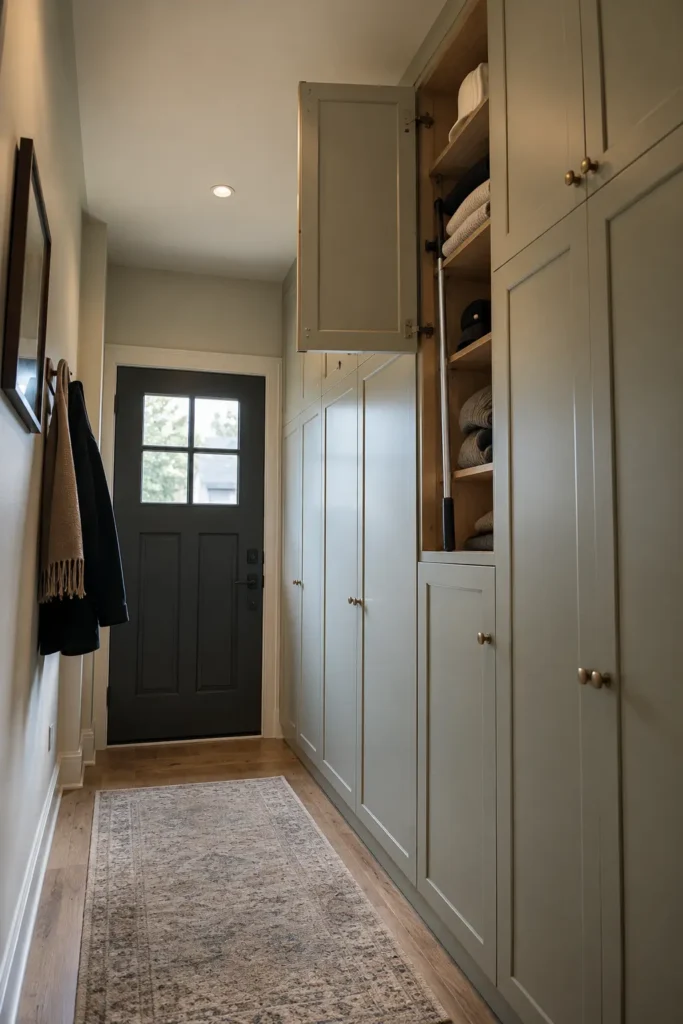
Daily items should be easy to reach; spare scarves and travel gear don’t need prime wall space. In an entry with sufficient ceiling height, run one shallow, wall-to-wall cabinet above head level and paint it the same matte color as the wall. The continuous band looks calmer than several separate boxes.
Use this space only for lightweight, infrequently needed items, and plan how you’ll retrieve them safely. A sturdy step stool may be more practical than a decorative access pole. Don’t install overhead storage where an open door could strike it.
10. Give Wet Boots Their Own Drawer
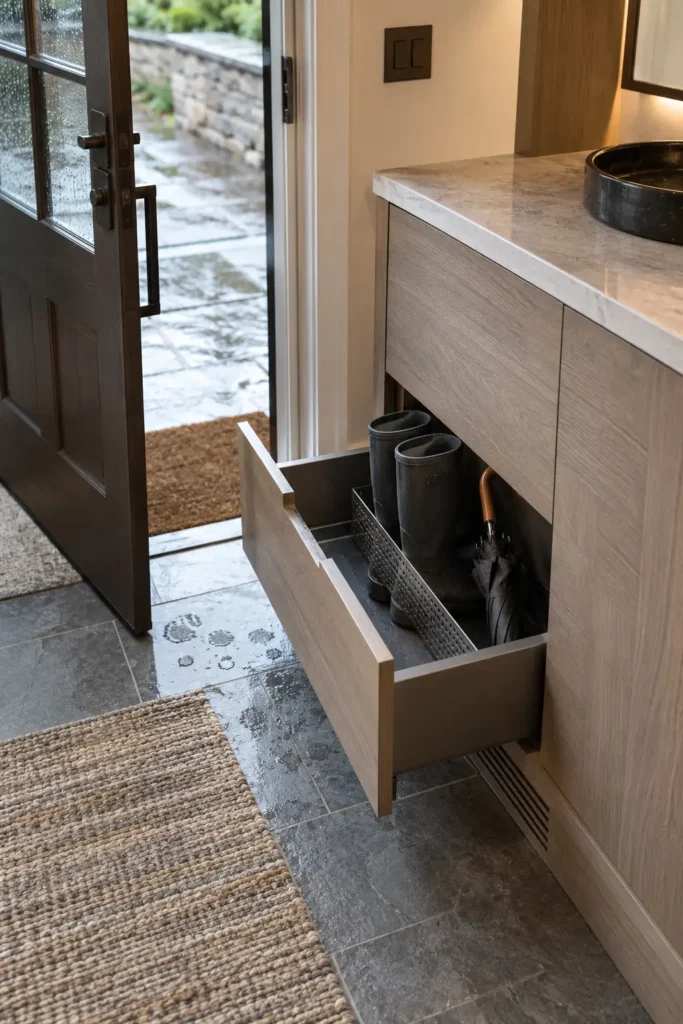
A closed shoe drawer needs a different setup if it will regularly hold rain boots. Fit a bottom compartment with a removable dark porcelain or slate-look drip tray and a perforated metal rack that lifts footwear above pooled water. Vent openings help moisture escape, while the drawer keeps muddy soles out of view.
Choose surfaces you can remove and wash; an absorbent fabric liner won’t hold up to wet weather. Let boots dry as needed rather than sealing them in a damp cabinet overnight. This is a contained landing spot, not a substitute for airflow.
11. Give Kids a Grab-and-Go Wall
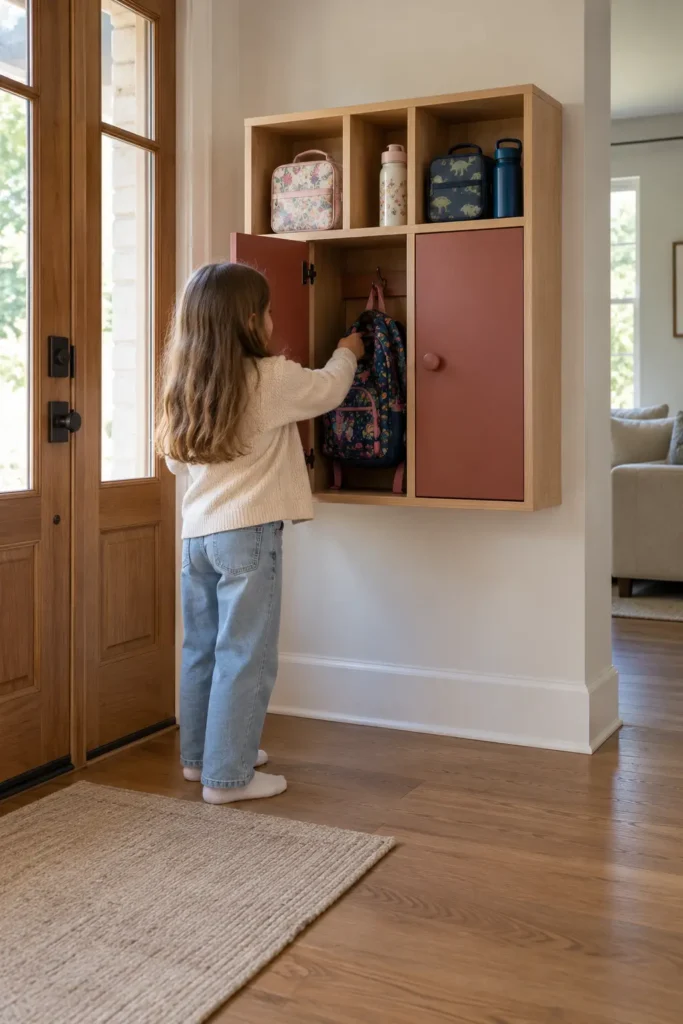
Backpacks need more depth than keys, so don’t force them into a 6-inch cabinet. Where the walkway allows, use a 10–12-inch-deep wall unit with two child-height, closed backpack bays. Put lunch boxes and water bottles in fitted compartments above, within each child’s reach.
Pale oak with muted-red doors gives the storage a clear shape without filling the wall with hooks. Size the bays using the backpacks you already own, including their straps. Secure the unit to the wall so children can open it and put things away independently.
12. Separate School Forms From Regular Mail
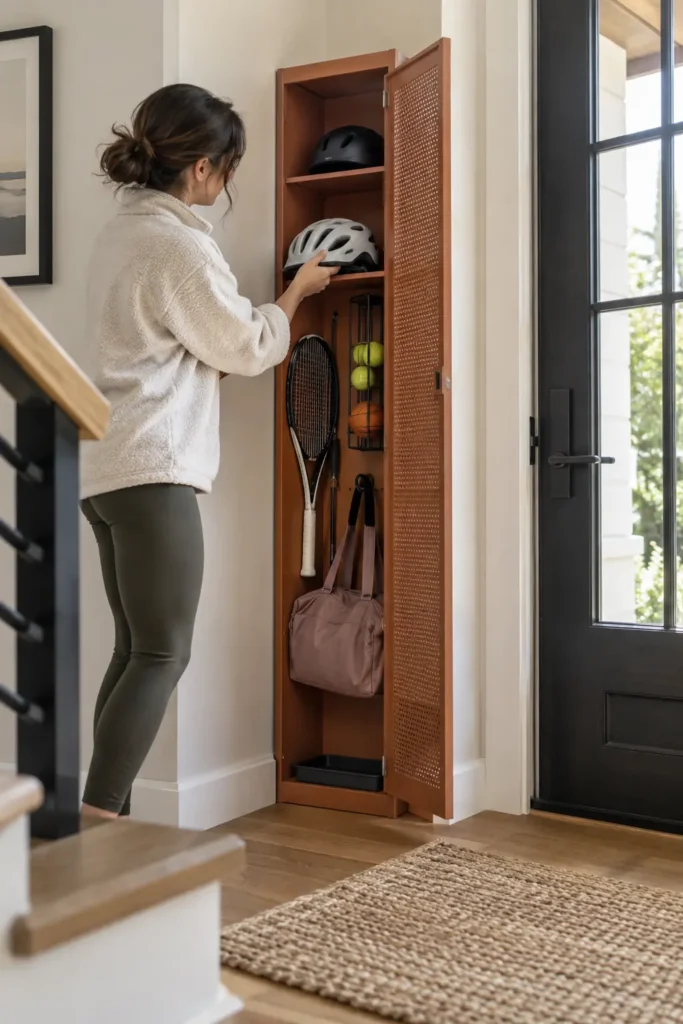
A small cabinet near the door can prevent permission slips from vanishing into a backpack or a stack of household mail. Give its blue-painted interior two upright slots: one for papers needing a signature and one for forms ready to return. A narrow pen ledge makes the task easy to finish on the spot.
Keep the cabinet shallow—around 4 inches—so it doesn’t intrude into the hall. A walnut front closes over the papers and leaves a tidy wall surface. In a rental, add removable dividers to a compact wall cabinet instead of building one from scratch.
13. Fit Sports Gear Into a Corner Locker
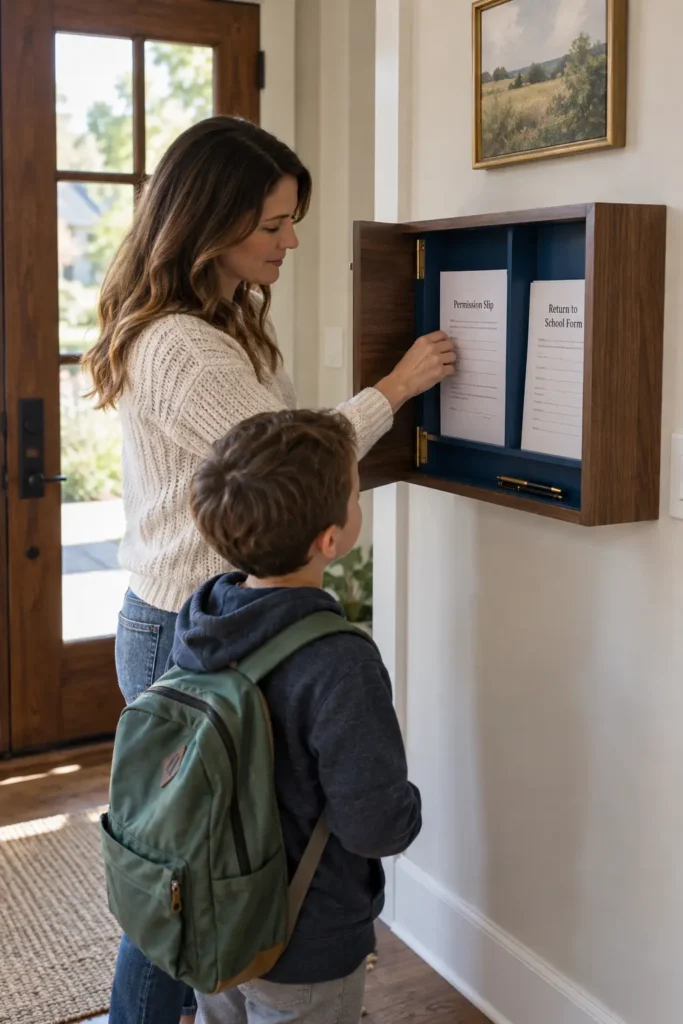
Helmets, rackets, balls, and activity bags rarely fit neatly on ordinary hooks. A narrow corner locker with adjustable rails gives those varied shapes separate places. Use a terracotta finish, a ventilated perforated-metal door, and a removable tray at the bottom for gear that comes home damp or dusty.
Plan the interior around your household’s actual equipment rather than identical shelves. Check that the locker door can open without meeting the front door or stairs. A basic utility cabinet can work here if you add secure anchoring, adjustable storage, and appropriate ventilation.
14. Keep Pet-Walk Supplies in One Drawer
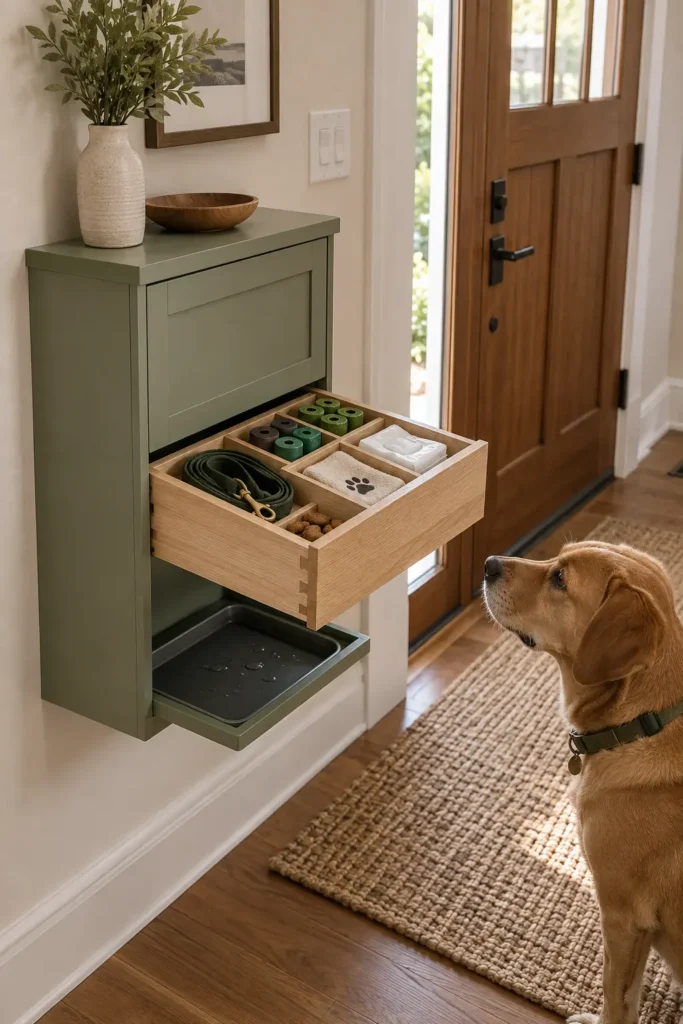
A pet-walk station should work just as well when you come home as when you leave. Beside the door, fit a shallow pull-out drawer with compartments for the leash, waste bags, treats, wipes, and a folded towel. Place a separate removable waterproof tray below for damp items.
Sage-green cabinetry with an oak drawer keeps the small supplies contained instead of scattering them across hooks. Store treats in a sealed container, and clean the wet tray regularly. If floor space is scarce, a securely mounted wall cabinet can provide the same routine-based storage.
15. Reserve a Cabinet for Things Leaving Tomorrow
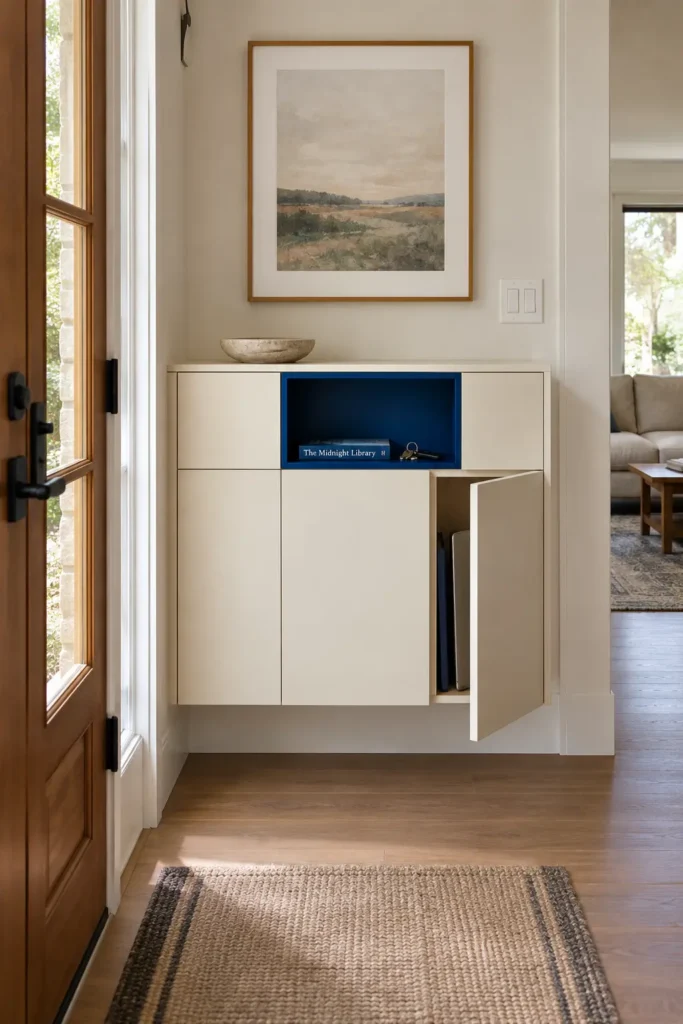
Some entryway clutter belongs to the next trip out: library books, a return, or something you promised to bring. Give those items a shallow closed cabinet near the door, plus one cobalt-blue recessed niche for the single thing you must remember tomorrow. Keys can sit beside it, but don’t let the niche become another catchall.
Keep enough cabinet depth for what your household actually carries; packages may require more than 6 inches. The bright niche draws your eye as you leave, while closed doors keep the rest from spilling into the entrance.