A dining table centerpiece should make your home feel finished, not create another thing you have to move every time you eat. Many decorating ideas look beautiful in photos but become annoying in real life because they take up too much space, collect dust, or feel too precious for everyday use.
The best simple everyday dining table centerpiece ideas are the ones that quietly work in the background. They add warmth, texture, and personality while leaving enough room for dinner plates, homework, coffee cups, and everyday conversations.
These ideas focus on realistic pieces you can actually live with: handmade ceramics, fresh greenery, useful trays, natural materials, and simple arrangements that look good all year.
Use a Long Wooden Tray as a Daily Dining Table Organizer
Use a Long Wooden Tray as a Daily Dining Table Organizer
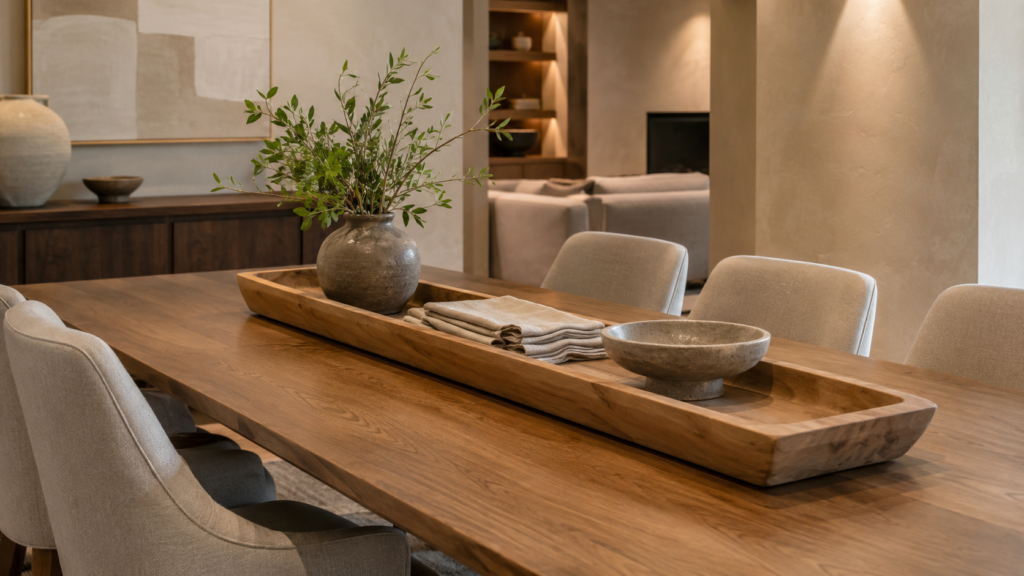
A long wooden tray is one of the easiest ways to create a centerpiece that is both decorative and useful. Place it through the center of your dining table and style it with a small ceramic vase, folded linen napkins, salt and pepper containers, or a simple bowl.
The tray creates one organized zone instead of several loose objects scattered across the surface. The wood adds warmth and works especially well with oak, walnut, or painted dining tables. Choose a tray that is about two-thirds the length of your table so the proportions feel balanced.
For busy households, this is a practical choice because you can lift the entire arrangement away when serving a larger meal.
Style a Ceramic Vase With Clipped Garden Branches
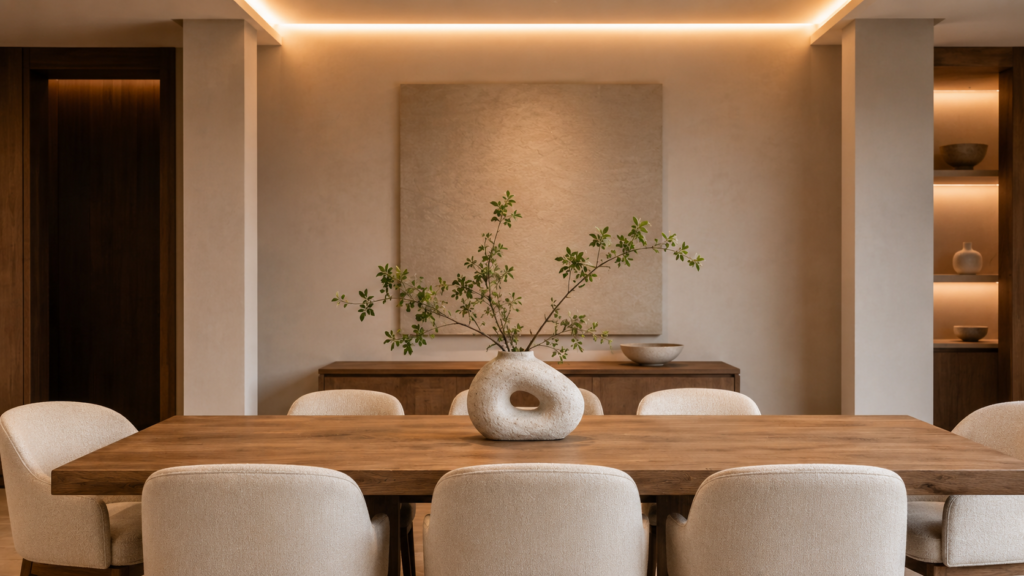
A large ceramic vase with a few fresh branches creates a relaxed centerpiece that feels natural rather than overly decorated. Instead of filling the vase with a dense bouquet, use branches with interesting shapes, such as olive, eucalyptus, magnolia, or seasonal greenery.
The uneven height and movement of the branches add softness while keeping the dining table visually open. A matte ceramic finish in warm white, beige, or clay tones also hides fingerprints better than glossy surfaces.
For a budget-friendly version, use branches from your own yard or local greenery rather than buying flowers every week. The simple shape often looks more timeless than a full arrangement.
Create a Breakfast-Friendly Centerpiece With a Small Herb Station
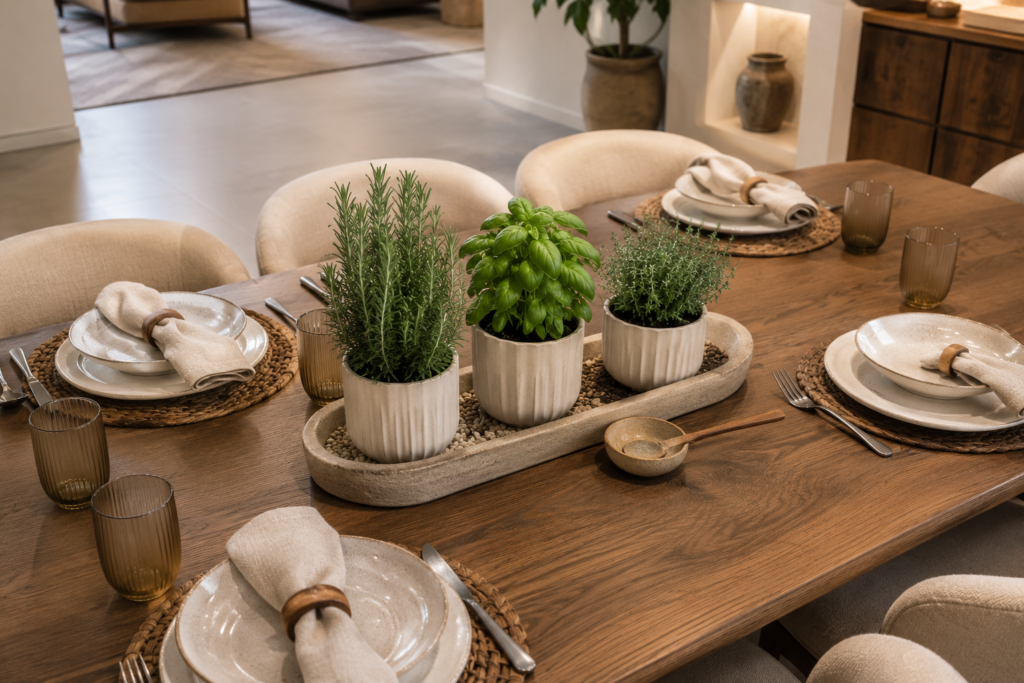
A dining table centerpiece becomes much more appealing when it serves a purpose. A small herb station with three matching clay pots filled with rosemary, basil, or thyme adds greenery while giving you something useful for cooking.
Place the pots together inside a shallow tray to keep the arrangement neat. Matching containers create a cleaner look, while the different leaf shapes add natural texture.
This idea works best near a bright dining area or breakfast nook. If your table receives little light, rotate the herbs to a sunny location occasionally so they stay healthy.
Layer Textured Placemats Under a Minimal Center Arrangement
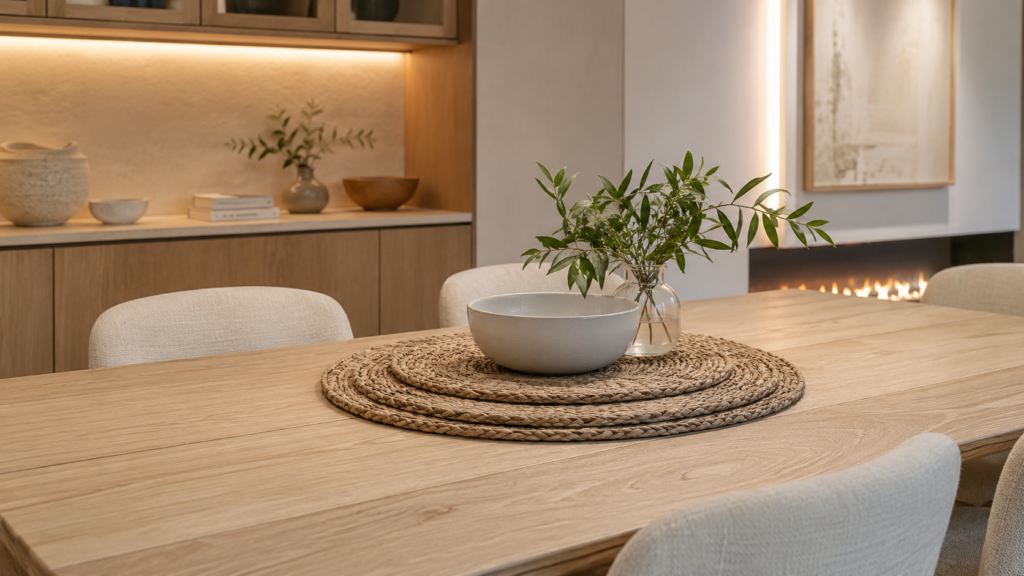
Instead of using a traditional runner, create a textured foundation with woven placemats placed together beneath your centerpiece. Four rattan or seagrass placemats arranged in a rectangle can create a designer-style base for a ceramic bowl, vase, or small tray.
The woven texture adds warmth and breaks up the flat surface of a wooden, glass, or stone table. It also helps smaller decorative pieces feel connected instead of randomly placed.
Keep the arrangement simple on top. The texture underneath should support the centerpiece, not compete with it.
Add a Large Bowl Filled With Decorative Natural Elements
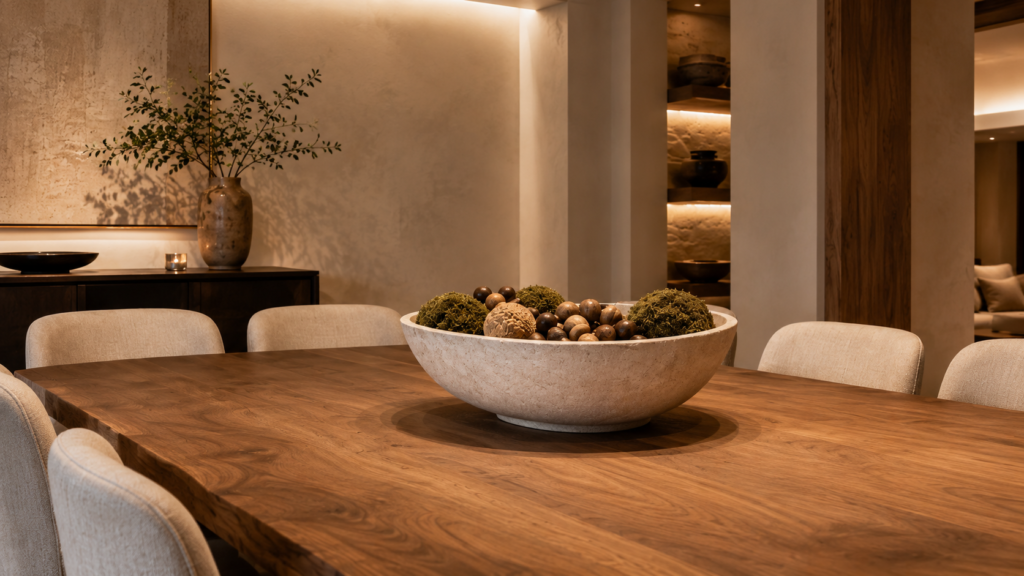
A large bowl filled with natural textures creates a simple centerpiece that does not require regular maintenance. Choose a wide ceramic, wooden, or stone bowl and fill it with preserved moss balls, smooth wooden pieces, pinecones, or neutral decorative objects.
The key is using fewer, larger elements instead of small filler pieces that look cluttered. The bowl provides visual weight while the natural materials add warmth and texture.
This style works especially well in modern and neutral dining rooms where too many colorful accessories can make the space feel busy.
Place a Low Succulent Planter as a Permanent Everyday Centerpiece
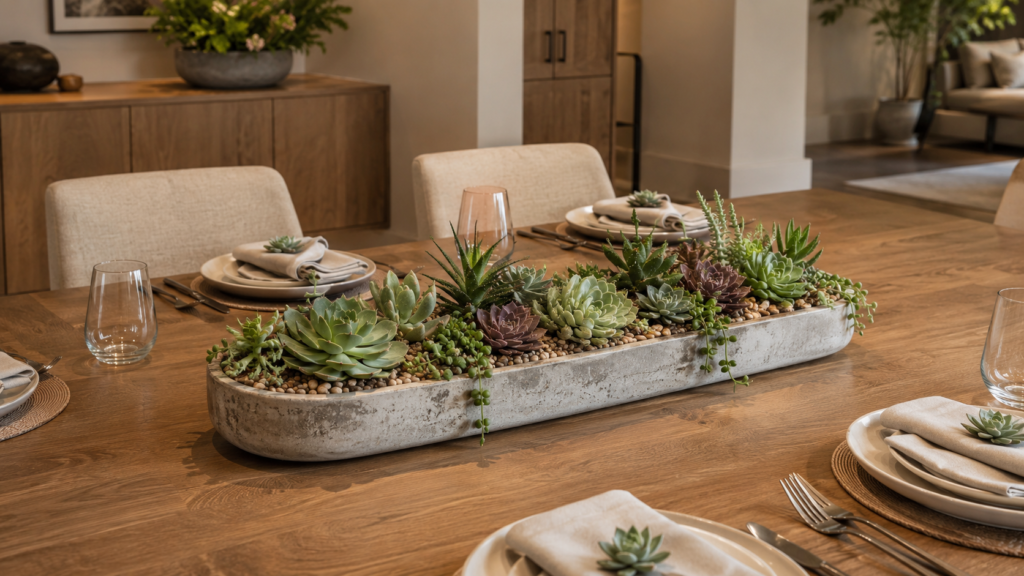
A low succulent planter is ideal for anyone who wants greenery without constant upkeep. Choose a long ceramic planter and arrange different succulent shapes together while keeping the height below eye level.
The low profile keeps conversations comfortable because people can still see across the table. The varied shapes of the plants create interest without needing flowers or extra decorations.
Use a handmade planter in stone, concrete, or ceramic finishes for a more polished look. Add small pebbles on top of the soil to keep the arrangement looking neat and intentional.
Arrange Vintage Glass Bottles With Simple Green Branches
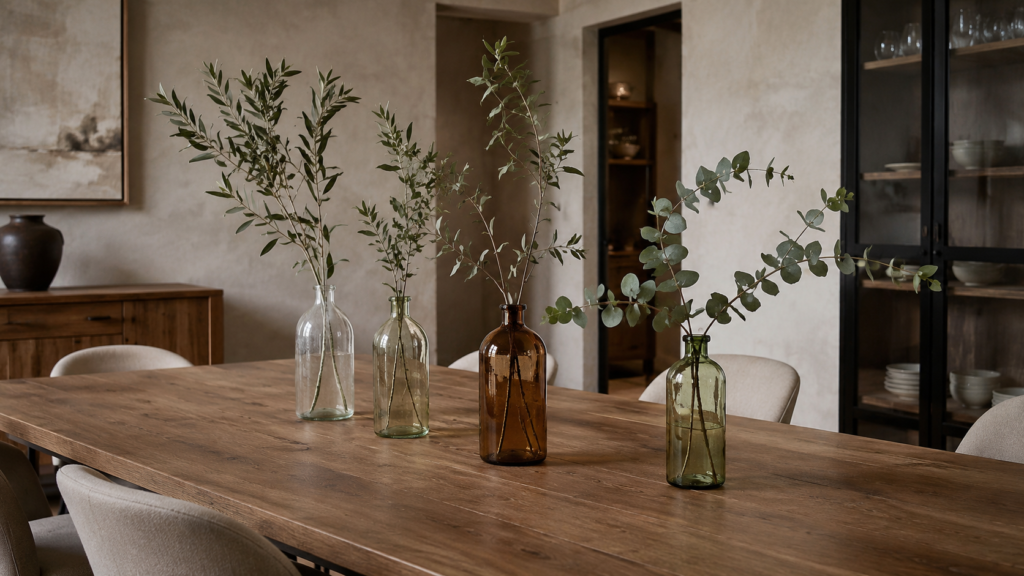
Vintage glass bottles create a collected centerpiece that feels personal without looking overly styled. Choose three to five bottles in similar tones, such as clear, amber, or soft green glass, and place one simple branch inside each. Olive stems, eucalyptus, or clipped garden branches work especially well because their natural shapes add movement.
The secret is avoiding perfect symmetry. Leave slightly different spaces between the bottles so the arrangement feels gathered over time rather than arranged like a store display.
This idea works beautifully on long dining tables because the low visual weight of glass keeps the surface feeling open while still adding character.
Style a Handmade Ceramic Bowl With Seasonal Natural Texture
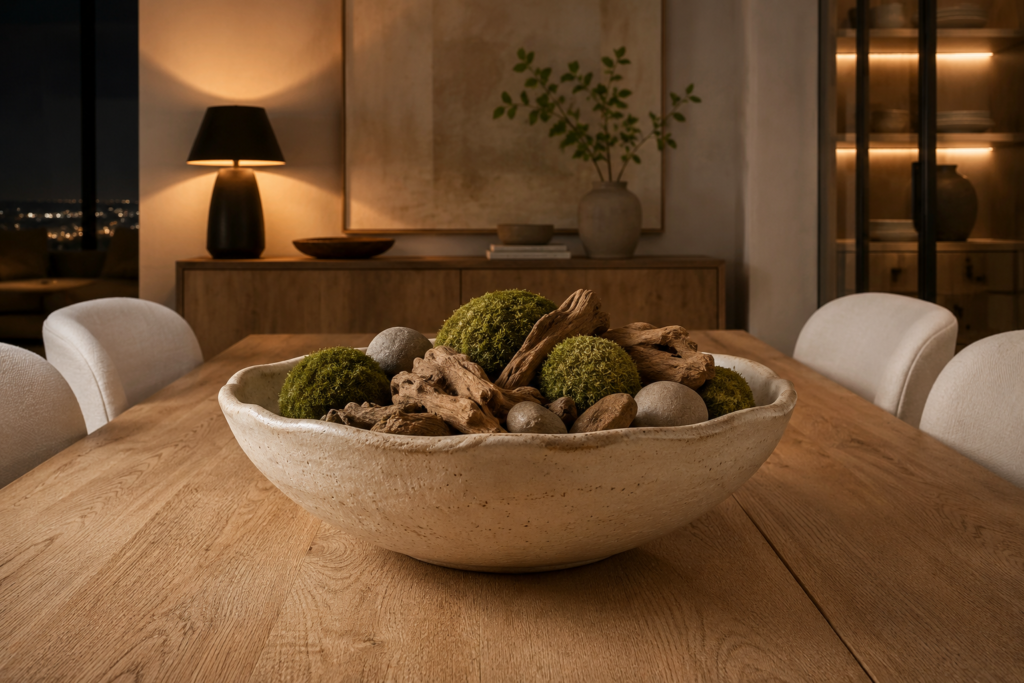
A handmade ceramic bowl can become a beautiful everyday centerpiece when you focus on texture rather than decoration. Fill a wide bowl with simple natural elements like preserved moss, smooth river stones, wooden pieces, or dried seed pods.
The handmade surface of the bowl becomes part of the design, especially when paired with natural materials. Matte ceramic finishes also soften artificial lighting and create a warmer feeling during evening meals.
Keep the colors within one family, such as earthy greens, warm browns, and soft neutrals. This makes the centerpiece easier to live with because it blends into different seasons and dining room styles.
Create a Simple Dining Table Centerpiece With One Large Vase and Linen Runner
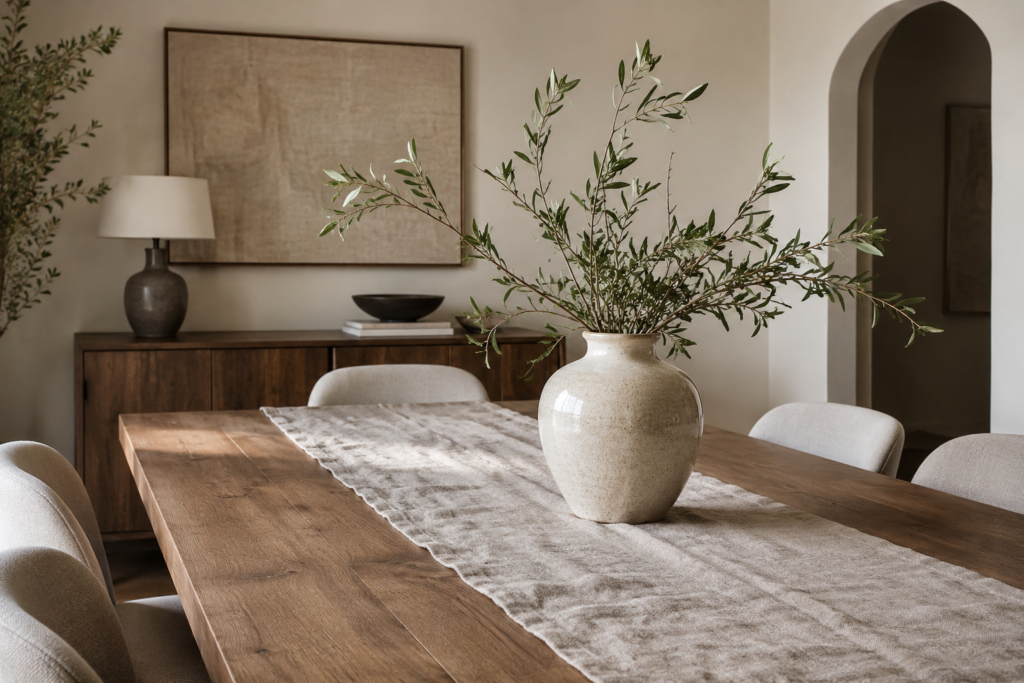
A linen runner paired with one large vase is proof that an everyday centerpiece does not need multiple objects. Lay a washed linen runner across the table and place a single ceramic or glass vase slightly off-center with fresh branches or greenery.
The soft wrinkles of linen add texture while the vase creates a clear focal point. The slight asymmetry prevents the arrangement from feeling too formal and gives the table a relaxed designer look.
This approach is especially useful for smaller dining rooms because it adds style without taking away valuable serving space. Choose neutral linen shades like beige, oatmeal, or soft gray for a timeless foundation.
Use a Functional Centerpiece With Napkins, Tray, and Everyday Dining Pieces
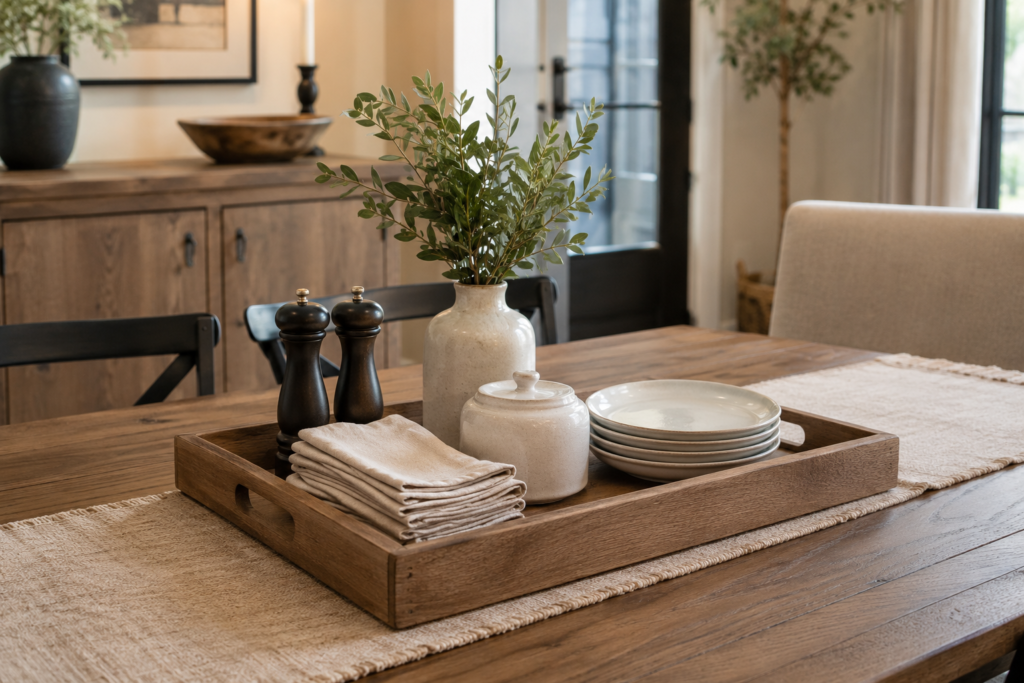
A centerpiece can look beautiful while still supporting your daily routine. Place a shallow tray in the center of the table and organize useful items inside, such as cloth napkins, a ceramic container, a small vase, and everyday serving pieces.
This creates a styled area that feels natural because everything has a purpose. The tray also makes cleaning easier since you can move the entire arrangement when needed.
For families, this type of centerpiece often works better than fragile decorative pieces because it can handle everyday use while still making the dining room feel finished.
Style a Footed Ceramic Bowl as a Simple Sculptural Centerpiece
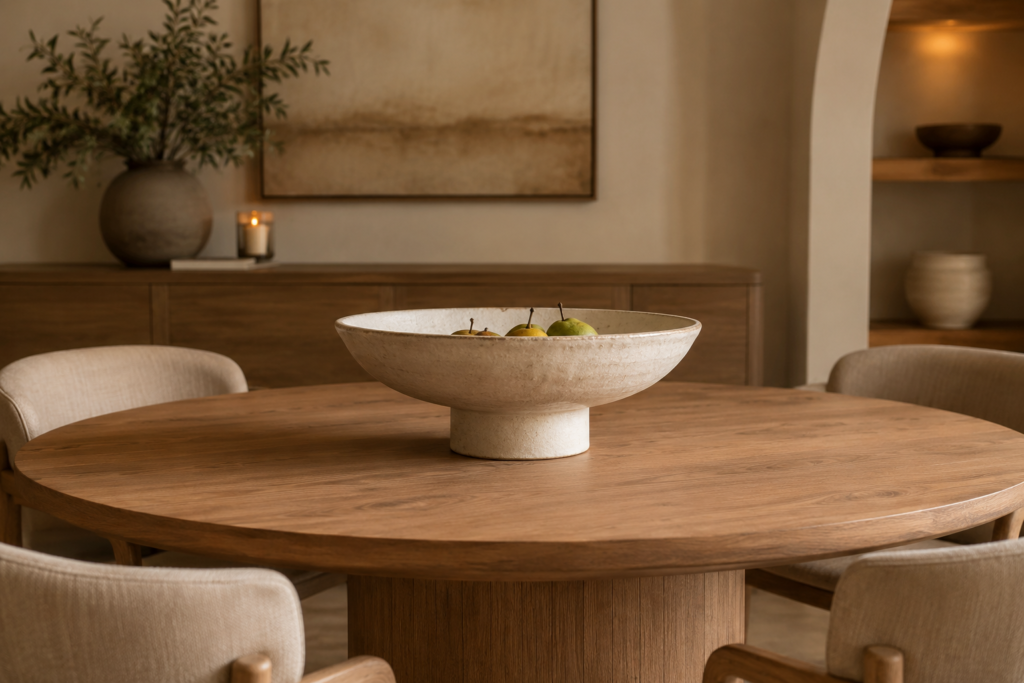
A footed ceramic bowl adds gentle height without creating a centerpiece that blocks conversation. Choose a bowl with a raised base and a handmade finish, then leave it mostly empty or add only a few natural elements inside.
The elevated shape creates visual interest by changing the height level on the table. It also gives a simple object more presence because the eye naturally notices the lifted silhouette.
This works especially well on round dining tables where one central object can create a strong focal point. Look for imperfect handmade details instead of perfectly smooth factory finishes.
Fairy Lights in a Lantern
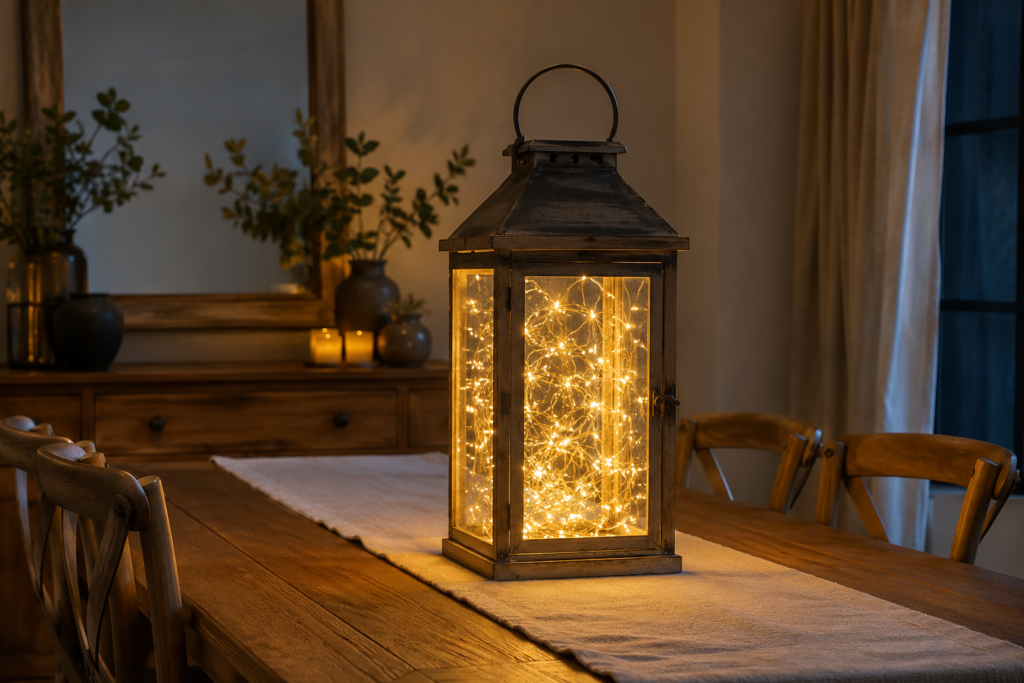
Take a large, classic metal, glass, or rustic wooden lantern and fill it completely with a long strand of battery-operated fairy lights. Instead of a single harsh light, the tiny bulbs scatter against the glass panes, creating a warm, magical evening glow that acts as a stunning ambient focal point for the entire room.
Dried Florals or Bunny Tails
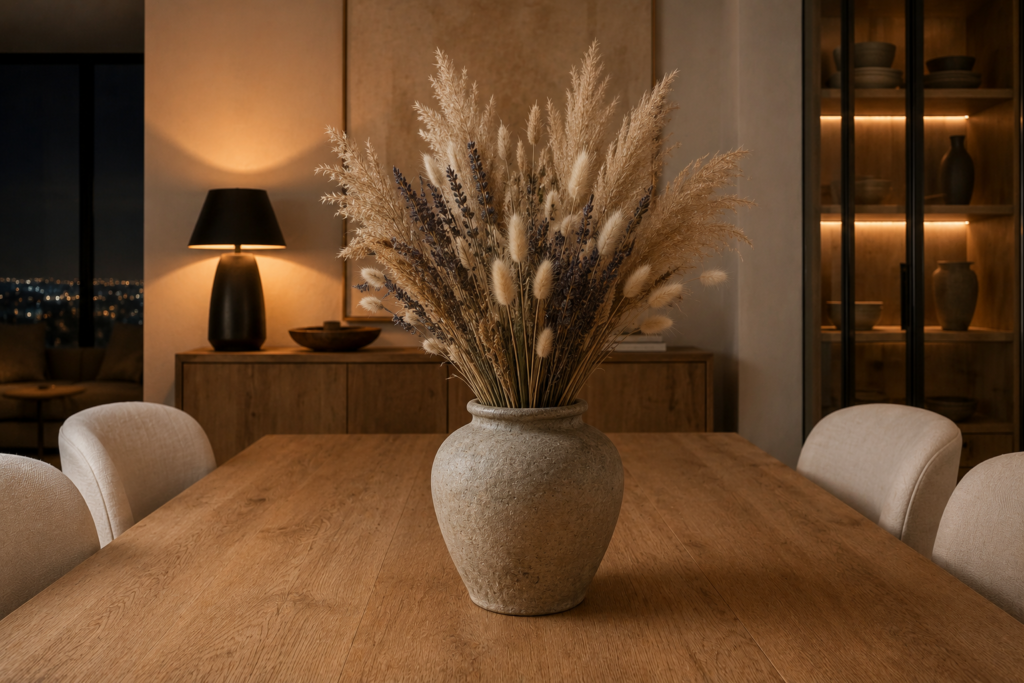
Place a generous bundle of naturally textured pampas grass, fluffy bunny tails, or dried French lavender into a heavy ceramic or stoneware vase. Because dried botanicals retain their organic shape and muted earth tones permanently, this setup gives you a timeless, carefree arrangement that brings an organic modern warmth to your dining space with zero watering or maintenance required.
Simple Everyday Dining Table Centerpiece Styling Rules
The most beautiful dining tables usually follow a few simple principles. First, pay attention to scale. A tiny vase can disappear on a large table, while an oversized arrangement can make a small table feel crowded.
Keep everyday centerpieces low enough that people can comfortably see across the table. For most dining spaces, arrangements between 8 and 16 inches tall work well.
Another important detail is leaving negative space. You don’t need to decorate every inch of the table. Empty areas make the pieces you choose feel more intentional and help the room feel calmer.
Natural materials usually perform best for everyday use. Ceramic, wood, linen, stone, and woven textures develop character over time and hide small signs of daily living better than glossy decorative pieces.