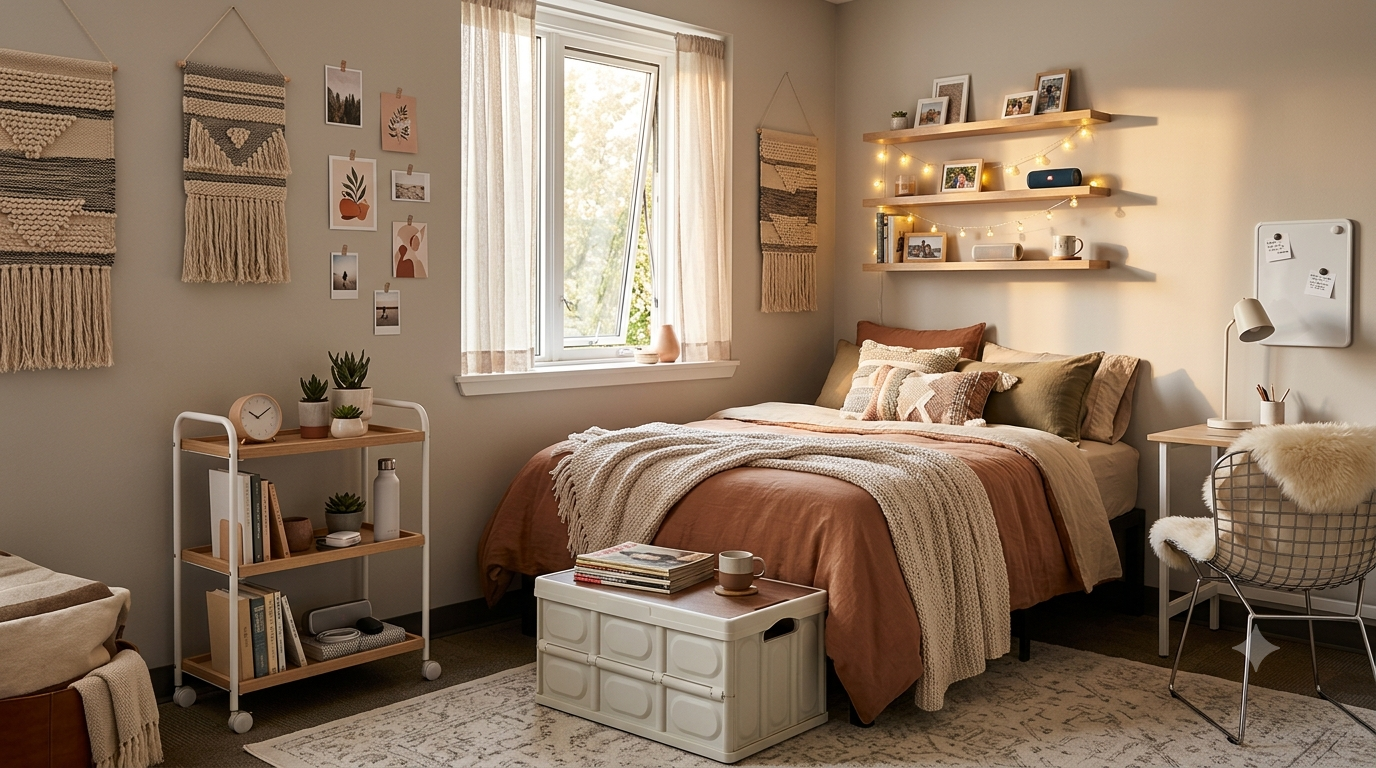
A dorm room can look crowded long before it feels finished. The furniture is fixed, the walls are plain, and every useful item seems to end up visible at once.
The strongest dorm room decor ideas don’t hide those limits with random accessories. They use scale, lighting, storage, and placement to make the room feel calmer while improving how you sleep, study, dress, and get out the door.
These aesthetic and functional dorm room ideas are designed for real college rooms, strict housing rules, limited budgets, and the daily mess that styled photos rarely show.
1. Build a Full-Width Headboard From Upholstered Memo Panels
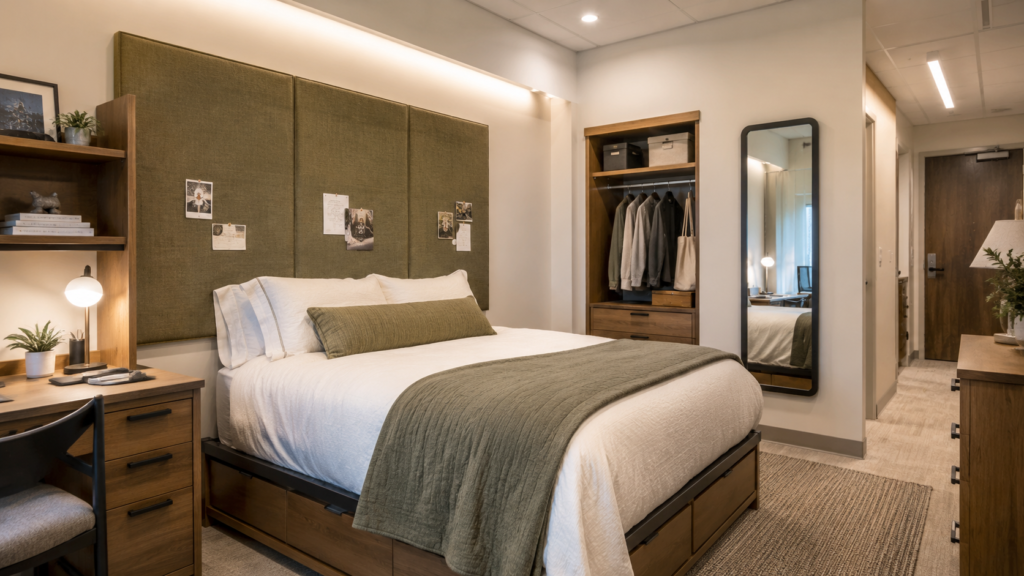
Mount three fabric-covered memo panels across the wall behind the bed so they read as one wide headboard. Choose low-pile linen, felt, or canvas in warm taupe, olive, denim blue, or muted rust.
A wide horizontal shape makes a narrow twin bed feel more substantial and gives the wall a clear focal point. Use the outer panels for schedules and lightweight notes while keeping the center mostly empty. Mount the panels with removable picture strips, leaving four to six inches visible on each side of the mattress.
2. Turn a Lofted Bed Into a Built-In Study Alcove
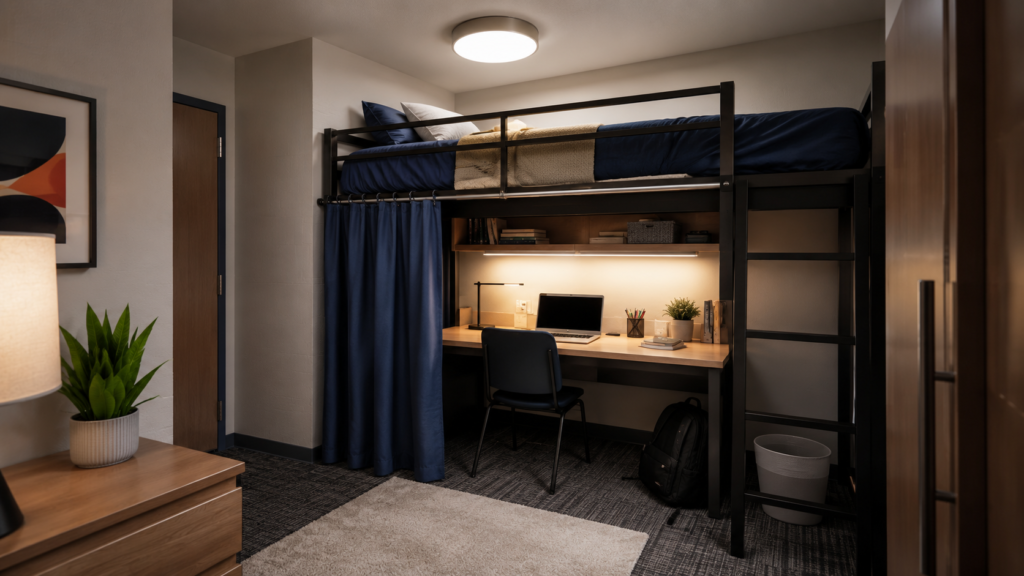
Instead of treating the space beneath a lofted bed as leftover storage, design it like a compact room within the room. Place the desk against the back wall, add a clamp lamp, and hang one tailored curtain panel across the open side.
The fabric creates visual separation without taking up floor space, while the lower ceiling makes the desk feel more sheltered. Use a light cotton curtain rather than heavy blackout fabric, and keep the opening wide enough that the study zone never feels cramped or poorly ventilated.
3. Use One Oversized Back Cushion Instead of Decorative Pillow Clutter
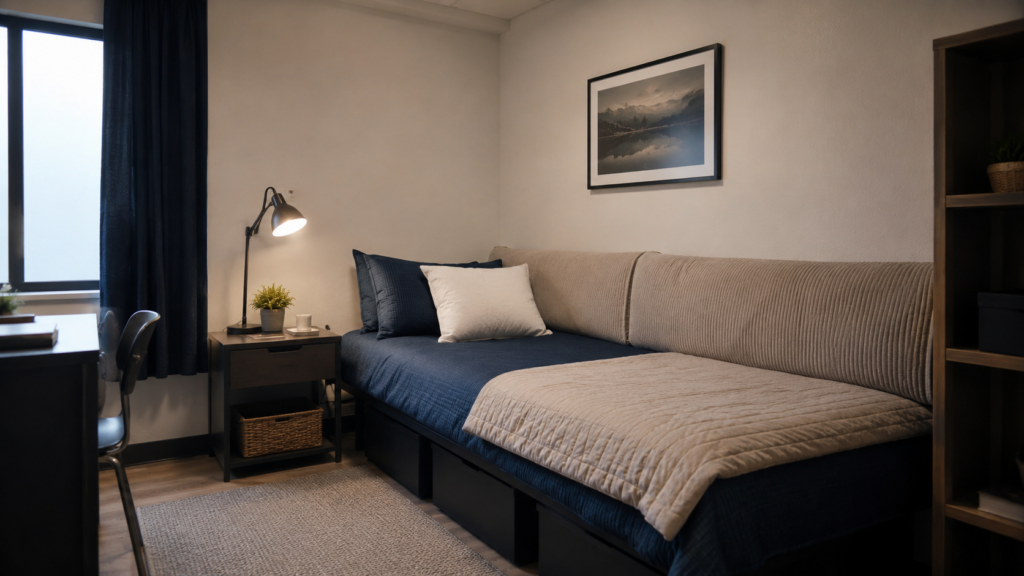
Place one long lumbar or bench cushion against the wall so the bed works like a daybed during the day. A cushion around 14 by 48 inches gives a twin bed enough visual weight without filling it with pillows that end up on the floor.
Choose washable canvas, corduroy, or performance fabric, since dorm bedding gets handled constantly. One large cushion creates cleaner proportion than five small ones and leaves enough room to sit, study, or share the bed with a visiting friend.
4. Create a Freestanding Bed Canopy With a Slim Garment Rack
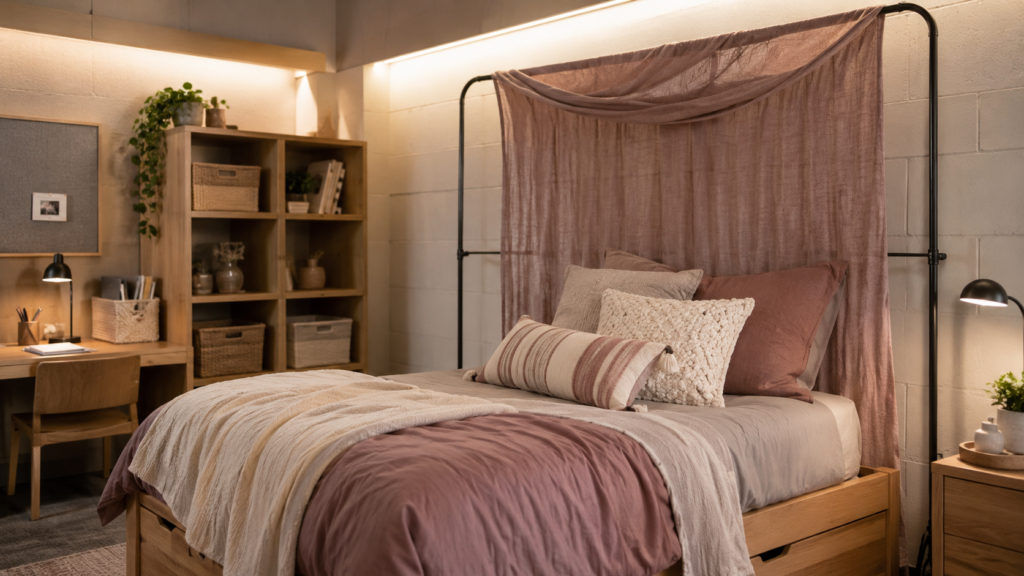
Position a lightweight garment rack behind the head of the bed and drape one panel of cotton voile or washed gauze over the top rail. Let the fabric fall behind the mattress rather than enclosing the bed on every side.
This creates height and softness without attaching anything to the ceiling. The vertical fabric also hides uneven wall finishes and makes the sleeping zone feel more intentional. Keep all fabric at least 12 inches away from lamps, outlets, heating units, and charging cords.
5. Replace the Nightstand With a Narrow Rolling Bedside Cart
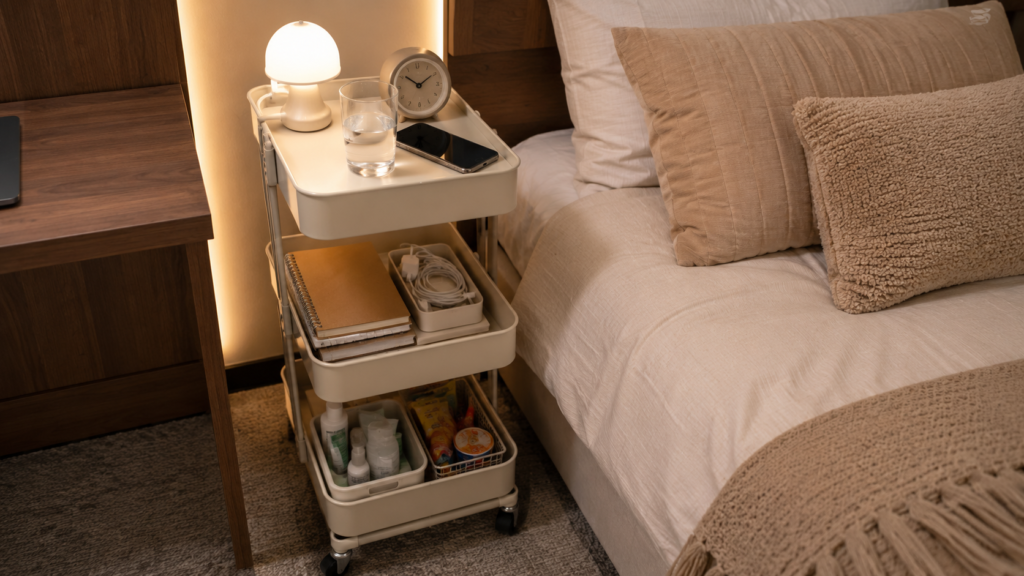
A three-tier rolling cart can hold more than a tiny bedside table while taking up less visual space than a cabinet. Keep your phone, water, and reading lamp on top, notebooks and chargers in the middle, and toiletries or snacks below.
Choose a cart no wider than 16 to 18 inches so it fits beside the bed without narrowing the walkway. The wheels make it easy to move beside the desk, between roommates, or out of the way during cleaning.
6. Frame the Desk With Two Vertical Organization Strips
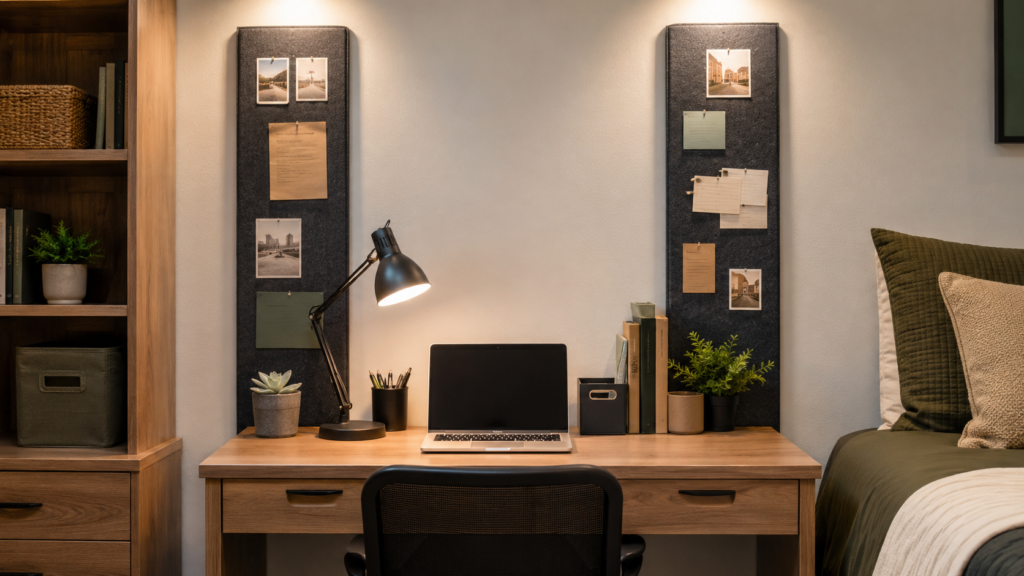
Install one narrow cork, felt, or magnetic strip on each side of the desk instead of covering the wall with scattered notes. Each strip can be eight to 12 inches wide and tall enough to hold schedules, reminders, receipts, and small photos.
The paired vertical shapes create symmetry, which makes inexpensive dorm furniture feel more considered. Keeping the center wall clear also protects your sight line while studying. Too much visual information directly above a laptop can make a small desk feel busier than it is.
7. Add a Raised Shelf Across the Back of the Desk
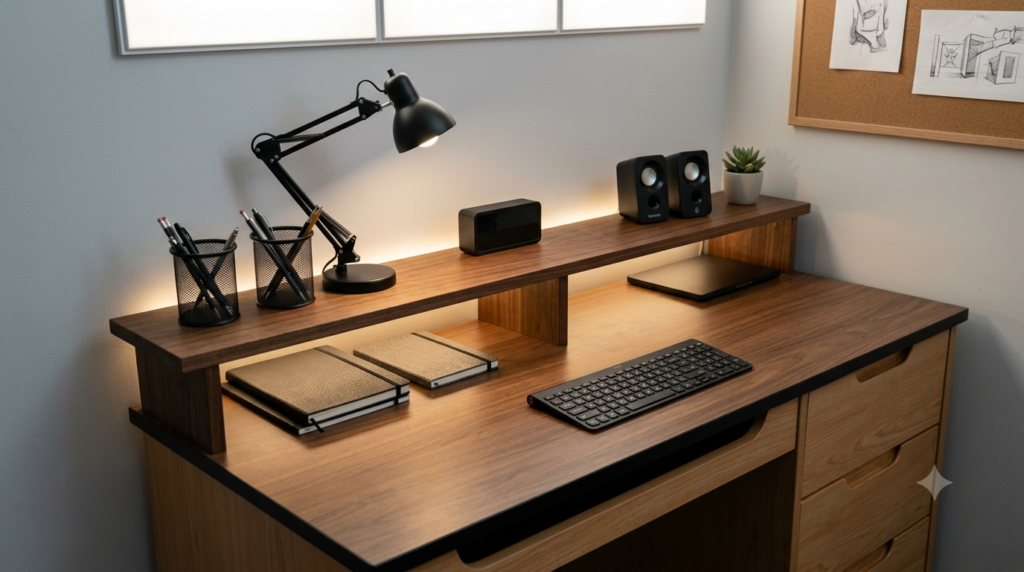
Place a narrow desktop riser across the back edge of the desk to hold a lamp, clock, speakers, and frequently used supplies. The space underneath can store a keyboard, notebooks, or charging cables when they aren’t in use.
This simple height change gives the desk layers instead of letting everything sit on one flat plane. Look for a riser six to eight inches deep so it doesn’t consume your writing space. A wood or matte metal finish usually looks calmer than clear plastic.
8. Hide Charging Cables Inside a Mounted Fabric Pocket
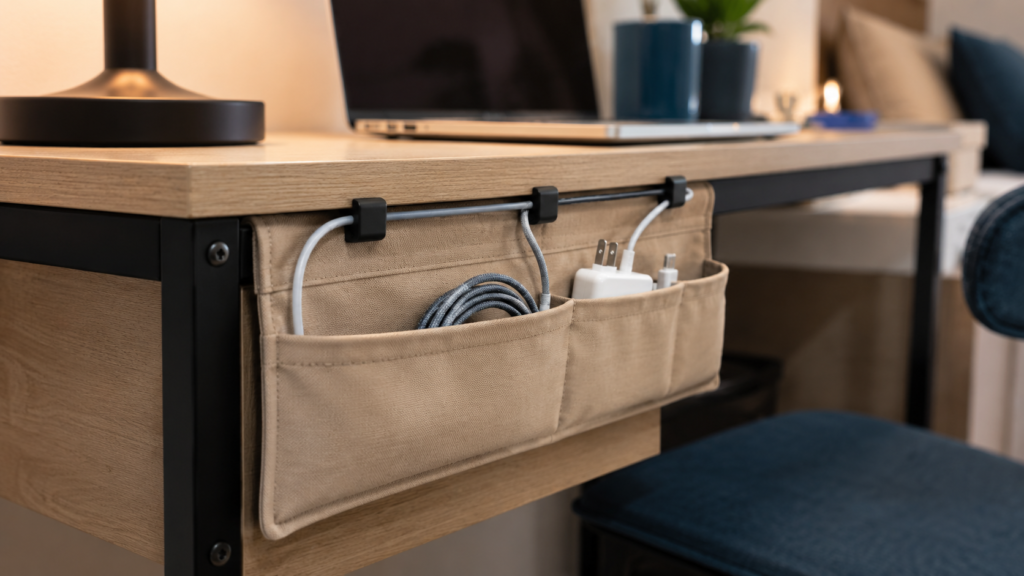
Attach a slim fabric document pocket to the side of the desk or bed frame using removable strips. Feed charging cords into the pocket and place a labeled cable clip along the upper edge for each device.
This keeps power bricks and tangled wires off the floor without enclosing them in a heat-trapping box. Visible cords can make even a tidy dorm room look unfinished because they interrupt clean lines. Leave enough slack for comfortable use and never cover extension strips with fabric or bedding.
9. Swap the Big Light for Three Low Lighting Zones
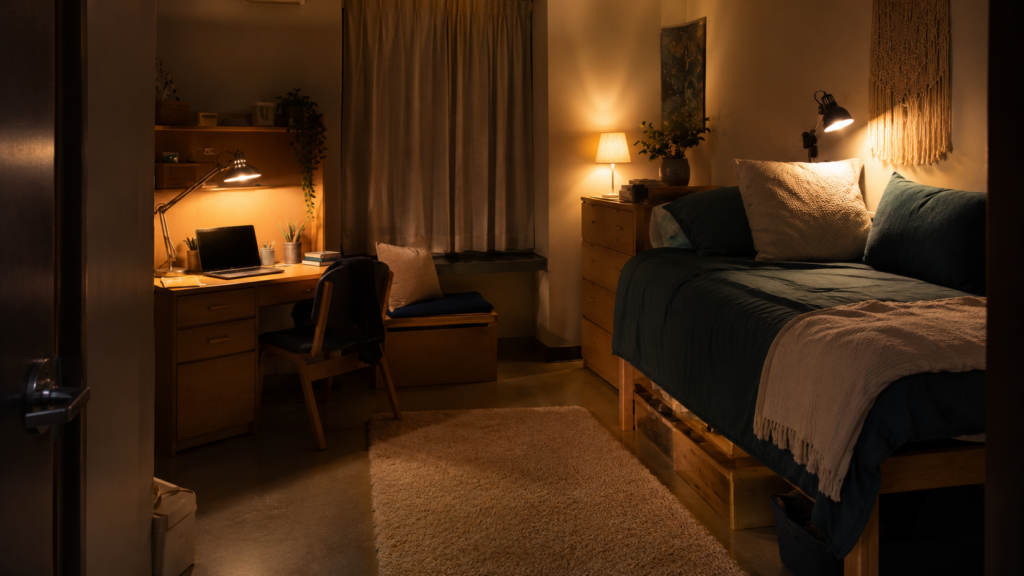
Use a desk lamp, a clip-on reading light, and a small shaded lamp on a dresser or cart instead of relying only on the ceiling fixture. Each light should serve one activity rather than trying to brighten the entire room.
Multiple pools of light make the room feel wider because your eye moves from one illuminated zone to another. Choose bulbs between 2700K and 3000K. Warm light softens beige walls and wood furniture, while cool white LEDs often make institutional finishes look sharper.
10. Hide LED Lighting Behind Furniture Instead of Tracing the Ceiling
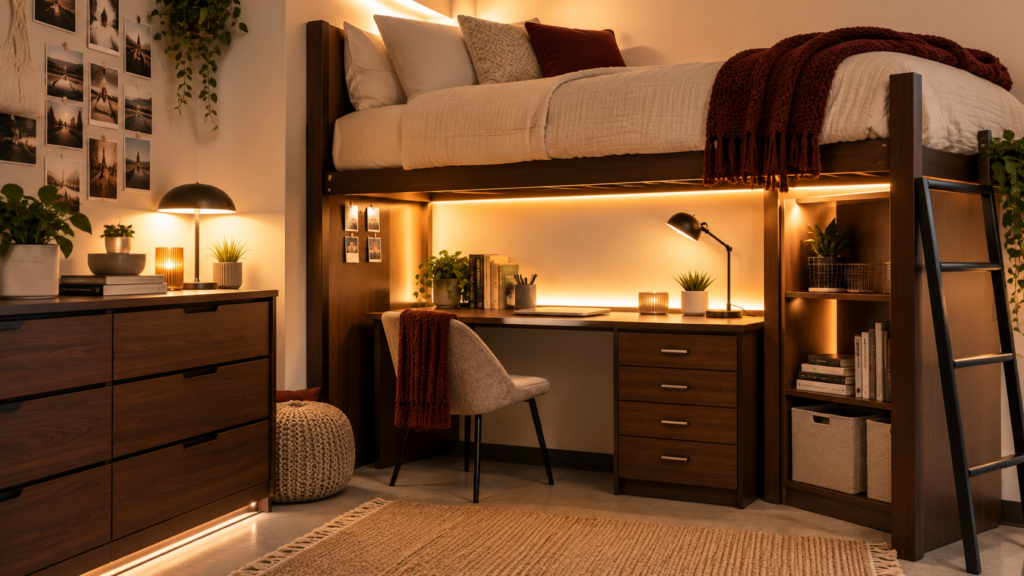
Place warm-white LED strips behind the desk, beneath a lofted bed, or along the back of a storage unit. The light source should remain hidden so you see a glow rather than a line of exposed bulbs.
Indirect light looks more polished and reduces harsh contrast around screens at night. Use removable mounting clips instead of depending entirely on adhesive backing, which can lift paint. Avoid running lights across fire doors, heating units, or areas where furniture may pinch the cable.
11. Build the Room’s Color Story in Three Large Blocks
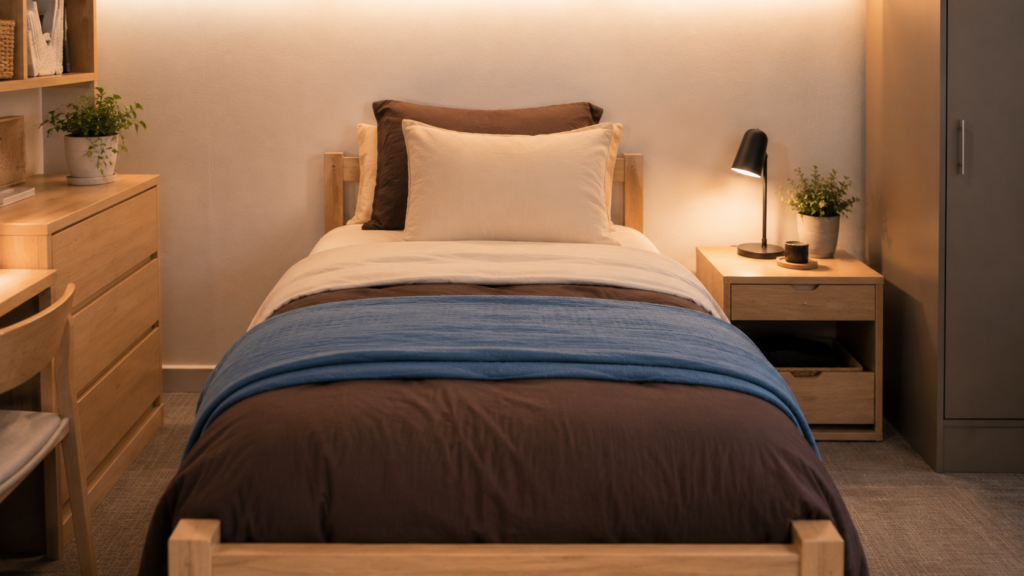
Choose one dominant color for the duvet, one secondary color for a folded coverlet, and one lighter tone for sheets or pillowcases. Large color fields look calmer than many small accessories in unrelated shades.
Try chocolate brown with dusty blue, olive with warm cream, or clay with muted plum. These colors usually stay rich under artificial light, unlike cool pale gray, which can look flat or bluish. Limit strong patterns to one layer so the bed remains a visual anchor rather than visual noise.
12. Use a Flatweave Runner Where Your Feet Actually Land
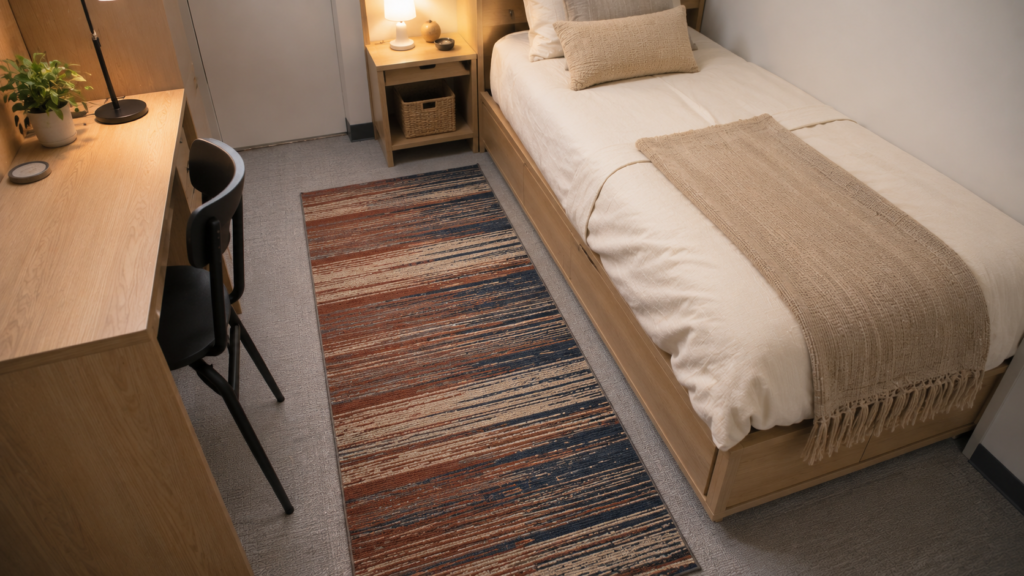
Place a narrow runner along the open side of the bed rather than forcing a large area rug beneath fixed furniture. A runner about two feet wide adds softness exactly where you need it without blocking drawers, desk chairs, or storage bins.
The long shape also stretches the room visually. Flatweave cotton or indoor-outdoor materials are easier to vacuum and less likely to collect crumbs than thick shag rugs. Leave one to two inches between the rug edge and furniture legs to prevent bunching.
13. Conceal Under-Bed Storage With Tension-Mounted Fabric Panels
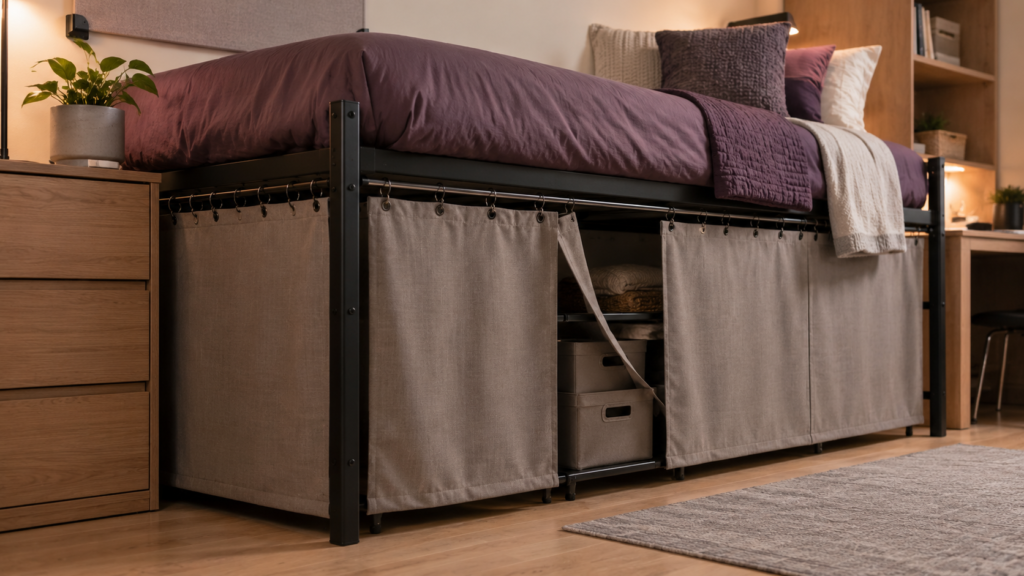
Install short tension rods between the bed legs and clip tailored fabric panels onto them. This creates a clean storage screen that can be removed without tape, pins, or permanent hardware.
Choose a solid fabric close to the bedding color so the bed reads as one continuous shape. Ruffled skirts often make a small room feel fussier, while straight panels create a stronger line. Measure from the bed frame to half an inch above the floor so the fabric doesn’t drag or collect dust.
14. Turn the Closet Opening Into a Soft Architectural Feature
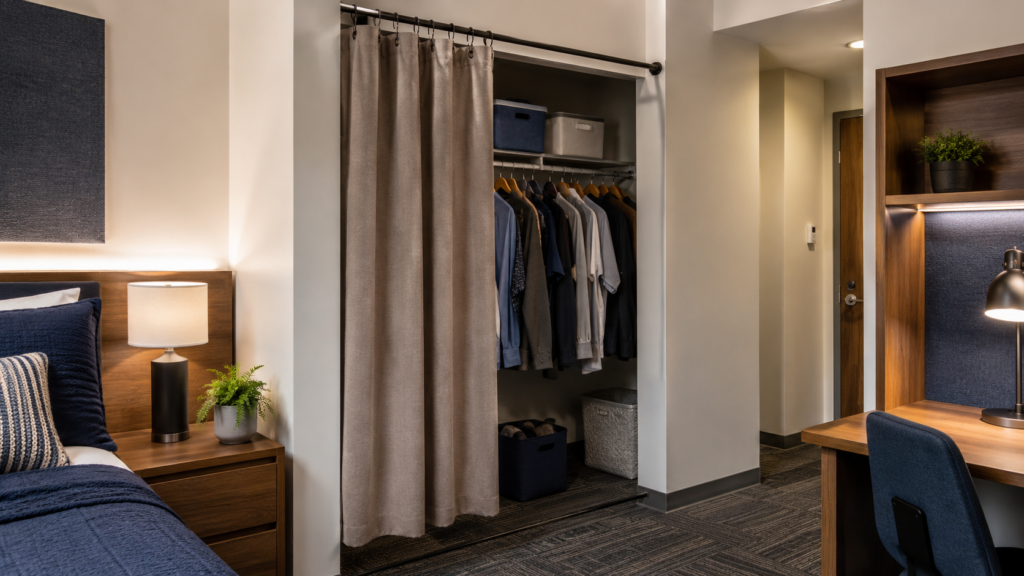
If your dorm has an exposed closet, place a tension rod across the opening and hang one solid curtain panel from clip rings. Use cotton canvas, linen-look fabric, or a lightweight blackout panel in a color already repeated in the room.
The curtain hides hangers, laundry bags, and mismatched storage containers in a single move. It also reduces the visual depth of the closet, helping the room feel calmer. Keep the hem half an inch above the floor and check that the rod doesn’t block sprinklers or vents.
15. Use Matching Storage Only Where the Eye Lands First
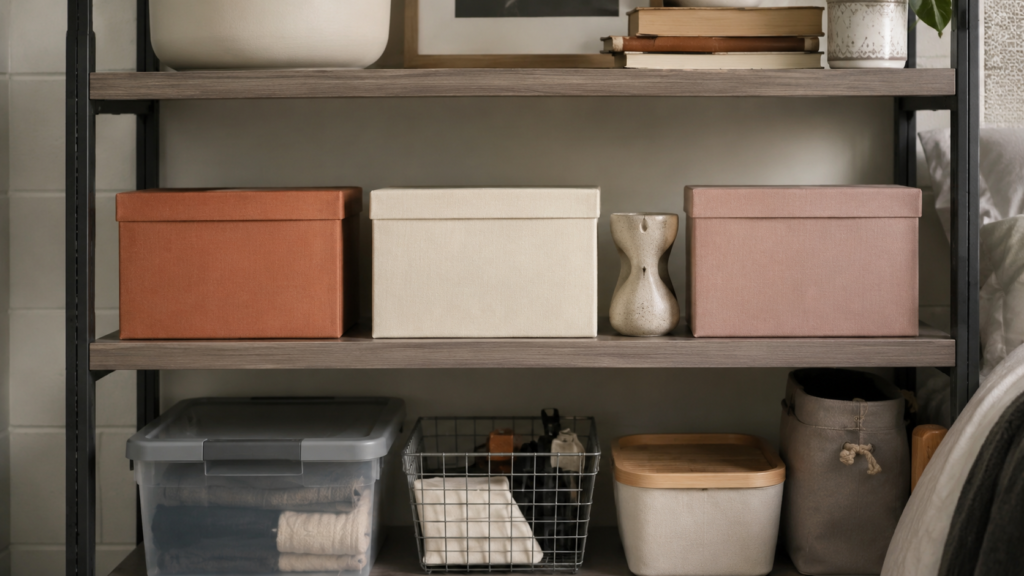
Place two or three coordinated boxes on the most visible shelf, then use practical containers in lower or hidden areas. You don’t need every bin in the room to match.
Repetition at eye level creates the impression of order without forcing you to replace functional storage you already own. Matte cardboard, canvas, or opaque plastic looks less busy than clear bins filled with mixed items. Label the top or hidden side so the front surfaces remain visually quiet.
16. Create an Over-the-Door Dressing Station
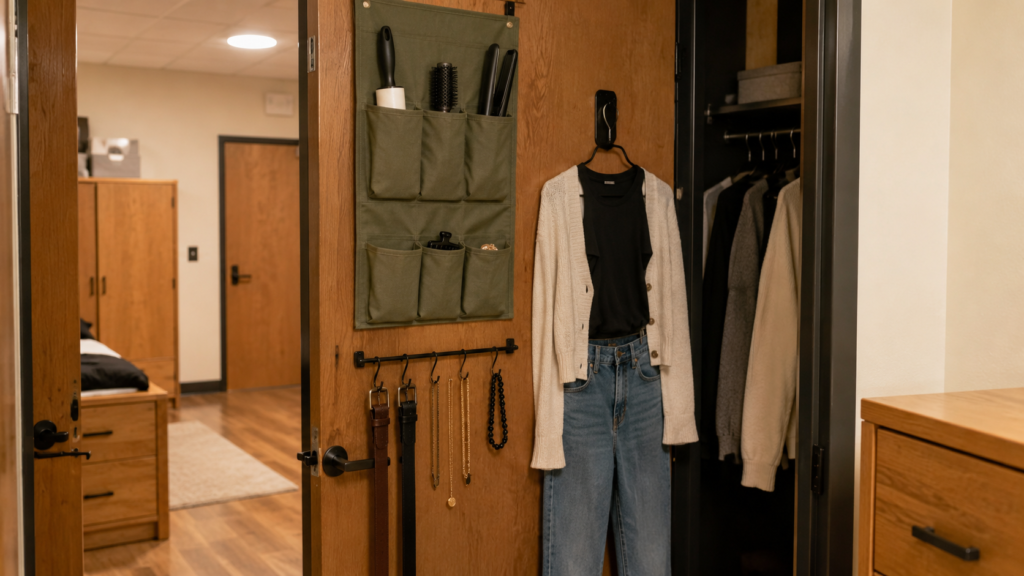
Use the inside of the closet door for a narrow pocket organizer, a removable hook, and a slim accessory rail. Store belts, jewelry, lint rollers, hair tools, and the outfit you plan to wear the next day.
This keeps frequently used pieces near the dressing zone instead of scattering them across the desk. Choose shallow fabric pockets so the door still closes easily. Metal organizers can rattle and scratch painted surfaces, so add felt pads beneath every point that touches the door.
17. Hang One Large Textile Instead of Covering the Wall With Small Prints
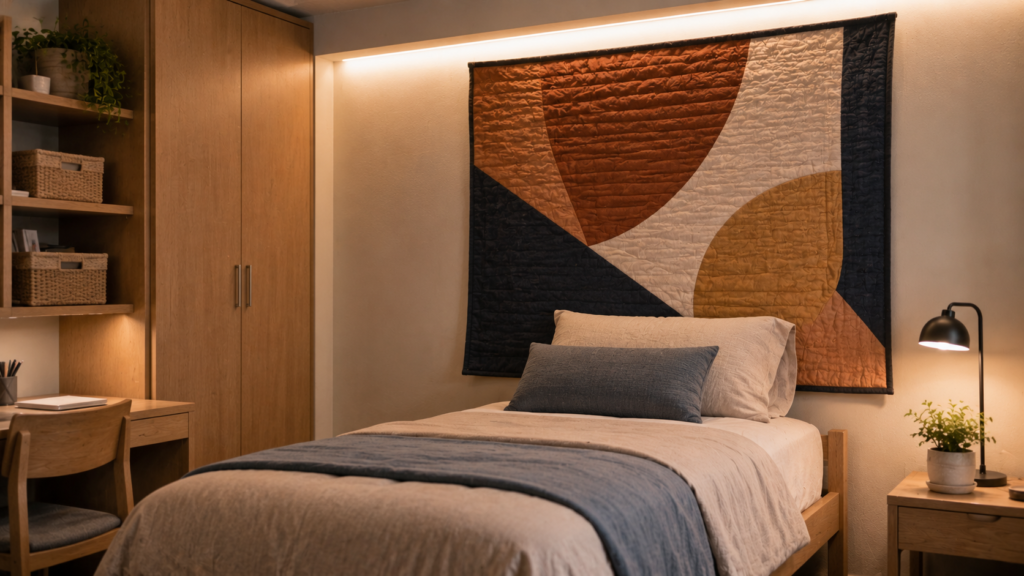
Mount one lightweight quilt, printed fabric panel, or woven textile above the bed using removable hooks. Aim for a piece that spans about two-thirds of the mattress width.
One large shape gives the wall a stronger focal point than many small prints and makes the room feel less temporary. Fabric can also soften some of the echo created by cinderblock walls and hard flooring. Avoid heavy rugs, wooden hanging rods, or anything that could fall above the sleeping area.
18. Make the Mini Fridge Part of a Proper Food Station
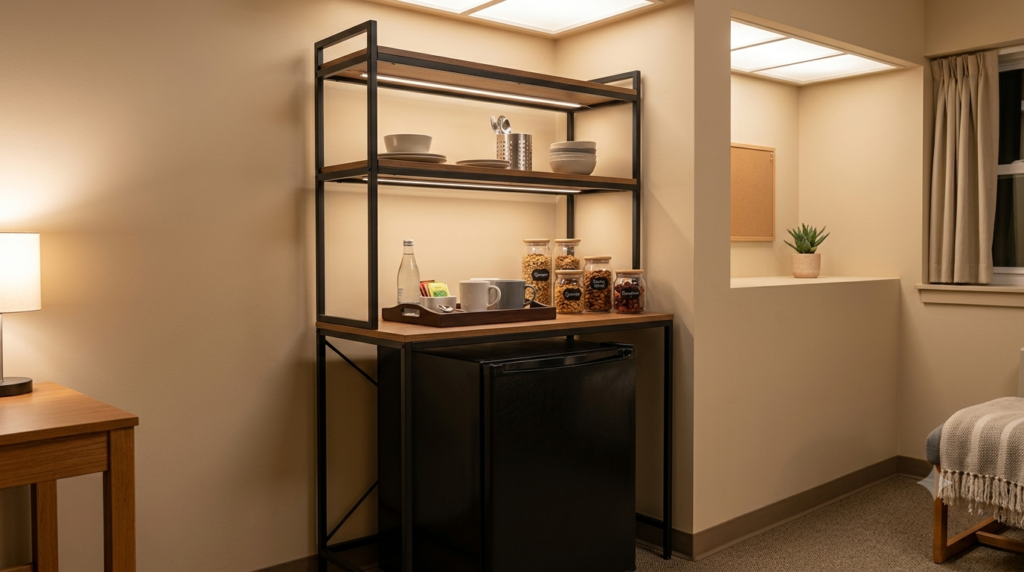
Place a freestanding shelf unit over the mini fridge so the appliance feels integrated rather than stranded in a corner. Use the upper shelf for mugs, dishes, pantry jars, or a compact coffee setup.
This takes advantage of unused vertical space and creates one clear food zone, which reduces clutter elsewhere. Leave the ventilation clearance required by the manufacturer, and never cover vents with fabric or adhesive panels. A metal or open wood frame allows heat to escape more safely than a closed cabinet.
19. Design Shared Dorm Room Decor Around One Connecting Color
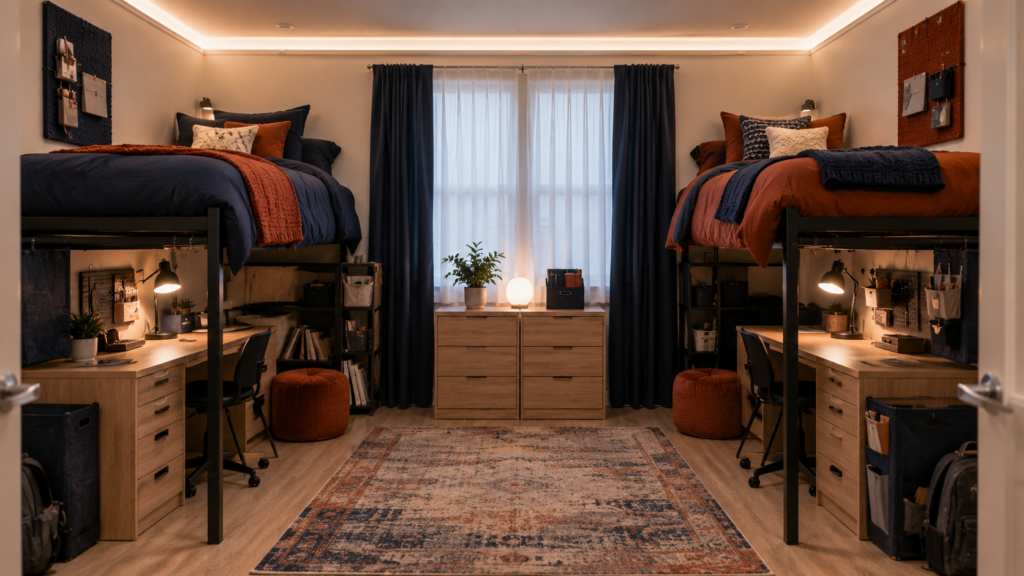
Roommates don’t need matching bedding, but both sides should repeat one shared color. One side might use navy bedding with rust accents, while the other uses rust bedding with navy details.
The repeated color connects the room without erasing personal style. Use it three times on each side through useful items such as a lamp, pillowcase, desk organizer, or storage box. Keep large surfaces relatively neutral so the room doesn’t become visually divided into two competing halves.
20. Build a Narrow Landing Zone Beside the Door
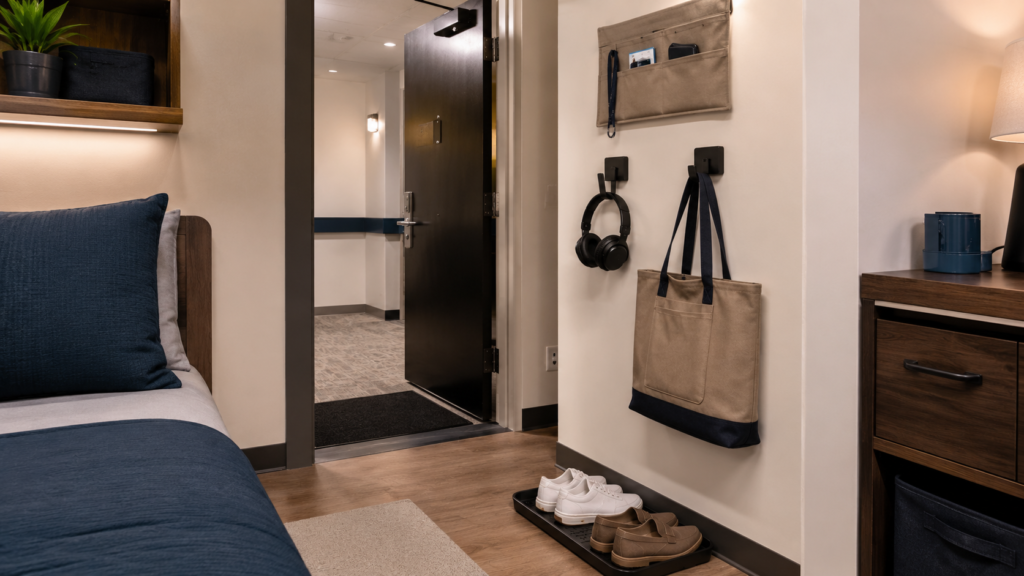
Create a drop point using one adhesive wall pocket, two removable hooks, and a slim shoe tray. Use it for keys, ID cards, headphones, umbrellas, bags, and the shoes you wear most often.
The setup catches clutter before it reaches the bed or desk. Keep the main walkway at least 30 inches wide where the room allows, and make sure the door opens fully. Deep organizers can feel useful at first but become frustrating when they block circulation in a tight entry.
21. Create a Window-Length Ledge From Low Modular Cubes
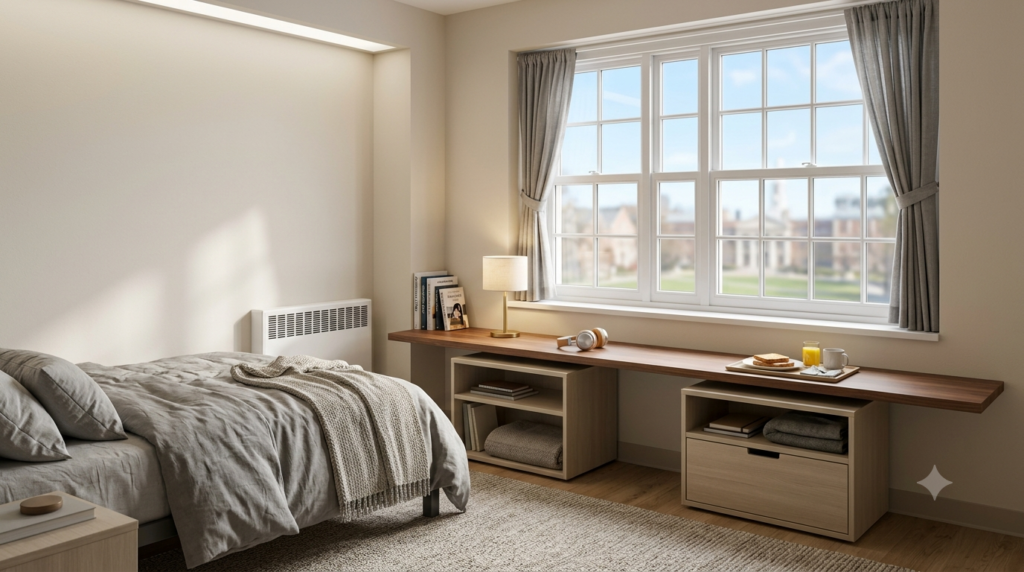
Place two low storage cubes beneath the window and span them with a finished wood board to create one long ledge. Use it for books, speakers, a lamp, trays, or a compact breakfast spot.
The continuous horizontal line makes the room look wider and gives an awkward wall a clear purpose. Keep the surface below the window latch and away from heaters or vents. Add nonslip furniture pads underneath each cube and the board rather than attaching anything to the wall or floor.
How to Combine Dorm Room Decor Ideas Without Making the Room Busy
Start with three zones: sleeping, studying, and storage. Give each one a single strong feature, such as upholstered panels behind the bed, a raised shelf on the desk, and a curtain across the closet.
Repeat one finish and one color across the room. Black metal might appear in the cart, lamps, and hooks, while muted green appears in the bedding, memo panels, and storage boxes.
Leave some wall and tabletop space empty. Negative space gives the eye somewhere to rest and keeps everyday items from making the room feel unfinished.
Dorm Room Decor Ideas to Skip Before Move-In Day
Don’t buy storage containers before seeing the room measurements. Bed clearance, closet depth, desk size, and mini-fridge placement can vary even within the same residence hall.
Avoid oversized floor cushions, thick shag rugs, and decorative furniture that blocks drawers or traffic. These pieces often photograph well but become irritating in daily use.
Be cautious with adhesive wallpaper, ceiling lights, and heavy wall decor. Housing rules differ, and products marketed as removable can still damage old or poorly prepared paint.
The best dorm room decor ideas make daily routines easier while giving a small room a clear visual identity. Focus on useful zones, larger design moves, warm lighting, and storage that doesn’t advertise every item you own.
Save these ideas before move-in day, then measure the room before buying rugs, bins, shelves, or furniture-sized pieces.