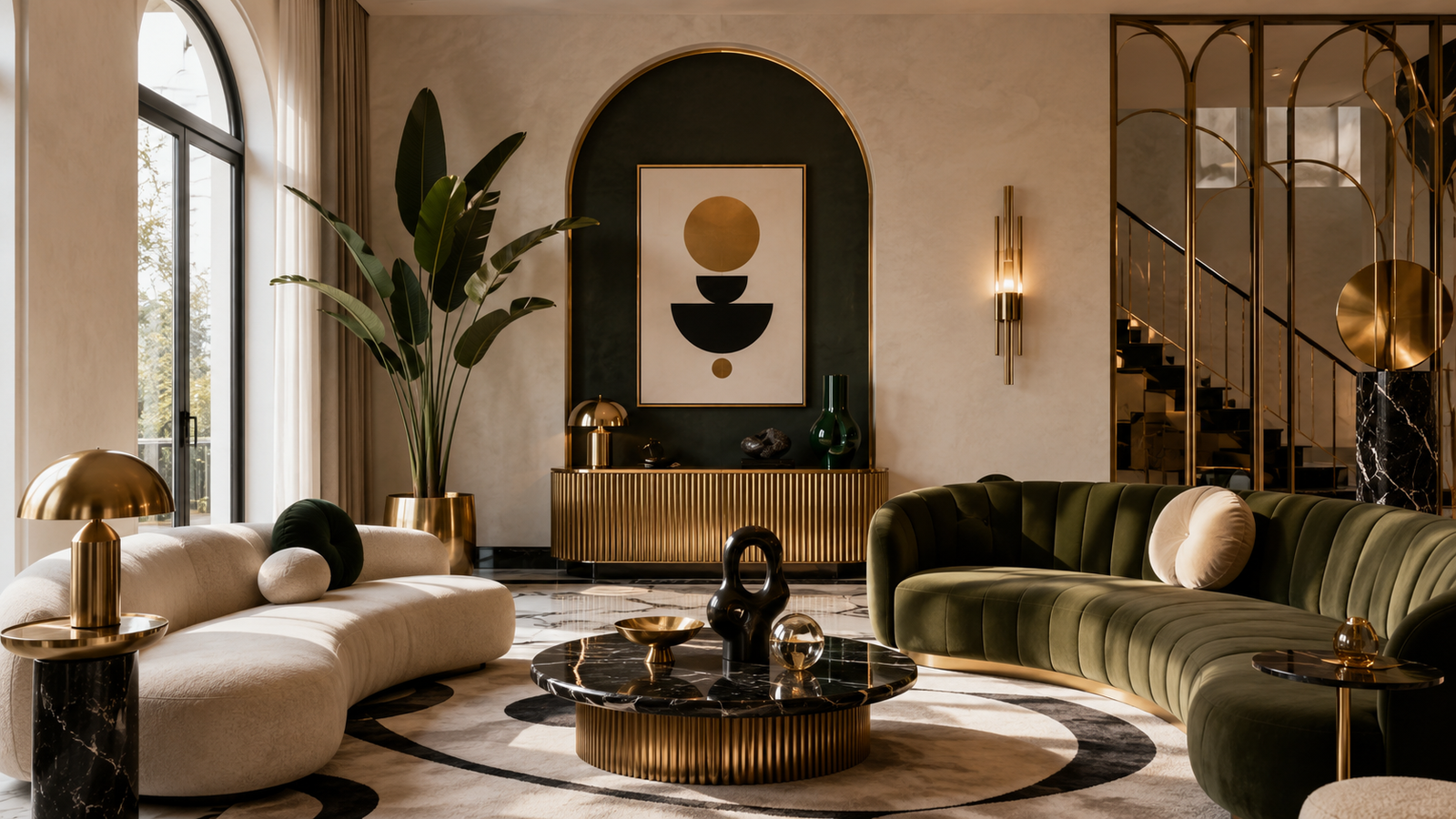
Luxury interiors are changing. The rooms that leave the strongest impression today aren’t filled with ornate furniture or endless gold accents. Instead, they rely on architecture, craftsmanship, and restraint. That’s exactly where Neo Deco interior design stands apart. It takes the confidence of classic Art Deco but strips away the excess, replacing decorative abundance with sculptural forms, rich materials, and carefully controlled proportions.
The beauty of Neo Deco is that every decision feels intentional. A doorway becomes part of the composition, cabinetry reads like architecture, and lighting quietly shapes the room instead of demanding attention. These ideas focus on the designer techniques that give Neo Deco interiors their distinctive character while remaining practical enough to adapt in real homes.
1. Sink Cabinet Doors Behind Shadow-Reveal Frames
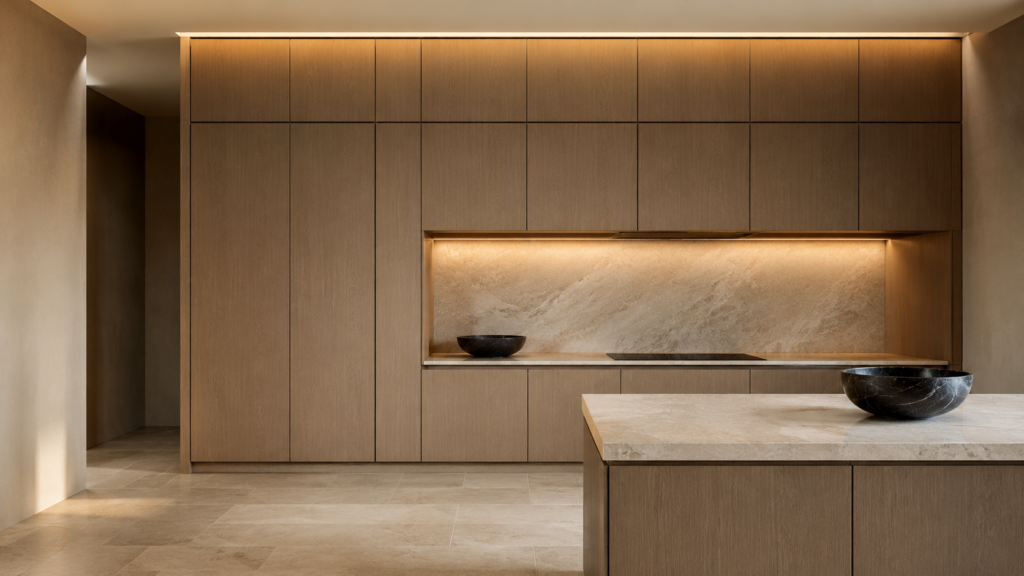
Instead of mounting cabinet doors flush with the face frame, Neo Deco often recesses them slightly so a narrow shadow line surrounds every panel. This tiny architectural detail instantly makes built-ins feel custom because the negative space becomes part of the design rather than an accident of construction.
The reveal usually measures between 8–12 mm, creating crisp lines that change throughout the day as interior lighting shifts across the surface. Handle-free doors or integrated finger pulls reinforce the effect, allowing the cabinetry to read as architecture instead of furniture.
If you’re renovating on a budget, reserve this detail for one focal wall rather than every cabinet. The result feels far more luxurious than replacing all the hardware with expensive finishes.
2. Wrap Interior Corners With Continuous Stone Instead of Ending at the Edge
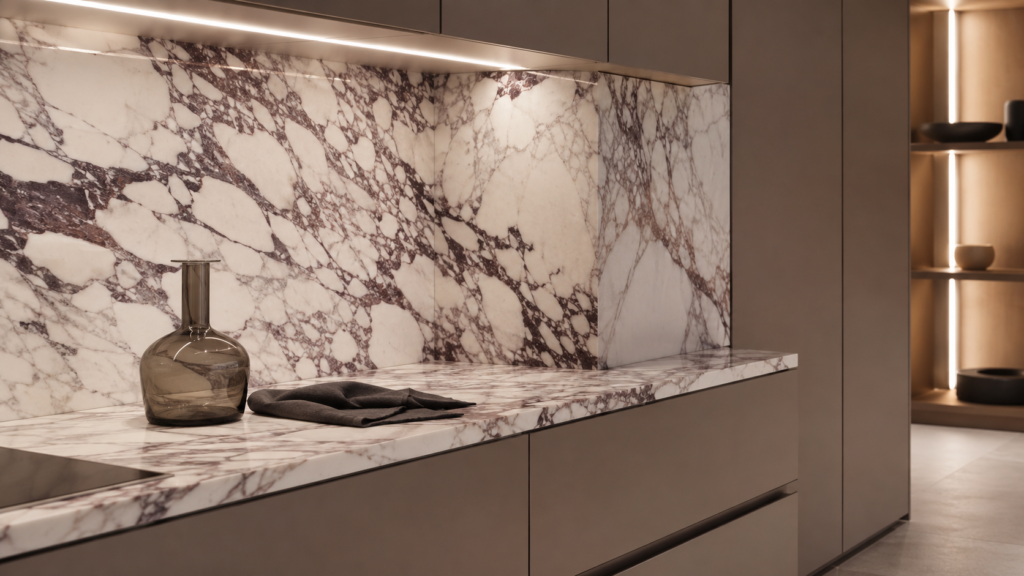
Most stone installations stop neatly at an outside corner. Neo Deco pushes the material further by wrapping limestone, quartzite, or richly veined marble around internal corners so the surface appears carved from one monumental block.
This uninterrupted transition tricks the eye into reading multiple planes as a single sculptural volume. Kitchens, fireplaces, and bathroom vanities immediately feel calmer because there are fewer visual interruptions.
Book-matched slabs amplify the effect by allowing natural veining to flow continuously around the corner rather than breaking at every joint. Even porcelain slabs can recreate this look with expertly mitered edges at a fraction of the cost.
3. Float Artwork Two Inches Off the Wall Instead of Hanging It Flat
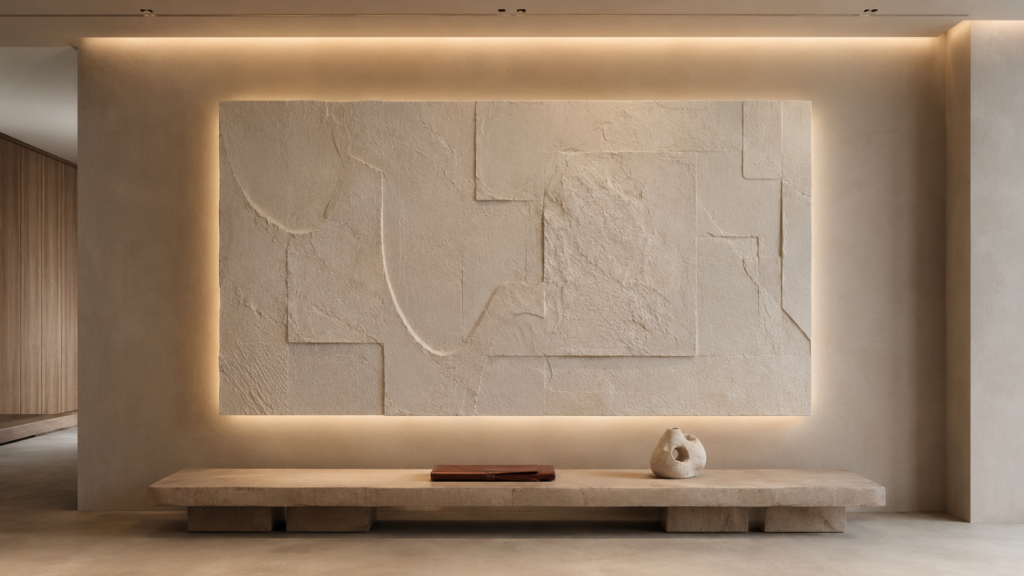
Neo Deco treats artwork like architecture. Rather than pressing a canvas directly against the wall, mount it on concealed standoffs so it floats about two inches forward. That narrow gap creates a soft halo of shadow around the entire piece.
The shadow becomes part of the composition, adding depth without changing the artwork itself. Large monochromatic paintings, plaster reliefs, or textured panels become dramatically more sculptural because they appear suspended rather than attached.
Keep the artwork centered approximately 57–60 inches from the floor, but allow generous breathing room around it. The empty wall enhances the illusion far more than filling the space with additional décor.
4. Replace Flat Baseboards With Double-Depth Shadow Profiles
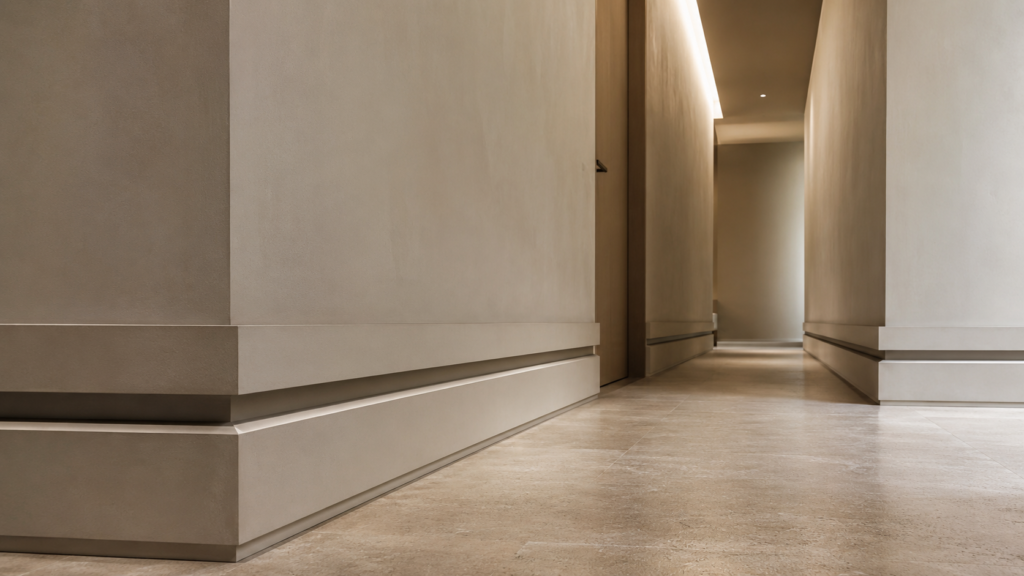
Baseboards rarely receive much attention, yet they’re one of the easiest ways to introduce Neo Deco architecture into an ordinary room.
Instead of installing a single trim board, layer two simple profiles to create a recessed shadow channel between them. The detail is subtle enough that guests may not notice it immediately, but the room quietly gains depth from floor to ceiling.
This technique works especially well in homes with smooth walls and minimal detailing because the repeated shadow lines reinforce the room’s geometry without adding ornament. Paint both layers the same color so the effect comes entirely from light and proportion rather than contrast.
5. Let One Freestanding Screen Define the Room Instead of Building a Wall
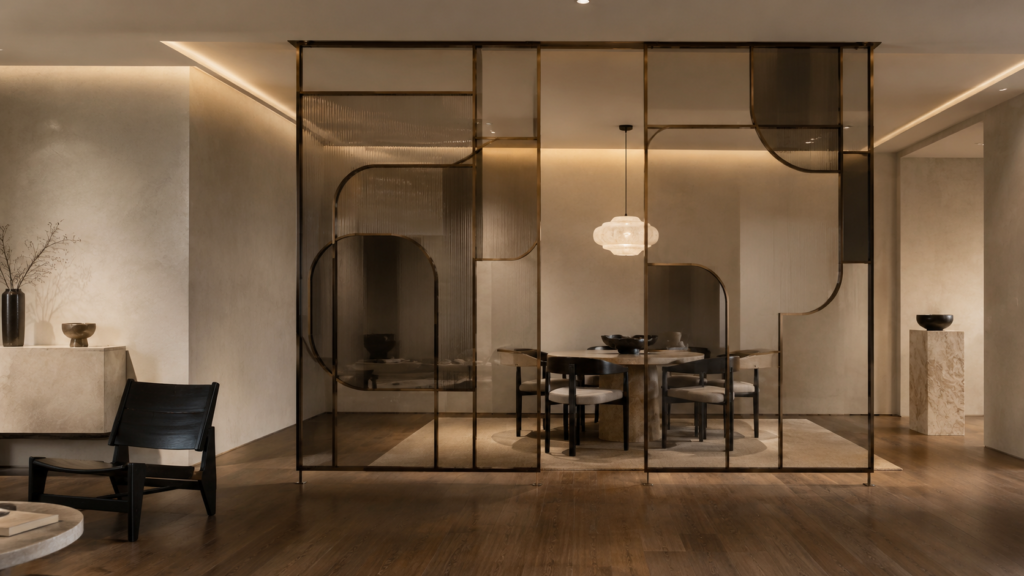
Neo Deco prefers separation without complete enclosure. A bronze-framed smoked glass screen, ribbed cast glass divider, or sculptural timber partition can gently divide a room while preserving long sight lines and natural light.
Unlike traditional room dividers, these screens become architectural objects in their own right. They create changing reflections as you move through the space, making the room feel dynamic without relying on decorative accessories.
Leave at least 36 inches of circulation space beside the screen so movement remains effortless. In open-plan homes, a single beautifully detailed divider often provides more character than adding another full-height wall ever could.
6. Carve a Seating Niche Into a Full-Height Cabinet Wall
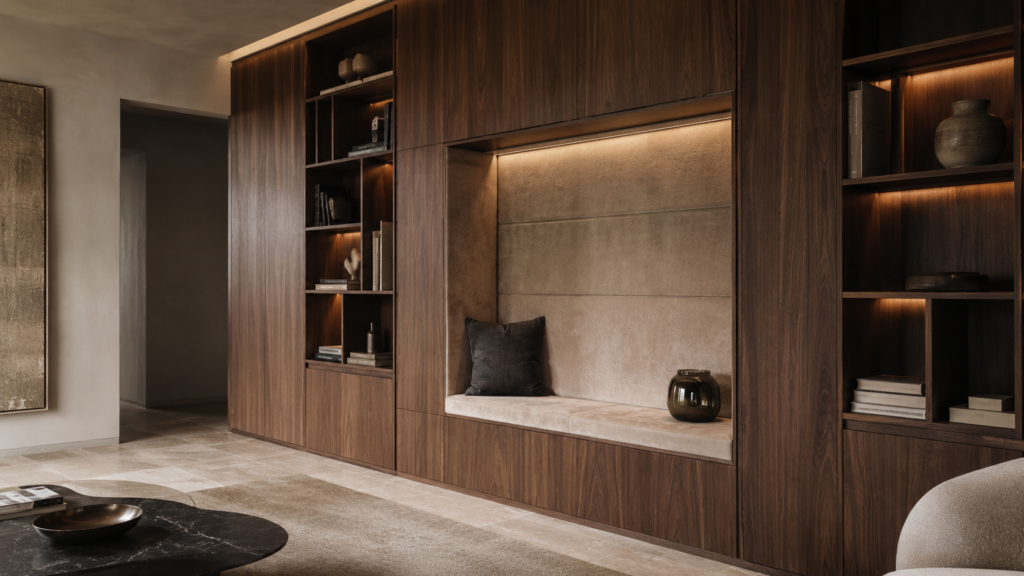
Instead of breaking a wall with separate furniture pieces, Neo Deco often subtracts space rather than adding to it. A full-height cabinet run with one deeply recessed seating niche creates an architectural moment that feels custom built.
Finish the niche in a contrasting material like walnut veneer, smoked oak, or suede-textured panels while keeping the outer cabinetry monochromatic. Add one sculptural cushion instead of filling the bench with pillows.
The depth—typically 18–22 inches—creates natural shadow, making the opening feel intentional instead of decorative. It’s a quieter alternative to open shelving and gives everyday storage a gallery-like presence.
7. Turn the Ceiling Into the Room’s Fifth Wall With a Soft Mineral Finish
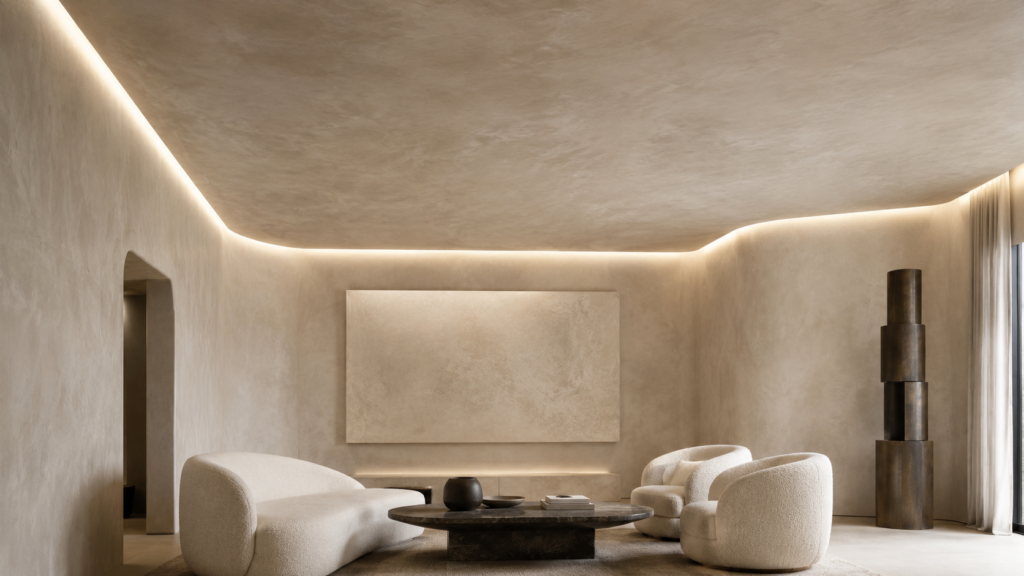
Most homes stop decorating at eye level, but Neo Deco treats the ceiling as another architectural surface.
Instead of bright white paint, continue a limewash, mineral paint, or ultra-matte plaster finish onto the ceiling in the same tone as the walls. The corners visually dissolve, making the room feel taller and more enveloping without adding crown molding.
This works particularly well in spaces with 8–10-foot ceilings because the continuous finish softens harsh transitions. Under warm 2700K interior lighting, mineral finishes reveal subtle movement that changes throughout the evening, giving the ceiling quiet depth rather than obvious decoration.
8. Introduce One Precision Radius and Repeat It Throughout the Room
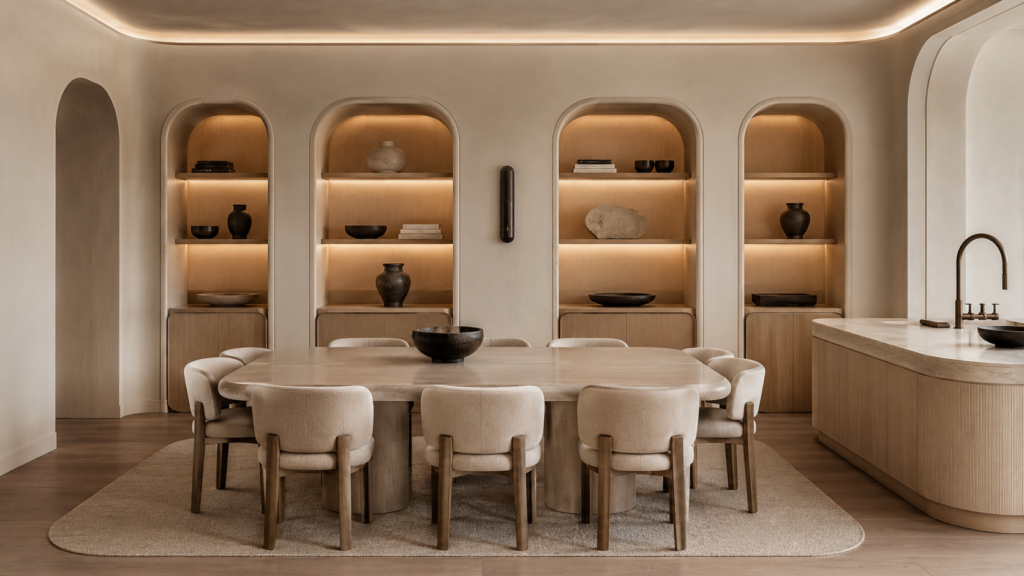
Neo Deco isn’t about random curves. It’s about disciplined geometry.
Choose one radius—perhaps the corner profile of a coffee table—and repeat that exact curve on a console, fireplace edge, shelving detail, or island corner. Even if the repetition isn’t immediately obvious, the room feels unusually cohesive because every element shares the same visual language.
Designers often call this “hidden consistency.” People notice the harmony without knowing why. It’s one of the reasons bespoke interiors feel calmer than rooms assembled from unrelated furniture collections.
If you’re mixing old and new pieces, repeating one curve is often more effective than trying to match wood tones or finishes.
9. Let Reflections Replace Decoration
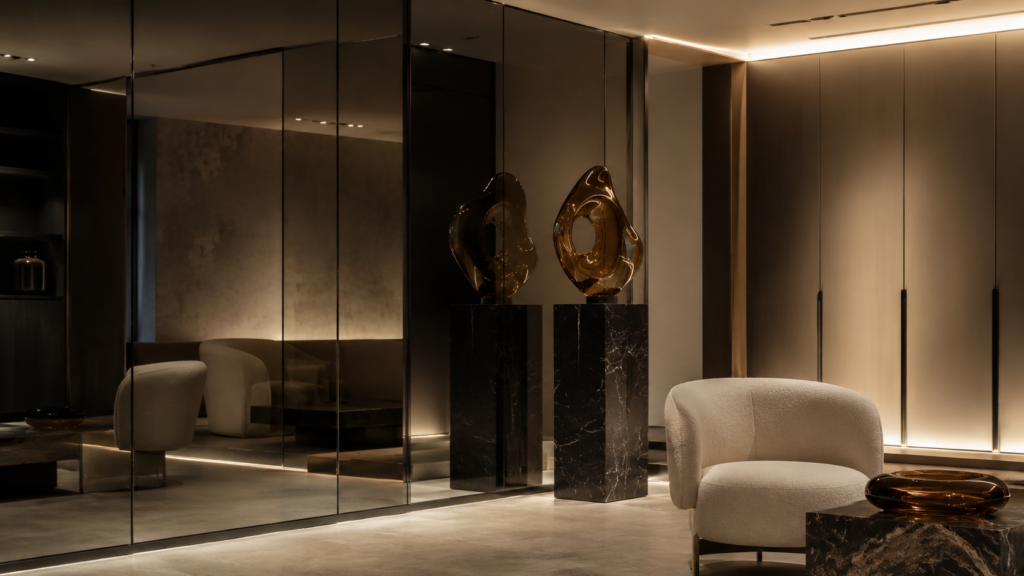
Neo Deco creates visual richness through changing reflections instead of filling shelves with objects.
Position smoked glass, dark bronze mirror, polished lacquer, or satin metal so they catch indirect light from adjacent walls rather than reflecting the room directly. The surfaces shift throughout the day, creating movement without introducing additional décor.
Avoid placing reflective materials opposite windows, where glare can become distracting. Instead, angle them toward softly lit walls or concealed lighting so the reflections remain subtle and atmospheric.
The room feels alive because the architecture itself changes as the light changes.
10. Finish the Room With One Collectible-Scale Object That Breaks Perfect Symmetry
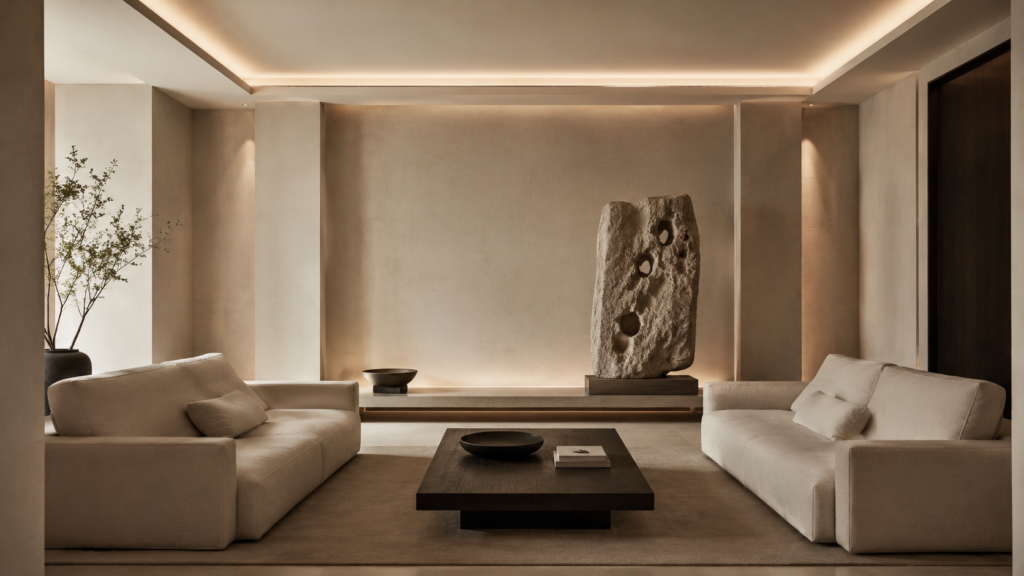
Neo Deco loves balance, but perfect symmetry can feel static. The final layer is often a single oversized object that gently disrupts the composition.
Imagine a hand-carved stone pedestal, an oversized folded-metal sculpture, or a monumental ceramic vessel placed slightly off-center rather than perfectly aligned. It draws the eye without overpowering the architecture because everything around it remains restrained.
This approach creates the kind of quiet tension found in luxury residences and boutique hotels. Instead of decorating every surface equally, Neo Deco lets one exceptional piece become the room’s signature while the surrounding architecture does the rest.
Before You Invest in Neo Deco Pieces
Neo Deco isn’t defined by expensive furniture—it’s defined by precision. Before buying anything, ask whether the piece contributes to the room’s architecture or simply adds visual noise.
Look for furniture with crisp joinery, recessed bases, refined proportions, and honest materials that age gracefully. Skip anything overloaded with decorative trim or oversized hardware. One thoughtfully designed piece will always have more impact than several trend-driven purchases competing for attention.