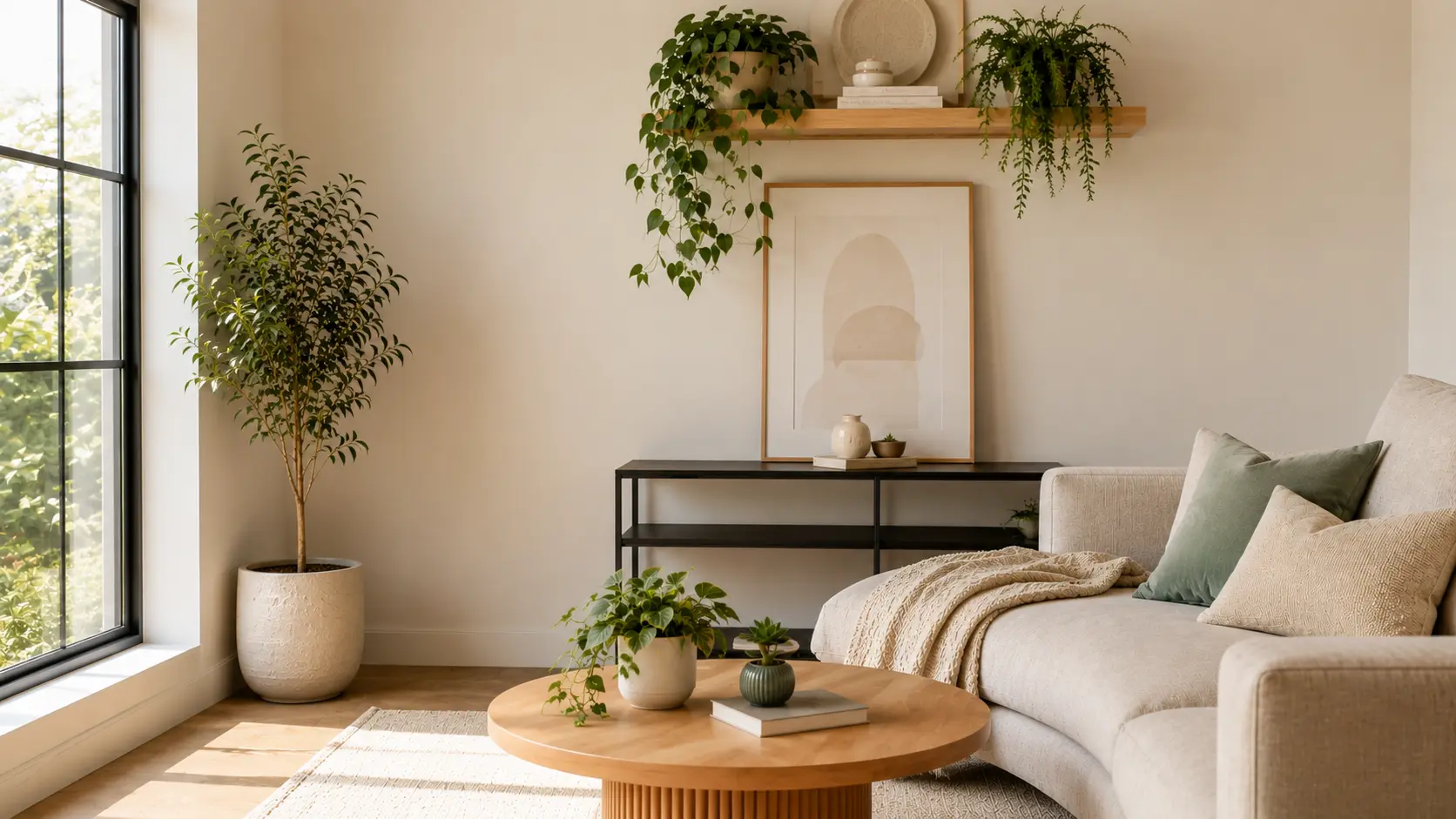
A small plant can look surprisingly ordinary when it’s placed in the same little pot on the same table everyone else uses. The more interesting indoor plant styling ideas treat greenery as part of the room’s composition, using scale, unusual vessels, architectural details, and negative space to make even tiny plants feel intentional.
This collection focuses on modern, realistic ways to style small plants around your home, with a few larger arrangements for corners, dining areas, and open-plan spaces. The goal isn’t to fill every surface with greenery, but to create plant displays that look considered, useful, and genuinely different.
1. Modern Indoor Plant Corner
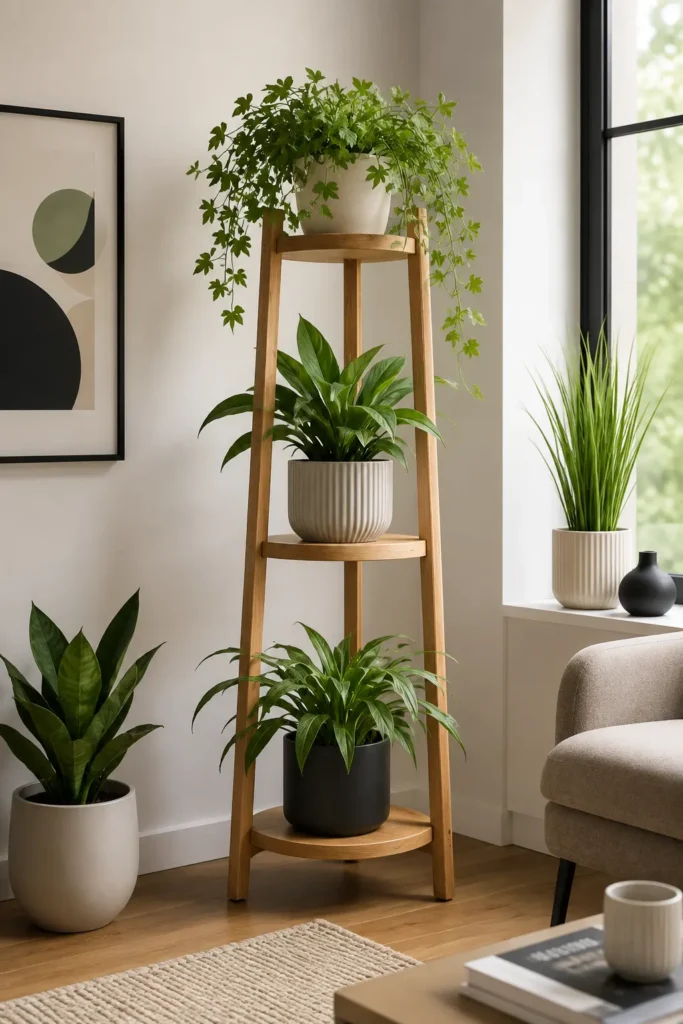
Bring a fresh, calming touch to your home with this modern indoor plant corner. A warm wooden plant stand showcases lush greenery at different heights, paired with elegant neutral-toned planters for a clean, contemporary look. Soft natural light, warm wood flooring, minimalist artwork, and subtle décor create a cozy yet sophisticated atmosphere—perfect for a modern living room, reading nook, or relaxing corner.
2. Cluster Tiny Plants on an Oversized Stone Tray
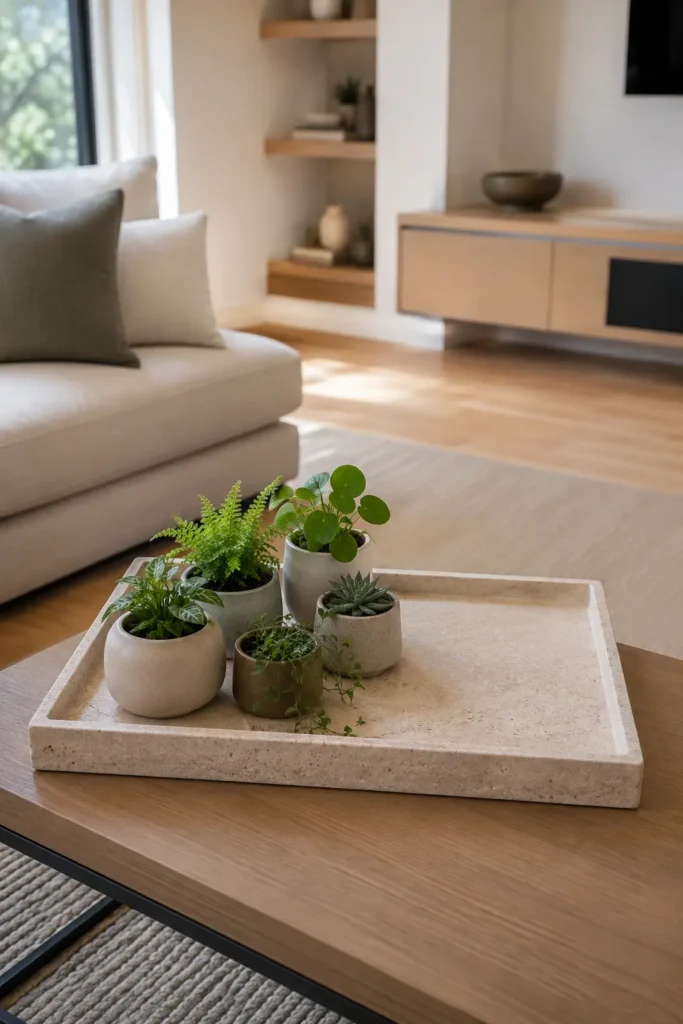
Instead of scattering several tiny pots around the room, gather four to six miniature plants onto one oversized tray. A travertine-look, concrete, or natural stone tray around 18 to 24 inches wide gives the little plants enough visual breathing room to become one composed display.
Mix leaf shapes and pot heights, but keep the finishes restrained—cream ceramic, charcoal, warm clay, or muted green work well together. Leave part of the tray completely empty. That negative space keeps the arrangement from looking like a crowded plant collection and makes an affordable group of small plants feel more intentional.
3. Build a Mini Indoor Landscape in a Shallow Bowl
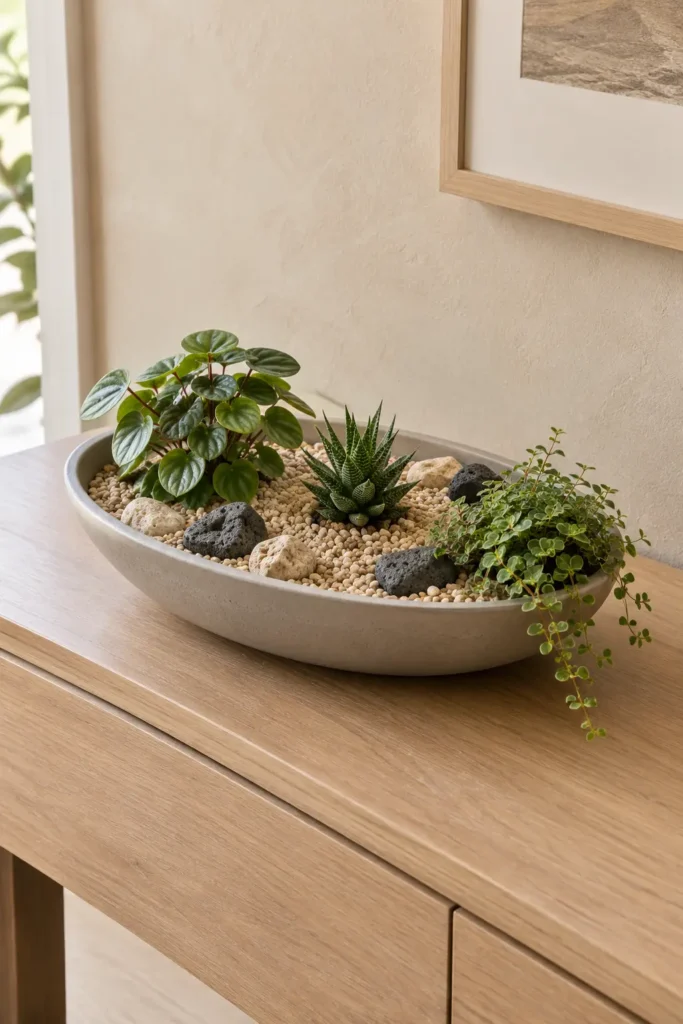
A wide, shallow bowl can become a miniature landscape instead of simply holding one plant. Combine two or three compact plants with noticeably different foliage, then surround them with a thin layer of natural gravel or a few small stones.
Look for a vessel roughly 3 to 5 inches deep with enough width for the plants to spread visually. The low profile works especially well on an entry cabinet, dining console, or bathroom counter because it doesn’t block the room’s sight lines. Keep each plant appropriately potted for drainage rather than planting everything directly into a decorative bowl.
4. Turn a Vintage Drawer Into a Mini Garden
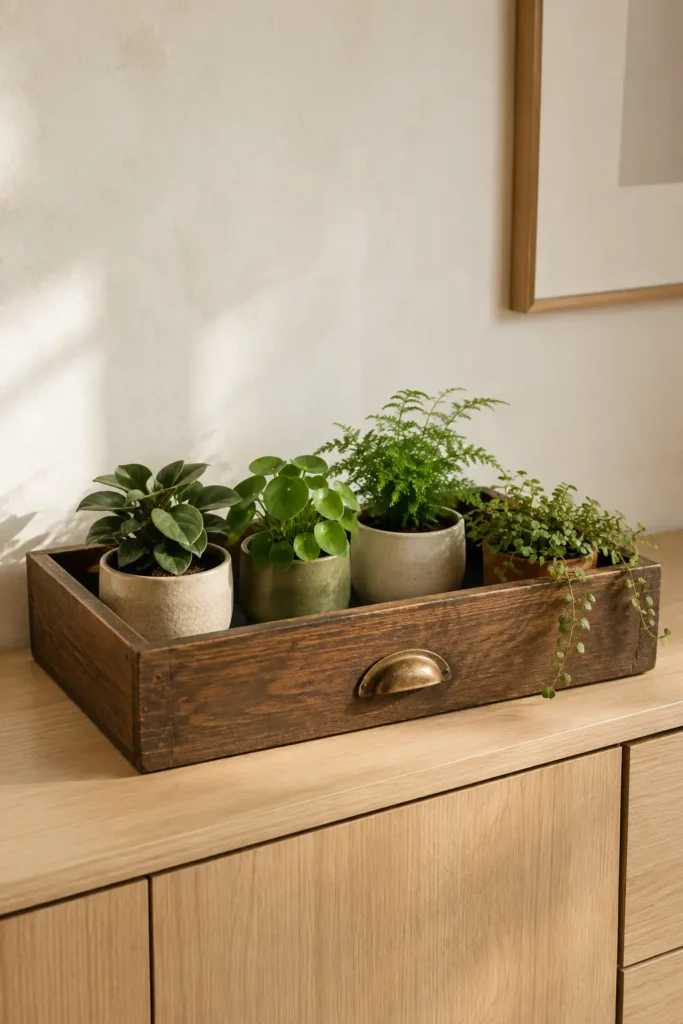
A shallow vintage drawer can become an unexpected home for several small plants. Look through thrift stores for an old wooden drawer with visible grain, worn hardware, or a simple painted finish, then place a waterproof liner or shallow tray inside it.
Arrange three or four plants in individual nursery pots so the display remains removable. The combination of aged wood and fresh green foliage gives a modern room some visual history without making it feel traditionally rustic. Keep the plants relatively compact so the drawer still reads as a contained botanical composition.
5.Modern Balcony Retreat
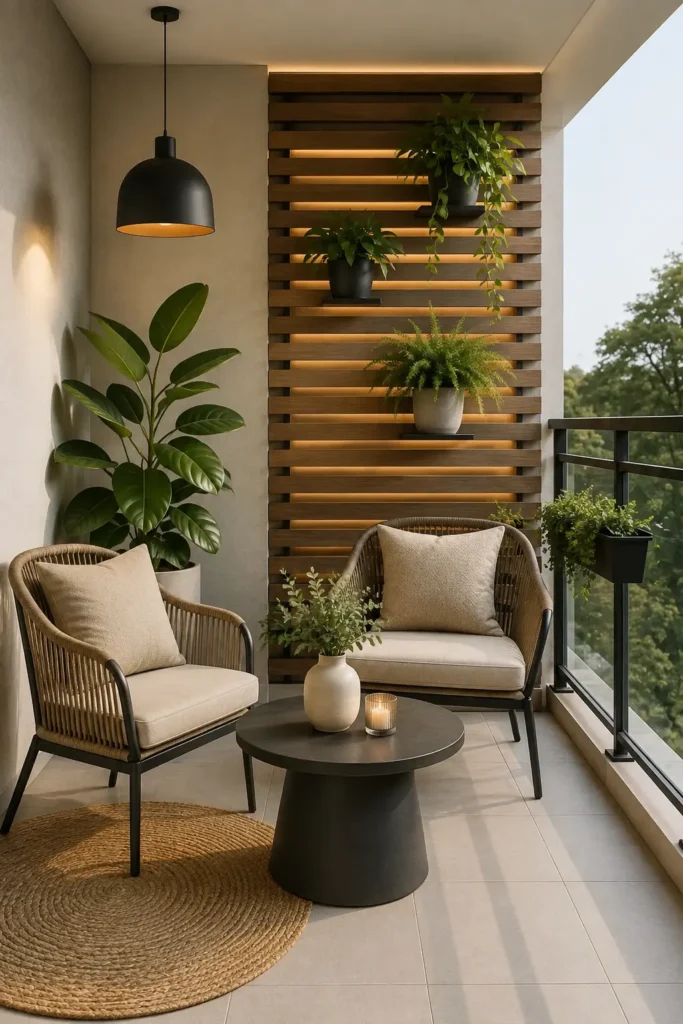
Transform your balcony into a warm, modern sanctuary with a perfect blend of natural textures, contemporary furniture, and lush greenery. The elegant wood-slat feature wall, soft ambient lighting, woven accents, and neutral-toned seating create a sophisticated yet inviting atmosphere.
Designed for both relaxation and style, this modern balcony combines minimalist elegance with cozy bohemian touches—making it an ideal space for morning coffee, evening conversations, or simply enjoying the outdoors in comfort.
6. Layer Small Plants Inside a Deep Window Recess
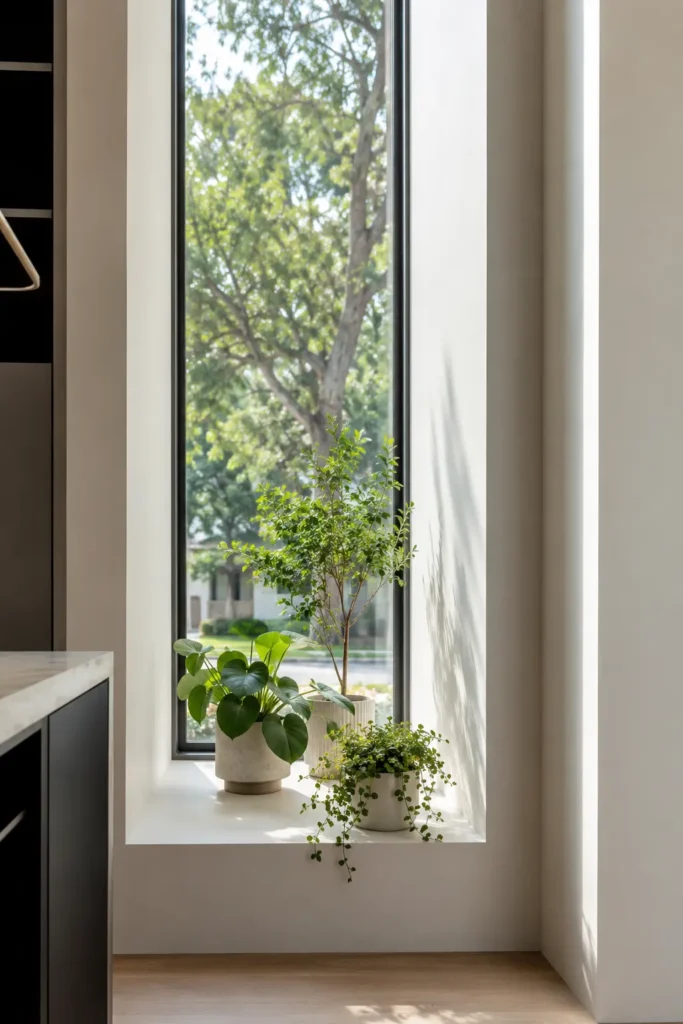
If your home has a deep window recess, don’t automatically line every pot along the front edge. Instead, use the available depth: place one small plant closer to the glass, another farther forward, and a third slightly off to one side.
The overlapping foliage creates natural layers and changing shadows as daylight moves across the room. Leave some of the recess open so you don’t block too much light. This approach is especially useful for plants that enjoy bright indirect light but may struggle with intense afternoon sun directly against the glass.
7. Build a Tiny Desert Landscape With Stone
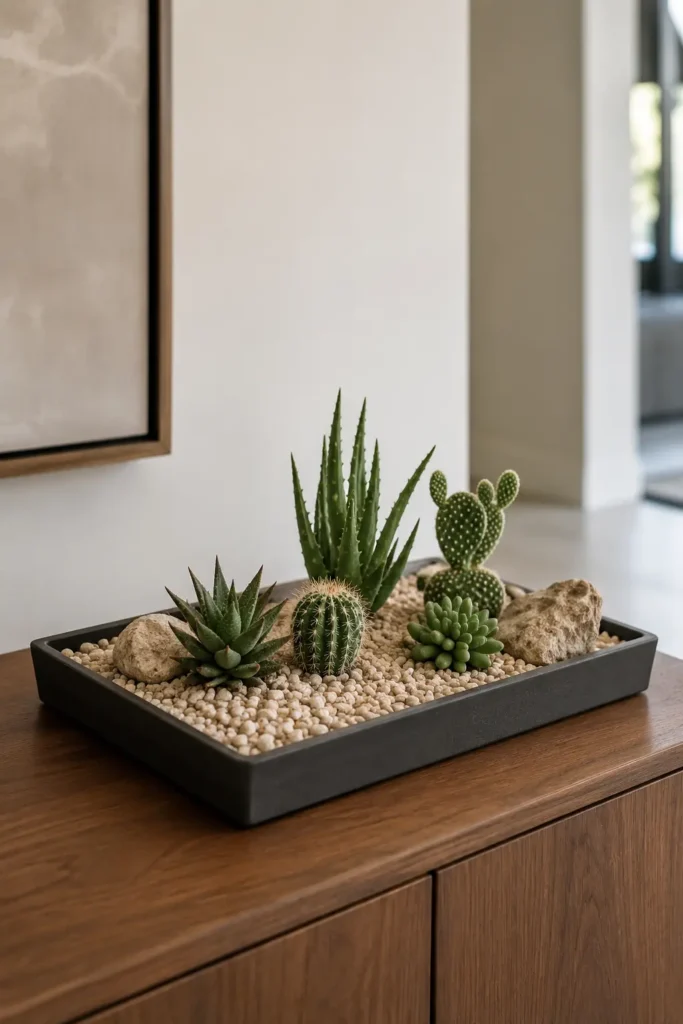
Create a compact desert-style composition with miniature succulents or cacti, pale gravel, irregular stones, and a low matte ceramic vessel. Rather than treating each plant as separate decor, arrange the materials so the entire piece resembles a miniature landscape.
A palette of sand, charcoal, muted green, and natural clay keeps it modern. Vary the plant heights slightly, but don’t overcrowd the vessel. The open gravel areas are part of the design and give the small plants room to stand out against the harder stone textures.
8.Modern Sage & Copper Dining Room
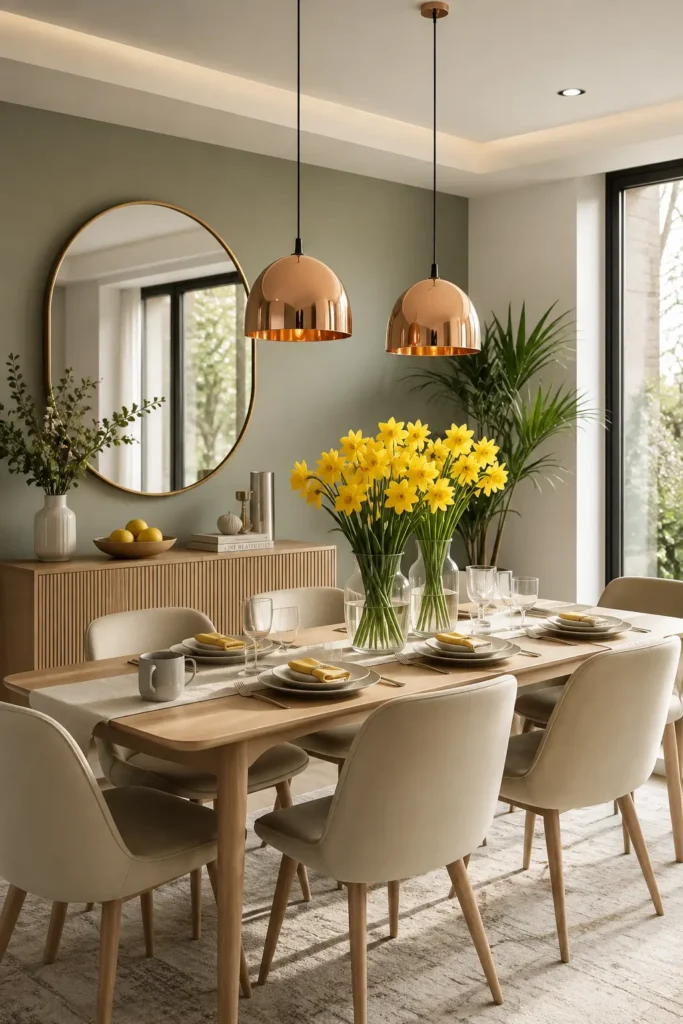
A beautifully styled modern dining room that blends warm natural wood, soft sage-green walls, elegant cream seating, and striking copper pendant lights. Fresh yellow flowers add a vibrant seasonal touch, while the arched mirror, fluted sideboard, lush greenery, and abundant natural light create a sophisticated yet welcoming atmosphere. The clean lines and neutral palette give the space a contemporary Scandinavian-inspired feel—perfect for relaxed family meals, entertaining guests, or elevating everyday dining.
9. Use a Mirror to Multiply a Small Plant Display
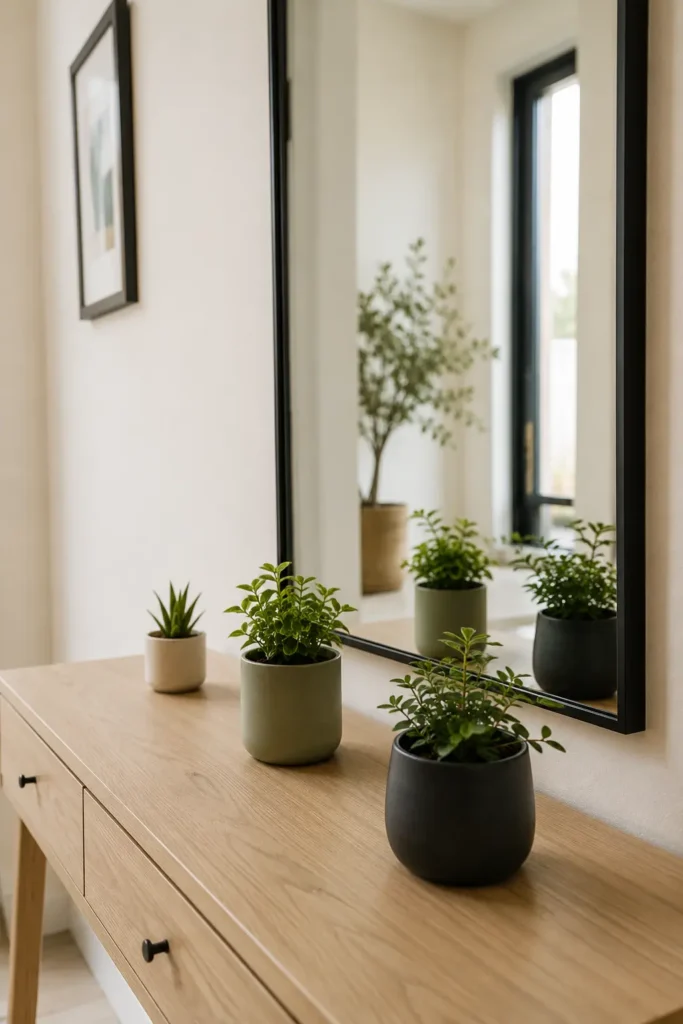
A mirror can become part of the plant arrangement instead of simply sitting behind it. Place one small plant close to the mirror and another farther into the room so their reflections appear at different depths.
The result creates extra layers of greenery without buying more plants. Try this on a narrow entry console or bathroom vanity, where a mirror already serves a practical purpose. Keep the plants slightly asymmetrical rather than arranging them as mirror-image pairs; a little imbalance makes the composition feel more natural.
10. Build a Mini Plant Scene Around One Sculptural Object
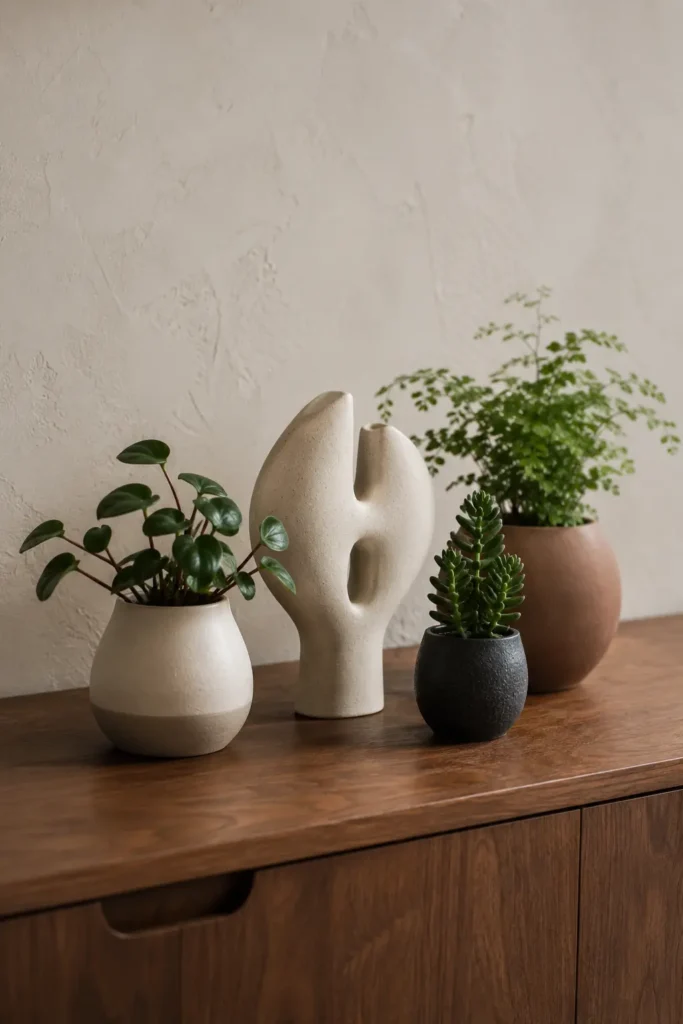
Choose one small stone, ceramic form, or abstract decorative object as the center of a miniature composition. Place two or three small plants around it, varying their heights and leaf shapes so the arrangement doesn’t look symmetrical.
The central object gives the eye something solid to land on while the foliage adds movement around it. A low composition works well on a broad entry cabinet or dining console. Keep the decorative object relatively simple; if both the sculpture and the pots are highly detailed, the small arrangement can quickly become visually busy.
11. Modern Scandinavian Living Room
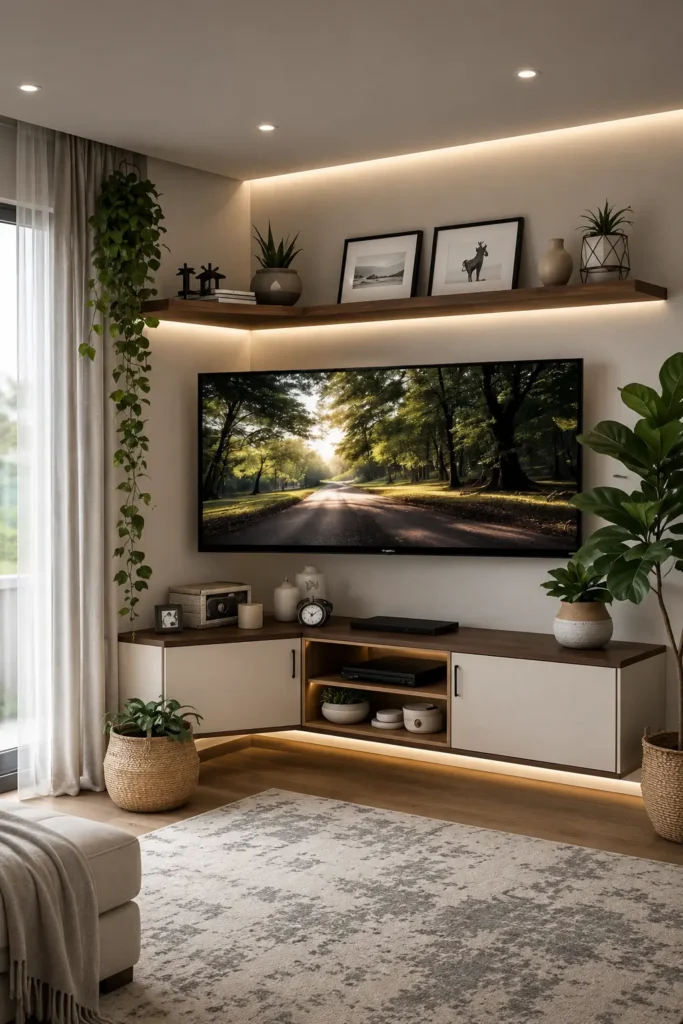
Transform your space with this elegant modern living room design, blending Scandinavian simplicity with warm, natural textures. The floating wooden shelf, sleek TV console, soft ambient lighting, neutral tones, and lush indoor plants create a cozy yet sophisticated atmosphere. Natural wood flooring, woven planters, minimalist décor, and a soft patterned rug complete the look, making this space feel bright, peaceful, and effortlessly stylish.
12. Style a Low Botanical Centerpiece on the Dining Table
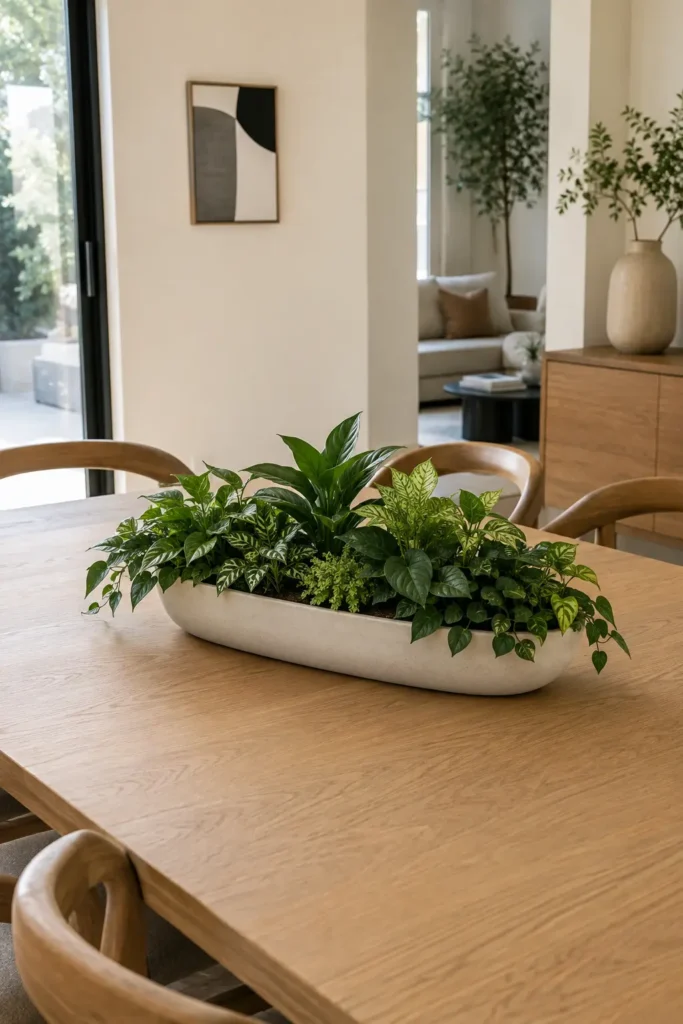
For a modern dining table, replace the predictable tall flower vase with a wide, low ceramic vessel containing several compact leafy plants. Keep the tallest foliage roughly 10 to 14 inches above the tabletop so people can still see across the table during meals.
A matte stone, cream ceramic, or smoked-glass finish keeps the centerpiece visually clean. A few small plants grouped inside the vessel give you the look of a full arrangement while individual nursery pots make watering and maintenance much easier. Avoid placing foliage directly where plates, serving dishes, or elbows need to go.
13. Modern Scandinavian Corner Bookshelf
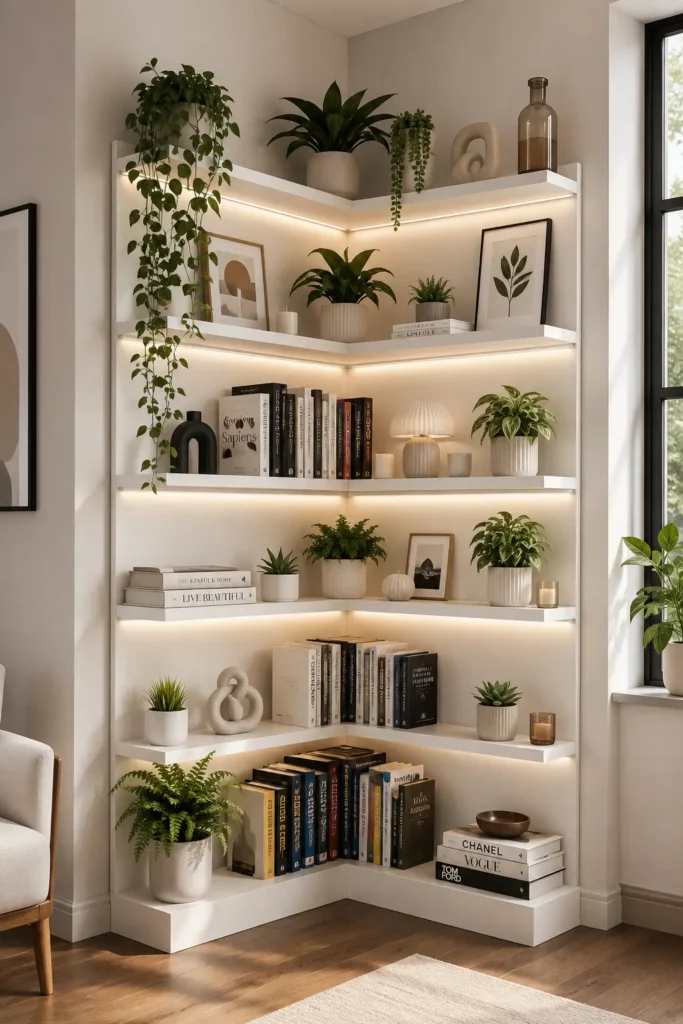
Transform your empty corner into a sophisticated, cozy retreat with this modern floor-to-ceiling built-in bookshelf. Clean white shelving, warm integrated lighting, lush greenery, curated books, minimalist décor, and natural wood flooring create a beautifully balanced Scandinavian-inspired look. The L-shaped design maximizes corner space while adding character, warmth, and plenty of practical storage—perfect for a stylish living room, reading nook, or home office.
14. Use Large Plants to Softly Separate Living and Dining
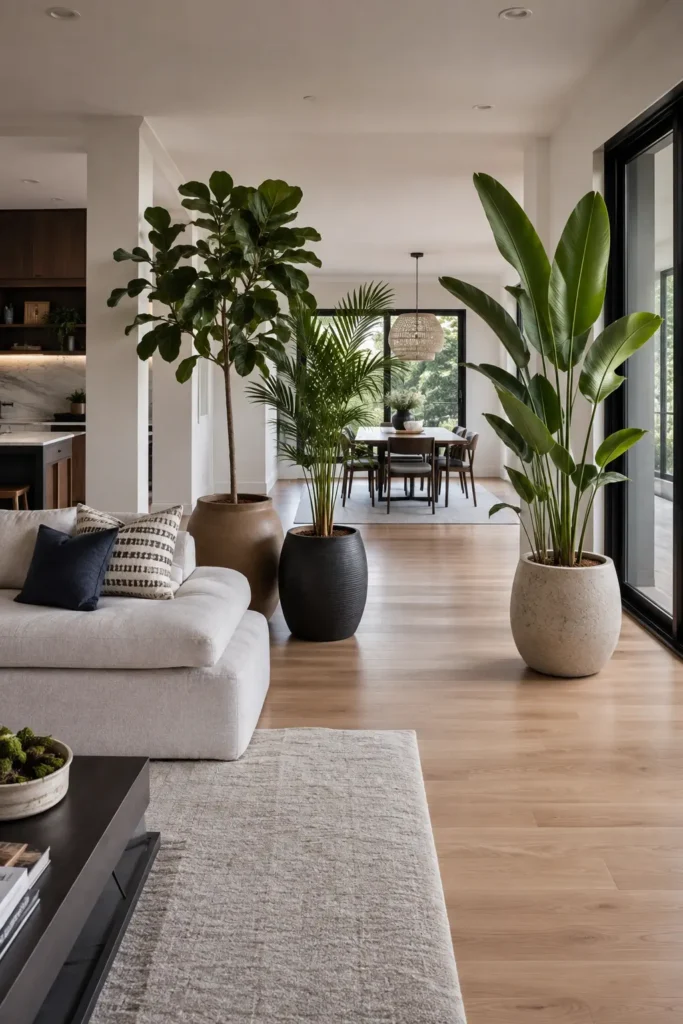
In an open-plan home, two or three larger plants can define the transition between living and dining areas without creating a solid divider. Place them at staggered depths rather than forming a straight line, allowing foliage to partially screen one zone while maintaining open sight lines.
Use containers from the same finish family—such as warm ceramic or charcoal fiberstone—but vary their shapes slightly. Keep the walking route around the arrangement comfortably open; roughly 30 to 36 inches is a useful starting point for a main passage, depending on the room and furniture.
15. Let One Oversized Plant Own an Empty Corner
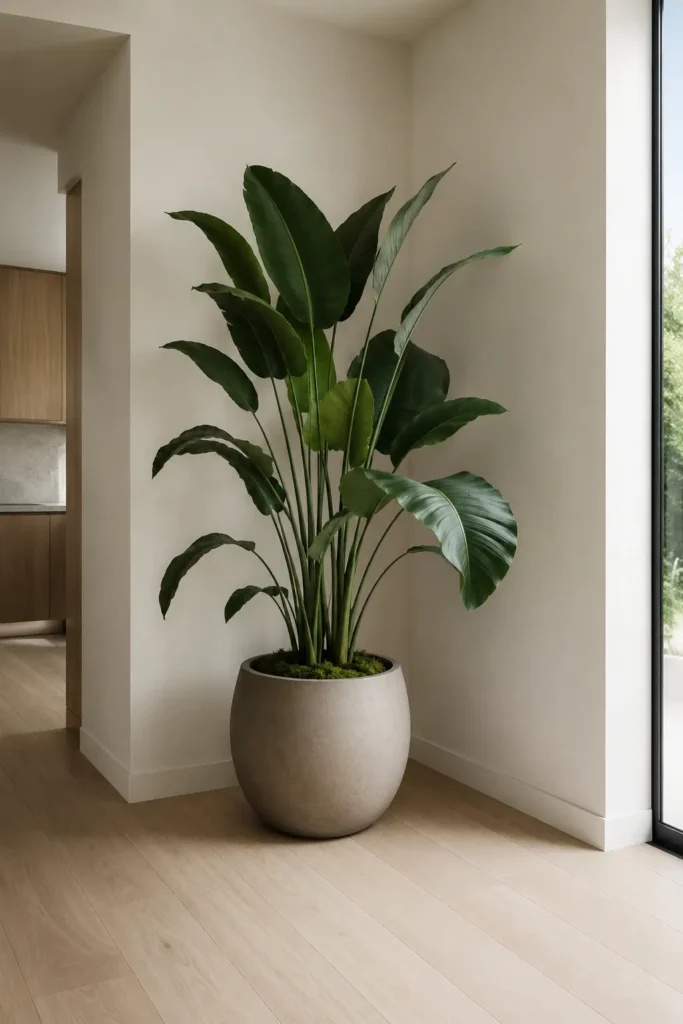
Sometimes the strongest plant arrangement is the simplest: one large architectural plant, one substantial planter, and plenty of empty space around them. Choose a plant with a strong silhouette and let its foliage spread naturally rather than surrounding it with smaller accessories.
This approach works particularly well in modern rooms with clean-lined furniture because the organic shape becomes a counterpoint to straight architectural lines. Check the plant’s mature width before buying, and keep it away from heating vents, door swings, and tight circulation paths.