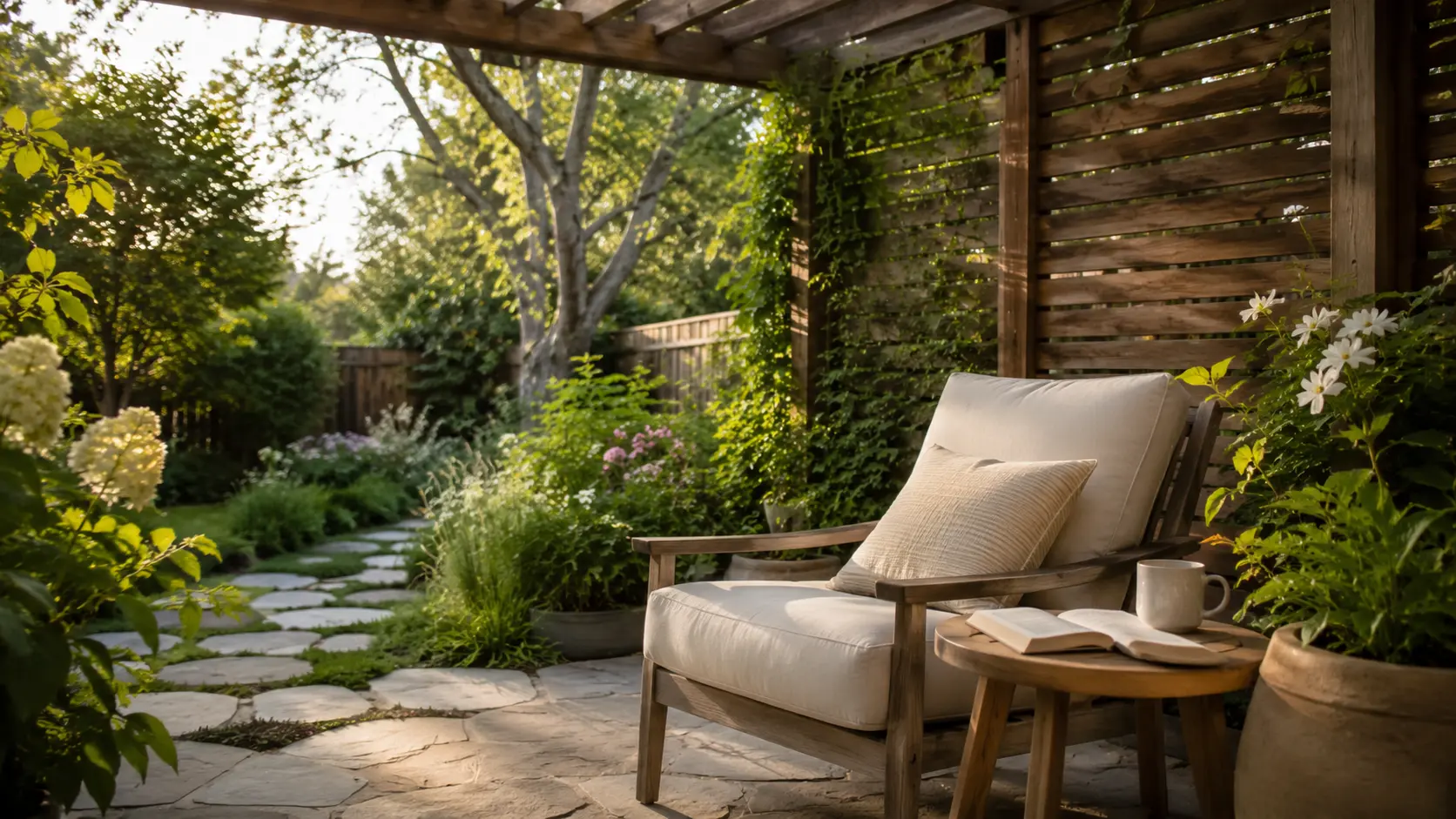
A good reading spot needs more than an outdoor chair and a few cushions. It should provide comfortable posture, manageable sunlight, some visual privacy, and a dry place to set your book. The most inviting backyard reading nook ideas also feel connected to the landscape rather than dropped into the middle of a lawn.
These 15 designs range from removable solutions for rental patios to planted retreats and custom garden structures. Each one creates a distinct setting for reading while addressing real concerns such as drainage, insects, changing shade, storage, and limited backyard space.
What to Consider Before Creating a Backyard Reading Nook
Watch your preferred location for a full day before buying furniture. A corner that feels comfortable at 9 a.m. may receive harsh western sun by late afternoon. Check drainage after rain, nearby sprinklers, wind exposure, falling leaves, and the distance from your house.
Allow roughly 30 inches for a comfortable walkway and at least 24 inches beside a chair if you want room for a table or book cart. Choose quick-dry foam, solution-dyed outdoor fabric, sealed wood, and powder-coated metal wherever furniture will remain exposed.
1. Create a Curved Gravel Reading Cocoon
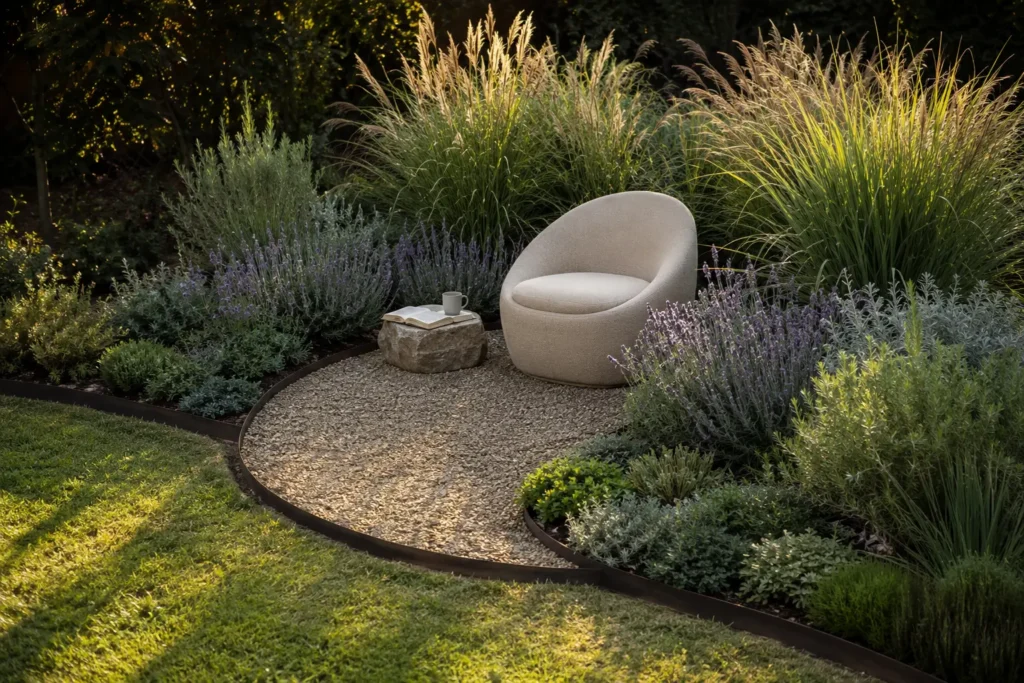
Shape a kidney-style pocket with steel landscape edging, then fill it with pale pea gravel over a properly compacted base. Position one oatmeal-colored sculptural lounge chair inside the curve and surround its back with feather grasses, lavender, and compact native shrubs.
The rounded outline feels softer and more secluded than a square patio. Keep taller plants behind the chair and lower varieties near the entrance so the planting wraps around you without blocking the view. A flat stone beside the seat can hold a drink without introducing another piece of furniture.
2. Lay a Checkerboard Reading Terrace
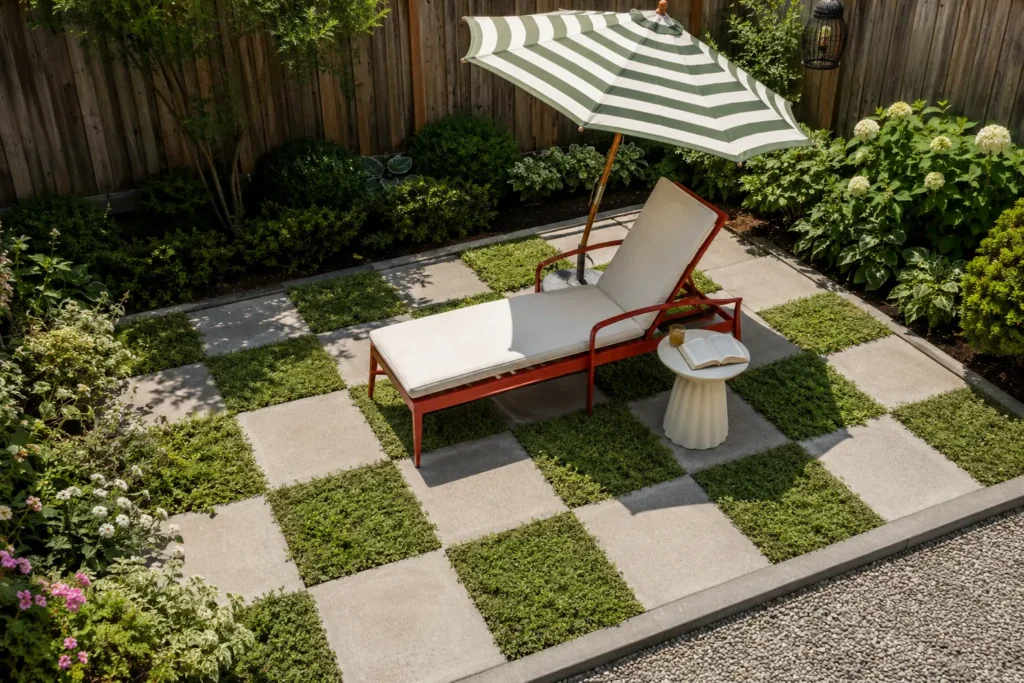
Alternate large concrete pavers with creeping thyme or narrow squares of turf to create a graphic checkerboard floor. A tomato-red metal lounger, striped tilting umbrella, and small cream pedestal table give this traditional garden pattern a younger, more playful character.
Use 18- or 24-inch pavers so the pattern remains visible without creating too many joints. In a busy walkway, replace delicate plants with permeable artificial turf or gravel-filled squares. The defined floor makes a reading nook feel intentional while preserving more greenery than a fully paved patio would.
3. Build a Retro Striped Cabana for One
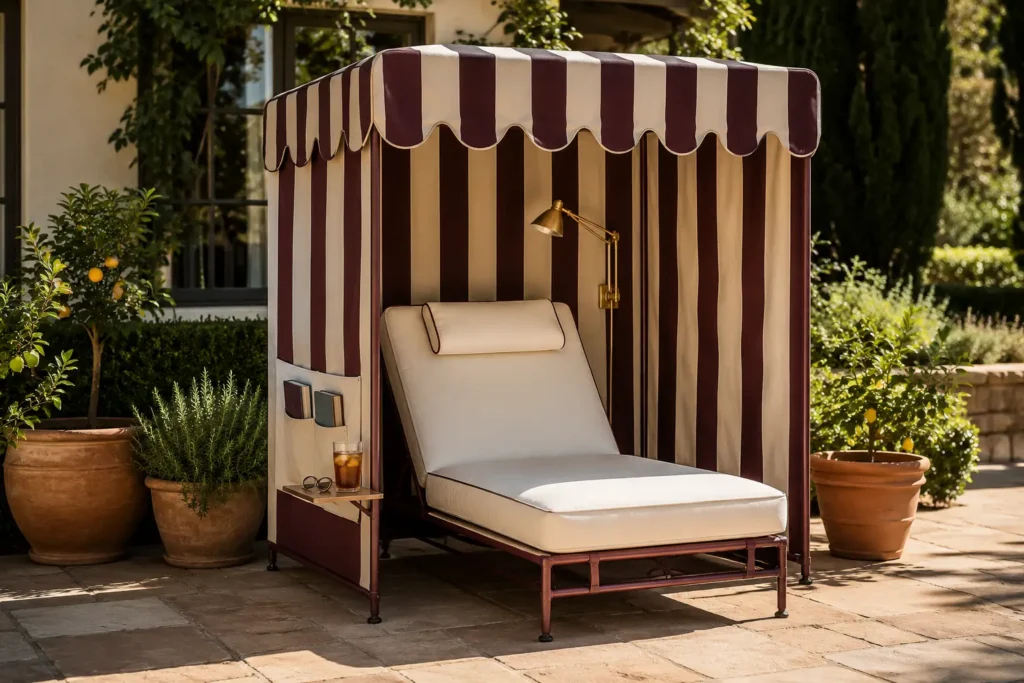
Frame a single outdoor chaise with a compact canopy made from burgundy-and-cream or green-and-white performance canvas. A scalloped front edge provides the memorable detail, while a fabric book pocket and fold-down drink ledge keep the interior uncluttered.
Mount an adjustable rechargeable lamp behind one shoulder instead of relying on decorative string lights. Make the canvas removable because even outdoor fabric lasts longer when stored during storms and winter. The cabana supplies shade and privacy without requiring the space or budget of a full poolside structure.
4. Float a Reading Deck Inside a Native Meadow
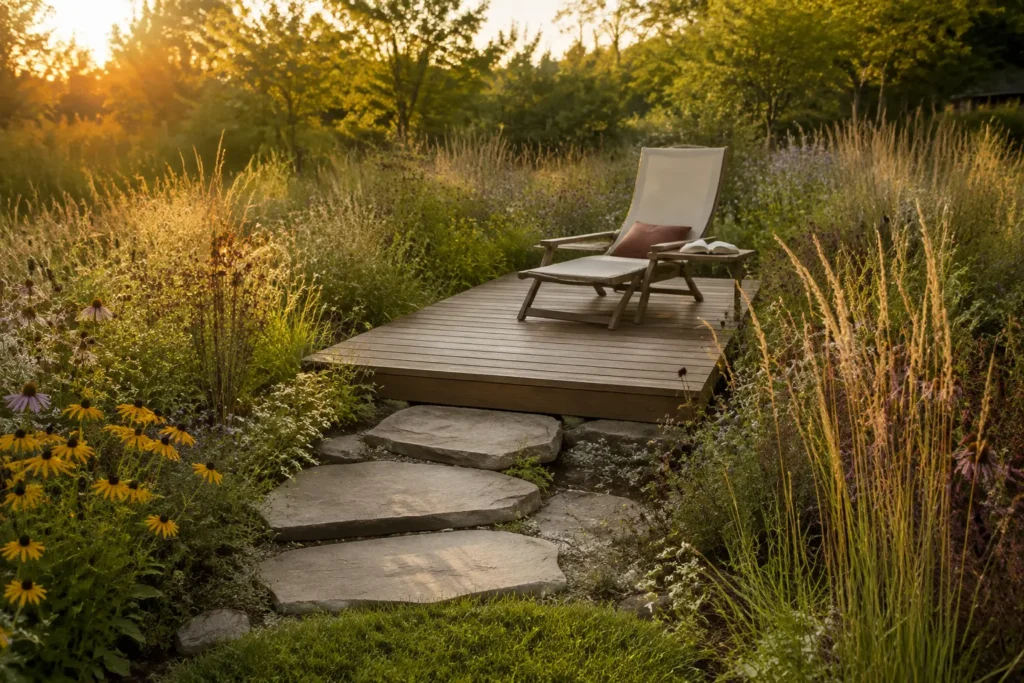
Replace part of an underused lawn with region-appropriate wildflowers and fine ornamental grasses, then extend a narrow timber platform into the planting. Oversized stepping stones can lead to a low recliner at the far end, making the chair appear immersed in the meadow.
Keep an 18- to 24-inch planting gap around the seat so stems don’t brush against your arms or trap moisture beside the furniture. The platform establishes a dry, level surface while the meadow filters views and softens surrounding noise. Check that every plant is noninvasive in your region before planting.
5. Color-Drench a Tiny Fence Nook
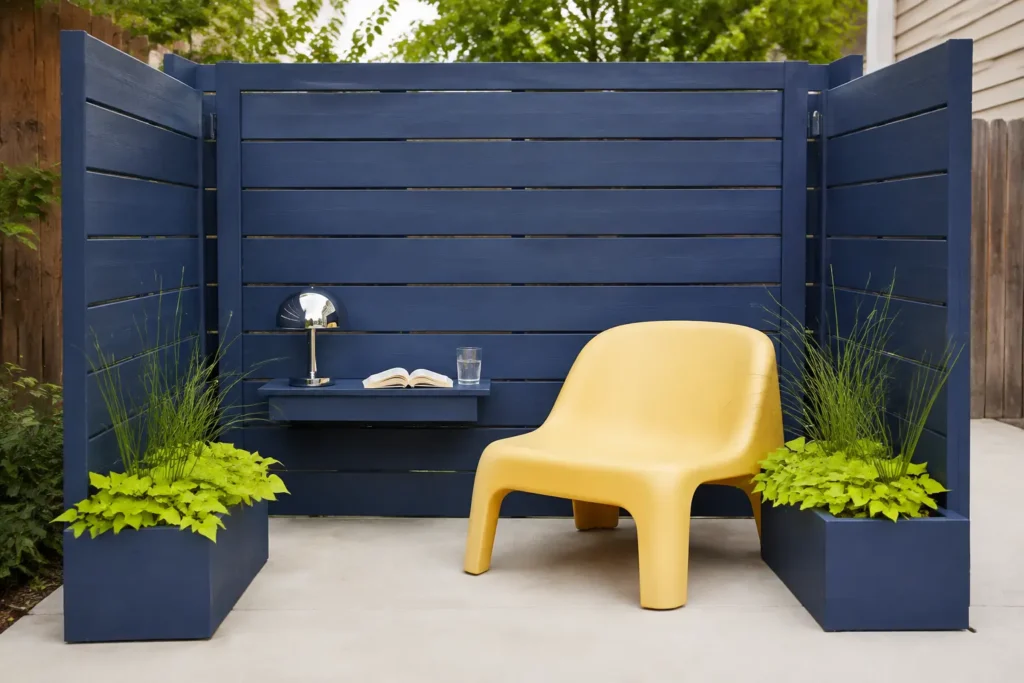
Paint a fence section, freestanding panel, and matching planters in one saturated color such as olive, aubergine, or dusty cobalt. Place a butter-yellow molded chair against this continuous backdrop and add a rechargeable chrome mushroom lamp for a cooler, reflective accent.
Using one color across several surfaces reduces visual fragmentation, which helps a narrow patio feel calmer and slightly larger. Choose an exterior paint formulated for the fence material, as inexpensive indoor-style coatings quickly peel outdoors. Renters can create the same effect with painted panels secured inside weighted planter boxes rather than altering the existing fence.
6. Frame a Mediterranean Reading Alcove With an Arch
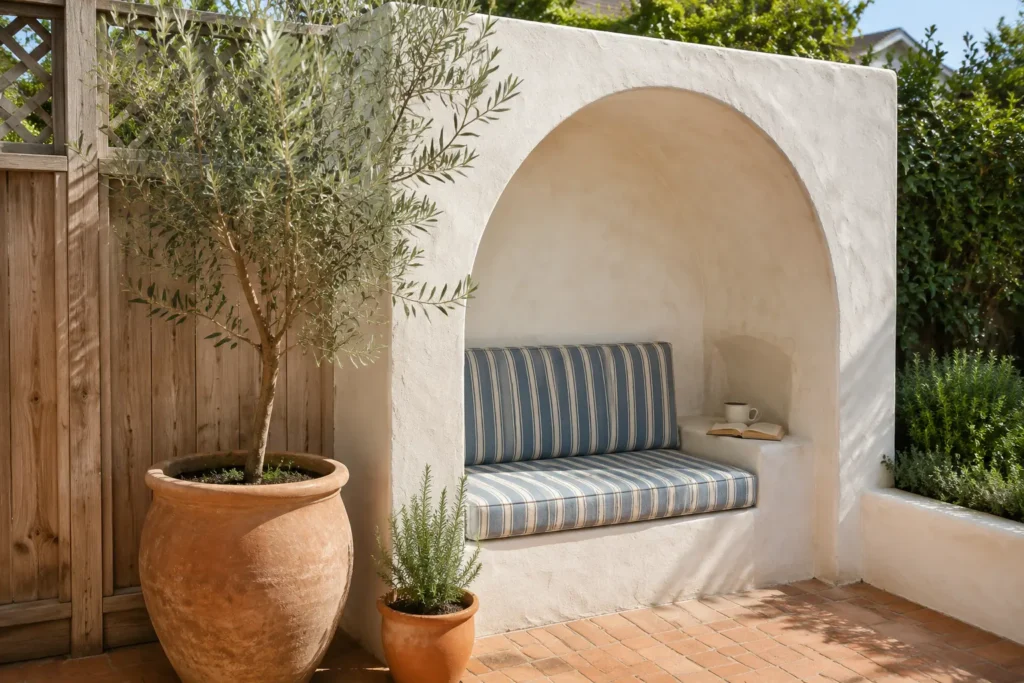
Install an exterior-rated arched panel against a sunny fence and finish it with a chalky warm-white limewash effect. Terracotta pavers, a stucco-look bench, a blue-striped seat pad, and a potted olive or climate-appropriate alternative complete the restrained Mediterranean palette.
Make the bench at least 20 inches deep and add a slightly angled back so it supports more than short decorative sitting. The arch gives a plain boundary architectural depth, while the terracotta introduces warmth that becomes richer in late-afternoon light. Use lightweight exterior panels instead of masonry for a less expensive installation.
7. Turn a Thrifted Iron Bed Into a Garden Daybed
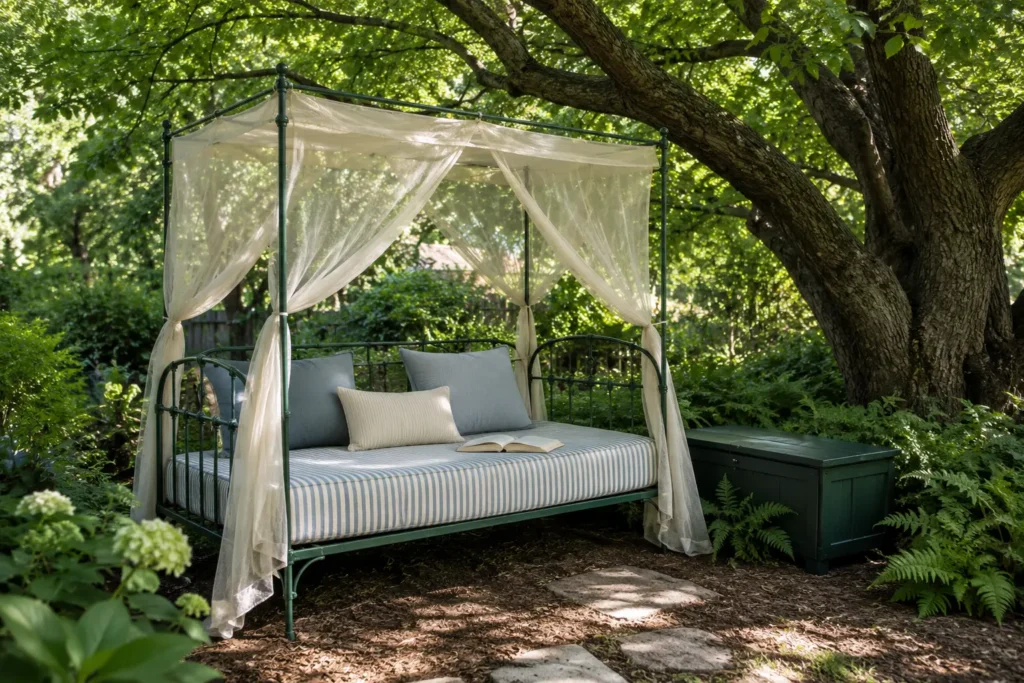
Refinish a secondhand twin iron bed with rust-inhibiting primer and deep green exterior metal paint. Add a quick-dry mattress with a tailored, washable outdoor cover, then suspend a removable mosquito net from a freestanding frame or safely assessed tree branch.
The familiar indoor silhouette looks surprising among trees, but the materials must be selected for outdoor use. A standard indoor mattress will absorb water and develop mildew. Keep a waterproof deck box nearby for cushions, books, and the net, and position the daybed under reliable shade so its metal frame doesn’t become uncomfortably hot.
8. Install a Fold-Down Fence Library
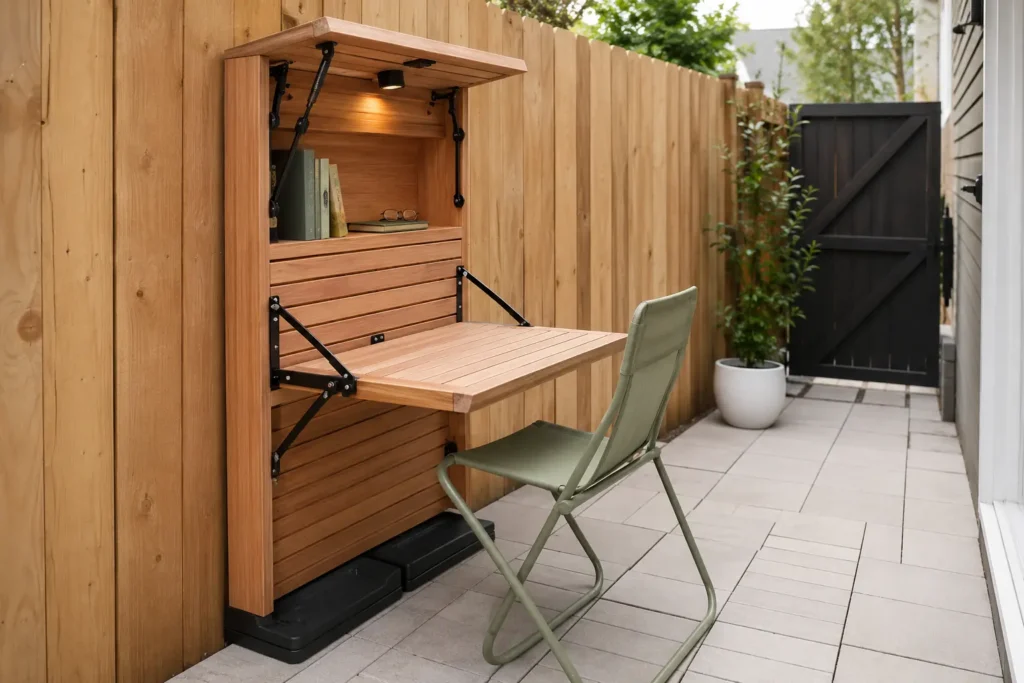
Build a shallow slatted cabinet that opens into a compact desk, book ledge, and supportive angled back panel. When closed, the reading station sits almost flat against the fence, leaving the patio floor open for circulation or other activities.
Mount the working surface approximately 26 to 29 inches high if it will be used with a lounge-style chair, then adjust the final height to the actual seat. Exterior plywood requires carefully sealed edges, since exposed layers absorb moisture first. Renters can attach the unit to a weighted freestanding frame instead of drilling into a landlord’s fence.
9. Create a Sunken-Garden Illusion With Raised Planters
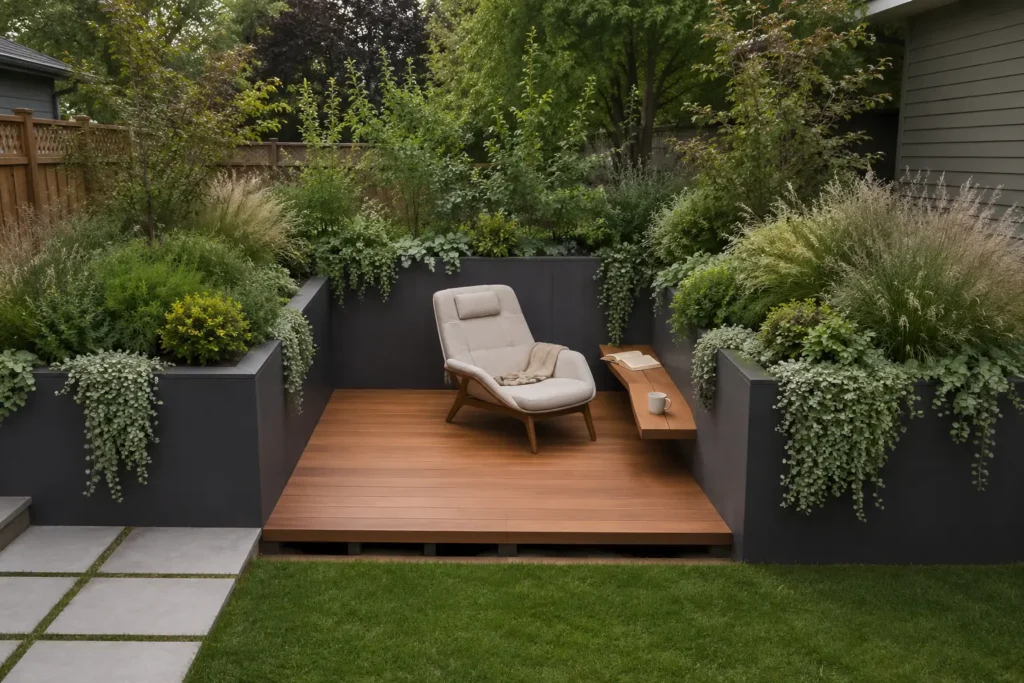
Place a low timber platform between tall raised planters rather than excavating the backyard. Fill the planters with layered grasses, trailing foliage, and compact shrubs so greenery rises around the seated reader’s eye level.
This arrangement produces the privacy of a sunken garden with less structural work and fewer drainage complications. Leave enough negative space around the chair so the nook doesn’t feel crowded as plants mature. The platform should sit above surrounding soil, with open drainage beneath it; a beautiful low deck becomes inconvenient quickly if rainwater collects around its frame.
10. Grow a Living Willow Reading Tunnel
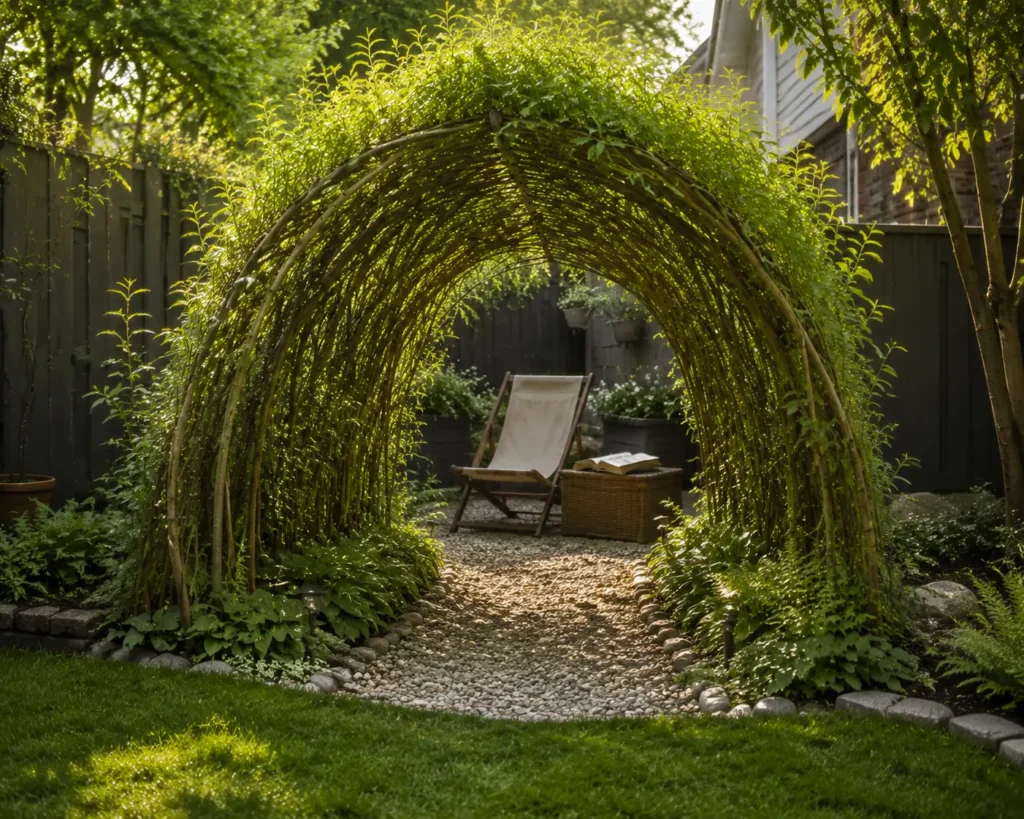
Weave flexible living willow stems into an elongated arch with open ends, then place an upright sling chair on a permeable gravel path inside it. A lidded outdoor box can serve as both book storage and a compact side surface.
Unlike a closed pod, the tunnel maintains sight lines and airflow while creating a leafy boundary around the reader. Willow needs the right moisture level, regular pruning, and enough room for root development, so confirm that it suits your climate and local growing rules. Where living willow isn’t suitable, use a woven hazel tunnel covered with a restrained climbing plant.
11. Anchor a Minimalist Nook With a Sculptural Boulder
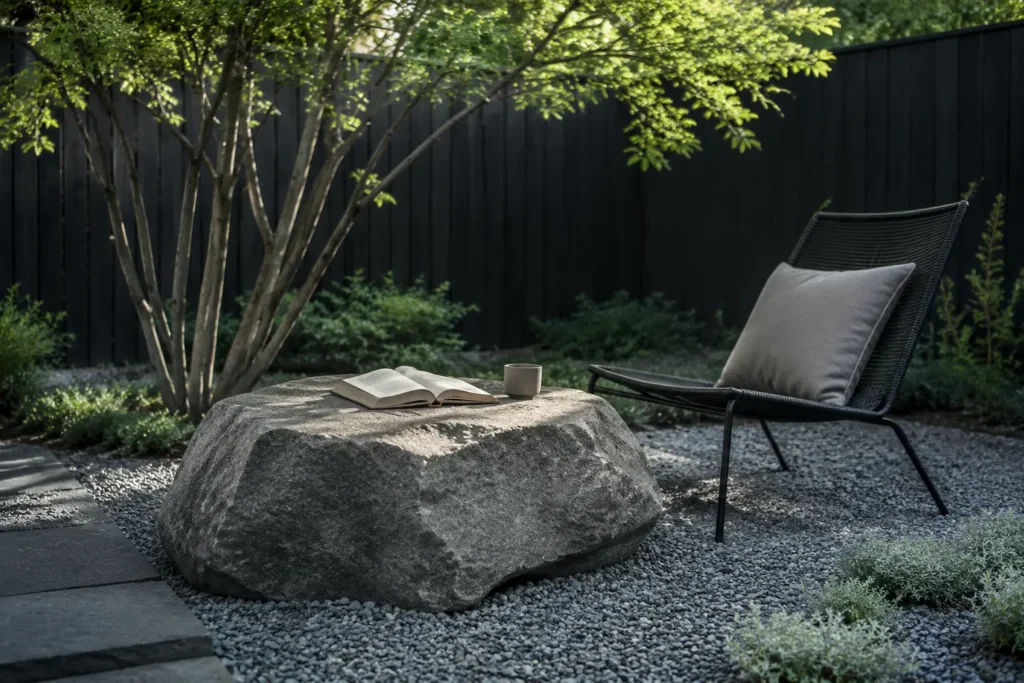
Position a locally sourced boulder beside a low black lounge chair and surround both with fine gravel, silver-green ground cover, and a single multi-stem tree. Select a stone with one reasonably flat area so it can function as a natural book or drink surface.
The contrast between raw stone and precise metal furniture gives this small composition visual weight without requiring numerous accessories. Visit a landscape supplier instead of buying imported decorative stone, but remember that delivery and placement may require professional equipment. Avoid setting the chair too close to heat-reflective rock in intensely sunny climates.
12. Add a Mobile Reading Cart That Follows the Shade
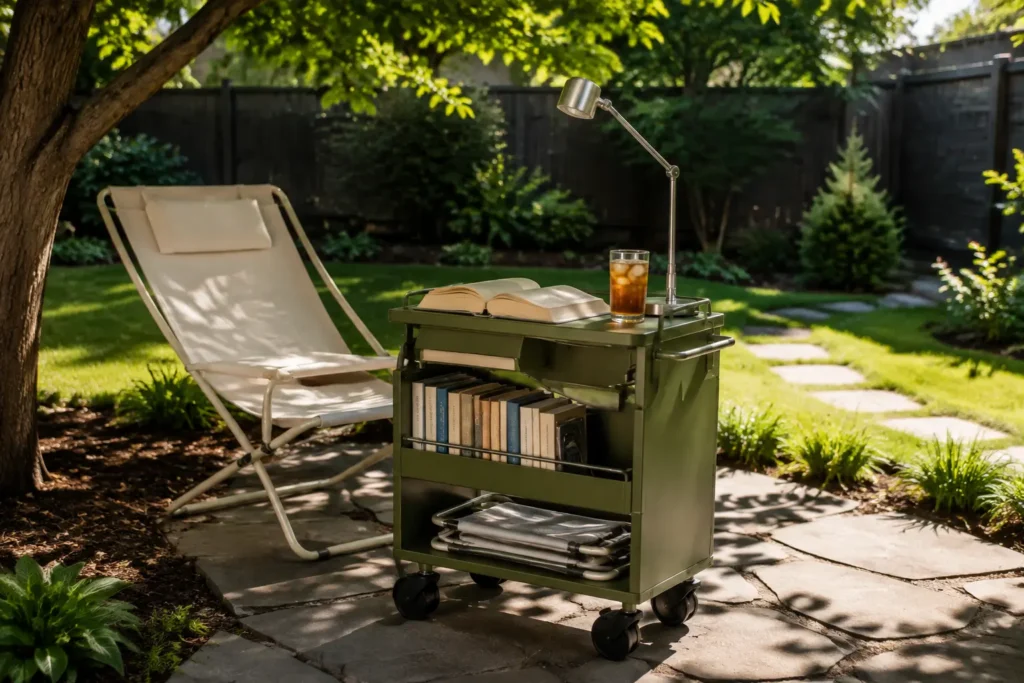
Pair a lightweight outdoor chair with a powder-coated rolling cart containing a waterproof book compartment, removable drink tray, rechargeable lamp, and folding footrest. Move the entire setup between morning shade, afternoon tree cover, and a sheltered patio as conditions change.
Locking all-terrain casters will handle pavers and firm gravel more reliably than small indoor wheels. Keep the cart narrow enough to pass through your garden gate and confirm that its shelves drain rather than hold rainwater. This adaptable solution gives renters a complete reading station without permanent landscaping or construction.
13. Curve a Gabion Wall Around a Timber Reading Bench
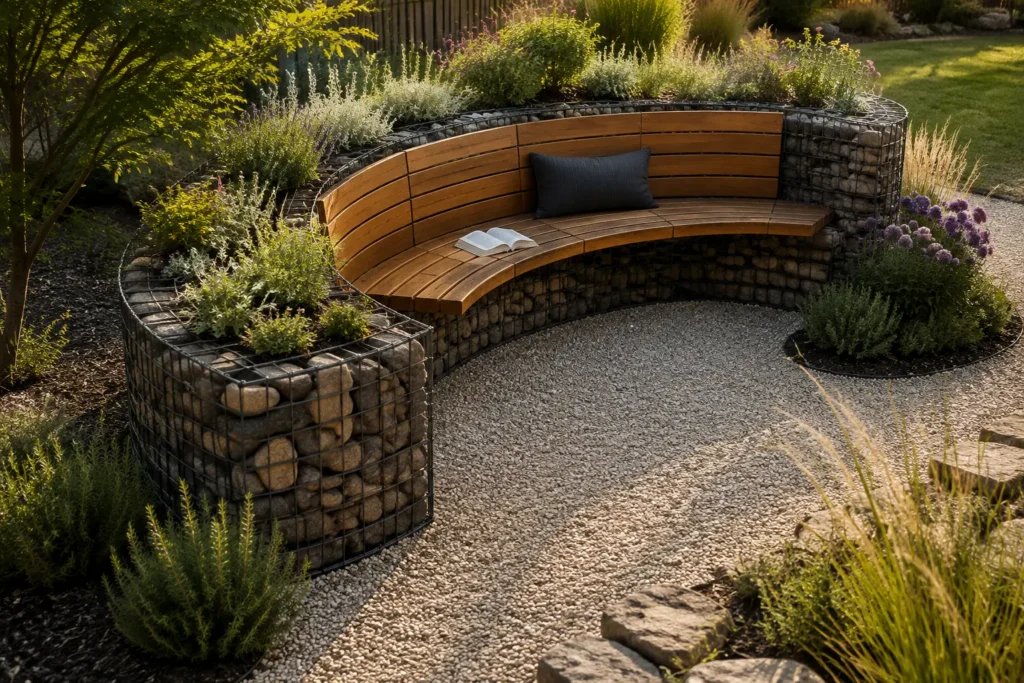
Construct a narrow curved gabion wall from a metal cage filled with locally sourced stone, then attach or position a warm timber bench along its inner face. Add aromatic herbs and drought-tolerant grasses around the outer edge to soften the hard materials.
The wall creates privacy, reduces wind, and provides a substantial visual anchor in an exposed backyard. Include an angled timber backrest or a firm lumbar cushion; bare stone may photograph well but won’t support comfortable reading. Gabions are heavy, so they require a stable base and proper installation rather than being treated as movable garden accessories.
14. Design a Transparent Bug-Screened Reading Pavilion
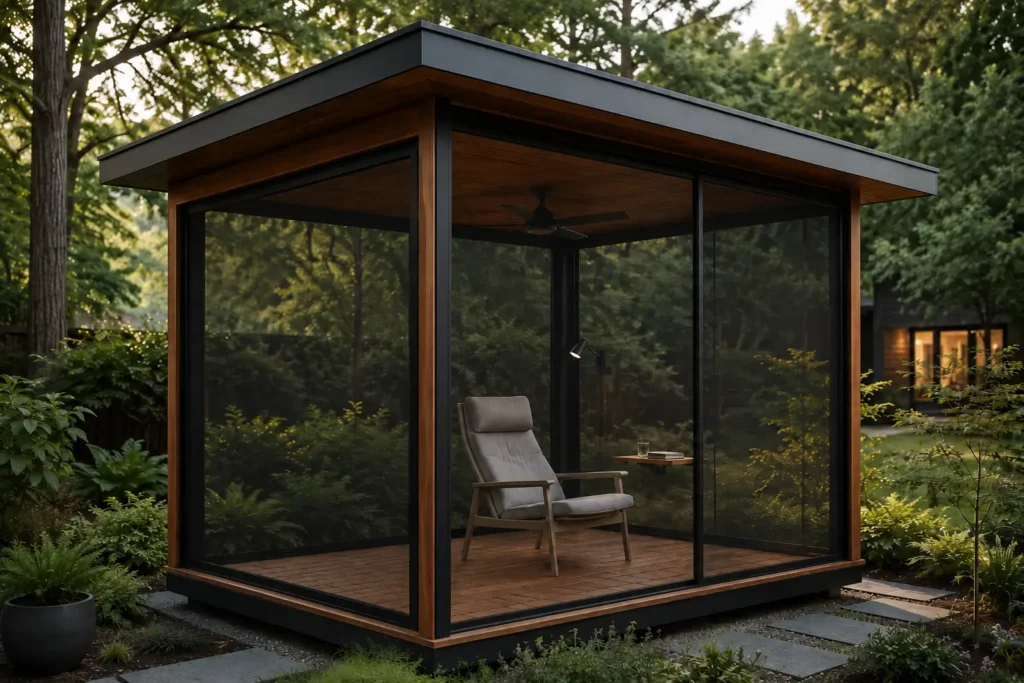
Enclose a slim cedar or matte-black frame with fine retractable insect mesh. Inside, use one supportive lounge chair, a quiet outdoor-rated fan, a waterproof wall shelf, and a directional task light.
Dark mesh becomes less noticeable when viewed from a distance, allowing planting to remain the backdrop instead of making the pavilion feel boxed in. A retractable system also lets you open the structure during cooler, insect-free months. Plan a roof overhang and raised floor so rain doesn’t splash onto the chair, and avoid filling the small enclosure with loose fabrics that restrict airflow.
15. Build a Hidden Circular Library Pavilion
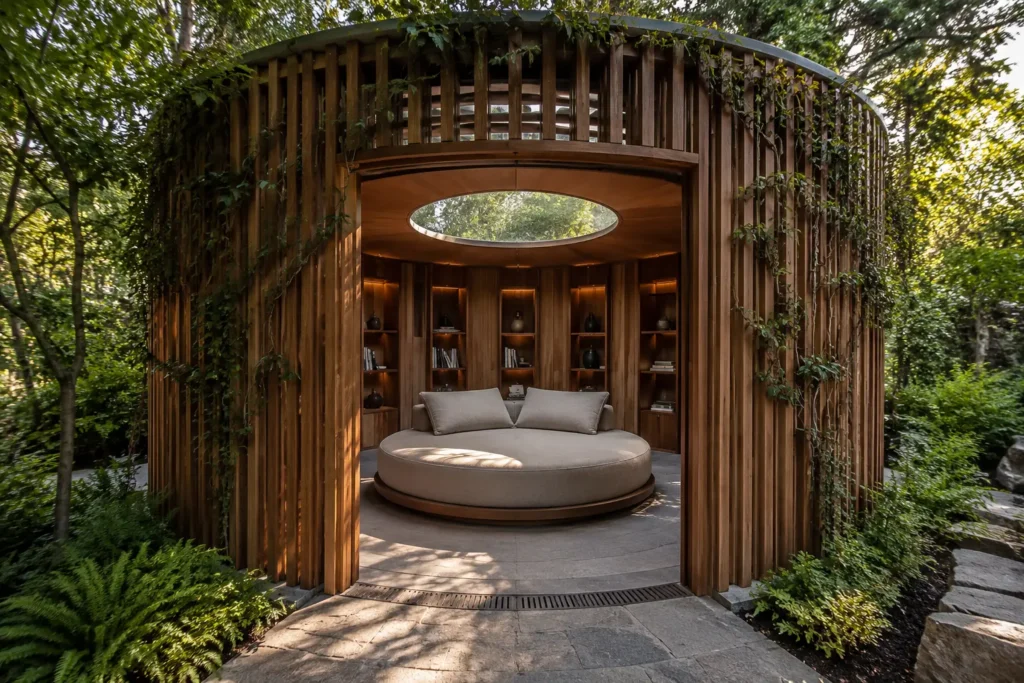
Create a partially open circular pavilion with vertical timber slats, a rotating central daybed, and weather-sealed book niches built into the inner wall. An overhead oculus can bring controlled daylight into the center, while climbing greenery helps the exterior settle into the garden.
Changing the daybed’s direction lets you follow the shade, face a favorite view, or turn away from nearby activity. This is the most construction-intensive backyard reading nook idea in the collection. Drainage, ventilation, wind loads, waterproof storage, and structural connections should all be professionally planned before work begins.