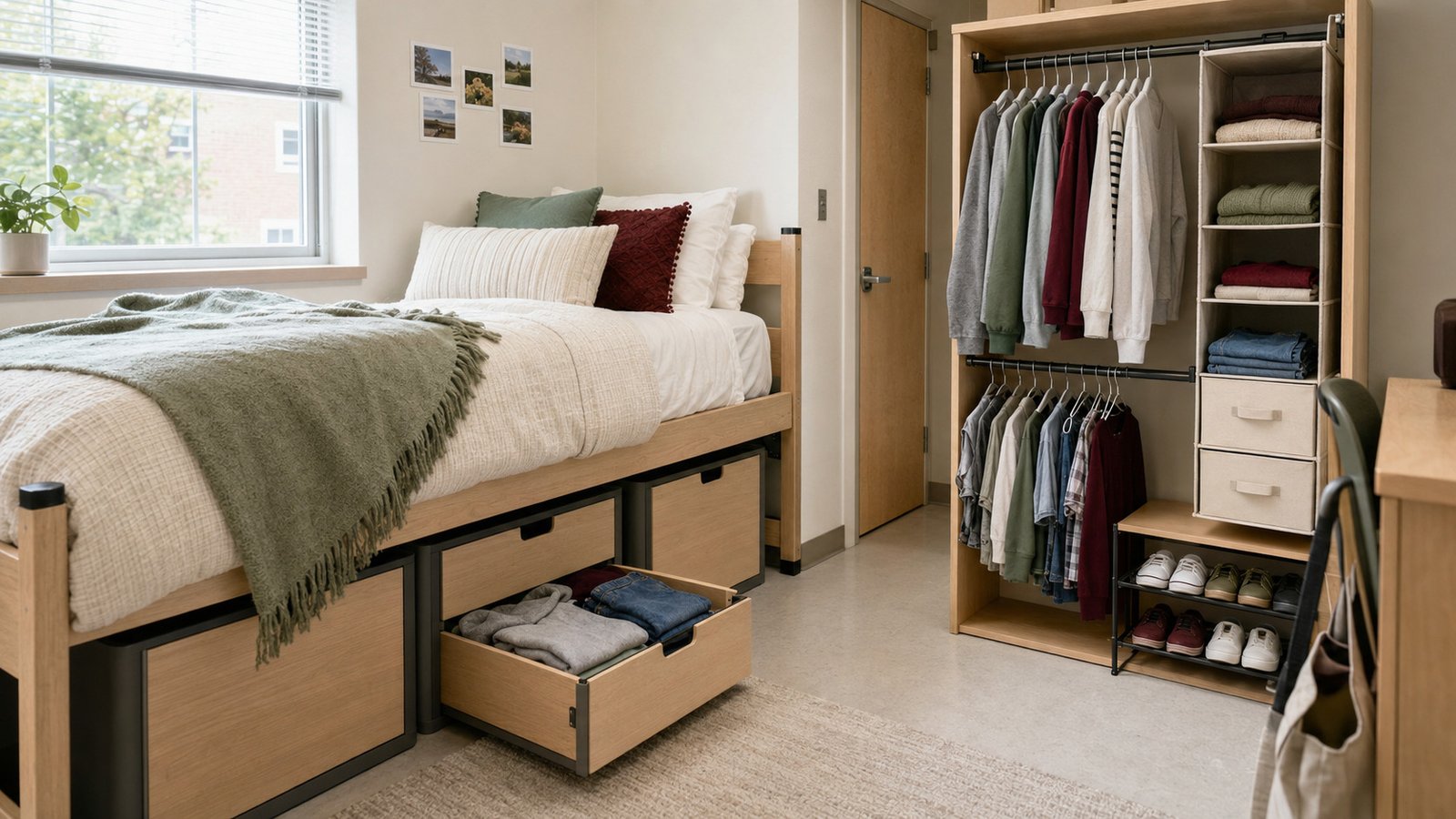
Dorm storage often looks generous on move-in day—until you unpack bulky bedding, shoes, towels, textbooks, and a full semester’s worth of clothes. The problem isn’t always a lack of space. It’s that deep areas under the bed and narrow closets quickly become difficult to reach and even harder to keep organized.
These dorm room storage ideas for under-bed and closet space focus on practical systems you can use every day. Each one works within typical residence hall rules, protects limited floor space, and can move with you at the end of the semester.
1. Create an Under-Bed Drawer System
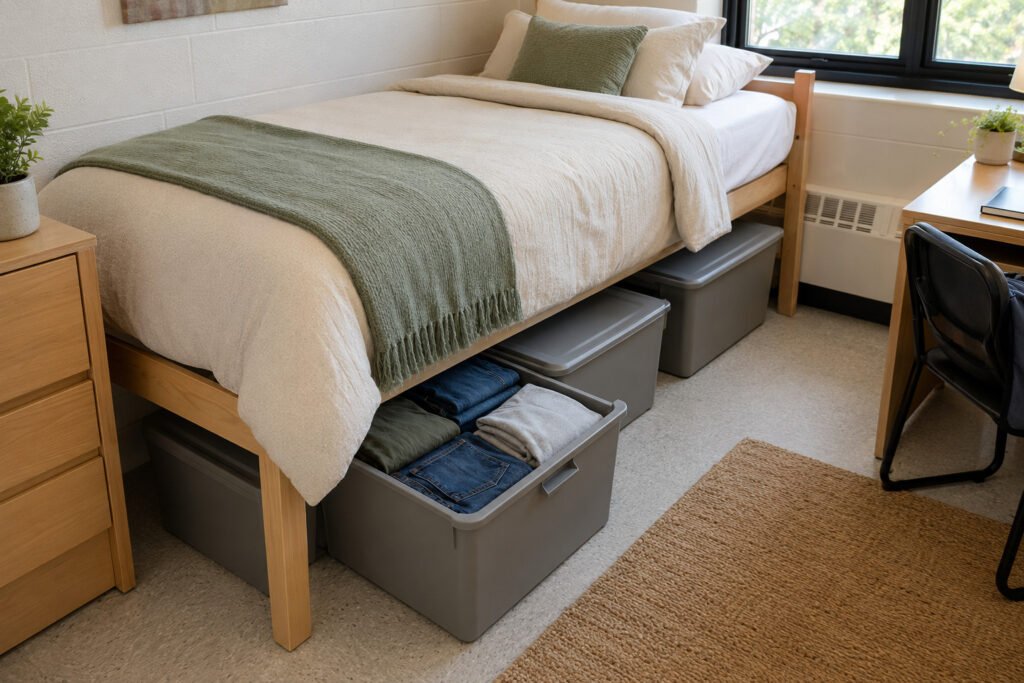
Measure from the floor to the lowest part of the bed frame before buying containers; product photos rarely show how much room lids, wheels, and handles require. Choose two or three wide drawers instead of several small bins, leaving at least 1 inch of vertical clearance so they don’t scrape against the frame. Put everyday clothes in the easiest drawer, bedding in another, and less-used items toward the wall.
Opaque drawers hide visual clutter, while translucent versions make contents easier to identify. Avoid thin, brittle plastic, which can crack when a packed drawer is pulled across a hard floor. Label the short ends so you can find what you need without opening every container.
2. Use Rolling Bins for Daily Essentials
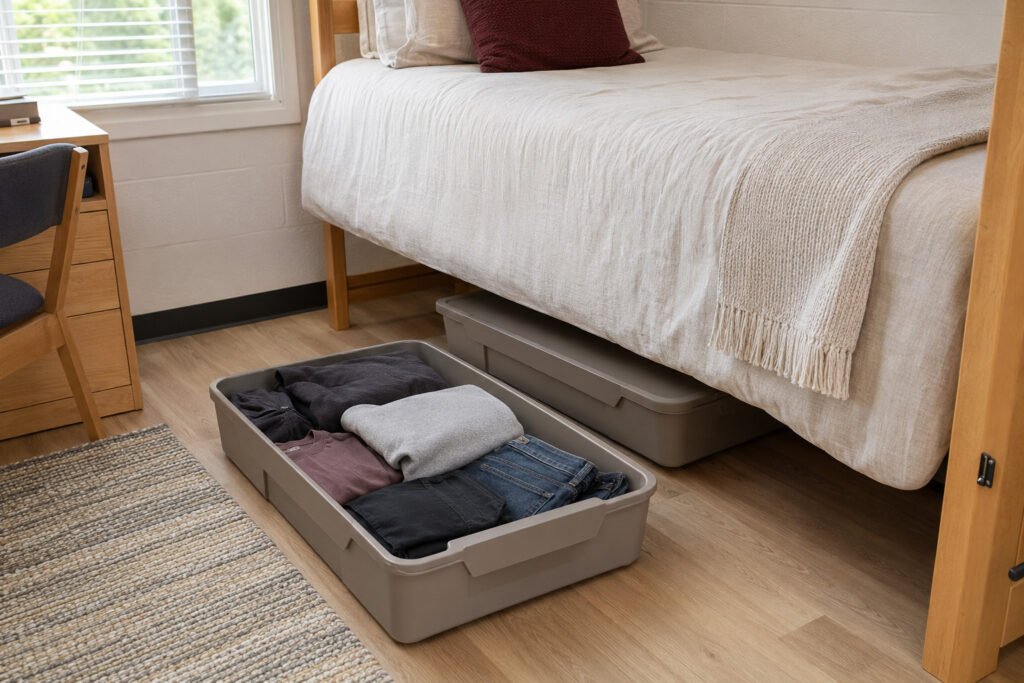
A rolling under-bed storage bin is especially useful for jeans, workout clothing, sweatshirts, or craft supplies that you reach for several times a week. Look for recessed wheels and a sturdy front handle; exposed casters add unnecessary height and can catch on area rugs. A container around 6–8 inches tall fits beneath many adjustable dorm beds without forcing you to raise the mattress excessively.
Keep the heaviest items close to the handle so the bin doesn’t twist when pulled out. If the floor is vinyl or laminate, add small felt pads beside hard wheels to prevent scuff marks. The finished setup feels more like a low dresser than a hidden pile of containers.
3. Store Bulky Bedding in Vacuum Bags
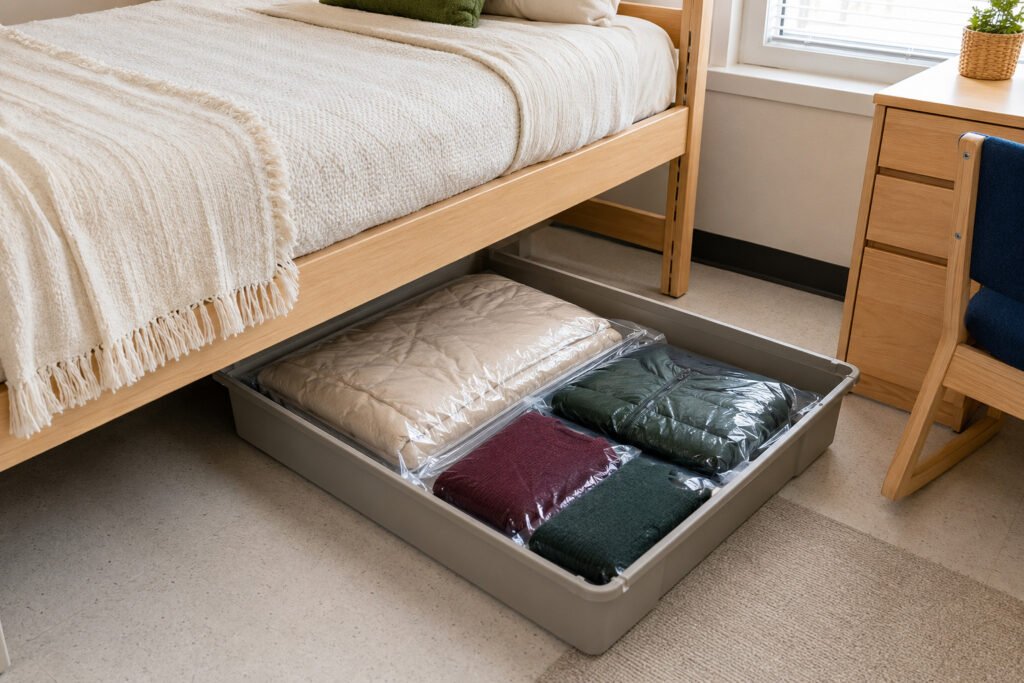
Comforters, spare pillows, winter coats, and out-of-season sweaters consume valuable closet space because they hold so much air. Place clean, completely dry textiles inside good-quality vacuum bags, compress them, and slide the flat packages beneath the back half of the bed. Avoid packing down feather or down-filled bedding for an entire year, since long compression can weaken its loft.
Vacuum bags are most useful for items you won’t need every week. Repeatedly opening and resealing cheap bags is frustrating, and thin seams tend to leak. Choose bags with double-zip closures, then place them inside a shallow bin to protect the plastic from rough bed hardware and dust.
4. Add a Bedside Storage Cart
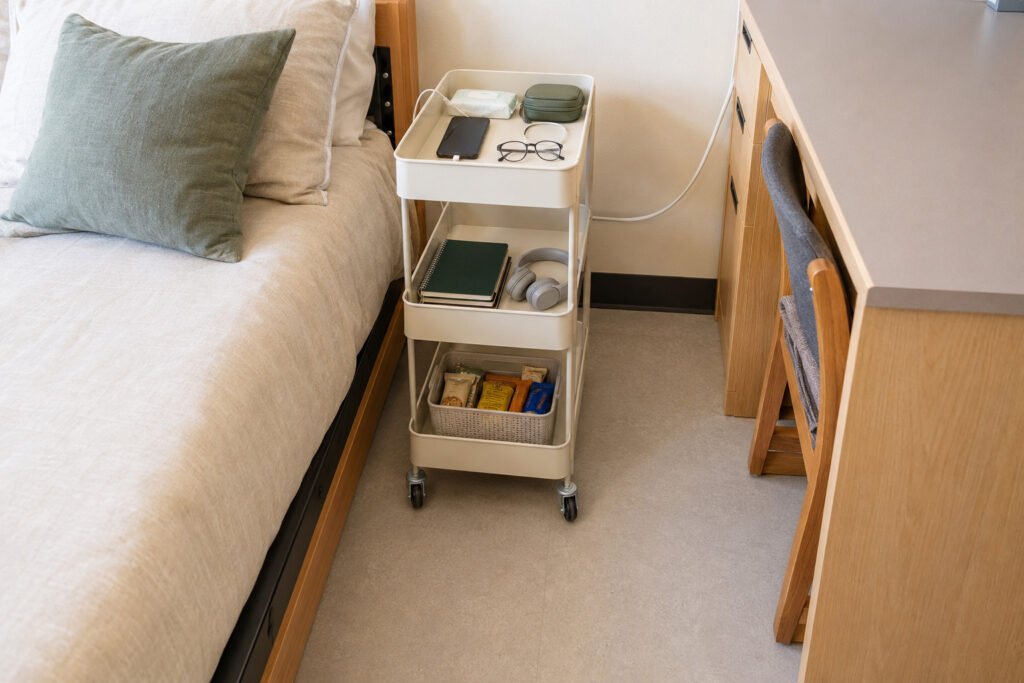
A narrow rolling cart can replace a nightstand while adding far more usable storage. Choose one no wider than the gap between your bed and desk, with raised edges that keep chargers and bottles from sliding off. The top tier can hold your phone, glasses, tissues, and medication; use the lower shelves for notebooks, snacks, or a small toiletry caddy.
Leave roughly 24 inches of clear walking space where possible, especially near the room entrance. Open wire carts feel lighter in a crowded dorm, but solid metal shelves keep small objects from falling through. Skip flimsy plastic carts if you plan to store textbooks—the casters and shelf joints often bend under concentrated weight.
5. Install a Double Closet Rod
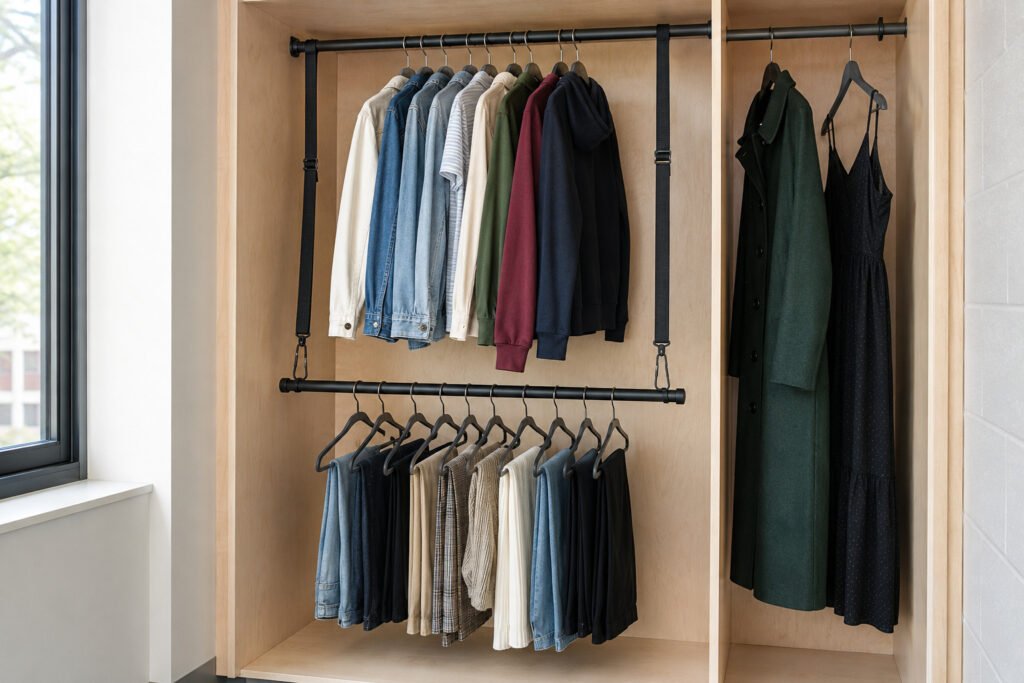
Most dorm closets waste the open area below short shirts and jackets. A removable hanging rod suspended from the existing rail creates a second level without drilling into university furniture. Position it approximately 36–40 inches below the upper rod for shirts, folded pants on hangers, and short skirts. Keep one side full height for dresses, long coats, or a hanging laundry bag.
Use slim velvet hangers to reduce wasted width, but don’t pack them so tightly that clothing wrinkles or becomes hard to remove. Before installation, check the weight limit of both rods. A lightweight metal model with adjustable straps usually remains straighter than a fabric bar when the closet is full.
6. Hang a Closet Door Organizer
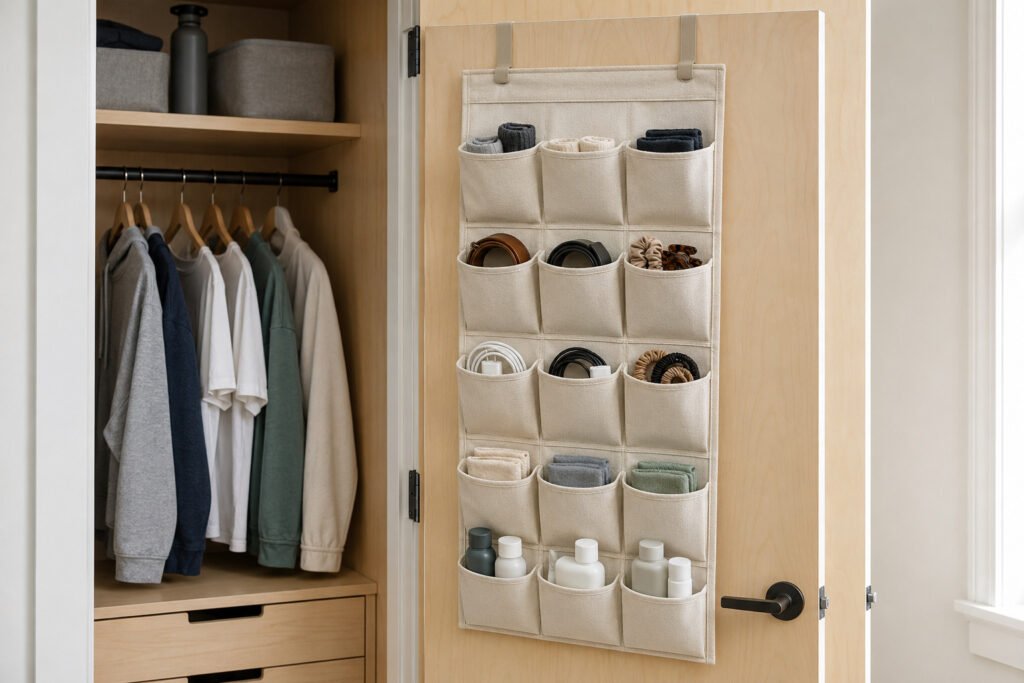
An over-the-door organizer turns a shallow, overlooked surface into storage for socks, belts, cleaning cloths, chargers, hair accessories, and backup toiletries. Clear pockets are practical because you can see small items immediately, while canvas versions look calmer when the closet door remains visible from the room. Reserve the lowest pockets for heavier bottles so the organizer hangs flat.
Check the gap above the door before purchasing. Thick metal hooks can stop a tightly fitted dorm door from closing and may damage the frame. Slim padded hooks are safer, but an organizer hung inside a hinged closet door is usually better than placing one on the main room door, where added bulk can interfere with locks or evacuation access.
7. Use a Hanging Closet Shelf
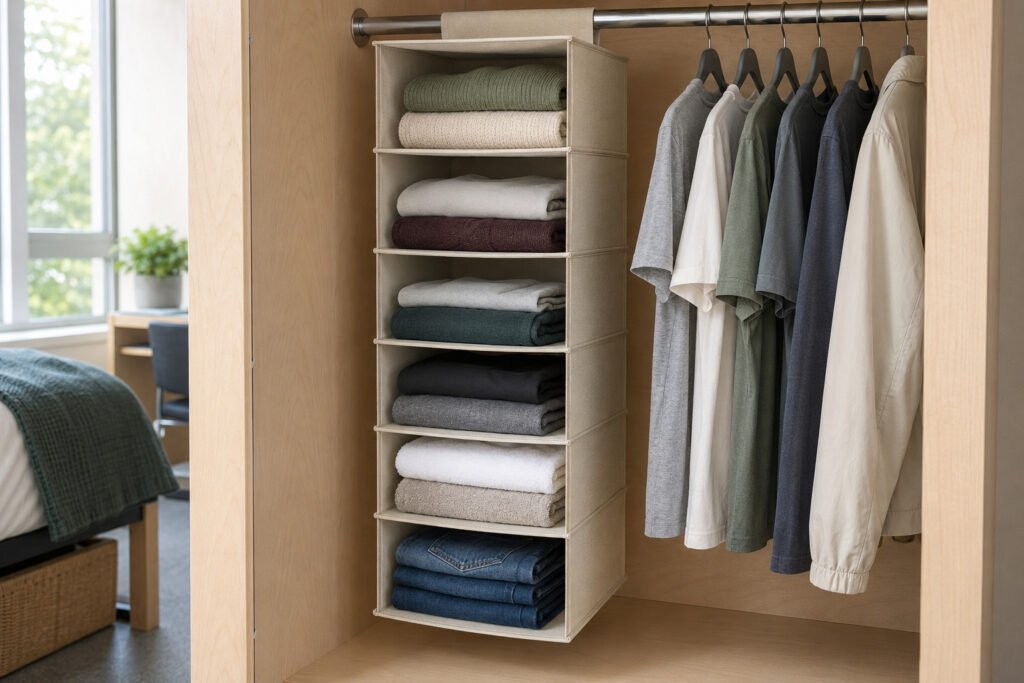
A fabric hanging organizer gives folded clothes a defined home when your dorm provides a rod but no dresser. Five or six compartments are enough for T-shirts, pajamas, sweaters, workout clothing, and towels without creating overly narrow shelves. Place heavier folded jeans in the lowest section to keep the unit stable and lighter knits near the top.
Measure the closet’s interior height and subtract the space needed for any drawers or shoes below. Reinforced shelf inserts prevent the familiar sagging that makes clothing slide forward. Canvas or tightly woven polyester tends to hold its shape better than thin nonwoven fabric, which can tear near the hook-and-loop straps after repeated use.
8. Add Slim Drawers Below Hanging Clothes
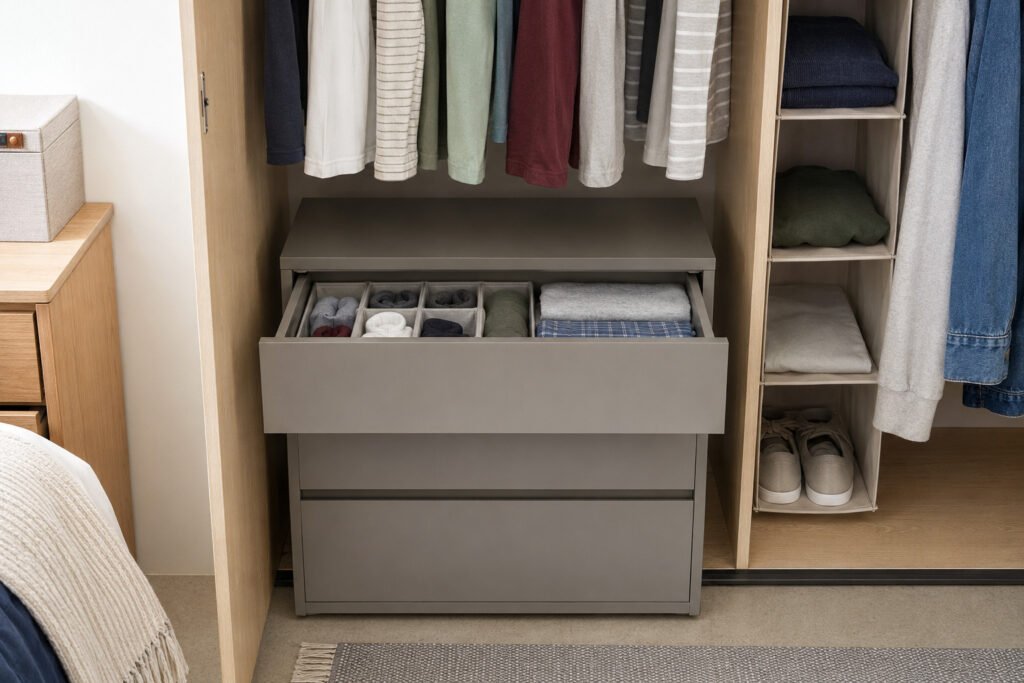
If the area beneath your shirts is still open, add a narrow three- or four-drawer unit for underwear, sleepwear, socks, and small accessories. Measure the closet depth as well as its width; a drawer that technically fits may not open fully if the door frame or sliding panel blocks it. Leave about 1 inch between the top of the unit and hanging clothes to prevent fabric from catching.
Matte, solid-colored drawers make an open closet look less busy than clear plastic ones. However, clear fronts can be useful if you’re likely to forget where items belong. Choose a unit with rigid drawer tracks, because inexpensive unsupported drawers often bow once filled and become difficult to close.
9. Organize Shoes Vertically
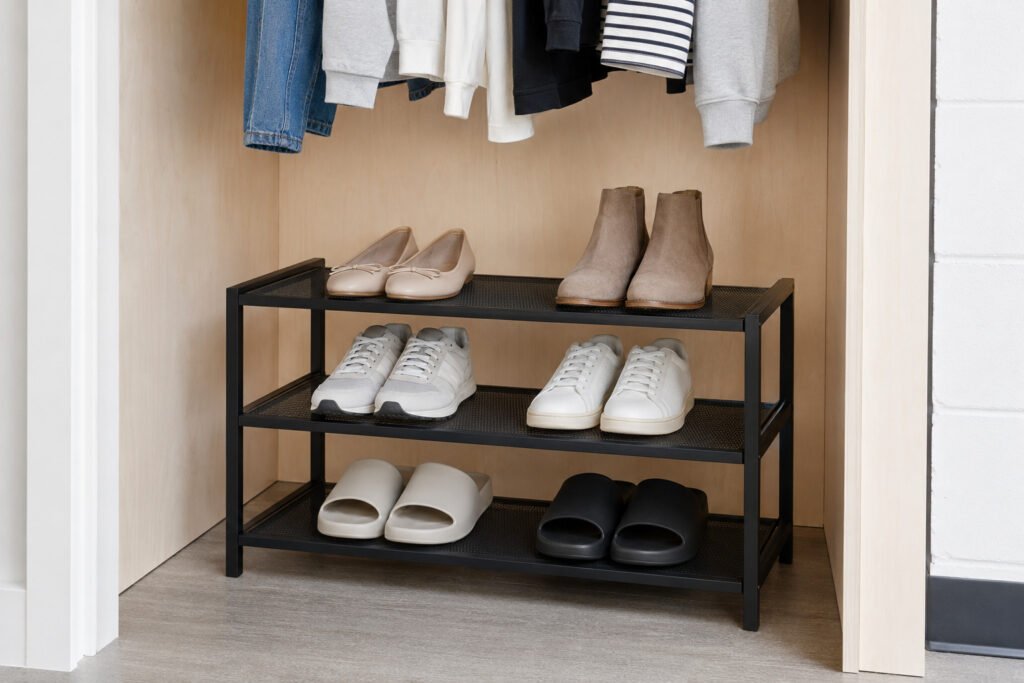
Shoes spread across a closet floor consume more room than most students realize. A two- or three-tier rack keeps everyday sneakers, flats, and shower shoes within one compact footprint. Allow approximately 8 inches of vertical space for low shoes and more for high-top sneakers or boots. Place the pairs you wear most often on the easiest level rather than organizing them only by color.
A metal rack with flat mesh shelves is more stable than angled rails, which may not hold narrow heels or soft slides securely. Clean shoes before placing them on an upper tier so dirt doesn’t fall onto pairs below. Store rarely worn footwear in breathable bags toward the back of the closet or under the bed.
10. Create a Labeled Swap Bin
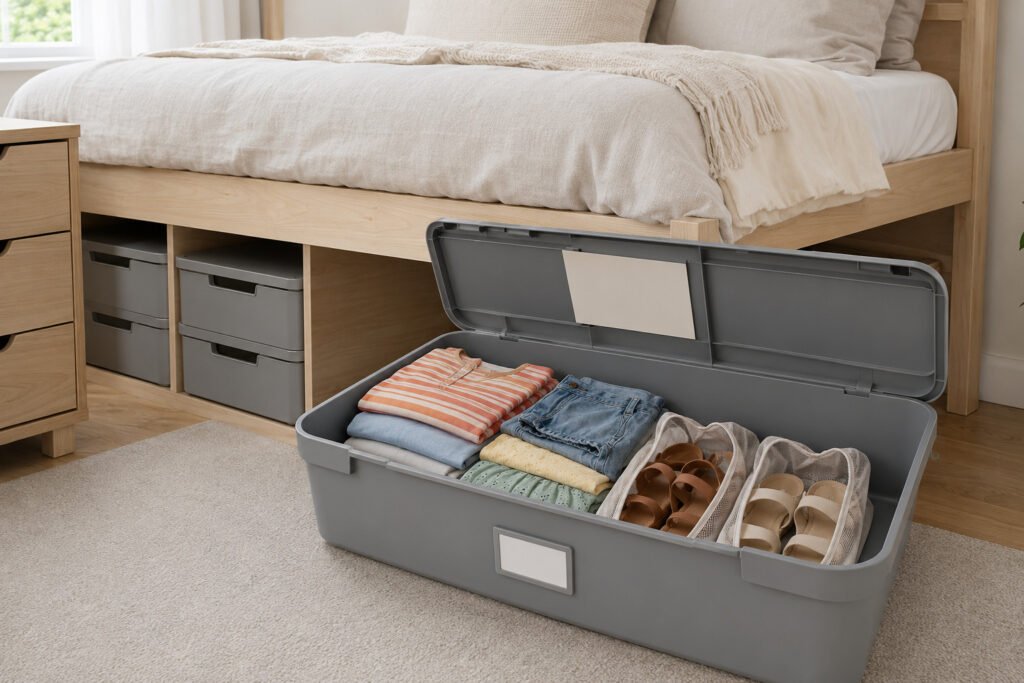
One clearly labeled swap bin keeps your small dorm closet focused on the current season. At the beginning of fall, move lightweight summer clothes, extra sandals, and unused sports gear into the bin. When temperatures change, exchange those items for winter layers rather than trying to keep your entire wardrobe accessible at once.
Choose a lidded container that fits at the back of your under-bed storage zone, since you’ll only open it occasionally. Add a simple contents list beneath the lid and leave a little empty space for mid-semester changes. This rotation prevents an overfilled closet, makes laundry easier to put away, and helps you notice clothes you never wear before moving everything home again.