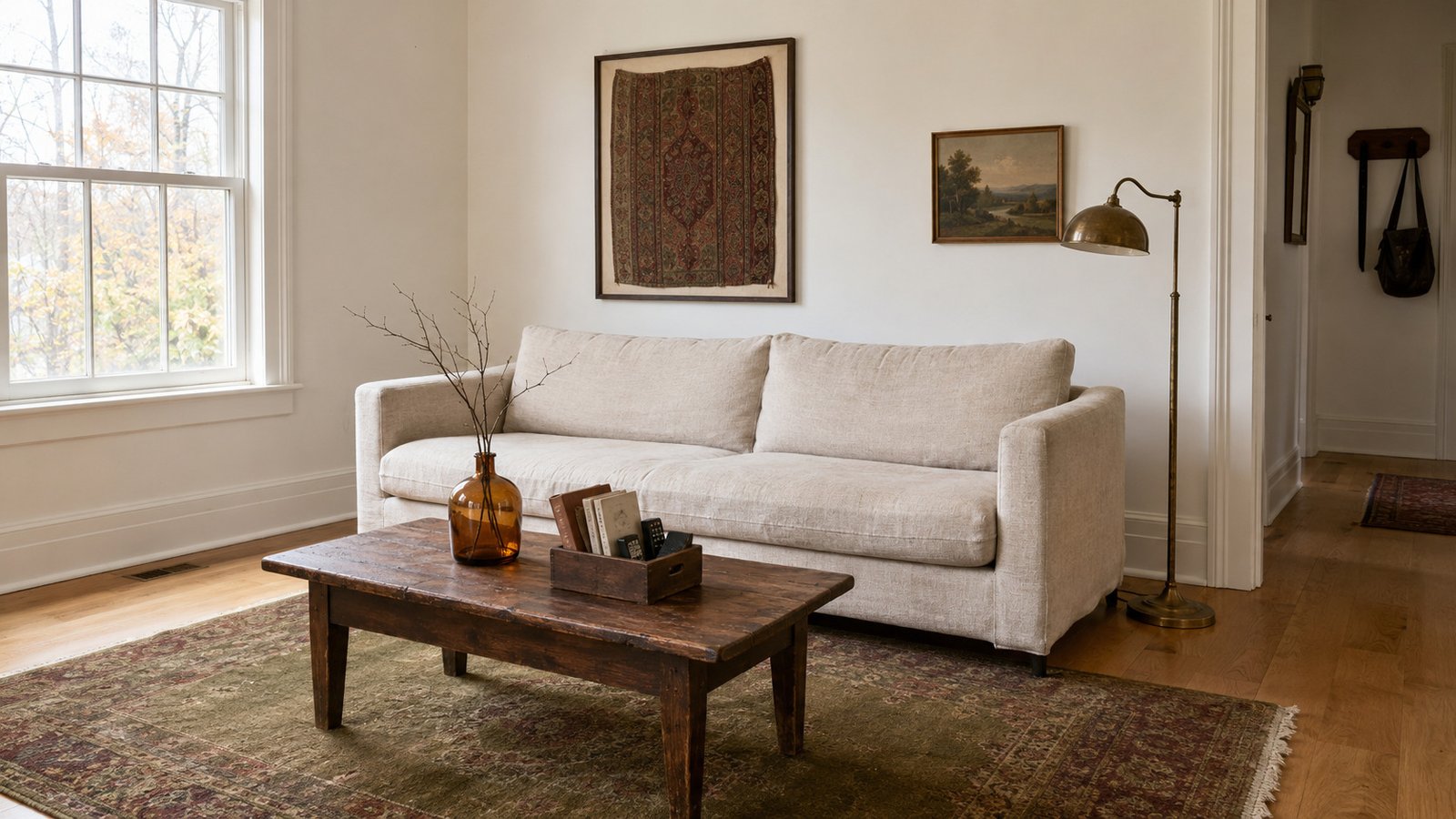
Thrifted fall decor ideas don’t need to involve baskets of faux pumpkins or shelves packed with seasonal signs. The most convincing fall rooms often begin with objects that already show age: worn wood, cloudy glass, faded fabric, darkened brass, and artwork with muted autumn color.
The goal is a home that feels collected over time rather than decorated in one shopping trip. These 15 ideas pair unusual secondhand finds with practical styling, controlled color, and enough open space to keep vintage character from turning into clutter.
Frame a Faded Wool Scarf
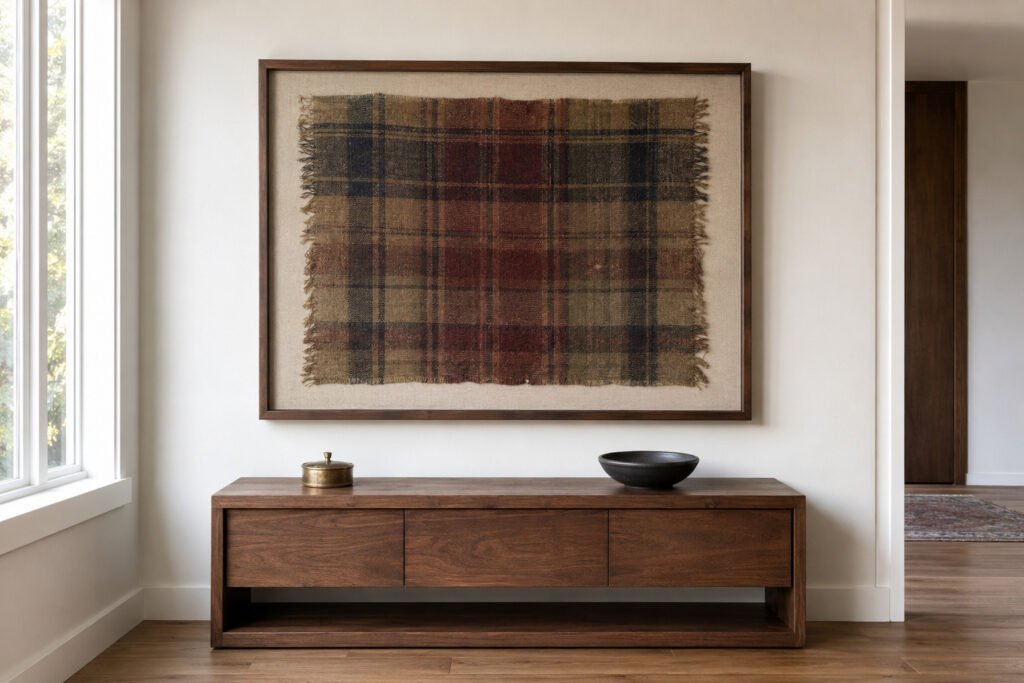
A secondhand wool scarf can become substantial wall art when its pattern and colors are strong enough to carry a room. Look for muted plaid, stripes, or an abstract weave in moss, oxblood, tobacco, faded navy, or warm cream. Mount it on an acid-free backing inside a simple walnut or blackened-wood frame, leaving the fringe and slightly worn edges visible.
Choose a frame at least 24 inches wide so the textile doesn’t resemble a small craft project. Above a console or low dresser, center the complete composition about 6–8 inches over the furniture. The soft, matte fabric absorbs light and gives the wall autumn depth without relying on literal seasonal motifs.
Style an Antique Printer’s Tray
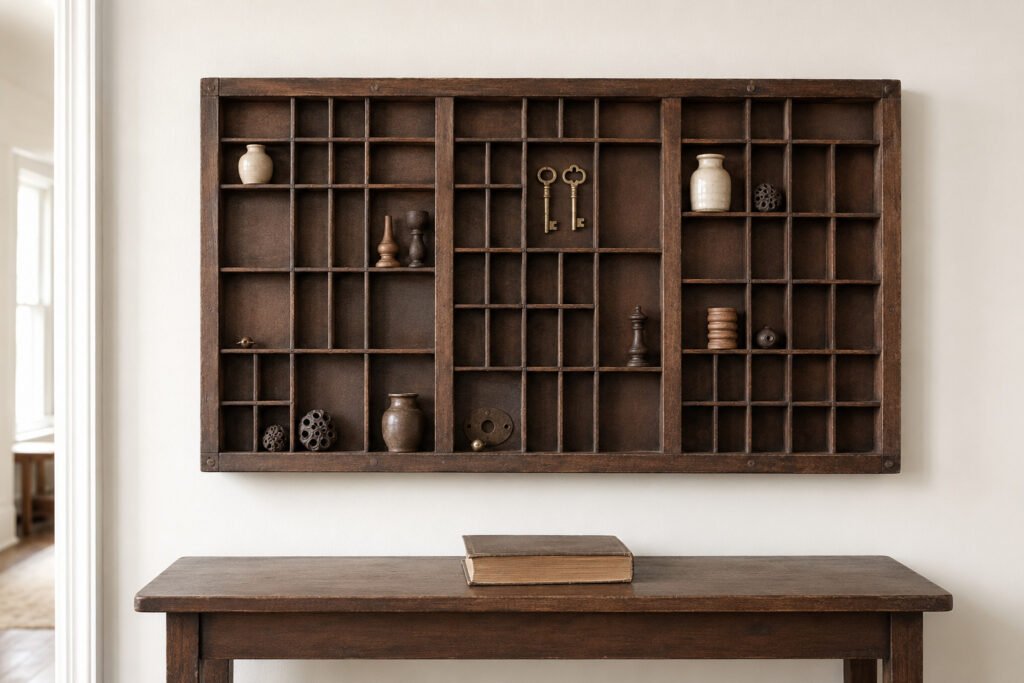
An old printer’s tray offers a structured way to display tiny collected objects without scattering them across several surfaces. Fill selected compartments with miniature pottery, old keys, small brass findings, carved wood pieces, and a few dry seed pods. Leave at least one-third of the sections empty so each object remains visible.
Hang the tray securely or lean it on a deep mantel where it can’t be knocked forward. The grid brings order to items that might otherwise look like flea-market clutter. Dust tends to settle inside the narrow compartments, so use a soft paintbrush or handheld vacuum attachment rather than filling the tray with fragile pieces that are difficult to remove.
Turn a Tool Caddy Into a Table Organizer
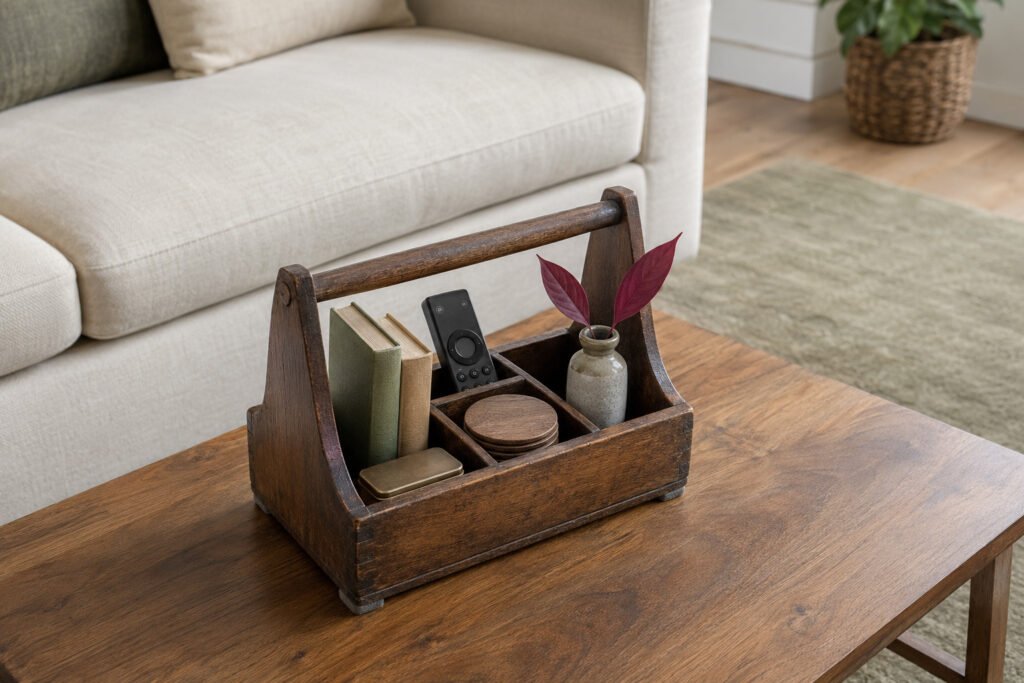
An old wooden tool caddy is well suited to a coffee table because its handle makes it easy to move when you need the full surface. Fill its compartments with a small stack of books, remotes, coasters, and one compact stoneware vase holding clipped burgundy leaves. The mix feels seasonal, but every object still has a purpose.
Choose a caddy no longer than about one-third of the table’s length so it doesn’t interfere with drinks or foot traffic. Sand only sharp splinters and preserve the worn finish elsewhere. Add felt pads underneath to prevent scratches. Avoid filling it with loose pinecones or decorative filler, which collects dust and makes frequently used items harder to reach.
Fill an Antique Umbrella Stand With Bare Branches
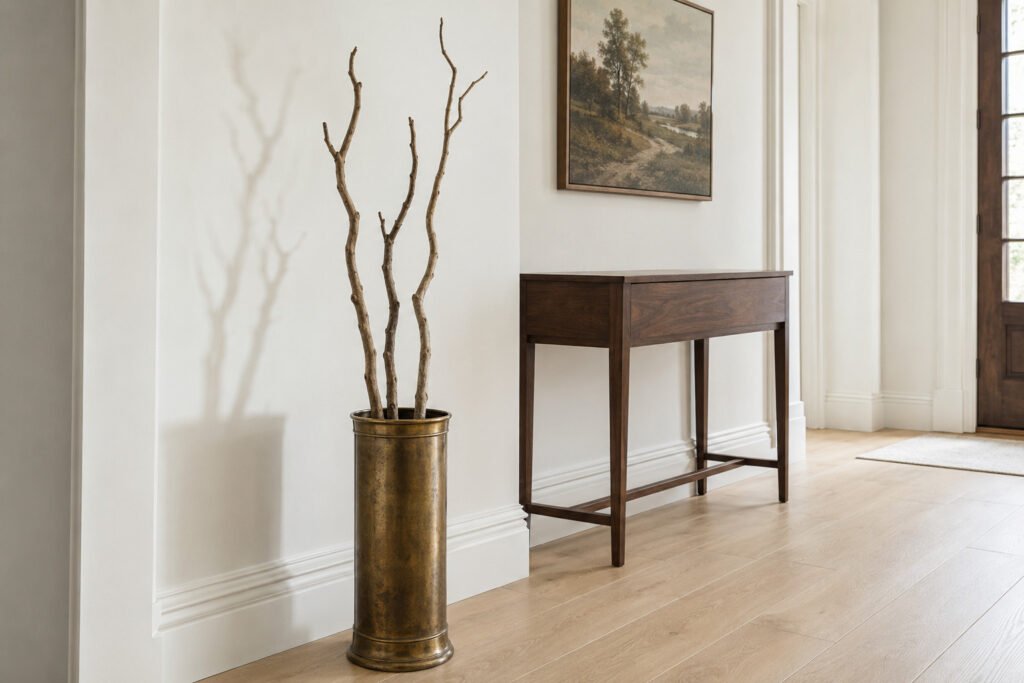
A brass, dark ceramic, or blackened-metal umbrella stand can hold tall bare branches in an entryway or living room corner. Look for naturally twisted branches that spread upward without extending into the walkway. Their strong silhouette communicates late fall through shape and shadow rather than artificial leaves.
The complete arrangement should generally stay within the width of the stand’s floor footprint. Add clean pebbles or a concealed weighted insert if the container feels unstable, especially in homes with children or pets. Check branches for insects and loose bark before bringing them indoors. Positioned near indirect daylight, the fine lines cast shifting shadows that keep the simple display visually active through
Turn Architectural Salvage Into a Lamp
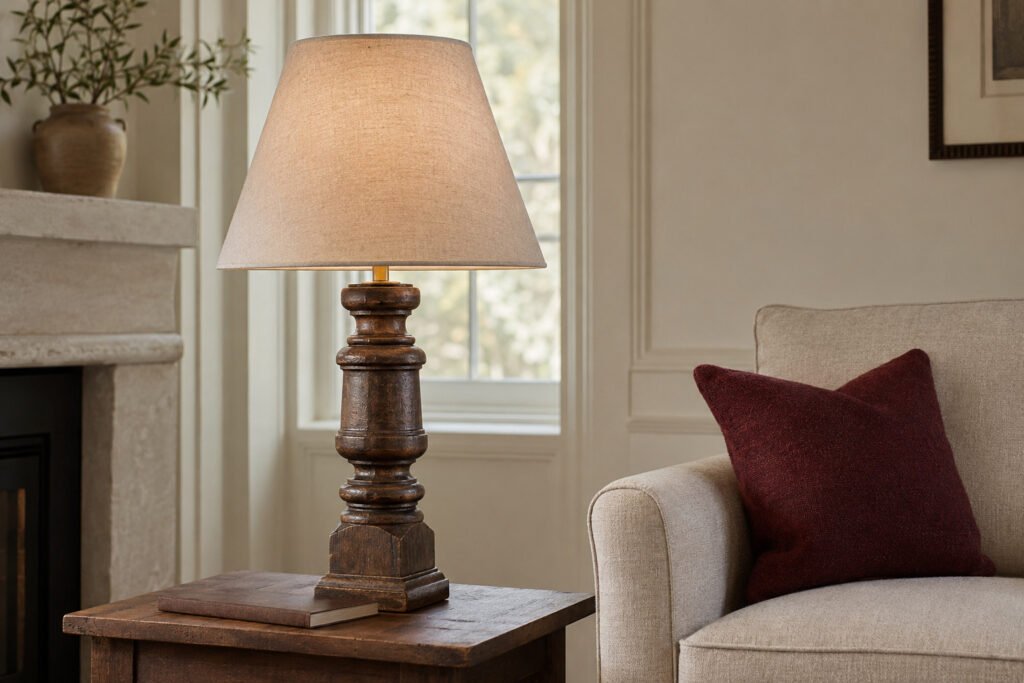
A carved stair spindle, furniture leg, or short column fragment can become a distinctive table lamp. Choose solid wood with a stable base and enough width to support the shade. A lamp repair shop can drill and wire the piece safely; this is one project where professional help is often worth more than a risky DIY shortcut.
Pair the detailed base with a plain oatmeal linen shade that’s roughly twice the width of the widest part of the base. The restrained shade keeps the lamp from feeling theatrical, while the wood’s scratches and dark crevices add rich contrast. Use a warm-white 2700K bulb to emphasize walnut and tobacco tones without casting an overly yellow glow.
Display a Foundry Mold as Wall Art
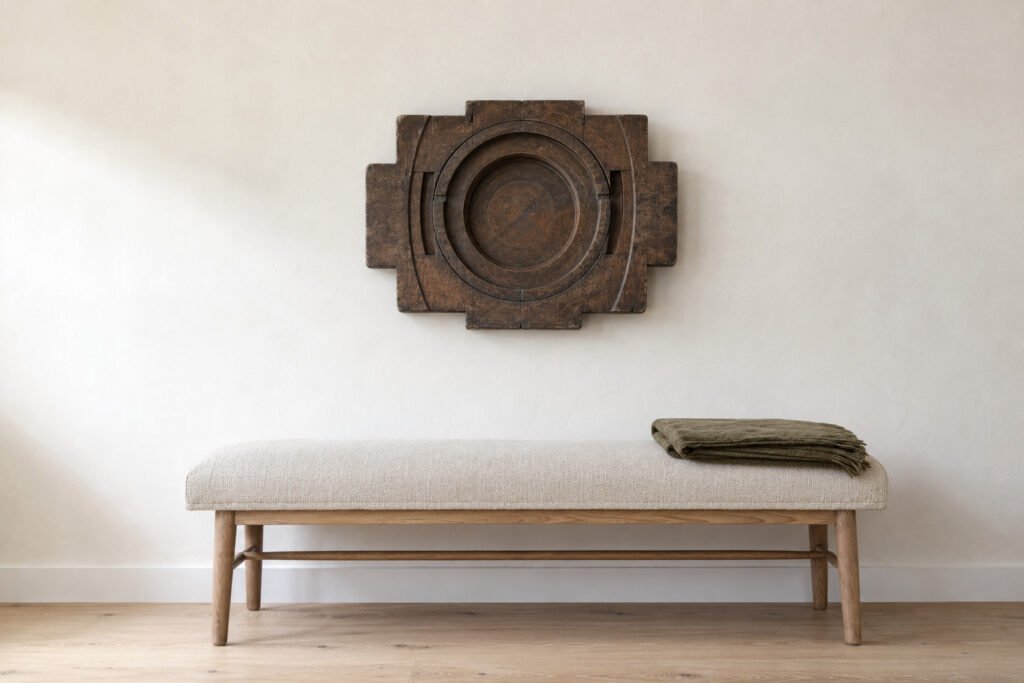
Vintage wooden foundry molds often have strong geometric forms that look surprisingly current on a clean wall. Their grooves, blocks, and circular shapes read almost like abstract sculpture, especially when the original finish has darkened unevenly. Display one substantial mold rather than grouping several small industrial objects.
Because these pieces can be heavy, attach them to a stud or use wall anchors rated above the object’s actual weight. Center the mold approximately 57–60 inches from the floor when it hangs alone. Against warm-white plaster or matte paint, its deep wood tone creates a clear fall focal point while still working with streamlined, modern furniture.
Create an Antique Linen Café Curtain
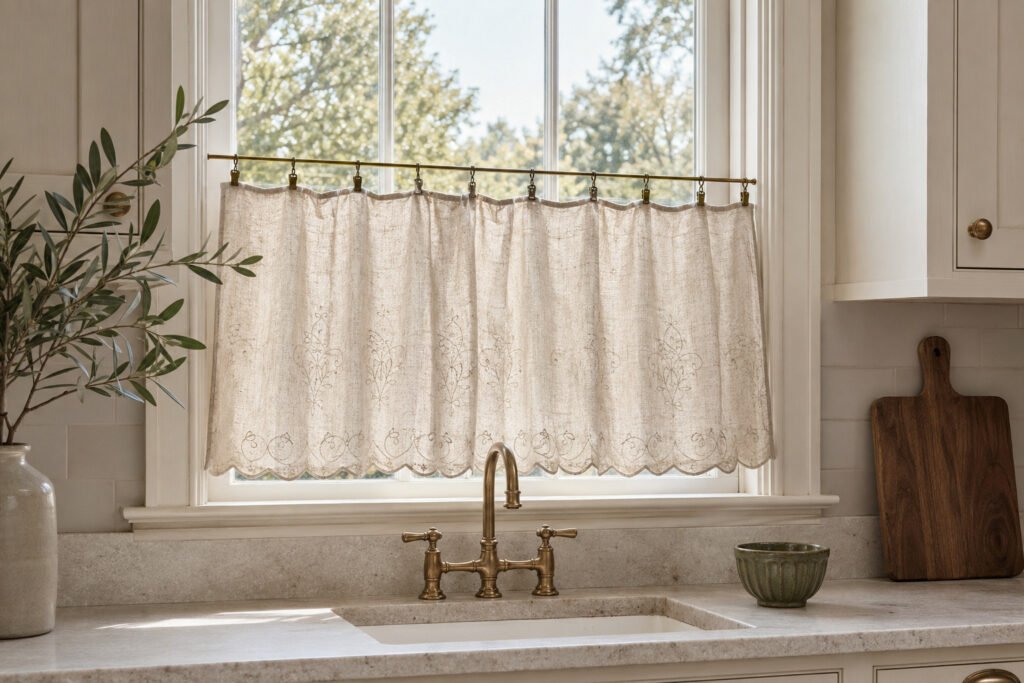
A lightweight embroidered table runner or vintage linen panel can work beautifully as a café curtain in a kitchen or breakfast nook. Hang it across the lower half of the window with clip rings or a slim tension rod, keeping the upper glass open for daylight. Cream, flax, muted olive, and faded brown feel seasonal without making the room dark.
Before buying, measure the window and choose fabric that’s about 1.5 times its width for soft folds. Old linen may have weak areas, so hold it up to light and check for thinning before adding clips. Hand-washing or using a delicate cycle will protect embroidery better than frequent hot washes. The finished window looks relaxed, useful, and genuinely collected.
Create a Tonal Vintage Glass Library
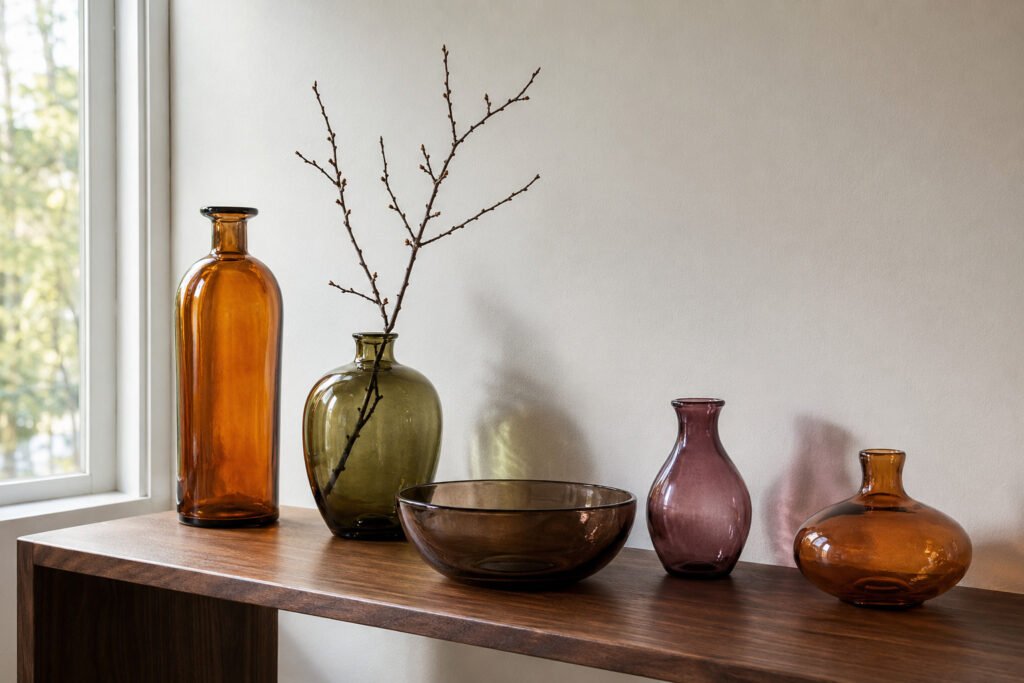
Collect four or five glass vessels in amber, olive, smoky brown, and muted plum, then arrange them near a window where daylight can pass through the color. Vary the silhouettes—perhaps one narrow bottle, a low bowl, and two rounded vases—but repeat at least one color so the grouping feels related.
Place the tallest vessel slightly off-center and keep the rest below two-thirds of its height. Empty glass usually looks cleaner than filling every vase with stems; one sparse branch is enough to signal the season. Check thrifted glass for sharp chips and cloudy mineral buildup. Vinegar can remove light deposits, but permanent haze is best treated as part of the piece’s aged surface.
Use a Card Catalog as an Organizer
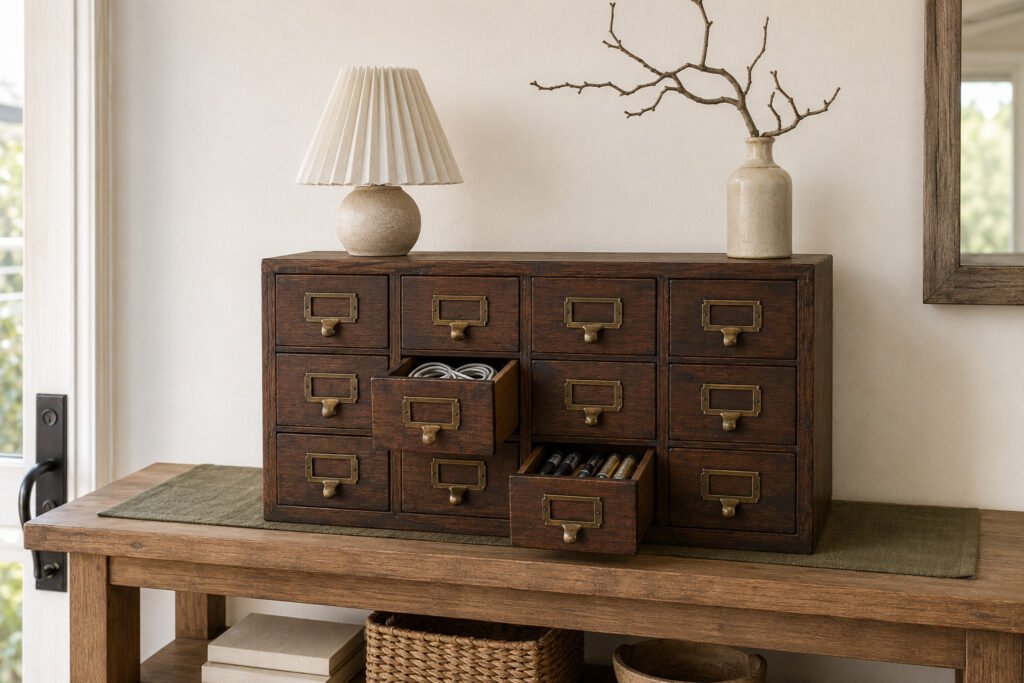
A small library card catalog can bring vintage character to an entry console, home office, or kitchen command area while hiding everyday clutter. Use the drawers for chargers, spare keys, batteries, pens, and other items that usually spread across the surface. Add removable labels inside the drawers rather than covering original brass label holders with new stickers.
Keep the top simple: a small lamp and one twisted branch in a stoneware bottle are enough. Card catalogs carry considerable visual weight, so they look best on furniture at least a few inches wider on each side. Check that the drawers slide smoothly before buying; repairing warped wood and replacing missing hardware can cost more than the cabinet itself.
Turn a Music Stand Into an Art Display
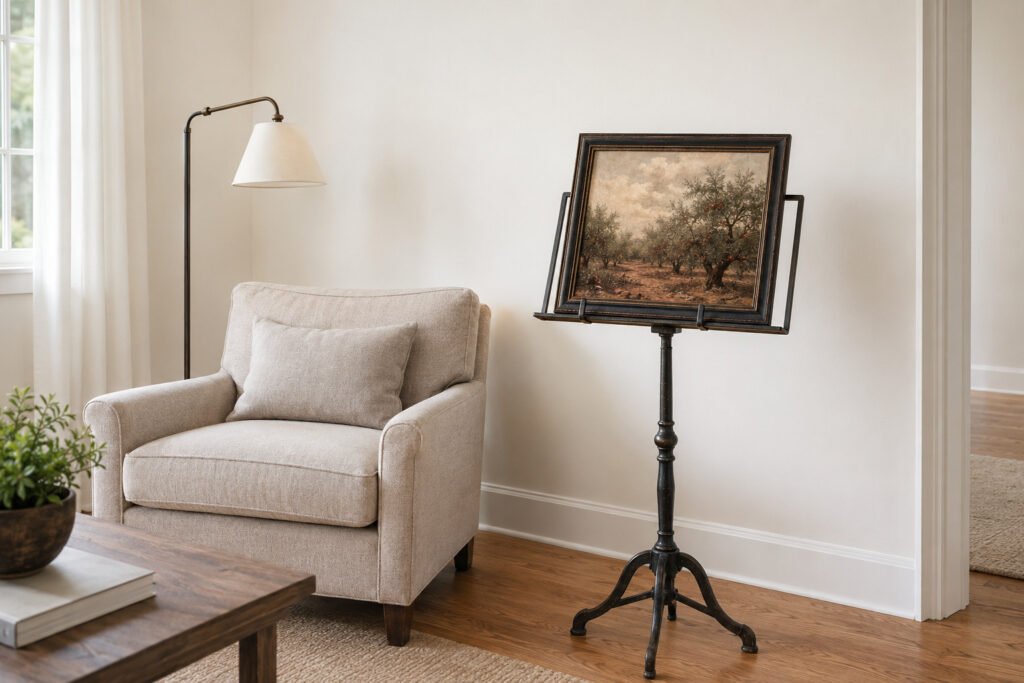
A blackened-metal music stand makes an unexpected holder for a small orchard painting, vintage botanical plate, or open illustrated book. Place it in an empty living room corner where ordinary framed art would feel too flat. The slender base occupies little floor space, while the angled top lifts the artwork into view.
Adjust the stand so the displayed piece sits near eye level, then secure it with clear museum putty or discreet clips. Avoid placing glass-framed work where direct window glare will obscure the image. The combination of dark metal and muted autumn artwork adds vertical interest without introducing another bulky cabinet, making it especially useful in apartments and narrow rooms.
Make a Salvaged Cabinet-Door Artwork
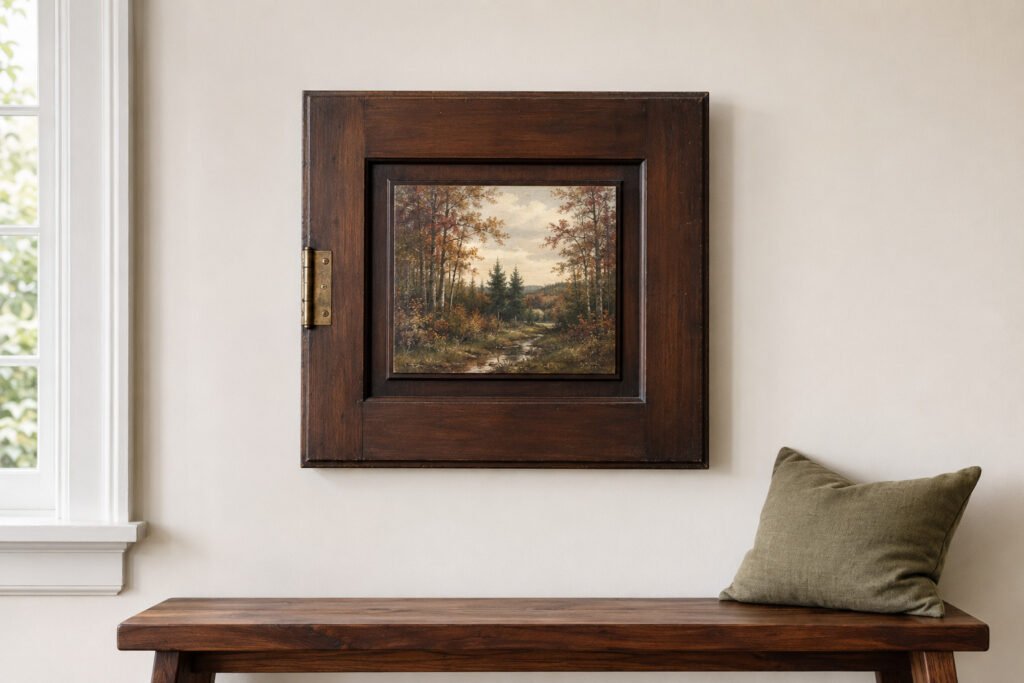
An old paneled cabinet door can serve as a ready-made architectural frame. Clean it carefully, stabilize any loose paint, and mount a small vintage landscape in the recessed center panel. A tiny orchard, woodland, or countryside scene looks especially effective surrounded by worn olive paint, dark stain, or aged cream.
Keep the original hinges only if they contribute to the composition; loose hardware can make the piece look unfinished rather than intentionally salvaged. Because old painted furniture may contain lead, don’t sand an unknown finish indoors. Seal intact paint with an appropriate clear coating or choose an unpainted wooden door. The layered frame gives a modest thrifted print enough visual presence to anchor a console or breakfast bench.
Style a Vintage Folding Screen With Textiles
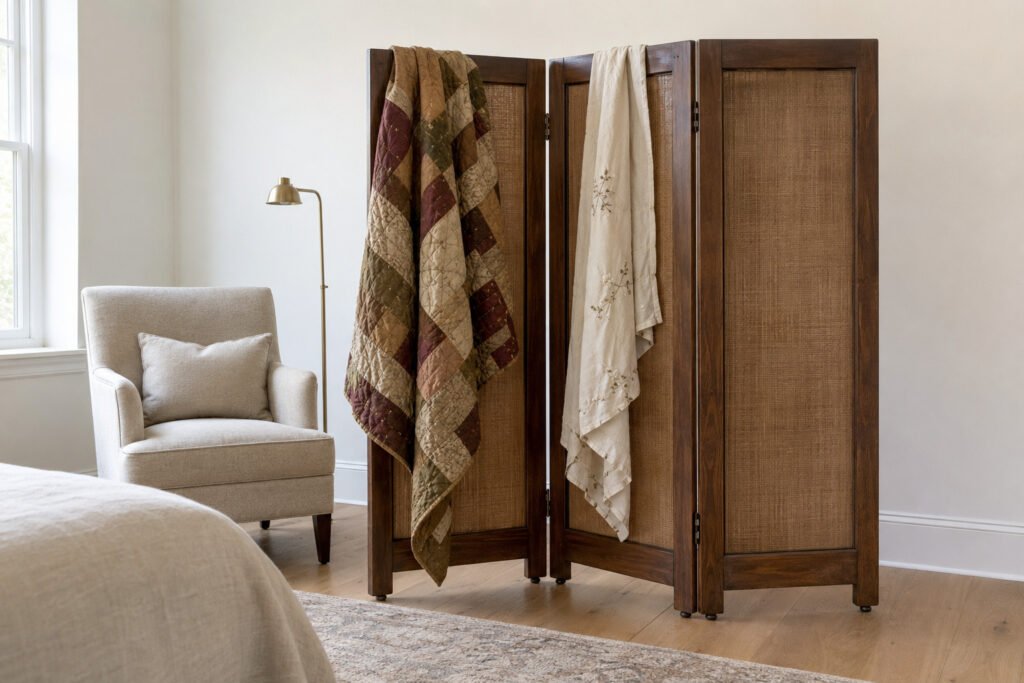
Use an aged wooden folding screen as a soft architectural backdrop behind a reading chair or in an underused bedroom corner. Drape one faded quilt across a single panel and let an embroidered linen hang loosely from another. Keep part of the wood exposed so its frame and patina remain visible.
A screen usually needs 12–18 inches of depth when partially folded, so it isn’t ideal for a tight walkway. Test its hinges and feet before bringing it home, and add discreet felt pads to protect hard floors. In daylight, the overlapping wood and cloth create soft shadows; at night, a nearby floor lamp brings out the quilt’s olive, brown, and burgundy stitching.
Build a Copper Kitchen Rail
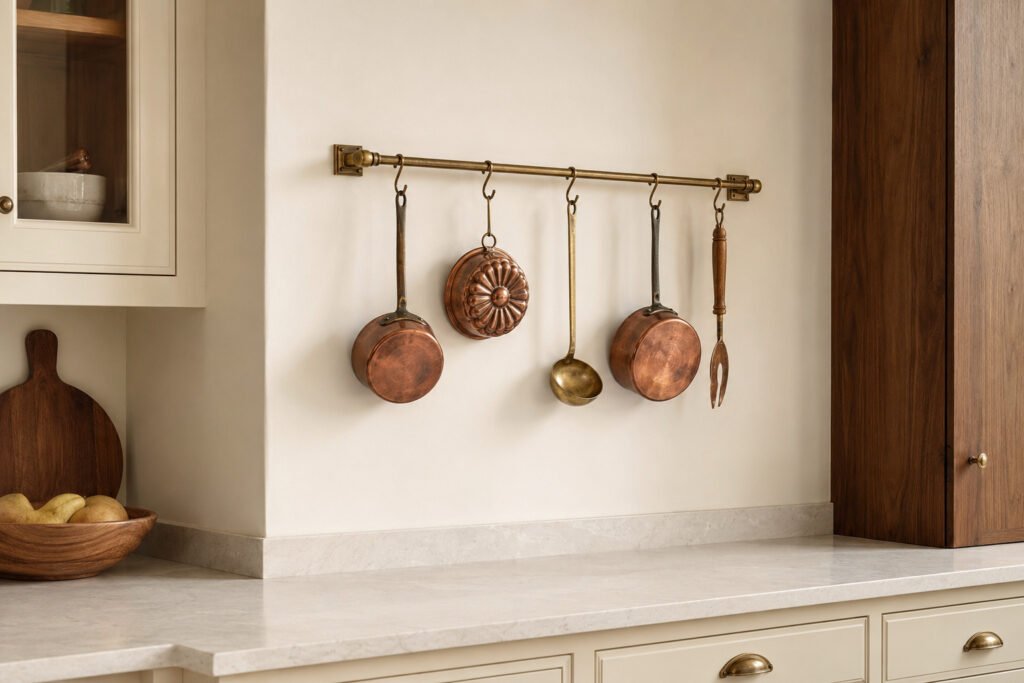
A short kitchen rail gives thrifted copper molds, small pans, and brass utensils a useful place to live. Limit the display to five or six pieces with different silhouettes, leaving about 2–3 inches between them. Copper develops a darker, less reflective surface over time, which pairs naturally with walnut shelves, cream cabinets, and fall produce.
Mount the rail into studs or appropriate anchors and keep it away from open flames and greasy cooking zones. If the cookware will remain decorative, preserve the patina and wipe it with a dry microfiber cloth. Pieces used for cooking need food-safe interiors and more careful cleaning. The rail should look functional first, with fall color coming from the metal itself.
Repurpose a Sewing Box for Coffee-Table Storage
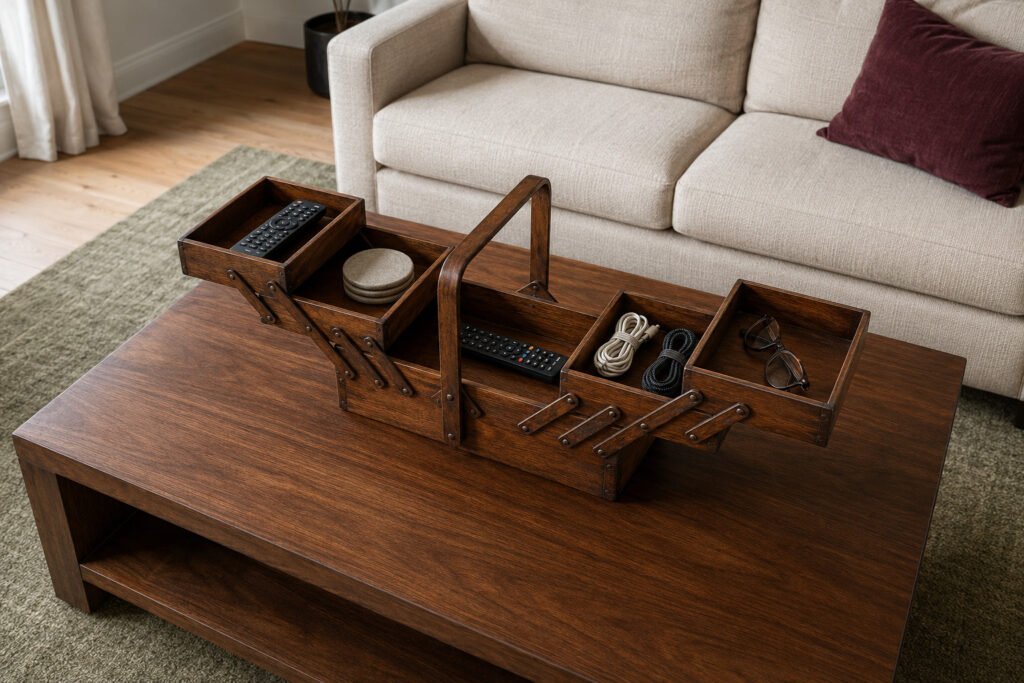
A cantilever sewing box can hide remotes, charging cables, coasters, reading glasses, and other small living room necessities. Closed, it reads as a sculptural wooden object; opened, its divided trays prevent everything from collecting in one messy drawer. Choose a box with solid hinges and smooth folding arms, since these parts take the most stress.
Place it on a substantial coffee table with at least 6 inches of open surface around it. If the wood is dry, use a small amount of furniture wax rather than a glossy polyurethane coating that erases its aged character. Skip boxes with a strong musty smell, which can be difficult to remove from unfinished interiors and may transfer to stored items.
Use a Vintage Suitcase as a Listening Station
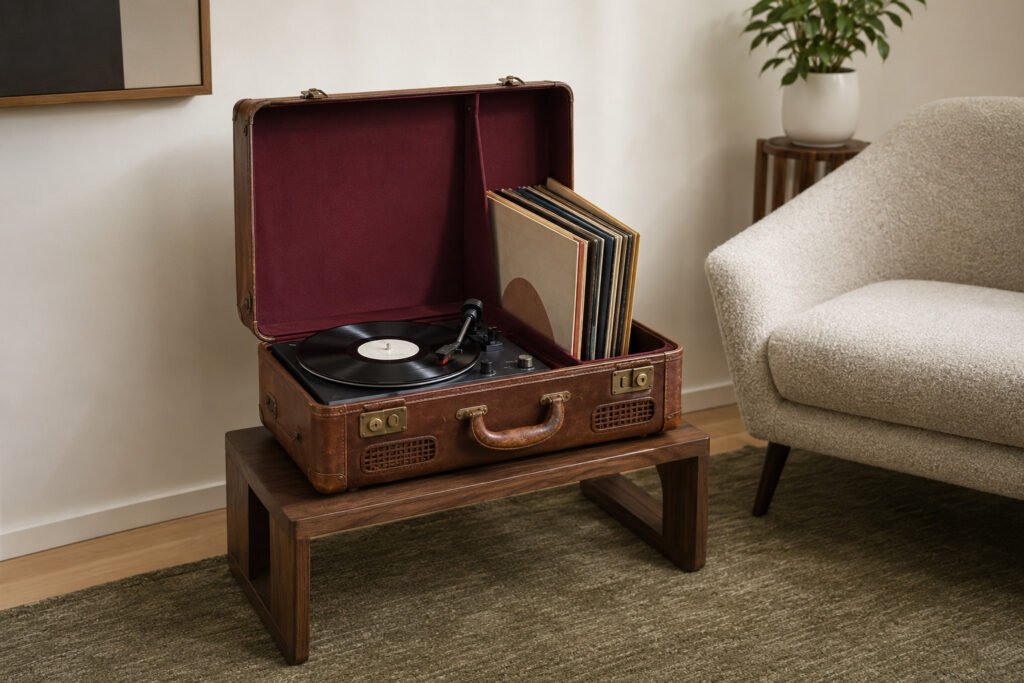
A sturdy vintage suitcase can hold a compact record player and a small rotation of albums when placed open on a low bench or reinforced stand. Brown leather, oxblood lining, and aged brass hardware provide a natural fall palette, while the records make the vignette part of daily life rather than a static display.
Measure the player before shopping and confirm that the lid opens without pressing against the tonearm or cables. Leave ventilation around electronic components, and don’t cut an intact collectible case unless you understand its value. A damaged but structurally sound suitcase is often the better, more affordable choice. Keep the surrounding wall quiet so the open case remains the clear focal point.