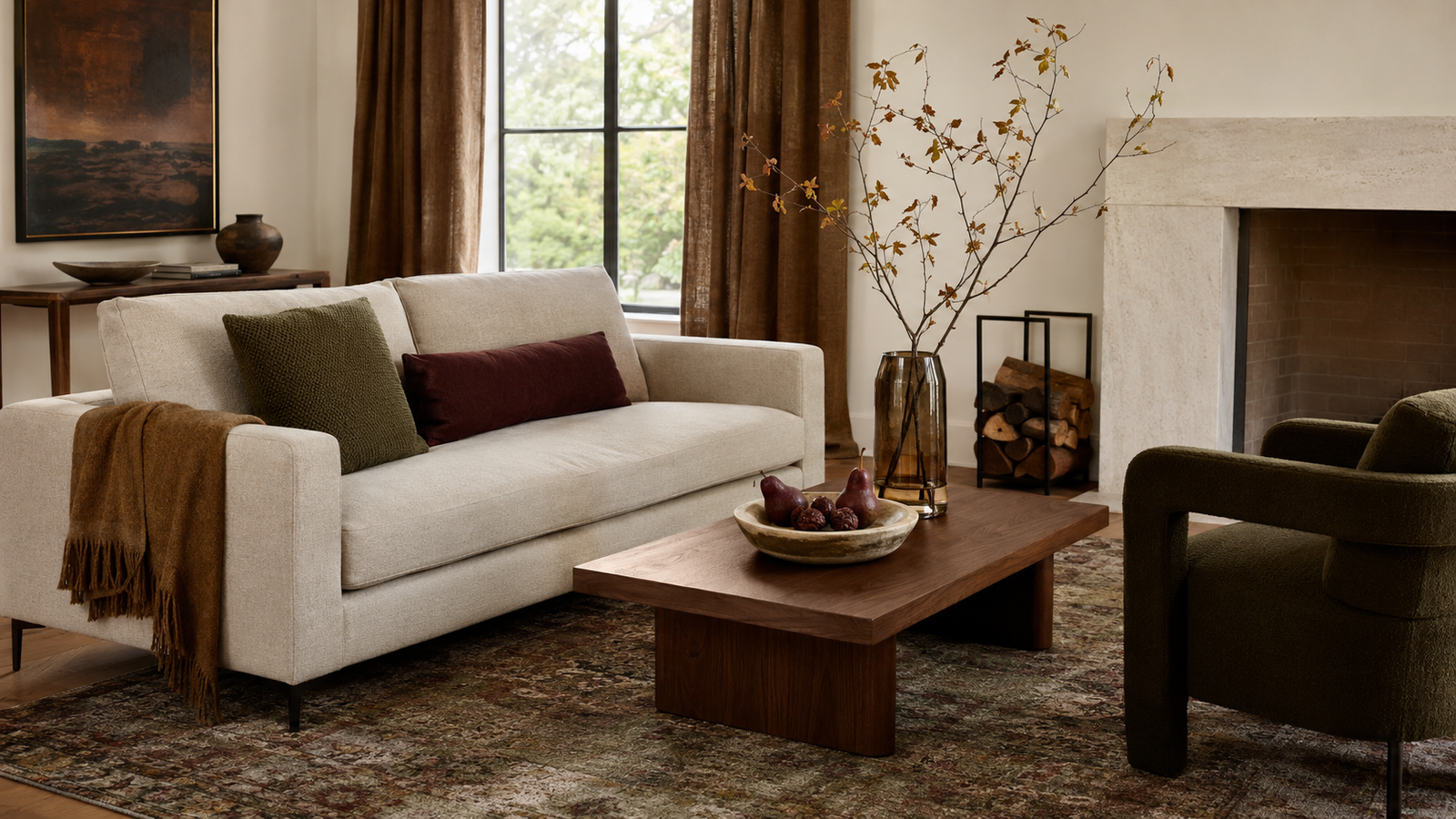
Fall decorating doesn’t require covering every surface with pumpkins or switching your entire living room to orange. The most convincing fall living room decor ideas rely on richer color, softer light, tactile fabrics, and a few natural materials placed where they’ll have the most visual impact.
Start with the parts of the room you already use: the sofa, windows, coffee table, fireplace, and reading areas. By concentrating seasonal changes in these zones, you can create a living room that feels warm and settled while keeping seats, walkways, and everyday surfaces comfortable and functional.
1. Try a Black-Cherry and Olive Palette
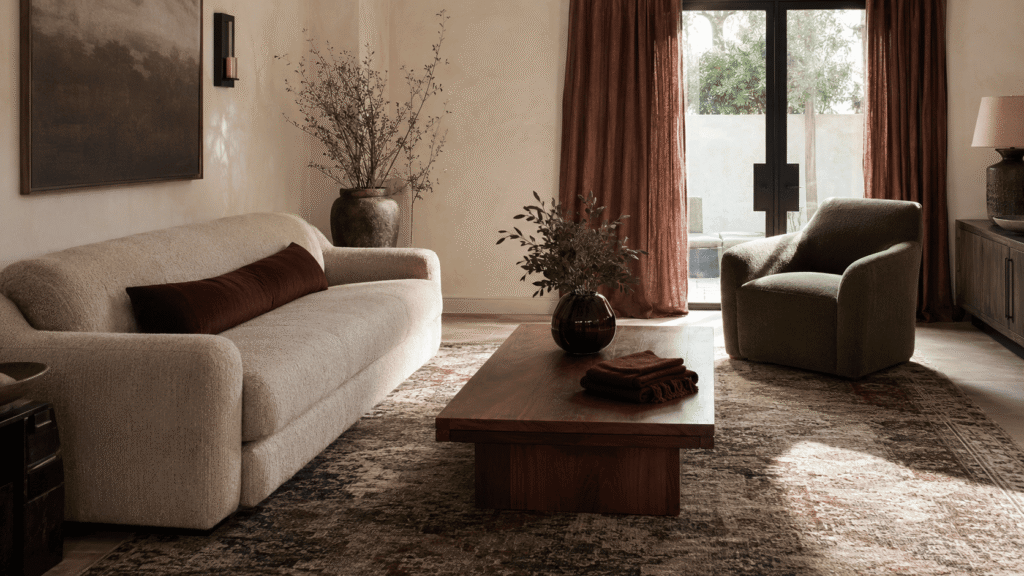
Instead of relying on bright orange, build your palette around black cherry, deep olive, tobacco brown, walnut, and oatmeal. Keep the lightest neutral on large surfaces, use olive on one substantial element, and repeat black cherry in no more than two or three smaller places.
An oatmeal sofa, olive curtains, walnut coffee table, and black-cherry cushion create clear fall color without making the room look themed. Dark shades can turn flat in poorly lit rooms, so balance them with warm white walls and several lamps rather than one central ceiling light.
2 . Hang a Sculptural Fall Branch
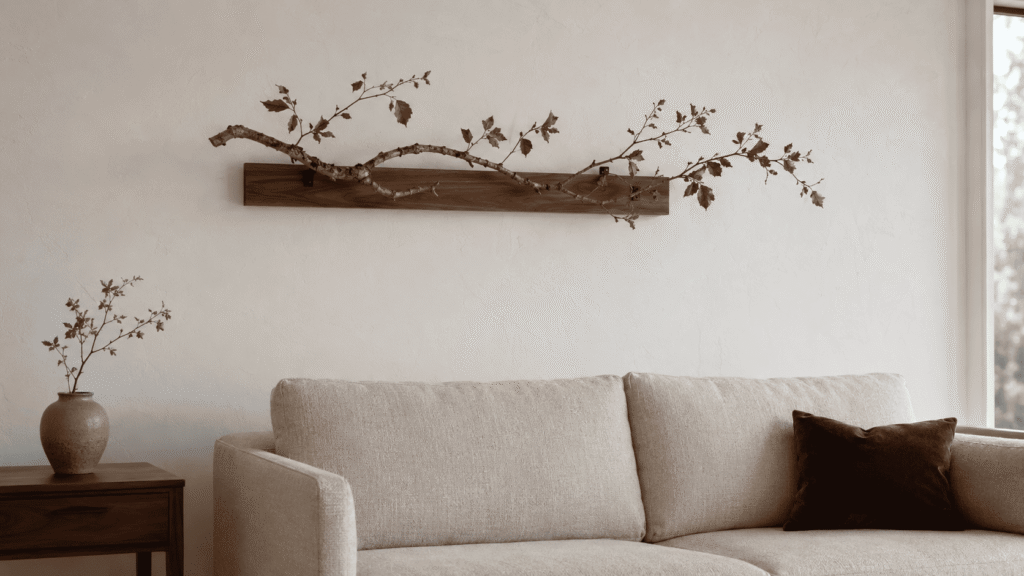
A professionally dried beech, oak, or Japanese maple branch can become the seasonal focal point above your sofa. Choose one with an interesting horizontal shape and a limited number of russet or brown leaves; a bare, twisting silhouette often looks more convincing than a densely covered artificial branch.
Keep it narrower than the furniture beneath it and leave at least 8 to 10 inches between the branch and the sofa’s highest point. Secure lightweight branches with properly rated hooks or discreet brackets. Renters can mount a smaller specimen to a thin board and hang the board like framed artwork.
3. Add an Oversized Mocha Textile
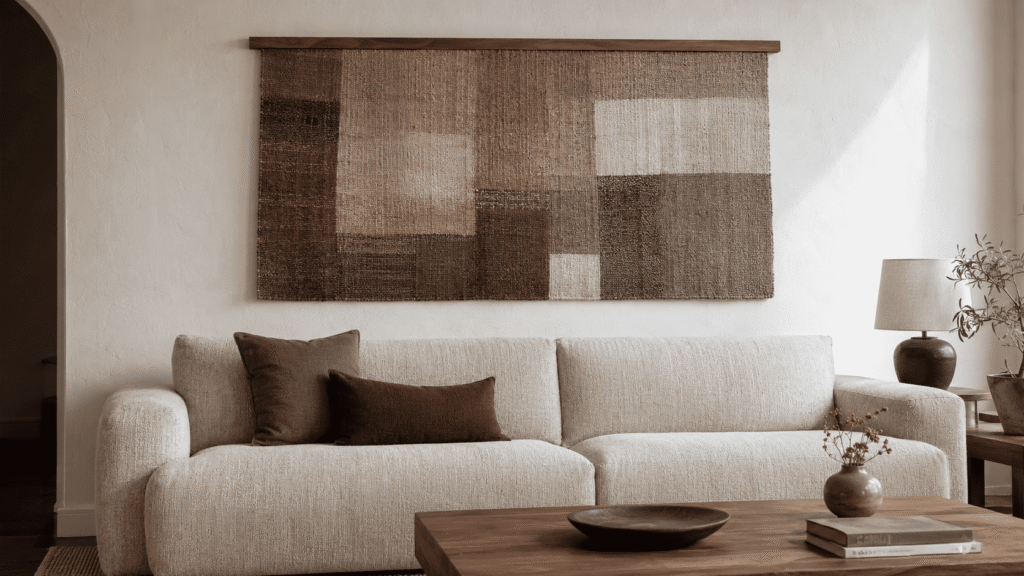
Replace a collection of small wall decorations with one large piece of raw linen, lightweight wool, or woven cotton in mocha, mushroom, or muted tobacco. A textile spanning about two-thirds of the sofa’s width will look intentional without overpowering the seating below.
Hang it from a slim walnut rail, quilt hanger, or removable hooks, keeping the bottom edge safely above seated head height. Natural fibers absorb some sound and visually soften hard walls, although loosely woven materials collect dust. Use a low-suction upholstery attachment to clean the panel instead of shaking it over the furniture.
4. Frame Windows With Tobacco Linen
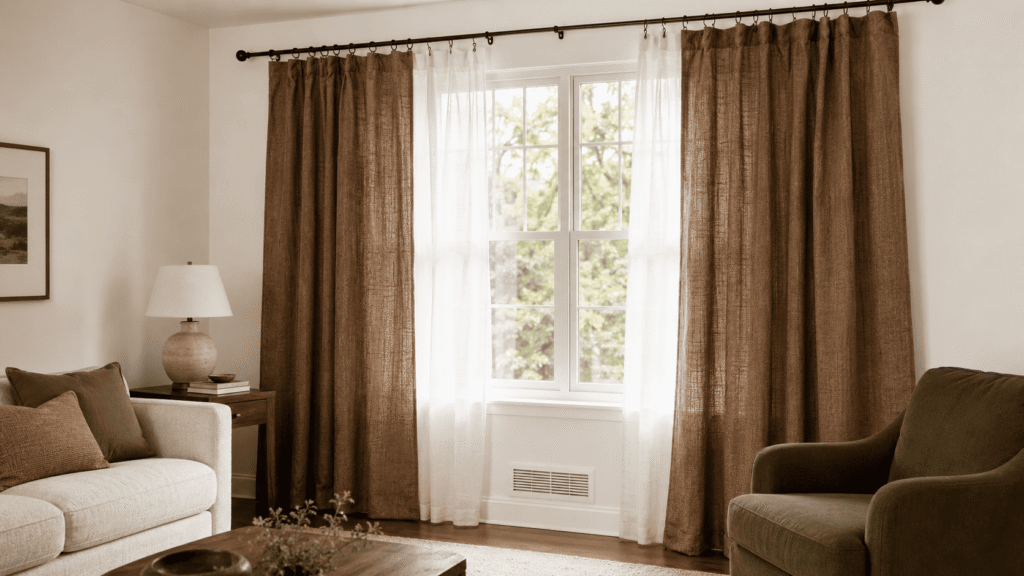
Clip-ring curtain panels offer an easy way to change the room for fall without removing your existing window treatments. Hang tobacco, bark-brown, or muted ochre linen-look panels outside neutral sheers, allowing the warmer color to frame the glass instead of blocking it.
When wall space permits, extend the rod 8 to 12 inches beyond each side of the window. This gives the panels somewhere to rest when open and preserves daylight. Affordable polyester-linen blends usually hang better than very thin synthetic fabric, which can look shiny in direct sunlight. Changing only the outer curtain panels is also an easy way to transition summer decor to fall without replacing the room’s main furniture.
5. Cover an Ottoman With Vintage Wool
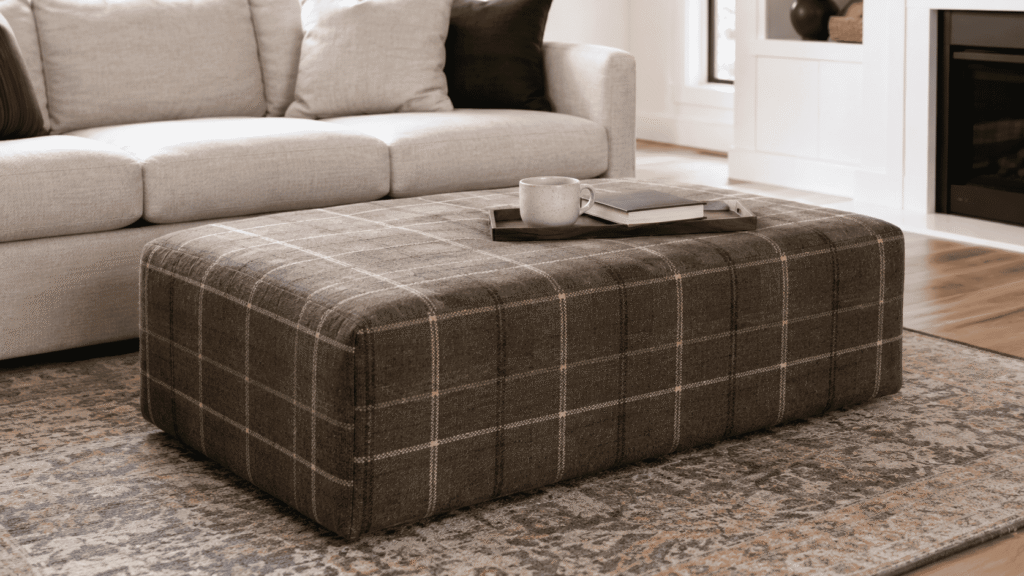
Use a secondhand wool blanket to cover a plain ottoman, storage bench, or inexpensive upholstered cube. Herringbone, windowpane, and muted plaid patterns in olive, oatmeal, tobacco, or burgundy read as autumnal without turning the ottoman into a novelty decoration.
Pull the material firmly across the top and secure it underneath with upholstery twist pins or concealed hook-and-loop strips. Avoid loose folds that could catch shoes or small paws. A slim wood tray will give drinks a stable surface, while the newly covered piece can continue working as a footrest, additional seat, or coffee-table substitute.
6. Style a Forest-Floor Coffee Table
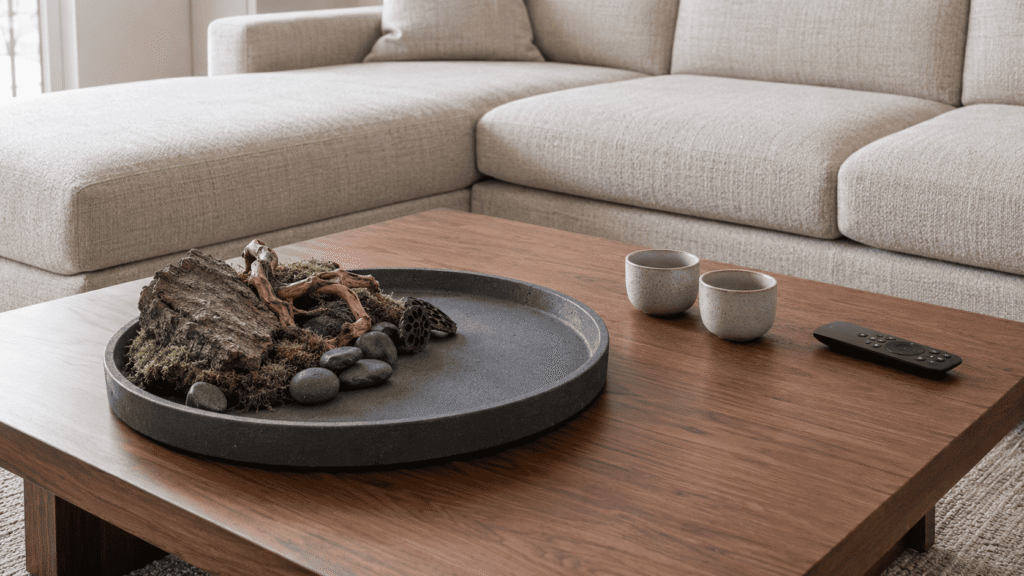
Fill a wide charcoal, dark-wood, or aged-brass tray with preserved moss, smooth stones, weathered bark, and a few sculptural seed pods. Keep the materials low and irregular, and leave approximately one-third of the tray exposed so the arrangement feels composed rather than crowded.
The mixture of green, brown, and charcoal suggests a damp autumn woodland without artificial maple leaves or decorative mushrooms. Preserve at least half the coffee table for drinks, books, and remotes, with the table sitting about 16 to 18 inches from the sofa. A contained tray also makes the entire display easy to move.
7. Fold a Sculptural Paper Mantel Display
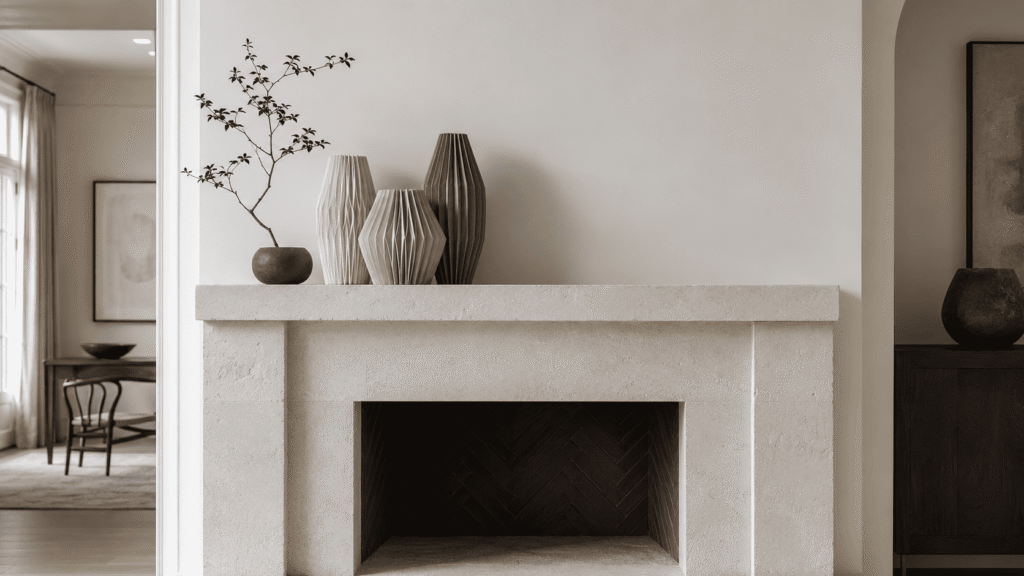
Heavy paper in ivory, mushroom, and tobacco can be folded into fans, curved accordion forms, or simple standing sculptures. Arrange three pieces at varied heights on one side of the mantel, then add a sparse burgundy or dark-olive branch to break up the geometric shapes.
This low-cost display creates depth through light and shadow rather than relying on a row of small seasonal objects. Use heavy watercolor or cover-weight paper because thin craft paper tends to collapse and look flimsy. If the fireplace operates, follow its required clearances and remove all paper decorations before lighting a fire.
8. Add a Black-Cherry Bookcase Backdrop
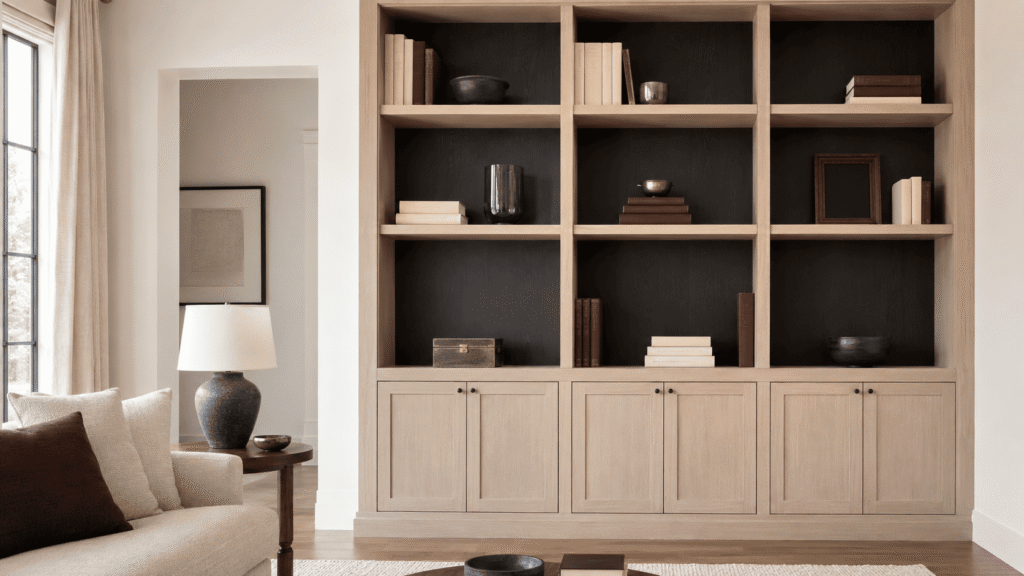
Line the recessed backs of a bookcase with removable wallpaper in black cherry, aubergine, or deep tobacco. For an easier rental-safe method, wrap wallpaper around foam board or thin hardboard panels cut to fit each shelf opening, then press the panels into place without attaching anything to the furniture.
Style the shelves with cream-spined books, charcoal pottery, aged silver, and small walnut objects. Leave roughly one-third of each shelf open so the color remains visible. Matte or eggshell finishes are more forgiving than glossy peel-and-stick paper, which can highlight bubbles, uneven cuts, and damaged shelf backs.
9. Ground the Room With an Autumn Rug
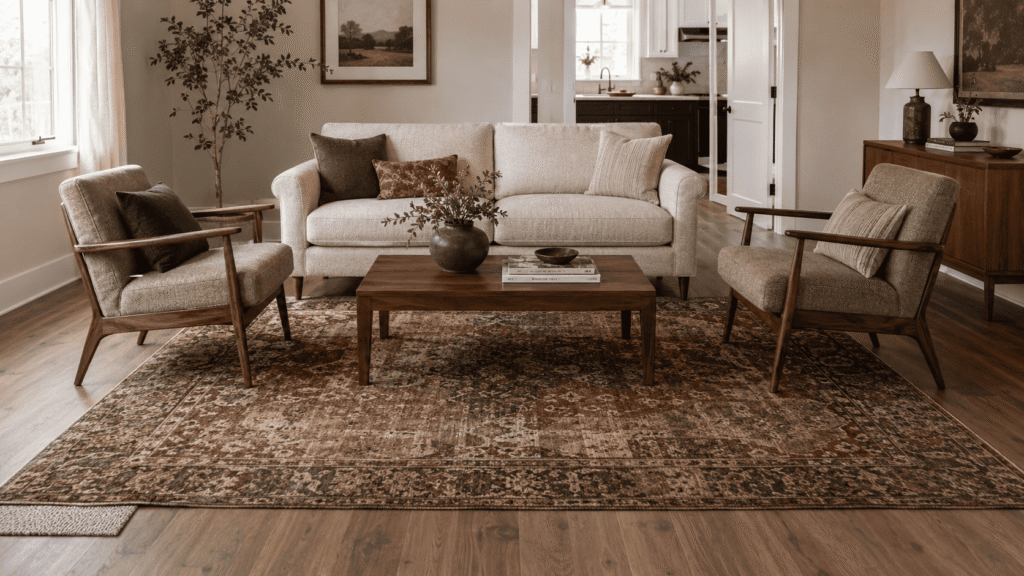
Look for a low-pile rug with softened burgundy, olive, tobacco, and charcoal motifs rather than a bright seasonal pattern. The faded effect works well with existing neutrals and won’t feel out of place when the season ends.
Choose a size that allows at least the front legs of the sofa and primary chairs to rest on it. A rug floating beneath only the coffee table will make the seating arrangement appear disconnected. Add a nonslip pad, especially on hardwood floors, and choose a washable or stain-resistant construction if the room handles children, pets, or frequent snacks.
10. Switch to Warm Textile Lampshades
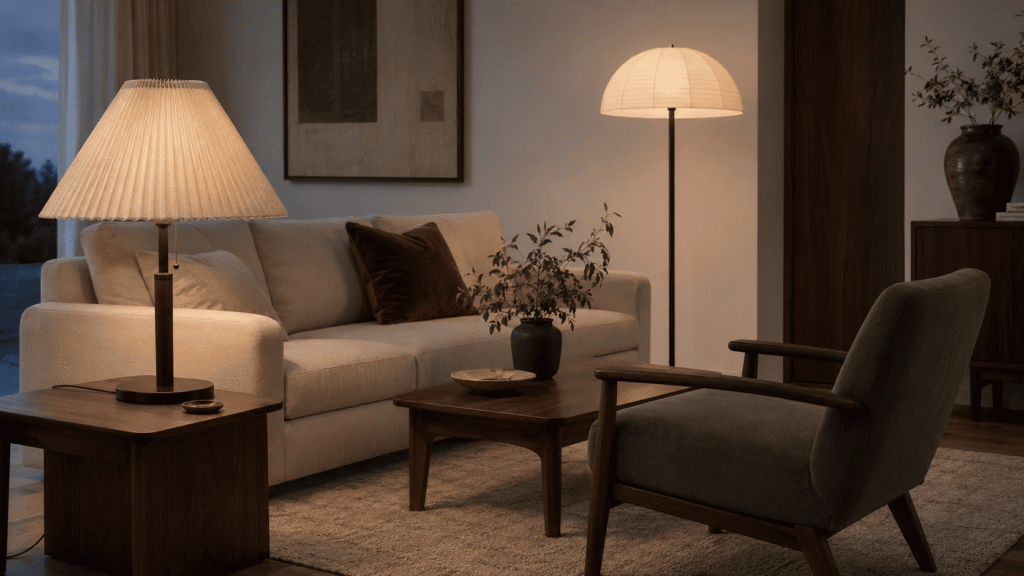
Swap bright white or glossy shades for pleated linen, natural paper, or tobacco-colored fabric versions. Pair them with dimmable 2700K bulbs, which produce a warm evening light without the strong amber cast associated with overly yellow decorative bulbs.
Check the fitter type and shade proportions before buying. A table-lamp shade generally looks balanced when its width is close to the lamp base’s height, though sculptural bases may need a wider shape. Paper shades diffuse light beautifully but mark easily, while textured linen hides dust and minor wear better in a busy living room.
11. Use the Three-Cushion Sofa Formula
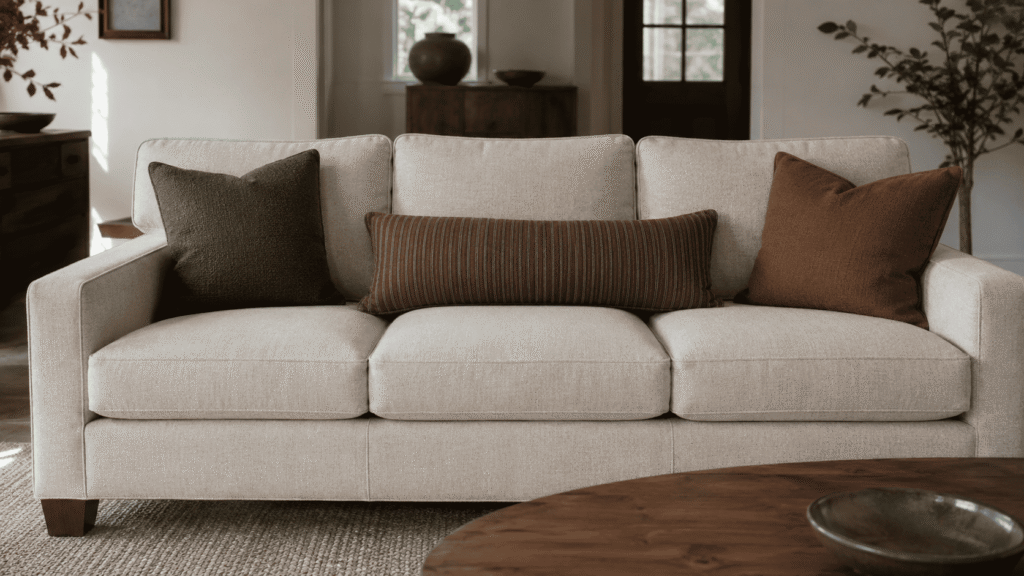
Rather than filling the sofa with small pillows, use one long lumbar cushion with two supportive square cushions. Try burgundy ticking, olive tapestry, or a tobacco block print for the lumbar, then bring in wool, velvet, or heavy linen through the solid-colored cushions.
The change in scale creates a deliberate rhythm while leaving most of the upholstery visible. Velvet gives rich color in angled light but shows pressure marks more readily than woven fabric. On a standard three-seat sofa, three cushions usually provide enough softness without forcing you to clear the seat every time someone sits down.
12. Frame a Grid of Pressed Leaves
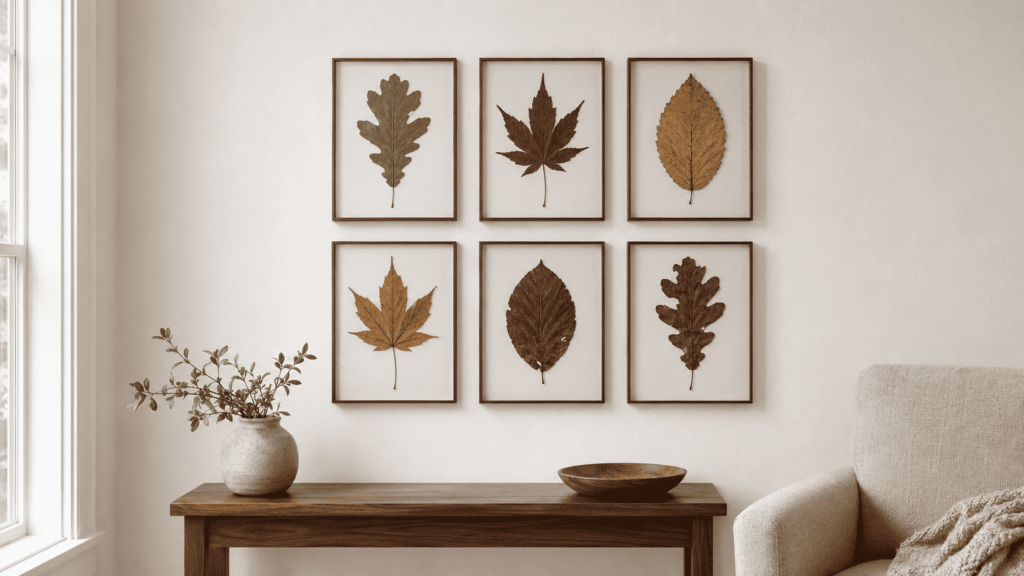
Collect intact oak, beech, or Japanese maple leaves in olive, tobacco, faded ochre, and oxblood. Press them fully before mounting each specimen in a small floating glass frame, then arrange four or six matching frames in a compact grid beside the sofa or above a narrow side table.
Keep 2 to 3 inches between frames so the group reads as one composition. Clear backgrounds allow the wall color to become part of the display, while warm white backing helps delicate leaf edges stand out. Use lightweight acrylic-front frames and removable hanging strips if glass feels too heavy for a rental wall.
13. Hang an Oversized Autumn Landscape
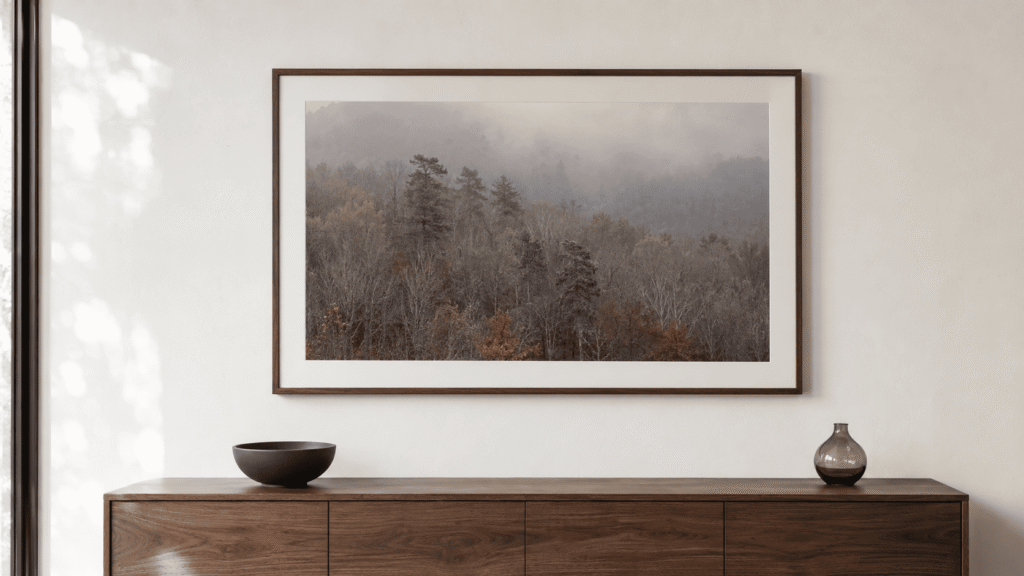
One large misty woodland, harvested field, or late-season landscape will influence the room more than several tiny seasonal prints. Choose artwork with softened olive, brown, burgundy, and gray tones, then frame it in walnut, dark bronze, or aged brass.
Above a sofa or console, aim for artwork measuring roughly one-half to two-thirds the width of the furniture. Hang the bottom edge about 6 to 10 inches above the furniture rather than centering the picture on the entire wall. Public-domain art downloads can look convincing when printed on matte archival paper, while glossy poster paper tends to create distracting reflections.
14. Cluster Smoked Glass on the Hearth
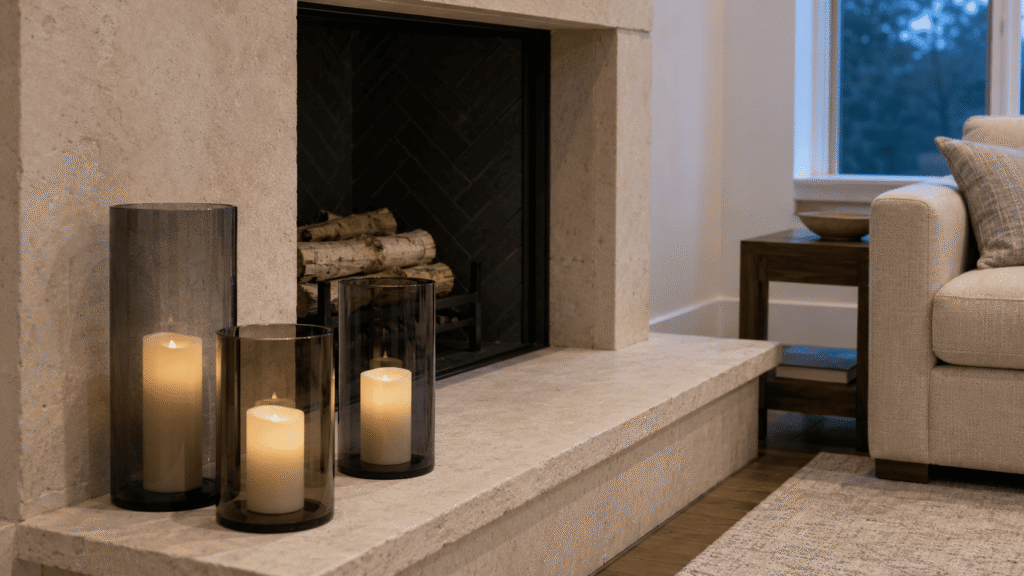
Group two or three mismatched hurricanes in smoky olive, graphite, and soft gray on one side of a noncombustible hearth. Vary their heights slightly and leave the opposite side open so the fireplace composition doesn’t feel rigid or overcrowded.
Smoked glass catches changing daylight and softens candlelight after dark, creating more depth than solid black lanterns. Use good-quality flameless pillar candles in homes with children or pets. If you use real flames, confirm the hurricanes are designed for candles, keep them away from combustible materials, and never leave them burning unattended.
15.Display Firewood as Natural Pattern
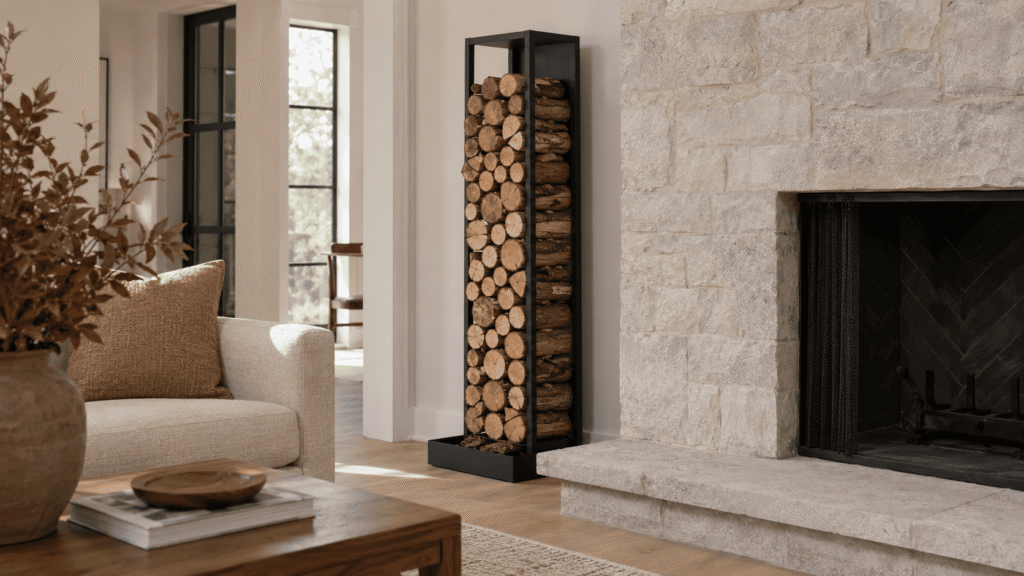
Store similarly sized hardwood logs in a slim black-steel rack or stable fireplace niche with the circular cut ends facing into the room. The repeated shapes create a natural pattern, while the bark and grain bring a rougher texture into a living room dominated by smooth upholstery and painted walls.
Keep the rack out of the main walkway and follow the fireplace manufacturer’s required clearance. Don’t stack more wood than the holder can safely contain. Even neat firewood can shed bark, so place a fitted metal tray underneath or choose a rack with an integrated base for easier sweeping.
16. Skirt a Side Table in Autumn Fabric
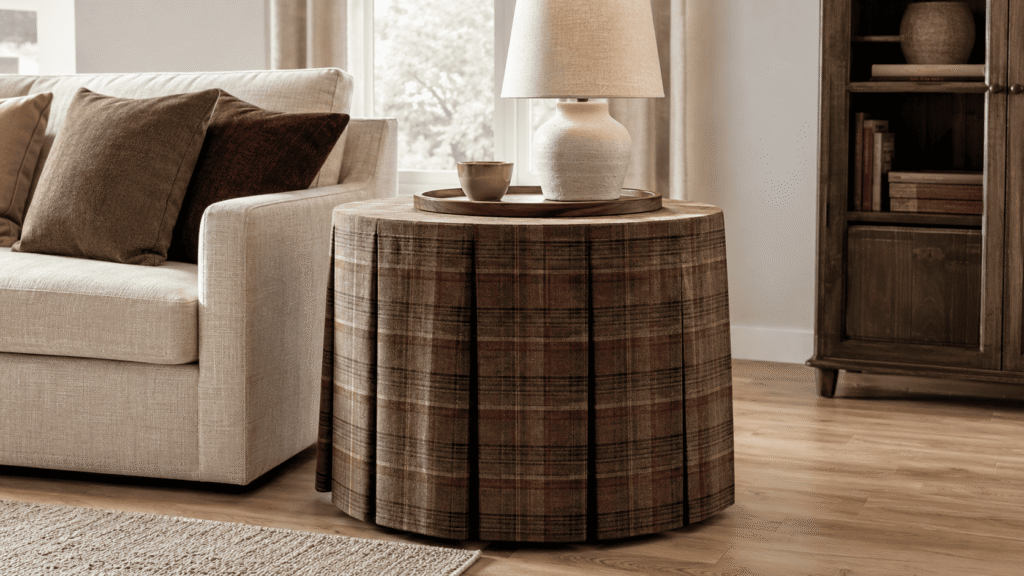
A tailored fabric cover can disguise an inexpensive round side table while adding softness beside the sofa. Choose brushed linen, a wool blend, or a restrained plaid in mushroom, olive, burgundy, or tobacco, and have the hem finish about half an inch above the floor.
Set a stable wood or metal tray on top to protect the fabric from drinks and provide a level lamp base. Avoid long pooled hems, which look attractive in styled photographs but catch dust and create a tripping hazard. A washable round tablecloth offers the simplest removable version for renters and households with pets.
17. Group Pottery in Earthy Fall Tones
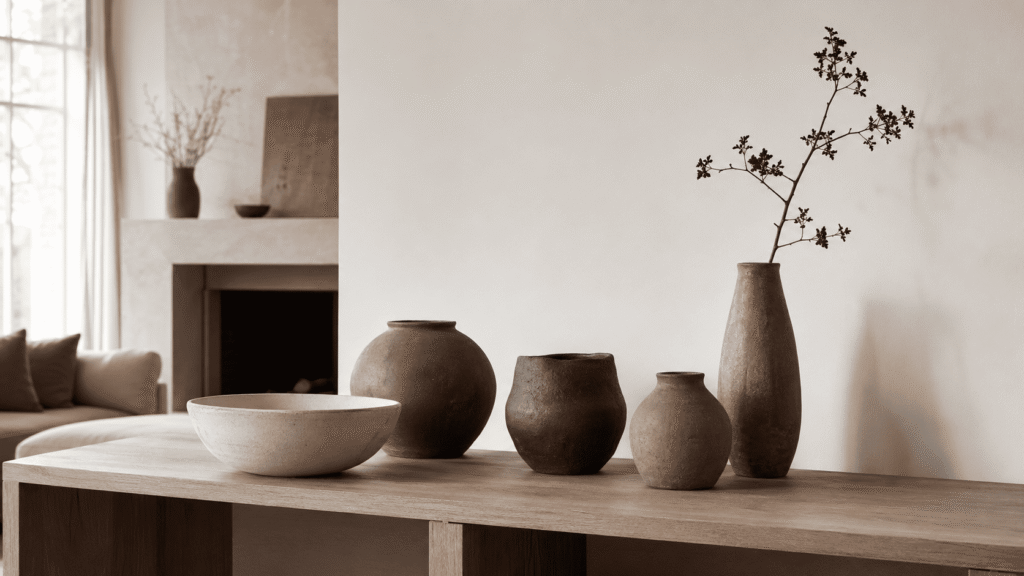
Collect three to five secondhand vessels in related earthy colors rather than buying a matching set. Combine a low bone-colored bowl, rounded mushroom jar, charcoal pot, and taller tobacco vessel, varying the forms while keeping most of the finishes matte or softly glazed.
Place the tallest item at the back of a console, then stagger the smaller pieces forward. Add one sparse branch to only the tallest pot and leave the others empty. Repeating raw-clay textures gives mismatched finds a common language, while open space prevents the console from turning into pottery storage.
18. Define a Corner With a Woven Screen
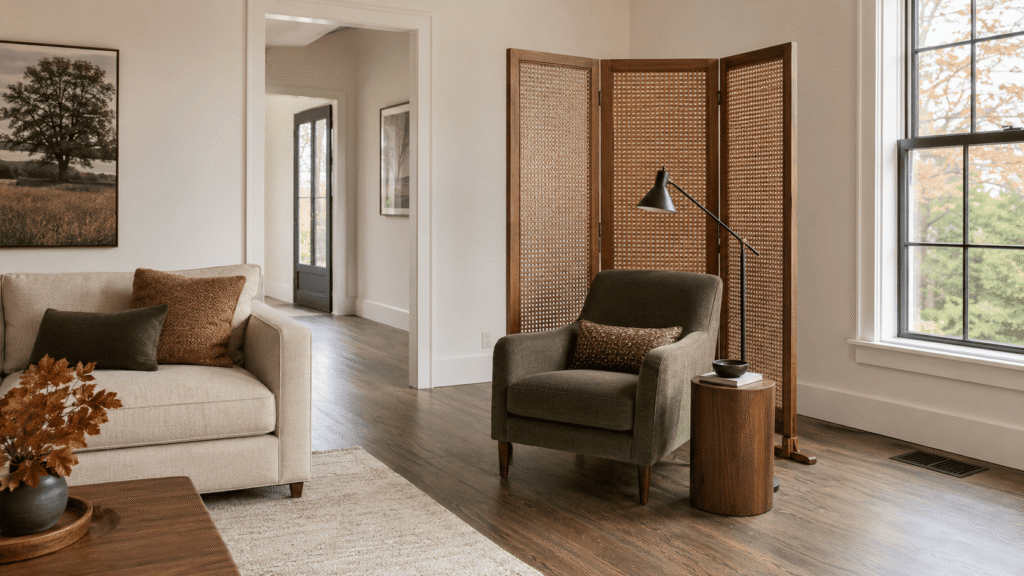
Position a narrow cane, woven-grass, or wood-slat folding screen behind a reading chair or at the exposed end of the sofa. Instead of treating it as wall decoration, use it to make one seating zone feel more sheltered in an open-plan room.
The screen should remain below or just above door height and must not cover heating vents, radiators, or windows. Leave at least 30 to 36 inches along the main walking route. Medium wood tones filter light more gently than an opaque painted screen, so the living room gains intimacy without losing its visual connection to nearby spaces.
19. Style a Fall Game-Night Table
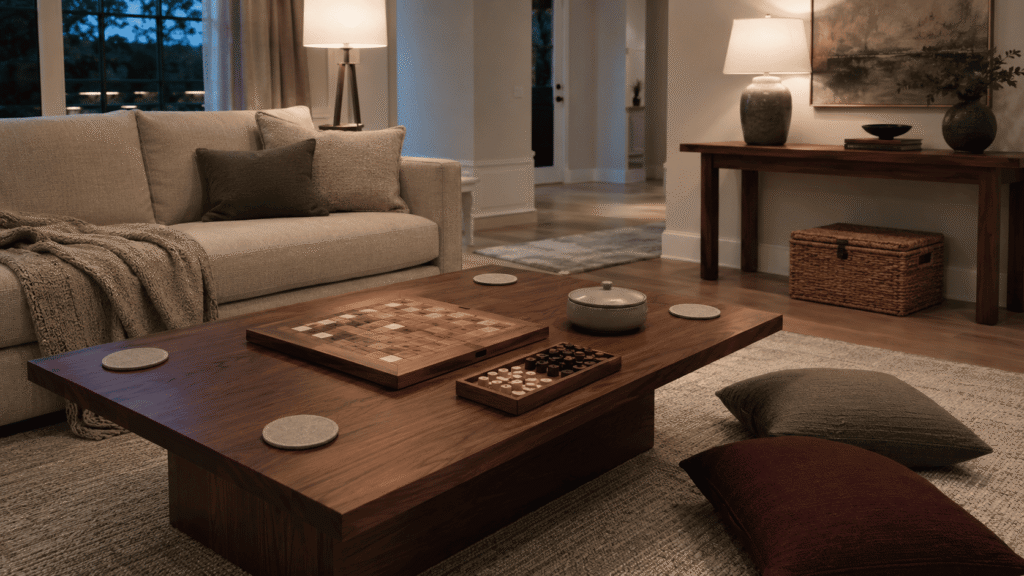
Arrange a handsome wood or leather game board, lidded ceramic snack bowl, two to four coasters, and a small tray for playing pieces on the coffee table. Keep at least half the surface clear so players can use it comfortably instead of constantly moving decorative objects.
Store additional games in a closed cabinet or low handled basket nearby. Firm wool floor cushions can provide occasional seating, but only if there’s enough space to use them without blocking the main path. Walnut, burgundy, olive, and mushroom colors make the setup look connected to the room’s fall palette while supporting a real evening activity.
20. Arrange the Room Around Autumn Light
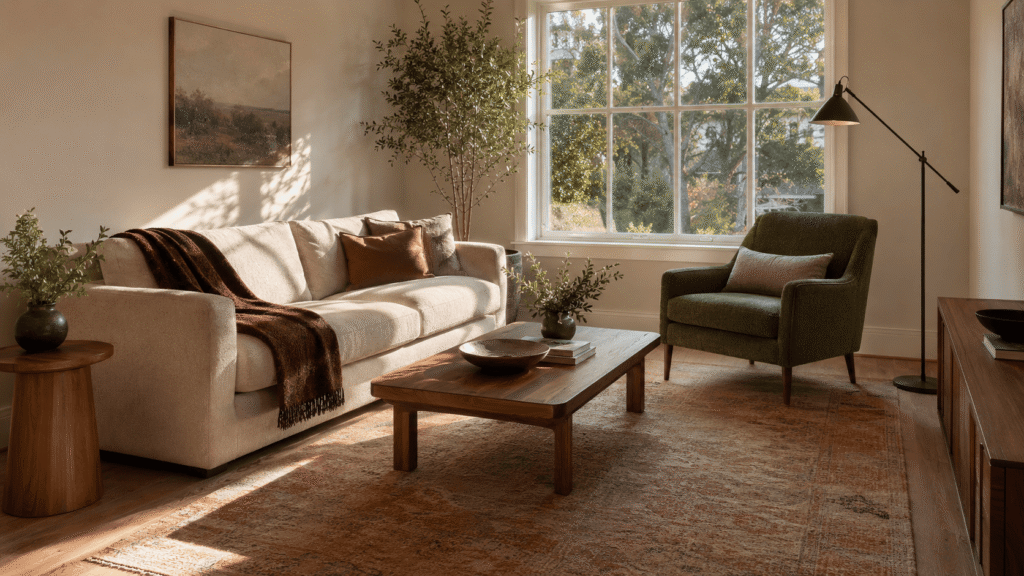
Notice where late-afternoon sunlight lands, then angle one chair or the open end of the sofa toward that area. Place a russet, black-cherry, or olive textile within the sunlit zone, where the color will appear richer, and keep tall furniture from interrupting the light.
Position a floor lamp diagonally across the seating group so it can take over when daylight fades. The lamp shouldn’t create glare on a television or shine directly into seated eyes. This approach uses the room’s changing light as part of the fall decoration and makes the seating arrangement more inviting during longer evenings indoors.
What to Consider Before Decorating
Choose two or three dominant fall materials before buying anything. For example, walnut, wool, and smoked glass create a cohesive room; adding cane, shiny brass, velvet, raw clay, plaid, moss, and several wood tones at once can make the same space feel busy.
Also consider how your living room looks after sunset. Dark colors need light directed toward them or they can disappear into flat shadows. Use several low light sources around the room, and repeat each important color at least twice so no seasonal addition looks accidentally placed.