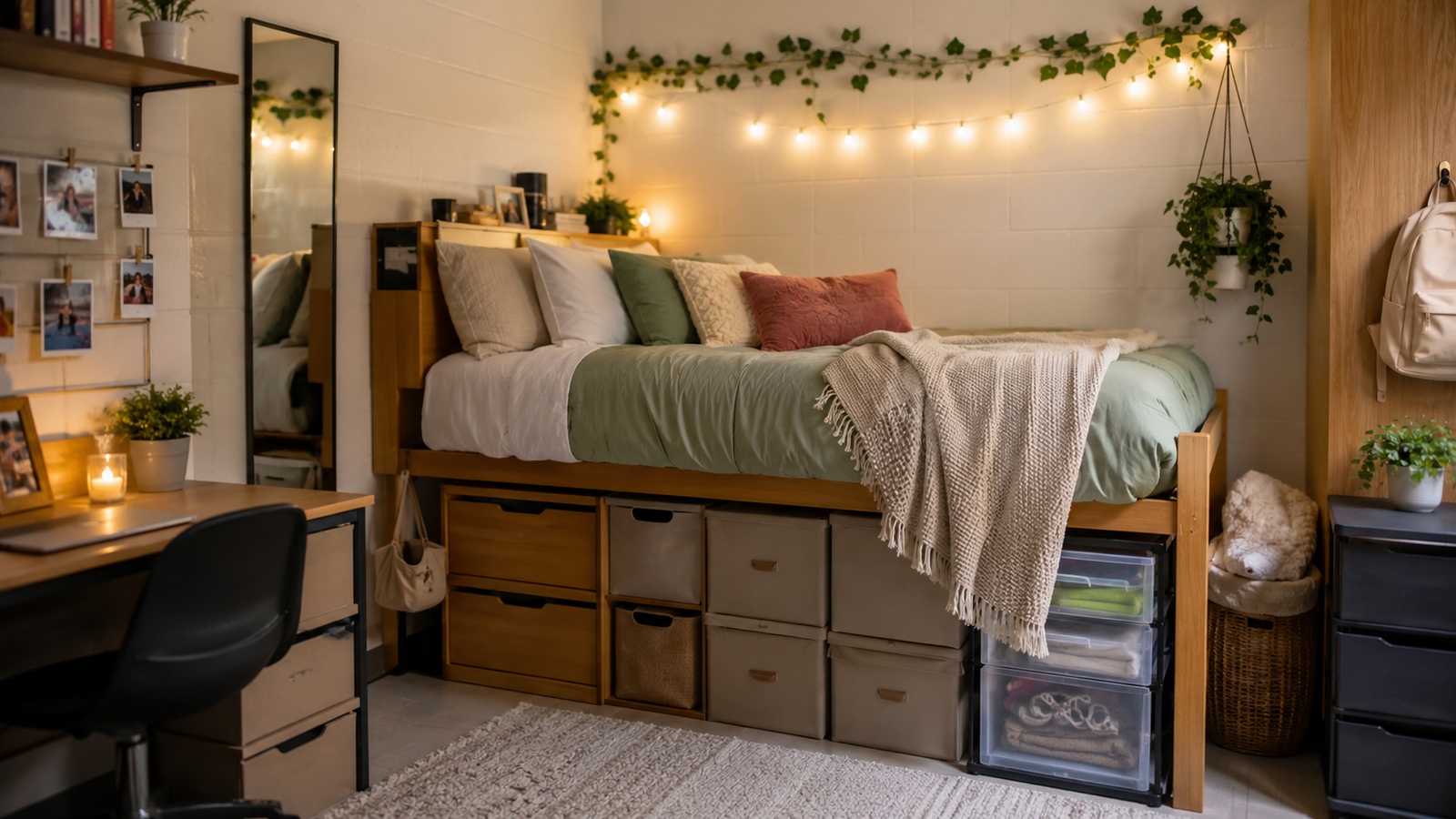
A well-planned dorm bed setup can make even the smallest college room feel more comfortable, organized, and personal. Since the bed often doubles as a lounge area, study spot, and main storage zone, every layer and accessory needs to work harder without making the space feel crowded. These 18 dorm bed setup ideas combine supportive bedding, smart under-bed storage, space-saving organization, and modern styling details that are practical for everyday student life. Whether you prefer a cozy layered look or a cleaner minimalist setup, these ideas will help you create a dorm bed that feels functional, inviting, and uniquely yours.
Turn a Lofted Bed Into a Built-In Study Alcove
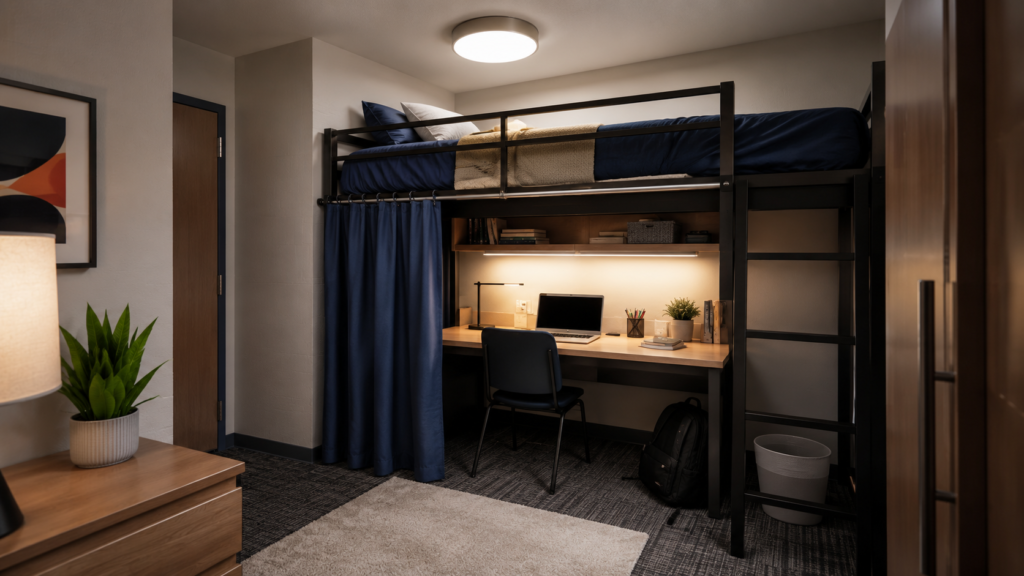
Instead of treating the space beneath a lofted bed as leftover storage, design it like a compact room within the room. Place the desk against the back wall, add a clamp lamp, and hang one tailored curtain panel across the open side.
The fabric creates visual separation without taking up floor space, while the lower ceiling makes the desk feel more sheltered. Use a light cotton curtain rather than heavy blackout fabric, and keep the opening wide enough that the study zone never feels cramped or poorly ventilated.
Replace the Nightstand With a Narrow Rolling Bedside Cart
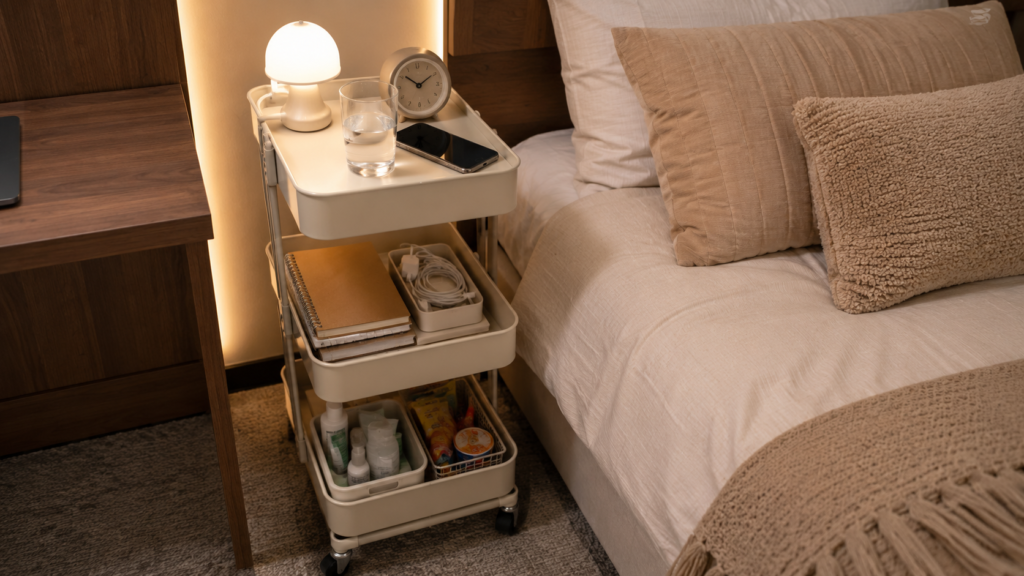
A three-tier rolling cart can hold more than a tiny bedside table while taking up less visual space than a cabinet. Keep your phone, water, and reading lamp on top, notebooks and chargers in the middle, and toiletries or snacks below.
Choose a cart no wider than 16 to 18 inches so it fits beside the bed without narrowing the walkway. The wheels make it easy to move beside the desk, between roommates, or out of the way during cleaning.
Lofted Bed With a Full Study Zone Below
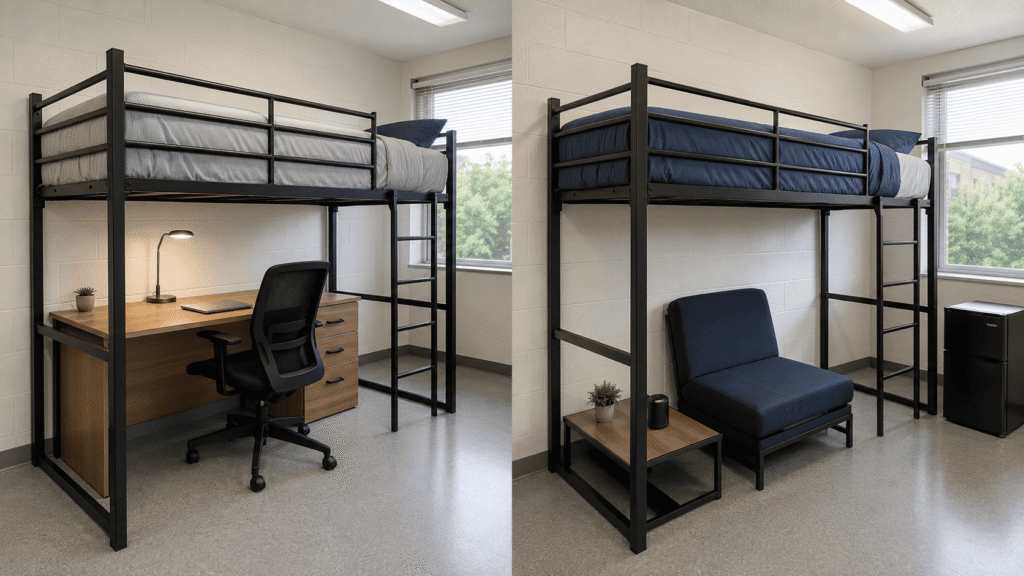
Raise one university-approved bed high enough to place the desk and desk chair beneath it. Add the supplied drawer unit beside the desk if it doesn’t interfere with the ladder, bed supports, or chair movement.
This is one of the most efficient layouts for a small single dorm because the sleeping and study zones use the same floor area. Before lofting, confirm approved height settings, guardrails, ladder placement, ceiling clearance, and sprinkler restrictions. The desk surface also needs enough light; a loft can make the area beneath it noticeably darker.
Lofted Bed With a Low Lounge Zone Below
Use the space beneath an approved lofted bed for a compact futon, dorm chair, or existing floor cushions rather than a desk. Keep the seating low enough that a student can sit comfortably without hitting the bed frame overhead.
This arrangement gives a small dorm a distinct social area without using the center walkway. Place the mini fridge outside the enclosed space so its ventilation remains clear. Avoid hanging loose fabric around the loft, since dorm fire-safety policies often restrict canopies, curtains, and materials near sleeping areas.
Frame the Desk With Two Vertical Organization Strips
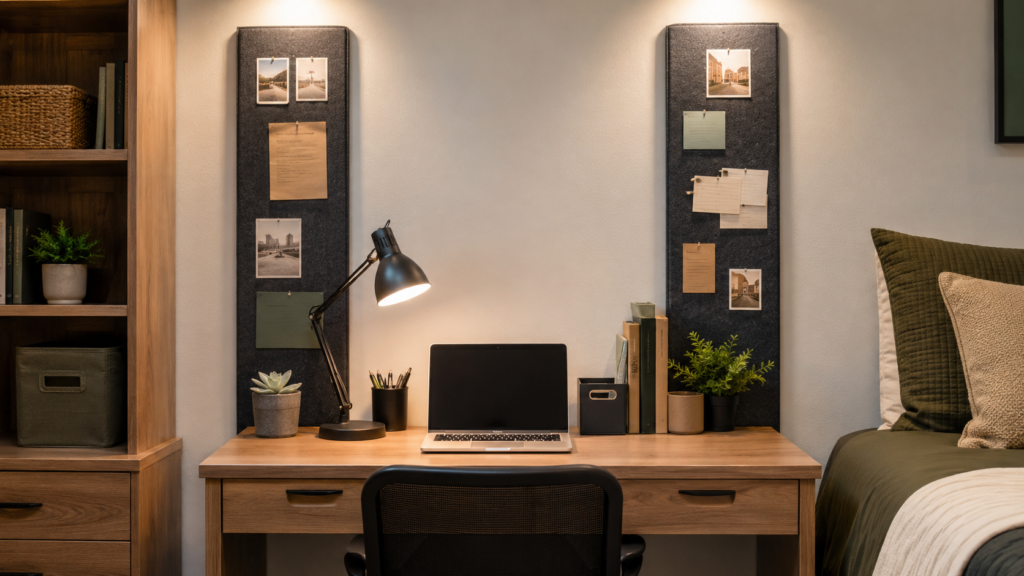
Install one narrow cork, felt, or magnetic strip on each side of the desk instead of covering the wall with scattered notes. Each strip can be eight to 12 inches wide and tall enough to hold schedules, reminders, receipts, and small photos.
The paired vertical shapes create symmetry, which makes inexpensive dorm furniture feel more considered. Keeping the center wall clear also protects your sight line while studying. Too much visual information directly above a laptop can make a small desk feel busier than it is.
Build an Acoustic-Felt Soundwave Above the Desk
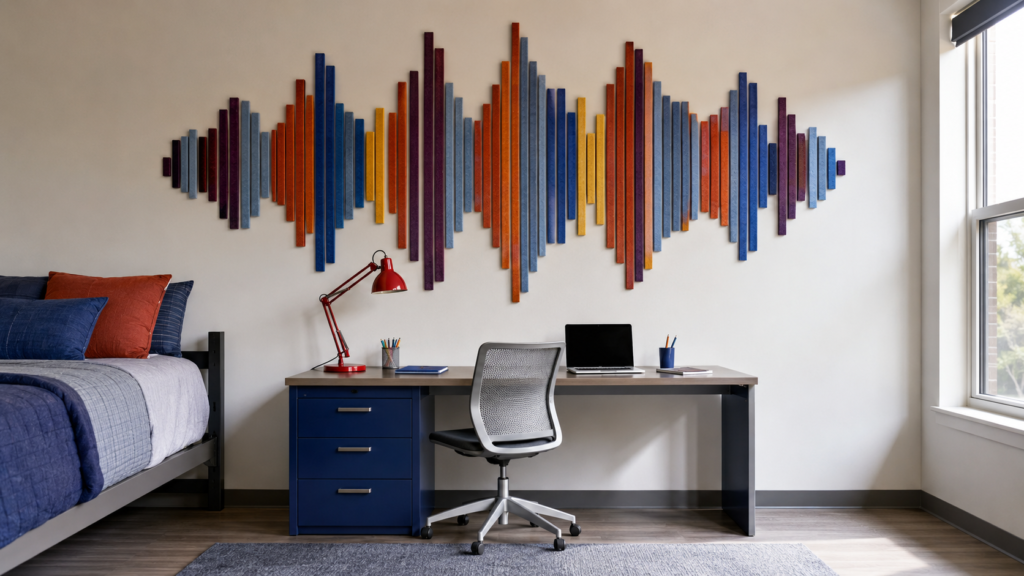
Translate a favorite sound into an abstract waveform using narrow acoustic-felt strips cut at graduated heights. You don’t need a scientifically exact pattern; alternating tall and short pieces will create the rhythm as long as the gaps remain consistent.
Center the design approximately 8 inches above the desktop so it relates visually to the study zone without interfering with a monitor or task lamp. Aubergine, rust, mustard, and blue felt will absorb more light than glossy decor, giving the wall a rich appearance even beneath basic dorm LEDs.
Install an Under-Desk Charging Grid
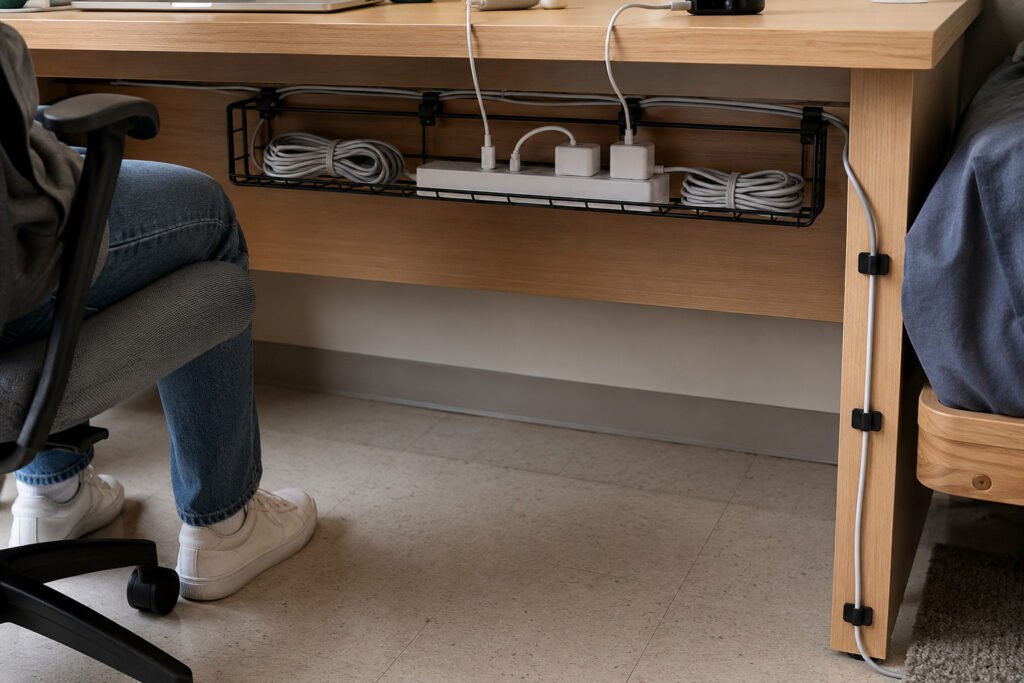
Move the power strip, charger bricks, and extra cable length off the floor by securing them inside a removable metal tray beneath the desktop. Use adhesive cable clips to guide cords along the back edge and down one desk leg, leaving only the short charging ends visible on top.
This setup keeps wires away from your feet, rolling chair, and cleaning supplies while freeing the desktop from tangled cables. Check that the tray does not reduce knee clearance before installation, especially if the desk already has a shallow drawer. Removable clamps are usually safer for dorm furniture than strong adhesive pads, which may damage a laminate finish when removed.
Set Up a Flip-Up Study-to-Vanity Station
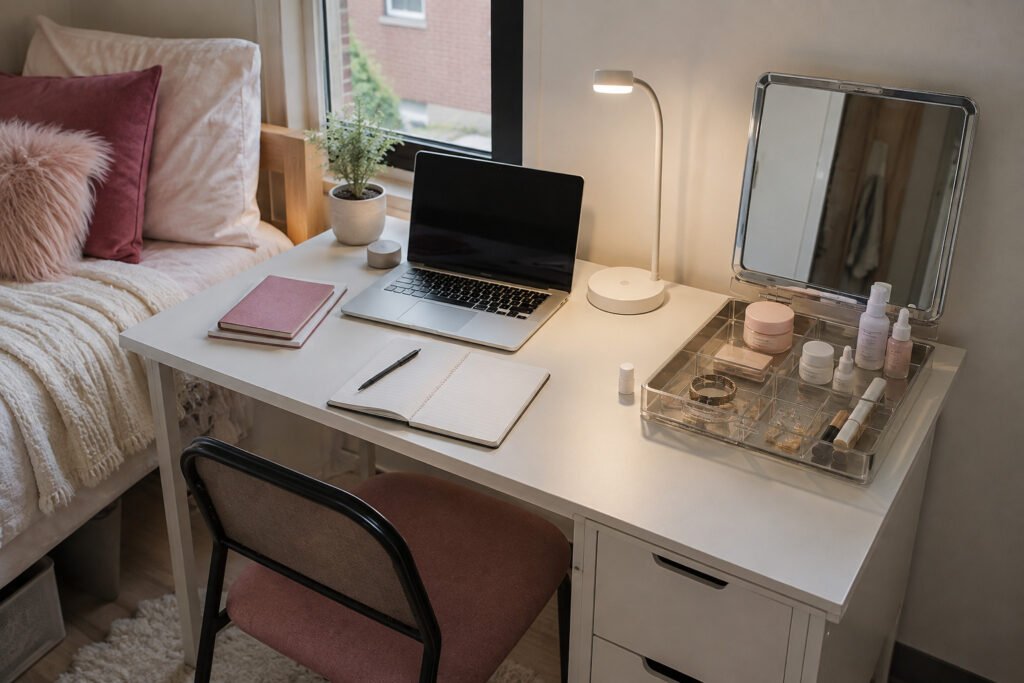
When there is no room for a separate dressing table, reserve one side of the desk for a folding mirror and a removable grooming tray. Keep daily skincare, makeup, jewelry, or hair accessories together in the tray so the whole category can be lifted away before you begin studying.
A mirror that folds flat or closes like a case takes up less visual space than a large permanent tabletop mirror. Position it near daylight when possible, but avoid placing it in the center of the desk where it competes with your laptop. This setup works best when the study side and vanity side remain clearly defined rather than blending into one cluttered surface.
Make a Foldable Felt Focus Screen
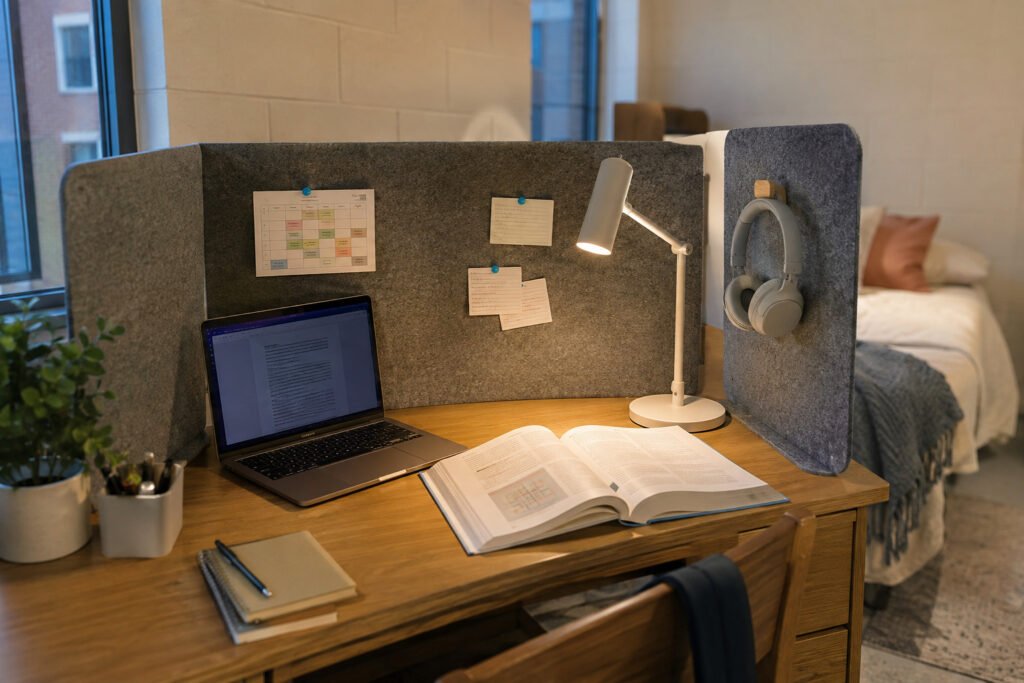
Create a temporary study pod with a freestanding felt screen placed behind the desk and along one side. A panel approximately 16 to 20 inches high can reduce visual distraction from a roommate’s bed, television, or movement without blocking light or making the desk feel boxed in.
Choose oatmeal, moss green, charcoal, or muted blue felt, and use the surface for a small class schedule, a few flash cards, or lightweight headphones. Avoid covering the entire panel with notes because the visual clutter can become another distraction. A folding screen can be stored beneath the bed or behind a dresser when you want the room to feel more open.
Create an Under-Desk Backpack Parking Dock
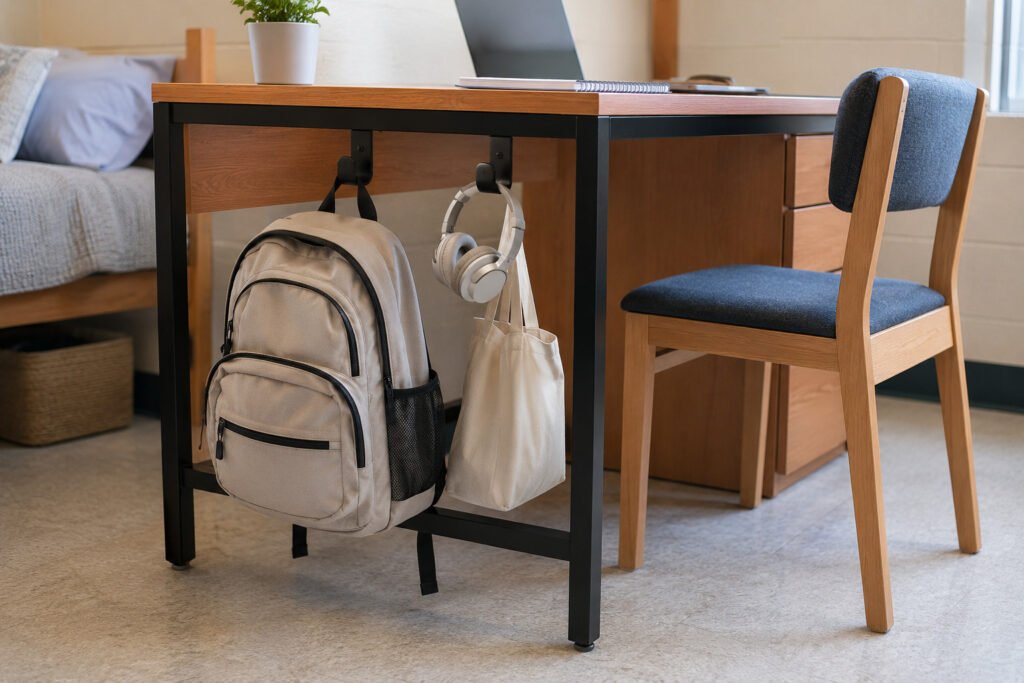
Give your backpack a permanent landing place by installing a heavy-duty removable hook beneath the outer side of the desk. Position it away from your knees and chair, allowing the bag to hang approximately 4 inches above the floor so the straps do not collect dust or get caught under furniture.
A second smaller hook can hold headphones, an umbrella, or a reusable tote, but avoid turning the desk side into a row of hanging bags. Check the hook’s weight limit and use a clamp-style option when the backpack regularly carries heavy textbooks. Keeping the bag off the chair also means you can sit down without moving your belongings every time.
Create an Under-Bed Drawer System
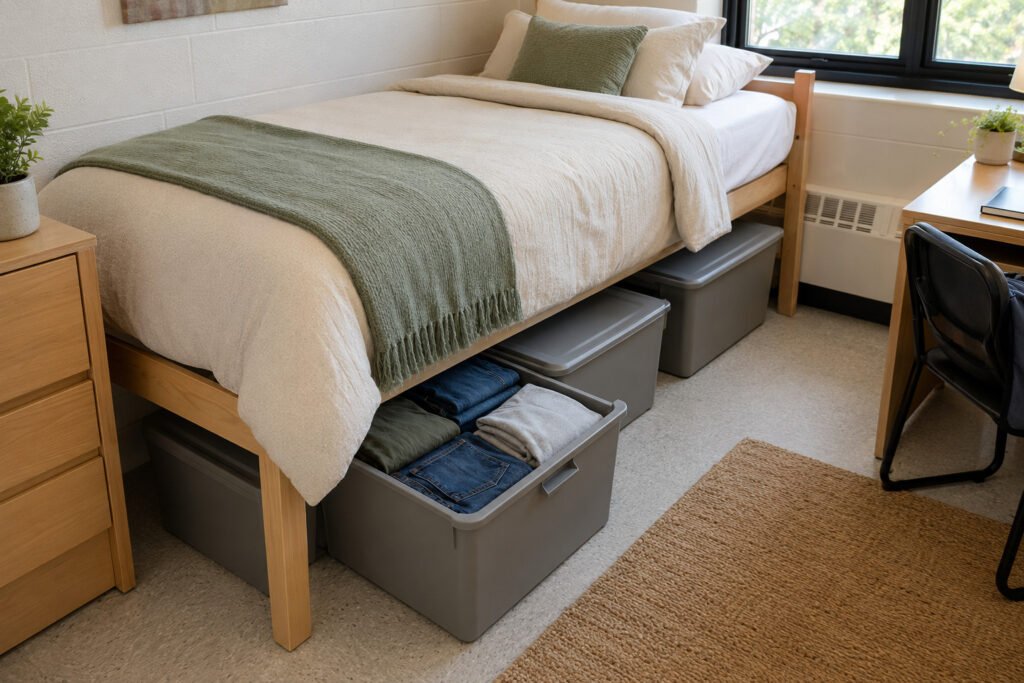
Measure from the floor to the lowest part of the bed frame before buying containers; product photos rarely show how much room lids, wheels, and handles require. Choose two or three wide drawers instead of several small bins, leaving at least 1 inch of vertical clearance so they don’t scrape against the frame. Put everyday clothes in the easiest drawer, bedding in another, and less-used items toward the wall.
Opaque drawers hide visual clutter, while translucent versions make contents easier to identify. Avoid thin, brittle plastic, which can crack when a packed drawer is pulled across a hard floor. Label the short ends so you can find what you need without opening every container.
Hang a Closet Door Organizer
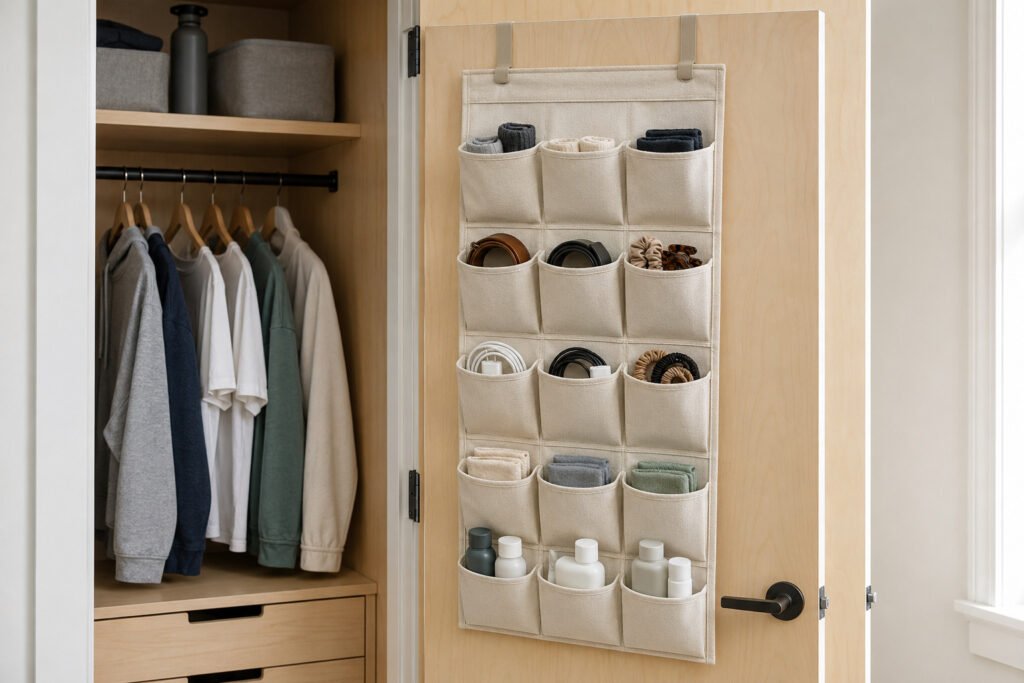
An over-the-door organizer turns a shallow, overlooked surface into storage for socks, belts, cleaning cloths, chargers, hair accessories, and backup toiletries. Clear pockets are practical because you can see small items immediately, while canvas versions look calmer when the closet door remains visible from the room. Reserve the lowest pockets for heavier bottles so the organizer hangs flat.
Check the gap above the door before purchasing. Thick metal hooks can stop a tightly fitted dorm door from closing and may damage the frame. Slim padded hooks are safer, but an organizer hung inside a hinged closet door is usually better than placing one on the main room door, where added bulk can interfere with locks or evacuation access.
Add a Soft Paper Lamp
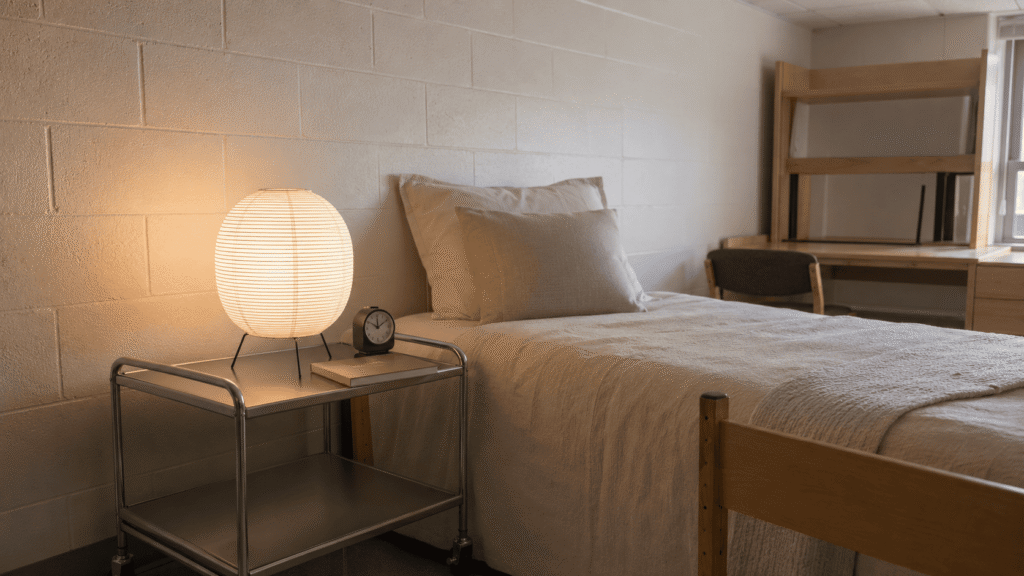
A sculptural paper lamp can provide the soft ambient glow normally missing from a dorm room. Look for an oval, cylindrical, or pleated shade that encloses the bulb, then place it on a narrow bedside cart, storage cube, or dresser.
Paper diffuses light across a wider area, so the lamp feels gentler than a small exposed-bulb fixture. Use only a cool-running LED bulb within the lamp’s listed wattage, and leave space around the shade. A warm-white bulb makes standard cinder-block walls feel less stark without turning the room noticeably yellow.
Clip On a Reading Lamp
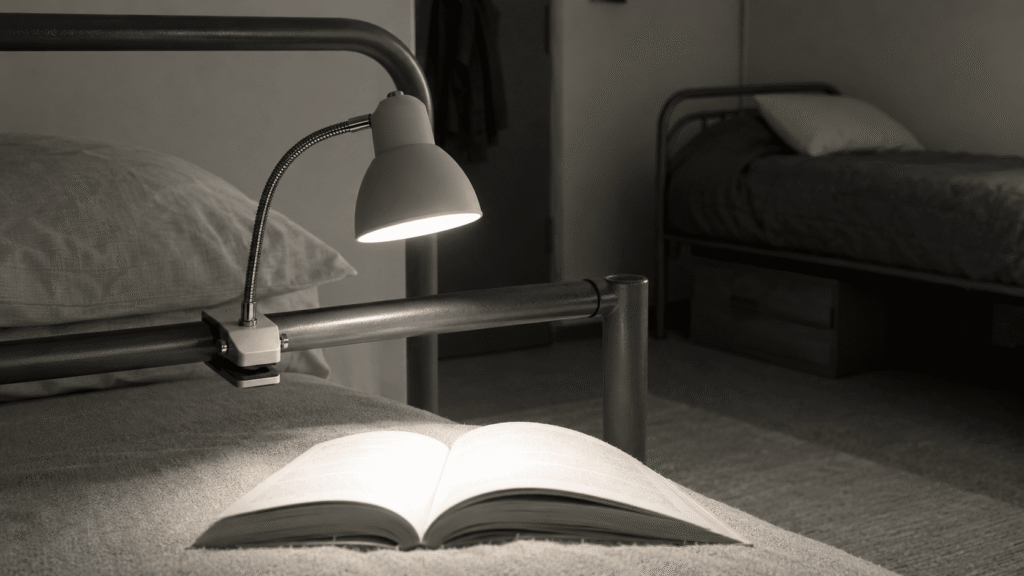
A compact clamp lamp is one of the most useful choices for a dorm because it can move as your layout changes. Attach it securely to a sturdy bed rail, headboard shelf, or desk hutch, making sure the padded clamp can’t slide or damage the finish.
Choose an articulated neck and an opaque shade that directs the beam toward your book. A lower-brightness LED is usually enough for reading at close range. Keeping the light focused helps you see clearly without filling the entire shared room or shining it toward your roommate’s bed.
Lilac, Espresso, and Cool Silver
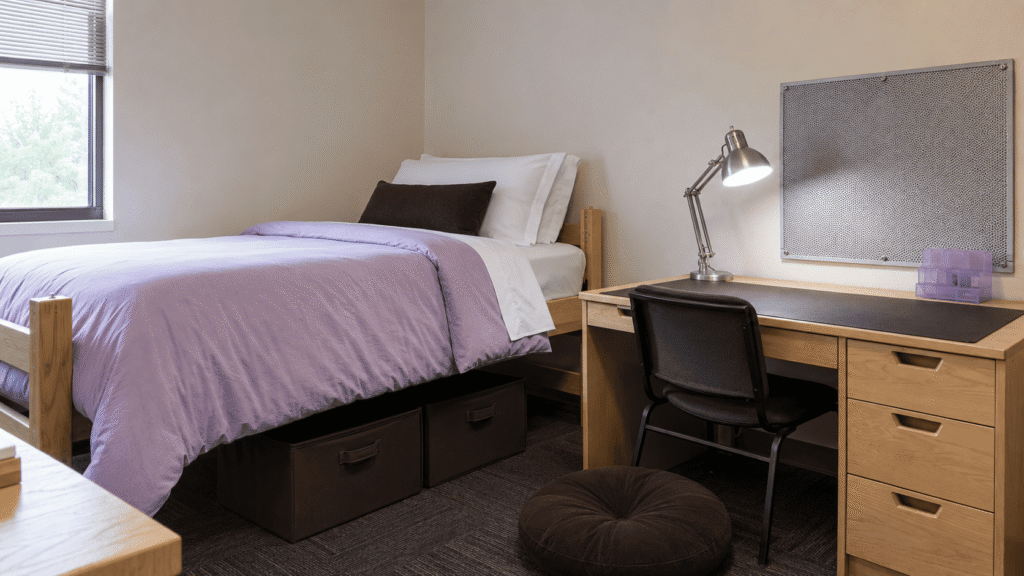
A pale lilac duvet can look washed out beside institutional beige, so give it weight with espresso brown. Use the brown on under-bed bins, a large desk mat, or a compact floor cushion. Add cool silver through a mesh memo board, task lamp, and metal hooks.
Dark brown makes lilac feel more mature, while silver keeps the scheme from looking overly soft. Look for brushed or polished metal rather than glittery finishes. If the room has cool fluorescent lighting, choose a lilac with a slight red undertone; blue-heavy lavender can turn noticeably gray after sunset.
Make the Mini Fridge Part of a Proper Food Station
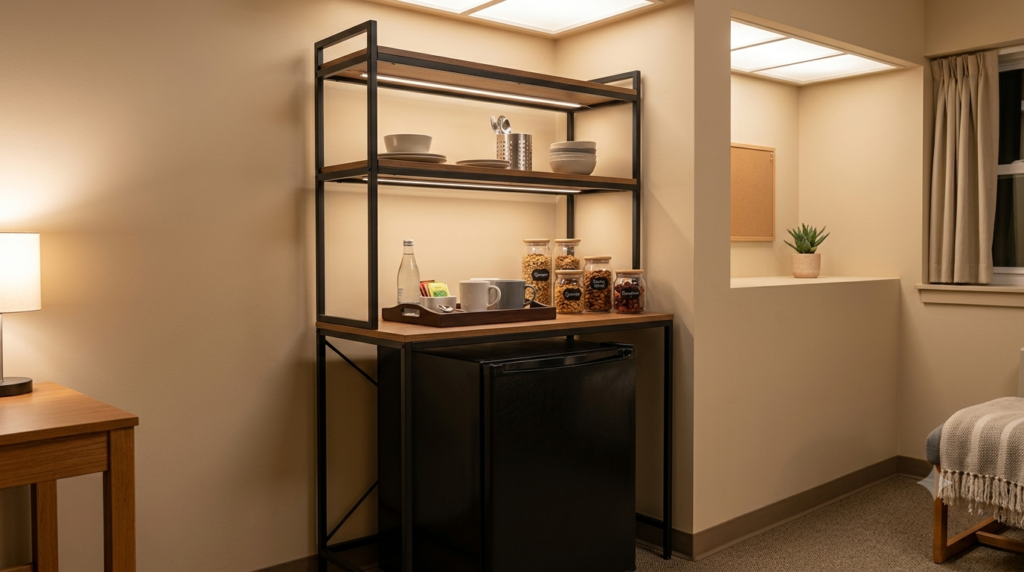
Place a freestanding shelf unit over the mini fridge so the appliance feels integrated rather than stranded in a corner. Use the upper shelf for mugs, dishes, pantry jars, or a compact coffee setup.
This takes advantage of unused vertical space and creates one clear food zone, which reduces clutter elsewhere. Leave the ventilation clearance required by the manufacturer, and never cover vents with fabric or adhesive panels. A metal or open wood frame allows heat to escape more safely than a closed cabinet.
Build a Narrow Landing Zone Beside the Door
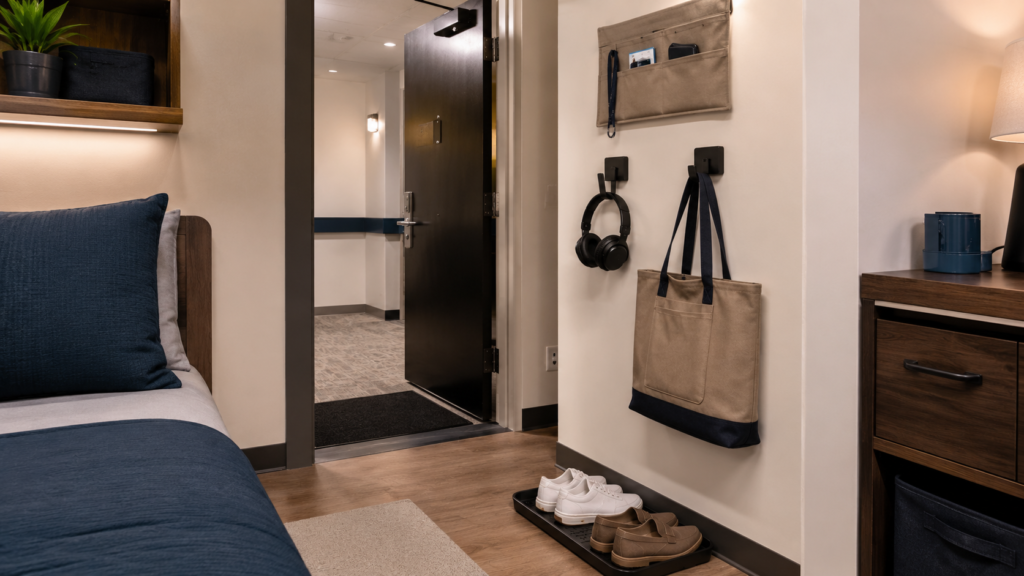
Create a drop point using one adhesive wall pocket, two removable hooks, and a slim shoe tray. Use it for keys, ID cards, headphones, umbrellas, bags, and the shoes you wear most often.
The setup catches clutter before it reaches the bed or desk. Keep the main walkway at least 30 inches wide where the room allows, and make sure the door opens fully. Deep organizers can feel useful at first but become frustrating when they block circulation in a tight entry.
Install a Double Closet Rod
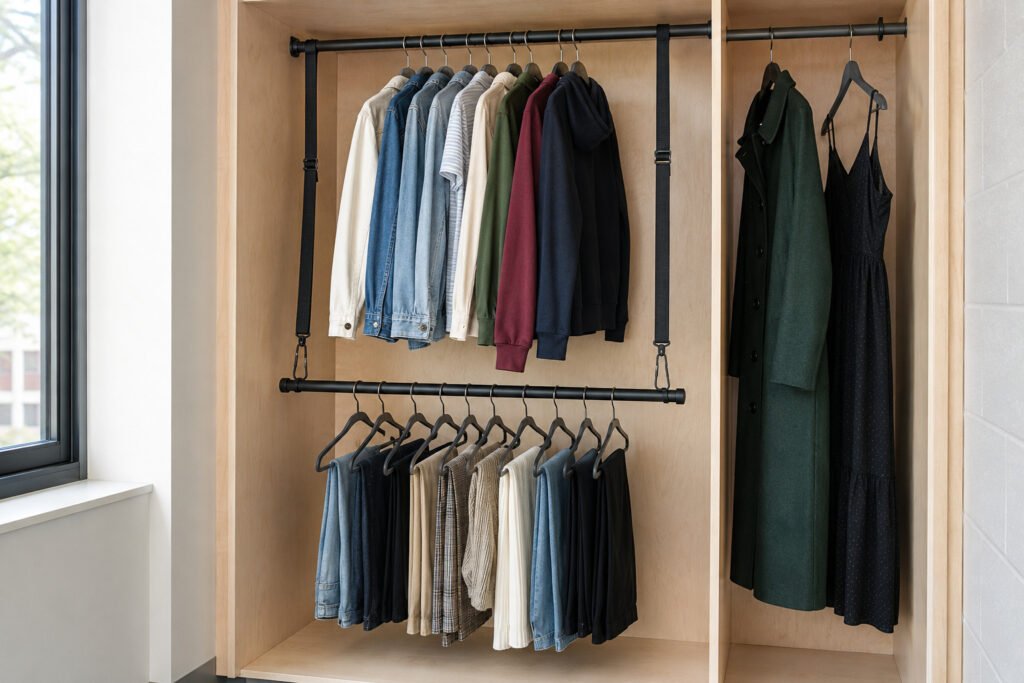
Most dorm closets waste the open area below short shirts and jackets. A removable hanging rod suspended from the existing rail creates a second level without drilling into university furniture. Position it approximately 36–40 inches below the upper rod for shirts, folded pants on hangers, and short skirts. Keep one side full height for dresses, long coats, or a hanging laundry bag.
Use slim velvet hangers to reduce wasted width, but don’t pack them so tightly that clothing wrinkles or becomes hard to remove. Before installation, check the weight limit of both rods. A lightweight metal model with adjustable straps usually remains straighter than a fabric bar when the closet is full.