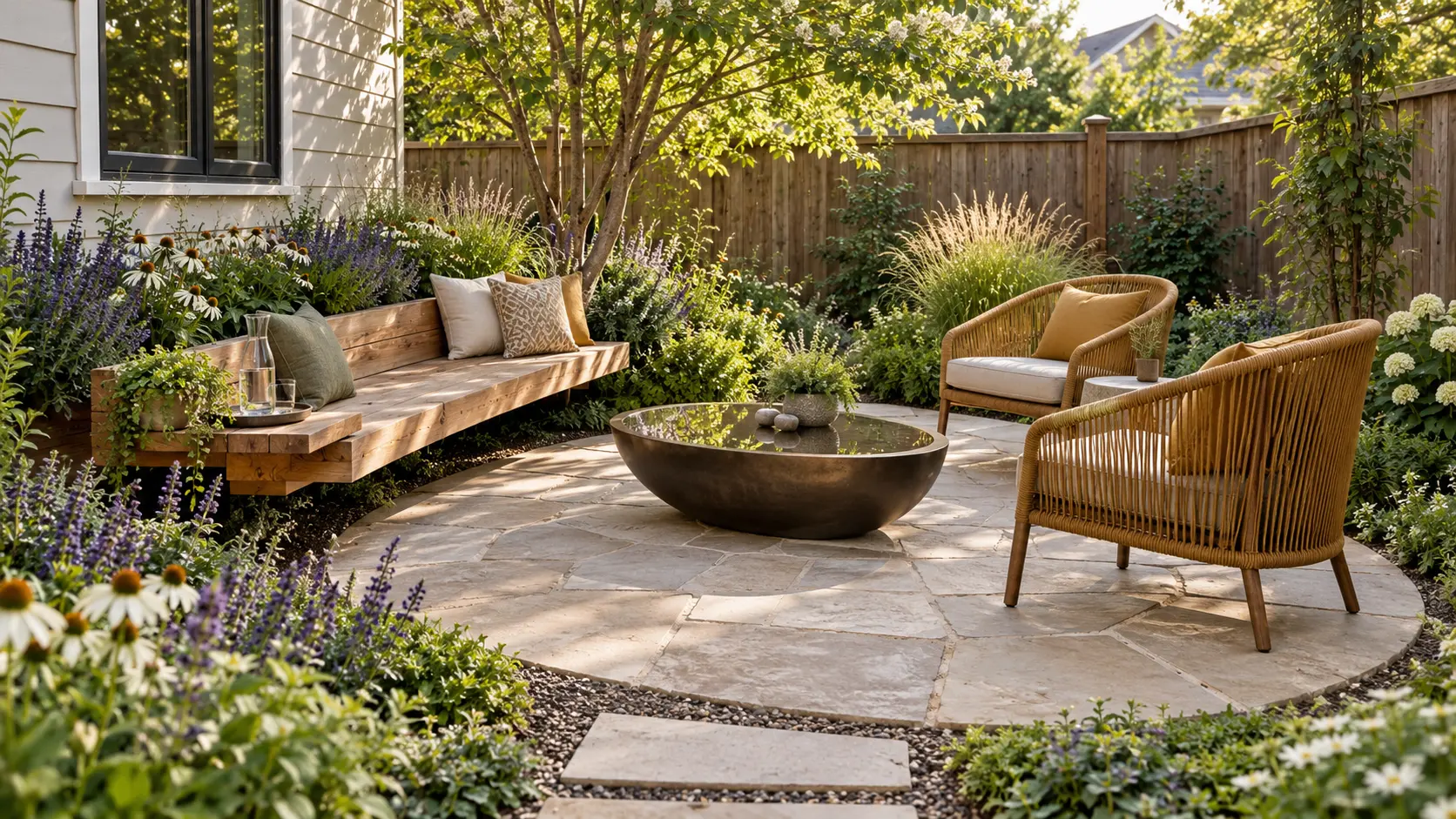
A small backyard can become one of the most useful parts of your home when the seating fits its scale. The best garden seating ideas don’t simply add chairs; they shape how you relax, entertain, read, or enjoy an evening outdoors.
These 14 designs use compact layouts, weather-resistant materials, layered planting, and distinctive focal points. Each one offers a different look while remaining practical for a real US backyard, courtyard, side yard, or rental garden.
1. Build a Curved Corner Bench
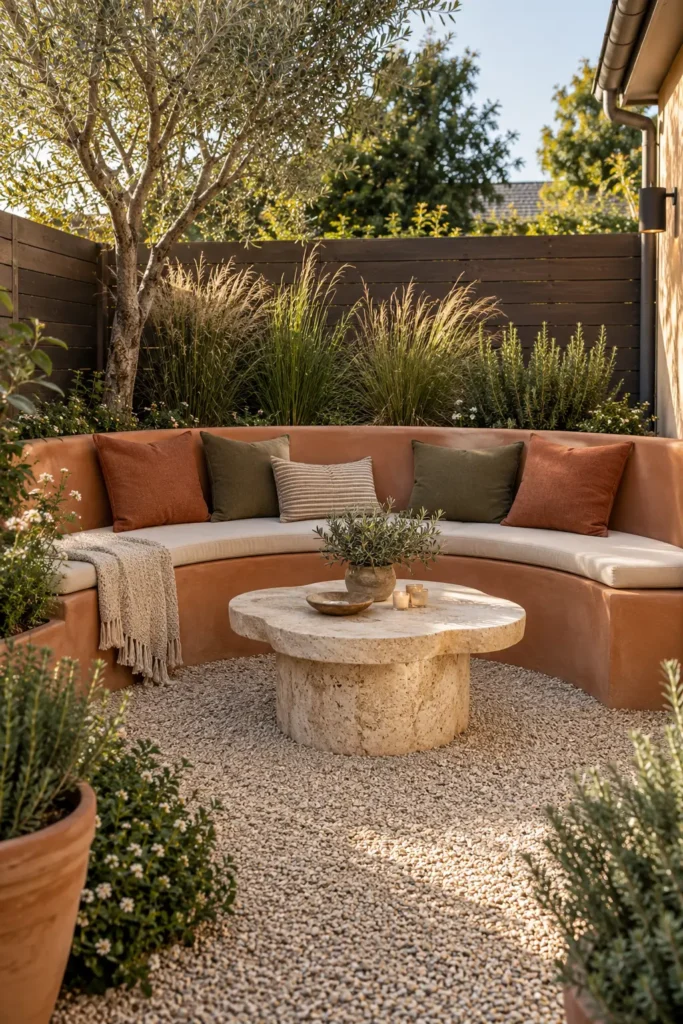
Turn an unused garden corner into a conversation area with a curved stucco bench. A warm terracotta finish, cream seat pads, and rust and olive pillows create an earthy palette that looks especially rich in late-afternoon light.
Place an irregular travertine or cast-stone table about 16–18 inches from the seating. Pea gravel keeps the surface permeable, while rosemary and ornamental grasses soften the surrounding fence. The curved design can seat four people without requiring the floor space of four separate chairs.
2. Add a Pergola Swing
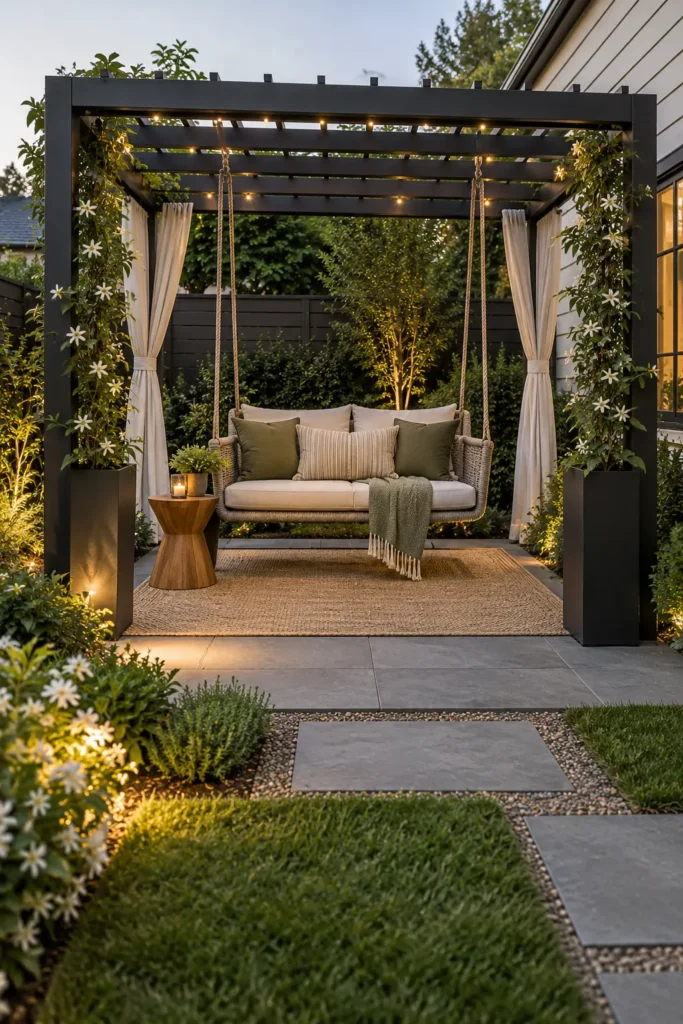
A slim black pergola gives a small garden height and structure without filling the entire yard. Suspend a weatherproof woven-rope loveseat from the center, leaving enough clearance for a gentle swinging motion.
Add a narrow teak table instead of a full coffee table, then train star jasmine up the pergola posts. Warm integrated lights make the area useful after sunset. Choose powder-coated aluminum or steel and outdoor-rated suspension hardware. Regular indoor curtain panels and untreated rope may photograph well, but they deteriorate quickly when exposed to moisture.
3. Create a Fire-Pit Circle
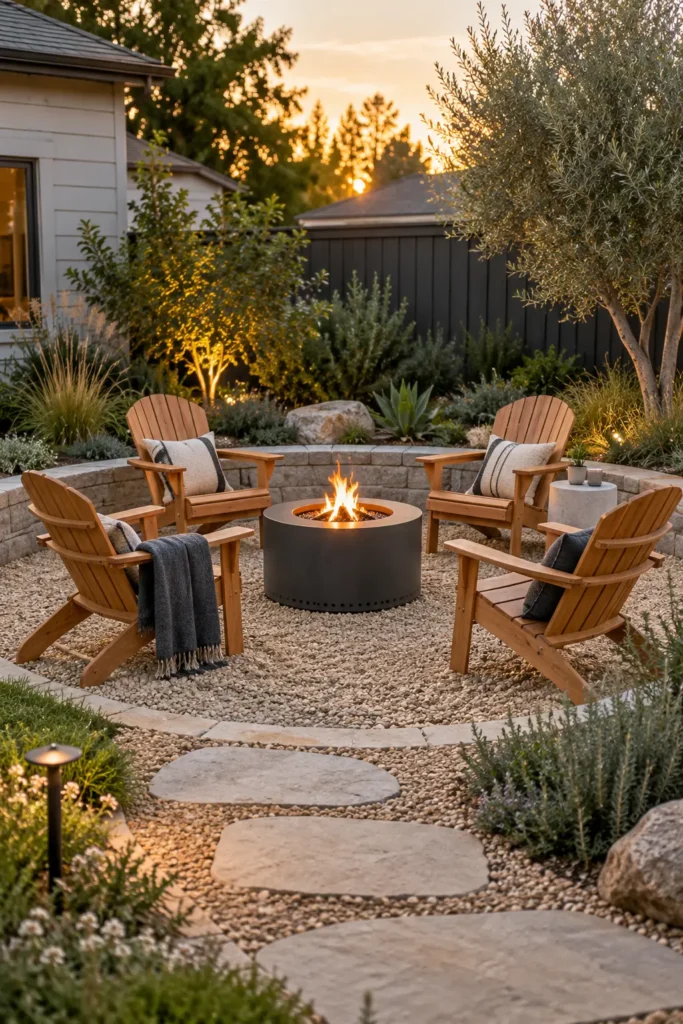
A circular gravel area can make a small lawn feel more organized. Position four compact cedar Adirondack chairs around a properly scaled smokeless fire pit, keeping the clearances required by the manufacturer.
Use large stepping stones to establish a defined approach through the garden. A low border of lavender, rosemary, or other fire-conscious planting helps frame the seating without blocking sight lines. Gravel is more affordable than laying a full stone patio, though it should sit over a compacted base and landscape fabric to reduce shifting and weeds.
4. Use a Storage Banquette
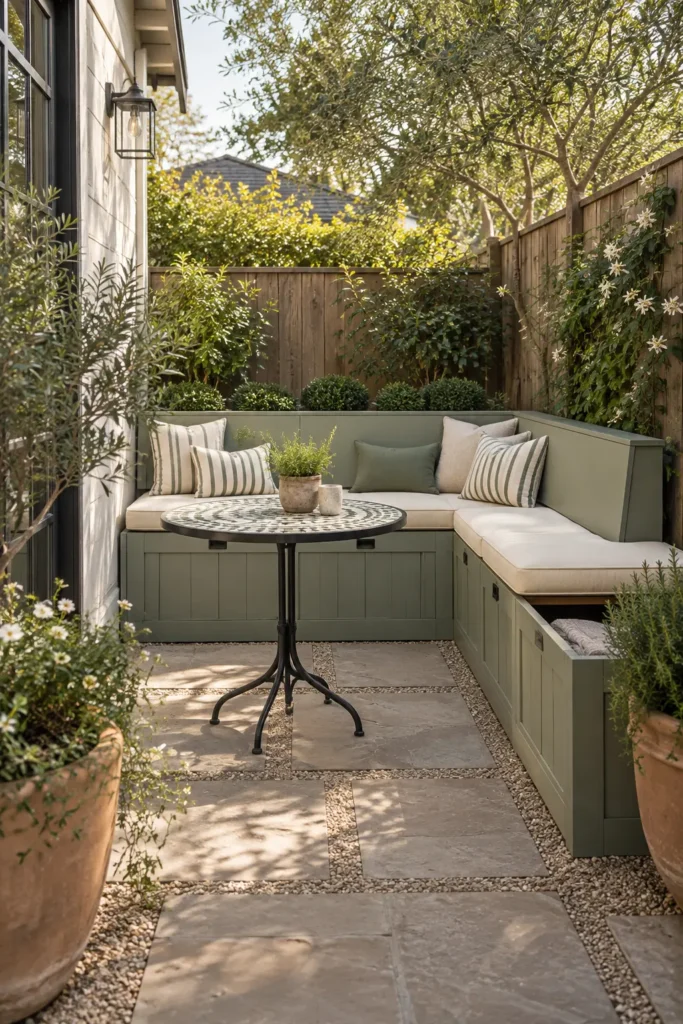
Run an L-shaped garden banquette along two sides of a narrow patio to gain seating without blocking the center. A muted sage finish blends naturally with planting, while cream cushions and striped lumbar pillows keep the arrangement crisp.
Include hinged or lift-up compartments beneath the seats for gardening tools, folded chair pads, and outdoor tableware. Use exterior-grade plywood or rot-resistant lumber, drainage openings, and marine-quality hinges. A small round mosaic table prevents sharp corners from interrupting the limited walkway and adds a detailed focal point against the simple bench.
5. Try a Desert Courtyard
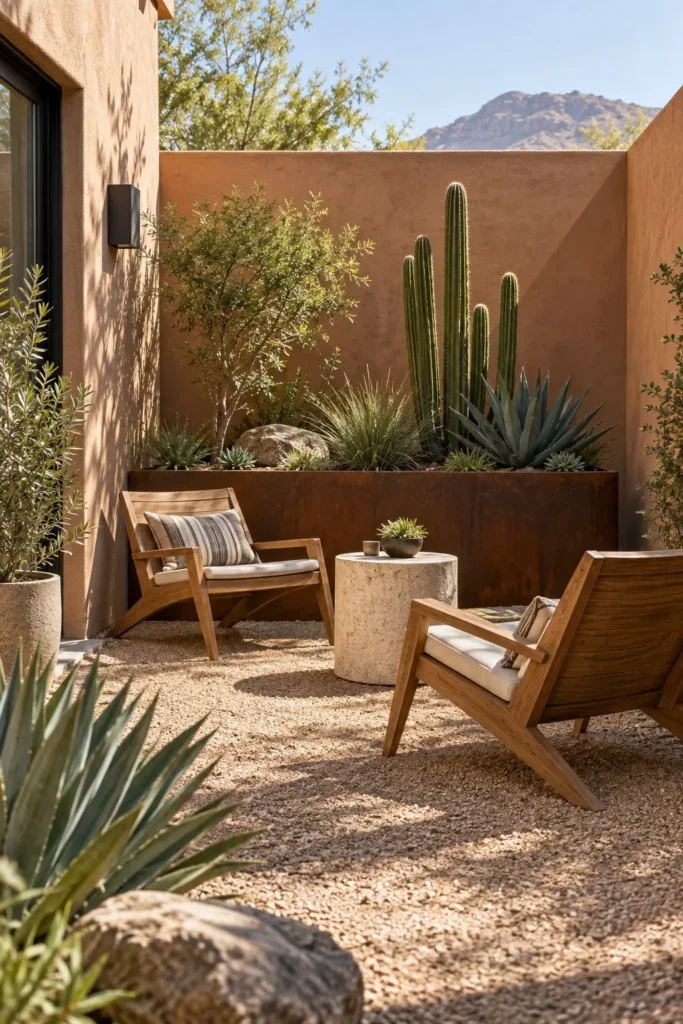
For a hot, dry garden, arrange two angular acacia lounge chairs diagonally rather than pushing everything against the walls. The angled placement makes the seating feel intentional and opens a broader view across the courtyard.
Pair the chairs with a chunky limestone side table and a decomposed-granite floor. A weathered steel planter filled with columnar cactus, agave, and native grasses provides height without taking over the seating area. Acacia needs periodic oiling outdoors, so teak or powder-coated aluminum may be a lower-maintenance substitute in particularly exposed locations.
6. Style a Blue Bistro Nook
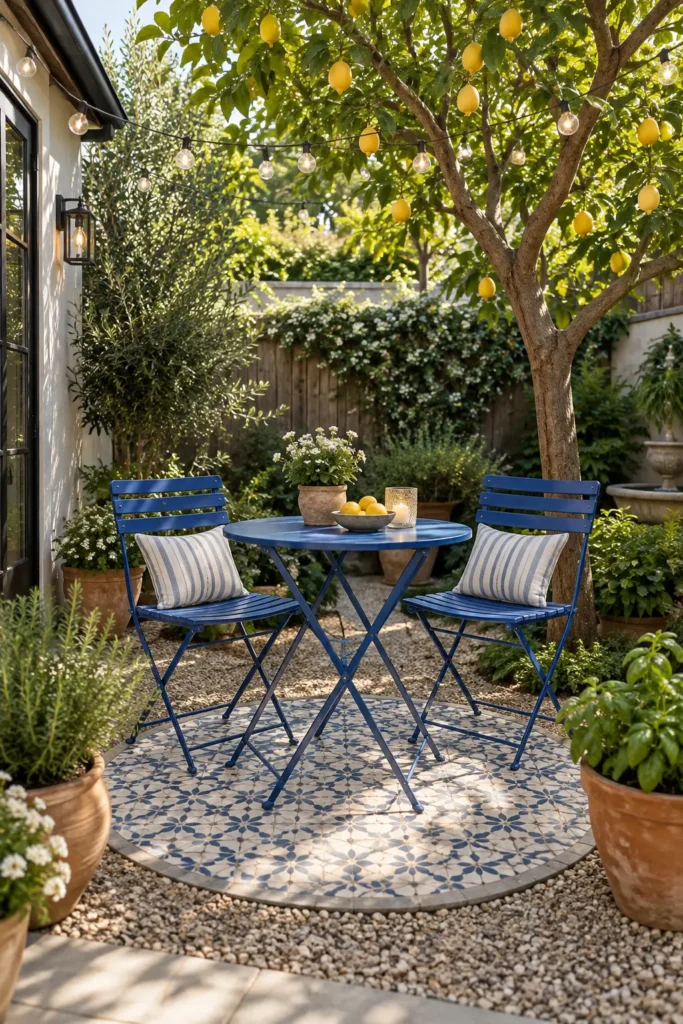
A cobalt-blue bistro set creates a memorable focal point beneath a small fruit tree. Center the table on a circular patch of patterned exterior tile, then surround the tiled area with gravel to avoid the cost of paving the entire garden.
Folding powder-coated steel chairs work well in a rental because they’re easy to move and store. Add terracotta pots containing basil, thyme, or rosemary and suspend outdoor-rated globe lights above the table. Keep the accessories restrained so the blue furniture and leafy tree remain the strongest elements in the composition.
7. Build a Cedar Daybed
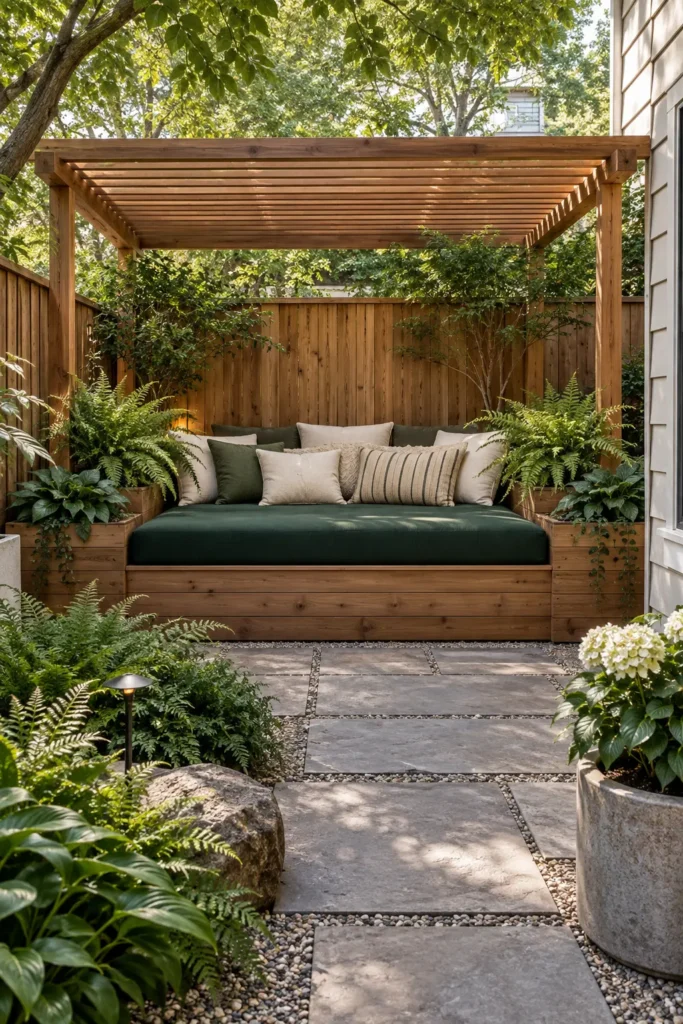
A cedar daybed can turn the back of a shaded garden into a private reading retreat. Build the platform against the fence and incorporate narrow planters at both ends to avoid needing additional pots.
Use a deep forest-green quick-dry cushion, ivory performance-fabric pillows, and a slatted cedar canopy that filters light without creating a heavy roof. Leave ventilation gaps beneath the cushion and provide drainage around the base. Although the finished piece looks simple, it requires accurate construction and exterior-grade fasteners. A ready-made outdoor daybed offers an easier alternative for renters.
8. Lay a Checkerboard Patio
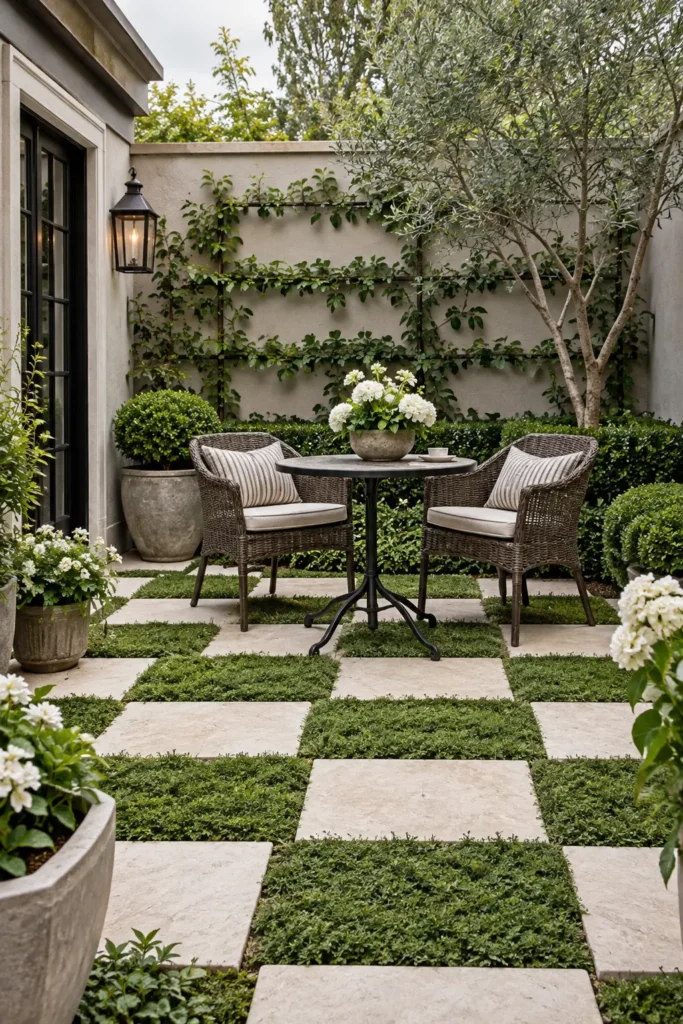
Create a checkerboard floor by alternating large pale pavers with low-growing ground cover. The pattern supplies enough visual interest that the furniture can remain simple: a dark bronze café table and two weather-resistant woven chairs are all the seating area needs.
Select a walkable plant suited to your climate and the amount of sun the garden receives. In heavily used areas, replace living squares with fine gravel to avoid worn patches. The repeated grid creates order, while the planted sections prevent the hardscape from feeling cold or oversized.
9. Install a Fold-Down Bar
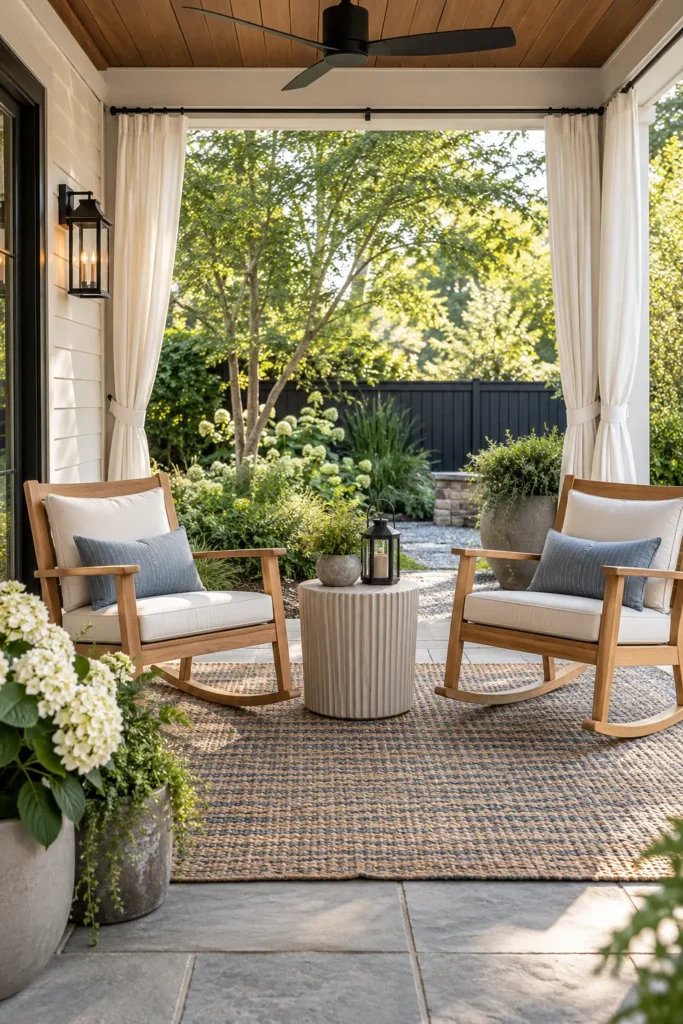
A narrow side yard may not have room for a conventional dining set, but a fold-down counter can create two useful seats. Attach an exterior-grade slatted teak counter to a structurally sound fence or masonry wall and tuck two slim metal stools underneath.
Aim for a counter height of approximately 40–42 inches and allow around 24 inches of width per person. Vertical herb pockets and one outdoor wall light add function without reducing the walkway. When the counter is folded, the area can return to being a clear garden passage.
10. Update the Porch Rocker
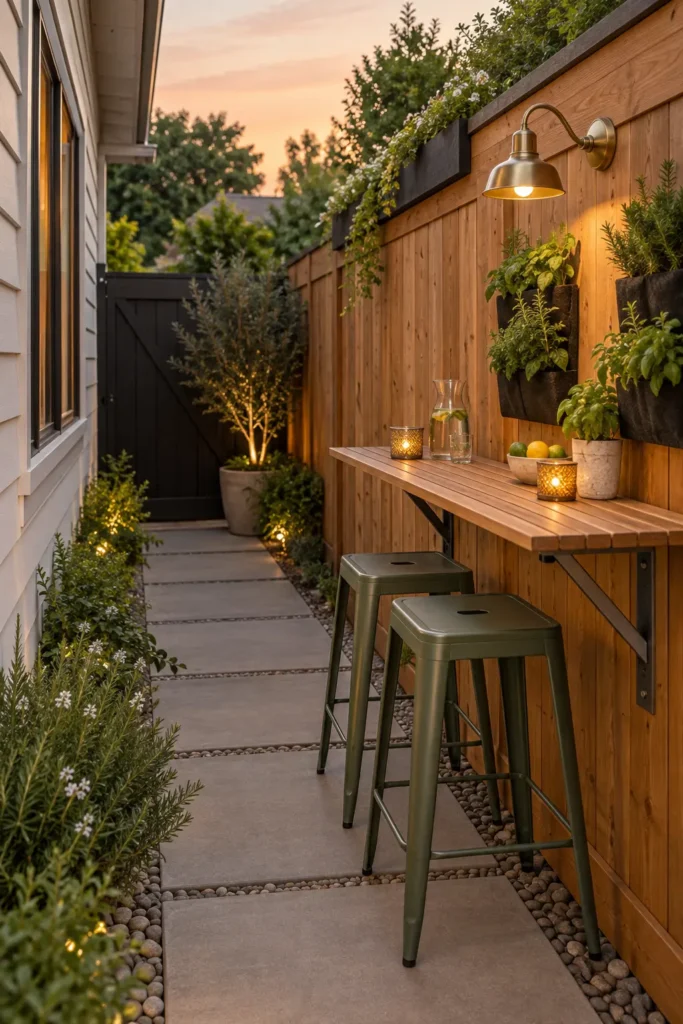
Give a covered patio a modern American porch look with two streamlined teak rocking chairs placed face-to-face at a slight angle. A compact fluted fiberstone table between them provides space for drinks without restricting the rocking movement.
Dusty-blue lumbar cushions cool the warmth of the wood, while a flatwoven outdoor rug visually connects both chairs. Keep the front and back of each rocker clear, and avoid thick rugs that can interfere with the curved runners. Tie-back exterior curtains can filter low sun, but they should never obstruct the view into the garden.
11. Pair Olive Chairs With Copper
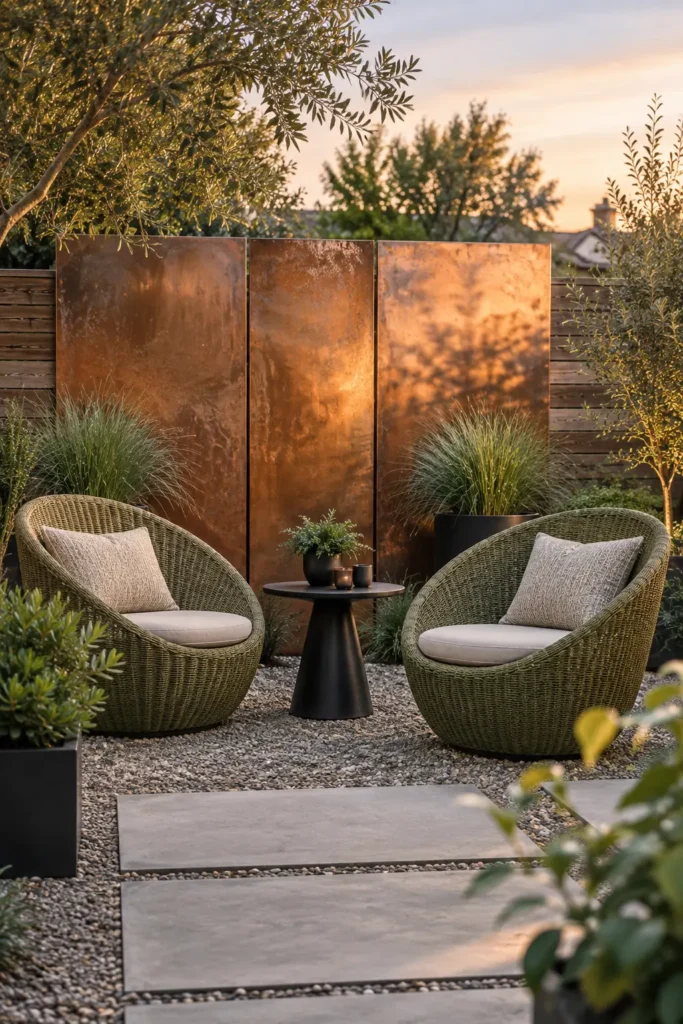
Two rounded olive-green pod chairs look striking against a narrow wall of naturally weathered copper panels. Angle the chairs toward each other around a small black pedestal table, creating a balanced arrangement that still allows conversation.
Use genuine outdoor woven rope or synthetic wicker rather than untreated natural rattan. Gravel and large concrete pavers ground the curved furniture, while airy grasses soften the hard metal background. Copper changes color as it weathers, so expect the bright finish to develop deeper brown and green tones unless it receives a protective exterior coating.
12. Add a Deck Lounge Net
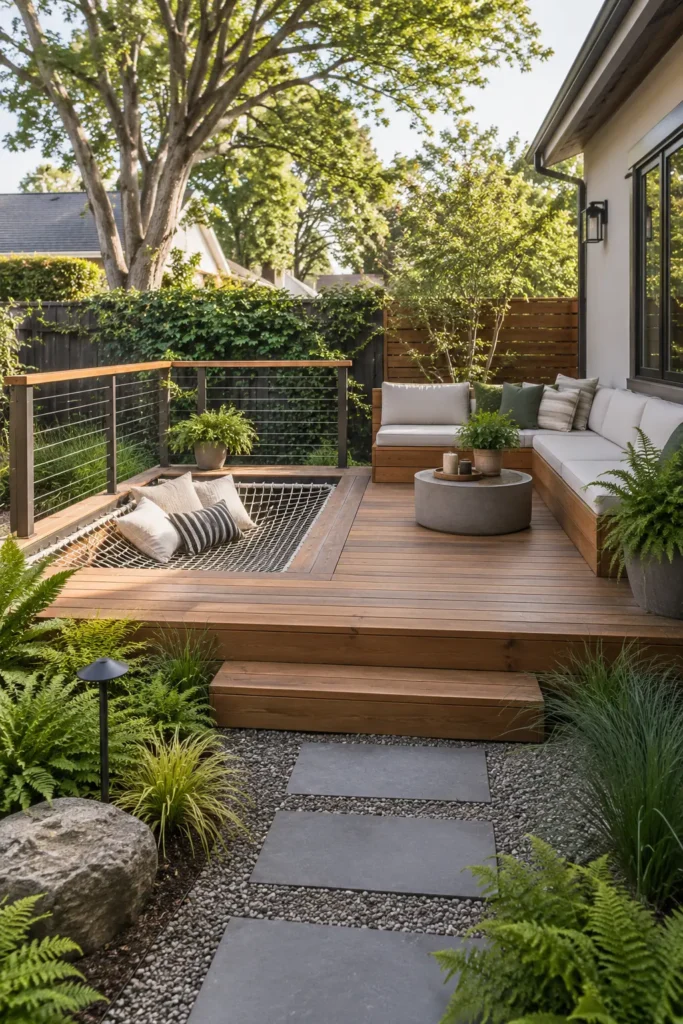
A low cedar deck can support both conventional seating and a playful built-in lounge net. Place the tensioned net in one corner and an L-shaped cushioned bench along the opposite edge, leaving the middle open for circulation.
This feature needs proper framing, weather-resistant rope, safe anchoring, and adequate clearance below, so it isn’t a casual weekend installation. The surrounding ferns and grasses help the deck settle into the landscape. Families can replace the net with a recessed gravel section if they want the same contrasting layout with less specialized construction.
13. Create a Brick Garden Nook
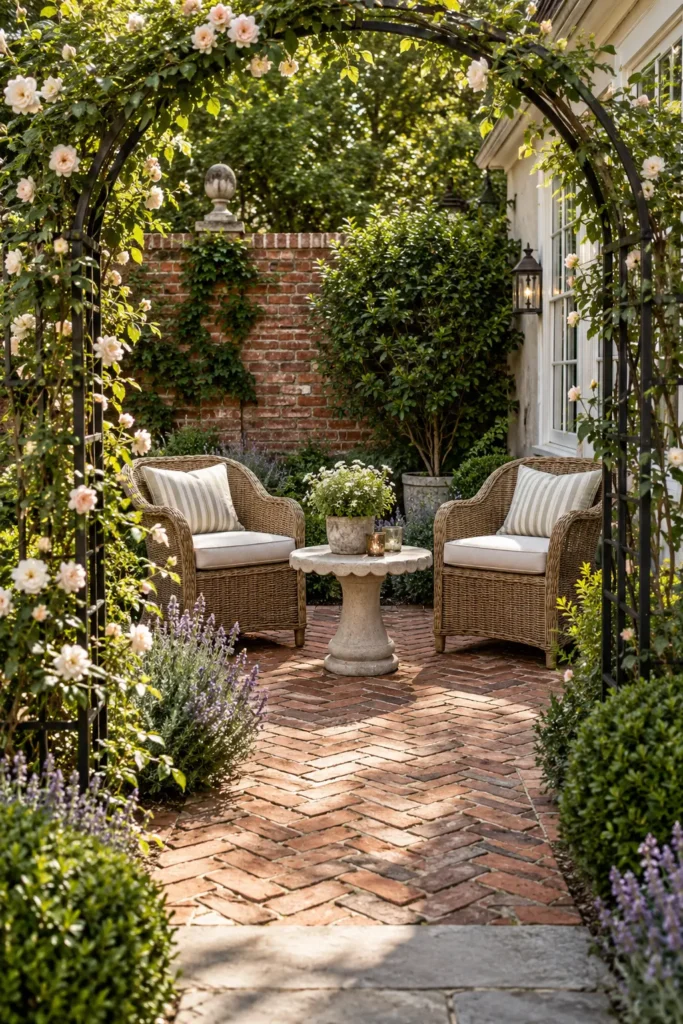
Lay reclaimed brick in a herringbone pattern to give a small garden the depth and character of an established courtyard. Set two honey-colored all-weather woven chairs on the brick and place a scalloped stone table between them.
A black metal arch covered with pale climbing roses frames the seating without requiring a solid backdrop. Lavender and clipped boxwood provide structure below the flowers. Reclaimed bricks vary in thickness, so they need a well-prepared base; brick-look concrete pavers offer a more even, lower-maintenance alternative with a similar visual rhythm.
14. Frame a Reading Chair
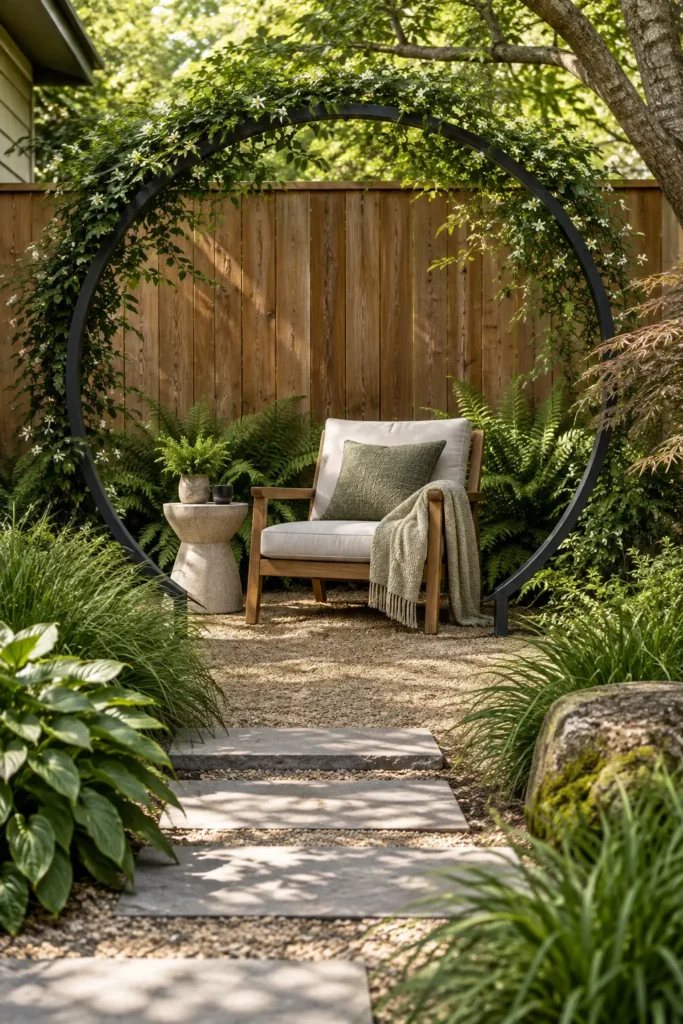
Use a circular black metal trellis to frame one teak lounge chair like a piece of garden artwork. Position the chair near the back boundary, add a compact stone side table, and surround the composition with ferns and shade-tolerant grasses.
The circle introduces a strong shape without adding bulky furniture. Secure the frame correctly so it can withstand wind, and choose a shallow freestanding design if you can’t attach it to the fence. Keeping the center simple preserves negative space and directs attention toward the chair rather than the surrounding accessories.
What to Consider Before Choosing Garden Seating Ideas
Measure the available area before buying furniture and preserve a walkway at least 30–36 inches wide where possible. Deep lounge chairs may overwhelm a narrow yard even when their listed width appears manageable, so mark each footprint on the ground with painter’s tape or cardboard.
Prioritize powder-coated metal, teak, cedar, solution-dyed outdoor fabric, quick-dry foam, and frost-resistant stone. Indoor cushions stored outside often trap moisture, while cheap plastic wicker can become brittle and visibly faded after prolonged sun exposure.
Small-Garden Styling Mistakes to Avoid
Don’t line every boundary with furniture. Leaving part of a fence or planting bed visible gives the eye a place to rest and makes the garden feel less crowded. One clearly defined seating zone usually looks stronger than several undersized arrangements.
Avoid placing a large outdoor rug directly on soil or uneven gravel, where it can hold dirt and moisture. Lighting should also remain gentle: combine one useful wall fixture with low path or pergola lighting instead of flooding the entire backyard with harsh white light.