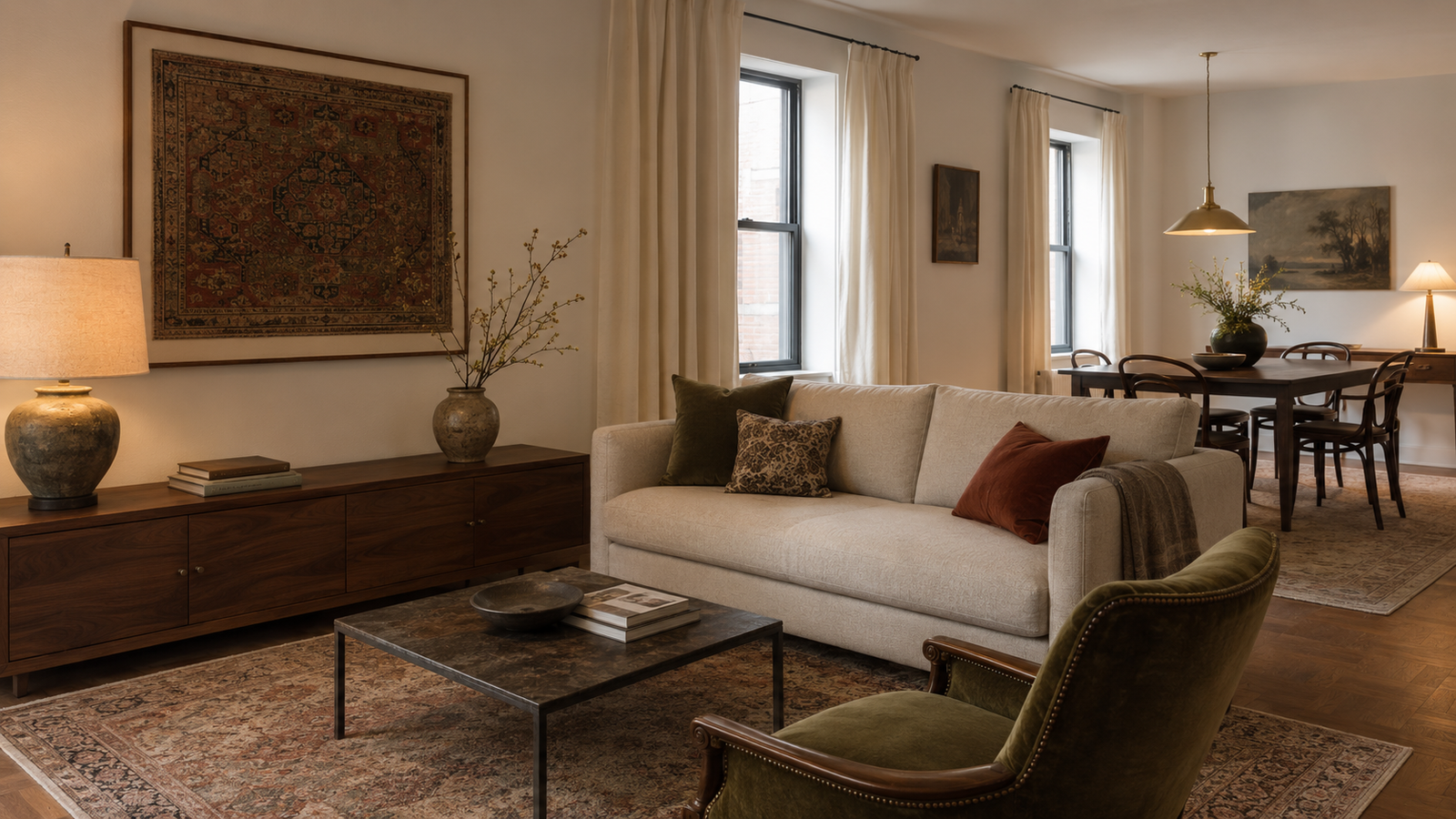
An expensive-looking apartment rarely comes down to expensive furniture. It comes down to proportion, restraint, and the small details builders and budget furniture makers tend to overlook.
If you want to know how to make your apartment look expensive on a budget, don’t start by buying more decor. First correct the features that expose the apartment’s price point: undersized lighting, short curtains, scattered furniture, flimsy finishes, and too many unrelated colors.
Create a Clear View from the Entrance
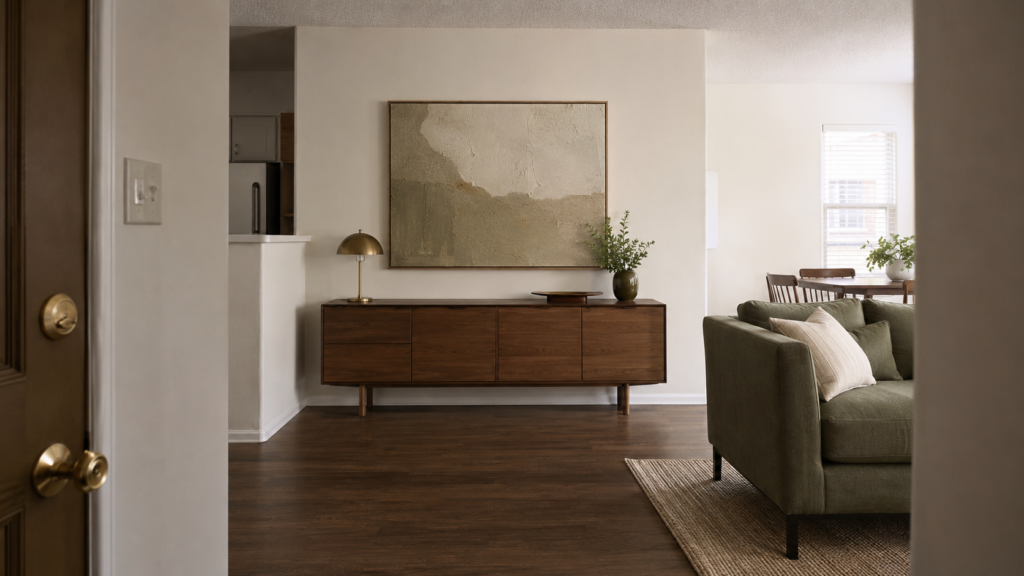
Stand at the entrance and note what you see first. That initial view should land on one deliberate focal point: a substantial lamp, large artwork, a tailored sofa, or a well-styled dining area. It shouldn’t end on a television cable, shoe pile, or the side of a bookcase.
Move visual clutter out of the apartment’s main sight lines. You don’t need to empty the room. Turn storage bins away from the doorway, conceal cords, and position the strongest piece where it can be seen from the hall. This creates order before you spend anything.
Use One Color Palette Throughout
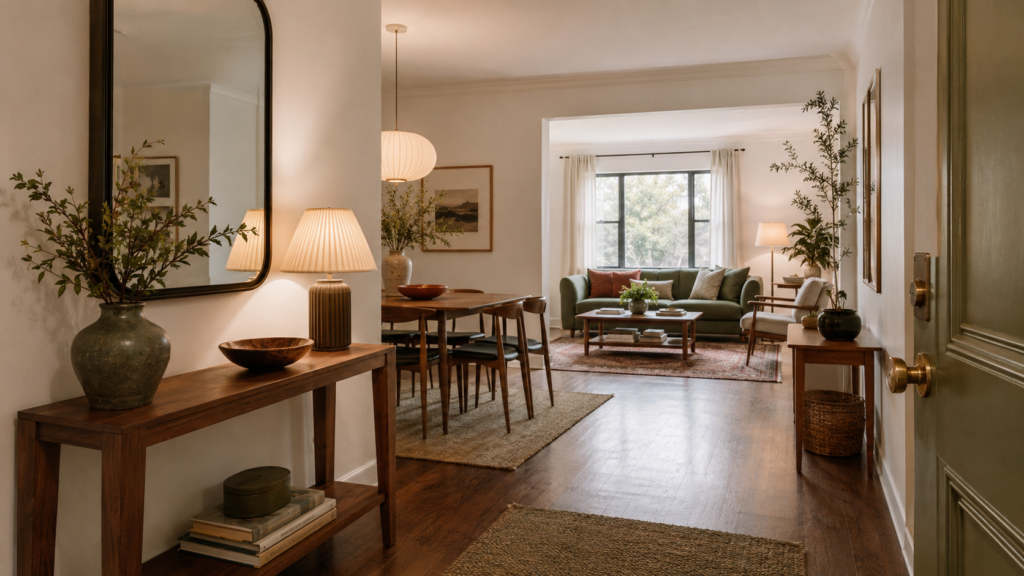
Small apartments look more polished when adjoining rooms share a controlled palette. Choose one warm white or pale neutral for the largest surfaces, one medium wood tone, and two supporting colors. Repeat those colors across the living room, entry, and dining area.
Limit the apartment to three main finishes and two accent colors. For example, use warm white, walnut, aged brass, muted olive, and rust. Warm whites soften yellow evening light, while cool whites can look gray or sharp beneath inexpensive LEDs.
Make Rental Walls Look More Polished
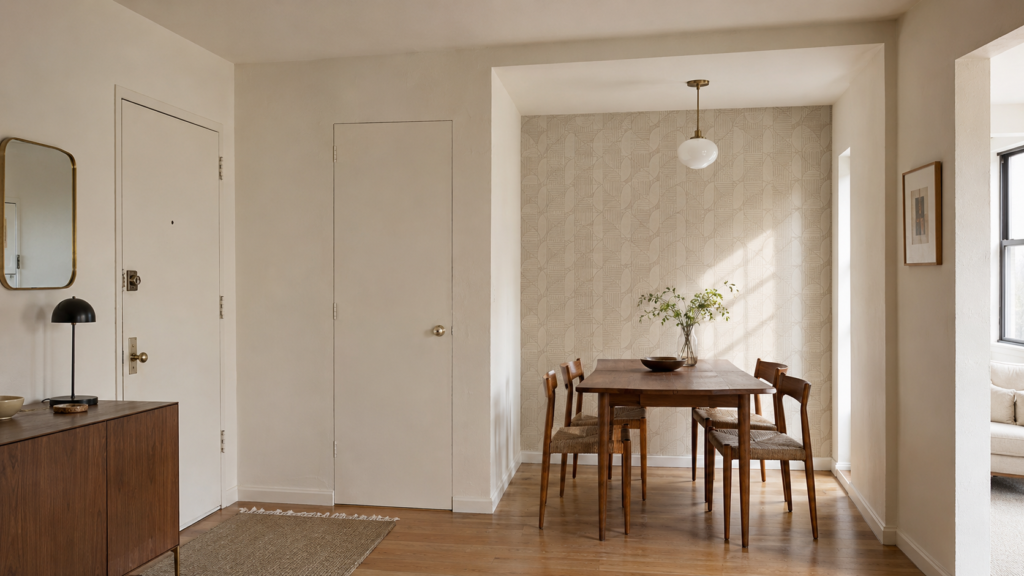
Patchy white walls often make an otherwise attractive rental feel unfinished. If painting is allowed, use a washable matte or eggshell finish. Matte paint disguises dents and uneven drywall better than gloss, which catches light and exposes every flaw.
Paint the walls, trim, and awkward utility doors the same soft color. This removes visual breaks and makes plain architecture feel considered. If painting isn’t permitted, use removable wallpaper on the back wall of an entry or dining nook rather than creating a random living-room accent wall.
Choose the Right Furniture Size
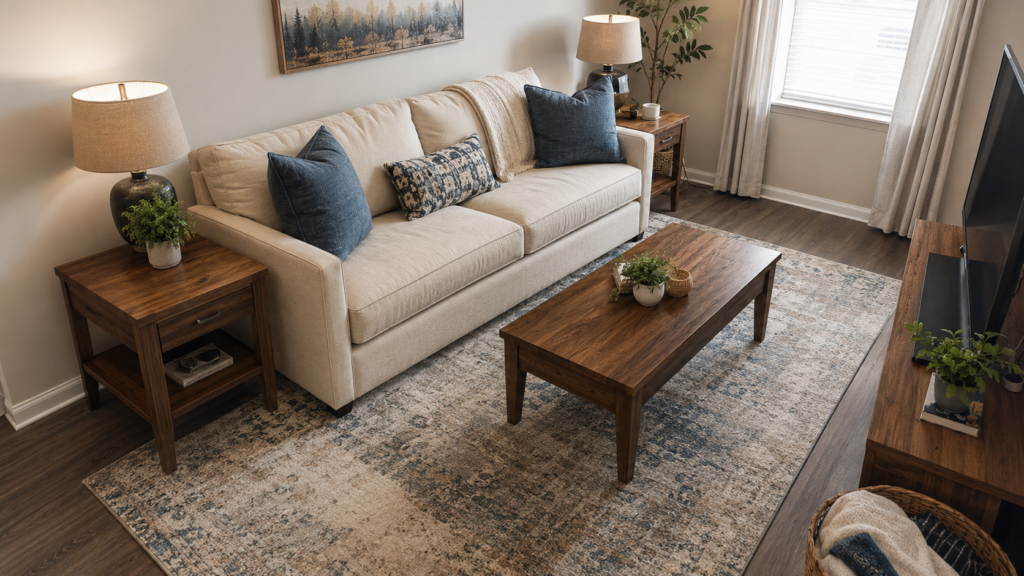
Scale is one of the clearest differences between a professionally planned room and a collection of purchases. A tiny coffee table beside a large sofa looks cheap even if both pieces are attractive.
Measure the relationship between pieces, not just the empty floor. A coffee table should sit roughly 16–18 inches from the sofa and measure about two-thirds of its length. Side tables work best within two inches of the sofa arm height. These proportions make separate budget pieces read as one composition.
Hang Curtains Close to the Ceiling
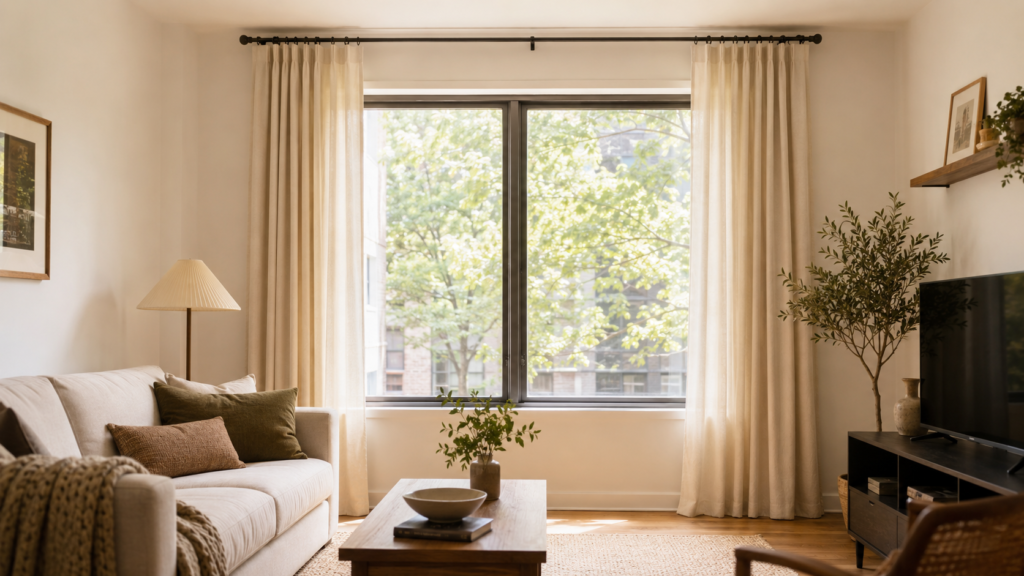
Standard curtains hung directly above a window visually compress the room. Mount the rod high toward the ceiling and extend it 8–12 inches beyond each side of the frame. This reveals more glass when the curtains are open and makes the window appear wider.
Use enough fabric to create real fullness. The combined panel width should equal approximately twice the rod width. Choose curtains that barely touch the floor; floating several inches above it makes them look accidental. Clip rings and no-sew hemming tape offer a renter-friendly finish.
Replace the Basic Ceiling Light
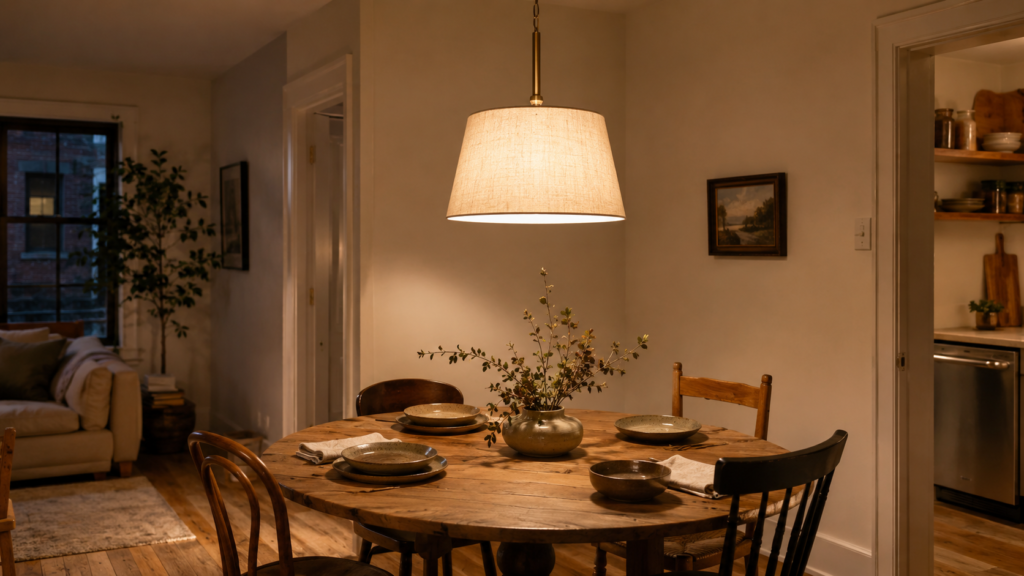
A small frosted dome in the middle of the ceiling makes the whole apartment feel like a rental. Replace the most visible one—usually in the dining area or entry—with a fixture that has enough diameter to suit the room.
Choose a ceiling fixture measuring roughly one-third of the table’s width. Over a dining table, hang its lowest point 30–36 inches above the surface. Keep the original fixture safely stored for move-out. If electrical changes aren’t allowed, use a plug-in pendant secured with a ceiling hook rated for its weight.
Add Warm Light at Different Heights
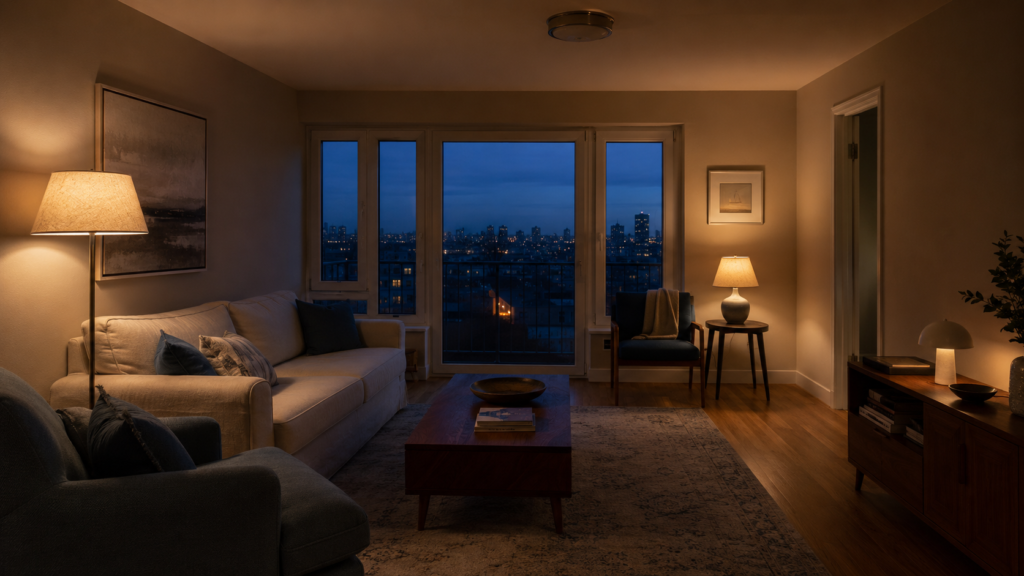
One bright ceiling light flattens the room, exaggerates wall flaws, and creates harsh shadows. Expensive-looking interiors use lighting layers at different heights.
Create three separate pools of warm light in the main room: a floor lamp near seating, a shaded table lamp across the room, and a small light on a console or cabinet. Choose bulbs between 2700K and 3000K with matching color temperatures. Fabric shades soften glare; exposed cool-white bulbs make even good furniture look severe.
Make Budget Furniture Look Expensive
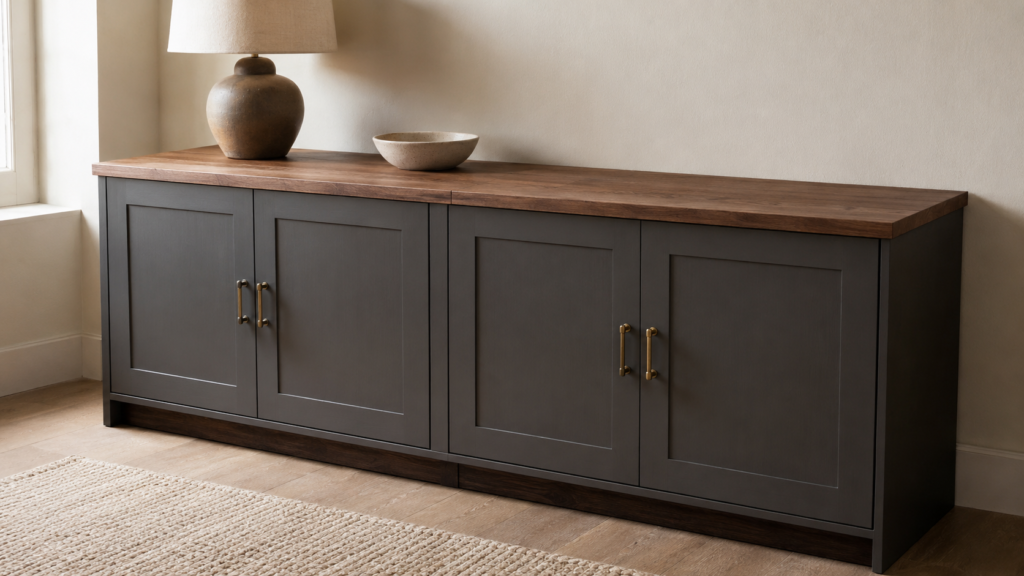
Budget furniture often gives itself away through thin legs, tiny hardware, and exposed seams. Replacing the whole piece isn’t always necessary.
Change the feature your eye reads first. Add a recessed wood plinth beneath a cube unit, replace shiny knobs with weightier metal pulls, or join two narrow cabinets beneath one continuous timber top. Keep the new top about one inch thick and allow a slight overhang. One uninterrupted surface makes separate units resemble custom built-in storage.
Cover Cheap-Looking Furniture Edges
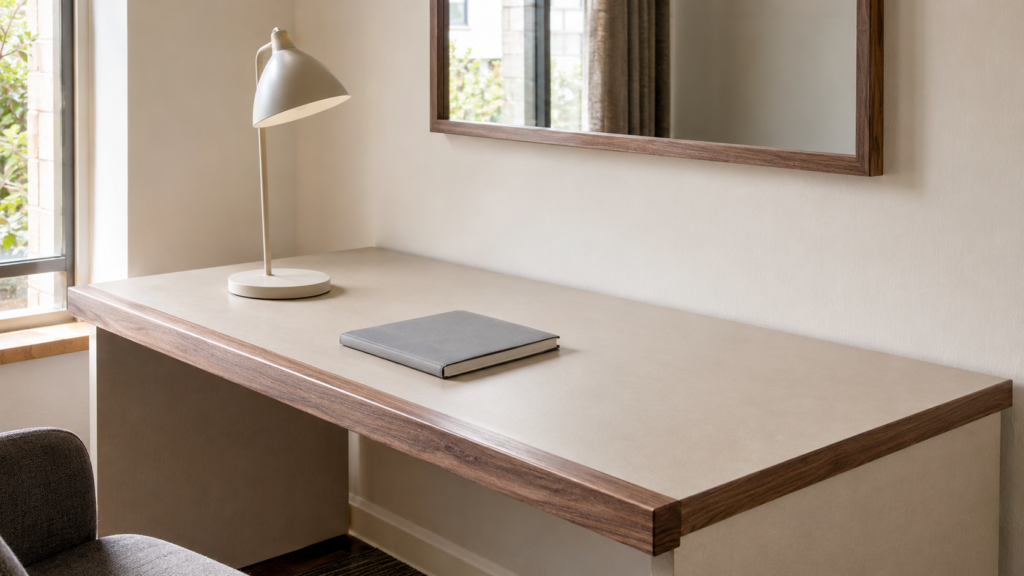
A laminate surface can look convincing from across the room, but its thin exposed edge reveals the construction immediately. Designers pay close attention to these transition points.
Cover or visually strengthen the exposed edge. Apply paintable edge banding to shelving, frame a basic mirror with slim wood trim, or add a narrow timber lip to a laminated desktop. Match the edge color closely instead of introducing another finish. This small correction works because the eye uses thickness to judge quality and permanence.
Create Custom-Looking Wall Storage
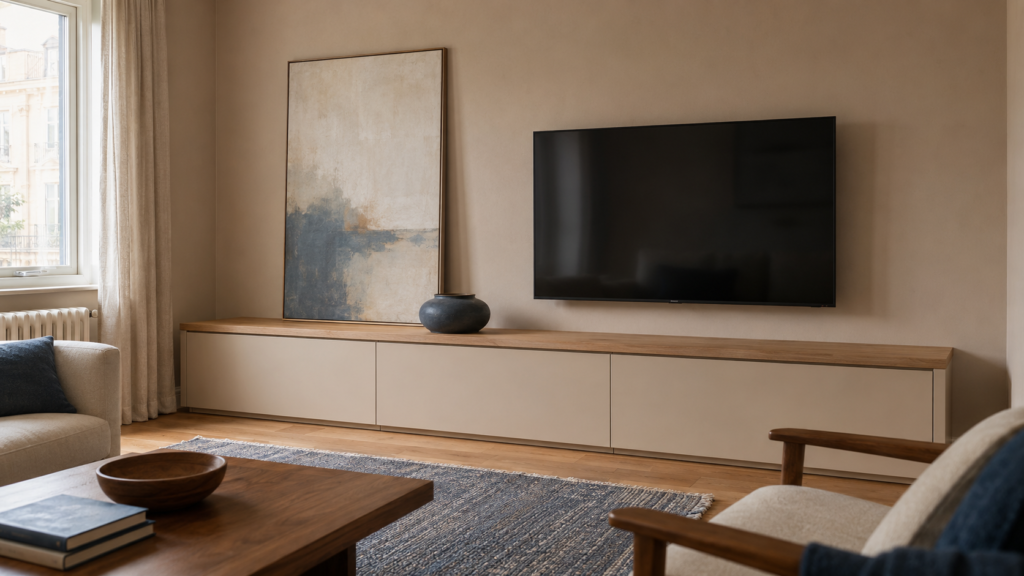
Too many small storage pieces break a room into fragments. A low, nearly continuous furniture run gives the apartment an architectural anchor and provides more useful concealed storage.
Place matching or compatible cabinets along one wall and unify them with a single top. Leave 3–6 inches of breathing room at the ends rather than forcing a poor wall-to-wall fit. Paint the units close to the wall color so they recede. This works particularly well under a television, below windows, or behind a dining table.
Hang One Large Piece of Art
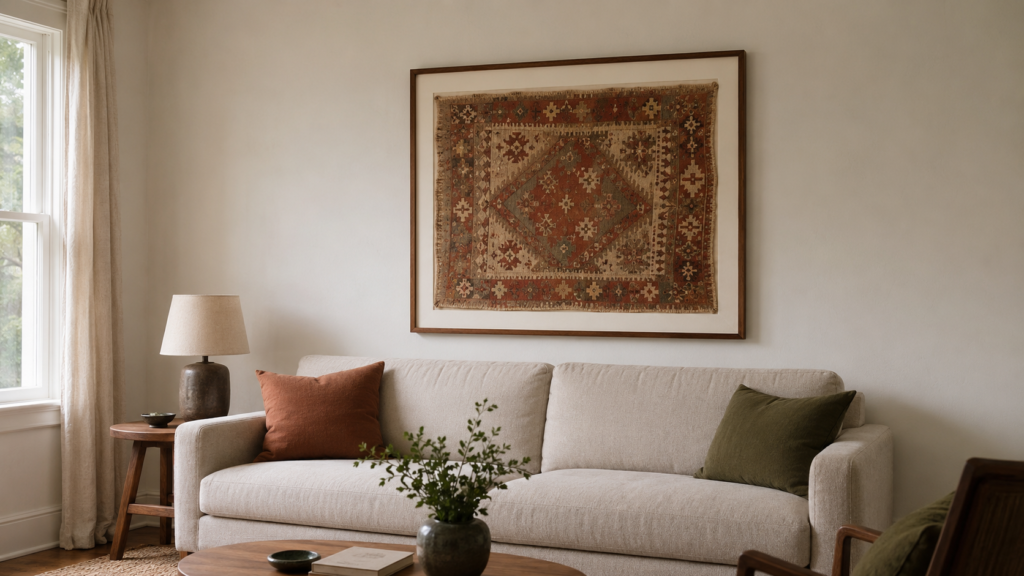
A group of undersized prints can make a large wall feel busier and emptier at the same time. One substantial work often looks more confident—and it can cost less than buying six matching frames.
Hang one large textile, thrifted canvas, or framed paper work at 57–60 inches to its center. Above a sofa or console, aim for artwork that measures roughly two-thirds the furniture’s width. Leave 6–10 inches between the furniture and frame. For a budget option, frame a vintage fabric panel or oversized art print behind acrylic rather than glass.
Repeat One Finish Around the Roomimes
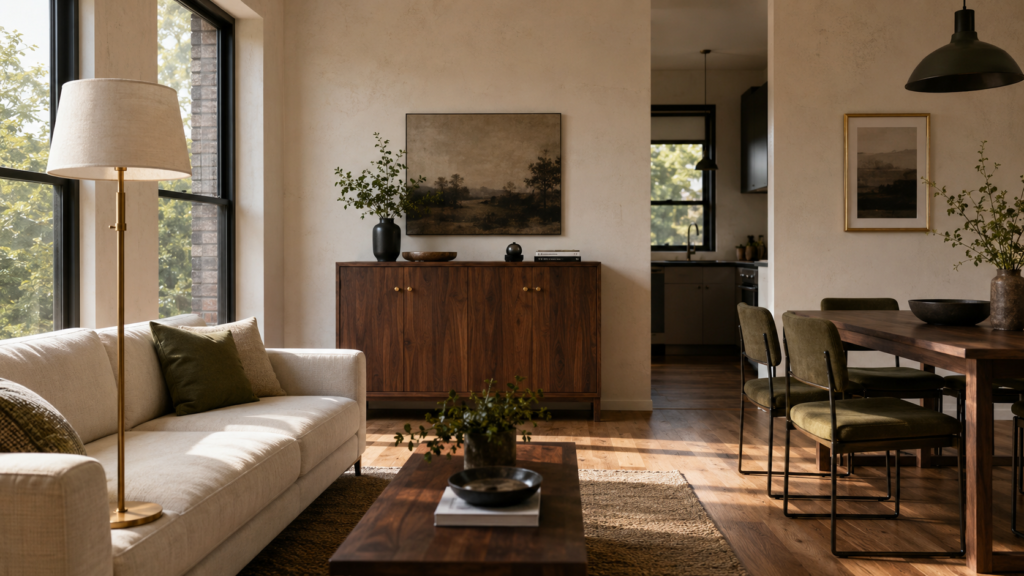
A room filled with one-off finishes feels assembled purchase by purchase. Matching every surface looks equally artificial. The useful middle ground is controlled repetition.
Repeat one finish in three separated zones. Aged brass might appear on a floor lamp, cabinet pulls, and one picture frame. Walnut could connect a side table, dining chair backs, and a shallow tray. Three repetitions establish rhythm without creating a furniture-set effect. Brass warms cool rooms, while chrome and nickel sharpen spaces with blue or gray undertones.
Organize Everyday Items in One Place
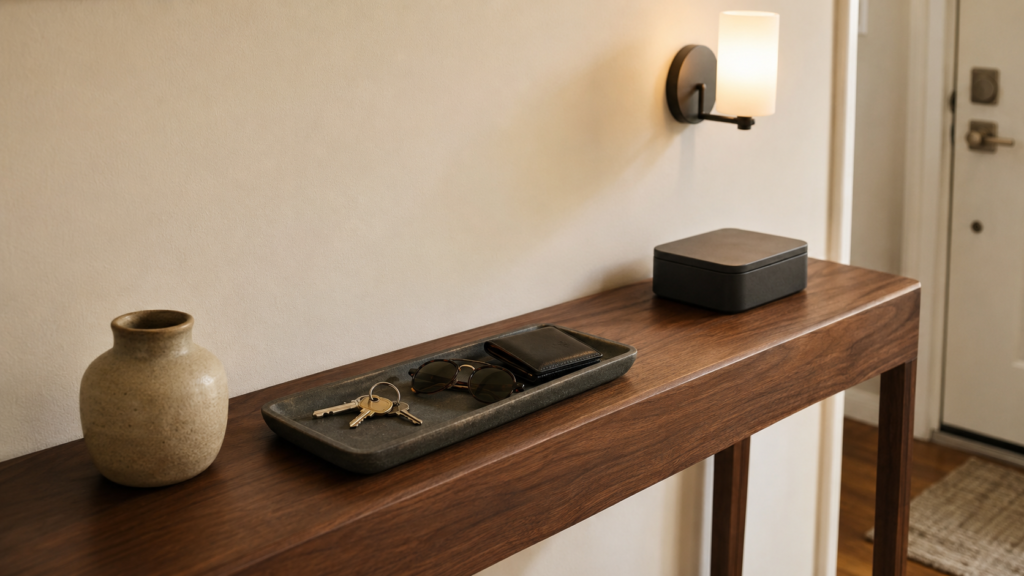
A beautiful apartment still needs somewhere for keys, mail, remotes, and charging cables. Without a planned landing surface, those objects spread across every table.
Assign one shallow tray or stone offcut to each high-use zone. Keep a small tray near the door, a lidded box beside the sofa, and a washable dish near the kitchen sink. Choose pieces only slightly larger than their contents. The border of empty surface around each group turns ordinary objects into a controlled composition rather than visible clutter.
Hide Visible Cords and Cables
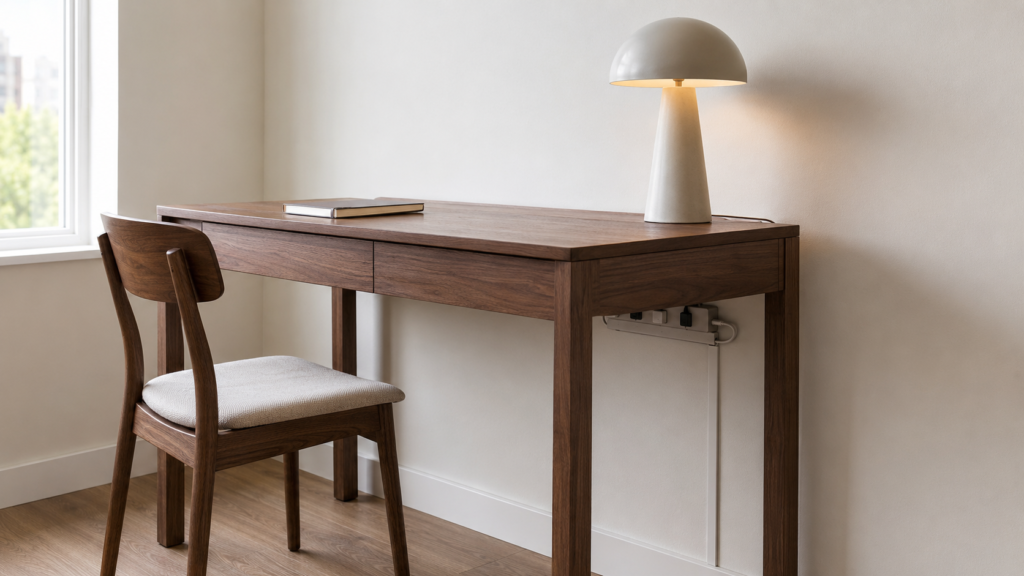
Visible black cables crossing pale walls instantly interrupt a polished room. Cable management isn’t glamorous, but it changes the entire sight line.
Run cords vertically before taking them horizontally toward an outlet. Use paintable adhesive raceways that match the wall, secure lamp cords along the back of furniture, and mount a power strip beneath the desk instead of leaving it on the floor. Don’t overload adhesive hooks with heavy cables. A concealed cord makes an inexpensive lamp look deliberately installed.
Add One Oversized Decorative Piece
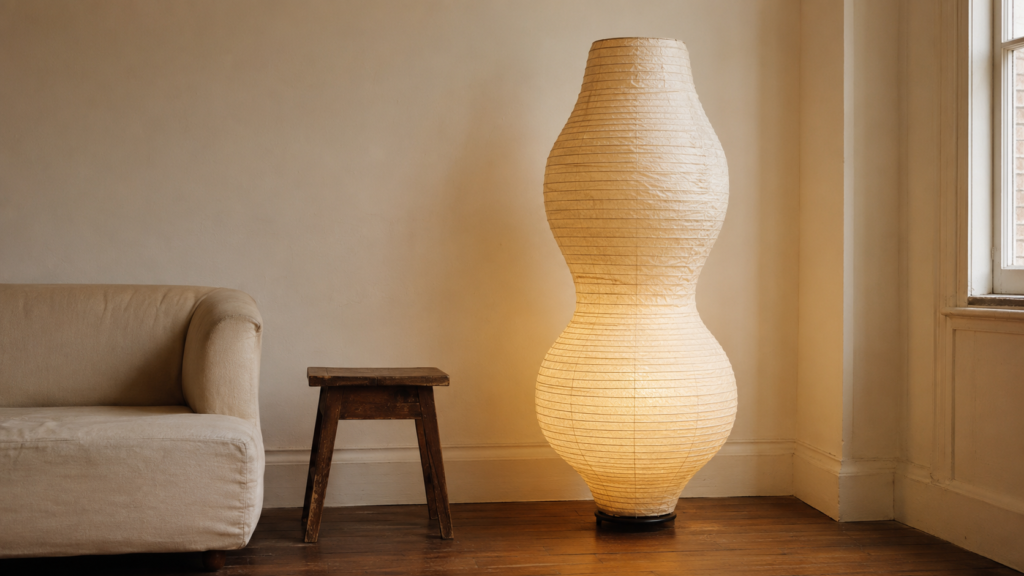
The final layer shouldn’t be a collection of tiny decorative purchases. It should be one memorable object that gives the room character and shifts attention away from basic rental architecture.
Choose one overscaled piece with age, texture, or an unusual silhouette. Try a tall pleated paper lamp, a large earthenware vessel, a vintage folding screen, or an architectural wooden fragment mounted securely on a wall. Thrift stores, salvage yards, and estate sales are stronger sources than generic decor aisles. Keep the surrounding area quiet so the object can carry the focal point.
A Practical Budget Order for the Biggest Visual Change
If your budget is limited, spend in the order your eye experiences the room:
- Correct the lighting and bulb temperature.
- Raise and widen the curtains.
- Fix furniture placement and scale.
- Conceal cords and everyday clutter.
- Upgrade one run of hardware.
- Add correctly sized art.
- Buy decorative objects last.
This order matters when learning how to make your apartment look expensive on a budget. Better styling can improve what you own, but accessories can’t correct poor scale, harsh light, or an awkward furniture plan.