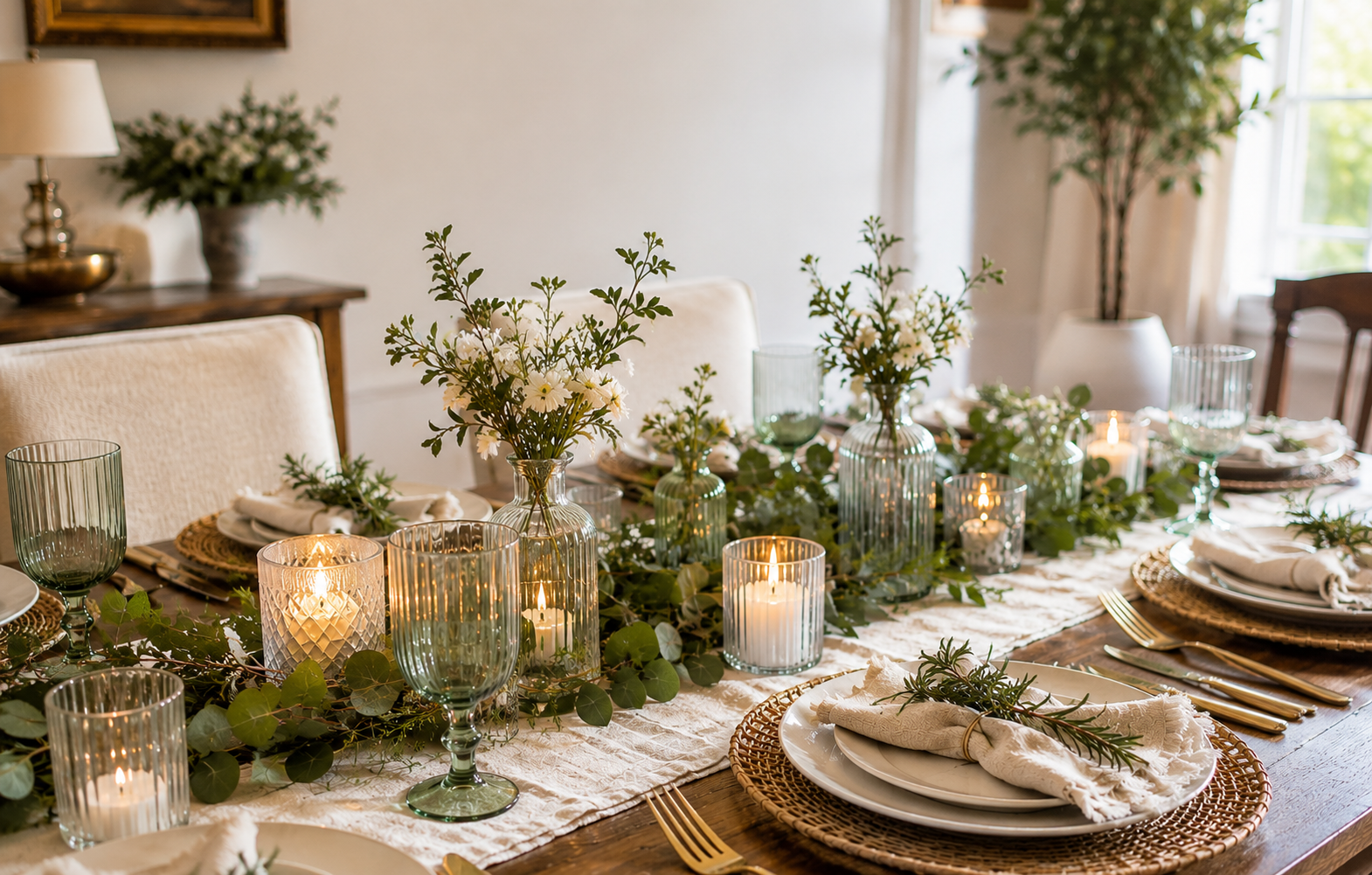
Creating a beautiful table has very little to do with buying expensive dishes. After styling dozens of dining spaces, I’ve found that people rarely remember where the plates came from. They remember the overall feeling when they sat down.
That’s why learning how to create a stunning tablescape with Dollar Tree finds isn’t really about decorating with budget products. It’s about controlling what people notice first, what fades into the background, and how your eye travels across the table. When those styling decisions are intentional, inexpensive pieces stop looking inexpensive.
Build the Entire Table Around One Hero Object That’s Three Times Larger Than Everything Else
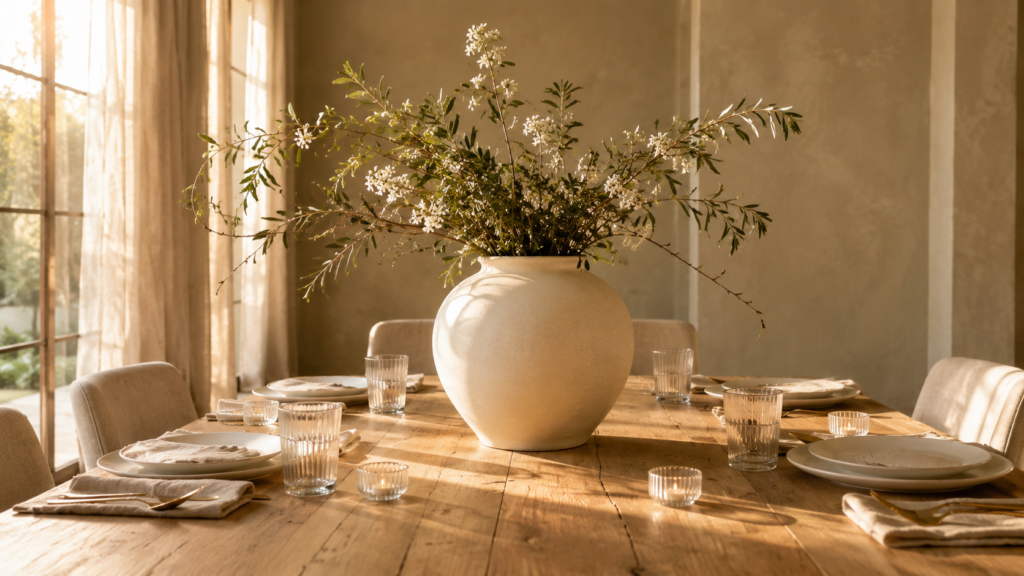
Most budget tablescapes fail because every object competes equally for attention. Five small vases, six candles, and scattered ornaments create visual noise, making every inexpensive item stand out.
Instead, begin with one oversized focal object that instantly controls the table. This could be a large glass hurricane, an oversized ceramic-look planter, a wide pedestal bowl filled with fruit, or a dramatic floral arrangement built inside a Dollar Tree container. Everything else should be noticeably smaller—roughly one-third of its visual size.
This shift changes how people experience the table. Their eye lands on the dominant focal point first, then explores the supporting details naturally. Designers use this principle constantly because hierarchy makes even affordable accessories feel intentional rather than cluttered.
If your table seats six people, keep the hero piece centered and leave at least 16–18 inches of clear serving space around it so the arrangement feels generous instead of crowded.
Make Every Place Setting Borrow Something From the Centerpiece
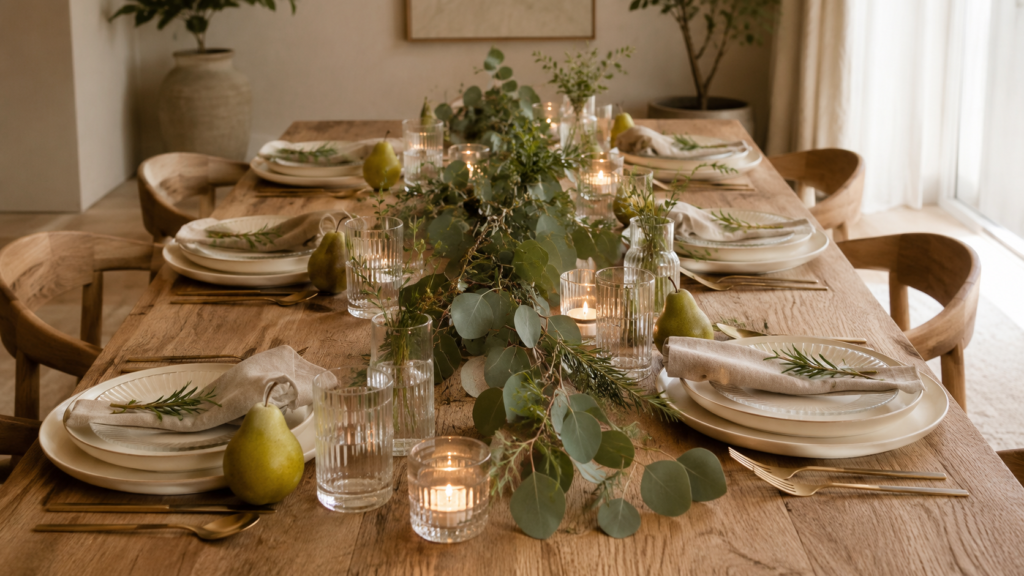
One mistake I see in budget decorating is treating the centerpiece and place settings as two completely separate designs.
Instead, let the centerpiece “spill” outward so every setting feels connected. If your centerpiece includes eucalyptus stems, let one stem extend beside each plate. If you’re using decorative lemons, place one at every napkin. If the arrangement features woven textures, repeat a small woven napkin ring at every seat.
This creates visual continuity across the entire table. Your brain begins reading one complete composition instead of twelve unrelated objects scattered across a tabletop.
Dollar Tree’s faux greenery, decorative fruit, raffia, twine, ribbon, and seasonal stems work beautifully for this because repeating inexpensive materials looks far richer than introducing lots of different ones.
Create Rhythm Every 18 Inches Instead of Perfect Symmetry
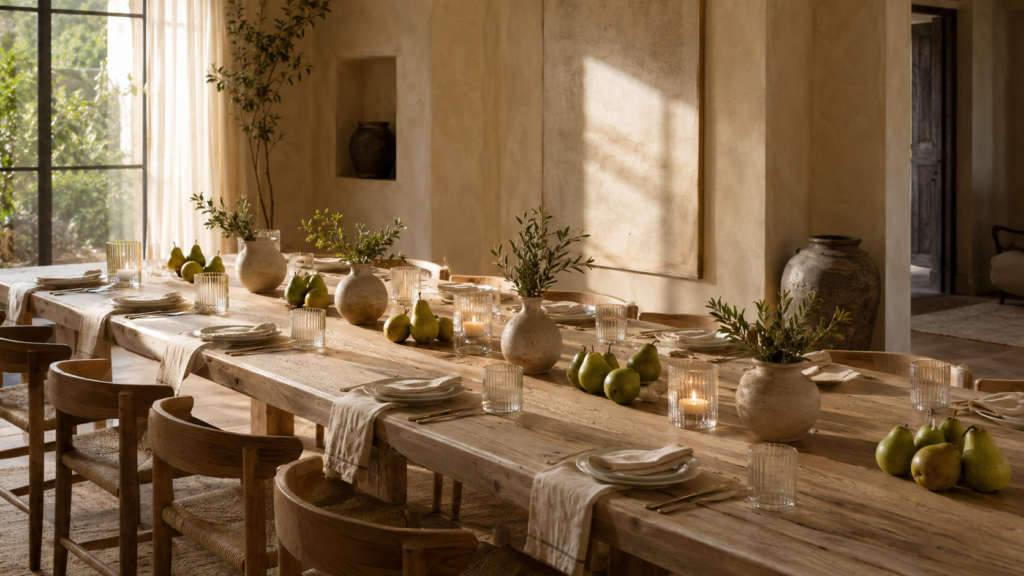
Perfect symmetry often makes inexpensive decor feel like a store display rather than a lived-in home.
Instead of mirroring both halves of the table exactly, think about rhythm. Place similar elements at roughly 18-inch intervals across the length of the table. For example, alternate a glass candle holder, a low ceramic-look vase, and a cluster of fruit, then repeat that sequence with slight variations.
The spacing creates movement. Your eye naturally travels down the table without stopping at one busy section, making the arrangement feel collected instead of manufactured.
Small variations actually improve the result. One vase can be slightly taller, one fruit cluster slightly fuller, and one candle positioned a little farther forward. The repetition remains recognizable without looking rigid.
Let Natural Grocery Items Become the Most Expensive-Looking Decor on the Table
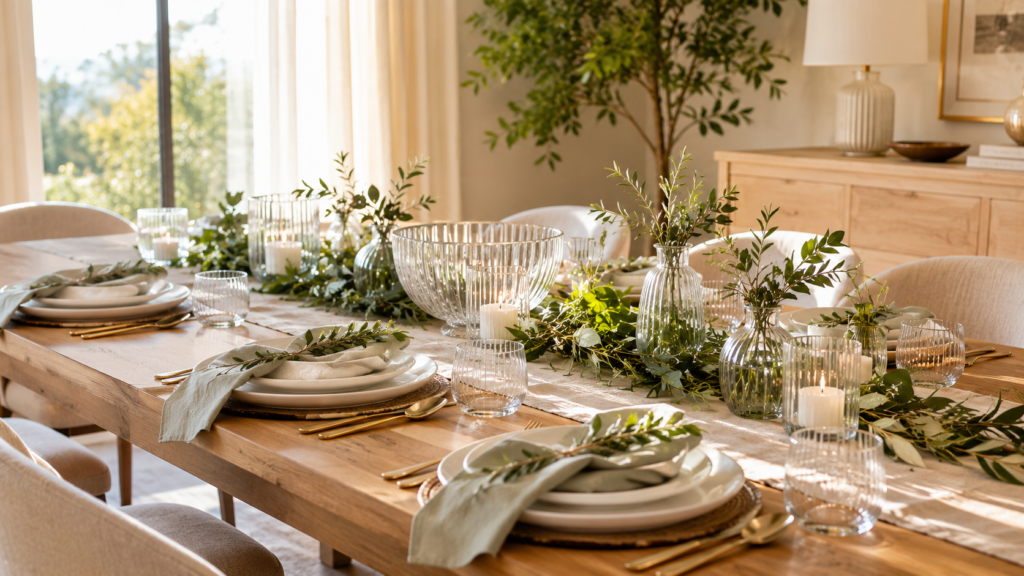
Fresh produce often looks more luxurious than artificial decorations because every piece has subtle color variation and imperfect texture.
Instead of filling bowls with decorative filler, combine Dollar Tree containers with grocery-store pears, artichokes, figs, pomegranates, citrus, grapes, fresh herbs, or leafy cabbage. Stack them loosely rather than arranging them perfectly.
Natural ingredients introduce richness that molded plastic simply can’t imitate. They also reflect light differently throughout the day, creating small highlights and shadows that make the entire centerpiece feel alive.
Choose produce with matte skins rather than highly polished fruit if you want a softer editorial look. Even a simple bowl of green pears mixed with fresh rosemary can outperform an expensive artificial centerpiece.
Hide the Cheapest Materials Where the Eye Rarely Looks
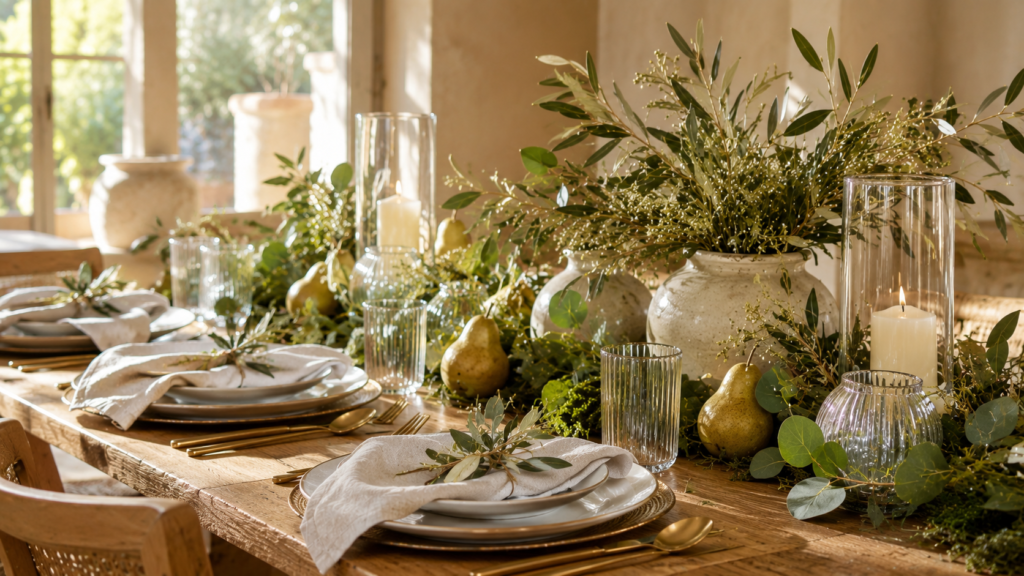
Every inexpensive product has one angle that gives away its price. It might be a visible plastic seam, a hollow base, an unfinished rim, or a glossy molded surface.
Professional stylists don’t necessarily replace these items—they simply position them differently. Turn seams toward the center of the arrangement. Let ribbon cover unfinished edges. Tuck floral foam beneath moss. Hide plastic rims behind folded linen napkins or layered greenery.
This works because people don’t inspect a tablescape object by object. They experience it from about 4–8 feet away while talking, eating, and moving around the room. If the inexpensive details stay outside normal sight lines, the overall composition immediately feels more refined.
One styling habit I rely on is walking around the table before calling it finished. Every chair offers a different viewing angle, and you’ll quickly spot the one plastic edge or awkward gap that needs hiding.
Break the Centerline on Purpose So the Table Feels Collected Instead of Staged
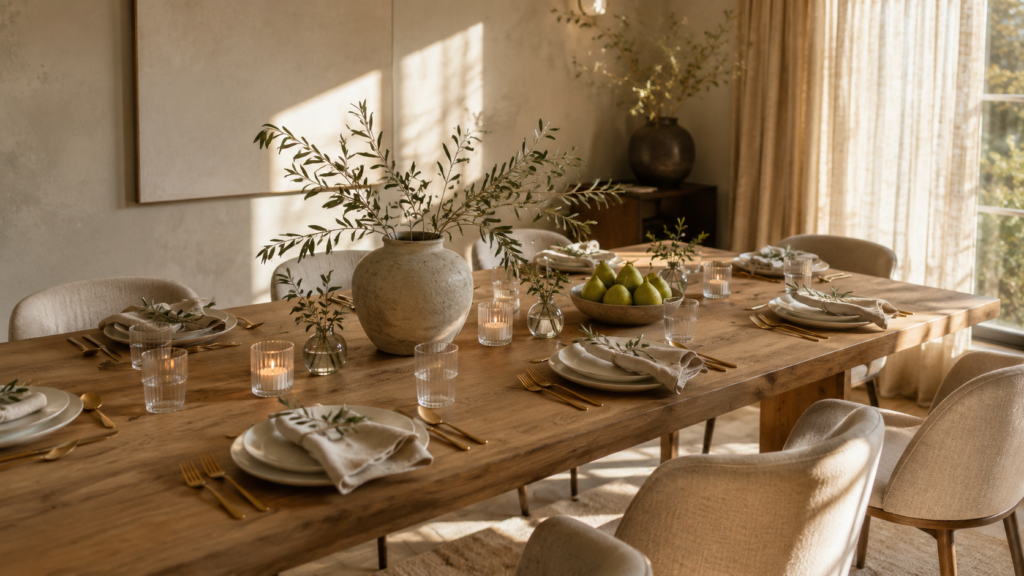
Most people instinctively line every decoration down the exact center of the table. While that creates order, it can also make a budget tablescape feel predictable and flat.
Instead, let the arrangement gently drift to one side by 2–4 inches in a few places. A vase might sit slightly left of center while a cluster of fruit balances it from the opposite side farther down the table. The overall composition still feels balanced, but nothing looks measured with a ruler.
This works because your eye responds to visual weight, not mathematical symmetry. An asymmetrical layout feels more like a table that evolved naturally over time instead of one assembled straight from a store display.
Just don’t shift everything in the same direction. Gentle changes create movement, while a completely off-center arrangement simply looks accidental.
Create Tiny Pools of Reflection Instead of Covering the Table in Shine
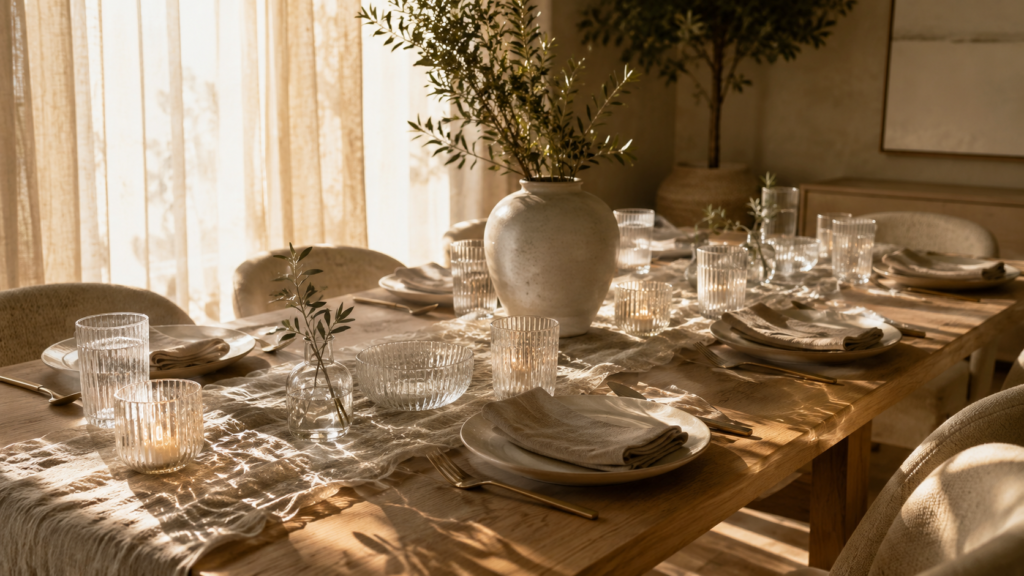
One reason inexpensive plastic often looks cheap is that large glossy surfaces reflect light harshly under dining room fixtures.
Rather than filling the table with shiny chargers or mirrored accessories, introduce small reflective moments. Use clear Dollar Tree bud vases, ribbed glass candle holders, tiny glass bowls, or vintage-look drinking glasses spaced throughout the arrangement.
The small reflections catch candlelight and daylight in different places as people move around the table. This creates sparkle without overwhelming the eye, while matte linens and ceramics keep everything grounded.
A balanced mix of matte and reflective finishes always feels richer than an entire table covered in the same level of shine.
Design the Table From a Seated View Instead of a Standing View
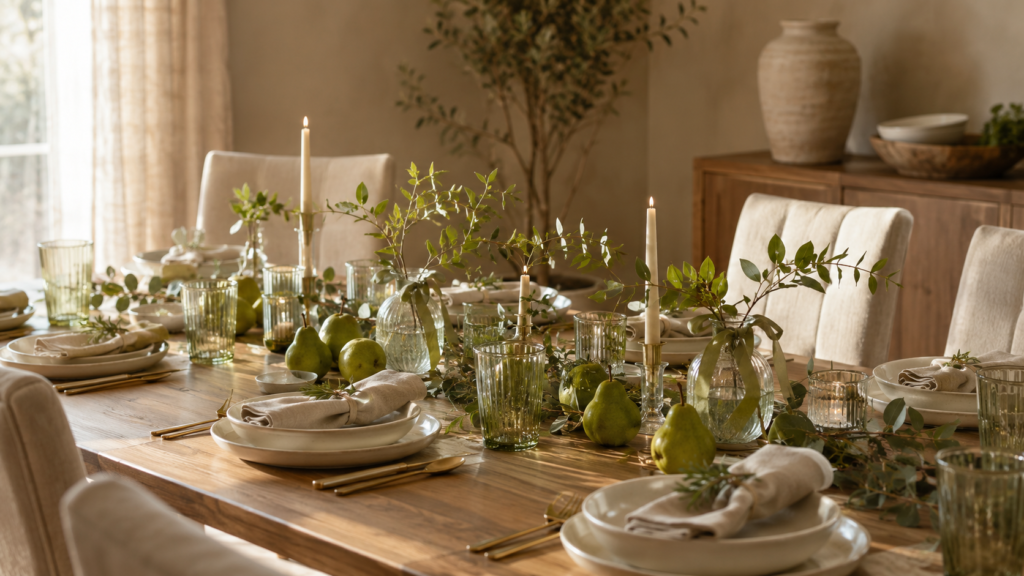
Most people decorate while standing, yet guests spend almost the entire meal sitting down.
After arranging the table, pull out a chair and sit in every seat. Notice what blocks conversation, where empty gaps appear, and which objects disappear completely from view.
A centerpiece that looks dramatic from above may completely hide the person across from you. Likewise, a beautiful layered arrangement may only be visible from one side of the room.
Styling from seated eye level produces a table that’s enjoyable to live with, not just one that photographs well. It’s one of the simplest habits that separates experienced stylists from casual decorators.
Let One Color Travel Across the Entire Table in Small, Unexpected Ways
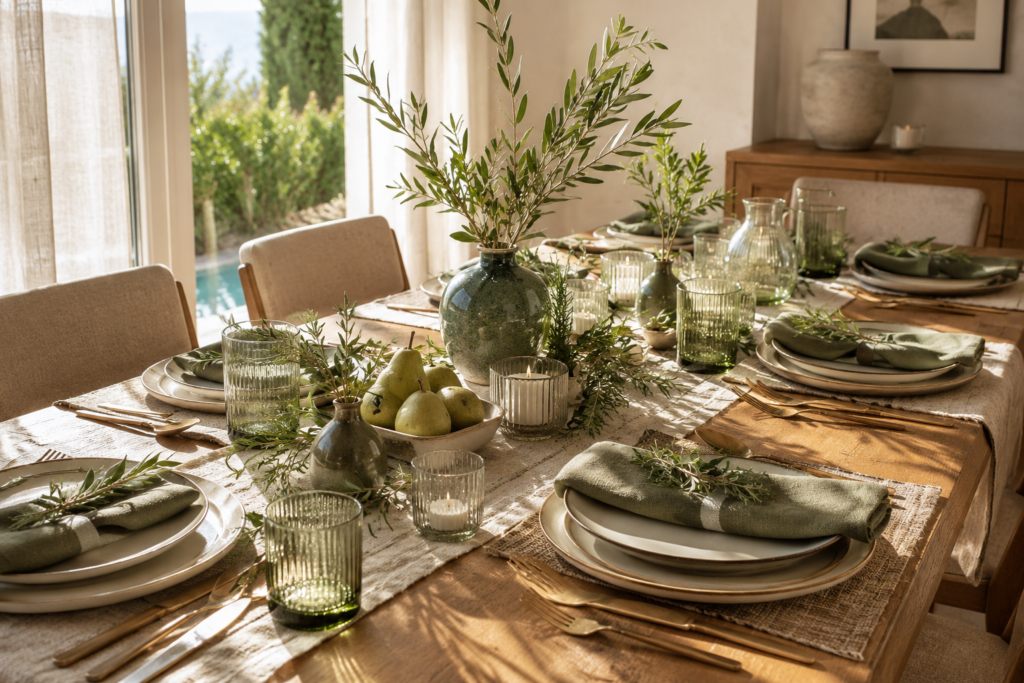
Many budget tablescapes rely on matching everything exactly—matching napkins, matching flowers, matching plates, matching candles.
Instead, choose one accent color and let it quietly reappear throughout the table in different materials. Deep olive green might show up in fresh herbs, folded napkins, tinted drinking glasses, ribbon around the cutlery, and a few pears inside the centerpiece.
Because the color repeats without becoming identical, the entire table feels connected without looking forced.
This approach also makes seasonal decorating much easier. Swap one repeated color instead of replacing every decoration whenever the season changes.
Finish With One Detail That Exists Purely to Surprise the Eye
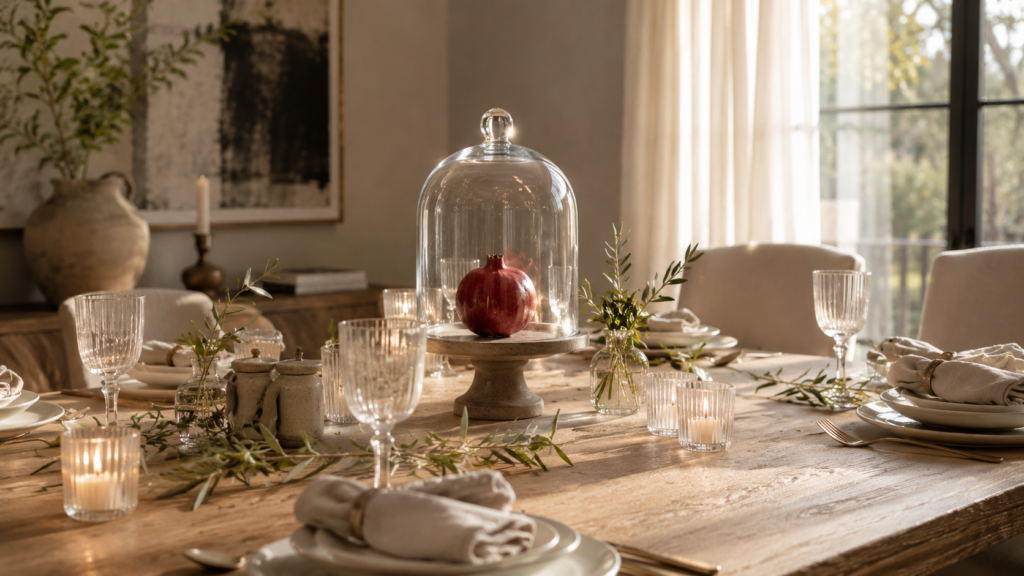
The most memorable tables almost always include one unexpected styling decision.
Instead of buying another decorative object, use Dollar Tree finds creatively. Fill clear glass candle holders with dried beans before adding taper candles. Stack two identical glass bowls to create a sculptural pedestal. Place a cloche over a single pomegranate instead of flowers. Turn miniature glass jars into tiny bud vases that sit beside every guest. Use clear glass plates vertically inside a centerpiece to reflect candlelight in unexpected directions.
These aren’t expensive additions—they’re conversation pieces.
That final unexpected moment changes how guests remember the table. Instead of noticing individual Dollar Tree items, they remember the clever styling idea that made the entire setting feel unique. That’s ultimately what makes a budget tablescape look thoughtfully designed rather than simply decorated.
Common Mistakes That Instantly Make a Dollar Tree Tablescape Look Cheap
Using Too Many Small Decorations
Tiny objects spread across the table compete for attention instead of working together. Five miniature vases rarely look as polished as one generous arrangement with a few supporting accents. Increase the scale before increasing the quantity.
Lining Everything Up in Perfect Rows
Plates, candles, and centerpieces placed in rigid straight lines can make the table resemble a retail display. Let objects overlap slightly, vary the spacing, and allow some pieces to sit a little forward or back. Controlled irregularity feels more natural.
Mixing Every Metallic Finish Together
Gold chargers, silver cutlery, mirrored candle holders, and bronze figurines all on one table create visual confusion. Pick one dominant finish and let it appear repeatedly. If you introduce a second finish, keep it subtle so the first one still leads.
Ignoring the Edge of the Table
Many people style only the center and forget that guests see the table from the side first. Let a few greenery stems, ribbon tails, or folded fabric soften the edge naturally without hanging so low that they interfere with chairs or laps.
Decorating Before Placing the Serving Dishes
A tablescape should work during the meal, not just before it. Place serving bowls and platters first, then build the decorations around the remaining space. You’ll avoid squeezing dishes into awkward gaps later.
Budget Breakdown
One reason Dollar Tree tablescapes work so well is that you don’t need every piece to come from the same place.
Here’s a balanced approach:
- Dollar Tree: glass candle holders, bud vases, faux stems, ribbon, decorative fruit, chargers, candle holders, seasonal accents.
- Grocery store: pears, lemons, grapes, rosemary, eucalyptus, artichokes, fresh flowers.
- Fabric or craft store: one quality runner or neutral linen-look fabric.
- Thrift store: larger bowls, pitchers, wooden trays, vintage glassware, serving platters.
Mixing sources creates the collected look that matching budget collections often lack.
The Styling Mindset That Makes Every Dollar Tree Table Look Better
The secret to a beautiful Dollar Tree tablescape isn’t finding the “right” decorations—it’s knowing how to arrange them. When you control scale, repeat materials with intention, leave room for negative space, and create one clear focal point, inexpensive pieces stop looking like budget finds and start looking thoughtfully styled.
The next time you’re walking through Dollar Tree, don’t shop for finished centerpieces. Look for shapes, textures, and glassware that can become part of a larger composition. That’s the shift professional stylists make, and it’s what gives a table its collected, custom feel.
Save this guide before your next dinner party or holiday gathering. Even if you use different colors or seasonal decor, these styling principles will help you create a tablescape that feels timeless, welcoming, and far more expensive than it actually is.