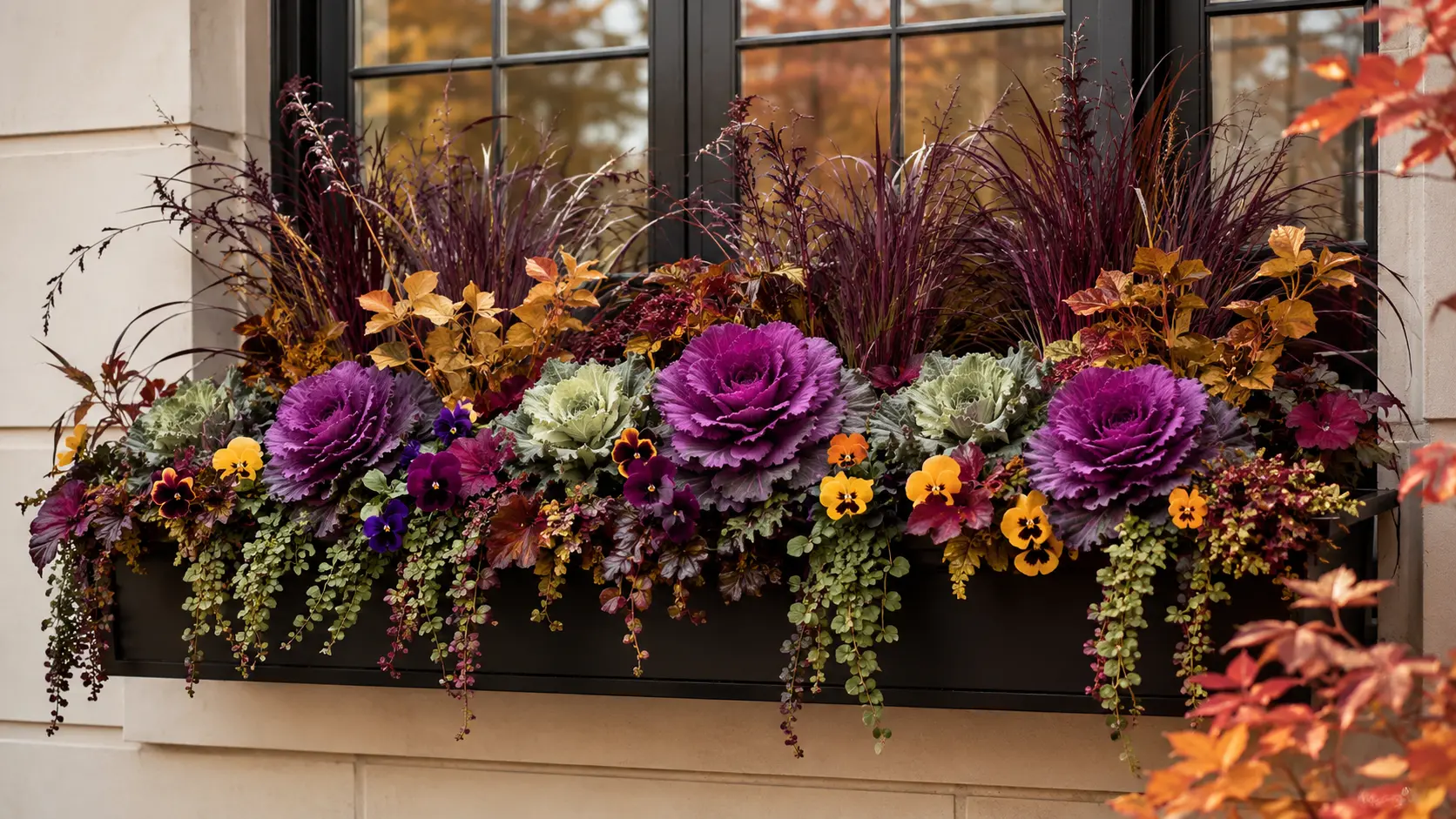
Orange mums are a classic fall choice, but they’re not the only way to make a window box feel seasonal. Rich foliage, moody flowers, ornamental grasses, berries, gourds, and unexpected color combinations can create a display that feels more layered and personal.
These fall window box ideas move beyond the predictable orange-and-yellow formula while keeping the unmistakable character of autumn. Each arrangement uses different heights, textures, and color relationships so your windows look thoughtful from both inside and outside the home.
1. Burgundy Kale and Plum Pansy Jewel Box
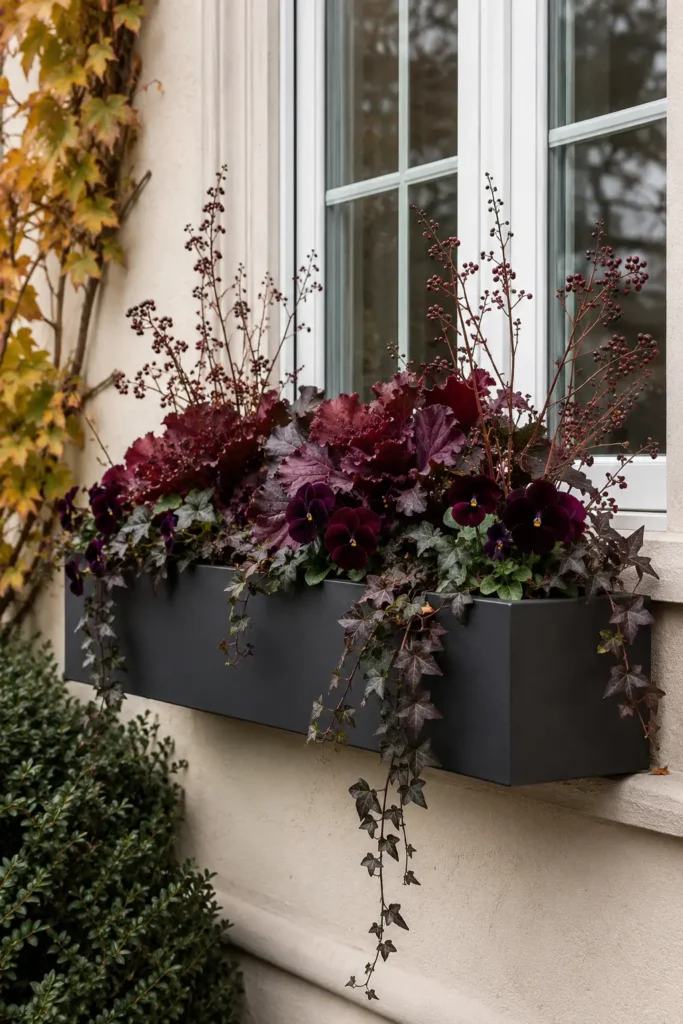
Fill the window box with ruffled burgundy ornamental kale, deep-plum pansies, and trailing ivy. Add a few dark berry stems at the back to create height, while the low pansies soften the front edge of the planter.
The combination feels rich without becoming overly dark because the kale brings large, architectural leaves and the pansies add small, delicate blooms. Use a black, charcoal, or aged zinc window box to support the jewel-toned palette. Ornamental kale handles cool weather well, but it still needs drainage and regular watering when planted in a shallow container.
2. Golden Grass and Ivory Viola Cloud
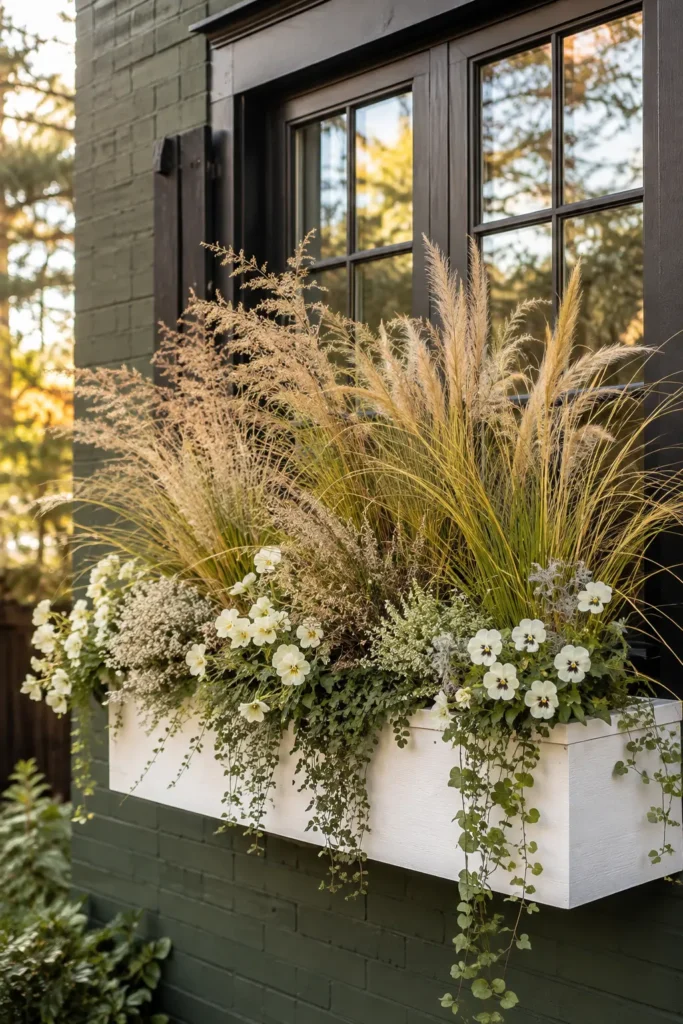
Use tall golden ornamental grass as the central element, then surround it with creamy white violas and soft green trailing plants. Let the grass rise above the lower flowers so the arrangement has movement and doesn’t look like a flat row of plants.
This pale fall palette is especially effective against dark siding, red brick, or deep green shutters. The ivory flowers reflect low autumn light, while the golden grass adds seasonal warmth without using bright orange. Trim dry blades when they become messy, but leave some seed heads for texture and natural movement.
3. Purple Fountain Grass With Lime Kale
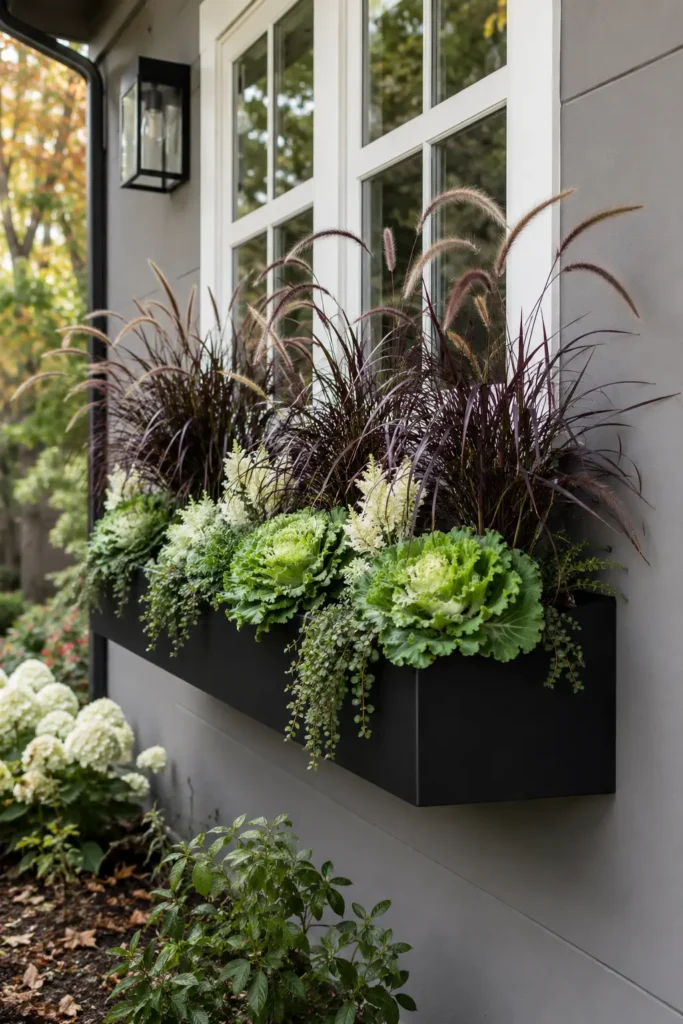
Make purple fountain grass the dramatic centerpiece and plant vivid lime-green ornamental kale around its base. Add a few pale seed heads or cream-colored stems to soften the contrast between the dark plumes and bright foliage.
The strong color difference gives this window box a graphic, editorial look that works well with modern homes. Keep the planter visually simple, such as matte black, white, or raw concrete, so the plants remain the focus. Purple fountain grass may need protection in colder zones, so treat it as a seasonal feature if it won’t survive winter in your area.
4. Cranberry, Silver, and Dusty Blue Arrangement
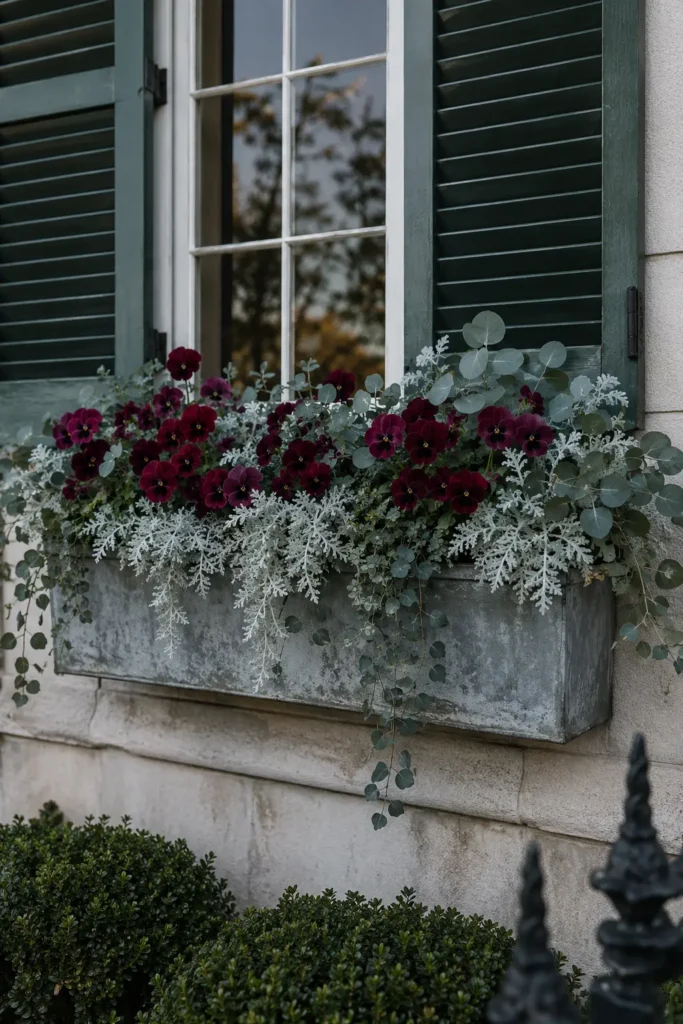
Combine cranberry-red pansies, silver dusty miller, and blue-gray eucalyptus-style foliage for a cool-toned fall display. Place the silver leaves along the front edge so they spill slightly over the planter, then add taller stems behind the flowers.
The silver foliage prevents the cranberry blooms from feeling too heavy, while the dusty blue tones give the arrangement a modern finish. This palette looks attractive with white siding, pale stone, or weathered wood. Avoid packing the plants too tightly; leave small gaps so each leaf shape remains visible as the arrangement grows.
5. Blush, Mauve, and Cream Cottage Box
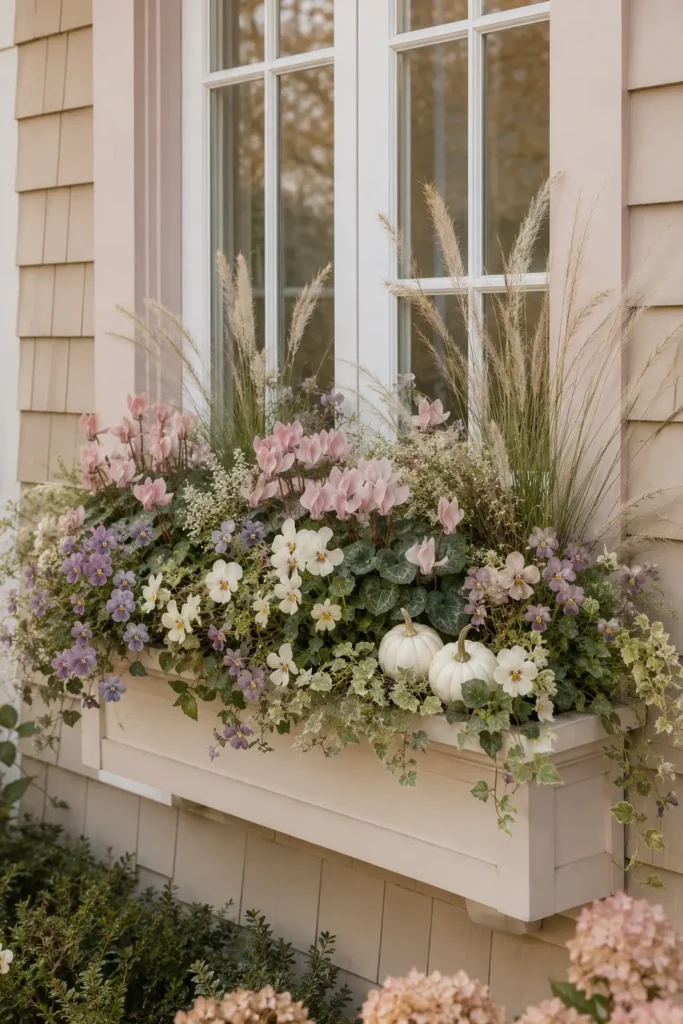
Layer blush cyclamen, mauve violas, cream pansies, and pale ornamental grasses in a soft tonal arrangement. Tuck one or two small white gourds into the foliage rather than adding bright orange pumpkins.
This idea offers a gentler interpretation of fall and works beautifully with beige stone, white trim, soft pink doors, or muted gray exteriors. The pale colors can fade in strong afternoon sun, so place the box where it receives bright morning light or filtered sun. Choose a planter with a water reservoir if the window is difficult to reach.
6. Red Kale and Copper Heuchera Display
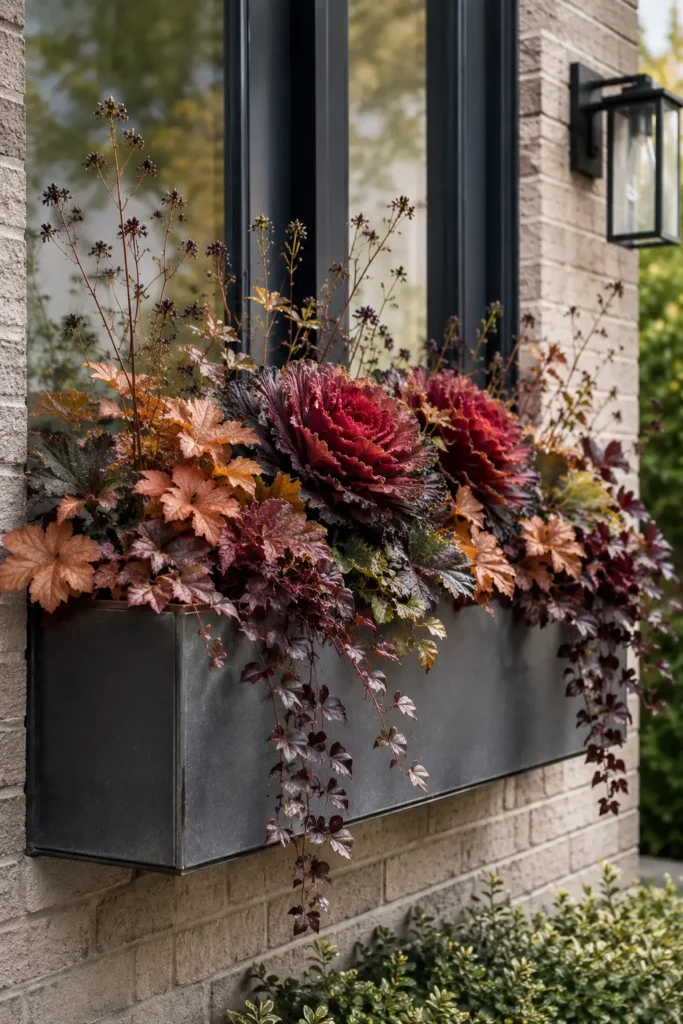
Plant red ornamental kale with copper-toned heuchera, bronze foliage, and trailing burgundy vines. Use a charcoal or aged-metal window box to make the red and copper leaves appear even deeper.
The arrangement feels abundant because it combines large ruffled leaves with smaller rounded foliage and cascading stems. Heuchera can tolerate cool temperatures, but it dislikes sitting in soggy soil. Use a well-draining potting mix and check that the planter has several open drainage holes before mounting it beneath a window.
7. Blue-Green Foliage With Burgundy Flower Pops
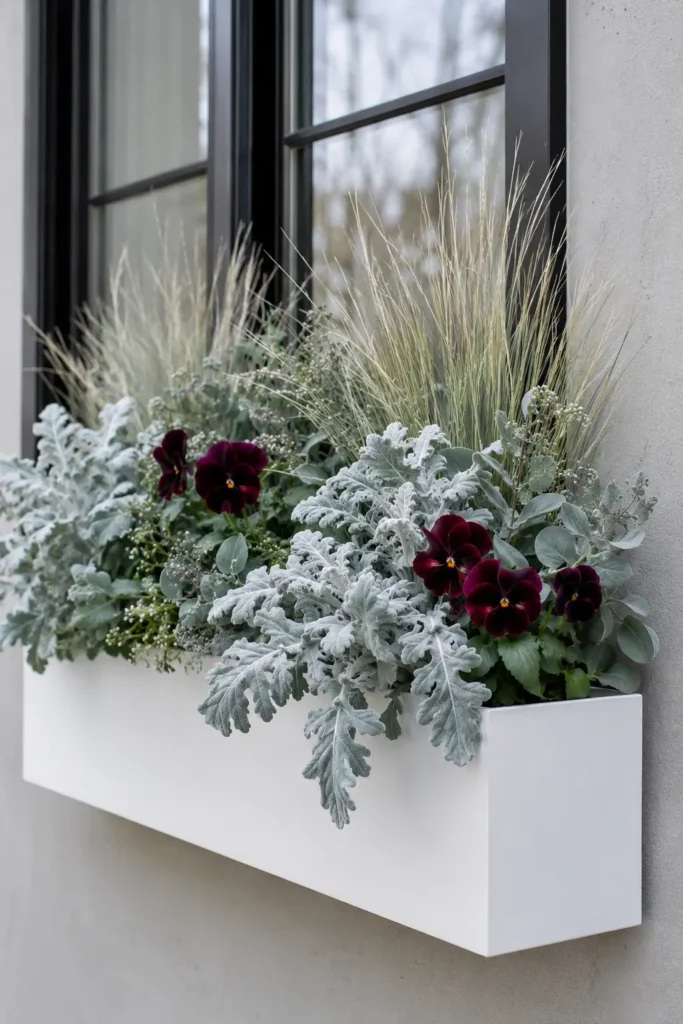
Use dusty miller, blue-green foliage, and silvery ornamental grass as the main base. Add only a few burgundy pansies or dark red flowers for contrast instead of filling the entire box with blooms.
This restrained approach looks especially polished on a contemporary home or a balcony with simple furniture. The cool foliage creates a calm backdrop, while the small burgundy flowers act like intentional color accents. Because silvery leaves show dirt quickly, rinse them gently when dust builds up and avoid placing the planter directly beneath a dirty downspout.
8. Purple Cabbage With Mustard Yellow Accents
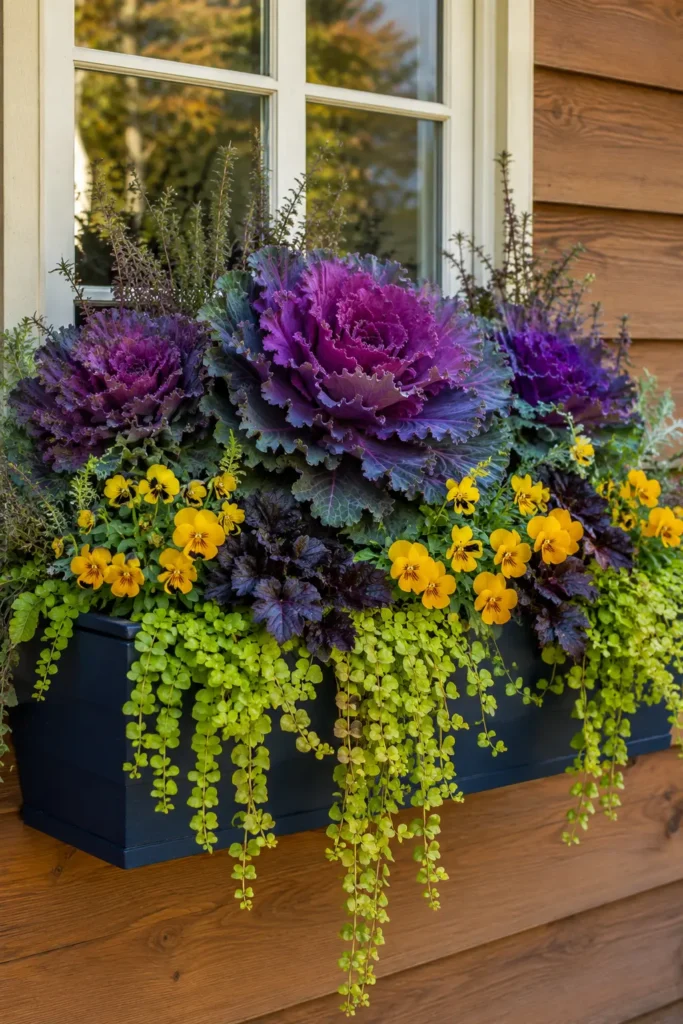
Center the arrangement around oversized purple ornamental cabbage, then add mustard-yellow violas and trailing chartreuse greenery. Plant the cabbage toward the back or center, with the smaller flowers arranged around its base.
The deep purple and mustard combination feels bold, artistic, and more current than a traditional orange display. It works well with navy, black, cream, and natural wood exteriors. Ornamental cabbage needs space to develop its shape, so choose a window box at least 8 inches deep and avoid overcrowding it with too many companion plants.
9. Red Berry Branches With Cream Pumpkins
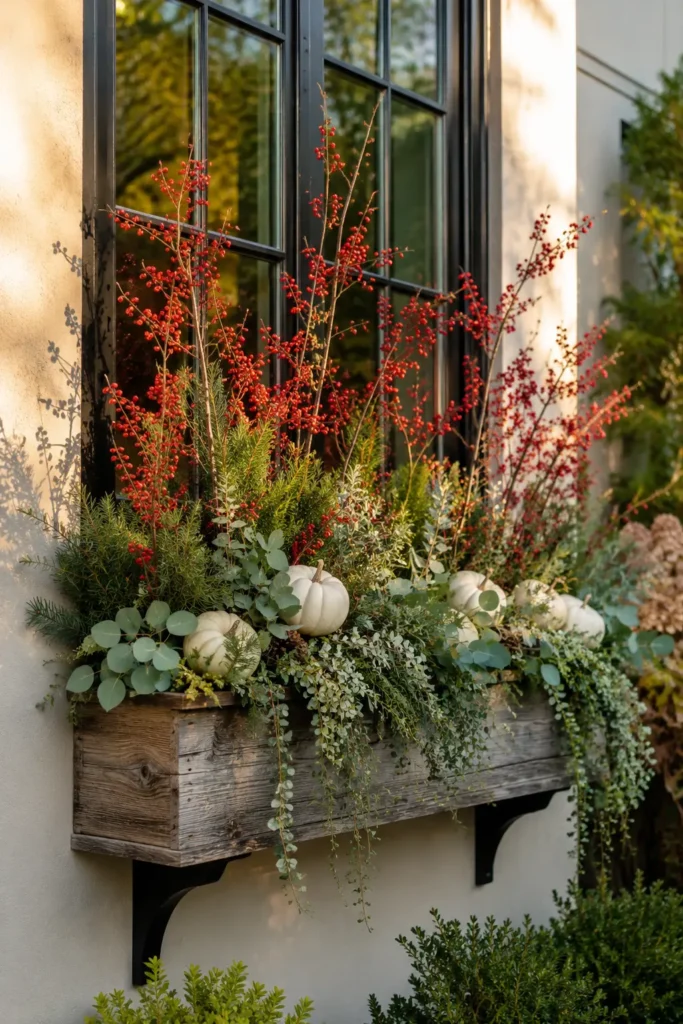
Use tall red berry branches as the vertical element, then layer in evergreen sprigs, pale green foliage, and miniature cream pumpkins. Allow a few branches to rise above the window frame so the arrangement has a sculptural outline.
The display feels festive and seasonal without depending on orange flowers. Keep the cream pumpkins small enough that they don’t crush the plants or make the box top-heavy. If you use cut berry branches, secure them in floral foam or a small waterproof container inside the planter so they stay upright during wind.
10. Plum, Chocolate, and Antique Gold Window Box
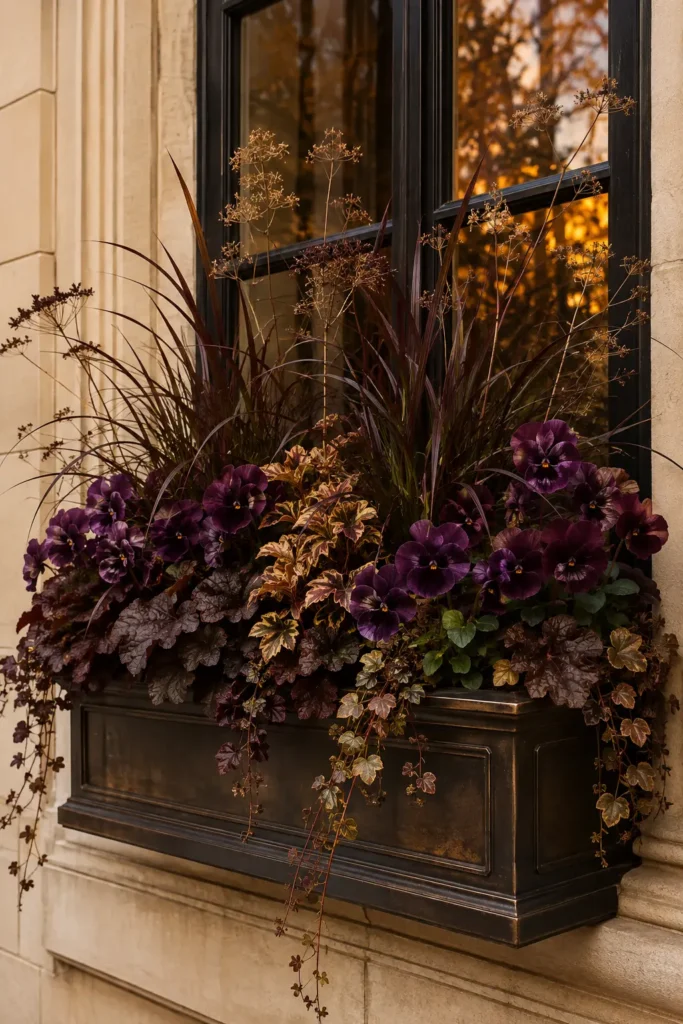
Combine plum pansies, chocolate-colored heuchera, dark ornamental grass, and antique-gold foliage or dried seed heads. Add muted beige stems at the back to break up the deep colors and give the composition more height.
This moody palette looks striking against light-colored walls and works particularly well near black window trim or bronze outdoor lighting. Dark foliage can disappear in a shaded position, so place the box where it receives several hours of indirect or filtered daylight. Remove faded blooms regularly to keep the rich color story looking intentional.
How to Make a Fall Window Box Look Full
Use a simple thriller, filler, and spiller formula, but adapt it for the shape of your planter. Place one or two taller grasses, branches, or architectural plants toward the back; add medium-height flowers and foliage in the center; then finish with ivy, creeping jenny, or another trailing plant along the front edge.
Choose a window box that is at least 8 inches deep and wide enough to leave room between mature plants. A crowded planter may look full on installation day but can quickly become stressed, uneven, and difficult to water.
Fall Window Box Maintenance Tips
Water when the top inch of soil feels dry, especially during sunny or windy weather. Remove yellow leaves and faded flowers before they spread mold, and check brackets, screws, or railing attachments after heavy rain.
For boxes mounted high above the ground, use lightweight planters and consider self-watering inserts. Avoid placing heavy pumpkins, stones, or ceramic decorations in a box that wasn’t designed to support extra weight.