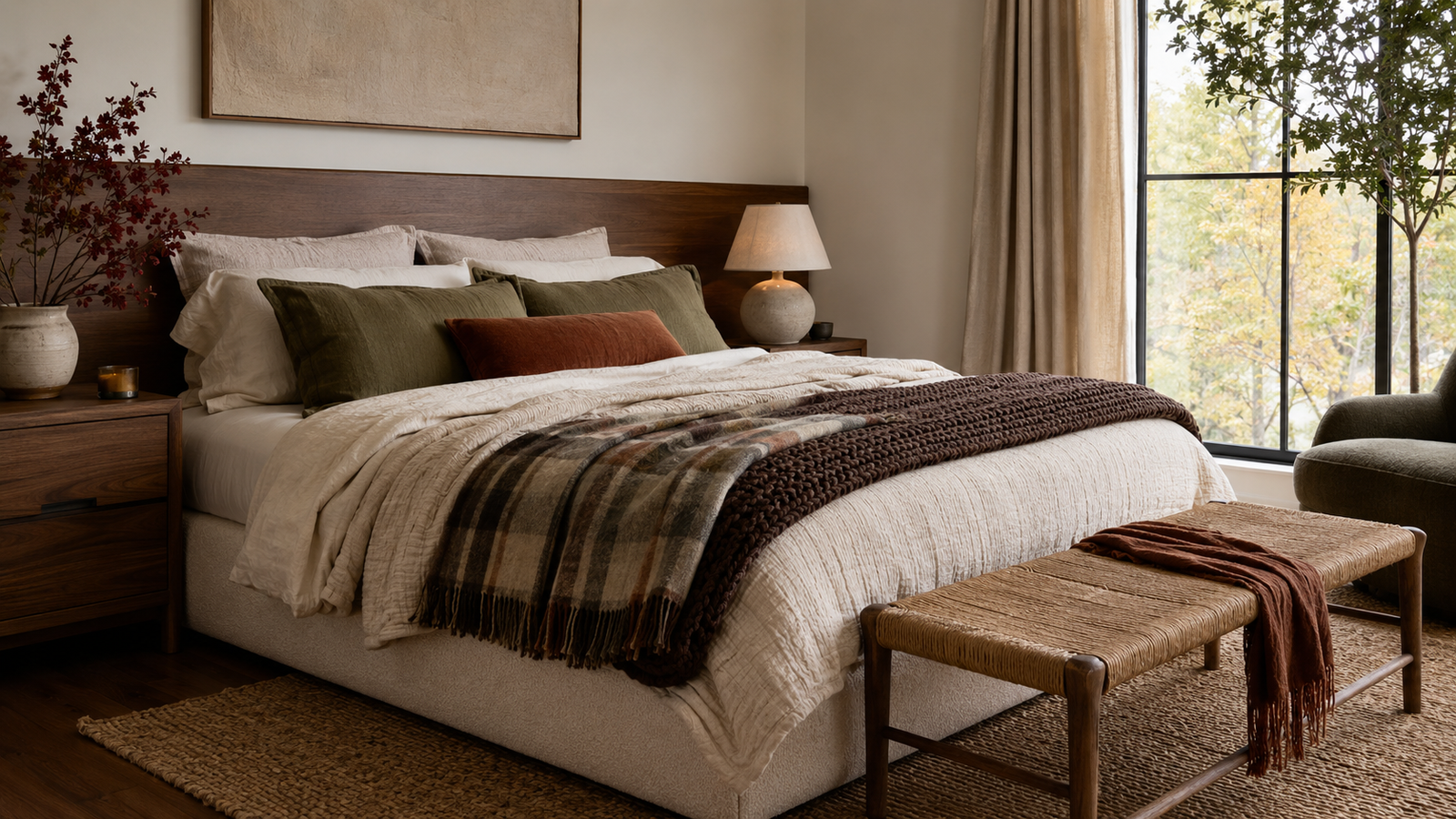
A fall bedroom can feel warm and seasonal without the usual pumpkin pillows, orange bedding, or piles of chunky blankets. The best cozy fall bedroom decor uses texture in less expected places—from corduroy wall panels and framed textiles to wool-covered screens and sculptural bedside lighting.
These 15 ideas combine modern furniture, autumn color, and practical layers that work in real bedrooms. Each concept creates a distinct visual moment while keeping the room comfortable, uncluttered, and easy to live with after the photograph is taken.
1. Create a Hotel-Style Bed With Five Contrasting Textures
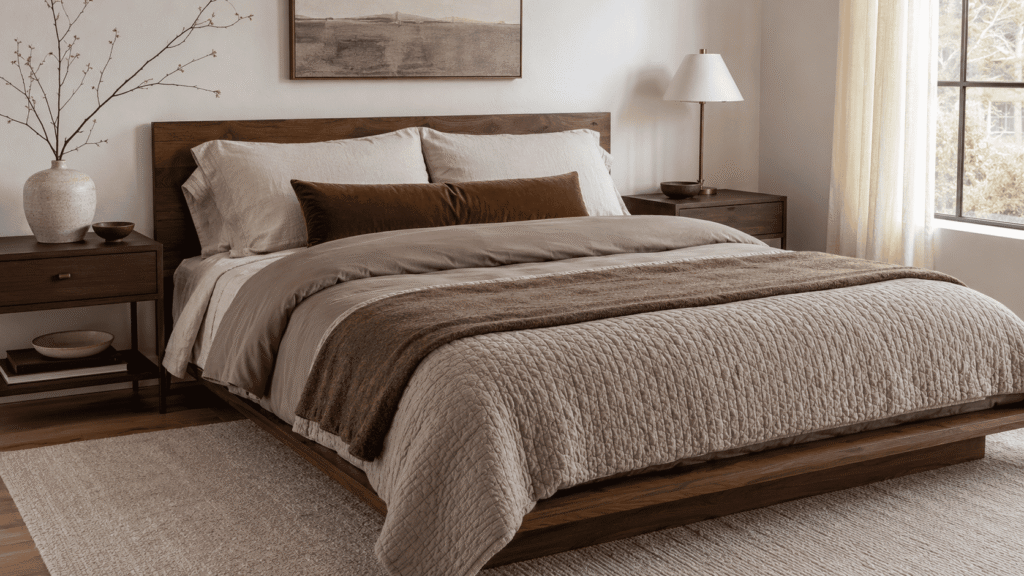
Build the bed with washed flax-linen sheets, a smooth brushed-cotton duvet, and a raised matelassé coverlet. Add one narrow velvet lumbar pillow, then fold a lightweight wool blanket across the lower third of the mattress. Keep everything within an oatmeal, mushroom, tobacco, and cocoa palette.
Limiting the colors allows the weave of each material to remain visible. The result feels richer than a bed covered in matching pillows. Five textures are enough; adding more often hides the clean silhouette of a modern platform or upholstered bed.
2. Frame the Headboard With Floor-Length Corduroy Panels
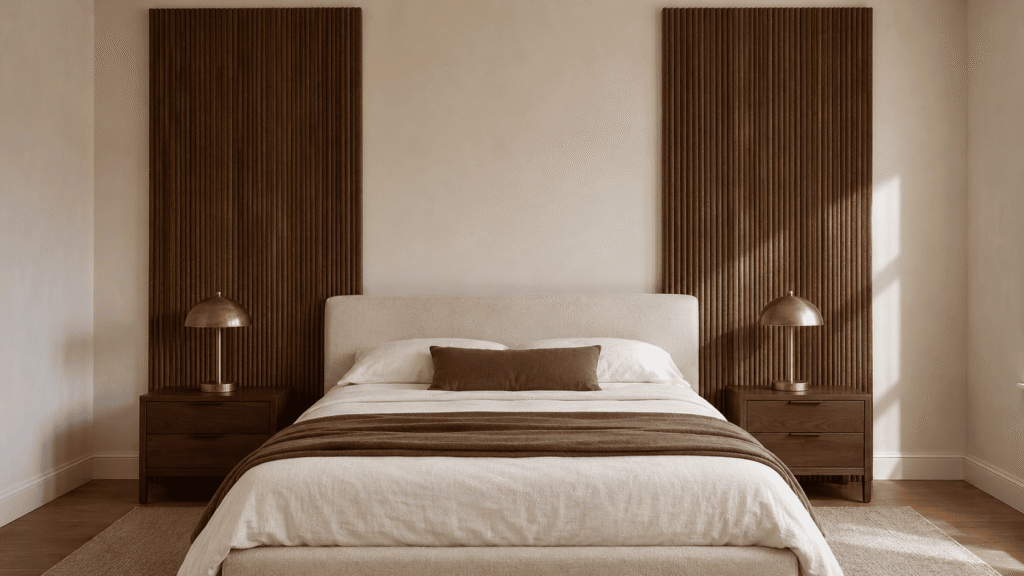
Install two floor-length corduroy panels behind the bed, allowing them to extend 8 to 12 inches beyond each side of the headboard. Tobacco, deep olive, and muted burgundy work especially well because corduroy’s vertical ribs create darker and lighter bands as daylight moves across them.
A ceiling track produces the cleanest contemporary finish, while a properly rated tension system may work for renters. Keep the panels straight rather than heavily gathered. The narrow folds form a soft architectural frame without resembling ordinary window curtains or a conventional painted accent wall.
3. Offset the Bed With an Asymmetrical Flatweave Rug
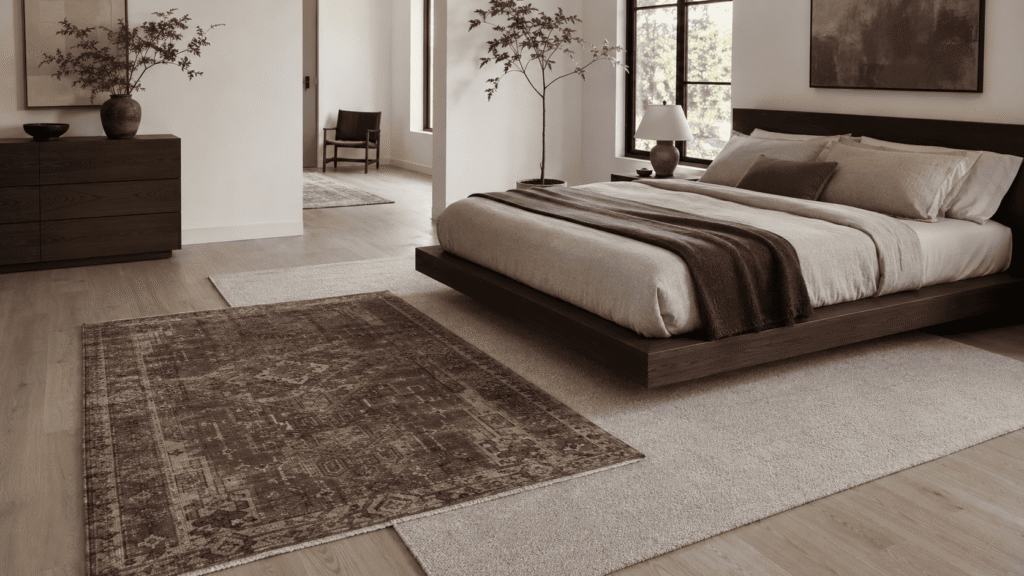
Instead of centering one large rug beneath the entire bed, place a smaller vintage-style flatweave beneath the lower corner. Let it extend farther on the side facing the room, creating a visible block of rust, plum, tobacco, or olive beside otherwise quiet bedding.
Layer it over a plain low-pile wool rug if the floor needs additional softness. Secure both layers with thin nonslip pads and keep the overlap outside the main walkway. The asymmetrical placement gives a standard rectangular bedroom more movement and requires less vintage textile than a full-size rug.
4. Build a Channel-Quilted Headboard Wall
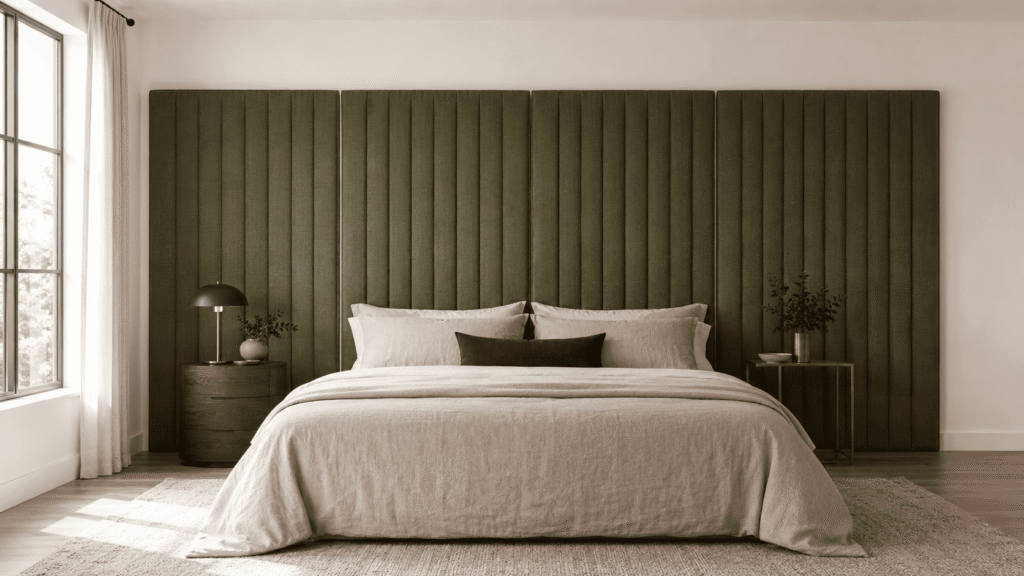
Use three or four tall channel-quilted panels to create a headboard that reads like soft architectural paneling. Extend the installation slightly beyond the nightstands and stop 8 to 12 inches below the ceiling, leaving a clean strip of wall above it.
Clay, moss, mushroom, or smoky plum fabric gives the wall clear fall character without depending on seasonal accessories. Choose tightly woven upholstery instead of loose bouclé if you have pets. Individual lightweight panels are easier to install and replace than one oversized upholstered board, especially in a rental or narrow stairwell.
5. Add One Oversized Plaid Panel Instead of Plaid Bedding
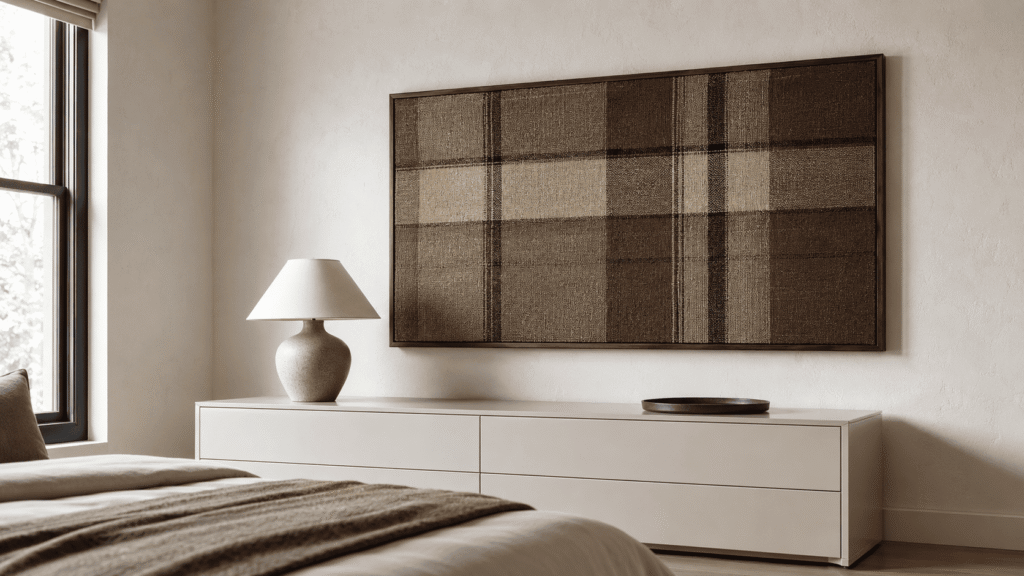
Stretch a large piece of muted wool plaid over a lightweight frame and hang it above a dresser or on the wall opposite the bed. Look for an irregular windowpane or oversized check in cocoa, moss, oatmeal, and black rather than a bright holiday tartan.
One large textile panel gives the pattern space to breathe and keeps the bed itself calm. Size it to approximately two-thirds of the furniture beneath it. A slim walnut frame sharpens the edges, helping a traditional fabric sit comfortably beside clean-lined contemporary furniture.
6. Line an Open Wardrobe With Tobacco-Colored Linen
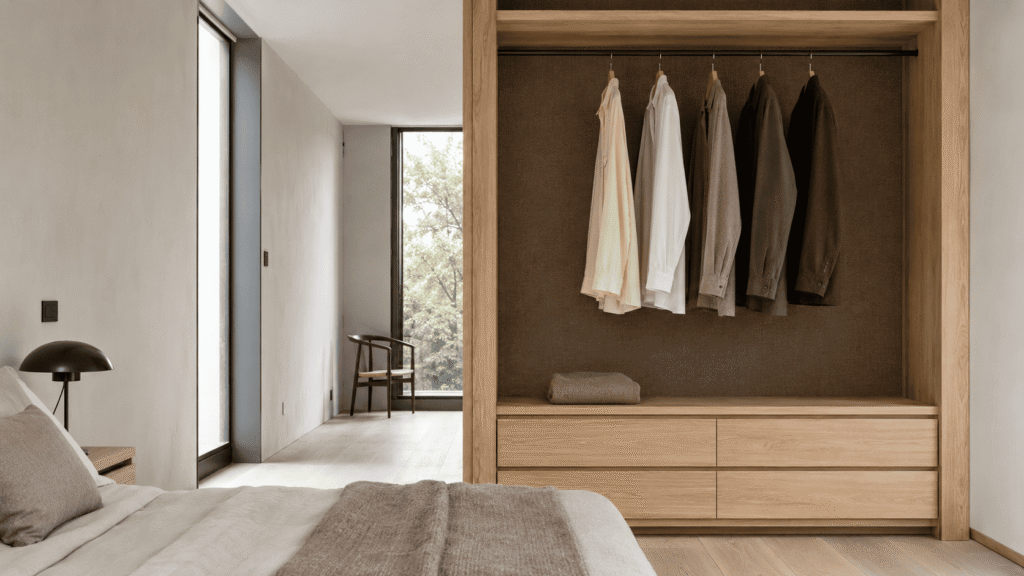
Give an open wardrobe or glass-front closet a seasonal background by lining its visible back panel with tobacco, mushroom, or dark olive linen. Apply the fabric to removable foam board cut precisely to fit, then slide the panels behind the clothing rail or shelves.
The fabric makes hanging clothes read as one controlled composition instead of visual clutter. It also introduces a broad field of autumn color without painting the room. Keep the linen tightly stretched because wrinkles can look accidental in a vertical application, and leave ventilation openings unobstructed inside enclosed cabinetry.
7. Turn a Plain Dresser Into a Burl-Wood Material Moment
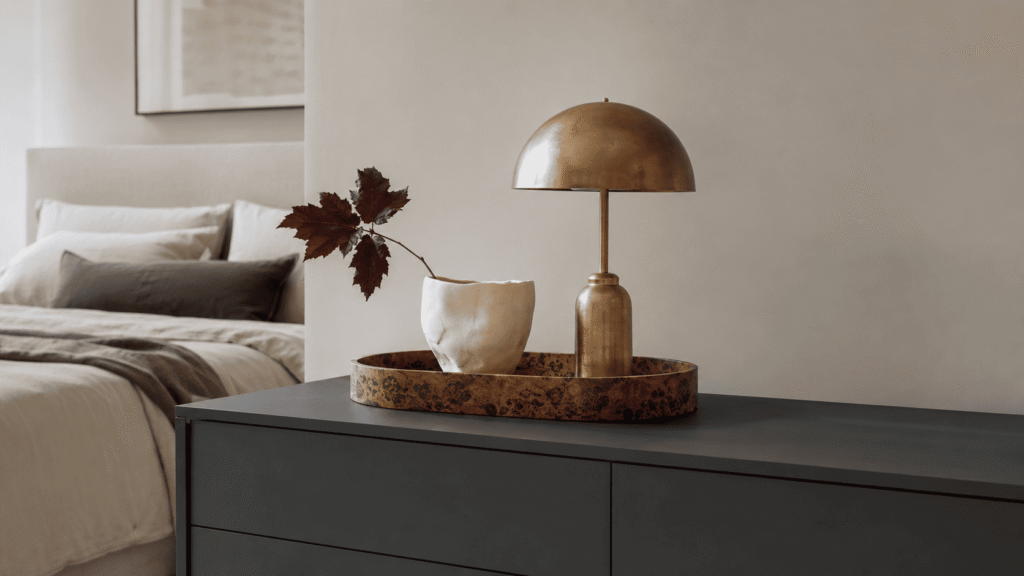
Center a large burl-wood tray or shallow box on a plain modern dresser, then pair it with one aged-brass lamp and a chalky ceramic vessel. The swirling grain of burl looks particularly rich beside flat-front furniture in walnut, cream, charcoal, or warm white.
Leave at least one-third of the dresser empty so the different finishes remain legible. Real burl furniture can be expensive, but a small vintage tray provides enough pattern to change the surface. Skip high-gloss printed plastic imitations; repeated grain and poorly finished edges tend to reveal their price quickly.
8. Use a Pleated Fabric Shade With a Stone Lamp Base
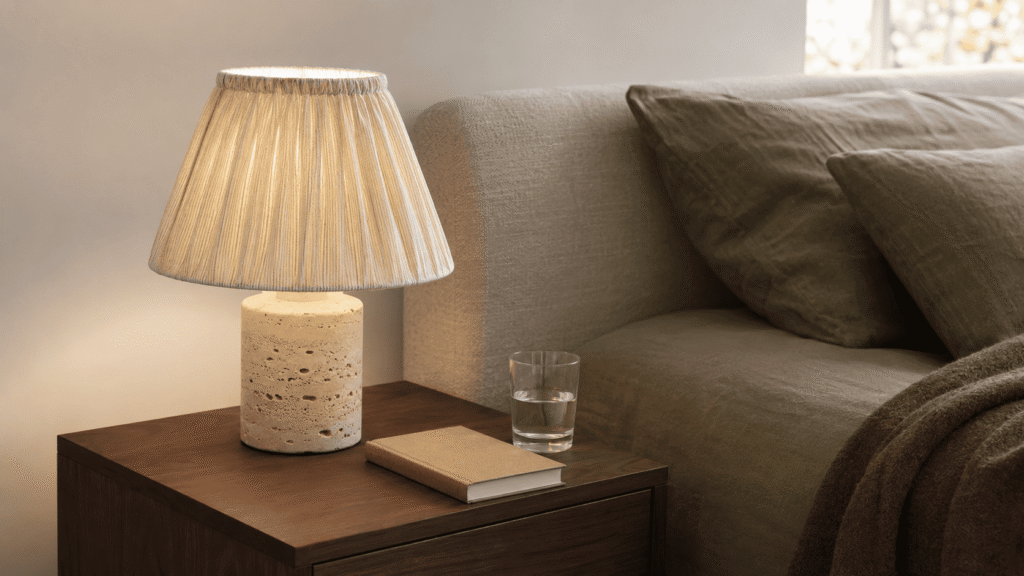
Pair a travertine, alabaster, or matte ceramic lamp base with a gathered or pleated linen shade. A cream shade keeps the light soft, while a tobacco stripe or tiny block print introduces a controlled seasonal pattern near eye level.
Choose a shade proportionate to the nightstand and leave enough usable space for a book and glass of water. A 2700K warm-white bulb provides comfortable evening light without turning neutral walls yellow. The contrast between solid stone and folded fabric makes the bedside feel layered even when the rest of the styling remains minimal.
9. Conceal an Awkward Corner With a Ribbed-Wool Screen
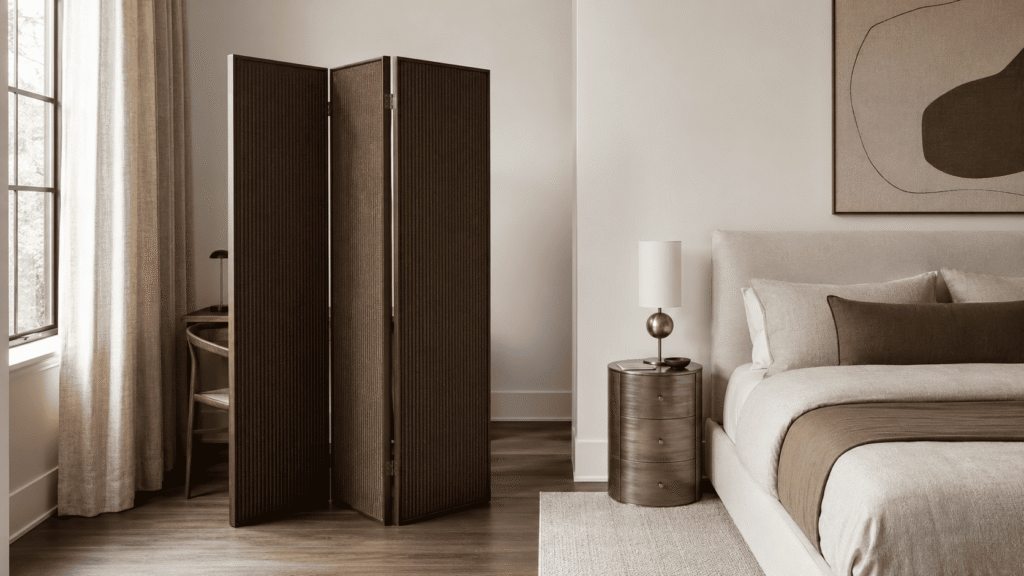
Place a slim folding screen upholstered in ribbed wool beside the bed or across an awkward bedroom corner. It can conceal an open clothing rail, exposed cables, a small work area, or architectural irregularities while adding height and acoustic softness.
Choose a screen with narrow walnut or dark bronze edging so the outline remains crisp. Oatmeal fabric suits a darker room, while cocoa or olive creates greater depth in bright daylight. Check that the screen’s feet remain outside the main path; decorative screens become frustrating when they interrupt access to drawers or closet doors.
10. Run a Vintage Textile Vertically Down the Headboard
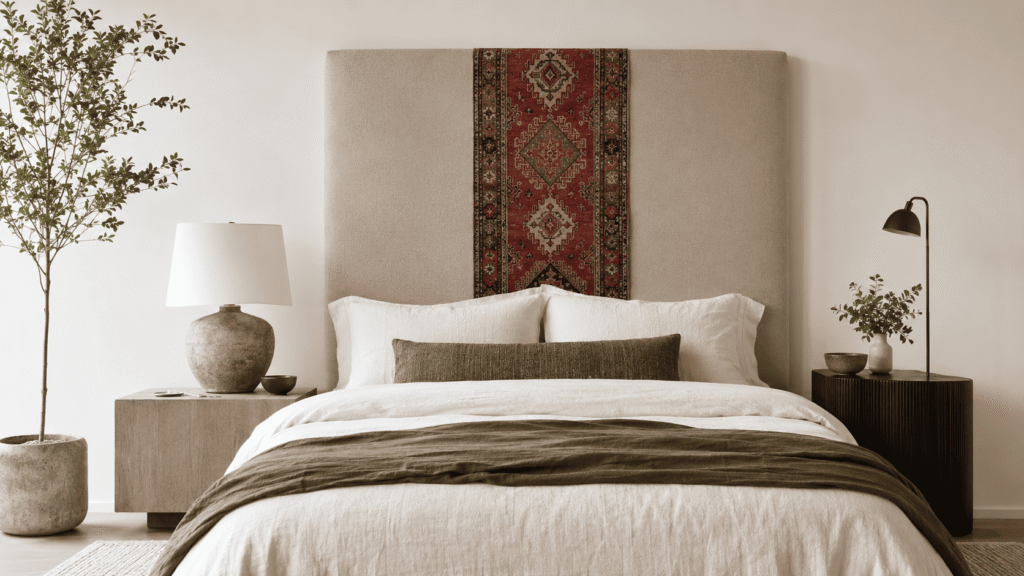
Drape a wide vintage table runner, narrow kilim, or embroidered textile vertically over the center of a plain upholstered headboard. Allow it to continue several inches behind the pillows, then secure it discreetly at the back so it doesn’t shift during the night.
This unusual direction draws the eye upward and gives a basic headboard a custom-made appearance. Choose a textile containing no more than three or four muted colors, such as cranberry, tobacco, olive, and cream. Avoid fragile pieces with loose fringe if pets sleep on the bed or the fabric will receive daily friction.
11. Float a Sculptural Wool Ottoman Beside the Bed
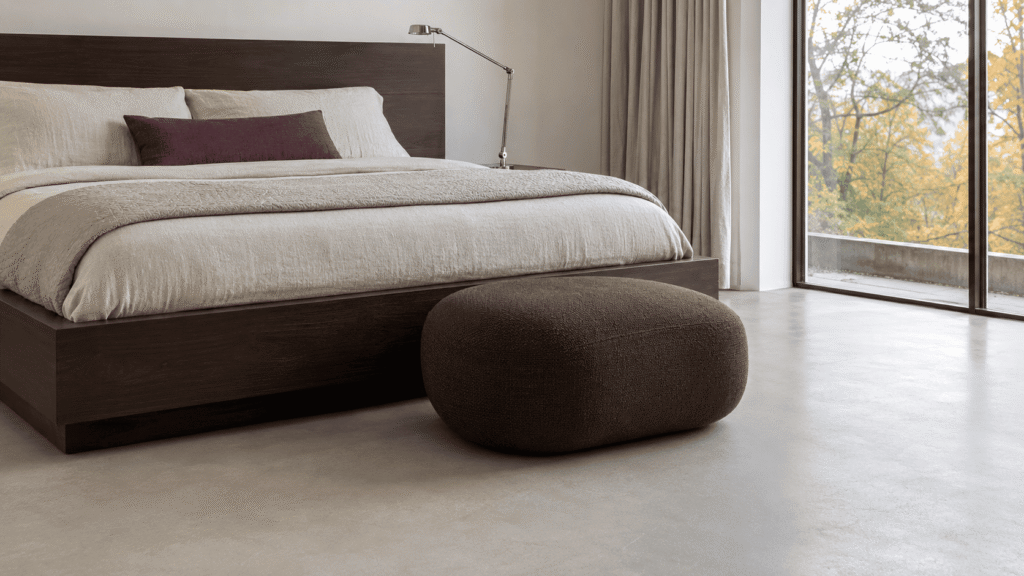
Replace a predictable end-of-bed bench with one low, sculptural ottoman placed slightly off-center near the lower corner of the bed. Look for a rounded or softly irregular form covered in tightly woven wool, brushed cotton, or durable nubby upholstery.
The asymmetrical placement creates a stronger photograph and keeps the bed’s full width visible. Select cocoa, mushroom, or muted ochre upholstery and pair it with a dark wood platform bed for contrast. Preserve approximately 30 inches of walking space around it, and avoid loose-loop fabric in homes with cats because it can snag quickly.
12. Frame an Antique Textile in Deep Walnut
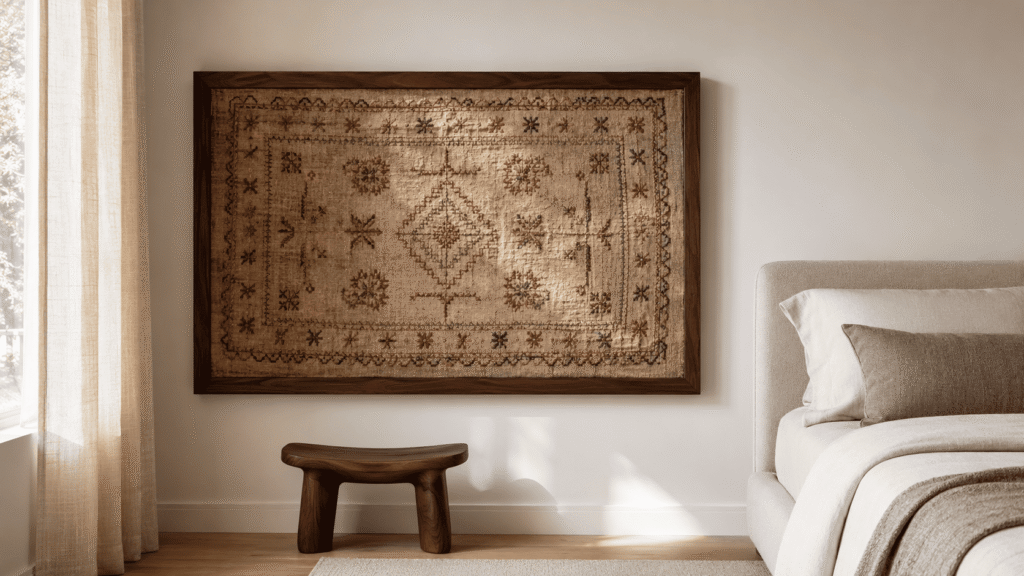
Mount a faded tapestry fragment, embroidered cloth, or raw linen panel inside an oversized deep-walnut frame. Skip reflective glass when the textile isn’t valuable; leaving the weave exposed allows side light to reveal its uneven surface and softens the wall more effectively.
Hang the piece above a low dresser or beside the bed, with its center around 57 to 60 inches from the floor when no furniture affects the composition. Use acid-free backing for delicate fabric. The dark frame adds definition, preventing the textile from looking like a loosely pinned craft project.
13. Create a Bedside Still Life With Stone, Smoked Glass, and Clay
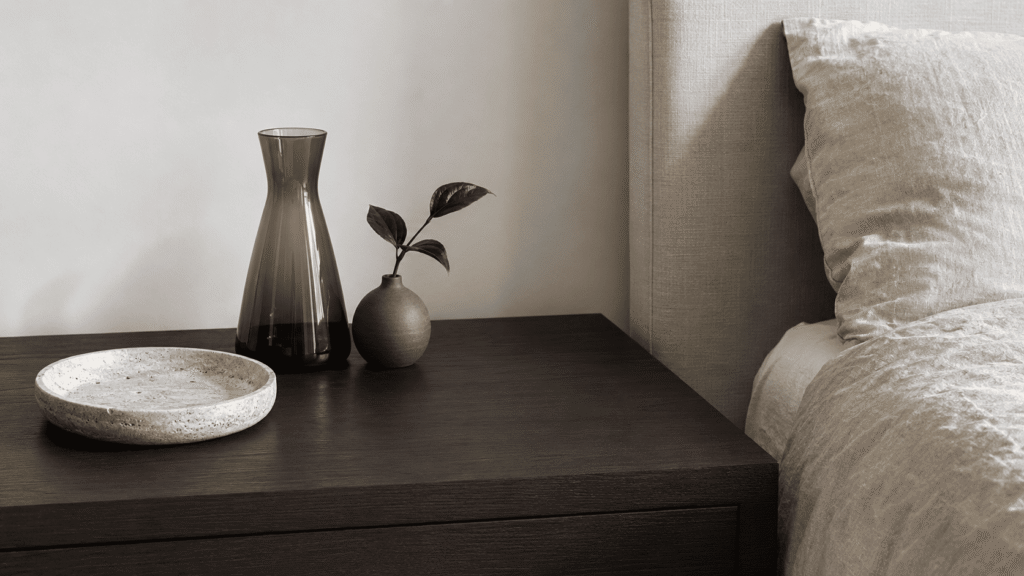
Build a compact nightstand arrangement from a dark wood surface, a shallow stone dish, a smoked-glass carafe, and one matte clay vessel. Add a short stem of burgundy foliage or dried seed heads, keeping it below the lamp and away from your sleeping area.
The materials move from reflective to porous, producing visible depth without requiring several decorative objects. Smoked glass looks especially rich in side light but can show fingerprints, so reserve it for pieces you don’t handle constantly. Leave at least half the nightstand usable for everyday necessities.
14. Cushion a Cold Bed Wall With a Tailored Wool Panel
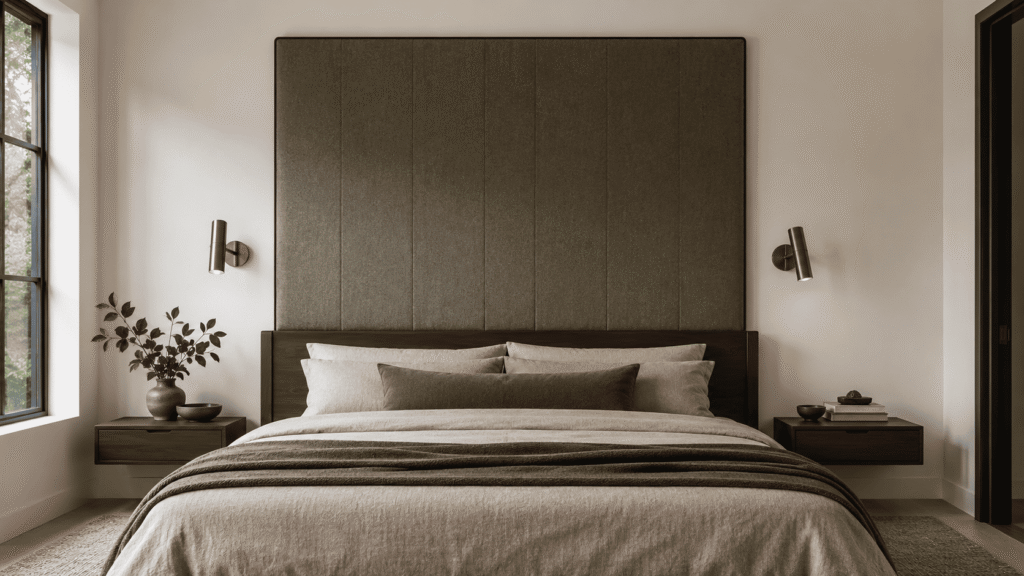
Install a padded wool-blend panel behind the headboard when the bed sits against a visually or physically cold exterior wall. Make the panel slightly wider than the mattress and finish it with tailored vertical seams or a narrow contrasting welt.
Olive, cocoa, taupe, and muted aubergine give the wall depth while remaining compatible with modern wood furniture. A secure French cleat allows the panel to be removed later, although renters must confirm permitted wall fixings. This treatment can reduce the sensation of sleeping beside a cold surface, but it shouldn’t conceal dampness, leaks, or insulation problems.
15. Connect the Bed and Nightstands With a Low Upholstered Ledge
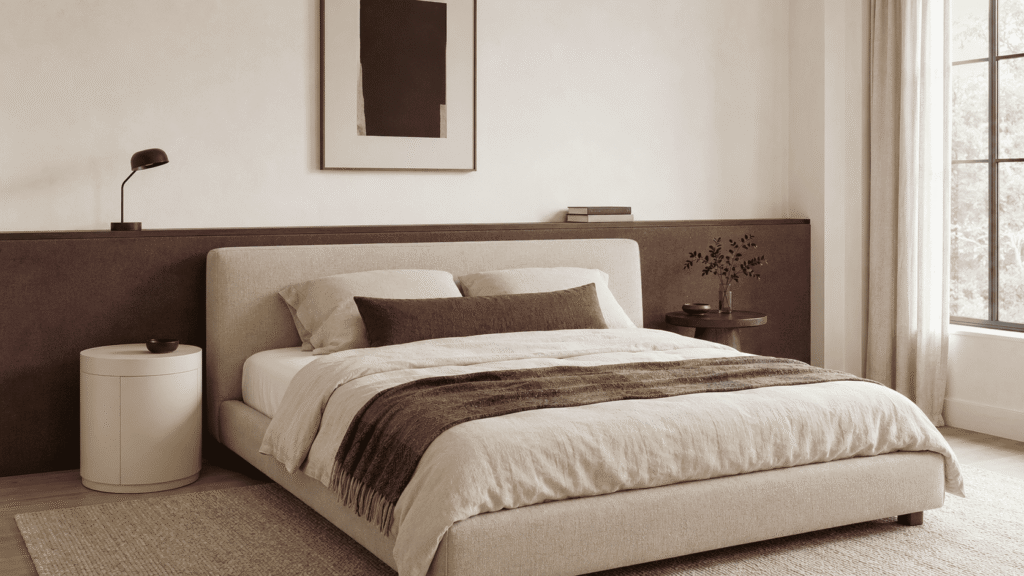
Run a narrow upholstered ledge across the wall behind both the bed and nightstands, positioning its top near mattress height. Cover it in wool felt, suede-look performance fabric, or heavy linen, and use a contrasting narrow wood cap for a clean horizontal line.
The ledge visually joins mismatched bedside furniture and makes the entire arrangement feel custom-built. It can also hold a book or small reading light, but keep the depth to approximately 4 to 6 inches so objects don’t collect behind the pillows. Renters can recreate the effect with separate freestanding padded sections.