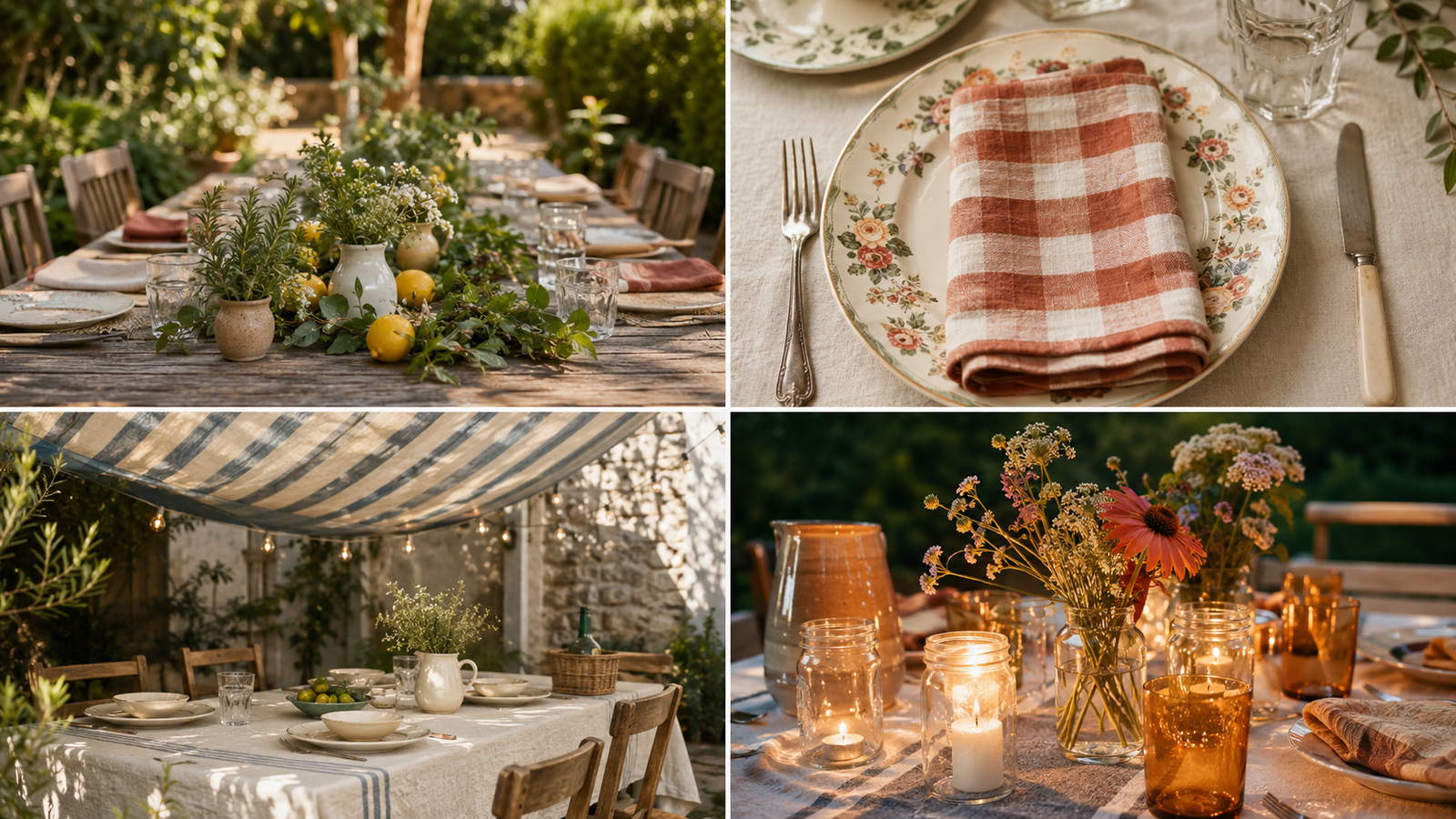
An outdoor table can look beautifully styled in a photo yet become frustrating as soon as dinner arrives. Tall flowers block conversation, lightweight linens blow into plates, and oversized decorations leave nowhere to put the salad bowl.
The most successful summer outdoor dining table decor ideas balance beauty with comfort. Each arrangement below creates a distinct focal point while preserving room for plates, drinks, and shared dishes. You’ll find affordable DIY projects, clever thrifted details, and a few larger upgrades worth using summer after summer.
1. Style a Long Herb Centerpiece
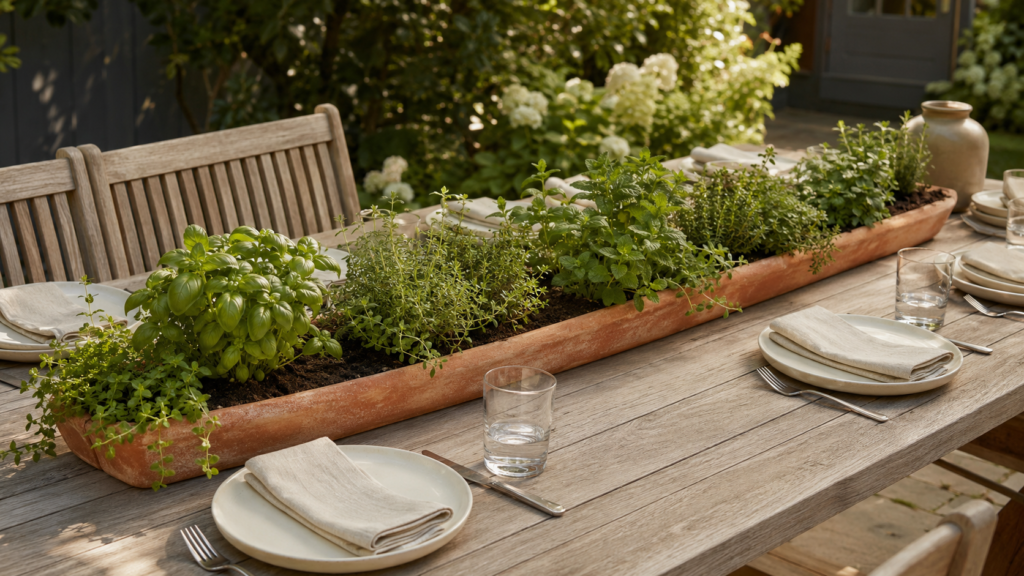
Place a slim metal window box or terracotta trough through the center of the table. Fill it with basil, thyme, mint, and trailing oregano, keeping the tallest plants below 12 inches so guests can see one another.
The long shape suits a rectangular table better than several unrelated flower arrangements. Fresh herbs also connect the table to the surrounding garden and release a gentle scent when touched.
For an affordable version, leave nursery herbs in their plastic pots and hide them inside the container with moss. Remove any strong-smelling herbs if they interfere with the food.
2. Use a Floor-Length Tablecloth
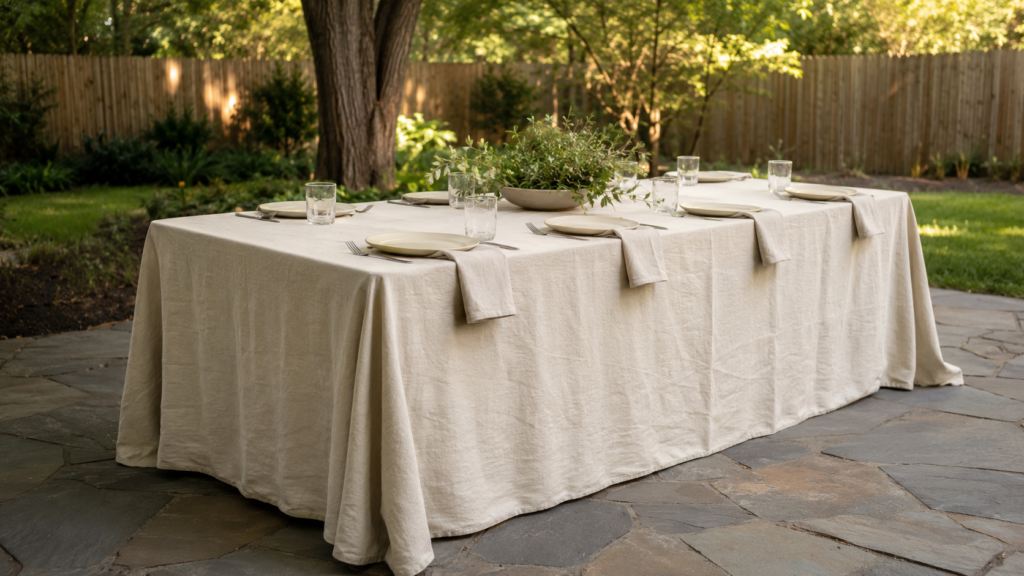
A substantial tablecloth can make an inexpensive folding table look like proper outdoor furniture. Wash a canvas painter’s drop cloth twice to soften it, then position it so the fabric falls within one inch of the ground along the long sides.
The generous drop conceals plastic or metal legs and gives the table more visual weight in an open yard. Natural canvas also looks softer than bright white under direct summer sun.
Use iron-on hemming tape if the fabric pools heavily. Tablecloth clips hidden beneath the edge will keep it secure during a light breeze.
3. Mix Garden Clippings with Summer Fruit
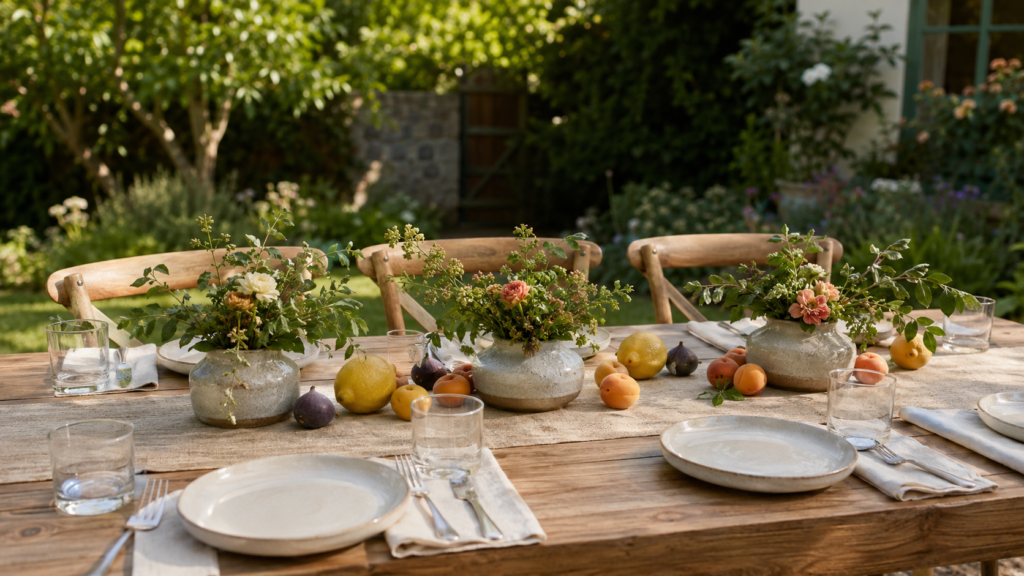
Gather three low ceramic vessels and space them 12 to 16 inches apart. Fill them with clipped branches, leafy herbs, and a few garden flowers, then place lemons, apricots, figs, or peaches through the gaps.
Mixing natural shapes creates a relaxed centerpiece without making the table look unfinished. Repeating the same fruit at several points keeps the arrangement visually connected.
Use firm, uncut produce and return it to the kitchen after dinner. Keep all branches below 12 inches, or move taller pieces to the ends where they won’t interrupt conversation.
4. Build the Palette Around a Striped Umbrella
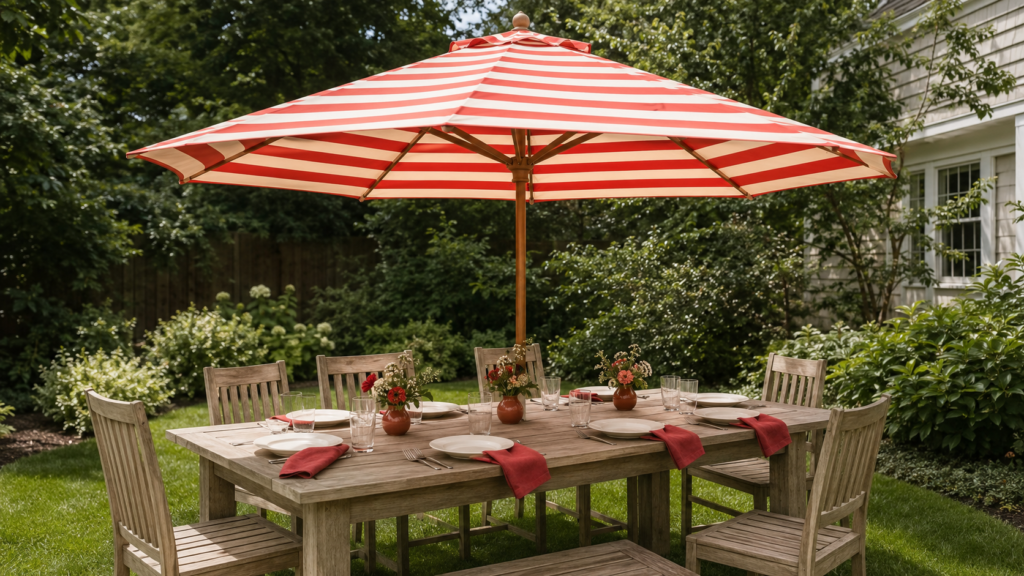
Position one large striped market umbrella directly over the dining table. Pull a single shade from the canopy and repeat it in two smaller details, such as napkins and flower vessels.
Tomato red and cream feel cheerful beside natural wood, while faded blue and ivory have a softer coastal character. Because the umbrella creates a large block of color, the tabletop underneath can remain relatively simple.
Choose a canopy that extends at least two feet beyond the table on every side. A 10-foot umbrella usually provides practical coverage for a six-foot rectangular table.
5. Paint a Kraft-Paper Table Runner
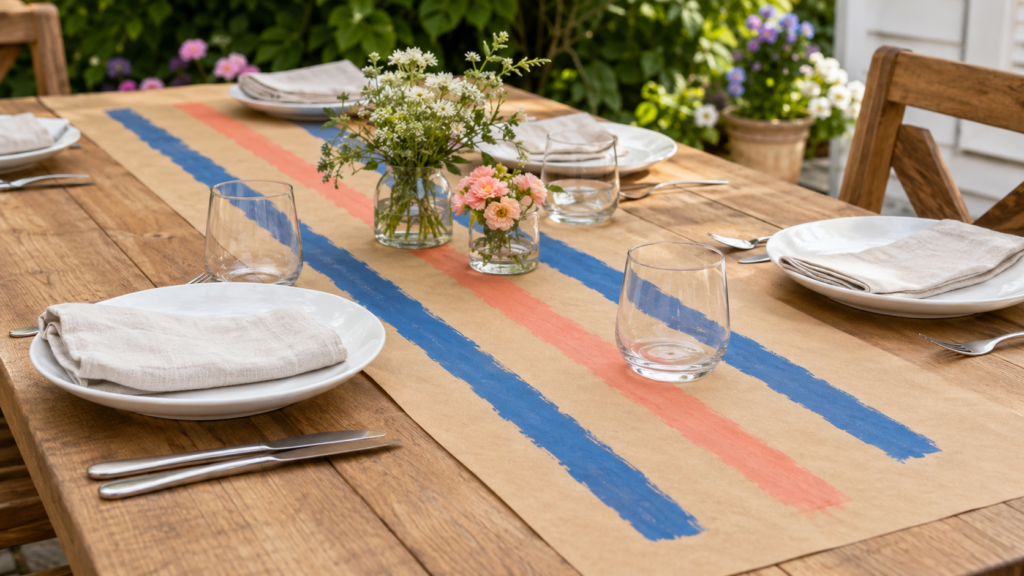
Roll heavyweight kraft paper down the middle of the table, stopping six to eight inches from each end. Paint loose stripes, checks, or simple scallops using matte craft paint in coral, olive, cobalt, or butter yellow.
The paper protects the table during messy meals while introducing pattern without the cost of new linens. Imperfect brushstrokes give it a handmade finish that feels more relaxed than a printed disposable cover.
Leave at least half of the brown paper visible. The empty space prevents the design from looking too busy once plates, glasses, and serving dishes are added.
6. Pair Colorful Glassware with White Plate
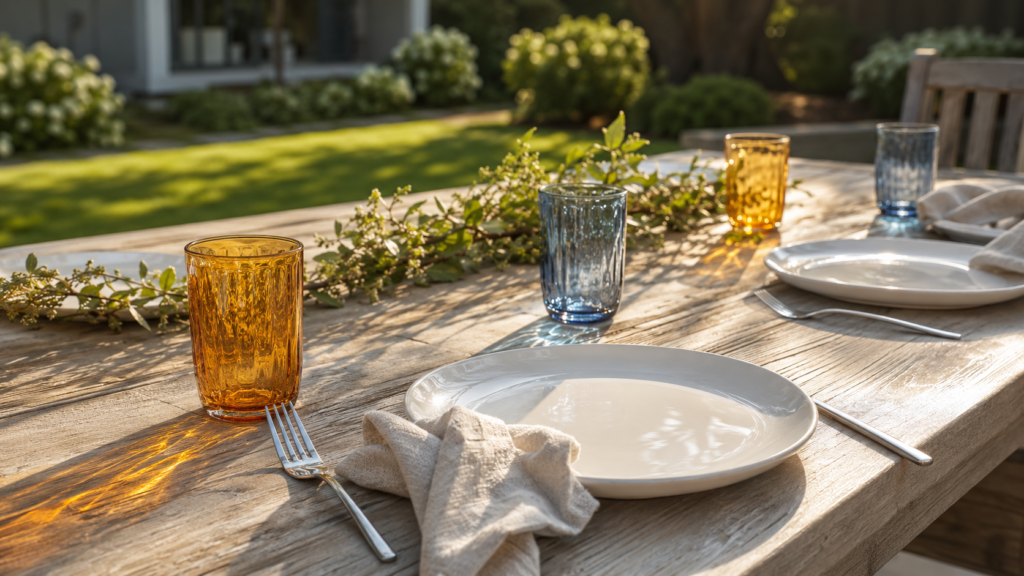
Alternate amber and smoke-blue tumblers around the table, or combine green goblets with clear water glasses. Use only one colored glass at each setting rather than stacking several competing shades.
Sunlight passing through the glass casts small jewel-toned reflections across a pale cloth. White ceramic plates calm the combination and keep the table focused on the food.
Thrift stores are ideal for collecting affordable colored glassware. The glasses don’t need to match exactly, but they should share a similar color depth or shape so the collection looks intentional.
7. Arrange Flowers in a Neat Grid
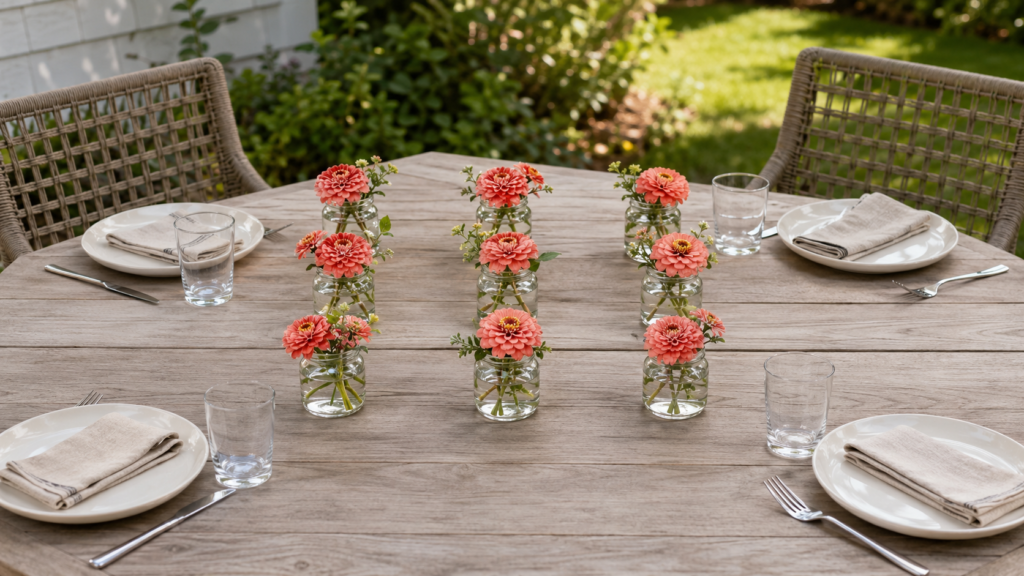
Create a three-by-three grid using nine identical glass jars or short ceramic cups. Space the containers two to three inches apart and fill each with a few stems of the same flower.
The precise grid gives inexpensive grocery-store flowers enough visual weight to anchor a square or round table. Its structure also creates a pleasing contrast with loose, natural blooms.
Cut the stems so the arrangement stays below 10 inches. On a narrow rectangular table, use two straight rows of jars instead of squeezing in a grid that takes up too much dining space.
8. Add Herb-Tied Linen Napkins
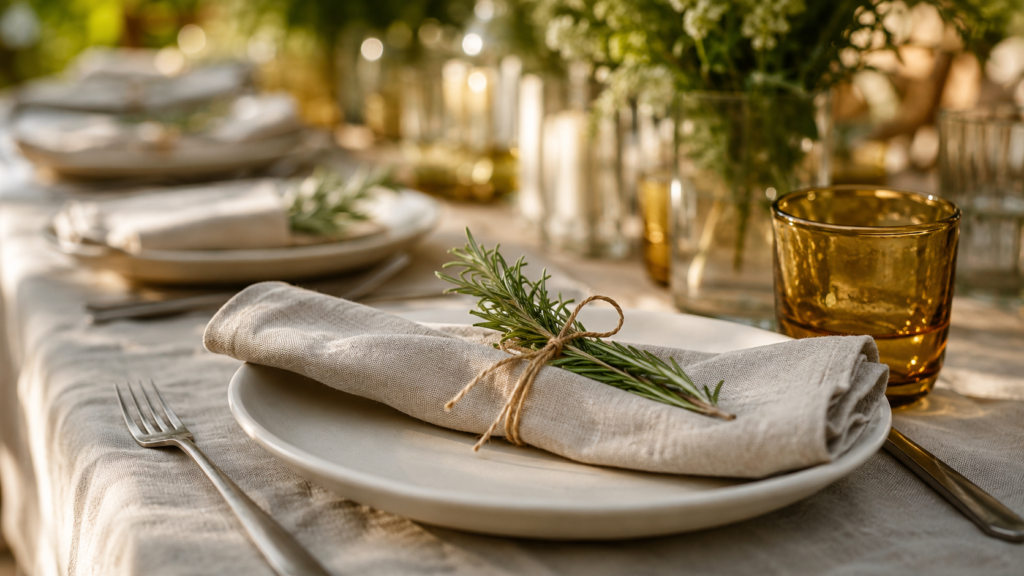
Roll a washed-linen napkin and secure it loosely with natural twine. Tuck in one small sprig of rosemary, thyme, or sage, then place the bundle across the dinner plate.
The repeated detail makes every place setting feel finished before you add elaborate dishes or expensive flatware. Woody herbs hold their shape better than delicate basil when left outside in warm weather.
Budget cotton tea towels can replace linen napkins. Choose a muted stripe or small check, then cut and hem larger towels if the original size feels bulky on the plate.
9. Organize Condiments on a Wood Riser
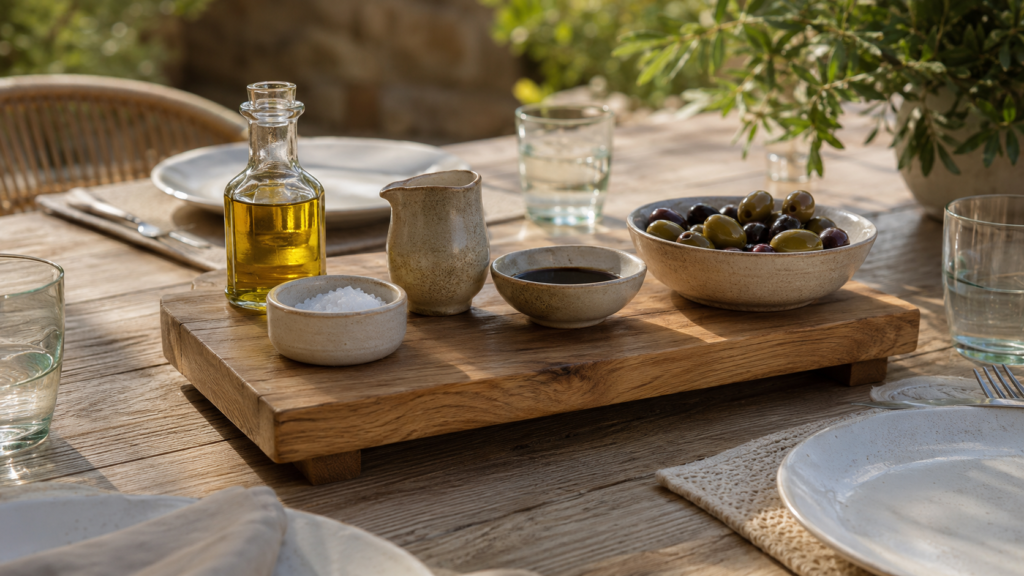
Place sauces, oil, salt, and small serving bowls on one thick wooden board near the center of the table. Raise it about two inches with concealed wood blocks if you want a more defined second level.
The slight height difference makes practical dining items look like part of the arrangement instead of last-minute clutter. It also creates one clear service zone, helping guests find and return shared items.
Keep the riser no wider than one-third of the tabletop. Avoid tall cake stands because they can obstruct sight lines and become unstable when guests reach across the table.
10. Frame the Table with Large Planters
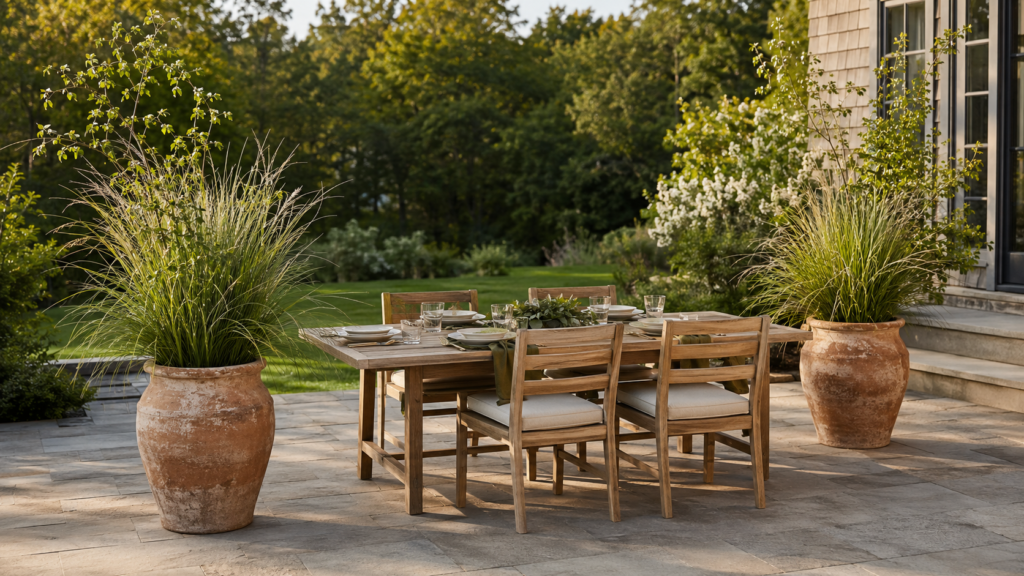
Position one substantial planter 12 to 18 inches beyond each short end of a rectangular table. Fill the containers with loose branches, upright grasses, or leafy summer plants.
The matching pair visually extends a modest table and helps the dining zone hold its own in a large yard. It also supplies the impact of oversized centerpieces without taking away valuable tabletop space.
Planters measuring 18 to 24 inches tall usually provide enough scale. Lightweight fiberglass or resin is easier to move, but choose a matte stone or terracotta finish rather than shiny molded plastic.
11. Mix Checked Napkins with Vintage Plates
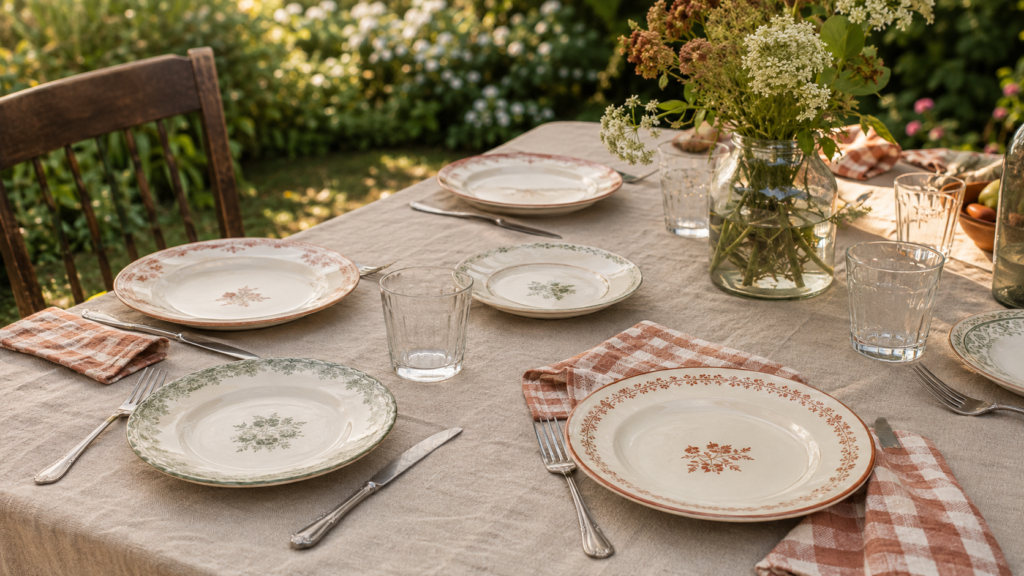
Start with gingham or checked napkins in rust and cream, olive and sand, or faded blue and white. Add secondhand plates that repeat at least one color from the fabric, even if their borders and patterns differ.
The consistent textile creates order, making the plates look thoughtfully collected instead of randomly mismatched. Clear glasses and matching flatware give the eye a quiet place to rest.
Carry a small napkin or fabric swatch when shopping secondhand. Colors that look similar under store lighting can clash once placed together in natural daylight.
12. Hang a Striped Canopy Above the Table
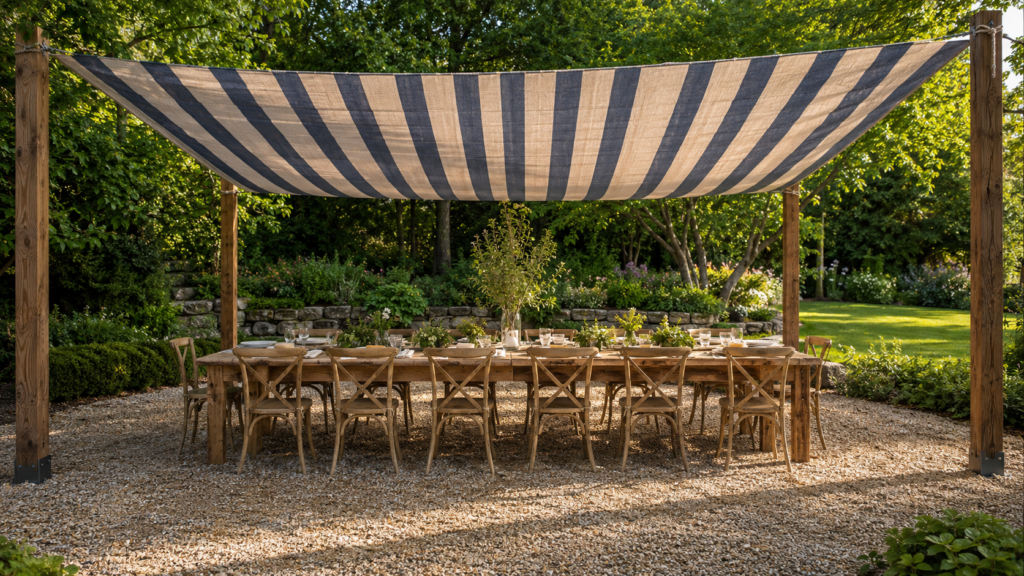
Hang a solid or striped outdoor fabric panel directly above the table, keeping the lowest section at least seven feet from the ground. Install it with a slight slope so rainwater can drain rather than collect in the middle.
A canopy changes the entire outdoor dining area, giving it the sheltered feeling of a private garden restaurant. Since the fabric creates a strong feature overhead, the table below only needs restrained decorations.
This project requires secure posts and weather-appropriate hardware. Don’t attach a wind-catching canopy to temporary hooks, weak fencing, or structures that aren’t designed to bear the pull.
13. Create a Garden-Path Centerpiece
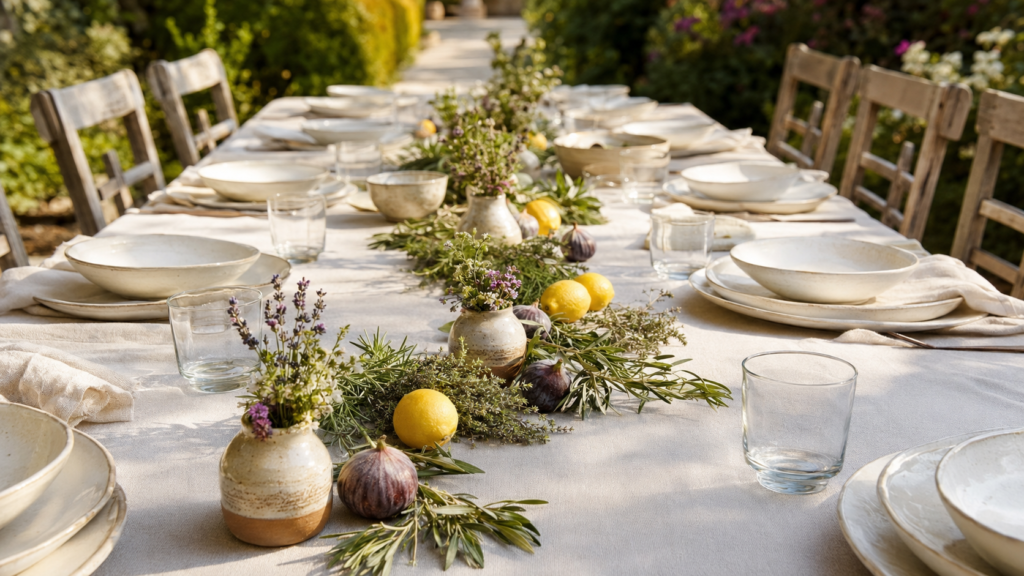
Arrange small ceramic vases, loose herbs, clipped greenery, lemons, figs, and tiny seasonal flowers along the entire length of the table. Place an item every eight to ten inches, leaving several open sections for shared dishes.
Repeat each material at least three times to create a clear visual rhythm. The low, continuous line gives a long table more presence than one isolated flower arrangement while keeping sight lines open.
This idea also adapts easily to different budgets. Use garden cuttings and fruit you already have, then invest in a few reusable bud vases over time.
How to Combine Outdoor Table Decorations Without Making the Table Busy
Choose one large feature, one tabletop layer, and one small place-setting detail. You might combine a striped umbrella, a neutral tablecloth, and herb-tied napkins. Another balanced option is a canvas canopy, plain wood table, and garden-path centerpiece.
Avoid using a bold canopy, patterned cloth, colored glasses, decorative plates, and a large flower display at the same time. When every item demands attention, the table loses its focal point.
Before guests arrive, set out the actual serving dishes. Each person needs about 24 inches of table width, although 30 inches feels more comfortable. Preserve at least 14 inches of usable table depth for every diner.
If you’re decorating on a limited budget, repeat one color in three different places. A rust-colored napkin, a few terracotta vessels, and amber glasses can unify otherwise unrelated pieces without requiring a matching set.