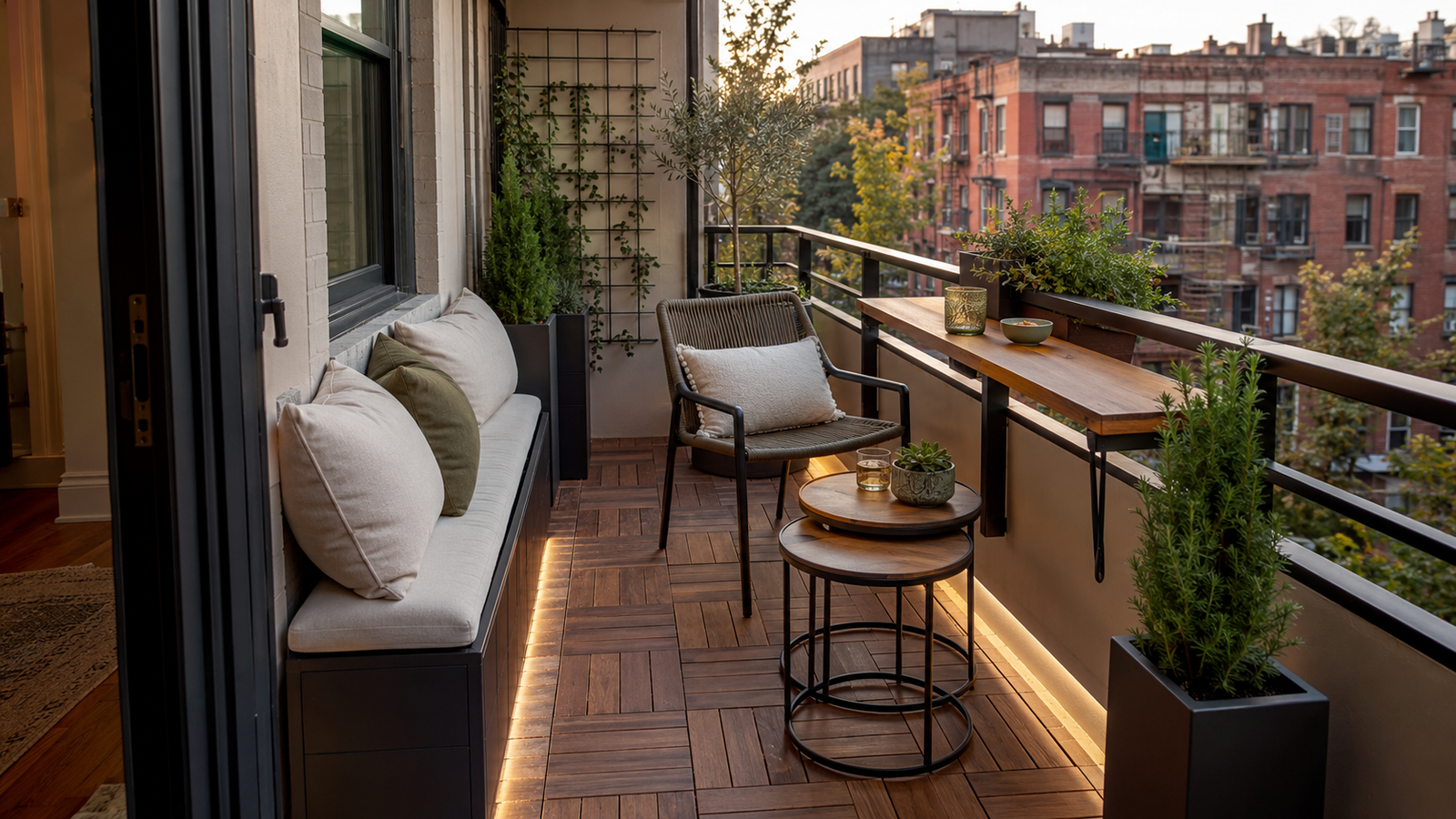
A small balcony can lose half its usable space to one oversized chair, a door that swings outward, or planters lined across the floor. The problem usually isn’t the square footage. It’s choosing furniture and decor with the wrong proportions.
These apartment balcony decor ideas focus on pieces that work harder, layouts that preserve movement, and details that look intentional from inside the apartment. You don’t need to fill every corner. A comfortable seat, a useful surface, and one strong focal point can make even a narrow rental balcony feel finished.
1. Build a Slim Bench That Bridges Two Storage Cubes
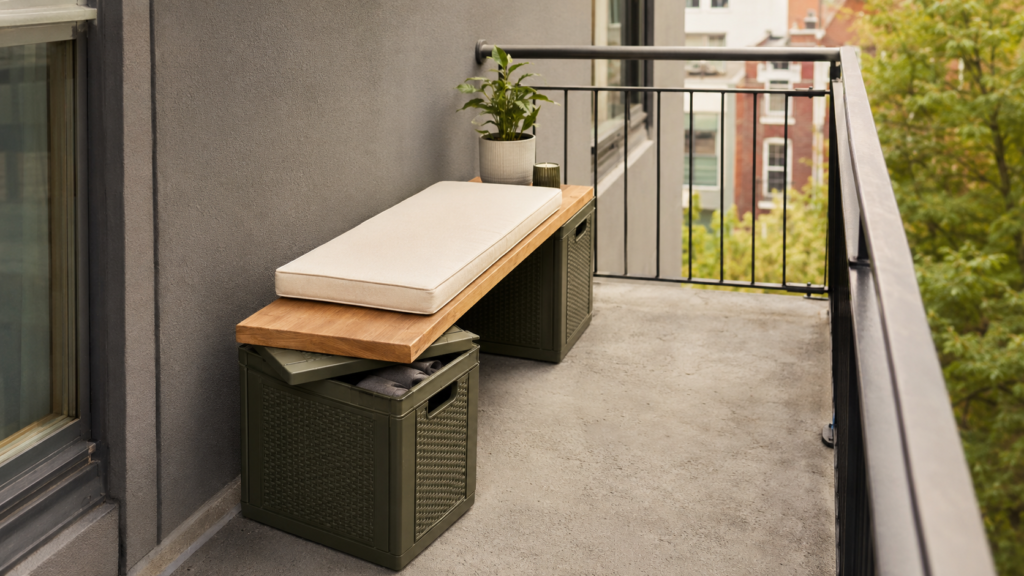
Place two weather-resistant storage cubes 36 to 48 inches apart, then span them with a sealed wood board and add a fitted outdoor cushion. You’ll gain seating for two, hidden storage, and less visual weight than a bulky outdoor sofa.
Keep the bench around 16 to 18 inches high and no deeper than 18 inches. Cedar naturally handles moisture, while exterior-grade plywood offers a cheaper option when thoroughly sealed. Leave at least 30 inches of clear walking space between the bench and railing.
2. Turn the Railing into a Narrow Breakfast Counter
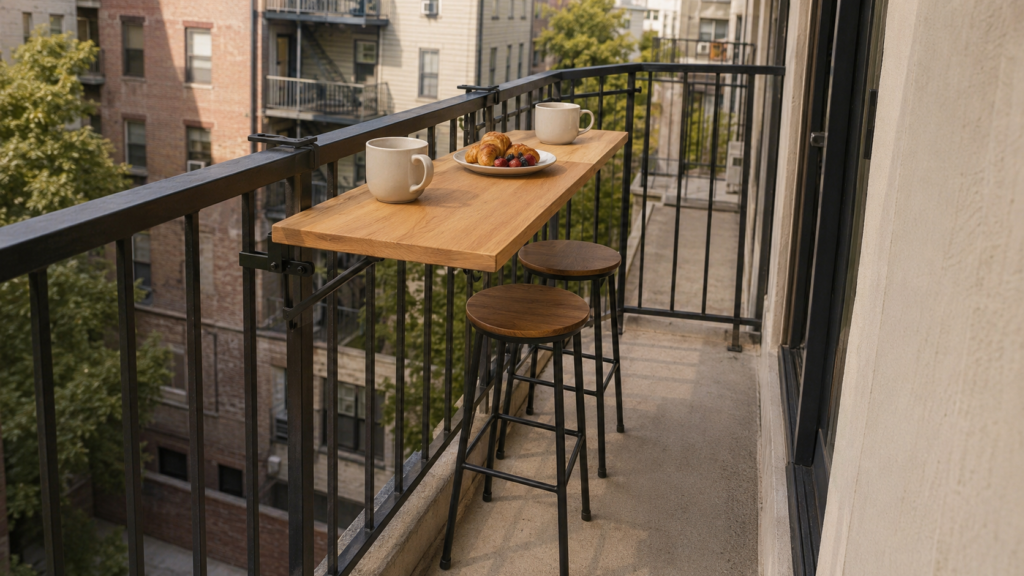
A railing-mounted counter creates a dining spot without using valuable floor space. Choose a ledge 10 to 14 inches deep—wide enough for coffee, a laptop, or two dinner plates but slim enough to preserve the walkway.
Pair it with backless stools that tuck completely underneath. A sealed wood top feels warmer, while powder-coated metal is easier to maintain in wet climates. Before buying, check your lease and railing style; clamp-on designs are usually more renter-friendly than versions requiring screws.
3. Angle One Chair Toward the Best Sight Line
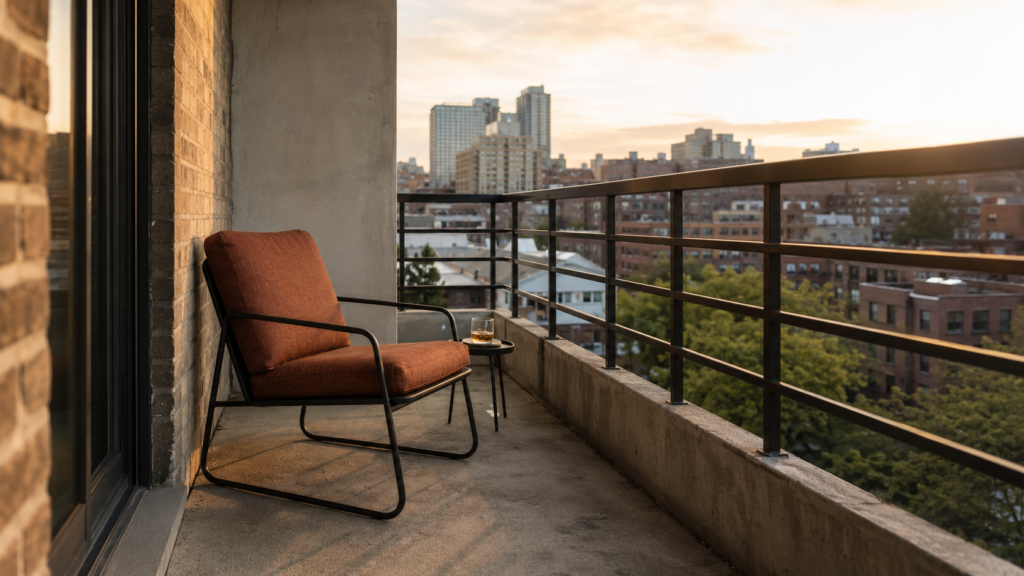
Pushing every piece of furniture flat against the walls can make a tiny balcony feel like a waiting room. Instead, place one low-profile lounge chair at a slight angle toward the view, sunset, or apartment interior.
That diagonal placement breaks up the balcony’s boxy geometry and creates a clear focal point. Look for a chair no wider than 28 inches, preferably with open arms or a slatted frame. Solid-sided furniture carries more visual weight and can overwhelm a narrow apartment balcony.
4. Use a Half-Moon Table Where a Round Table Won’t Fit
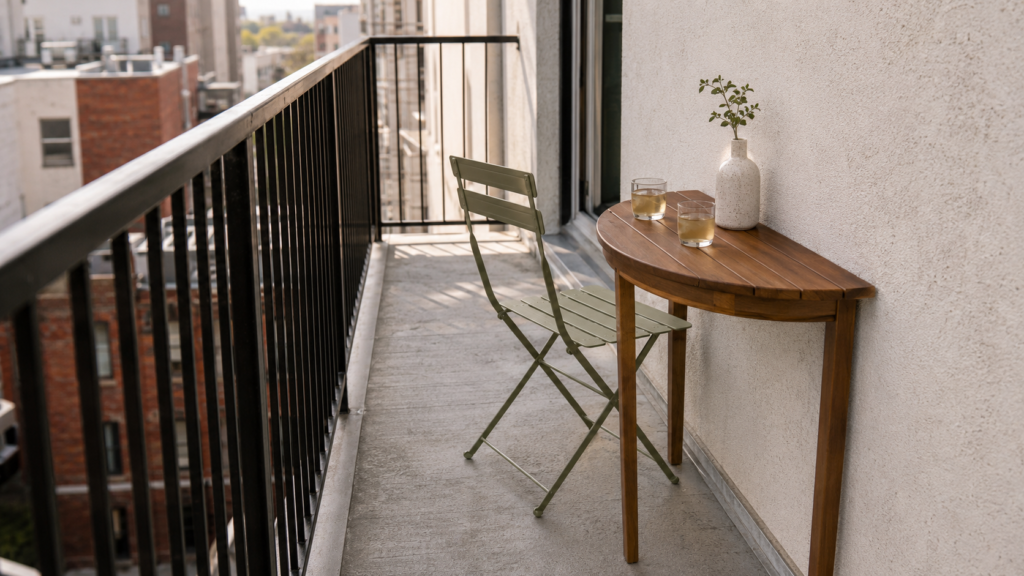
A half-moon table gives you a usable surface while sitting nearly flush against the wall or railing. Its curved front keeps sharp corners out of the walking path, which matters when your balcony is less than 5 feet deep.
Choose a table around 24 to 30 inches wide and 12 to 16 inches deep. A folding wall-mounted version saves even more room, but a freestanding console avoids drilling. Thrifted demilune tables can work outdoors after sanding and several coats of exterior sealant.
5. Create Privacy with One Oversized Outdoor Curtain Panel
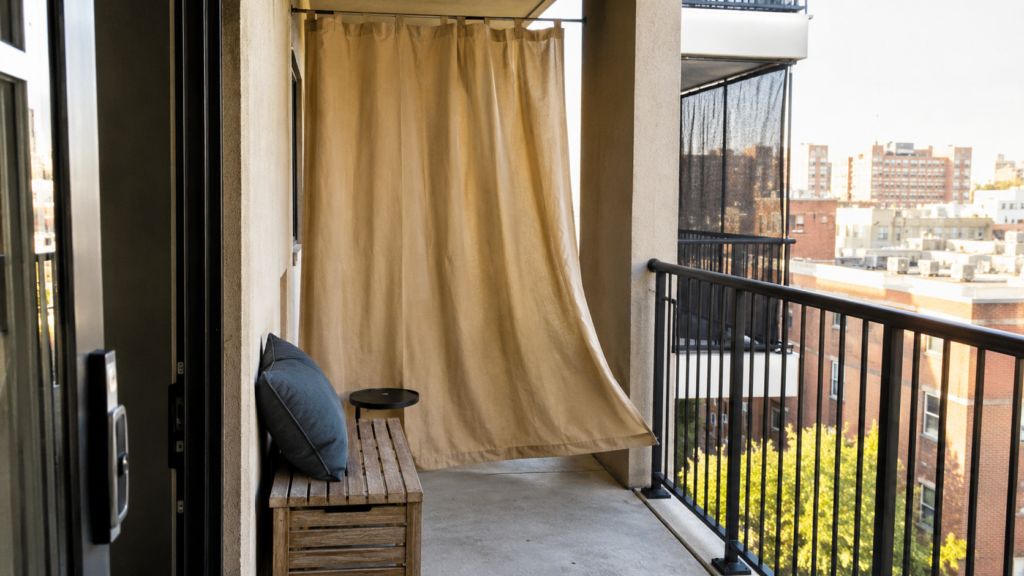
Instead of enclosing the entire balcony, hang one wide outdoor curtain where the nearest neighbor has the clearest view. A single panel blocks the problem sight line while allowing air and daylight to enter from the other sides.
Mount it with a tension rod only if the ceiling and floor are solid and protected from strong wind. Choose a weighted, mildew-resistant fabric in warm white, sand, or muted olive. Thin white polyester often looks inexpensive and becomes nearly transparent when backlit.
6. Fit a Rolling Bar Cart into an Awkward Corner
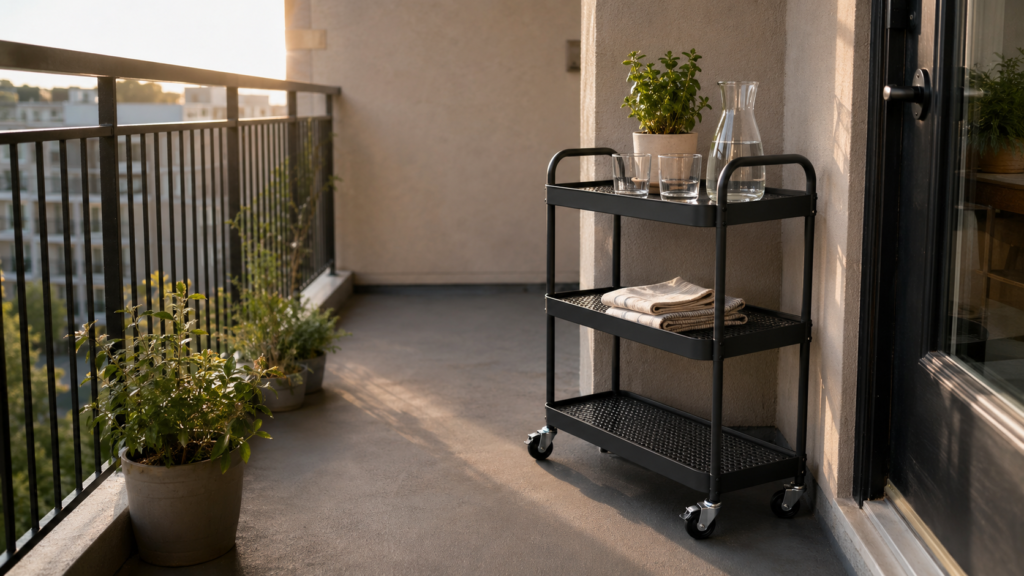
A slim rolling cart can serve as a drinks station, plant stand, serving surface, or storage unit depending on the day. Position it in the corner closest to the kitchen so you aren’t carrying glasses and plates across the full balcony.
Look for a cart no deeper than 16 inches with locking wheels and drainage-friendly shelves. Powder-coated steel wears better than untreated wood in exposed locations. When guests arrive, roll it beside the seating; when you need floor space, push it back against the wall.
7. Hang Planters in One Deliberate Vertical Column
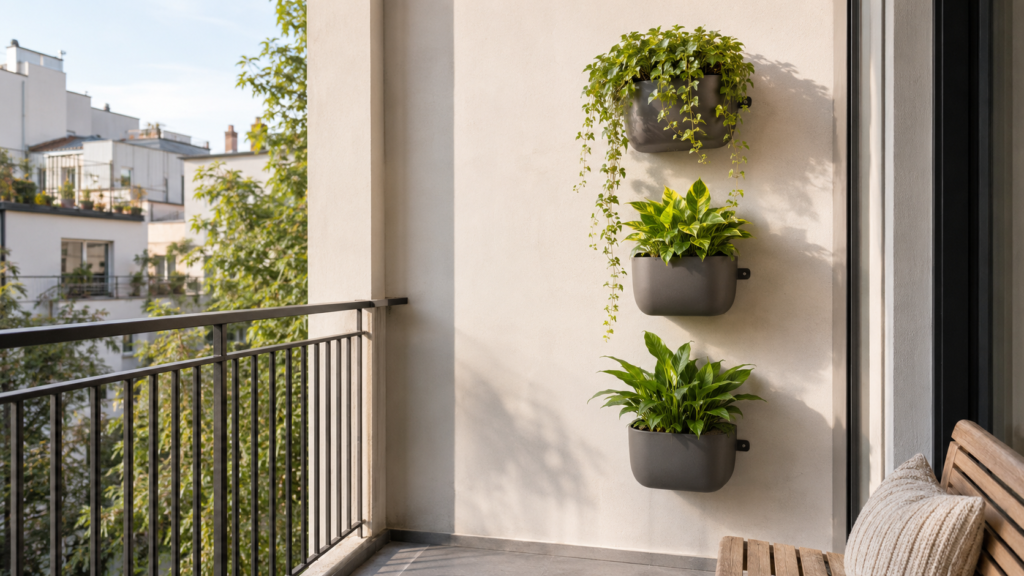
Scattering small pots across the railing can make a balcony look busy without creating much impact. Group three matching wall planters in a single vertical line instead, leaving 8 to 12 inches between them.
This arrangement pulls the eye upward and keeps the floor clear. Use trailing plants in the upper container and fuller, upright varieties below to balance their shapes. Removable outdoor hooks may work for lightweight pots, but use freestanding ladder frames if your lease prohibits wall mounting or your balcony gets strong wind.
8. Replace a Floor Rug with Outdoor Deck Tiles
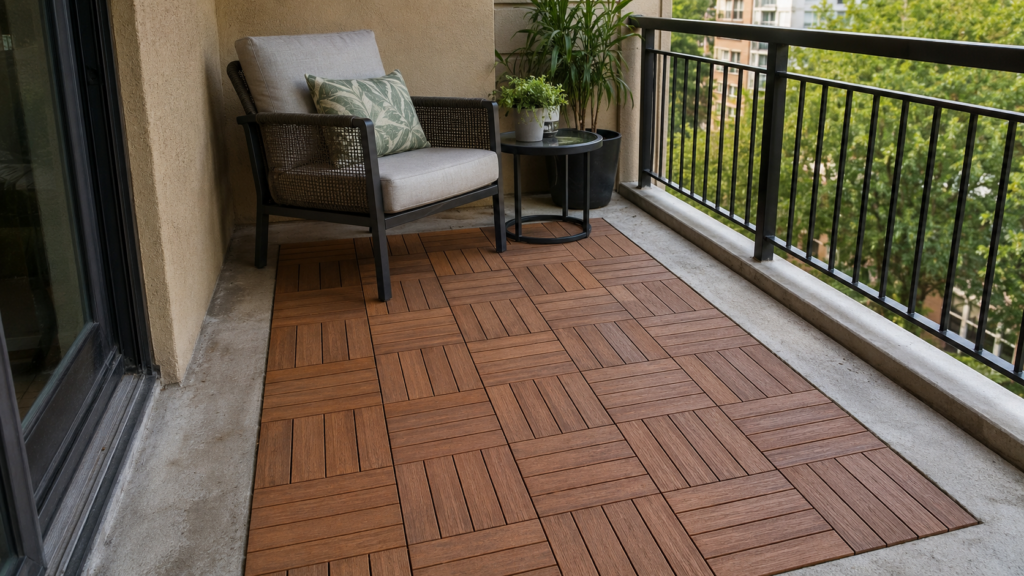
A rug can collect rainwater, trap dirt, and become annoying to clean in a compact outdoor space. Interlocking deck tiles add warmth underfoot without introducing fabric across the entire floor.
Run the tiles through the main seating zone and leave a narrow border of the original concrete visible. That border makes the layout look intentional and prevents awkward cutting around rail posts. Wood composite tiles require less maintenance than natural wood, while slatted designs allow water to drain instead of sitting beneath your furniture.
9. Make the Apartment View Part of the Balcony Design
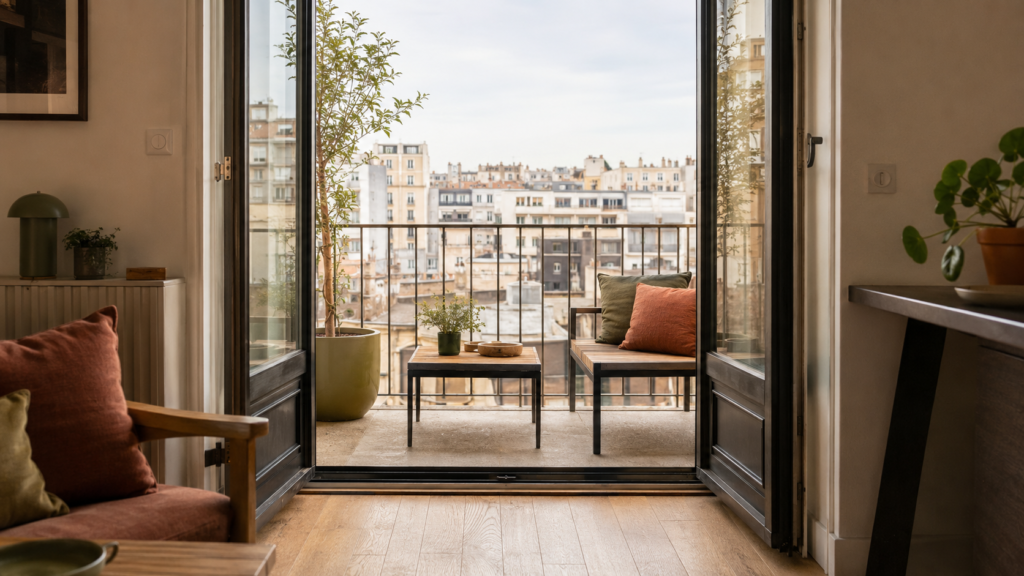
Your balcony is visible from inside, so style it as an extension of the adjoining room. Repeat one interior color outside—perhaps the rust of a chair, the olive of a cushion, or the black finish used on nearby lighting.
This repetition creates a longer sight line and makes both areas feel more connected. You don’t need a perfectly matching outdoor set. One repeated finish and one repeated color are enough. Avoid placing tall furniture directly in front of glass doors, where it blocks daylight and makes the room feel closed in.
10. Choose Nesting Tables Instead of One Fixed Coffee Table
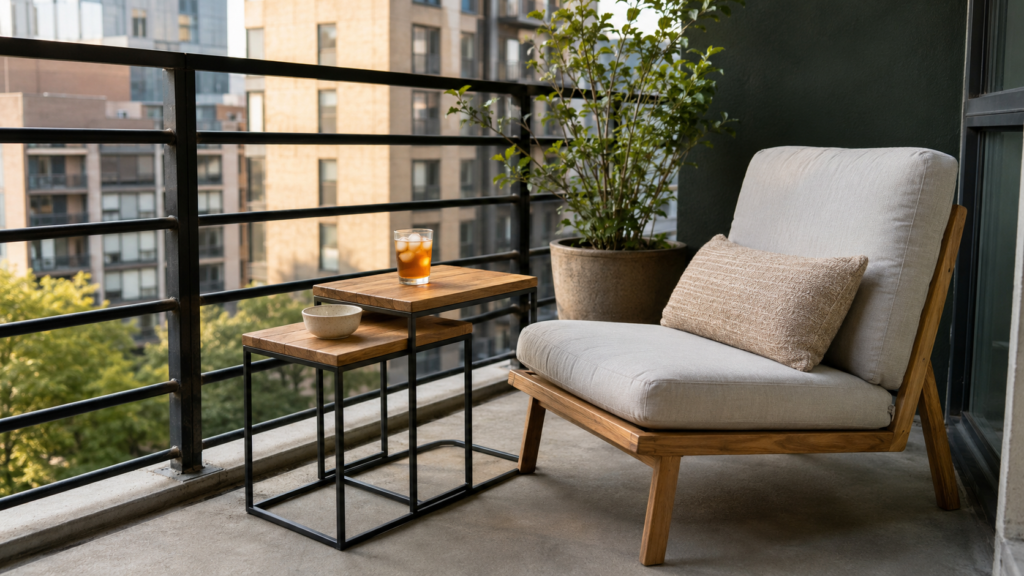
Two small nesting tables offer more flexibility than a conventional coffee table. Keep them stacked beside a chair for daily use, then separate them when you need an extra place for food, drinks, or a small planter.
Aim for tables 12 to 18 inches wide and maintain about 14 to 18 inches between the seat and the nearest surface. Open metal bases keep the floor visible, which reduces visual weight. Skip very lightweight tables on exposed balconies unless they can be secured during windy weather.
11. Frame the Balcony Door with Tall, Narrow Planters
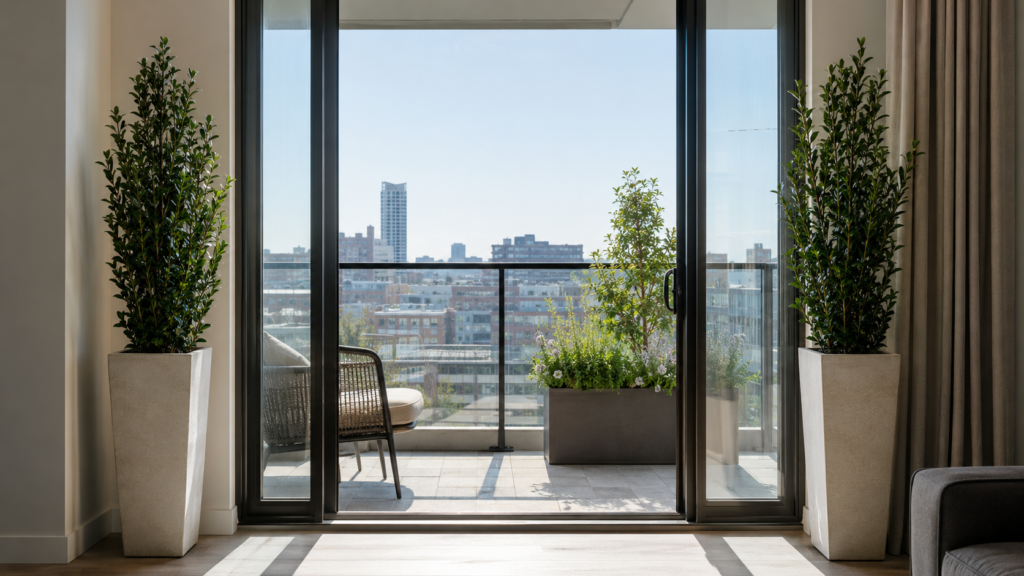
Place a tall planter on one or both sides of the balcony door rather than crowding the outer railing. From indoors, the plants frame the opening and make the balcony feel like a composed view instead of leftover exterior space.
Choose planters roughly one-third the width of the door panel and use upright plants that won’t spread into the walkway. Fiberglass gives you the look of stone without the weight. Confirm your balcony’s load restrictions before adding large containers filled with wet soil.
12. Mount Warm Light Beneath the Railing
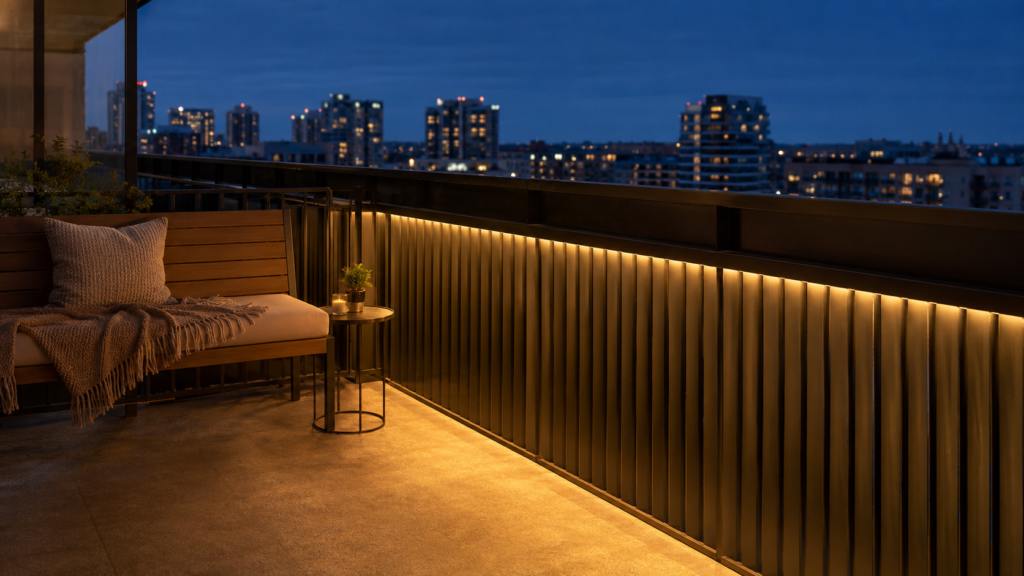
Rather than wrapping the balcony in visible string lights, conceal an outdoor-rated light strip beneath the railing cap or behind the front edge of a bench. The hidden source creates a soft wash of light without adding visual clutter during the day.
Choose a warm color temperature around 2200K to 2700K. Cool white LEDs can make concrete and metal look harsh after sunset. Use clips made for outdoor surfaces and keep cords away from drainage paths, door tracks, and areas where they could become a trip hazard.
13. Add a Fold-Flat Drying Rack That Looks Built In
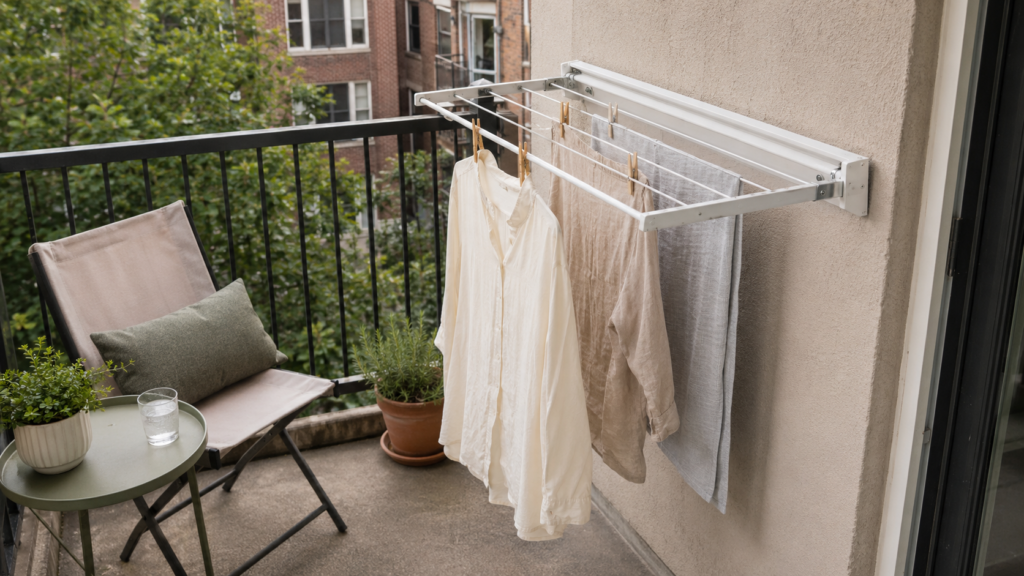
Small balconies often need to handle real household jobs, not just evening drinks. Mount a fold-flat drying rack against a side wall so it opens only when needed and disappears after laundry day.
Choose a shallow metal or sealed wood model that projects less than 4 inches when closed. If drilling isn’t allowed, use an over-the-door rack on an inward-opening balcony door or a freestanding accordion rack stored behind the bench. Keeping practical items contained makes the remaining decor feel calmer and more deliberate.
14. Repeat One Finish Across Three Different Zones
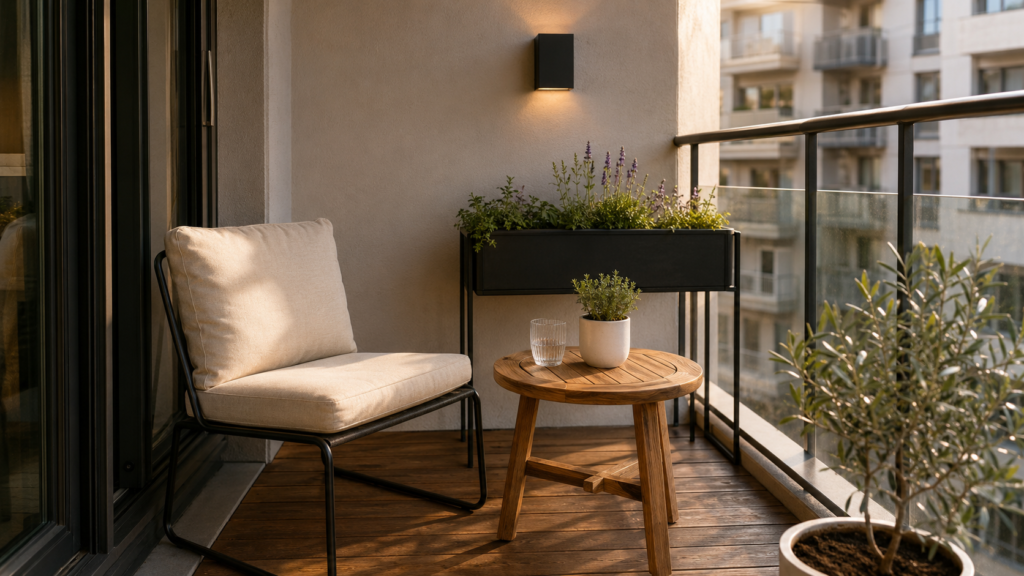
Use the same finish in three small places—for example, matte black on a planter stand, chair frame, and lantern-style wall light. Repetition gives unrelated budget pieces the look of a coordinated collection.
Three appearances are usually enough to establish rhythm without making the balcony feel overly matched. Black creates crisp contrast, aged brass feels warmer, and pale wood softens gray concrete. Avoid combining several competing faux-wood finishes; their different grain patterns and orange undertones often reveal inexpensive materials immediately.
15. Build a Corner Daybed from a Crib Mattress
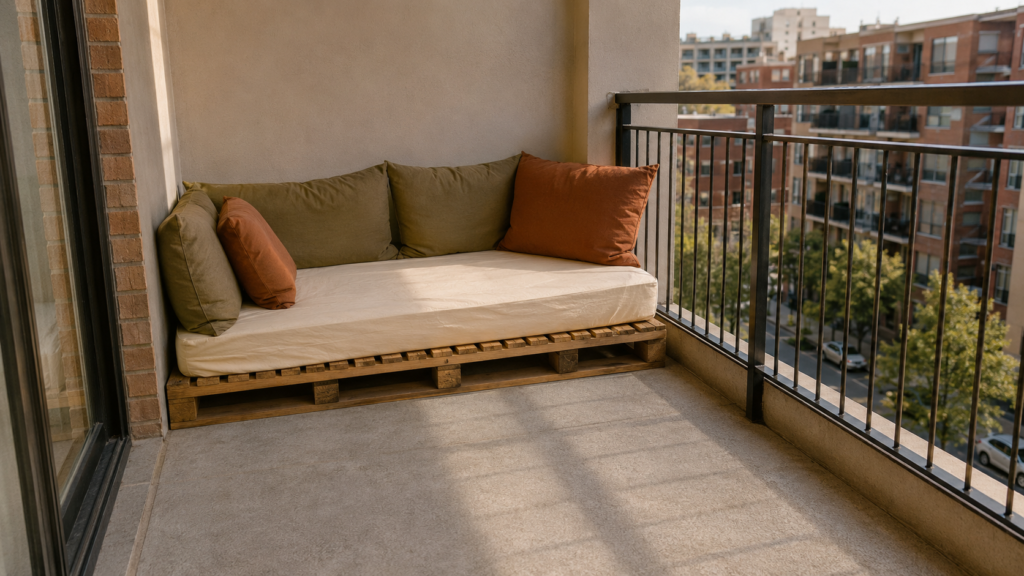
A standard crib mattress measures roughly 28 by 52 inches, making it surprisingly well suited to a protected balcony corner. Set it on a low slatted platform, cover it with a fitted outdoor cover, and add firm back cushions along the wall.
The low height keeps the railing and view open while providing more lounging space than two separate chairs. This works best on balconies at least 5 feet deep. Bring cushions inside during heavy rain, and never place the platform where it could become climbable near an unsafe railing.
Before You Buy Furniture for a Small Balcony
Measure the balcony at its narrowest point, including rail posts, utility boxes, drains, and the full swing of the door. Mark proposed furniture dimensions on the floor with painter’s tape before ordering anything. A chair that looks compact online can still block the only usable path.
Preserve a walkway of about 30 inches whenever possible. You can reduce that slightly in a very tight space, but you shouldn’t have to turn sideways to reach a seat. Check building rules for weight limits, railing attachments, grills, exterior curtains, and anything visible from the street.
Choose pieces based on exposure as well as appearance. Powder-coated aluminum resists rust and remains easy to move. Natural wood feels warmer but needs regular sealing. Outdoor fabric should resist mildew and fading, although even durable cushions last longer when stored away from rain and intense afternoon sun.
How to Combine These Apartment Balcony Decor Ideas
Start with one activity you genuinely want the balcony to support. For morning coffee, prioritize a railing counter and stools. For reading, choose an angled chair, nesting tables, and concealed warm light. For entertaining, a storage bench and rolling cart will earn their footprint.
Next, select one main material and a restrained palette of two or three colors. Small spaces show every competing finish at once, so visual consistency matters more here than it does in a large yard. Finish with one vertical element, such as a tall planter or column of wall pots, to balance the low furniture.