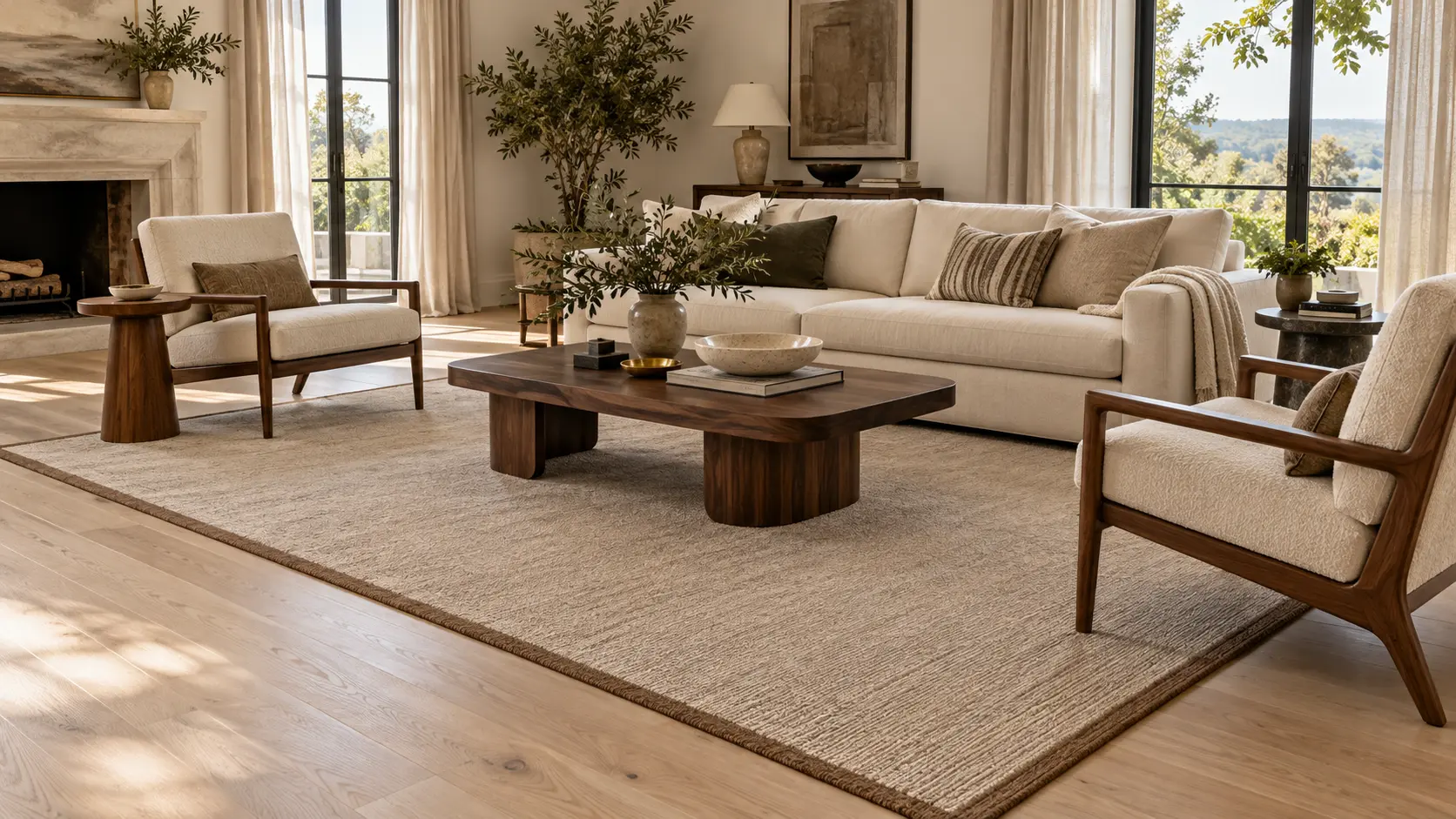
You’ve found a rug with the perfect color, a beautiful pattern, and a texture you love—but will it actually fit your room? A rug that looks generous online can feel surprisingly small once it sits beneath your sofa. Rug Size Guide: Get It Right in Every Room helps you choose dimensions that work with your furniture, your floor plan, and the way you live.
The right size can make a living room feel more connected, give your feet a comfortable landing beside the bed, and keep dining chairs from catching on the rug’s edge. In modern homes, where open layouts and multifunctional spaces are common, thoughtful placement also helps define separate areas without adding walls or extra furniture.
You don’t need an oversized room or a custom-made rug to get the proportions right. You need a few reliable measurements, a clear idea of where furniture should sit, and enough space to move comfortably. This guide walks you through those decisions room by room, so you can shop confidently and create a home that feels thoughtfully put together.
Rug Sizes at a Glance
Use these dimensions as starting points, then check them against your furniture, doorways, and walking routes.
| Space | Common starting size | What to check |
|---|---|---|
| Living room | 8 × 10 or 9 × 12 feet | Front legs of the main seating pieces sit securely on the rug |
| Queen bedroom | 8 × 10 feet | Comfortable rug coverage beside and beyond the bed |
| King bedroom | 9 × 12 feet | Enough exposed rug around the actual bed frame |
| Dining room | Table dimensions plus 48–60 inches in each direction | Chairs remain on the rug when pulled out |
| Kitchen | 2–3-foot-wide runner | Appliance clearance and a clear walking route |
| Hallway | Runner suited to the passage width | Balanced floor margins and unobstructed doors |
| Home office | Often 6 × 9 feet or larger | The chair stays on the rug throughout its normal movement |
| Patio | Sized around the seating or dining group | Furniture clearance, drainage, and access to the door |
Product measurements can vary slightly from their listed size. Check the actual dimensions before ordering.
1. Living Room: Frame the Conversation Area
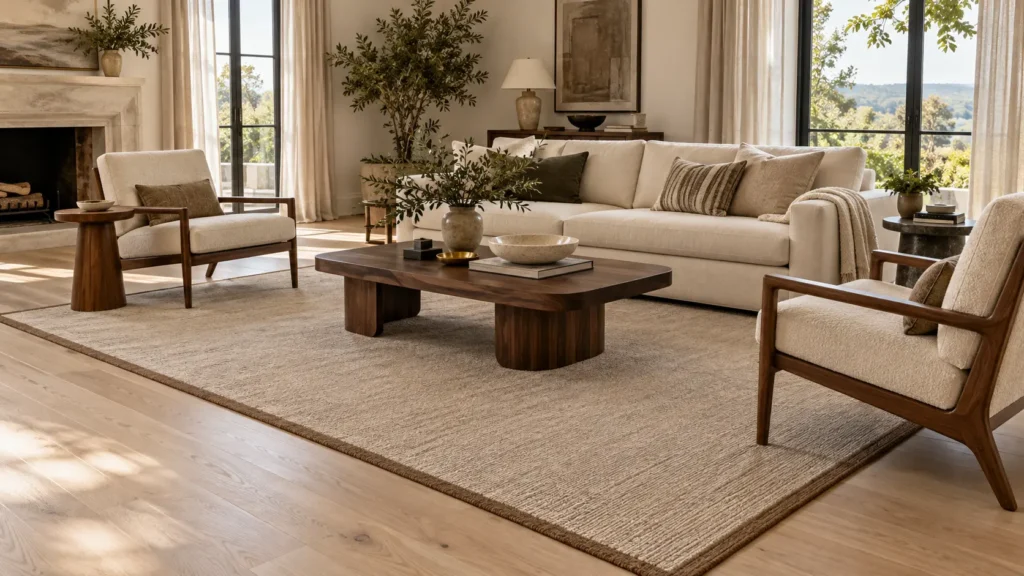
In a modern living room, the rug should connect the sofa, chairs, and coffee table into one composition.
An 8 × 10-foot rug is a useful starting point for many compact seating arrangements. A 9 × 12-foot rug often works better with a larger sofa, a sectional, or chairs positioned farther apart.
Place at least the front legs of the sofa and main chairs securely on the rug. If the room allows, an arrangement with every furniture leg on the rug can give a large seating group an especially settled appearance.
For an 84-inch sofa, position an 8 × 10-foot rug with its 10-foot edge parallel to the sofa. Centered beneath it, that leaves approximately 18 inches of rug beyond each arm.
A detail worth trying: Choose an oatmeal rug with a narrow tobacco or charcoal border. The visible frame makes the furniture arrangement look deliberate, particularly when the room has an off-center fireplace or an awkward window.
Center the rug on the seating group. The room’s architectural center may be somewhere else.
2. Open-Plan Spaces: Give Each Zone Its Own Footprint
An open-plan room usually needs more than one sizing decision. The living area and dining area perform different jobs, so their rugs should respond to different furniture footprints.
A rectangular living-room rug paired with a round dining rug creates a clear distinction without adding a divider.
For example, a 9 × 12-foot rectangle might anchor the sofa and chairs, while an 8-foot round rug defines a nearby breakfast table. Beneath a 42-inch round tabletop, an 8-foot rug provides 27 inches of coverage beyond the table on every side. Pull out the chairs to confirm that this is enough for your particular seating.
Keep a clear walking route between the zones. The rugs should help explain the layout without spreading into the passage.
For a connected palette, try putty beneath the living furniture and muted olive beneath the dining table. Different shapes and related undertones provide variety without making the room feel fragmented.
3. Dining Room: Measure With the Chairs Pulled Out
A dining rug needs to accommodate movement.
Start by adding 24–30 inches beyond every edge of the tabletop. That means adding 48–60 inches to both the table’s length and width. Then test the arrangement with the actual chairs, because their depth and leg positions affect the space required.
A 40 × 72-inch table, for example, can be a good candidate for an 8 × 10-foot rug. This leaves 28 inches at the sides and 24 inches at the ends.
If you regularly extend the table, measure it with the leaves in place.
Choose a low-pile rug or a tightly woven flatweave so chairs can move more easily. A mushroom-colored rug with a broad dark border looks particularly striking beneath a walnut table and slender black chairs.
The border should remain visible around the furniture, giving the dining group a defined outline.
If the room cannot accommodate a rug large enough for comfortable chair movement, exposed flooring is a practical, attractive choice.
4. Bedroom: Leave Enough Rug Where Your Feet Land
Bedroom rugs work best when a generous amount remains visible beside the bed and at its foot.
For a queen bed, begin by testing an 8 × 10-foot rug. For a king, begin with a 9 × 12-foot rug. In both arrangements, the longer rug dimension usually runs across the width of the bed.
Using mattress width alone, these combinations leave approximately 30 inches beside a queen and 34 inches beside a king. A wide upholstered or timber frame will reduce that coverage, so measure the complete bed.
One effective placement starts the rug just in front of the nightstands. This keeps more textile visible toward the foot of the bed, where it can create a generous landing.
A muted clay flatweave beneath a pale upholstered bed introduces color through a broad, quiet surface. Dark wood nightstands sitting on exposed flooring give the arrangement a crisp edge.
For a narrow bedroom, consider two secured bedside runners. Size them around the places you actually stand, and keep their edges clear of door swings.
5. Kitchen: Size the Runner to the Working Aisle
A kitchen runner should follow the area where you prepare food, wash dishes, and move between work surfaces.
In a 42-inch-wide aisle, a 30-inch-wide runner leaves approximately 6 inches of exposed flooring on each side. That can create a balanced appearance, provided doors and appliances still operate freely.
Choose the length around the active working area. Stop before a busy crossing point rather than stretching the rug from one doorway to another.
A rust-and-cream striped runner can introduce a strong visual line between pale cabinets. Align it with the sink and prep counter, even if that means it sits slightly off-center in the overall room.
Look for a washable, low-profile option with a compatible nonslip pad. Check that the rug fits your washing machine and that every edge lies flat.
6. Entryways, Hallways, and Bathrooms: Follow the Available Floor Space
These smaller spaces need precise measurements because doors, fixtures, and narrow passages leave less room for adjustment.
Entryways
Test the front door through its full swing before choosing the rug’s thickness or placement. The rug should provide a useful landing without catching beneath the door or curling into the walking route.
Hallways
Leave visible flooring along both sides of the runner. In a 42-inch hallway, a 30-inch runner provides a 6-inch margin on each side.
Length matters, too. A runner should feel settled within the passage and end cleanly before a doorway or change in direction.
Bathrooms
Choose a bath mat for the dry landing area beside the shower or tub. Check toilet clearance, door movement, and whether the material can dry fully between uses.
A repeated stone-and-charcoal palette can connect these spaces while allowing each textile to serve a different purpose: dirt capture at the entry, durable coverage in the hall, and absorbency in the bathroom.
7. Home Office: Include the Chair’s Full Movement
An office rug that fits beneath the desk may still be too small for the workspace.
Pull the chair back far enough to stand comfortably. Measure the complete area covered by the desk and the chair in that position, then choose a rug that contains the movement.
A 6 × 9-foot rug can be a useful starting point beneath a 60-inch desk, with the longer dimension running from the desk toward the chair’s rollback area. Confirm the fit in your room before buying.
Use a tightly woven, low-pile surface and check that the casters roll comfortably.
In a guest bedroom, a graphite rug aligned with a pale desk can define a work zone without rearranging the entire room. Keep the rug’s position tied to the desk and chair, with a clear route to the bed.
8. Outdoor Spaces: Size the Rug Around the Furniture
A patio rug can give a concrete slab or simple deck a clear center.
For outdoor dining, use the same chair-pull test you would indoors. An 8-foot round rug beneath a 42-inch table provides 27 inches beyond the tabletop, but the patio must also have room for circulation outside that arrangement.
Try a round chalk-and-black outdoor rug beneath a compact square metal table. The contrast between the circle and square creates a memorable composition with very little decoration.
For an outdoor lounge, select a rug that supports the main seating pieces securely, while keeping the route to the door unobstructed.
Choose outdoor-rated material suited to the exposure. Lift the rug periodically so the surface beneath can dry, and follow the manufacturer’s care instructions.
On a small balcony, preserve comfortable movement first. A rug earns its place when it improves how the space works.
Before You Buy, Tape Out the Size
Use floor-safe tape to mark the proposed rug dimensions. Leave the outline in place while you sit down, pull out chairs, open doors, and move through the room.
This simple test reveals what a product photo cannot: whether the rug fits your daily life.
Choose the size that connects the furniture, leaves useful walking space, and shows enough material to make an impact. When those proportions work, the whole room feels more considered.