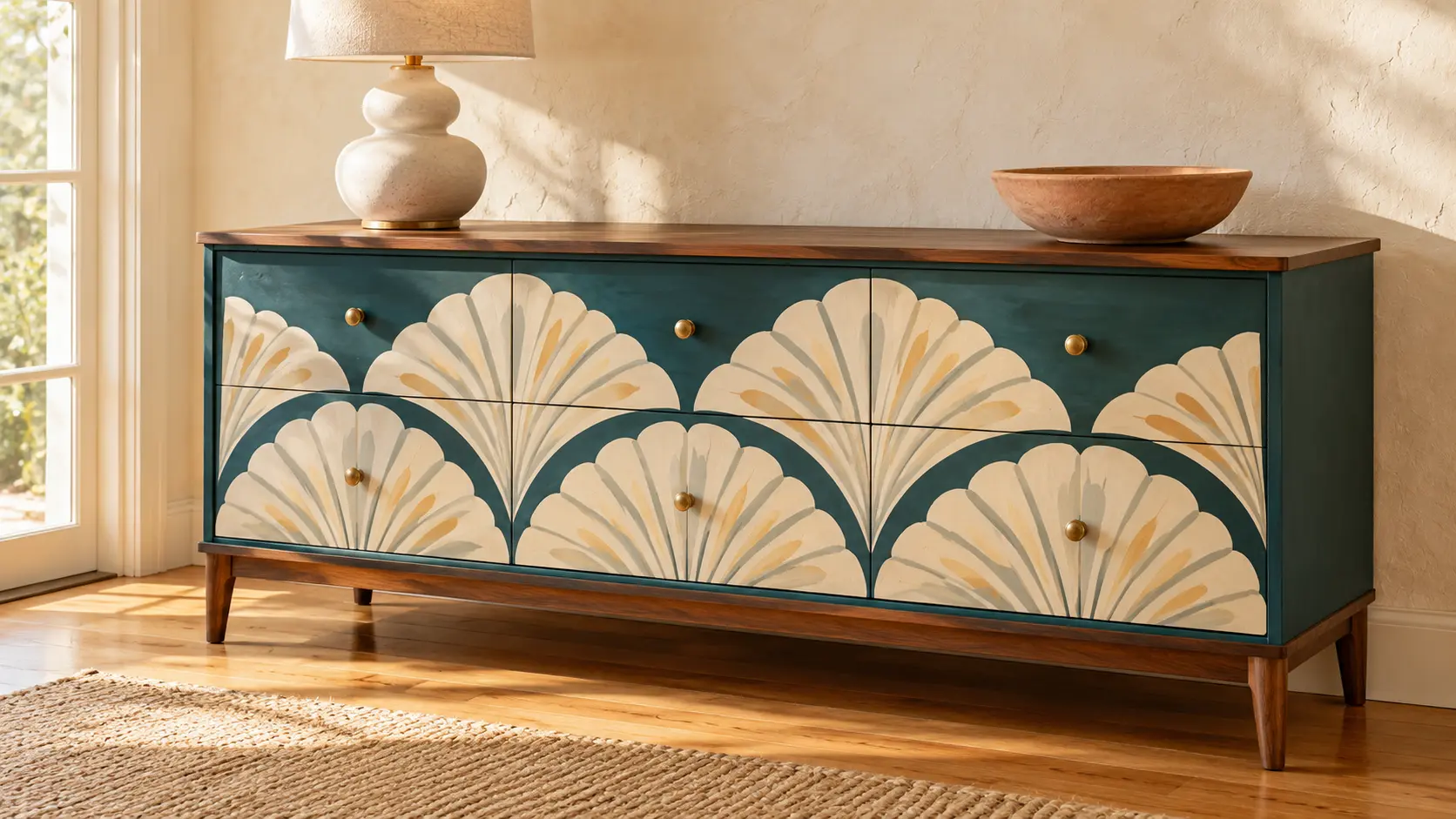
A dresser does more than hold your clothes. It takes up a noticeable part of the room, which makes it a wonderful place to introduce color, pattern, and personality. Even a fairly simple chest can become the piece that makes you smile when you walk past.
The makeover does not have to stop at a single paint color. You can add stripes to one drawer, bring a floral design across the front, or build a palette that changes from light to dark. Existing details, from curved legs to decorative molding, can also help guide the finished look.
These 11 painted dresser ideas range from playful pastels to rich navy florals. Whether you want a cheerful nursery piece, a bedroom statement, or colorful storage for a living space, there is plenty here to adapt to your own home.
1. Brighten Your Dresser With Pastel Stripes
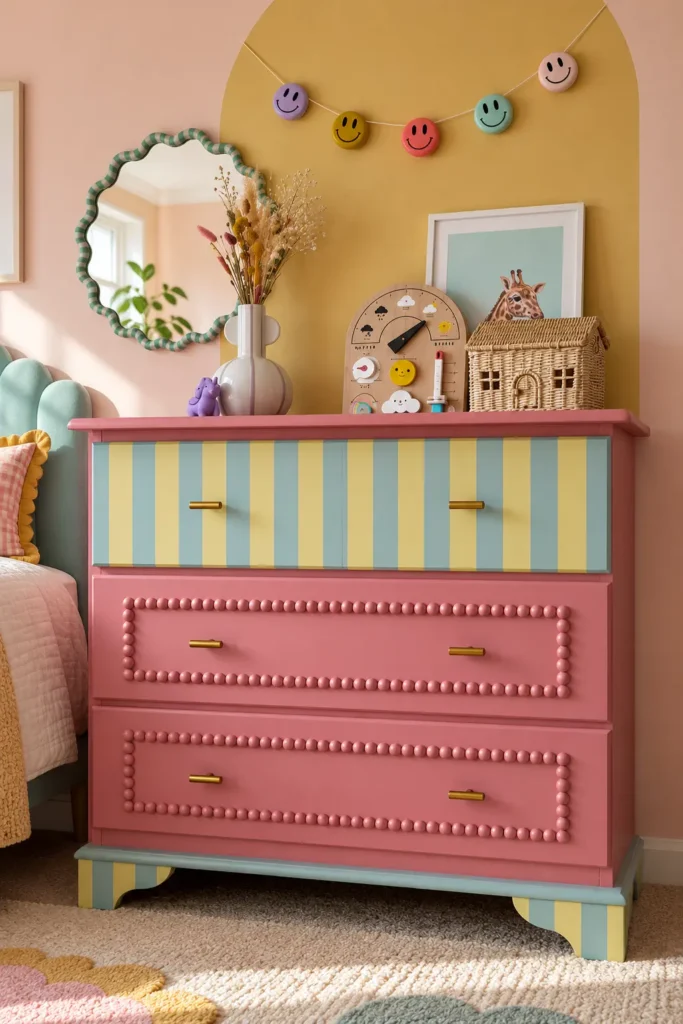
This pink painted dresser has the kind of playful personality that can brighten a whole corner. Its top drawer combines pale yellow and blue-green stripes, while the lower drawers stay pink with decorative beaded borders. Small striped feet repeat the pattern in an unexpected place.
The mix works because the stripes are concentrated in a few areas. The larger pink surfaces give your eyes somewhere to rest, allowing the pastel details to feel cheerful without making every part of the dresser equally busy. Slim gold-toned handles add a delicate finishing touch.
To borrow this idea, choose one main color for the frame and most of the drawers, then add two softer accent shades. Sketch the stripe spacing before painting, especially around the handles, so the pattern looks balanced when the drawer is closed.
This dresser would suit a creative bedroom, playroom, or colorful family space. Pair it with a curved mirror and a few personal objects, as shown here, but leave some of the top clear. The painted details already give you plenty to enjoy.
2. Wake Up Your Dresser With Coral
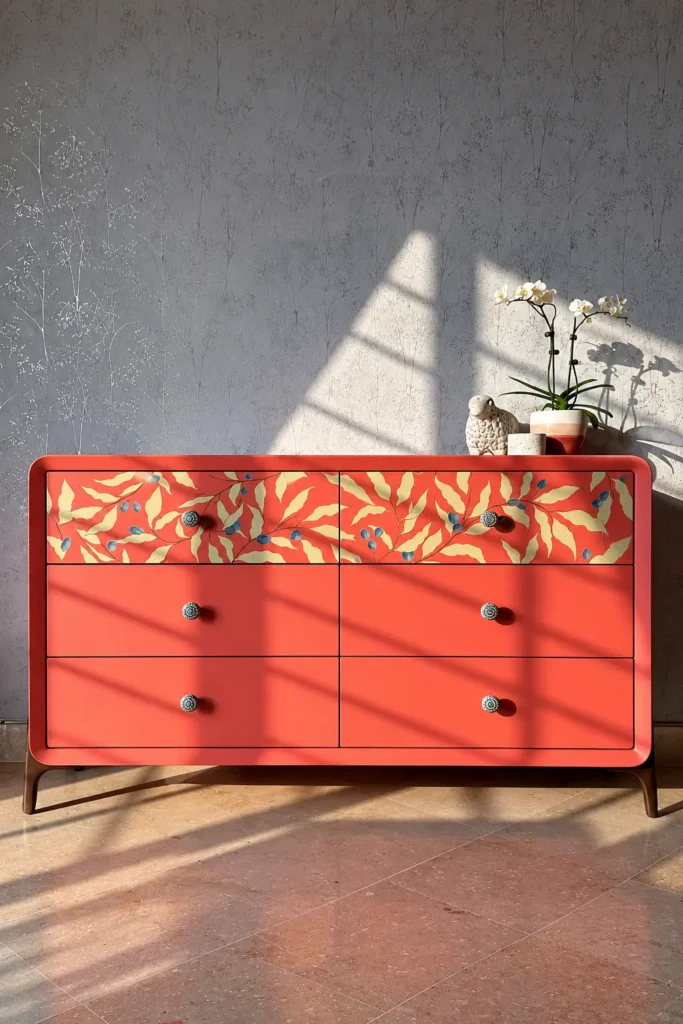
A strong coral finish gives this low dresser an immediate presence. Most of the front remains a solid color, while a leafy pattern stretches across the upper drawers. The result combines a bold furniture makeover with one carefully placed decorative feature.
The pale leaves and muted green accents break up the coral without weakening its warmth. Small dark knobs keep the hardware understated, and the slender dark base gives the piece a lighter outline against the floor.
If you want something similar, begin by choosing the coral shade you would enjoy seeing every day. A red-orange version will feel different from a softer peach-coral, so compare samples against your walls and flooring. Then build the patterned section around that base color.
You could recreate the leafy detail with a stencil, a suitable furniture transfer, or hand painting, depending on your preferred technique. Plan it as one continuous band across the upper drawer fronts. Keep nearby accessories simple so the color and pattern remain the main attraction.
3. Soften Your Dresser With Pink Florals
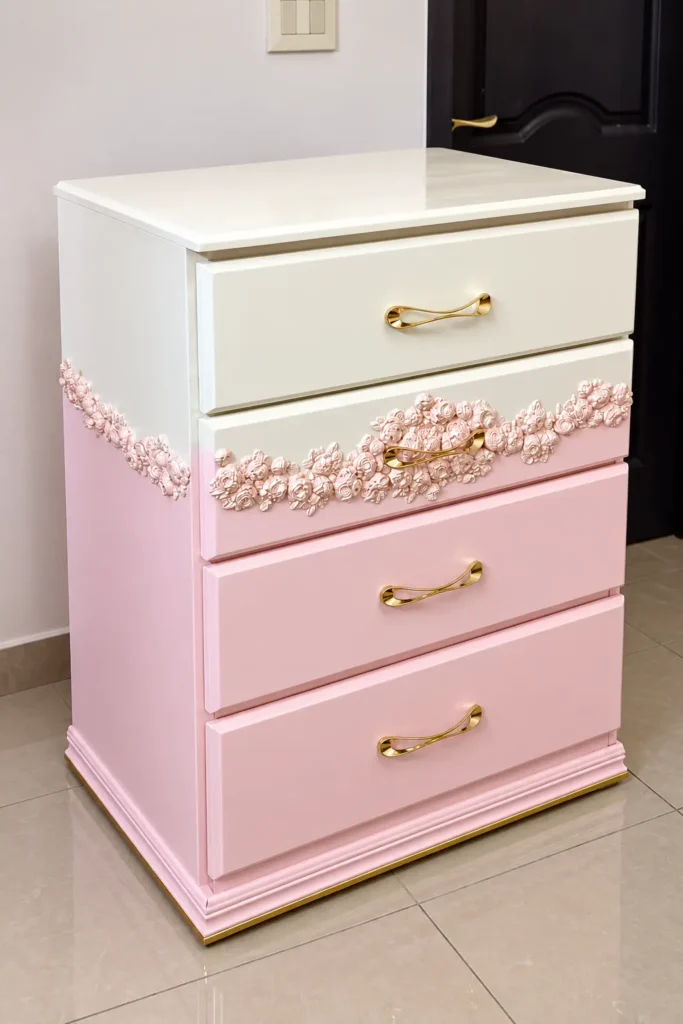
White and pale pink give this painted dresser a gentle appearance, while the raised floral detail makes it feel especially decorative. The upper section stays light, and the pink lower drawers bring warmth without overwhelming the compact shape.
The floral garland is the feature that gives the makeover its personality. It follows the upper part of the drawer front and continues around the side, helping the decoration feel connected to the furniture. Gold-toned handles introduce a little shine against the soft painted finish.
For your own version, decide where the floral detail will sit before choosing the hardware. The flowers need enough space around them to remain visible, and any added decoration should allow the drawers to open freely. Keep raised elements clear of moving edges and contact points.
You can create a similar mood with furniture appliqués designed for the surface, or choose painted floral detail if you prefer a flatter finish. Style the dresser with restrained accessories so its texture remains easy to appreciate. Soft cream, blush, and warm metallic accents would sit comfortably around it.
4. Give Your Dresser a Woodland Story
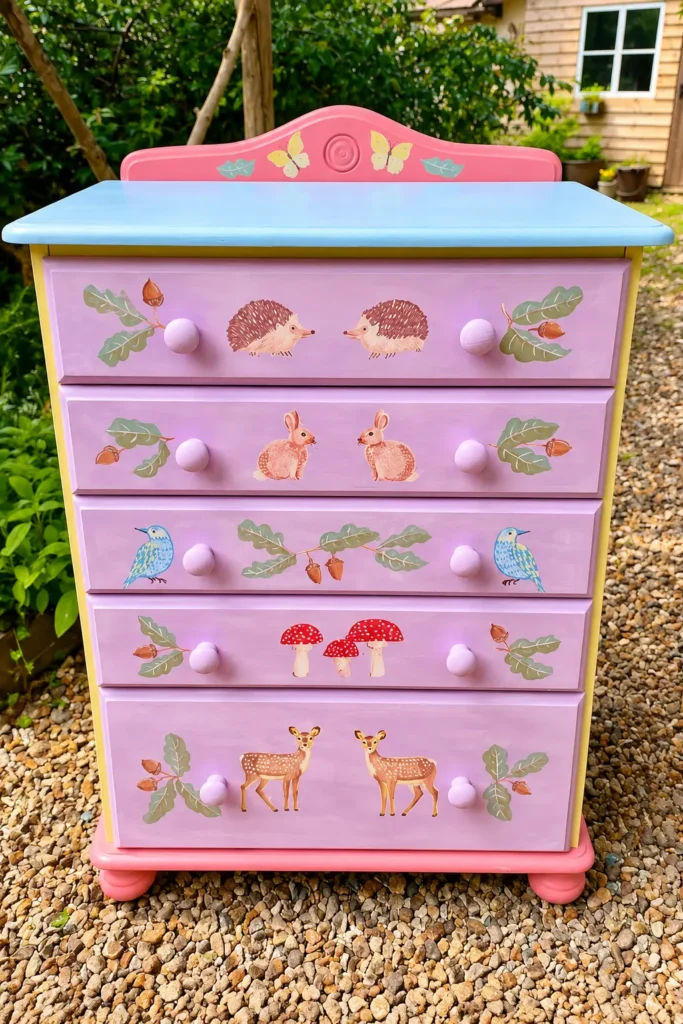
This painted dresser turns storage into something playful, with a different woodland motif on each drawer. Hedgehogs, rabbits, owls, mushrooms, and deer appear against lavender-pink fronts, surrounded by small leafy details.
The bright pink frame and pale blue top make the design even more cheerful. Despite the variety of illustrations, the repeated drawer color and matching round knobs keep the whole piece connected. Each section has its own little scene without feeling unrelated to the others.
If you love this idea, choose your motifs before beginning the makeover. You could use a woodland theme like this one or select a smaller collection of favorite animals. Arrange paper templates on the closed drawers to check the spacing around the knobs and edges.
A nursery, child’s bedroom, or craft space could be a lovely setting for this dresser. Keep the surrounding furniture fairly simple so the illustrations remain readable. For a quieter version, use the same soft base color across the frame and top, allowing the animals to provide most of the contrast.
5. Add Sunshine With a Striped Dresser
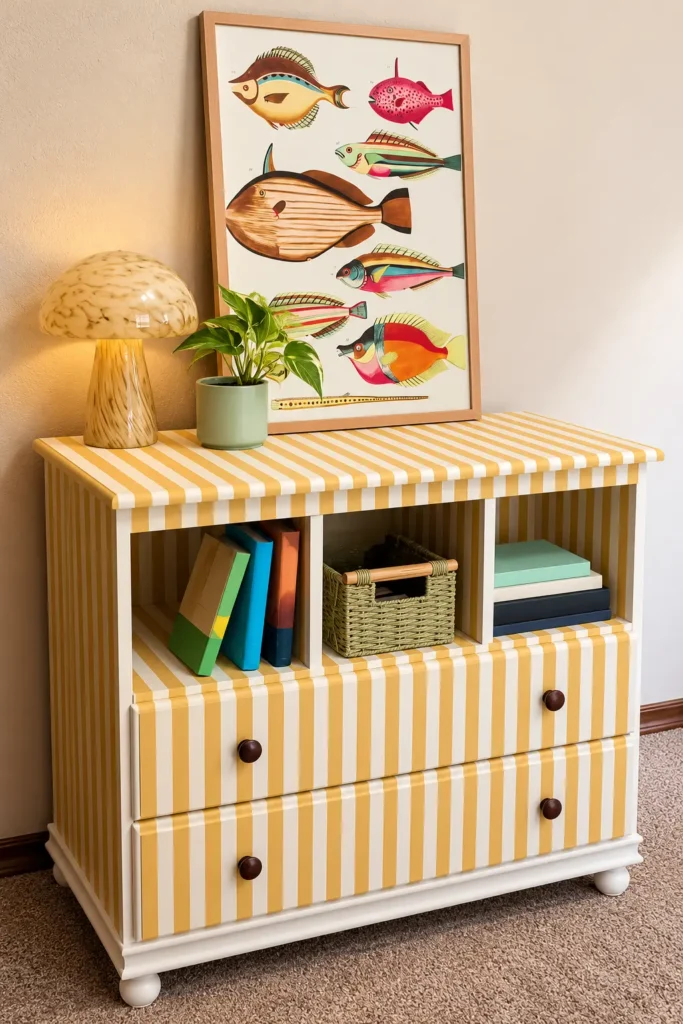
Yellow and white stripes give this dresser-style storage piece a bright, cheerful finish. The pattern runs over the top, along the sides, and down the drawer fronts, making the whole piece feel connected from different viewing angles.
The open cubbies add another layer of interest. Books, a basket, and a few neatly arranged objects break up the painted surfaces and make the furniture useful beyond clothing storage. Dark round knobs provide a small contrast against the lighter stripes.
To adapt this idea, decide which surfaces will carry the pattern and where the stripes should meet. A little planning around the top corners and drawer edges helps the design look intentional. Painting a smooth base coat first also gives you a clearer starting point for marking the stripes.
A warm buttery yellow will produce a softer look, while a brighter yellow will feel more energetic. Repeat the color in one nearby object rather than several matching accessories. The dresser can bring plenty of sunshine to a reading corner, bedroom, or home office on its own.
6. Refresh Your Dresser With Coral Florals
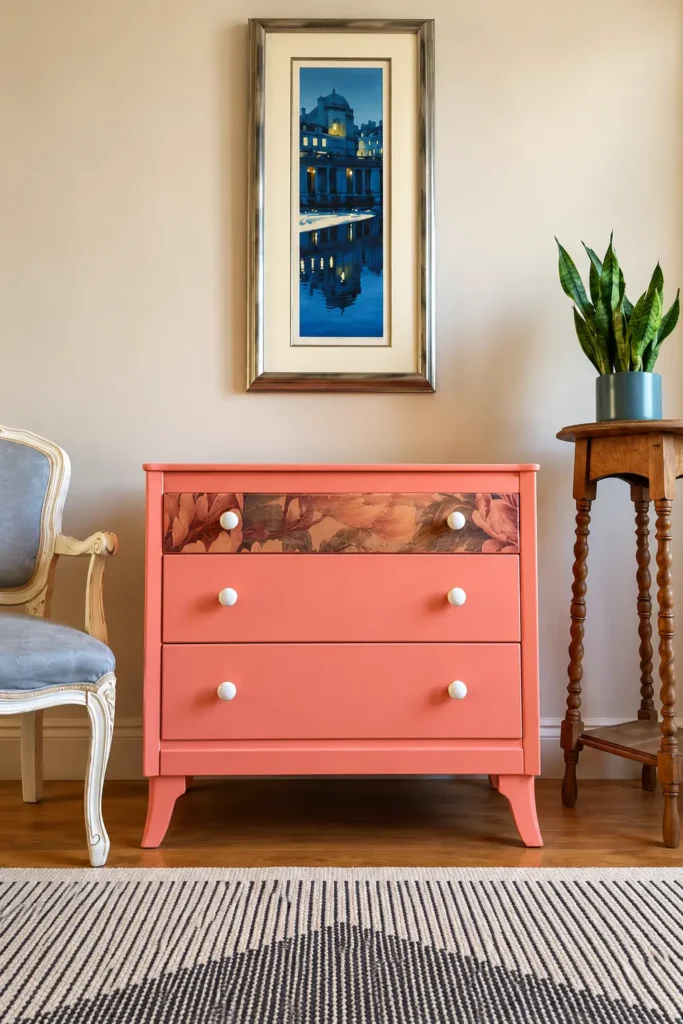
This coral dresser shows how a single patterned drawer can transform an otherwise simple paint makeover. The upper drawer carries a large floral design in warm, muted shades, while the lower drawers remain solid coral.
Keeping the pattern in one place gives the furniture a clear focal point. The white knobs stand out gently against both finishes, and the shaped feet add character without requiring extra decoration. It is a lovely option if you want something expressive but do not want to cover the entire dresser in pattern.
When recreating this look, choose a floral design with colors that relate to your paint. Here, the darker leaves and warm petals make the coral feel connected to the patterned section. Check the scale, too: broad flowers will read differently from a tiny, scattered print.
A suitable decorative paper, transfer, or hand-painted design could help you achieve a similar effect. Follow the chosen product’s application and finishing instructions, particularly around the drawer edges. For styling, a simple framed picture above and a contrasting chair nearby are enough to give the dresser a place in the room.
7. Go Retro With a Color-Block Dresser
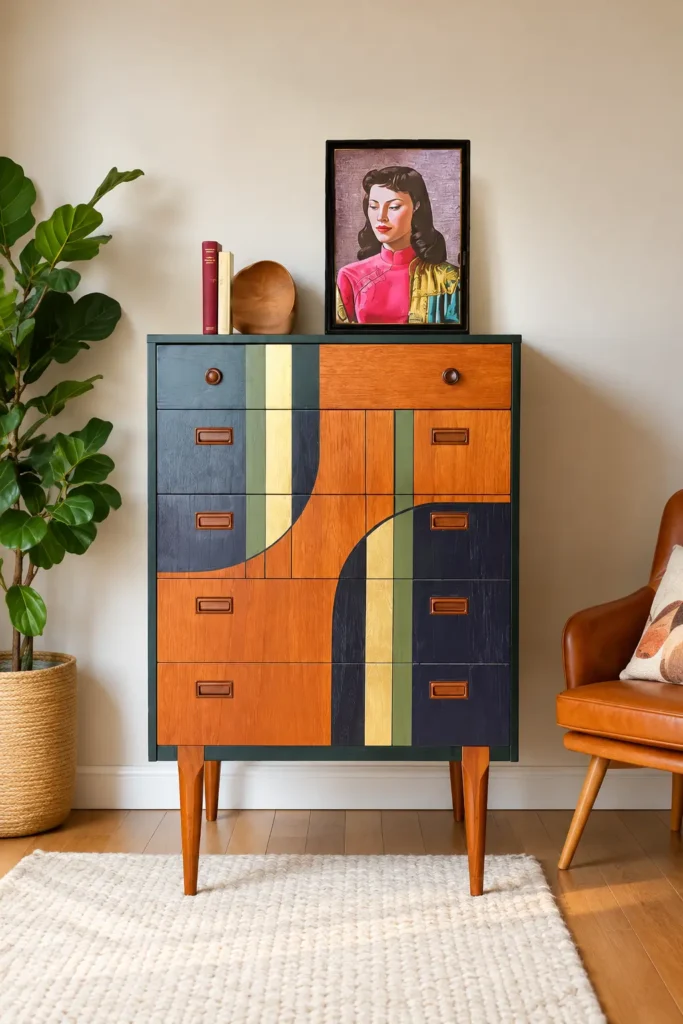
Natural wood, deep blue, pale yellow, and muted green give this tall dresser a distinctive retro feel. Curved painted bands move across the front, linking different drawer sections and turning the furniture into a graphic feature.
The exposed wood is important to the balance. It adds warmth between the painted areas and allows the original material to remain part of the design. The dark outer frame provides a boundary, while the slim legs keep the taller piece from looking too heavy.
If you want to try a similar makeover, begin with a drawing of the whole dresser front. Plan your shapes across the closed drawers, then mark and label each section before removing them. This helps the curves reconnect when the furniture is assembled again.
Choose a limited palette so the pattern stays cohesive. One dark color, one light accent, and a softer middle tone can work alongside visible wood. Keep the hardware compact where possible, allowing the flowing shapes to remain clear. Nearby artwork can repeat one of the colors without copying the whole design.
8. Paint Your Dresser With Bold Botanicals
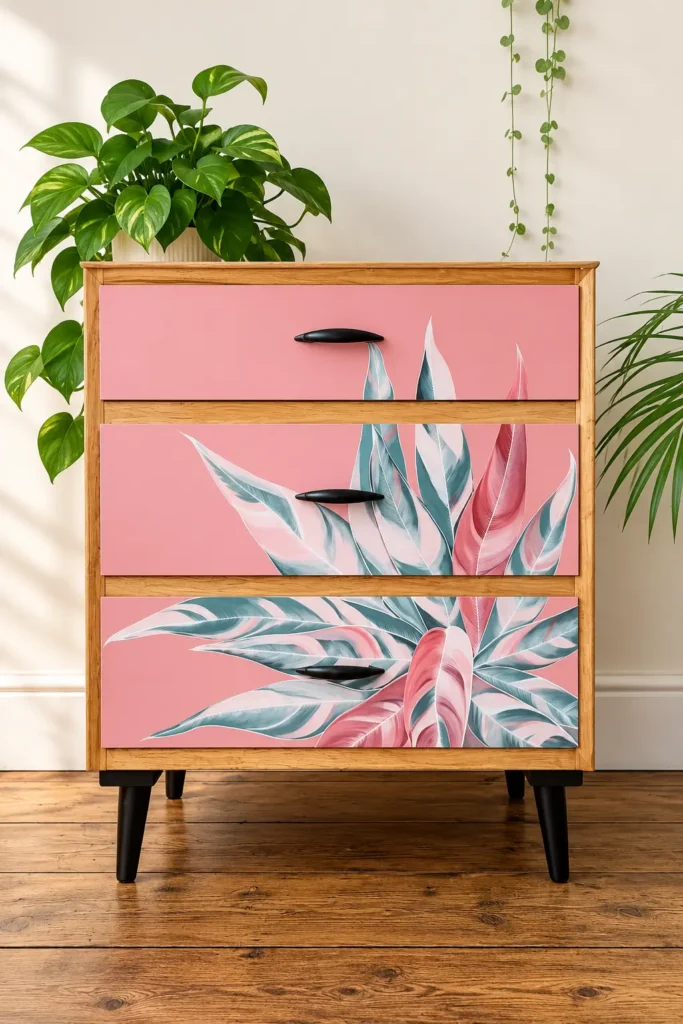
A dusty pink background and oversized botanical forms make this small dresser feel like a piece of artwork. The design travels across the drawer fronts in teal, cream, and deeper pink, creating movement from the lower corner upward.
The natural wood frame gives the painted area a clear border. Black handles and dark legs add definition without introducing another bright color. Those restrained details help the large botanical pattern remain the feature you notice first.
To make this look your own, think about the overall composition before painting individual leaves. A few generous shapes can have more impact than filling every drawer with small details. Leave some background visible, especially near the top, so the design has room to breathe.
Sketch the pattern with the drawers in their correct positions, checking how it crosses the gaps and meets the handles. You could use hand painting or a transfer suitable for furniture. In the room, repeat a single shade from the design in a cushion or print, keeping larger surrounding surfaces relatively quiet.
9. Warm Up Your Dresser With Ombré
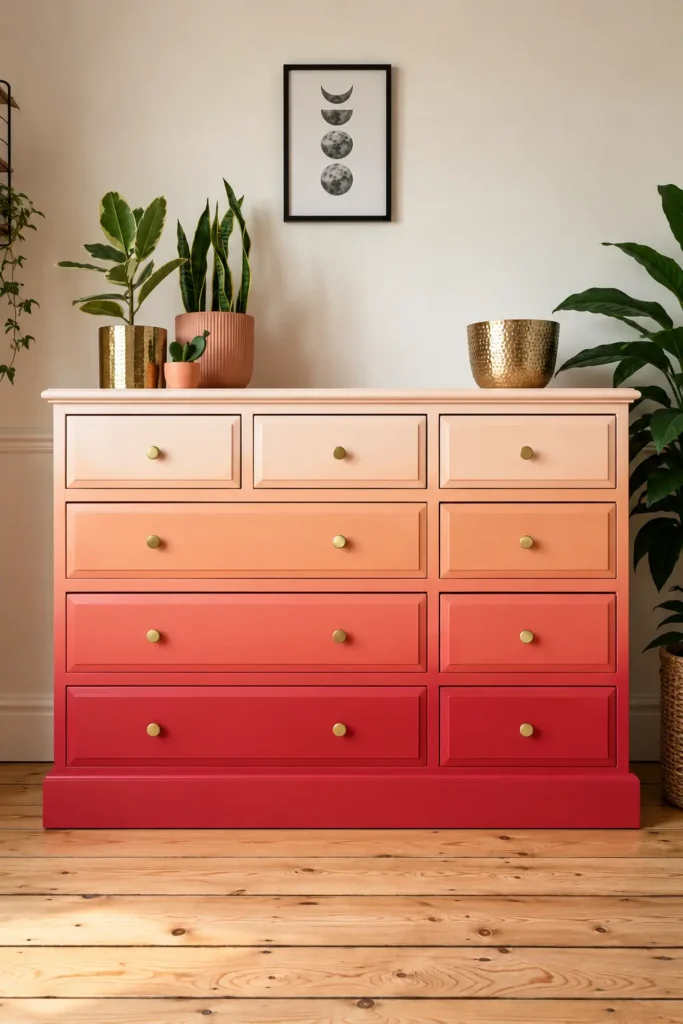
This painted dresser moves from pale peach at the top to a rich red at the bottom. Each drawer row carries a different shade, creating an ombré effect that feels organized rather than randomly colorful.
The dresser’s framed drawer fronts make the color changes especially effective. Their repeated shapes provide consistency while the shades deepen. Small gold-toned knobs bring a warm finishing detail and suit the peach, coral, and red palette.
For a similar makeover, select the full sequence of colors together before painting. Place your samples in order and check whether the transition feels gradual enough. The middle shades matter just as much as the lightest and darkest colors because they connect the whole design.
Assigning one shade to each row is a practical way to create this effect without blending wet paint across a large surface. Decide how the surrounding frame will relate to those rows, too. Against a simple wall and natural wood floor, this dresser has enough presence to become the main color feature in the room.
10. Give Your Dresser a Green Geometric Twist
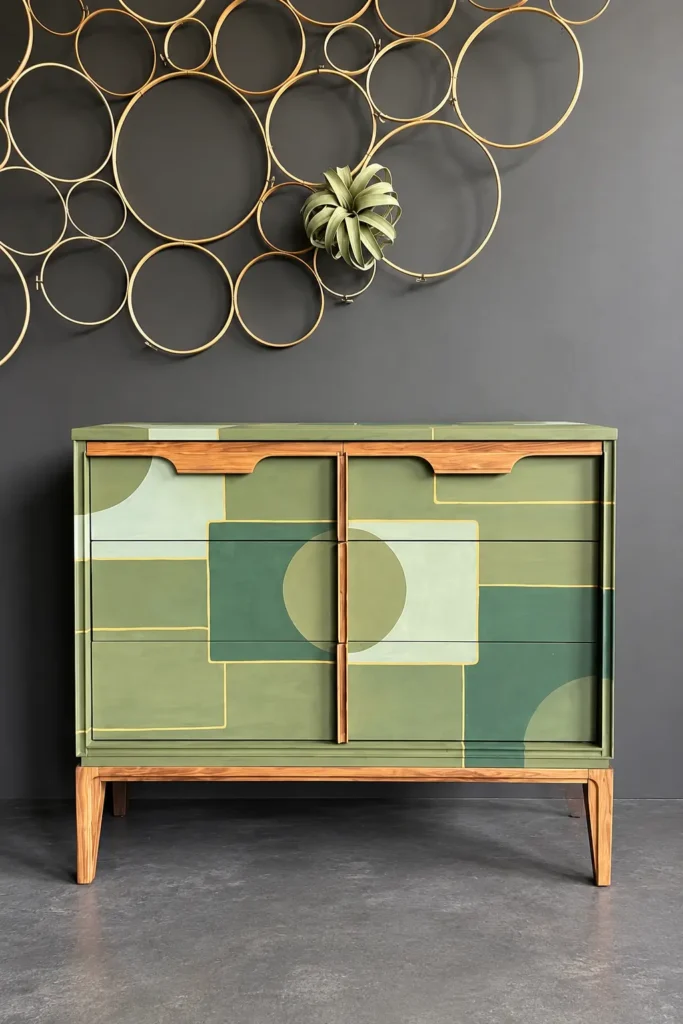
Several shades of green turn this dresser into a calm but interesting statement piece. Overlapping blocks, broad curves, and a central circular form create the pattern, while fine gold-toned lines define parts of the design.
The wood trim and legs bring warmth to the green palette. They also frame the painted front, making the geometric arrangement feel contained. Because the colors are closely related, the pattern has plenty of detail without the sharp contrast of a multicolored design.
Start your own version by choosing a light green, a medium olive, and a deeper forest shade. Try them together on a sample board before deciding where each one will go. Larger shapes are often easier to appreciate across a room than lots of small sections.
Map out the design across the whole front so the shapes continue neatly over the drawer gaps. Add the finer outlines only after the main painted areas are ready, following the products’ drying instructions. Simple styling will let the geometric detail stand out; the dresser does not need a busy arrangement on top.
11. Dress Up Navy Dressers With Florals
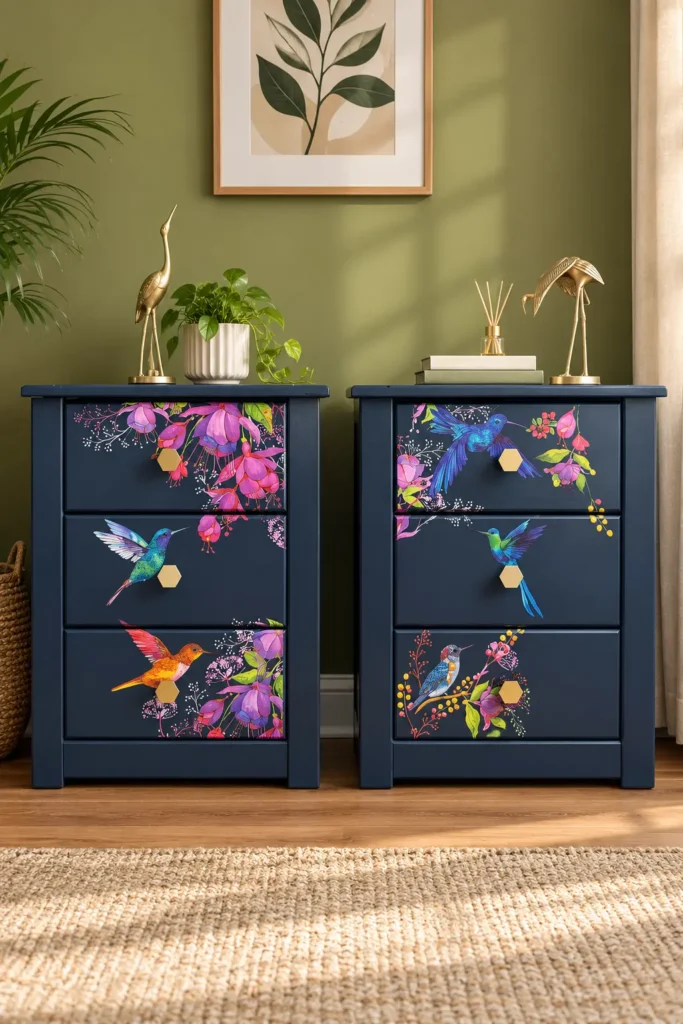
Deep navy gives these small dressers a rich backdrop for bright flowers and birds. The pink, purple, yellow, and green details stand out clearly against the dark fronts, turning a matching pair into a decorative feature.
The floral arrangements are coordinated without being identical. They occupy different areas of each chest, allowing the pair to feel connected while giving each piece its own composition. Small gold-toned knobs pick up the warmer details in the designs.
This is an appealing direction for bedside storage or two small chests placed together. To recreate the effect, choose the navy base first, then select floral imagery with enough contrast to remain visible. Tiny dark details can disappear against a deep background, so check the design at a realistic viewing distance.
Position the flowers and birds around the hardware before applying or painting them. You can use suitable transfers or hand-painted details to create the arrangement. Keep the objects on top fairly restrained, allowing a little height from a lamp or ornament without hiding the decorated drawer fronts.
Before You Start Your Painted Dresser Makeover
Once you have chosen a look, take time to assess the dresser itself. Check that the drawers open properly, the handles are secure, and the piece is stable. Decorative work is much more satisfying when the furniture functions well underneath it.
Identify the surface before choosing your paint system. Bare wood, an existing painted finish, veneer, and laminate may need different preparation and primer. Follow the instructions for the products you select rather than assuming one method will suit every dresser.
Remove the hardware where practical, label the drawers, and clean the surfaces thoroughly. For stripes, florals, or geometric patterns, sketch the design before applying it. Check the layout with the drawers closed so that any continuous shapes line up.
Finally, allow the finish to dry and cure for the recommended time before returning the dresser to everyday use. If you add a protective coating, make sure it is compatible with both the paint and any decorative products underneath.
Choose a Painted Dresser That Feels Like You
The best painted dresser ideas reflect something you already enjoy. That might be a cheerful pastel palette, a favorite floral pattern, warm sunset shades, or the clean shapes of retro design.
Use your existing room as a starting point, then decide how much attention you want the dresser to receive. One patterned drawer can add a gentle personal touch, while an all-over design can make the furniture the main feature.
You do not have to copy every detail to capture the feeling of an idea. Borrow a color combination, change the hardware, or adapt the pattern to suit your dresser’s shape. Those choices are what make a furniture makeover feel at home in your space.