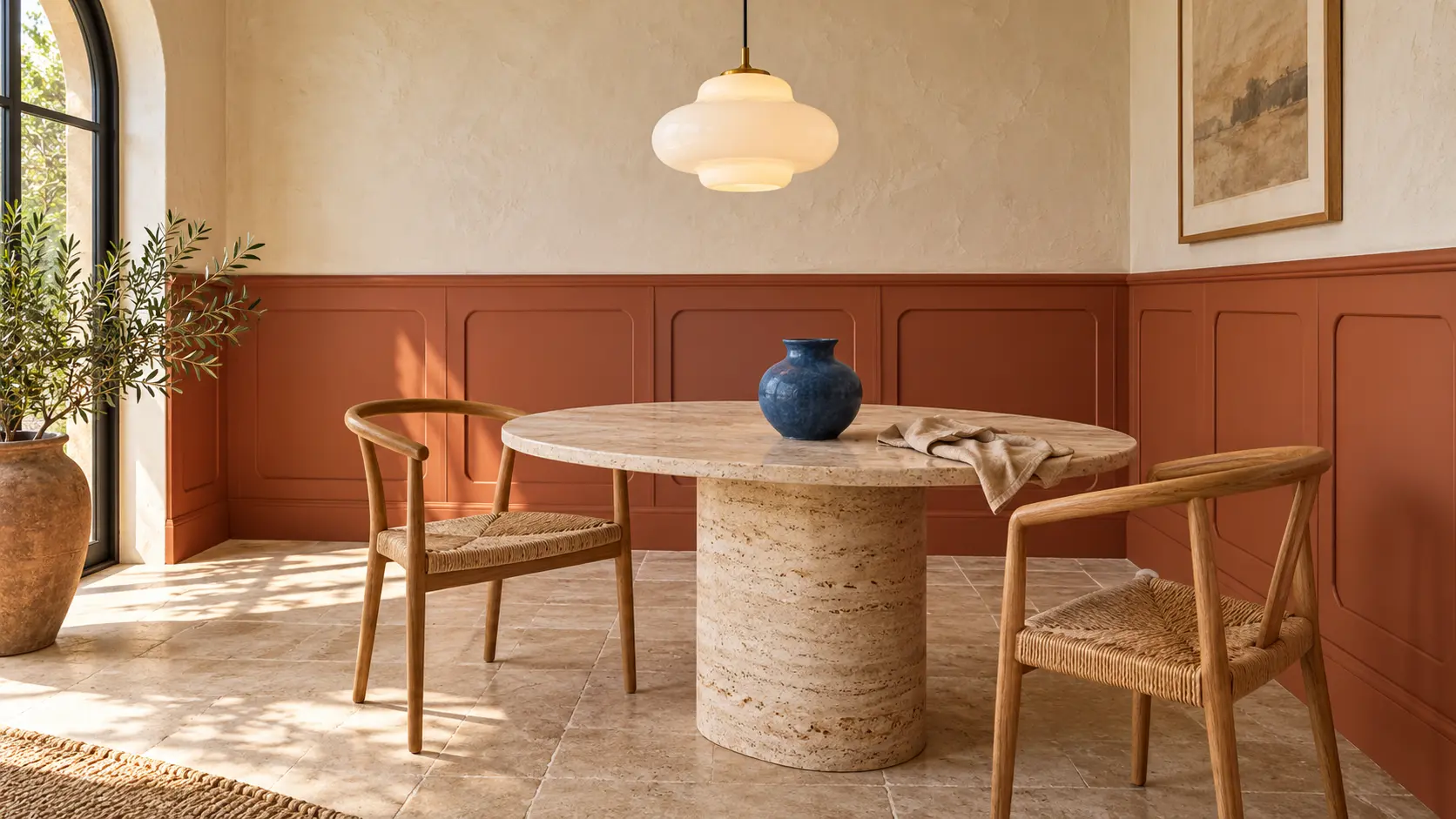
A room can have lovely furniture, a comfortable rug, and the right accessories yet still feel as though something is missing. Often, it is the walls. Half wall paneling gives them a little structure and makes the space feel more thoughtfully finished.
What makes this wall treatment so appealing is its flexibility. Narrow grooves can bring texture to a quiet corner, framed panels can add a traditional touch, and wood slats can create a warm backdrop behind your bed. There is also plenty of room to play with the surface above, whether you prefer soft paint, cheerful color, or patterned wallpaper.
These 12 half wall paneling ideas offer different ways to bring character into your home, with details you can adapt to your furniture, layout, and style.
1. Add Sunny Half Wall Paneling
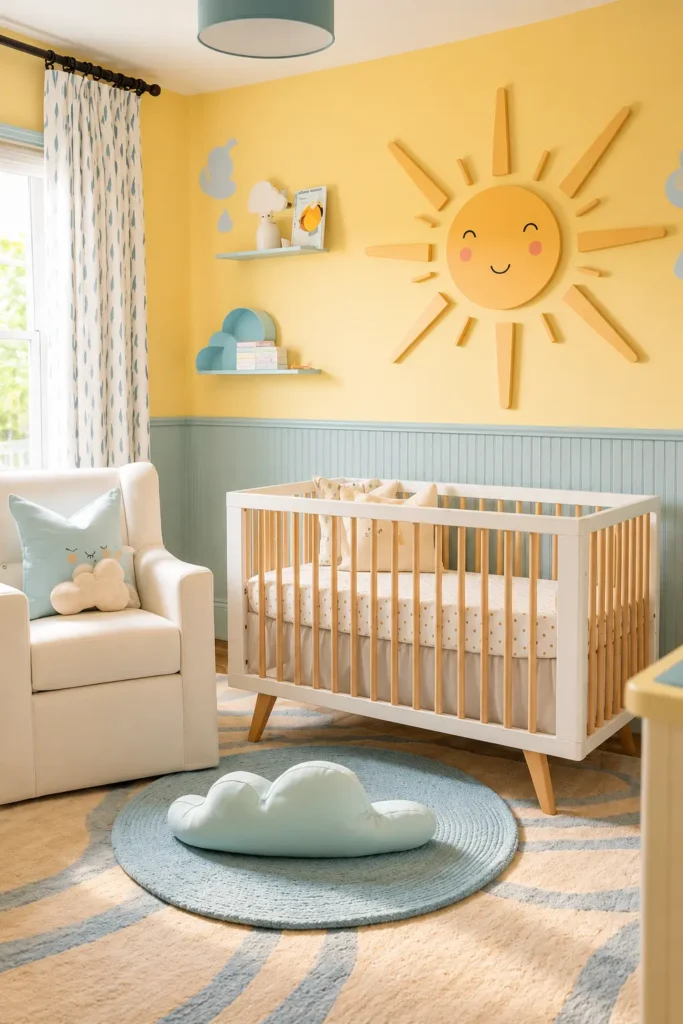
If you want your nursery to feel cheerful the moment you step inside, this yellow and blue-green combination is a lovely place to start. The sunny upper walls give the room its playful personality, while the soft paneling below keeps the overall palette gentle.
The narrow vertical grooves introduce texture without competing with the large sun decoration. That balance matters when you already have a statement piece on the wall. The paneling gives the lower half something interesting to look at while leaving the brighter features above to shine.
Bring in a white cot, a cream armchair, and pale wood details to soften the color pairing. The blue-green rug and cushion create small connections with the lower walls, helping the room feel coordinated without making every accessory match.
To make this idea your own, adjust the yellow to suit the atmosphere you want. A buttery shade will feel softer, while a richer golden tone will give the nursery more energy. Test it beside the panel color before committing, especially near the window where daylight changes its appearance.
2. Try Dusty Rose Half Wall Panels
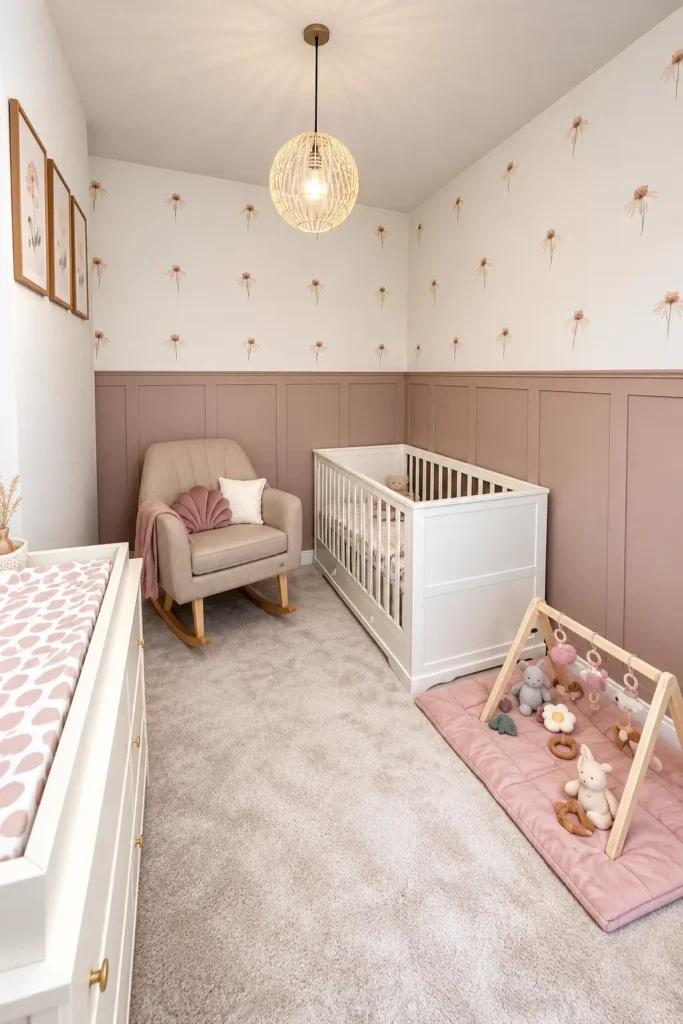
Dusty rose half wall paneling gives this nursery a soft, comforting backdrop. The rectangular sections add definition to the room, while the tiny motifs on the upper wallpaper keep the walls delicate and light.
A muted rose shade works particularly well if you like pink but want a finish that feels understated. Here, it sits comfortably beside the white cot, pale wood furniture, and cream nursing chair. Nothing needs to be overly decorative because the wall treatment already gives the room character.
Take the paneling around the adjoining wall to create a continuous finish. The top rail provides a clear meeting point between the paint and wallpaper, making both surfaces feel intentional. Before fitting the trim, plan the spacing of the rectangles around corners and larger furniture.
You can carry the dusty rose into a cushion, blanket, or play mat, then leave the remaining fabrics neutral. That keeps the color present without filling the room with pink. As your child’s furniture and accessories change, the simple panel shapes can remain part of the room.
3. Warm Your Nook With Taupe Paneling
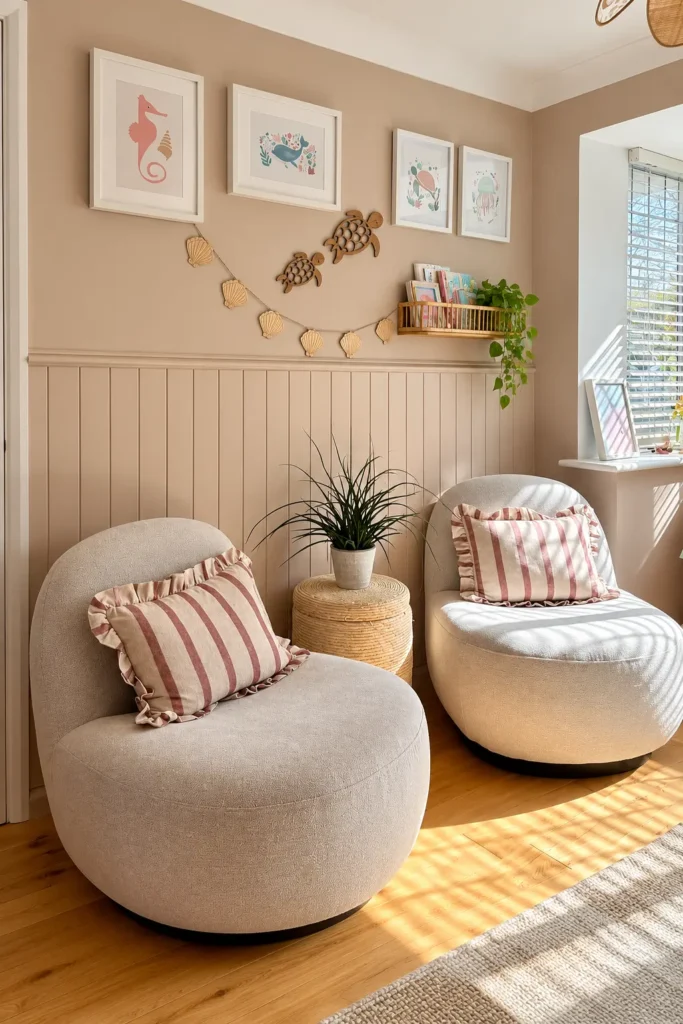
This little seating corner shows how much character you can create with a quiet color palette. Warm taupe covers both the upper walls and the vertical paneling, allowing the grooves to stand out through subtle changes in light and shadow.
Using the same color across both surfaces gives the nook a connected, settled appearance. It is a useful approach when you want texture but do not want a strong dividing line across the wall. The paneling adds detail while letting the furniture and artwork share the attention.
Rounded upholstered chairs soften the straight lines below the rail. Striped cushions introduce a small amount of pattern, and the woven side table adds another texture without making the corner feel busy. Together, these details create a comfortable spot for reading or catching up over coffee.
For your own version, hang a few personal prints above the paneling and keep their frames fairly consistent. Leave breathing room between the artwork and the rail. A warm neutral wall can accommodate colorful pictures, so you can bring in personality without changing the paint.
4. Frame Your Hallway With Half Wall Panels
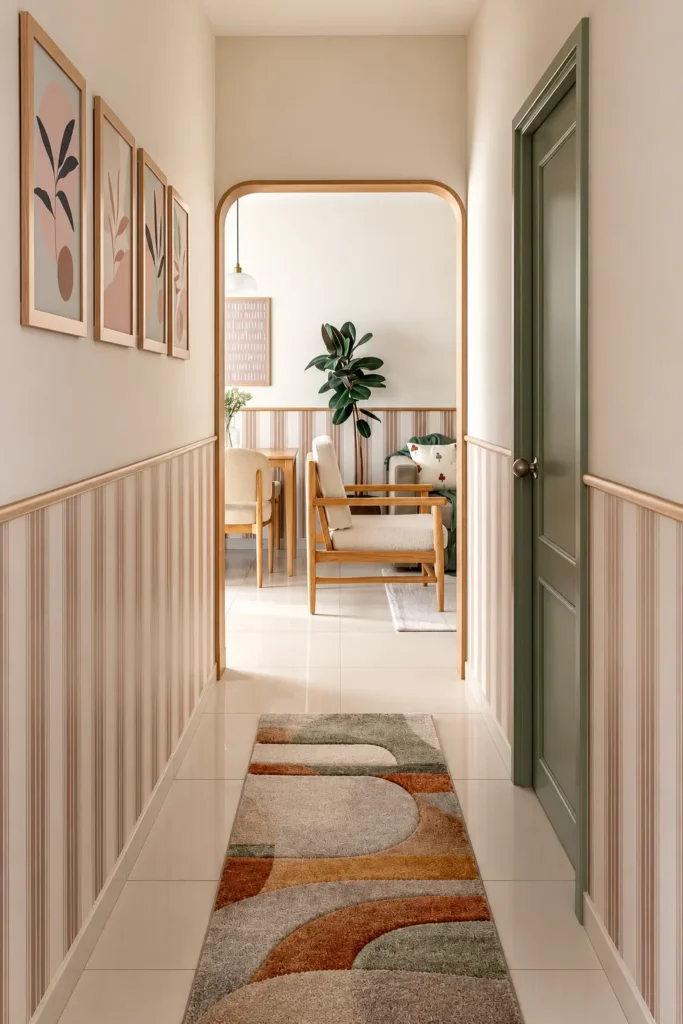
A hallway can easily become a space you pass through without noticing. Pale taupe half wall panels give this one a more welcoming identity, adding detail along the passage while keeping the upper walls warm and light.
The vertical pattern creates a steady rhythm, which suits the long shape of the corridor. A simple rail finishes the paneling neatly and gives the artwork above a clear area of its own. The result feels considered even though the hallway has very little furniture.
The muted green door is another detail worth borrowing. It brings color into the neutral scheme and gives the eye a point to pause. A runner with curved shapes adds softness underfoot and breaks up the straight lines of the wall treatment.
If you try this in your entrance, keep the paneling relatively shallow where walking space is limited. Check how the trim meets door frames and skirting boards before installation. A few well-spaced pictures will usually feel more comfortable than filling every available section of upper wall.
5. Warm Your Bedroom With Slatted Panels
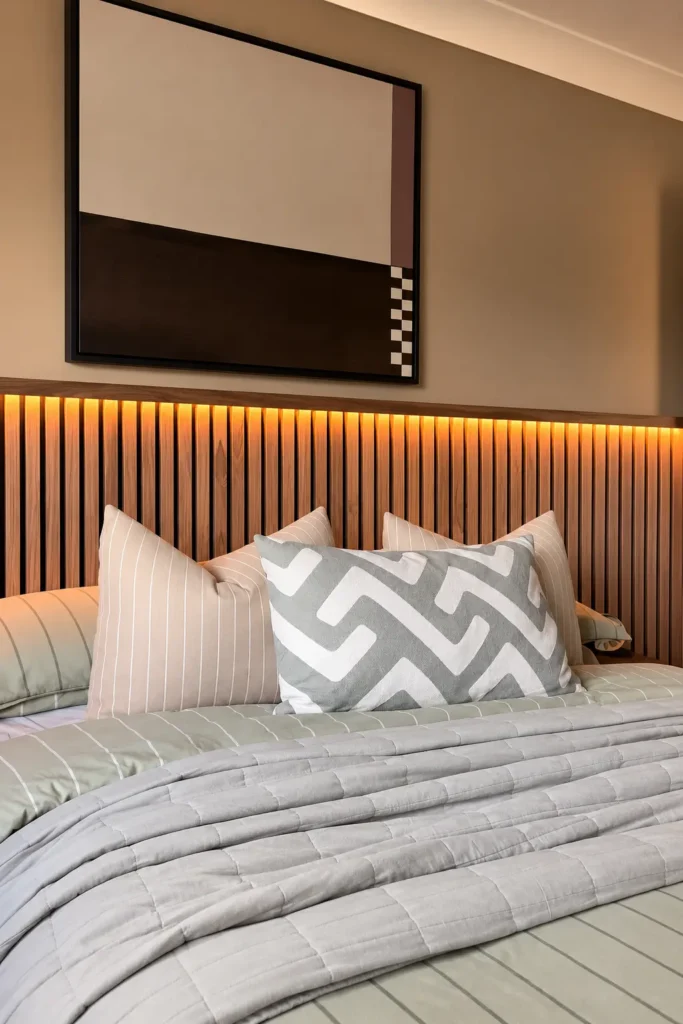
Wood slats behind the bed give this bedroom a warm focal point. The lower wall becomes a feature in its own right, while the plain painted surface above leaves space for one large piece of artwork.
The lighting along the top edge adds another layer to the design. Its warm glow catches the wood grain and emphasizes the repeated vertical lines, creating a softer atmosphere around the bed in the evening. The wood remains appealing during the day, when its natural color does more of the work.
Gray bedding balances the warm timber, and the cushions add pattern without overpowering it. To recreate that balance, choose one wood finish you enjoy and let the surrounding fabrics stay relatively simple. Too many competing wood tones can make the backdrop harder to appreciate.
Decide whether your slatted panels will stop just beyond the bed or continue across the whole wall. Both approaches can work, but the edges should feel deliberate. If you include concealed lighting, plan the wiring, controls, and access before the panels are fitted.
6. Dress Up Your Bathroom With Paneling
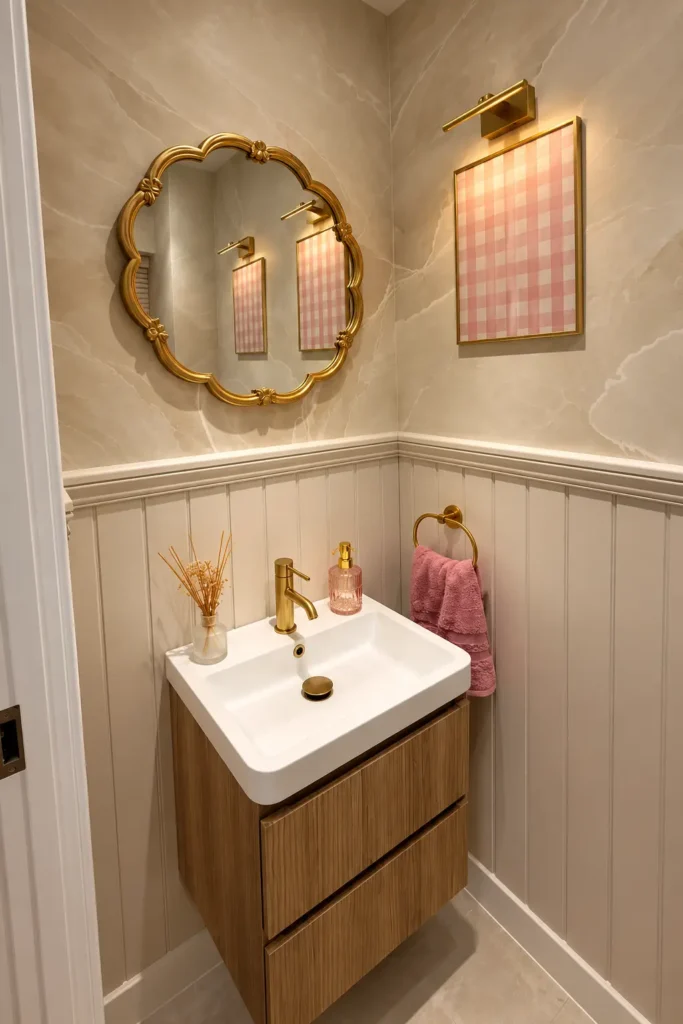
Cream half wall paneling gives this powder room a softer, more decorative feel. Above it, a stone-look finish introduces movement and pattern, while the gold-framed mirror becomes the main feature over the basin.
The combination works because each surface has a clear role. The lower panels provide simple vertical detail, the upper wall supplies a broader pattern, and the mirror adds a curved outline. The compact wood vanity brings warmth into the space without adding another painted color.
You can borrow the same approach even with a different mirror or wall finish. Keep the lower paneling fairly restrained, then choose one decorative feature above it. A small framed print or a warm metallic light can complete the arrangement without crowding the wall.
Plan the rail height alongside the basin, taps, mirror, and towel fittings so the lines sit comfortably together. For this setting, select materials and finishes suitable for the expected moisture and splashes. The joints and edges deserve attention too, particularly around the sink and plumbing.
7. Pair Pink Half Wall Panels With Wallpaper
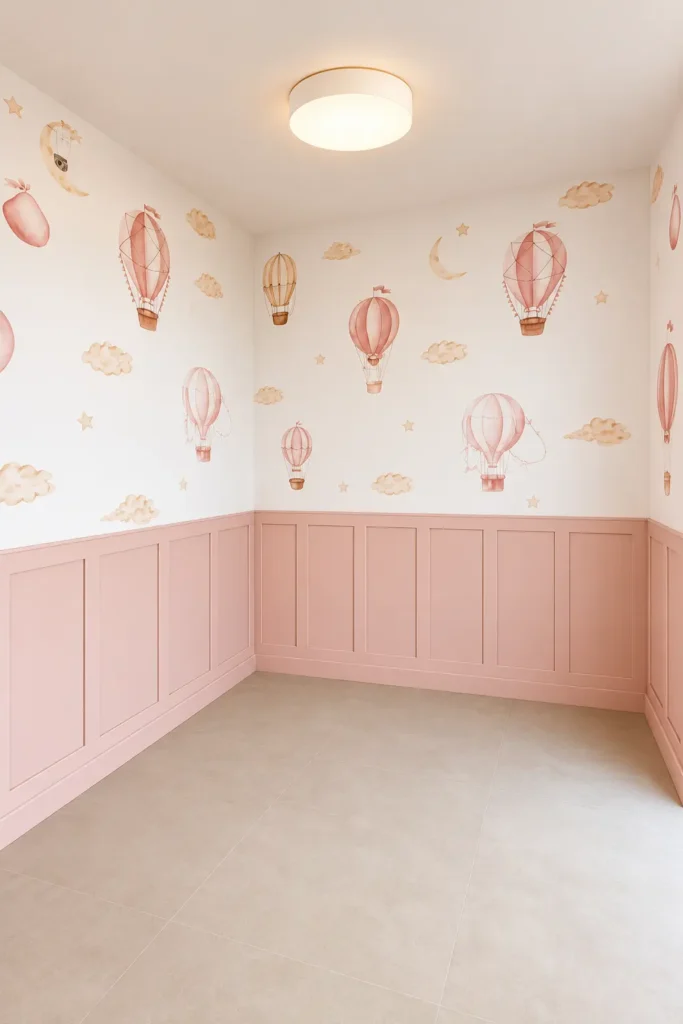
Blush pink panels and hot-air-balloon wallpaper give this room a gentle storybook mood. The panel frames create structure below, while the floating illustrations bring a sense of movement to the upper walls.
Taking the panel color from the wallpaper is a useful way to make the combination feel connected. Here, the soft pink appears in both finishes, so the eye moves easily between them. The pale background also gives the illustrations enough space to stand out.
If you want to recreate the look, compare the paint sample with the actual wallpaper rather than choosing from a screen. Small differences in undertone can become more noticeable once the two meet along a long rail. A dusty blush will create a different atmosphere from a brighter peach-pink.
Keep the remaining furnishings simple so the wall treatment stays enjoyable to look at. Light wood, cream upholstery, and plain curtains would sit comfortably with this scheme. The paneling already provides a strong framework, so additional wall decorations can be limited to a few meaningful pieces.
8. Cozy Up With Mauve Half Wall Paneling
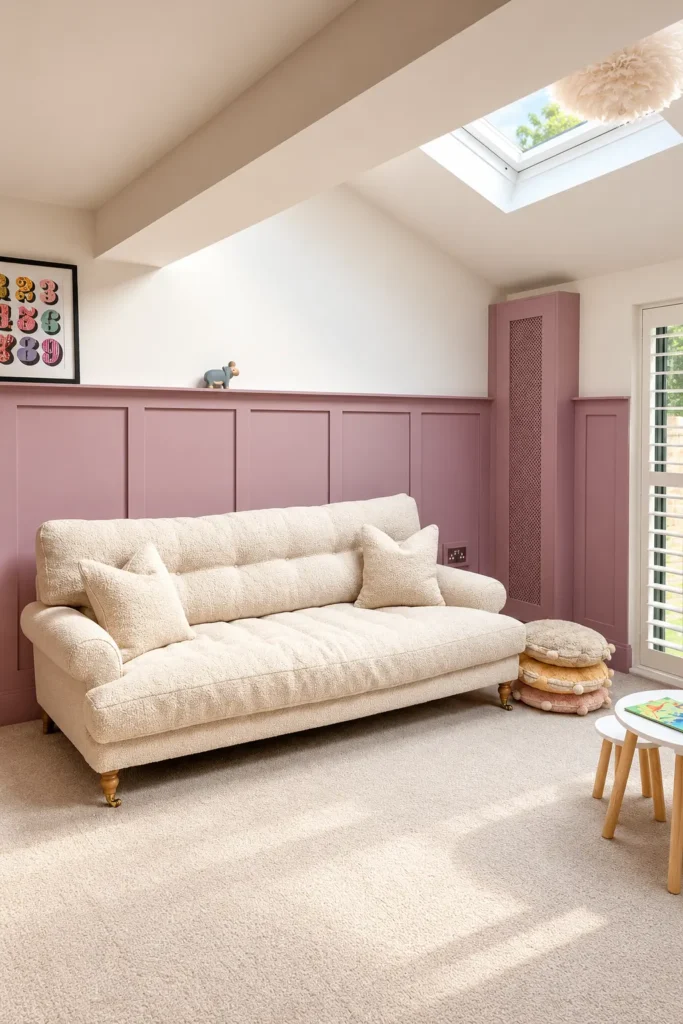
Sloping ceilings can make a room feel charming, but they can also leave you wondering how to decorate the walls beneath them. This attic lounge uses muted mauve paneling to give the lower part of the room a consistent visual line.
The framed panels create a backdrop for the cream sofa, bringing color into the room without covering the ceiling. Above the rail, the pale walls follow the roofline and keep its shape visible. The skylight adds to the open feeling of the upper space.
Mauve is an appealing choice if you want something warmer than gray but quieter than a bright pink. In this setting, its earthy undertone sits naturally with soft cream upholstery and neutral carpeting. A small accessory in a similar shade would be enough to repeat the color.
Before planning your own panels, consider the lowest ceiling point, door positions, and furniture height. A rail that looks balanced on one wall may meet an awkward angle on the next. Marking the proposed line with tape can help you judge the proportions before installation.
9. Bring Sage Half Wall Panels Upstairs
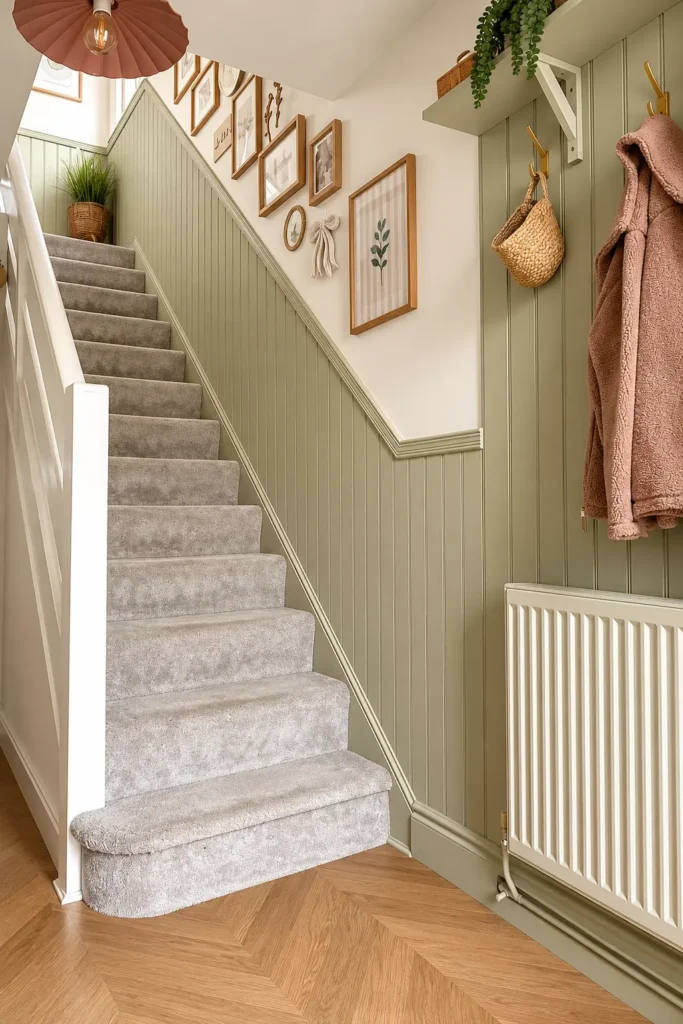
Sage green half wall paneling brings a gentle color to this stairway and connects it with the entrance beside it. The narrow vertical grooves add detail along the steps, while the top rail follows the upward angle of the staircase.
That angled rail is what makes the paneling feel fitted to the space. It reflects the movement of the stairs instead of cutting across the wall at an unrelated height. On the adjoining wall, the same green continues into a practical area for coats and bags.
Warm wood flooring, pale stair carpet, and natural frames keep the scheme inviting. The gallery wall introduces a personal layer above the paneling, giving the stairway something to enjoy as you move through it. A mix of frame sizes helps the arrangement feel collected over time.
For your own version, plan the rail transitions at the bottom and top of the stairs carefully. If you add hooks, position them for the items you actually use and secure them appropriately. Keep hanging coats and bags clear of the walking route.
10. Add Character With Blue Half Wall Panels
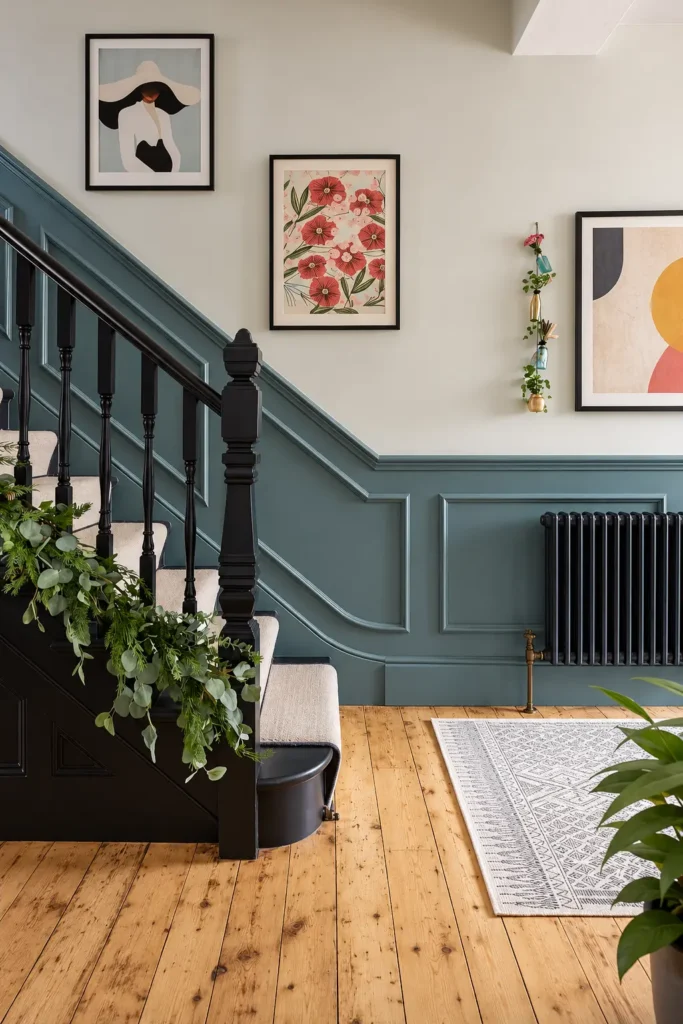
Dusty blue half wall panels give this stair hall a richer, more traditional character. Decorative molding adds definition to the lower walls, while the dark banister introduces a strong outline beside the softer blue.
The warm wood flooring is an important part of the color balance. It brings warmth beneath the cool painted surfaces, keeping the entrance from feeling too chilly. Above the rail, pale walls make a clear backdrop for the colorful artwork.
If you like this look, choose a blue with a muted gray or green undertone and test it beside your existing flooring. The same paint can appear quite different in a bright entrance and a staircase with little daylight. Look at the sample at several times of day before deciding.
Plan the decorative frames around the radiator, skirting, and stair angle rather than trying to squeeze equal rectangles into every gap. Some areas may need a simpler treatment. A coordinated radiator finish, as shown here, can also help a practical fixture sit more comfortably within the paneled wall.
11. Welcome Guests With Fluted Half Wall Panels
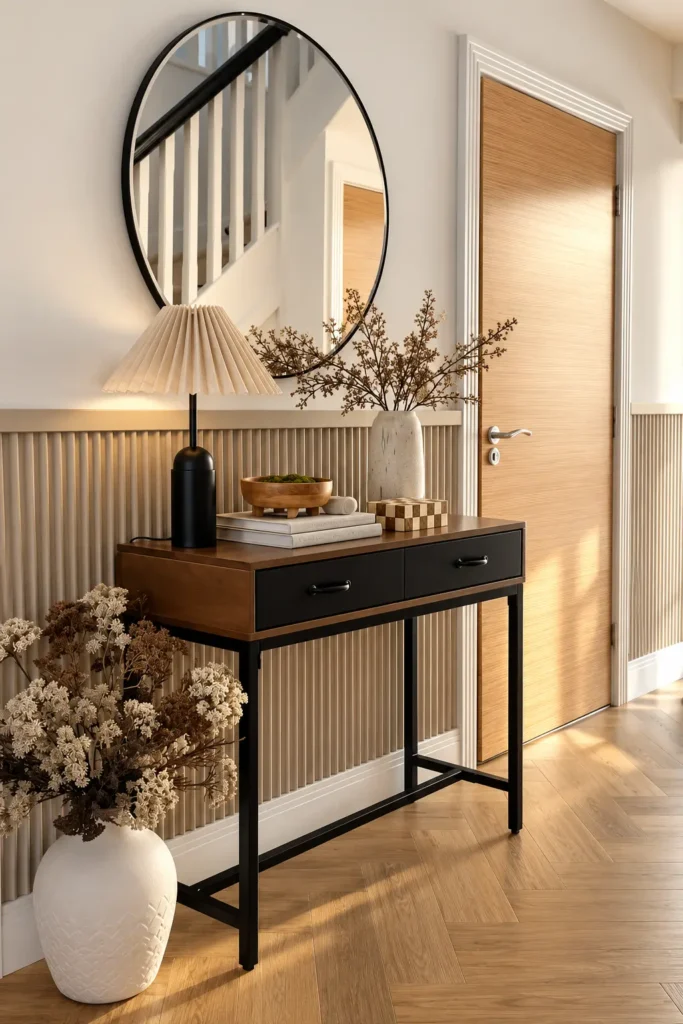
Fine vertical fluting gives this entrance texture without relying on a strong wall color. The warm neutral panels sit behind a slim console, creating an interesting backdrop for the round mirror, pleated lamp, and a few carefully chosen accessories.
What makes this arrangement appealing is the mixture of shapes. Repeated vertical lines provide structure, the mirror adds a broad curve, and the lamp shade brings its own softer folds. The dark lamp base and drawer fronts give the pale setting a little definition.
You can use this idea when you want a welcoming entrance with a relatively quiet palette. Choose a console that suits the width of your passage, then leave enough of the paneling visible around and beneath it. Furniture with an open base allows more of the textured wall to show.
For styling, combine a useful lamp, a small stack of books, and one vase or bowl. Leave some empty surface for everyday essentials. The paneling already contributes detail, so the console does not need a large collection of decorative objects to feel finished.
12. Frame Your Bench With Half Wall Paneling
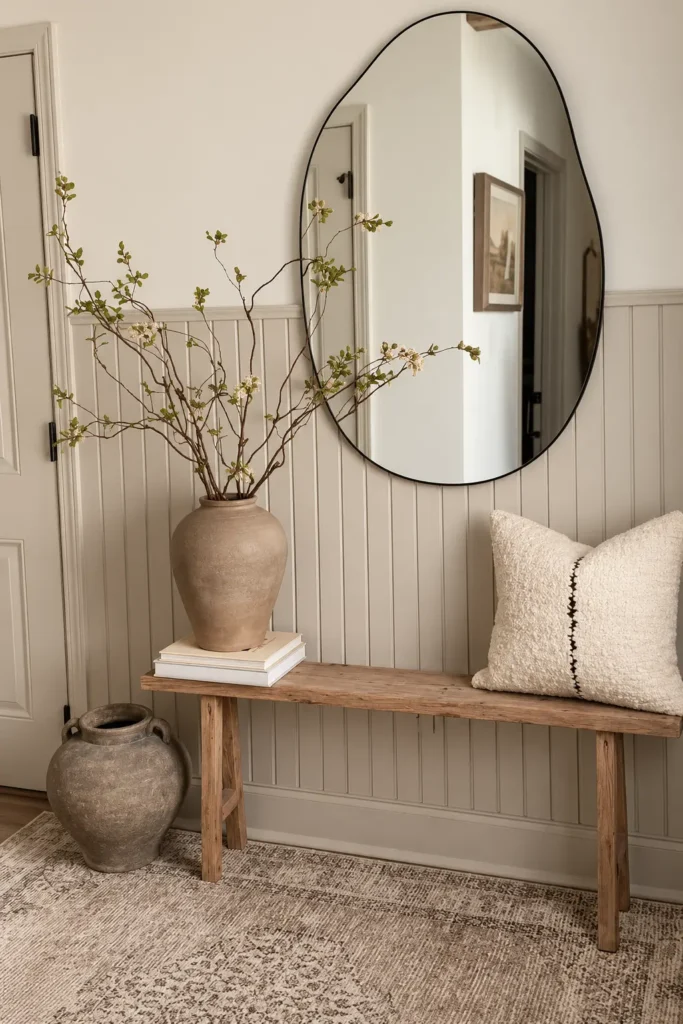
Neutral half wall paneling makes this entryway bench feel part of a complete arrangement. The fine vertical grooves provide a gentle backdrop, while the natural wood seat and textured cushion bring warmth and comfort to the lower half of the space.
The tall oval mirror gives the wall a softer outline and connects the paneled area with the plain surface above. Beside it, loose branches add height and an organic shape. The pottery and woven rug repeat the earthy textures without introducing a busy pattern.
This is a useful idea if you want somewhere to sit while putting on shoes but prefer an entrance that stays visually calm. Choose a bench with proportions that suit the wall and leave comfortable space around nearby doors. Keep the cushion simple enough to lift and clean easily.
Use the rail, bench height, and mirror placement together when planning the layout. The mirror should sit comfortably above the seat rather than appear squeezed between other objects. If your entrance is narrow, keep decorative branches away from the place where people sit or pass.
Make Your Half Wall Paneling Feel Personal
The most inviting half wall paneling ideas connect with the way you want a room to feel. Yellow and blue-green can give a nursery a cheerful start, taupe can settle a reading corner, and warm wood can make the area behind a bed feel more intimate.
Begin with the room’s existing features: flooring, furniture, doors, and natural light. Then choose the panel style and color that sit comfortably alongside them. Narrow grooves, broad framed sections, and wood slats all create different effects, even when they cover a similar portion of the wall.
Finally, check the proportions before committing. Mark the rail height, consider where furniture will sit, and work through the corners and openings. Those small planning decisions help the finished paneling feel like a natural part of your home—and leave plenty of room for your artwork, fabrics, and everyday favorites.