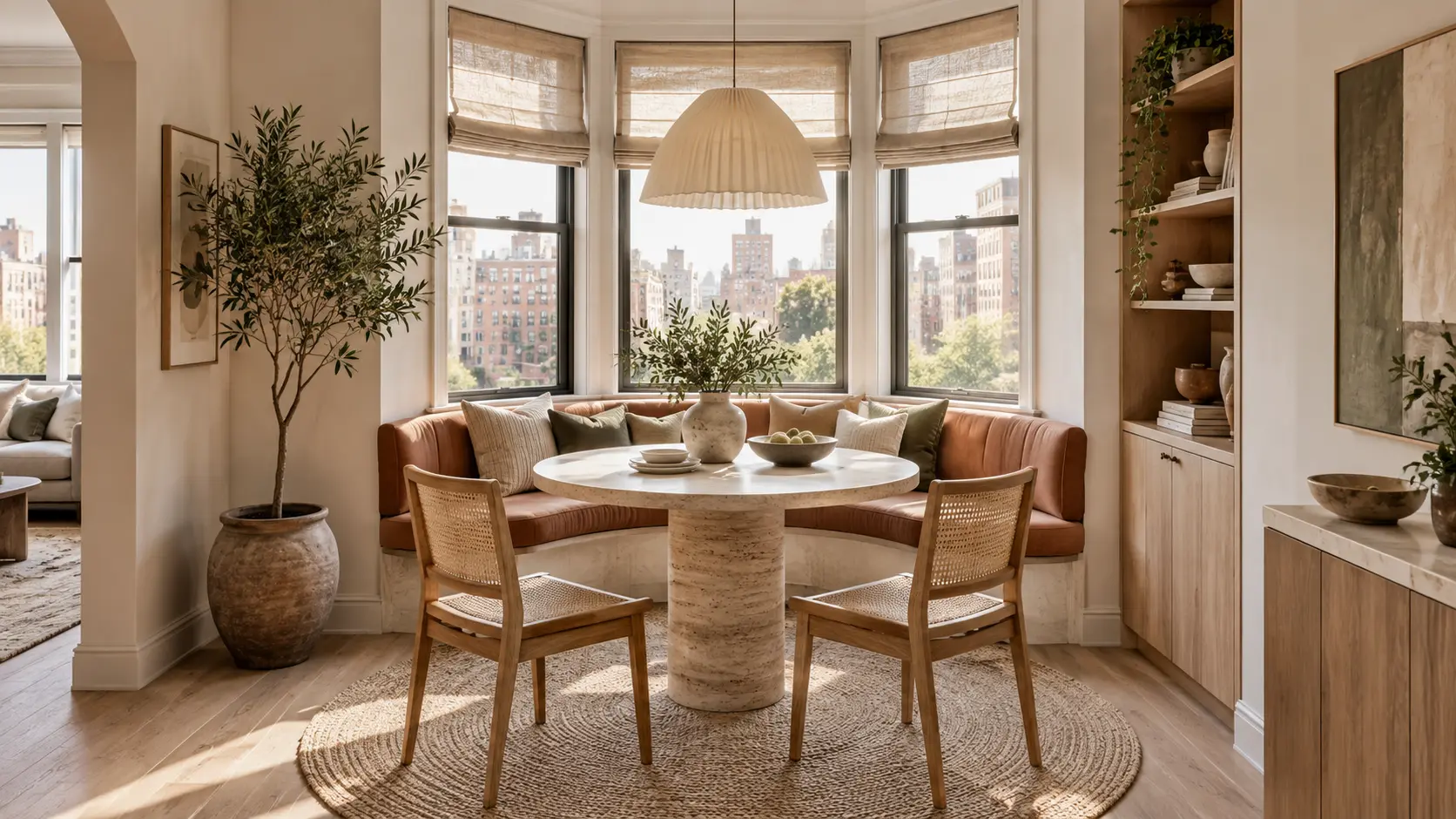
A tight dining area can feel awkward once chairs, walkways, and storage compete for the same few feet. A round table solves much of that problem by removing sharp corners and making it easier to move through the room.
These 11 Small Dining Room Ideas With a Round Table follow the same sequence as the images. Each room uses a different mix of seating, lighting, color, and storage, so you can choose a look that suits your space, budget, and daily routine.
1. Warm Neutral Dining
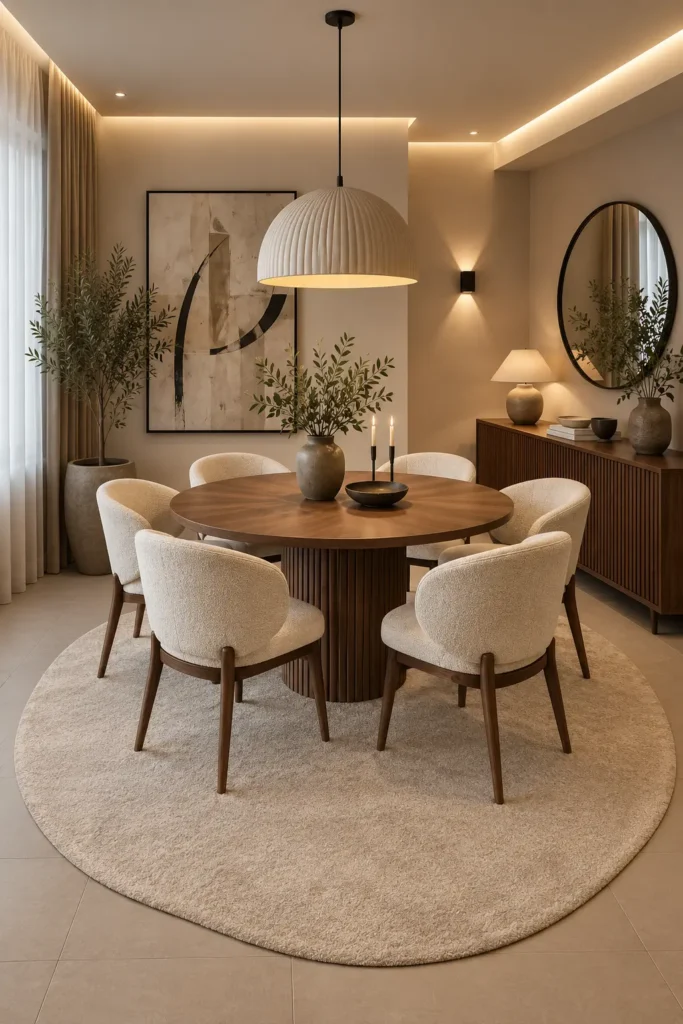
Pair a walnut pedestal table with six curved ivory chairs to create a generous dining area without harsh visual lines. A fluted base gives the table texture while keeping its footprint compact. Ground the arrangement with a large cream rug and repeat the walnut finish on a slim sideboard.
Leave approximately 36 inches between the table and surrounding furniture where possible. If the room is tighter, armless chairs make it easier to sit down. Layer a large pendant, wall sconces, and soft ceiling lighting so the beige palette doesn’t look flat after sunset.
2. Corner Banquette Nook
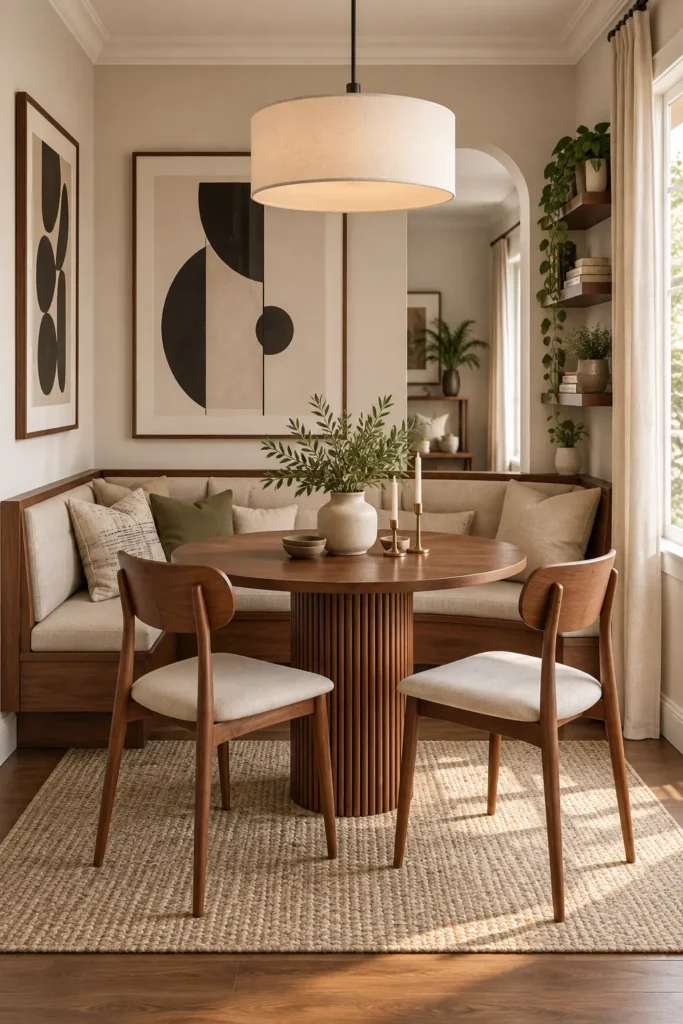
An L-shaped banquette can turn an unused corner into a comfortable dining zone. Choose a wood frame with washable oatmeal cushions, then place a round fluted table in front. Two lightweight chairs complete the arrangement and can be moved elsewhere when you need more floor space.
A pedestal base matters here because four table legs can interfere with anyone sliding along the bench. Allow about 18 inches between the tabletop and seat. Oversized geometric artwork gives the nook presence, while narrow shelves provide display space without requiring a deep cabinet.
3. Cottage Window Table
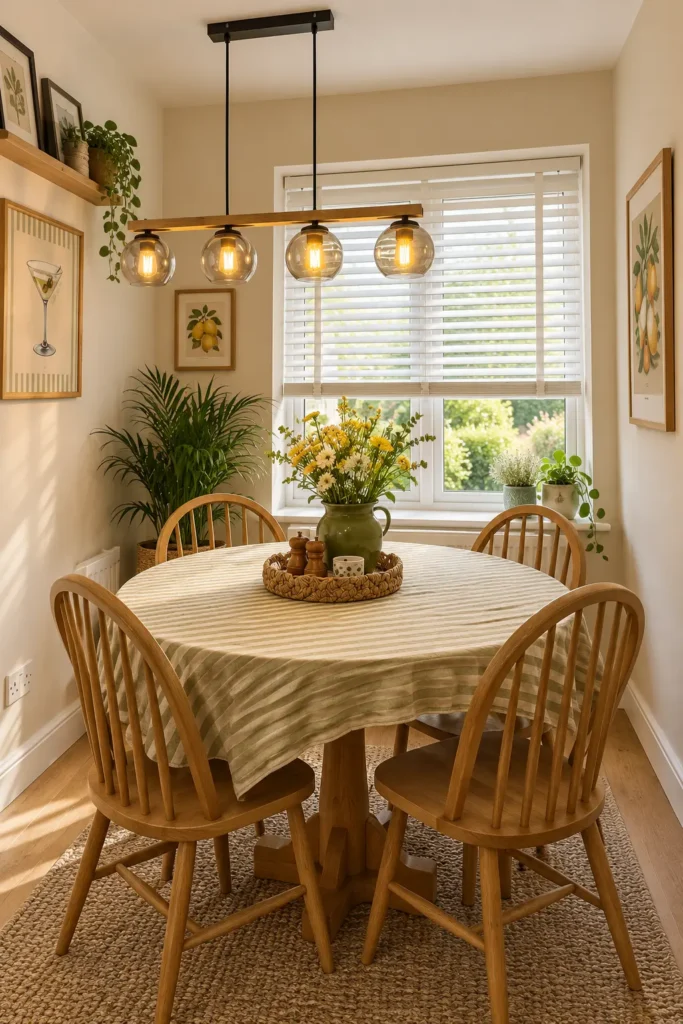
Position a round oak table in front of a window to make a narrow breakfast room feel brighter and more open. Spindle-back chairs keep sight lines clear, while a striped linen tablecloth introduces pattern without overpowering the small area.
Use a linear pendant to distribute light across the entire tabletop. Its lowest point should usually sit 30–36 inches above the surface. Vintage kitchen prints and a leafy floor plant soften the plain walls. For daily use, choose machine-washable linen-blend fabric instead of delicate pure linen, which wrinkles quickly and may require more care.
4. Built-In Dining Alcove
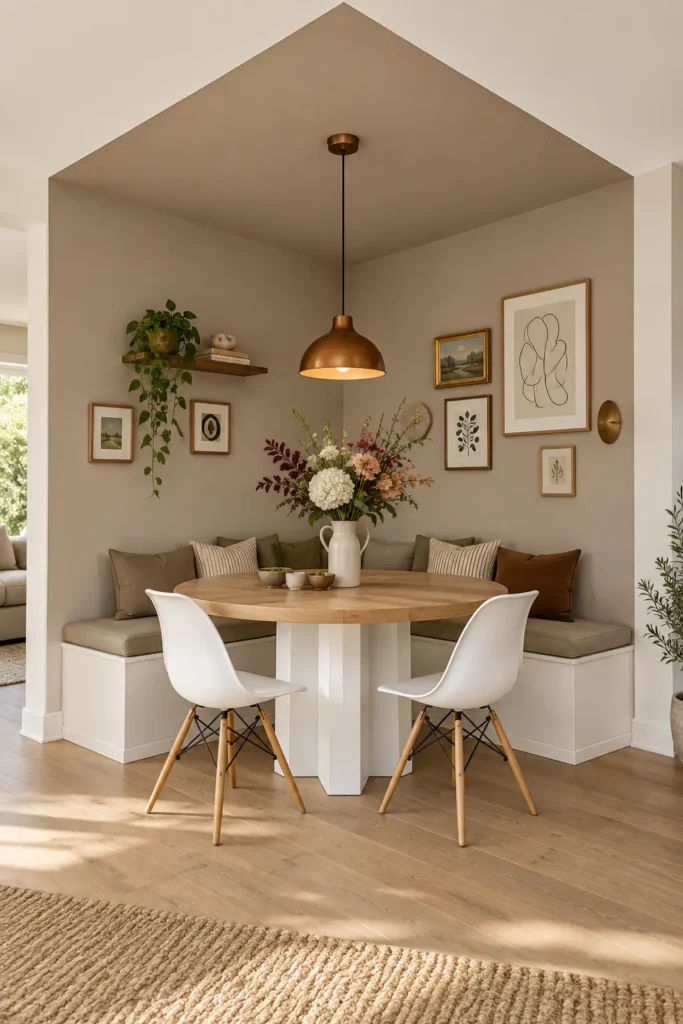
A recessed alcove becomes far more useful when fitted with an angular corner bench and a half-round table. The curved tabletop provides comfortable dining space while leaving a clearer path through the adjoining room. Storage drawers beneath the bench can hold linens, serving pieces, or occasional kitchen equipment.
Paint the alcove and surrounding wall in related warm neutrals to emphasize its architecture without making it feel boxed in. A copper pendant adds contrast, and an asymmetrical gallery creates a relaxed focal point. Use removable picture strips if you’re renting and the frames are lightweight.
5. Black Slat Nook
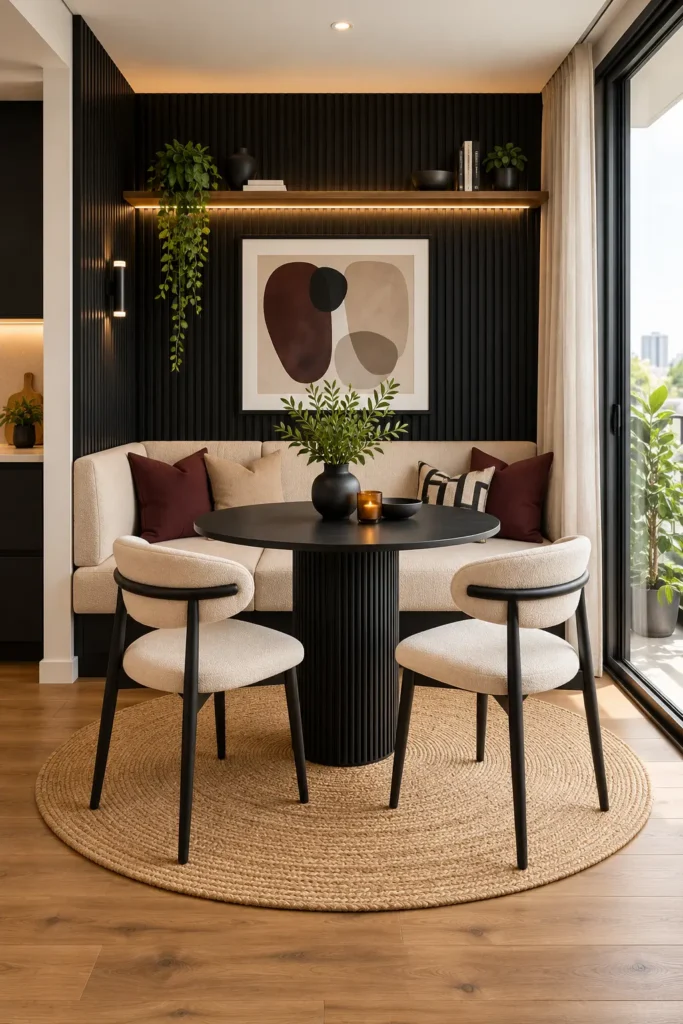
Dark vertical slats give a small dining corner depth and make the ceiling appear taller. Balance their visual weight with a cream upholstered bench, pale chairs, and a natural woven rug. A round black pedestal table connects the dark wall to the furniture without filling the nook with bulky shapes.
Install a shallow picture ledge with integrated warm lighting to break up the black surface. Dark walls can look rich in daylight but dull under a single cool bulb, so use warm LEDs around 2700K–3000K. Slatted panels also collect dust, making regular vacuuming with a brush attachment necessary.
6. Mirror-Led Dining Area
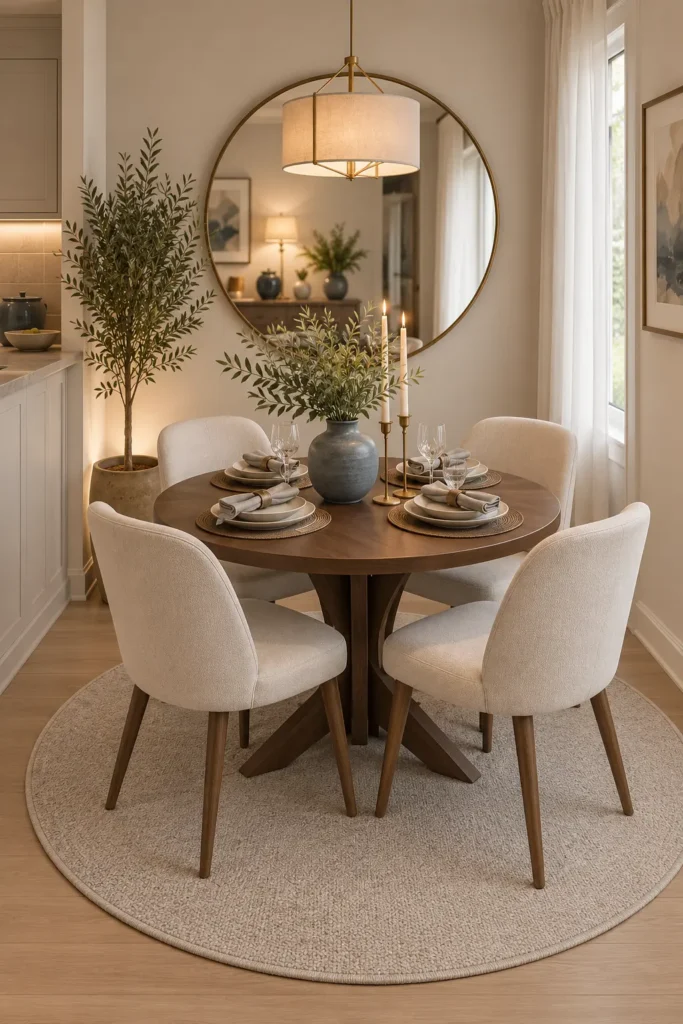
Place an oversized round mirror behind a four-seat walnut table to visually extend a compact dining area. If your dining space opens directly into the kitchen, these small kitchen and dining room ideas can help you coordinate both areas while preserving a practical walkway.The repeated circles create a calm rhythm, while ivory chairs stop the wood from feeling too heavy. A tall olive tree adds height without taking up much floor space.
Hang the mirror securely, keeping its center close to eye level and its lower edge several inches above the chairs. Position it to reflect a window or attractive adjoining room rather than clutter. Brass candlesticks and a linen pendant introduce warm highlights that suit both daylight and evening meals.
7. Terracotta Scandi Style
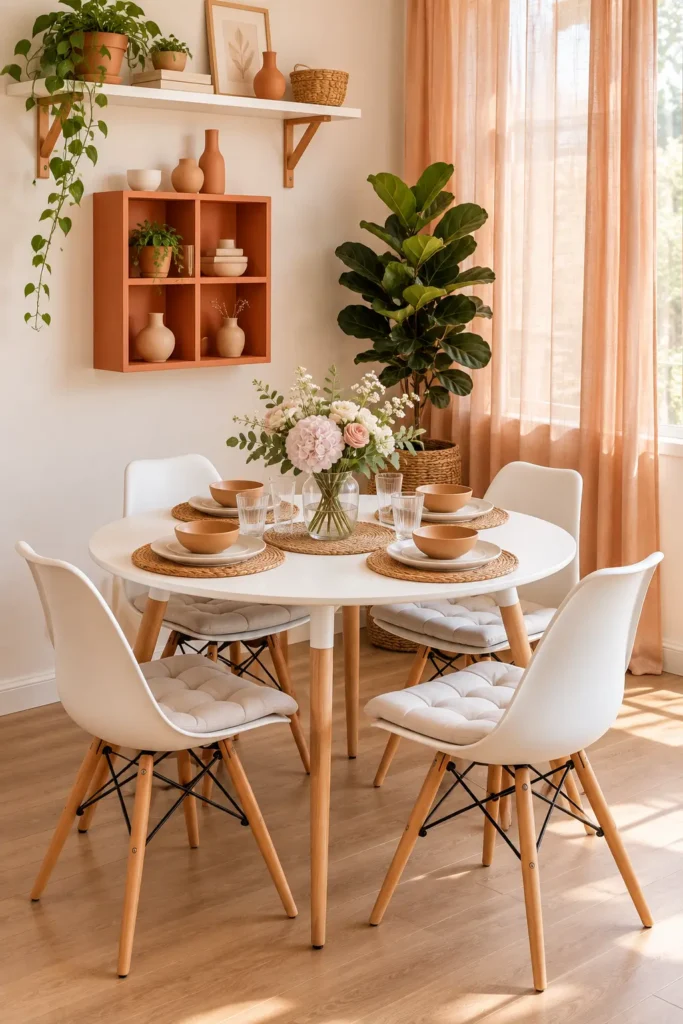
A white oval table, shell chairs, and pale wood legs make a small dining room feel airy. Terracotta shelving and peach curtains add enough color to keep the white furniture from appearing clinical. Repeat the earthy tone through bowls, pottery, or small planters rather than painting every wall.
Wall-mounted cube storage provides display space without narrowing the walkway. Keep the lowest shelf above seated head height if it sits near the table. Affordable molded chairs can work well, but inspect the leg connections before buying; weak hardware tends to loosen faster than the seat itself wears out.
8. Sage Velvet Dining
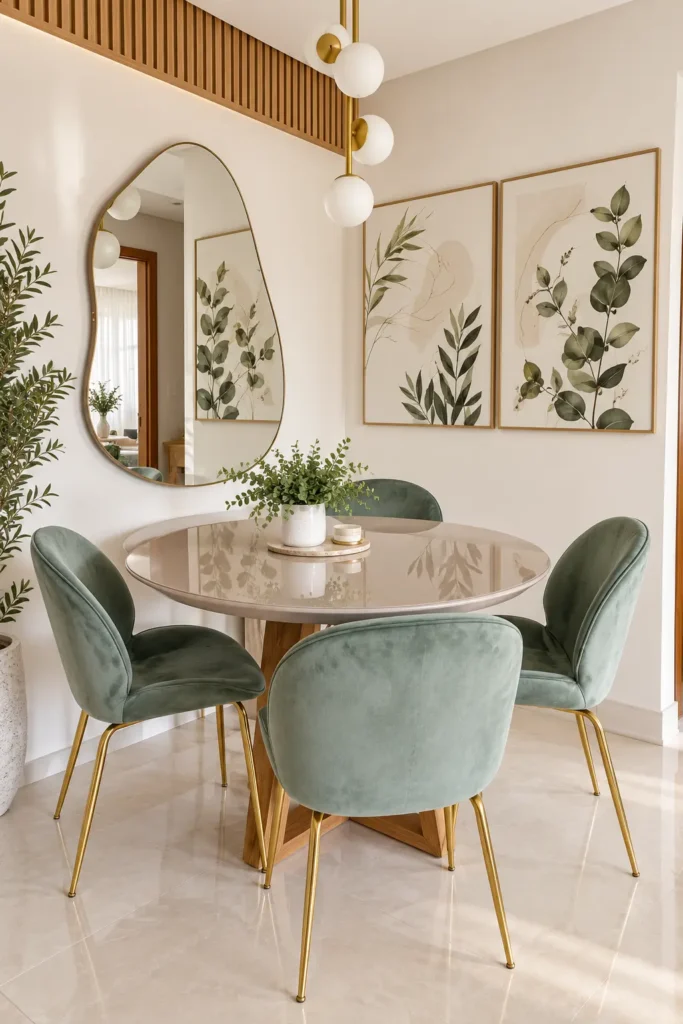
Sage velvet chairs give a compact dining space color while remaining quieter than emerald or navy. Pair them with a glossy warm-gray oval table, brushed-brass legs, and an organically shaped mirror. Two restrained botanical prints reinforce the green palette without making the room feel themed.
Velvet reflects light differently depending on the direction of its pile, so the chairs may look darker from one angle. It also shows pressure marks more readily than textured upholstery. Choose performance velvet if children or pets use the room. A sculptural globe pendant adds light at several heights without needing additional tabletop accessories.
9. English Cottage Corner
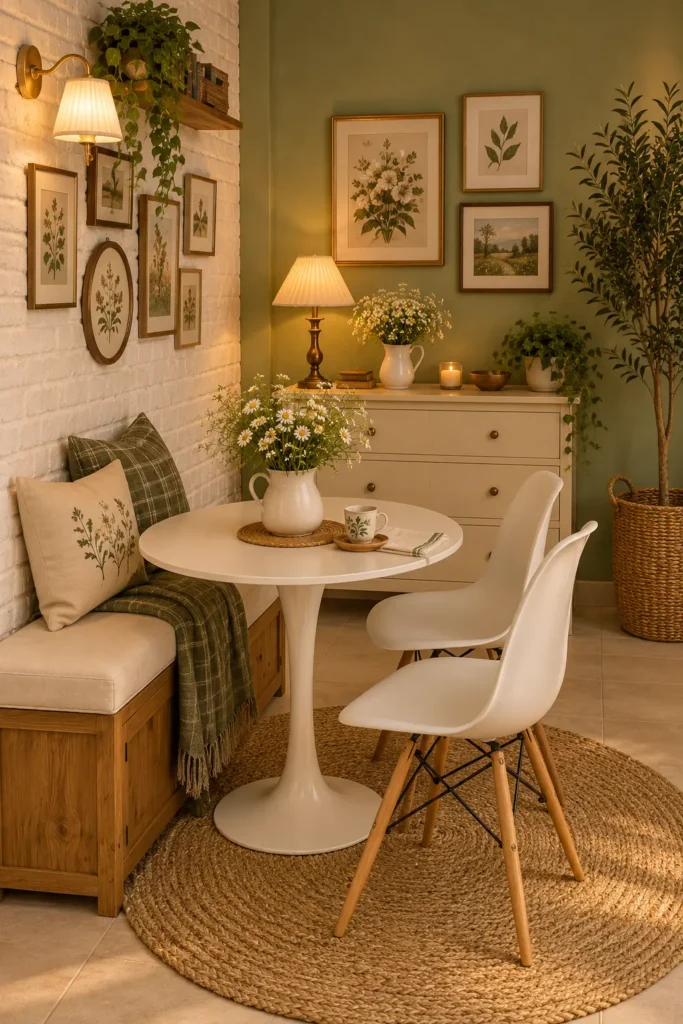
Combine a white tulip table with a storage bench, two simple chairs, and a round jute rug for an informal cottage-style dining corner. Sage walls, whitewashed brick, botanical prints, and small-scale floral textiles create character while maintaining a practical layout.
The pedestal table lets you move the chairs closer together when necessary. Use washable covers on the bench and keep delicate fabrics away from the eating surface. Jute helps soften sound, but its coarse fibers can trap crumbs, so low-pile wool or an indoor-outdoor rug may be a better substitute for households with young children.
10. Pale Oak Nordic Room
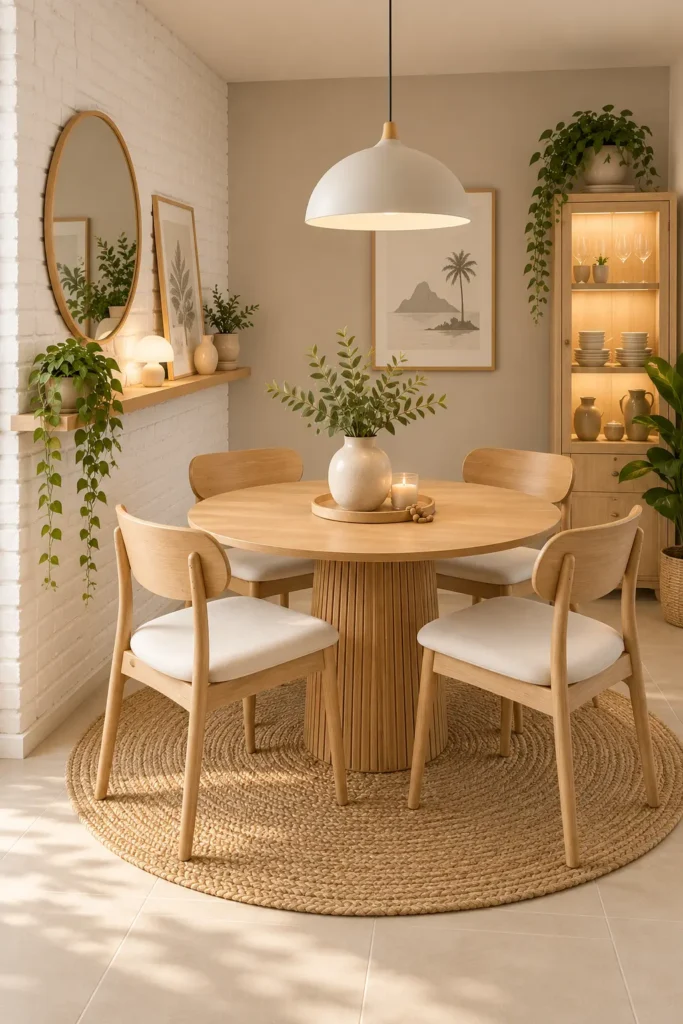
A pale-oak round table and matching chairs create visual continuity, helping the furniture recede rather than crowd the room. Add a circular jute rug, white dome pendant, and slim picture ledge for a relaxed Nordic look. A softly lit glass cabinet can supply valuable storage while adding depth after dark.
Choose chairs with narrow frames and gently curved backs instead of oversized upholstered models. A 48-inch round table generally seats four comfortably, while a 42-inch version suits very restricted spaces. Keep the centerpiece low enough that diners can see one another across the table.
11. Moody Sculptural Dining
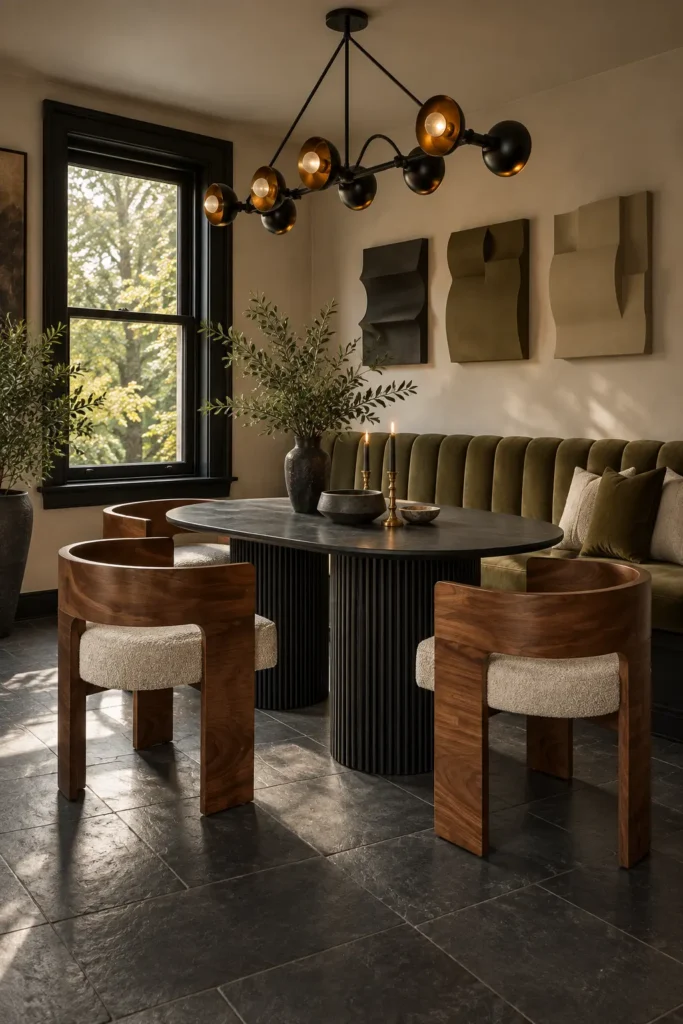
A charcoal pedestal table, walnut barrel chairs, and an olive velvet banquette create a dramatic dining room without relying on clutter. The dark stone floor anchors the arrangement, while dimensional wall art and a branching chandelier add sculptural shapes above eye level.
This palette needs controlled lighting to prevent the room from looking flat. Combine window light with warm overhead bulbs and candles or wall lights. Barrel chairs require more space than slim dining chairs, so check their width and turning clearance before purchasing. Use them only where at least 30–36 inches of movement space remains behind the occupied seats.
Before Choosing a Table
Measure the room with the chairs pulled out, not just the table in place. Most dining chairs need about 24 inches behind them for basic use, although 36 inches creates a more comfortable walkway. A central pedestal usually offers better legroom than four corner legs in a small room.
Also consider how you use the table. A 36–42-inch model can work for two to four people, while a 48-inch table normally seats four comfortably. Extendable round tables are useful for occasional guests, but check the extended shape and storage needs before buying.