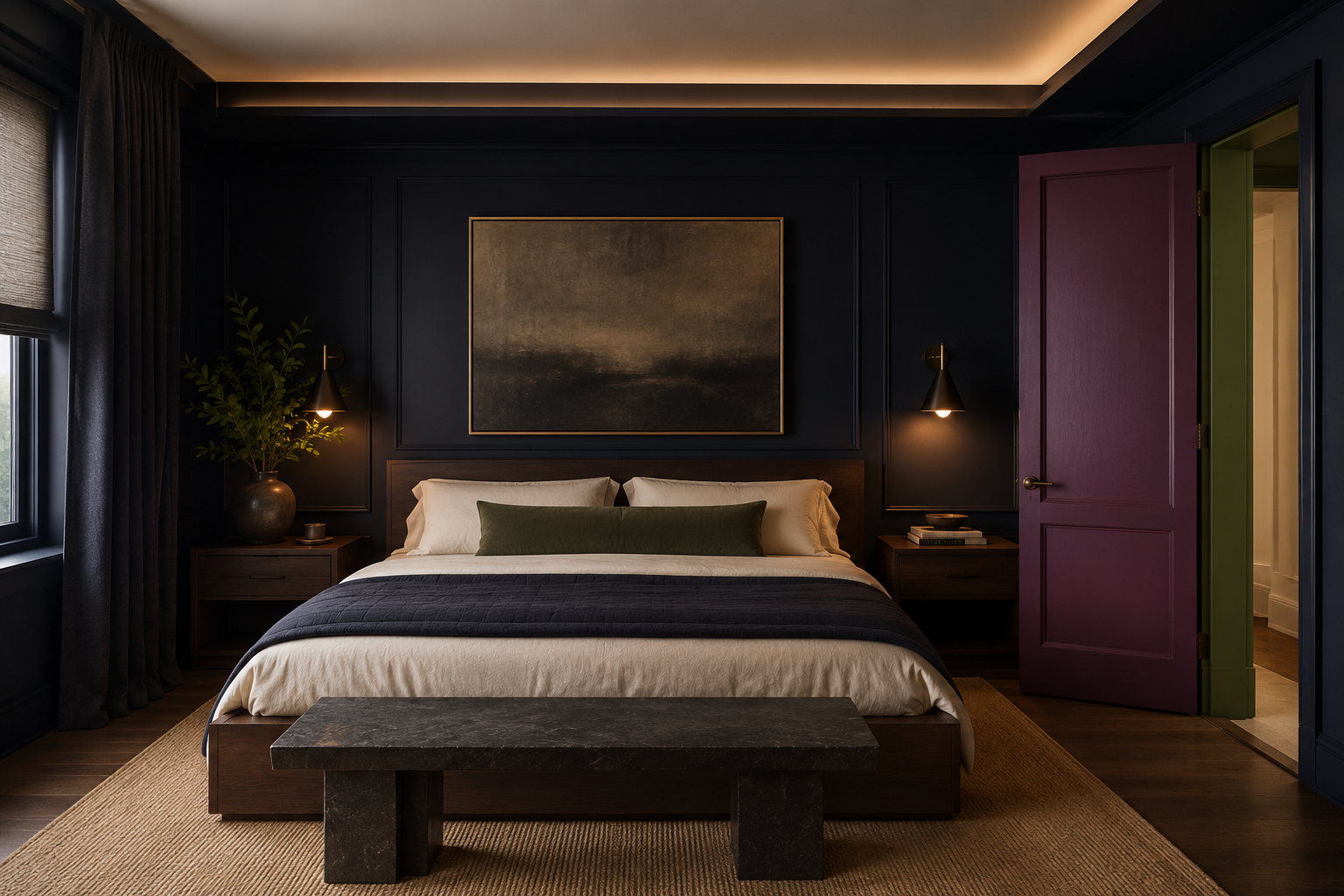
Dark moody bedroom decor ideas work best when the room feels layered, not simply dark. Painting everything navy and adding black furniture may photograph dramatically, but it often feels cold, flat, and difficult to live with after sunset.
Plum, navy, and forest green each bring a different kind of depth. Navy recedes, forest green feels grounded, and plum adds warmth. The most convincing rooms use one as the foundation, another as support, and a third in smaller, deliberate doses.
How to Plan Dark Moody Bedroom Decor Idea
Choose one dominant color before buying paint, bedding, or curtains. Let it cover roughly 60 percent of the room. Use the second color across one major surface or furniture piece, then reserve the third for smaller details.
Pay attention to undertones. A red-plum shade feels rich beside brown-based forest green, while a blue-plum shade works better with midnight navy. Always test large paint samples on at least two walls because deep colors can shift dramatically between daylight and warm evening lighting.
1. Build a Forest Green Bed Alcove With a Ceiling Return
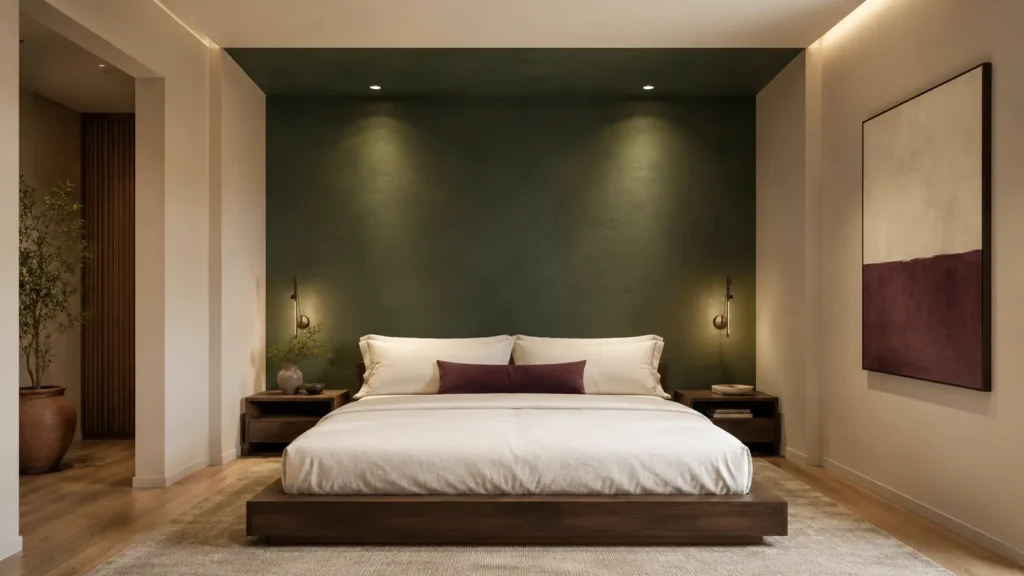
Create a clear sleeping zone by painting the bed wall forest green, then carry the color 12 to 18 inches onto the ceiling and adjoining side walls. This shallow painted alcove frames the bed without construction or bulky furniture.
The ceiling return gives the bed more visual weight and makes a wide room feel focused. Keep the remaining walls in warm mushroom or smoky taupe. This works especially well in rentals because it creates an architectural effect using only paint and can be reversed before moving.
2. Pair Matte Navy Walls With a Plum Lacquered Ceiling
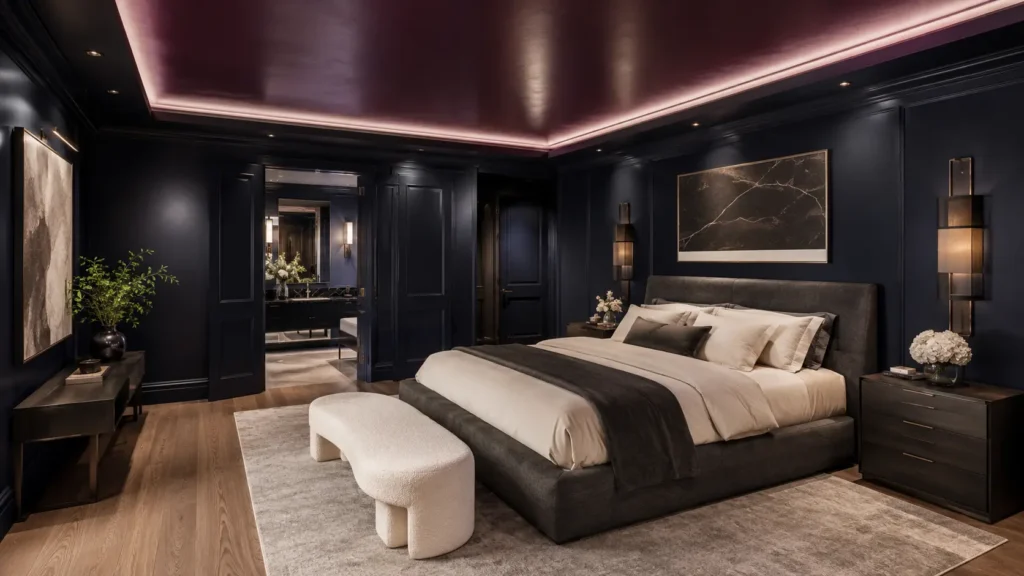
Use matte navy across the walls and trim, then finish the ceiling in a deep plum with a soft satin or polished sheen. The navy absorbs light, while the plum ceiling catches gentle reflections from bedside lamps.
This contrast prevents a fully dark room from feeling visually flat. Gloss exposes every crack and roller mark, so use satin unless the ceiling is perfectly smooth. In rooms with ceilings below eight feet, keep the plum muted rather than bright so the finish feels intimate, not theatrical.
3. Run a Smoky Plum Headboard Across the Entire Wall
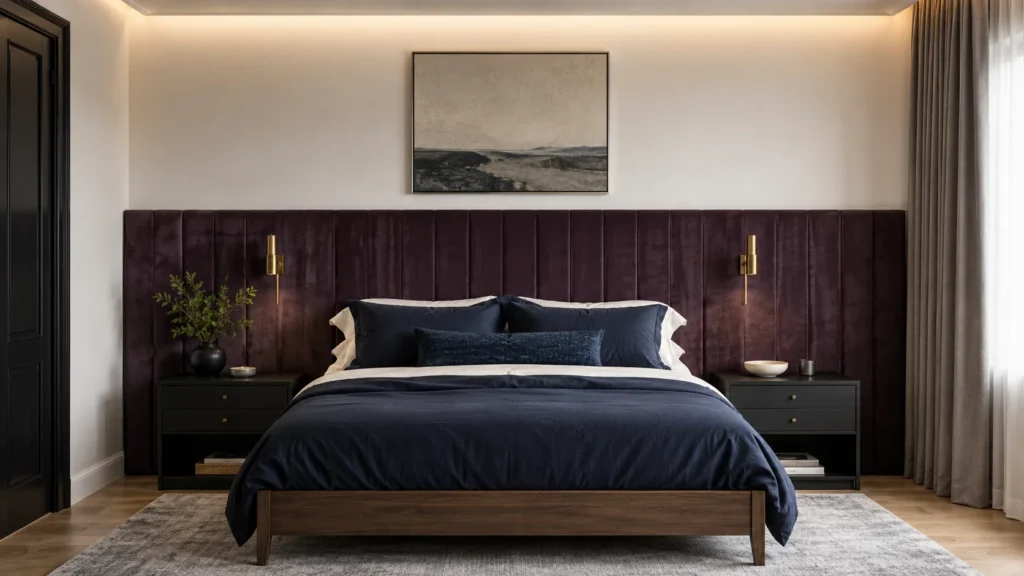
Install a low, wall-to-wall upholstered headboard in smoky plum wool, performance velvet, or heavy linen. Keep it around 40 to 48 inches high, then place the bed and nightstands directly in front of it.
The continuous horizontal line makes the room appear wider and visually connects mismatched bedside furniture. Channel stitching or narrow vertical seams add structure without looking busy. Performance velvet is more practical than traditional velvet because standard velvet shows hand marks, dust, and pressure lines very quickly.
4. Cover Plain Wardrobe Doors in Navy Grasscloth
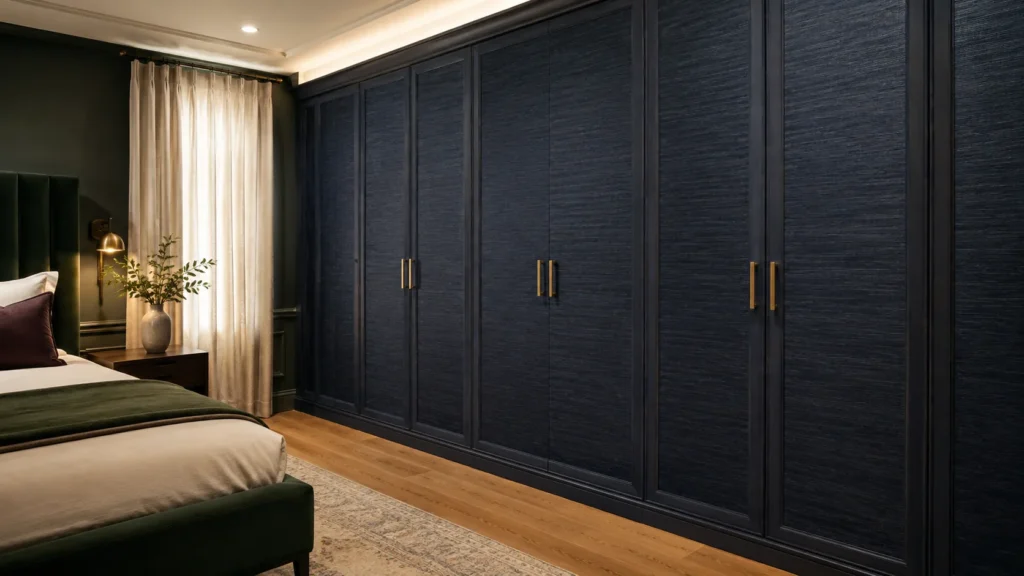
Give flat wardrobe doors more depth by covering the central panels with navy grasscloth, faux grasscloth wallpaper, or tightly woven fabric. Keep the surrounding frames painted in the same navy so the texture appears built in rather than applied afterward.
Grasscloth reflects light unevenly, which stops a large wardrobe from becoming a blank dark block. Real grasscloth can be expensive and difficult to clean, so washable vinyl or removable textured wallpaper is the better choice for rentals, children’s rooms, and high-touch doors.
5. Frame the Bed With Smoked-Oak Columns
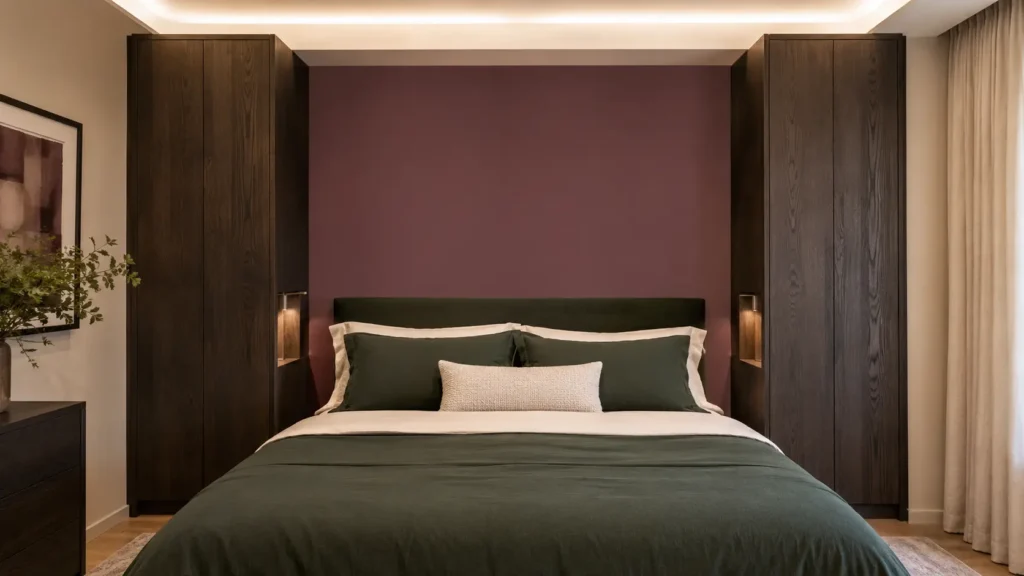
Position two narrow smoked-oak columns or tall closed storage units on either side of the bed. Choose pieces 12 to 18 inches wide and slightly deeper than standard nightstands, leaving the central wall visible in plum, navy, or forest green.
The vertical forms pull the eye upward and give a standard bed the presence of a built-in installation. Closed fronts hide chargers and daily clutter. Avoid open cubbies beside the pillows because they collect dust and quickly make a moody bedroom feel visually crowded.
6. Replace White Window Trim With Dark-Stained Wood
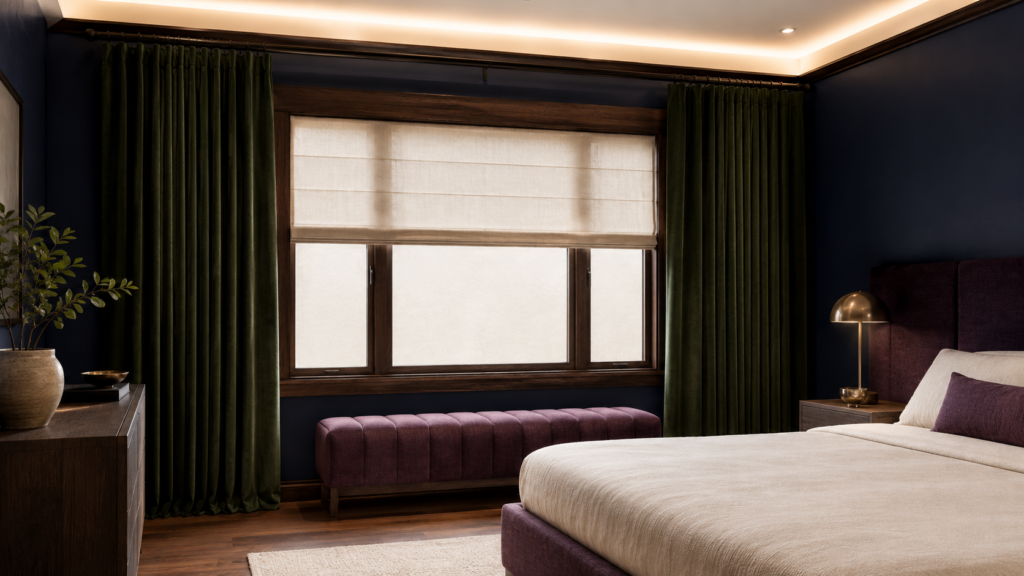
White window casing can break the mood with a sharp, bright outline. Stain the surround in walnut, smoked oak, or brown-black, then pair it with forest green or near-black navy curtains.
Dark wood introduces warmth while preserving the depth of the palette. Curtain rods should sit close to the ceiling and extend 8 to 12 inches beyond each side of the window. This allows the fabric to stack away from the glass, so the room still receives as much daylight as possible.
7. Create Three Low Pools of Warm Light
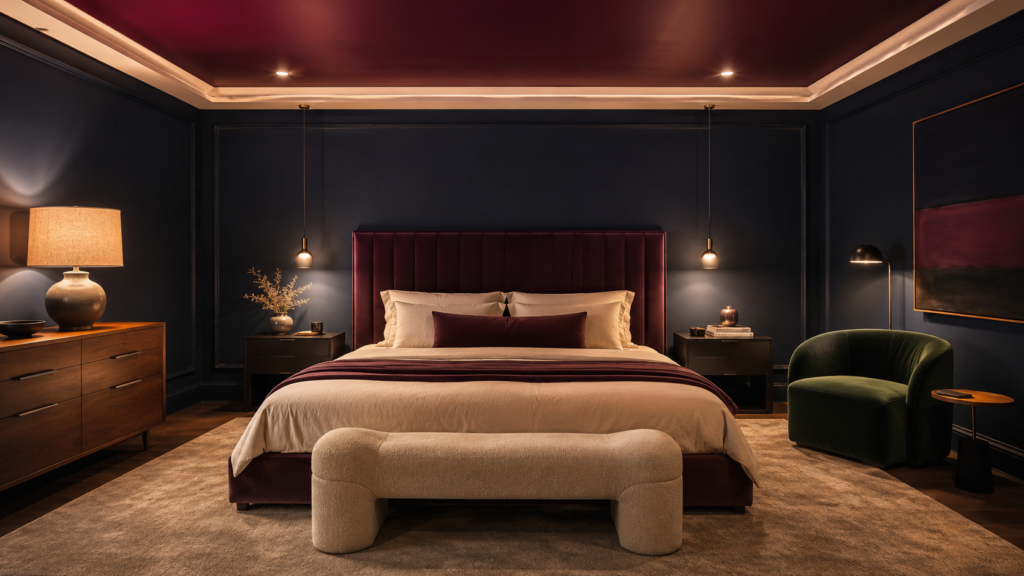
Instead of relying on a central ceiling fixture, place light at three different points: low bedside pendants, a shaded dresser lamp, and a small floor or wall light near the room’s darkest corner.
This lighting plan spreads warmth across the room without flattening the dark paint. Use 2700K bulbs; cooler LEDs can make plum look bruised, navy appear steely, and forest green turn gray. The bottom of each bedside pendant should sit about 20 to 24 inches above the nightstand surface.
8. Install Antiqued Mirror Panels Behind the Nightstands
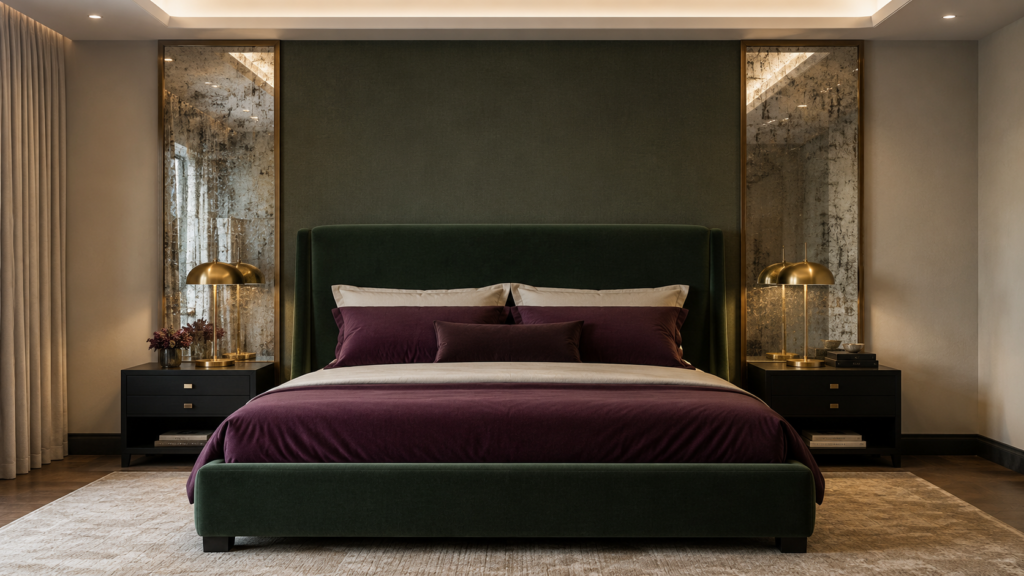
Mount one narrow antiqued mirror panel behind each nightstand, ideally 18 to 24 inches wide and extending from the tabletop toward the ceiling. Let nearby lamps reflect in the mottled glass rather than positioning the panels opposite the bed.
The aged finish introduces movement without creating the harsh reflections of a standard mirror. It also gives a small bedroom more depth while keeping the dark atmosphere intact. Renters can use lightweight smoked acrylic mirror fixed with removable strips rated for its weight.
9. Replace Bulky Nightstands With Dark Stone Ledges
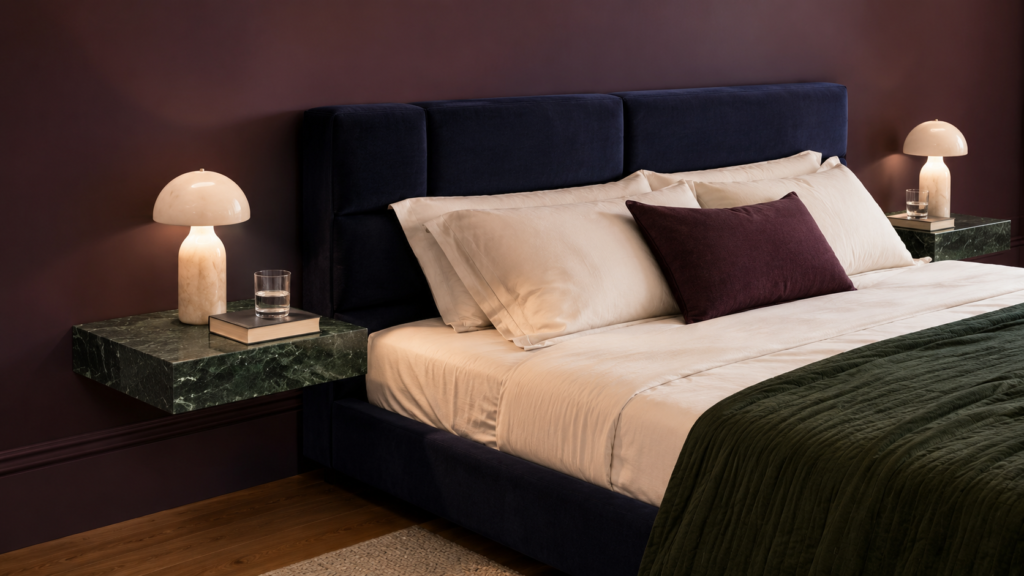
Mount compact stone or stone-look ledges beside the bed instead of using deep nightstands. A surface around 16 to 20 inches wide and 10 to 14 inches deep holds a lamp, phone, and water without taking over the walkway.
Honed black granite, green marble, and dark-veined quartz work naturally with plum, navy, and forest green. Honed finishes hide fingerprints better than polished stone. For a lower-cost version, cover sturdy wall shelves with realistic stone-look vinyl and finish the edges carefully.
10. Use Wall-to-Wall Carpet in a Tiny Dark Pattern
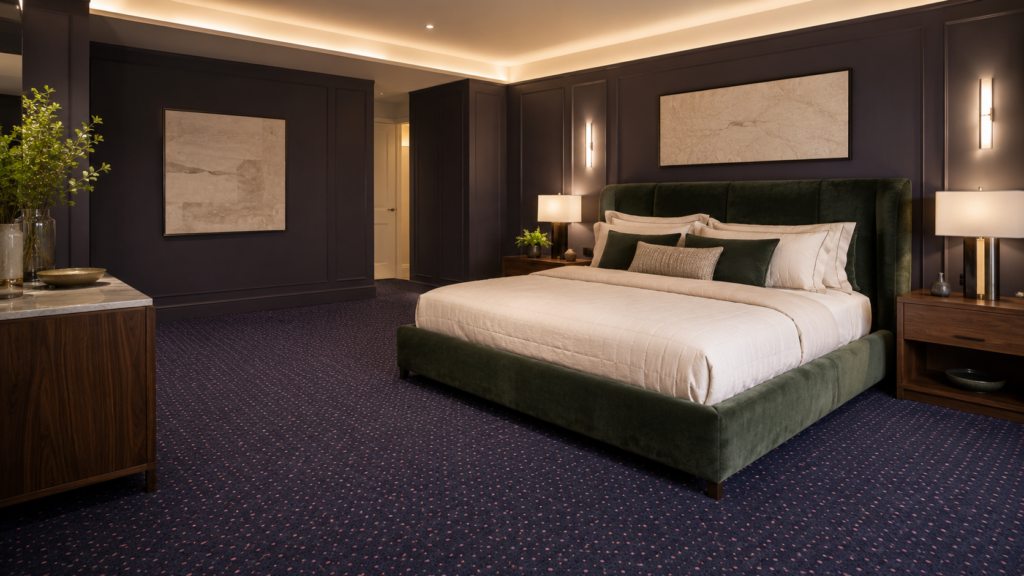
Choose wall-to-wall carpet with a small navy, plum, charcoal, or forest green pattern rather than a single flat color. A subtle herringbone, pin dot, or broken stripe hides wear while adding movement under large areas of dark furniture.
Carpet also dampens footsteps and echo, which makes a bedroom feel noticeably quieter. Low-pile wool blends are easier to vacuum than thick shag. If full carpet isn’t practical, use a bound carpet remnant large enough to extend at least 18 inches beyond three sides of the bed.
11. Paint the Door Back and Reveal in a Contrasting Dark Color
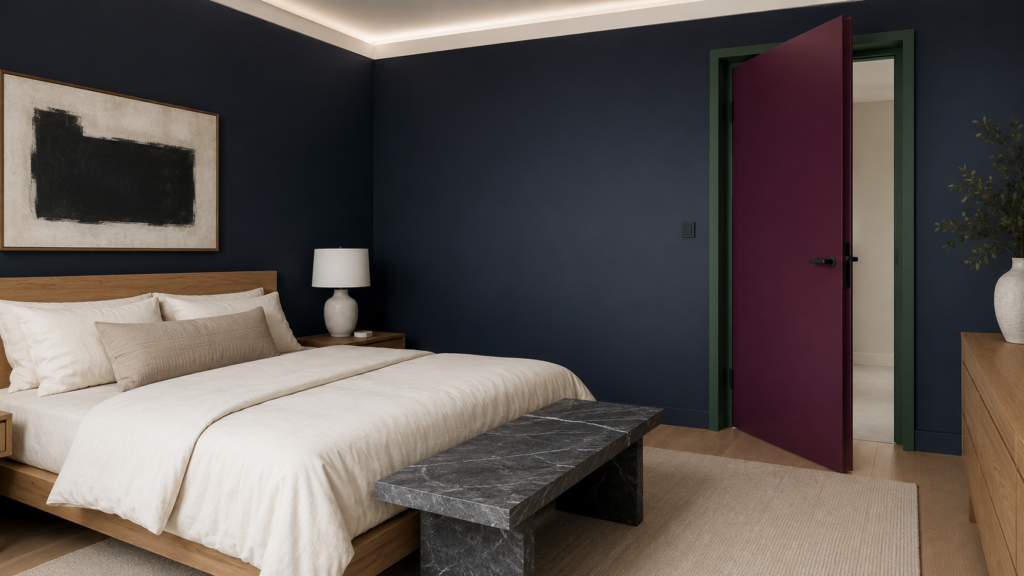
Keep the main bedroom navy, then paint the inside face of the door and its recessed reveal in plum or forest green. When the door is open, the contrasting edge creates a controlled flash of color rather than another large painted surface.
This is a smart way to use all three shades without forcing them onto bedding and accessories. Choose colors with similar depth so neither looks unexpectedly bright. In a small room, paint the outer door face to match the hallway rather than carrying the dark color outside.
12. Layer a Dark Roman Shade Under Full-Length Curtains
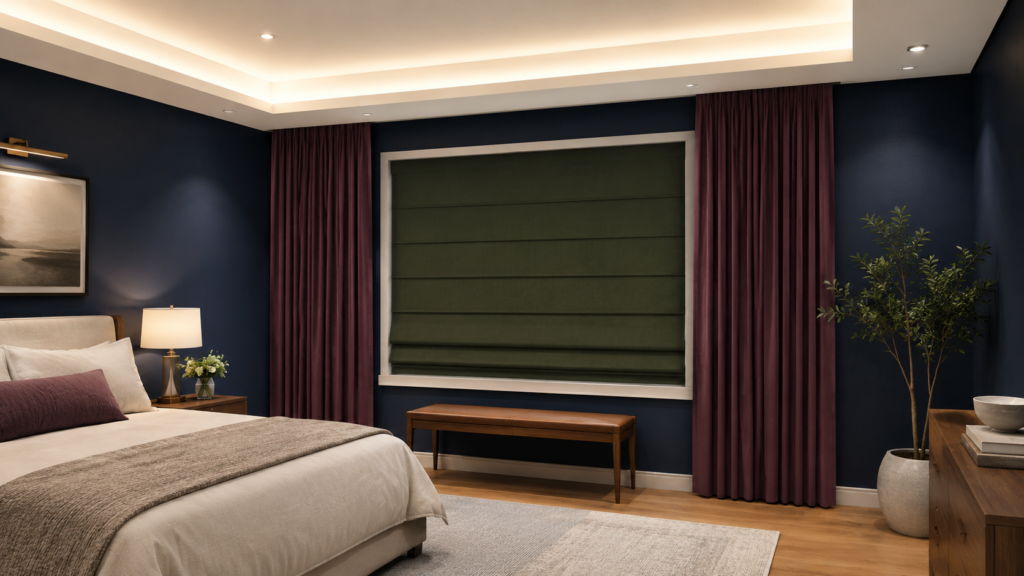
Install a close-fitting blackout Roman shade in deep navy or forest green, then hang plum, olive, or tobacco-colored curtains over it. The shade handles light control, while the curtains soften the window and improve sound absorption.
This combination is more practical than using heavy blackout curtains alone, which can be frustrating to open every morning. Mount the Roman shade inside the frame when possible. Let the outer curtains finish about half an inch above the floor so they hang cleanly without gathering dust.
13. Hang One Oversized Chalky Plaster Relief
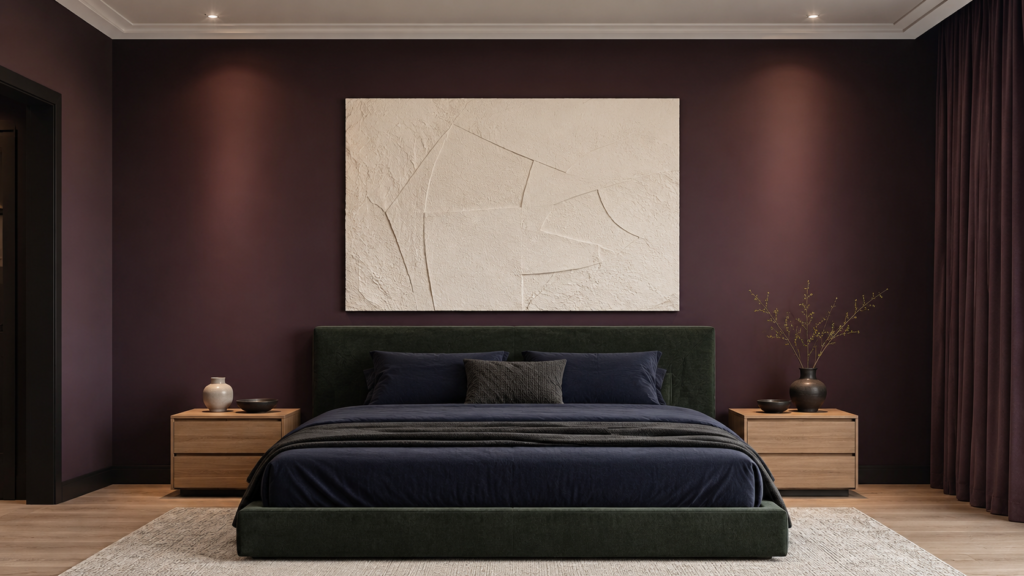
Place a pale plaster relief, carved wood panel, or heavily textured canvas over the bed instead of using several small framed prints. Choose chalk, parchment, faded stone, or dirty ivory rather than bright white.
The light artwork creates negative space, giving your eyes somewhere to rest within the darker palette. It should measure about two-thirds the width of the bed and hang 6 to 10 inches above the headboard. Secure heavy plaster pieces into wall studs rather than relying on basic picture hooks.
14. Build the Bedding Around One Controlled Light Break
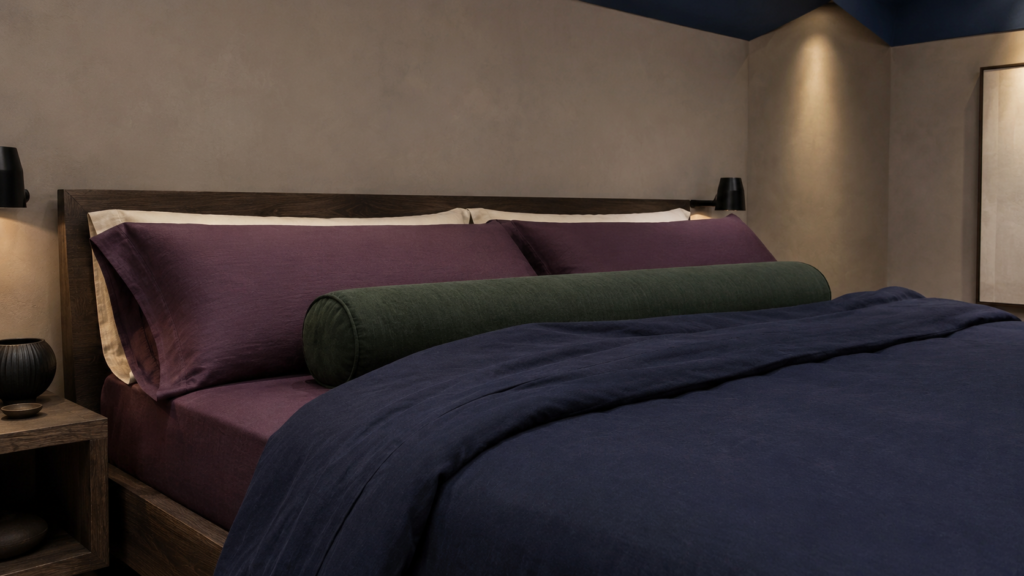
Layer plum sheets, a matte navy duvet, and one long forest green bolster, then expose a narrow strip of warm ivory at the pillows or folded top sheet. That small light break keeps the bed from becoming one dark, shapeless block.
Use no more than three visible bedding colors and repeat each at least once elsewhere in the room. Washed cotton and linen blends show depth better than shiny satin. Satin can look inexpensive under direct lighting and becomes difficult to keep smooth during daily use.
15. Add a Concealed Perimeter Light Above the Bed Wall
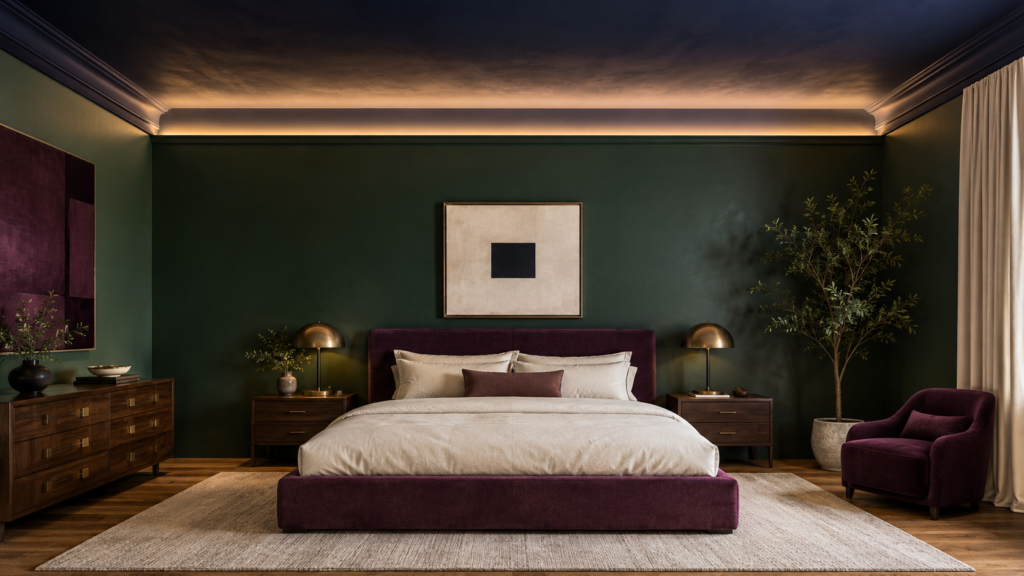
Install a shallow picture rail, slim crown molding, or lightweight ledge 6 to 10 inches below the ceiling, then conceal a dimmable warm LED strip behind it. Aim the light upward so it washes the ceiling rather than shining directly into the room.
This creates a soft halo that reveals plum, navy, and forest green undertones without exposing the light source. Use a continuous diffuser to avoid visible dots. Renters can build a removable painted foam or timber ledge fixed to one wall rather than altering the full room.
Mistakes That Weaken Dark Moody Bedroom Decor Ideas
The most common mistake is using every color in equal amounts. Plum bedding, navy curtains, forest walls, green furniture, and purple artwork create competition rather than depth. One color needs to lead.
Another problem is making every finish matte. Dark matte walls, flat bedding, dark carpet, and unpainted furniture absorb so much light that the room loses definition. Add one reflective material, one visible wood grain, and one softly textured fabric.
Don’t use pure black automatically. Brown-black, charcoal navy, and blackened green often look richer because their undertones respond better to warm light.