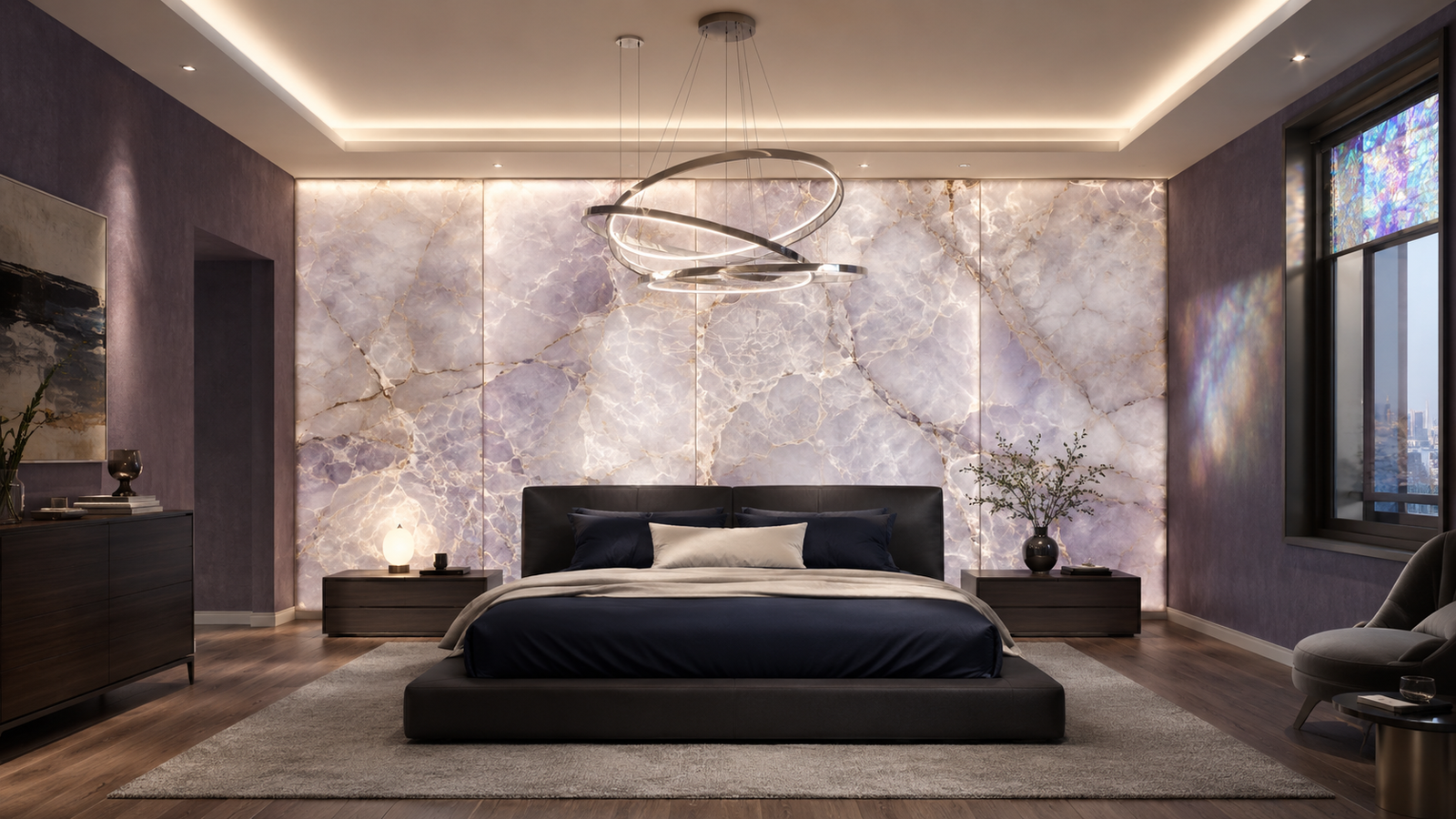
Celestial bedroom decor often gets reduced to navy walls, plastic stars, and blue LED strips. Those details may signal “space,” but they rarely create the dreamy depth people actually want from the style.
A stronger room borrows from the night sky more quietly. Shifting finishes mimic distant light, curved forms suggest planetary movement, and deep colors create atmosphere without turning the bedroom into a theme set.
The 15 ideas below are intentionally different from one another. Each one changes a separate surface, function, or zone, so you can choose a few without repeating the same moon-and-stars concept around the room.
Build Celestial Bedroom Decor Around Contrast, Not Novelty
Start with a matte foundation such as ink navy, smoked plum, charcoal, or mineral gray. These darker finishes absorb light and create the visual depth that makes pearl, chrome, glass, and iridescent materials stand out.
Keep reflective finishes to roughly 15 to 20 percent of the room. Iridescent decor loses its impact when every surface shines, while too many glossy finishes reveal fingerprints, dust, wall flaws, and uneven lighting.
Choose either warm or cool metal as your main finish. Brass softens purple and navy, while chrome creates a sharper space-age mood. Mixing both can work, but one should clearly dominate.
1. Paint an Iridescent Aurora Across the Ceiling
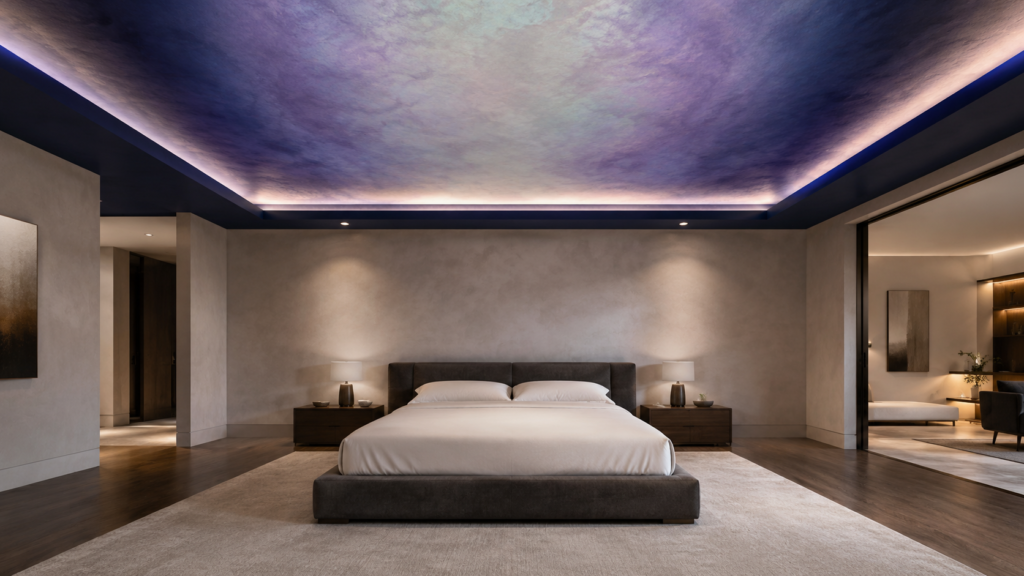
Paint the ceiling deep indigo around the perimeter, then blend it into smoky violet and soft pearl above the bed. Apply a subtle interference glaze only to the pale center so the finish shifts between lavender, silver, and muted blue as the viewing angle changes.
The dark edge creates depth, while the luminous center makes the ceiling feel open and atmospheric. Keep the finish pearlescent rather than glittery so the bedroom looks polished instead of themed.
2. Create a Backlit Moonstone Headboard Wall
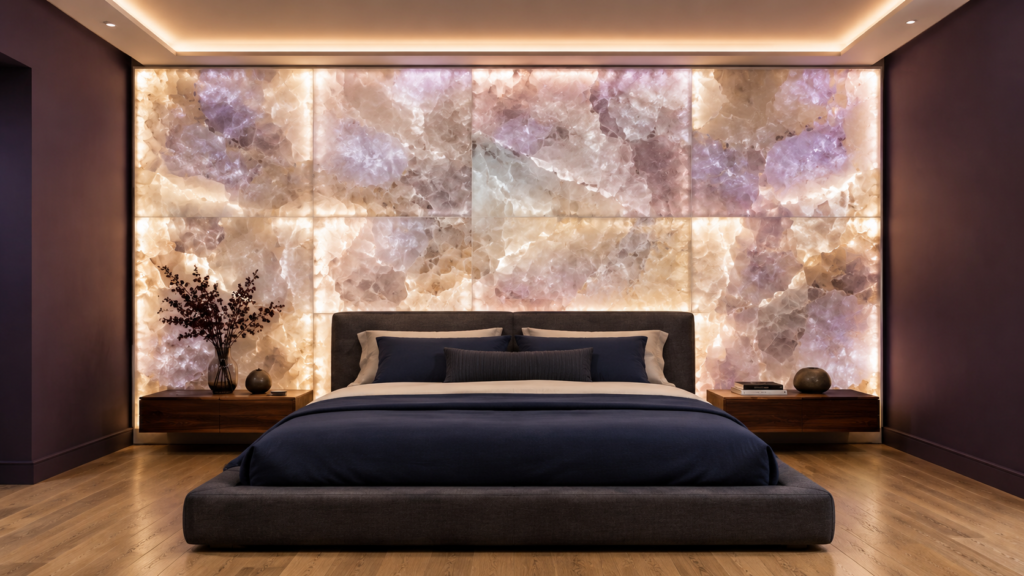
Install full-width translucent panels behind the bed with cloudy white, pale lavender, and soft silver veining. Conceal warm lighting behind the panels so the wall glows gently like illuminated moonstone.
Keep the light diffused, with no visible LED dots or bright edges. The cloudy surface introduces iridescence through material rather than decoration, making this a strong luxury focal point. Pair it with a simple charcoal bed and plain bedding so the wall remains the main feature.
3. Add a Prismatic Band to the Bedroom Window
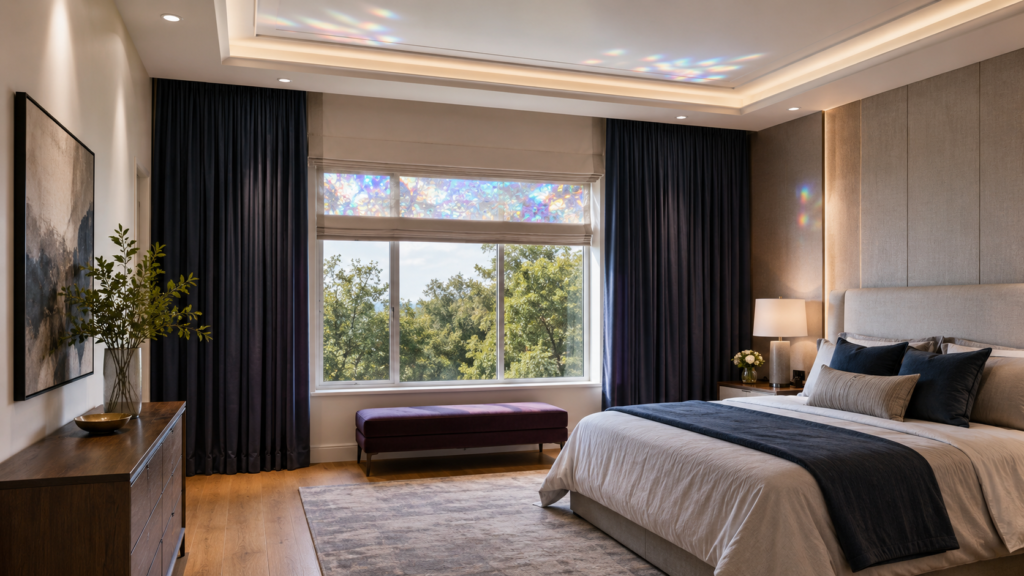
Apply clear diffraction film only across the upper 12 to 18 inches of the window. The narrow band will produce subtle violet, aqua, and pale-gold fragments on the surrounding wall and ceiling without turning the entire room rainbow-colored.
Keeping the lower glass clear preserves the view and prevents the treatment from feeling cheap. Frame the window with smoky navy curtains and an ivory Roman shade for contrast. This is also one of the easiest renter-friendly celestial bedroom decor ideas.
4. Suspend an Asymmetrical Orbit Chandelier
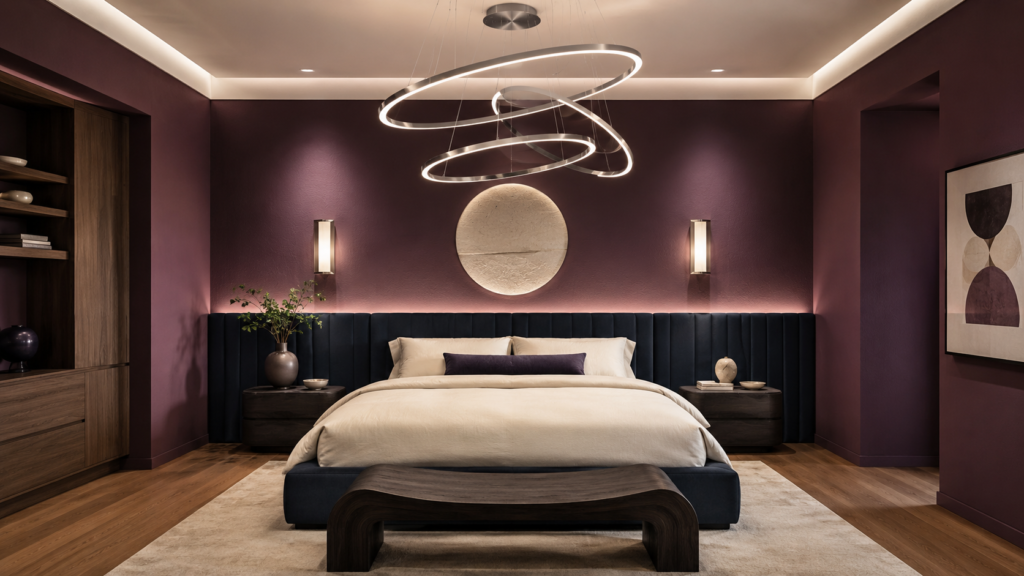
Choose a sculptural chandelier made from three slim metallic rings suspended at different angles. The overlapping rings should feel like planetary orbits rather than a standard circular ceiling light.
A brushed-chrome finish creates a cooler, futuristic effect, while aged brass makes the room feel warmer. Keep the fixture between 24 and 30 inches wide for most bedrooms and use diffused 2700K lighting. The asymmetry adds movement without filling the room with literal stars or planets.
5. Frame the Bed With an Architectural Eclipse Canopy
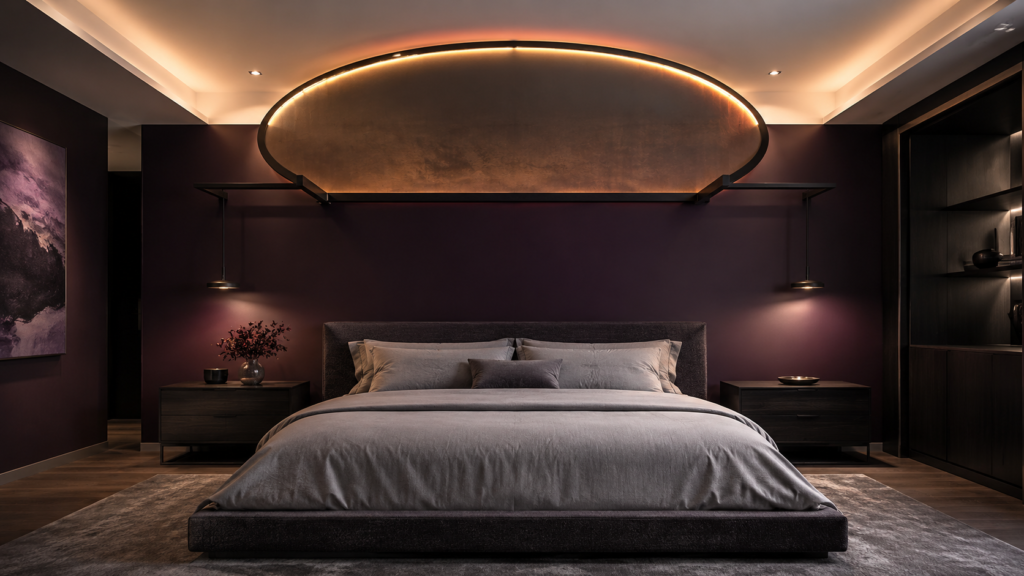
Build a slim half-canopy above the head of the bed using blackened metal and one curved panel of smoked translucent fabric or dark-tinted acrylic. Add concealed lighting behind one edge so the structure creates a dark eclipse shape with a narrow glowing outline.
Unlike a traditional four-poster canopy, this version should remain open around the sides and foot of the bed. The contrast between the dark center and illuminated rim creates a dramatic celestial moment without making the room feel enclosed.
6. Install a Backlit Constellation Ceiling Panel
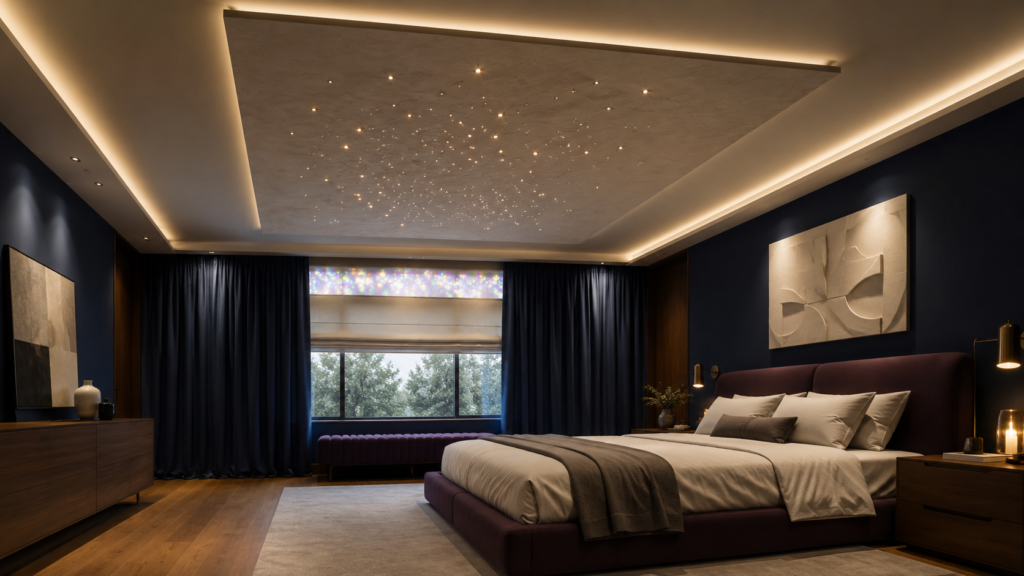
Mount one large matte plaster or painted-wood panel above the foot of the bed, then add irregular micro-perforations with warm light hidden behind them. The glowing points should vary in size and spacing rather than forming a repeated grid.
This creates a sophisticated star-field effect without stickers, printed wallpaper, or blue LED strips. Keep most of the panel dark and leave generous empty areas between the lights. Sparse placement creates more depth and makes each illuminated point feel intentional.
7. Insert Dichroic Glass Into the Closet Doors
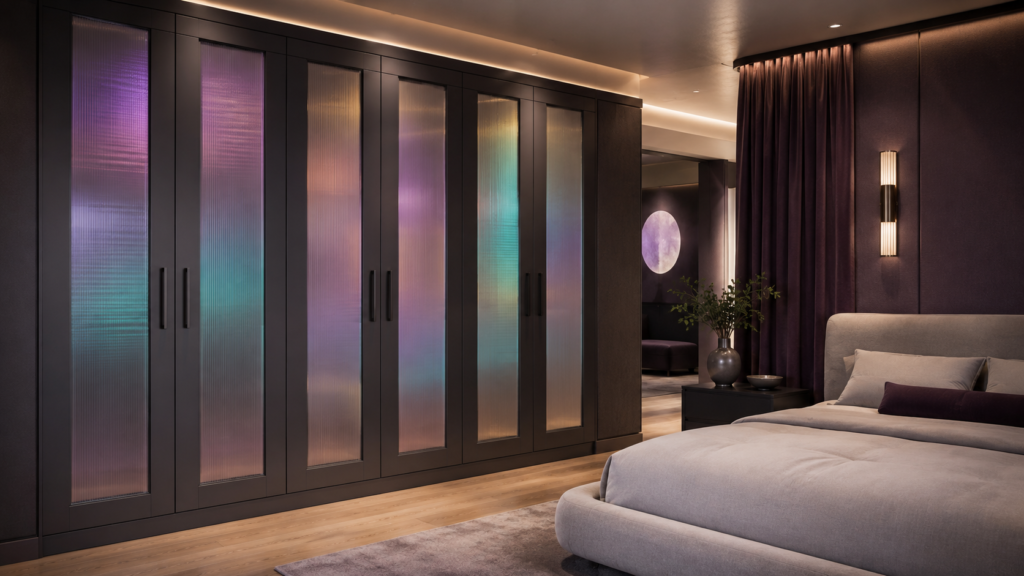
Add narrow translucent dichroic panels to full-height closet doors, framed with matte charcoal, dark oak, or blackened metal. As you move through the room, the panels should shift softly between violet, teal, silver, and muted amber.
Use the material only in the center of each door rather than covering the entire wardrobe. This gives the room a strong iridescent feature while keeping the result controlled. It also turns a practical storage wall into an architectural part of the celestial theme.
8. Hang an Oversized Lunar-Crater Plaster Relief
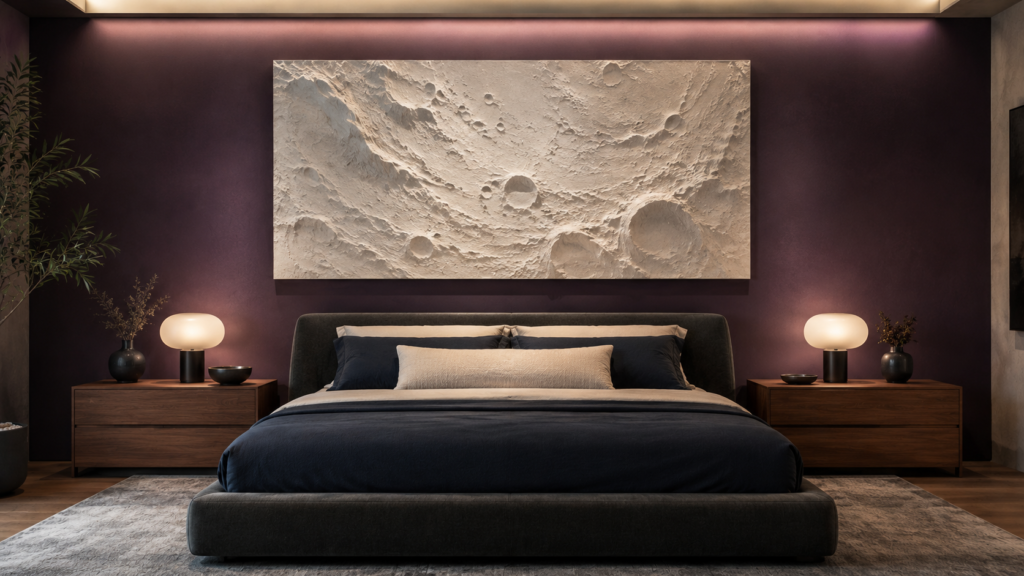
Choose one large monochrome plaster artwork with shallow craters, ridges, and uneven carved depressions inspired by the moon’s surface. Hang it above the bed or on the wall directly opposite it.
The raised texture changes throughout the day as light moves across the surface, giving the room depth without adding another shiny finish. Size the piece at approximately two-thirds the width of the bed. Warm wall-grazing light will reveal the texture more clearly than a bright overhead bulb.
9. Cover the Floor With a Muted Nebula Gradient
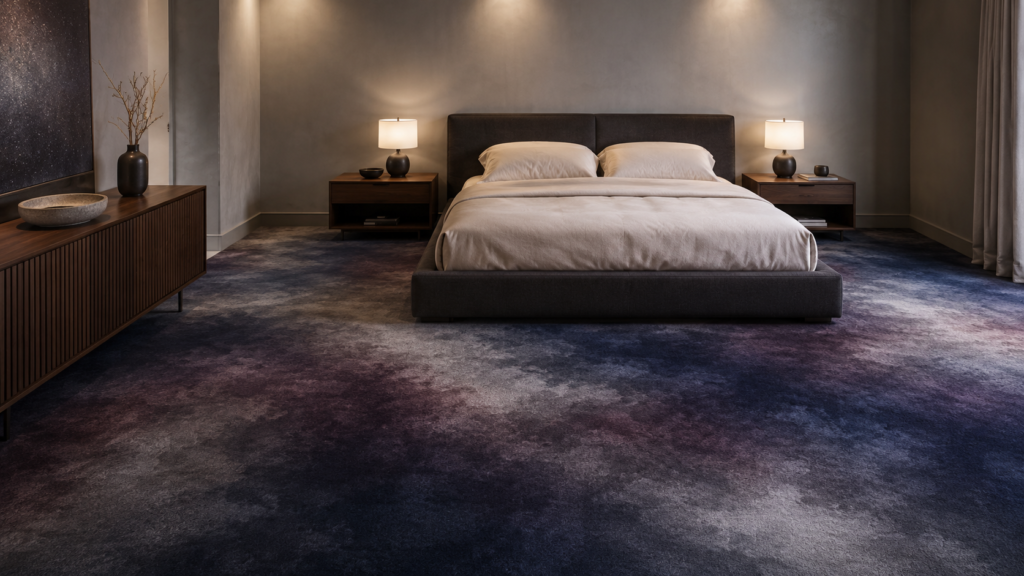
Use a custom low-pile carpet or oversized wool rug that fades irregularly from midnight navy into plum, graphite, and moonstone gray. The transitions should feel smoky and blurred rather than printed with obvious galaxy graphics.
This gives the floor a soft nebula effect while also dampening sound in a room filled with glass, metal, or hard furniture. Keep the bed and walls mostly solid so the floor remains visible. Avoid bright purple or electric blue, which can make the design look juvenile.
10. Divide the Dressing Area With Chromatic Cast Glass
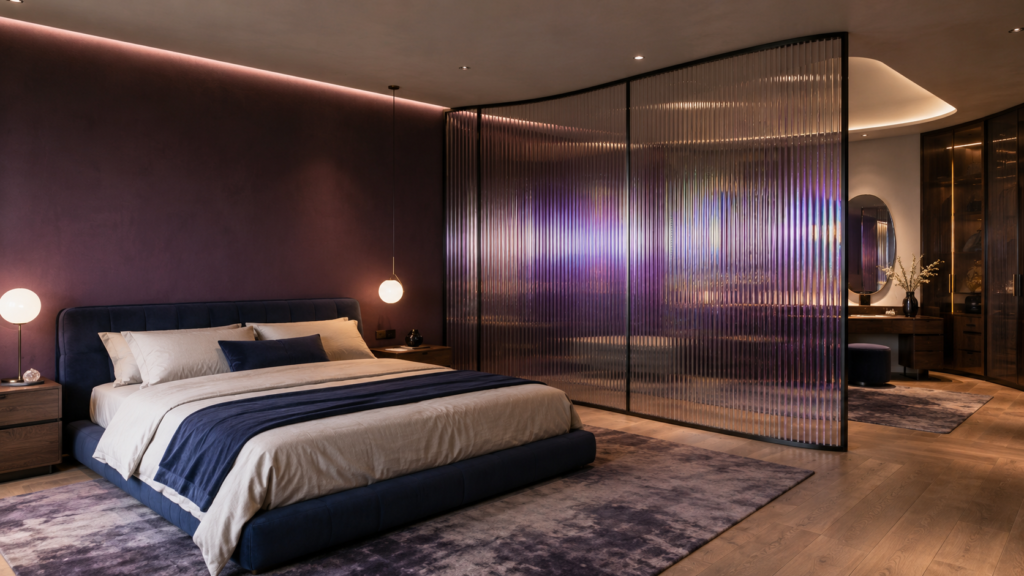
Separate the sleeping and dressing zones with a slim curved screen made from ribbed or cast glass. Choose smoked gray glass with a subtle violet or iridescent layer that shifts as light passes through it.
The screen filters views rather than blocking them, so the bedroom retains its depth and natural sight lines. A blackened-metal frame gives the glass enough visual weight. In a smaller bedroom, use one narrow fixed panel instead of a full divider to achieve the same futuristic, space-inspired effect.