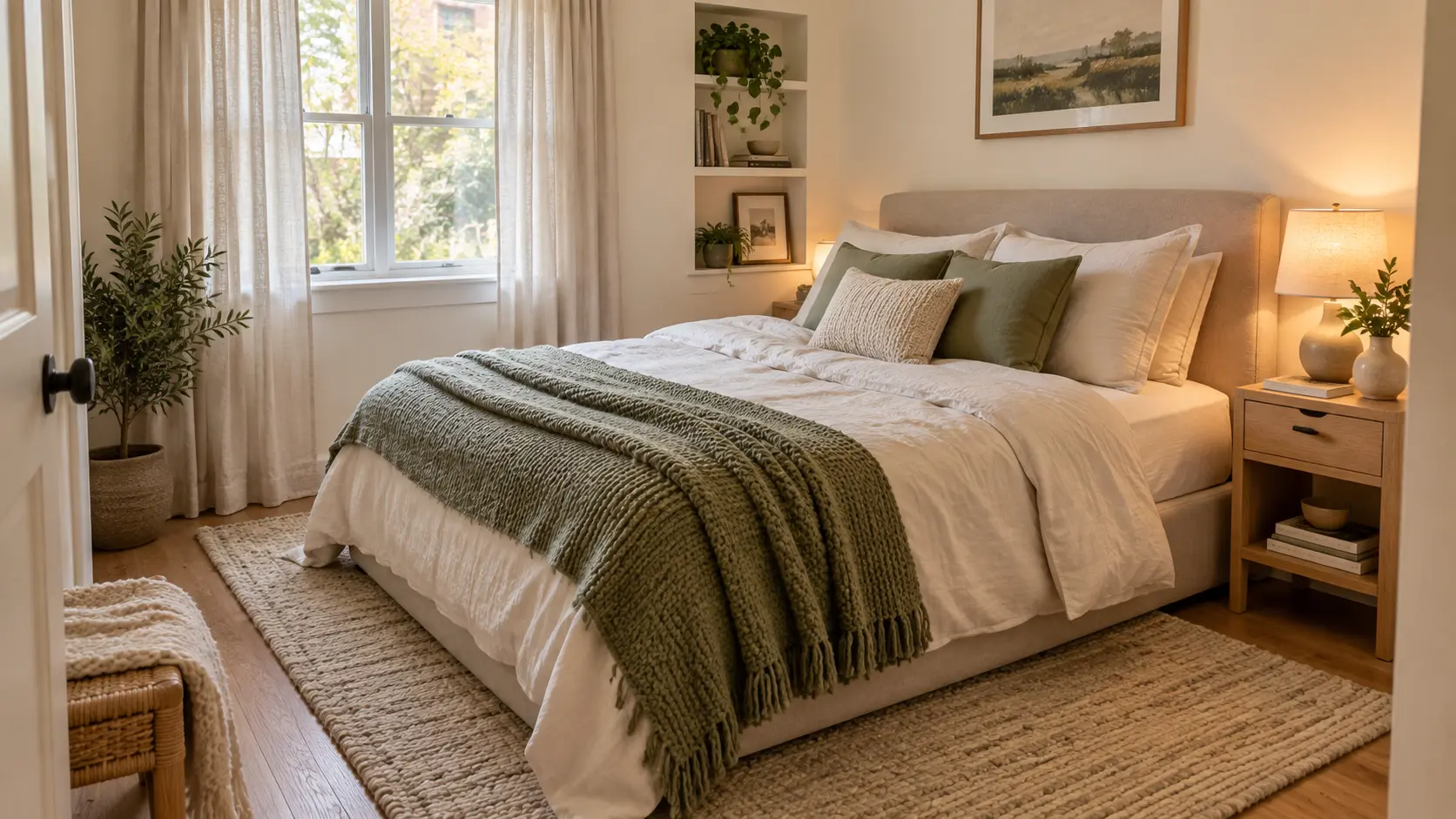
A small bedroom should feel like a place to exhale, not a puzzle you have to solve every morning. With the right lighting, colors, textures, and furniture scale, even the tightest room can feel warm, comfortable, and beautifully put together.
These cozy small bedroom ideas will help you create a relaxing retreat without crowding the floor or stretching your budget. From softly lit headboards and calming color palettes to practical bed-and-desk layouts, each idea is designed for real homes where comfort, movement, and everyday function matter just as much as style.
1. Cozy Built-In Small Bedroom
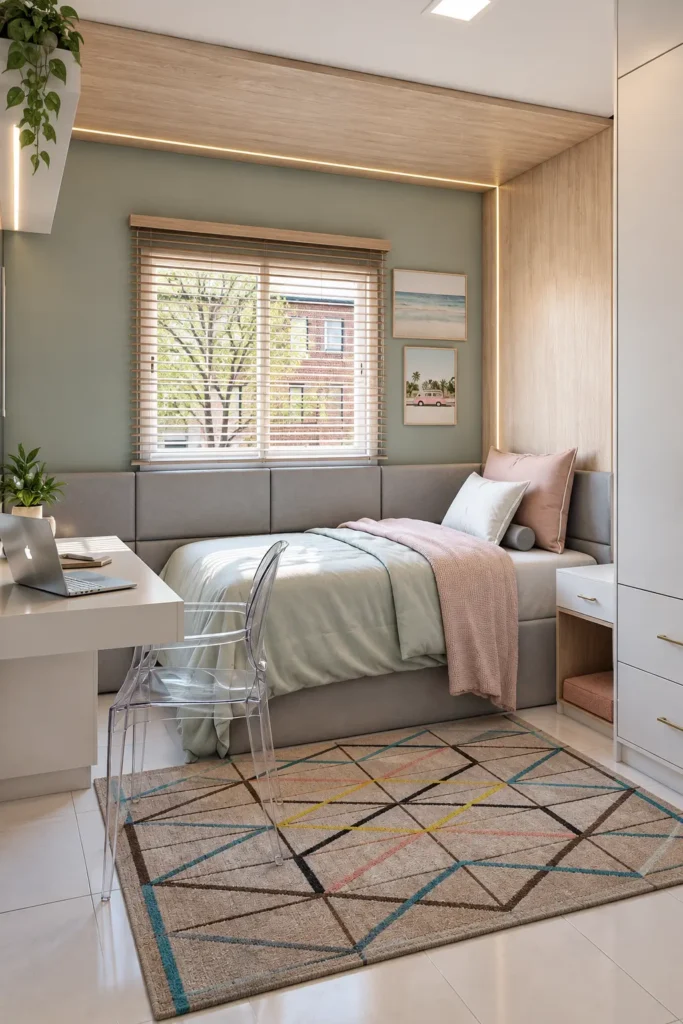
Frame the bed with pale wood cabinetry to give a small bedroom a warm, enclosed feeling. Choose a light oak or matte wood-look laminate so the built-ins don’t make the room visually heavy. Keep the area above the headboard open to maintain breathing room.
A floating desk can fit along the opposite wall without blocking the walkway. Allow at least 24 inches of clear floor space beside the bed where possible. Soft sage bedding, a geometric rug, and one trailing plant prevent the streamlined cabinetry from feeling too formal.
2. Cozy Wood Accent Bedroom
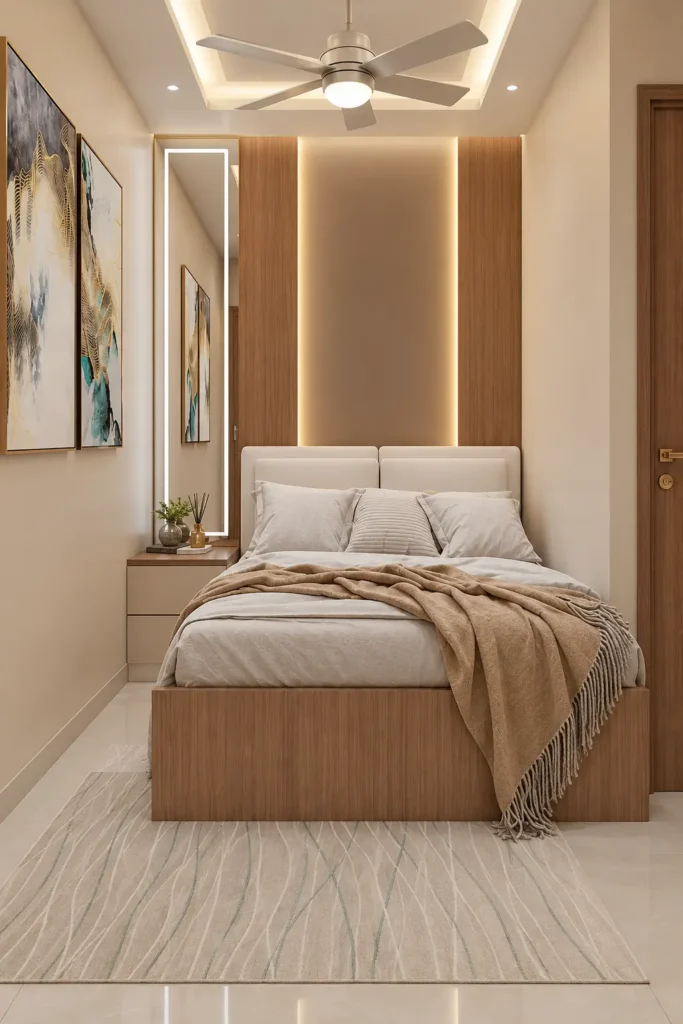
A floor-to-ceiling wood panel behind the bed brings natural color into a narrow bedroom without taking up floor space. Vertical panels also draw the eye upward, making a low or compact room appear taller.
Run concealed LED strips along the outer edges of the panel to create a gentle evening glow. Select bulbs around 2700K and add a dimmer so the light never feels harsh. Cream bedding, taupe curtains, and a low upholstered bed balance the straight wood lines with softer shapes and textures.
3. Cozy White Small Bedroom
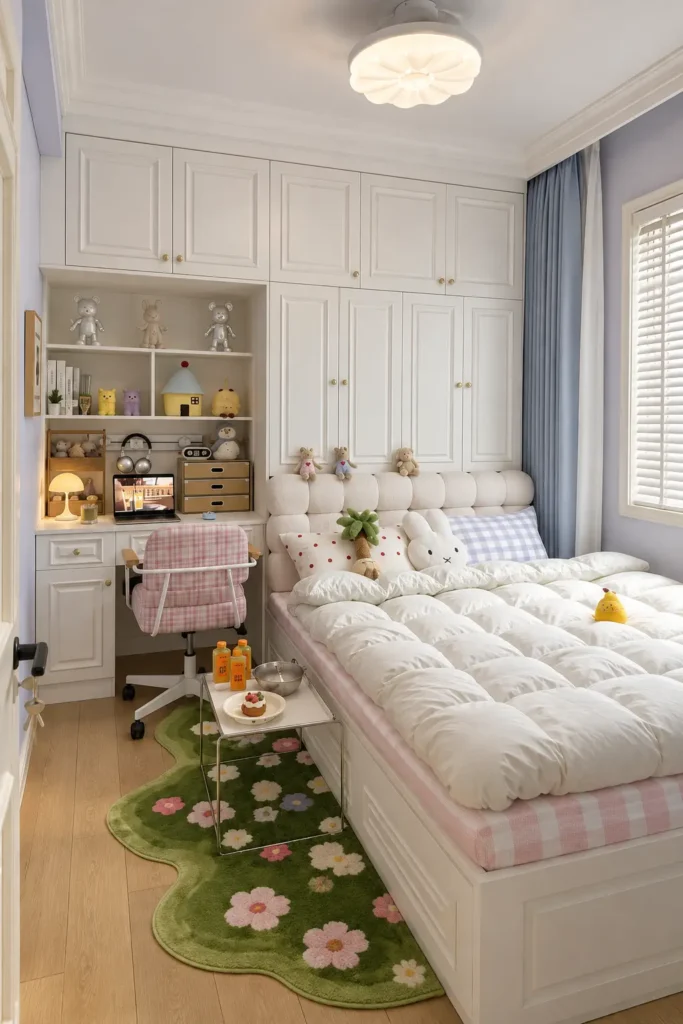
Warm white walls and built-ins can make a compact bedroom feel brighter while still looking comfortable. Avoid a sharp, blue-based white if the room receives little sunlight. Creamy white tends to look softer under both natural and artificial light.
Add character through pastel bedding, small floral details, and a playful rug rather than filling every shelf. Closed cabinets keep visual clutter out of sight, while a few open cubbies provide space for books and personal objects. The result feels cheerful, orderly, and suitable for everyday use.
4. Cozy Bed-and-Desk Layout
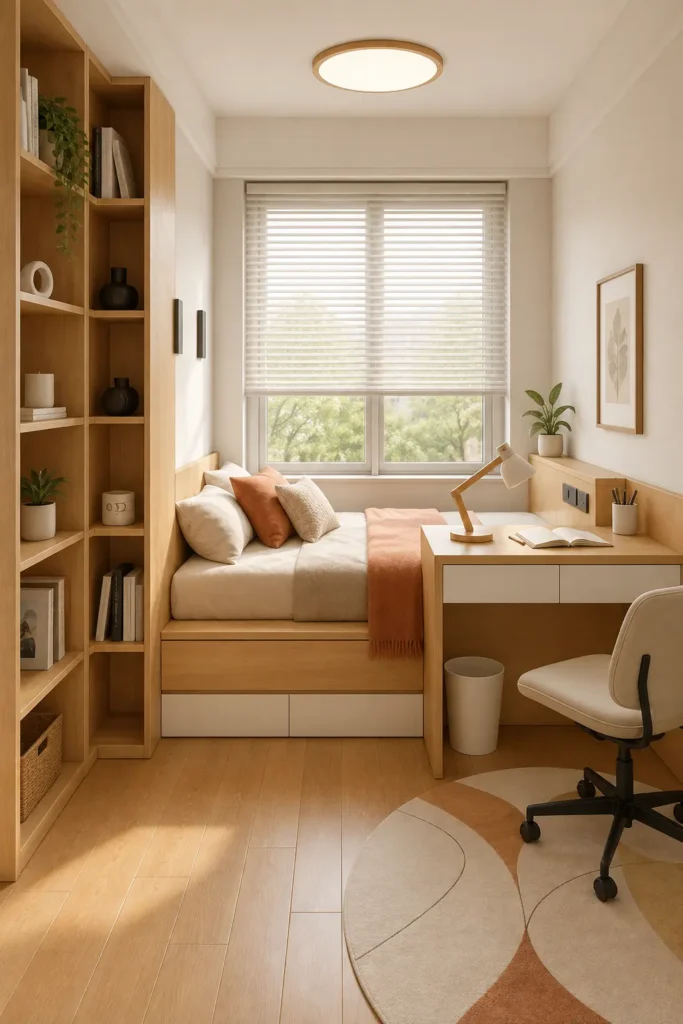
Place a platform bed beneath the window and fit a shallow desk beside it to create two functional zones without crowding the room. A desk measuring roughly 18 to 24 inches deep offers enough workspace while protecting the walkway.
Use a chair that slides fully beneath the desktop. Light-filtering blinds are more practical than curtains that collect behind the mattress, and warm wood flooring reinforces the relaxed look. This layout works especially well in a child’s bedroom, student room, guest room, or compact apartment.
5. Cozy Neutral Small Bedroom
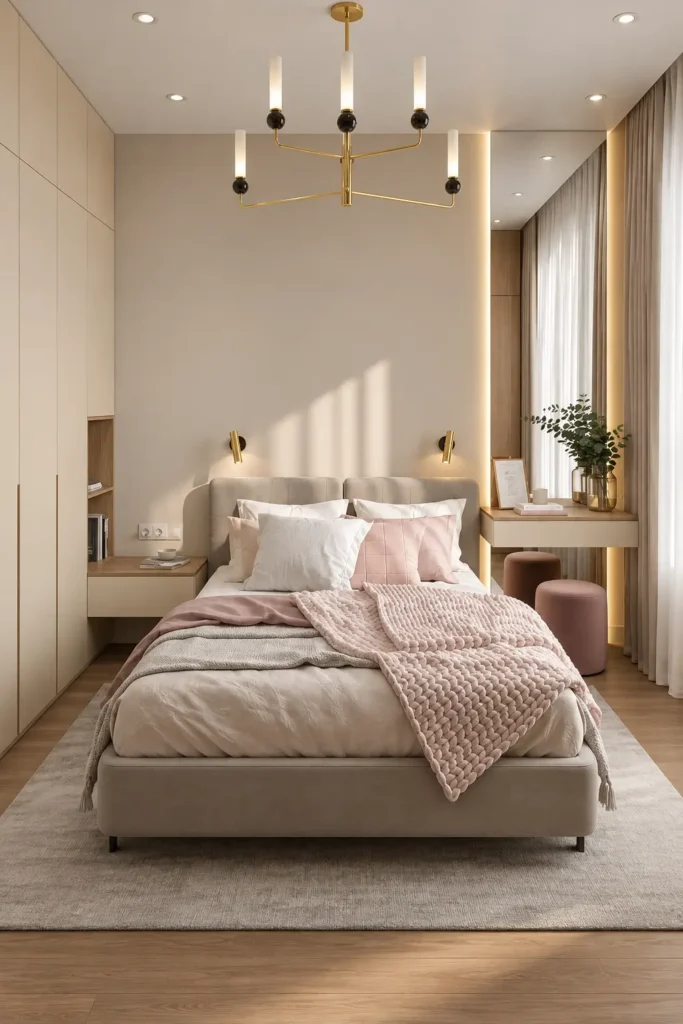
Build a restful palette with warm white, mushroom, oatmeal, and muted blush. Use the lightest shade on the walls, a slightly deeper neutral on the bed, and a dusty pink throw for quiet contrast.
Because neutral rooms can look flat, vary the materials instead of adding more colors. Combine washed cotton sheets, a knitted blanket, a linen-look headboard, and a low-pile rug. Matte wall paint helps soften glare and disguises minor wall imperfections, making it a practical choice for older homes and frequently used bedrooms.
6. Cozy Bedroom With LED Lighting
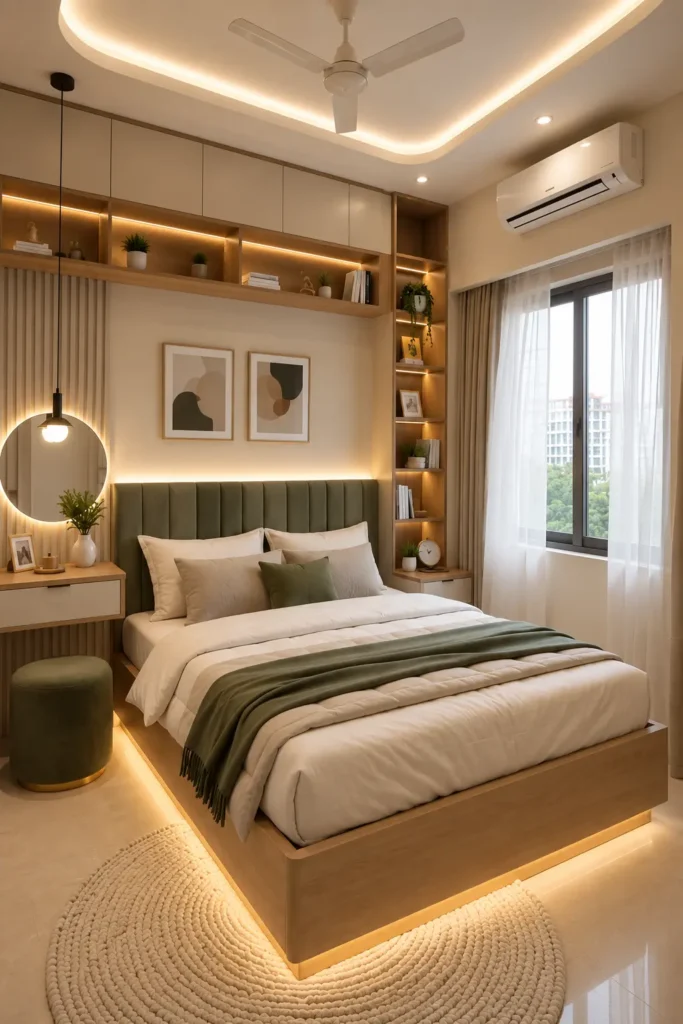
Concealed lighting beneath a platform bed can make a small bedroom feel calm after dark. The low glow defines the bed without requiring another floor lamp or a large decorative fixture.
Install the LED strip behind the edge of the frame so you see reflected light rather than individual dots. A warm white setting between 2700K and 3000K works best for winding down. Pair it with an upholstered green headboard, natural wood, and simple bedding. Plan the wire route carefully because visible cables can spoil the streamlined appearance.
7. Cozy Mirrored Small Bedroom

One well-positioned mirror can distribute daylight and make a narrow bedroom feel less enclosed. Place a tall panel beside the bed or use mirrored wardrobe doors where they can reflect a window or softly lit wall.
Avoid surrounding the bed with multiple reflective surfaces, which may become visually distracting at night. Balance the mirror with warm wood, soft bedding, and diffused pendant lights. Renters can use a lightweight leaning mirror, but it should be securely anchored when children or pets have access to the room.
8. Cozy Small Bedroom Workspace
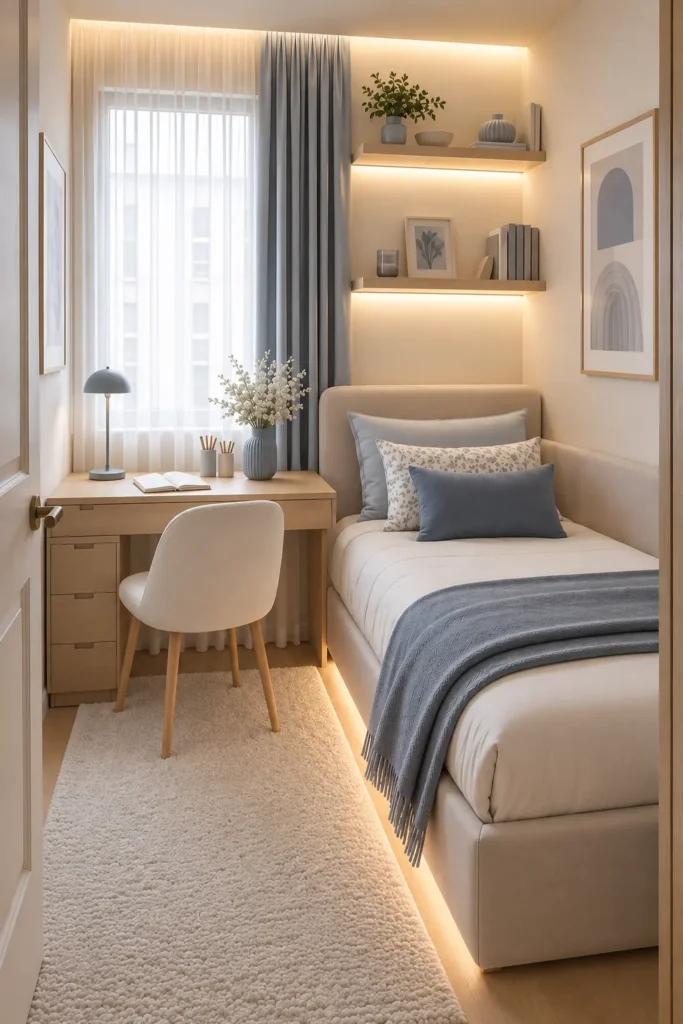
A slim desk beside the bed can replace a traditional nightstand and create a useful work area. A width of approximately 30 to 36 inches is often enough for a laptop, lamp, and small tray without dominating the bedroom.
Select a compact chair that tucks beneath the desk, then install one or two shallow shelves above it. Keep those shelves around 8 to 10 inches deep so they don’t feel intrusive. Soft blue bedding, warm under-bed lighting, and full-length curtains help the workspace blend into the restful setting.
9. Cozy Small Bedroom Reading Nook
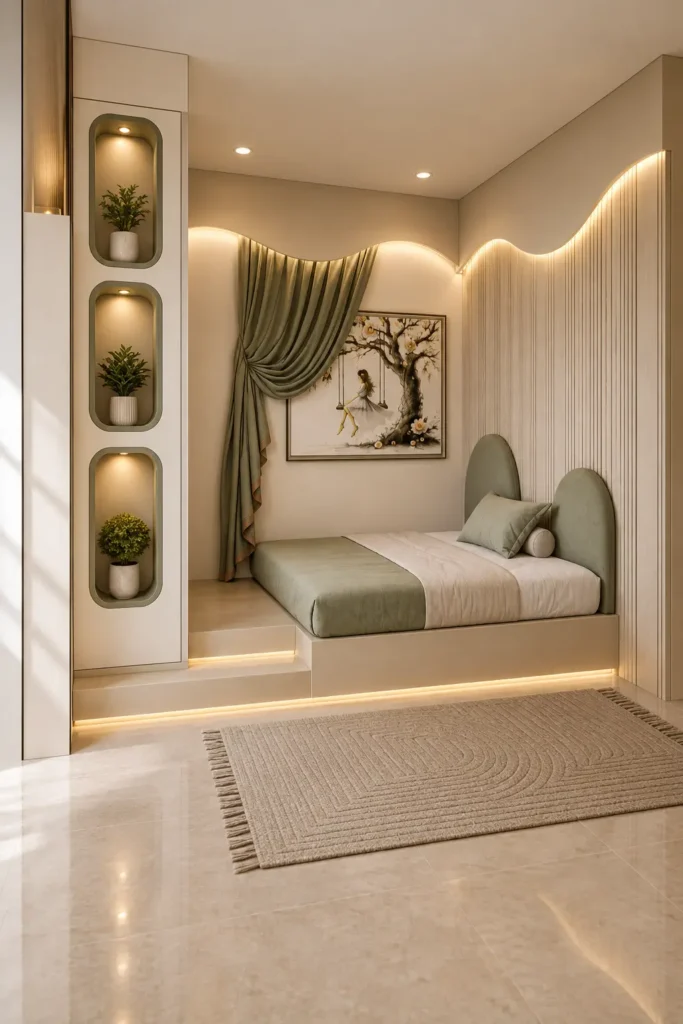
Turn an unused corner into a reading nook with a fitted bench, supportive cushion, and warm wall light. A compact seat also provides a convenient place to put on shoes without adding a bulky armchair.
Keep the cushion firm and limit the decorative pillows so the bench remains usable. Curved wall panels or a softly arched back can make the corner feel sheltered. If custom joinery exceeds your budget, use a narrow upholstered bench and hang a plug-in sconce above it for a similar effect.
10. Cozy Raised-Bed Bedroom
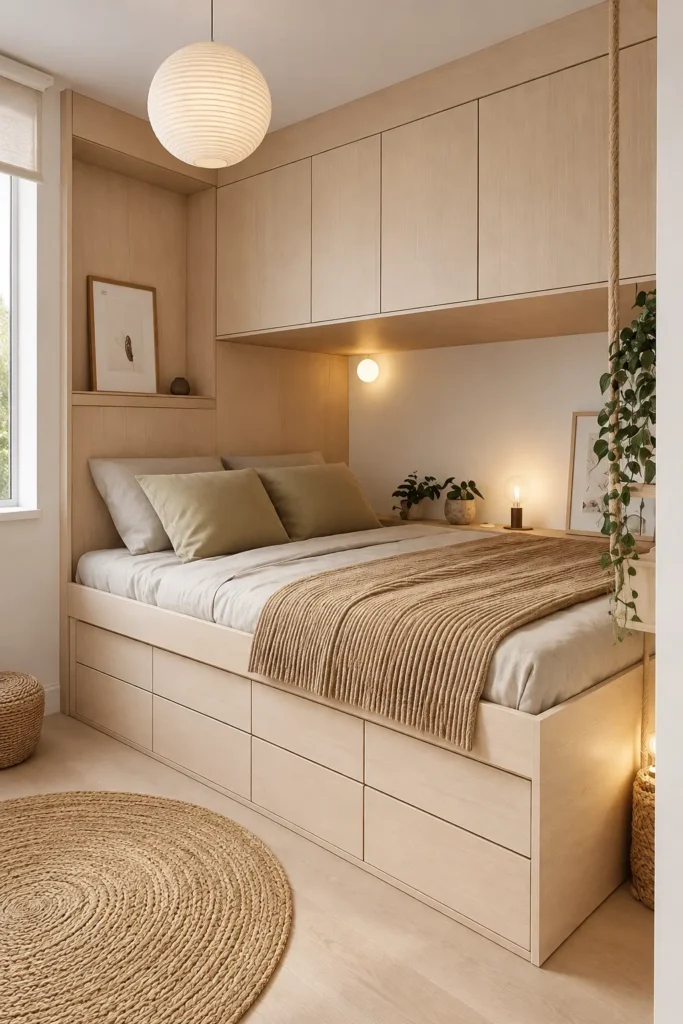
A raised platform gives the sleeping area a defined, cocoon-like appearance while making use of the space beneath the mattress. Choose pale wood and rounded or handle-free drawer fronts to keep the base from looking bulky.
Check the available opening space before selecting drawers. A large drawer may appear practical but won’t work if it collides with a wall or other furniture. In very tight bedrooms, a lift-up mattress base may be more suitable. Layer neutral bedding and add one warm wall lamp to soften the platform’s solid shape.
11. Cozy Window-Side Bedroom
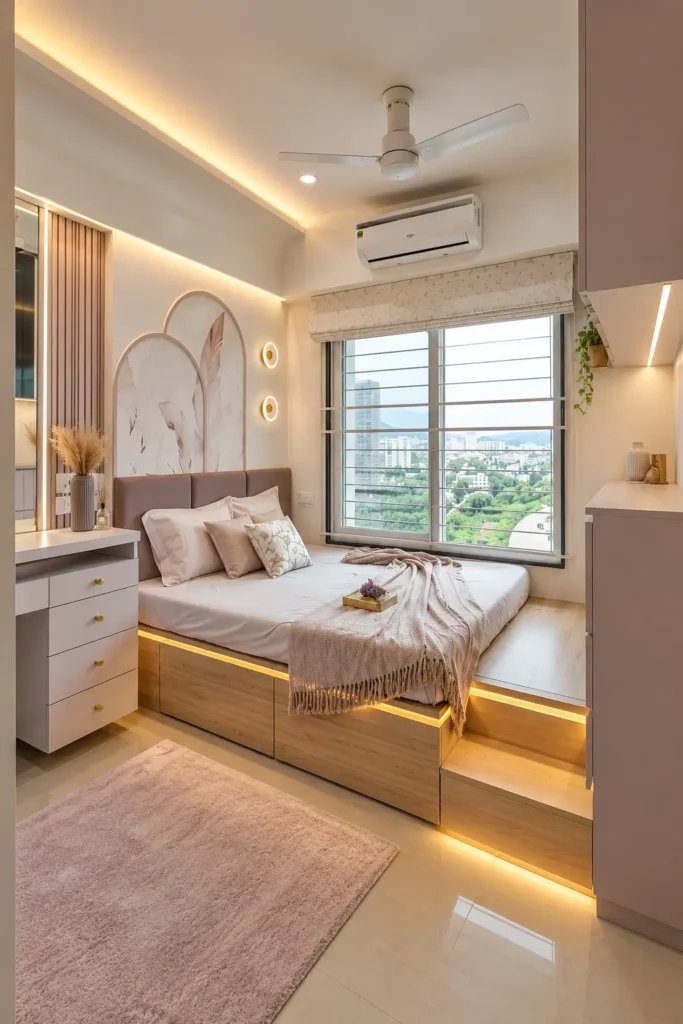
Positioning the bed near a bright window creates a peaceful place to wake up, especially when the layout preserves the view. Use low furniture around the bed so daylight can travel deeper into the room.
Choose cellular blinds or a lined Roman shade for privacy without fabric gathering behind the mattress. If the bed is built in, retain access to window locks, screens, vents, and electrical outlets. Pale bedding reflects daylight, while light wood and a dusty rose rug keep the room warm without making it appear smaller.
12. Cozy Daybed for Small Spaces
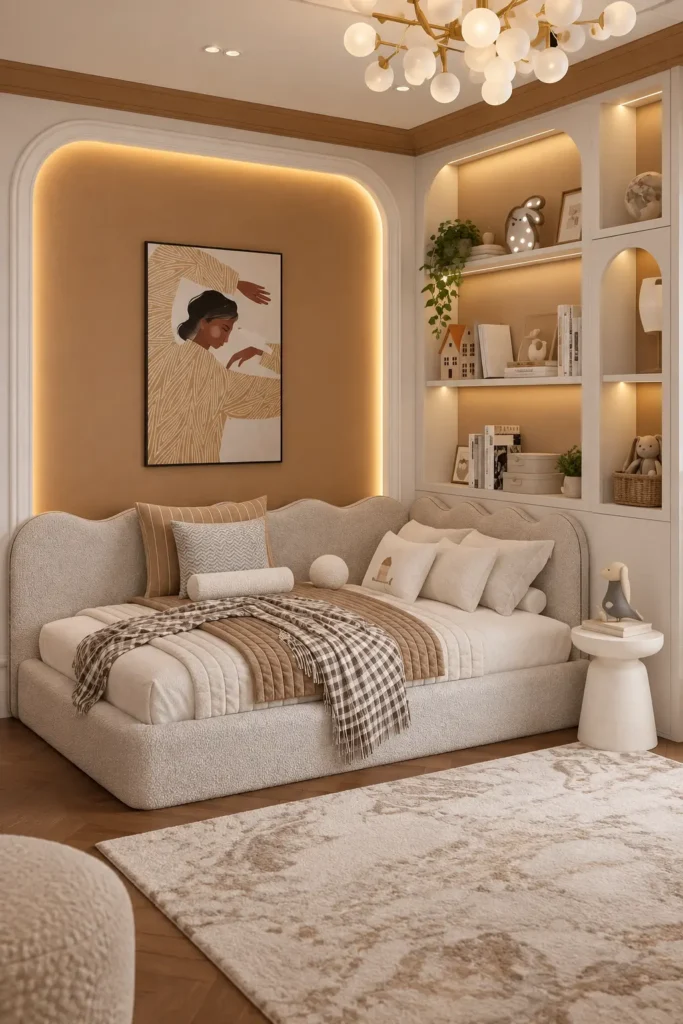
A sofa-style daybed can make a compact bedroom useful during the day. Select a full-depth mattress with an upholstered back, then arrange two or three supportive cushions instead of covering the bed with decorative pillows.
Performance fabric or a washable slipcover handles regular use better than delicate velvet, which can show pressure marks and fingerprints. Add warm recessed lighting, one framed print, and a small side table. This flexible setup is well suited to guest bedrooms, studio apartments, and rooms used for both resting and reading.
13. Cozy Symmetrical Small Bedroom
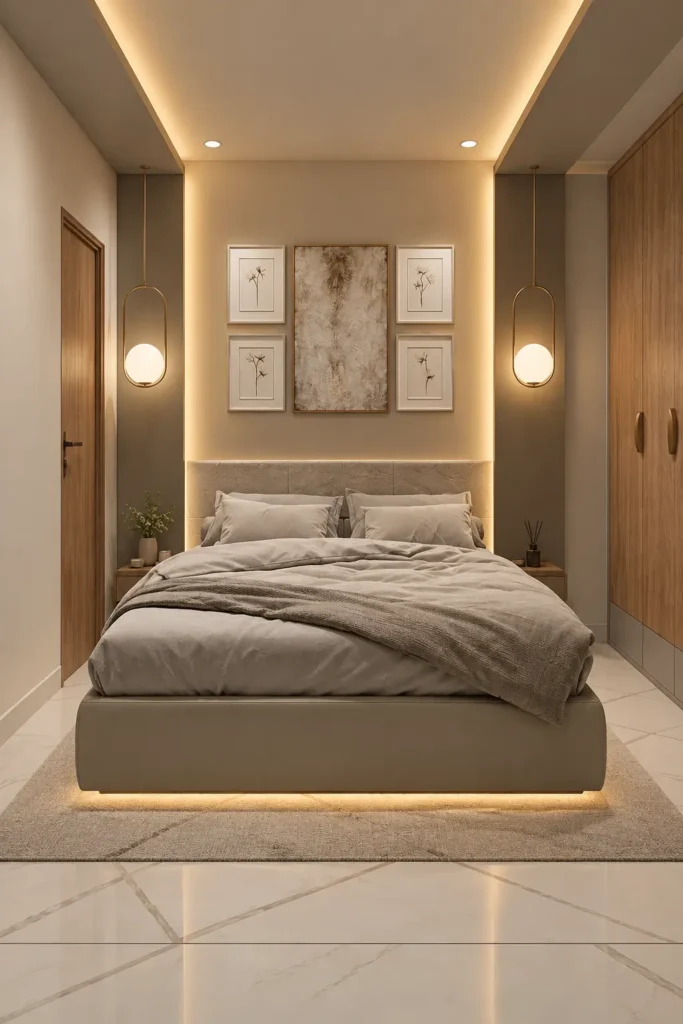
Wardrobes placed on both sides of the bed create a balanced frame and give a narrow bedroom a more settled appearance. Paint the doors close to the wall color so the cabinetry visually recedes.
Center the headboard and artwork within the opening, then add matching sconces for an even pool of light. Small bedside niches can hold phones and books without requiring wide nightstands. Accurate measurements matter with this layout because differences between the two sides become noticeable once the bed and lighting are centered.
14. Cozy Bedroom With a Vanity
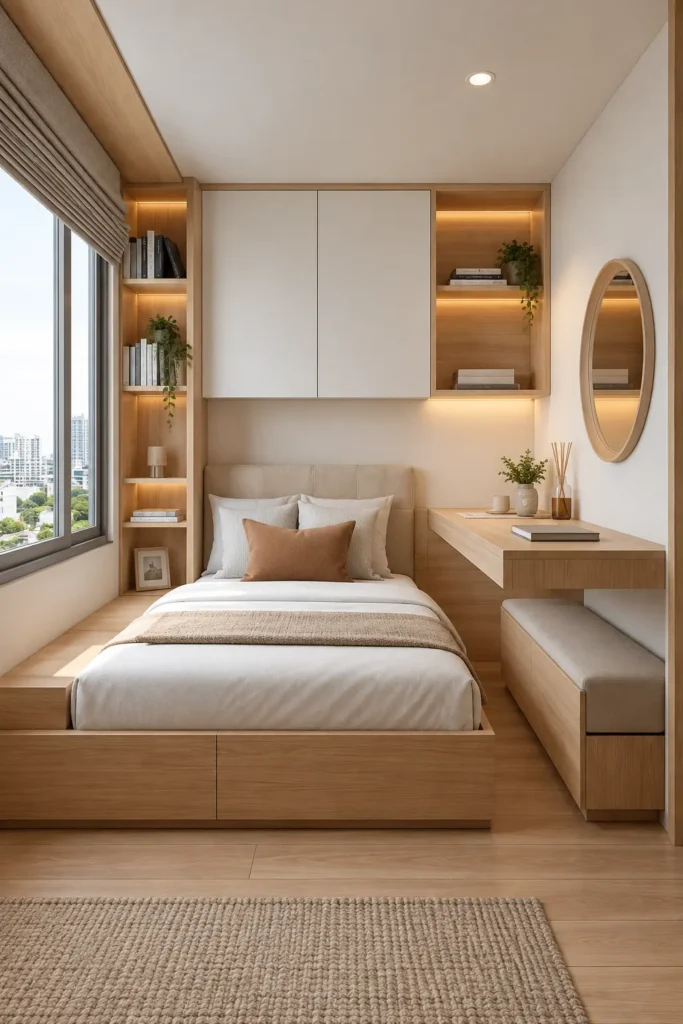
A wall-mounted vanity offers a useful surface without occupying as much visual or physical space as a floor-standing unit. Place it close to natural light and select a stool that slides completely beneath the top.
A depth of around 16 to 18 inches is generally enough for daily essentials. Use drawers to control small items, cables, and cosmetics, leaving the surface mostly clear. A rounded mirror softens the surrounding cabinetry, while warm wood and creamy upholstery connect the vanity to the rest of the bedroom.
15. Cozy Curved Accent Wall
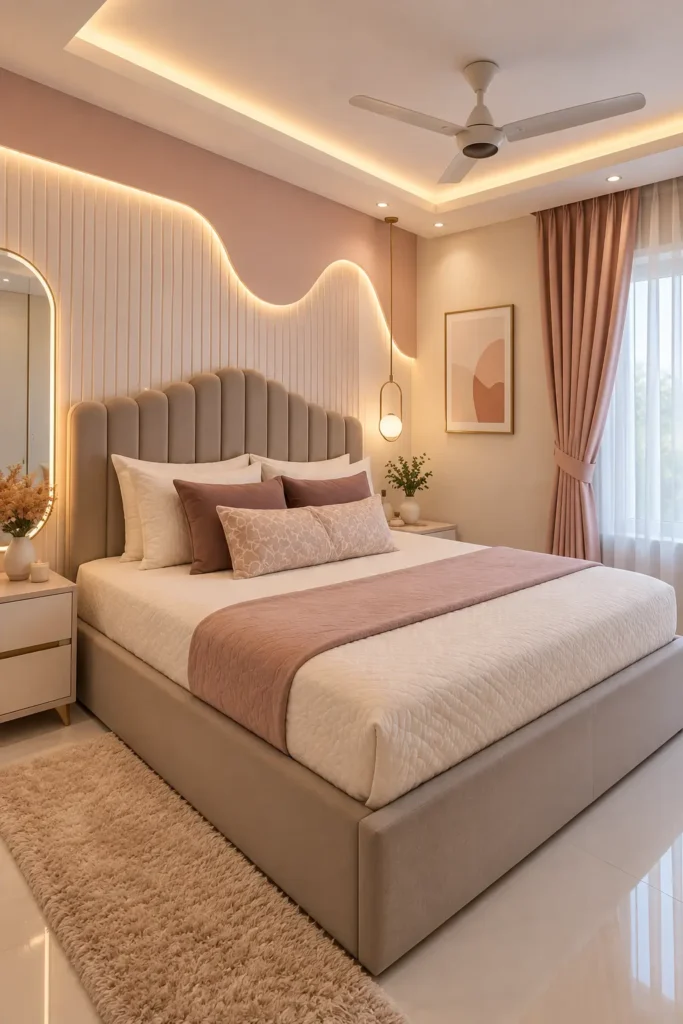
A curved upholstered headboard or softly waved wall panel can break up the rigid lines of a box-shaped bedroom. Keep the design broad and simple so it remains restful rather than becoming a busy focal point.
Muted rose, clay, or dusty mauve works naturally with warm white walls and pale wood. Concealed lighting can follow one curve and cast a soft wash across the textured surface. Upholstered panels also help reduce echo, but light-colored fabric should be vacuumed occasionally because dust can settle along the seams.
16. Cozy Boho Small Bedroom
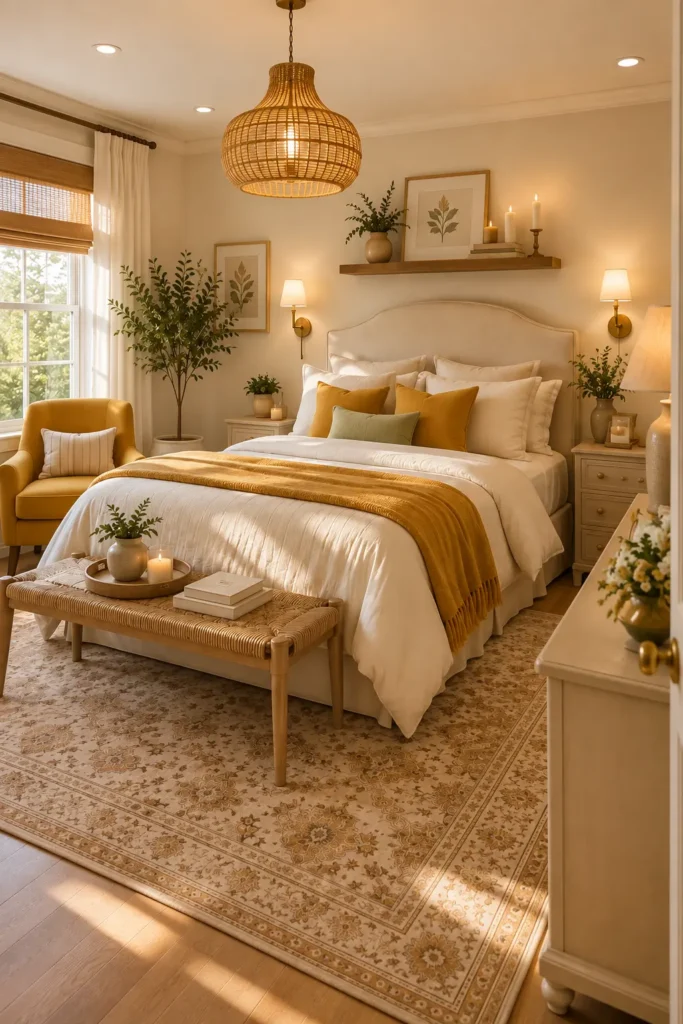
Create a relaxed boho look with woven lighting, light wood furniture, linen bedding, and a flat-woven rug. Keep the room grounded in warm white and tan, then introduce mustard or olive through a few controlled accents.
Natural fibers soften rooms with hard floors, but pure jute can feel rough beside the bed and may be difficult to spot-clean. A wool-jute blend or washable woven rug is easier to maintain. Finish with one leafy plant and a small group of framed prints instead of covering every available surface.
17. Cozy Cream and White Bedroom
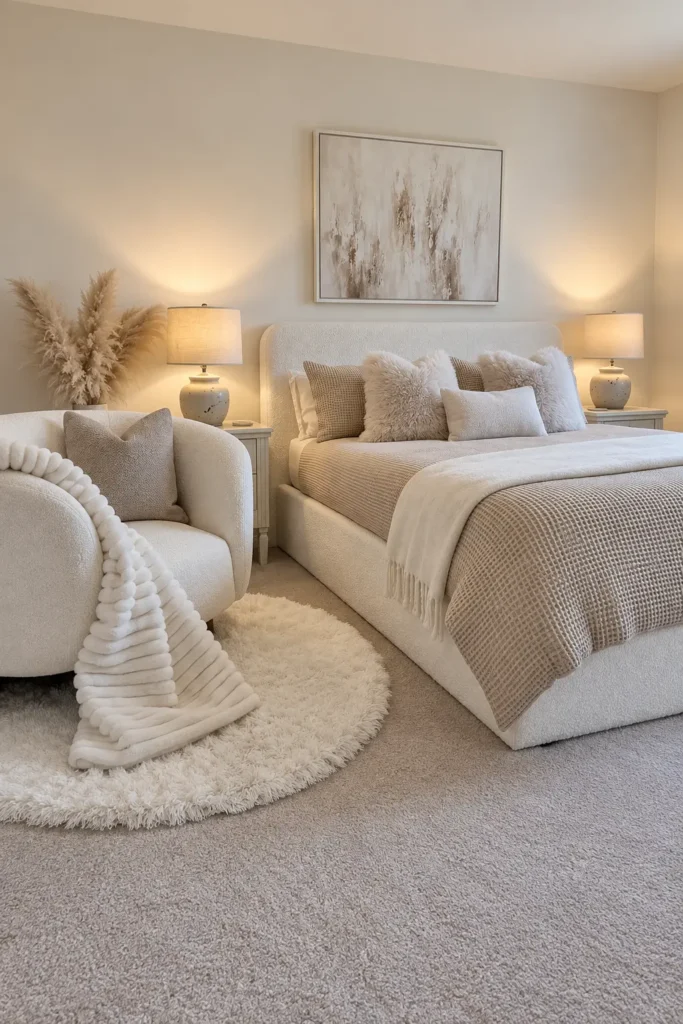
Layering cream and warm white creates a light bedroom that still feels comfortable. Start with warm white walls, then add ivory sheets, a cream throw, and a pale greige rug to create gentle separation between surfaces.
Let the rug extend approximately 18 to 24 inches beyond the bed on visible sides if space permits. This anchors the furniture and provides a soft landing underfoot. Use washable cotton, brushed microfiber, or textured synthetic blends where regular cleaning matters, especially in homes with children or pets.
18. Cozy Lavender Small Bedroom
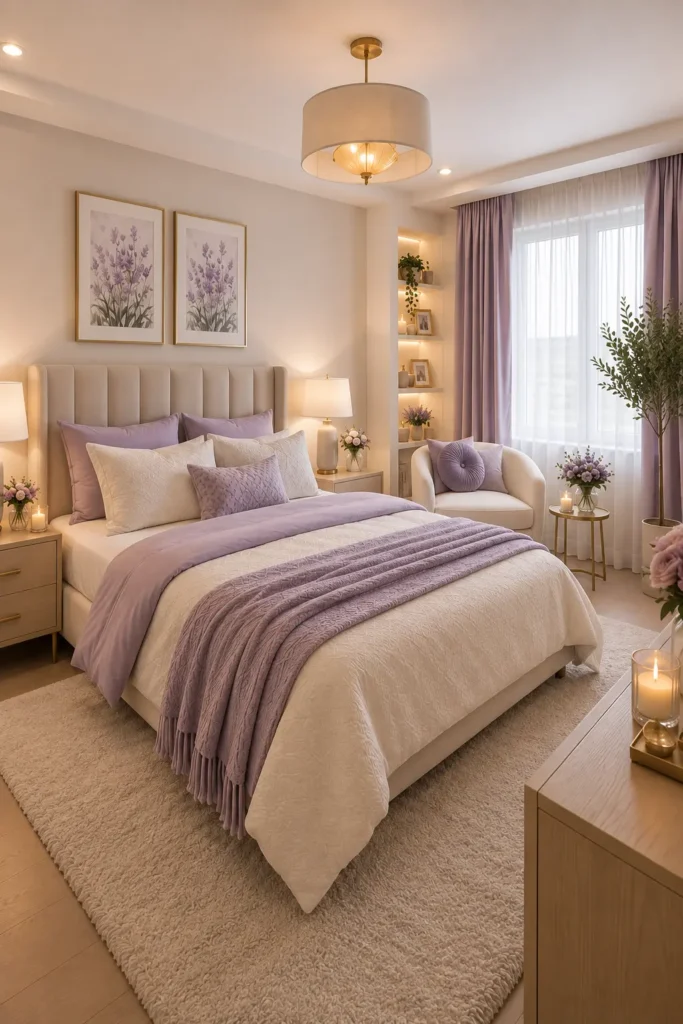
Muted lavender can add soothing color to a bedroom without making the room appear busy. Select a gray-based lavender for the duvet or curtains, then support it with ivory walls, light wood furniture, and brushed brass lamps.
Repeat the shade in only two or three places rather than matching every accessory. Hanging curtains close to the ceiling emphasizes height, while a pale rug keeps the lower half visually open. Check fabric samples in morning and evening light because lavender can shift noticeably toward pink or blue.
19. Cozy Sage Green Bedroom
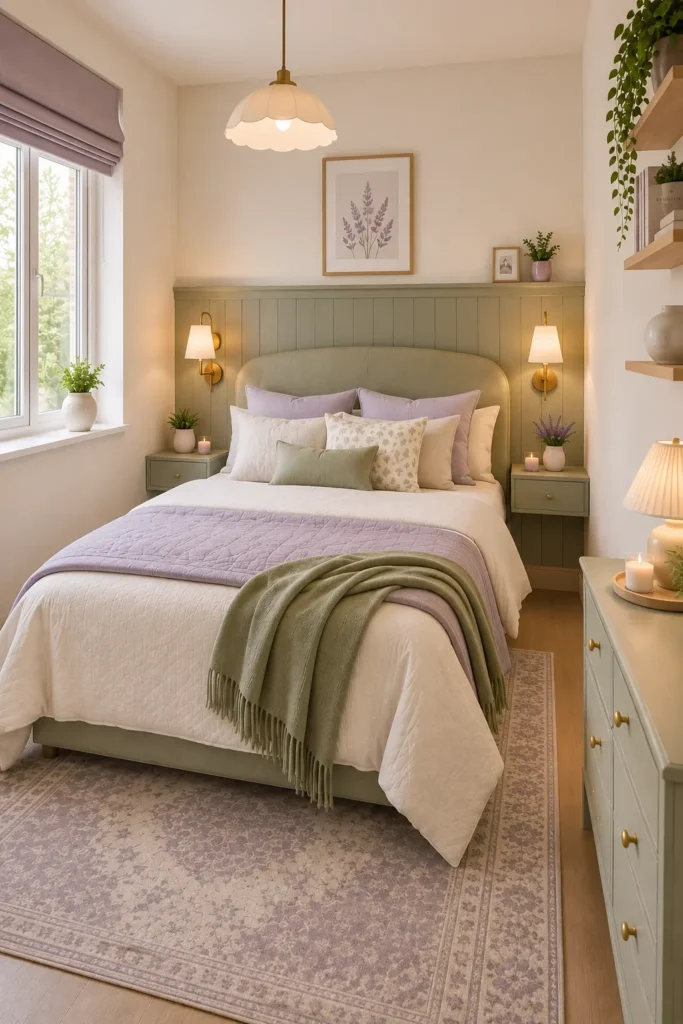
Sage green works well on an upholstered headboard because it adds quiet color near the room’s main focal point. Combine it with creamy bedding, light oak furniture, warm bedside lamps, and simple botanical artwork.
Keep the largest surfaces pale when the bedroom has limited natural light. Deep green may look rich in a bright room but can appear dull in a poorly illuminated corner. A sage throw folded across the foot of the bed repeats the color without overwhelming the space, while wall-mounted lights keep small nightstands usable.
20. Cozy Pastel Small Bedroom
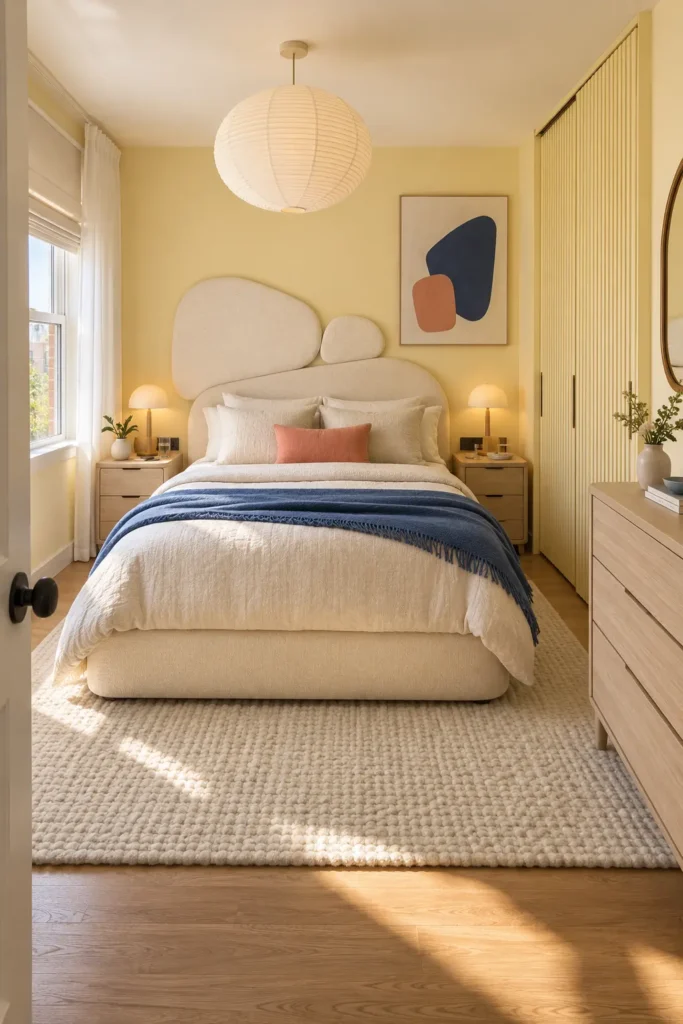
Use blush, soft blue, and pale apricot in restrained amounts to create a cheerful bedroom that remains restful. Select one pastel as the leading color and introduce the others through thin bands, artwork, or a single cushion.
A light upholstered headboard connects the color scheme to the bed, while warm white walls provide enough negative space around it. Avoid purchasing every accessory in a different pastel shade. Repeating a limited palette across the bedding and artwork creates rhythm, helping the finished room look intentional instead of crowded.
Small-Space Details to Consider
Measure the bed wall, door swing, closet opening, window position, and available walkways before buying furniture. Preserving a clear route from the doorway to the bed is usually more valuable than squeezing in another chair or oversized nightstand.
Use layered lighting rather than relying on one bright ceiling fixture. Combine general overhead light with bedside task lighting and a dim accent source. Bulbs between 2700K and 3000K usually look softer in bedrooms, but always test paint, fabric, and wood samples under both daylight and evening lighting.