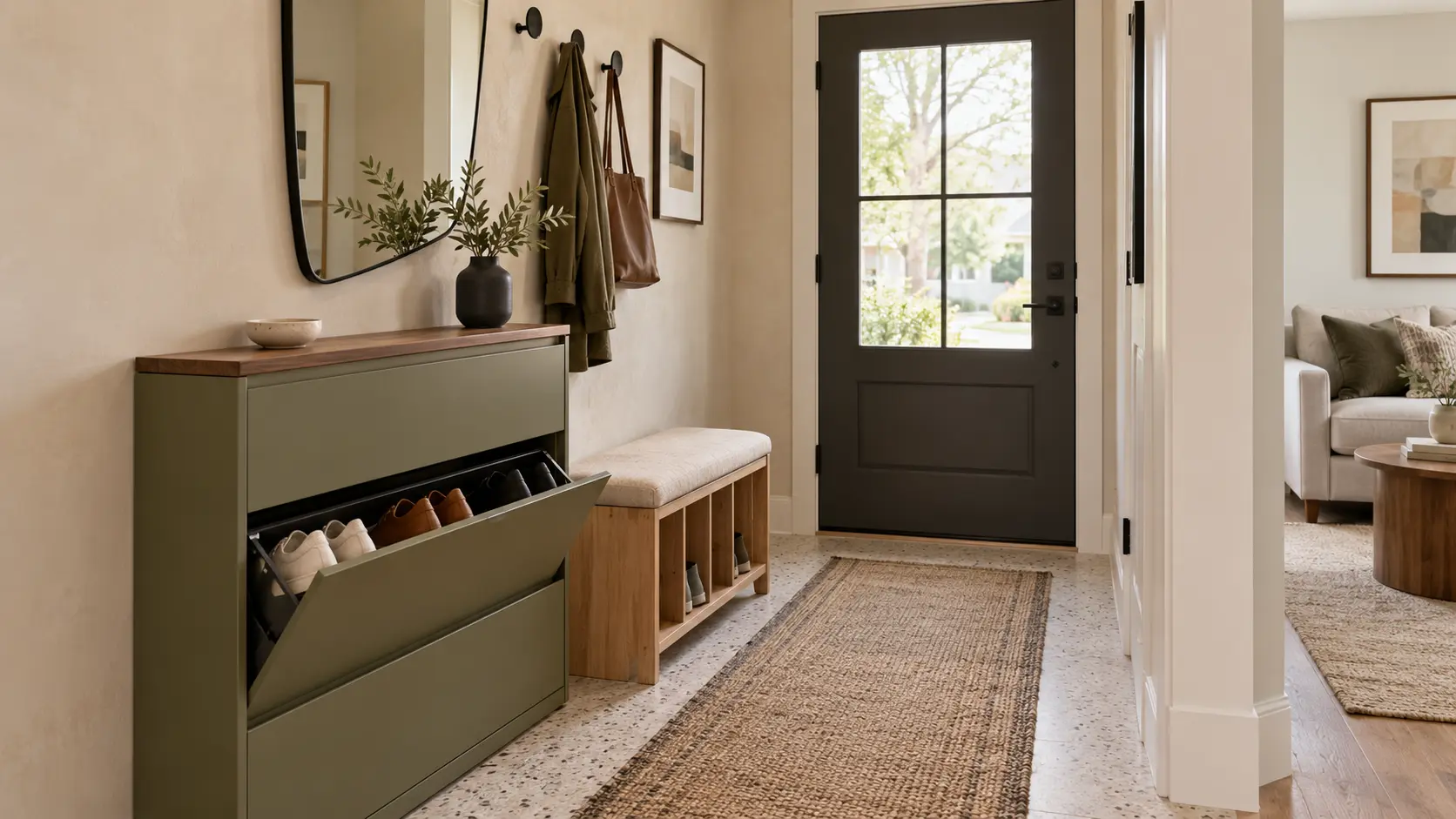
A small entryway can quickly become crowded when shoes begin collecting beside the front door. Without a practical storage system, even a few pairs can block the walkway and make an otherwise attractive home feel untidy.
The best small entryway shoe storage ideas do more than hide footwear. They use narrow walls, overlooked corners, closet doors, vertical space, and existing furniture without making the entrance feel smaller. The following solutions are suitable for compact US homes, apartments, and rentals. Each idea combines realistic storage with thoughtful styling, so your entryway can remain organized and welcoming.
1. Install a Floor-to-Ceiling Shoe Cabinet
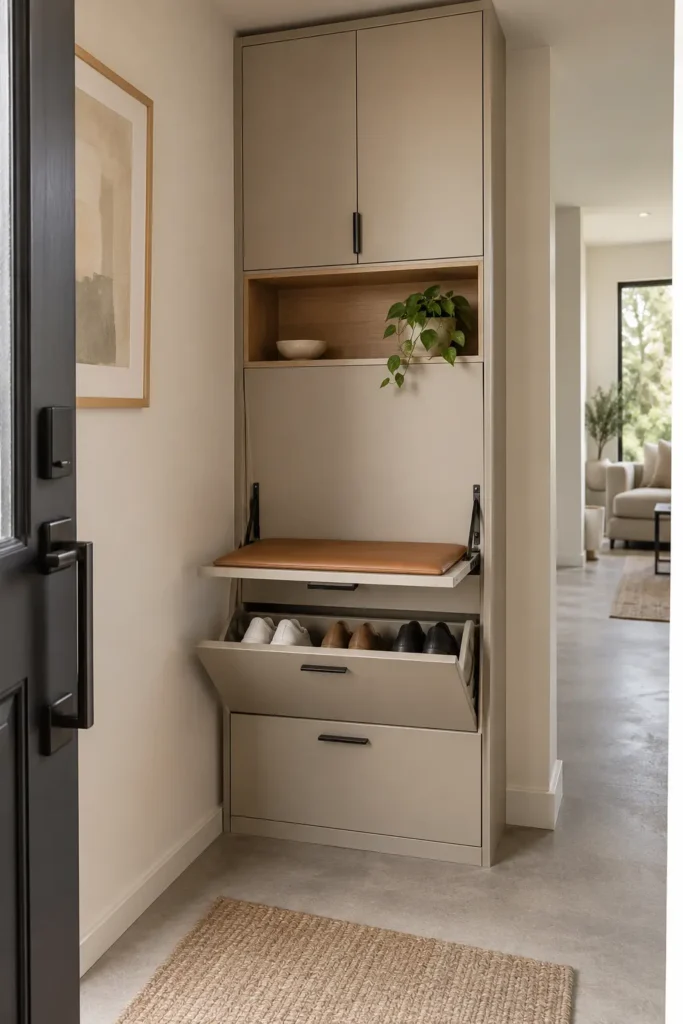
When floor space is limited, use the full height of the wall. A narrow floor-to-ceiling cabinet can provide several types of storage within a relatively small footprint.
Use tilt-out drawers at the bottom for everyday shoes, a fold-down seat in the middle, and adjustable shelves above for seasonal footwear, hats, bags, and shoe-care products. The folding seat provides a convenient place to put on shoes without requiring room for a permanent bench.
Choose warm white, muted sage, mushroom, or light oak to prevent the tall cabinet from overwhelming the entrance. Keep the cabinet approximately 30 inches wide and select shallow compartments wherever possible.
2. Use a Narrow Doorway Gap
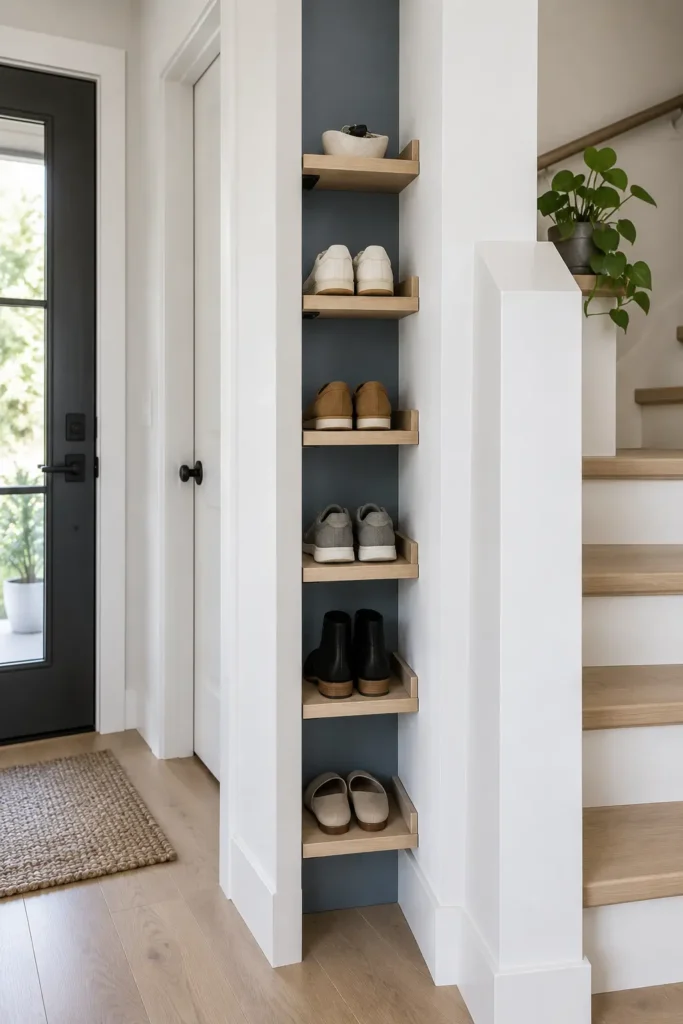
An awkward gap between a doorway, staircase, or adjoining wall can become a surprisingly useful vertical shoe nook. Install several small floating shelves, spacing them closely enough to hold one pair on each level.
This solution requires very little floor space and can accommodate five or six frequently worn pairs. A raised front edge or nonslip shelf liner will prevent shoes from sliding forward.
Paint the back of the nook dusty blue, muted clay, or soft olive to turn the narrow area into an intentional design feature. Reserve the highest shelf for keys, sunglasses, or a small storage basket.
3. Choose a Cane-Front Shoe Cabinet
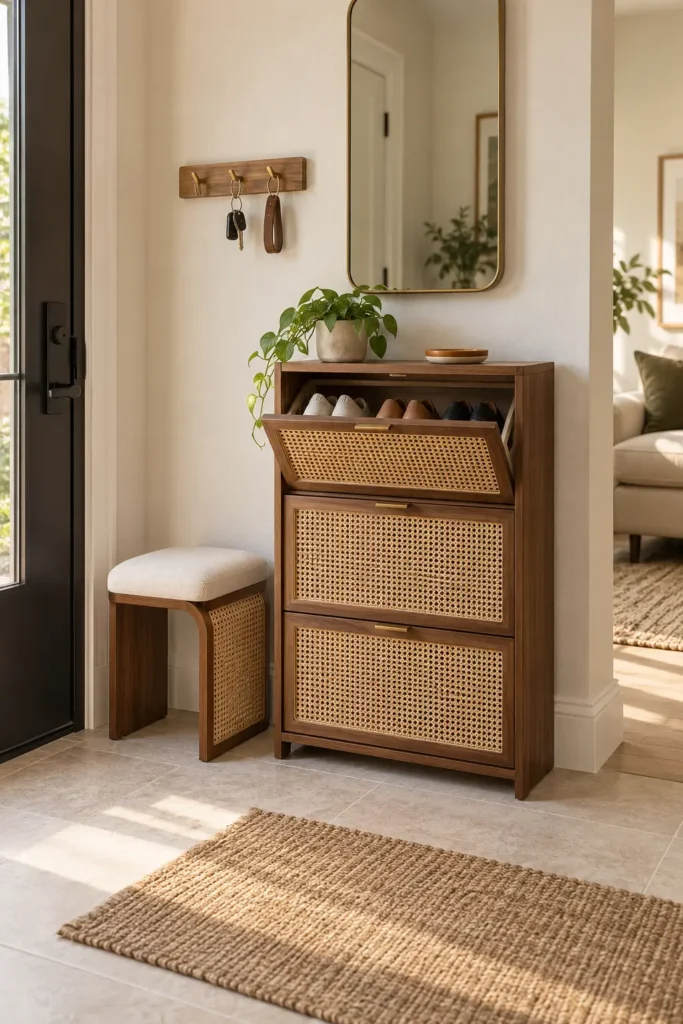
A cane-front shoe cabinet combines concealed storage with the warmth of natural texture. Unlike solid cabinet doors, woven cane allows limited airflow while keeping footwear mostly hidden.
Look for a narrow walnut or oak cabinet with two or three tilt-out compartments. The top can function as a drop zone for keys, mail, or a decorative bowl. Pair it with a compact stool and a wall mirror to create a complete entry station without introducing several large pieces of furniture.
This design works particularly well in organic modern, mid-century, bohemian, and warm minimalist homes.
4. Add a Slim Family Shoe Tower
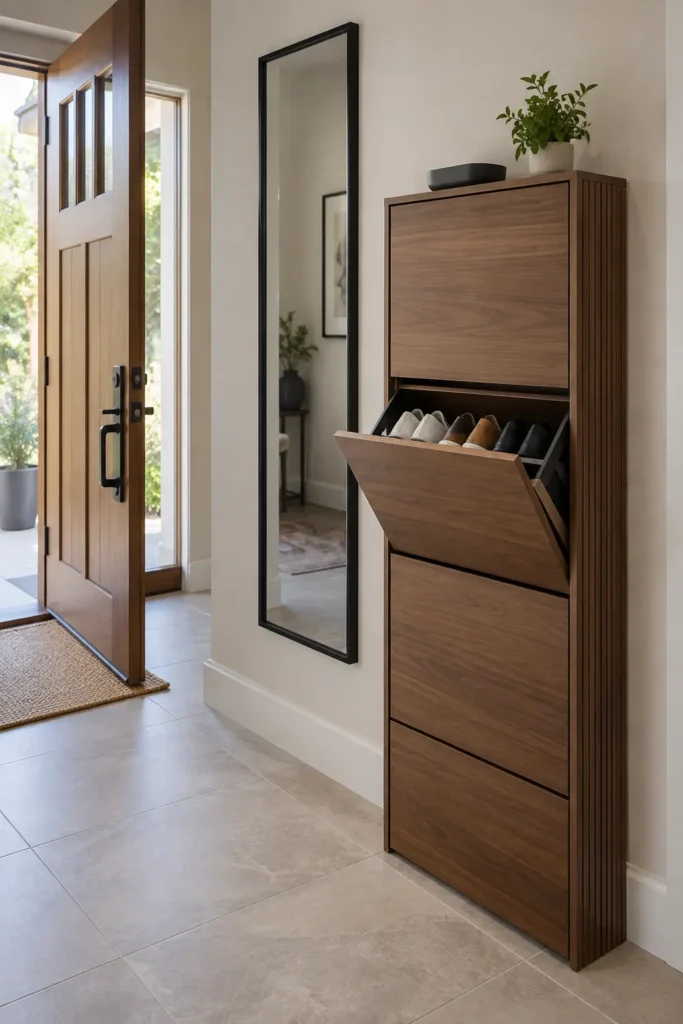
A tall, narrow shoe cabinet is a practical choice for a small household with a larger footwear collection. Instead of using a wide cabinet, choose a vertical model with several angled or tilt-out compartments.
Assign each section to a person or type of footwear. Daily sneakers can occupy the lowest compartment, while work shoes and less frequently worn pairs can be stored higher up.
A full-length mirror positioned beside the cabinet makes the arrangement more functional and helps the entryway feel brighter. Keep most compartments closed and avoid filling the cabinet top with excessive accessories.
5. Hide Shoes Behind a Mirror
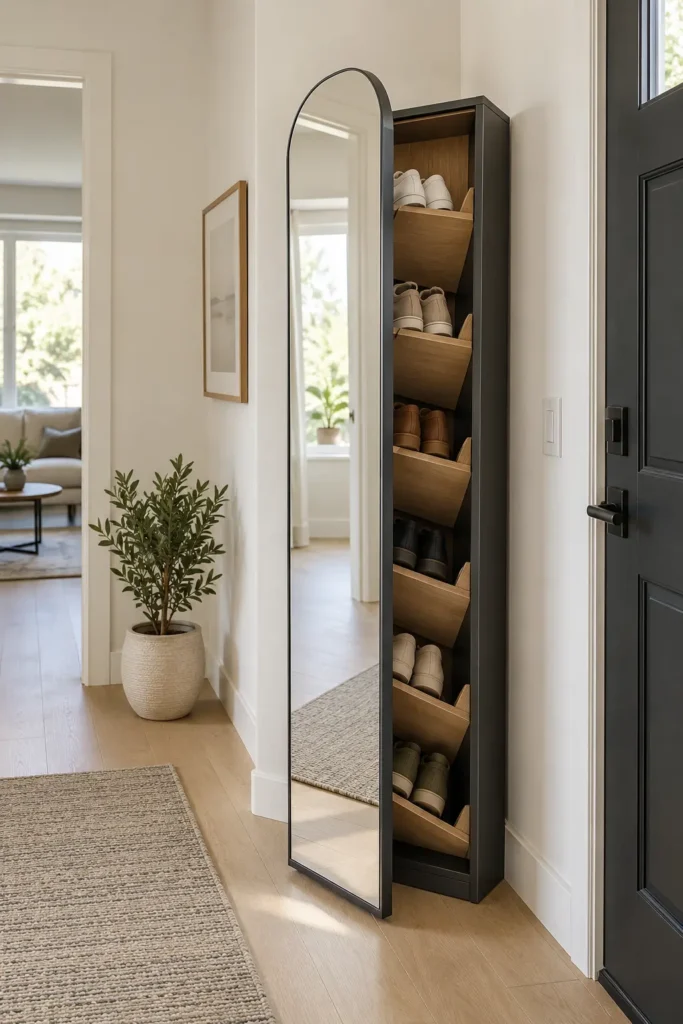
A full-length mirror with concealed shoe storage is one of the most effective dual-purpose solutions for a compact entrance. From the front, the unit appears to be a simple mirror. When opened, it reveals multiple angled shelves for sneakers, flats, and low-profile shoes.
This design eliminates the need for a separate mirror and shoe cabinet. It also reflects light through the entrance, which can make a narrow or windowless area feel larger.
Choose a freestanding or securely anchored model with a slim frame. Before purchasing, confirm that the cabinet can open fully without interfering with the front door or reducing the walkway.
6. Create a Floating Shoe Console
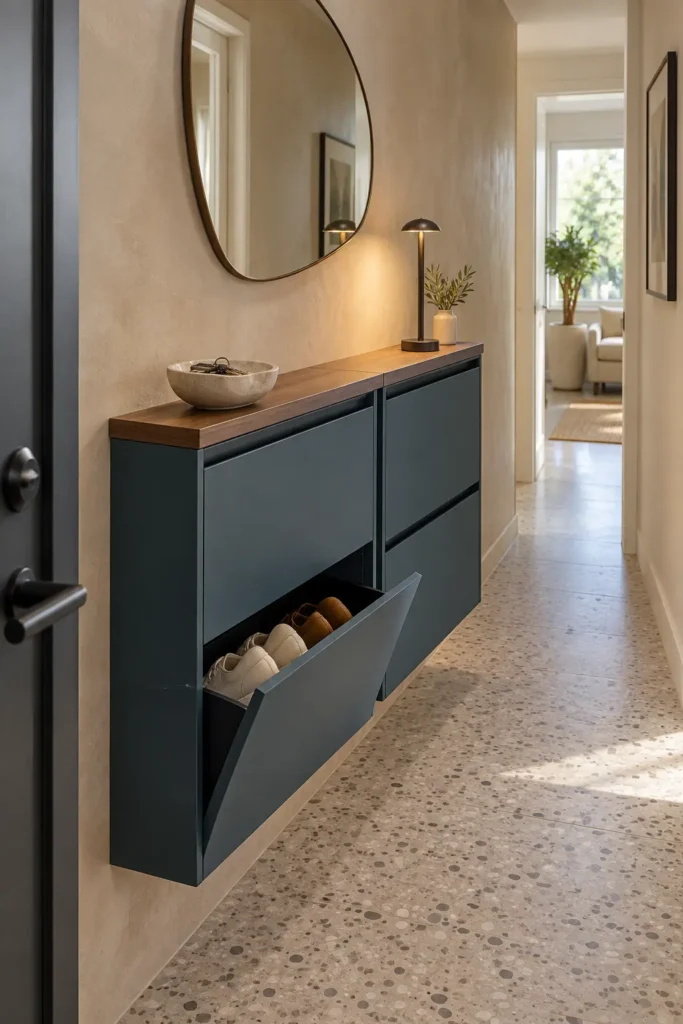
Place two slim tilt-out shoe cabinets side by side and add one continuous wooden top across both units. This simple upgrade makes affordable cabinets appear like a single custom entry console.
Wall mounting the cabinets can keep the floor visible and make cleaning easier. If mounting is unsuitable, use narrow legs or a recessed base to create a lighter appearance.
Finish the cabinet fronts in deep olive, dusty blue, warm taupe, or another color that complements the adjoining room. A walnut top, round mirror, ceramic key bowl, and one natural branch are enough to complete the arrangement.
7. Try a Bench With Vertical Slots
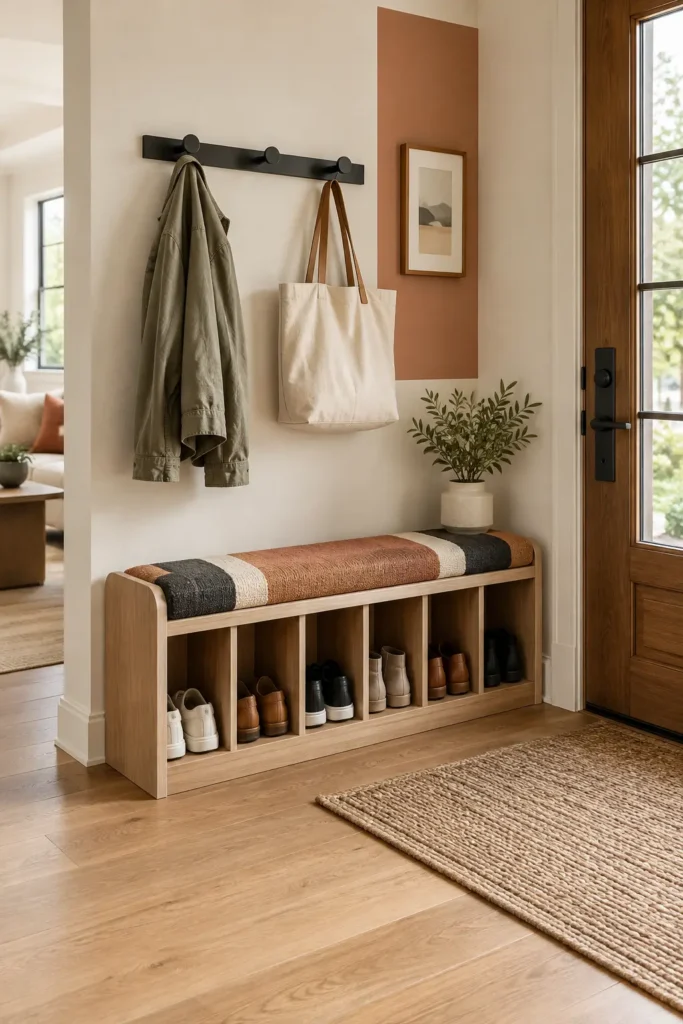
A shoe bench is more useful when its lower storage prevents footwear from turning into a disorganized pile. Choose or build a compact bench with narrow vertical dividers beneath the seat.
Each compartment can hold one pair, making shoes easy to identify and remove. Vertical slots are particularly helpful for children’s shoes, flats, sandals, and everyday sneakers.
Keep the bench between 12 and 14 inches deep when using it in a narrow entryway. Add a tailored cushion made from durable performance fabric, and install a few hooks above for jackets or bags.
8. Use the Coat Closet Door
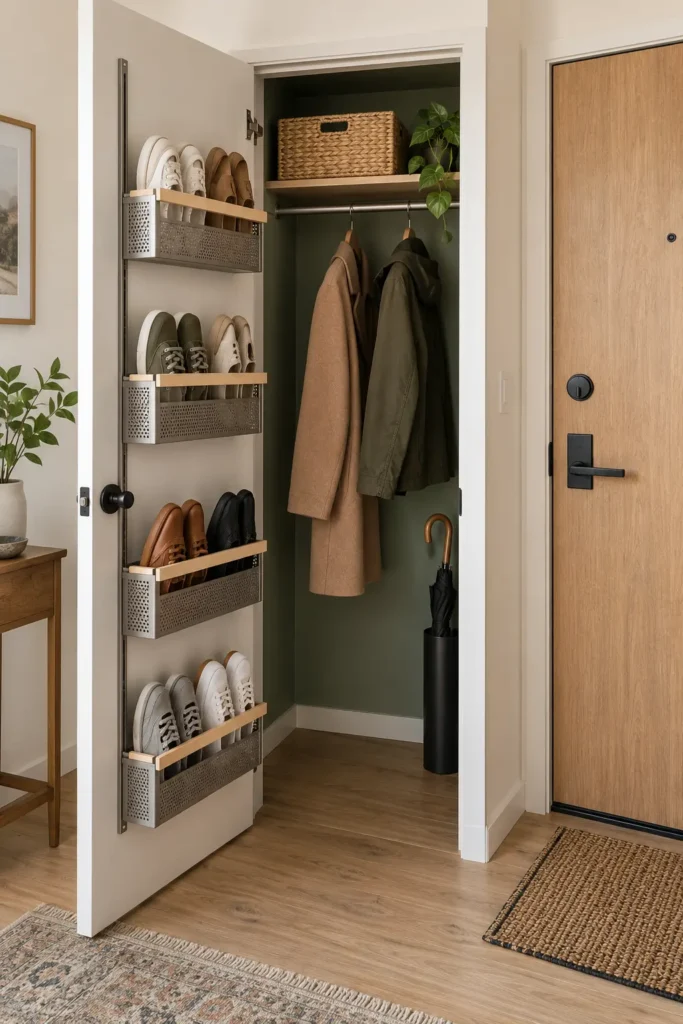
The inside of a coat closet door is valuable storage space that often goes unused. Install shallow shoe shelves, wire baskets, or a secure door-mounted organizer on its interior surface.
This arrangement keeps the closet floor available for boots, a vacuum, or other household necessities. It also conceals footwear completely when the door is closed.
Measure the space between the door and hanging coats before installing shelves. Make sure the organizer does not strike the closet frame and that its weight is suitable for the hinges. Coordinated wooden shelves or neutral fabric pockets will look more polished than inexpensive plastic organizers.
9. Stack Flip-Down Shoe Cabinets
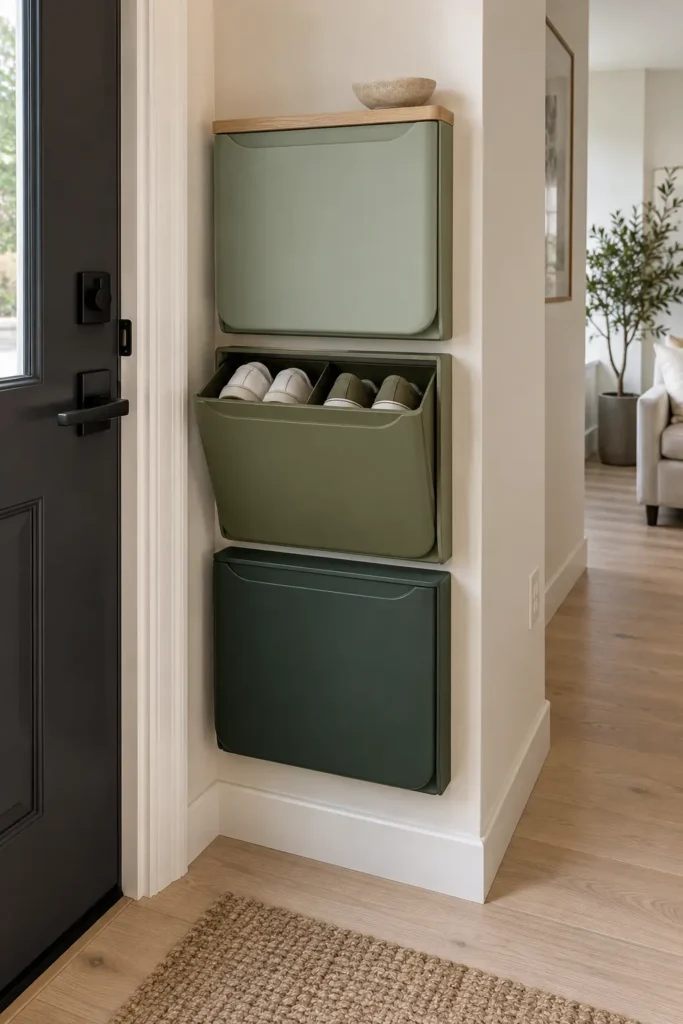
When only a narrow strip of wall is available, install two or three slim flip-down shoe boxes vertically instead of placing them side by side.
This arrangement uses wall height while occupying approximately 20 to 24 inches of horizontal space. Each compartment can accommodate two or three pairs, depending on shoe size and cabinet design.
For a more distinctive appearance, paint the cabinets in three related tones, such as sage, olive, and forest green. Alternatively, match them to the wall so the storage visually recedes into the entrance.
Always anchor stacked cabinets properly to prevent tipping.
10. Hide a Rolling Shoe Cart
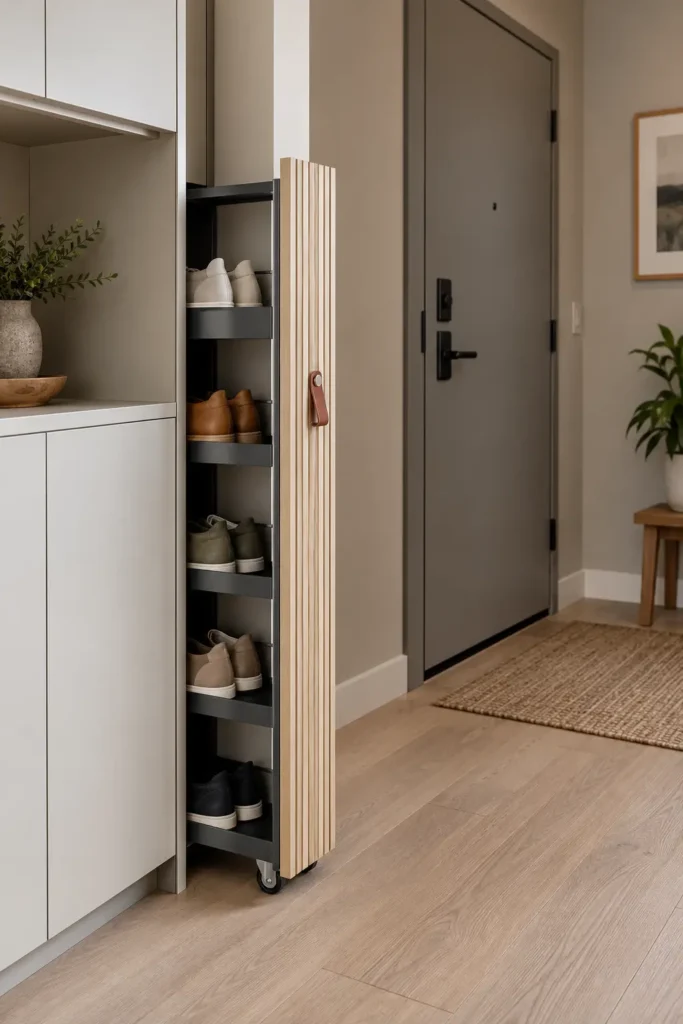
A narrow gap beside a closet, console, kitchen cabinet, or entry cupboard may be large enough for a rolling shoe cart. Choose a unit approximately 7 or 8 inches wide with multiple shallow tiers.
Store shoes sideways to maximize capacity, then slide the entire cart out when needed. This solution is particularly helpful in studio apartments because it uses an area that would otherwise remain empty.
Upgrade a basic cart by attaching a lightweight painted panel or removable wood-look slats to its visible side. Add a leather pull so it resembles an intentional part of the room rather than a utility organizer.
11. Use a Storage Ottoman
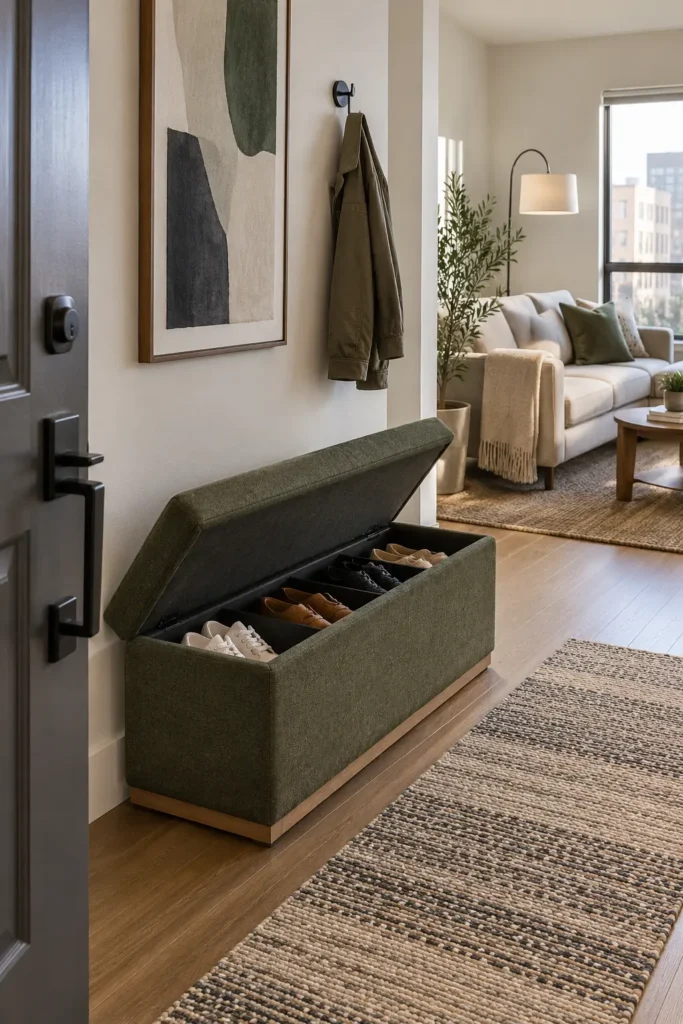
When the front door opens directly into the living room, a compact storage ottoman can create an informal entry zone without looking like hallway furniture.
Choose a rectangular ottoman with a hinged lid and durable upholstery. Add washable dividers inside to separate four to six pairs of daily shoes. The ottoman can also serve as a shoe-changing seat, extra living-room seating, or a temporary surface for a bag.
Performance fabric in moss green, rust, navy, or a subtle woven pattern can make the piece feel decorative while hiding everyday wear.
12. Add Floating Corner Shelves
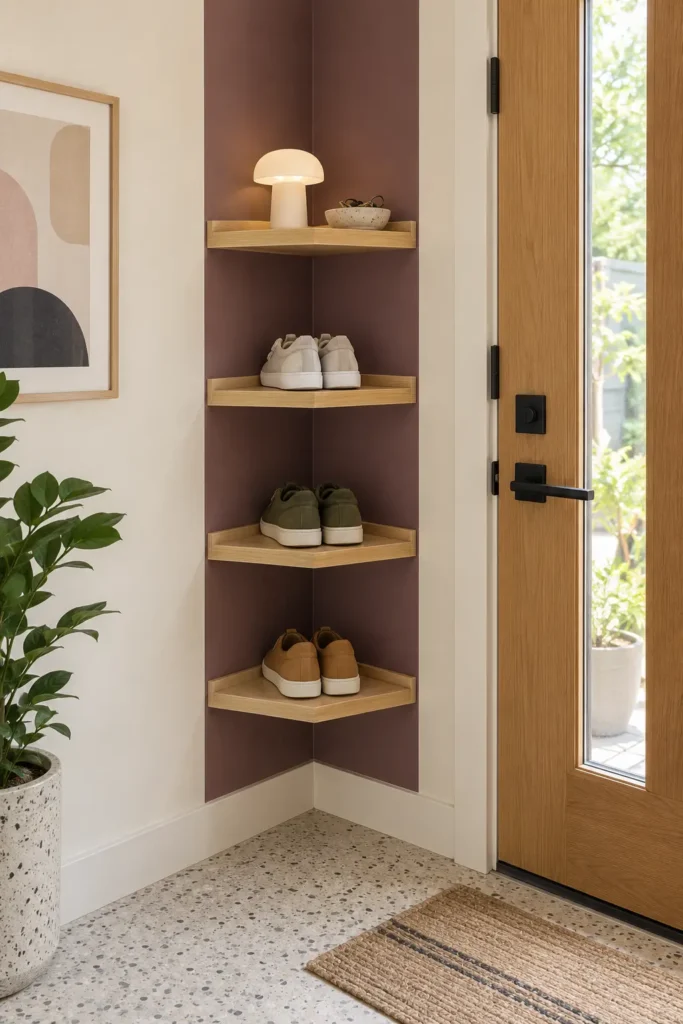
A neglected corner beside the front door can accommodate several triangular floating shelves without requiring a full cabinet.
Use the lower shelves for frequently worn shoes and reserve the top shelf for a rechargeable lamp, keys, or a small decorative bowl. Keeping the shelves off the floor makes the area easier to clean and maintains a sense of openness.
For a Pinterest-worthy result, paint a vertical color block behind the shelves. Warm plywood against dusty plum, pale oak against muted blue, or walnut against soft cream can turn a practical corner into an attractive focal point.
13. Combine a Low Cabinet With Hooks
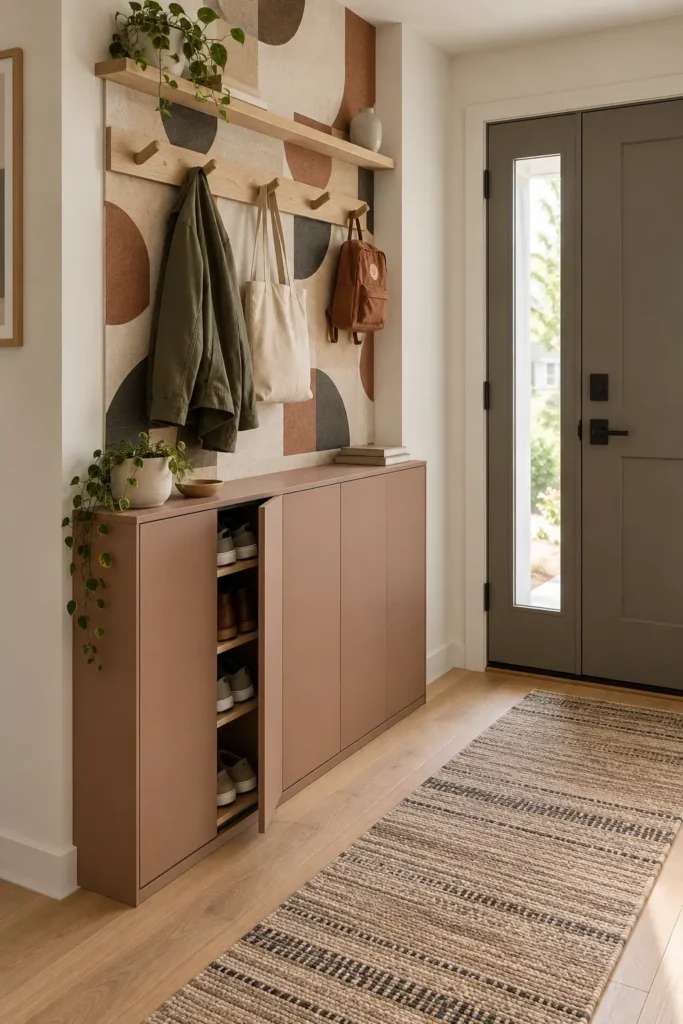
A low closed cabinet paired with staggered wall hooks can organize shoes, coats, bags, and children’s accessories in one compact zone.
Choose a cabinet approximately 10 inches deep so it does not project too far into the walkway. Position some hooks at adult height and others lower for children or frequently used bags.
A slim scalloped shelf or narrow strip of removable wallpaper can add personality without making the wall look cluttered. Because the cabinet remains low, the upper portion of the entryway stays visually open.
14. Build a No-Drill Entry Valet
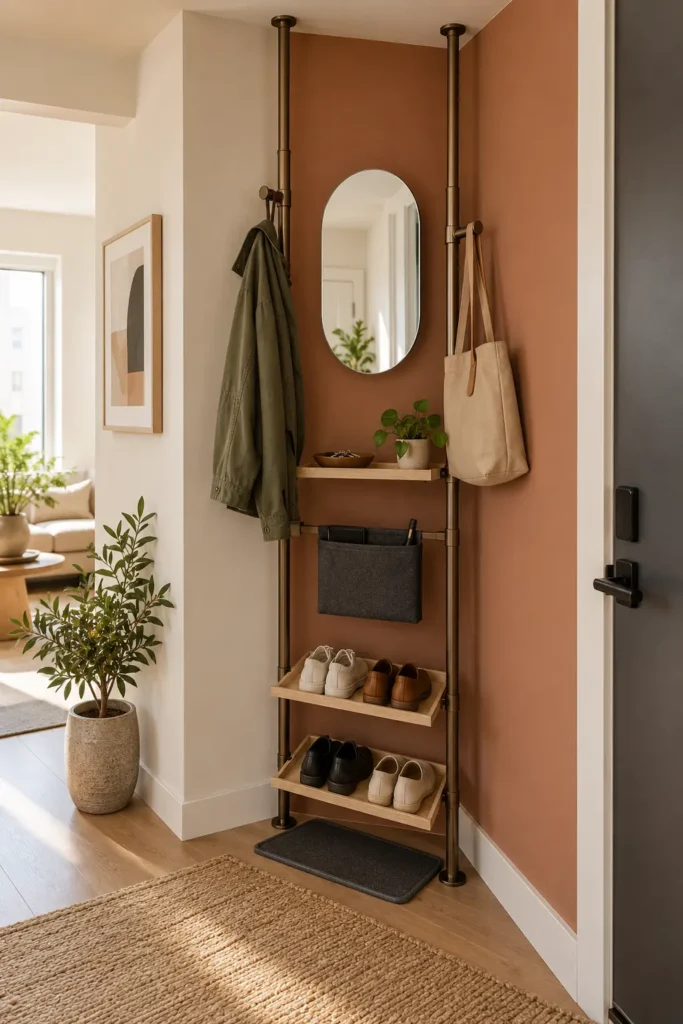
A tension-mounted entry valet provides vertical storage without permanently modifying the wall. For better stability and a more finished appearance, choose a system with two slim floor-to-ceiling poles rather than a single pole.
Fit the lower section with two adjustable angled shelves for daily shoes. Add a narrow key shelf, movable hooks, a small mirror, and a woven pouch for sunglasses or dog-walking accessories.
Warm wood shelves can soften matte-black or bronze poles, making the organizer feel like proper entry furniture. Place a washable mat underneath to catch dust and moisture. This solution is especially useful for renters who cannot drill into walls.
15. Choose a Slim Cane Shoe Tower
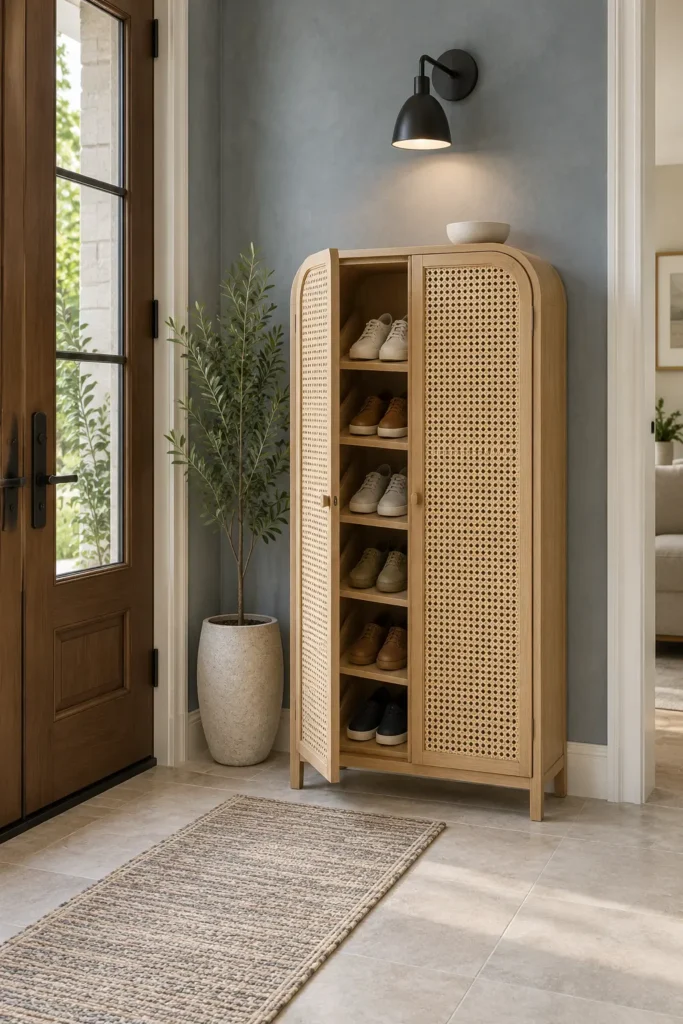
A freestanding shoe tower uses vertical space without requiring custom cabinetry or permanent installation. Look for a model approximately 20 inches wide and 10 inches deep, with angled internal shelves.
Cane-front doors provide texture and ventilation while concealing visual clutter. A gently arched top or rounded corners can help the tall piece feel more decorative and less like an office cabinet.
Place the tower beside the entrance and keep its top styling minimal. One small bowl or rechargeable lamp is enough. Secure tall furniture with an appropriate anti-tip system, even in a rental.
16. Roll Baskets Under a Console
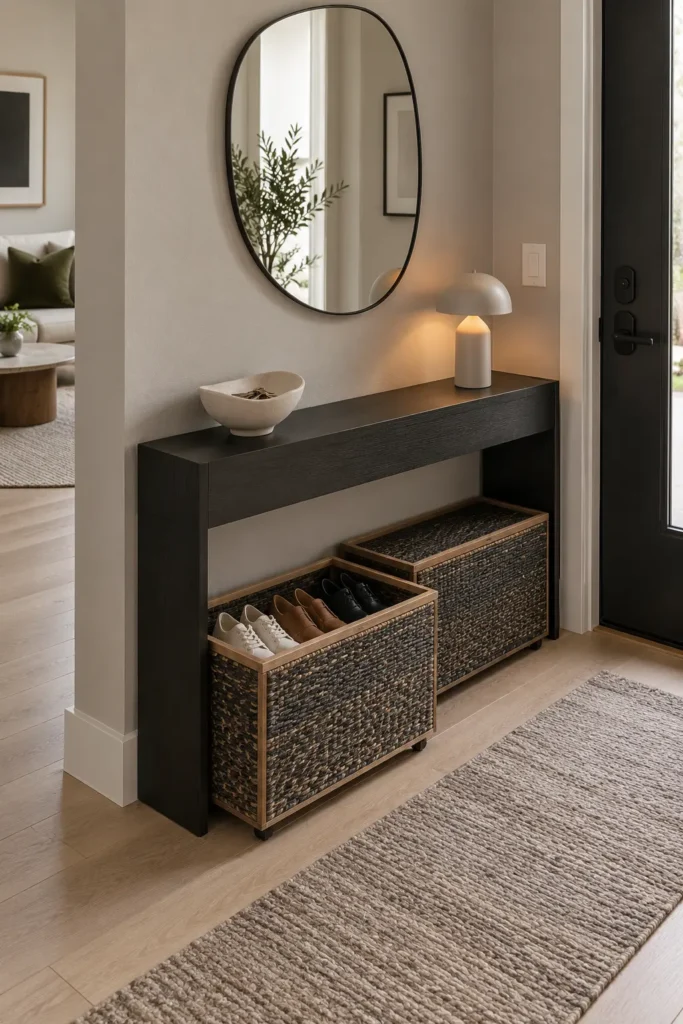
If you already own a slim entry table, use the open area beneath it for low rolling shoe baskets. This adds storage without requiring another large piece of furniture.
Choose two matching woven or wood-framed baskets that fit neatly beneath the console. Small concealed casters make them easy to pull out for daily use and cleaning. Separate baskets can be assigned to different household members or divided between indoor and outdoor shoes.
Leave a little open space around each basket so the arrangement looks deliberate rather than overcrowded. A mirror above the console will help visually balance the storage below.
How to Choose the Right Shoe Storage
Before purchasing an organizer, measure the complete entryway rather than only the empty wall. Account for the front door’s swing, baseboards, electrical outlets, heating vents, closet doors, and the space needed to walk comfortably.
For a narrow entrance, prioritize storage approximately 6 to 10 inches deep. Tilt-out cabinets, vertical towers, closet-door shelves, and gap carts generally provide the most capacity with the smallest footprint.
Also consider how your household uses the space:
- Choose concealed cabinets if visual clutter bothers you.
- Select ventilated cane, wire, or slatted storage for frequently worn shoes.
- Add a seat if children or older family members need support.
- Use washable trays or liners for wet-weather footwear.
- Reserve entryway storage for daily shoes and keep seasonal pairs elsewhere.
Styling a Small Entryway
Good organization provides the foundation, but a few styling decisions can make shoe storage feel integrated with the rest of the home.
Use one mirror to reflect light and create a sense of depth. Introduce natural texture through cane, woven baskets, linen, leather, or visible wood grain. Limit the console surface to a key bowl, a small lamp, and one decorative accent.
A narrow runner can visually lengthen the entrance, but it should lie flat and remain clear of the door. Wall-mounted lighting or a rechargeable lamp provides warmth without consuming valuable surface space.
Most importantly, avoid storing every pair of shoes beside the entrance. Keeping only the footwear used during the current week will make even a compact storage system easier to maintain.