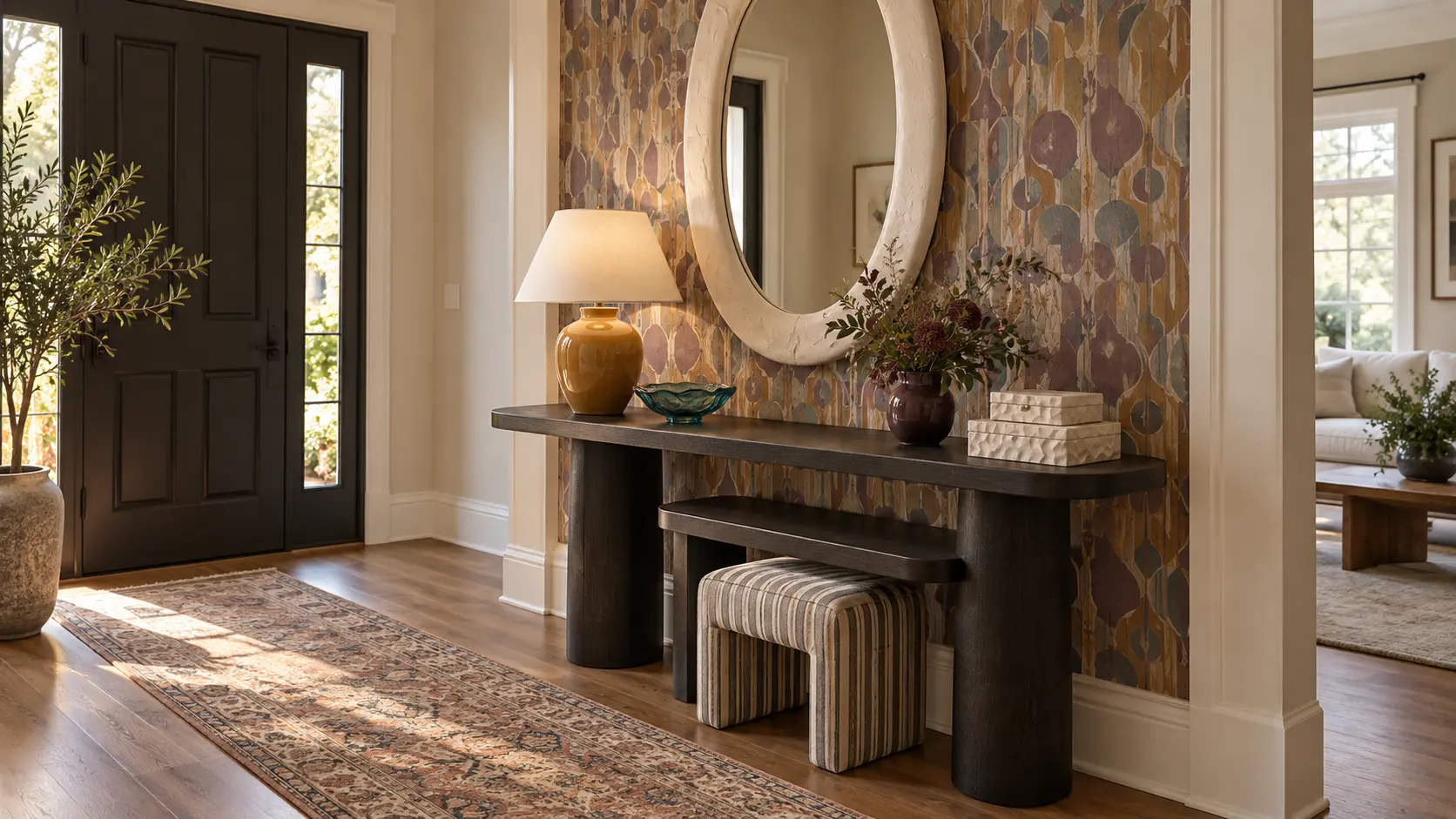
The most memorable entrances rarely depend on a basic console, round mirror, and matching pair of vases. Strong entryway table decor ideas use furniture, color, lighting, and texture together to give even a small passage a clear design identity.
These 12 concepts go beyond surface styling. You’ll find illuminated stone, saturated paint, concealed storage, suspended furniture, curved seating, and handcrafted wall treatments. Every idea offers a different visual direction while preserving the clear walkways, useful storage, and durable finishes a real American home needs.
1. Add a Glowing Onyx Console
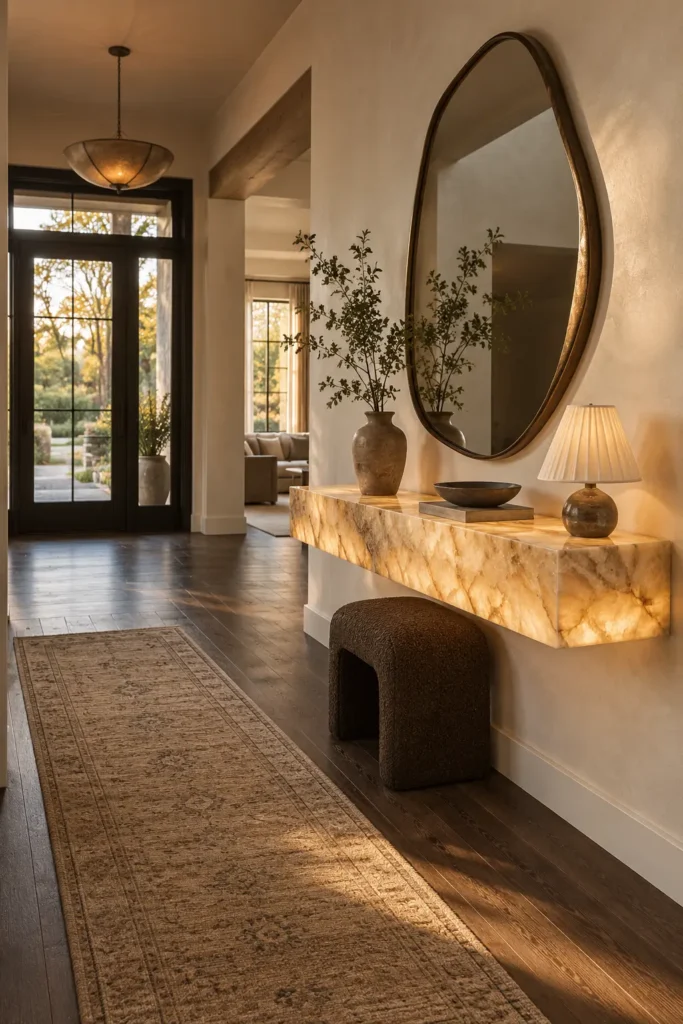
A floating honey-onyx console can become the source of the room’s atmosphere rather than simply another piece of furniture. Concealed warm LEDs reveal the stone’s natural veining after sunset, while an irregular bronze mirror carries those organic lines upward. Limit the tabletop to a charcoal ceramic catchall, a compact pleated lamp, and one sculptural branch.
Because the table is wall-mounted, more flooring remains visible and a narrow entrance feels less crowded. Preserve at least 36 inches of passage in front. Genuine onyx is heavy and requires professional support, but translucent porcelain or stone veneer over a reinforced cabinet can create a convincing, more attainable version.
2. Color-Drench the Entryway in Burgundy
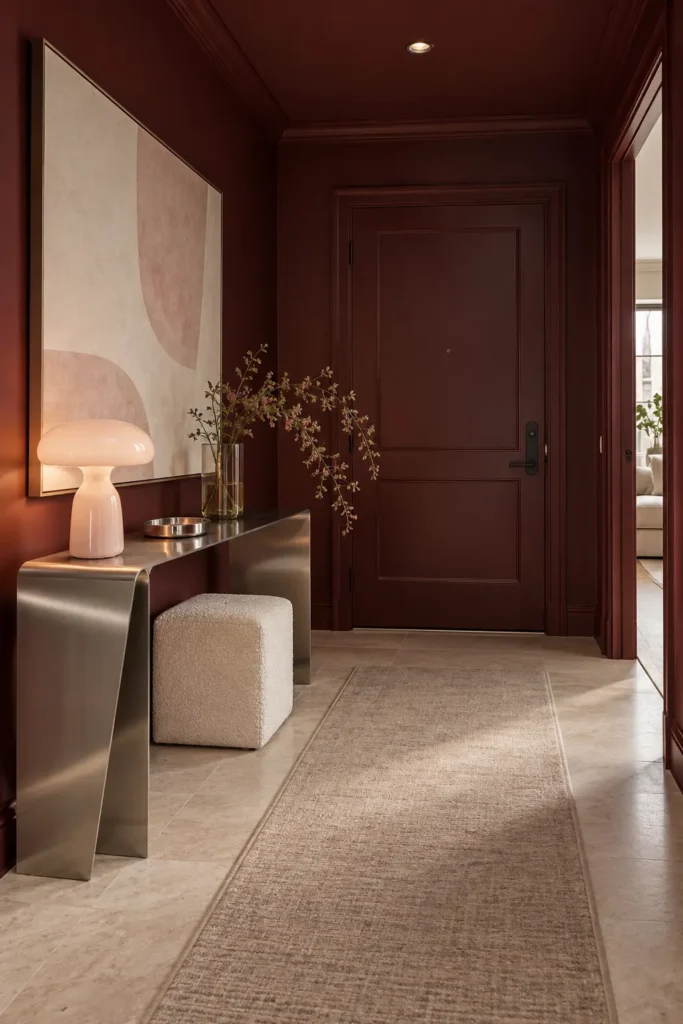
Painting the walls, ceiling, trim, and interior door in one deep burgundy gives a compact entrance an immersive character. The continuous color reduces visual breaks, allowing a folded brushed-steel console to appear crisp and sculptural against the dark background. Pale abstract artwork and a cream bouclé cube prevent the saturated palette from feeling heavy.
Dark red can look flat under weak or overly cool lighting. Use warm bulbs around 2700K and test a large paint sample during the morning, afternoon, and evening. A washable matte finish suits the walls, while satin paint will better withstand fingerprints and routine cleaning on doors and trim.
3. Hide Storage in a Curved Walnut Wall
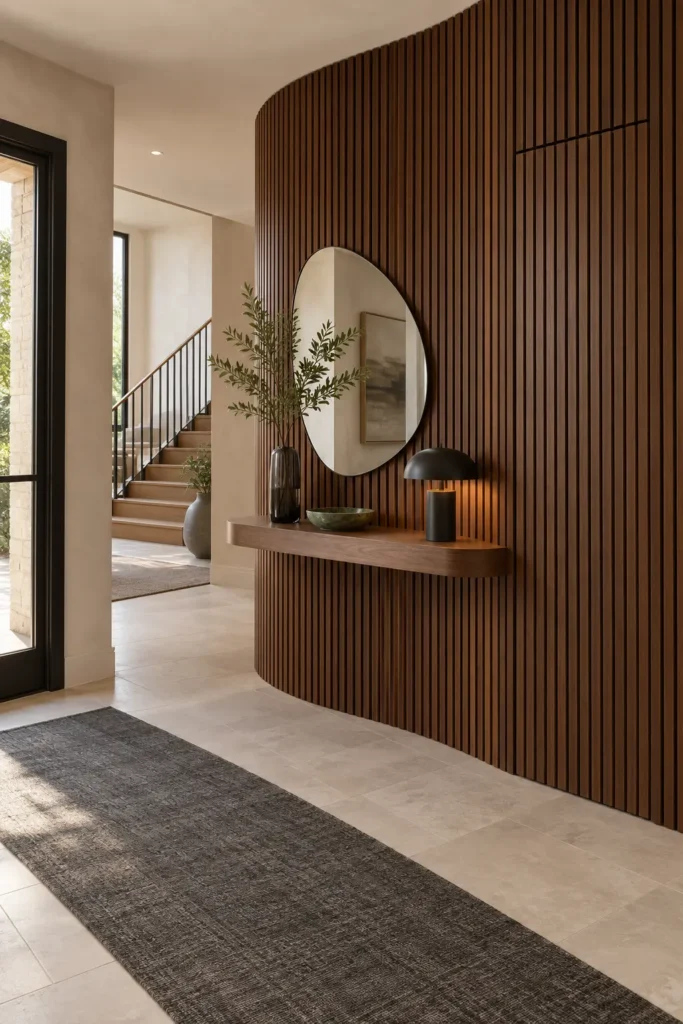
A floor-to-ceiling walnut-slat wall can conceal coats, shoes, bags, and utility panels behind seamless push-open doors. Extend a shallow floating console directly from the slats so the table looks like part of the architecture rather than an added piece. An asymmetrical oval mirror overlapping the woodwork will break the vertical rhythm without hiding its texture.
Keep the table approximately 12 to 16 inches deep in a narrow foyer and check that every concealed door opens away from the primary walking route. Walnut veneer over cabinet-grade plywood usually creates a more convincing finish than inexpensive printed laminate, particularly around corners, handles, and visible door edges.
4. Suspend a Slim Oak Console
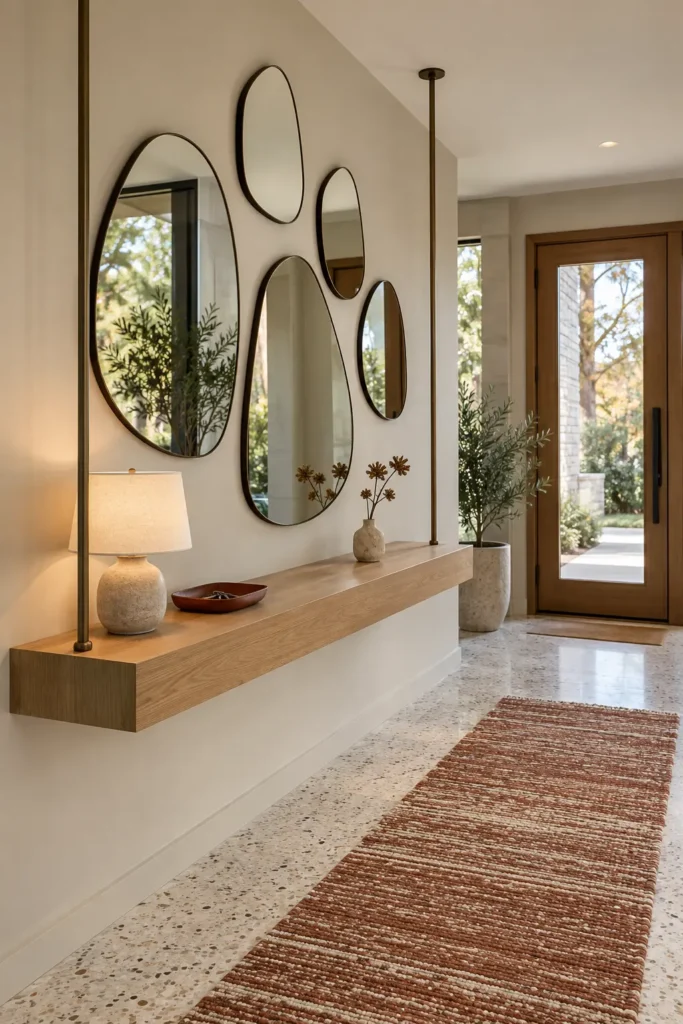
A ceiling-suspended oak console gives a narrow entryway an airy, unexpected focal point. Two slender bronze rods can hold the tabletop from above, removing the need for conventional legs and leaving the floor visually uninterrupted. Behind it, arrange five large pebble-shaped mirrors with varied proportions rather than covering the wall with many small pieces.
Keep approximately 2 to 3 inches between the mirrors so their individual outlines remain visible. A carved-stone lamp, rust-colored leather key tray, and one small dried stem are enough to style the surface. This design requires secure ceiling blocking; renters can achieve a similar appearance with a wall-mounted oak shelf and concealed brackets.
5. Choose a Fluted Terracotta Console
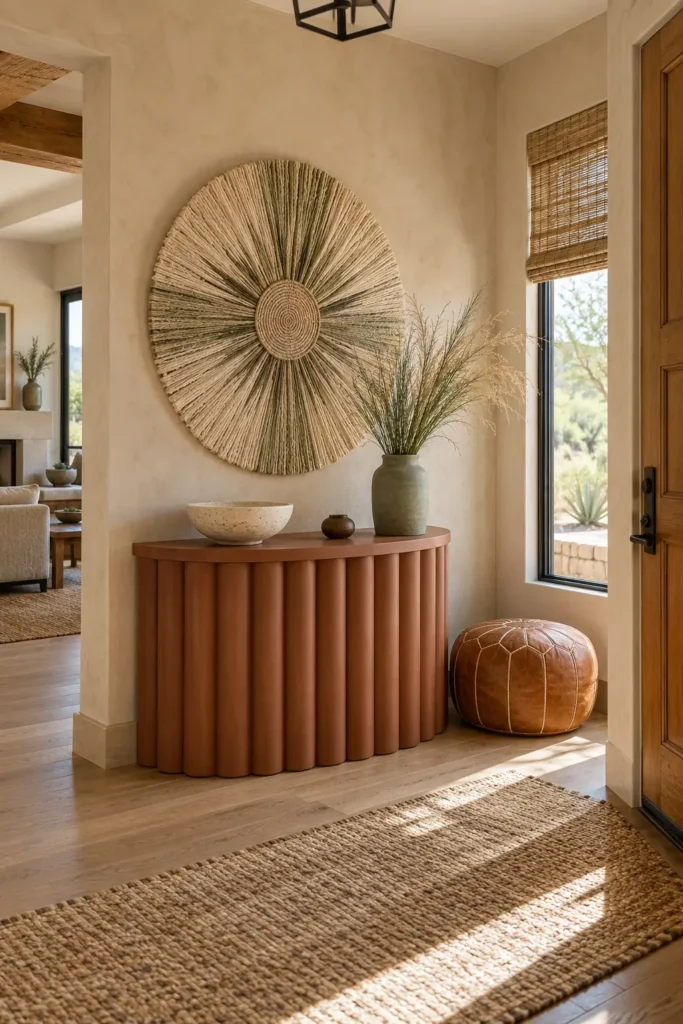
A semicircular terracotta console introduces strong color, deep texture, and a practical rounded profile. Broad vertical fluting creates defined shadows across the furniture, while the curved front makes it easier to move through a busy foyer without catching a hip or bag on a sharp corner. Place the table against pale clay plaster so its warm color remains the focus.
Hang an oversized cream-and-sage fiber artwork above it and position a saddle-leather pouf beside the table. A low stone bowl, small carved wood object, and tall grasses complete the arrangement. Choose broad fluting instead of narrow grooves, which collect more dust and can look overly busy.
6. Pair Amber Glass With Rippled Metal
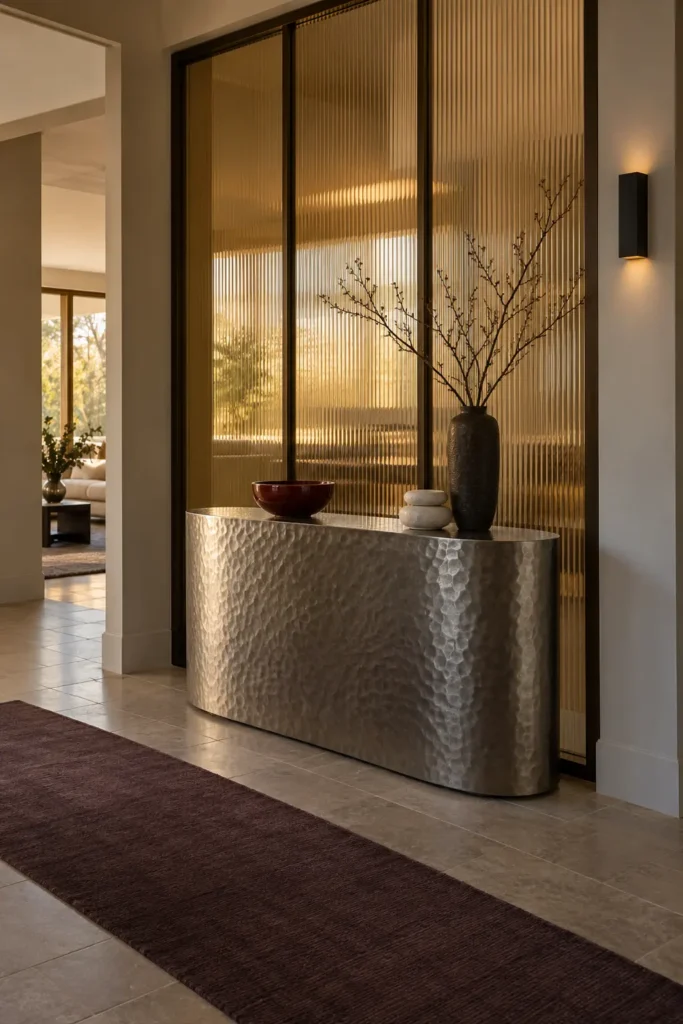
Set a curved, hand-rippled pewter console against floor-to-ceiling amber-glass panels for an entryway that changes with the light. The fluted glass softly obscures the adjacent room while allowing brightness to pass through. Cooler reflections from the metal table stop the amber backdrop from becoming too golden or traditional.
Keep the console styling controlled with one dark-red ceramic bowl, a charcoal vessel, and a bare sculptural branch. Tempered or laminated glass is the safer choice in a high-traffic entrance. Both glass and metal show fingerprints, so avoid placing this arrangement directly beside the door handle or the family’s everyday drop zone.
7. Add a Curved Entry Banquette
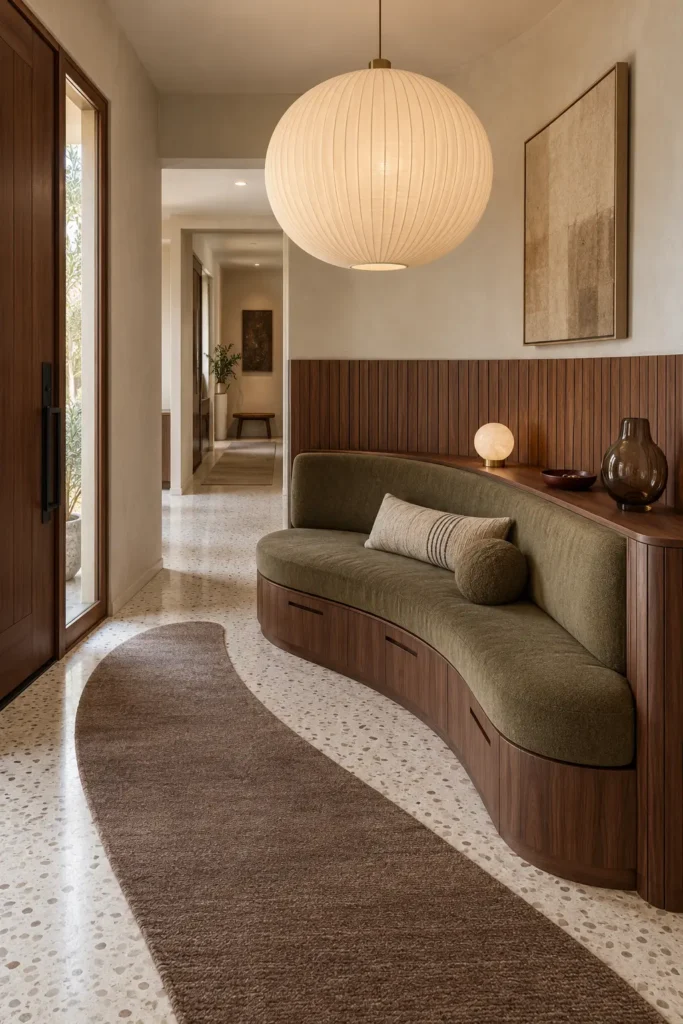
A custom crescent-shaped banquette can combine comfortable seating, concealed shoe storage, and an entry table within one continuous piece. Install a narrow walnut shelf along the back of the upholstered seat. The shelf provides a landing place for keys, a small lamp, and one decorative vessel without requiring a separate console.
Use muted olive performance fabric that can withstand frequent contact, then protect the lower wall with half-height walnut paneling. Keep the seat approximately 18 inches high and at least 16 inches deep for comfort. An oversized paper pendant above the curve reinforces the furniture’s rounded shape and marks the entry without taking up tabletop space.
8. Use an Olive Console With Scalloped Marble
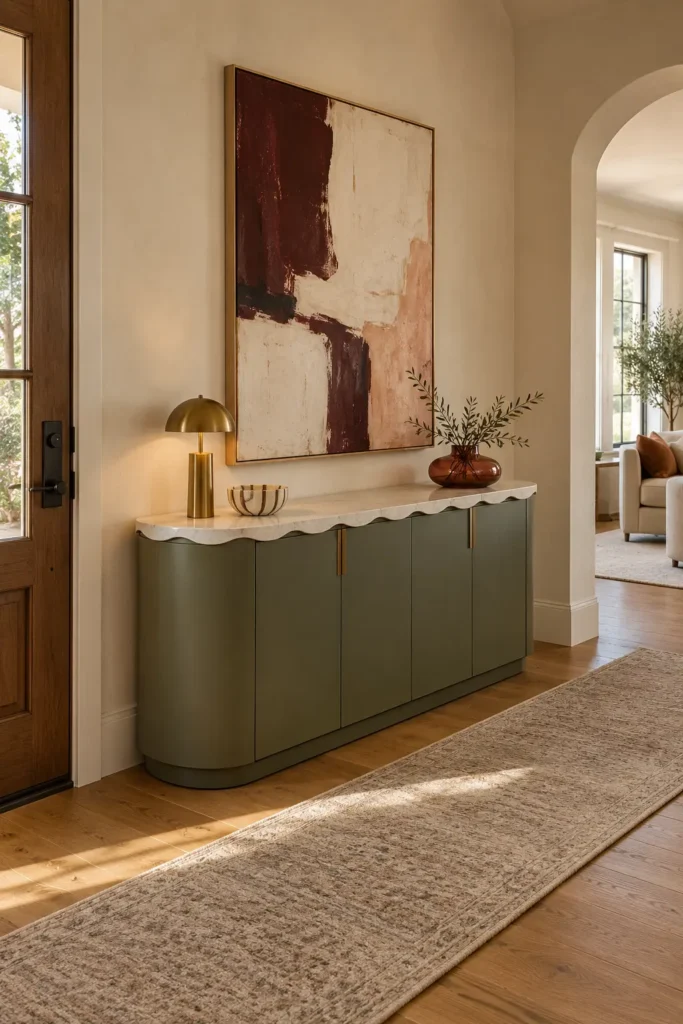
A smooth olive-green cabinet offers a useful alternative to an open-legged console. Closed compartments can hide shoes, mail, dog supplies, and reusable bags, while softly rounded ends reduce the furniture’s visual weight. Finish it with a cream marble top featuring a scalloped front edge for an unusual detail that remains refined rather than playful.
Hang oversized burgundy-and-cream artwork above the cabinet instead of another mirror. A small brass lamp, striped ceramic catchall, and low rust-colored glass vase will add contrast while leaving useful surface space. If real marble is beyond the budget, a well-finished stone remnant can be cut for a smaller console more economically than a full slab.
9. Style Burl Wood Against Blue Grasscloth
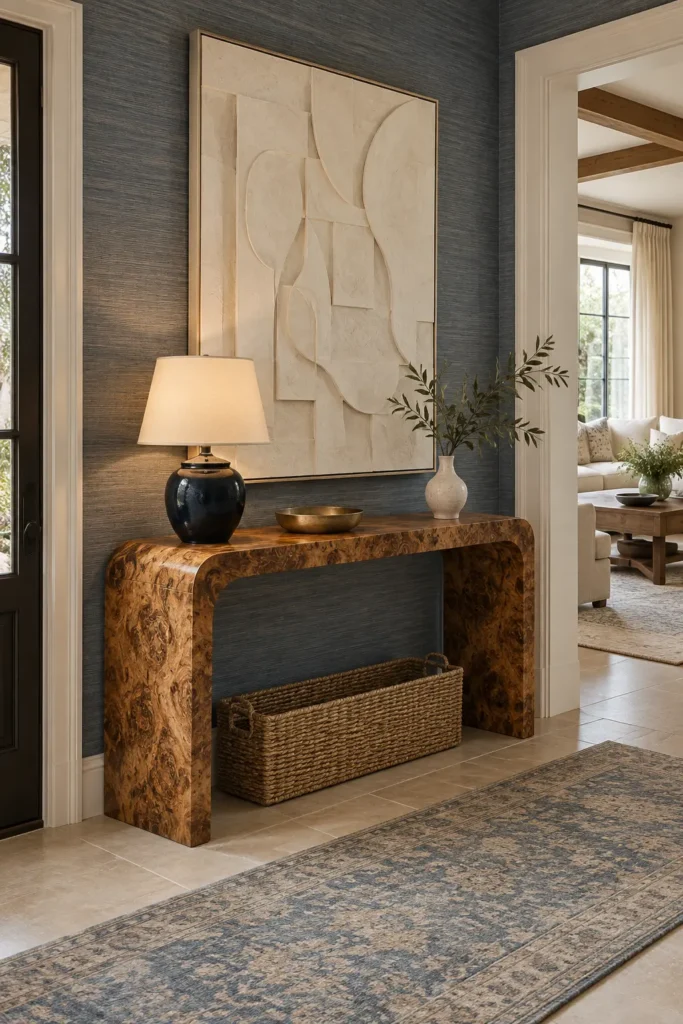
The swirling grain of a burl-wood waterfall console brings natural pattern into an entry without relying on printed decor. Slate-blue grasscloth behind the table highlights the wood’s honey and chocolate tones, while an oversized ivory plaster relief introduces a quiet, dimensional shape above it.
Use a compact navy ceramic lamp, an aged-brass catchall, and one short leafy branch so most of the grain remains visible. A single long woven basket beneath the table provides storage without dividing the composition into several small blocks. Grasscloth adds depth and can soften echo, but its seams remain visible and it should not be scrubbed like vinyl wallpaper.
10. Soften the Entry With Linen and Cane
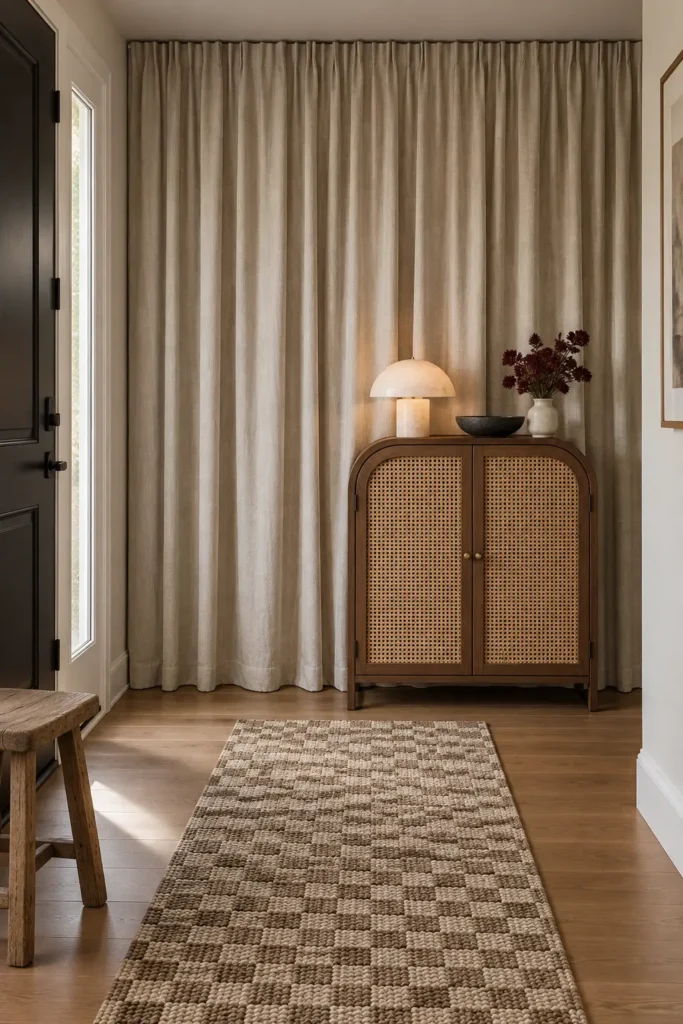
A wall-to-wall linen curtain can conceal an uneven surface, utility panel, or removable coat system while giving a rental entry a softer backdrop. Mount the track at ceiling height and allow the oatmeal fabric to fall in full, controlled folds. In front, place a slim arched cabinet with a walnut frame and woven cane doors.
The cane panels allow stored footwear to breathe while keeping it out of view. Position the cabinet slightly off-center for a more relaxed composition, then add a mushroom-shaped alabaster lamp, black stone bowl, and short burgundy floral arrangement. Select washable or stain-resistant drapery where wet shoes, pets, or children pass frequently.
11. Create a Split-Level Family Entry
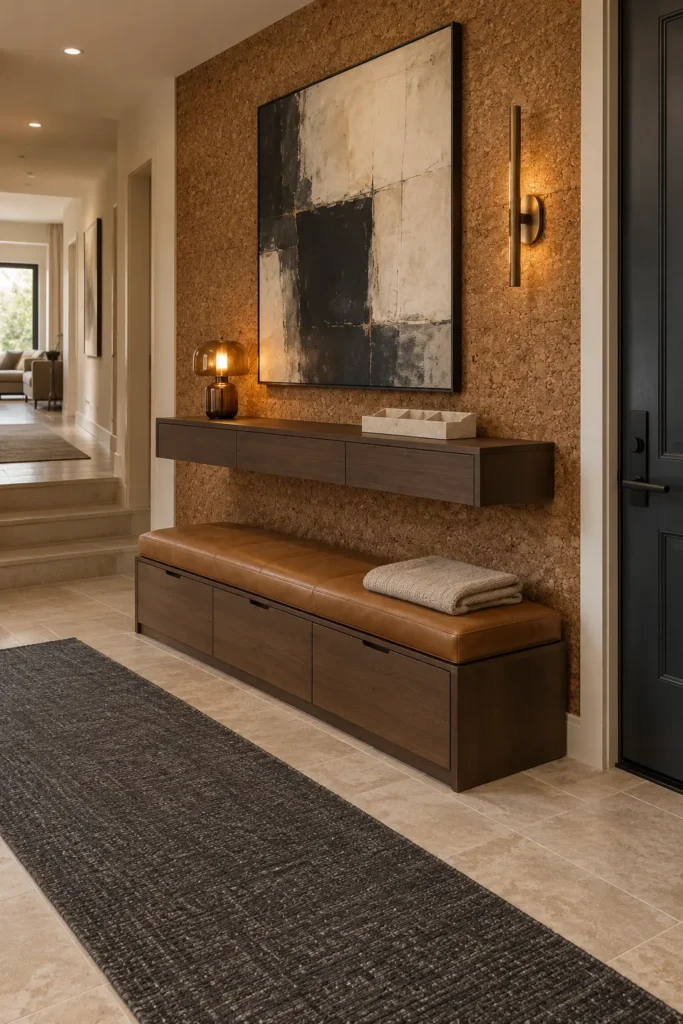
A split-level arrangement can provide seating and storage without the bulk of a full mudroom wall. Mount a shallow smoked-oak drawer console at standard table height for keys, chargers, and unopened mail. Beneath it, place a separate camel-leather bench with concealed pull-out shoe drawers, positioned slightly off-center to create a layered silhouette.
Cover the background wall in natural cork and add one oversized charcoal-and-cream artwork with a slim brass sconce. Cork introduces texture, softens sound, and is forgiving of minor wall imperfections. An amber lamp and divided stone organizer provide enough surface detail while keeping the family drop zone easy to maintain.
12. Display a Framed Ceramic Tile Mural
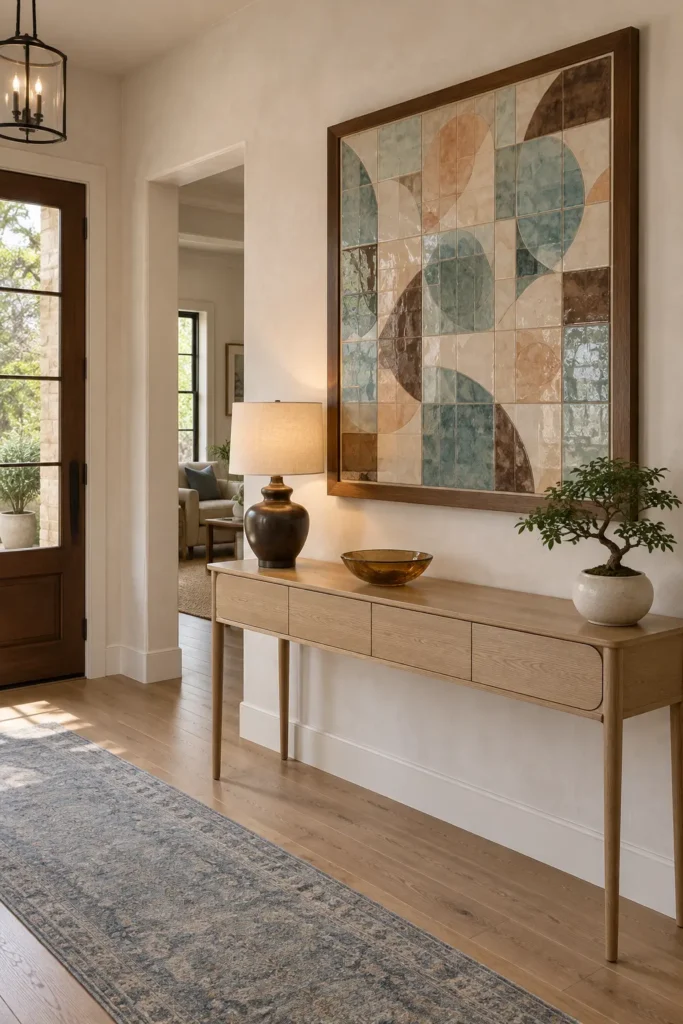
Handmade glazed tiles can function as entryway artwork when they are arranged inside a substantial dark-walnut frame. Combine dusty aqua, warm cream, pale peach, and cocoa tiles in an abstract composition, then leave a visible border around the installation. Framing prevents the design from resembling a kitchen backsplash.
Mount the mural approximately 7 to 9 inches above a slim pale-oak console with rounded drawers and tapered legs. A deep-chocolate lamp, transparent amber bowl, and compact bonsai-like plant will connect the colors without covering the furniture. The tile glaze catches daylight differently throughout the day, while the drawers conceal keys, mail, and charging cables.
What to Consider Before Choosing an Entry Table
Measure the wall, doorway, and traffic route before buying furniture. A console between 10 and 15 inches deep usually works in a narrow apartment entrance, while a larger foyer may accommodate 16 to 18 inches. Maintain around 36 inches of clear walking space wherever the floor plan allows, and make sure the door can open fully.
Look at the entire wall rather than styling only the tabletop. Artwork or a mirror generally feels connected to the furniture when its lower edge sits about 6 to 10 inches above the surface. Leave roughly one-third of the table open so you have somewhere to place keys, mail, or a handbag.
Material maintenance matters in this hardworking area. Glass and polished metal show fingerprints, grasscloth cannot tolerate aggressive scrubbing, and deeply textured furniture collects dust. Closed storage helps control clutter, but it should be easy to open and divided according to the items your household actually uses.