A comfortable living room doesn’t have to rely on a beige sectional, matching furniture, and piles of throw pillows. The best cozy living room decor ideas combine inviting textures with confident color, practical furniture placement, and one memorable focal point.
These 13 rooms are designed for real US houses, apartments, condos, and rentals. Each idea offers a distinct modern look while accounting for traffic flow, furniture scale, maintenance, lighting, and everyday family life.
1. Create a Merlot Modular Fireplace Lounge
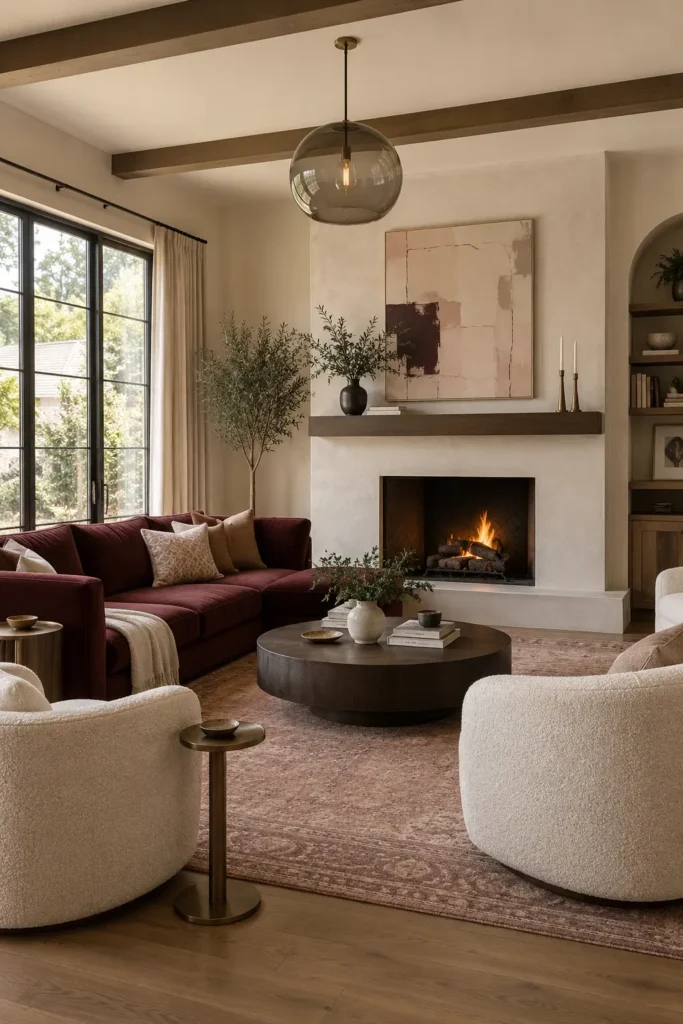
A deep merlot sectional gives a living room more character than a predictable neutral sofa while still feeling calm and comfortable. Arrange an L-shaped modular design about 16–18 inches from a rounded coffee table, then place two compact cream swivel chairs opposite it. This creates a balanced conversation area without closing off the room.
Use warm-white limewash around the fireplace and add a simple walnut mantel. Limewash develops subtle tonal movement throughout the day, while walnut prevents the pale surround from appearing flat. Performance velvet is the practical upholstery choice for homes with children or pets, although it may show pressure marks between cleanings.
2. Build a Cobalt Window Conversation Room
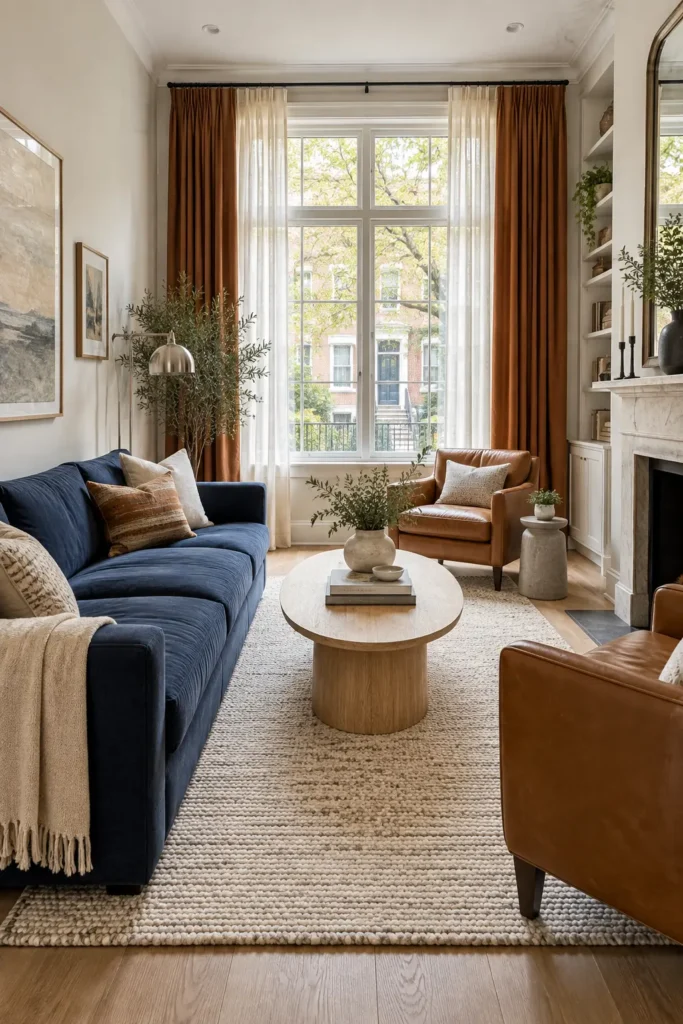
Use a long cobalt-blue sofa to give a narrow townhouse living room a strong visual anchor. Place it against one long wall and angle two caramel leather chairs toward the sofa rather than positioning everything in a rigid rectangle. The diagonal placement improves conversation while leaving a clear route through the room.
Make the end window the focal point with ivory sheers and rust-colored linen curtains. When wall space permits, extend the rod 8–12 inches beyond each side of the window so the open panels don’t block daylight. Cobalt can appear cold in a north-facing room, but caramel leather, pale oak, and rust fabric bring its temperature back into balance.
3. Conceal the TV in Walnut Panels
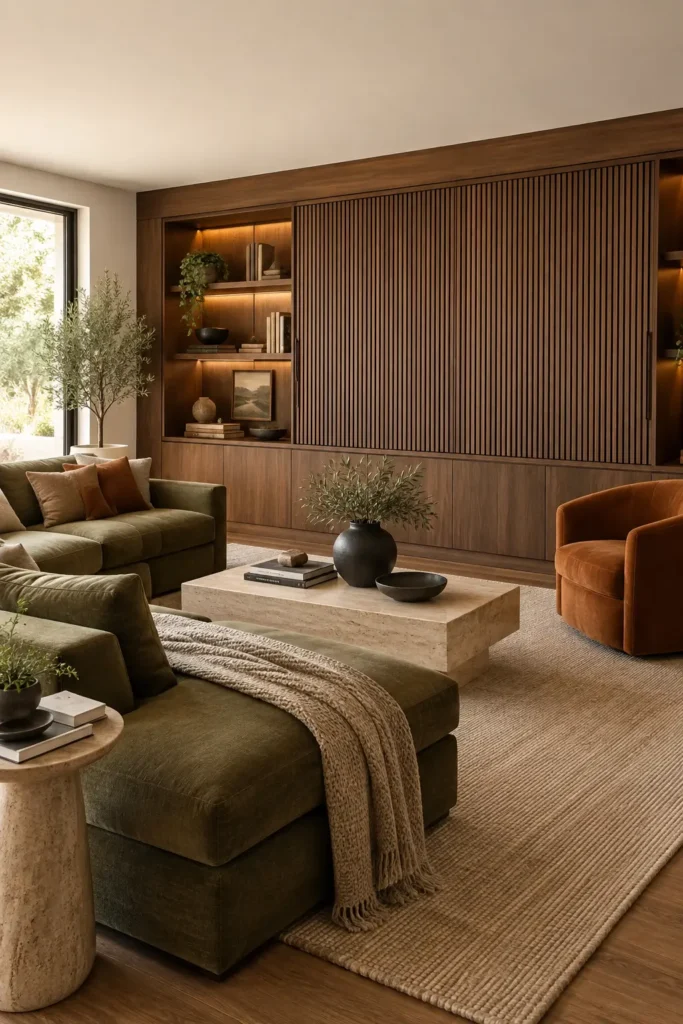
An olive chaise sectional offers generous lounging space without the bulk of a full U-shaped sofa. Position the chaise away from the main doorway so it doesn’t interrupt the room’s natural traffic path. A burnt-orange barrel chair near the window adds a smaller, movable seat and prevents the furniture arrangement from feeling too symmetrical.
Across from the sectional, conceal the television behind sliding ribbed-walnut panels. Lower cabinets can hold cables, remotes, games, and speakers. Real walnut veneer usually looks more convincing than inexpensive printed wood film, especially beneath integrated lighting. Finish the arrangement with a sand-colored rug and a compact travertine table.
4. Add One Oversized Butter-Yellow Light
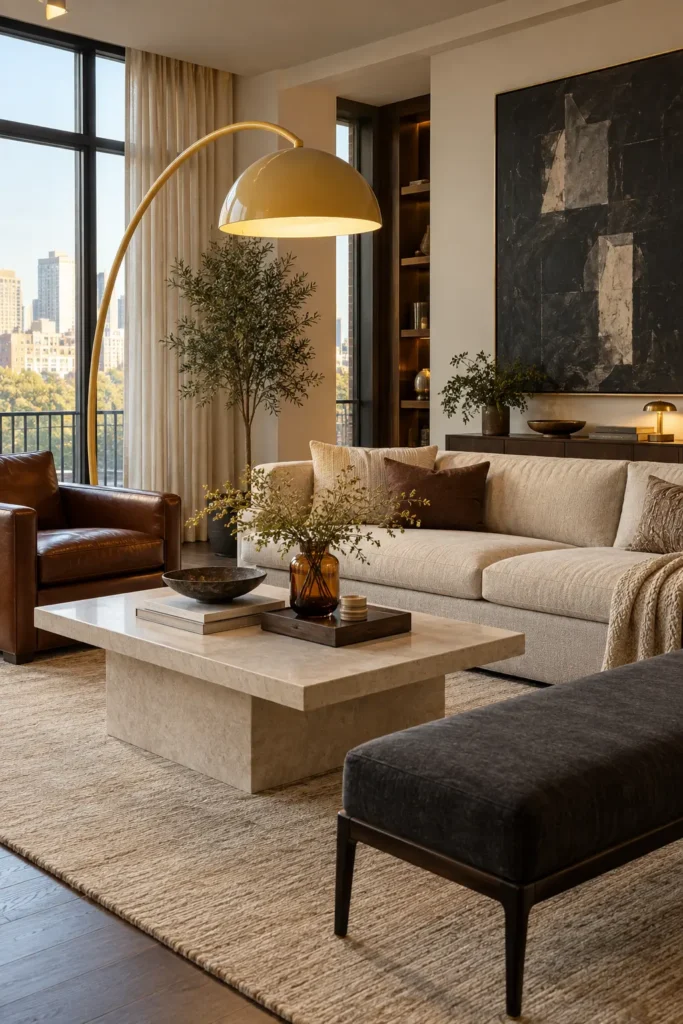
A large butter-yellow floor lamp can completely change a neutral apartment without paint, construction, or permanent installation. Let the lamp arc over an oatmeal linen sofa, then balance its visual weight with one chocolate leather chair and a slim upholstered bench rather than another large sofa.
Keep surrounding accessories restrained so the light remains the clear focal point. A charcoal drawing, amber glass vase, and dark-oak bowl are enough. Check the lamp’s total height and reach before ordering; an oversized design should clear seated head height without stretching into a walkway. Use a warm bulb around 2700K so the yellow shade glows rather than turning acidic at night.
5. Divide a Condo With Ribbed Glass
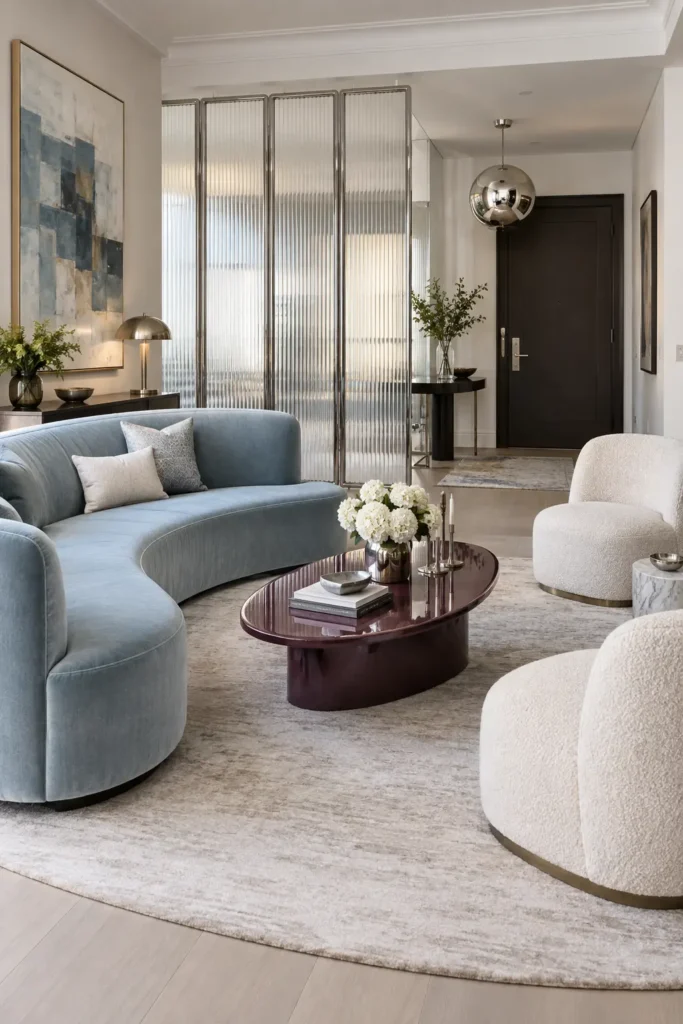
A freestanding ribbed-glass screen can separate a condo entry from the living room while allowing daylight to pass through. Choose tempered safety glass in a securely anchored chrome frame rather than a lightweight decorative panel. Position it outside the primary walkway and leave at least 36 inches of comfortable passage beside it.
Repeat the screen’s gentle curves with an icy-blue sofa and two ivory armless chairs arranged in an open semicircle. A plum lacquered coffee table adds contrast without crowding the cool palette. Chrome reflects more light than brushed brass and gives the room a crisp finish, but fingerprints show easily, so reserve it for pieces that aren’t handled constantly.
6. Extend Terracotta Across the Ceiling
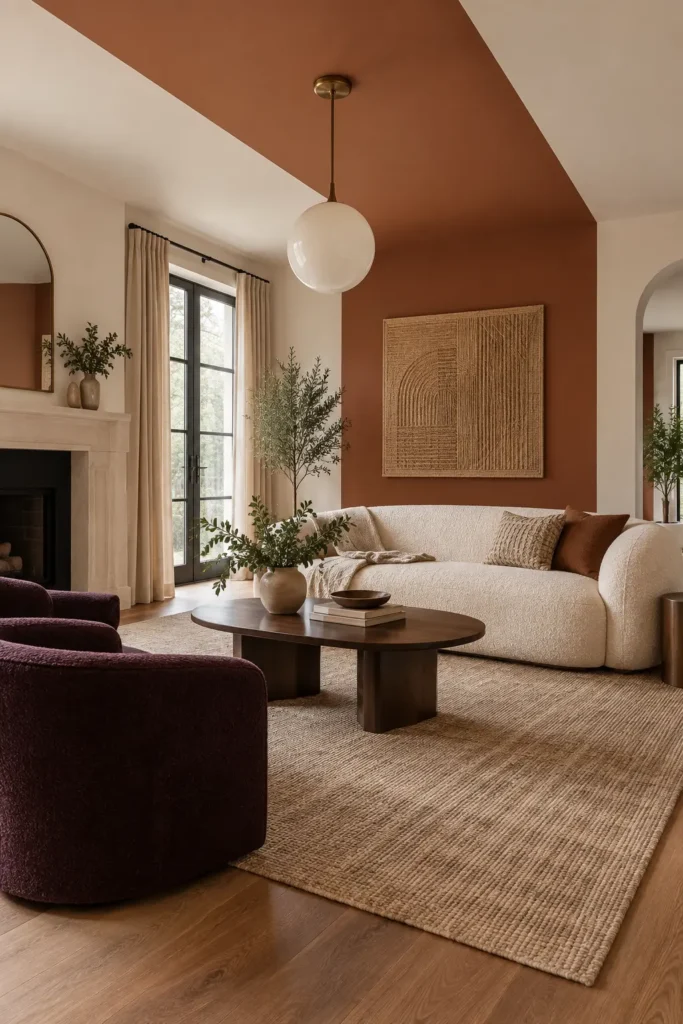
Instead of covering an entire room with color, paint a wide terracotta band across part of the ceiling and continue it down one wall. This creates an architectural feature in a plain new-build living room without custom millwork. Matte paint is helpful because it softens glare and disguises small surface imperfections better than a glossy finish.
Center a simple opal pendant within the ceiling band, then place a cream sofa and two deep-plum chairs beneath it. The furniture should relate to the painted area without lining up too perfectly. Terracotta changes noticeably with light, so test large samples on both the wall and ceiling before committing; overhead surfaces usually make color appear darker.
7. Add an Illuminated Art Ledge
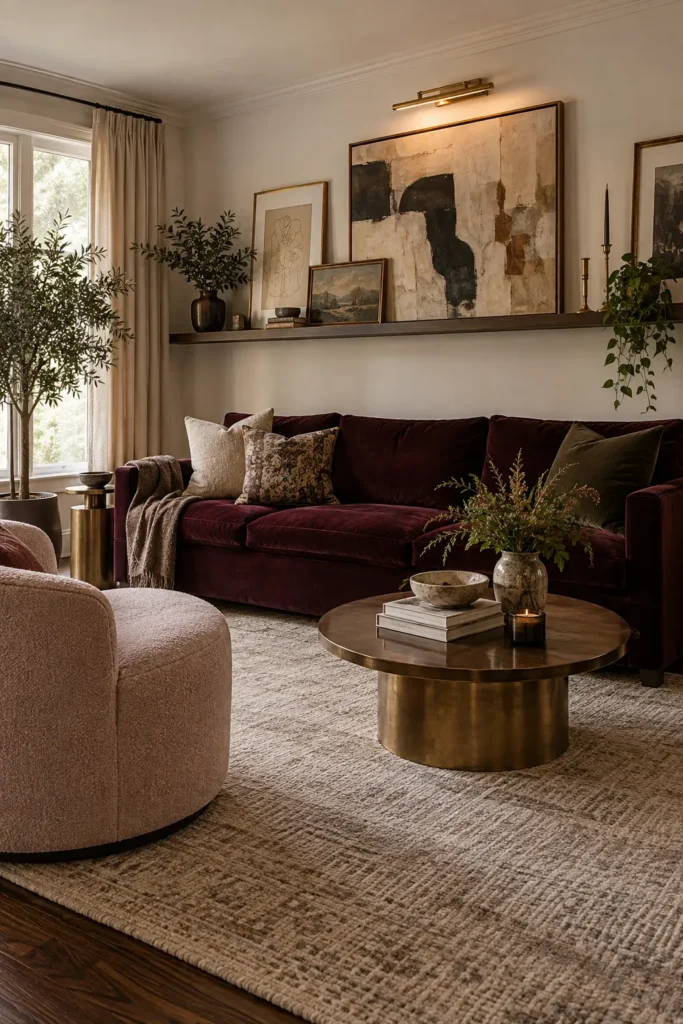
An extra-long art ledge gives a rental living room a gallery-like focal point without filling the wall with permanent nail holes. Mount it securely above a black-cherry velvet sofa and layer several original prints or canvases in different sizes. Keep the artwork visually connected, but leave small areas of exposed wall so the arrangement can breathe.
Add a slim picture light above the display and direct it toward the art rather than the sitter’s eyes. A blush swivel chair softens the darker sofa and makes the layout easy to adjust. Use lightweight framed work in rentals, and avoid leaning heavy glass frames where they could slide or fall.
8. Create a Burnt-Orange Window Seat
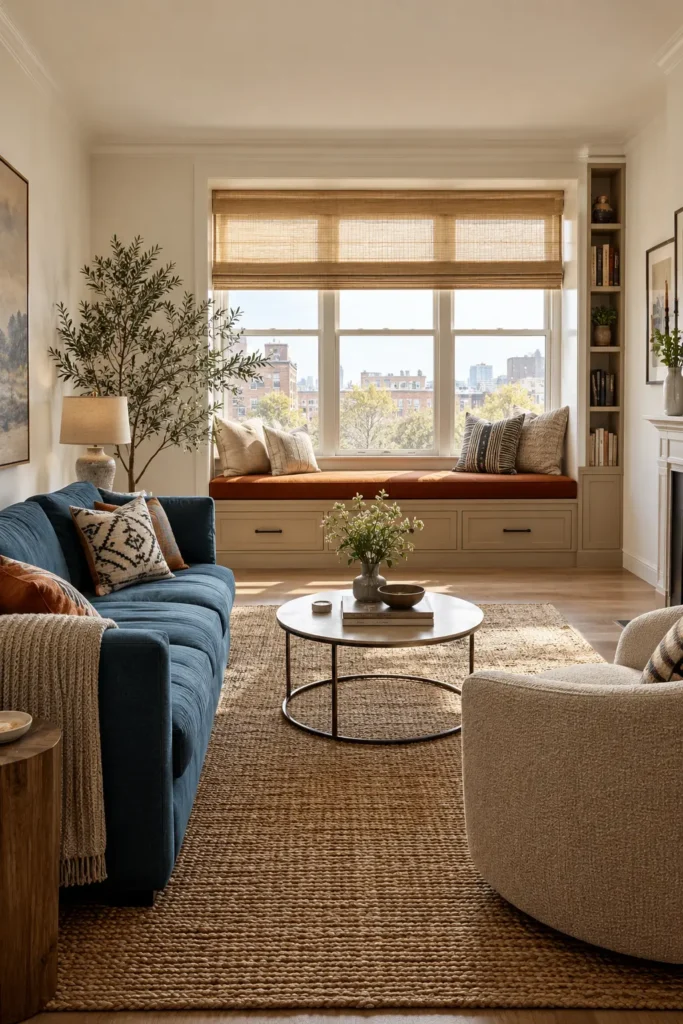
A wide window can support more than curtains. Install a birch plywood bench with storage drawers, then top it with a tailored burnt-orange cushion. The bench becomes a reading area, an extra seat for guests, and a place to store blankets or board games.
Position a compact petrol-blue sofa perpendicular to the window and place one oatmeal swivel chair opposite it. This makes the window seat part of the conversation area instead of an isolated feature. Use high-density foam for the cushion so the edge doesn’t collapse with regular use. Washable or performance fabric will also handle sunlight and daily wear better than delicate velvet.
9. Soften Stainless Steel With Sage Upholstery
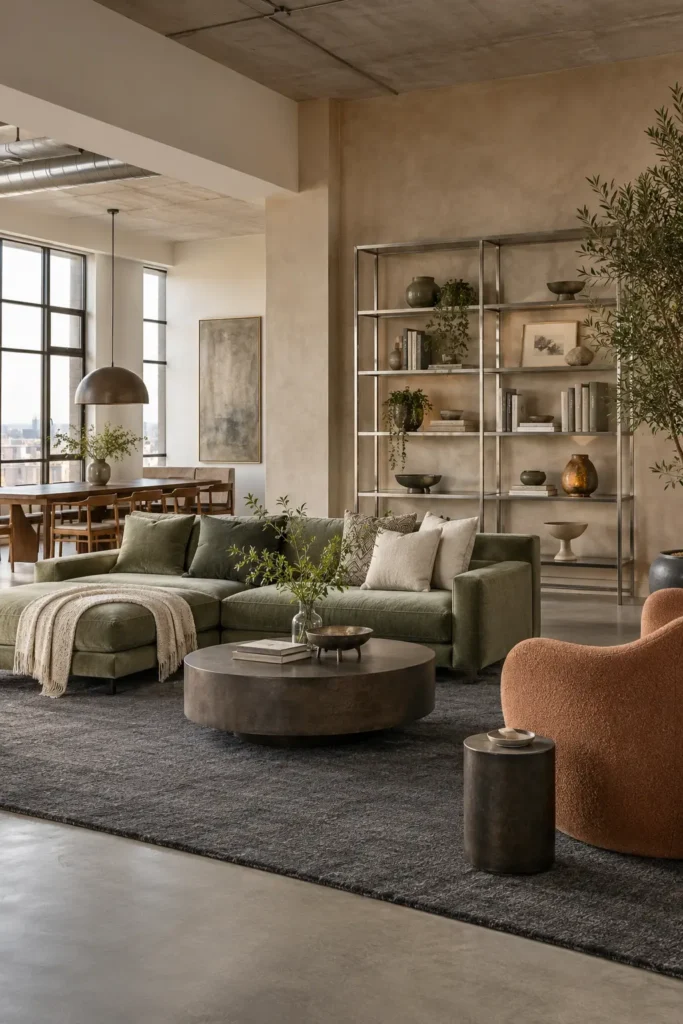
Brushed-stainless shelving can look surprisingly inviting when paired with sage linen and warm plaster. Install a tall shelving unit against a softly textured wall, leaving enough empty space between objects for the reflective metal to remain visible. Matte ceramics, recycled glass, and a limited row of books provide interest without turning the shelves into clutter.
Float a sage chaise sectional between the living and dining areas to define the lounge without adding a wall. An apricot chair across from it supplies controlled color contrast. Polished steel can feel harsh under cool LEDs, so use warm track lighting and avoid filling the room with several competing metal finishes.
10. Create a Curtain Reading Nook
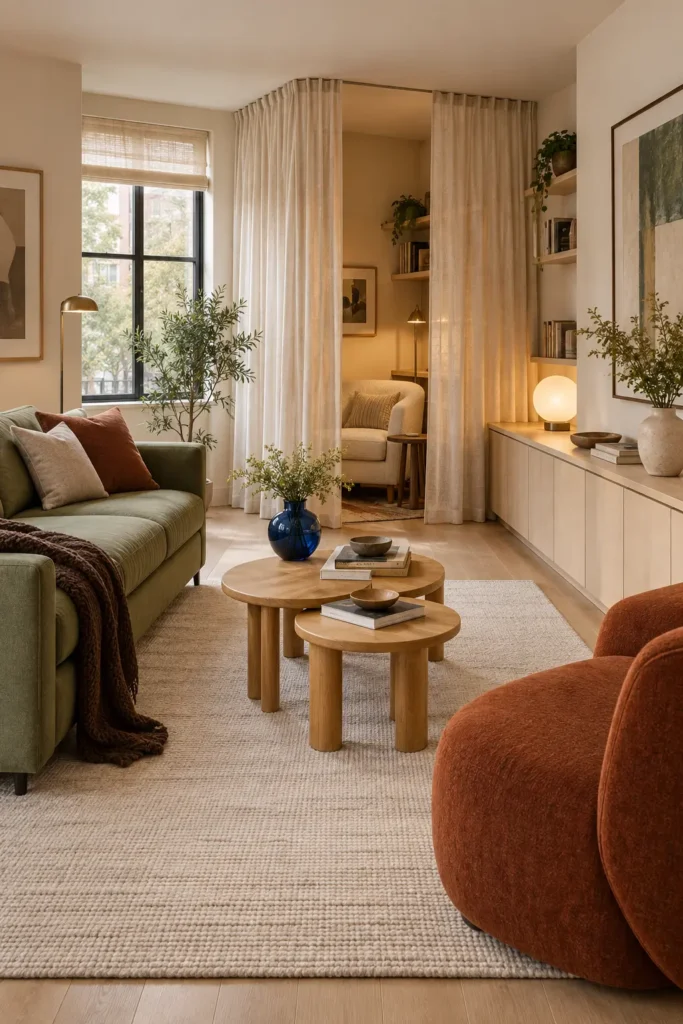
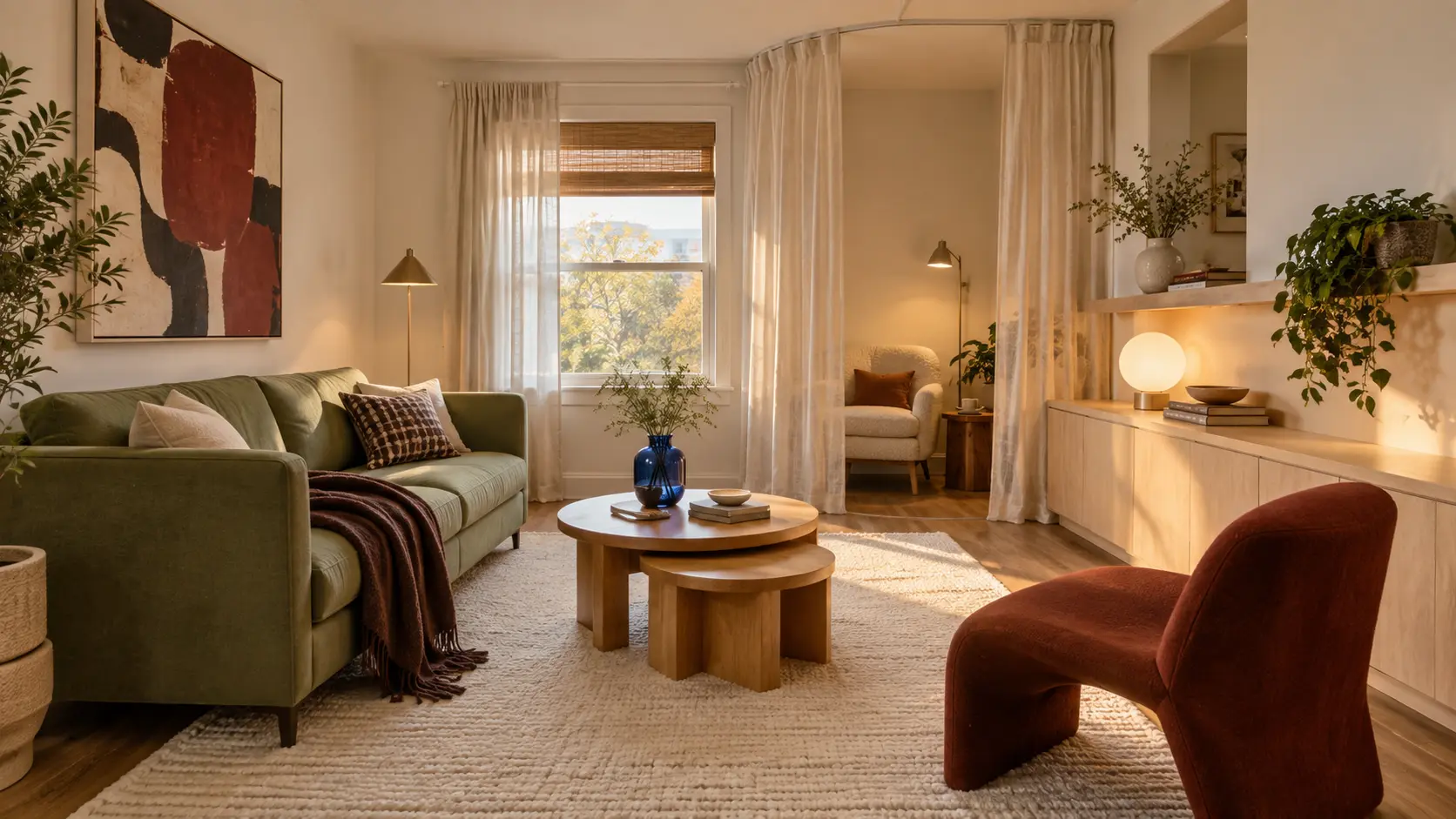
Give a small living room an extra purpose by using a ceiling-mounted sheer curtain to define a quiet reading corner. Pair a slim pistachio-green sofa with a rust-colored sculptural chair and rounded oak nesting tables. A wall-to-wall birch storage ledge keeps books and everyday items organized without making the room feel crowded. Because the curtain filters rather than blocks light, the nook feels separate while the whole room remains bright and visually open.
11. Hang a Woven Pendant
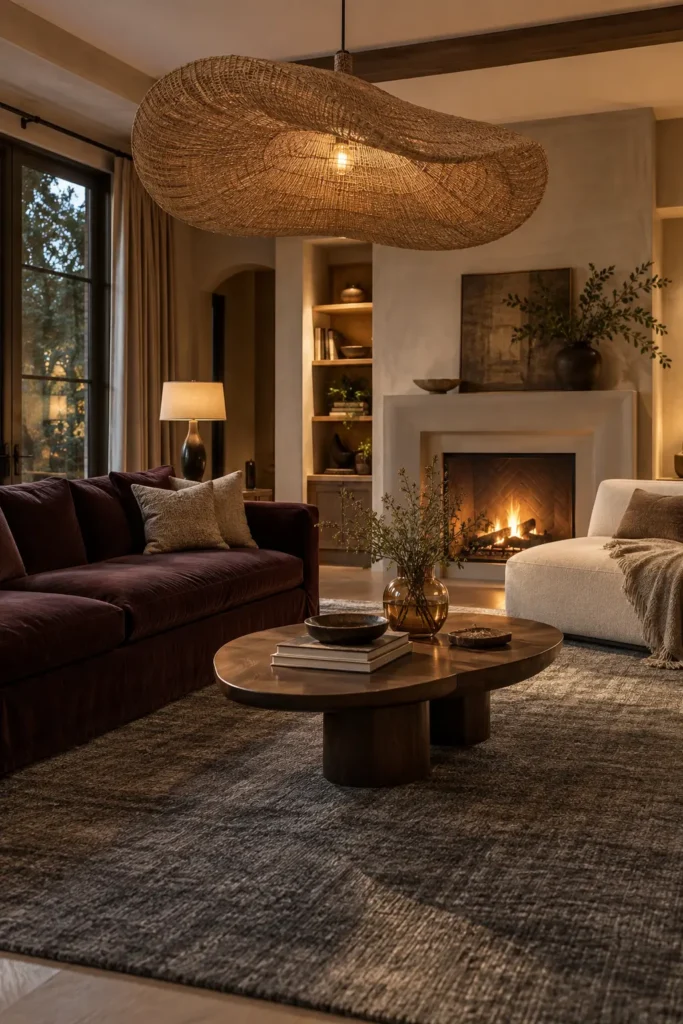
A large irregular woven pendant can serve as functional artwork in a television-free front living room. Hang it above a smoked-walnut table, with a mulberry mohair sofa on one side and a cream armless chaise on the other. The face-to-face arrangement supports conversation and leaves the sight line through the room open.
Choose a fixture with enough diameter to relate to the entire seating group rather than only the table. Its lowest point should generally remain about seven feet above the floor in an area where people walk beneath it. The open weave filters light across the ceiling and gives the room texture without adding more objects at eye level.
12. Create a Teal Indoor Garden Divider
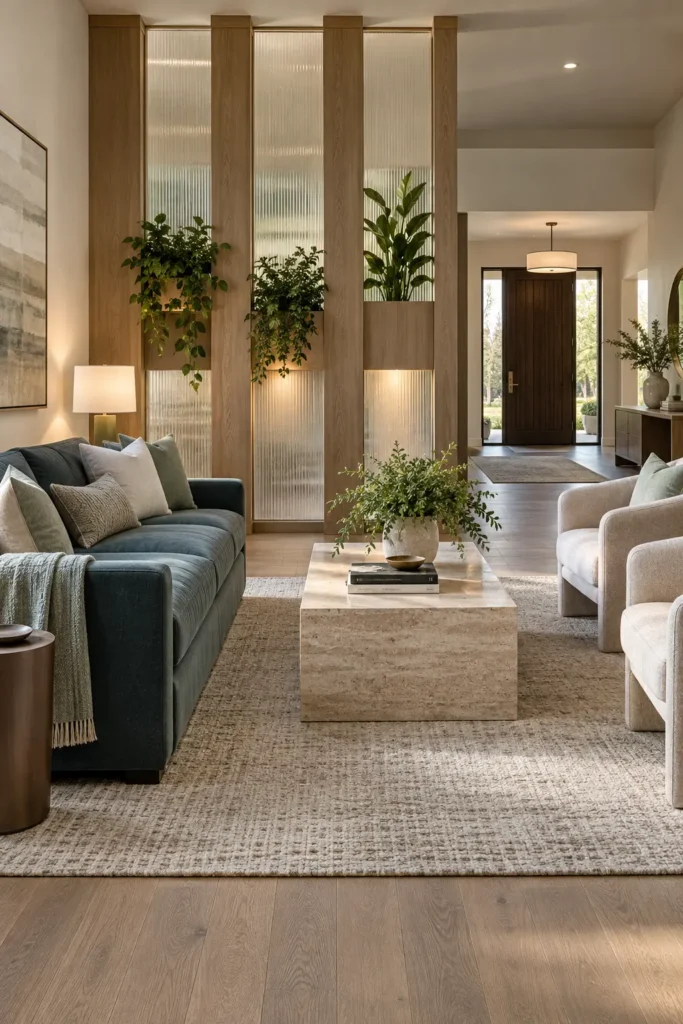
Use a slim oak-and-textured-glass divider to separate the living room from an exposed entryway. Include three integrated planters rather than covering the screen with small pots. A few well-shaped plants look more architectural and require less maintenance than a dense indoor jungle.
Place a dusty-teal sofa in front of the divider and position two sand-colored chairs across from it. Gentle planter uplights make the leaves visible after sunset, while the textured glass protects privacy without blocking borrowed daylight. Choose plants based on the room’s actual exposure, and install removable waterproof liners so moisture can’t damage the wood or flooring.
13. Use a Movable Media Console
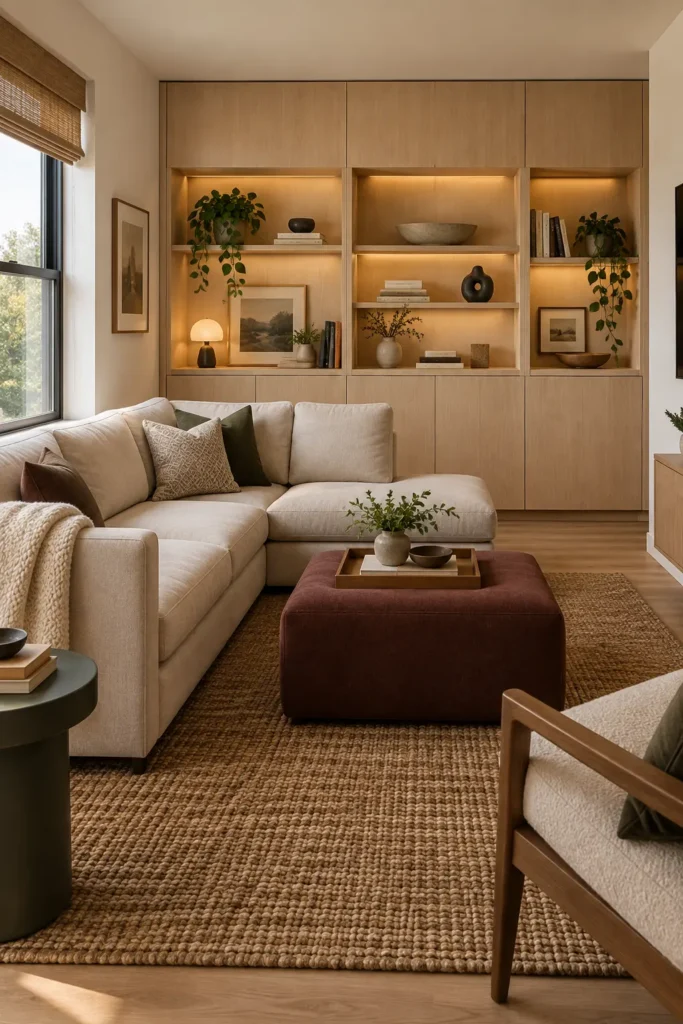
Instead of fixing the television to one wall, place it on a slim walnut media console with discreet locking casters. The unit can face a chocolate-brown sofa during movie nights, then shift aside when you need a clearer walkway or a more social seating arrangement. Add a butter-yellow lounge chair, woven stool, and cream wool rug to soften the dark upholstery. Choose a console with concealed cable storage so the flexible layout still looks polished.
What to Consider Before You Start
Begin with the element that has the greatest visual weight: the sofa, feature wall, window treatment, or main light. Confirm measurements before choosing supporting pieces. In most living rooms, the rug should be large enough to hold at least the front legs of the primary sofa and chairs.
You also don’t need an expensive version of every material. Real wood veneer, quality performance fabric, powder-coated metal, and convincing porcelain stone can all work well. Cheap glossy wood film, thin synthetic curtains, plastic plants, and poorly printed marble patterns tend to reveal their price quickly. Spend more on the pieces you touch and use every day.