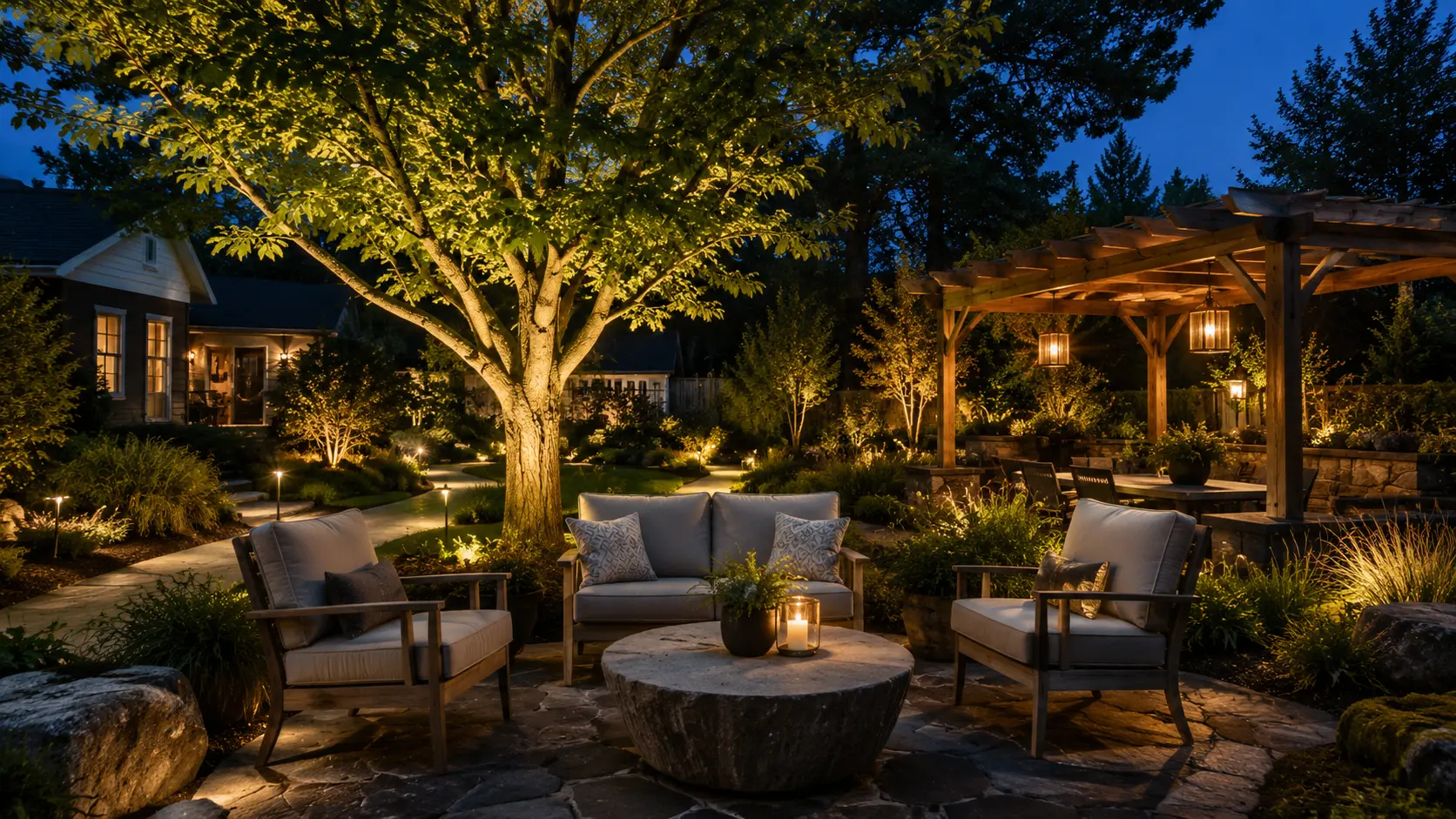
The right garden lighting can change how your outdoor space looks, feels, and functions after sunset. A dark walkway becomes safer, a plain patio gains structure, and mature plants can look almost sculptural when they’re lit from the right angle. The best results come from layering light instead of relying on one bright fixture.
These garden lighting ideas are designed for real US homes, including suburban backyards, narrow side yards, apartment patios, courtyards, and small gardens. Each suggestion combines practical placement, durable materials, realistic proportions, and a clear visual focal point without making the space feel overdecorated.
1. Glowing Moon Gate Entrance
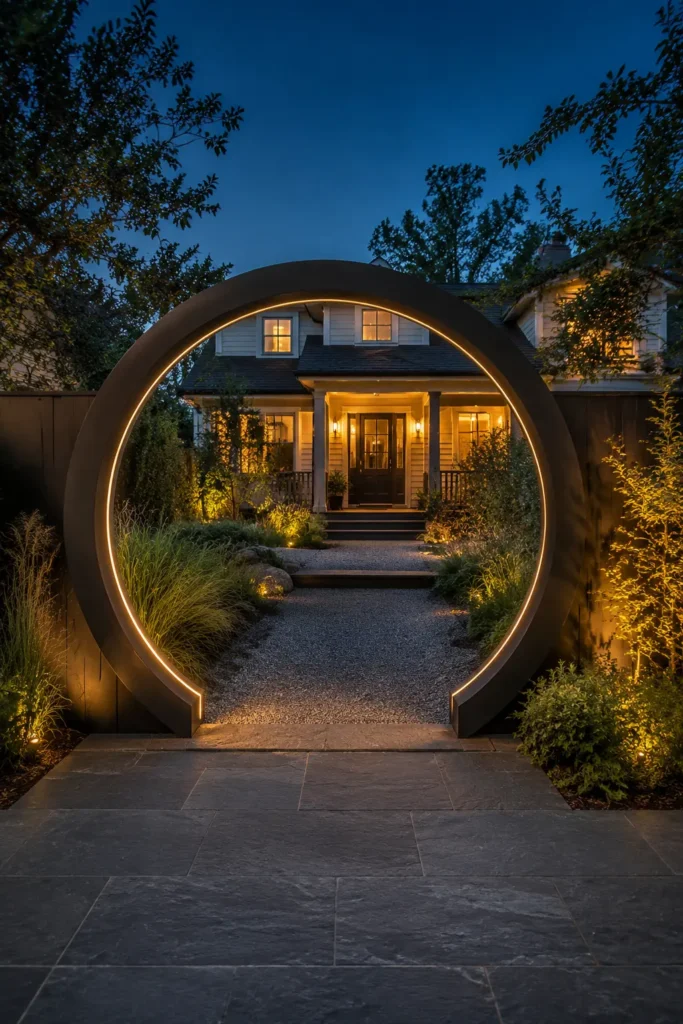
Make a garden entrance memorable with a circular steel gate finished in matte black or weathered bronze. Install warm LED tape or compact outdoor fixtures behind the frame so the gate appears to glow at night. Position it at the beginning of a path, leaving at least 36 inches of clear walking space through the opening.
Keep the surrounding planting simple with clipped shrubs, grasses, or one small tree. The circular shape contrasts with rectangular house architecture and creates a strong sight line from the street or patio. Choose outdoor-rated lighting with concealed wiring so the feature looks architectural rather than improvised.
2. Moonlit Olive Courtyard
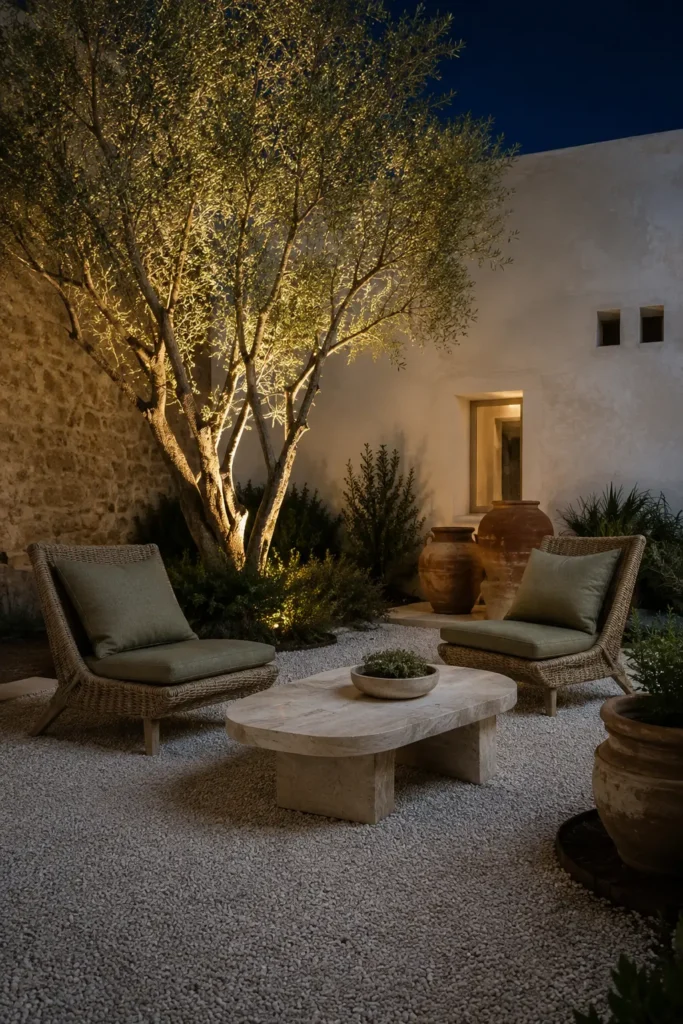
If you have a mature olive tree, use it as the main light source for a Mediterranean-style courtyard. Place two or three adjustable uplights 18 to 30 inches from the trunk, angling them toward the branches rather than directly at nearby seating. This creates layered shadows across the stucco wall and ground.
Add two woven lounge chairs around a small limestone table, keeping at least 30 inches of circulation behind the chairs. Terracotta containers, pale gravel, and olive-green cushions reinforce the palette. Warm bulbs between 2200K and 2700K will flatter the tree’s silvery leaves without making the courtyard look orange.
3. Floating Step Lights
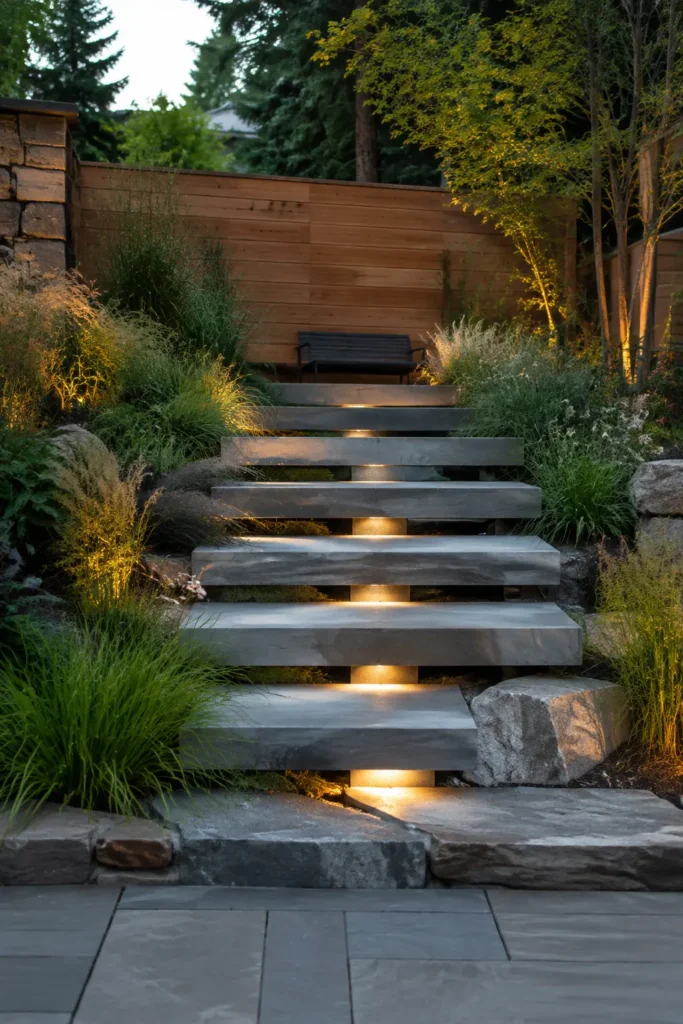
Recessed lights under stone steps can make a sloped garden staircase appear to float. Install one low-voltage fixture beneath each riser, keeping the light source hidden from direct view. For comfortable movement, steps should generally be at least 36 inches wide, with a consistent rise and tread depth.
Use bluestone, concrete, or large-format porcelain pavers for a clean modern look. Ornamental grasses planted along the edges soften the hardscape and catch the light as they move. Avoid placing bright fixtures directly at eye level, since glare is especially uncomfortable on stairs and can make it harder to see the next step.
4. Lantern Canopy Dining Garden
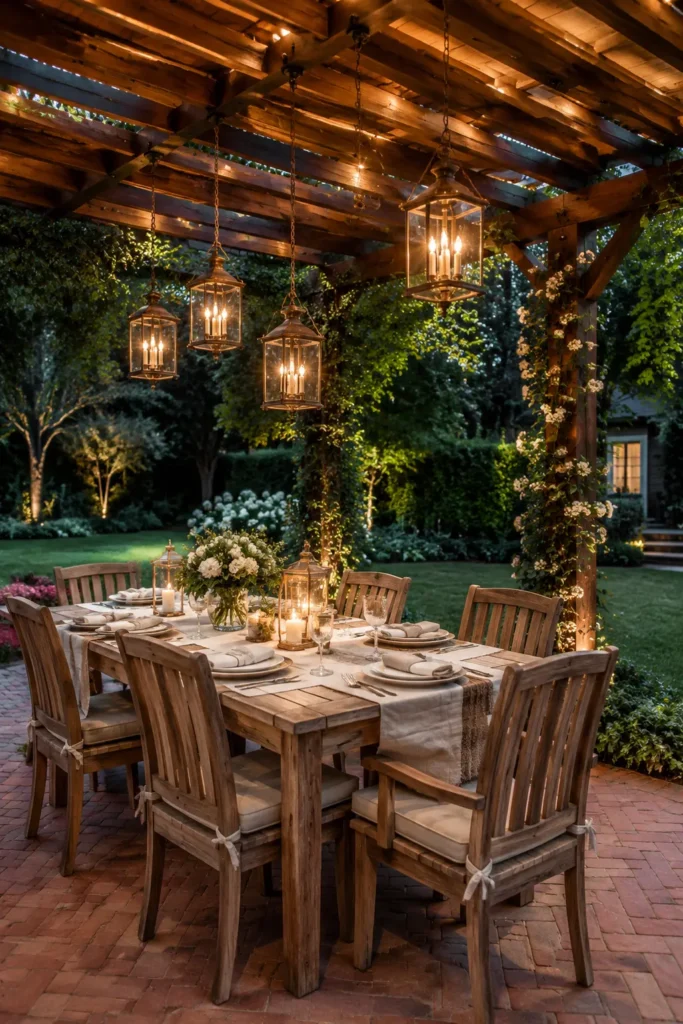
A timber pergola gives you a natural structure for outdoor dining lights. Hang three or five brass or dark-metal lanterns at varied heights above a six-seat teak table. Keep the lowest fixture at least 72 inches above the patio surface so taller guests can move comfortably around the table.
Mix the lanterns with concealed warm strip lighting along the pergola beams. This creates both practical table lighting and softer background illumination. Teak, linen, brick, and climbing jasmine work well together because they develop character outdoors. Use sealed lanterns rated for exterior conditions, especially in humid or rainy climates.
5. Glowing Planter Border
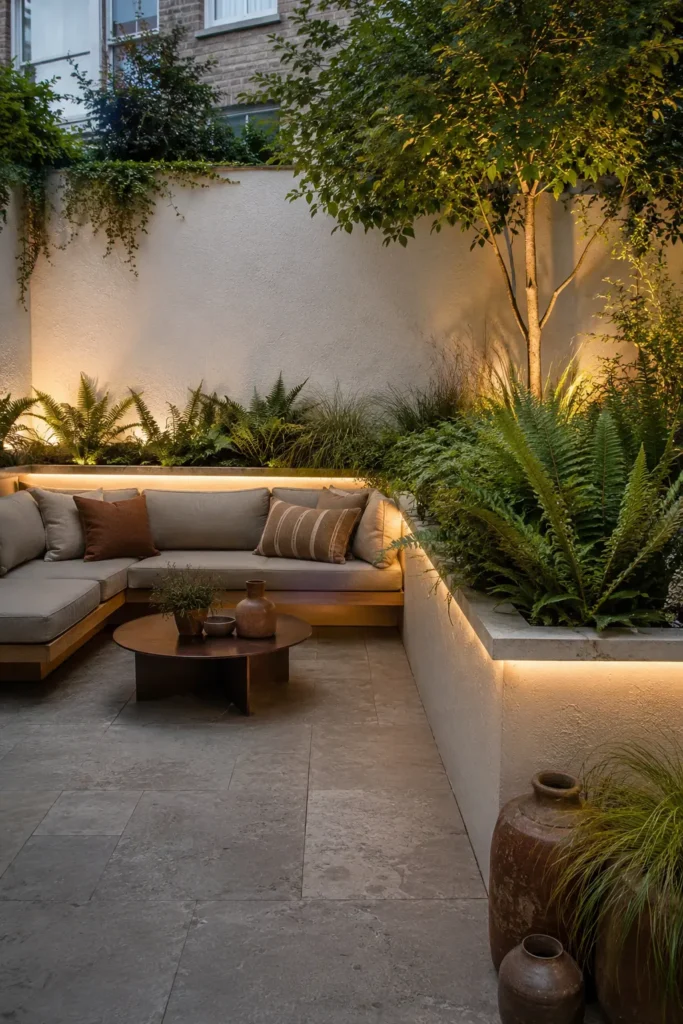
Built-in planters can do more than hold greenery. Add a concealed LED strip beneath the top lip of a rendered, brick, or concrete planter to create a continuous line of light around a patio. The fixture should be recessed enough that you see the glow rather than the individual diodes.
This treatment works especially well around a compact L-shaped sofa or townhouse patio. Keep the planter height between 18 and 24 inches if you want it to double as an occasional perch. Choose plants with soft forms, such as ferns, grasses, or trailing herbs, so the light remains visible instead of becoming hidden by dense foliage.
6. Copper Tree Ring
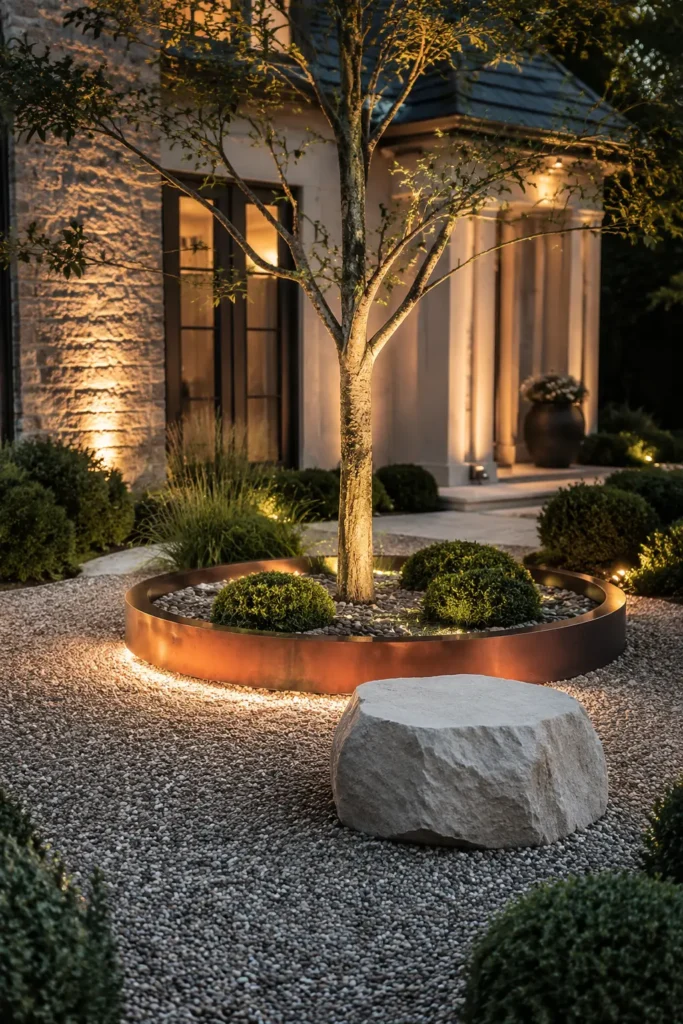
For a smaller planting bed, place a circular copper light ring around the base of an ornamental tree. The ring can be mounted slightly above the soil on discreet stakes or integrated into a low metal edging system. Its warm metallic finish becomes richer as it weathers, especially beside dark green foliage.
Use pea gravel, clipped shrubs, and one simple stone stool to keep the composition restrained. The light should sit low enough to avoid shining into nearby windows. Copper gives off a warmer visual impression than chrome or polished steel, making it a natural partner for bark, gravel, and terracotta.
7. Sculptural Globe Path
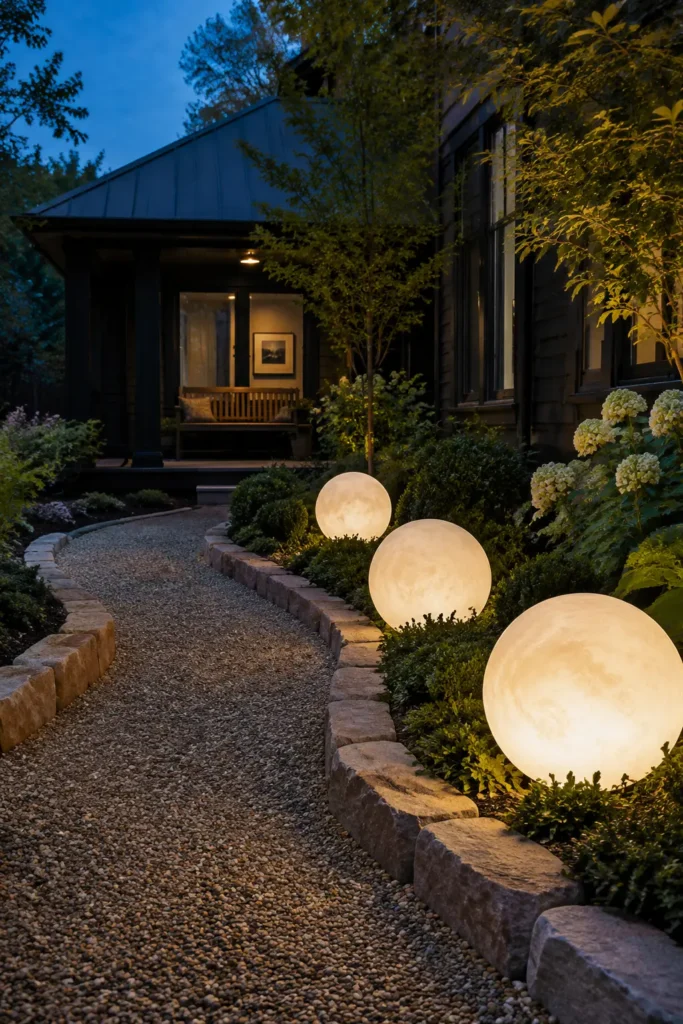
Oversized frosted globe lights can guide a curved path without making it look like a commercial walkway. Use two or three globes in different sizes, spaced irregularly but consistently enough to show the route. Keep them about 18 to 24 inches away from the walking edge so they don’t become obstacles.
Frosted glass diffuses light more gently than clear glass and hides the bulb from view. Pair the globes with sandstone edging, clipped boxwood, or low grasses. On a front path, add a subtle porch sconce so the entrance itself doesn’t disappear behind the brighter garden lights.
8. Pergola Shadow Projector
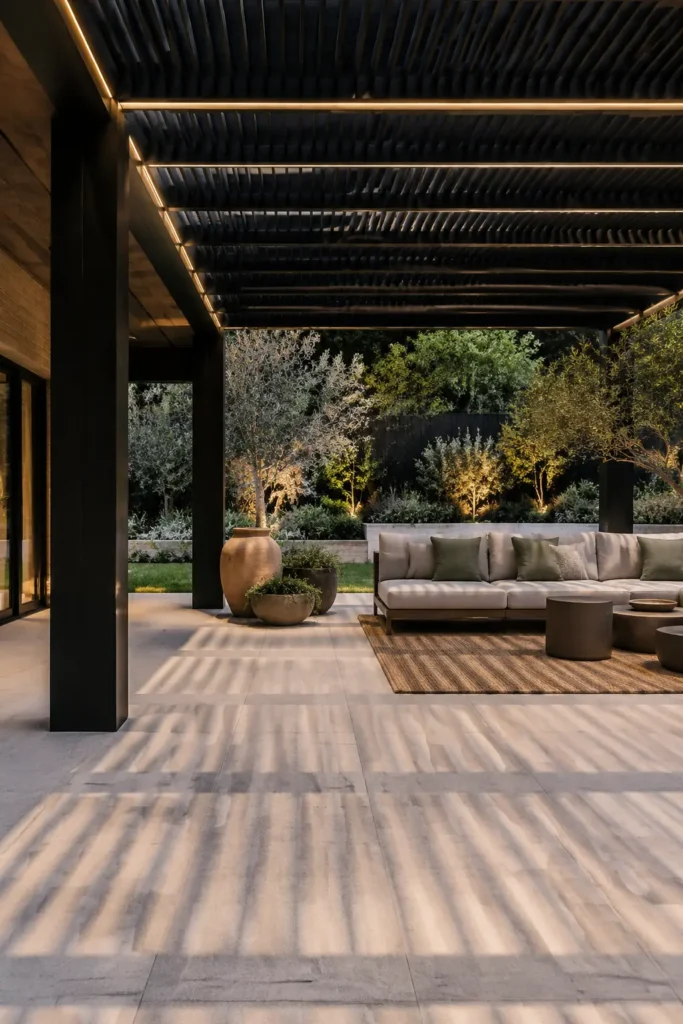
Create a graphic lighting effect by installing concealed linear fixtures above or along the inside of a slatted pergola. At night, the beams cast repeating shadows across the concrete or stone floor. The most attractive results come from evenly spaced slats and a warm, low-intensity light source.
Place a low modular sofa perpendicular to the slats so the shadow pattern remains visible in the foreground. Matte black timber absorbs excess reflection and gives the shadows sharper definition. Test the fixture position after dark before permanent installation; moving the light only a few inches can significantly change the pattern.
9. Water Rill Reflection
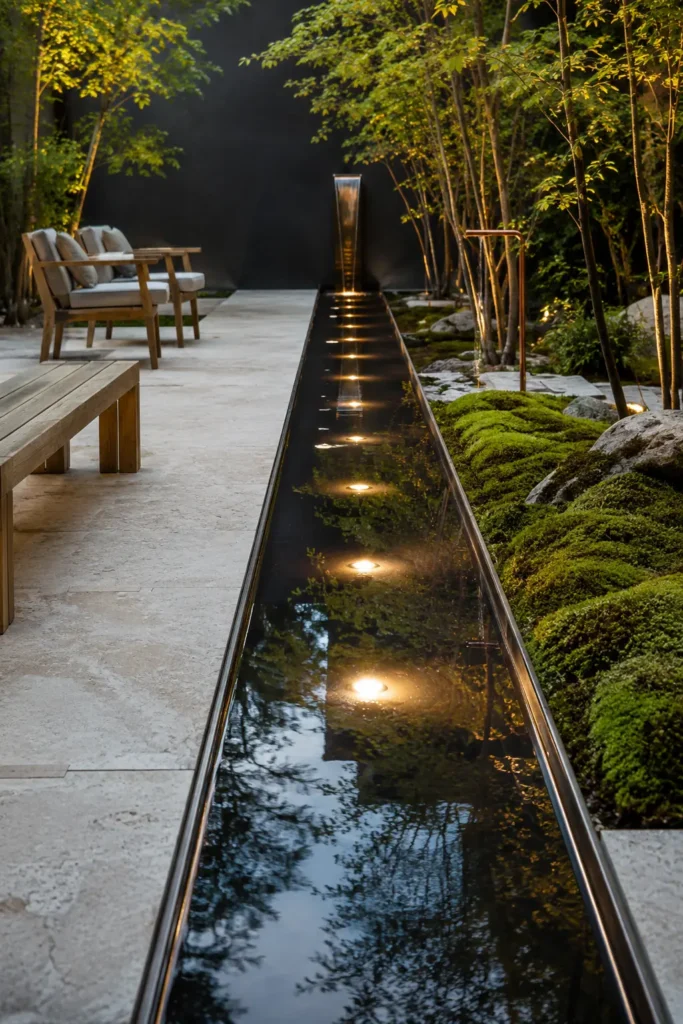
A narrow water rill can make a long courtyard feel more expansive when it includes submerged lighting. A channel 12 to 18 inches wide is enough to create reflection without taking over the entire patio. Use a continuous waterproof fixture rather than several visible spotlights for a smoother line.
Place a bench or two chairs along one side, leaving the opposite edge open so the water remains the visual center. Honed stone, dark water, moss, and brushed copper create a quiet modern palette. Keep the water moving gently and include a removable filter or access panel so maintenance stays manageable.
10. Hidden Bench Cove
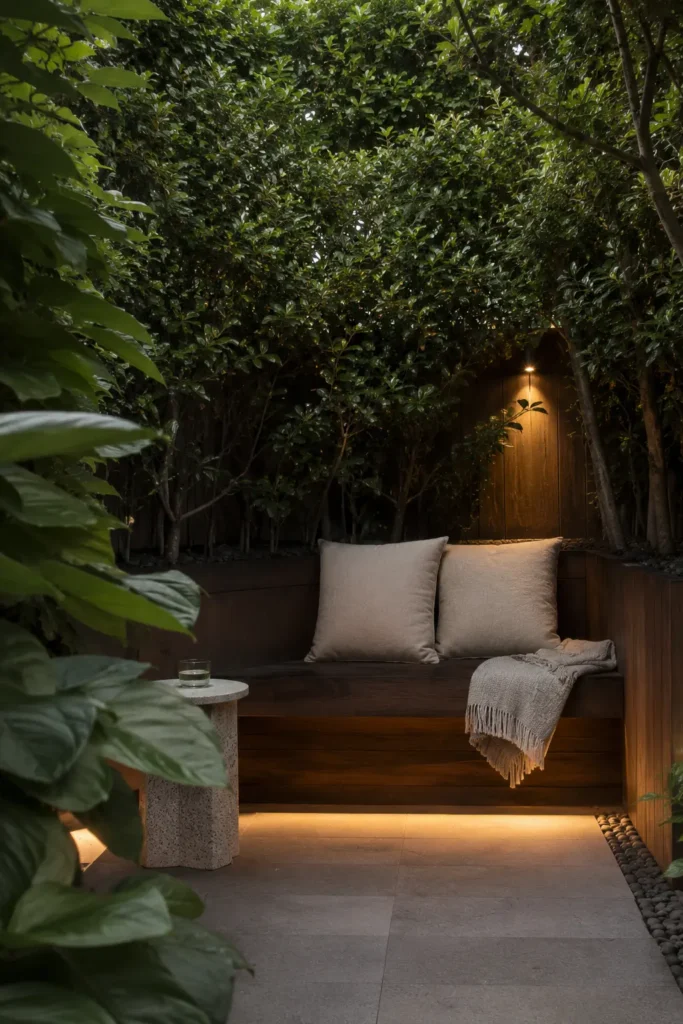
Turn an unused garden corner into a reading or resting spot with a built-in bench tucked beneath a mature hedge. Install a concealed LED strip beneath the seat front and add a small adjustable downlight above. The light should wash the bench gently rather than shine directly into the sitter’s eyes.
A walnut or cedar seat paired with weather-resistant cushions will look more intentional than a loose outdoor chair. Leave approximately 30 inches in front of the bench for comfortable movement. This idea is particularly useful in small yards because the seating, lighting, and planting occupy one compact footprint.
11. Illuminated Gravel River
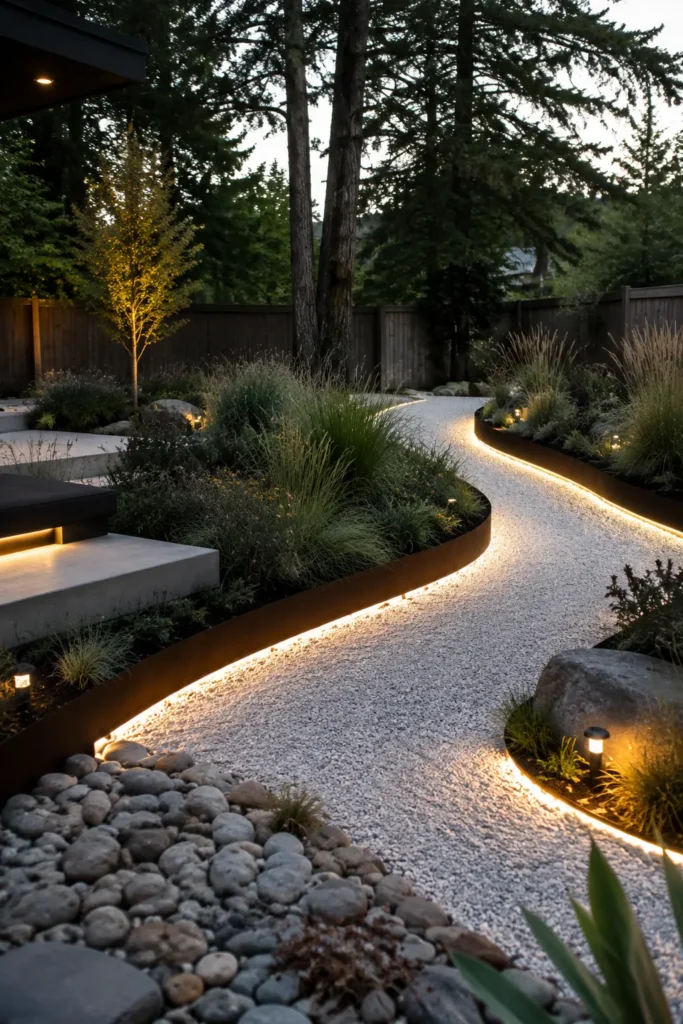
Use a winding strip of pale gravel as a visual “river” through a backyard planting bed. Edge the gravel with concealed low-voltage lighting, keeping the fixtures hidden behind steel edging or dense groundcover. The curved line can guide the eye from a patio toward a tree, shed, or seating area.
This approach works best when the gravel width changes slightly instead of staying perfectly uniform. Add ornamental grasses, river stones, and native plants to make the pathway feel natural. Choose compact fixtures with warm light and shield them from direct view so the path glows without looking outlined in bright dots.
12. Garden Mirror with Backlight
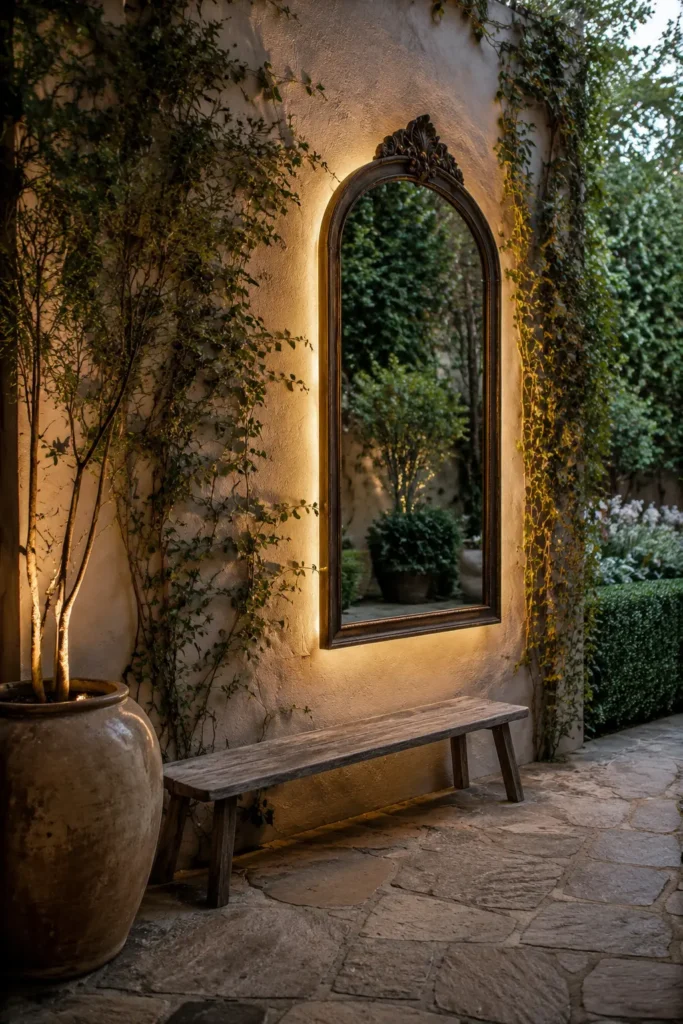
A tall outdoor mirror can reflect foliage, light, and sky in a small courtyard. Choose a frame made from treated wood, powder-coated metal, or weather-resistant composite rather than an indoor mirror with an unprotected backing. Install a concealed light behind the frame to create a soft halo.
Mount the mirror securely to a wall or fence, and angle it slightly downward to avoid reflecting harsh neighboring lights. Keep the surrounding accessories simple: one ceramic planter, a climbing vine, and a narrow bench are enough. The reflection adds depth, while the backlight separates the mirror from the dark wall.
13. Reflective Black Pond
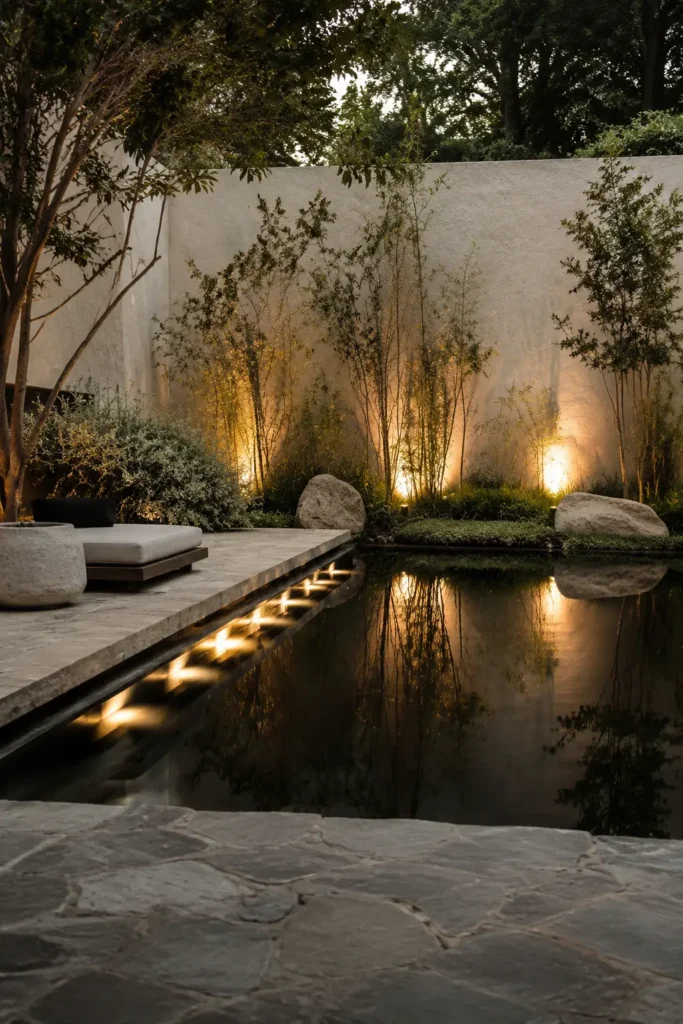
A shallow black reflecting pond creates a dramatic contrast with warm garden lighting. Use a dark stone or sealed concrete basin with a depth of roughly 8 to 14 inches, depending on the design and local safety requirements. Install low underwater lights along one edge rather than placing fixtures in every corner.
Position low stone seating nearby, but keep a clear barrier or safe setback if children or pets use the yard. Dark water reflects warm light beautifully, yet it also shows leaves and debris quickly. A simple skimmer and regular cleaning will keep the surface looking intentional instead of neglected.
14. Glowing Garden Archway
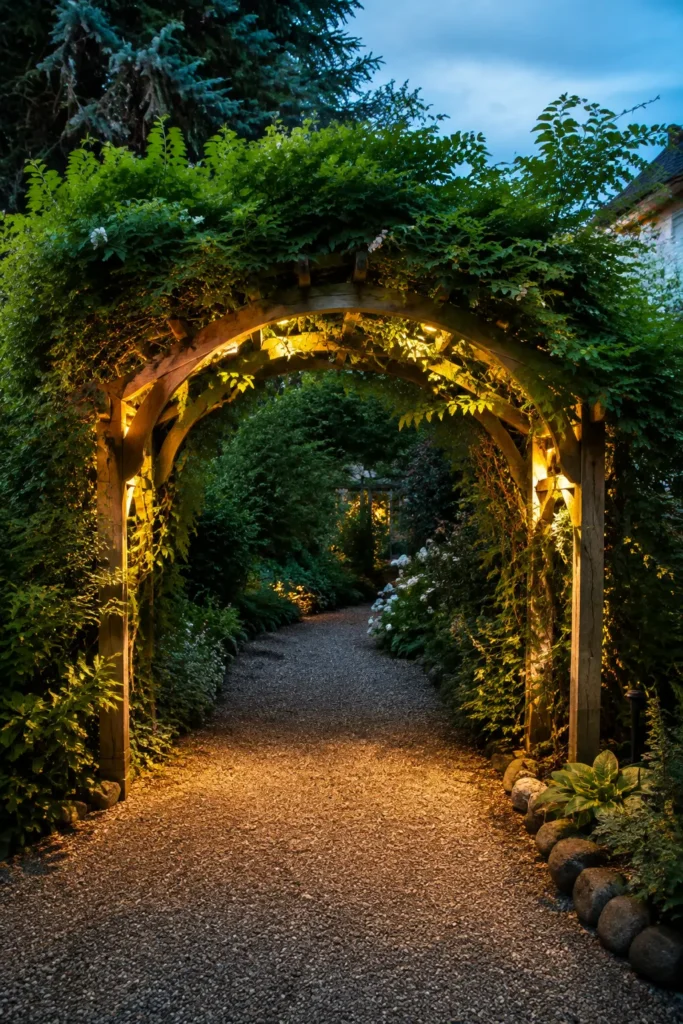
Frame a pathway with a wooden, metal, or planted archway and hide warm lights within the structure. The light should illuminate the foliage from inside, creating a soft botanical tunnel rather than a brightly outlined frame. Keep the pathway at least 36 inches wide for comfortable passage.
Climbing roses, jasmine, grapevine, or evergreen clematis can gradually fill the arch depending on your climate. Use weather-rated fixtures that can be reached for cleaning and replacement. This idea works particularly well at the transition between a patio and a deeper garden because it creates a sense of arrival without adding bulky furniture.
Choosing the Right Garden Lighting Temperature
Warm bulbs between 2200K and 3000K usually look most natural around plants, wood, brick, and stone. Very cool white bulbs can make foliage appear gray and can feel harsh against warm house finishes. For a cohesive result, keep the main garden fixtures within a similar color-temperature range, even when the fixture styles differ.
Common Garden Lighting Mistakes to Avoid
The most common mistake is using too many bright fixtures instead of layering a few carefully aimed ones. Avoid placing lights where the bulb is visible from seating or from inside the house. Cables should be buried or secured neatly, outdoor connections need weather protection, and all fixtures should be rated for exterior use. Test the arrangement at night before final installation because daylight can hide glare, shadows, and awkward spacing.