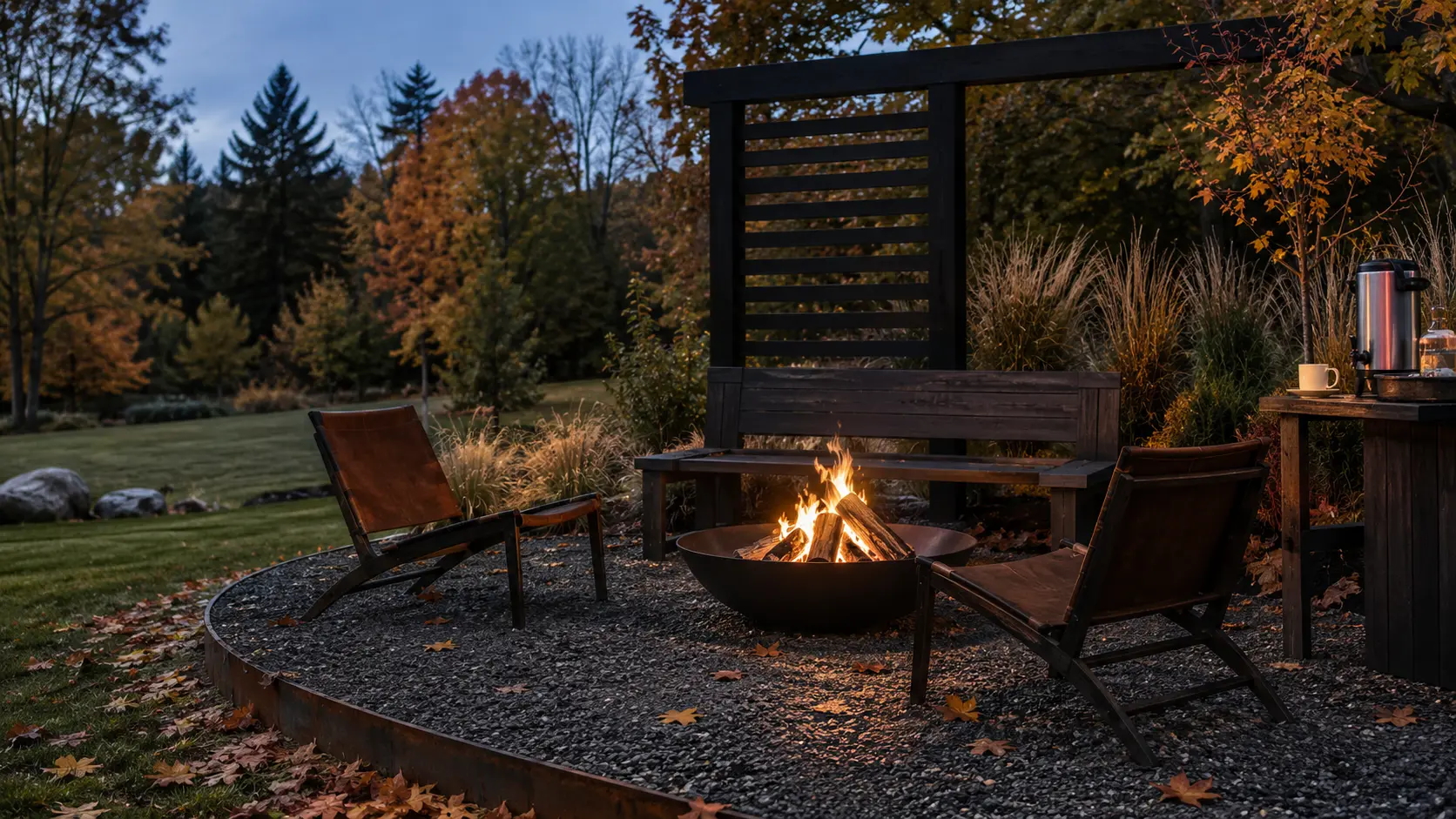
The best fall fire pit area decor does more than add pumpkins around a patio. It shapes how people move, sit, serve drinks, and enjoy the changing light on a cool evening. A basic fire bowl can feel intentional when the furniture has a clear silhouette, the materials can handle damp weather, and autumn color appears in a few well-placed areas.
These ten ideas treat the fire pit as the center of a temporary outdoor room. You’ll find practical layouts for patios, gravel yards, and approved decks, along with renter-friendly substitutions that can be removed when the season changes.
1. Create a Crescent Ember Lounge
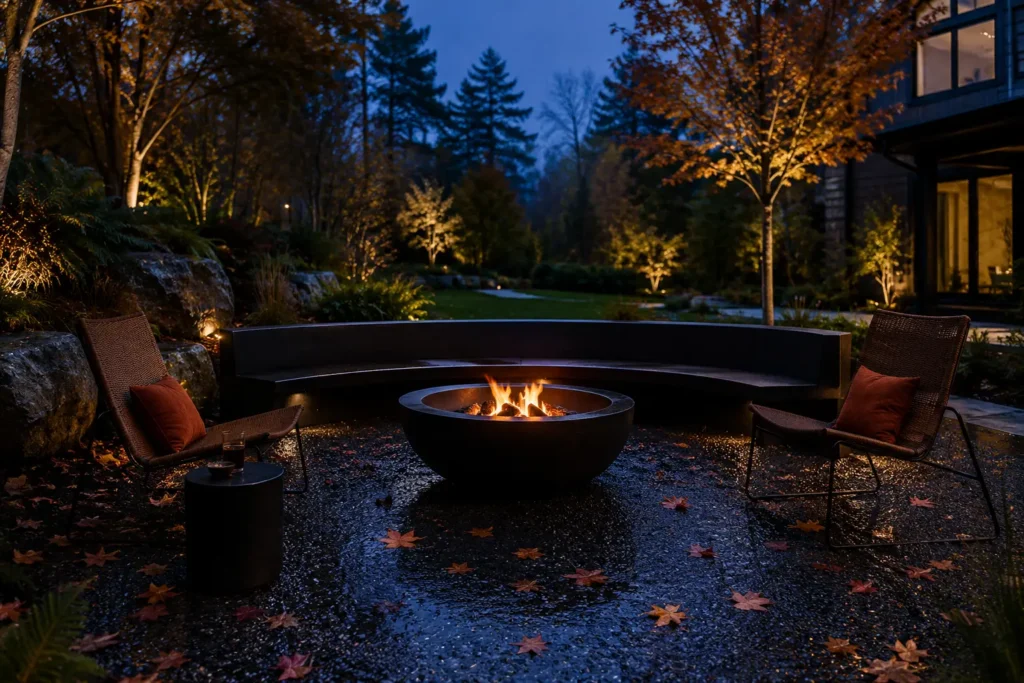
Arrange a low outdoor bench across the back of the fire pit, then angle two taller sling chairs toward the flame at either end. A charcoal frame, tobacco-brown cushions, and one muted rust accent on each chair give the arrangement a restrained autumn palette without making it look themed.
The curved outline leaves one clear entrance, which is helpful when guests are carrying drinks or firewood. It also places everyone within the same sight line while the different seat heights keep the arrangement from looking like a furniture showroom. Leave enough room behind the bench for people to walk comfortably.
For a lower-cost version, use three backless outdoor benches or storage ottomans and arrange them in a shallow arc. Choose solution-dyed outdoor fabric, which generally handles damp evenings and repeated use better than indoor upholstery.
2. Add a Charred-Wood Fire Portal
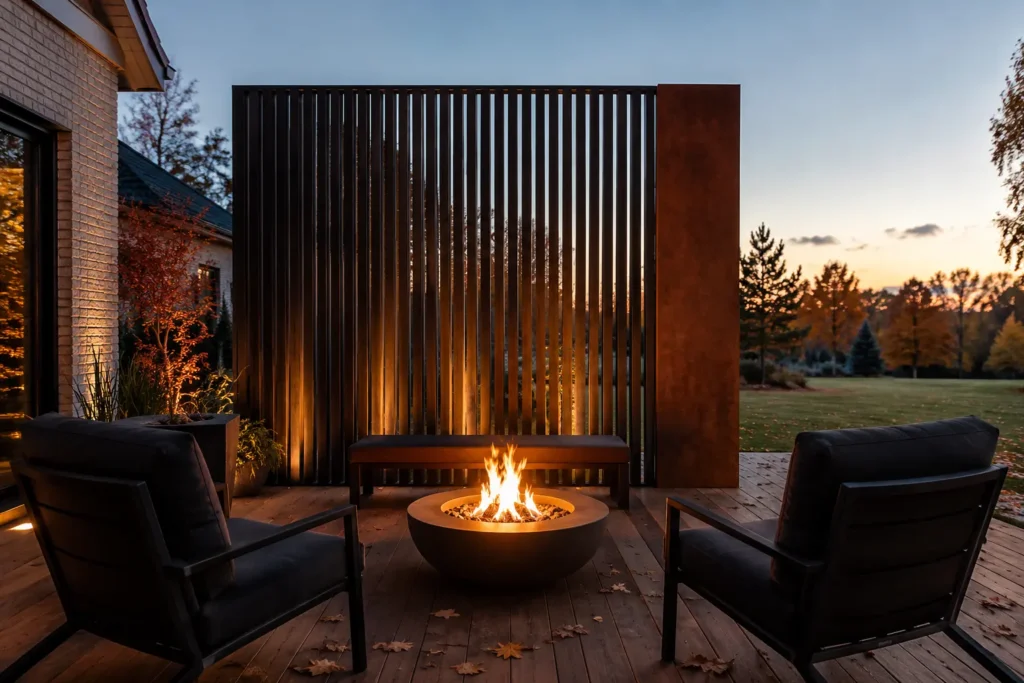
Give the fire pit a backdrop with a freestanding slatted screen positioned well behind the seating. Stain the wood espresso-black or charcoal, then add one narrow vertical panel in rust-colored exterior paint or weatherproof metal. Keep the structure open rather than building a solid wall.
This simple portal hides a tired fence, utility box, or neighbor-facing view while giving the seating a visual anchor. The dark finish recedes during daylight and becomes a dramatic silhouette once the fire is lit. Keep the screen weighted and follow the fire pit manufacturer’s clearance guidance; it should never act as a combustible surface close to the flame.
Renters can hinge two weighted privacy panels together and stand them on removable bases. Avoid attaching anything to fences or siding, and store the panels indoors during high winds.
3. Design a Gravel Shadow Pad
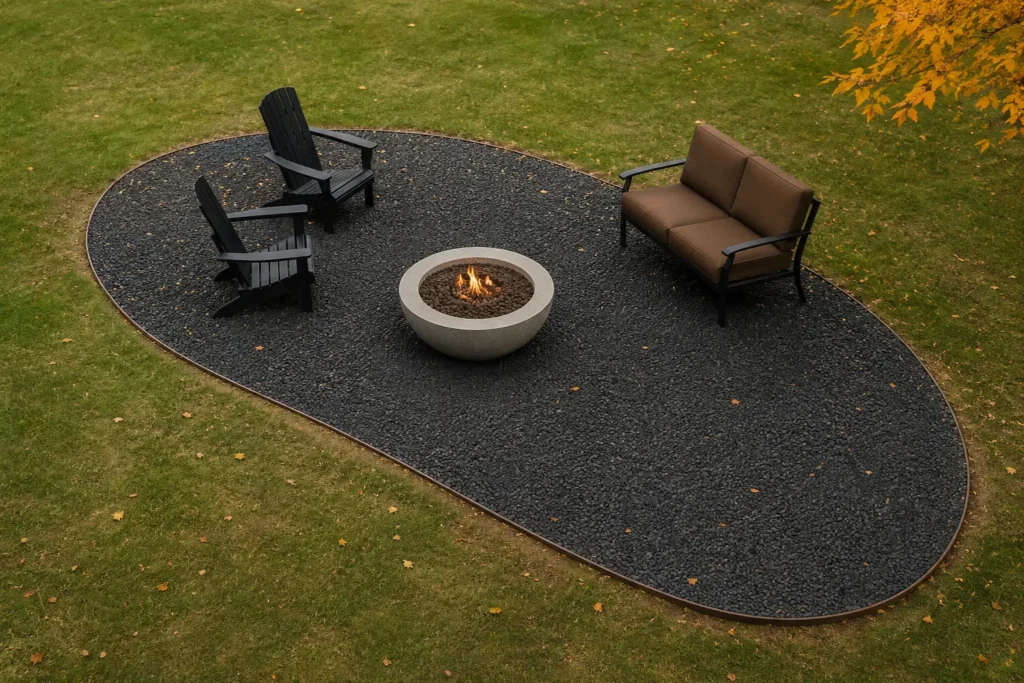
Instead of placing the fire pit on a small circular patch, create an elongated capsule of charcoal gravel beneath the entire gathering area. Extend the shape farther behind the main seating on one side, then outline it with slim weathered-steel edging. Set a pale concrete, black steel, or Corten fire bowl slightly off-center.
The asymmetrical outline looks like a long shadow cast by the fire and gives the backyard a custom landscape detail. It also provides a stable surface for chair legs and clearly separates the fire zone from grass or surrounding paving. A 12- to 14-foot-wide layout can work for a small group, but size the area around your furniture and required safety clearances.
For a less permanent project, use compacted decomposed granite with flexible metal edging. Test the shape for one season before investing in pavers or masonry.
4. Turn a Log Rack Into a Console
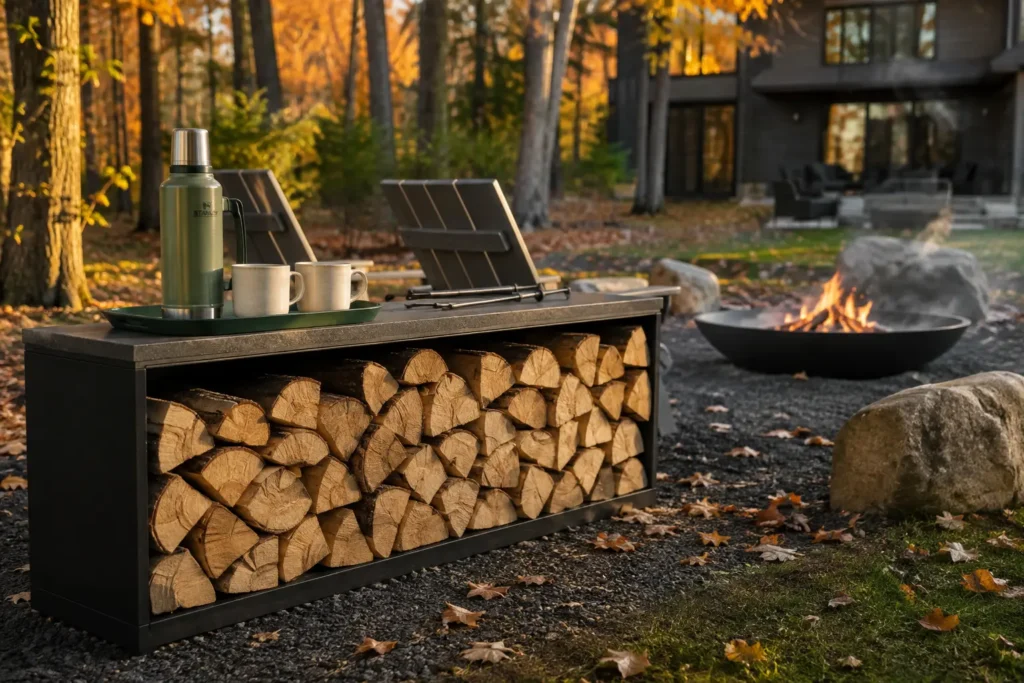
Choose a narrow black steel firewood rack and store split logs in neat horizontal rows below. Fit the top with a removable slab of honed stone, sealed concrete, or outdoor porcelain tile. Use the surface for a covered cider dispenser, enamel tray, and fire tools rather than decorative objects that can be knocked over.
The log ends create a repeating pattern that reads almost like a textured wall. More importantly, the rack keeps fuel dry and close without spreading baskets, stools, and kindling across the seating area. A removable top lets you use the rack strictly for storage when the fire pit is not operating.
A basic steel rack can look convincing with a carefully cut porcelain tile or concrete paver. Avoid glossy surfaces that show soot and fingerprints quickly; honed or matte finishes are easier to maintain outdoors.
5. Face the Fire and Fall Foliage
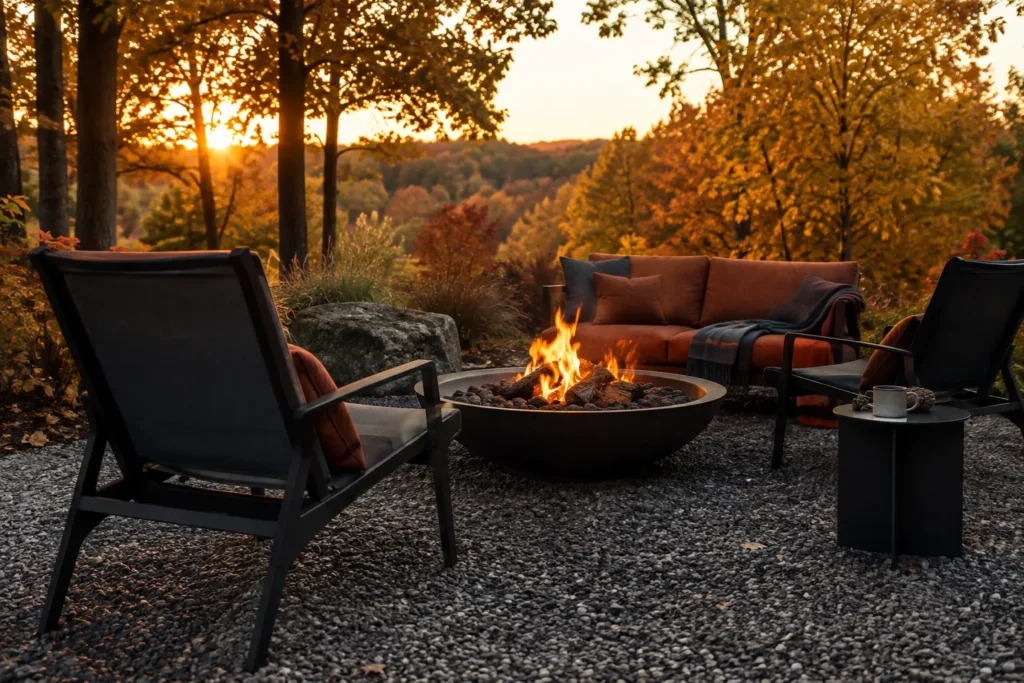
Not every seat needs to point directly at the flame. Angle two chairs toward the fire and rotate a loveseat about 30 degrees toward the best autumn tree view. Place the fire pit between these two orientations so guests can watch the flames or the changing leaves without moving the furniture.
This arrangement works especially well when your yard has a maple, oak, or wooded outlook. The fire becomes the near focal point, while the foliage creates a second layer beyond it. Keep the open side of the seating facing the main path so people aren’t forced to squeeze between chair backs.
You can create the same effect with furniture you already own. Mark the preferred chair positions with flat stepping stones or small gravel pads so the layout stays stable after rain.
6. Use a Perforated Shadow Screen
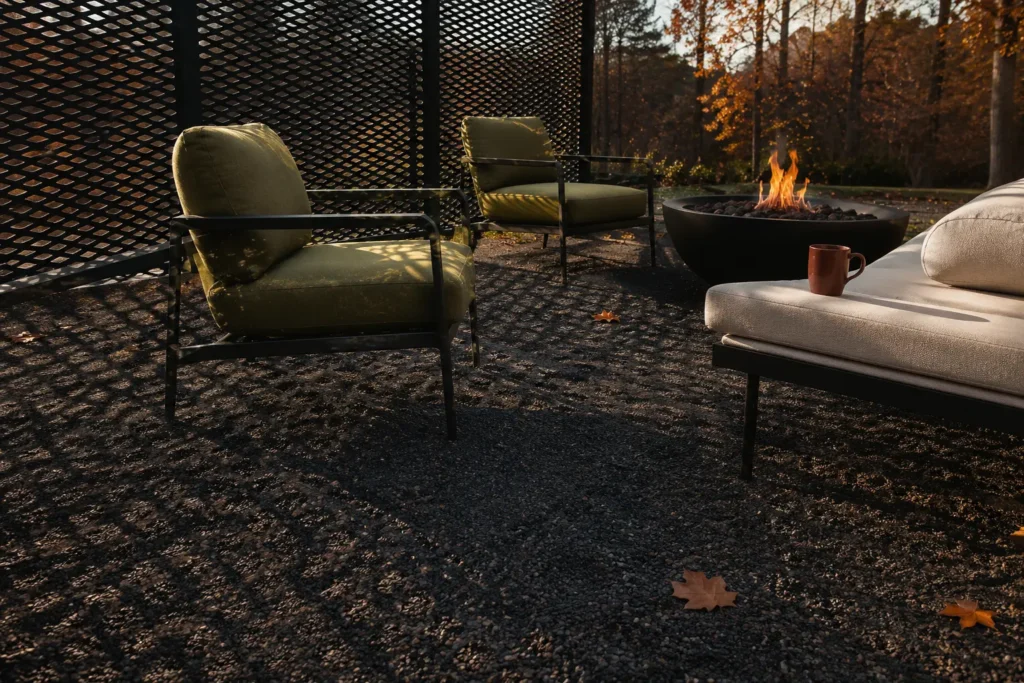
Place a freestanding panel of black perforated steel or expanded metal on the non-windward side of the seating, outside the fire pit’s required clearance area. Select a pattern with small geometric openings rather than a decorative cutout design. In late afternoon, the panel will cast a dotted pattern across the gravel.
This screen provides partial privacy without blocking airflow or making the fire zone feel enclosed. During the day, it reads as a crisp architectural element; after dark, it becomes a graphic silhouette against the flames. Its cool metal finish also contrasts nicely with rust leaves, warm wood, and amber firelight.
For a rental-friendly setup, use a removable garden panel secured in heavy planter boxes. Check that the base remains stable on your surface and take it down during strong wind.
7. Build a Planter-Block Windbreak
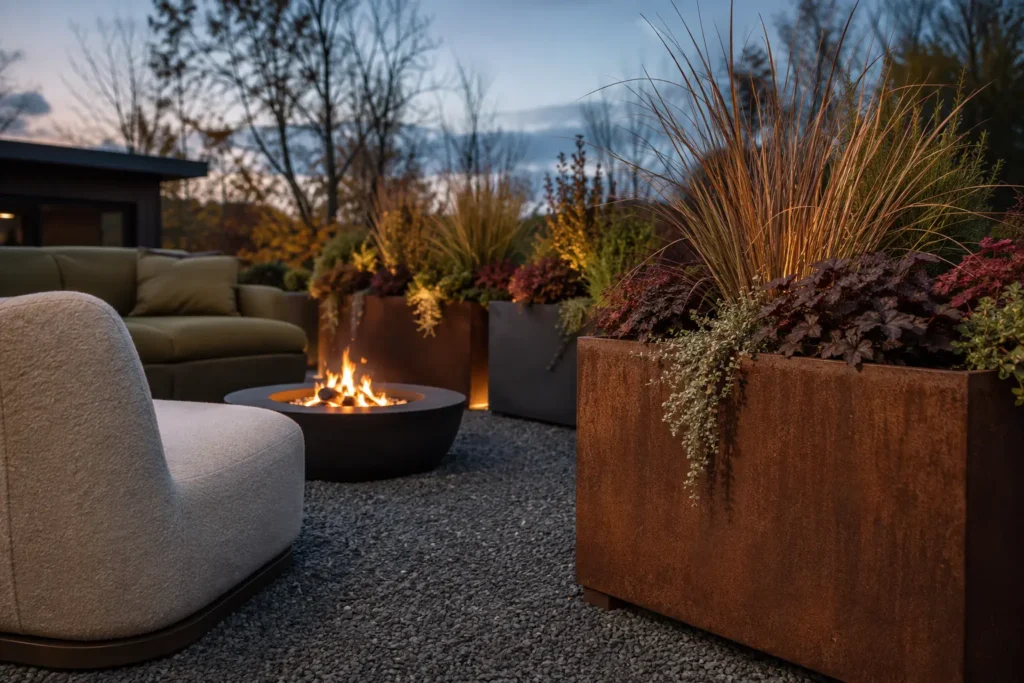
Arrange three large rectangular planters behind the seating in a shallow stepped line. Fill them with bronze sedge, burgundy heuchera, evergreen grasses, or other plants suited to your climate. Leave a small gap between each planter so the arrangement filters wind rather than forming a solid barrier.
The staggered blocks function as a low architectural windbreak and add autumn color without scattering seasonal accessories around the fire. Their rectangular shapes balance a round fire pit, while the grasses soften the hard edges of paving and metal furniture. Choose lightweight resin planters if you need to move them for storage.
For apartments or rentals, use trough planters with removable nursery pots. That approach allows you to change plants seasonally and relocate the containers without hauling large amounts of soil.
8. Add Cantilevered Cider Perches
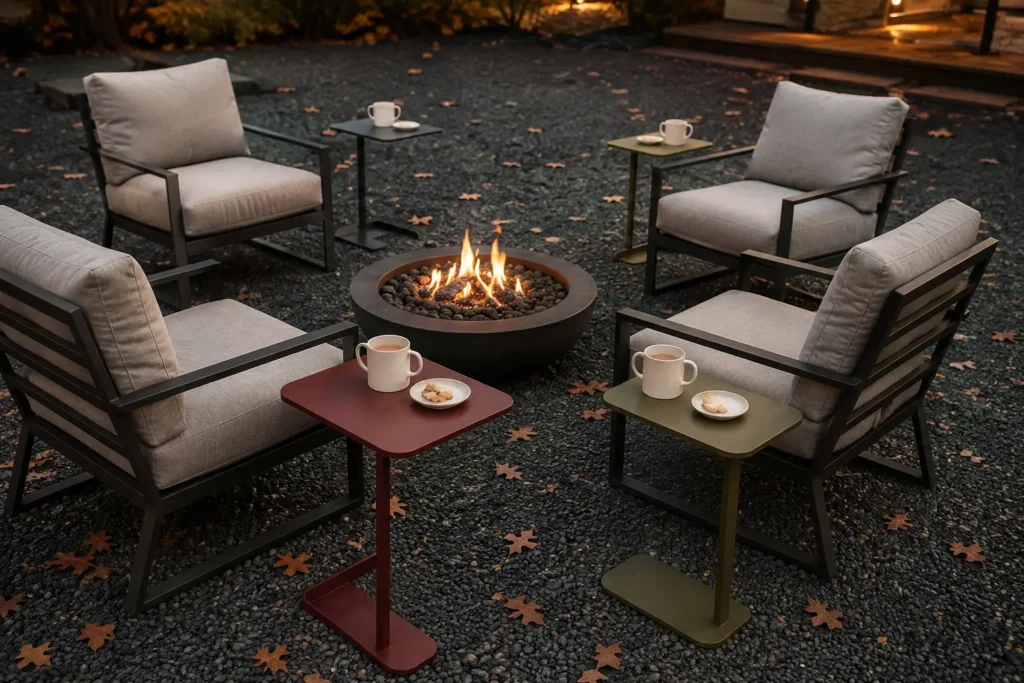
Replace a bulky central coffee table with slim C-shaped outdoor tables placed beside alternating chairs. Their tops should slide partly over the seat edge, giving each guest space for one mug and a small plate. Use a controlled color mix of matte oxblood, olive green, and black.
The little tabletops create a rhythm around the fire and keep drinks within reach without forcing anyone to lean across the flames. They’re also easier to move when you need to sweep leaves or rearrange the seating. Select powder-coated metal or weather-resistant composite, and avoid narrow bases that wobble on gravel.
Stable thrifted metal laptop tables can work well after being refinished with exterior-rated paint. Sand peeling finishes completely before repainting, since autumn moisture will expose poorly prepared surfaces quickly.
9. Use a Ribbed Storage Bench
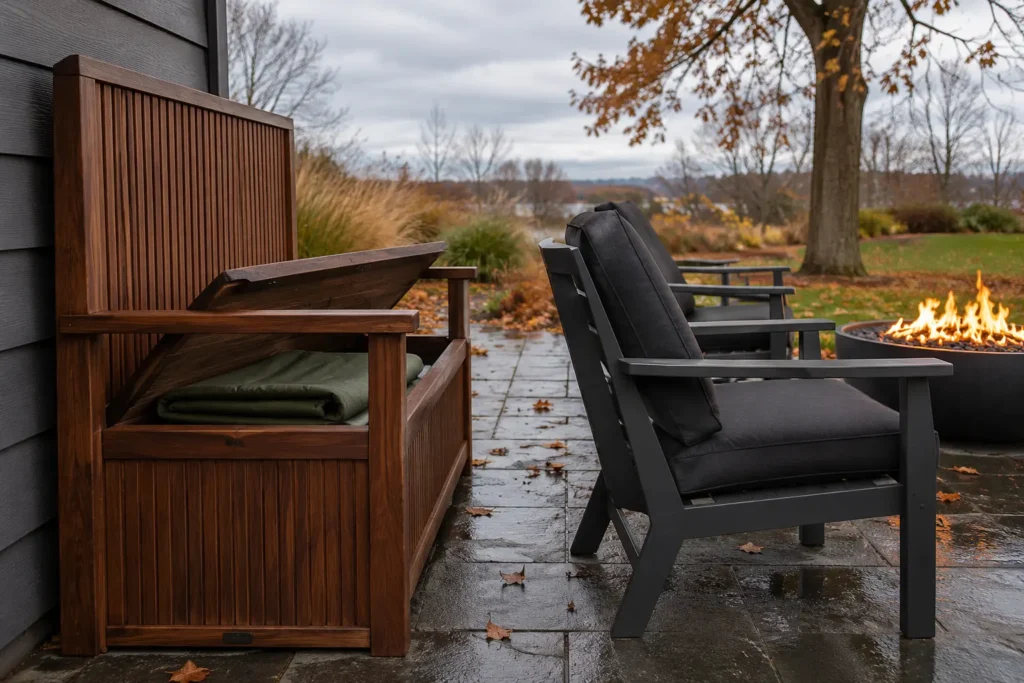
Place a high-backed outdoor storage bench on the side opposite the prevailing wind, while observing all fire pit clearance requirements. Look for vertical fluting, ribbed composite, or slatted cedar rather than a plain plastic box. Store cushions, covers, roasting sticks, and small serving pieces inside the seat base.
The bench does three jobs at once: it adds seating, creates a visual wind buffer, and hides the seasonal equipment that usually collects around a fire pit. Its vertical texture gives the space a stronger silhouette than a row of individual chairs. Keep the lid clear of hot ash and never use the storage compartment for warm firewood.
A weatherproof deck box paired with a removable slatted bench offers a more affordable adaptation. Choose a model with ventilation and a lid that closes securely.
10. Create a Monolithic Cider Bar
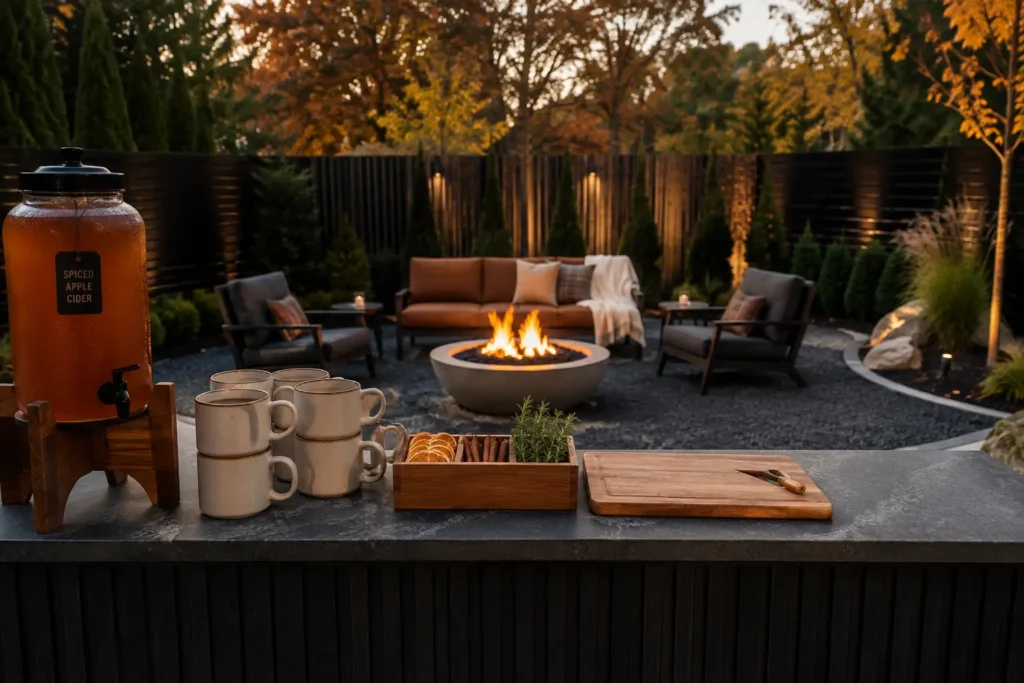
Finish the fire pit area with a narrow counter-height bar positioned at the edge of the seating zone. Build the face from fluted exterior plywood, dark cedar, or ribbed composite, then add a soapstone-look porcelain top. Style it with an insulated cider dispenser, cream stoneware mugs, a lidded garnish box, and one small cutting board.
A single strong serving station looks more considered than several folding trays scattered around the fire. It also keeps hot drinks and snacks away from sparks, chair legs, and the main walking path. Leave a clear gap between the bar and fire pit, and choose a counter depth that lets guests stand comfortably without blocking circulation.
For a removable version, wrap a sturdy secondhand potting bench with exterior fluted panels and place a large porcelain tile on top. Store the bar under cover when winter weather becomes severe.
Before You Start: Practical Fire-Pit Checks
Confirm local burn regulations and your fire pit’s required distance from structures, trees, fences, and outdoor fabrics before arranging furniture. Keep a clear route to the seating, avoid loose textiles near sparks, and place a water source or approved extinguisher where adults can reach it quickly.
Choose outdoor fabrics that can dry fully after rain, and use covers only after the fire pit and ash have completely cooled. If children or pets use the yard, avoid sharp metal edging, unstable screens, and low objects that invite climbing.