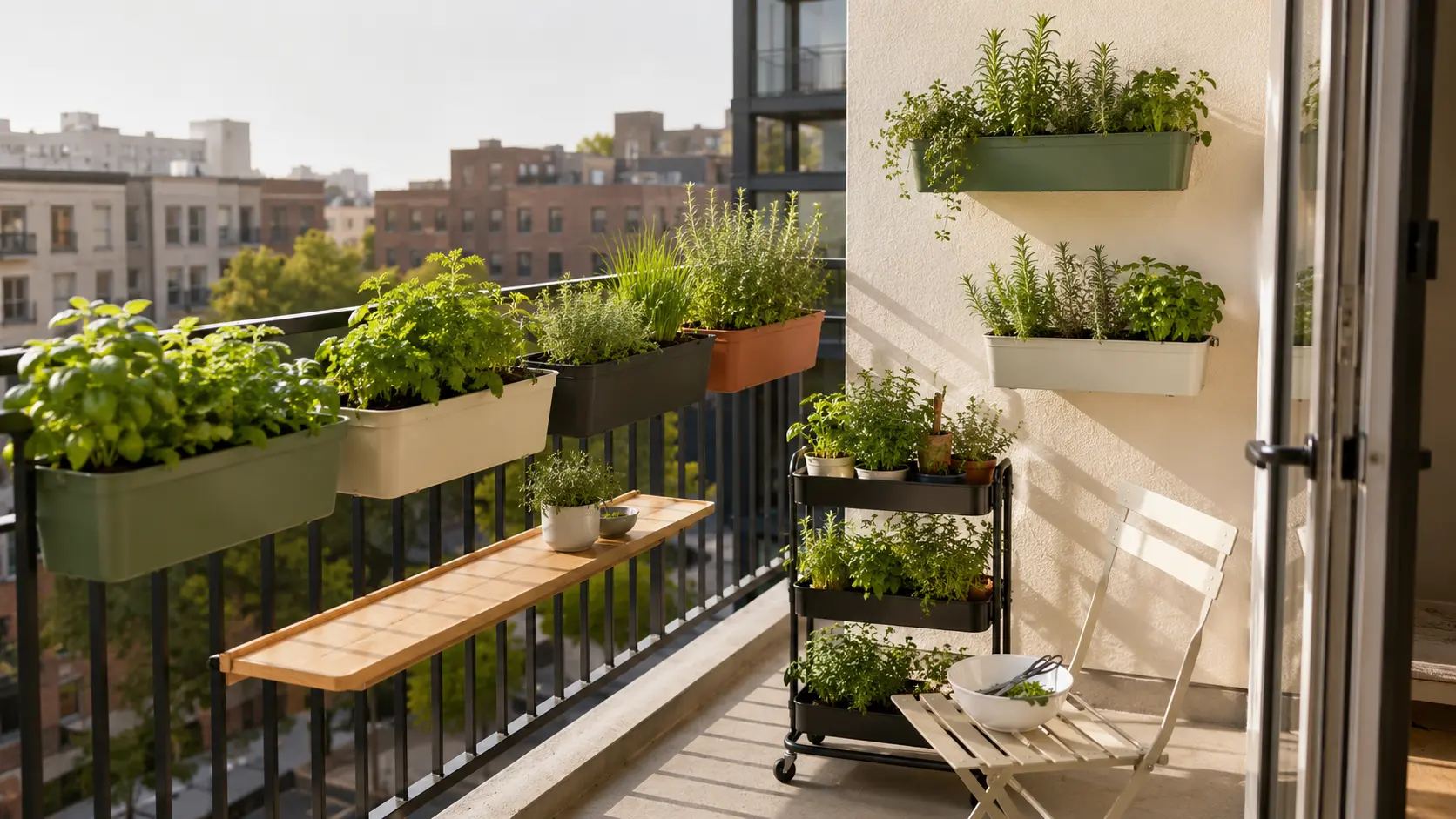
A balcony can grow more than a few decorative plants. With the right containers and layout, even a narrow outdoor space can become a practical herb garden that looks intentional from inside your home. The best balcony herb garden ideas treat the plants as part of the balcony’s architecture, not as random pots gathered along the edge.
These arrangements use modern herb boxes, renter-safe supports, movable furniture, and simple color palettes. You’ll find options for sunny railings, windy apartments, compact seating areas, and balconies where every inch of floor space needs to work.
Turn Your Balcony Railing into a Compact Chef’s Herb Bar
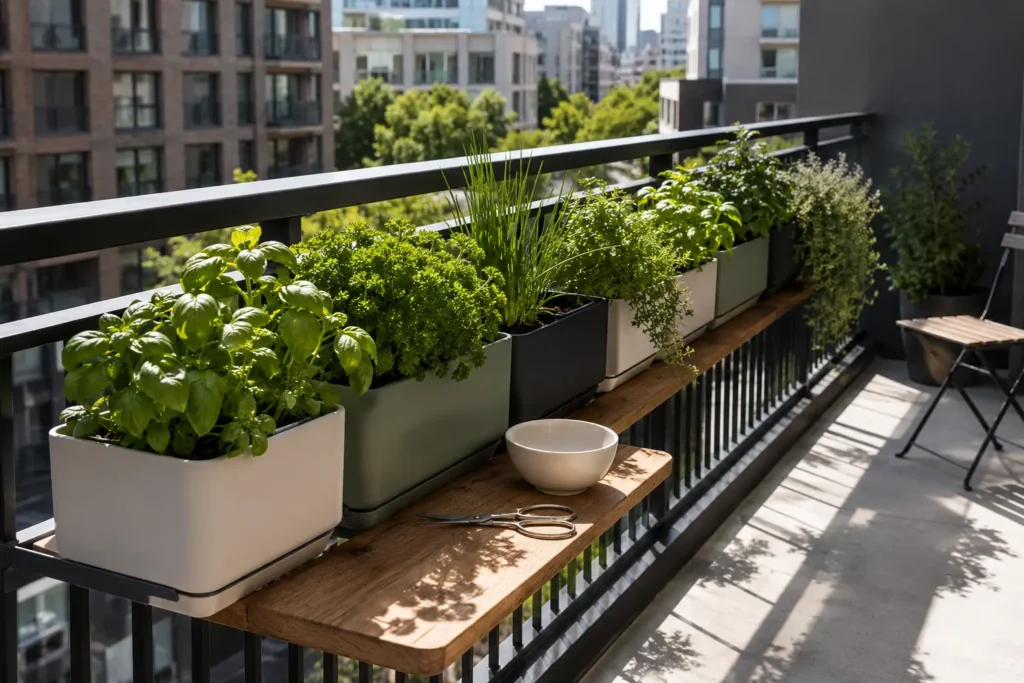
Line the interior side of the railing with slim, matching planter boxes in cream, sage green, or charcoal. Choose boxes no wider than 8–10 inches so they don’t narrow the walking path, then add a removable wood or metal ledge beneath them for herb snips and a small harvest bowl.
Plant basil and parsley in the center, with trailing thyme at each end to soften the straight line. This arrangement keeps the herbs close to the kitchen and makes the railing look like a continuous green counter. Use clip-on planters rated for outdoor use, and check your building’s railing weight limits before filling them.
Create a Mobile Sun-Chasing Herb Cart
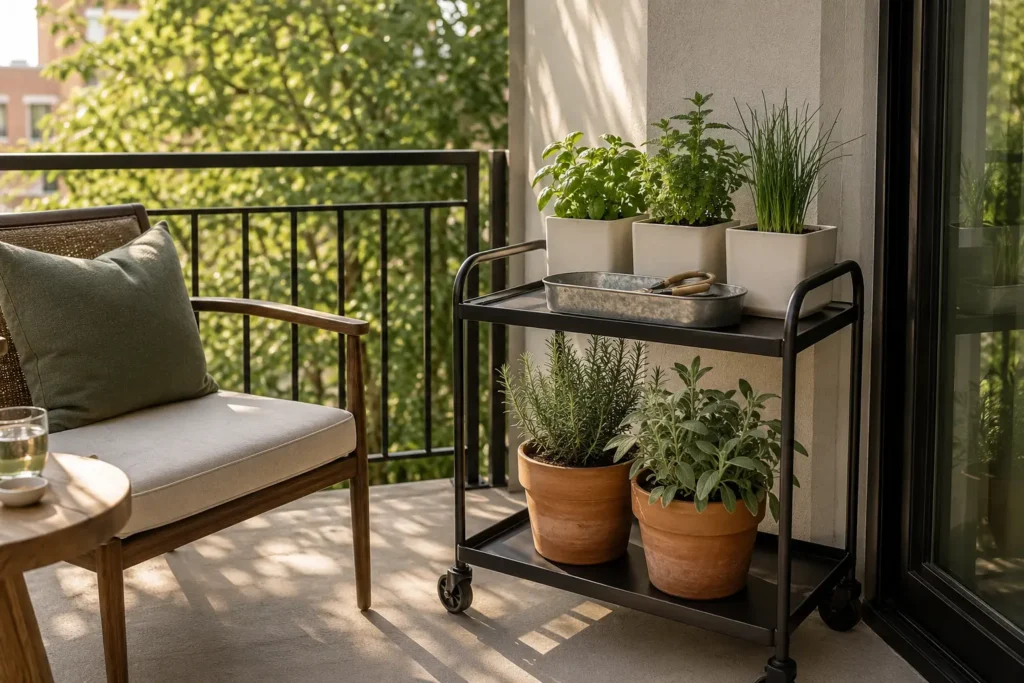
A narrow bar cart or utility trolley can become a movable herb station for balconies with uneven sunlight. Put heavier rosemary and sage on the bottom shelf, smaller pots of basil and chives above, and a shallow tray on top for scissors, plant tags, and gloves.
Locking casters let you follow the sun during the day or roll the garden against a wall before strong wind or rain. A black metal cart gives the display a clean, modern outline, while terracotta pots add color and help balance the visual weight. A thrifted cart can look convincing after a careful coat of exterior-grade satin paint.
Make a Living Green Curtain with a Freestanding Trellis
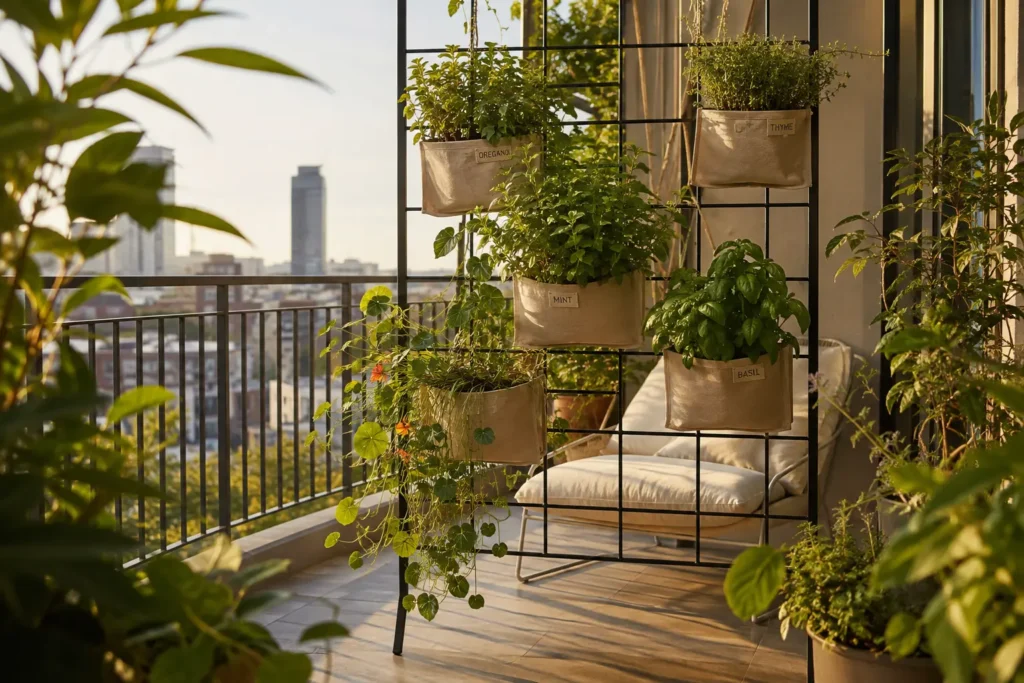
Set a slim folding trellis or ladder screen a few inches inside the railing. Attach lightweight hanging pockets at different heights for oregano, thyme, mint, and trailing nasturtium, leaving the bottom section open so the balcony still feels airy.
The result is a semi-transparent green curtain that filters harsh afternoon sun and adds privacy without blocking all the light. Keep the trellis freestanding for a rental-safe installation, and use a weighted planter or filled base to prevent tipping. Avoid placing dense foliage directly against a damp exterior wall, where airflow can be limited.
Design a Monochrome Terracotta Herb Collection
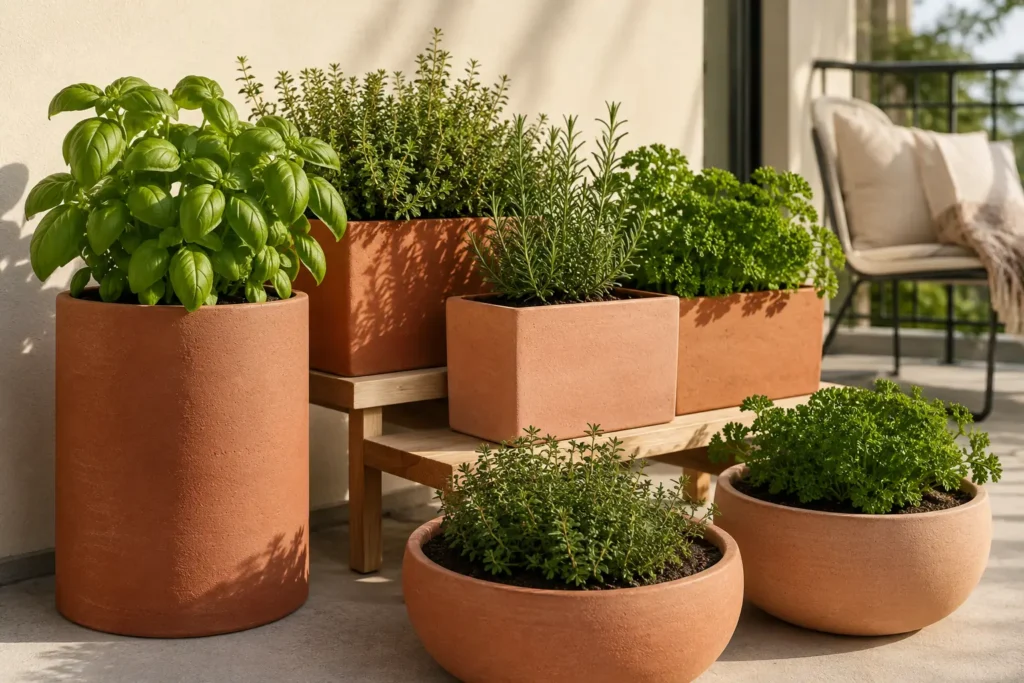
Instead of mixing many pot colors, build a tonal grouping with matte rust, dusty peach, pale clay, and muted coral containers. Vary the silhouettes—one tall cylinder, two low bowls, and a softly rounded box—then arrange them on a narrow riser along the sunniest wall.
The restrained color palette makes the collection look like a small ceramics display, while the different heights create movement. Porous terracotta dries faster than plastic, so check moisture more often during hot weather. For a lower-cost version, collect secondhand clay pots and unify them with a thin mineral paint wash.
Build a Fold-Down Outdoor Herb Harvest Counter
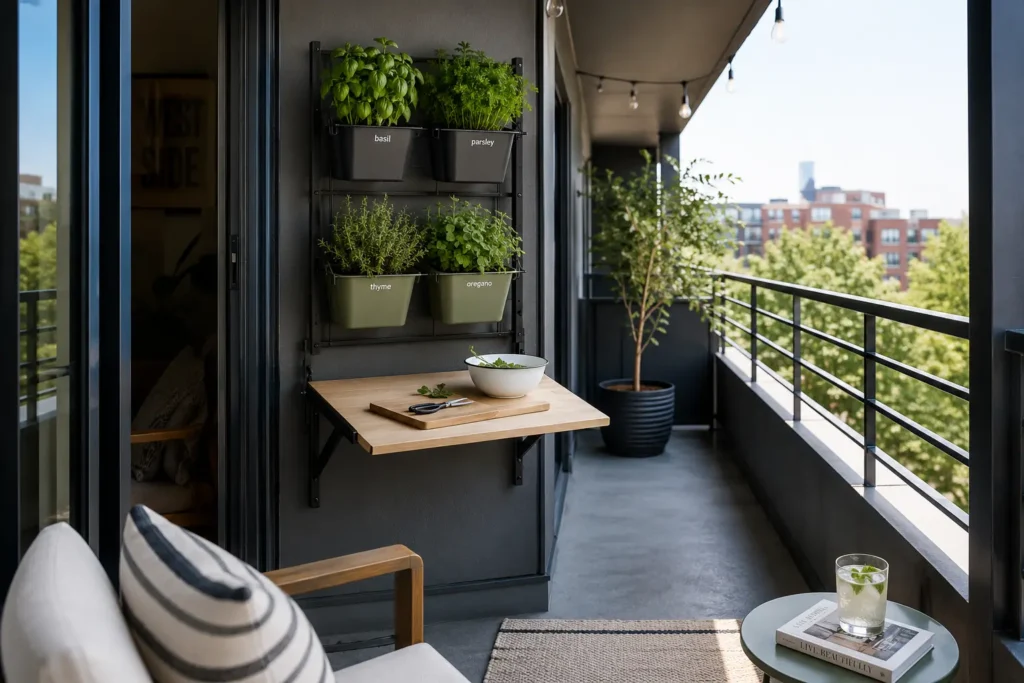
Place a removable drop-leaf table directly beside a vertical herb rack. Keep the surface simple with a small cutting board, pruning scissors, and an enamel bowl for freshly cut leaves. The herbs remain behind the counter, where they’re easy to reach without taking over the walking area.
When the table folds down, it becomes a compact prep station for outdoor meals; when folded up, the balcony regains valuable clearance. Natural wood looks appealing but needs regular sealing outdoors, so a powder-coated metal or weather-resistant composite top may be easier to maintain. Leave at least 30 inches of clear passage in front of the table.
Frame the Balcony Door with Matching Herb Columns
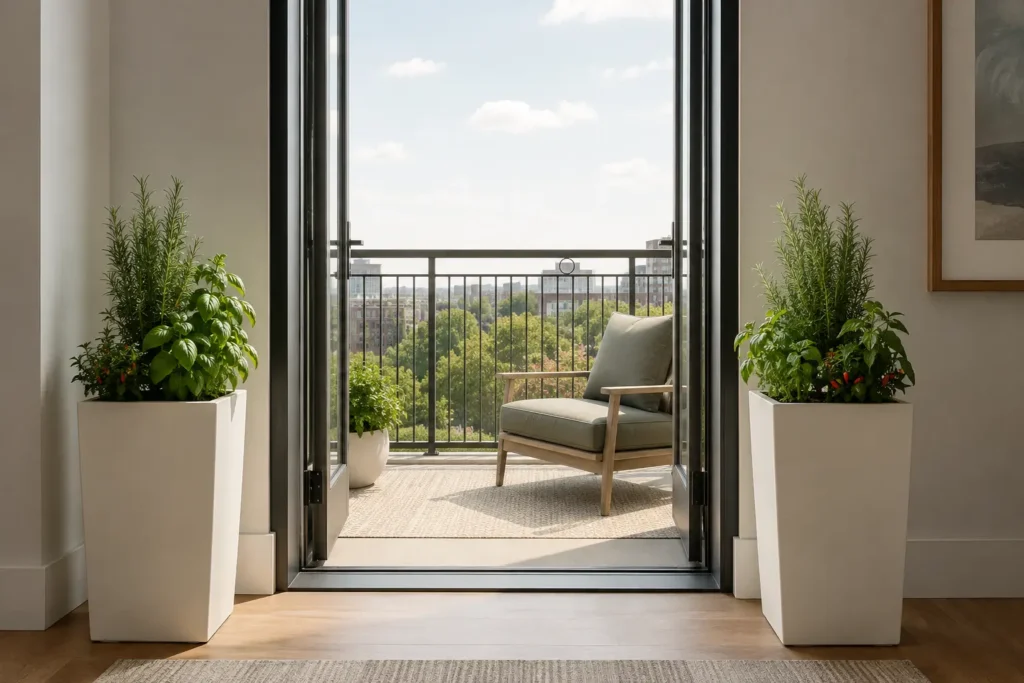
Use two tall, stable planters to frame the balcony door, placing one on each side without reducing the doorway’s usable width. Choose compact rosemary, upright basil, or dwarf peppers so the plants create height without becoming difficult to control.
This symmetrical arrangement gives the balcony a finished threshold and improves the view from the living room. Keep the planters at least 6 inches away from the door swing, and choose resin or lightweight composite containers if the balcony has strict load limits. Hidden nursery pots inside decorative shells make watering and seasonal changes easier.
Create a Mini Herb Landscape in One Deep Corner Trough
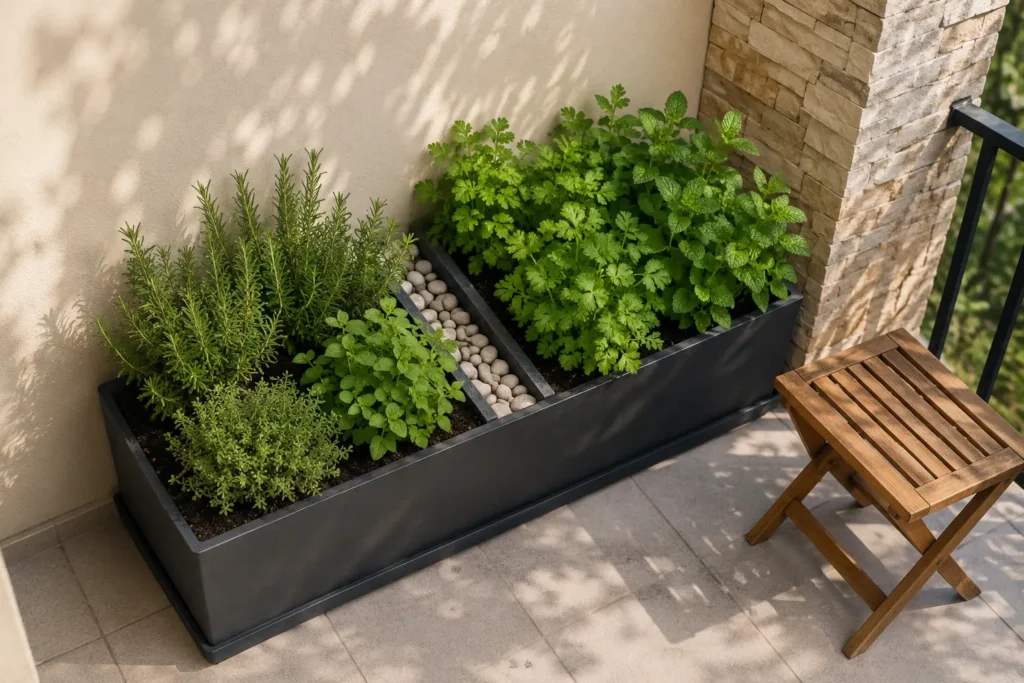
A single rectangular trough can replace a collection of small containers in a tight corner. Divide the soil with low river-stone or slate separators: place rosemary, thyme, and oregano in the drier section, then parsley and cilantro in the section that receives more frequent watering.
The planting feels like a miniature landscape rather than a row of pots. A charcoal composite trough gives the herbs a strong backdrop, while pale stone makes the planting zones easy to see. Use a drainage tray underneath and avoid placing the trough across the main door path, where it can become a daily obstacle.
Combine a Slim Bench with a Built-In Herb Planter
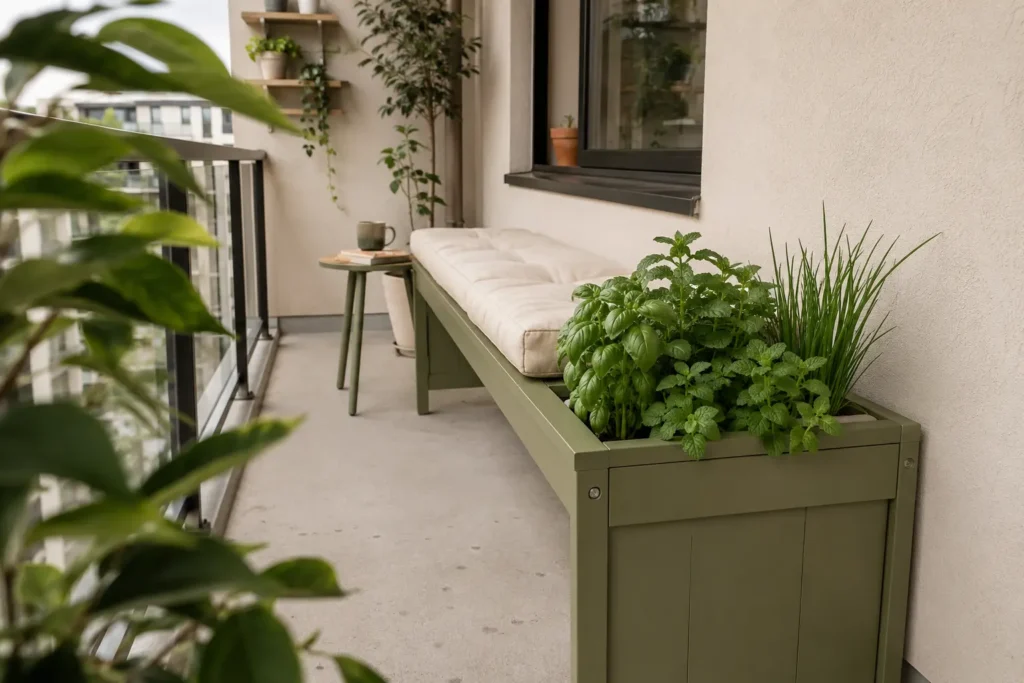
Pair a narrow outdoor bench with a planter at one end, or position a long herb box beside the bench so it functions like an armrest. Grow softer, frequently harvested herbs such as basil, mint, and lemon balm near the seat, keeping woody rosemary farther from clothing and bare legs.
The combination creates a useful place for morning coffee without requiring separate garden furniture. Choose a bench no deeper than 18–20 inches for a narrow balcony, and use a washable outdoor cushion rather than a thick fabric one that can hold moisture. A secondhand bench and a coordinated planter can create the same custom-built impression for less.
Turn a Black Grid Panel into a Botanical Herb Wall
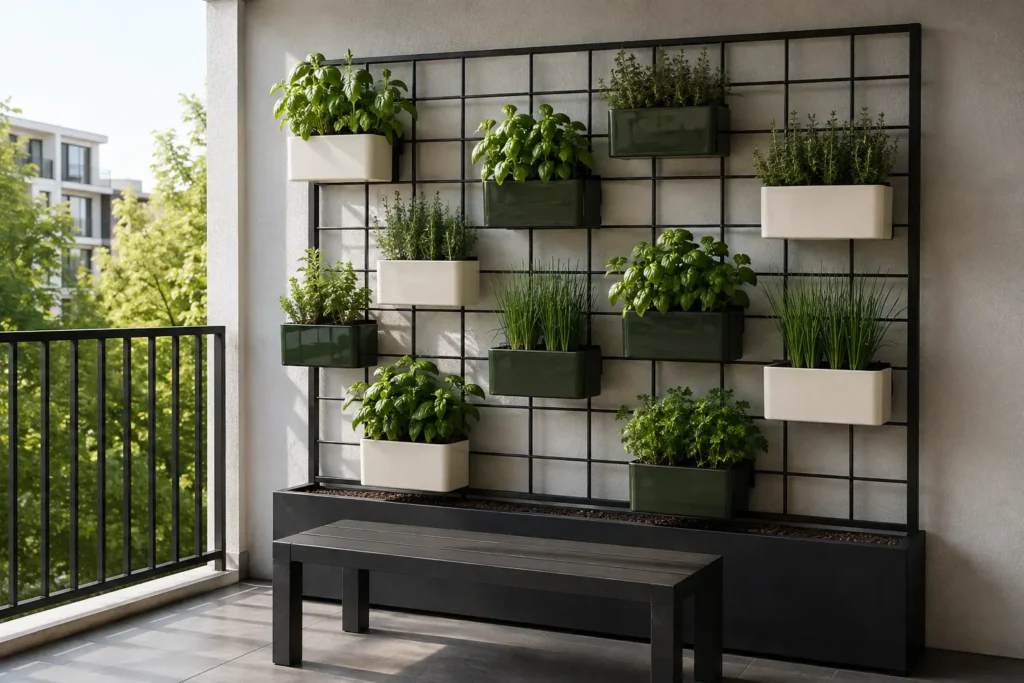
A freestanding black grid panel can hold a carefully spaced collection of removable ceramic herb boxes. Use matching rectangular boxes in cream and smoked green, arranging them in an offset pattern rather than filling every square.
The open grid keeps the wall visually light and allows air to circulate around the plants. It also creates a strong contrast between dark metal, pale containers, and bright foliage. Keep the lowest row high enough to avoid kicking or bumping—around 18 inches above the floor is practical on a compact balcony. Renters can weight the panel with a heavy planter instead of drilling it into the wall.
Add a Mini Greenhouse Herb Box for Windy Balconies
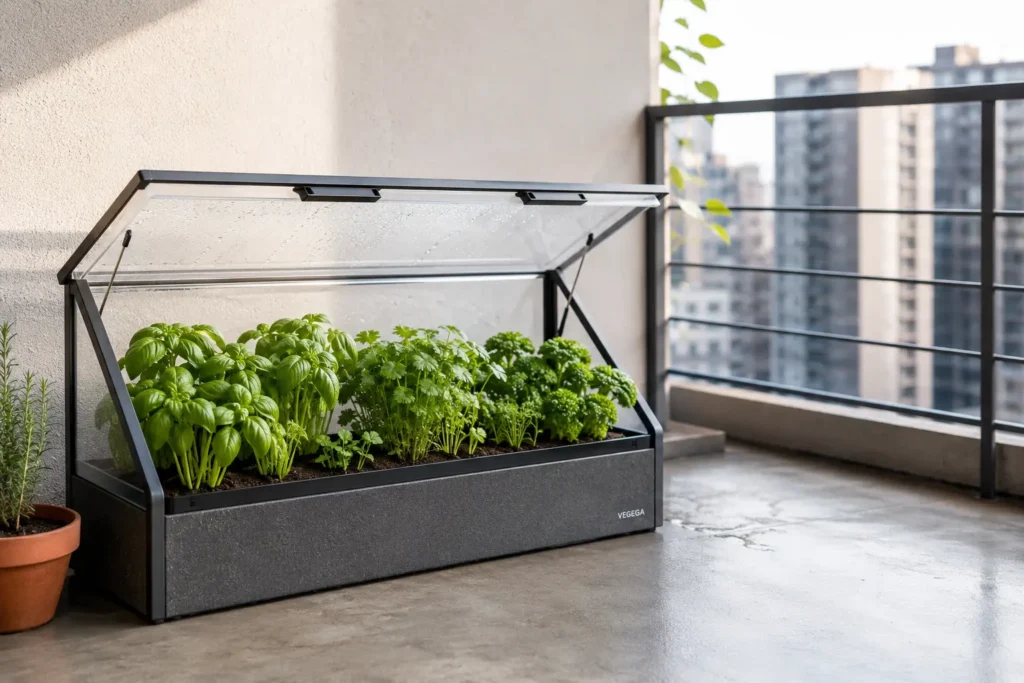
A compact greenhouse-style herb box with a clear zip cover or hinged lid protects tender basil, cilantro, and seedlings from wind, pests, and chilly nights. Place it against the most sheltered wall, opening the cover on warm afternoons so heat and humidity don’t build up excessively.
The transparent cover gives the box the look of a small urban glasshouse rather than garden equipment. Choose a model with drainage holes, a removable liner, and ventilation openings. If the balcony is very exposed, secure the box to a low, heavy base instead of relying on the cover or planter alone. A clear storage bench can serve as a lower-cost substitute when fitted with suitable trays.
Small-Space Considerations
Before buying containers, measure the balcony’s walking path, door swing, railing height, and strongest sun zone. Most culinary herbs need several hours of light, but intense reflected heat from glass or pale walls can dry small boxes quickly. Group plants with similar watering needs, and use saucers or built-in reservoirs to prevent water from staining the balcony below.
Keep heavier containers close to structural walls and avoid hanging loaded boxes on railings unless your building specifically allows them. A narrow balcony usually feels more spacious when one side carries the garden and the other side remains visually open.