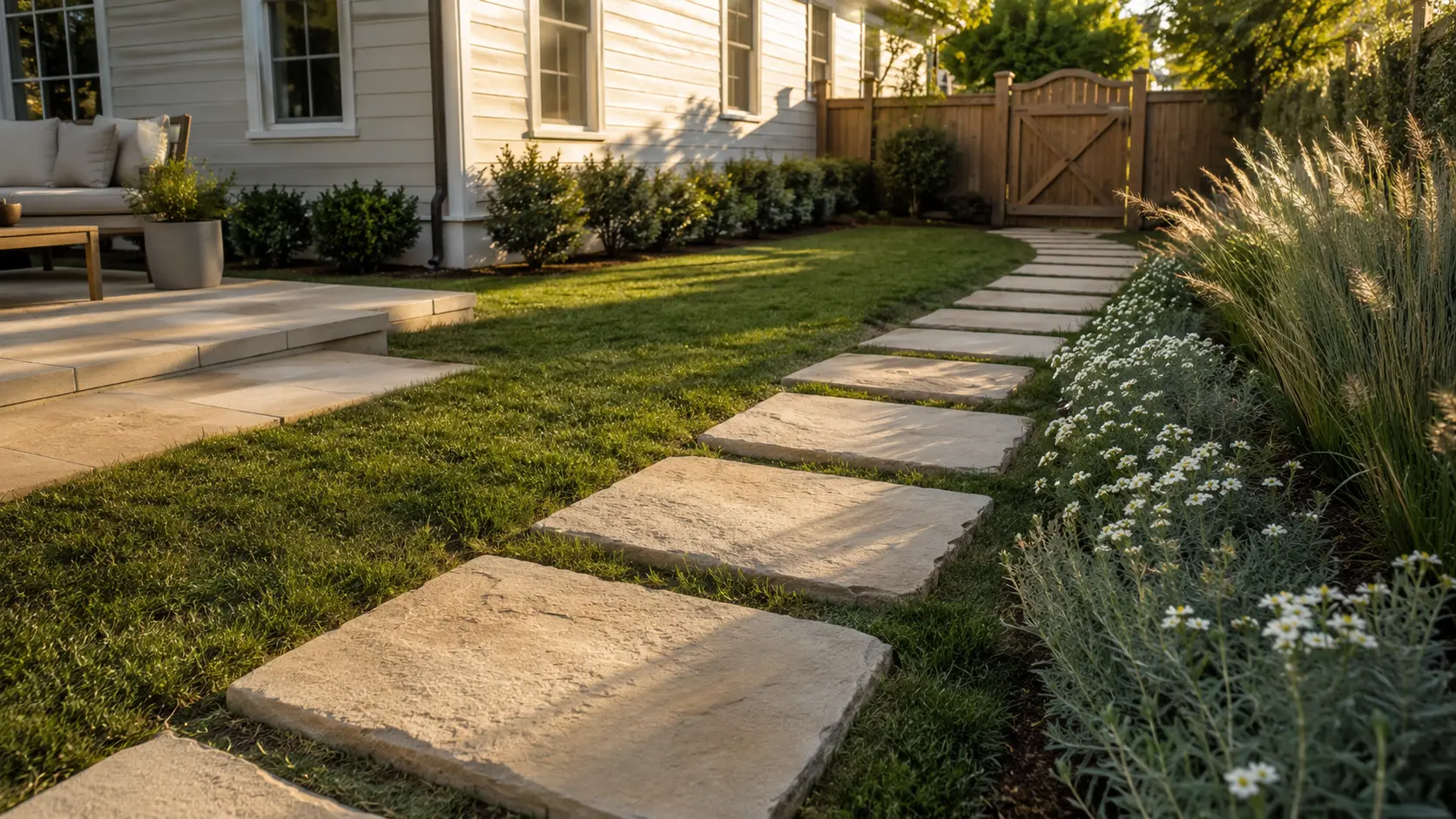
A yard can have beautiful flowers, healthy grass, and attractive furniture, yet still feel unfinished when there’s no clear route through it. The right pathway gives the landscape direction, improves everyday movement, and helps the garden look planned rather than scattered.
These garden pathway ideas are made for real US homes, including suburban backyards, narrow side yards, small courtyards, and mature front gardens. Each one combines practical materials with a memorable visual detail that feels achievable, not artificial.
1. Floating Stone Path
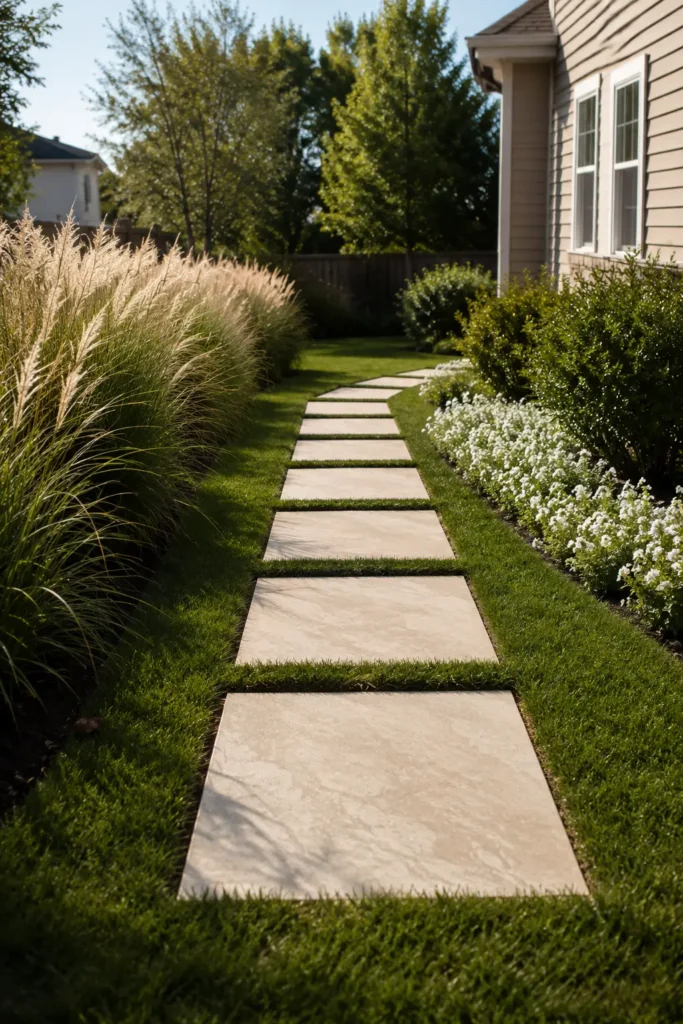
Set oversized 30–36-inch warm limestone-look pavers across the lawn in a gently offset line. Border one side with feather reed grasses and the other with low white flowers, keeping the walking route at least 36 inches wide.
The large slabs create a calm rhythm, while the planting makes the path appear to float through the yard. Textured concrete or porcelain pavers can replace natural limestone for a lower price. Avoid polished surfaces, which become slippery after rain.
2. Gravel With Brick Bands
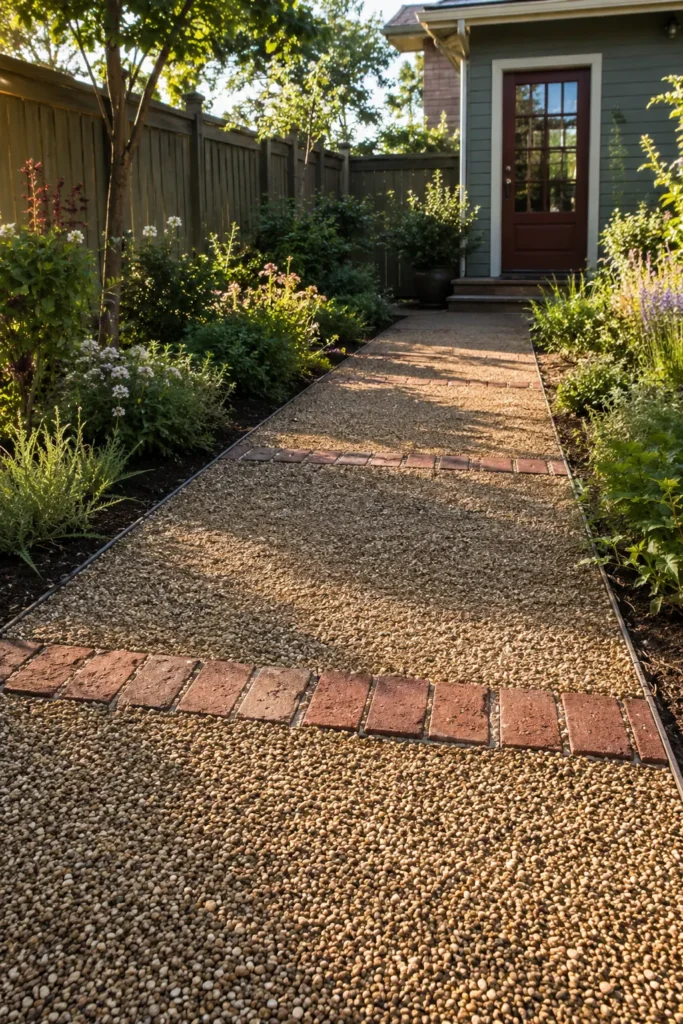
Use warm buff, tan, or cocoa stabilized gravel for a 4-foot-wide path. Add exactly three narrow reclaimed-brick bands across the route—one near the entrance, one in the middle, and one at the garden destination.
These brick stripes give a simple gravel path the pattern of an outdoor runner without making the whole walkway look traditional. Dark metal edging will keep gravel from spreading into the lawn. This combination works especially well with Craftsman, Colonial, cottage, and brick homes.
3. Curve Around a Tree
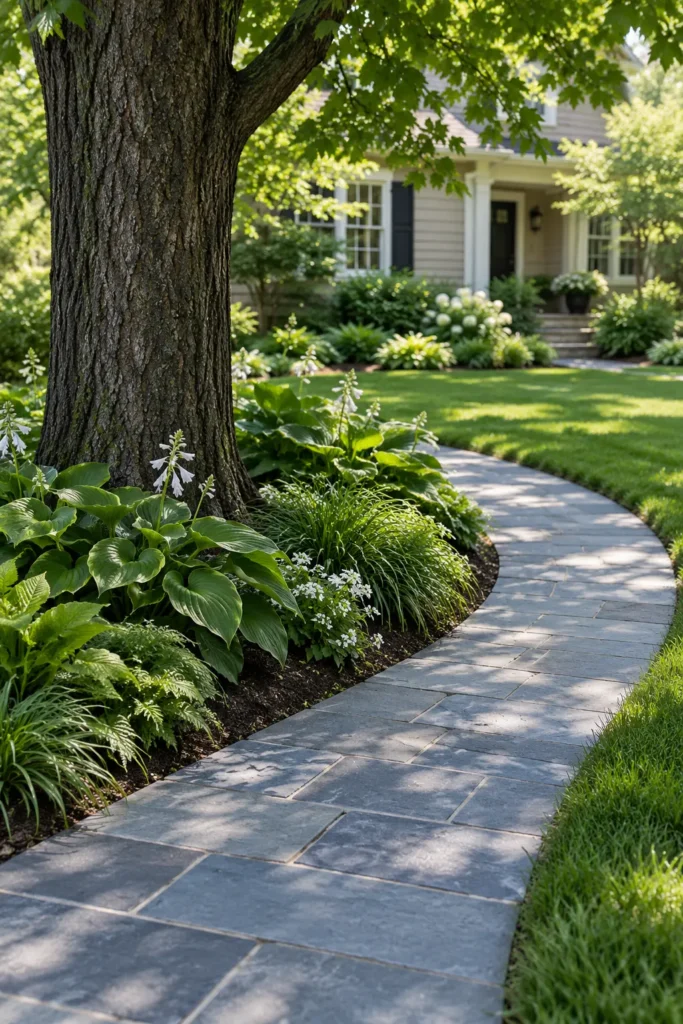
Let the path curve around an existing shade tree instead of cutting directly through its root zone. Install cool blue-gray bluestone or textured porcelain pavers in a running-bond pattern, then fill the inside curve with hostas, sedges, or white shade flowers.
The dark trunk, cool stone, and bright green planting create a strong natural contrast. Keep paving away from the trunk and avoid deep digging where large roots are visible. A gravel base with carefully set slabs is usually kinder to mature trees than heavy concrete.
4. Cross a Dry Creek
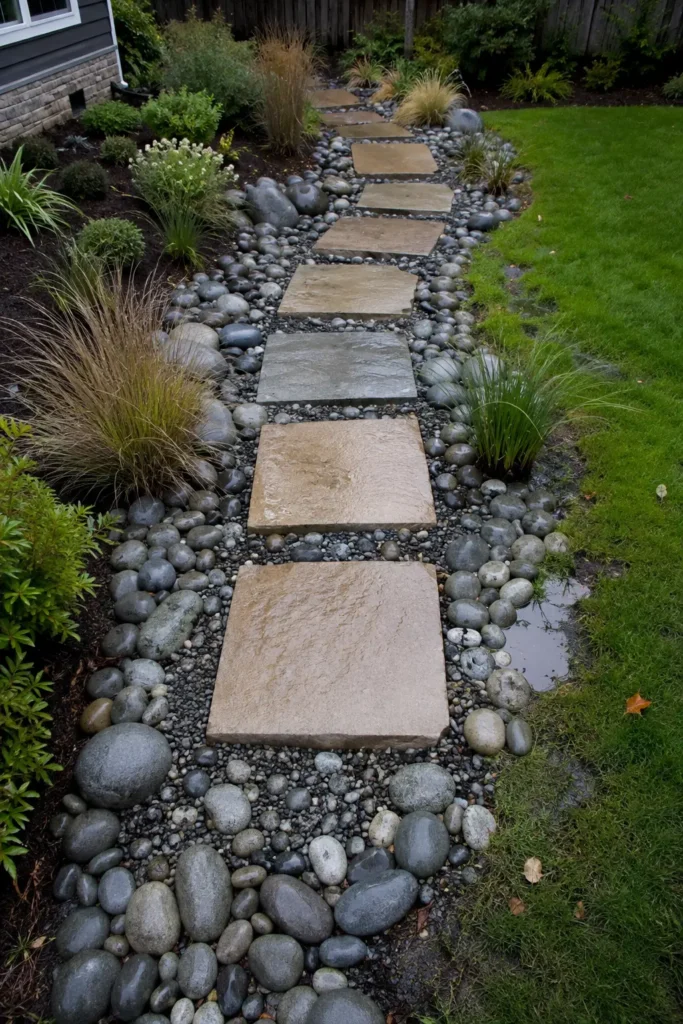
Turn a wet or sloped section of the yard into a shallow dry creek using rounded river stones and drainage rock. Cross it with five or seven broad, flat stepping slabs in sandy beige or muted gray.
After rain, the creek helps guide water away from the house. In dry weather, it becomes a sculptural feature that makes the walkway feel more interesting. Space the stones about 20–24 inches from center to center, and make sure each slab is level, stable, and slip-resistant.
5. Add a Side-Yard Boardwalk
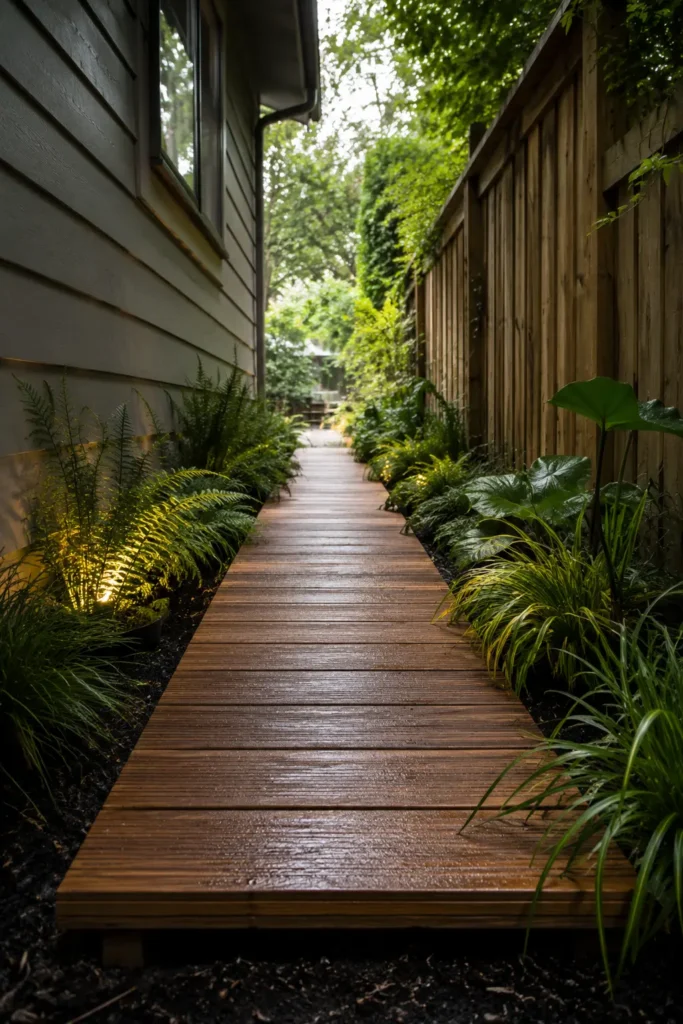
Narrow side yards often become muddy because they receive limited sunlight. A 36–42-inch-wide cedar or composite boardwalk creates a clean route while allowing water to drain below the surface.
Use grooved, slip-resistant boards and leave small drainage gaps between them. Plant ferns, sedges, and shade-loving foliage along the fence and house wall, but keep utility meters and gates accessible. Outdoor deck tiles over a leveled permeable base offer a removable version for renters.
6. Try a Green Checkerboard
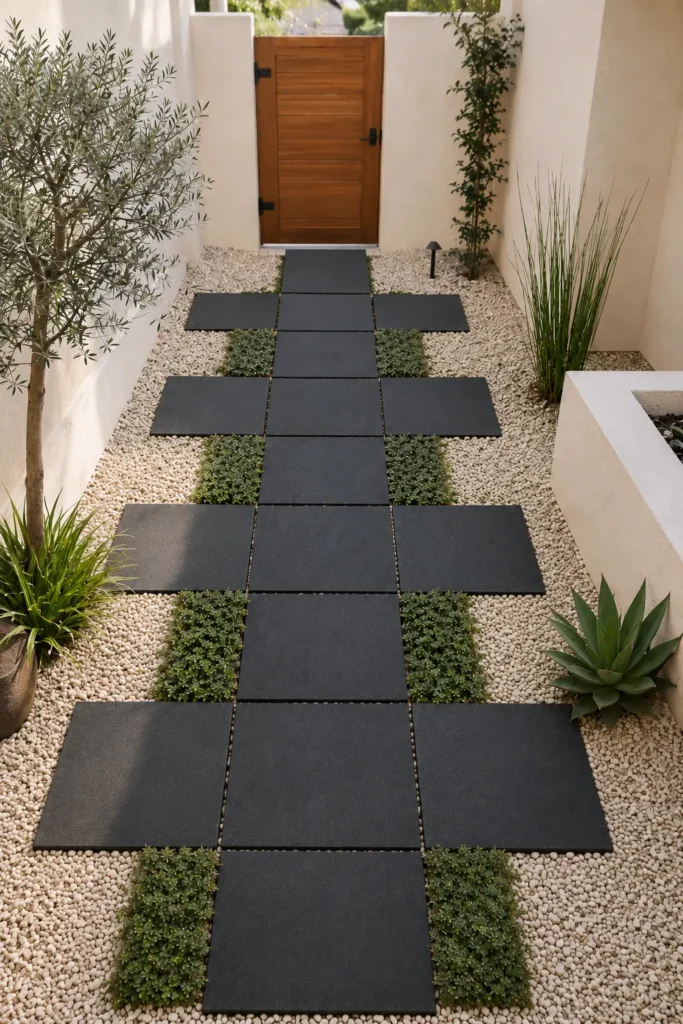
Arrange 24-inch charcoal square pavers in a short checkerboard path, filling selected gaps with walkable groundcover such as creeping thyme or blue star creeper. Use the design for a patio-to-gate connection rather than covering a large area.
The dark squares and green seams create a graphic look that photographs beautifully from above. For safer daily use, keep a solid line of pavers through the main walking zone and place planted gaps closer to the edges. This idea suits courtyards, compact lawns, and contemporary homes.
7. Make a Stone Patchwork
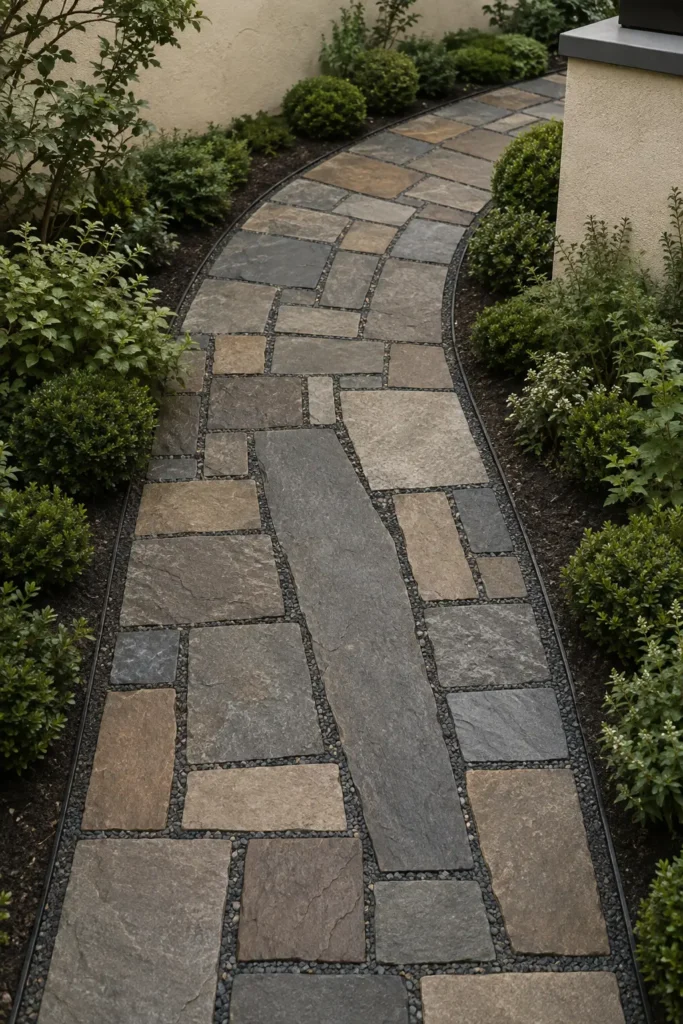
Collect stone offcuts in warm gray, taupe, muted brown, and beige. Arrange them in a balanced patchwork of rectangular and softly irregular pieces, then use charcoal gravel for every joint.
The repeated dark joint color makes salvaged materials appear custom selected. Choose pieces with similar thickness so the path stays level and comfortable. This surface looks especially natural in small courtyards, kitchen gardens, and older homes. Reclaimed concrete pieces can be stained in one mineral tone as a lower-cost substitute.
8. Open Into a Garden Circle
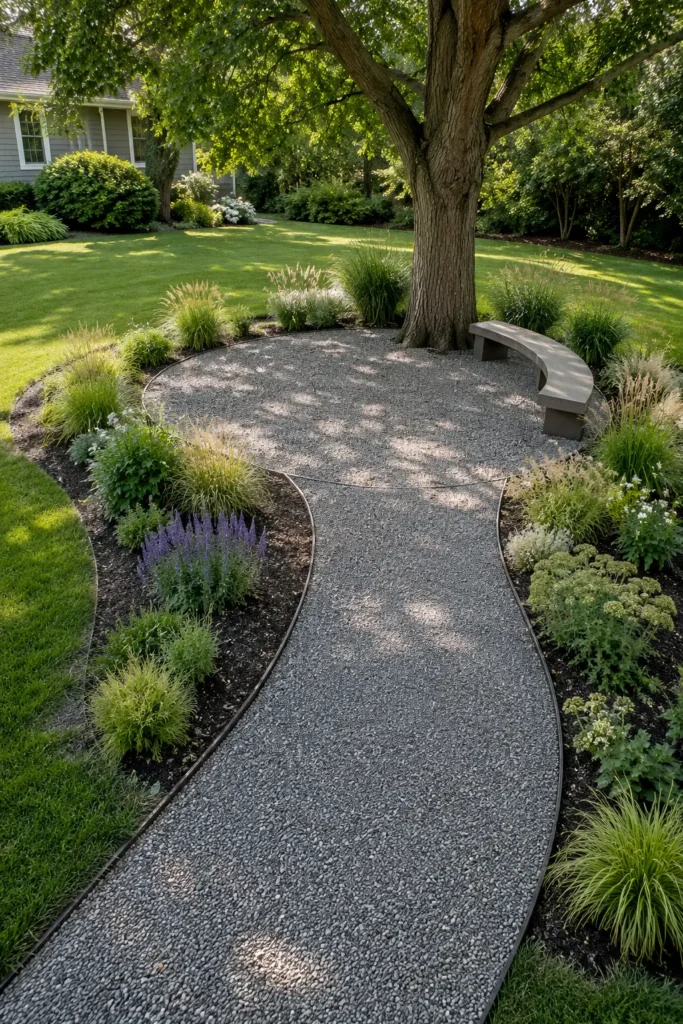
Start with a 42-inch-wide gravel path and widen it into a 7–8-foot circular landing beneath a tree or beside a planting bed. Place one curved bench or large matte planter off-center, leaving the center open.
The widened area becomes a small outdoor room for resting, turning, or tending plants without requiring a separate patio. Use warm gray or tan compacted gravel and define the circle with flexible metal edging. A movable stool and temporary gravel landing can make the arrangement suitable for rental yards.
9. Outline Dark Pavers
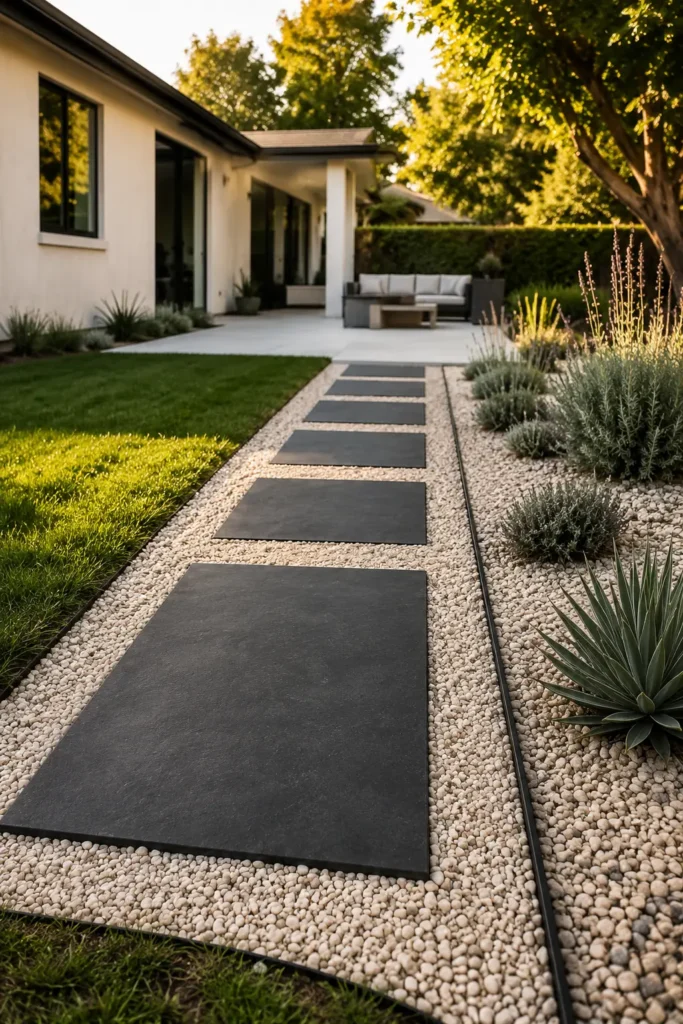
Place large charcoal pavers in a straight route and surround each one with a 6–8-inch border of pale crushed stone. Finish the outside edge with thin black steel or aluminum edging, then repeat the pale gravel in a nearby planting bed.
The light border outlines each dark slab and keeps the path visible in bright sun or low evening light. It also helps prevent muddy edges. Install the pavers flush and level rather than simply placing them on top of soil. Textured concrete-look porcelain offers a consistent, modern finish.
10. Frame the Garden View
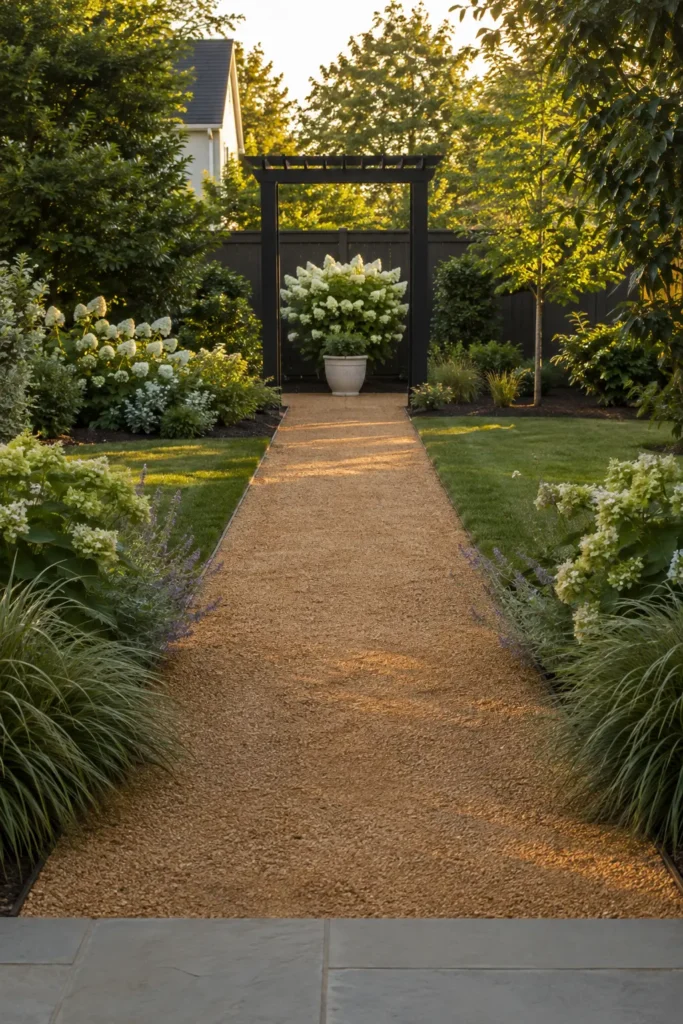
Begin with a 48-inch-wide path near the patio and gradually narrow it to about 36 inches toward the back of the yard. Finish with a slim black-stained timber arch or simple gate frame, centered on one pale hydrangea, multi-stem tree, or cream planter.
This gentle forced-perspective effect makes a small rectangular yard appear deeper. Keep the narrowing gradual so the route remains comfortable for walking and garden carts. A freestanding cedar arch with movable planters can recreate the look without permanent construction.
Before You Build
Measure the route from the door, patio, driveway, or gate to its destination before buying materials. Main paths should generally be at least 36 inches wide; routes used by two people, strollers, or wheelbarrows are more comfortable at 42–48 inches.
Also watch the yard during heavy rain. A path that looks attractive but collects standing water will become difficult to maintain. Loose gravel needs edging and a compacted base, while pavers require careful leveling. In snowy areas, avoid raised patterns that make shoveling awkward.
How to Keep the Look Cohesive
Choose one main surface and one supporting material. A gravel path can borrow the reclaimed-brick bands from Idea 2, while a paver path can repeat the pale gravel outline from Idea 9.
Use the same metal finish, stone undertone, or wood color near the planting beds and gate. One memorable detail is usually enough; too many patterns in a small yard can make the landscape feel restless.