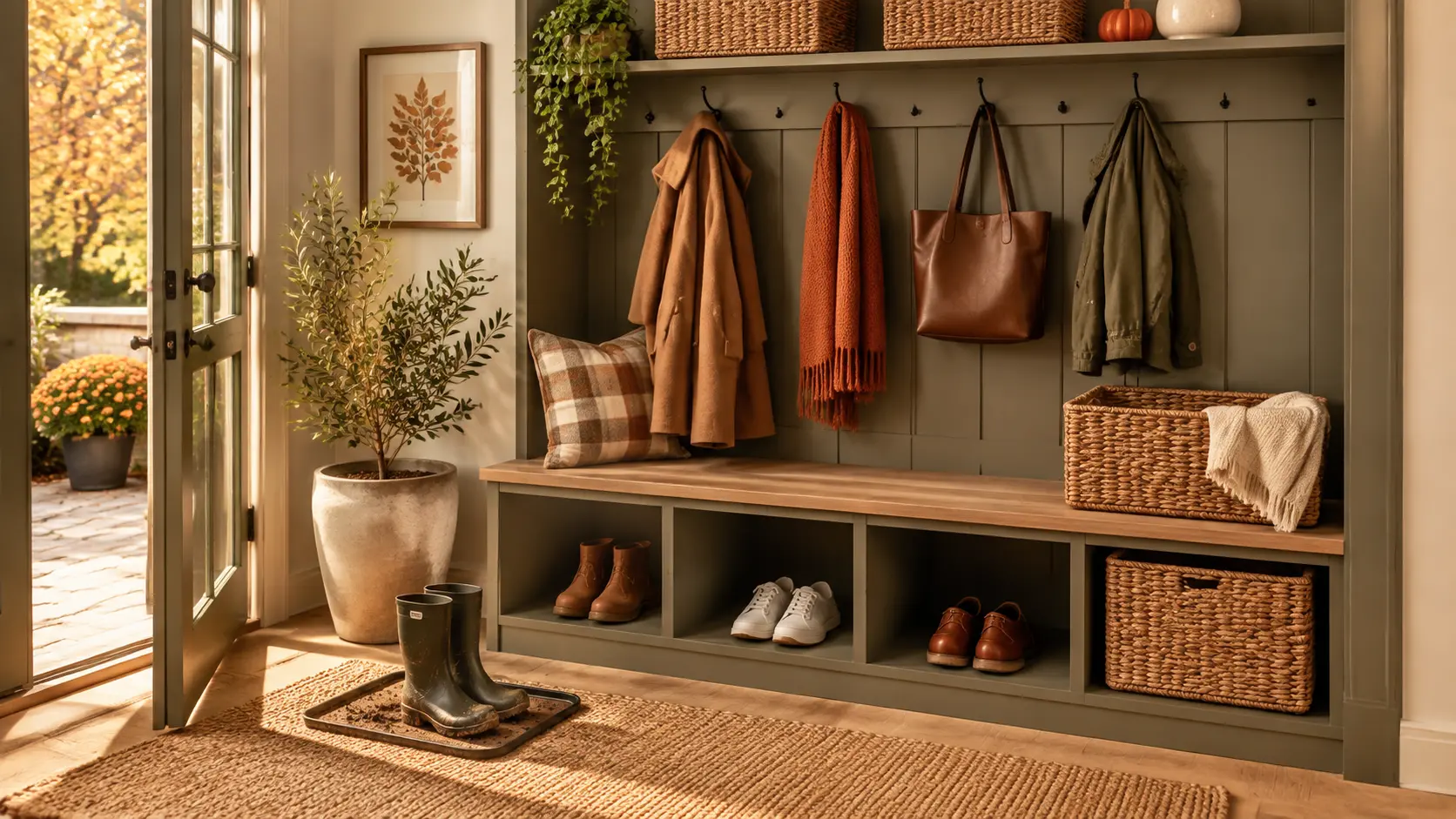
A busy entry can look charming in fall and still become a pileup of wet shoes, coats, bags, and mail by the end of the day. The best fall mudroom decor ideas solve both problems at once: they bring in seasonal color and texture while giving everyday items a sensible place to land.
These ideas work for full mudrooms, narrow hallways, apartment entrances, and small drop zones near a back door. Expect modern furniture, realistic clearances, renter-friendly options, and fall styling that feels warm without looking cluttered or overly themed.
1. Try a Fluted Storage Wall
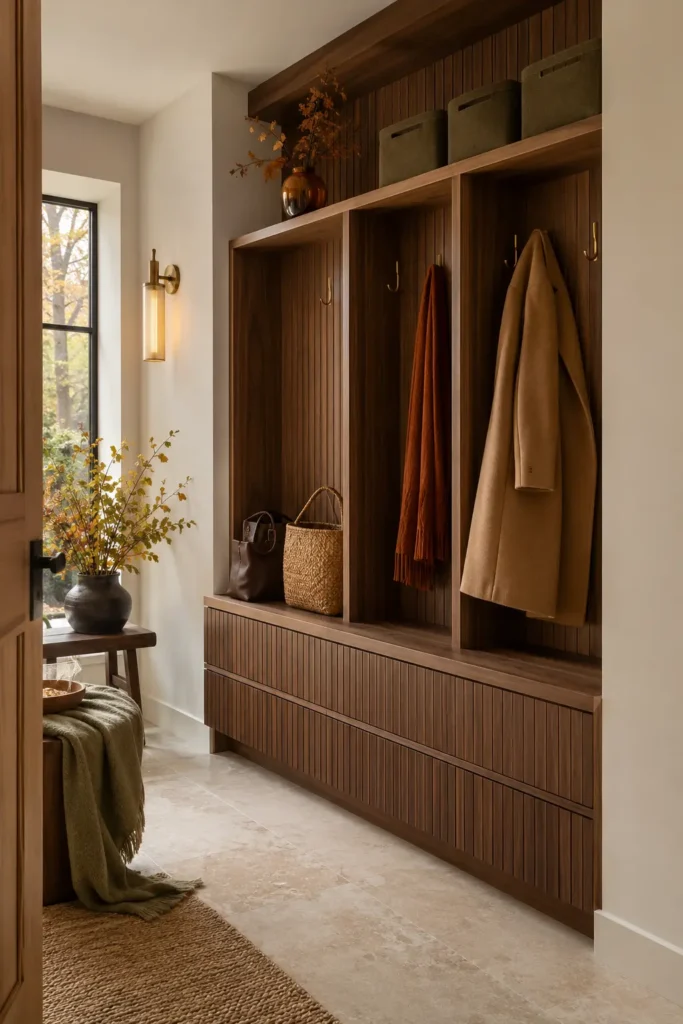
Cover one mudroom wall with a modern fluted-wood storage system in walnut or natural oak. Choose concealed shoe drawers at the bottom, vertical compartments for coats and bags, and a shallow upper shelf for a small amber vase or dried branch. Rust-colored fabric bins can soften the hard surfaces.
The vertical lines add architectural interest, while hidden fronts keep the entry calm during the busiest part of the day. If you’re working with a narrow room, keep the unit around 12–16 inches deep and preserve a clear walking route of at least 36 inches.
2. Add a Floating Boot Console
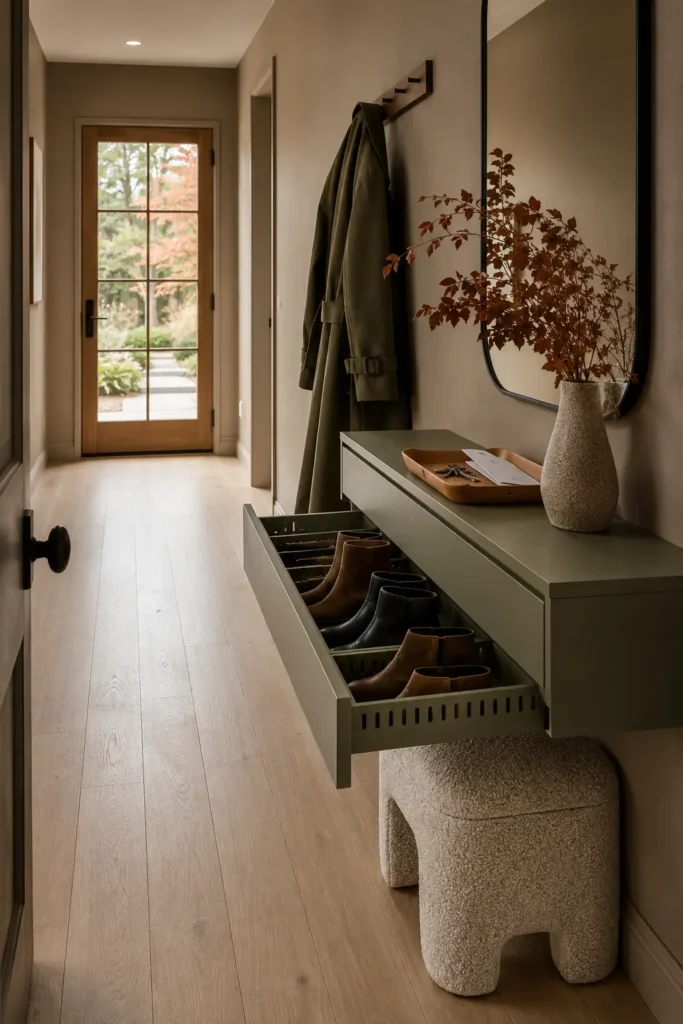
A floating console in soft taupe, muted olive, or warm white can provide storage without making the floor feel crowded. Look for a 10–12-inch-deep design with a ventilated pull-out drawer for boots, a slim surface for keys and mail, and enough clearance underneath for a small leather or boucle stool.
The raised design makes sweeping and mopping easier, which matters in a mudroom. Pair the console with a caramel tray and one olive coat rather than covering the top with seasonal objects.
3. Use the Space Under the Stairs
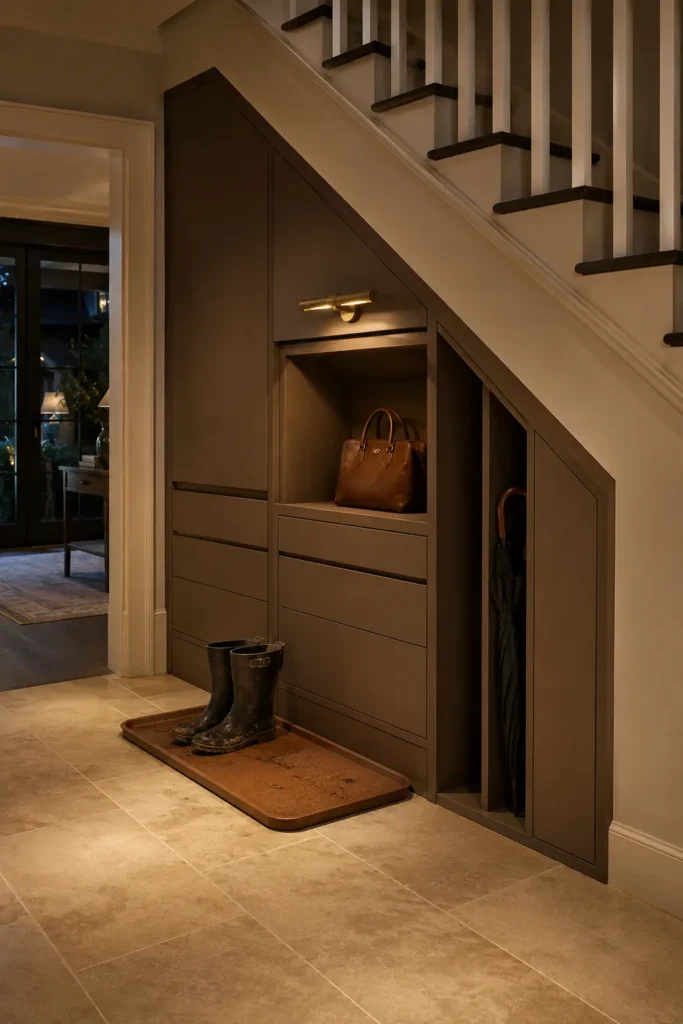
Turn an under-stair void into a flush storage zone with handleless drawers, a tall umbrella slot, and one open niche for a handbag or backpack. Deep brown, mushroom, or olive laminate gives the cabinetry a rich autumn look without competing with the architecture.
Keep the drawer fronts aligned with the wall so nothing projects into the passage. A small brass picture light can highlight the angled ceiling, while a clay-colored washable mat catches water near the door.
4. Choose a Cane-Front Cabinet
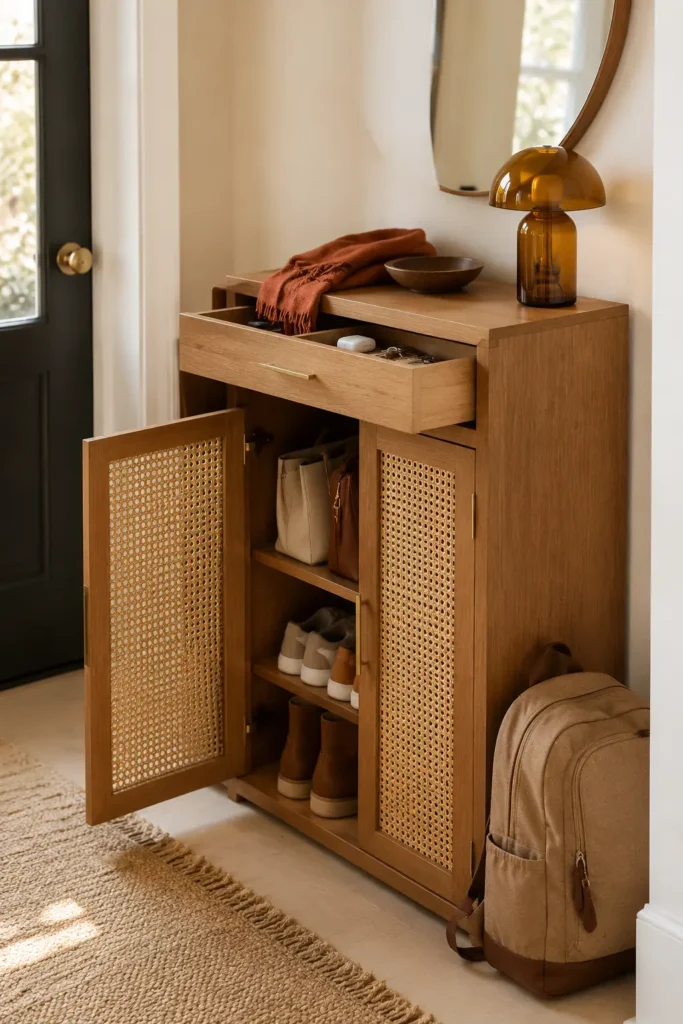
A slim cane-front cabinet in caramel oak or black-stained wood is a stylish alternative to a bulky hall tree. Use the top drawer for keys and chargers, the upper shelves for lunch bags and totes, and the lower compartment for shoes. Add a low amber lamp or ceramic bowl, leaving enough surface space for daily use.
Cane introduces fall texture while hiding the visual disorder of family belongings. Secure a tall cabinet to the wall, especially if children use the space.
5. Stack Removable Storage Cubes
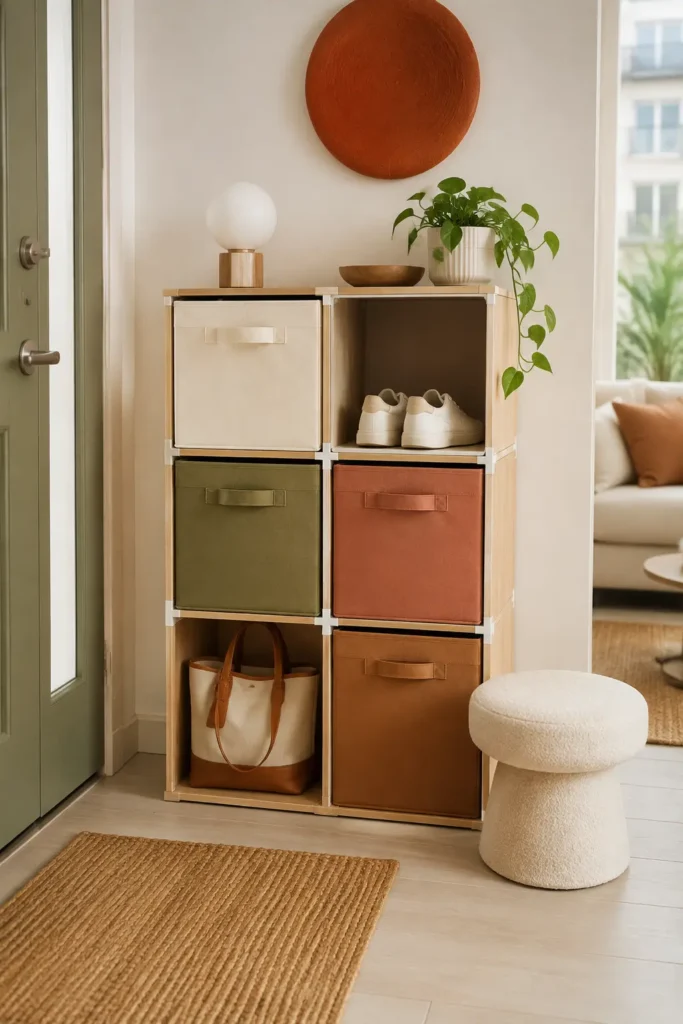
For a rental-friendly setup, stack lightweight modular cubes in a two-by-three arrangement. Use cream, clay, olive, and cinnamon fabric bins for hats, gloves, bags, and seasonal accessories, while leaving one or two cubes open for shoes.
Removable anti-tip hardware helps keep the unit safe without a permanent renovation. Peel-and-stick wood-look trim around the edges can make inexpensive cubes appear more integrated, but avoid blocking vents or the door swing.
6. Add a Boot-Drying Cabinet
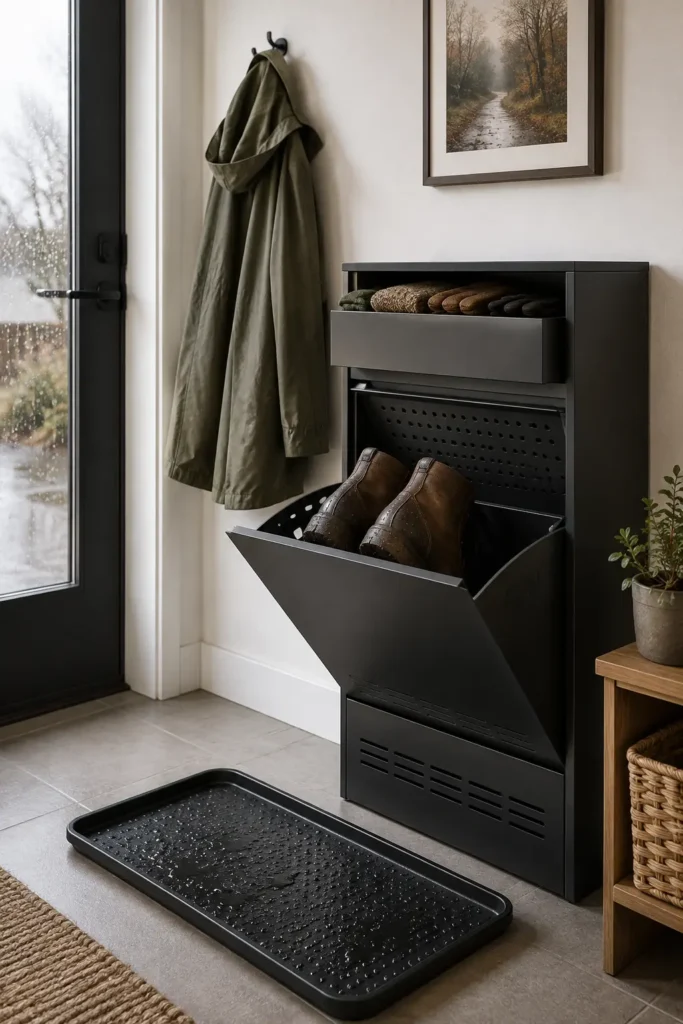
A slim flip-top cabinet with ventilation can keep wet boots contained near the exterior door. Choose charcoal, sage, or warm white, with a lower compartment for footwear and an upper drawer for gloves, socks, and shoe-care supplies. Place it on a rubber-backed mat with a raised edge.
This arrangement prevents damp boots from sitting in the open and gives rainy-day gear a clear destination. Look for removable or wipeable inserts; moisture and grit quickly expose cheap laminate and unfinished particleboard.
7. Create a Pet-Walk Station
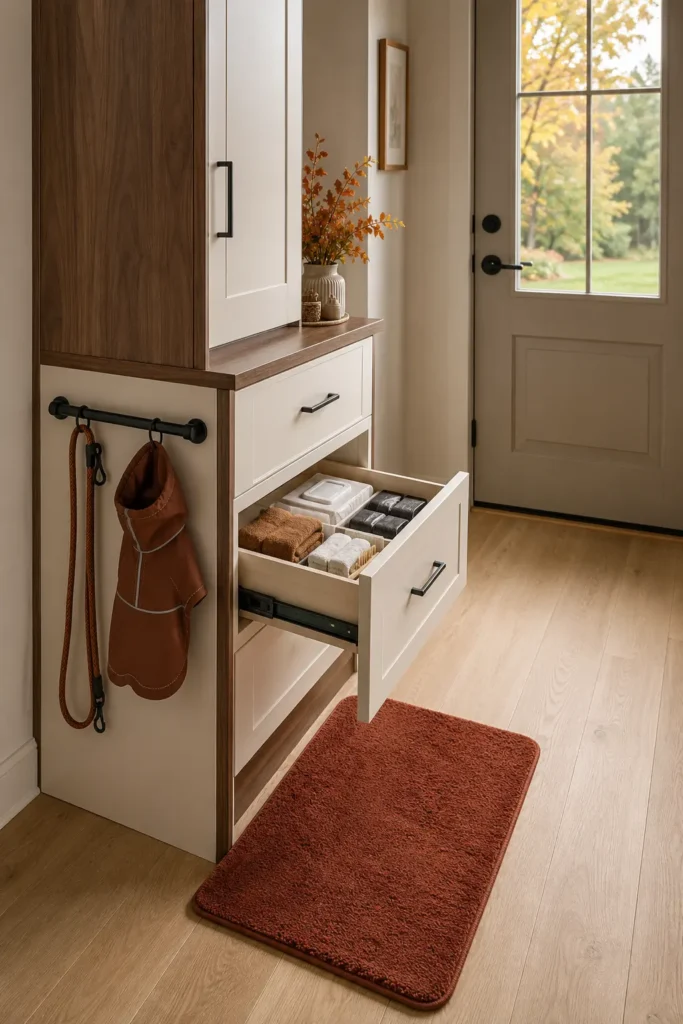
A narrow utility cabinet can become a dedicated pet-walk station. Fit the drawer with washable towels, paw wipes, waste bags, and a small brush, then mount a short side rail for leashes. A rust-colored mat below the cabinet adds fall color and gives muddy paws a defined landing area.
Warm-white cabinetry with walnut trim looks more like modern furniture than pet equipment. Keep the drawer shallow enough that it doesn’t interfere with nearby doors, and choose a washable towel fabric that dries quickly.
8. Install a Sliding-Door Wardrobe
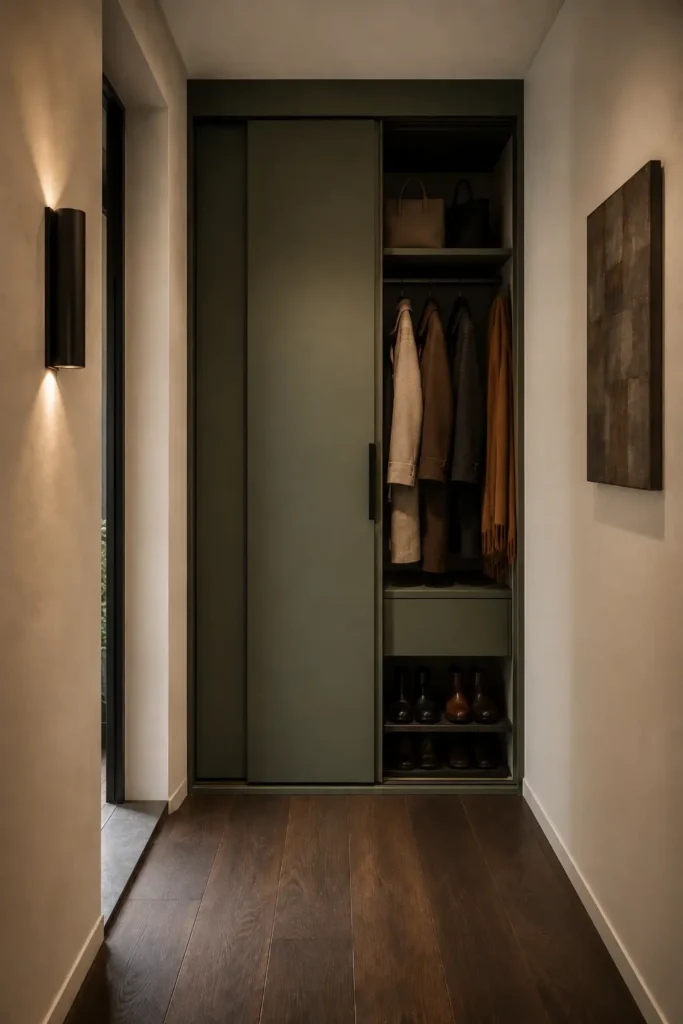
Replace a bulky hall tree with a narrow sliding-door wardrobe in tobacco brown, deep olive, or cream. Store long coats and totes behind the upper doors, reserve a small interior drawer for sunglasses and keys, and use the lower ventilated shelf for shoes.
Sliding panels are valuable in tight entries because they don’t swing into the walkway. A wardrobe around 18–22 inches deep can still hold several coats while presenting a clean, continuous color block.
9. Hide Storage Behind a Mirror
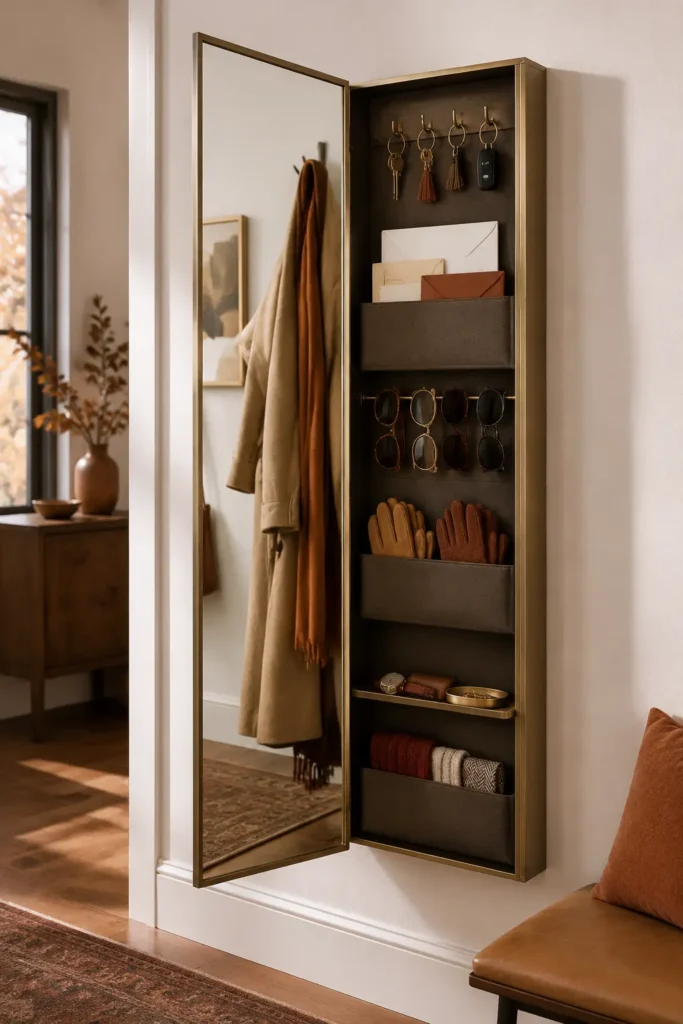
A full-height mirror cabinet combines a daily reflection spot with concealed storage. Behind the mirrored door, add small sections for mail, keys, sunglasses, gloves, and transit cards. Choose a thin black frame or brushed-brass edge and install it where it reflects light rather than a messy storage area.
This is especially useful in an apartment entry with limited wall space. Keep heavier items in lower compartments, and use slim adhesive organizers inside so the door remains easy to open.
10. Use a Folding Wall Seat
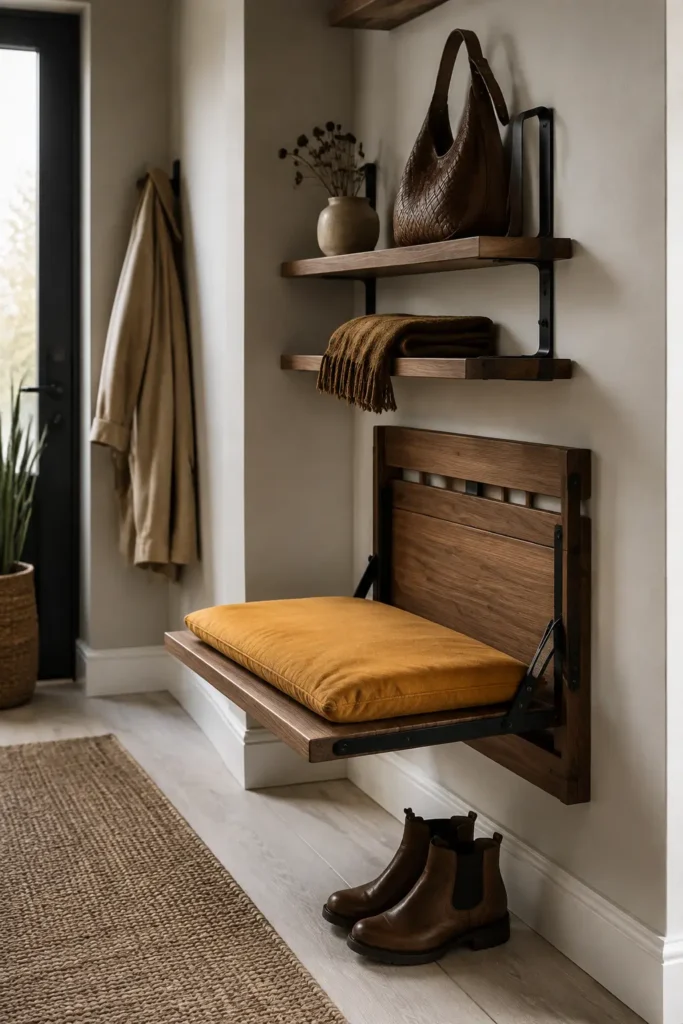
Mount a folding wall seat in walnut or matte black beneath two shallow shelves. Add a washable ochre cushion that folds flat when the seat is stored. The shelves can hold a handbag, a pair of everyday shoes, or a folded scarf without taking over the floor.
This gives you a comfortable place to change boots when needed, then restores the walking path afterward. Mount the seat securely into studs or use the manufacturer’s recommended anchors; decorative brackets alone may not support repeated daily use.
11. Hang a Scarf Ladder
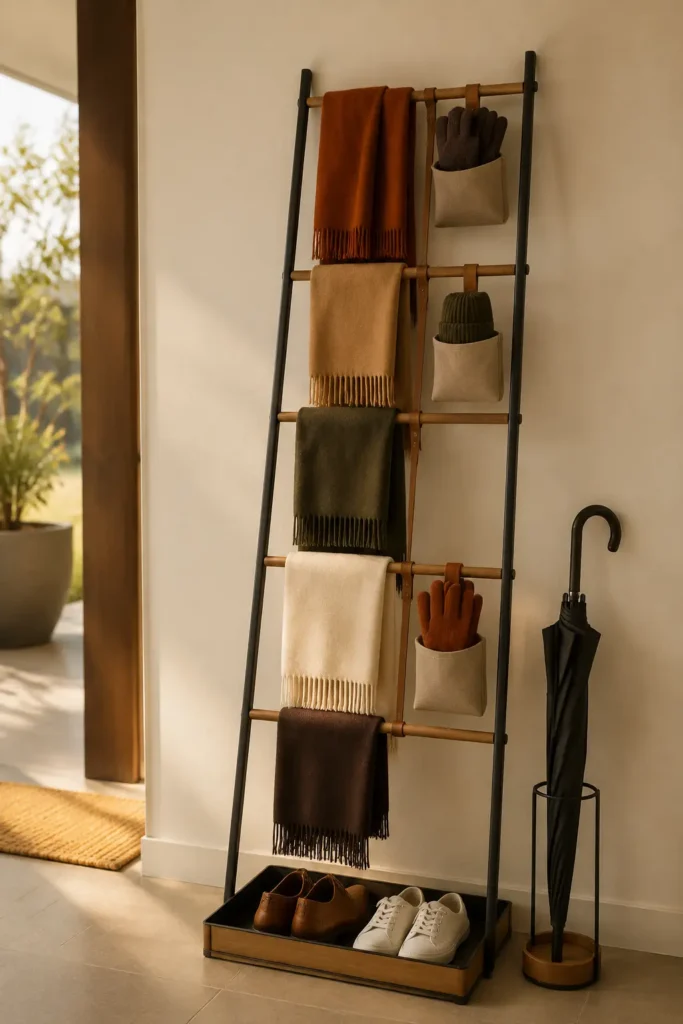
A slim leaning ladder in black metal and oak can organize scarves, hats, gloves, and reusable shopping bags vertically. Use leather loops or removable fabric pouches to keep accessories from sliding onto the floor. Position the ladder outside the door swing and anchor it if children or pets could pull on it.
Arrange pieces in rust, camel, olive, cream, and deep brown for a controlled fall palette. Unlike a crowded coat rack, the ladder has a light silhouette and makes soft accessories part of the composition.
12. Create a Cleaning Drawer
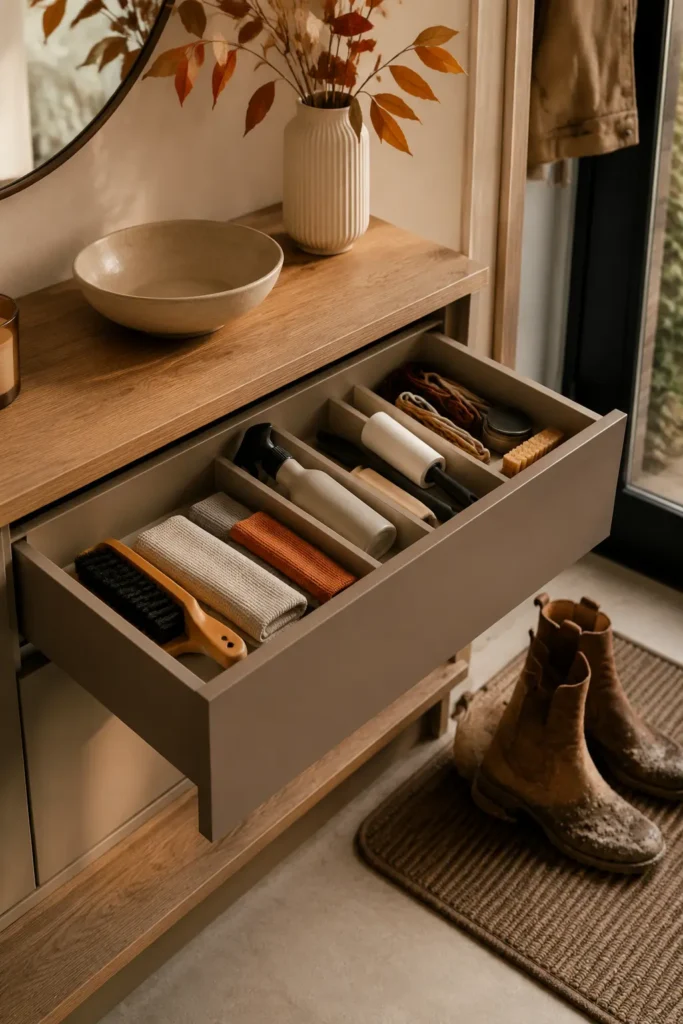
If your entry already has a console or counter, convert the lowest section into a shallow wet-weather cleaning drawer. Add divided compartments for a boot brush, microfiber cloths, stain remover, lint roller, spare laces, and small packets of cleaning wipes.
A removable metal or plastic insert makes the drawer easier to clean after muddy days. Keep the counter above it mostly clear, using only a cream ceramic bowl or narrow vase of dried leaves to signal the season without sacrificing function.
13. Roll In a Fall Reset Bar
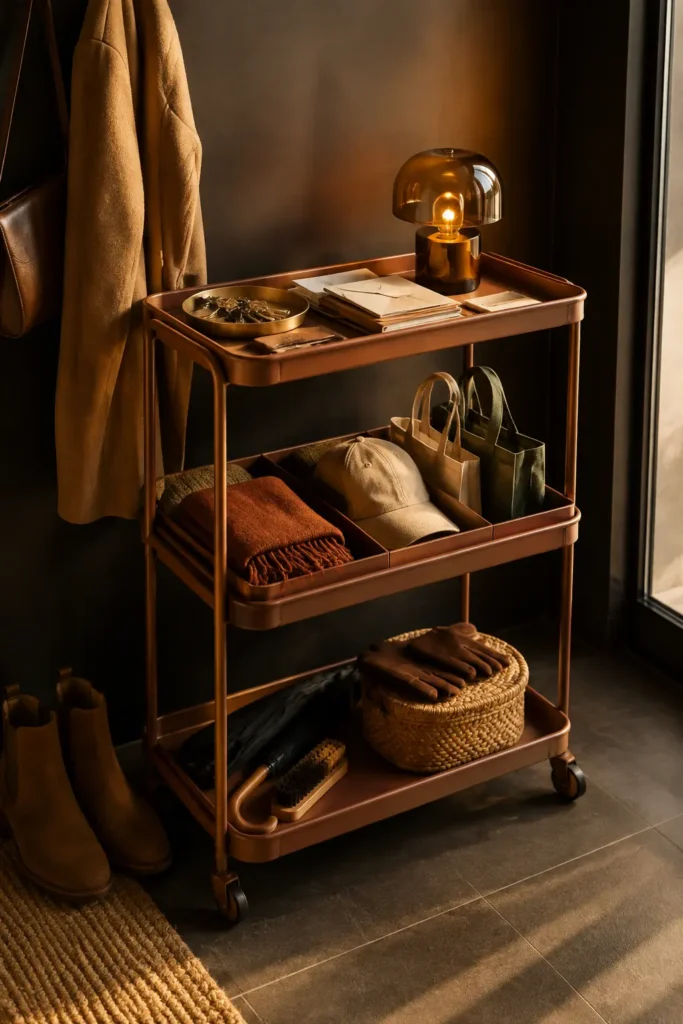
For the most flexible option, use a sleek three-tier rolling bar cart in cinnamon, matte black, or muted olive. Place keys, mail, and an amber lamp on top; scarves, hats, and reusable bags in divided middle trays; and umbrellas, shoe-care tools, or a lidded glove basket on the bottom.
The cart can move against the wall during cleaning or entertaining, making it useful in apartments and multipurpose entries. Choose locking casters and keep the total width narrow enough to leave a clear path around it.
Small-Space Details That Matter
Measure the door swing before buying furniture, and avoid placing deep cabinets where coats or handles need to open fully. In most narrow entries, furniture between 10 and 18 inches deep offers useful storage without making the room feel pinched.
Choose washable runners, removable drawer liners, and wipeable finishes wherever wet shoes and pets are involved. Warm whites look softer under warm evening bulbs, while dark olive and brown need adequate lighting to avoid appearing flat. Natural cane and wood add texture, but they should be balanced with smooth surfaces so the room still feels edited.