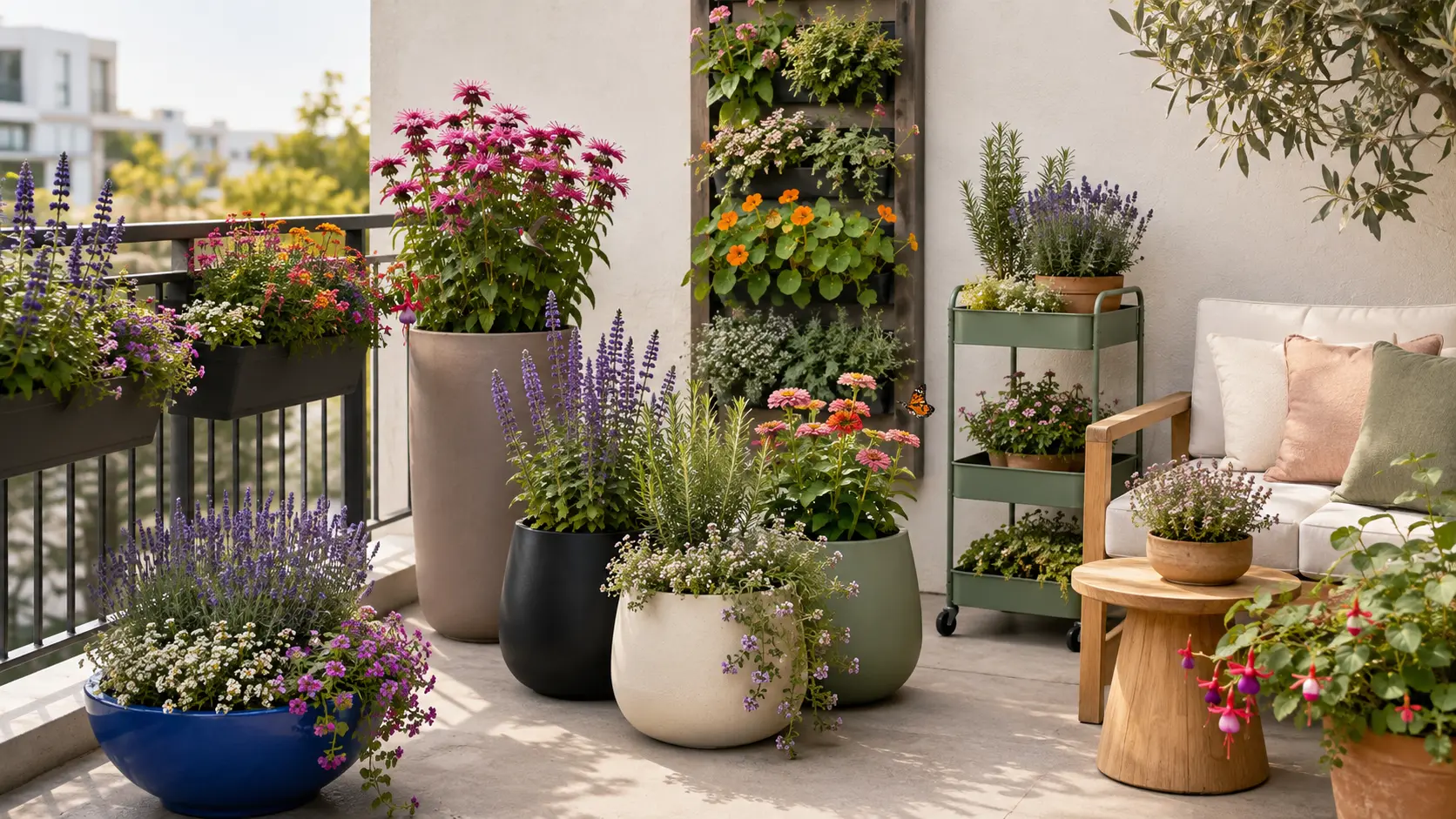
A small balcony or patio can still become a lively pollinator stop without looking like a crowded backyard flower bed. The best pollinator container garden ideas combine strong plant choices with modern containers, clear spacing, and a layout that works with real sunlight, wind, watering, and daily use.
These 18 ideas are designed for US homeowners and renters who want a stylish outdoor space that attracts bees, butterflies, hummingbirds, and other beneficial insects. Adjust plant selections for your USDA hardiness zone, sunlight level, local climate, and regional native-plant recommendations.
1. Sculptural Three-Pot Pollinator Corner
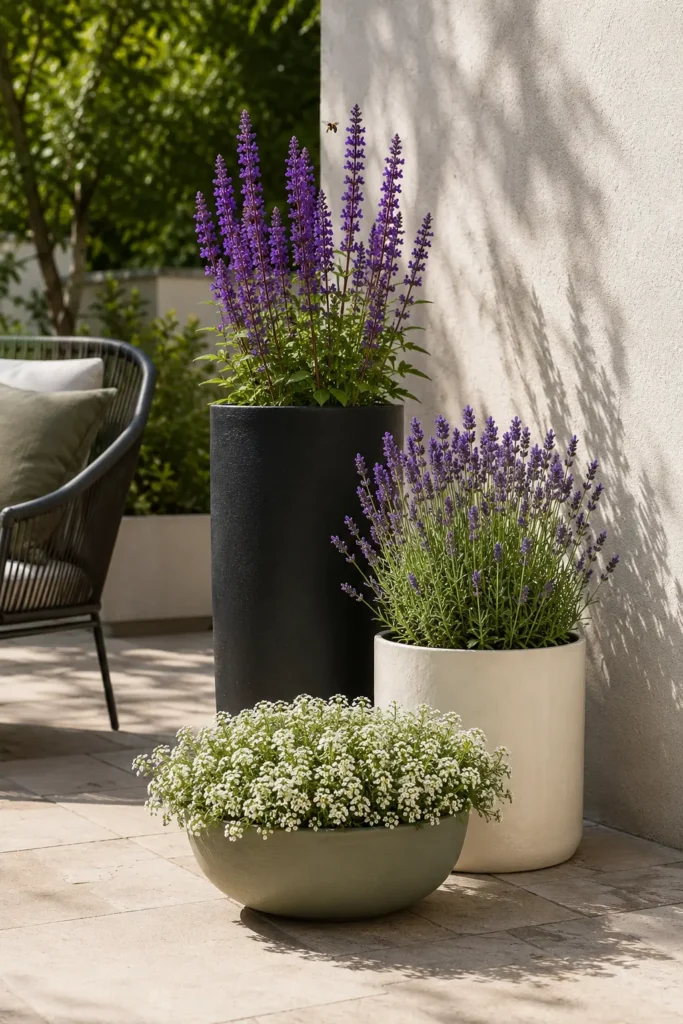
Create a designer-style focal point with three pots of different heights: a tall matte-black tapered planter, a cream ceramic cylinder, and a low sage-green bowl. Plant salvia in the tallest pot, lavender in the middle container, and white alyssum in the bowl so the flowers form a layered arrangement.
Place the group in a sunny patio corner or beside a balcony privacy screen, leaving at least 24 inches of walking clearance. The dark, cream, and sage palette looks contemporary, while the varied heights help the display feel abundant without using many containers. Use lightweight resin or fiber-cement-look pots on balconies, and add saucers to protect the surface.
2. Color-Blocked Hummingbird Railing Garden
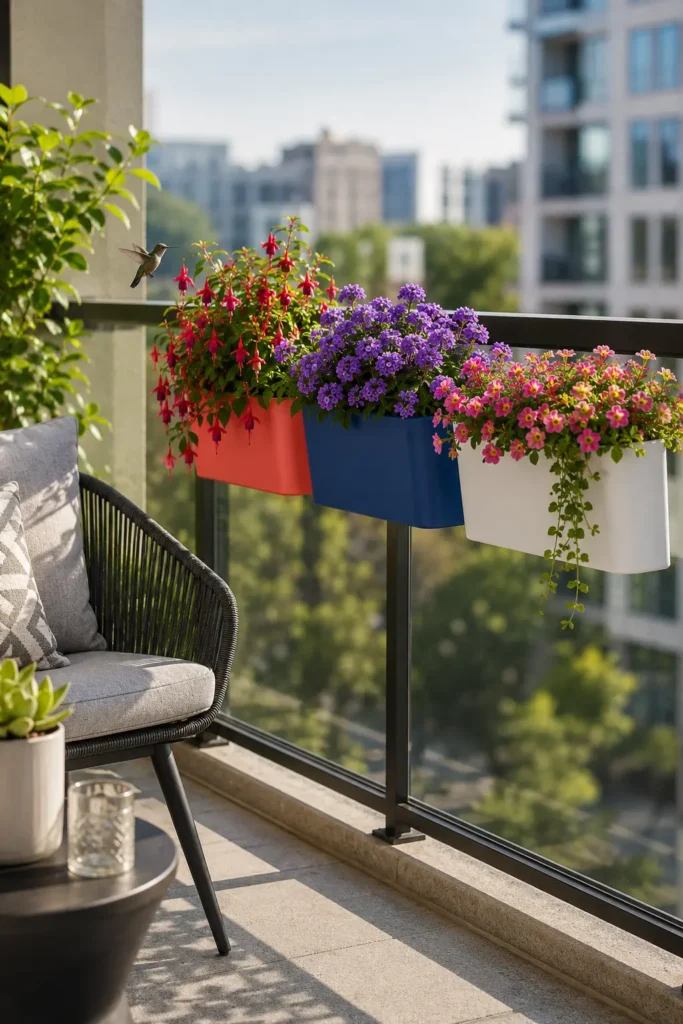
Turn the inside of a balcony railing into a bright hummingbird garden with three slim removable railing boxes. Choose coral, cobalt blue, and warm white boxes, then fill them with red fuchsia, purple verbena, and trailing calibrachoa.
Keep the boxes secured on the interior side of the railing rather than projecting outward. The strong color blocks create a graphic Pinterest image, and the narrow profile leaves the balcony floor open for seating. Fuchsia’s tubular flowers are especially appealing to hummingbirds, while verbena and calibrachoa provide additional nectar for bees and butterflies.
3. Mediterranean Blue-and-Terracotta Herb Display
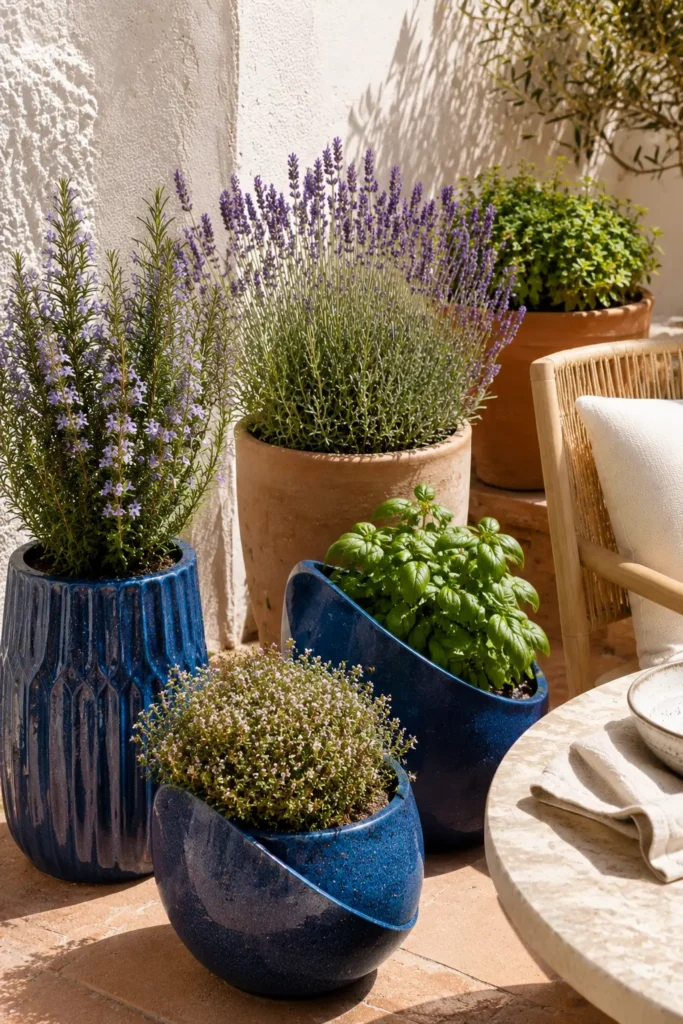
Pair blue ceramic pots with modern terracotta containers in different sizes. Grow flowering rosemary, thyme, basil, and lavender, arranging the taller rosemary at the back and the lower herbs toward the front.
Place the collection near a sunny patio dining area so the herbs are easy to harvest. Blue and terracotta create a warm Mediterranean contrast without looking overly rustic. Let basil and thyme flower when possible because their small blooms can attract bees. Use pots with drainage holes and avoid placing them where water will stain a light balcony surface.
4. Vertical Living Privacy Wall
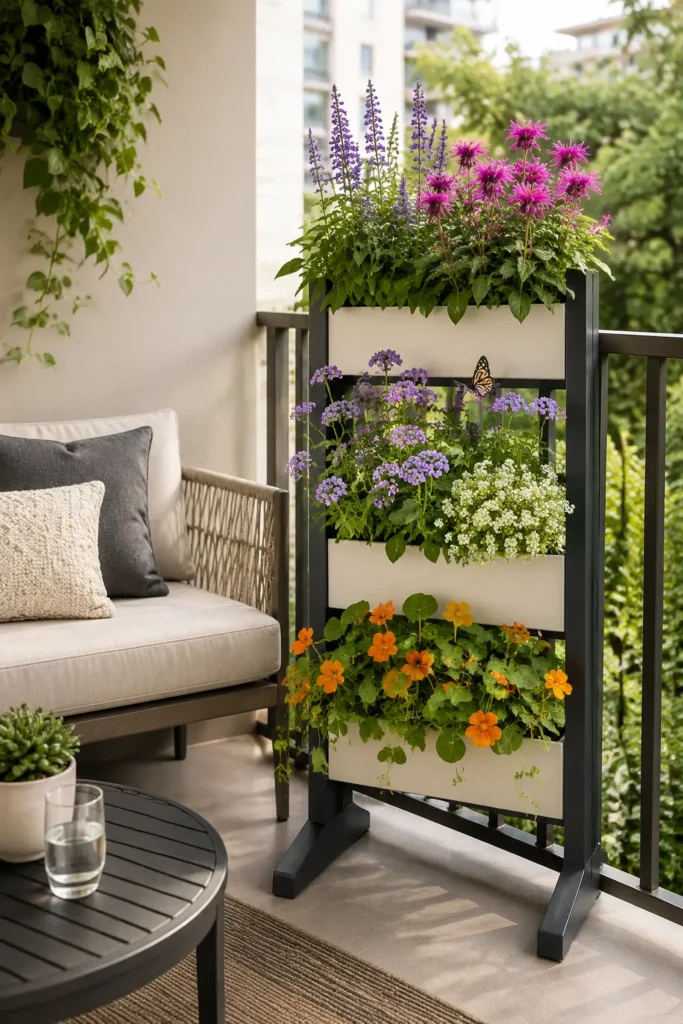
Use a freestanding, narrow vertical planter in charcoal, white, or soft gray to create a living screen beside a balcony sofa or patio chair. Plant bee balm and salvia in the upper sections, purple verbena and alyssum in the middle, and trailing nasturtium near the bottom.
This arrangement adds privacy without drilling into a rental wall or spreading containers across the floor. Choose a self-watering modular system if you often miss watering days, but check that the filled unit remains within the balcony’s safe weight limit. Keep it several inches away from doors and use a stabilizing base in windy locations.
5. Rolling Pollinator Garden Cart
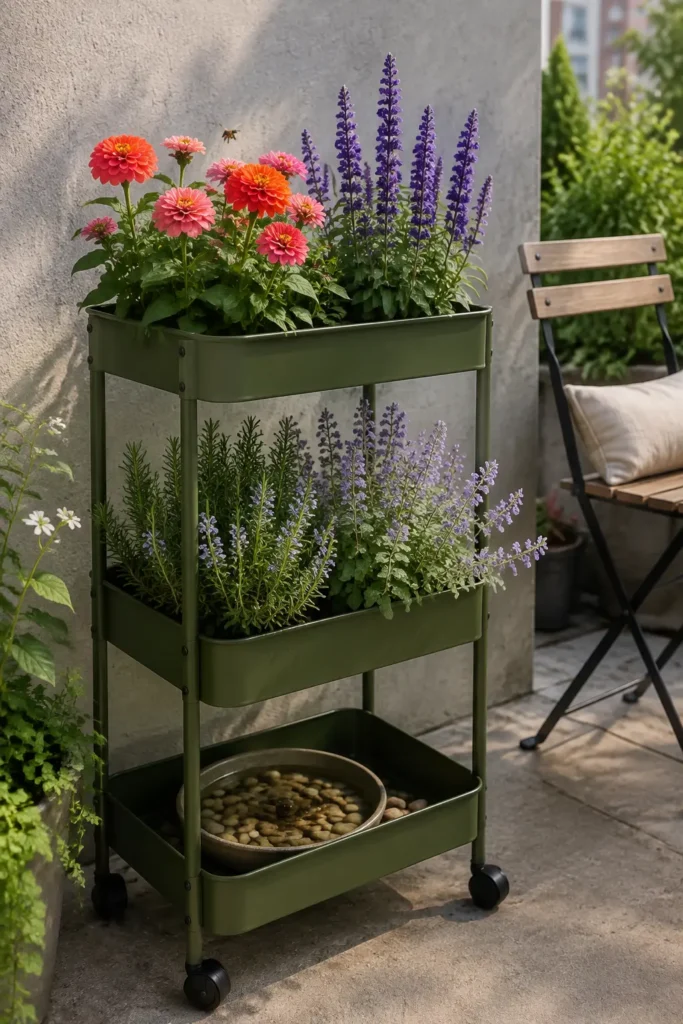
Style a slim black or olive powder-coated utility cart with three levels of lightweight pots. Place zinnias and salvia on the top shelf, flowering rosemary or catmint in the middle, and a shallow pebble-filled water dish on the bottom shelf.
The cart can be rolled toward morning or afternoon sunlight and moved closer to a wall during strong wind. It also works well for renters because it requires no permanent installation. Keep the water dish shallow, refresh it regularly, and use flat stones that allow insects to land safely without slipping into the water.
6. Pastel Butterfly Bowl Arrangement
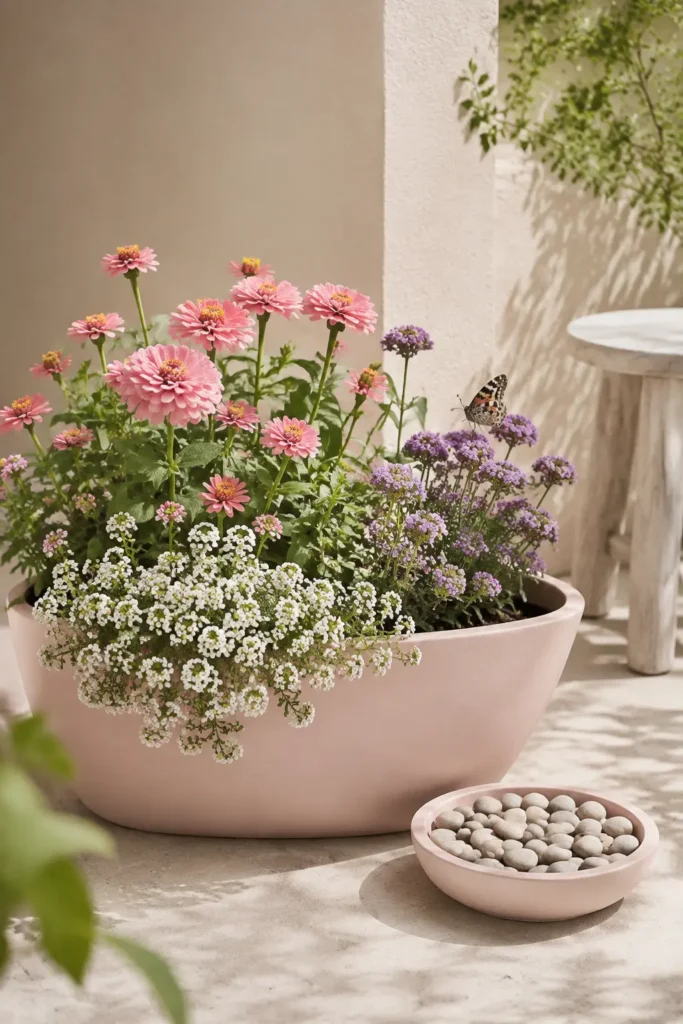
Choose a large blush-pink or dusty-blue oval resin bowl and plant it with pink zinnias, white alyssum, and pale-purple verbena. Add a small matching ceramic dish filled with flat pebbles beside the bowl to provide a safe resting and drinking area for butterflies and bees.
Set the arrangement in a sunny patio corner where it won’t block a door or narrow walkway. The low profile is easy to view from above on a balcony, and the soft colors photograph beautifully against cream walls or pale concrete. Use a lightweight bowl rather than a heavy masonry planter on an upper-level balcony.
7. Industrial Metal Trough Garden
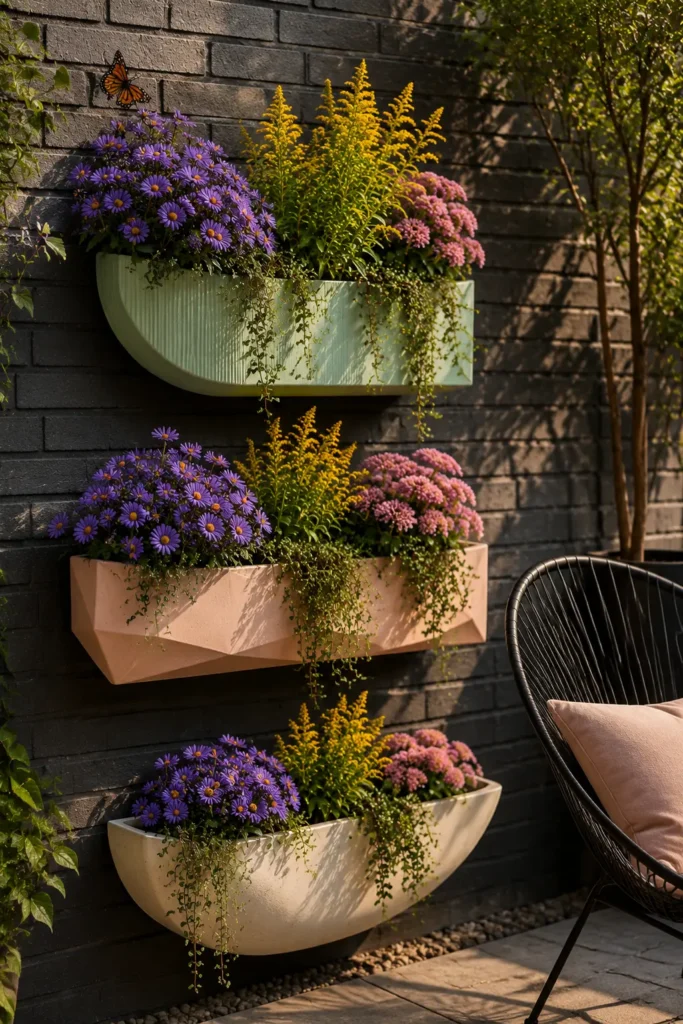
Arrange slim recycled-metal troughs in gunmetal, rust red, and brushed silver along the back edge of a small patio. Fill them with purple asters, yellow goldenrod, pink sedum, and a little trailing thyme at the front.
The long, narrow containers fit neatly against a wall while creating a strong horizontal rhythm. Goldenrod and asters can provide valuable late-season nectar when many summer flowers are declining. Select metal containers with drainage holes and line them with lightweight inserts if the metal becomes too hot in direct afternoon sun.
8. Japandi Bee Garden on a Wooden Bench
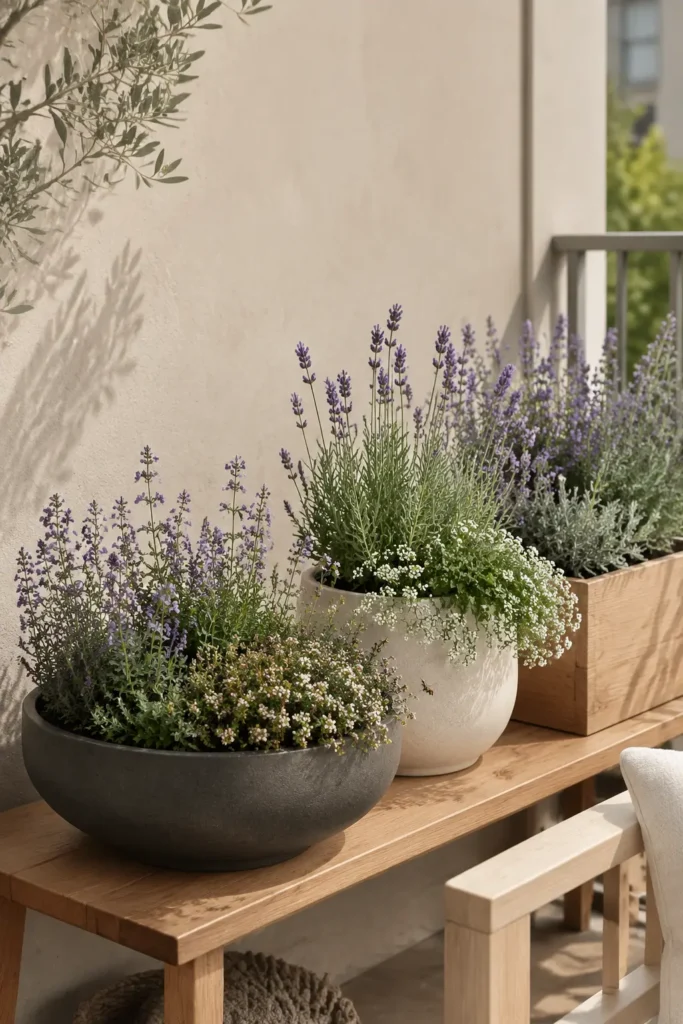
Create a calm Japandi arrangement with a low charcoal bowl, a warm-white ceramic pot, and a simple natural-wood planter displayed on a narrow bench. Use lavender, catmint, thyme, and alyssum in a restrained palette of purple, white, gray-green, and warm wood.
Place the bench against a sunny balcony wall or patio fence, but keep the front edge clear of the walking route. The repeated natural materials create rhythm without visual clutter. Choose matte finishes because they soften bright sunlight and hide water marks better than glossy ceramic.
9. Colorful Fabric Grow-Bag Pollinator Garden
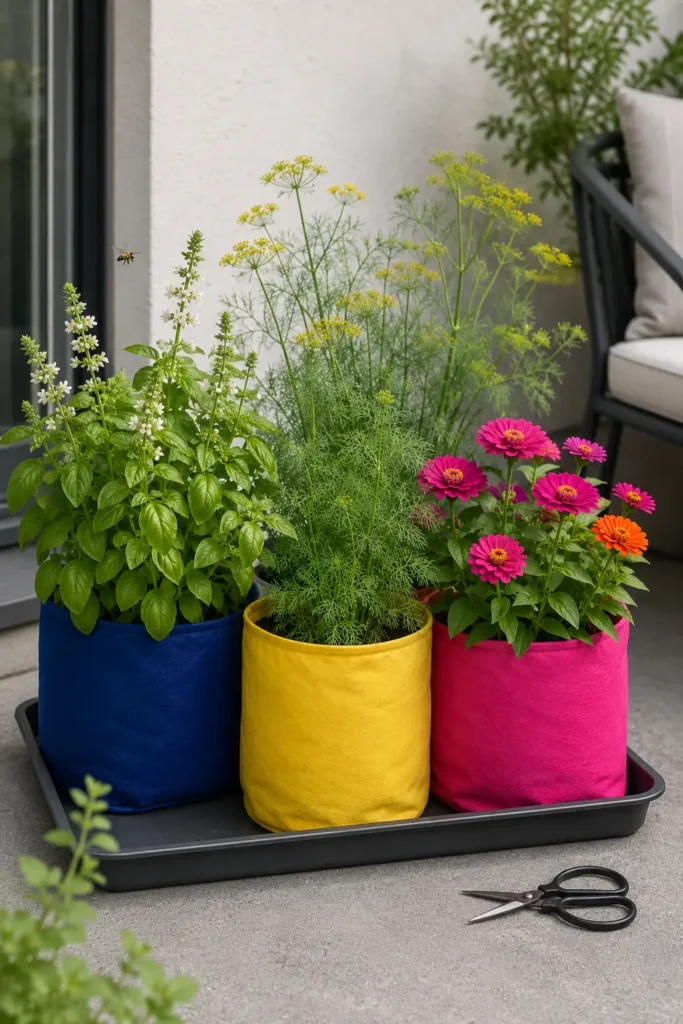
Group cobalt-blue, lemon-yellow, and hot-pink fabric grow bags on a waterproof tray. Plant flowering basil, dill, fennel, and compact zinnias, allowing the herbs to bloom for bees, hoverflies, and butterfly caterpillars.
Fabric bags are lightweight and usually less expensive than large ceramic pots, making them useful for renters and balconies with weight concerns. The cheerful colors create a dopamine-style display against a neutral wall. Place the tray where excess water can drain safely, and remember that grow bags may dry faster than plastic or glazed containers.
10. Coastal-Modern Wall Pocket Garden
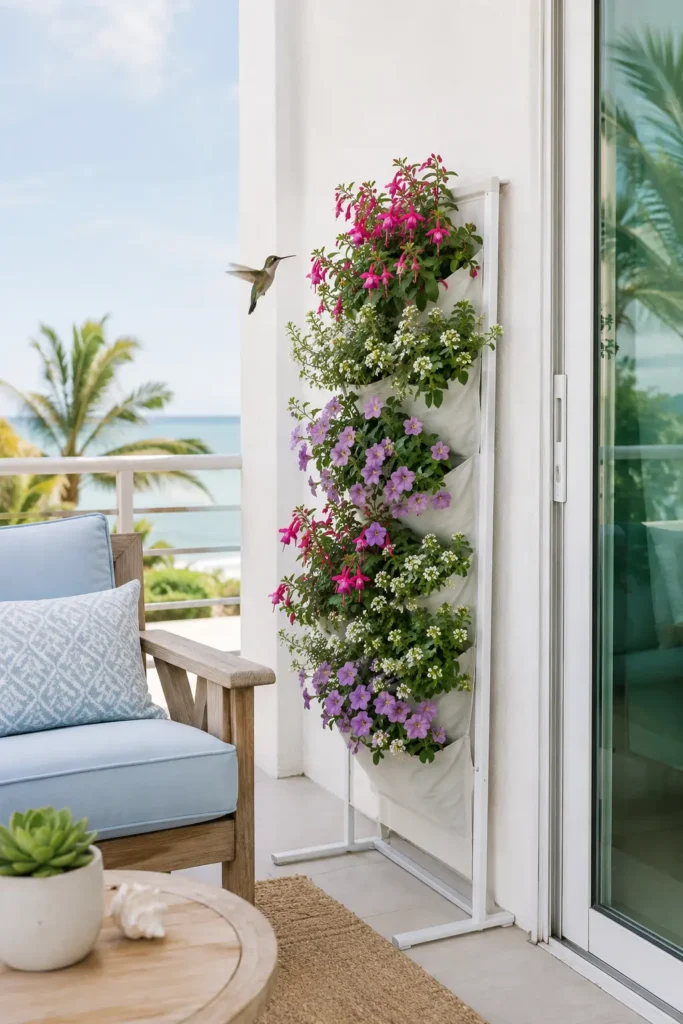
Use a slim white wall-pocket planter made from resin or weather-resistant composite. If drilling is not allowed, choose an over-door, fence-mounted, or freestanding version. Fill the pockets with pink fuchsia, white bacopa, and lavender-toned petunias.
Position the display beside a patio door or on a balcony privacy panel where it receives bright light without blocking the entrance. The white structure and pale flowers create a coastal-modern look, while fuchsia adds a hummingbird-friendly focal point. Check the mounting method regularly and avoid placing a heavy, waterlogged unit above seating.
11. Monarch Host-Plant Balcony Box
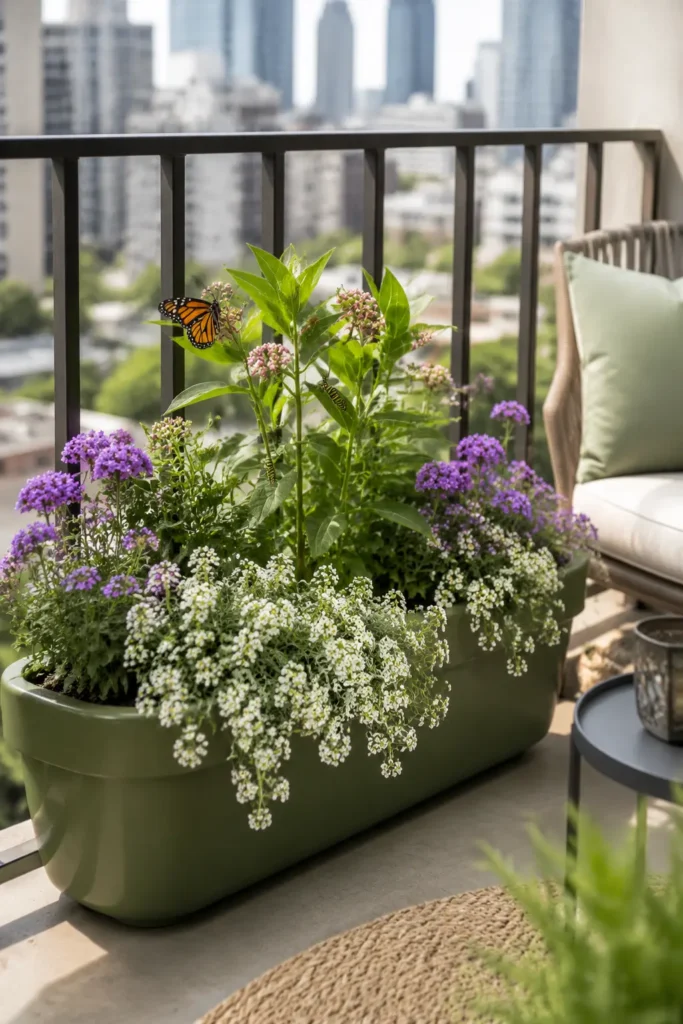
Choose a deep sage-green self-watering balcony box and place one compact, locally appropriate milkweed plant in the center. Surround it with purple verbena and white alyssum so the host plant looks intentional rather than isolated.
Set the box on the interior side of a sunny railing or against a balcony wall. Milkweed supports monarch caterpillars, while the surrounding flowers provide nectar for adult butterflies and other insects. Research the milkweed species recommended for your area, and expect to see leaf damage—that is part of its value as a host plant.
12. Terracotta Bee Staircase
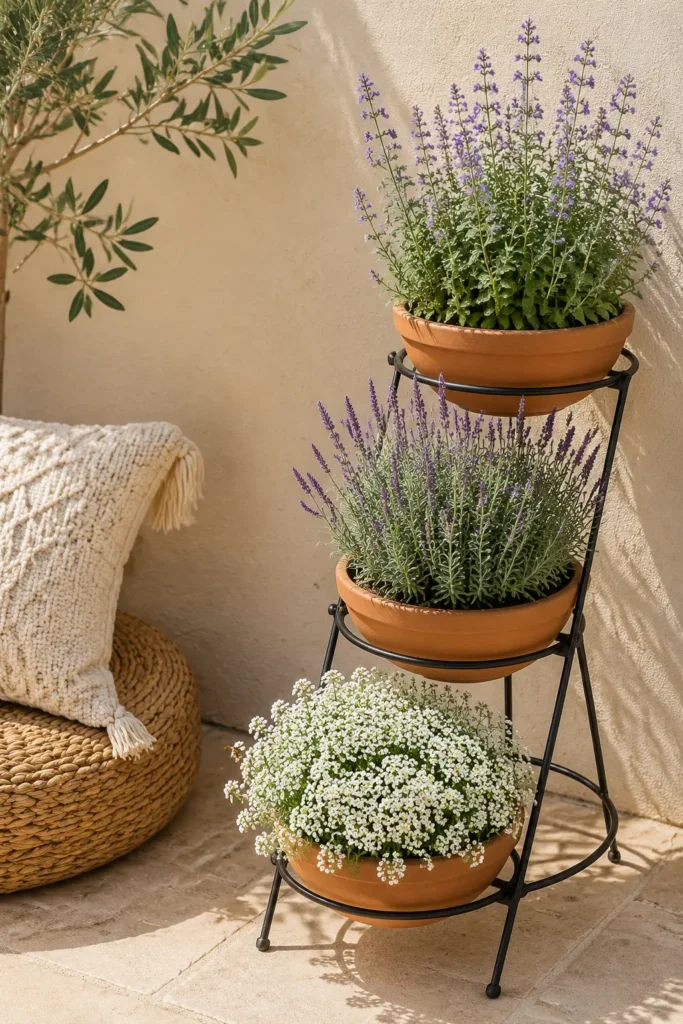
Place three lightweight terracotta-look pots on a narrow black metal tiered stand. Grow catmint in the top pot, lavender in the middle, and alyssum in the bottom container.
The staircase arrangement adds height and fullness while keeping the footprint compact. It works well beside a patio door, under a balcony wall, or in an unused corner with strong sunlight. Check that the stand is stable on the surface and avoid placing it at an exposed railing edge where wind could tip the upper pots.
13. Dopamine-Color Pollinator Shelf
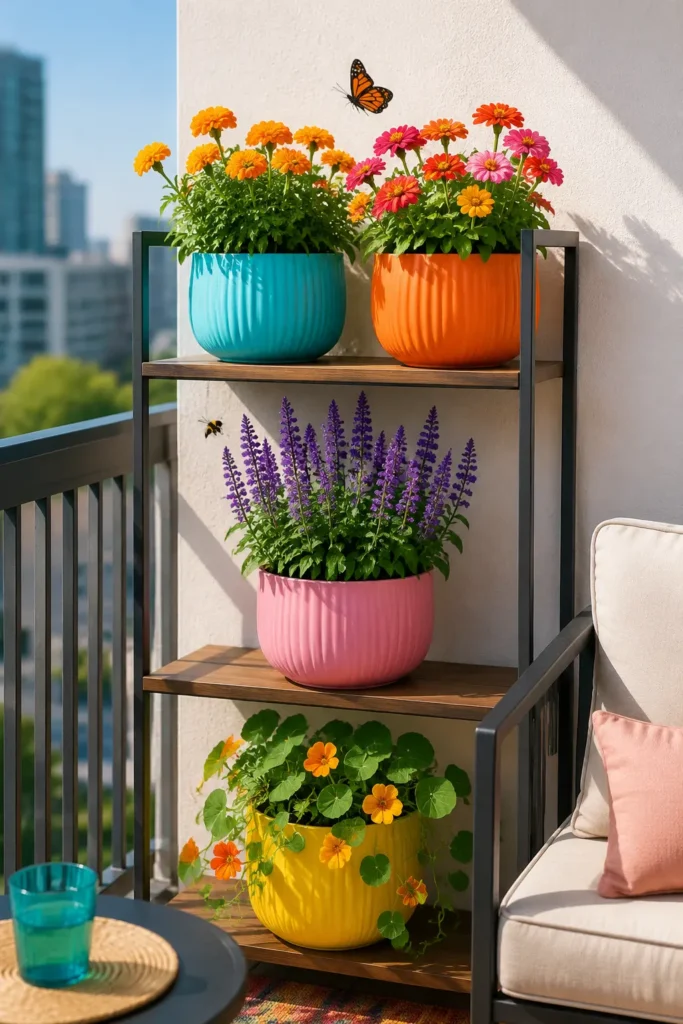
Use a slim outdoor shelf with turquoise, orange, pink, and yellow resin pots. Fill the containers with marigolds, zinnias, salvia, and nasturtiums, organizing the plants so each color has a clear section rather than mixing everything together.
The shelf uses vertical wall space and creates a cheerful, high-energy display without requiring a large floor area. Zinnias and salvia offer accessible flowers for bees and butterflies, while nasturtiums add edible leaves and bright trailing color. Use a freestanding shelf or removable brackets in rental spaces, and keep the lowest shelf high enough to clean underneath.
14. Tall Bee Balm Privacy Planter
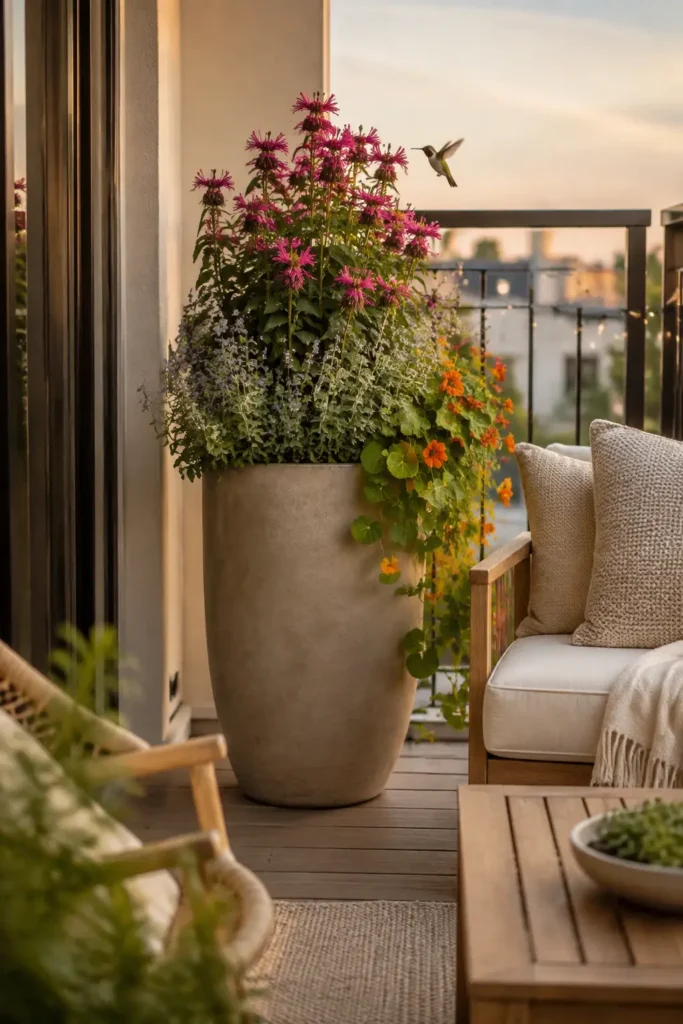
Use one tall warm-taupe concrete-look resin planter as a focal point at the end of a balcony seating area or along a patio boundary. Plant magenta bee balm in the center, silver-green catmint around the base, and orange nasturtium spilling over one side.
The vertical silhouette provides privacy and visual separation without building a permanent screen. Bee balm can attract bees and hummingbirds, while the trailing nasturtium softens the rigid planter shape. Choose a lightweight container with a broad base, and avoid placing it where its mature height blocks a doorway, view, or emergency exit.
15. Hanging Pollinator Flower Cascade
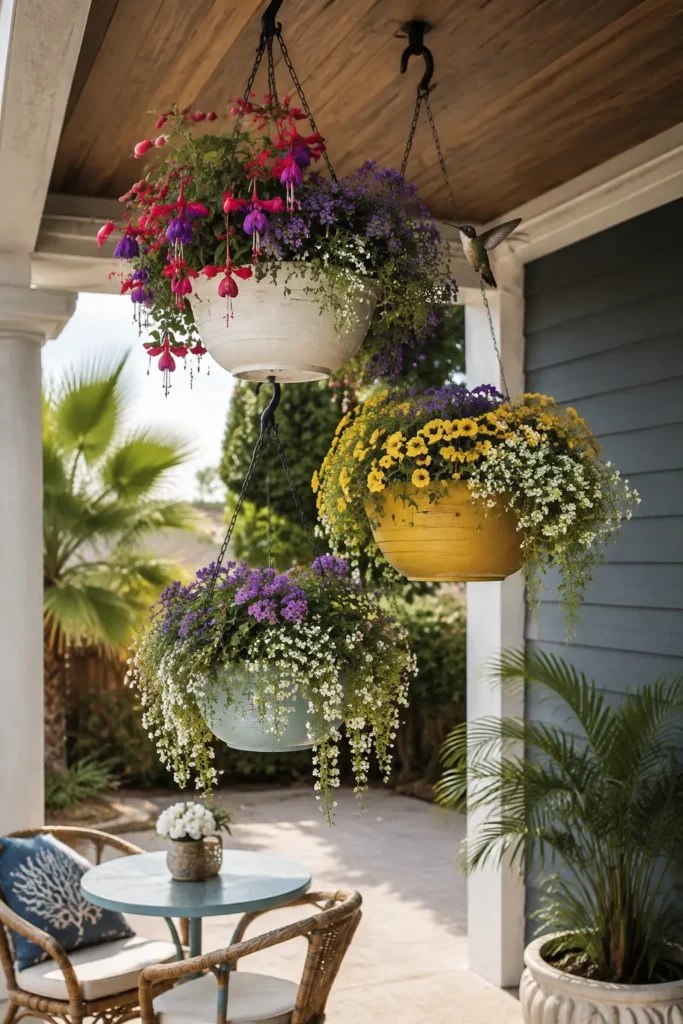
Hang three lightweight planters at staggered heights beneath an existing covered patio structure or from an approved removable hook system. Use white, mustard, and pale-blue containers filled with fuchsia, verbena, calibrachoa, and trailing alyssum.
The diagonal cascade creates a strong vertical image while keeping the floor free for a small table or chair. Make sure every hook and bracket is rated for the fully watered container, and keep the display inside the balcony boundary. In windy areas, use heavier-duty hanging hardware and choose compact plants that won’t act like large sails.
16. Modern Crate Pollinator Mosaic
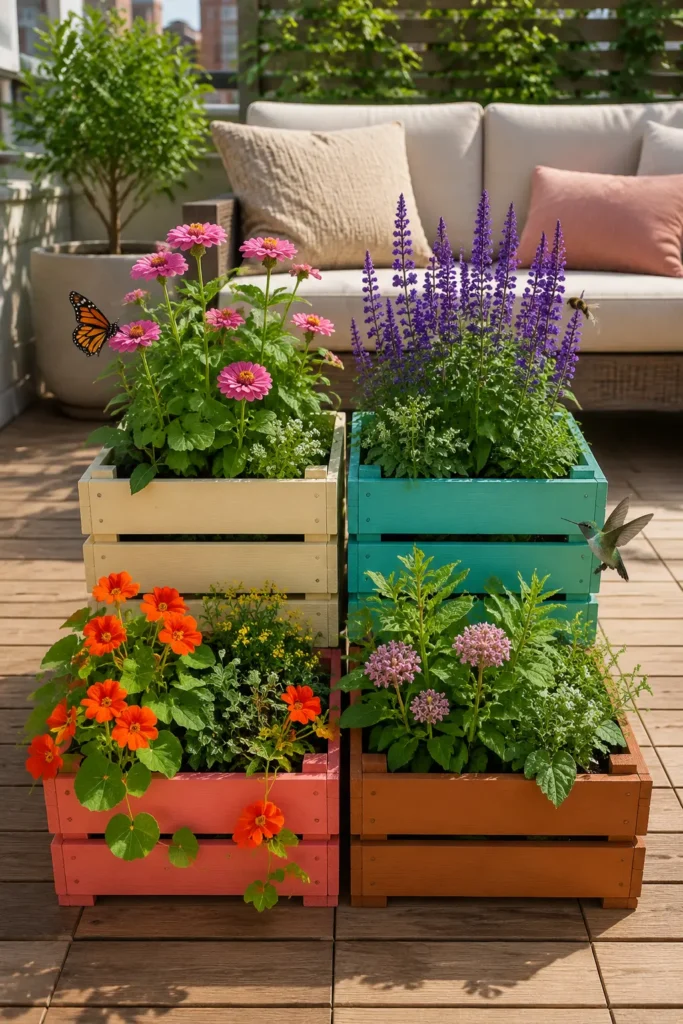
Paint four lightweight wooden crates in cream, teal, coral, and cinnamon. Fill each crate with a different pollinator theme: zinnias for butterflies, salvia for bees and hummingbirds, nasturtiums for edible color, and a locally suitable host plant.
Arrange the crates as a movable checkerboard on a small patio, or place them in a low two-by-two arrangement against a wall. The modular design lets you rearrange the garden for sunlight, seasonal changes, or safer weight distribution. Add drainage liners, keep the crates slightly raised from wet flooring, and secure them if children or pets use the space.
17. White Minimalist Herb-Rail Garden
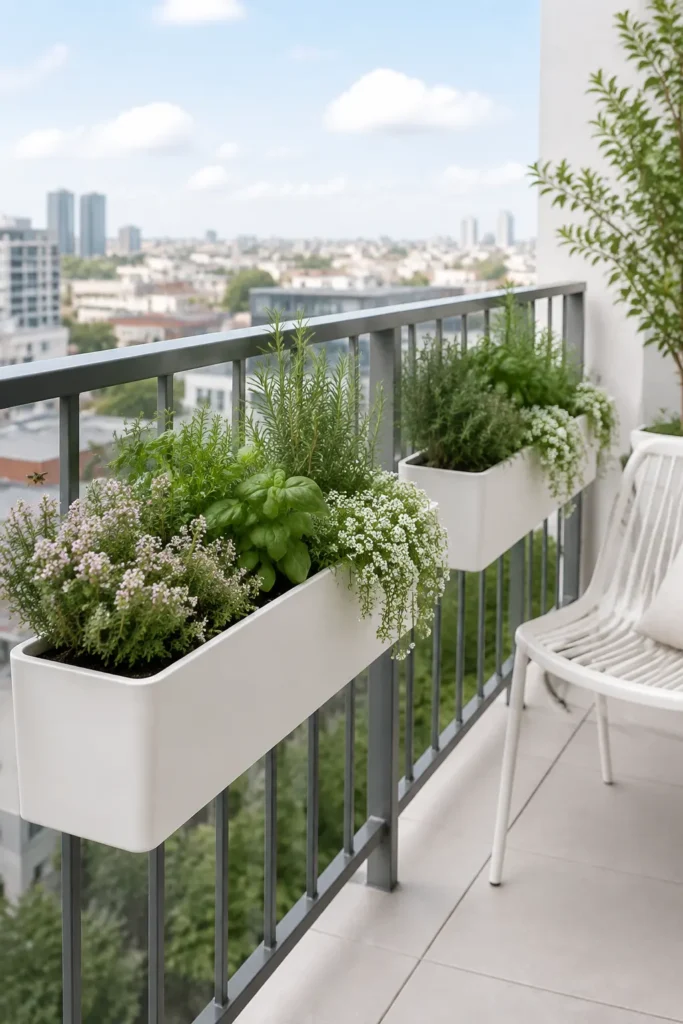
Use two identical white railing planters filled with flowering thyme, rosemary, basil, and trailing alyssum. Keep the herbs arranged in neat groups so the display reads as a clean green-and-white composition rather than a collection of random pots.
Place the planters on the sunniest interior side of the balcony rail, away from the opening side of the door. The narrow containers preserve floor space and keep cooking herbs within reach. Let some basil and thyme flower for pollinators, but trim them back after flowering if you want to maintain a compact shape.
18. Sunset Pollinator Theater
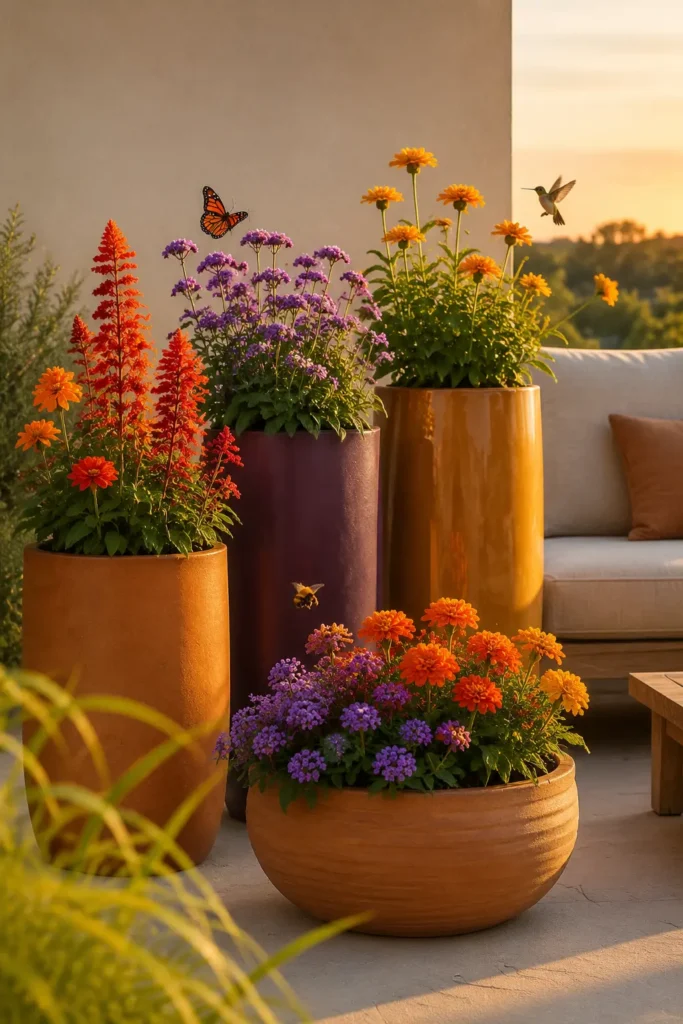
Create a dramatic patio display with three tall planters in terracotta, plum, and amber, arranged behind a low bowl. Plant orange marigolds, red salvia, purple verbena, and golden-yellow zinnias so the flowers resemble a layered sunset.
Use the arrangement beside a small outdoor loveseat or against a warm neutral wall, leaving open space in front for the colors to read clearly. The tall containers attract attention from inside the home, while the low bowl brings flowers closer to visiting insects. Use lightweight planters on balconies and confirm the arrangement won’t interfere with railings or wind paths.