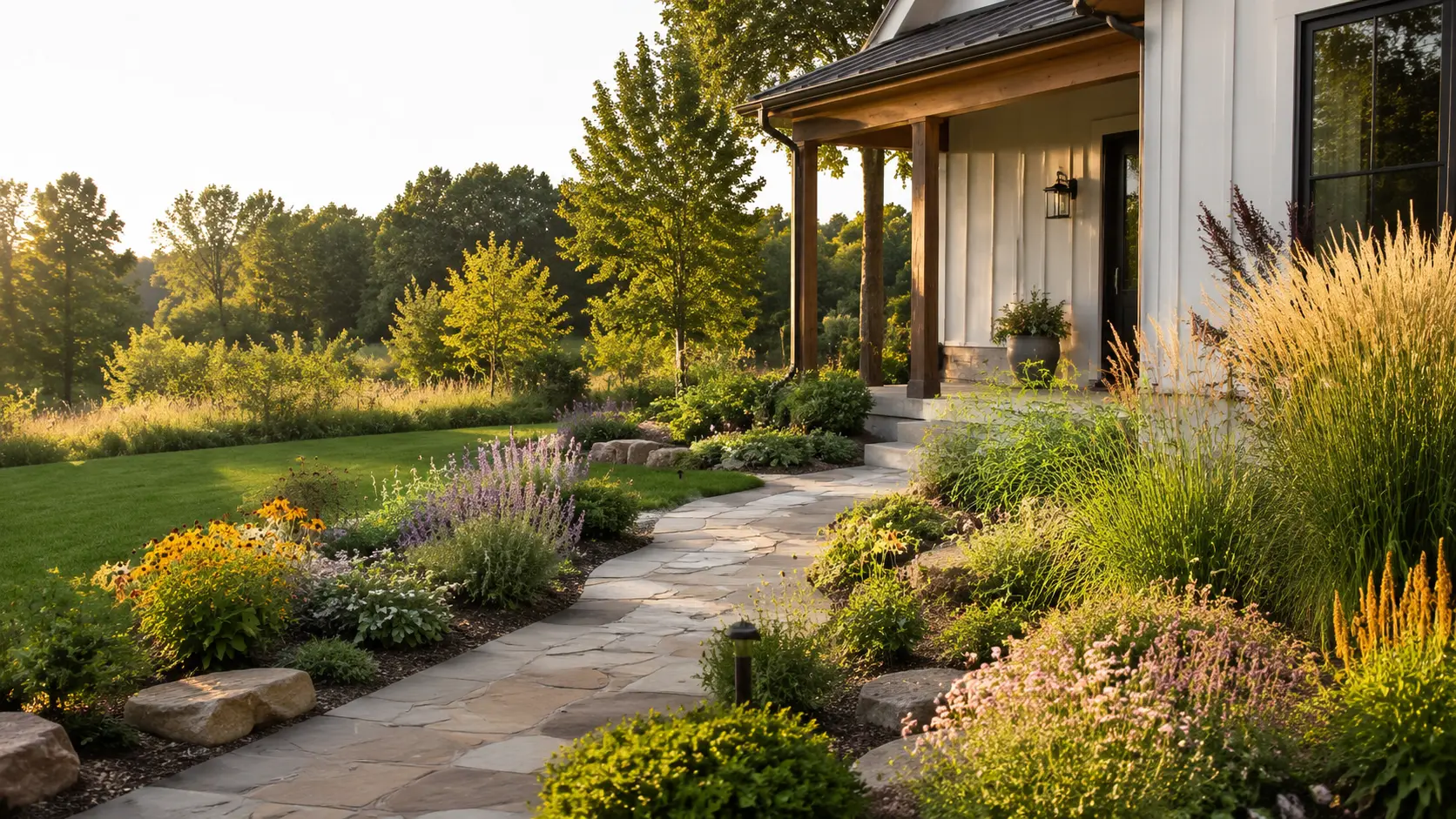
A native plant yard doesn’t have to look wild, patchy, or difficult to control. With the right layout, regional plants can create polished borders, shaded retreats, colorful pollinator spaces, and modern outdoor rooms while reducing mowing, watering, and seasonal replanting.
These native plant landscaping ideas focus on the parts of a real yard that often cause problems: narrow lawn strips, hot slopes, shady trees, drainage areas, plain fences, and small patios. Choose plants suited to your state or growing region, then use the design principles below to create a landscape that feels intentional from the first season onward.
1. Create a Native Welcome Walk
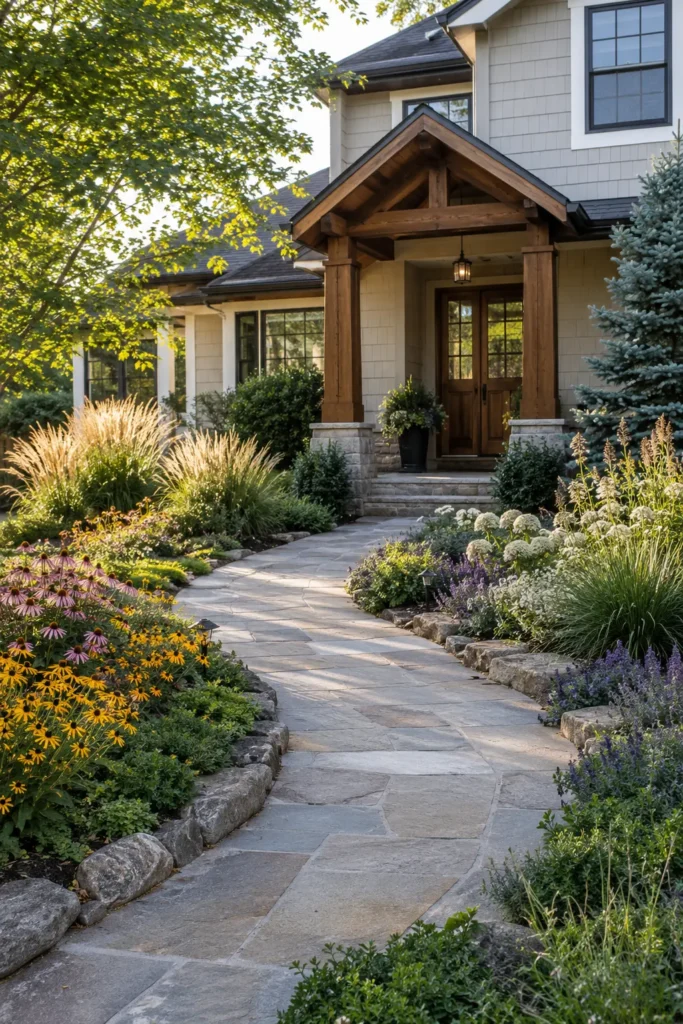
Frame the front path with three planting layers: low native groundcovers along the walkway, medium flowering perennials in the middle, and taller grasses or compact shrubs near the house. Repeating the same few plant shapes at intervals of 3 to 5 feet creates rhythm, while natural stone or brick edging gives the border a clean finish.
Keep at least 30 to 36 inches of clear walking space. Choose plants that stay below steps and avoid thorny shrubs near the entrance. The finished border should feel soft and abundant without spilling into the path or requiring weekly trimming.
2. Replace Lawn With a Mini Meadow
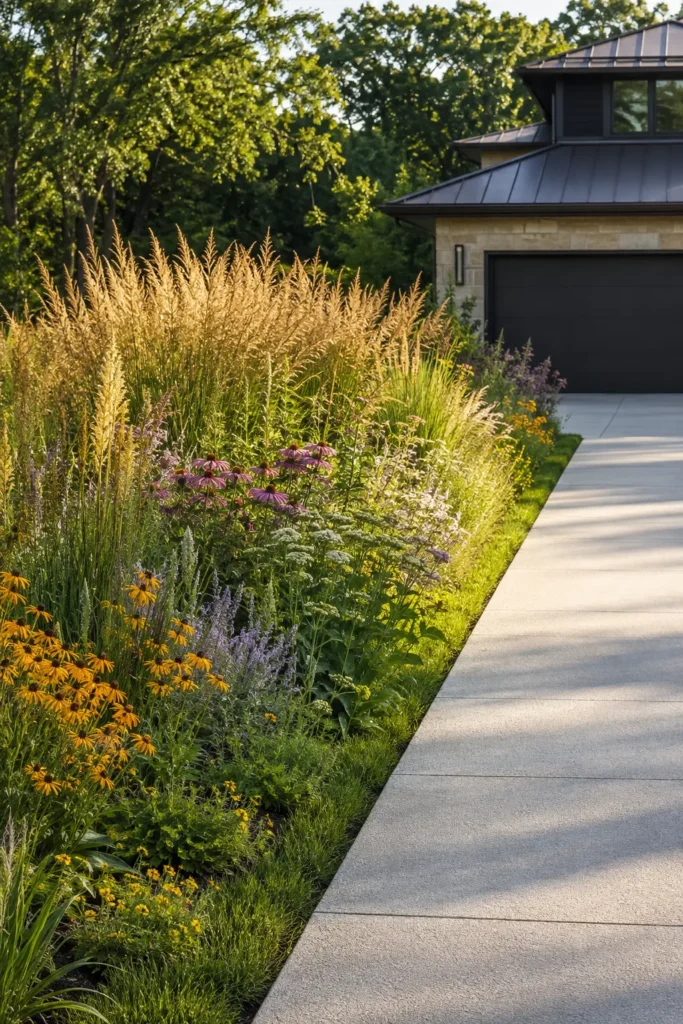
A narrow strip beside a driveway, sidewalk, or fence is often too awkward to mow well. Replace it with a controlled native meadow using taller grasses at the back and flowering perennials in broad clusters toward the front. Leave a 12- to 18-inch mown edge so the planting looks deliberate.
Use a simple mix rather than dozens of species. Three or four repeating forms are easier to identify, weed, and maintain. Seed-grown areas can reduce the initial cost, although they usually take longer to look established than nursery-grown plugs.
3. Turn a Downspout Into a Rain Garden
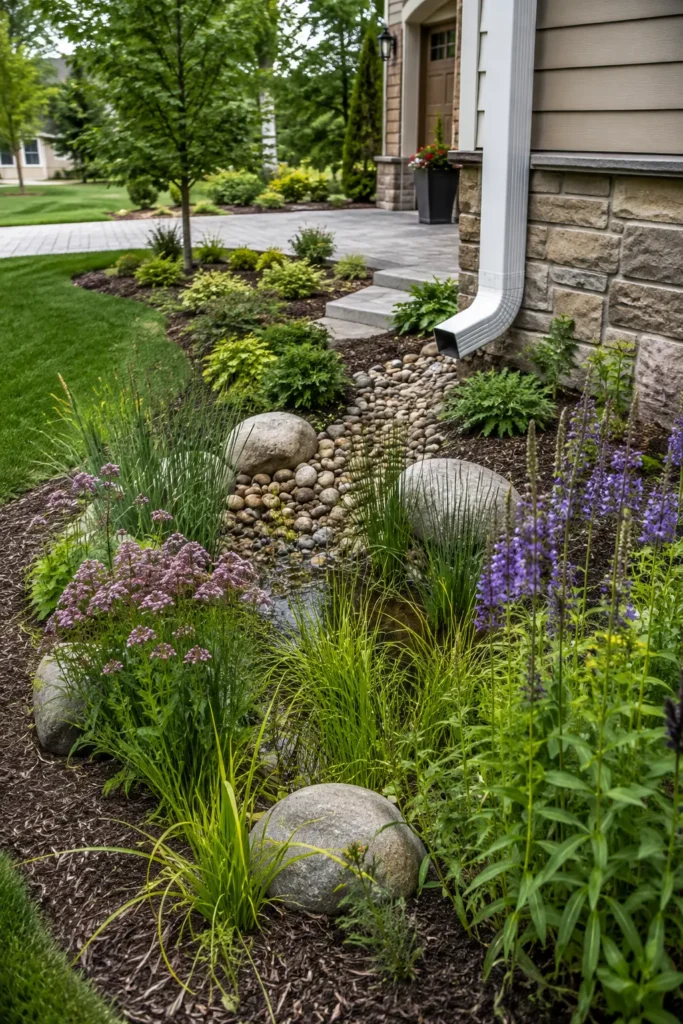
Direct a downspout toward a shallow basin planted with native sedges, rushes, moisture-loving perennials, and shrubs suited to occasional wet soil. A pebble-lined channel can guide water from the downspout, while larger stones define the basin without making it appear like a commercial drainage project.
Place the rain garden at least 10 feet from the foundation and confirm local drainage requirements before digging. Plants should be grouped according to moisture: species that tolerate temporary standing water belong at the center, while drier-site plants work best around the outer edge.
4. Build a Woodland Garden Under Trees
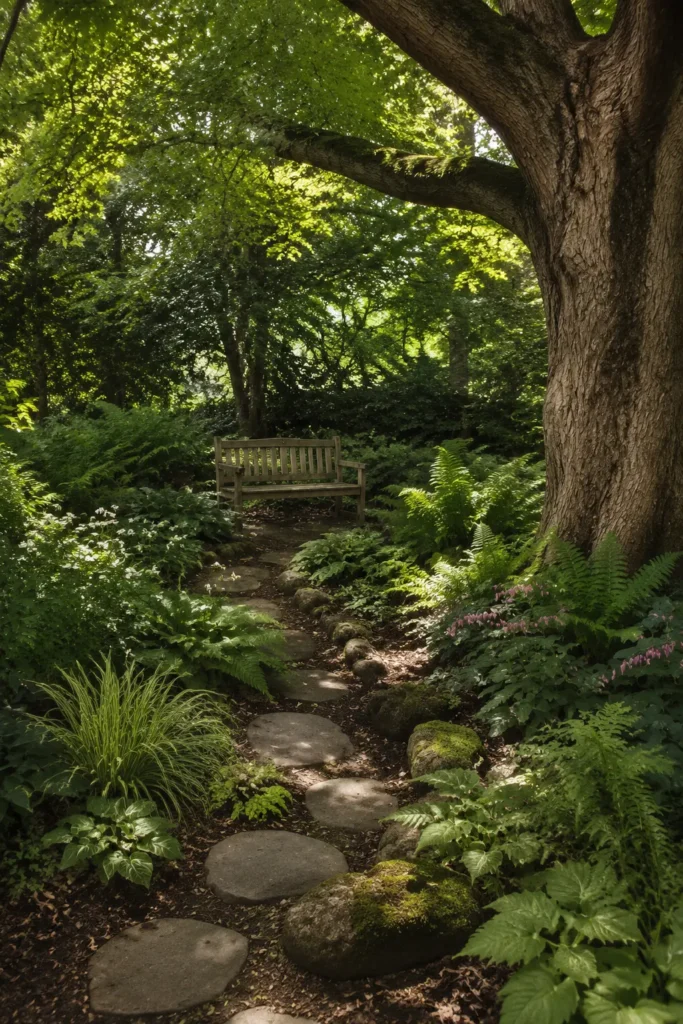
The space beneath a mature tree is usually too shady and root-filled for healthy turf. Instead, create a woodland garden with native ferns, sedges, spring ephemerals, low groundcovers, and small understory shrubs. A curved stepping-stone path or one weathered bench can make the area feel like a separate garden room.
Do not pile soil or thick mulch against the trunk. Leave several inches of open space around the base, and plant smaller starter plants between existing roots rather than digging large holes that could damage them. Leaf mulch can help retain moisture and support the natural woodland character.
5. Grow a Four-Season Privacy Hedge
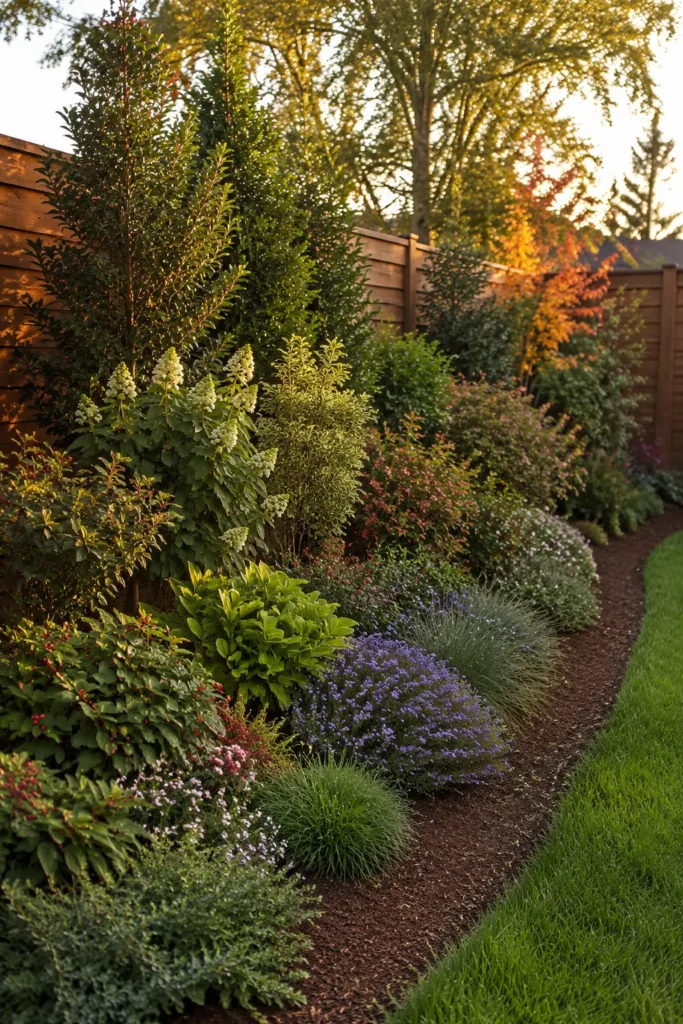
For privacy, avoid planting one solid row of identical shrubs. Use a staggered arrangement of native species with different mature heights, bloom times, berry displays, and fall colors. Taller shrubs can sit along the property line, medium plants can fill the middle, and low mounds can soften the front.
Check mature widths before planting. A hedge that is too close to a fence will eventually need constant shearing and may develop poor airflow. A narrow maintenance path behind or beside the planting makes pruning, fence repairs, and leaf cleanup much easier.
6. Plant a Native Garden on a Sunny Slope
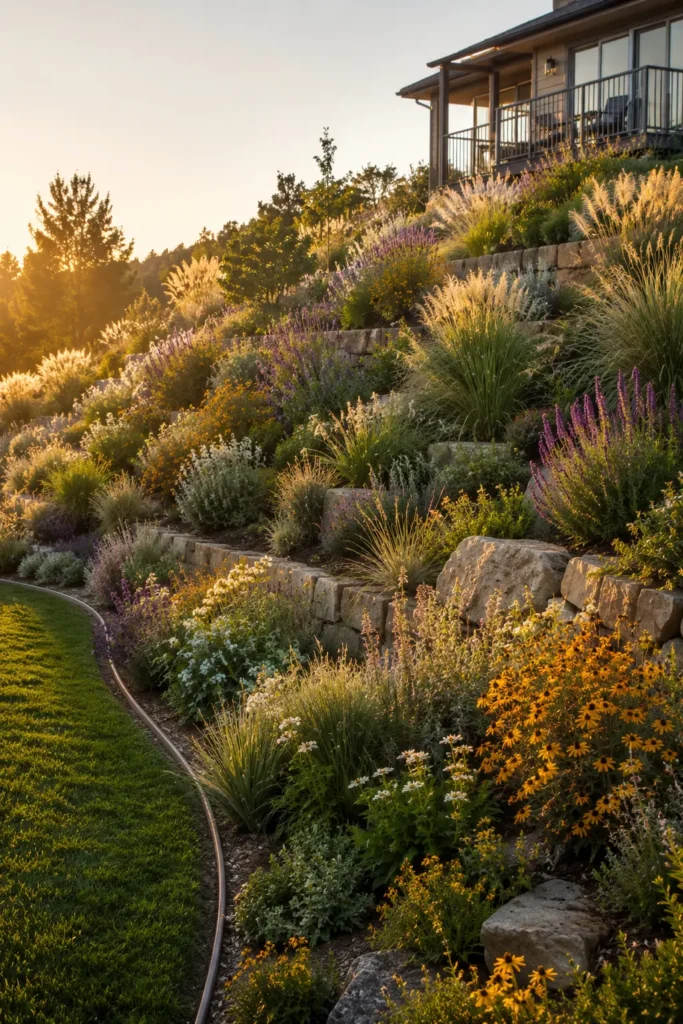
A sunny slope can become a dramatic landscape feature when native grasses and flowering plants are arranged in sweeping bands that follow the contour. Add natural stones, coir logs, or small terraces where runoff is strongest, and place warmer flower colors where late-day light will catch them.
Deep-rooted native plants help hold the soil, but they still need watering during their first growing season. Choose plants according to the slope’s exposure and mature height so tall species do not shade out low-growing plants or block windows.
7. Style a Modern Foundation Bed
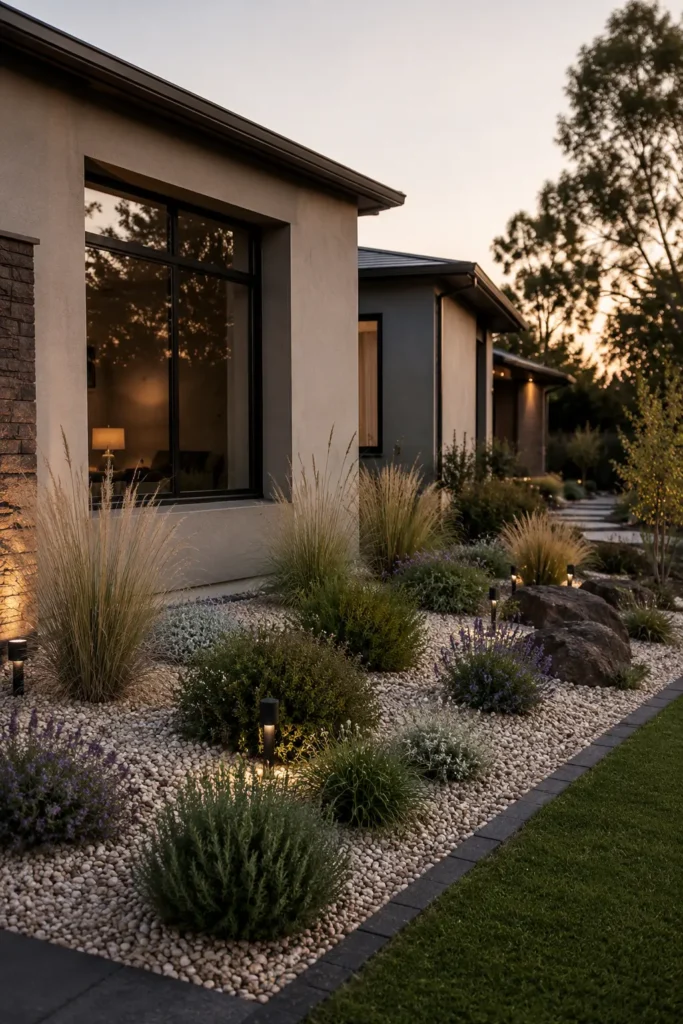
Native plants can look highly architectural when the layout is restrained. Repeat upright grasses in groups of three, five, or seven, then add rounded native shrubs, a few flowering accents, and a pale gravel or bark-mulch surface.
This planting style works particularly well in front of modern homes with simple lines. Keep the bed deep enough for mature plants—often 5 to 8 feet from the foundation—rather than squeezing large shrubs into a narrow strip. Grasses also provide movement and winter structure without the frequent shaping required by formal evergreens.
8. Frame Your Patio With Pollinator Plants
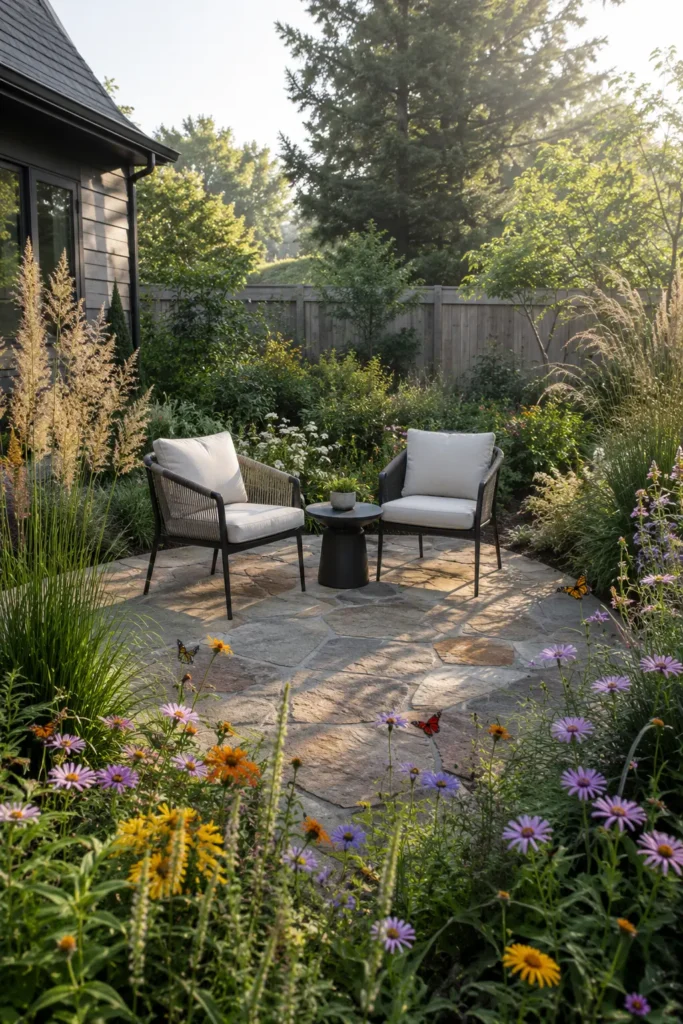
Surround a small patio with native flowers arranged by height. Keep the center open for chairs and a small table, use low plants near the seating edge, and place taller perennials or grasses along the fence or back border.
Choose plants with staggered bloom periods so the patio has interest from spring through fall. Avoid placing dense, bee-attracting flowers directly beside door swings or the main walking route. A 24- to 30-inch clear perimeter around furniture keeps the area comfortable for everyday use.
9. Turn a Side Yard Into a Garden Path
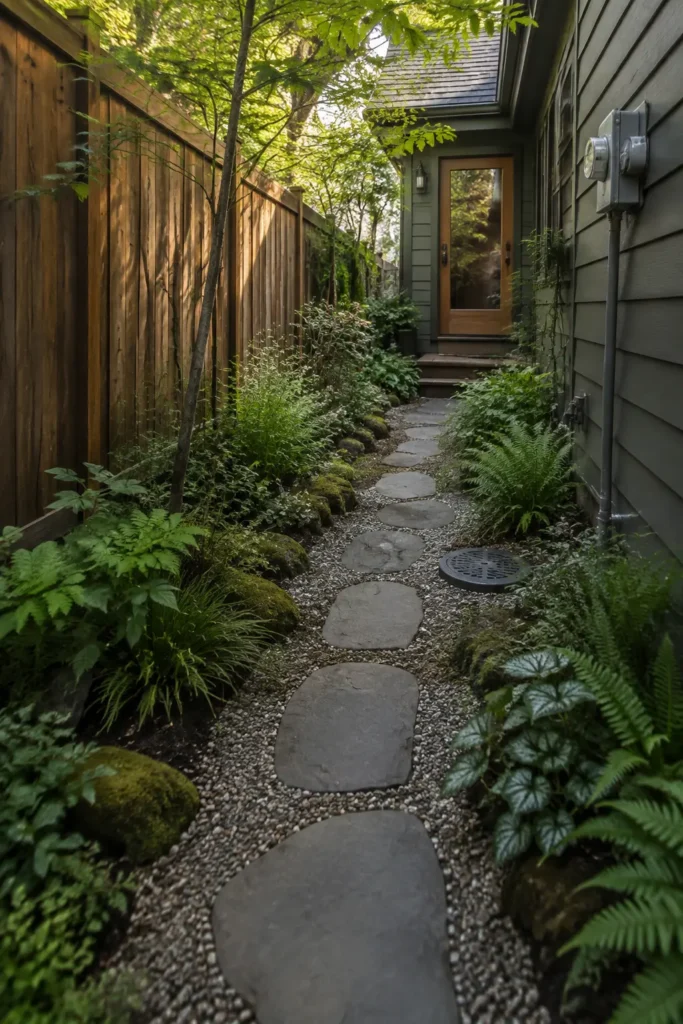
Turn a dark or neglected side passage into a practical connection between the front and back yard. Use gravel, stepping stones, or permeable pavers for the path, then plant native sedges, ferns, low shrubs, and shade-tolerant perennials along the fence.
Keep the walking route at least 30 inches wide and leave access to utility meters, hose connections, and gates. Select plants that remain below windows and do not spread aggressively into the path. The result is a useful garden corridor rather than a narrow strip that collects weeds and standing water.
10. Create a Native Groundcover Carpet
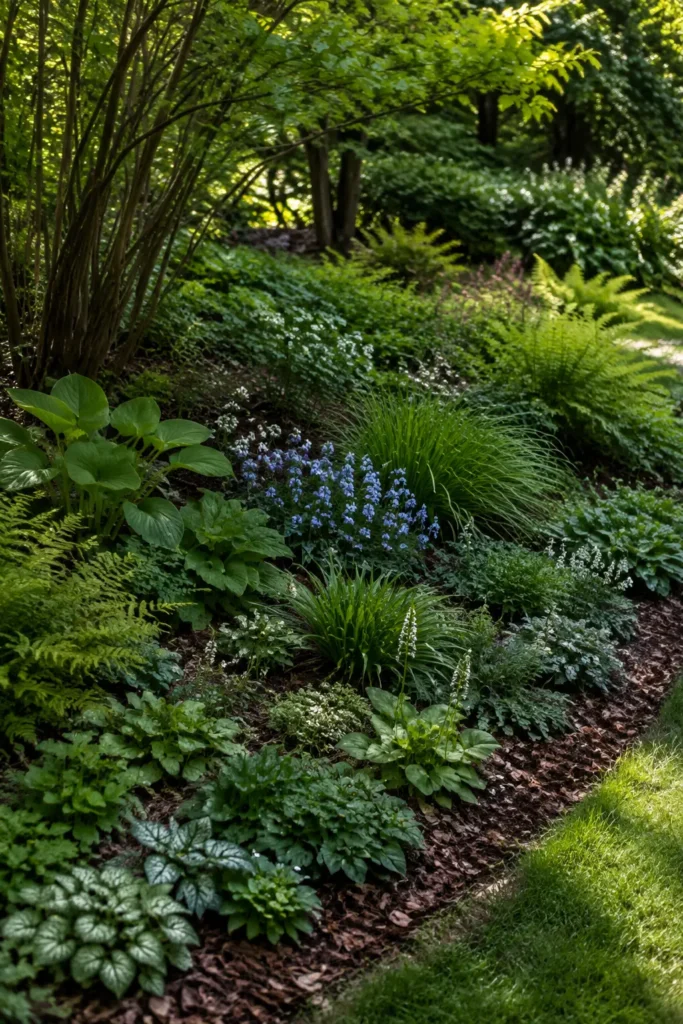
Instead of spacing individual plants across bare soil, combine several compatible native groundcovers, sedges, and low perennials into a continuous matrix. Use one dominant foliage texture, one secondary texture, and occasional taller accents to keep the planting readable.
A living ground layer shades the soil, reduces weed germination, and limits erosion. During establishment, apply a thin layer of leaf mulch and water deeply as needed. Once the plants knit together, the bed usually needs less hand-weeding than one made of widely spaced specimens.
11. Design a Bird-Friendly Fence Border
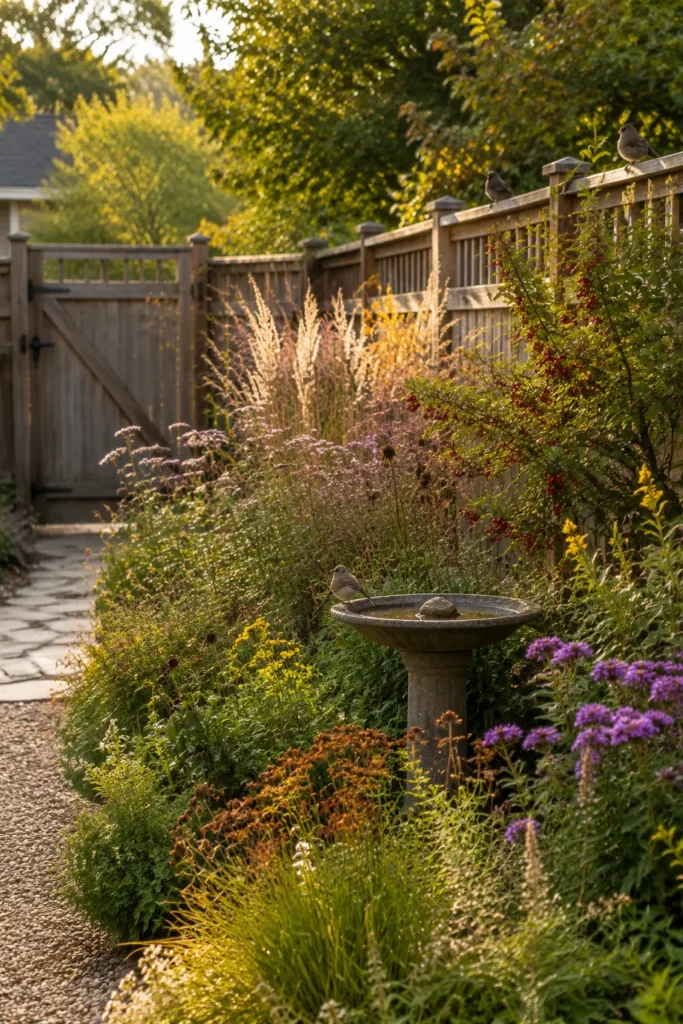
Soften a plain fence with native shrubs that provide berries or cover, followed by seed-bearing perennials and tall grasses. Keep the planting fuller at corners and thinner near gates, hose reels, and frequently used paths.
Leave selected flower stems standing through winter so birds can feed on the seedheads and the garden retains vertical structure. Add a shallow birdbath in an open position where birds can see approaching predators. Avoid placing dense shrubs directly against the house, where they can trap moisture and complicate maintenance.
12. Grow Native Plants in Stylish Containers
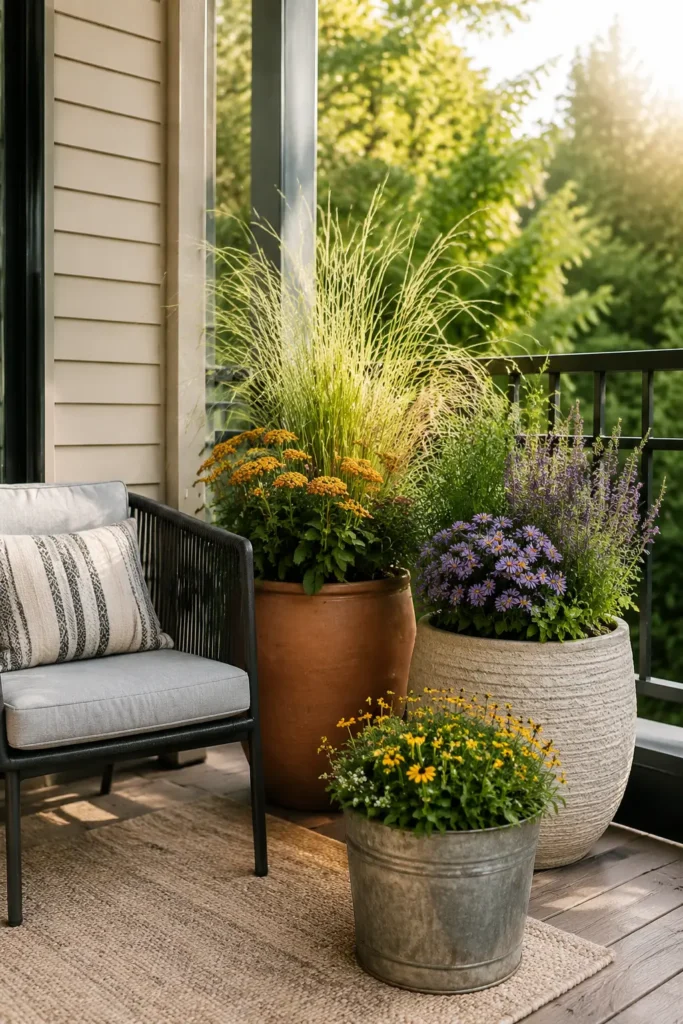
Containers make native landscaping possible on a rental porch, balcony, paved courtyard, or small patio. Combine a compact native shrub or grass with flowering perennials in large containers that have drainage holes. Group three pots at different heights rather than scattering many small pots across the floor.
Use frost-resistant ceramic, terracotta, or textured fiber-cement planters for a more permanent look. Container plants dry out faster than in-ground beds, so choose drought-tolerant species where possible and use saucers only where drainage will not damage the surface. Renters can move the plants when they relocate.
13. Frame a Wild Garden With Clean Edges
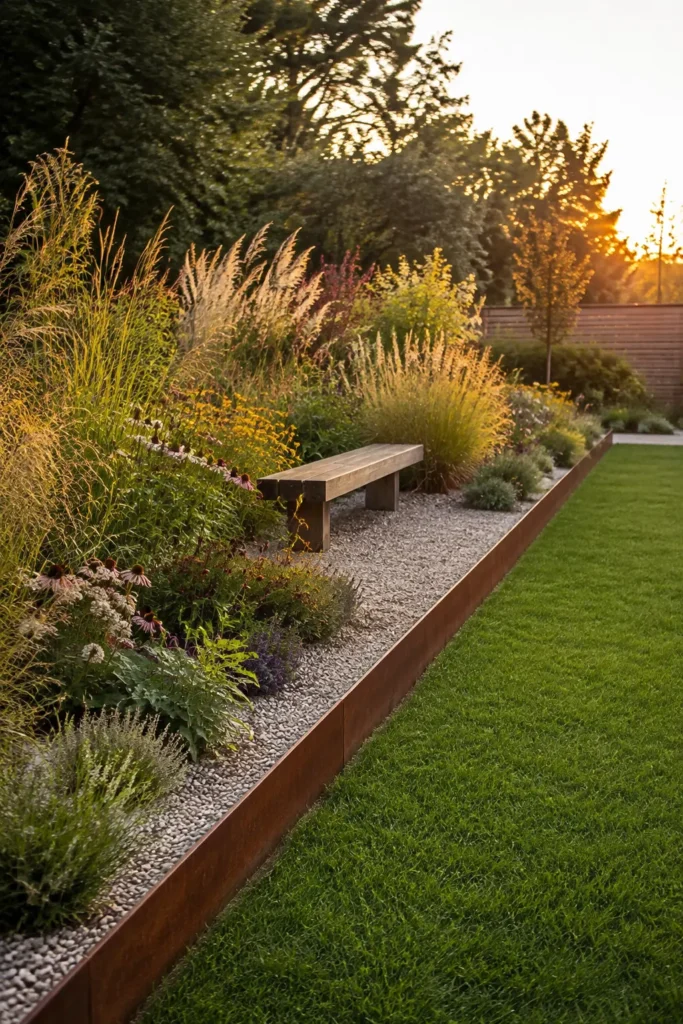
Let the interior of the planting look loose and natural, but give it a strong frame. A straight steel border, low stone wall, pale gravel path, or simple wood bench can separate native grasses, seedheads, shrubs, and flowering perennials from the lawn.
This “wild but organized” approach is especially effective in small yards, where an entirely informal planting can make the space feel crowded. Keep the edge crisp with occasional trimming, and repeat a few plant groups inside the border so the garden looks edited rather than accidental.
What to Consider Before Planting
Start by identifying your USDA hardiness zone, sunlight levels, soil type, drainage, and mature plant sizes. “Native” is regional, so a plant native to one state may not be the best choice for another. Local extension offices, native-plant societies, and reputable regional nurseries can help you confirm suitable species.
Plan for establishment care. Most native plants need regular watering during the first season, even when mature plants tolerate drought. Remove invasive plants, improve compacted soil only when necessary, and use paths or edging to make future maintenance easier.