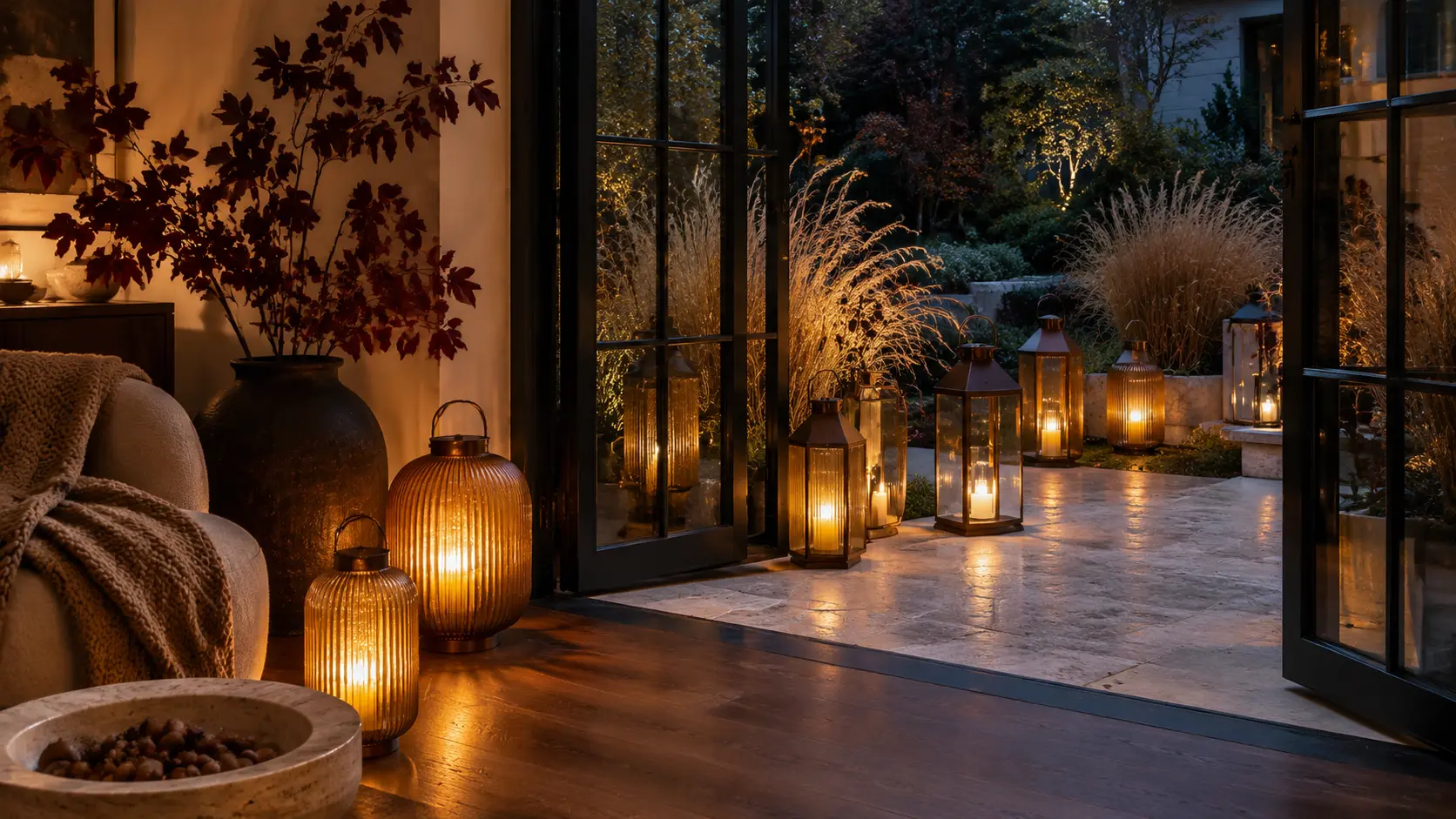
Fall lighting looks most convincing when it feels integrated into the room rather than added as seasonal filler. Instead of surrounding every lantern with orange pumpkins, combine warm light with smoked glass, dark wood, weathered metal, stone, and a few carefully chosen branches.
These fall lantern decor ideas include practical arrangements for apartments, porches, dining areas, and gardens, along with several dramatic options for larger spaces. Each concept has a distinct visual identity, but all rely on warm-white light between 2200K and 2700K. This range produces an amber glow that flatters autumn colors and softens evening shadows.
1. Double the Glow With a Mirror
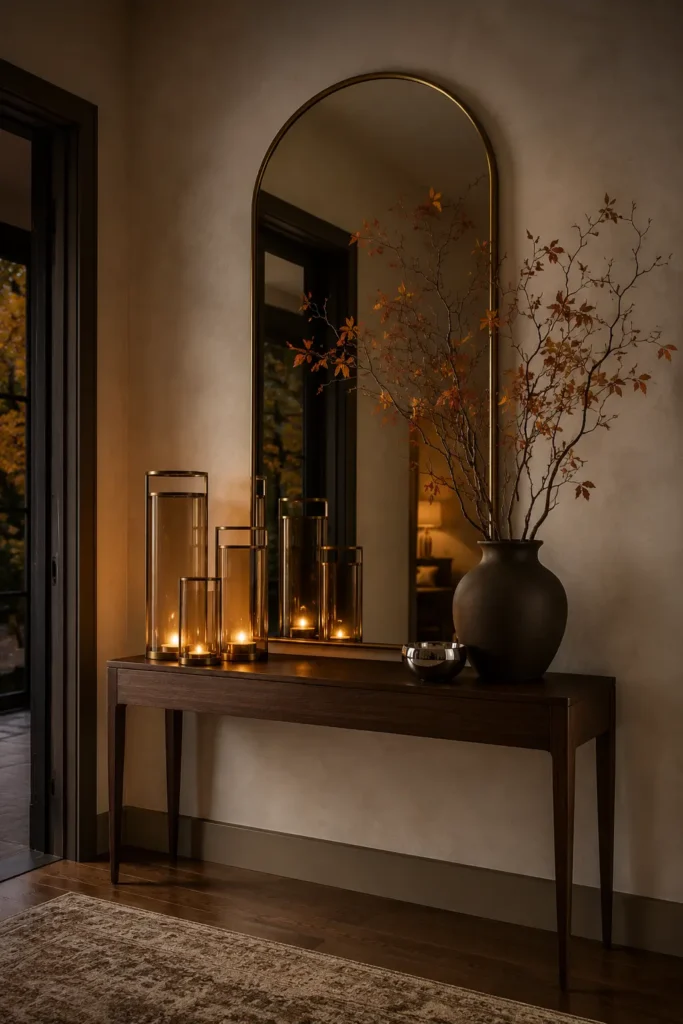
Place three smoked-glass lanterns at staggered heights in front of a large arched mirror. Use a slim walnut console as the base, then add one twisted branch in a dark ceramic vessel. The mirror doubles the lantern silhouettes and reflected light, making a narrow entryway appear deeper after sunset.
Keep the lanterns grouped toward one side instead of centering every object. A small chrome bowl at the opposite end adds a cooler Gen Z contrast without weakening the fall palette. Choose dimmable 2200K rechargeable lights so there’s no exposed flame near the wall or mirror.
2. Build a Floating Lantern Wall
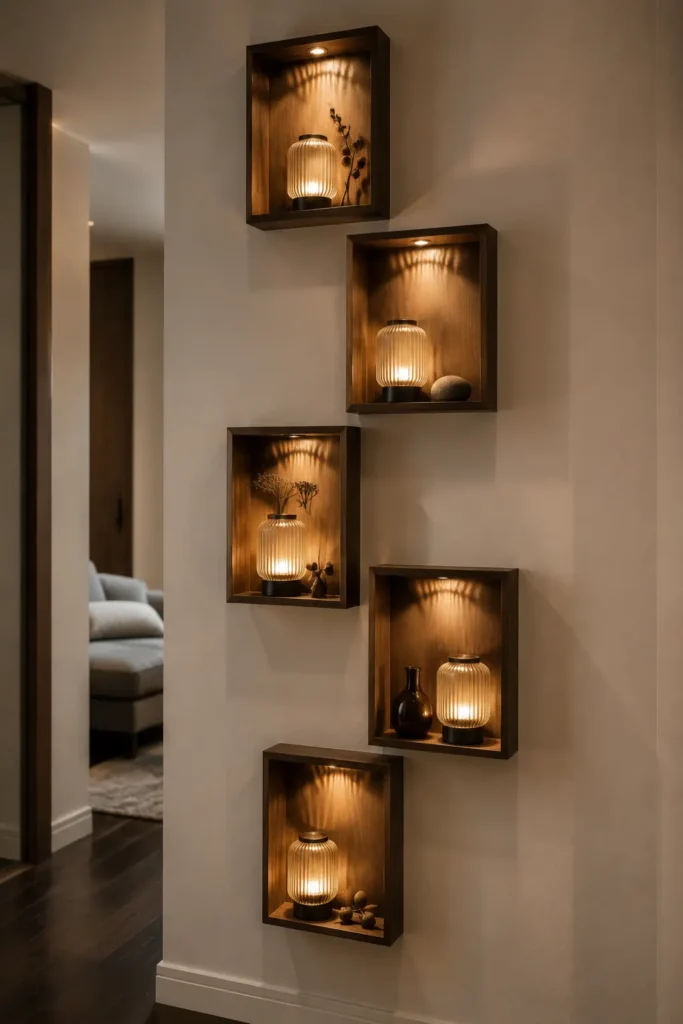
Mount shallow walnut shadow boxes in an irregular but balanced arrangement, then place a compact fluted-glass lantern inside each one. Leave approximately 5 to 7 inches between boxes so the installation feels architectural rather than crowded. Add only one natural object per compartment, such as an acorn branch, river stone, or dried seed head.
This idea provides ambient lighting without taking up floor or console space, making it useful in apartments and narrow hallways. Rechargeable 2400K puck lights eliminate visible cords. Secure every box with anchors suited to the wall type, especially if the lanterns contain real glass.
3. Style a Travertine Lantern Plinth
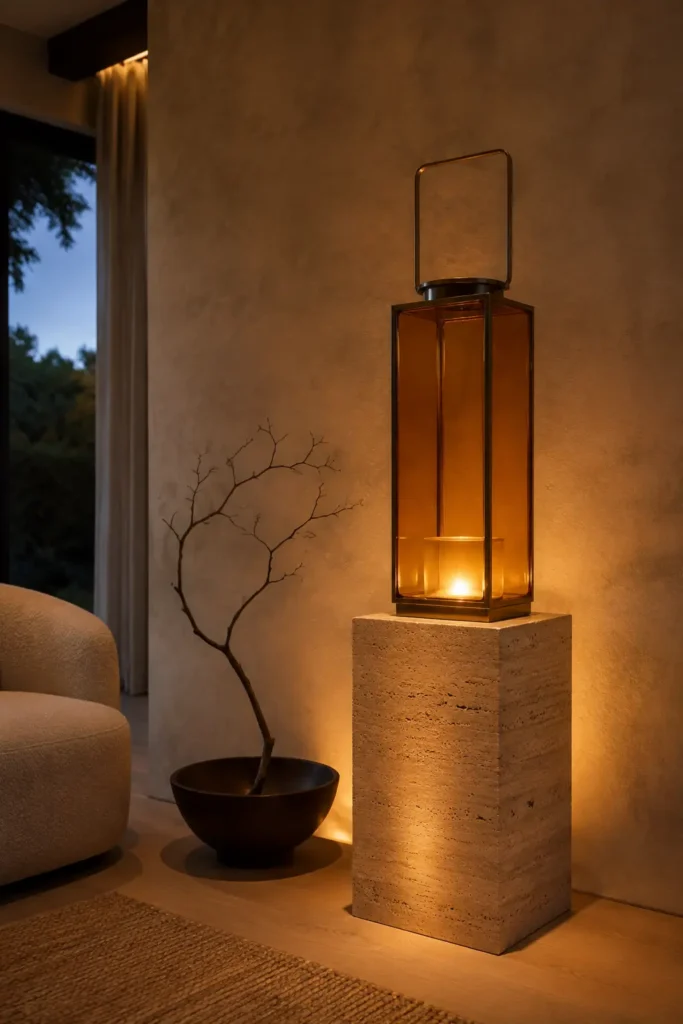
Set one oversized amber-glass lantern on a solid travertine or convincing stone-look pedestal. Conceal a rechargeable uplight behind the lantern so illumination washes across the textured stone as well as through the glass. A single walnut bowl or sculptural branch is enough to complete the composition.
The strong vertical form gives an empty living-room corner purpose without filling it with small accessories. Real travertine is heavy and expensive, but a limewashed wood pedestal can create a similar effect at a lower cost. Avoid glossy printed stone finishes because direct light makes the repeated pattern and artificial surface obvious.
4. Light a Dark Library Niche
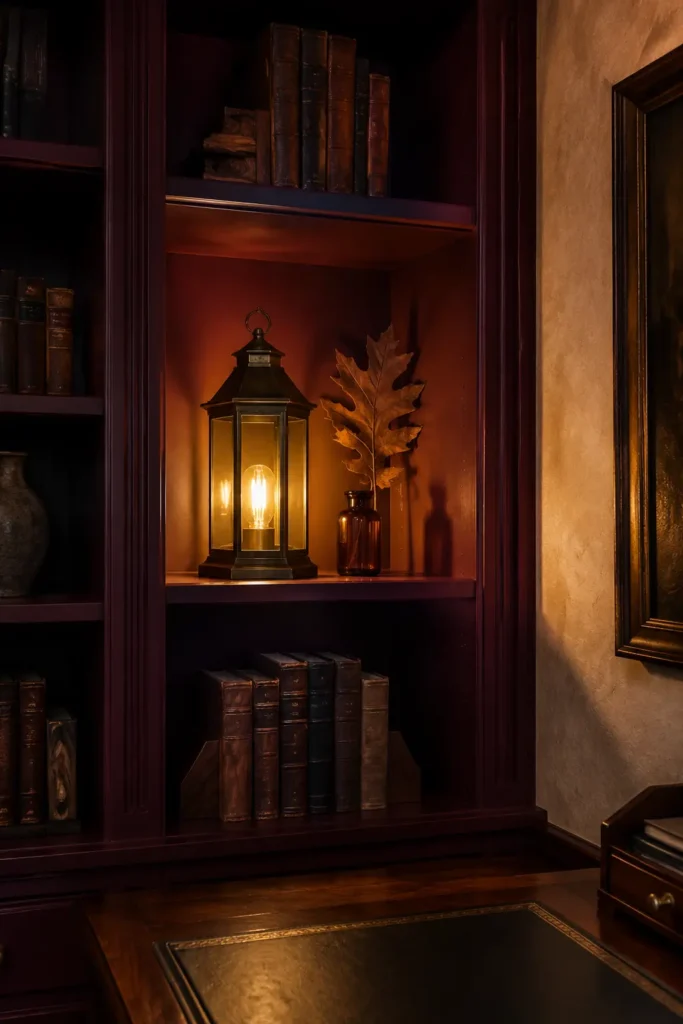
Paint one bookcase compartment deep oxblood, espresso, or blackened olive, then place a hexagonal aged-brass lantern inside it. Add a few worn books, one amber apothecary bottle, and a pressed dark leaf. Concentrating the arrangement in one niche creates more impact than spreading seasonal objects across every shelf.
Use a 2200K rechargeable filament bulb to emphasize the warmth of brass, aged paper, and dark wood. Keep the surrounding shelves simpler so the illuminated section remains the focal point. Real flames should never be used around books, dried foliage, or inside enclosed cabinetry, even for a short photograph.
5. Fill a Vintage Glass Cabinet
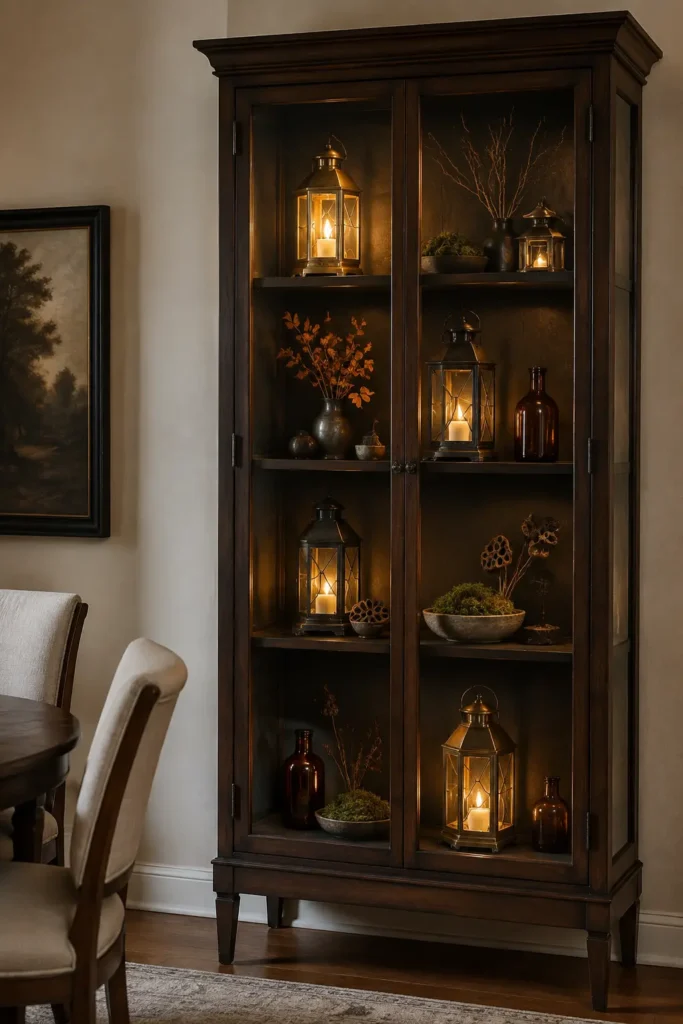
Turn a thrifted glass-front cabinet into a softly glowing autumn conservatory. Paint the interior charcoal, then arrange mismatched vintage lanterns across the shelves with preserved moss, bare branches, amber bottles, and sculptural seed pods. Leave portions of the dark backing visible so individual objects remain easy to read.
Rechargeable micro-light clusters around 2400K illuminate the glass without producing noticeable heat. Check secondhand cabinets for loose panes, unstable shelves, and flaking paint before styling them. Once repaired, the enclosed display protects delicate seasonal pieces from dust and curious pets while creating a striking feature in a dining room or entryway.
6. Mix Cobalt With Oxblood
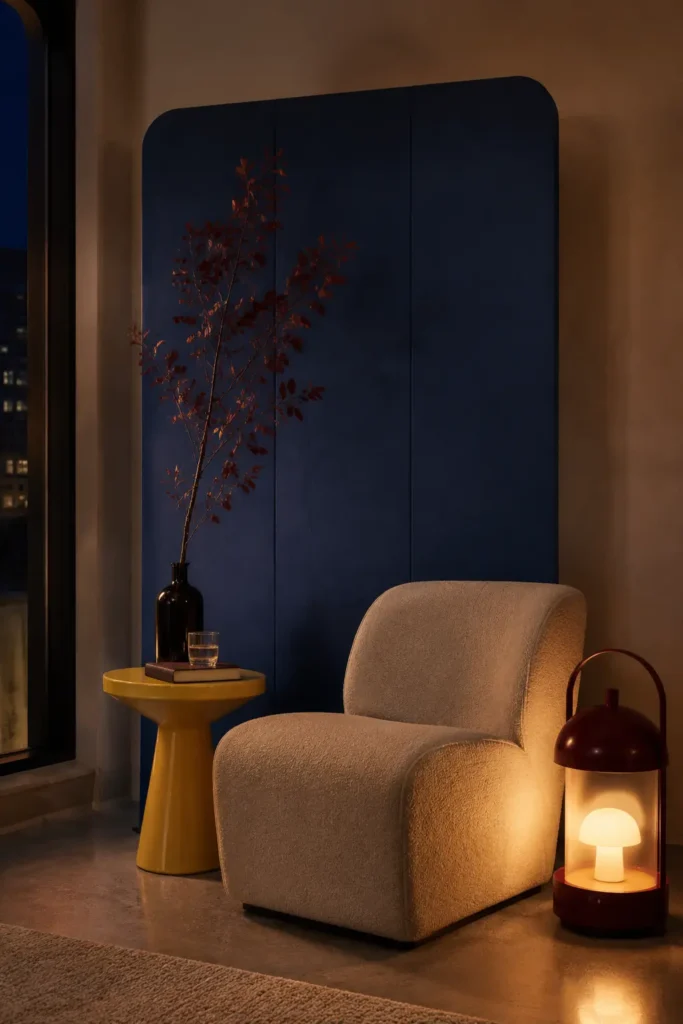
Set a rounded oxblood lantern against a dusty-cobalt wall or removable painted panel. Add a small butter-yellow ceramic table and one branch of burgundy leaves to complete the unexpected fall palette. Amber illumination links these saturated shades and stops the blue from feeling cold after dark.
Choose a lantern with frosted glass and insert a rechargeable 2400K mushroom light for an even glow. Renters can paint a freestanding plywood or MDF panel rather than changing the wall. This color-blocked arrangement feels youthful and expressive, yet it still communicates fall through wine red, dark foliage, and warm evening light rather than predictable orange accessories.
7. Layer Light on the Stair Landing
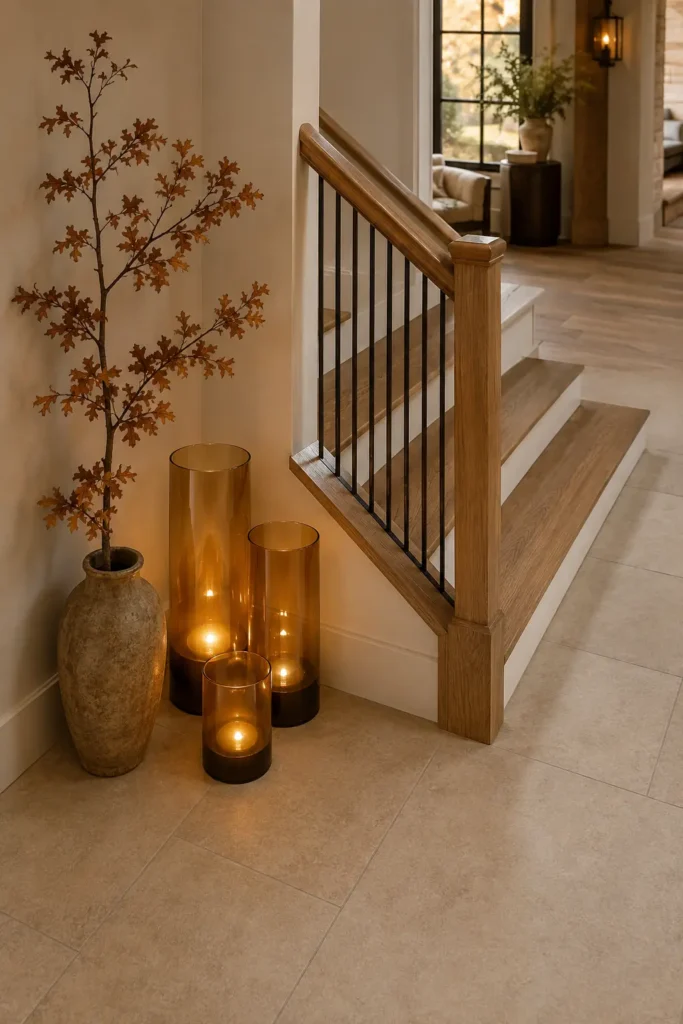
Create an amber gradient on a staircase landing or in the unused area beneath the stairs. Group matching cylindrical lanterns in pale honey, cognac, and tobacco-colored glass, arranging the tallest form at the back. The tonal sequence resembles a fading autumn sunset while keeping every stair tread clear.
Place the cluster beside the wall or newel-post base, outside the natural walking route. Low-output 2400K rechargeable lights prevent glare and make the glass colors appear richer. Three lanterns are usually sufficient in a compact entry. Adding too many similar pieces reduces the visible gradient and creates an unnecessary obstacle.
8. Hang a Branch Lantern Chandelier
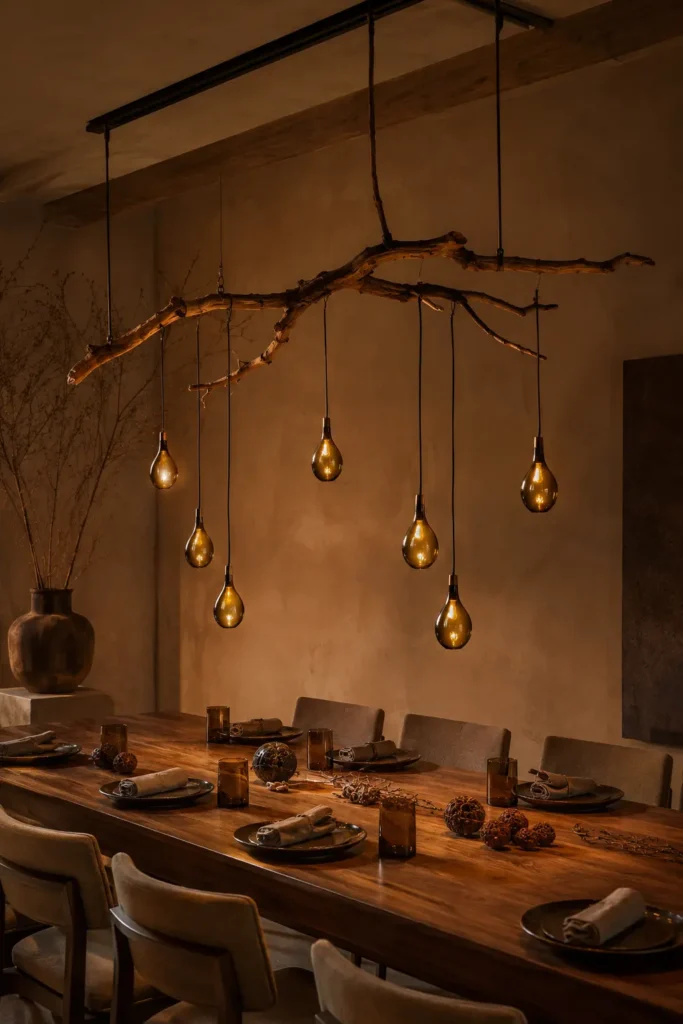
Suspend one strong, responsibly sourced branch above the dining table, then hang miniature amber-glass lanterns from it at varied heights. Keep the lowest lantern approximately 30 to 36 inches above the tabletop so guests can see one another comfortably. Flax linen, dark ceramics, and a few seed pods will continue the material palette below.
The long branch visually anchors a rectangular table, while the uneven lantern positions keep the installation relaxed. Use lightweight rechargeable LEDs between 2200K and 2400K. Proper ceiling fittings must carry the entire load; adhesive hooks aren’t suitable for an overhead arrangement positioned above people or food.
9. Float a Warm Glowing Orb
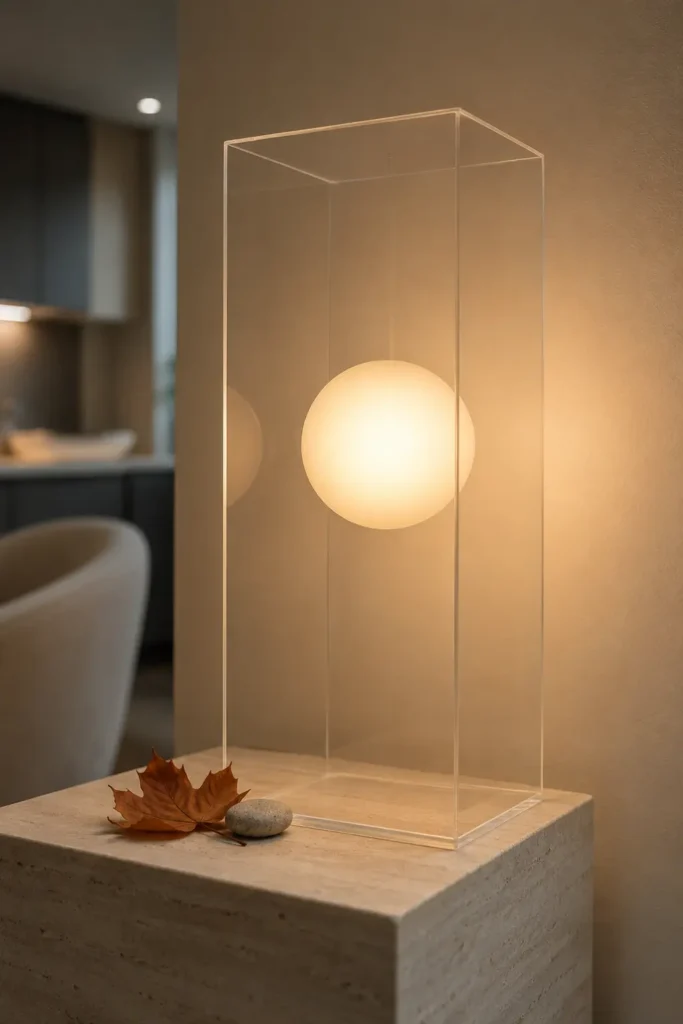
Suspend a frosted rechargeable orb inside a nearly frameless glass or clear acrylic lantern. Hide the support near the top so the light appears to float in the center. Set it on a pale stone console or coffee table with one rust-colored leaf rather than surrounding it with several seasonal decorations.
The precise transparent frame and imperfect natural leaf create an effective contrast. Acrylic is lighter and safer around children, but it scratches more easily than glass and should be cleaned with a soft microfiber cloth. Choose a 2400K to 2700K orb because cool-white light can make the clear enclosure look clinical.
10. Grow a Ceramic Lantern Woodland
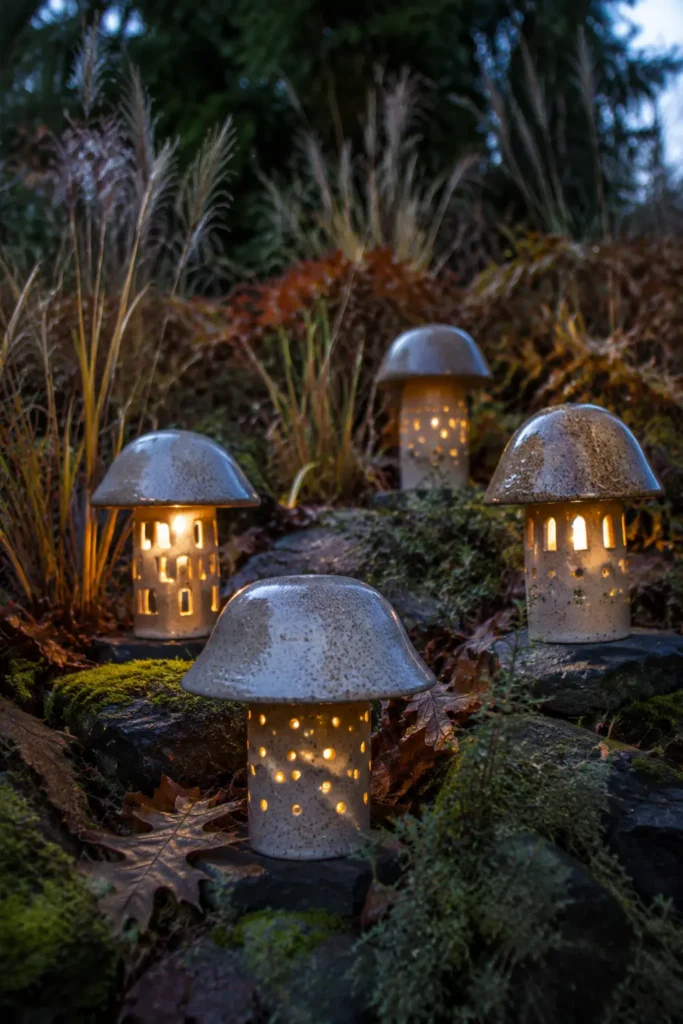
Nestle mushroom-shaped ceramic lanterns among mossy stones, fine ornamental grasses, and naturally fallen leaves. Use a group of three or five in different heights so the forms appear to emerge from the planting. Speckled oatmeal, mushroom, and taupe glazes keep the woodland reference subtle rather than cartoonish.
Install waterproof 2400K LEDs inside the lanterns for a soft ground-level glow. Select frost-resistant stoneware if the pieces will stay outside, and raise them slightly above damp soil to prevent staining. Apartment dwellers can recreate the effect inside one long balcony planter without sacrificing valuable floor or walking space.
11. Project Botanical Shadows
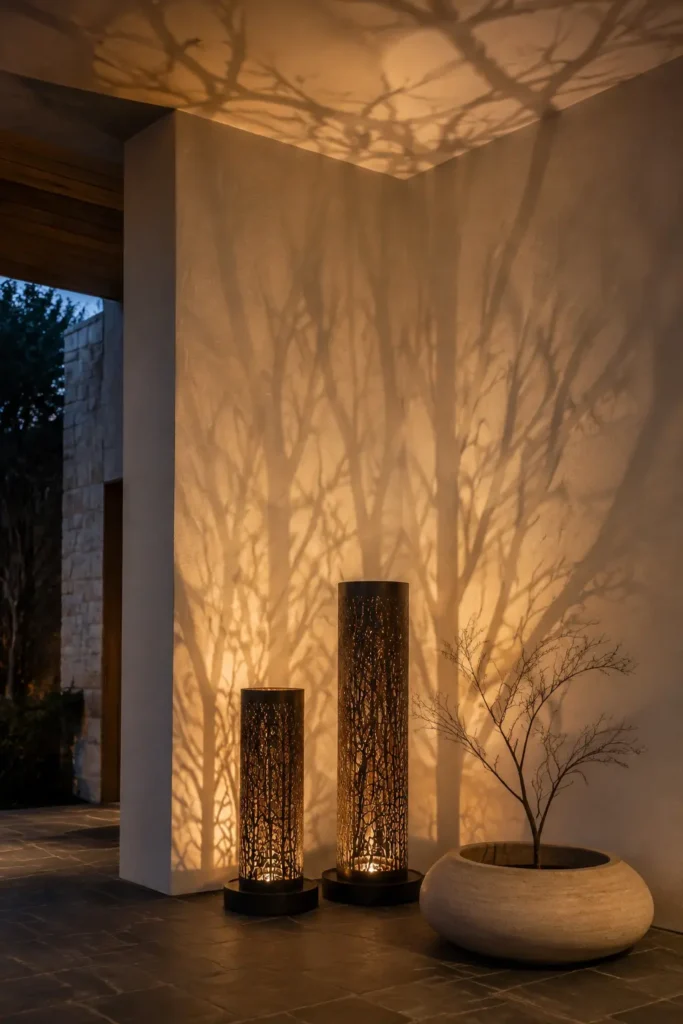
Place tall perforated bronze lanterns near a plain wall and allow focused 2200K LEDs to project enlarged branch patterns across the surface. Test the position after dark before settling on it. Increasing the distance between the lantern and wall makes the pattern larger, although the shadow edges become softer.
Because the projected light provides most of the visual detail, the surrounding area needs only one stone vessel or bare branch. Keep dried materials completely outside the lantern chamber. On a covered porch, choose lanterns with weighted bases so wind can’t shift their position or disrupt the planned shadow pattern.
12. Frame Lanterns With Concrete Planters
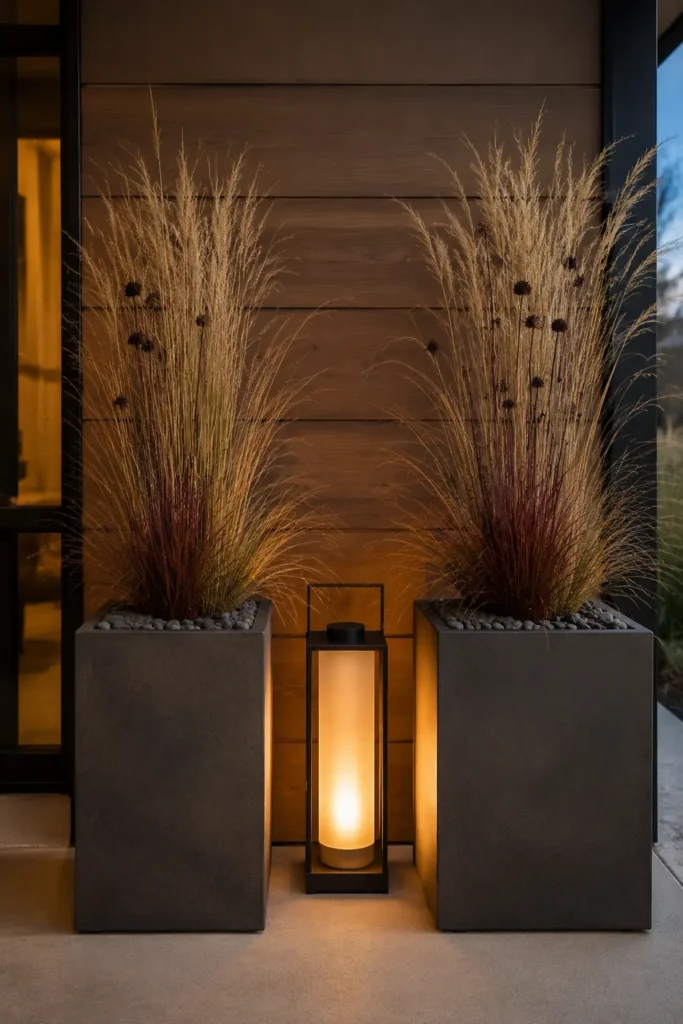
Arrange two rectangular concrete planters with a narrow gap between them, then position a tall weatherproof lantern in the opening. Fill the planters with tawny grasses, burgundy sedge, or dark seed heads that catch the lantern’s low amber light. This creates a strong architectural feature without building permanent lighting into a bench or wall.
A charcoal concrete finish hides soil marks better than pale gray, while a 2400K frosted LED softens its visual weight. Use lightweight fiberstone planters on balconies where genuine concrete may be too heavy. Make sure each planter drains freely and keep loose grasses away from the lantern’s ventilation openings.
13. Sink Lanterns Into Gravel
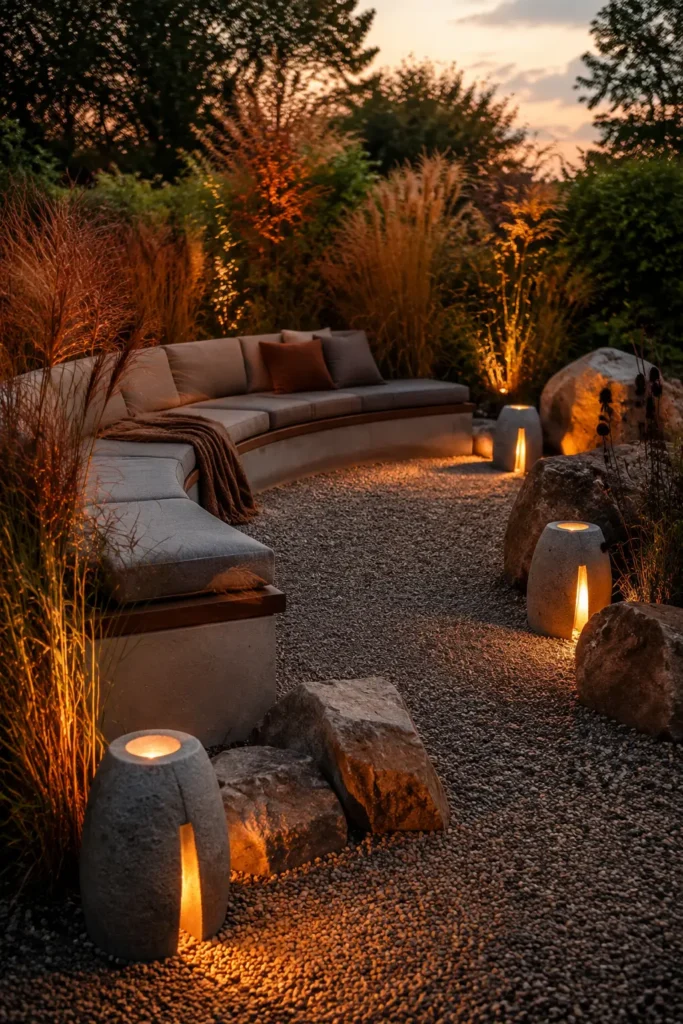
Set low carved-stone lanterns partially into the gravel around a curved outdoor lounge. Place them beyond the seating and walking zones, where narrow openings can illuminate the bases of ornamental grasses and nearby boulders. The light will appear to rise naturally from the landscape rather than sit on top of it.
Warm LEDs between 2200K and 2400K work especially well with sandstone, rust foliage, and dark seed heads. Establish a level, compacted base beneath each lantern so it doesn’t tilt after heavy rain. If the lounge includes a fire pit, follow its required clearance and keep lanterns, planting, and furniture outside that boundary.
14. Pair Lanterns With a Rain Chain
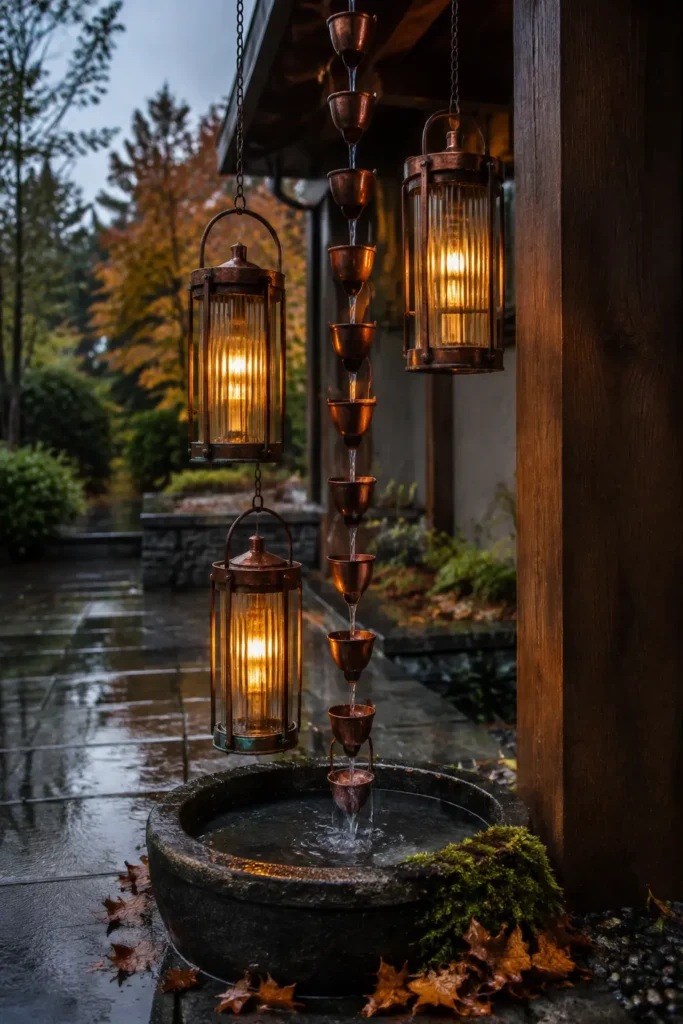
Hang narrow ribbed-glass lanterns beside an aged-copper rain chain and position a dark stone collection basin below. On wet fall evenings, moving water catches the amber light and reflects it across the copper. Moss and a few fallen leaves can soften the basin edges as long as they don’t obstruct drainage.
Use fully sealed rechargeable LEDs at approximately 2400K and weather-rated hanging hardware. The basin must direct overflow safely away from the foundation, so plan drainage before treating this as a decorative feature. Untreated copper will develop a natural verdigris finish over time, adding muted green to the amber and charcoal palette.
15. Frame a Moon-Gate Glow
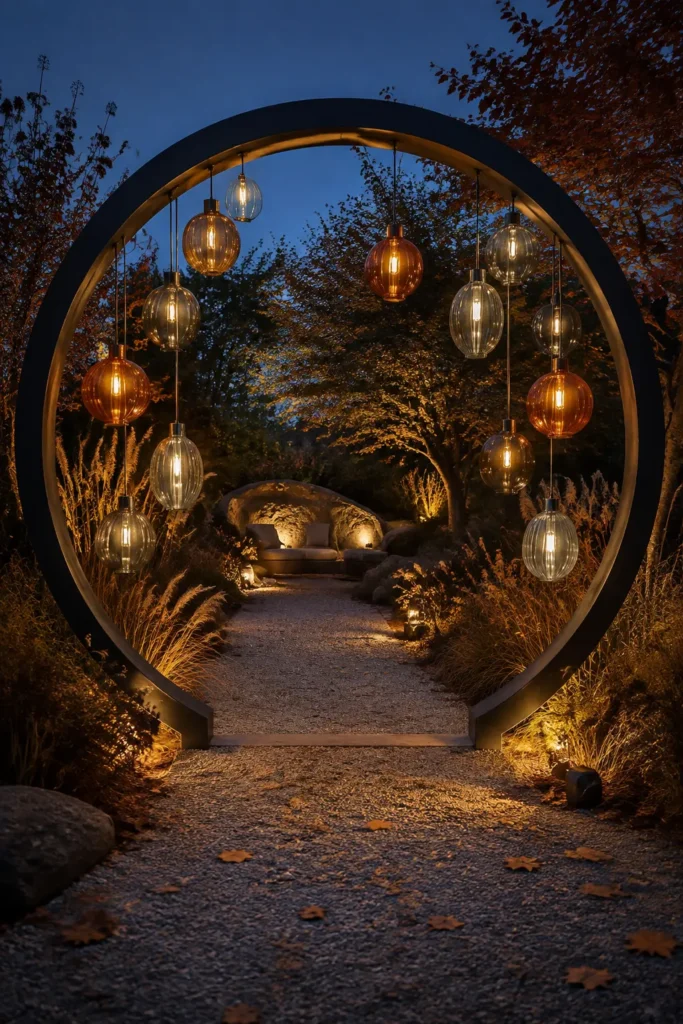
Create a dramatic garden destination with a circular dark-wood or powder-coated metal moon gate. Suspend hand-blown lanterns in amber, smoky olive, and gray glass from the inner curve while leaving the center open. A simple gravel path and restrained grasses will frame the installation without competing with its silhouette.
Arrange the lanterns at different heights, but maintain at least 7 feet of clear headroom through the opening. A freestanding frame needs professional anchoring, particularly in an exposed garden. Dimmable 2200K rechargeable lights turn the circle into a glowing portal while avoiding electrical cables across the path.